Home Blog Page 281

“God of Hair Cutting” And “Begged” Awards: Dravidian Model TNPSC Exam Papers Riddled With Errors, Careless Translations

The Tamil Nadu Public Service Commission (TNPSC) is facing criticism once again over questions in the Junior Assistant Draftsman exam that contained allegedly erroneous English translations, sparking controversy among candidates and the wider public.

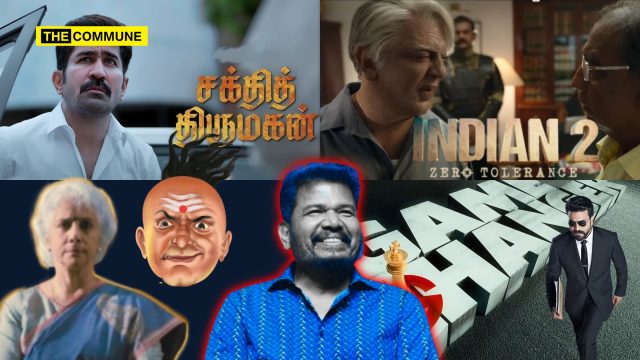
One question concerned Ayya Vaikundar, also known as Mudichoodum Perumal, a revered spiritual figure. In the English translation of the question paper, he was referred to as “the god of hair cutting,” which critics described as careless and disrespectful.

Another question about the People’s Health Care Scheme reportedly mistranslated the scheme’s achievements. A statement originally noting that the scheme received recognition from the United Nations in 2024 was translated as “It begged the United Nations Interagency Task Force Awards in the year 2024,” drawing further criticism.

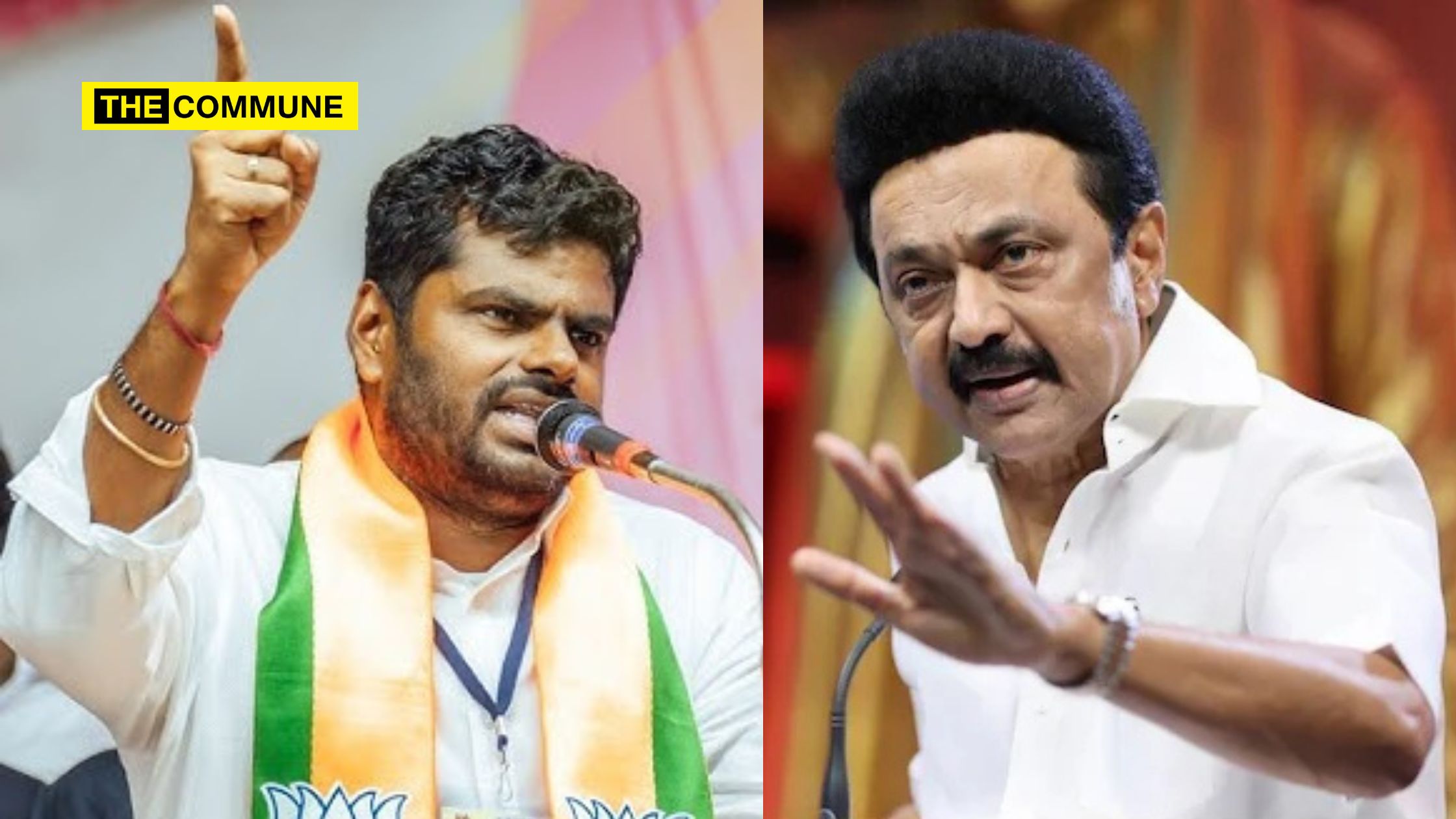
Tamil Nadu BJP leader Annamalai condemned the errors on his social media account, saying that they reflect a lack of seriousness in preparing questions for government exams and undermine the aspirations of youth preparing for TNPSC jobs. He wrote, “It is the dream of millions of youth to crack the Tamil Nadu Public Service Commission (TNPSC) exam and get a government job. Since the DMK came to power, the government job dream of the youth of Tamil Nadu has been shattered due to many irregularities and irregularities, such as not conducting the TNPSC exams on time, not publishing the exam results properly, and due to many irregularities and irregularities. Yesterday, in the TNPSC exam held for the post of Junior Assistant Draftsman, in the English translation of the question about Ayya Vaikundar, the name of Ayya Vaikundar, known as Mudichoodu Perumal, was translated as “the god of hair cutting”. It is strongly condemned that another name of Ayya Vaikundar, who is worshipped by crores of people, was translated so carelessly and irresponsibly in the Tamil Nadu government exam. In addition, in another question, to find out the correct claims of the medical scheme by searching for people, the phrase ‘It received an award from the United Nations in 2024’ has been translated as “It Begged the United Nations award” – begging. Since DMK leaders have been claiming to have received non-existent awards for a long time, and have been misleading people by falsely claiming that everything they bought with money, such as an Austrian stamp and an Oxford photograph, is an award, it is understandable that those who prepared this question may have been confused. However, such carelessness when preparing questions for government service exams shows how much the DMK government thinks about the future of the youth of Tamil Nadu. Not all youth, like the Gopalapuram family, want to come to the top without any qualifications. The DMK government should stop humiliating the youth who work hard for government service exams.”

A Pattern of Politicization

This is not an isolated incident. Over the past year, TNPSC exams have repeatedly included politically loaded questions that critics say promote DMK’s agenda:

TNPSC Exam Paper Mirrors DMK’s Political Narrative

In August 2025, a controversy stemmed from a question in the Technical Services Examination (Non-Interview Post) held on 17 August 2025, which directly blamed the Union Government for withholding funds from Tamil Nadu under the Samagra Shiksha Scheme (SSS), a politically charged framing that aligns with the DMK’s rhetoric against the Centre. The question in the Reason and Assertion section read:

Assertion [A]: Tamil Nadu has long resisted the imposition of Hindi in government schools and hence refused to join the Prime Minister Schools for Rising India (PMSRI). Therefore, the Union Government has withheld funds under the Samagra Shiksha Scheme (SSS).

Reason [R]: Though the Union government acknowledged Tamil Nadu’s two-language policy, it seeks to influence subjects in the Concurrent List through the New Education Policy (NEP) 2020, which the Tamil Nadu government opposes as an attack on federalism.

Critics argued that the question frames the Centre as the villain while uncritically endorsing the DMK’s stance, raising concerns over whether TNPSC is functioning as an extension of the ruling party’s propaganda machinery.

“Thayumanavar” Controversy (Group 2A Exam, 2025)

A question asked which scheme made people call the Chief Minister “Thayumanavar“, with options listing DMK welfare schemes like Makkaludan Mudhalvar and School Breakfast Program.

Critics slammed it as sycophantic, arguing that exams should test governance knowledge, not propaganda.

Freedom Fighter Vilified (Group 1 Exam, July 2024)

A question labeled Vanchinathan, a Tamil freedom fighter who assassinated British official Robert Ashe, as a “first accused” in a murder case, echoing colonial-era rhetoric rather than honoring his role in the independence struggle.

UNESCO’s “Socrates of South Asia” Myth (Group 1 Exam, 2024)

A question falsely claimed E.V. Ramasamy (Periyar) was certified by UNESCO as the “Socrates of South Asia”, despite UNESCO denying ever giving such a title.

The DMK has long pushed this debunked claim, and TNPSC’s inclusion of it raised eyebrows.

Selective Erasure of Caste Surnames (Group 1 Exam, 2025)

While DMK leaders like Annadurai and Periyar were mentioned without caste surnames, others including Subbarayalu Reddiar, V.O. Chidambaram Pillai, and Dr. Muthulakshmi Reddy were explicitly identified by caste.

This hypocrisy contradicts the DMK’s claim of abolishing caste identities, exposing its political opportunism.

The present controversy has reignited debates over the DMK’s influence on autonomous bodies, with many questioning whether Tamil Nadu’s administrative institutions are now extensions of the ruling party.

Subscribe to our channels on TelegramWhatsApp, and Instagram and get the best stories of the day delivered to you personally.

Madurai Bench Of Madras High Court Orders Status Quo On Civil Works At Sri Kallazhagar Temple

madurai bench of madras high court kallazhagar temple

The Madurai Bench of Madras High Court on 1 September 2025 issued a status quo order halting ongoing civil works at the ancient Sri Kallazhagar Temple in Azhagarkoil, Madurai. The division bench, comprising Justice Anita Sumanth and Justice Kumarappan, intervened following concerns raised over the misuse of temple funds and violation of the temple’s religiously significant open spaces.

The temple, located in a forested area, has historically preserved open spaces of religious importance. Officials from the Tamil Nadu Hindu Religious and Charitable Endowments (HR&CE) Department had reportedly initiated extensive civil works, including plans for a new Yatri Nivas, despite the existing structure being in a state of disrepair.

Advocates representing the temple and devotees argued that these projects were unnecessary and involved excessive expenditure. The court noted that while the temple currently has approximately ₹40 crore in funds, the proposed civil works would require an additional ₹70 crore, potentially pushing the temple towards financial instability.

The final hearing in the case is scheduled for 15 September 2025.

Advocate Arun Swaminathan appeared in court representing the devotees and the temple.

The status quo order marks another instance where the Madras High Court has intervened to protect temple assets and prevent misuse of funds.

Subscribe to our channels on TelegramWhatsApp, and Instagram and get the best stories of the day delivered to you personally.
Tamil Nadu Universities Quietly Implement NEP Amid Delay In State Higher Education Policy

nep sep higher education tamil nadu

With no State Education Policy (SEP) for higher education yet released, Tamil Nadu’s state universities have begun implementing several components of the National Education Policy (NEP), officials told TNIE. This comes despite the ruling DMK’s vocal opposition to some aspects of the national policy.

The state government released the SEP for school education earlier this month, following prolonged delays. However, the higher education component of the policy remains pending, even though a committee tasked with drafting the SEP submitted its report in July 2024.

Meanwhile, universities are under pressure from central agencies such as the University Grants Commission (UGC) and the National Assessment and Accreditation Council (NAAC), which link funding and recognition to NEP compliance. Officials said this has compelled many institutions to adopt NEP measures despite the absence of a state-level policy.

For example, the UGC had set a deadline of December 31, 2024, for universities to register with the Academic Bank of Credits (ABC), designed to facilitate multiple entry and exit options for students—a key NEP feature opposed by the DMK. Publicly available data shows that 17 of 22 state universities have already registered and begun implementing ABC.

“If we defied the mandate, we would have lost all opportunities to get funding from the UGC,” said an official from the University of Madras, a sentiment echoed across other state universities. Another registrar noted that 14 state universities currently do not have a vice-chancellor, further straining their administrative capacity.

Several universities have also taken steps to align with NEP’s recommendations on curriculum and institutional structure. The University of Madras, Madurai Kamaraj University, Bharathiar University, Bharathidasan University, and Manonmaniam Sundaranar University have renamed their Human Resource Development (HRD) centres as Malaviya Mission Teacher Training Centres, following UGC directives.

Alagappa University has integrated the Indian Knowledge System (IKS), promoting courses in temple architecture and arts. Anna University has launched courses such as Ariviyal Tamil (Scientific Thought in Tamil) and Tamilar Marabu (Heritage of Tamils) since 2023, in line with NEP’s IKS framework.

The University of Madras also planned to introduce dual degree programmes, a key NEP initiative, but postponed implementation pending the SEP.

Officials said NAAC reporting requirements further compel universities to adopt NEP-aligned measures. “Universities have to submit annual reports to NAAC, including NEP-related initiatives. Ignoring them could directly impact rankings,” said one vice-chancellor. Another added that while major reforms like four-year undergraduate programmes and multiple entry-exit systems are yet to be fully implemented, around 70% of NEP recommendations have been adopted, often under different nomenclature such as curriculum revamping and outcome-based learning.

E. Balagurusamy, former vice-chancellor of Anna University, described the delay in releasing the SEP as an “administrative crisis” that leaves universities directionless, with students bearing the consequences. L. Jawahar Nesan, former member of the SEP committee, also criticised the SEP for school education as resembling NEP rather than creating a unique policy for Tamil Nadu, cautioning that higher education reforms could face similar shortcomings.

Higher education department officials said the SEP is in its final review stages and is expected to be released soon.

(With inputs from The New Indian Express)

Subscribe to our channels on Telegram, WhatsApp, and Instagram and get the best stories of the day delivered to you personally.
Siddaramaiah Says Dasara Is Not A Religious Festival, Justifies Inviting Banu Mushtaq For Inauguration

siddaramaiah mysore dasara festival dussera hindusiddaramaiah mysore dasara festival dussera hindu dussehra

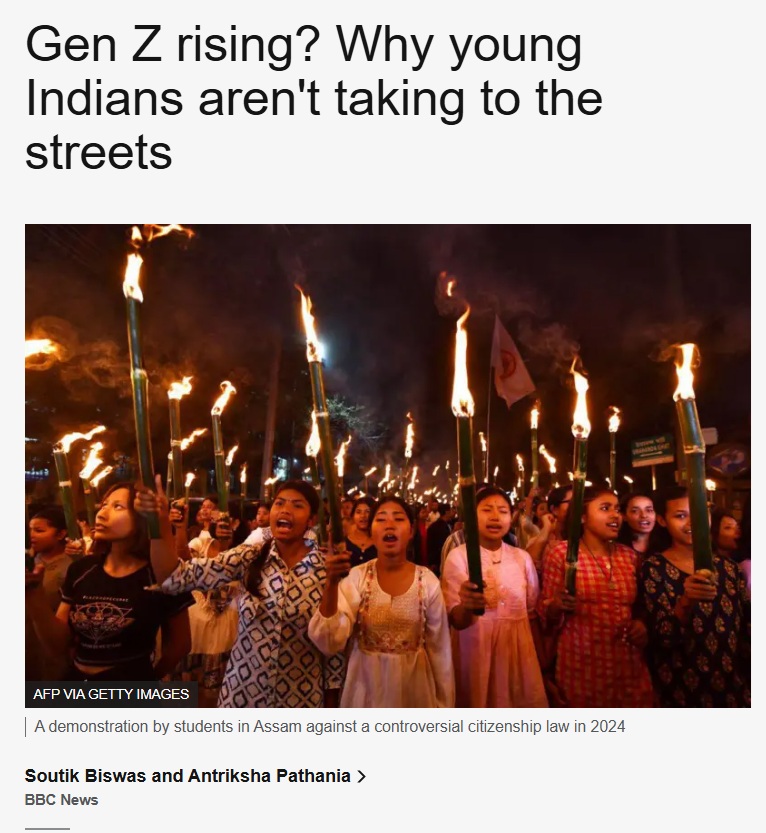
Karnataka Chief Minister Siddaramaiah on 31 August 2025 defended the state government’s decision to invite renowned Kannada writer and Booker Prize winner Banu Mushtaq to inaugurate this year’s Mysuru Dasara festival, describing the event as a celebration for all communities, rather than a religious ceremony.

Addressing the media, Siddaramaiah stated that Dussehra is a non-religious festival celebrated as the “Dasara Naada” festival across the state. “Everyone celebrates the Dasara Naada festival. Therefore, it is appropriate for it to be inaugurated by writer and activist Banu Mushtaq,” he said. He added that the high-level committee responsible for selecting the inaugurator had authorised him to extend the invitation to Mushtaq.

The Chief Minister cited historical precedents, noting that figures such as Hyder Ali, Tipu Sultan, and Diwan Mirza Ismail had celebrated Dasara even when the Maharaja was not in power. He also referenced past inaugurators, including poet Nisar Ahmed, to highlight the festival’s inclusive nature. Siddaramaiah criticised those opposing Mushtaq’s appointment, calling them “religious fanatics.”

The controversy was sparked after Karnataka BJP president BY Vijayendra criticised the Congress government for inviting Mushtaq instead of Deepa Bhasthi, the first Indian translator to win an International Booker Prize for translating Mushtaq’s Heart Lamp. Vijayendra claimed the decision, along with Deputy Chief Minister DK Shivakumar’s earlier remark that Chamundi Hills is not exclusively for Hindus, was an insult to Hindu traditions and beliefs.

Responding to criticism from Yaduveer Wadiyar of the Mysuru royal family, Shivakumar urged people not to communalise the festival. In a statement on X, he emphasised the inclusive nature of Chamundeshwari temple, noting that the deity is revered by people across castes and religions. “Our Durga Devi removes everyone’s sorrows. Everyone from all religions and communities has access to Chamundi Hill. Creating controversy is the BJP’s principle,” he said.

Shivakumar further highlighted the universal appeal of the festival, pointing out that Dasara attracts participants from across India and abroad, and that the royal family has historically supported its inclusive spirit. He concluded by urging against politicising religion, stating, “One should not do politics in the name of religion; even that Mother would not approve of it.”

(With inputs from The New Indian Express)

Subscribe to our channels on Telegram, WhatsApp, and Instagram and get the best stories of the day delivered to you personally.
How Congress Voteshare Declined Post Introduction Of Voter IDs

voter id congress epic id voteshare india elections

The Indian National Congress, once the unchallenged hegemon of Indian politics, has seen a dramatic and sustained decline in its electoral performance over the decades. A closer look at its vote share in Lok Sabha elections reveals a striking trend that coincides with a major electoral reform: the introduction of the Electors Photo Identity Card (EPIC), or Voter ID card, by the Election Commission of India starting in 1993.

The Era of Dominance: Pre-Voter ID (1951-1991)

For the first four decades of India’s independence, the Congress party was the central pole of Indian politics. Its vote share in Lok Sabha elections was not only high but also consistently robust:

1951: 44.99%

1957: 47.78%

1962: 44.72%

1967: 40.78%

1971: 43.68%

1977: 34.52% (Post-Emergency setback)

1980: 42.69%

1984: 49.1% (Sympathy wave after Indira Gandhi’s assassination)

1989: 39.53%

1991: 35.66%

During this period, the Congress crossed the 40% vote share mark seven times, showcasing its deep and widespread penetration across the Indian electorate.

The Inflection Point: Introduction of the Photo Voter ID

In 1993, the Election Commission of India initiated the monumental task of issuing Photo Voter ID cards to all eligible voters. This was a watershed reform aimed at curbing electoral malpractices like booth capturing, impersonation, and duplicate voting, which were rampant in many parts of the country.

The Era of Decline: Post-Voter ID (1996-Present)

The elections following the introduction of the Voter ID card tell a completely different story for the Indian National Congress:

1996: 28.8%

1998: 25.82%

1999: 28.3%

2004: 26.53% (Formed UPA govt despite lower vote share)

2009: 28.55% (UPA II victory)

2014: 19.31% (Historic low)

2019: 19.46%

2024: 21.19%

The difference is staggering. The Congress has not once managed to cross even the 30% vote share mark in the three decades since the Voter ID was introduced. Its average vote share plummeted from a dominant position to a struggling one.

Numbers Raise Questions

The stark contrast between pre- and post-EPIC vote shares raises an uncomfortable question: Was Congress’s high vote share in the decades before voter ID cards aided by electoral malpractice, such as booth capturing or other forms of manipulation?

While multiple factors affect electoral outcomes, the introduction of voter ID cards marked the end of a period of overwhelming dominance for Congress. Could this reform have exposed vulnerabilities in the party’s ‘traditional methods’ of mobilizing votes? The numbers seem to suggest so.

From commanding nearly half the national vote to struggling to cross one-fifth, Congress’s decline underscores both the changing electoral landscape and the possible impact of more transparent voting mechanisms.

Subscribe to our channels on Telegram, WhatsApp, and Instagram and get the best stories of the day delivered to you personally.
Dravidianist Mouthpiece Sun News Peddles Fake News About Supreme Court Order On Use Of Temple Funds For Colleges

sun news fake news temple funds supreme court

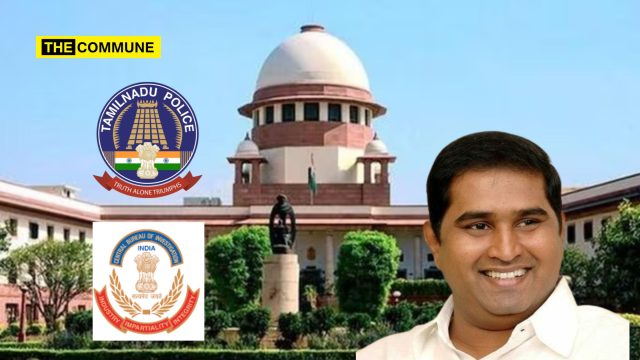
In yet another instance of proving itself to being the Dravidianist mouthpiece, the DMK-family-owned news channel Sun News has seemingly deliberately misreported the Supreme Court proceedings related to the use of temple funds for constructing colleges.

Activist TR Ramesh, who has been fighting legal battles against the diversion of Hindu Religious and Charitable Endowments (HR&CE) resources, accused the channel of spreading misinformation and shielding the Tamil Nadu government.

What Sun News Reported?

The point of dispute arose after Sun News reported that the Supreme Court had questioned what was wrong in using temple land and money for setting up colleges.

The post caption read, “What is the harm in using temple funds for education?” -Supreme Court question “

And their image stated that, “The case filed by Ramesh against the use of Mylapore Kapaleeswarar temple funds for education has been dismissed.”

According to Ramesh, this is a misrepresentation of the apex court’s decision. He clarified that the Supreme Court did not issue any order authorising the construction of colleges with temple resources, but only dismissed an appeal in procedural terms, leaving the Madras High Court’s earlier order intact.

What Madras High Court Said

On 29 August 2025, the Madurai Bench of the Madras High Court quashed multiple government orders issued by the HR&CE Department, which had sought to divert temple funds towards building marriage halls, commercial complexes, and colleges. The court held that such use of temple money was contrary to law unless specifically permitted under Section 34 of the Hindu Religious and Charitable Endowments Act and supported by demonstrable surplus funds.

The High Court’s ruling, therefore, barred the state from utilising temple wealth for non-religious, commercial, or educational projects without following statutory procedures.

Supreme Court’s Role

When the matter reached the Supreme Court, the appeal against this High Court ruling was dismissed. However, contrary to Sun News’s reporting, the Supreme Court did not say that colleges could be built with temple funds. Instead, the dismissal effectively meant that the High Court’s restrictions remain in force.

Ramesh called out Sun News for deliberately twisting the outcome to favour the government narrative. He pointed out that while the High Court had struck down government announcements to build colleges and other projects with temple resources, Sun News failed to report this, and instead implied that the Supreme Court had given approval.

Subscribe to our channels on TelegramWhatsApp, and Instagram and get the best stories of the day delivered to you personally.
Karnataka Congress Govt Arrests Bengaluru Temple Assistant Priest For Remarks Against CM Siddaramaiah

Complaint Of ₹68 Crore BBMP Fraud Filed Against Karnataka Congress CM Siddaramaiah In MLAs/MPs Court siddaramaiah temple priest dussehra Karnataka Congress Govt’s Hate Speech Bill: A Framework Built To Silence Hindus?

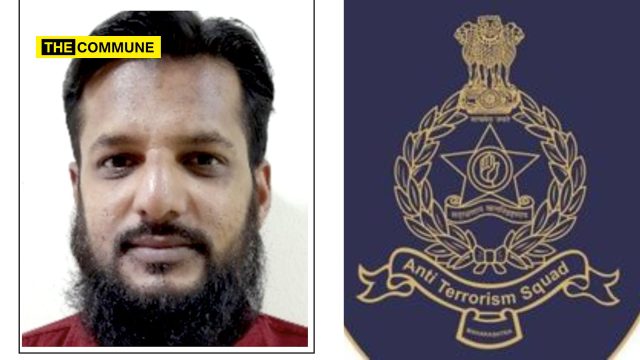
Police on Saturday arrested an assistant priest of a temple in Kengeri, southwest Bengaluru, for allegedly making derogatory remarks against Karnataka Chief Minister Siddaramaiah.

The accused, identified as Gururaj Achar, was taken into custody after video clips of his comments went viral on social media. The Kengeri Police registered a suo motu case in connection with the incident.

According to officials, the remarks were linked to the state government’s decision to invite Booker Prize winner Banu Mushtaq to inaugurate this year’s Mysuru Dasara festival.

Following the controversy, the Sri Raghavendra Seva Samithi trust clarified Achar’s position and announced his dismissal. “He is not a priest of Raghavendra Swamy Mutt, but an assistant priest of a Ganesha temple attached to it. He has since been dismissed,” the committee said in a statement, while strongly condemning his remarks.

(With inputs from Deccan Chronicle)

Subscribe to our channels on TelegramWhatsApp, and Instagram and get the best stories of the day delivered to you personally.
Congress, TMC MPs Justify Peter Navarro’s “Brahmin Profiteering” Jibe

sagarika ghose peter navarro trump brahmins russian oil india

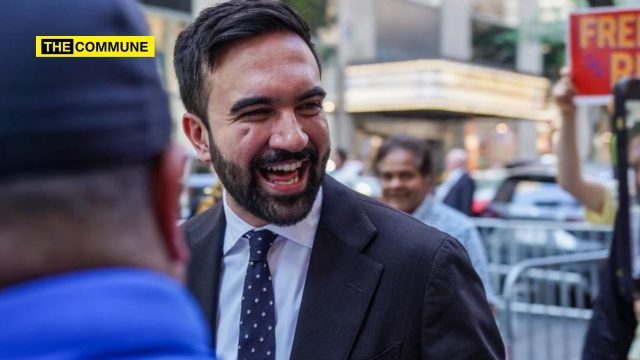
The Congress-Left ecosystem has come to buttress the jibes against Brahmins made by US President Donald Trump’s trade adviser Peter Navarro, who accused India of acting as a “laundromat for the Kremlin” and alleged that “Brahmins” were profiteering from discounted Russian oil.

The coterie of urban naxal Indians who justified his comments include Trinamool Congress (TMC) MPs Sagarika Ghose and Saket Gokhale, Congress MP Karti Chidambaram, and Sridhar Ramaswamy, All India Congress Committee (AICC) National Coordinator for Social Media and Digital Platforms.

What Did Peter Navarro Say?

Navarro, in an interview with Fox News, charged that Indian refiners were buying Russian crude at a discount, processing it, and exporting it to Europe, Africa and Asia. “India is nothing but a laundromat for the Kremlin…You got Brahmins profiteering at the expense of the Indian people. We need that to stop,” he said, claiming the practice was sustaining Russia’s war machine in Ukraine.

The remarks triggered a political and social media storm in India, with many objecting to Navarro’s use of the term “Brahmins.”

Justification And Buttressing By Brown Sepoys

Congress MP Karti Chidambaram wrote, ““Boston Brahmins” is a term used to describe the elite of society in common parlance.”

Responding to the controversy, TMC Rajya Sabha MP Sagarika Ghose wrote on X that Navarro’s language was being misinterpreted. “‘Boston Brahmin’ was once a widely used term in the US to refer to the American New England wealthy elite. ‘Brahmin’ is still a term used in the English-speaking world to denote social or economic ‘elites’ (in this case the rich). The illiteracy on X is astonishing,” she said.

TMC Rajya Sabha MP Saket Gokhale wrote, Classic case of ignorance (and I don’t mean Navarro) Peter Navarro is from Cambridge, MA. In New England (esp Boston & around where he’s from), the term “Brahmin” is used for someone that’s extremely rich BJP “ecosystem” spokespersons should start reading some real books”

He even shared “proof” justifying his statement.

Then once again came the Congress guy – Sridhar Ramaswamy, All India Congress Committee (AICC) National Coordinator for Social Media and Digital Platforms, who wrote, “Many jokers on X having a meltdown over the reference to ‘Boston Brahmins’ which is a commonly used term for elites in America nothing to do with attacking the caste here. Though the initial origin of the term was coined by Oliver Wendell Holmes Sr. in his 1861 novel Elsie Venner, he used the analogy of the highest caste in India to describe Boston’s elite families, highlighting their perceived intellectualism and inherited status.”

Navarro, who also called India “the Maharaja of tariffs,” defended the Trump administration’s 50 per cent tariffs on Indian exports. He further questioned India’s engagement with Russia and China, describing Prime Minister Narendra Modi as “a great leader” but criticising him for “getting into bed with [Vladimir] Putin and Xi Jinping.”

The remarks coincided with Modi’s visit to Tianjin, China, for the Shanghai Cooperation Organisation (SCO) summit, where he met Chinese President Xi Jinping and was expected to hold talks with Russian President Vladimir Putin.

Subscribe to our channels on TelegramWhatsApp, and Instagram and get the best stories of the day delivered to you personally.
Chennai Among Bottom 10 Cities In Women’s Safety Index

Chennai’s Safety For Women Declines: City Drops To Second Behind Bangalore In National Safety Rankings As Crimes Surge women's safety

The National Annual Report and Index on Women’s Safety (NARI 2025) has ranked Chennai 21st among 31 Indian cities, with an overall score of 61.7% – lower than the national average of 64.6%.

The report, released by the National Commission for Women in New Delhi on Friday, assessed women’s perceptions of safety across public spaces, workplaces, and institutions.

According to the findings, only 8% of women described Chennai as “highly safe” and 46% as “safe,” bringing the total to 54% – below the national figure of 60%. Meanwhile, 33% of women gave a neutral response, while 11% said they felt unsafe and 3% felt highly unsafe, both higher than national averages.

Daytime safety fared better, with 75% of women saying they felt secure. At night, however, this dropped to 54%, and 21% said they felt unsafe or highly unsafe after dark.

When asked about public infrastructure, 46% of women rated the city’s facilities as women-friendly, while 55% said they trusted the police and local authorities. However, nearly one-third expressed uncertainty, indicating a lack of strong confidence.

Harassment remains a pressing concern. Around 7% of women reported experiencing harassment in public spaces in 2024, matching the national average. Verbal abuse was most commonly reported, followed by physical harassment. Incidents were most frequent on public transport (31%), in neighbourhoods (21%), and in recreation areas (21%).

Women adopted various coping strategies: 54% moved to safer places, 48% reported incidents to police, 13% left the area quietly, and 15% confronted their harassers.

The report noted that visible measures such as police patrols and emergency contacts in buses increased the sense of safety, while poor lighting, deserted places, and unguarded areas heightened insecurity.

To improve safety, women called for better infrastructure, more helplines, panic buttons, CCTV cameras, and stricter law enforcement.

(With inputs from Times of India)

Subscribe to our channels on TelegramWhatsApp, and Instagram and get the best stories of the day delivered to you personally.
Transport Workers’ Strike Enters Third Week; CITU Insists On Deadline for Pending Dues

transport workers strike protest chennai citu
Image Source: Hindu Tamil

The indefinite strike by state transport workers, organized by the Centre of Indian Trade Unions (CITU), has entered its third week, with union leaders declaring that the agitation will continue until the government announces a clear timeline for addressing their demands.

The strike began on 18 August 2025, with workers pressing for the settlement of wage arrears and the disbursal of retirement benefits up to April 2024. The protests intensified after police detained participants of the Kaththiruppu demonstration on Pallavan Road in Chennai. Since then, workers have staged road blockades and continued demonstrations across the state.

Union representatives pointed out that despite assurances, not all retirees have received their entitled cash benefits. They demanded that the state government at least fix a deadline for clearing the arrears to all eligible workers.

On Sunday, 31 August 2025, large numbers of employees gathered at the Ayanavaram and Vadapalani workshops in Chennai, continuing the Kaththiruppu protest.

Participants criticized both the current DMK government and the previous AIADMK regime for failing to resolve the issue. They alleged that while the Chief Minister attributed the shortfall to a lack of central funding, state finances were not being transparently allocated. Workers also accused both major parties of adopting a “dual stance” on the new pension scheme bill.

Union leaders maintained that only sustained, large-scale agitation would compel the government to meet the workers’ long-pending demands.

(With inputs from Hindu Tamil)

Subscribe to our channels on TelegramWhatsApp, and Instagram and get the best stories of the day delivered to you personally.