Home Blog Page 235

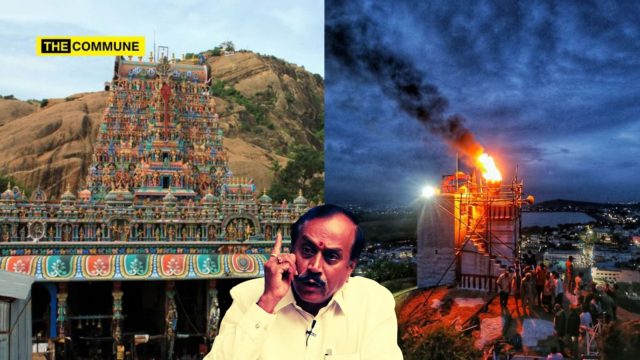
Case Filed Against BJP Leader H Raja After Police Stop Him From Going To Thirupparankundram Amid Karthigai Deepam Row

Case Filed Against BJP Leader H Raja After Police Stop Him From Going To Thirupparankundram Amid Karthigai Deepam Row

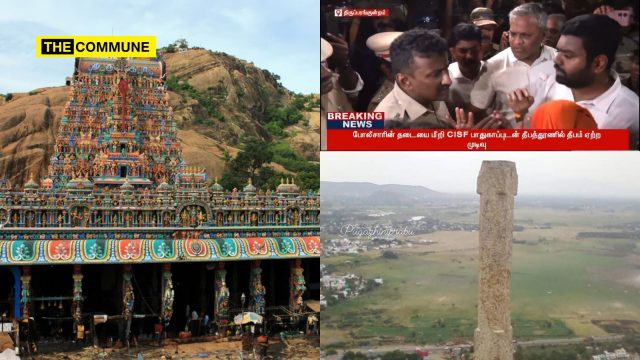
Senior BJP leader H Raja has been booked under three sections of law after he allegedly argued with police officers and made controversial remarks during an interception in Sivagangai district on 4 December 2025. The incident occurred while he was travelling to Thirupparankundram, where tensions have escalated over the temple Deepam issue.

According to police sources, officers led by Thiruppathur DSP Selvakumar stopped Raja’s vehicle near Kammangudi village as a precautionary measure. Raja reportedly told officers he was travelling for dubbing work related to the film Kandhan Malai and asked them not to obstruct him. A heated exchange followed, during which he is said to have made critical remarks about Tamil Nadu ministers, the Madurai District Collector and senior police officials.

Following the altercation, Nachiyapuram Police registered a case against Raja and his driver under provisions relating to obstruction of public duty, causing disruption to traffic, and making statements with the potential to incite communal tension.

The incident unfolded amid widespread debate over the Thirupparankundram temple lamp, after the Tamil Nadu government did not permit lighting the Deepam at the hilltop despite consecutive High Court orders. The state government argued that lighting the lamp near the dargah could lead to law-and-order issues and maintained that it would be lit only at the traditional location. The BJP, meanwhile, accused the DMK government of disregarding the court’s direction and curtailing the religious rights of Hindus.

Police said Raja’s remarks during the confrontation included derogatory comments about Chief Minister MK Stalin, certain ministers and police officers, prompting charges related to obstructing public servants from performing their duty, making statements with potential to incite communal sentiments and using defamatory language against public officials.

Reacting to the controversy, Raja criticised the state government for not implementing the High Court order, questioning its objection to lighting the lamp at the designated spot.

Source: Asianet Tamil

Subscribe to our channels on WhatsApp, Telegram, Instagram and YouTube to get the best stories of the day delivered to you personally.

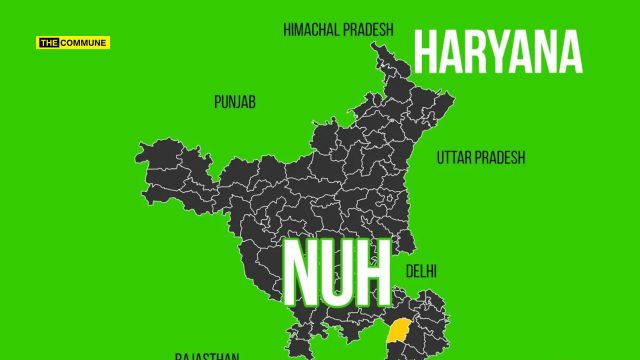
How Demography Change Has Turned Haryana’s Nuh Into A Hotbed Of Radicalism And Lawlessness

Over the past six years, the Mewat district of Nuh in Haryana has rapidly transformed from a quiet region into a persistent hotspot for radical activities, organized violence, and brazen assaults on law and order.

This report chronicles 20 incidents that signal a clear and alarming trend: Nuh is becoming a rapidly growing epicenter for radicalism, organized violence, and attacks on the state’s authority. The patterns reveal networks engaged in anti-national activities, systematic violence against the Hindu community and law enforcement, and a socio-criminal ecosystem fostering fear and instability.

Category 1: Anti-National Activities (Espionage, Terrorism, Flag Desecration)

#1 Advocates Arrested for Pakistani Espionage (26 November 2025)

A joint team of Delhi-NIA and CIA, Tauru arrested advocate Rizwan (son of Zuber) from Kharkhari village in Nuh’s Tauru police station area on charges of spying for Pakistan’s ISI. His fellow advocate, Musharraf alias Parvez (father Dilawar, Bansi), was also detained. A laptop, documents, and degrees were seized from Rizwan’s house, and a case of sedition and espionage was registered. This marked the third such arrest in Nuh in 2025.

#2 Maulvi Held with 2500 Kg Explosives (23 November 2025)

Jammu and Kashmir Police arrested Maulvi Ishtiyaq from Nuh from his rented room near Al-Falah University in Faridabad, where he was allegedly storing 2500 kg of explosive material (Ammonium Nitrate, Potassium Chlorate, Sulfur). This module came to light after the car blast near Delhi’s Red Fort on 10 November 2025, which killed 15.

#3 Mohammad Tarif Arrested for Leaking Military Secrets (19 May 2025)

Haryana Police and central agencies arrested Mohammad Tarif from Kangarka village in Nuh for allegedly leaking sensitive information about Indian military activities to Pakistan. He had visited Pakistan in 2022-23 and 2023-24. Mobile forensics revealed chats, photos, and videos of military activities sent to two separate Pakistani contacts.

#4 Arman from Rajaka Arrested for Espionage (17 May 2025)

Arman, son of Jameel from Rajaka village, was arrested by Haryana Police and central agencies for sending defence-related information to Pakistan via WhatsApp, including photos from Defence Expo 2025. His mobile yielded chats, photos, and videos sent to +92 series numbers. Two phones and two SIM cards were seized.

#5 National Flag Disrespected, Palestinian Flags Waved (1 April 2025)

After Eid prayers in Ghaseda village, a protest against amendments to the Waqf Board Muslim Bill turned contentious. A youth named Sakir waved a tricolour without the Ashoka Chakra, considered an insult to the flag. Some in the crowd were also accused of holding Palestinian flags high while keeping the Indian flag low. Police registered a case based on viral videos.

Category 2: Attacks on Police Teams

#6 Mob Stones Police Team Recovering Stolen Car; 14 Arrested (27 September 2025)

A police team from Punhana and Tauru Crime Branch was attacked with stones by a Muslim mob, including women, in Indana village while trying to recover a car stolen from Punjab by ex-councillor Azad, Shahid, and Shahrukh. Police vehicles were damaged and personnel injured. Heavy force was deployed, and 14 people, including three women, were detained.

#7 Cyber Crime Police Station Attacked (1 August 2023)

During communal violence on 31 July that year, around 300 Muslim attackers pelted stones at the Cyber Crime Police Station in Nuh, broke walls using a bus, and set vehicles on fire. Police arrested ten accused, including two Rohingyas, and filed FIRs against over 15 individuals.

#8 Police Team Stoned While Arresting Cow Smuggler (23 February 2022)

In Ferozepur Jhirka, a police team arresting cow smuggler Taufeek was attacked with stones, leaving one Home Guard seriously injured. Taufeek was caught transporting meat from Sakras to Chittorgarh. Police arrested another individual, Hasin, and seized meat and a bike.

#9 Arrest of Shabbir for Murder of DSP Surendra Singh (20 July 2022)

Shabbir alias Mittar, the main accused in the murder of DSP Surendra Singh Bishnoi, who was investigating illegal mining and was crushed by a dumper on 19 July 2022, was arrested from Bharatpur, Rajasthan. His accomplice, Ikkar, was arrested after firing at police. The dumper was registered in the name of Shabbir’s elder brother, Jamshed.

Category 3: Attacks on Hindus

#10 Attack on Nalhad Mahadev Temple (31 July 2023)

During the Braj Mandal Jalabhishek Yatra, rioters pelted stones and opened fire from hillsides, trapping approximately 2,500 devotees inside Nalhad Mahadev Temple for hours. Two Home Guards (Neeraj Kumar and Gursevak), sweet-maker Shakti Saini, and Bajrang Dal member Abhishek Rajput were killed. Around 50 vehicles were torched or vandalized. Five deaths and over 70 injuries were reported.

#11 Parking Dispute Turns Communal, Properties Vandalized (12 August 2025)

In Ferozepur Jhirka, a minor parking dispute escalated when local radicals stoned Hindu youths and set their bikes and shops on fire. Several were injured by glass bottles and stones. The administration imposed curfew-like restrictions.

#12 Hindu Family Attacked, Looted, Pressured to Convert (16 April 2025)

In Ranayala Patakpur, radicals including Idris, Junaid, Zubair, Akhlaq, Zafar, Akram, Shameem, Javed, Ayub, and two women, Sahuni and Ravina, along with 25-30 others, attacked the Hindu family of Santram from the OBC community. They assaulted family members with sticks, looted ₹23,000, tore women’s clothes, smashed a mobile phone, and pressured the family to leave the village and convert to Islam.

Category 4: Crimes Against Hindu Women (Abduction, Rape, Murder)

#13 Dalit Hindu Nurse Abducted, Pressured for Conversion & Marriage (October 2020)

A Dalit Hindu nurse working at a Primary Health Centre in Singar village was abducted by Muhammad Iqbal, who had been stalking her for six months, pressuring her to convert and marry him, and threatening rape. An FIR under IPC sections 363, 366, 506, and the SC/ST Act was registered at Bichhor police station.

#14 Hindu Girl Abducted and Raped, Assailants Caught by Villagers (5 February 2025)

Two Muslim youths, Irfan and Fardeen, abducted a Hindu girl at knifepoint from her home in Nuh, raped her, and recorded a video. Villagers later caught the duo, shaved their heads, and handed them to police. A case under BNS and POCSO Act was registered.

#15 Minor Girl Abducted for Marriage by Shoaib Khan (13 December 2020)

Shoaib Khan (18) from Nuh created a fake Hindu profile “S K Sinha” on Facebook, befriended a 15-year-old girl, abducted her, and took her to Muzaffarpur and Azamgarh to pressure her into marriage. He later abandoned her at Badarpur border. He was arrested from his village after being found absconding.

#16 Rape and Murder of 7-Year-Old Girl by Mukim (26 December 2019)

In Ghasiniyavas, Ferozepur Jhirka, Mukim alias Mukki raped and murdered a 7-year-old girl who had gone to graze goats. After a three-year trial, he was convicted under POCSO Act Section 6 and sentenced to life imprisonment on 16 August 2023.

#17 Maulana Swindles ₹14 Crore in Marriage Fraud (4 April 2024)

Nuh police arrested Maulana Arshad (Bublahedi) and Rashid (Guraksar, Palwal) for a large-scale fraud promising “Kanyadaan” (donations for daughters’ weddings). They admitted to cheating around 1400 families of approximately ₹14 crore by offering fake packages including motorcycles, goods, and cash.

Category 5: Other Crimes (Trafficking, Cyber Crime, Suspicious Deaths)

#18 Rohingyas Sentenced for Trafficking and Rape (Verdict: 30 January 2024)

A Nuh court sentenced Rohingya accused Mohammad Ayyash, Mohammad Yunus, and Hafiz Ahmed to 10 years imprisonment and a ₹10,000 fine each for trafficking two girls from Bangladesh into India via Mizoram and Kolkata, selling them, and committing rape. The girls were to be sold in Kashmir for ₹70,000.

#19 Body of 11-Year-Old Boy Found in Madrasa (5 September 2023)

The body of Sameer (11), who had been studying Urdu-Arabic at a madrasa in Shah Chokha village, Punhana, was found on the premises two days after he went missing. His family alleged foul play. Police and FSL teams began an investigation.

#20 Cyber Fraudsters Busted, 7 Radicals Arrested (16 August 2025)

Nuh police arrested 16 cyber fraud accused in two days. Seven of those arrested—Bilal, Mohammad Ishtiyaq, Mohammad Salman Ansari, Asfaqullah Khan, Shahrukh, Naseem, and Gufran—were found with 10 mobile phones, 24 SIM cards, 11 ATM cards, 6 passbooks, and 1 cheque book.

Subscribe to our channels on WhatsAppTelegram, Instagram and YouTube to get the best stories of the day delivered to you personally.
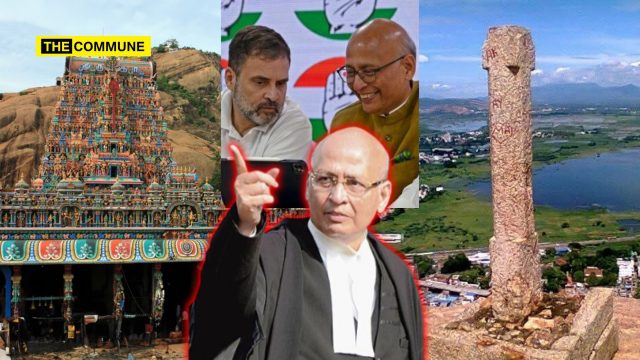
Congress Leader Abhishek Manu Singhvi Represented DMK Govt In Court To Prevent Hindus From Lighting Karthigai Deepam Atop Thirupparankundram Murugan Temple Hill

Abhishek Manu Singhvi, a prominent Congress leader and Rajya Sabha MP, who appeared in the Court on behalf of the DMK-led Tamil Nadu government.

His role was to challenge a Madras High Court order allowing Hindu devotees to light the Deepam at the ancient “Deepathoon”—a stone lamp pillar atop the hill—effectively seeking to prevent the ritual from taking place.

The Karthigai Deepam festival, celebrated annually in the Tamil month of Karthigai (typically November-December), commemorates the triumph of light over darkness. At Thirupparankundram, the ritual involves lighting a massive lamp atop the hill’s Deepathoon, a towering stone pillar believed to date back centuries.

The turning point came on December 1, 2025, when Justice G.R. Swaminathan of the Madras High Court’s Madurai Bench issued a landmark order. In response to Ravikumar’s petition, the judge directed the Subramaniya Swamy Temple administration to light the Karthigai Deepam at the Deepathoon “from this year onwards,” alongside the usual sites.

But the DMK government, led by Chief Minister M.K. Stalin, refused to comply. Instead, it clamped fresh prohibitory orders across Thirupparankundram, detaining devotees—including BJP leaders like state president Nainar Nagendran and senior figure H. Raja—who attempted to ascend the hill under Central Industrial Security Force (CISF) protection.

Protests erupted, with Hindu outfits accusing the state of “anti-Hindu bias” to appease minority voters ahead of the 2026 Assembly elections.

On December 3, Ravikumar filed a contempt petition, alleging deliberate defiance. Justice Swaminathan, visibly frustrated, summoned district officials and permitted the petitioner and nine associates to light the lamp themselves under police escort. When even this was thwarted, the court escalated: on December 4, it dismissed the state’s appeal and reiterated the directive, lambasting the administration for “nullifying” judicial authority.

Enter Abhishek Manu Singhvi.

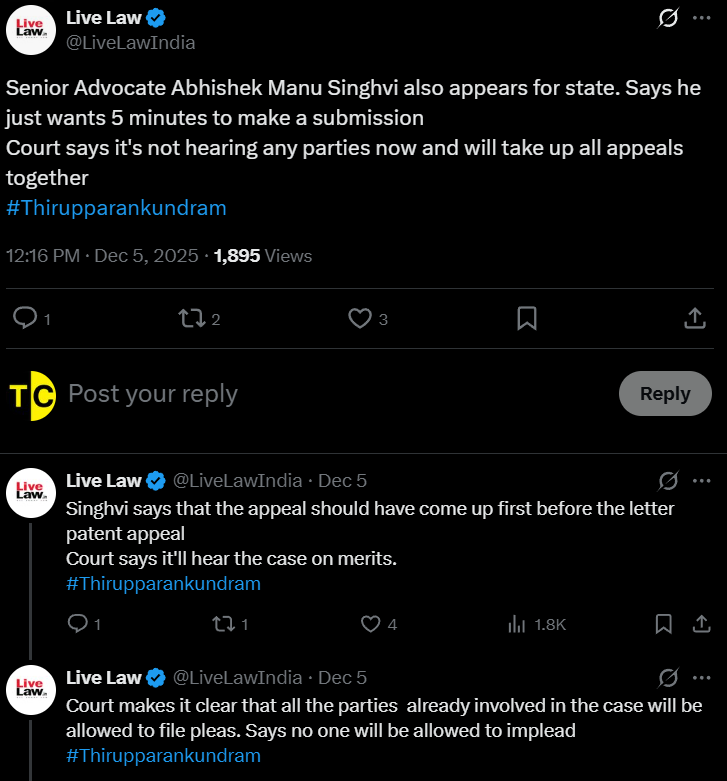
Abhishek Manu Singhvi appeared on behalf of the DMK government, requesting just a brief window to present initial arguments. However, the court firmly deferred any substantive discussions, emphasizing a comprehensive review of all appeals together.

Singhvi contended that the state’s petition ought to take precedence over the Letter Patent Appeal process, but the judges clarified they would evaluate the case on its substantive merits during the full hearing. The bench also ruled that only existing parties could participate, barring any new interventions or impleadments.

What Has Happened So Far

On 1 December 2025, Justice G.R. Swaminathan unambiguously ruled that the Karthigai Deepam must be lit at the ancient Deepathoon atop the hill, not at the Uchipillaiyar mandapam as insisted by the DMK-aligned administration. His order was based on a 1923 decree and subsequent Privy Council rulings affirming the temple’s ownership of the hill.

The state simply refused to comply. Instead it issued prohibitory orders, blocked devotees, moved hurried appeals, and invoked “law and order” to prevent execution of a judicial direction. Even after a contempt order permitting devotees to ascend with CISF protection, police physically stopped them. The Division Bench later observed that the state had “wilfully decided” not to obey the court.

Rather than respecting the judiciary, the DMK escalated its defiance—filing appeals, manipulating administrative orders, and even submitting misleading documents attributed to priests. The HR&CE Department, police and district administration functioned as an anti-Hindu enforcement arm, prioritising “minority sensitivities” over constitutional rights.

As of December 7, 2025, the lamp has not been lit at Deepathoon. The BJP and Hindu Munnani has annouced a state-wide protest against the DMK government for its attempt to curtail religious rights of Hindus.

By deploying senior leader Abhishek Manu Singhvi to argue the DMK’s case, Congress has effectively lent its national stature to the state’s efforts to suppress a millennia-old Hindu ritual

This move aligns with the INDI Alliance’s broader agenda of ‘eradicating Sanatana Dharma’.

Subscribe to our channels on WhatsAppTelegram, Instagram and YouTube to get the best stories of the day delivered to you personally.
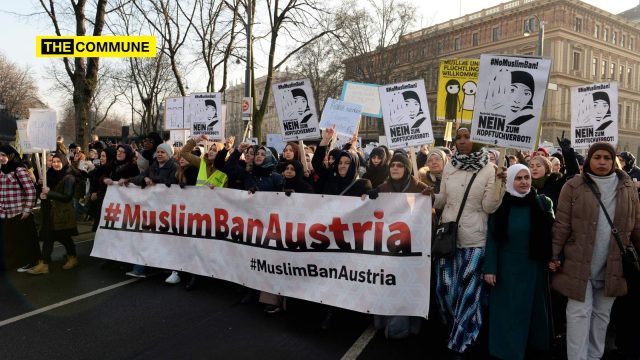
Inside Austria’s Islamisation: How Migration, Demography & Extremism Are Changing The Country Forever

On 16 November 2025, the Pew Research Center projected that Europe’s Muslim population will continue to rise significantly by 2050, estimating it could reach between 11.2% and 14% under various migration scenarios. In Austria specifically, where Muslims accounted for 6.9% of the population in 2016, the share could grow to 10.6% due to factors such as higher fertility rates and a substantially younger median age within the community.

Against this demographic backdrop, this report compiles 15 incidents recorded between February 2015 and November 2025 that illustrate the growing public debate and, in some quarters, anxiety over what is seen as the “Islamisation” of Austria.

#1 Pew Study Projects Muslim Population May Reach 19.9% in Austria by 2050 – November 2025

A Pew Research Center study projected Europe’s Muslim population may rise to 11.2% under medium migration or 14% under high migration by 2050. Austria stands out: its Muslim population, 6.9% in 2016, could grow to 10.6% (medium) or 19.9% (high migration). Analysts attribute this jump to higher fertility rates, a younger median age, and continued migration patterns. These increases are driven by higher fertility rates and a younger median age among Muslims compared to non-Muslims in Europe.

#2 Vienna Court Allows Sharia-Based Arbitration in Civil Case – August 2025 

The Vienna Regional Court upheld a private Sharia-based arbitration agreement between two consenting Muslim men, ruling that it did not violate Austrian public order. The verdict triggered national debate, with critics warning of a “parallel legal system” emerging in Austria. Supporters argued that private arbitration is allowed as long as public law is not breached.

#3 Muslim Students Form Majority in Vienna Primary School – April 2025 

New education data revealed that 41.2% of Vienna’s elementary school students are Muslim, surpassing Christian students at 34.5%. Policymakers expressed concern about integration challenges, rising language-learning deficits, and academic performance gaps. Critics framed the shift as evidence of “cultural displacement,” while others blamed decades of inadequate integration policies.

#4 Syrian Asylum Seeker Kills Teen in Stabbing Rampage – February 2025 

A 14-year-old Austrian boy was killed and five others injured after a 23-year-old Syrian asylum seeker carried out a knife attack in Villach. Police later found an ISIS flag in his home, confirming extremist motivation. Victims included two 15-year-olds and three adults aged 28 to 36, three of whom remained in intensive care.

#5 ISIS Sympathiser Plots Suicide Bombing at Taylor Swift Concert – August 2024 

A 19-year-old Islamic State sympathiser was arrested for planning a suicide bombing at Taylor Swift’s Vienna concerts. Authorities seized chemical agents, explosives, knives, and ISIS propaganda from his home. A second suspect, aged 17, who worked for a company servicing the stadium, was also detained. Police described the case as involving “concrete preparatory acts,” prompting heightened security around major events.

#6 Afghan Migrants Riot in Vienna Supermarket, Injuring Shoppers – July 2024 

Three Afghan migrants (aged 22, 23, and 25) rioted inside a supermarket in Vienna’s Meidling district on July 4, 2024, violently overturning shelves, throwing produce, and attacking customers. A 36-year-old man and his 47-year-old partner were assaulted, pelted with fruits and vegetables, and later hospitalised with a concussion, cuts, and bruises. Staff repeatedly attempted to calm the attackers. Police arrived shortly after being alerted and charged the men with bodily harm and property damage; the 23-year-old, reportedly intoxicated, was temporarily arrested for aggressive behavior.

#7 Teen Arrested for Planning Islamist Attack on Vienna Synagogue – December 2023

Police arrested a 16-year-old of Turkish origin who was plotting an ISIS-inspired attack on a Vienna synagogue. Investigators discovered bomb-making instructions, weapons, ammunition, and ISIS videos. Authorities said the teen intended to procure firearms and targeted the Jewish community.

#8 Migrant Interrupts Cathedral Mass, Threatens to “Slit Throats” – November 2023 

A Muslim migrant disrupted Sunday mass at a Vienna cathedral, jumping over the altar barrier and threatening to “slit throats” while brandishing a screwdriver. Security personnel intervened before any injury occurred.

#9 Study Finds Vienna Mosques Promoting Separatism – March 2023

Austrian Integration Fund research reported that many Vienna mosques promoted Islamic separatism, rejected Western democratic norms, and maintained ties with foreign governments and Islamist networks. Only a minority encouraged integration. Critics argued that Austria’s 2015 Islam Law reforms had failed to prevent foreign ideological influence.

#10 Austria Closes Mosque Linked to Vienna Terrorist – November 2020

Following the Vienna terror attack, authorities closed two mosques after discovering the attacker had visited them regularly. Investigators said both sites contributed to radicalisation and failed to meet legal oversight standards.

#11 ISIS-Inspired Gunman Kills Four in Vienna Attack – November 2020 

Kujtim Fejzulai, a 20-year-old ISIS supporter previously jailed for attempting to join ISIS, carried out a deadly shooting and stabbing spree in central Vienna. He killed four civilians before being shot by police. Authorities later detained 14 associates in nationwide raids. The attack marked Austria’s worst terrorist incident in decades.

#12 Christmas Market Bombing Plot Foiled by Authorities – December 2019 

Three ISIS-inspired men were arrested for planning to bomb Vienna’s Christmas market. The mastermind was already imprisoned for two prior attempts to join ISIS yet continued coordinating via an illicit cellphone. Authorities later said the group also discussed attacks in other European cities.

#13 Driver Shouts “Allahu Akbar” During Vienna Car-Ramming Attempt – September 2016 

A 21-year-old man, Ibrahim C., drove into a pedestrian area while shouting “Allahu Akbar,” attempting to run over civilians. Police subdued and arrested him after he resisted violently. Prosecutors treated the case as a potential terrorist act, sparking debate over radicalisation within migrant communities.

#14 Austrian Teen Who Joined ISIS Beaten to Death in Syria – November 2015 

Seventeen-year-old Samra Kesinovic, who left Vienna in 2014 with her friend Sabina Selimovic to join ISIS, was reportedly beaten to death while trying to flee the terror group’s territory. Kesinovic had previously attempted to contact family to return home. Her friend Sabina is believed to be still missing.

#15 Austria Passes Law Banning Foreign Funding for Muslim Groups – February 2015 

Austria enacted a landmark Islam Law banning foreign funding of Islamic groups, requiring imams to speak German, and standardising Qur’an translations. The law aimed to build a uniquely “European Islam.” Muslim organisations criticised the law as discriminatory, while Turkey called it an attack on religious freedom. The legislation remains foundational to Austria’s efforts to regulate Islam.

Subscribe to our channels on WhatsAppTelegram, Instagram and YouTube to get the best stories of the day delivered to you personally.
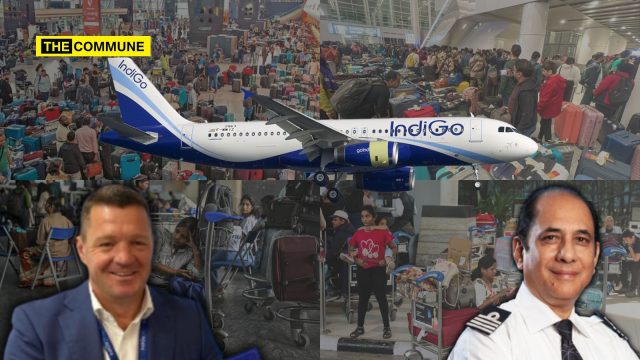
Indigo Employee Writes Open Letter Slamming Management And Blaming Toxic Work Culture

In a scathing anonymous open letter circulating widely on social media, an IndiGo employee has accused the airline’s management of fostering a culture of fear, intimidation, and neglect that has culminated in the carrier’s ongoing operational crisis. The letter, shared on X (formerly Twitter) by aviation commentator @AeroAwcs on 6 December 2025.

The crisis erupted earlier this week when new flight duty time limitation (FDTL) rules enforced by the Directorate General of Civil Aviation (DGCA) restricted pilots’ night landings and extended rest periods to combat fatigue. IndiGo, India’s largest airline with a 60% market share, was caught off-guard, leading to over 1,000 cancellations since December 3, including all departures from major hubs like Delhi and Mumbai on some days.

The DGCA has since granted a temporary exemption until February 10, 2026, allowing IndiGo to resume operations, but not before issuing a show-cause notice to CEO Pieter Elbers and COO Wolfgang Prock-Schauer.

Titled “Open Letter to My Fellow Citizens, and to the Management of IndiGo,” the missive paints a grim picture of internal decay at the low-cost carrier, which began as a proud startup in 2006 but allegedly devolved into a “too big to fail” behemoth under arrogant leadership. “We started off small in 2006. We were proud—genuinely proud—of what we were building,” the author writes, contrasting those early days with a later attitude of hubris: “Remember this phrase, yes we heard this in 2009 when Lehman Brothers and likes failed. And we, the employees, kept warning—sometimes quietly, sometimes desperately. But no one listened.”

The letter accuses management of strangling competition through overcapacity tactics—such as flooding routes during Akasa Air’s 2022 launch—and prioritizing profits over safety. Pilots raising fatigue concerns were reportedly summoned to headquarters, “intimidated, shouted at, and humiliated,” with no accountability. Ground staff, earning as little as ₹16,000-18,000 per month, were forced to handle the workload of three people, running between aircraft without extra compensation even as night duties doubled and leaves were curtailed.”

This downfall was years in the making,” the employee asserts, linking the current chaos to systemic issues like unqualified promotions based on access to employee stock options (ESOPs) rather than talent. “The real rot started when titles became more important than talent. Suddenly, people who couldn’t even draft a proper email were becoming VPs—because being a VP meant access to ESOPs and power.” The author extends the critique beyond the cockpit, noting how the airline’s monopoly-like practices affected millions of passengers and the broader economy.

The letter’s release comes days after Elbers acknowledged “operational failures” in an internal memo to staff, vowing to restore punctuality as the “immediate goal” and outlining plans to hire over 900 pilots by early 2026 to comply with the DGCA norms.

However, the open letter dismisses such measures as too little, too late, urging the public and regulators to recognize that “the recent mass disruptions were not just an operational failure—they were a failure of leadership.”

Image

Reactions online have been swift and supportive. Aviation professionals and passengers have echoed the sentiments, with one X user calling for heads to roll and tagging regulators like the DGCA and Ministry of Civil Aviation.

Former pilots pointed out that India has around 4,700 unemployed aviators who could fill gaps immediately, questioning why IndiGo—despite having a reported 20% pilot surplus—failed to prepare.

Critics, including ex-aviation experts, have demanded a government probe, alleging the DGCA’s initial exemptions compromised safety for the sake of IndiGo’s dominance.

IndiGo has not publicly responded to the open letter as of Sunday evening, but the airline stated it is ramping up operations and issuing refunds to affected passengers.

Operations are expected to stabilize by December 10, though the fallout—from stranded travelers to rival airlines absorbing overflow—has exposed vulnerabilities in India’s aviation sector.

As the dust settles, the letter serves as a stark reminder: What began as an underdog success story risks becoming a cautionary tale of unchecked growth. “We all looked away and now we blame this on monopoly,” the author laments. With the DGCA forming a committee to investigate, the coming weeks could determine whether IndiGo’s “too big to fail” era ends in reform—or regret.

Subscribe to our channels on WhatsAppTelegram, Instagram and YouTube to get the best stories of the day delivered to you personally. 
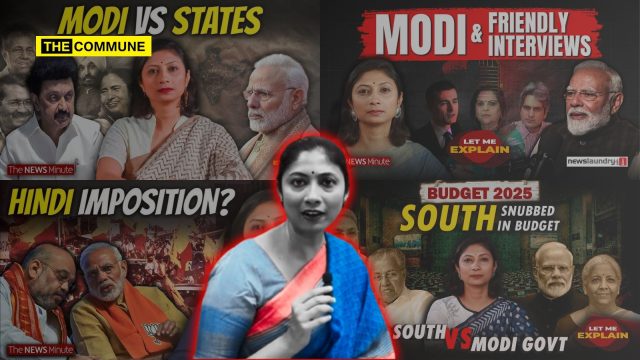
100 Episodes Of ‘Let Me Explain’: Dissecting TNM’s Explainer Series That Doesn’t Explain But Peddles Propaganda

The News Minute has been the face of leftist narrative peddling for quite some time. A while ago, they came up with an “explainer” series and put a woman as the face of it – to possibly counter the “misogynistic” mansplaining with Pooja Prasanna’s “Let Me Explain” (LME) series. There was another lady before her. Over approximately two years, they have built a playlist of 100 episodes (2023-2025) and claim to ‘break down complex issues’. Its official positioning promises to “cut through the media noise,” “keep it factual without raising the volume,” and “declutter” complex topics to start “important conversations.”

However, a close look at the entire series very quickly reveals what the series is all about. Far from being a neutral explanatory guide, “Let Me Explain” operates as a sophisticated vehicle for narrative setting/engineering, systematically advancing a woke radical leftist, anti-Hindu, sub-nationalist agenda.

In this article, we try to break down the tricks and themes that shape Let Me Explain.

I. The Thematic Architecture: A Quantitative Breakdown Of 100 Episodes

When you go through all the 100 episodes, a clear pattern is revealed.

Anti-Modi Narrative (35% – 35+ Episodes): This is the series’ central pillar. Episodes like “How India hid its COVID-19 death numbers | Modi,” “Why Modi won’t face the press & why it matters,” and “Amit Shah and his false data on Electoral Bonds” consistently frame the ruling government as authoritarian, deceptive, anti-democratic, and communal. The pattern is unrelenting: the Modi government is the primary antagonist in the LME narrative universe.

South vs. North Narrative (15% – 15+ Episodes): The series meticulously cultivates a victimhood narrative to feed Dravidianist separatism in Tamil Nadu. Episodes such as “Why south Indian states have started a tax movement,” “Stalin vs Modi: Union govt denying funds to best-performing states?” and “Tamil Nadu’s century long fight against Hindi imposition” position the Centre as a discriminatory force, with a special focus on favouritism towards Gujarat and the imposition of Hindi.

Democracy In Danger Narrative (12% – 12+ Episodes): LME systematically questions the integrity of India’s democratic processes. “Vote chori’: Inside India’s voter list scandals,” “Why Election Commission is called biased,” and multiple episodes on Electoral Bonds portray the BJP as the beneficiary of rigged systems and institutional capture, undermining electoral legitimacy. What it basically does is act as Congress’ mouthpiece, to create a democratic deficit by sowing distrust about the election process.

Hindutva Or Political Hinduism As Threat (12% – 12+ Episodes): Hindu nationalism is uniformly framed as a dangerous social poison. From “Beef politics: Rise of cow vigilantes” and “The Truth Behind ‘Love Jihad’: Exposing Myths” to “Ladakh’s fight for jobs, land and against Hindutva,” the series dismisses or pathologizes Hindu concerns while framing religious mobilization solely as a cynical BJP electoral strategy.

On the other hand, political Islam is given a pass.

Pro-Naxal Narratives (8% – 8 Episodes): This category serves as the social justice pillar, advocating for a caste census, framing activists like GN Saibaba as dissent martyrs, and portraying the UAPA as a draconian tool of state oppression. Figures like musician TM Krishna are celebrated as heroes.

Peddling Adani/Ambani Trope (8% – 8+ Episodes): The “Adani Trilogy” and episodes on wealth inequality construct a narrative of a corrupt corporate-government nexus. The Ambani wedding extravaganza is contrasted with the struggles of the middle class, advocating for wealth redistribution and state intervention.

Systemic Failures (10% – 10 Episodes): The remaining episodes on police encounters, stampedes, and exam failures are framed not as isolated tragedies but as evidence of systemic collapse and an accountability deficit under the current regime.

This breakdown makes the larger picture clear – the pattern is pretty hard to ignore. “Let Me Explain” is not a general interest explainer but a targeted ideological project.

II. The Narrative Engineering Toolkit: Techniques Of Persuasion And Bias

LME’s punch lies not just in what it covers, but how it frames its content. The series employs a repeatable set of propaganda setting techniques.

Title Construction: Pre-Judging The Conclusion

The bias is revealed right in the titles with their loaded language. They are designed to trigger an emotional response and pre-empt critical thinking.

Accusatory Language: “How India hid its COVID-19 death numbers,” “How CBFC is butchering movies,” “Electoral Bonds scheme or scam?”

Villain Identification: Direct naming of Modi, Amit Shah, Adani, and the RSS ensures the audience knows who to blame before the video even begins.

Victimhood Centering: “Why southern states are upset,” “Demonising dissent,” “Forced to bury bodies.”

Rhetorical Questions: “Why Modi won’t face the press & why it matters” frames a political choice as an inherent democratic crisis.

The Episode Structure: An Eight-Step Formula For Outrage

Across diverse topics, LME follows a precise, repeatable structure that transforms complex issues into emotionally charged narratives:

The Hook: A positive acknowledgment is immediately undermined by an ominous “but,” transforming a sacred pilgrimage site or a government scheme into a subject of suspicion within seconds.

Historical Pattern: Unconnected past incidents are presented as a deliberate pattern, establishing a narrative of victimhood or conspiracy without statistical context.

Present “Crisis”: A current allegation or data point is framed as the latest evidence of this pattern, with testimony elevated to fact and previous episodes cross-referenced to create an illusion of mounting proof.

Selective Data Dump: Raw numbers are presented for shock value (e.g., “Gujarat gets more funds than all southern states combined”) while omitting crucial context like per capita calculations or infrastructure requirements.

Emotional Manipulation: Hypothetical scenarios (“Imagine being a family member…”) and personal anecdotes bypass rational analysis, ensuring the viewer identifies with the framed victim.

Systematic Indictment: The issue is escalated from a specific case to a broad indictment of the system using rhetorical questions that shift the burden of proof onto the accused.

The Subscription Appeal: A funding request is embedded within the moral outrage, positioning subscription as a duty to support “truth-telling” against powerful interests.

Case Study: The Dharmasthala Episodes – How Speculation Was Labelled As Investigation

Episodes 82 and 85 on Dharmasthala exemplify the series’ most problematic tendencies. Using titles like “‘Forced to bury bodies’: Allegations by a sanitation worker” and “A history of deaths that haunt Dharmasthala,” LME employs:

Loaded Language: Emotionally charged words that imply guilt.

Privileging Allegation: Elevating unverified worker testimony to the level of fact.

Burden Shifting: Implying the institution must disprove the claims rather than the series proving them.

This technique launders conspiracy theories as investigative journalism, destroying reputations based on speculation.

III. The Ideological Universe Of LME: Villains, Heroes, and Worldview

The series paints everyone in black and white – only heroes and villans exist.

The Villain Roster:

Primary: Narendra Modi, the BJP, the RSS, and Amit Shah – portrayed as an authoritarian, communal, and corrupt nexus.

Secondary: Adani/Ambani (crony capitalists), the Election Commission and SEBI (compromised institutions), Gujarat (favouritism beneficiary).

Rotating: Yogi Adityanath, Narayana Murthy, and institutions like the CBFC and NCERT.

The Hero Framework:

Celebrated Figures: Opposition leaders (Stalin, Siddaramaiah), activists (GN Saibaba, Rohith Vemula), artists (Pa. Ranjith, TM Krishna), and basically anybody with a woke radical worldview.

The Pattern: Heroes are exclusively those who challenge not every established power but only the BJP, RSS is a threat whereas PFI, SDPI, Muslim League, Jamaat are democratic forces, represent aggressive proselytizing voices as the victims while ignoring the plight of Hindu voices.

The Core Ideology Peddled By The Series

Politically: The BJP is painted as an authoritarian monster dismantling democracy, while the entire opposition is portrayed as a helpless victim. Even figures like Umar Khalid and Sharjeel Imam—who openly incited unrest during the Delhi riots as part of a coordinated regime-change mobilisation—are projected as martyrs. Yet when the DMK government goes after critics in Tamil Nadu, or when someone like Ketaki Chitale is jailed simply for a social media post, the national outrage suddenly disappears.

Economically: Corporate wealth is illegitimate cronyism; welfare spending (“revdi”) is an unalloyed good.

Socially: Hindutva is an existential threat; enforcing caste identity and linguistic politics, leaving Hinduism are the primary vehicles for liberation.

Regionally: Indian Nationalism is bad, regionalism is good. South India is a victim of Northern exploitation; regional parties no matter how corrupt they’re protect the Constitution.

Opinions Laundered As Explanation

After taking a look at the 100 episodes, the conclusion is pretty straightforward.

“Let Me Explain” doesn’t explain, it indoctrinates.

Its primary function is not to educate but to indoctrinate; not to declutter but to inflame; not to inform but to reinforce. It is a storytelling machine to push one narrative:

  • Systematically demonizes one political party/group while romanticizing its opponents.
  • Cherry-picks data and manipulates language to pre-determine conclusions.
  • Exploits its subscription model to monetize audience outrage and confirmation bias.
  • Erodes nuance, critical thinking, and the possibility of political compromise by reducing India’s complex reality to a simplistic battle between good and evil.

The subscription-driven funding model of Let Me Explain incentivizes ideological reinforcement over journalism. Because subscribers pay to have their worldview affirmed, the series avoids heterodox views and relies on outrage, crisis framing, and constant villainization of the BJP to retain its base. Balanced reporting risks cancellations, so emotional, partisan narratives become the product. This creates a loyal “TNM community” – kind of like a radical woke leftist cult in which criticism feels personal. The result is money starts steering the coverage, not facts.

Criticizing the government is fine, we live in a democracy; it’s the way it pretends to be neutral while twisting facts. It disguises advocacy as neutrality and speculation as investigation. It creates an audience that is politically engaged yet poorly informed, armed with talking points yet incapable of understanding opposing arguments.

Subscribe to our channels on WhatsAppTelegram, Instagram and YouTube to get the best stories of the day delivered to you personally. 
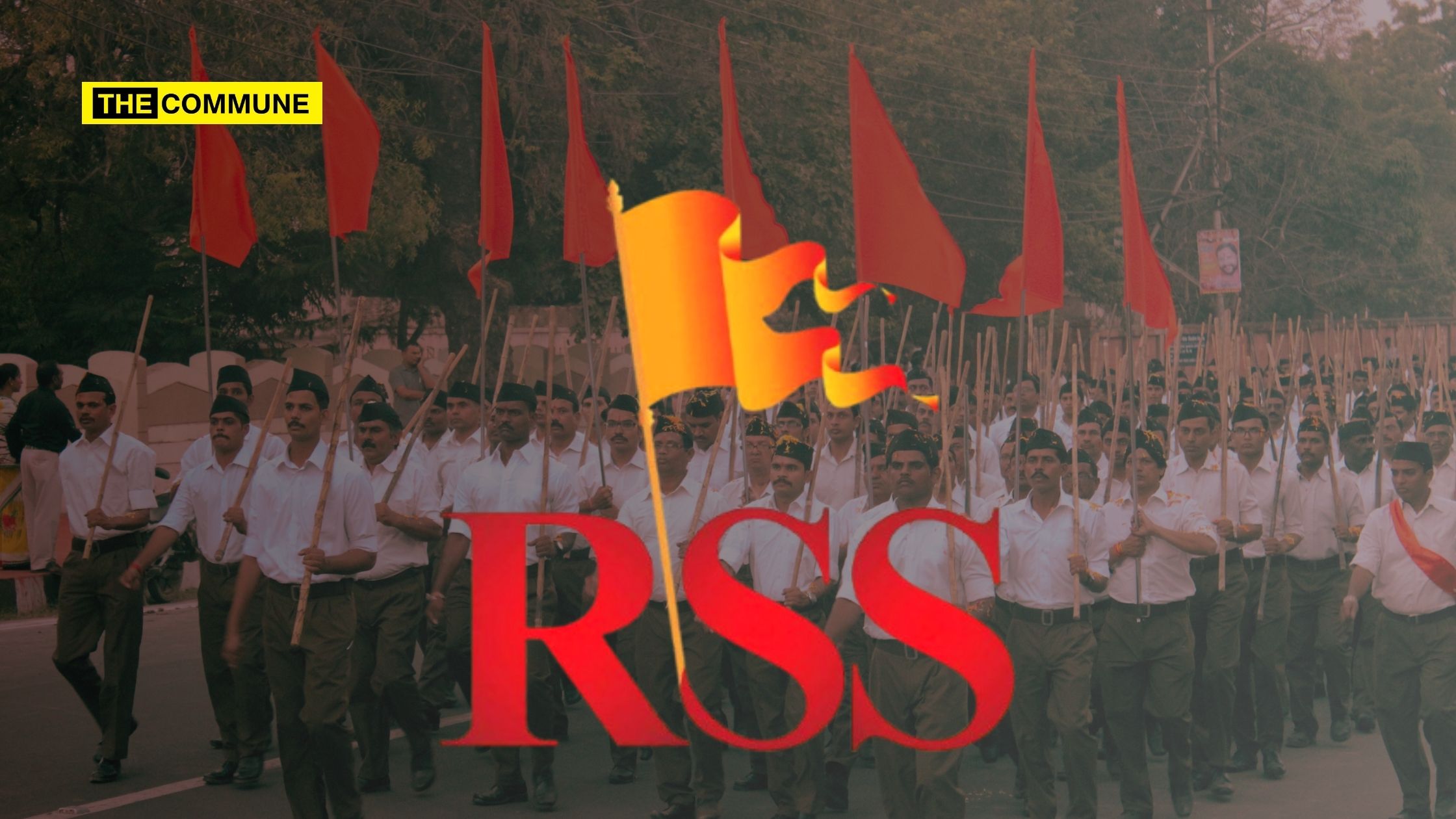
A Chronicle Of 20 Major Fake News Narratives Targeting The RSS

RSS

Over the past eight years, the Rashtriya Swayamsevak Sangh (RSS) has been a persistent target of coordinated disinformation campaigns on social media, a fact-checking review reveals. This report examines 20 such viral claims, which have repeatedly attempted to link RSS volunteers to acts of vandalism, espionage, communal violence, and attacks on religious sites, often with the intent to stoke social discord and political polarization.

The 20 Fake News Narratives: Claim vs. Fact

#1 Fake Claim: RSS Bulldozes 1500-Year-Old Temple for Parking in Delhi (29 November 2025)

Claim: A viral video alleged that a 1400/1500-year-old temple in Delhi’s Jhandewalan area was bulldozed to create parking for an RSS office. Political parties accused the RSS of deliberately targeting the temple.

Fact: Ground reporting by local media institution ‘Ritam’ confirmed the municipal action was limited to removing illegal encroachments around the temple. The temple itself remained completely untouched and undamaged.

#2 Fake Claim: RSS Attacks Catholic School in Telangana (27 November 2025)

Claim: A video of chaos at a mass wedding event in Uttar Pradesh was shared with the false claim that it showed RSS members attacking a Catholic school in Telangana.

Fact: The video was from a stampede during a wedding ceremony in Hamirpur, UP. It had no connection to any school attack or the RSS.

#3 Fake Claim: RSS Workers Beaten by Public in Maharashtra (25 October 2025)

Claim: A video of a clash involving people in RSS-like uniforms was shared as evidence from Maharashtra, claiming the public was now beating up RSS workers for unlawful activities.

Fact: The incident occurred at Rajasthan University, Jaipur, on 30 September 2025, and was a clash between NSUI and RSS-linked student groups over a ‘Shastra Pujan’ event. It was not in Maharashtra.

#4 Fake Claim: List of 22 RSS Members Arrested for Spying for Pakistan (24 October 2025)

Claim: A list naming individuals like Dhruv Saxena and Chaman Lal was circulated by handles like Nidhi Singh Rathore, claiming they were BJP/RSS members caught spying for Pakistan.

 Fact: Fact-check by OnlyFact found the list to be fabricated. None of the named individuals were RSS members, and several names were fictional.

#5 Fake Claim: RSS Training Volunteers to Kill Christians in Chhattisgarh (18 February 2025)

Claim: A video of people in saffron taking an oath was falsely claimed to be from Chhattisgarh, where RSS volunteers were allegedly being trained to kill Christians.

Fact: The video was in Telugu, not from Chhattisgarh. It showed Bajrang Dal recruits taking an oath to protect Hinduism through physical and economic means, with no mention of Christians.

#6 Fake Claim: RSS Volunteers Hoist Saffron Flag on Women’s Toilet in Maharashtra (12 December 2024)

Claim: A video was shared claiming RSS workers in Aurangabad (Sambhajinagar) broke a women’s toilet board and hoisted a saffron flag on it.

Fact: The video was from March 2023, related to protests during the renaming of Aurangabad to Sambhajinagar. It was shared with a misleading caption years later.

#7 Fake Claim: RSS Member Caught with Arms for Sambhal Violence (6 December 2024)

Claim: A pro-Khalistan handle shared a video claiming an “RSS member” was caught alive with weapons and ammunition to incite communal violence in Sambhal.

Fact: The video was from 23 September 2019, showing the arrest of two arms smugglers, Jitendra and Raj Bahadur, in Ghaziabad. The case was about illegal weapons trafficking, with no link to RSS or Sambhal violence.

#8 Fake Claim: Asia’s Largest Slaughterhouse Owned by RSS-Linked Hindus (8 December 2023)

Claim: An infographic claimed Asia’s largest slaughterhouse, ‘Al-Kabeer,’ was owned by Hindus from Gujarat who were all RSS members.

Fact: The company refuted the claim, identifying itself as a Muslim-owned company. Ministry of Corporate Affairs records showed its Chairman and MD is Gulamuddin M. Sheikh.

#9 Fake Claim: RSS’s Brutal Training of Children Shown in Viral Video (14 October 2023)

Claim: A video of a man brutally beating a child was shared with captions like “This is how RSS trains children.”

Fact: The video was from a gurukul in Sitapur, Uttar Pradesh, from two months prior. Education officials confirmed the school had no affiliation with the RSS.

#10 Fake Claim: RSS Demands 100 Acres in Ayodhya for New Headquarters (14 February 2023)

Claim: Media reports claimed the RSS had sought 100 acres of land in Ayodhya’s township to build a new headquarters.

Fact: The claim was completely false and fabricated. The RSS office “Saket Nilayam” already exists in Ayodhya.

#11 Fake Claim: RSS Kills Dalit IAS Officer, Gang-Rapes Daughter (29 September 2020)

Claim: A CCTV footage of a murder in Nagpur was shared with the claim that RSS workers had murdered a Dalit IAS officer in broad daylight and gang-raped his daughter inside a car.

Fact: The video showed the murder of a gambling den operator named Balya Binekar by rival gangsters near the residence of then Home Minister Anil Deshmukh. It had no connection to any IAS officer or the RSS.

#12 Fake Claim: RSS Workers Harass Muslim Woman in India (7 July 2020)

Claim: A video of a burqa-clad woman being harassed by a group of men was shared, claiming “Sanghi (RSS) men” were harassing a Muslim woman in India.

Fact: The video was from Bangladesh, uploaded by Bangladeshi channels in November 2018. It had no connection to India or the RSS.

#13 Fake Claim: RSS Worker Attacks Woman Preparing Sehri (7 April 2020)

Claim: A collage of two photos claimed an RSS worker attacked a Hindu woman for trying to prepare sehri (pre-dawn meal) for a Muslim Kashmiri girl.

Fact: The two photos were unrelated. One was from April 2020, the other of an injured woman from a 2024 communal clash in Gujarat, as per TV9 Gujarat.

#14 Fake Claim: RSS’s Brutality on Youth in Delhi Violence (2 March 2020)

Claim: A video of a youth being brutally assaulted was shared as evidence of RSS brutality during the Delhi riots.

Fact: The video was from Nagaur, Rajasthan (February 2020), where two men were beaten on theft charges. It was unrelated to Delhi or the RSS.

#15 Fake Claim: RSS Goons Throw Vegetable Seller’s Produce in Sewer (26 February 2020)

Claim: A video of a vendor washing vegetables in a sewer was shared with the claim RSS goons threw his vegetables because he was Muslim.

Fact: The full video showed locals confronting the vendor for washing vegetables in sewer water. The vendor admitted his mistake, and no RSS link was established.

#16 Fake Claim: Edited Photo Shows RSS Volunteers Saluting Queen Elizabeth (29 January 2020)

Claim: A black-and-white photo showed RSS volunteers saluting Britain’s Queen Elizabeth, shared to question their patriotism.

Fact: The photo was an edited fake. The original was from Queen Elizabeth’s visit to Kaduna Airport, Nigeria, on February 2, 1956.

#17 Fake Claim: RSS Sets Christian Couple on Fire in UP (11 October 2019)

Claim: A video was shared claiming “RSS Hindu radicals” set a Christian couple on fire in UP for protesting land encroachment.

Fact: UP Police Fact Check clarified the couple was Hindu, not Christian. They had attempted self-immolation over a case of sexual harassment by a neighbor, with no RSS involvement.

#18 Fake Claim: RSS Beats and Parades Naked Christian Woman in Bihar (6 October 2019)

Claim: A video of a woman being beaten by a mob was shared, claiming RSS radicals had stripped and beaten a Christian woman.

Fact: The 2018 video was from Bihar’s Bihiya town. The mob attacked the woman based on allegations of her involvement in a youth’s death. Police confirmed no RSS connection.

#19 Fake Claim: Captured Terrorist Claims RSS Funds Him to Kill Hindus (16 February 2019)

Claim: A photo of a captured terrorist with text claiming he confessed that the RSS supplies weapons and money to kill Hindus to sow hatred against Muslims.

Fact: The terrorist, Abdul Qayum, was a Pakistani national from Sialkot arrested in Jammu’s Akhnoor in 2016. He had trained in Muridke, Pakistan. No RSS link was found.

#20 Fake Claim: RSS Distributes Sandals with Image of Jesus Christ in Gujarat (7 July 2017)

Claim: A photo of sandals with Jesus’s image was viral with the claim that the RSS was distributing them for free in Gujarat to incite riots.

Fact: The photo had gone viral globally around July 2016. No such incident was reported from Gujarat, and the claim was baseless.

Subscribe to our channels on WhatsAppTelegram, Instagram and YouTube to get the best stories of the day delivered to you personally.
Hindu Lawyers Pleaded To Just Allow 3 Members To Light The Deepam At Thirupparankundram Deepathoon But The Police Denied

A heated confrontation erupted at the Thirupparankundram Hill Temple on Wednesday evening over the lighting of the Karthigai Deepam, following a High Court order that granted permission to Hindu devotees to light the Karthigai Deepam at the Deepathoon. The dispute pitted advocate Arun Swaminathan, representing the devotees, against senior police officials.

The conflict stems from an order by Justice GR Swaminathan, which directed the temple administration itself to light the sacred lamp. According to Arun Swaminathan, who addressed the police on-site, the temple authorities failed to comply with this directive. When a subsequent writ petition filed by the temple was returned without a proper case number, devotees were forced to file a contempt petition.

“The court waited until 6:00 PM. The Advocate General appeared and argued it was premature, so the court re-listed the matter for 6:05 PM, the actual time for lighting. Even then, there was no compliance,” Swaminathan stated, addressing police officials. “Because the order was knowingly violated, the court has now sent CRPF with protection for us.”

Swaminathan accused the Tamil Nadu government and police of a political intention to prevent Hindus from performing the ritual. “You are using Section 144 and claiming you have filed an appeal. What is the meaning of Section 144? What problem do you have in just allowing 3 people to light the lamp?” he asserted.

Another lawyer interjected to say that filing an appeal doesn’t grant an automatic stay.

“Court has given an order and the CISF has come. You’re not even allowing them! How is it justified? This is nothing but a breakdown of constitutional machinery.”, he told the police.

Police officials, in their defence, emphasized their priority to maintain local law and order. One senior officer countered, “The situation that existed that day is not the situation today. Our top priority is upholding law and order.”

The officer alleged that earlier instructions were given to the Hindu Religious and Charitable Endowments (HR&CE) department, but order was breached, leading to barricades being lifted and unrest. “We are handling the local law-and-order problem. We did not create an issue; we are not creating any issue,” the official insisted.

Swaminathan challenged this, highlighting the core legal point: “As of this moment, the order of Justice GR Swaminathan stands. He has passed an order; it is in force now. If a stay comes, I myself will take them and go.”

Subscribe to our channels on WhatsAppTelegram, Instagram and YouTube to get the best stories of the day delivered to you personally.
The “Timeless Qur’an” Claim Is Not Theology But A Political Strategy To Block Reforms And Silence Dissent

In Indian public life, few assertions are repeated as insistently as the claim that “the Qur’an is eternal, timeless, and valid for all societies and all eras.” The statement is routinely invoked by Islamist groups, conservative clerics, and sympathetic politicians—usually when questions are raised about reform, gender justice, or constitutional supremacy.

It surfaces whenever debates arise about the Uniform Civil Code, Muslim women’s rights, or judicial scrutiny of personal laws. Dissent is dismissed as “interference in religion,” while reform is framed as an “attack on Islam.”

But stripped of theological ornamentation, the claim that the Qur’an is “timeless” functions less as a spiritual belief and more as a political strategy.

Why “Timelessness” Is Repeated So Ruthlessly

This is the moot question, and the one that I have tried to answer in this article. In contemporary India, calling a scripture “timeless” serves a clear purpose: it places religious authority beyond debate.

If a text is eternal:

  • It cannot be amended
  • It cannot be subjected to democratic reasoning
  • It cannot be evaluated against constitutional values
  • It cannot be questioned by courts, citizens, or believers themselves

This framing converts social rules into non-negotiable absolutes, instantly delegitimising discussion. That is why the statement appears most often not just in mosques or theological treatises, but in political speeches, television debates, court affidavits, and protest slogans.

In short – “timelessness” is power language.

The Quiet Admission That Undermines The Claim

Here is the irony. The moment one raises concerns about the pejorative references to other communities and non-believers or treatment of women and their rights, the very same voices insisting the Qur’an is timeless also insist that it must be “understood in context.”

Context of history. Context of revelation. Context of social conditions. Context of tribal Arabia.

This is not a modern concession; it is unavoidable.

Once context is admitted, the claim of literal timelessness collapses. A rule that requires historical explanation is not timeless by definition. A command that must be reinterpreted to remain moral cannot be universally fixed. Contextualisation is not decoration—it is transformation.

Scholars Say What Politicians Avoid Saying

Even a small glance at modern Muslim scholarship exposes the contradiction.

Fazlur Rahman, modernist scholar and Islamic philosopher, widely respected across South Asia, argued that Qur’anic directives addressed specific social problems of their time. What matters today are the ethical goals, not the ancient solutions. That means the rules are historical, not eternal. Through his works, most notably “Islam & Modernity (1982)”, he emphasized that the moral values of the Quran endure beyond history and require constant reinterpretation.

In his seminal work, “Critique of Religious Discourse (1992)”, Nasr Hamid Abu Zayd went further, calling the Qur’an a text that entered human language and history, and therefore cannot escape interpretation. For asserting this, he was branded an apostate by the Egyptian court —telling in itself.

There are countless other Islamic scholars who have echoed similar principles. These are not extremist voices. They are mainstream Muslim thinkers. Yet their conclusions are rarely quoted in Indian political debates—because they dismantle the utility of the “timeless” claim.

Why This Is Ultimately A Political Claim

People who embrace the fiction of eternal validity, in practice are ready to accept the following, all of which was once central to the Quran – slavery, tribal warfare and caliphate governance. If centuries-old norms can be set aside silently, then what remains “timeless” is not the text, but who controls its interpretation.

The insistence that the Qur’an is timeless serves three political goals:

  1. Preserving clerical authority If the text is eternally clear, interpreters must never be challenged.
  2. Blocking reform: Any change can be dismissed as sacrilege rather than debated on merit.
  3. Mobilising identity: Critics are framed as enemies of faith rather than participants in a democracy.

This is why “timelessness” is shouted loudest in moments of social contestation—not spiritual reflection.

The Simple Logic That Ends The Debate

A timeless doctrine – (a) Applies unchanged; (b) Requires no historical mediation and (c) Functions identically across cultures

The Qur’an – (a) Requires context to interpret; (b) Reflects 7th-century Arabian society; (c) and Demands moral negotiation to remain relevant

Both statements cannot be true simultaneously.

What survives across time are human interpretations, not divine instructions frozen in amber.

Calling The Qur’an Timeless Is A Power Claim

To say the Qur’an is timeless is not a theological inevitability—it is a political decision.

It seeks to place religious authority above constitutional reasoning, public morality, and democratic scrutiny. Once contextualisation is acknowledged—and it must be—the idea of literal timelessness evaporates.

The Qur’an may retain spiritual or cultural significance for believers. But to present it as an eternally binding, context-free social doctrine in a modern constitutional democracy like India is neither honest nor sustainable.

That claim is not about God. It is about control.

DhiBhu is a political observer who writes on national security, foreign policy, and India’s geopolitical landscape.

Subscribe to our channels on WhatsAppTelegram, Instagram and YouTube to get the best stories of the day delivered to you personally.
Operation Dhurandhar Successful: ‘Aman Ki Asha’ Apologists Suffer Meltdown, Upset At “Anti-Pakistan Narrative” And “Hardcore Nationalism”

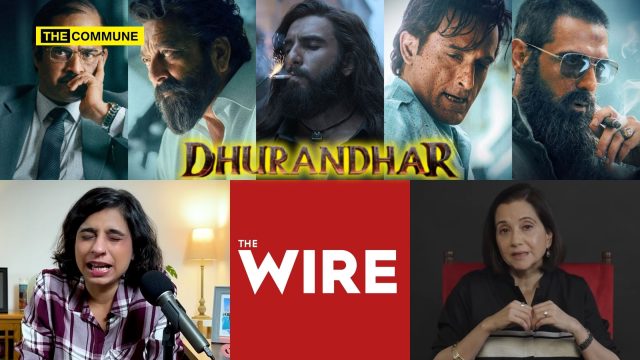
Aditya Dhar’s spy thriller Dhurandhar has stormed the box office and delivered a knockout punch to India’s perennial peace-with-Pakistan lobby and their cheerleaders in the liberal commentariat. Within days of release, the usual suspects – from The Wire to Anupama Chopra and Sucharita Tyagi – have gone into full meltdown mode, clutching pearls over “shrill nationalism,” “too much testosterone,” and the cardinal sin of showing Pakistan’s terror establishment exactly as it behaves: crass, indulgent, and dripping with bloodlust.

The Wire’s reviewer, in a piece that reads like a paid advertisement for Aman ki Asha, whines that the film “is as subtle as a troll” and takes grave exception to the portrayal of Pakistan’s “terror world.” Apparently, showing ISI officers as sleazy, chain-smoking, paan-spitting conspirators who fund slaughter in Mumbai is now considered Islamophobic fiction in certain enlightened circles. One almost expects the reviewer to demand a trigger warning for the 26/11 montage – you know, the one that uses actual news footage of the attack that Pakistan’s Deep State orchestrated and still refuses to acknowledge.

Film critic Anupama Chopra, never one to miss a chance to signal virtue, slammed the movie for its “inflammatory anti-Pakistan narrative” and complained that it is overloaded with “too much testosterone.” One wonders what exactly Madame Chopra expected from a film about RAW agents hunting terrorists: Katrina Kaif and Ranveer Singh sipping oat-milk lattes in Karachi while discussing gender fluidity with LeT commanders?

YouTuber Sucharita Tyagi took particular offence at the film’s “aggressive hyper-masculinity” and “hardcore nationalism.”

Visibly agitated in her review, she objected to the cinematic crime of depicting Pakistani politicians and ISI officers as “crass and indulgent” – as if the real ones are renowned for their monastic restraint and Gandhian simplicity.

But the real trigger, it seems, was Aditya Dhar’s audacity to weave in real audio recordings of the 26/11 handlers and actual news footage from both the 2001 Parliament attack and the Mumbai massacre. Tyagi frets that this “blurs the line between fiction and fact” and might lead the audience to believe “everything in the film is factual truth.” Pray tell, which part isn’t? That Pakistani terrorists carried out 26/11? That their handlers were calmly giving kill orders over phone from Karachi? That the ISI has never been held accountable? The only thing blurred here is the line between criticism and denialism.

The film ends, unapologetically, with the now-iconic line: “Ye Naya Hindustan Hai. Ye ghar mein ghus ke marega bhi.”

Sucharita Tyagi unable to cope with the aggressive attitude of India towards its enemies who keep sending terrorists across the border to murder sleeping children, train commuters, and pilgrims, says “Beneath the adrenaline, I continuously felt an unmistakable unease. Something sinister hums under the surface. I can’t quite articulate it yet. Perhaps my thought may become clearer when part 2 of this film comes out in April. But you best believe that something nefarious is afoot when the film chooses to end with “Ye Naya Hindustan Hai, Ye Ghar Mein Ghusega Bhi Aur Marega Bhi”

If Pakistan and its loyal Indian proxies are rattled, Operation Dhurandhar is already successful.

Check out this thread below for more meltdowns.

Subscribe to our channels on WhatsAppTelegram, Instagram and YouTube to get the best stories of the day delivered to you personally.