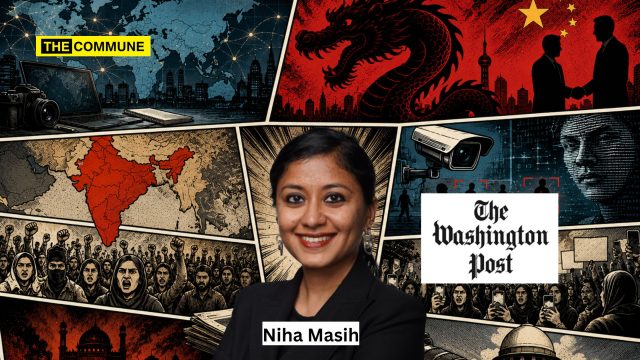
From the shores of America to the corridors of Seoul, Niha Masih has built a career on a simple formula: criticise India, defend China, and frame every Hindu action as oppression while packaging Muslim victimhood as journalism. The Washington Post’s Seoul-based correspondent, a brown sepoy, has made India coverage her specialty, but her reporting reads less like objective journalism and more like a carefully curated narrative designed for Western consumption.
Niha Masih is an Indian-American journalist currently based at The Washington Post’s Seoul hub. Her coverage of India has focused extensively on Kashmir, Hindutva, surveillance, Citizenship Amendment Act (CAA) protests, and defence of China.
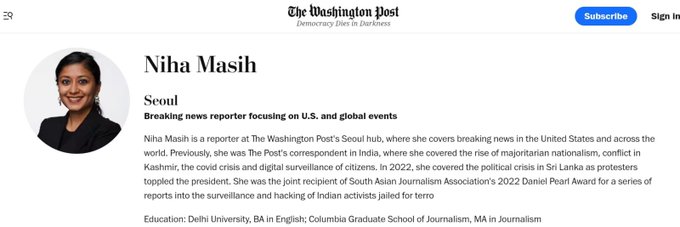
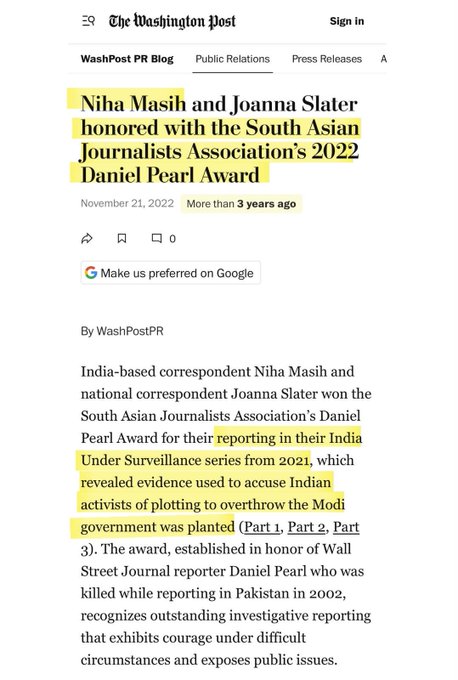
Masih received the 2022 Daniel Pearl Award for her series titled “India Under Surveillance.” The series reportedly claimed that evidence used to accuse Indian activists of plotting was “planted.”
Coverage of COVID-19 Terminology
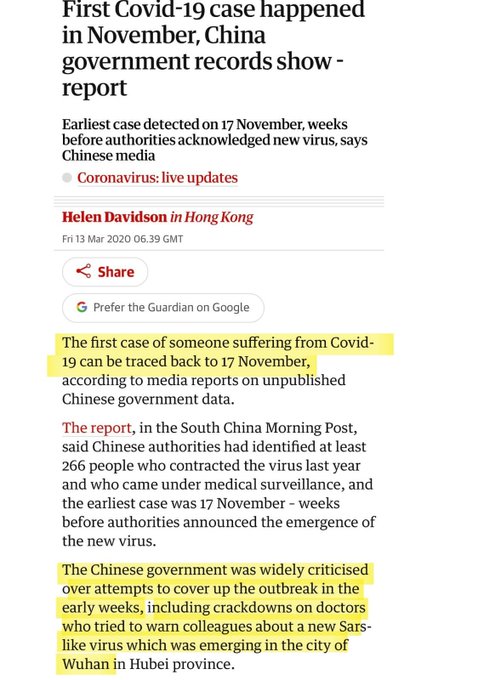
In 2020, Masih criticised Indians for using the term “Chinese virus” to refer to COVID-19, characterising such usage as racist.

It is noteworthy that diseases have historically been named after places of origin, but Masih’s criticism was directed specifically at Indian usage of the term.
Masih did not criticise China for its initial handling of the outbreak, including the delay in sharing information with the international community, nor did she use similar language to condemn China’s actions during that period.
Support For Anti-National Activists
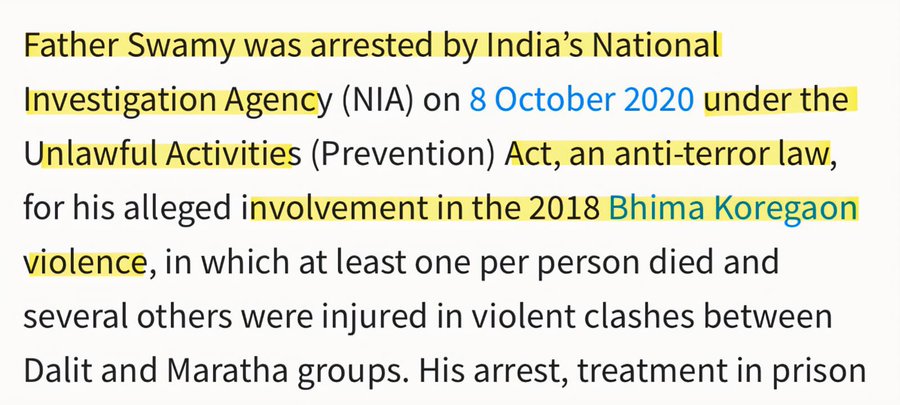
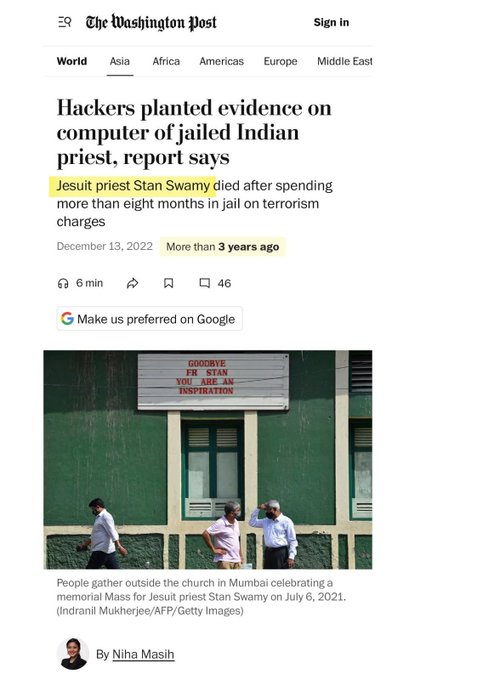
Among the activists she defended was Stan Swamy, who was linked to the Bhima Koregaon case. It is evident that the case involved Maoist literature and connections to Naxal networks, as also confirmed by court records.
Coverage of Kashmir
Masih has authored articles including one titled “Locked Up and Shut Down: How India Has Silenced Opposition to its Crackdown in Kashmir.”
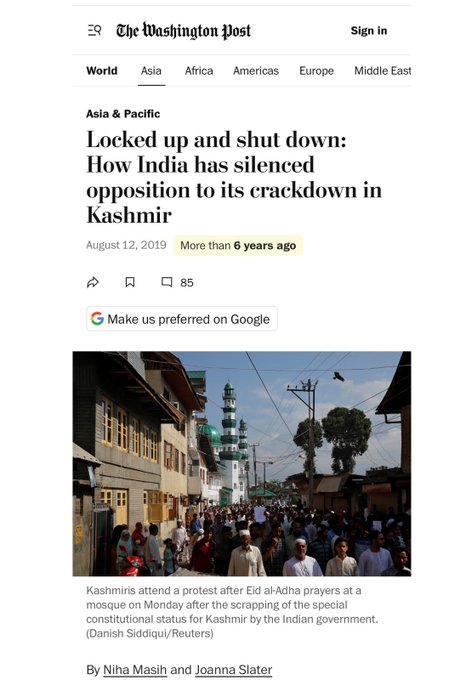
Her coverage has consistently used the term “Indian-administered Kashmir,” that aligns with Pakistan’s official terminology regarding the territory.
It is noteworthy that the Supreme Court of India unanimously upheld the constitutional validity of Article 370’s abrogation in 2023. Subsequently, elections were held in the region with a 63% voter turnout.
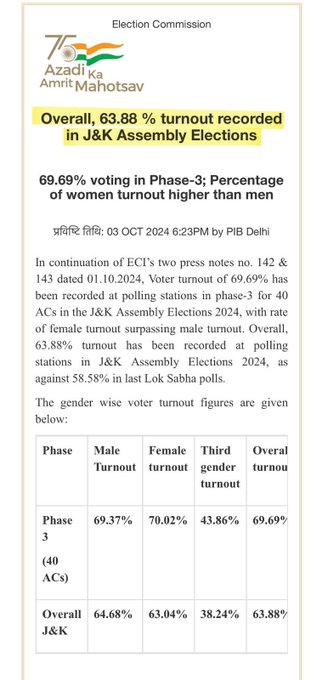
Despite these developments, Masih filed multiple stories emphasising “silenced opposition” for international audiences.
Coverage of Citizenship Amendment Act (CAA)
Masih authored an article titled “How Young Lawyers Are Joining the Struggle Against India’s Citizenship Law.”
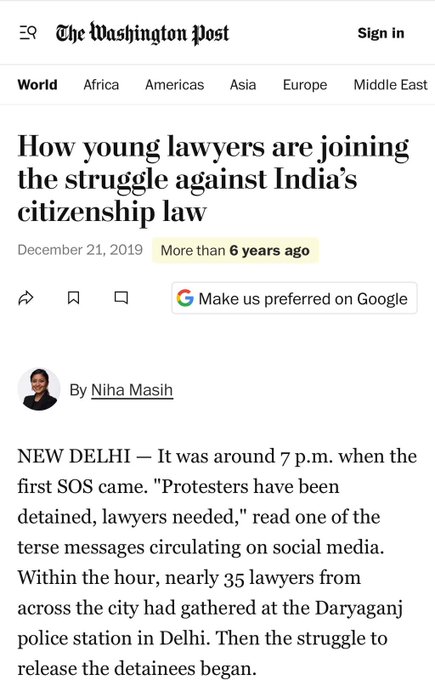
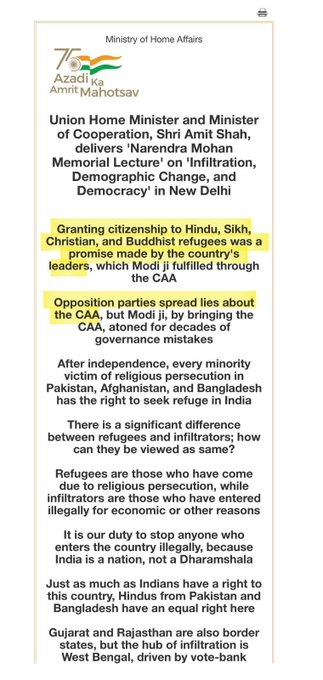
The article omitted key facts related to the CAA and presented what they characterise as a falsified view of the legislation to global audiences.
Coverage of Shaheen Bagh Protests
Masih wrote an article titled “India’s First-Time Protesters: Mothers and Grandmothers Stage Weeks-Long Sit-in,” which covered the Shaheen Bagh protests.
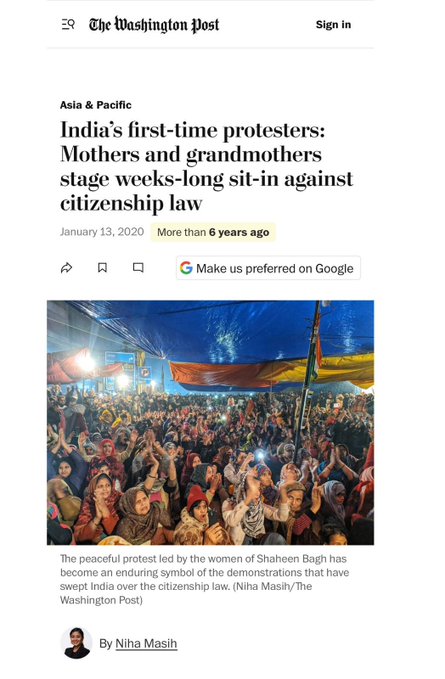
The report presented the protest site with sympathy. The Shaheen Bagh protest site was later connected to the Delhi riots conspiracy, according to subsequent investigations.
Coverage of NewsClick Raids
In October 2023, Masih co-wrote a Washington Post article on the NewsClick raids.
In the article, she wrote how India “cracked down on left-leaning media under draconian anti-terror law.”
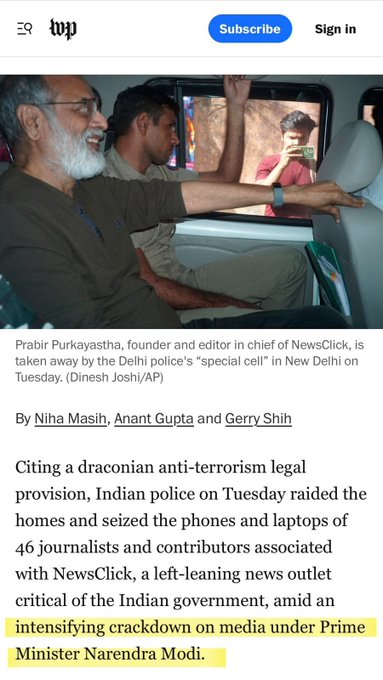
The article omitted the context related to the raids. NewsClick had received funds from US-based Neville Roy Singham, whom The New York Times reported worked closely with the “Chinese government media machine” to spread Beijing’s propaganda.
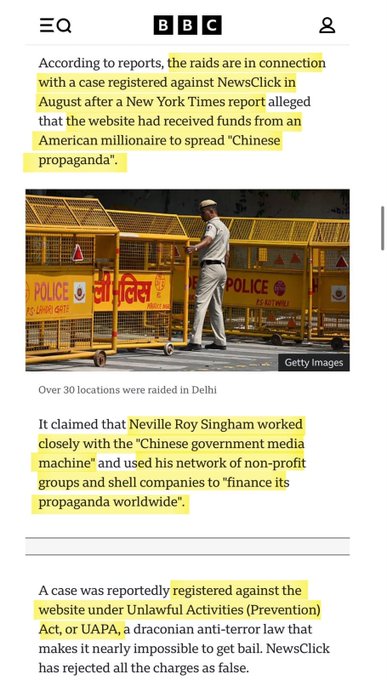
The Delhi Police chargesheet stated that ₹38 crore in Chinese-linked funds flowed into NewsClick.
Coverage of Operation Sindoor
Masih authored an article titled “India Launches Global Charm Offensive After Conflict with Pakistan.”
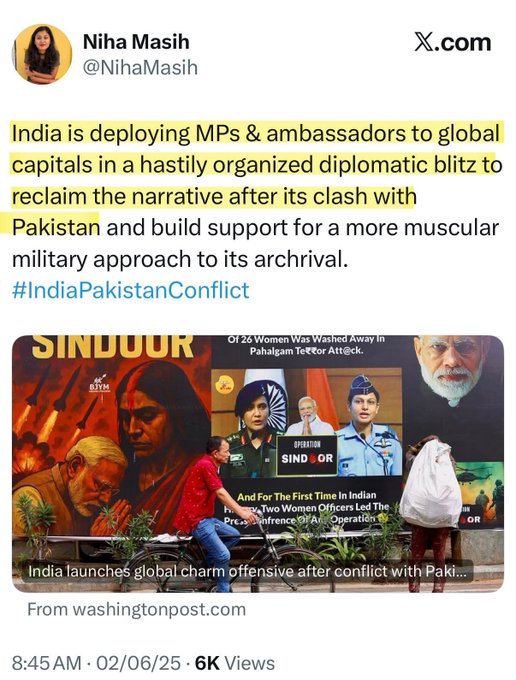
In the article, she characterised Operation Sindoor as a “PR Stunt” by the Indian government.
Brown Sepoy In Action
From Kashmir to CAA, from Bhima Koregaon to NewsClick and Operation Sindoor, Niha Masih’s body of work reveals a strikingly consistent pattern: portraying India as an authoritarian state, elevating activists accused in national security cases as victims, downplaying concerns over Chinese influence, and presenting developments through a lens that resonates with Western liberal narratives. Whether this reflects editorial choice or personal worldview, her reporting has repeatedly attracted criticism for omitting crucial context and presenting a one-sided portrayal of India to an international audience.
This article is based on an X thread by Brown Sepoys.
Subscribe to our channels on WhatsApp, Telegram, Instagram and YouTube to get the best stories of the day delivered to you personally.