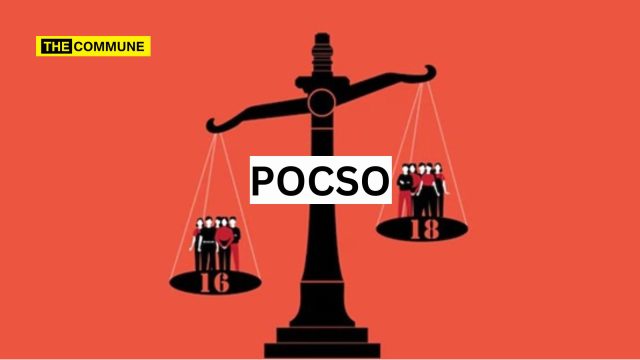
The Supreme Court on Monday questioned whether the Protection of Children from Sexual Offences (POCSO) Act should be invoked to criminalise consensual relationships between teenagers aged 16 and 18, observing that the age group is often one of “experimentation” and that parents frequently resort to criminal proceedings to protect family honour, as reported in CNBCTV18.
A Bench comprising Justices B.V. Nagarathna and R. Mahadevan made the observations while hearing a suo motu case concerning the privacy and rights of teenagers.
During the hearing, the Bench remarked that many adolescents in the 16–18 age group enter into consensual relationships and sometimes elope together, only for their parents to subsequently invoke the stringent provisions of the POCSO Act.
“Sixteen-eighteen years, they develop a relationship and go away. Parents, to protect their honour, fasten criminal liability. We have to acquit,” the Bench observed.
The court further questioned whether such cases genuinely fall within the scope of the POCSO Act, which was enacted to address sexual assault and exploitation of children.
“How does the State prevent the elopement of a girl and a boy? POCSO is sexual assault and exploitation of children. 15-18 is a vulnerable age. Age of experimentation. The question is, does it really become a POCSO case?” the Bench asked.
Origin Of The Case
The matter originated from a controversial judgment of the Calcutta High Court, which had observed that adolescent girls should exercise restraint over their sexual urges and avoid relationships rather than “giving in to two minutes of pleasure.”
The Supreme Court subsequently set aside those remarks, holding that such observations were inappropriate, and initiated a suo motu case to examine broader issues relating to adolescent privacy, rights and the implementation of the POCSO Act.
Senior Advocate Madhavi Divan’s Submissions
Appearing before the court, Senior Advocate Madhavi Divan submitted that the original case involved a minor girl who had eloped with a 25-year-old man, adding that the dispute had since been resolved.
She informed the Bench that the Supreme Court had earlier constituted a committee and appointed social workers to interact with the girl.
“A strong report was filed regarding the failure of the system in POCSO matters,” she said.
When the Bench sought clarification on whether the case involved kidnapping or elopement, Divan responded that the girl had voluntarily accompanied the man and had later married him.
“The girl has already settled with her husband and she is happy,” she told the court.
Divan argued that the focus should now shift towards improving adolescent welfare and child protection while ensuring that minors receive the rehabilitation measures contemplated under the law.
She further submitted that systemic reforms were necessary to prevent similar situations from arising and pointed out that many teenagers aged 17 and 18 end up incarcerated under the POCSO Act.
“There needs to be sensitisation at a younger level. The union has put in comprehensive suggestions. It needs to be put to its logical conclusion,” she added.
Suggestions On Adolescent Education
During the hearing, Divan recommended introducing age-appropriate adolescent education and awareness programmes on the POCSO Act beginning from Class VI. She also suggested establishing a national dashboard to monitor POCSO cases across the country.
However, the Supreme Court declined to accept the recommendation, observing that every High Court already has child rights committees in place and that state governments are also capable of monitoring such cases.
The matter has been posted for further hearing on 17 July 2026.
Subscribe to our channels on WhatsApp, Telegram, Instagram and YouTube to get the best stories of the day delivered to you personally.