Home Blog Page 236

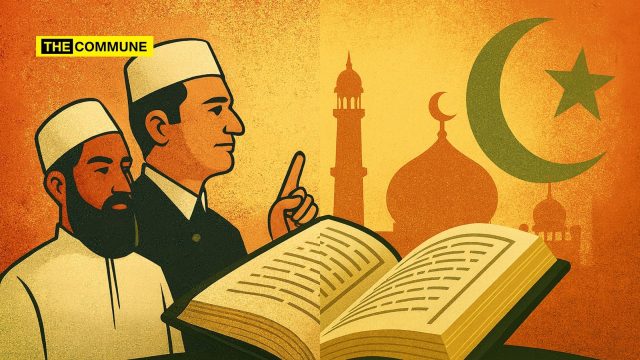
The “Timeless Qur’an” Claim Is Not Theology But A Political Strategy To Block Reforms And Silence Dissent

In Indian public life, few assertions are repeated as insistently as the claim that “the Qur’an is eternal, timeless, and valid for all societies and all eras.” The statement is routinely invoked by Islamist groups, conservative clerics, and sympathetic politicians—usually when questions are raised about reform, gender justice, or constitutional supremacy.

It surfaces whenever debates arise about the Uniform Civil Code, Muslim women’s rights, or judicial scrutiny of personal laws. Dissent is dismissed as “interference in religion,” while reform is framed as an “attack on Islam.”

But stripped of theological ornamentation, the claim that the Qur’an is “timeless” functions less as a spiritual belief and more as a political strategy.

Why “Timelessness” Is Repeated So Ruthlessly

This is the moot question, and the one that I have tried to answer in this article. In contemporary India, calling a scripture “timeless” serves a clear purpose: it places religious authority beyond debate.

If a text is eternal:

  • It cannot be amended
  • It cannot be subjected to democratic reasoning
  • It cannot be evaluated against constitutional values
  • It cannot be questioned by courts, citizens, or believers themselves

This framing converts social rules into non-negotiable absolutes, instantly delegitimising discussion. That is why the statement appears most often not just in mosques or theological treatises, but in political speeches, television debates, court affidavits, and protest slogans.

In short – “timelessness” is power language.

The Quiet Admission That Undermines The Claim

Here is the irony. The moment one raises concerns about the pejorative references to other communities and non-believers or treatment of women and their rights, the very same voices insisting the Qur’an is timeless also insist that it must be “understood in context.”

Context of history. Context of revelation. Context of social conditions. Context of tribal Arabia.

This is not a modern concession; it is unavoidable.

Once context is admitted, the claim of literal timelessness collapses. A rule that requires historical explanation is not timeless by definition. A command that must be reinterpreted to remain moral cannot be universally fixed. Contextualisation is not decoration—it is transformation.

Scholars Say What Politicians Avoid Saying

Even a small glance at modern Muslim scholarship exposes the contradiction.

Fazlur Rahman, modernist scholar and Islamic philosopher, widely respected across South Asia, argued that Qur’anic directives addressed specific social problems of their time. What matters today are the ethical goals, not the ancient solutions. That means the rules are historical, not eternal. Through his works, most notably “Islam & Modernity (1982)”, he emphasized that the moral values of the Quran endure beyond history and require constant reinterpretation.

In his seminal work, “Critique of Religious Discourse (1992)”, Nasr Hamid Abu Zayd went further, calling the Qur’an a text that entered human language and history, and therefore cannot escape interpretation. For asserting this, he was branded an apostate by the Egyptian court —telling in itself.

There are countless other Islamic scholars who have echoed similar principles. These are not extremist voices. They are mainstream Muslim thinkers. Yet their conclusions are rarely quoted in Indian political debates—because they dismantle the utility of the “timeless” claim.

Why This Is Ultimately A Political Claim

People who embrace the fiction of eternal validity, in practice are ready to accept the following, all of which was once central to the Quran – slavery, tribal warfare and caliphate governance. If centuries-old norms can be set aside silently, then what remains “timeless” is not the text, but who controls its interpretation.

The insistence that the Qur’an is timeless serves three political goals:

  1. Preserving clerical authority If the text is eternally clear, interpreters must never be challenged.
  2. Blocking reform: Any change can be dismissed as sacrilege rather than debated on merit.
  3. Mobilising identity: Critics are framed as enemies of faith rather than participants in a democracy.

This is why “timelessness” is shouted loudest in moments of social contestation—not spiritual reflection.

The Simple Logic That Ends The Debate

A timeless doctrine – (a) Applies unchanged; (b) Requires no historical mediation and (c) Functions identically across cultures

The Qur’an – (a) Requires context to interpret; (b) Reflects 7th-century Arabian society; (c) and Demands moral negotiation to remain relevant

Both statements cannot be true simultaneously.

What survives across time are human interpretations, not divine instructions frozen in amber.

Calling The Qur’an Timeless Is A Power Claim

To say the Qur’an is timeless is not a theological inevitability—it is a political decision.

It seeks to place religious authority above constitutional reasoning, public morality, and democratic scrutiny. Once contextualisation is acknowledged—and it must be—the idea of literal timelessness evaporates.

The Qur’an may retain spiritual or cultural significance for believers. But to present it as an eternally binding, context-free social doctrine in a modern constitutional democracy like India is neither honest nor sustainable.

That claim is not about God. It is about control.

DhiBhu is a political observer who writes on national security, foreign policy, and India’s geopolitical landscape.

Subscribe to our channels on WhatsAppTelegram, Instagram and YouTube to get the best stories of the day delivered to you personally.

Operation Dhurandhar Successful: ‘Aman Ki Asha’ Apologists Suffer Meltdown, Upset At “Anti-Pakistan Narrative” And “Hardcore Nationalism”

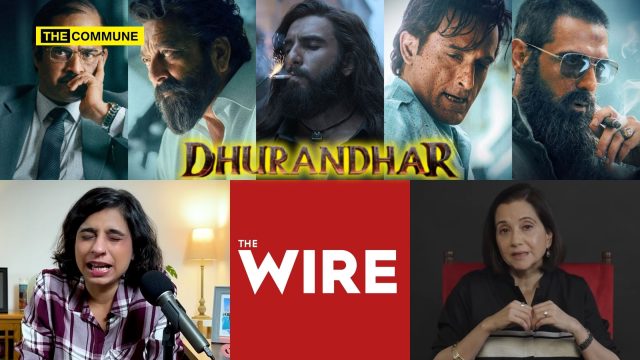
Aditya Dhar’s spy thriller Dhurandhar has stormed the box office and delivered a knockout punch to India’s perennial peace-with-Pakistan lobby and their cheerleaders in the liberal commentariat. Within days of release, the usual suspects – from The Wire to Anupama Chopra and Sucharita Tyagi – have gone into full meltdown mode, clutching pearls over “shrill nationalism,” “too much testosterone,” and the cardinal sin of showing Pakistan’s terror establishment exactly as it behaves: crass, indulgent, and dripping with bloodlust.

The Wire’s reviewer, in a piece that reads like a paid advertisement for Aman ki Asha, whines that the film “is as subtle as a troll” and takes grave exception to the portrayal of Pakistan’s “terror world.” Apparently, showing ISI officers as sleazy, chain-smoking, paan-spitting conspirators who fund slaughter in Mumbai is now considered Islamophobic fiction in certain enlightened circles. One almost expects the reviewer to demand a trigger warning for the 26/11 montage – you know, the one that uses actual news footage of the attack that Pakistan’s Deep State orchestrated and still refuses to acknowledge.

Film critic Anupama Chopra, never one to miss a chance to signal virtue, slammed the movie for its “inflammatory anti-Pakistan narrative” and complained that it is overloaded with “too much testosterone.” One wonders what exactly Madame Chopra expected from a film about RAW agents hunting terrorists: Katrina Kaif and Ranveer Singh sipping oat-milk lattes in Karachi while discussing gender fluidity with LeT commanders?

YouTuber Sucharita Tyagi took particular offence at the film’s “aggressive hyper-masculinity” and “hardcore nationalism.”

Visibly agitated in her review, she objected to the cinematic crime of depicting Pakistani politicians and ISI officers as “crass and indulgent” – as if the real ones are renowned for their monastic restraint and Gandhian simplicity.

But the real trigger, it seems, was Aditya Dhar’s audacity to weave in real audio recordings of the 26/11 handlers and actual news footage from both the 2001 Parliament attack and the Mumbai massacre. Tyagi frets that this “blurs the line between fiction and fact” and might lead the audience to believe “everything in the film is factual truth.” Pray tell, which part isn’t? That Pakistani terrorists carried out 26/11? That their handlers were calmly giving kill orders over phone from Karachi? That the ISI has never been held accountable? The only thing blurred here is the line between criticism and denialism.

The film ends, unapologetically, with the now-iconic line: “Ye Naya Hindustan Hai. Ye ghar mein ghus ke marega bhi.”

Sucharita Tyagi unable to cope with the aggressive attitude of India towards its enemies who keep sending terrorists across the border to murder sleeping children, train commuters, and pilgrims, says “Beneath the adrenaline, I continuously felt an unmistakable unease. Something sinister hums under the surface. I can’t quite articulate it yet. Perhaps my thought may become clearer when part 2 of this film comes out in April. But you best believe that something nefarious is afoot when the film chooses to end with “Ye Naya Hindustan Hai, Ye Ghar Mein Ghusega Bhi Aur Marega Bhi”

If Pakistan and its loyal Indian proxies are rattled, Operation Dhurandhar is already successful.

Check out this thread below for more meltdowns.

Subscribe to our channels on WhatsAppTelegram, Instagram and YouTube to get the best stories of the day delivered to you personally.

Dhurandhar Review: Aditya Dhar Rips Apart Congress, Pakistanis And ISI Dry, That’s Gonna Make Its Lackeys Cry

Sometimes a film isn’t just cinema. It’s a statement. Our art is a reflection of the society that we live in today. And Aditya Dhar’s Dhurandhar is a statement – that this is a new India that is unapologetic and gives back as good as it gets. Our soldiers enter our enemy’s homes and beat them to pulp. Our artists and storytellers are now doing the same.

Dhurandhar feels like a classified dossier opened for the public — every frame signalling an India that has moved from defence to offence, turning cinema itself into a cultural surgical strike against decades of narrative assault by D-gang filmmakers.

Bollywood finally gets a political action drama that isn’t scared of Pakistan, the ISI, or the Congress ecosystem—and most importantly, a film that doesn’t tiptoe around historical realities.

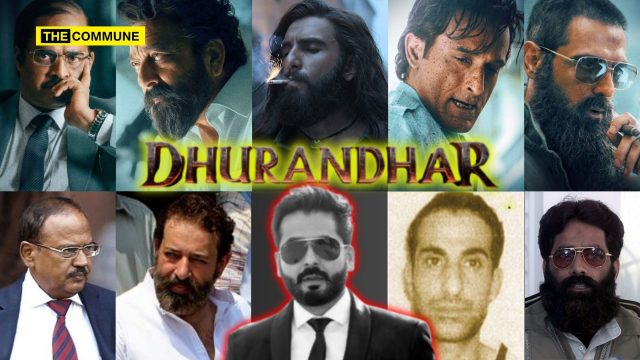
But before we go ahead with the review, it helps tremendously to know the real figures whose shadows loom large over the film.

The Real Men Behind The Reel

Rehman Dakait Played By Akshay Khanna

The feared Karachi crime lord, was more than a gangster—he was a quasi-political actor protected by Pakistan’s deep state. His reign over Lyari forms the violent texture of the film’s Karachi underworld, and Akshay Khanna infuses that biography with a menacing and terrific performance.

Chaudhry Aslam Played By Sanjay Dutt

Pakistan’s infamous “encounter specialist” who led the Lyari Task Force against Karachi’s underworld before terrorists assassinated him in 2014. Sanjay Dutt’s role is clearly modelled on him—steely, haunted and built on a lifetime of combat with Karachi’s monsters.

Ilyas Kashmiri Played By Arjun Rampal

Former Pakistani commando turned global jihadi asset, deeply tied to ISI operations and cross-border terror campaigns. Arjun Rampal’s character channels the cold-blooded tactician Kashmiri was.

Ajit Doval Played By R. Madhavan

And in unmistakable shadows stands Ajit Doval, India’s living legend of covert doctrines and national security strategy. Dhar never names him, but the film breathes Doval’s worldview—the doctrine of offence as defence.

The Hits

The film begins, in classic Aditya Dhar style, in sharply defined chapters—each chapter world-builds, introduces new characters, creates a texture, ends with a bang and shifts us into a deeper labyrinth. By the interval (two hours into the film!) you don’t even realise time has passed. The pace is relentless.

This isn’t Bollywood’s usual cardboard Pakistan. Dhar takes us into the dirty gutters of Lyari, the gang alleys, the ISI-controlled shadows, and Pakistan’s terror breeding underbelly with frightening authenticity. It feels like Dhar himself air-dropped into Karachi taking notes like a R&AW operative to draw the viewers into the dirty miserable hellhole called Pakistan and Pakistanis are shown like they deserve to be shown.

The authenticity hits like a gut-shot: Dhar’s research feels forensic, as if he embedded with ghost operators, sketching Lyari’s bullet-riddled bazaars and Peshawar’s teeming madrasas. Dhar can probably add “Expert on Pakistan Affairs” to his Insta bio—he’s earned it. Dhar deploys Guy Ritchie-esque on-screen text blasts to tag characters.

The violence in the film is Tarantino-esque in its rawness and unflinching brutality, but it goes a step further. The gore doesn’t feel stylised—it feels disturbingly real. Dhar doesn’t just show violence, he makes you feel it. Unlike Tarantino, where you admire the craft of bloodshed from a safe cinematic distance, Dhurandhar drags you into the visceral pain of it. You don’t just witness the violence—you absorb it.

Akshaye Khanna’s Rehman Dakait is the film’s feral heart—tight-lipped menace propelling the plot more than Singh’s brooding Hamza, who arrives looking every inch the chiseled “chad” but shines in quiet vulnerability. Sanjay Dutt’s Chaudhary Aslam is a powder-keg patriarch, his gravelly Pashto inflections evoking the real cop’s doomed valor. Arjun Rampal slinks as Ilyas Kashmiri, all icy calculation, while Sara Arjun slips into Yalina’s skin, though their romance feels like the one soft spot in this ironclad tale. R. Madhavan pops as the Doval-like RAW head, his silences louder than soliloquies during the first 10 minutes of the film.

Shashwat Sachdev’s score isn’t merely background music—it becomes an active character in the narrative. The vintage tracks, layered with his contemporary signature sound, melt seamlessly into the film’s fabric, elevating every frame. And then there’s the camerawork—especially in the action and chase sequences—which deserves a standing ovation. Every shot feels carefully choreographed, immersive, and purposefully raw.

The Misses

If there’s one place the film overindulges, it’s in the length of the action and chase sequences. A tighter edit would’ve made them far more impactful, because after a point the outcome becomes predictable.

The romance between Hamsa and Yalina, too, needed more emotional depth. The stakes feel oddly low, making the track come across as formulaic rather than integral.

And while the narrative relies heavily on dialogue to unfold the larger conspiracy, there are moments where it slips into a cinematic-documentary tone. A more organic integration within the screenplay—rather than spoken exposition—could’ve made these revelations even more powerful.

Dhar, The Dhurandhar

Aditya Dhar holds no punches and rips apart Congress laying bare its sins. If you’ve brushed up on UPA-era scandals or 26/11 intel lapses, every frame lands heavier.

The film reveals how the Congress-led UPA sourced Indian currency security material from the British firm De La Rue—the very same company supplying Pakistan—jeopardizing India’s national security, implicating a senior Congress leader and his son in the process.

There’s a scene involving Ajit Doval look-alike Madhavan briefing the Minister while the R&AW head who resembles AS Dulat, is seen going soft on Pakistan.

The film also discusses how counterfeit notes, terror funding make their way into India through illegal slaughter houses in Uttar Pradesh and the ‘secular’ politics that shield them. It feels like Dhar asking the viewers “Do you understand the reason behind demonetization now?” but without preaching or cinematic dialogues.

Perhaps the most devastating is Dhar’s portrayal of 26/11 Mumbai terror attacks and the events leading upto it.

In the second half comes the most haunting moment of the film. It’s not even a scene—just a blood-red screen, stark black text, and chilling voices echoing in the background. No characters, no action, nothing “cinematic” in the traditional sense. Yet Aditya Dhar folds a real-life incident into his fictional universe with such precision that the hall froze in pin-drop silence. The audience wasn’t watching a scene—they were experiencing a cold, uncomfortable truth.

He drives home the point that never ever should Congress come to power.

Aditya Dhar practically lined up Congress, Pakistanis and the ISI like guilty suspects, pulled out a lathi of cold facts, and landed blow after blow—right on their backs. The line “Ghayal hun isiliye Ghatak hun” (I am wounded, therefore I am lethal), delivered near the film’s climax, isn’t just a dialogue—it’s the declaration of Dhar and the New India itself.

Anupama Chopra has called the film laden with “shrill nationalism” and “inflammatory anti-Pakistan narrative”. Dhruv Rathee compared Dhar to ISIS because he cannot digest India finally portraying Pakistan exactly as it is — a terrorist manufacturing factory calling itself a country.

Their outrage proves Dhar’s accuracy. Period.

Dhurandhar isn’t cinema.
It’s a debriefing.
It’s a counter-attack.
It’s a cultural surgical strike.

And yes—Congress, Pakistan, and their loud online lackeys will cry. If Pakistan and its loyal Indian proxies are rattled, Operation Dhurandhar is already successful.

Waiting for more of their meltdown in March 2026.

S Kaushik is a political writer and a film buff.

Subscribe to our channels on WhatsAppTelegram, Instagram and YouTube to get the best stories of the day delivered to you personally.

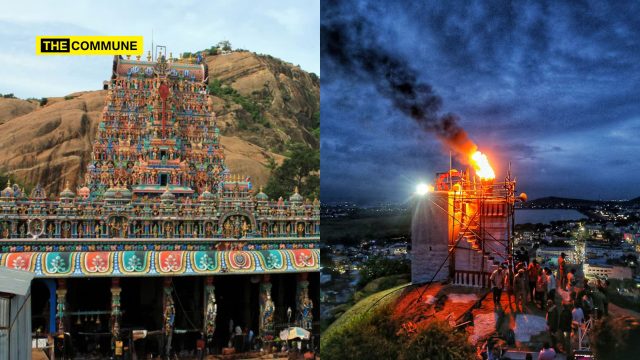
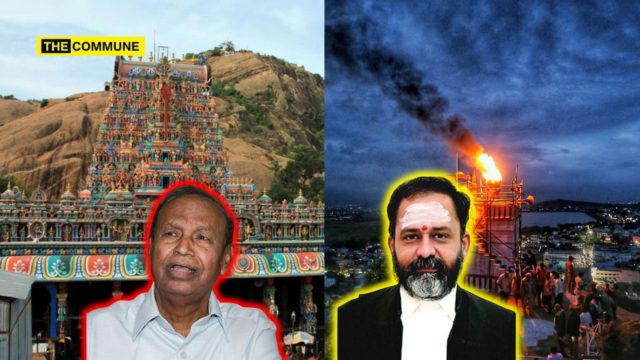
“Our Ancestors Lit Deepam At Hilltop”: Thirupparankundram Hereditary Stakeholders Urge Implementation Of Court Order Allowing Devotees To Light Deepam At Deepathoon

Madras High Court Madurai Bench Allows Karthigai Deepam To Be Lit At The Original Spot At Thirupparankundram Hill

Thirupparankundram’s traditional temple-linked families have publicly welcomed the Madras High Court’s order permitting the Karthigai Deepam to be lit atop the hill and have offered to take up the responsibility themselves if the temple administration declines to act.

In a video statement, community leaders associated with the Arulmigu Subramania Swami Temple said it was the custom of their ancestors to light the lamp at the summit of the hill and that they were eager to see the practice revived in line with the court’s directive.

They stated that, although the custom had fallen into disuse due to changes in administration, local residents “welcome the re-lighting of the lamp there as per the current court order” and that people from Tirupparankundram and surrounding villages “want to light the lamp at the top of the hill.” If the temple administration was unwilling, they said they were “ready to do it ourselves.”

Hereditary Temple Communities Assert Role

The speakers identified themselves as representatives of long-standing temple service groups, including the Bhattars, village headmen, village accountants, the Bhairaavi community, the Mudaliyar, Sangama, Kollachari, Thachachari communities, the three Kammayi village heads, six kaaval watchmen and Madaiyan-thotti watchmen.

They said these sections had “all along been travelling as one body from this Kadaiyanpatti side” and that their participation was essential in every temple festival. The administration of the Subramania Swami temple, they noted, had been structured during the rule of the Nayak kings, and since then their forefathers had performed temple duties in a hereditary manner.

Even after the HR&CE Department took over, they said, several functions continued to be handled by these traditional families. They cited festivals such as the Chithirai One celebrations, the Karthigai Theppam small car festival, the Panguni fifth-day kaipparam and big car festivals, and the Purattasi hill-top Kumaran festival, all of which, they said, are conducted on behalf of the village of Tirupparankundram and in association with the temple.

“Locals Do Want Hill-Top Deepam”

On the hill-top Deepam specifically, the leaders said oral traditions handed down from their ancestors clearly indicated that the “great lamp was indeed lit at the summit of the hill” in earlier times, and that the practice was discontinued only in recent years due to administrative changes.

“In recent times, because of changes in administration, that practice was stopped and left hanging. Now, with the court having given an order, we welcome that judgment, and we, along with all the surrounding villages here, wish that the Deepam should be lit again on the top of the hill. That is what will give the greatest happiness to the general public,” they said.

They urged the Tamil Nadu government, through the HR&CE Department, to itself light the Deepam. “If, for any reason, the HR&CE Department says it is not able to do so, then we, who have all along been conducting the Thiruppurandaram hill-top Kumaran festival, are ready to take up that responsibility. We are ready to go and light the Deepam ourselves,” they added.

The community leaders’ intervention directly counters claims circulating in parts of the public discourse that local residents are not interested in lighting the lamp atop the hill. They stressed that they not only support the judgment but are prepared to implement it.

Kutti Family’s Legacy of Temple Protection

Those seen in the clip are from families that have been linked to the Thirupparankundram temple for several centuries, including descendants of a man remembered locally as Kutti, who is said to have sacrificed his life to protect the shrine during an attempted occupation in the early 18th century.

According to the account shared, the incident took place at a time of intense rivalry between the British, local poligars and the Arcot Nawab. British troops reportedly marched towards the temple with plans to convert it into a fortress. Temple administrators are said to have believed that the troops were deeply superstitious and reluctant to enter any place where an “abnormal” or unnatural death had occurred.

A temple Bhairaavi (bodyguard) named Kutti is described as having climbed the gopuram and leapt to his death at the entrance, forcing the British troops to retreat upon seeing the body. Local tradition holds that this act saved the temple from desecration and damage.

Even today, members of Kutti’s family are said to receive traditional honours during temple festivals, and community accounts present this story as an example of the sacrifices made by individuals to protect temple heritage in Tamil Nadu.

Subscribe to our channels on WhatsAppTelegram, Instagram and YouTube to get the best stories of the day delivered to you personally.

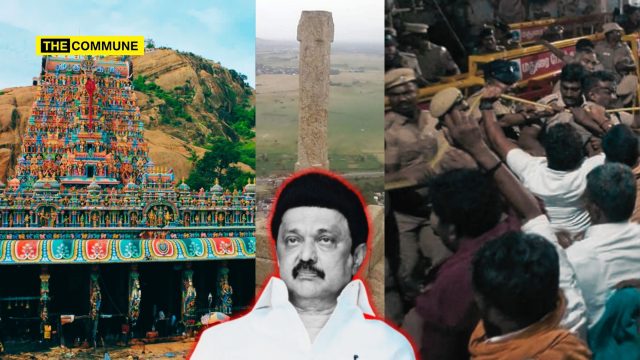
How The DMK Is Holding Constitutional Democracy Hostage At Thirupparankundram With Its Anti-Hindu Politics

The saga at Thirupparankundram Hill in Madurai represents far more than a dispute over where a lamp should be lit during the Karthigai Deepam festival. It is a textbook case of how a self-proclaimed ‘secular’ government can systematically dismantle constitutional governance, weaponize state machinery against one community and orchestrate defiance of judicial orders in the name of “communal harmony” and “secularism”, all while parading itself as protector of pluralism.

The Court’s Clear Mandate

On 1 December 2025, Justice GR Swaminathan of the Madras High Court issued an unambiguous order: the Karthigai Deepam ritual must be performed at the ancient Deepathoon (stone pillar) atop Thirupparankundram Hill, not at the Uchipillaiyar temple mandapam where the DMK-aligned temple administration had attempted to confine it.

The judge’s reasoning was legally sound and grounded in documented history: a 1923 civil decree affirmed the temple’s title over the hill, upheld subsequently by the Privy Council. Justice Swaminathan observed that the Deepathoon stood on unoccupied temple property, outside the dargah precinct, and that not allowing the lighting would render hollow the ritual rights and heritage-linked property of the temple and its devotees.

Defiance As System

When the temple administration and state officials refused to comply by 3 December 2025, the actual date of Karthigai Deepam, Justice Swaminathan escalated appropriately. He issued a contempt order permitting the petitioner, Rama Ravikumar, to ascend the hill with ten others and light the lamp, directing the Central Industrial Security Force (CISF) attached to the Madurai Bench to provide protection.

This was a judicial acknowledgment that the state’s own police machinery had been compromised by political direction to obstruct a Hindu religious practice mandated by the courts.

The response? The DMK government moved heaven and earth, literally and legislatively, to thwart this order. Madurai District Collector issued a Section 144 prohibitory order under the Criminal Procedure Code (now Section 163 of the Bharatiya Nyaya Sanhita), citing “law and order concerns.” The state filed a letter patent appeal before a Division Bench, alleging that allowing Hindus to perform their ritual would incite communal violence. The HR&CE Department, theoretically responsible for managing Hindu temples, worked openly to prevent compliance with the court order.

When the Division Bench dismissed this appeal on 4 December 2025, finding that the state had “wilfully decided” not to implement the judicial direction, it was scathing in its observation. The judges noted that the state’s appeal appeared to have been filed “as a pre-emptive step” to avoid contempt proceedings rather than to contest factual or legal issues.

Worse still, the court suggested that the prohibitory orders had either been passed beforehand or “manipulated after this Court called for the original file.” In other words: the government was manufacturing orders to justify its predetermined political outcome.indianexpress​

The DMK’s Playbook: Minority Appeasement Over Constitutional Duty

Throughout this entire episode, the DMK’s position has been consistent: that permitting Hindus to perform an ancient ritual at a heritage site would somehow endanger “communal harmony” and the “600-year-old mosque” on the hill. This framing is a masterclass in weaponized secularism.

Consider the logical structure of this claim:

The court has ruled the site belongs to the Hindu temple.
The court has ordered a Hindu ritual to be performed there.
The DMK government says allowing this would endanger minorities.

The implicit message is inescapable: Hindu rights must be sacrificed to protect Muslim sensibilities, even when courts have ruled against those Muslim claims. This is not pluralism. This is institutionalized Hindu subjugation masquerading as secular governance.

They claimed they were safeguarding a century-old practice of lighting the lamp at the Uchipillaiyar temple, a practice that, as Justice Swaminathan himself noted, has no historical or religious basis superior to the original Deepathoon location, which has far deeper antiquity and religious significance.

The Contempt Of Democracy

What happened next crystallizes the fundamental assault on democratic governance. Despite a Division Bench judgment, despite a fresh contempt order from Justice Swaminathan, despite CISF personnel being readied to provide protection, the Deepam was not lit at Deepathoon on 3 December 2025. Police continued to prevent devotees from ascending the hill even on 4 December 2025 despite another order by the judge that day. Till the time of publishing this article, nobody is even allowed to go the Kasi Viswanathar temple at the top to pray.

The state then moved the Supreme Court challenging even the Division Bench’s dismissal of its appeal.

This sequence of events demonstrates something unprecedented in independent India’s judicial history: a state government systematically violating not one, not two, but multiple High Court orders to prevent Hindus access to their own heritage and religious practice.

The DMK did not merely appeal; it obstructed implementation while appeals were pending. It did not accept adverse judicial orders; it went to delay and deny the right of Hindus by taking the matter to the Supreme Court. It did not respect judicial authority; it weaponized administrative machinery to circumvent it.

During the hearing, the HR&CE Department is said to have submitted multiple letters from priests to argue that the Deepam ritual cannot be performed on any date other than Karthigai Deepam.

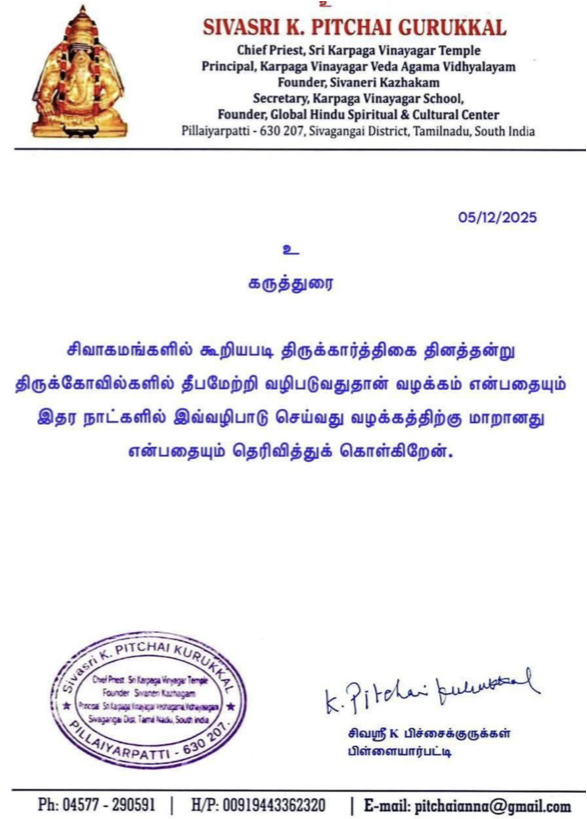
Among the documents was one attributed to Sivasri Pitchai Gurukkal, which claimed that “Sivagamams” prescribe the lighting of the Deepam exclusively on the Karthigai Deepam day.

But once this so-called letter began appearing in the media, Pitchai Gurukkal released a note asserting that he had never made such a statement. He accused the department of misusing his name and position, saying that details he never provided were submitted as if they came from him.

The DMK’s actions have triggered a full-blown constitutional crisis, pitting the executive against the judiciary by deploying the District Collector to misuse Section 163 and sidestep a clear court order. In doing so, the DMK government has not just defied the law — it has blatantly disrespected the judiciary itself.

It has murdered democracy at the Deepathoon for its votebank politics.

And throughout, it framed this contempt as “protecting communal harmony” and blamed external “Hindu outfits” for attempting to “disrupt public unity” and “stoke communal tensions.”

The Anti-Hindu Administrative Machinery

This episode must be understood within the DMK’s broader institutional pattern. The HR&CE Department, which manages Hindu temples across Tamil Nadu, has systematically deprioritized Hindu concerns while granting accommodations to Muslim claims over temple properties.

For a second one wondered if they are HR&CE or MR&CE – as its actions reflect like they’re a fully owned subsidiary of the Waqf Board.

The police administration operates under implicit political direction to prioritize “minority sentiments” over constitutional rights. The bureaucracy coordinates to manufacture legal justifications for political outcomes decided in advance.

The Thirupparankundram episode is not an aberration; it is the system functioning exactly as designed.

When HR&CE Minister P.K. Sekarbabu declared that “people of Thirupparankundram have lived in total harmony,” he was not describing a conflict, he was describing a hierarchy. That hierarchy places Hindu ritual subordinate to Muslim sensibilities, Hindu property claims secondary to Muslim occupation, and Hindu constitutional rights tertiary to electoral calculations about “minority appeasement.”

The same DMK government that never saw a “law and order problem” when Islamist groups consumed non-veg food at the foothills of a sacred Hindu hill, and the very same regime that eagerly razed down temples claiming it was simply obeying court directions, is now suddenly allergic to following a court order that allows Hindus to light a traditional lamp at their own sacred site. The irony couldn’t be more stark: court orders are invoked to demolish temples, but conveniently ignored when they protect Hindu practices.

Judicial Resistance And Its Limits

To the judiciary’s credit, at least the Madras High Court has resisted. Justice Swaminathan’s orders have been consistent, unambiguous, and grounded in law. He has explicitly rejected the temple administration’s claim that allowing the Deepam at Deepathoon would endanger “communal harmony.” He has held that a court cannot allow religious rights to be rendered hollow by executive non-compliance.

He has directed CISF to file detailed reports on the state’s obstruction. As of 5 December 2025, the counsel for the contempt petitioner told the court that despite complying with its December 3 order, police blocked their ascent to the hill, surrounded them with nearly 200 personnel, and detained or arrested several devotees in violation of the court’s directions. Justice GR Swaminathan sought a report from the CISF commandant but deferred the matter to Tuesday, noting that the State’s writ appeals and its SLP before the Supreme Court were already listed for hearing.

But the judiciary’s reach has limits when the executive refuses to cooperate. The DMK government’s strategy is calculated: delay, appeal, obstruct, and rely on the fact that by the time courts exhaust all remedies, the Karthigai Deepam festival season will have passed for another year. The ritual cannot be performed six months later. The government need only hold out until December 25th or so, long enough for the moment to be lost, the political storm to pass, and the narrative to shift.

The DMK is holding democracy and the Constitution in hostage for its votebank politics

The Supreme Court’s Next Move

The Supreme Court now must decide whether Indian federalism permits state governments to systematically violate High Court orders regarding religious practices and minority rights. The political stakes could not be higher. The irony, of course, is bitter: if the “minority” in question were Muslim, Christian, or Sikh, no secular government would dream of using “communal harmony” as justification for preventing them from accessing their religious sites or performing their rituals. The exception carved out for Hindus reveals the hollow core of India’s secular-appeasement apparatus.

DMK: A Party That Is A Menace To People And Constitution

Thirupparankundram is no longer a ritual dispute or an archaeological quibble. It has become the clearest, most alarming demonstration of what happens when a ruling party decides that court orders matter less than its vote-bank arithmetic. It is a referendum on whether “secularism” in Tamil Nadu is still a promise of equal religious rights or a political weapon deployed selectively to keep Hindus in a state of permanent compliance.

The DMK government has delivered its verdict: law is optional, court orders are negotiable, and Hindu rights are expendable. Every action on the hill, from suppressing a lawful religious practice to manipulating prohibitory orders, reveals a regime willing to bulldoze constitutional equality the moment it clashes with its project of minority appeasement.

What the DMK government is doing is systematically hollowing out democracy, wrapped in the language of secularism and executed through a bureaucracy that has forgotten its allegiance to the Constitution.

In the coming days, India’s courts will not merely decide on a lamp at Deepathoon, they will decide whether a state government can openly defy judicial authority, sabotage religious freedoms, and still claim the legitimacy of constitutional rule. If courts do not draw a line now, they may never draw one again.

The Deepam at Thirupparankundram remains unlit. But what should alarm every citizen is this: the DMK has already snuffed out the flame of Hindu constitutional rights and it did so with full political intent and zero accountability.

Vallavaraayan is a political writer. 

Subscribe to our channels on WhatsAppTelegram, Instagram and YouTube to get the best stories of the day delivered to you personally.

DMK MP TR Baalu Makes Personal Remarks Against Justice GR Swaminathan

DMK MP TR Baalu Makes Personal Remarks Against Justice GR Swaminathan

A heated exchange broke out in the Lok Sabha after DMK MP TRBaalu made personal remarks about Madras High Court judge Justice GR Swaminathan while raising the Thiruparankundram Karthigai Deepam issue. The comments prompted immediate intervention from Union Minister Kiren Rijiju and the Chair, who directed that the remarks be expunged.

Speaking during Zero Hour, Baalu referred to the recent controversy over the lighting of the Karthigai Deepam atop the Thiruparankundram hill near Madurai. He questioned who had lit the lamp and alleged that “miscreants” attempted to create tension. While criticising those who approached the court, he referred to the judge involved as an “RSS judge,” triggering strong objections from the Treasury benches.

After Baalu made the controversial remark, it triggered an immediate objection from Union Parliamentary Affairs Minister Kiren Rijiju.

Rijiju said the comment amounted to casting aspersions on the judiciary and violated parliamentary norms. “In our parliamentary democracy, we have maintained the discipline of avoiding disparaging remarks,” he said, adding that Baalu’s statement could create “unnecessary trouble.” Members on the Treasury benches also intervened, citing the sub judice status of the matter.

Presiding officer Krishna Prasad Tenneti ordered Baalu’s remarks to be expunged, stating that Parliament cannot refer to judges in such terms. While directing the deletion, he observed, “You referred to an honourable judge with an inappropriate label. This is withdrawn and deleted.” Baalu, however, maintained that his comments had context and did not retract them.

The dispute centres on Justice GR Swaminathan’s 1 December 2025 order enabling the lighting of the sacred Deepam at Thiruparankundram. The state government challenged the move on law-and-order grounds. When the ritual was not carried out on 3 December 2025, clashes broke out between Hindus and police personnel, escalating allegations of contempt and further polarising political discourse in Tamil Nadu.

In the Lok Sabha, Baalu accused “certain groups” of stoking communal tensions and called for central intervention. Responding on behalf of the government, Minister of State for Parliamentary Affairs L. Murugan countered that it was the DMK administration that was discriminating on religious lines. He alleged that the state government was obstructing worship and mishandling law and order in the region, adding that it was operating on “vote-bank politics.”

(Source: OneIndia)

Subscribe to our channels on WhatsAppTelegram, Instagram and YouTube to get the best stories of the day delivered to you personally.

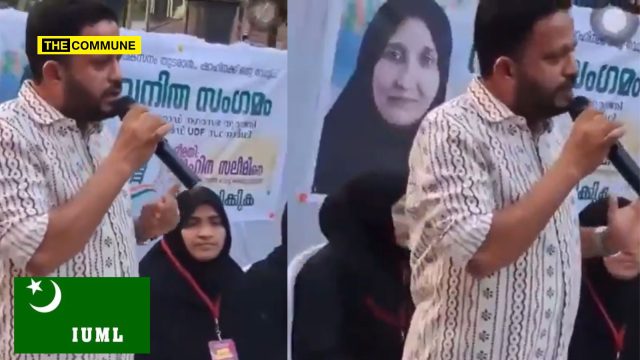
Kasargod: “Prays 5 Times A Day, Fasts, Follows Islamic Beliefs, Vote For Her”, Video Showing Congress-Ally IUML Leader Campaigning For UDF Candidate Leads To LDF Complaint To SEC

Kasargod: "Prays 5 Times A Day, Fasts, Follows Islamic Beliefs, Vote For Her", Video Showing IUML Leader Campaigning For UDF Candidate Leads To LDF Complaint To SEC

The Indian Union Muslim League (IUML), a key constituent of the Congress-led UDF and a party that has long projected itself as secular, has come under scrutiny ahead of the local body elections after a video of IUML leader Ashraf Edneer went viral on social media. The clip has triggered allegations that the party is seeking votes on religious grounds.

The LDF election committee for Kasaragod municipality has submitted a formal complaint to the State Election Commission, alleging that the statements made in the video constitute a violation of election norms. The video shows Ashraf introducing UDF candidate Shahina Saleem, contesting from Ward 16 (Thuruthi), and describing her as a devout Muslim who prays five times a day and fasts during Ramadan.

LDF leaders claim this amounts to appealing for votes using religious identity. In his complaint, T. M. A. Kareem, secretary of the LDF committee in Kasaragod municipality, stated that presenting a candidate primarily through her religious practices creates an indirect comparison with rival candidates and could mislead voters by implying they are less religious.

Ashraf, however, has denied the allegation, saying the viral clip is a selectively edited portion of a 30-minute speech delivered at a women’s meeting on 30 November 2025. He told TNIE that the full speech focused on women’s empowerment, development issues, and the municipality’s socio-political needs, and that the IUML does not engage in communal politics. According to him, the remarks highlighted in the clip were meant to emphasise values, not to use religious practices as a tool for canvassing.

The episode has revived debates around the IUML’s ideological positioning. Social critic and political analyst Hameed Chennamangaloor said the issue underscores a longstanding inconsistency between the League’s public claim of secularism and its political conduct. He argued that a political party can be considered secular only when it avoids invoking religion in its operations, something he believes the IUML has not adhered to. He added that projecting candidates through their religious observance reduces political merit to a question of piety rather than governance.

Advocate C. Shukoor, known for his affinity to the CPM, described the incident as constitutionally and morally serious. He noted that the Constitution prohibits appeals to religion during election campaigns and said the focus should be on ideology, development, inclusivity, and constitutional values. He also criticised the trend of relying on communal and counter-communal narratives, arguing that both the BJP and the IUML are following parallel strategies that weaken the democratic process. Shukoor added that internal dissatisfaction within the League is growing over such approaches.

(Source: The New Indian Express)

Subscribe to our channels on WhatsAppTelegram, Instagram and YouTube to get the best stories of the day delivered to you personally.

Did The DMK Govt’s HR&CE Dept Commit Perjury In The Thiruparankundram Karthigai Deepam Row?

A controversy has emerged over documents submitted by the Tamil Nadu Hindu Religious and Charitable Endowments (HR&CE) Department during court proceedings related to the Thiruparankundram Deepathoon issue, after a senior priest publicly denied issuing a statement attributed to him.

According to submissions made in court, the HR&CE Department had reportedly included letters from several priests to support its argument that the lamp cannot be lit on days other than Karthigai Deepam.

One of the letters cited was attributed to Sivasri Pitchai Gurukkal, who was quoted as saying that, as per “Sivagamams,” it is customary to light the Deepam only on Karthigai Deepam day and not on any other date.

However, after the contents of the purported letter began circulating in the media, Pitchai Gurukkal issued a public clarification, stating that he had not provided the information claimed in the document. Responding to the claims, he alleged that his name and authority were used without his consent: “The Department has submitted as a letter information that I never gave,” he said.

This contradiction has triggered sharp reactions from Hindu organisations and opposition groups, who have questioned whether the HR&CE submitted inaccurate or fabricated material before the court. They have also accused the department of attempting to influence judicial proceedings to prevent the lighting of the lamp at Thiruparankundram’s Deepathoon.

Subscribe to our channels on WhatsAppTelegram, Instagram and YouTube to get the best stories of the day delivered to you personally.

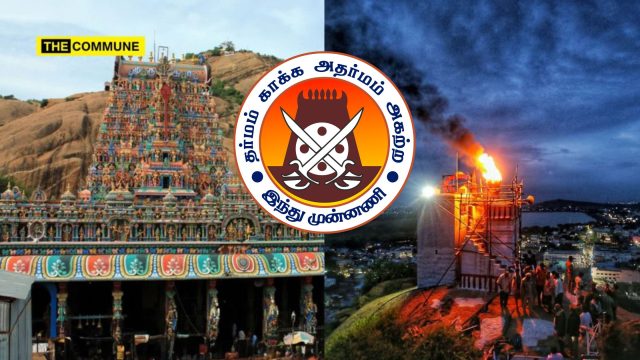
Hindu Munnani Calls Statewide Protest On Dec 7 After DMK Govt Blocks Karthigai Deepam Lighting At Thiruparankundram Despite Court Order

Hindu Munnani Calls Statewide Protest On Dec 7 After DMK Govt Blocks Karthigai Deepam Lighting At Thiruparankundram Despite Court Order

The Hindu Munnani on Friday, 5 December 2025, announced that it will hold protests across all districts of Tamil Nadu on December 7, condemning the denial of permission to light the lamp at the Thiruparankundram Deepathoon.

Speaking to reporters in Tiruppur, Hindu Munnani state president Kadeshwara C. Subramaniam said the organisation was protesting what it described as the Tamil Nadu government’s “insult to the devotion of the people” over the past two days. He alleged that despite clear High Court directions, the police had acted “against the Constitution” and accused the government of attempting to divert attention from what he termed the DMK’s “anti-Hindu activities.”

Subramaniam said the police’s failure to implement the High Court order amounted to dereliction of duty. He cited earlier court rulings, including a 1996 order permitting the temple administration to light the lamp on Thiruparankundram hill and a 2014 ruling stating that the lamp could be lit anywhere on the hill. He further said that in 2015 the dargah administration had informed the court that it had no objection to the lighting of the lamp.

According to him, the present case, filed against the temple administration and the Hindu Religious and Charitable Endowments (HR&CE) Department, stemmed from non-implementation of court directions “for nearly 30 years.”
He also criticised Law Minister S. Raghupathy, alleging that the minister had given “incorrect information” regarding the court proceedings.

Subramaniam accused the DMK government of selective secularism, claiming that while it greets festivals of other religions, it does not extend greetings for Vinayagar Chaturthi or Deepavali.

Rejecting accusations of provocation at the Thiruparankundram site, Subramaniam said the Hindu Munnani had not instigated religious tension and alleged that police mishandling contributed to the unrest. He described law and order in Tamil Nadu as “poor” and claimed that the government had “taken over” Thiruparankundram to divert attention from its failures.

Announcing the December 7 statewide protest, he said it would be held to condemn what the organisation calls the “anti-people and illegal activities” of the DMK and to demand immediate permission for lighting the Deepam. He also alleged corruption in temple administration and criticised the state government for not initiating action.

State secretary Kishore Kumar and other functionaries were present at the press interaction.

(Source: Hindu Tamil)

Subscribe to our channels on WhatsApp, Telegram, Instagram and YouTube to get the best stories of the day delivered to you personally.

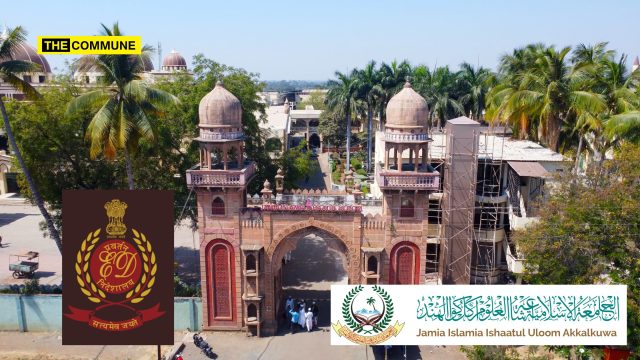
ED Unearths Massive FCRA Fraud: Maharashtra-Based Jamia Islamia Ishaatul Uloom Trust Accused Of Aiding Illegal Yemeni Couple’s Overtay, Diverting ₹406 Crore In Foreign Funds

ED Unearths Massive FCRA Fraud: Maharashtra-Based Jamia Islamia Ishaatul Uloom Trust Accused Of Aiding Illegal Yemeni Couple's Overtay, Diverting ₹406 Crore In Foreign Funds

The Enforcement Directorate (ED) has uncovered a sprawling network of alleged financial fraud and immigration violations involving a Maharashtra-based trust already under the scanner of the Union Home Ministry. The federal agency, in a statement on Wednesday, accused the Nandurbar-based Jamia Islamia Ishaatul Uloom (JIIU) Trust of facilitating a Yemeni couple’s illegal overstay in India and fraudulently procuring Indian identity documents for them, while simultaneously channeling over ₹406 crore in foreign donations for unauthorized purposes.

The revelations followed multiple searches conducted by the ED on 1 December 2025 across Nandurbar, Mumbai, and Barmer (Rajasthan), after it registered a money laundering case against the Trust and several individuals. The case originates from a February First Information Report (FIR) filed by the Nandurbar police at Akkalkuwa Police Station.

A Web of Immigration Fraud and Identity Forgery

At the heart of the probe is the alleged role of the Trust’s trustees in aiding Yemeni nationals Al-Khadami Khaled Ibrahim Saleh and his wife Khadega Ibrahim Kasim Al-Nasheri. The ED stated that after the expiry of their visas, the couple was not only provided shelter but was also actively assisted in the “fraudulent procurement of Aadhaar, PAN, birth certificates and opening of bank accounts.”

Furthermore, the Trust allegedly appointed Al-Khadami as a madrasa teacher, a move the ED claims was a ruse to “falsely portray foreign staffing to donors, in order to attract higher overseas funding.”

The FCRA Web: ₹406 Crore Under Scrutiny

The investigation has shed light on the Trust’s massive financial operations, which are now under the lens for suspected Foreign Contribution Regulation Act (FCRA) violations. The ED’s preliminary findings indicate that between 2014-15 and 2023-24, the JIIU Trust received a staggering ₹406 crore in foreign donations from countries including Kuwait, Botswana, the UK, Mauritius, Switzerland, Seychelles, and Panama.

A significant portion of these funds was allegedly received and used in cash. The agency asserted that early evidence points to the “diversion of donation funds for non-approved uses, in violation of statutory norms.” The Trust is also accused of misusing the classification of ‘national research incentives for organisational self-funding’ to receive donations from other bodies and NGOs, thereby obscuring the trail of foreign contributions.

This is not the first regulatory action against the Trust. In July 2023, the Ministry of Home Affairs (MHA) had cancelled the JIIU Trust’s FCRA registration, finding it “involved” in channeling foreign funds to other non-FCRA registered NGOs, a clear violation of the law.

The Accused and the Seizures

The police chargesheet filed in April named several accused, including the late founder of JIIU, Ghulam Mohammad Randhera Vastanvi, the Yemeni couple, and others. During the recent raids, the ED seized ₹9 lakh in cash and a trove of digital devices expected to contain further evidence of the alleged money laundering and document fraud.

The case highlights serious concerns about the misuse of charitable trusts for illegal immigration and large-scale financial malfeasance. The ED’s probe is now focusing on tracing the ultimate beneficiaries and the full extent of the fund diversion, marking a significant escalation in the crackdown on FCRA violations and associated crimes.

(Source: The New Indian Express)

Subscribe to our channels on WhatsAppTelegram, Instagram and YouTube to get the best stories of the day delivered to you personally.