Home Blog Page 237

United States Of Xenophobia: Gujarati Women Working At Cash Counter Of South Carolina Store Shot Dead, Is USA Becoming Unsafe For Working-Class Indians?

A 21-year-old man, Zaedan Mack Hill, has been arrested in connection with two shooting incidents in Union County, South Carolina — one of which resulted in the death of a Gujarati woman, 49-year-old Kiran Patel, on September 16.

The police discovered an unconscious man (Charles Nathan Crosby) on a yard in South Mountain Street earlier that evening. Later, around 10:30 pm, Kiran Patel was shot while at the gas station/convenience store she managed in Union County. Hill reportedly approached the register, jumped over it, and shot Patel during a robbery attempt before she could hand over cash.

Patel tried to escape by running to the parking lot after throwing something (like a bottle) at Hill, but he pursued her and fired again. She was wounded by the second shot while unconscious on the ground.

Law enforcement, including the South Carolina Law Enforcement Division and the SWAT team, obtained a search and arrest warrant for Hill’s residence on South Church Street. After a multi-hour standoff, Hill was eventually taken into custody. He has been charged with murder.

United States of Xenophobia: Rising Racism and Hate Crimes Against Indians

September 2025 – Dallas, Texas: Chandramouli “Bob” Nagamallaiah, a 50-year-old motel manager from Karnataka, was brutally beheaded by a co-worker in Dallas, Texas, following a dispute over a malfunctioning washing machine. The gruesome murder has intensified concerns over the safety of Indians in America.

The tragedy reflects a broader trend that many in the Indian diaspora have been grappling with — growing hostility and personal insecurity, whether in workplaces or public spaces.

January 2025 – Washington, DC: Food delivery worker Koyyada Ravi Teja, 26, was shot at point-blank range while on duty on January 18. He died instantly.

February 2025 – Florida: Indian-origin nurse Lil Lal, 67, was brutally assaulted by psychiatric patient Steven Scantlebury, who shouted “Indians are bad” during the attack. She sustained facial disfigurement and risk of blindness. Scantlebury was charged with a hate crime and attempted second-degree murder.

March 2025 – Chino Hills, California: The BAPS Shri Swaminarayan Mandir was defaced with graffiti bearing anti-India slogans such as “F— Modi and Hindustan” and “murdabad.” Authorities launched a hate-crime investigation.

March 2025 – Wisconsin: Indian student Praveen Kumar Gampa, 27, was shot dead near his residence on March 5 in a suspected robbery.

July 2025 – Chicago, Illinois: A 31-year-old Indian student was shot in the abdomen during an argument with a pedestrian on July 23 while inside his car. He was hospitalized in critical condition.

August 2025 – Greenwood, Indiana: The BAPS Swaminarayan Hindu Temple was vandalized with anti-India graffiti on August 10. Community organizations condemned the attack, which authorities are treating as a hate crime.

September 2025 – California: On September 6, Kapil, a 26-year-old security guard from Haryana, was shot dead after confronting a man urinating outside his workplace.

September 2025 – Dallas, Texas: On September 10, Chandra Mouli “Bob” Nagamallaiah, 50, a motel manager from Karnataka, was gruesomely beheaded by a co-worker during a dispute. The accused was arrested and charged with capital murder.

January 2024 – Hartford, Connecticut: Two students, Dinesh (22) and Nikesh (21), from Telangana and Andhra Pradesh, were discovered dead under suspicious circumstances on January 15.

January 2024 – Illinois: Akul Dhawan, 18, a freshman at the University of Illinois, died of hypothermia on January 20 after being denied reentry into a campus club and failing to secure a rideshare. His father criticized campus police for failing to act quickly.

January 2024 – Purdue University, Indiana: Indian student Neel Acharya was reported missing by his mother and later found dead on January 28. The cause of death remains unknown.

February 2024 – Chicago, Illinois: Student Syed Mazahir Ali was assaulted and robbed by four armed men on February 4. He lost his phone in the incident.

February 2024 – Purdue, Indiana: PhD student Sameer Kamath, 23, was found dead in Crow’s Grove Nature Preserve on February 5. The cause of death is still unexplained.

February 2024 – Washington, DC: Dynamo Technologies co-founder Vivek Taneja, 41, died on February 10 after a street altercation in which he fell and hit his head.

March 2024 – St. Louis, Missouri: Renowned Bharatanatyam and Kuchipudi dancer Amarnath Ghosh, 34, was shot dead on March 2.

March 2024 – Cleveland, Ohio: Master’s student Mohammed Abdul Arfath, 25, was kidnapped in early March, with ransom demands made. His body was later discovered, shocking the Indian community.

March 2024 – Boston, Massachusetts: Engineering student Paruchuri Abhijit, 20, was found dead in an abandoned car on campus on March 11.

April 2024 – Ohio: Uma Satya Sai Gadde, an Indian student, died in a tragic accident on April 6.

November 2024 – San Francisco, California: Suchir Balaji, 26, was discovered dead in his apartment on November 26 under unclear circumstances.

November 2024 – Chicago, Illinois: Student Sai Teja Nukarapu, 22, was shot dead during a store robbery on November 29 despite complying with the assailants.

January 2023 – Chicago, Illinois: Just ten days after arriving in the US, 23-year-old student Nandapu Devansh was killed in a robbery on January 24. Another student from Hyderabad was also injured.

January 2023 – Seattle, Washington: Jaahnavi Kandula, 23, was fatally struck by a speeding police vehicle on January 23. Outrage grew after body-cam footage revealed an officer laughing about the incident.

April 2023 – Columbus, Ohio: Saiesh Veera, 24, was shot dead during an armed robbery at a gas station where he worked. His death came just days before he was set to graduate with a master’s degree.

November 2023 – Cincinnati, Ohio: PhD student Aaditya Adlakha, 26, was found critically wounded inside his car with multiple bullet holes after it crashed. He succumbed to injuries on November 11. Police have not made arrests.

April 2022 – Richmond Hill, Queens, New York: Two Sikh men were attacked and robbed in separate incidents, during which their turbans were forcibly removed. In another case, 70-year-old Nirmal Singh was seriously injured in an assault. These cases were investigated by the NYPD’s Hate Crime Task Force.

October 2022 – West Lafayette, Indiana: Varun Manish Chheda, a 20-year-old Purdue University student, was stabbed multiple times in the head and neck by his roommate Ji Min Sha. Authorities described the attack as unprovoked. Sha, an international student from Korea, was arrested and charged with murder.

June 2022 – Cincinnati, Ohio: Sai Charan Nakka, 25, a University of Cincinnati graduate, was found dead from a gunshot wound on June 19. The investigation remains open.

A recurring issue is that many such incidents are not officially classified as hate crimes. This underreporting obscures the full scale of the violence and makes it harder to address.

Beyond the physical violence, the psychological impact on Indian communities is profound. Families report living with fear, grief, and vulnerability, while demanding stronger measures to ensure justice and accountability.

Modiplomacy: How India Under Modi Govt Intervened To Avert Executions Of Indians Residing Abroad

The execution of Nimisha Priya, an Indian nurse from Kerala sentenced to death in Yemen for the 2017 murder of her Yemeni employer, has been temporarily postponed. Her execution, originally scheduled for 16 July 2025, was stayed following urgent diplomatic and legal interventions by the Indian government, offering a brief reprieve as negotiations continue.

The Ministry of External Affairs (MEA) confirmed that Indian officials had maintained regular contact with Yemeni prison authorities and the prosecutor’s office, despite the country’s ongoing civil unrest. The government had appealed for additional time to allow Priya’s family to negotiate a possible pardon with the victim’s kin under Yemen’s Sharia law, which permits clemency in exchange for “blood money.” However, the victim’s family has so far rejected all reconciliation attempts.

Indian authorities also reached out to influential Yemeni leaders and formally requested the public prosecutor to defer the execution—a request that the Yemeni court accepted. Consular support was extended to Priya, legal counsel was appointed, and family visits to Yemen were facilitated. Diplomatic pressure was reportedly coordinated through friendly Gulf nations and regional intermediaries.

No Indian Left Behind

This is just one of the many cases where the Indian government under Prime Minister Modi has gone above and beyond to rescue Indians living abroad. One can recollect the famous words of former External Affairs Minister Sushma Swaraj, who said, “Even if you are stuck on the Mars, Indian Embassy there will help you.”

Yes, these seem to pertain to the rescue missions during war-like situations or during calamities. Nevertheless, here is a look at those instances where the Indian government rescued Indians abroad, from grave punishment.

#1 Nimisha Priya Execution Postponed

Nimisha Priya, a Kerala nurse sentenced to death in Yemen for a 2017 murder, received a temporary reprieve as her July 16 execution was postponed. The Indian government intervened diplomatically and legally, urging Yemeni authorities to grant more time for her family to negotiate a pardon under Sharia law. Despite efforts, the victim’s family has rejected reconciliation. India maintained contact with Yemeni officials, appointed legal counsel, facilitated family visits, and sought support through Gulf allies. The Yemeni court accepted a formal request to defer execution, but Priya’s fate remains uncertain amid ongoing negotiations.

#2 5 Tamil Nadu Fishermen Who Were Sentenced To Death Released By Sri Lanka After Diplomatic Intervention

In a significant diplomatic breakthrough in 2014, Sri Lanka released five Tamil Nadu fishermen who had been sentenced to death on charges of drug smuggling. The men, Emerson, P. Augustus, R. Wilson, K. Prasath, and J. Langlet, were arrested in 2011, and their conviction and sentencing by a Colombo court in October 2014 had sparked widespread protests in Tamil Nadu. India consistently maintained that the men were innocent and took up their case with Sri Lankan authorities. Prime Minister Narendra Modi personally intervened, speaking with then-President Mahinda Rajapaksa, leading to an agreement to transfer the fishermen to an Indian prison. Subsequently, President Rajapaksa commuted their death sentence and ordered their release. Indian officials in Colombo took custody of the fishermen, marking a major diplomatic success for New Delhi and bringing relief to the families, who had long claimed their loved ones were falsely implicated after allegedly straying into Sri Lankan waters.

As of 2025, a total of 3697 Indian fishermen have been freed since PM Modi took charge.

#3 UAE Pardons Indian Prisoners 

In a major diplomatic achievement, the United Arab Emirates pardoned 500 Indian prisoners on 28 March 2025, ahead of Ramzan. This brings the total number of Indian nationals released abroad due to the Modi government’s efforts to over 10,000. Sources credit Prime Minister Narendra Modi’s personal rapport with global leaders and sustained diplomatic engagement for securing pardons across multiple countries. In recent years, the UAE alone has pardoned over 2,700 Indians. The move highlights India’s strong bilateral ties with the Gulf nation and underscores the government’s commitment to protecting Indian citizens overseas.

In total, so far, UAE has pardoned 2783 Indian prisoners. The other instances of pardon by the UAE include:

  • 2024: 944 Indian prisoners were pardoned ahead of Eid Al Fitr and UAE National Day.
  • 2023: Over 700 Indian prisoners received pardons from UAE authorities.
  • 2022: A total of 639 Indian prisoners were granted pardons.

#4 Qatar Frees 8 Indian Navy Veterans Who Were Sentenced To Death

Qatar released eight Indian Navy veterans on 12 February 2024. The men, detained in August 2022 and sentenced to death in October 2023 on undisclosed charges, allegedly espionage, had their sentences commuted to prison terms in December 2023 following sustained diplomatic efforts by India. The veterans, who were employed with Dahra Global, a private firm assisting Qatar’s naval modernization, were accused without formal public charges. After Prime Minister Narendra Modi’s meeting with Qatar’s Emir in December 2023, Indian efforts intensified. The Ministry of External Affairs confirmed that seven of the eight have since returned home. India had filed an appeal in Qatar’s Court of Appeal, which led to the commutation. The government welcomed the release and credited the Amir of Qatar for enabling their return.

#5 Iran Releases Indian Prisoners and Fishermen Over the Years

In 2024, 77 Indians were freed, following the release of 43 Indians in 2023, including 12 fishermen. Eight of these fishermen were detained for allegedly entering Iranian waters without permission. Minister of State for External Affairs V. Muraleedharan confirmed their release and thanked Iran’s government.

In 2016, 49 Indian fishermen, 45 of them from Tamil Nadu were released after being detained on charges of poaching while working on contract in Dubai. They had been confined on Kish Island after the Iranian Navy seized their vessels. Their release followed intervention by the CITU and diplomatic pressure on the Ministry of External Affairs.

#6 2,639 Indian Fishermen Repatriated from Pakistan Since 2014

Since 2014, Pakistan has released 2,639 Indian fishermen and 71 civilian prisoners following sustained diplomatic efforts by the Indian government. In 2025, 22 fishermen returned to Gujarat after their release from Karachi jail. These fishermen were arrested between April 2021 and December 2022 for allegedly crossing the maritime boundary. Upon return, they expressed concern for the nearly 200 Indian fishermen still in Pakistani jails, many of whom reportedly suffer from serious health issues. In 2023, Pakistan also released 80 Indian fishermen and two civilian prisoners. One freed prisoner revealed the dire condition of over 700 Indians still imprisoned, citing mental distress and poor treatment. Many of those still jailed had already been cleared for release by Pakistan’s Supreme Court but remain incarcerated. Indian authorities continue to press Pakistan for urgent repatriation of all remaining prisoners, especially those held for extended periods without resolution.

#7 Bahrain Pardons 250 Indian Prisoners During PM Modi’s Visit

In a humanitarian gesture, the Bahrain government pardoned 250 Indian nationals serving prison sentences on 25 August 2019, during Prime Minister Narendra Modi’s maiden visit to the Gulf nation. This act of goodwill marked a significant diplomatic moment as Modi became the first Indian Prime Minister to visit Bahrain. The Prime Minister expressed his deep gratitude to Bahrain’s leadership for the royal pardon. The Prime Minister’s Office acknowledged the gesture as a reflection of the strong bilateral ties between India and Bahrain, and a recognition of the Indian community’s contributions to the Gulf nation.

#8 Saudi Arabia Releases 850 Indian Prisoners at PM Modi’s Request

On 20 February 2019, Saudi Crown Prince Mohammed bin Salman ordered the release of 850 Indian prisoners from Saudi jails following a request by Prime Minister Narendra Modi. The announcement marked a significant diplomatic achievement during the Crown Prince’s visit to India. The Ministry of External Affairs confirmed the development and also noted that Saudi Arabia agreed to increase India’s Haj quota to 2 lakh pilgrims.

In a special gesture, PM Modi broke protocol to personally receive the Crown Prince at Palam Airport, underscoring the growing strategic partnership between India and Saudi Arabia.

#9 Kuwait Frees and Commutes Sentences of 119 Indian Prisoners

On 2 October 2017, the Emir of Kuwait ordered the release of 22 Indian prisoners and commuted the sentences of 97 others in a significant diplomatic gesture. Among them, 15 Indians had their death sentences reduced to life imprisonment, primarily in drug-related cases. Sentences for others were reduced variously, with 53 life terms cut to 20 years, and others receiving partial reductions. The Indian Embassy in Kuwait confirmed the developments and assured support for the released prisoners’ return. External Affairs Minister Sushma Swaraj thanked the Emir for this humanitarian gesture benefitting Indian nationals.

#10 Intervention In Kulbhushan Jadhav Case, Death Sentence Stayed

The Indian government strongly intervened in Kulbhushan Jadhav’s case after he was sentenced to death by a Pakistani military court in April 2017 on charges of espionage. India maintained that Jadhav was kidnapped from Iran and denied the allegations of spying. Despite repeated requests, Pakistan denied consular access, prompting India to move the International Court of Justice (ICJ) in May 2017, arguing violation of the Vienna Convention. The ICJ, recognizing India’s claim, issued a stay on Jadhav’s execution and, in its 2019 verdict, ordered Pakistan to review the death sentence and grant consular access. This legal victory ensured that Jadhav’s execution remained halted and reaffirmed India’s diplomatic and legal efforts to protect its citizen’s rights under international law.

In the cases of Nimisha Priya and Kulbhushan Jadhav, although their death sentences have been halted by the intervention of the Indian government, neither has been safely repatriated to India yet.

Subscribe to our channels on Telegram, WhatsApp, and Instagram and get the best stories of the day delivered to you personally.
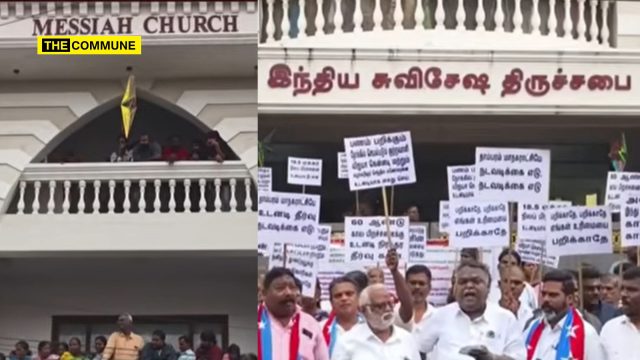
SHRC Orders ₹4 Lakh Compensation To Father Of Tenkasi Man Who Died In Police Custody

On 18 September, the Tamil Nadu State Human Rights Commission (SHRC) directed the state government to pay ₹4 lakh in compensation to the father of Kumaresan, an auto driver from Tenkasi, who died in 2020 following alleged custodial torture by two police officers.

In his petition, A. Navaneethakrishnan from Veerakeralampudur claimed that his son was subjected to severe physical abuse by Sub-Inspector Chandrasekar and Constable Kumar of the VK Pudur police station. According to the complaint, Kumaresan began vomiting blood and experienced breathing difficulties on 10 June 2020. He was first treated at a private hospital and later transferred to the Tirunelveli Medical College Hospital (MCH), where his health continued to decline.

While undergoing treatment at MCH, Kumaresan reportedly informed the attending doctor that he had been assaulted by SI Chandrasekar, which had worsened his condition. He further stated that he and his father had been summoned to the police station on 8 May regarding a land dispute. During this visit, Chandrasekar allegedly slapped and threatened him. On 10 May, Kumaresan was again summoned and subjected to a brutal beating with a lathi, punches, and kicks, including blows to his chest and private parts. Constable Kumar allegedly participated in the assault.

Although the VK Pudur police launched an internal inquiry on 14 June, they did not record Kumaresan’s statement. His father repeatedly appealed to the government and district officials, but Kumaresan succumbed to his injuries on 27 June 2020. A suspicious death case was filed under Section 174(3) of the Criminal Procedure Code (CrPC).

In response, the two police officers claimed that Kumaresan was a habitual alcoholic and had previously sought outpatient treatment for vomiting blood. They also alleged that he had used obscene language in public and had been booked for disturbing the peace.

However, SHRC member V. Kannadasan, after reviewing the medical records, oral testimonies, and documentary evidence, concluded that Kumaresan had indeed been tortured while in custody. The Commission also found that the officers failed to provide convincing proof that alcoholism was the cause of death.

As a result, the SHRC ordered the state government to compensate Kumaresan’s father within one month. It also recommended that disciplinary action be initiated against SI Chandrasekar and Constable Kumar, and instructed that ₹2 lakh each be recovered from the officers.

(With Inputs From TOI)

Subscribe to our channels on TelegramWhatsApp, and Instagram and get the best stories of the day delivered to you personally.
Live Wire Snaps After Heavy Rain In Villupuram’s Gingee Area, Two Brothers Electrocuted

In a tragic incident near Gingee in Villupuram district, two brothers lost their lives due to electrocution after accidentally touching a fallen live wire on 19 September 2025. The victims were identified as K. Ramachandran (36) and K. Chinnarasu (30), both sugarcane harvesters from Konganallur village.

According to police reports, the accident occurred while Ramachandran was heading to a sugarcane field in Perumpugai village, owned by a local farmer named Nagaraj. A team of 19 labourers from Konganallur, including two women, had been working there for over a week.

On the morning of the incident, Ramachandran took a path through an adjacent field when he came into contact with a high-tension wire that had snapped during the heavy rainfall that hit the region the previous night. He suffered a fatal electric shock and collapsed instantly.

His younger brother, Chinnarasu, who was working nearby, rushed to his aid. Unfortunately, he also touched the same live wire and was electrocuted, police said. The other labourers immediately transported both men to the government hospital in Gingee, where they were declared dead on arrival. Their bodies were later shifted to Mundiyambakkam Government Medical College Hospital for postmortem examination.

Ramachandran is survived by his wife and three daughters, while Chinnarasu leaves behind his wife and two daughters. Following the incident, officials from the Tamil Nadu Electricity Board (TNEB), the local tahsildar, and revenue department personnel visited the location and launched an investigation. The incident has sparked concerns among local residents, who are now urging authorities to take prompt measures to ensure the safety of electrical infrastructure, especially in and around agricultural areas, to avoid such fatal accidents in the future.

(With Inputs From TNIE)

Subscribe to our channels on TelegramWhatsApp, and Instagram and get the best stories of the day delivered to you personally.
17 College Students Arrested For Beating Tribal Student Over False Theft Allegation In Dharmapuri

In Dharmapuri, police have arrested 17 college students including three minors for allegedly assaulting a 22-year-old tribal student after accusing him of stealing a pair of earphones. Authorities are still searching for two additional suspects believed to be involved in the incident.

The students have been charged under the Scheduled Castes and Scheduled Tribes (Prevention of Atrocities) Act, with the minors being presented before the Juvenile Justice Board.

The arrests were made following a complaint lodged by V. Thiruvarasan, a BSc Mathematics student from Tirupattur, currently studying at Dharmapuri Arts and Science College. In his statement, Thiruvarasan reported that a group of 19 fellow hostel residents physically assaulted him and falsely accused him of theft on the night of 18 September.

Police officials said Thiruvarasan, who supports his education by working at a bakery near Adhiyamankottai, returned to the college hostel late that evening. Upon his arrival, some hostel inmates accused him of stealing earphones.

“Despite denying the accusations, Thiruvarasan was confronted by his roommates and other students, who insisted he had stolen items from them,” police stated. The confrontation escalated, leading to a physical attack and caste-based verbal abuse. Thiruvarasan sustained multiple injuries from the assault, and a formal investigation is underway.

(With Inputs From TNIE)

Subscribe to our channels on TelegramWhatsApp, and Instagram and get the best stories of the day delivered to you personally.
ECI Delists 42 Inactive Political Parties In Tamil Nadu, Including 3 In DMK Alliance In Nationwide Cleanup

eci tamil nadu dmk

On 19 September 2025, the Election Commission of India (ECI) revoked the recognition of 42 political parties in Tamil Nadu for their inactivity over the past six years. This move is part of a nationwide effort to delist inactive parties, with a total of 474 parties removed from the rolls across the country. Among them, 121 parties were delisted in Uttar Pradesh, and 44 in Maharashtra.

The decision to cancel these parties’ recognition also stems from their failure to submit the mandatory election expenditure reports, as required under the Representation of the People Act, 1951. According to this law, political parties must regularly contest elections and provide financial disclosures to maintain their registration status.

Some of the parties affected in Tamil Nadu include the Kongunadu Makkal Desia Katchi, Manithaneya Makkal Katchi, Tamizhaga Makkal Munnetra Kazhagam, and Manithaneya Jananayaga Katchi. In June 2025, the ECI had already issued notices to 24 such parties, offering them an opportunity to respond before taking action. The ECI’s move is aimed at streamlining the electoral system, ensuring that only active and compliant parties remain recognized in the political landscape.

Some of the delisted parties had contested elections in alliance with major parties. For example, the Kongunadu Makkal Desia Katchi, a member of the DMK alliance, saw its registration canceled. The party’s general secretary, Kongu Easwaran, is an MLA from Tiruchengode. Similarly, the Manithaneya Makkal Katchi, which contested in alliance with the DMK in the last three elections, was delisted. Its candidates ran under the DMK’s rising sun symbol, meaning they are not considered as representatives of the party.

Other notable parties affected by the ECI’s decision include John Pandian’s Tamil Nadu Makkal Munnetra Kazhagam, which participated in elections alongside the AIADMK and BJP. It used the AIADMK’s two-leaves symbol in the 2021 elections and the BJP’s symbol in the 2024 Lok Sabha elections.

The registration of the Manithaneya Jananayaga Katchi, led by Thamimum Ansari, was also revoked. This party had contested the 2016 assembly elections under the AIADMK symbol but failed to participate in the subsequent 2019, 2021, and 2024 elections.

The delisting of these inactive parties marks a significant step in the ECI’s broader efforts to maintain the integrity and efficiency of the electoral system.

(With inputs from Dinamalar)

Subscribe to our channels on TelegramWhatsApp, and Instagram and get the best stories of the day delivered to you personally.
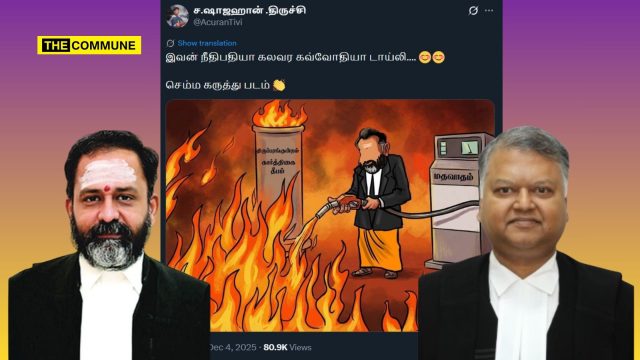
One Court, Different Laws For Different Religions: Supreme Court Directs ASI To Supervise Repair Of Dargahs In Delhi After Mocking Hindu Petitioner To Approach Lord Vishnu For Seeking Restoration Of Beheaded Idol

The Supreme Court of India is under scrutiny for what is seen as an inconsistent approach to heritage protection based on religion, following CJI Gavai’s insensitive remarks in a recent petition seeking restoration of a beheaded Vishnu idol at the Khajuraho temple complex. The court reportedly told the petitioner that, as Khajuraho is an archaeological site, he would require permission from the Archaeological Survey of India (ASI) to restore the idol; a remark critics say appeared dismissive and insensitive.

However, the same court recently directed the ASI to take active supervision of Muslim religious sites in Delhi, including the 13th-century Ashiq Allah Dargah and the Chillagah of Baba Farid inside Mehrauli Archaeological Park.

In August 2025, a bench of Justice B.V. Nagarathna and Justice R. Mahadevan ordered the ASI to repair and renovate these centuries-old monuments, despite them not being listed as “protected” under the Ancient Monuments and Archaeological Sites and Remains Act, 1958 (AMASR Act).

The intervention came after petitioners, led by Zameer Ahmed Jumlana, raised concerns about potential demolition by the Delhi Development Authority (DDA), which had earlier destroyed a 600-year-old mosque, Masjid Akhonji, and associated structures in January 2024. The Supreme Court noted that these monuments were historically significant and within ASI’s purview, directing: “That monument has to be preserved… ASI should take under its consideration the supervision of monuments in question, the matter of repair and renovation.”

Critics point out the contrast with the court’s treatment of Hindu heritage. In the case of the Khajuraho Vishnu idol, the petitioner seeking restoration was effectively told to approach the deity, rather than being granted direct relief through the ASI. Legal observers argue that this sets a troubling precedent in which protection and restoration efforts appear influenced by the religion associated with the monument.

Similar examples of active judicial intervention in heritage preservation include:

Allahabad High Court (Dec 2024): The court granted interim protection to the 17th-century Hammam of Ali Vardi Khan in Agra and directed the ASI and state authorities to prevent damage from illegal encroachments, based on a PIL filed by Chandrapal Singh Rana. The ASI had confirmed the structure dated back to 1620 AD.

Allahabad High Court (Feb-Mar 2025): The Shahi Jama Masjid in Sambhal received court-sanctioned cleaning and maintenance supervision by the ASI after the management committee sought routine whitewashing and repairs for Ramzan.

Supreme Court (2023-2025): The Supreme Court criticized the Goa Bench of Bombay High Court for quashing ASI’s order to demolish a residential house in Old Goa’s UNESCO heritage zone. The ASI had ordered the demolition under Section 19(2) of the Ancient Monuments Act, citing illegal construction near Viceroy’s Arch and Church of St. Cajetan. The High Court claimed ASI violated natural justice by not hearing the owners. The Supreme Court observed that the High Court acted prematurely and should have remitted the matter back to ASI for reconsideration with proper hearings, rather than outright canceling the demolition order.

High courts across India have repeatedly intervened to preserve heritage sites of all religions. The Madras, Bombay, Allahabad, Patna, and Calcutta High Courts have issued orders directing ASI supervision, police protection, and preventive measures against unauthorized construction or demolition in both Hindu and Muslim monuments.

Critics argue, however, that the Supreme Court’s contrasting tone, mocking a Hindu petitioner while actively directing ASI oversight for Muslim sites, raises concerns of inconsistency in heritage jurisprudence.

Subscribe to our channels on TelegramWhatsApp, and Instagram and get the best stories of the day delivered to you personally.
Last Solar Eclipse Of 2025 To Occur On Sunday Night

solar eclipse 2025

After witnessing a Total Lunar Eclipse or Blood Moon, skygazers across the globe are in for a treat again as the last solar eclipse of 2025 will grace the skies on Sunday night. The last solar eclipse of 2025, scheduled for September 21, will be partial and will not be visible from India.

People living in parts of Australia, Antarctica, the Pacific Ocean, and the Atlantic Ocean may be able to witness the celestial event. A solar eclipse occurs when the Moon passes directly between the Sun and Earth, and the Moon casts a shadow on the Earth and blocks sunlight completely.

But during a partial eclipse, only 85 per cent of the Sun will be obscured in some places by the Moon. In a partial eclipse, Earth’s shadow appears very dark on the side of the Moon facing Earth. What people see from Earth during a partial lunar eclipse depends on how the Sun, Earth, and Moon align. The event will begin at 10.59 pm IST on Sunday night, reach its peak at 1.11 am IST early on Monday, and end at 3.23 am IST. The year 2025 had four eclipses, two partial solar eclipses and two total lunar eclipses.

The partial eclipse on Sunday night is the second and last eclipse of 2025. It will also occur a day before the autumnal equinox or the official start of fall in the northern hemisphere, marked on September 22. Astronomically, this is the time when the Sun finds itself exactly above the equator.

On this day, Earth isn’t tilted toward or away from the Sun, and both day and night are almost exactly 12 hours (with a few small exceptions). Meanwhile, the next solar eclipse is slated for February 17 and August 12, 2026. While these will again not be visible from India, the country will get to witness a solar eclipse in August 2027.

—IANS

Subscribe to our channels on TelegramWhatsApp, and Instagram and get the best stories of the day delivered to you personally.
TVK Restricts Volunteers From Climbing Poles, Buildings, Bans Fireworks For Vijay’s Campaign In Nagapattinam, Tiruvarur

tvk vijay

As Tamilaga Vettri Kazhagam (TVK) leader and actor Vijay prepares to hit the campaign trail in Nagapattinam and Tiruvarur districts on Saturday, the party has issued strict directions to its cadre, prohibiting volunteers from climbing on electricity poles, buildings, and other elevated structures during public meetings.

Tamil Nadu is heading for Assembly elections in April 2026, and Vijay has already announced that he will devote every Saturday to statewide campaigning. On September 13, he addressed large gatherings in Tiruchirappalli and Perambalur districts.

Continuing the momentum, he is scheduled to campaign at Nagapattinam’s Puthur Anna Durai Statue Junction and near the Tiruvarur Municipality Office on South Road. Ahead of these rallies, the Tamil Nadu State Transport Corporation reportedly requested that electricity board officials cut the power supply at the venues as a precautionary safety measure, citing the presence of several power poles near the stage.

However, the electricity board confirmed that it would maintain normal supply, while ensuring adequate safety protocols. Meanwhile, TVK General Secretary Anand issued a formal statement outlining the code of conduct for volunteers during Vijay’s campaign.

The directive clearly states that party workers should refrain from climbing buildings, compound walls, trees, electricity poles, transformers, flag masts, statues, grills, or any other obstructions in and around the meeting venues. Volunteers have also been warned against attempting to occupy elevated positions to view the leader’s speeches.

The statement further reminded the cadre that, in line with High Court orders, no arches, placards, flagpoles, or decorative structures should be erected along national highways or public roads without permission. It also discouraged the use of fireworks during welcome ceremonies, citing safety and legal concerns.

By enforcing these guidelines, TVK aims to ensure that Vijay’s campaign remains orderly, disciplined, and free from safety risks, especially as the party positions itself as a serious political force in the run-up to the 2026 polls.

Vijay’s foray into politics has already drawn massive crowds, and with his disciplined campaign structure and weekly roadshows, TVK is expected to remain in the spotlight as Tamil Nadu gears up for what promises to be a high-stakes election.

-IANS

Subscribe to our channels on TelegramWhatsApp, and Instagram and get the best stories of the day delivered to you personally.
Delhi Police Arrest Three Nigerians For Visa Overstay, Deportation Underway

Delhi Police Arrest Three Nigerians Over Visa Overstay, Deportation Underway

The Delhi Police has detained three Nigerian nationals found to be living illegally in India, officials said on Saturday. Deportation proceedings have been initiated through the Foreigners Regional Registration Office (FRRO) after completing necessary legal formalities, the Operations Cell of Delhi Police’s South West District added.

The Nigerian individuals have been identified as 29-year-old Eloumuno Gabriel, a resident of Amambra; 33-year-old Chinedu Paulinus, a resident of Asaba; and 26-year-old Sunusi Sani, a resident of Lagos. According to police, the trio initially insisted that they possessed valid visas deposited with the Nigerian mission. However, verification carried out with the High Commission of Nigeria and the Immigration Department revealed that they had overstayed in India and had not returned to their country despite the expiry of their visas.

Authorities had received Intelligence inputs regarding illegal African migrants residing in Sagarpur and Palam village areas. Acting on the tip-off, a police team intercepted the three suspects and sought identification documents. When they failed to produce valid visas, they admitted to living in India illegally.

A search of their mobile phones led to the recovery of digital copies of their passports and Nigerian national ID cards. The police said that during questioning, the men revealed that they had been doing housekeeping jobs along with some African acquaintances in Shahpura, Gurugram, and Noida.

They were residing in Dwarka Sector-01 near Palam village at the time of their detention and were looking for work when apprehended, officials confirmed. Police have said the trio will remain in custody until the deportation process is completed in coordination with immigration authorities.

—IANS

Subscribe to our channels on TelegramWhatsApp, and Instagram and get the best stories of the day delivered to you personally.