Home Blog Page 232

Here Is Proof That Shows Congress Is Behind Leh Violence

Instances That Show Congress Is Behind Leh Violence

24 September 2025 saw the “hunger strike” of climate ‘activist’ Sonam Wangchuk turn violent as CRPF vehicle was torched and the BJP office in Ladakh was set ablaze. At least four people were reported dead and around 80 others injured, including nearly half from the police force in the Leh violence, according to official sources. Authorities warned that the death toll may rise as the condition of several injured individuals remains critical. But amid all this, it was pretty clear that these protests did not happen spontaneously, with several indications pointing to the Congress.

Instances Proving Congress Instigated Violence in Leh

While Wangchuk blamed Gen Z, there was more to that statement he made. The Congress seemed to be behind the violence and arson.

Social media behaviour is pointing to the Congress party and seems to cement the claim that it that instigated the Leh violence on 24 September 2025.

Congress Party Press Conference One Day Prior To Violence

A video of the press conference held on 23 September 2025 by the Congress in Ladakh warned of escalation if the BJP government did not address the protestors’ concerns.

The video caption stated, Smanla Dorje Nurboo expressed deep disappointment at the BJP-led government for “ignoring the people who are sitting on a peaceful hunger strike for 14 days.” He noted that two participants have been hospitalized as their health worsened, yet the government “remains least bothered.” Nurboo criticized the delay in scheduling talks, urging that the dialogue date be advanced. “Earlier, when the council election was boycotted, the high-powered committee meeting was scheduled immediately and a delegation was flown to Delhi. Today, people are dying and the government is turning a deaf ear,” he said. The Ladakh Congress echoed these concerns, warning the BJP to address the protesters’ demands or “face action.” Calling for unity, Nurboo urged citizens to “step out and ask for our rights together” if the government continues to ignore the movement.”

If one carefully notes, it says Nurboo urged “..,citizens to “step out and ask for our rights together” if the government continues to ignore the movement.” – If this is not instigation, what is?

Congress/Supporter Handles Positioning Violence As Gen Z Protest

What was even more interesting is that all those Congress supporting handles prayed for a Nepal-like situation in India were also seen claiming that it was Gen Z behind yesterday’s arson and violence.

The first statement of this came from Wangchuk himself. In a video where he called off the hunger strike, Wangchuk squarely laid the blame of the escalation on “misguided Gen-Z supporters,” claiming their frustration had led to violent acts.

Following suit, more handles kept repeating the same lie. Here are a few examples.

Interestingly, some Pakistani handles were also pushing the same narrative.

If one searched Gen Z protests Ladakh on X, these are the number of posts, they can find.

These are just some proofs that point to a very strong Congress hand in the violence on 24 September 2025 that turned bloody.

Subscribe to our channels on TelegramWhatsApp, and Instagram and get the best stories of the day delivered to you personally.

Govt Issues Statement On Leh Violence, Says “Wangchuk Incited Mob”

'Climate Activist' Sonam Wangchuk’s Hunger Strike Turns Violent, BJP Office, CRPF Vehicle Torched; Blames Gen-Z While Hiding HIAL Land Defaults leh violence ladakh protest arrest

The Ministry of Home Affairs under the government of India on 24 September 2025 issued a statement regarding the violence that broke out in Leh, Ladakh, holding activist Sonam Wangchuk responsible for inciting the mob.

According to the government, Wangchuk had begun a hunger strike on 10 September 2025 demanding Sixth Schedule status and statehood for Ladakh. Officials stated that the Centre has been in active dialogue with the Apex Body Leh (ABL) and Kargil Democratic Alliance (KDA) on these issues through a High-Powered Committee (HPC), a sub-committee, and several informal meetings.

The government said this mechanism had already yielded phenomenal results, including increasing reservation for Scheduled Tribes in Ladakh from 45% to 84%, one-third reservation for women in the councils, and the declaration of Bhoti and Purgi as official languages. Recruitment for 1,800 posts had also been initiated.

However, the statement alleged that “certain politically motivated individuals” were unhappy with the progress and were attempting to sabotage the dialogue. The next HPC meeting is scheduled for October 6, while additional meetings with Ladakhi leaders are planned for September 25 and 26.

The government clarified that the demands raised by Wangchuk were already part of the discussions in the HPC. It said that despite appeals from many leaders to end his fast, Wangchuk continued and “misled people through provocative mention of Arab Spring-style protest and references to Gen-Z protests in Nepal.”

On 24 September 2025, around 11:30 AM, a mob allegedly instigated by Wangchuk’s speeches left the hunger strike venue and attacked both a political party office and the office of the Chief Executive Councillor (CEC) in Leh. The statement said the protesters set these offices on fire, torched a police vehicle, and assaulted security personnel, leaving more than 30 police and CRPF personnel injured.

The mob reportedly continued to destroy public property and attack security forces. Police, in what was described as self-defence, resorted to firing, during which casualties were reported. The government said the situation was brought under control by 4 pm.

The statement alleged that amidst the violence, Wangchuk broke his fast and left for his village in an ambulance “without making serious efforts to control the situation.”

The government reiterated its commitment to fulfilling the aspirations of the people of Ladakh by providing “adequate constitutional safeguards.” It also appealed to citizens not to circulate old or provocative videos on media or social media.

(With inputs from PIB)

Subscribe to our channels on Telegram, WhatsApp, and Instagram and get the best stories of the day delivered to you personally.

Turkish President Erdogan Once Again Rakes Up Kashmir Issue At UNGA, Calls For Resolution Through Dialogue

erdogan kashmir

At the United Nations General Assembly on 23 September 2025, Turkish President Recep Tayyip Erdogan once again brought up the Kashmir dispute, calling for a resolution through dialogue between India and Pakistan, in line with United Nations Security Council (UNSC) resolutions. He also delivered a harsh condemnation of Israel’s ongoing military campaign in Gaza.

Referring to the thaw in India-Pakistan tensions earlier this year, Erdogan said, “We welcome the ceasefire reached after the April conflict between Pakistan and India. The Kashmir issue, for the sake of our Kashmiri brothers and sisters, should be resolved in accordance with UN resolutions, and through peaceful dialogue.”

Reaffirming Turkey’s consistent position, he added, “We support a peaceful solution to the Kashmir conflict based on the UNSC’s resolutions and the legitimate aspirations of the Kashmiri people.”

India has frequently rejected such international commentary, maintaining that Jammu and Kashmir is a strictly internal matter. New Delhi has urged Ankara to refrain from interfering and to respect India’s sovereignty a message it reiterated earlier this year when Erdogan echoed similar sentiments during a visit to Pakistan.

Since 2019, Erdogan has routinely used his annual UNGA addresses to voice support for Pakistan’s stance on Kashmir, positioning Turkey as a vocal ally. However, his most forceful criticisms were aimed at Israel and its military operations in Gaza. Erdogan described the situation in Gaza as an “ongoing genocide,” accusing Israel of mass displacement, targeted killings, and large-scale destruction.

“What’s happening in Gaza is genocide people are being killed as we speak,” he declared. “This is the time for the world to stand with the oppressed Palestinians and take a firm moral stance.”

He urged all countries that have not yet recognized Palestine as a state to do so “without hesitation,” and extended his gratitude to those that already have.

Erdogan also denounced Israel’s broader regional actions, condemning airstrikes in Syria, Iran, Yemen, Lebanon, and even Qatar where, he claimed, a strike aimed at Hamas leadership had failed to reach its intended target.

Highlighting the civilian toll, he said, “In the past 23 months, Israel has taken the life of one child every hour in Gaza. These aren’t statistics they are innocent lives.”

(With inputs from India Today)

Subscribe to our channels on TelegramWhatsApp, and Instagram and get the best stories of the day delivered to you personally.

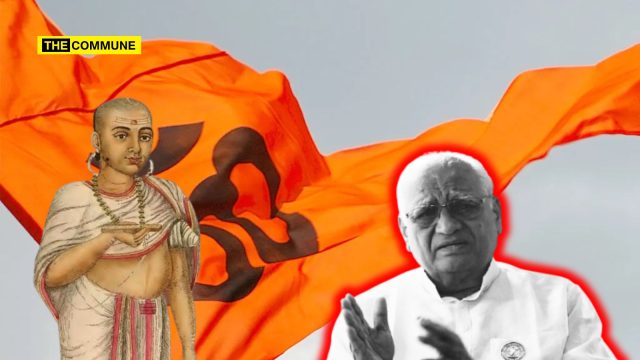
Ramanathapuram Royal Family Descendant Aditya Sethupathi Appointed As Tamil Nadu BJP Youth Wing State General Secretary

Aditya Sethupathi Appointed As Tamil Nadu BJP Youth Wing State General Secretary

The Tamil Nadu BJP has officially announced the appointment of Aditya Sethupathi, a descendant of the historic royal family of Ramanathapuram, as the State General Secretary of its youth wing.

Aditya Sethupathi belongs to the lineage of Bhaskara Sethupathi, the erstwhile ruler of the Ramanathapuram princely state, who is widely remembered for supporting Swami Vivekananda’s iconic journey to the 1893 Parliament of World Religions in Chicago. This moment played a crucial role in introducing Hindu philosophy to the global stage.

Carrying forward this legacy, Aditya brings with him a background of active political engagement. During his student years, he was involved with the Akhil Bharatiya Vidyarthi Parishad (ABVP), the student wing of the Rashtriya Swayamsevak Sangh (RSS), where he held the position of State Joint Secretary. His organizational experience spans several regions across India, including Delhi, Assam, and other northeastern states. Notably, he also served as the District Organizational Secretary for JNU in Delhi.

Now stepping into a prominent role within the Tamil Nadu BJP, Aditya Sethupathi’s induction is seen as a strategic move to energize the youth base. His presence is expected to attract young supporters and strengthen the party’s outreach ahead of the 2026 state elections.

With a combination of royal heritage and grassroots political experience, Aditya Sethupathi’s appointment marks a significant addition to the BJP’s leadership in Tamil Nadu, positioning the party as an emerging platform for politically engaged youth in the state.

Subscribe to our channels on TelegramWhatsApp, and Instagram and get the best stories of the day delivered to you personally.

‘Climate Activist’ Sonam Wangchuk’s Hunger Strike Turns Violent, BJP Office, CRPF Vehicle Torched; Blames Gen-Z While Hiding HIAL Land Defaults

'Climate Activist' Sonam Wangchuk’s Hunger Strike Turns Violent, BJP Office, CRPF Vehicle Torched; Blames Gen-Z While Hiding HIAL Land Defaults leh violence ladakh protest arrest

Protests led by activist Sonam Wangchuk escalated into violence on Wednesday, as members of the Leh Apex Body (LAB) youth wing clashed outside the BJP office. The demonstration, initially organized in solidarity with Wangchuk’s ongoing hunger strike, was meant to press for full statehood for Ladakh, Sixth Schedule protection, and separate Lok Sabha seats for Leh and Kargil.

According to police, agitators pelted stones and set fire to the BJP office and a nearby CRPF vehicle. Tear gas and baton charges were deployed to control the situation.

Wangchuk squarely laid the blame of the escalation on “misguided Gen-Z supporters,” claiming their frustration had led to violent acts.

Why is Wangchuk Protesting?

Wangchuk has been the public face of widespread protests in Ladakh, arguing that the region has been left without democratic safeguards or adequate representation since it was carved out of Jammu and Kashmir as a Union Territory in 2019. The Home Ministry has announced a new round of talks with Ladakhi leaders scheduled for 6 October 2025.

From Peaceful Protest to Violence: Who is Responsible?

While Wangchuk has framed the movement as a peaceful Gandhian protest, the recent violence has raised questions. In the aftermath, Wangchuk took to social media to suggest that “GenZ” elements within the protest may have been responsible for the arson, distancing his movement from the destructive acts.

What is He Hiding? The Land Allotment Controversy

However, a closer look reveals a more complex picture that may explain the timing and intensity of the protests. The violence comes just weeks after the Ladakh administration cancelled a 135-acre land allotment to Wangchuk’s Himalayan Institute of Alternative Learning (HIAL).

The administration’s order, dated August 21, states the allotment was cancelled because Wangchuk’s institute failed to meet key conditions of the 2018 lease agreement:

  • No University Established: The land was allotted to establish an accredited university within one year. Six years later, no university has been built. HIAL applied for university status only in 2022.
  • Lapsed Agreement & Unpaid Dues: The allotment officially lapsed in May 2019. The administration alleges Wangchuk has not paid rent for years for land whose current market value is estimated between ₹27-30 crore.
  • Local Complaints: The administration acted partly on complaints from local village leaders in Phyang, who alleged violations of land use by HIAL.

Despite the documented non-compliance, Wangchuk has portrayed the cancellation as political “witch-hunting,” claiming it is retaliation for his statehood activism. This narrative has been amplified by Pakistani social media accounts, which have seized the opportunity to support Wangchuk and criticise the Indian government.

(With inputs from OpIndia)

Subscribe to our channels on Telegram, WhatsApp, and Instagram and get the best stories of the day delivered to you personally.

“Sanskrit Is A Manufactured Language, Not A Mother Tongue”, Says Alleged ‘Archaeologist’ And Dravidianist Propagandist Amarnath Ramakrishna, Evidence Says Otherwise

amarnath ramakrishna sanskrit

Dravidianist sympathiser and archaeologist K. Amarnath Ramakrishna appears to have taken on multiple roles linguist, historian, and cultural critic—all in the service of promoting a narrow, ideologically driven version of Indian history.

In a recent lecture titled “Excavated and Unexcavated”, delivered at the centenary symposium on the Indus Valley Civilization organized by the Tamil Nadu Progressive Writers and Artists Association, Ramakrishna made sweeping claims that not only disregard historical evidence but appear tailored to fit the Dravidianist narrative.

This is the same organization that previously hosted a conference under the deliberately provocative themeEradicate Sanatana Dharma,” featuring Tamil Nadu’s Deputy Chief Minister Udhayanidhi Stalin. Unsurprisingly, Ramakrishna’s remarks reflect the ideological leanings of the platform rather than objective scholarship.

Rewriting History, One Claim At A Time

During his lecture, Ramakrishna dismissed the long-established view of Kanchipuram as an ancient Sangam-era city, reducing it instead to a mere Buddhist site. In the same breath, he attempted to delegitimize Sanskrit by branding it a “manufactured” language an artificial construct that, according to him, could not possibly function as a mother tongue.

He argued that Sanskrit was derived from older languages such as Prakrit, Pali, Magadhi, and Sauraseni. He even drew bizarre analogies, claiming Sanskrit is akin to computer binary code engineered for divine communication and passed only from father to son through rituals like Upanayanam. On this basis, he declared Sanskrit fundamentally unfit to be considered a mother tongue, because, in his view, “a woman cannot speak it,” and thus it lacks the organic, feminine origins he attributes to other languages.

Speaking in the Conference Dravidianist archeologist Amarnath Ramakrishna said, “Everyone would say that Sanskrit is the primary language, but in my opinion, that’s not the case. Sanskrit is definitely a created language. Its very terminology is that, ‘refined’. When we get refined (products)? You can only refine something if there’s a raw material to begin with. You can’t refine something without a base.

This is because the languages that existed in India before Sanskrit were Prakrit. Languages like Prakrit, Sauraseni, Ardhamagadhi, and Pali. I’m a Saurashtrian who lived in Madurai, and even my own people would argue with me, saying, “Hey, you’re criticizing Sanskrit!” They’d say our own Saurashtra language came from Sanskrit, but I said you are misunderstanding. Saurashtra didn’t come from Sanskrit. Before that, a language called Sauraseni was spoken in the southwestern part of India. Languages like Sauraseni, Prakrit, Magadhi, Pali, Angika, and Maithili are ancient languages of this nation. Sanskrit was created by refining and refining these older languages.

It’s like the binary language we use for computers today. How are we using a binary language for the computer? We use language so the computer can understand. Similarly, Sanskrit is a language created for a god to understand. It’s my view that this language can never be a mother tongue. As Madhkoor Ramalingam said, Sanskrit definitely doesn’t have the qualifications to be a mother tongue. This is because a mother can’t speak it, a woman can’t speak it. All languages born in this world are born from women. Woman is the birthplace of language. When a language is born from a woman, it belongs to both genders it goes to the son and the daughter. But Sanskrit doesn’t go to the daughter; it only goes to the son. It’s passed from a father to a son.

That’s why you have the ritual of Upanyanam, also known as the sacred thread ceremony. The essence of this ritual is that a language taught in this way can never be a mother tongue. It’s a language that is taught, not a language that is inherently a mother tongue. It’s a language the father teaches his son. That’s how it has spread. It’s not a language created by a mother like other languages are. While we praise Sanskrit as an ancient language, we have forgotten the even older languages that existed before it, like Prakrit, Sauraseni, Ardhamagadhi, Pali, and Maithili. Today, I work in Delhi in North India, and my Bihari colleagues tell me they can no longer speak their own languages. There was a language called Angika. Have you heard of the kingdom of Anga, ruled by Karna? The language is Angika. Magadhi is spoken in Patna. Angika is spoken in Bhagalpur. North of the Ganges, they speak Maithili. These languages are still spoken, but they’ve lost their richness due to the dominance of another language.

Sanskrit was created from many such languages, yet we praise it as the most ancient. However, our Tamil language is even older. The birthplace of Tamil is this region and its Sangam literature. That’s why we say our people are an ancient civilization. Our people have contributed many things to this civilization. Many scripts originated from here. These scripts are the crucial parent scripts for all the other language scripts in India. We should call that script ‘Tamizhi’ instead of ‘Brahmi.’ We’ve been calling it Brahmi because that’s what princep who named it, thought was right.”

These assertions are not only speculative they are in direct contradiction to well-established linguistic scholarship, including that of Jain scholars who, despite having no allegiance to Vedic tradition, acknowledged Sanskrit’s centrality.

What Real Scholars Say

Historical grammarians many of them Jain and explicitly non-Hindu never denied Sanskrit’s primacy in the linguistic landscape of ancient India. Jain scholar Hemacandra, in his seminal work Siddha-Hema-Śabdanuśāsana, clearly defines Prakrit as derived from Sanskrit, “prakṛtiḥ saṃskṛtam, tatrabhavaṃ tata āgataṃ vā prākṛtaṃ”“Sanskrit is the source, and Prakrit arises from it.”

Similarly, Mārkaṇḍeya in Prākṛtasarvasva says, “prakṛtiḥ saṃskṛtaṃ, tatrabhavaṃ prākṛtam ucyate” which translates to “Sanskrit is called the prakṛti, and Prākrit is said to originate from it.” Vāsudeva in his commentary Prākṛtasaṃjīvanī reiterates, “prākṛtasya tu sarvameva saṃskṛtaṃ yoniḥ” which translates to, “Sanskrit is the mother of all Prākrit,” same conclusion that Sanskrit is the linguistic root of all Prakrit forms.

Furthermore, authoritative texts like Prakrita Prakasha and Bali Vyakarana focus entirely on how Prakrit words are phonetically derived from Sanskrit roots. None of these texts posit Prakrit as an independent or more “natural” language. The very name Saṃskṛta (refined) does not imply artificiality but rather an elevated form of expression. It was also referred to historically as Chandas or Bhāṣā, indicating its foundational status in Indian linguistic tradition.

Ramakrishna’s attempt to rename the Brahmi script as “Tamizhi” is another example of politically motivated revisionism. This reinterpretation isn’t based on new archaeological evidence but on a desire to detach historical scripts and languages from their established roots and rebrand them within a narrowly defined Dravidian framework.

His claim that Tamil predates Sanskrit is not new it is a common trope in Dravidianist circles but one that remains unsupported by serious linguistic or archaeological research. The elevation of Tamil as the origin of all Indian scripts and languages may appeal to regional pride, but such statements collapse under the weight of historical evidence and linguistic methodology.

The core issue here is not linguistic debate it is the politicization of history under the guise of scholarship. Ramakrishna’s commentary serves a specific ideological agenda, one that seeks to downplay or erase the contributions of Sanskrit and broader pan-Indian traditions to the subcontinent’s civilizational history.

This is what happens when an archaeologist strays into linguistic and historical commentary without adequate training, guided more by ideology than evidence. It is vital that history especially one as complex and multi-layered as India’s be studied with intellectual honesty, not molded to fit contemporary political narratives.

In serious academic discourse, facts must take precedence over ideology. And in the case of Sanskrit and Prakrit, the facts are clear even non-Vedic, non-Brahmanical scholars acknowledged Sanskrit’s foundational role. It is time modern commentators did the same.

Subscribe to our channels on TelegramWhatsApp, and Instagram and get the best stories of the day delivered to you personally.

Vijay Antony Jumps Into Dravidianist Septic Tank With “Sakthi Thirumagan”: Peddles Brahmin Hate By Showing Them As Pedophiles And Evil Cronies, Shows Nirmala Sitharaman Look-Alike As Corrupt, Blames “Brahmin Lobby” And Central Govt For Everything Wrong

The Tamil film industry’s insidious tradition of peddling anti-Brahmin propaganda finds its latest champion in Christian actor Vijay Antony, whose 25th film “Sakthi Thirumagan” represents yet another shameless attempt to vilify the Brahmin community while masquerading as ‘progressive’ (when it is actually regressive) cinema. Directed by Arun Prabhu, the film postures as a political thriller tackling corruption and power games, but scratch a little, and it becomes clear: the entire exercise is nothing but a vehicle to peddle brahmin hate, glorify EV Ramasamy Naicker (hailed as ‘Periyar’ by his followers) and shift blame for Tamil Nadu’s rot onto the Central Government.

A Plot Built On Stereotypes, Vendetta, And Moral Bankruptcy

The film follows Kittu (Vijay Antony), a powerful broker in the Tamil Nadu Secretariat who takes on a mighty “crony capitalist,” Abhyankkar Srinivasa Swamy (named after Subramania Swamy?) but modelled explicitly after figures like Adani and Ambani. However, in a lazy and inflammatory narrative choice, the director Arun Prabhu and actor-producer Vijay Antony choose to portray him as a sloka-chanting crony capitalist, stripped of realism and stuffed into a Brahmin caricature. He is shown performing pujas for power and openly justifies crushing the weak (add a random sloka here). His ultimate goal? To become the President of India. A laughable aspiration presented as though the post is an omnipotent seat that can “change everything.” Who are the makers fooling?

The supporting cast reeks of ideological shoehorning – they highlight a so-called “Brahmin lobby” ad nauseam, with even a corrupt central minister character clearly modelled on an a woman minister who is a Brahmin – right from her facial structure to hair colour fits one person – you can take your guess. Yes, Vijay Antony and the makers want you to think of Nirmala Sitharaman. The police officer assigned to torment the hero is named Ram Pandey, another deliberate communal marker. The film’s message is not subtle: all the ills of the nation stem from a specific community, a dangerous and divisive trope that belongs in the dustbin of hatemongering, not in modern cinema.

Glorifying Criminality As A Path To Justice

The film’s morality is not just ambiguous; it is outright toxic. In a deeply problematic sequence – one of its most disturbing subplots, the “hero” Kittu’s method of obtaining justice for a rape (committed by a character pointedly identified as a Brahmin pedophile principal) and covered up as suicide/accident is to seek not legal recourse but violent revenge. He is shown coldly manipulating a young, impressionable boy, convincing him to commit murder. To make this heinous act palatable, Kittu offers the boy a payment of 50 lakhs to carry out the killing and serve the ensuing 7-year prison sentence. This is celebrated in the film as a form of “justice.” What message does this send to society? That revenge killings and minors sacrificing their lives for vendetta are justified?

The film frames this as a righteous, albeit dark, necessary evil. However, the message it sends is appalling that the legal system is irredeemable, and that the correct solution is to corrupt the youth, incentivize murder with money, and embrace vigilantism. This is a socially irresponsible narrative that could have dangerous repercussions, glorifying the very lawlessness it pretends to critique.

Kittu himself is no saint either. He is shown engaging in shady cryptocurrency trades and other unlawful activities to fund his schemes. When Kittu sells his NFT for a staggering $23.7 million and uses the proceeds to fund bombing campaigns and cyberattacks, the film presents these criminal acts as heroic endeavors. This irresponsible portrayal sends a chilling message to audiences that the ends justify the means, no matter how violent or illegal. Glorifying vigilante justice did no society no good.

The film pretends this is all noble because he is “using the rot in the system to fight the system.” In reality, it is nothing more than the glorification of breaking the law to achieve self-styled justice. The audience is left with a hero who endorses shortcuts, crime, and manipulation as legitimate tools of activism.

Hypocrisy At Its Core: EVR’s Ideology Force-Fed

The most glaring contradiction lies in the character of the EV Ramasamy Naicker following grandfather (Vaagai Chandrasekhar) who raises the hero who is abandoned at a garbage dump after his tribal mother is raped and murdered by people close to the villain (Abhyankar) and the killing covered up as suicide. The same EVR who infamously derided Tamil as a “barbaric language” is portrayed here through a character mouthing Tamil sayings and wisdom. This revisionism is breathtaking. The grandfather is shown as a noble soul, yet his method of activism is defacing public and private property with his paintings/writings – the film actually glorifies vandalism.

Vijay Antony, a professed Christian, seems to have no qualms about championing an ideology fundamentally opposed to his own faith’s tenets, as long as it serves a politically convenient narrative. The hero is shown as a believer – applies vibhuti/goes to temple, despite growing up fed with E.V. Ramasamy’s (EVR) ideology, creating a confusing and incoherent character arc that serves only to peddle the director’s agenda.

A Cinematic Failure On Every Level

The title Shakthi Thirumagan is itself a deception. One might expect a divine connection, a reference to Devi. But apart from a token birth scene, the goddess has no place. Instead, the “Shakthi” is redefined as a man molded by EVR ideology, sneering at faith while masquerading as a champion of justice.

The film is pacy, the first half shows the hero is an all-powerful influencer but things keep happening superficially and go over your head. It offers no compelling visuals or sequences to prove it. We are simply told he is powerful, a fatal flaw in screenwriting. If the first half was engaging to some extent, the second half is too quick and leaves you so confused that you lose track of what is happening.

The attempt to appear “hi-fi” with shallow mentions of Bitcoin and NFTs fails to scratch the surface, leaving audiences confused.

The heroine is utterly redundant, and Vijay Antony’s performance face has a perpetual scowl.

In the end, you don’t even remember why the hero did all what he did and what was the purpose of the film in the first place.

Tamil Cinema’s Systematic Bias

Sakthi Thirumagan is merely the latest example of Tamil cinema’s systematic bias against the Brahmin community. From hiding the Brahmin identity of heroes like Major Mukund Varadarajan in “Amaran” to creating elaborate villain characters specifically to demonize Brahmins in this film, Tamil cinema has proved that it exists only to serve the Dravidianist interests. The film industry’s tolerance for such blatant communalism while preaching tolerance elsewhere exposes the hollow nature of its progressive pretensions.

Director Arun Prabhu Purushothaman, previously known for films like “Aruvi,” has chosen to abandon artistic integrity in favor of pandering to the lowest common denominator. His decision to transform a potentially meaningful critique of corruption into a vehicle for communal hatred and vigilante violence is very telling.

The Great Tamil Nadu Whitewash

Last but not the least, the most pathetic aspect of this film is its cowardice. It is set in the corridors of the Tamil Nadu Secretariat, a hotbed of well-documented corruption and caste-based politics. Yet, the film conveniently sidesteps any meaningful critique of the state government. Instead, it redirects all blame to a nebulous “Central Government” and the “Brahmin lobby.” This is a calculated move to appease the Dravidianist political quarters while avoiding any real, relevant commentary.

Verdict

Sakthi Thirumagan is not just a bad film; it’s a toxic sh*t film. It seems to be a film that was made to launder money – that which the hero does in the film. It uses the platform of cinema to spread communal hatred, glorify criminal vigilantism, and push Dravidianist political propaganda. By making this film, Vijay Antony and director Arun Prabhu have revealed their true intent: that they have jumped into the septic tank of Dravidianist propaganda and willfully scapegoat the Brahmin community, peddle lies as need be.

Hydra is a political writer.

Subscribe to our channels on Telegram, WhatsApp, and Instagram and get the best stories of the day delivered to you personally.

“Not A Single Call From Indian-Americans Urging Change In US Policy”: Congress MP Shashi Tharoor Expresses Concerns Over Indian Diaspora’s Silence Over Trump’s H-1B Fee, Tariffs

shashi tharoor diaspora

On 23 September 2025, Congress MP Shashi Tharoor questioned the lack of response from the Indian-American community regarding key issues straining India-US relations, including former President Donald Trump’s imposition of 50% tariffs on Indian goods and the recent decision to increase the H-1B visa application fee to $100,000.

Tharoor’s remarks followed a high-level meeting between a U.S. Congressional delegation and India’s Parliamentary Standing Committee on External Affairs, which he chaired. The American delegation, made up of five Democratic lawmakers four from California expressed strong support for bilateral ties despite ongoing policy disagreements.

Among the topics discussed were the steep hike in H-1B visa fees, the U.S. tariffs on Indian exports, and sanctions impacting India’s involvement with Iran’s Chabahar Port. Several U.S. representatives voiced concerns about the Trump administration’s decisions on these fronts.

Tharoor highlighted a surprising revelation during the meeting: despite the impact of these measures, Indian-Americans have largely remained silent. He noted that one of the visiting congresswomen had not received a single call from any Indian-American constituents urging a change in U.S. policy.

“One of the key points raised was the noticeable silence of the Indian-American community,” Tharoor told ANI. “One congresswoman said not a single Indian-American voter had contacted her office about these issues. That’s something we all need to think about. If members of the diaspora care about their relationship with India, they must be more vocal and proactive in engaging with their political representatives in the U.S.”

He also praised the visiting delegation, describing them as long-time friends of India who spoke warmly about strengthening bilateral cooperation.

Tharoor further acknowledged India’s economic resilience and the global contributions of its diaspora, emphasizing that U.S. lawmakers continue to value and prioritize the India-U.S. strategic partnership. “The most important takeaway from this visit is the clear message that American public opinion, particularly in Congress, remains deeply committed to a strong relationship with India,” he said.

Despite challenges including the increased H-1B visa fee, trade tariffs, and port-related sanctions Tharoor said the broader commitment to collaboration remains intact.

In an earlier interview, Tharoor described the new H-1B fee policy as “the third blow” to Indian interests under Trump’s administration, but noted it could have long-term benefits for India. While acknowledging short-term difficulties for individuals and businesses, he argued the move might eventually bolster India’s strategic position. “We shouldn’t always see ourselves as victims in these developments,” he remarked.

Just last week, former President Trump signed an executive order raising the H-1B visa application fee to $100,000, significantly tightening the program. The administration justified the move by claiming it would prioritize high-skilled foreign workers for jobs that cannot be filled by Americans.

Additionally, the Trump administration proposed a reform to the H-1B selection process, moving away from the random lottery system toward a merit-based approach that favors applicants with higher qualifications and better pay.

(With inputs from Hindustan Times)

Subscribe to our channels on TelegramWhatsApp, and Instagram and get the best stories of the day delivered to you personally.

Even DMK Stooge Actor Suriya’s Home Isn’t Safe: Domestic Help Allegedly Cheats Actor’s Security Officer

suriya

A police security officer assigned to Dravidianist supporter actor Suriya has become a victim of a major financial scam allegedly orchestrated by the actor’s domestic worker and her family.

Investigations revealed that the officer, Anthony George Prabhu, was defrauded of ₹42 lakh by Sulochana, a woman employed as domestic help at Suriya’s residence, along with her son. The duo reportedly convinced Prabhu to invest money with the promise of lucrative returns. To build credibility, they initially returned 30 grams of gold after receiving ₹1 lakh as a first installment.

Trusting their gesture, Prabhu continued investing and eventually transferred a total of ₹42 lakh between January and February. However, when he requested repayment in March, the family went missing.

Police later uncovered that this was part of a broader scam, with multiple victims across Chennai. The same group is believed to have swindled nearly ₹2 crore from various individuals. Following a formal complaint lodged in July, authorities registered an FIR and arrested four members of the family: Balaji, Bhaskar, Sulochana, and Vijayalakshmi. All four were reportedly employed as domestic staff at Suriya’s home and have since been placed in judicial custody.

Sources say that once Suriya was made aware of the fraud, he promptly dismissed the individuals from service. On the professional front, Suriya was last seen in the Tamil film Retro alongside Pooja Hegde and is currently preparing for his upcoming project Karuppu.

(With inputs from Money Control)

Subscribe to our channels on TelegramWhatsApp, and Instagram and get the best stories of the day delivered to you personally.

“Bulldozer Judgement Gave Immense Satisfaction”, Says Controversial Chief Justice Gavai

"Bulldozer Judgement Gave Immense Satisfaction", Says CJI Gavai

Chief Justice of India (CJI) BR Gavai recently expressed his satisfaction at having delivered a key judgment against “bulldozer justice,” highlighting the importance of protecting human rights and upholding the rule of law.

Speaking at the 269th Friday Group, an academic forum of Supreme Court advocates, CJI Gavai recalled his time serving on the bench with Justice KV Viswanathan for approximately six months. During this period, the bench passed several directions curbing the executive trend of arbitrarily demolishing properties of accused or convicted individuals. Those responsible for such actions were held accountable. The bench emphasized that in a civilised society governed by the rule of law, bulldozer justice is unacceptable.

Recollecting the judgment, CJI Gavai said: “One of the judgments, I think, which gave immense satisfaction to both of us was the bulldozer judgment. What was at the heart of the judgment was the human problems and the problems faced by human beings. The family being harassed only because they were part of the family of one of the members was either a criminal or an alleged criminal.”

He credited Justice Viswanathan for his role in authoring the judgment, stating: “Though largely the credit has been given to me, but I must share that the equal credit in authoring the judgment should go to Justice Viswanathan.”

CJI Gavai further commented on the tenure of Chief Justices, asserting that it does not determine the efficiency of judicial administration. “I don’t think the tenure of the Chief Justice has a direct relationship with the efficiency of the administration of the justice. We have had the best of the chief justices like Justice Lalit for 2 and a half months and Justice Sanjiv Khanna, who proved their imprint and they are known for their contribution in the distribution and administration of justice,” he said.

Reflecting on his own tenure, CJI Gavai stated that he has endeavored to improve judicial infrastructure and the administration of justice across the country. “I have tried every moment for the betterment of the administration of justice and for bringing in improvement in the judicial infrastructure throughout the country and ensuring that the appointments to the high courts are taken to the logical end with expedition…In the last one or two years, I think we have given or trying to give good representation to the young lawyers who are practising in the Supreme Court. We are all sure that the rich experience that they gather in the Supreme Court really helps in bringing out the efficiency or enhancing the efficiency at the high court level,” CJI Gavai concluded.

CJI BR Gavai is set to retire in November after nearly six months as the Chief Justice of India.

(With inputs from LiveLaw)

Subscribe to our channels on Telegram, WhatsApp, and Instagram and get the best stories of the day delivered to you personally.