Home Blog Page 158

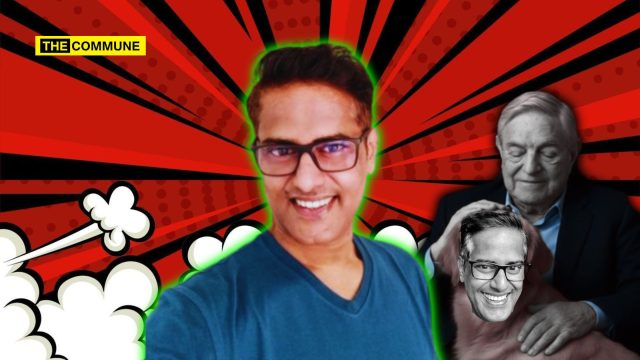
Soros Lackey Ravi Nair Convicted In Criminal Defamation Case Against Adani Enterprises; Fined And Sentenced To One Year Jail

soros ravi nair adani

Ravi Nair, the self-proclaimed “independent investigative journalist” whose byline graces the trash of leftist propaganda outlets like The Wire and NewsClick, is nothing more than a serial peddler of half-baked hit pieces designed to sabotage India’s economic rise. 

A magistrate court in Mansa, Gandhinagar, has convicted journalist Ravi Nair in a criminal defamation case and sentenced him to one year of imprisonment along with a monetary fine.

The case arose from a complaint filed by Adani Enterprises Ltd (AEL), the flagship company of the Adani Group, which alleged that Nair had published and circulated a series of tweets containing false and defamatory statements targeting the company and the conglomerate.

In its complaint, AEL contended that the posts in question did not constitute fair comment or legitimate criticism but were intended to harm the company’s reputation and erode public and investor confidence.

Following trial proceedings, the court held that the complainant had successfully substantiated its allegations. The magistrate found Ravi Nair guilty of criminal defamation, convicted him, and awarded a sentence of one year’s imprisonment in addition to imposing a fine.

Source: NDTV

Subscribe to our channels on TelegramWhatsApp, and Instagram and get the best stories of the day delivered to you personally.

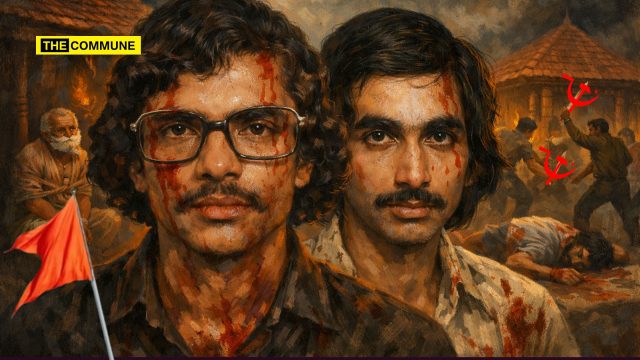
Hacked Inside A Temple: The Brutal 1982 Double Murder Of Swayamsevaks By Communists That Shook Alappuzha

Kerala’s long history of political violence is often reduced to slogans, party statements, and disputed numbers. What tends to disappear in that process are the individual lives, the families, and the moments of extreme brutality that defined entire phases of the state’s political history. This series revisits some of those episodes through reported accounts and survivor narratives, examining how political allegiance became a trigger for lethal violence.

Several of the cases explored in this series are documented in Aahuti: The Untold Stories of Sacrifice in Kerala, a compilation of political killings involving RSS and BJP sympathisers in the state. In this series borrowed from Aahuti, we focus on reconstructing what actually happened on the ground and the wider context in which such violence unfolded.

In the second instalment, we look at a chilling incident of political violence that sent shockwaves through Kerala’s Alappuzha district, two RSS workers, Murali and Kaladharan, were brutally murdered in June 1982 after they intervened in a local intimidation episode, according to documented accounts.

Murali, who served as Mandal Karyavah of Chennithala, and fellow karyakarta Kaladharan had rushed to the residence of a local Swayamsevak after reports emerged that a group of CPI(M) activists had stormed the house and threatened his elderly parents. Responding to the family’s cries for help, the two leaders, accompanied by others, reached the spot and temporarily defused the situation.

However, the violence did not end there.

While returning from the area, Murali and Kaladharan stopped at a nearby temple to offer prayers. It was there that the assailants struck.

A group of armed attackers descended on the temple courtyard, tied up the temple priest, and launched a violent assault. Murali was attacked inside the temple itself and hacked to death using sharp weapons including daggers and swords. He died on the spot from grievous injuries.

Kaladharan initially managed to flee the scene amid the chaos. But the attackers pursued him, and he too was later killed. His body was subsequently recovered within the temple premises.

The double murder occurred in the backdrop of heightened political tensions in the region following the earlier killing of Dharmajan and Yashoda – an incident that had already triggered unrest in Alappuzha.

Local accounts suggested that the attack on Murali and Kaladharan was part of a continuing cycle of retaliatory political violence unfolding in the district at the time.

The brutality of the killings, particularly the murder carried out inside a place of worship after restraining the priest, intensified fear in the locality and underscored the deep political hostilities prevailing in parts of Kerala during that period.

The incident remains one of several politically linked killings from the era documented in accounts of ideological violence in the state.

Aahuti (released 2016 by BJP, endorsed by PM Modi) lists over 270 RSS volunteers murdered by communists since 1969, highlighting this as exemplary brutality against families, including women like Yashoda.

Source: Aahuti

Subscribe to our channels on TelegramWhatsApp, and Instagram and get the best stories of the day delivered to you personally.
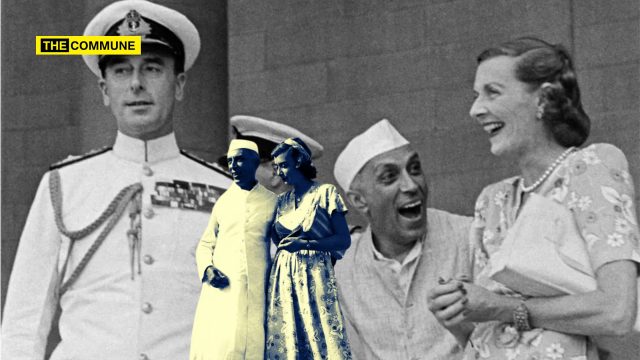
Letters At 2 AM: Did The Nehru-Edwina Relationship Cloud India’s Founding Leadership?

jawaharlal nehru edwina mountbatten india

A damning revelation from the inner circle of India’s first Prime Minister, Jawaharlal Nehru, confirms long-held suspicions that the nation’s founding leader dangerously blurred the lines between personal hedonism and national duty, potentially compromising India’s strategic integrity at its most fragile hour.

The evidence stems not from political opponents, but from the family of the very woman at the center of the scandal: Edwina Mountbatten, wife of Lord Louis Mountbatten, the last Viceroy of India. In a candid interview, their daughter, Pamela Mountbatten Hicks, laid bare the intense, clandestine relationship between Nehru and Edwina, describing a “happy threesome” based on a willful ignorance of the true nature of the bond.

Reflecting on her parents’ marriage and her mother’s emotional state, Pamela observed: “After a long marriage, and they had had their sort of wedding, so they’d been over 25 years together, a woman can feel perhaps frustrated and perhaps neglected if somebody is working terribly hard. And so, if a new affection comes into her life, and new admiration, she blossoms and she’s happy.”

Interjecting, the interviewer Karan Thapar suggested the mutual nature of the bond: “So both of them in a sense fulfill the need. Both Johanna and Edwina needed each other.”

Pamela agreed: “I think they did. And my father understood that need. And of course, it made my mother who could be quite difficult at times, as many very extraordinary women can be. And yet when at this time when she was so happy with everybody, it you know, it was lovely to be with her. There were [when there were] no prickles.”

She also addressed references made in her writings to what some have described as an unusual emotional arrangement within the Mountbatten household.

At the same time, she maintained that her father, Lord Mountbatten, believed the relationship did not cross physical boundaries, “No, I don’t think [I think that there was no doubts that] my father was convinced that it was just a friendship they would like to talk together and be together. And he was convinced that was all it was. And I certainly was convinced that was all it was.”

Much of the intimacy of the relationship, she acknowledged, was sustained through written correspondence “every night at 2’o clock” as mentioned in her book, rather than constant physical meetings. When asked about the scale of letter-writing between Nehru and Edwina, Pamela confirmed: “But the letters they would as I think I mentioned, they would have an endearment to begin with. And sadly, always that they were missing each other so much. They wouldn’t see each other for six months at a time. And then probably they only saw each other twice a year.”

Other accounts, including letters attributed to Nehru, have been cited by critics as evidence of emotional intensity. In one March 1957 letter to Edwina Mountbatten, Nehru wrote, “Suddenly I realised… that there was a deeper attachment between us… some uncontrollable force drew us to one another… we could look into each other’s eyes without fear or embarrassment.”

Nehruvians and Congress supporters describe it as a profound but dignified emotional companionship between two influential figures navigating turbulent times, but truth be told, such intimacy, involving the Prime Minister of a newly independent nation and the wife of the last British Viceroy, raises troubling questions about judgment, priorities, and the optics of power in the shadow of Partition and early state formation.

Subscribe to our channels on TelegramWhatsApp, and Instagram and get the best stories of the day delivered to you personally.
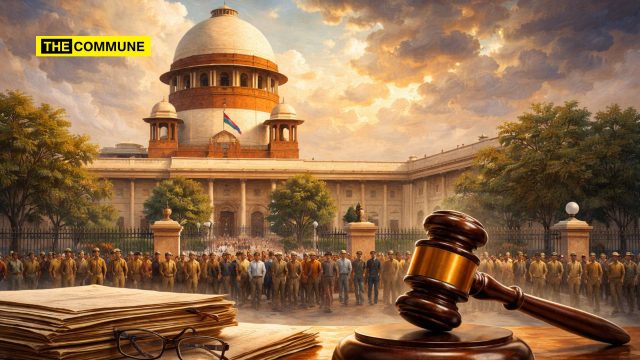
Supreme Court Draws A Red Line: No State Can Obstruct Electoral Roll Revision

On 9 February 2026, the Supreme Court of India delivered a clear, unambiguous message to all state governments and especially to West Bengal that the integrity of India’s electoral process is non-negotiable. In ruling that there can be no obstacles to the Special Intensive Revision (SIR) of electoral rolls, the apex court reaffirmed a foundational principle of the Republic: free and fair elections are not subject to the whims of state executives or partisan convenience.

A bench led by Chief Justice Surya Kant, along with Justice Joymalya Bagchi and Justice Vipul M Pancholi, categorically rejected attempts to stall or dilute the SIR exercise. While granting West Bengal a limited one-week extension pushing the deadline from 14th February the Court made it abundantly clear that this was an accommodation, not a concession to obstructionism. “We will not allow any impediment to the SIR process,” Chief Justice Kant declared, adding that this must be understood by all states.

This statement gains particular significance in the context of the sustained resistance mounted by the Mamata Banerjee-led Trinamool Congress (TMC) government. The Chief Minister herself approached the Supreme Court, alleging that the Election Commission of India (ECI) was “targeting” Bengal and that the SIR exercise was designed to “bulldoze” the Bengali people. Such rhetoric, while politically emotive, collapses under legal and constitutional scrutiny.

At its core, the SIR process is neither an act of exclusion nor a political vendetta. It is a routine, but critical exercise aimed at cleaning electoral rolls removing duplicate entries, correcting discrepancies, and ensuring that only eligible voters are registered. In a democracy of India’s scale, especially in states with a long history of electoral malpractices and political violence, such revisions are not optional extras; they are essential safeguards.

The Supreme Court’s sharp questioning of the West Bengal government exposed a troubling pattern of delay and non-cooperation. Chief Justice Kant openly questioned why the state sent the names of over 8,000 Group B officers at midnight on 7th February, when clear directions had already been issued on 4th February. He also asked why there was a delay in providing officers to replace micro-observers, a move that could have been “approved” had it been done in time.

The Election Commission’s submissions were even more damning. According to its affidavit, the Bengal government was repeatedly unresponsive despite five formal letters outlining the requirement for experienced officials to act as Electoral Registration Officers (EROs). Out of nearly 300 officers demanded, only 64 with appropriate adjudicatory experience were provided. Given that EROs perform quasi-judicial functions deciding claims and objections this shortfall is not a procedural lapse but a substantive threat to electoral fairness.

Unable to secure adequate cooperation, the ECI exercised its constitutional authority to deploy micro-observers. This, too, was projected by the state government as an intrusion, despite the fact that micro-observers merely assist the process and do not issue final decisions. The Court clarified this distinction, reinforcing that the ECI’s actions were well within the bounds of law and necessity.

Perhaps the most serious aspect of the case was the Election Commission’s expressed concern over violence and intimidation. The Supreme Court’s decision to seek a personal affidavit from the Director General of Police speaks volumes about the gravity of the situation. West Bengal’s recent electoral history from panchayat polls marred by bloodshed to repeated allegations of voter intimidation provides ample context for these concerns.

Mamata Banerjee’s claim that the SIR process is “solely for elimination and not for inclusion” is a classic case of political misdirection. The same political establishment that has often been accused of facilitating illegal migration, nurturing ghost voters, and weaponizing demographics for electoral gain now seeks to cloak administrative scrutiny as cultural or ethnic victimisation.

This narrative is not only misleading but dangerous, as it undermines public trust in constitutional institutions.
The ECI’s affidavit pulls no punches. It accuses the Bengal government of “conscious and systematic efforts” to thwart the SIR exercise through “proper planning and concerted action.” The language is severe, but the circumstances warrant it. When a state government, ruling party members, and sections of the administration appear to act in concert to frustrate a constitutionally mandated process, it raises serious questions about democratic accountability.

The Supreme Court’s intervention, therefore, is not merely a procedural correction it is a constitutional course correction. By asserting that no state can impede the SIR process, the Court has reinforced the supremacy of the Constitution over political expediency. It has also sent a broader message: federalism in India does not mean feudal autonomy, and states cannot behave as electoral fiefdoms.

In an era where democratic institutions are routinely politicised, the judiciary’s firm stance is reassuring. The Election Commission, often accused sometimes unfairly of overreach, has in this instance acted squarely within its mandate to protect the sanctity of the vote. The Court’s backing strengthens its hand and restores institutional balance.

Ultimately, this episode is about more than West Bengal. It is about whether India will allow electoral processes to be sabotaged under the guise of regional sentiment and political victimhood. The Supreme Court has answered that question decisively. Democracy, it has reminded us, cannot be negotiated, delayed, or diluted least of all by those sworn to uphold it.

Dr. Prosenjit Nath is a techie, political analyst, and author.

Subscribe to our channels on WhatsAppTelegram, Instagram and YouTube to get the best stories of the day delivered to you personally.
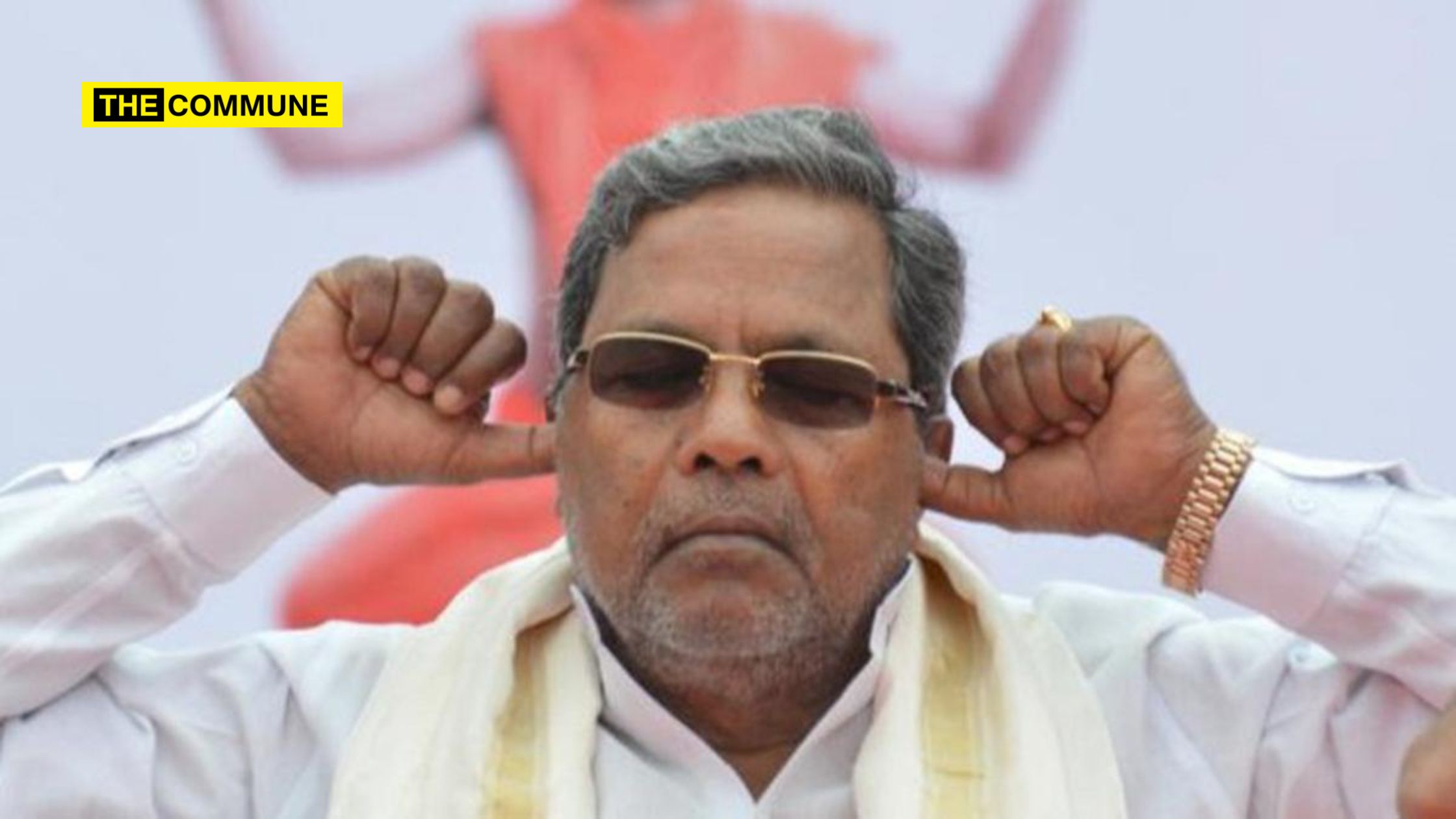
Karnataka Congress Govt Approves Interest Waiver Under Minority Loan OTS Scheme

Complaint Of ₹68 Crore BBMP Fraud Filed Against Karnataka Congress CM Siddaramaiah In MLAs/MPs Court siddaramaiah temple priest dussehra Karnataka Congress Govt’s Hate Speech Bill: A Framework Built To Silence Hindus?

The Karnataka Congress government has approved an interest waiver on certain loans disbursed through the state’s Minority Development Corporation as part of a One-Time Settlement (OTS) scheme, officials said.

The decision was cleared by the state cabinet and applies to loans extended between the financial years 2013–14 and 2018–19. Under the scheme, eligible borrowers will receive a waiver on the interest component of their loans, enabling them to settle outstanding dues by repaying the principal amount.

According to official data, loans amounting to ₹981 crore were disbursed during the specified period. Outstanding dues currently stand at approximately ₹714 crore. The OTS scheme is aimed at facilitating recovery of these dues while reducing the repayment burden on beneficiaries.

Officials said the initiative is intended to improve loan recovery rates within minority welfare financing programmes and to provide financial relief to economically weaker borrowers who have struggled to service accumulated interest liabilities over the years.

Further implementation guidelines, including eligibility criteria and settlement timelines, are expected to be issued by the Minority Development Corporation following the cabinet’s approval.

Source: OpIndia

Subscribe to our channels on TelegramWhatsApp, and Instagram and get the best stories of the day delivered to you personally.
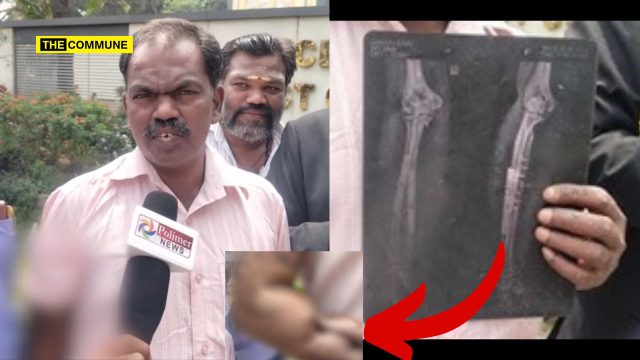
Man Alleges Medical Negligence At CBE Govt Hospital, Says Stapler Pin Left Inside Hand During Surgery

Man Alleges Medical Negligence At CBE Govt Hospital, Claims Stapler Pin Left Inside Hand During Surgery

A 42-year-old man has alleged medical negligence at a government hospital, claiming that a surgical stapler pin was left inside his hand during treatment following an accident, leaving him unable to lift his arm or work for the past two years.

The complainant, identified as Sharath Babu, a native of Kangeyam currently residing in a rented house in KK Pudur near Coimbatore, said he suffered injuries in an accident two years ago. He was initially treated at the Tiruppur Government Hospital and later shifted to Coimbatore Government Hospital for surgery.

According to him, complications began after the operation, with persistent pain and inability to raise his hand. He said the condition affected his livelihood, preventing him from continuing his work.

Sharath Babu alleged that when he repeatedly approached the hospital seeking answers, he was only given tablets and did not receive a clear explanation regarding his condition.

He further claimed that it was only during a later medical consultation at JIPMER Hospital in Puducherry that doctors discovered stapler pins inside his hand. He said one of the pins had become embedded within the healed bone, and doctors informed him that another surgery would be required to remove it.

The victim has demanded compensation from the government, disciplinary action against the doctors involved, and assistance with employment, stating that his physical condition has severely impacted his ability to earn a livelihood.

Subscribe to our channels on TelegramWhatsApp, and Instagram and get the best stories of the day delivered to you personally.
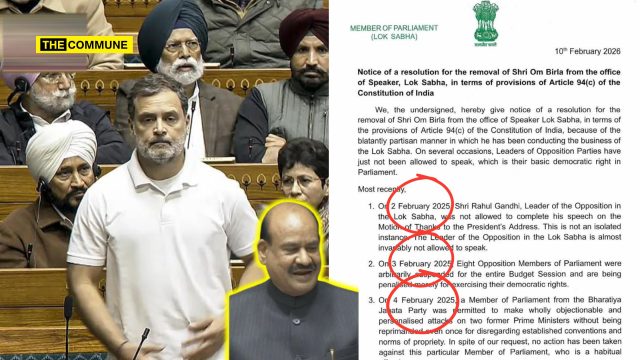
We’re In 2026, Congress Stuck In 2025: No-Confidence Motion By Opposition Against Speaker Om Birla Notes Date As ‘2025’

No-Confidence Motion By Opposition Against Speaker Om Birla Cites '2025' Events

The Opposition’s dramatic move to bring a no-confidence motion against Lok Sabha Speaker Om Birla, projected as a defence of “constitutional propriety”, is already facing embarrassment after glaring drafting errors surfaced in the very notice submitted to Parliament.

Escalating its confrontation with the government, Opposition parties on Tuesday, 10 February 2026, formally submitted a no-confidence notice seeking the removal of Lok Sabha Speaker Om Birla under Article 94(c) of the Constitution.

The motion, backed by over 100 MPs, with Congress leaders claiming 118 signatories, marks one of the most serious parliamentary steps available against the presiding officer of the House.

In the notice, Opposition MPs alleged that Speaker Birla had conducted Lok Sabha proceedings in a “blatantly partisan manner” and had repeatedly denied Opposition members the opportunity to raise issues of public importance.

Grounds Cited Against Speaker

The resolution lists multiple grievances, including:

  • Leader of Opposition Rahul Gandhi allegedly not being allowed to complete his speech on the Motion of Thanks to the President’s Address
  • Suspension of eight Opposition MPs for the Budget Session
  • Alleged inaction against BJP MP Nishikant Dubey over remarks targeting former Prime Ministers
  • Objections to statements suggesting women MPs posed a threat to the Prime Minister

The notice further accused the Speaker of making remarks on the floor of the House that, according to signatories, cast “false allegations” against Congress members and were “derogatory in nature.”

The notice was projected by Opposition parties as an “extraordinary step born out of extraordinary circumstances.” However, the text of the motion itself appears to reference key parliamentary events as having occurred in February 2025, despite the ongoing proceedings and disruptions relating to the current session in 2026.

The dating inconsistency has triggered criticism from treasury bench leaders and political observers, who argue that such clerical and procedural lapses undermine the gravity of a constitutional motion aimed at removing the presiding officer of the Lok Sabha.

Notice Cites 2025 Incidents

The resolution lists multiple grounds against the Speaker and remarks made in the House following the adoption of the motion.

However, the incidents cited are dated 2 February 2025, 3 February 2025, and 4 February 2025 raising questions on whether the notice relied on outdated templates, drafting errors, or procedural oversight.

Given that removal of a Speaker is among the most serious parliamentary remedies available, critics say documentation accuracy is fundamental to its credibility.

TMC Absence Noticed

Adding to the optics, key I.N.D.I.A bloc ally Trinamool Congress (TMC) has not signed the notice, according to parliamentary sources, signalling either tactical distance or lack of full Opposition consensus on the move.

The absence of one of the largest Opposition parties has fuelled speculation about internal coordination gaps within the bloc.

The government, however, has played down the development, with Parliamentary Affairs Minister Kiren Rijiju stating that the Opposition lacks the numbers required to carry the resolution in the Lok Sabha.

The no-confidence notice comes amid escalating confrontation between the Treasury and Opposition benches, following disruptions over speeches, suspensions, and the controversy surrounding Rahul Gandhi’s attempt to cite material from an unpublished defence memoir.

With procedural inconsistencies now under the spotlight, the focus has shifted from the political charge against the Speaker to the drafting and coordination behind the Opposition’s constitutional gambit.

Source: Times of India

Subscribe to our channels on TelegramWhatsApp, and Instagram and get the best stories of the day delivered to you personally.
Rahul Gandhi ‘Expose’ Fails Brilliantly, Confuses Pre-Ordering With Publishing; Ex-Army Chief Naravane Puts Full Stop To His False Propaganda

A lot of drama and chaos has been generated in Parliament and in the public discourse, thanks to Congress scion Rahul Gandhi’s ‘expose’ using the memoir of former Army chief MM Naravane.

When Rahul Gandhi read pages from a The Caravan report, people wondered whether the book was indeed in circulation. Turns out it was never available. Here’s the proof.

It is true that the book was ready to be sold online – on platforms like Amazon and the publishers even started booking pre-orders much before the book was even published, or should we say – got the green signal for publication?

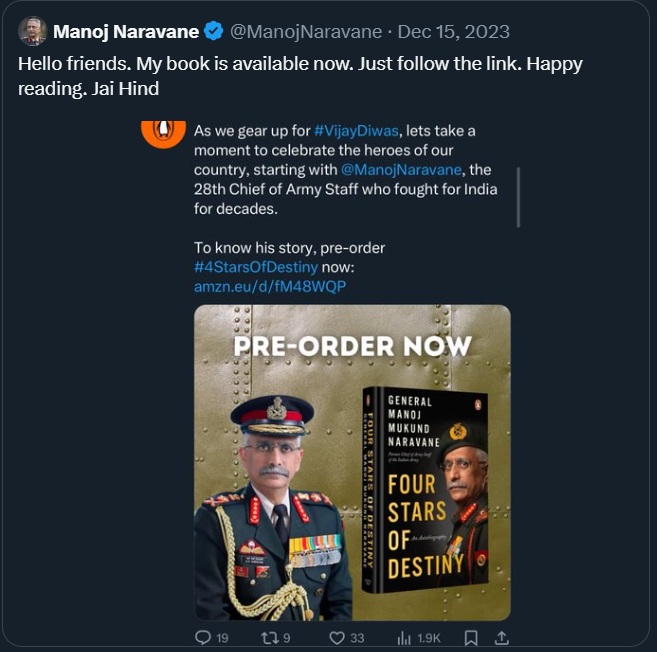
Here is MM Naravane’s tweet asking his followers to check the link to make their pre-order purchase.

This was in December 2023. Several of them placed their order and showed their excitement for the book’s publication.

Cut to 2026. Now that the book is back in the news, several Congress-supporting handles and media started sharing Naravane’s 2023 post claiming the book was indeed published.

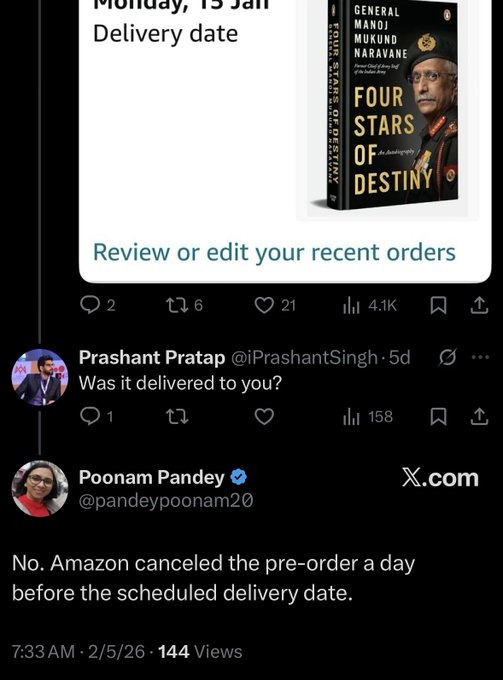
Replying to a handle who had posted that she had placed the pre-order back in 2023, a netizen wrote whether she got the book. She replied in the negative and that Amazon had refunded the amount as a result of order cancellation.

This is in sync with the statements available in media from the government that the book is under review and was never published.

As per an India Today report, serious questions arose over how the memoir, a defence-related manuscript still under government review, was converted into printed book form and briefly reached bookstores despite the publisher maintaining that it was never published.

The India Today report says it had verified that bound copies had arrived at select Delhi bookstores before being recalled, citing a bookstore staffer who stated that hundreds of pre-orders had been taken but the books were returned to the publisher after controversy erupted. The report further stated that they spoke to an individual outside the publishing industry who had seen physical copies ready for sale.

While retired armed forces officers are not legally bound by prior-publication clearance rules applicable to serving personnel under the Army Act and Army Rules, the report noted that the Official Secrets Act continues to apply for life, criminalising disclosure of classified information. In practice, many retired officers and publishers voluntarily submit manuscripts to the Ministry of Defence or Service Headquarters for vetting, particularly when operational matters are discussed. Lt Gen KJS Dhillon (Retd) was quoted as saying that manuscripts dealing with operational issues are typically reviewed through a multi-tier Army Headquarters process that may approve, edit, or withhold clearance.

India Today Digital said Naravane himself had earlier indicated that his manuscript remained under Defence Ministry review, raising questions over whether Penguin Random House India had printed copies before final approval or whether some form of clearance had been granted and later withdrawn. The report also cited sources claiming Rahul Gandhi may have sourced a copy from the author or publisher, though it was not meant for circulation.

With Penguin insisting no copies were published, the emergence of bound hardcovers, including one seen in Parliament (which had several blank pages), had deepened the mystery, prompting the Delhi Police Special Cell to open a probe into the “purported leak or breach of a yet-to-be-approved” publication and to investigate how both physical and digital copies entered circulation.

The Ex-Army chief has also quote posted the publishing house’s statement putting a full stop to Rahul Gandhi’s propaganda.

Subscribe to our channels on TelegramWhatsApp, and Instagram and get the best stories of the day delivered to you personally.
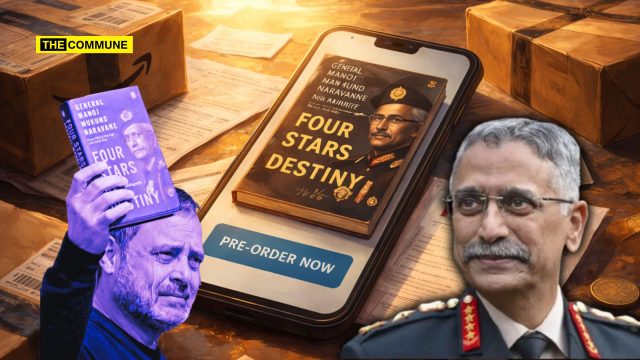
Rahul Gandhi’s ‘Blank Page’ Prop Politics Returns: From Fake Constitution Stunt To Naravane Book Farce

Congress leader Rahul Gandhi’s reliance on theatrical “props” to mount political attacks has once again landed him in controversy, with fresh questions emerging over the authenticity of the copy of former Army Chief General MM Naravane’s unpublished memoir ‘Four Stars of Destiny’ that he dramatically waved in Parliament.


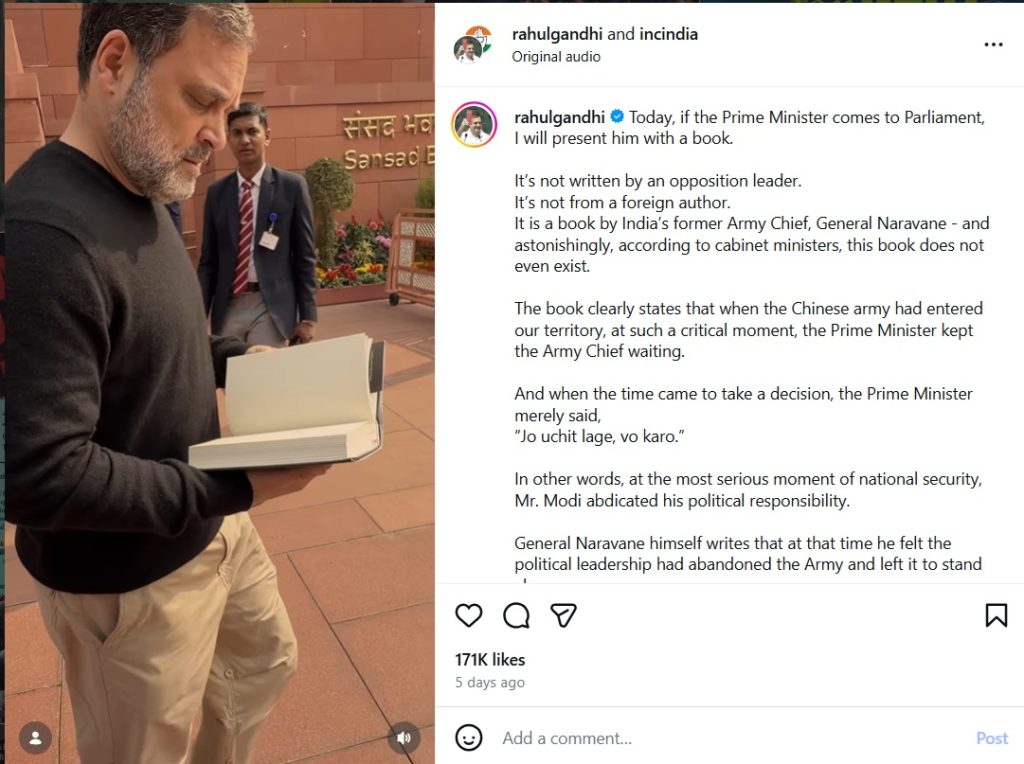
View this post on Instagram


A post shared by Rahul Gandhi (@rahulgandhi)

He also brought the ‘hardcopy’ of the book outside Parliament and started waving it as if it were earth-shattering proof.


View this post on Instagram


A post shared by Rahul Gandhi (@rahulgandhi)

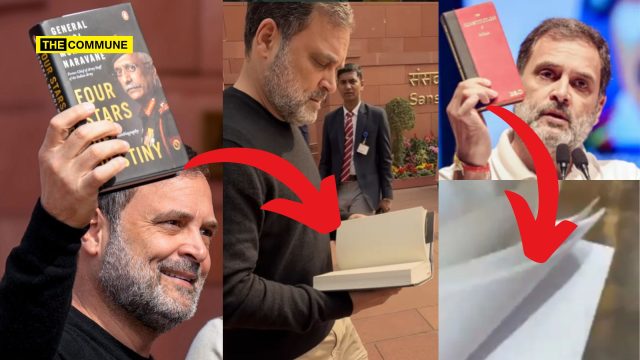
But what has caught the attention of the public is the flaw in his stunt – the book had several blank pages!

Check the book in his hand

Netizens started zooming in on the video he had shared and realised that the book was by and large blank. That he read out the passages from the middle of the book is a different issue because he could have just inserted some printed pages. But do watch this and notice the blanks.

Not The First Time

“Red Constitution” 

In November 2024, the Maharashtra BJP had punctured Rahul Gandhi’s high-decibel rallies where he brandished pocket-sized red booklets labelled “Constitution of India,” presenting them as symbols of the BJP’s alleged assault on constitutional values.

Videos released by BJP leaders later showed the interiors of several such booklets to be largely blank, with at best a printed preamble – more notebook than Constitution. Senior BJP leaders, including Devendra Fadnavis, called it an insult to Dr. BR Ambedkar, while Prime Minister Narendra Modi mocked the stunt, remarking that the pages were blank because Rahul “never reads it.”

Congress dismissed the expose as propaganda, but the episode cemented Rahul’s reputation for headline-grabbing optics over documentary credibility.

Parliament Disruption Over MM Naravane Memoir

Fast forward to the Budget Session in February 2026, Rahul Gandhi attempted to quote from General Naravane’s yet-to-be-released memoir, alleging it contained material critical of the Modi government’s handling of the 2020 Galwan crisis.

Speaker Om Birla and Defence Minister Rajnath Singh blocked the attempt, citing parliamentary rules prohibiting references to unpublished material, particularly content linked to national security that remains subject to Ministry of Defence clearance.

The standoff triggered repeated disruptions in the Lok Sabha.

Undeterred, Rahul escalated the spectacle by displaying what he claimed was a physical copy of Four Stars of Destiny before cameras outside Parliament, daring the Prime Minister to debate its contents publicly.

However, BJP MPs and political observers quickly raised doubts about the authenticity of the book he brandished.

No independent authentication of the book’s contents has been publicly established, but the optics alone have intensified scrutiny.

Additionally, the publisher Penguin Random House also came out with a statement saying that no copies were ever published and legal action would be taken against those who are indulging in “unauthorised dissemination of the book.

The Naravane memoir episode mirrors Rahul Gandhi’s earlier “blank Constitution” spectacle, a pattern of symbolic props deployed for political messaging but collapsing under factual scrutiny.

With Delhi Police now probing the alleged leak and circulation of Naravane’s unpublished manuscript, the stakes have escalated beyond parliamentary theatrics into legal and national security territory. As the row deepens, the credibility of Congress scion Rahul Gandhi only seems to be crumbling at every instant.

Subscribe to our channels on TelegramWhatsApp, and Instagram and get the best stories of the day delivered to you personally.
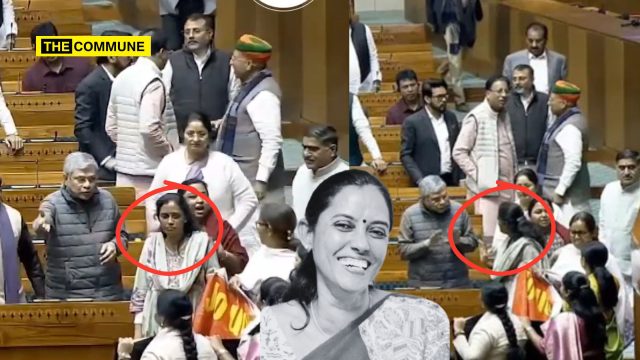
Lok Sabha Chaos: When Opposition MPs Blocked PM’s Seat, Jothimani Was Among Those Leading Protest

Lok Sabha Chaos: When Opposition MPs Blocked PM’s Seat, Jothimani Was Among Those Leading Protest

On 4 February 2026, chaotic scenes in the Lok Sabha led to the adjournment of proceedings and the cancellation of Prime Minister Narendra Modi’s scheduled reply to the Motion of Thanks on the President’s Address, amid escalating confrontation between the Treasury and Opposition benches.

The disruption followed sustained protests by Opposition parties after Leader of Opposition Rahul Gandhi was not permitted to quote from the unpublished memoir of former Army Chief General MM Naravane during an earlier debate.

Jothimani Among MPs Who Blocked PM’s Seat

As proceedings resumed around 5 PM, shortly before the Prime Minister was scheduled to speak, several women MPs from the Opposition moved into the well of the House and blocked the treasury benches.

Congress MP S Jothimani, along with MPs including Varsha Gaikwad, was among those who physically obstructed access to the Prime Minister’s seat.

The MPs held up a large banner reading “Do what is right”, protesting the suspension of eight Opposition MPs the previous day.

Now videos are circulating on social media where Jothimani is seen gesturing her fellow MPs to join her.

The blockade continued despite repeated appeals from ministers to vacate the area. Sandhya Rai, who was presiding in place of the Speaker, eventually adjourned the House amid the stalemate.

The confrontation escalated outside Parliament after the Congress party shared an AI-generated video on social media platform X on 9 February 2026.

The video depicted a fictionalised scenario showing Prime Minister Modi in conversation with Speaker Om Birla, allegedly devising a plan to claim that women MPs were attempting to attack him. It further portrayed a mock “breaking news” sequence and included satirical dialogue about the Prime Minister’s global image and reactions on social media.

The clip drew sharp reactions from all quarters including BJP leaders, who accused the Congress of spreading misinformation and lowering parliamentary discourse.

Union Parliamentary Affairs Minister Kiren Rijiju responded by releasing footage from the February 4 Lok Sabha proceedings.

The video showed Congress women MPs holding placards, surrounding the Prime Minister’s seat, and raising slogans during his address.

Rijiju termed the conduct “the most degrading behaviour” and alleged that MPs had climbed onto tables, crossed treasury benches, and advanced toward the Prime Minister’s position.

He said BJP and NDA members were “angry and agitated” but had exercised restraint to preserve the dignity of Parliament.

Rijiju further stated that BJP women MPs had been specifically instructed not to retaliate physically, warning that any escalation could have led to a far more confrontational situation inside the House.

The Opposition’s protest stemmed from the earlier controversy surrounding Rahul Gandhi’s attempt to cite excerpts from General Naravane’s unpublished memoir, which he claimed contained material relevant to national security discussions.

Repeated adjournments followed, culminating in the high-drama protest that prevented the Prime Minister from delivering his concluding reply.

Source: Times of India 

Subscribe to our channels on TelegramWhatsApp, and Instagram and get the best stories of the day delivered to you personally.