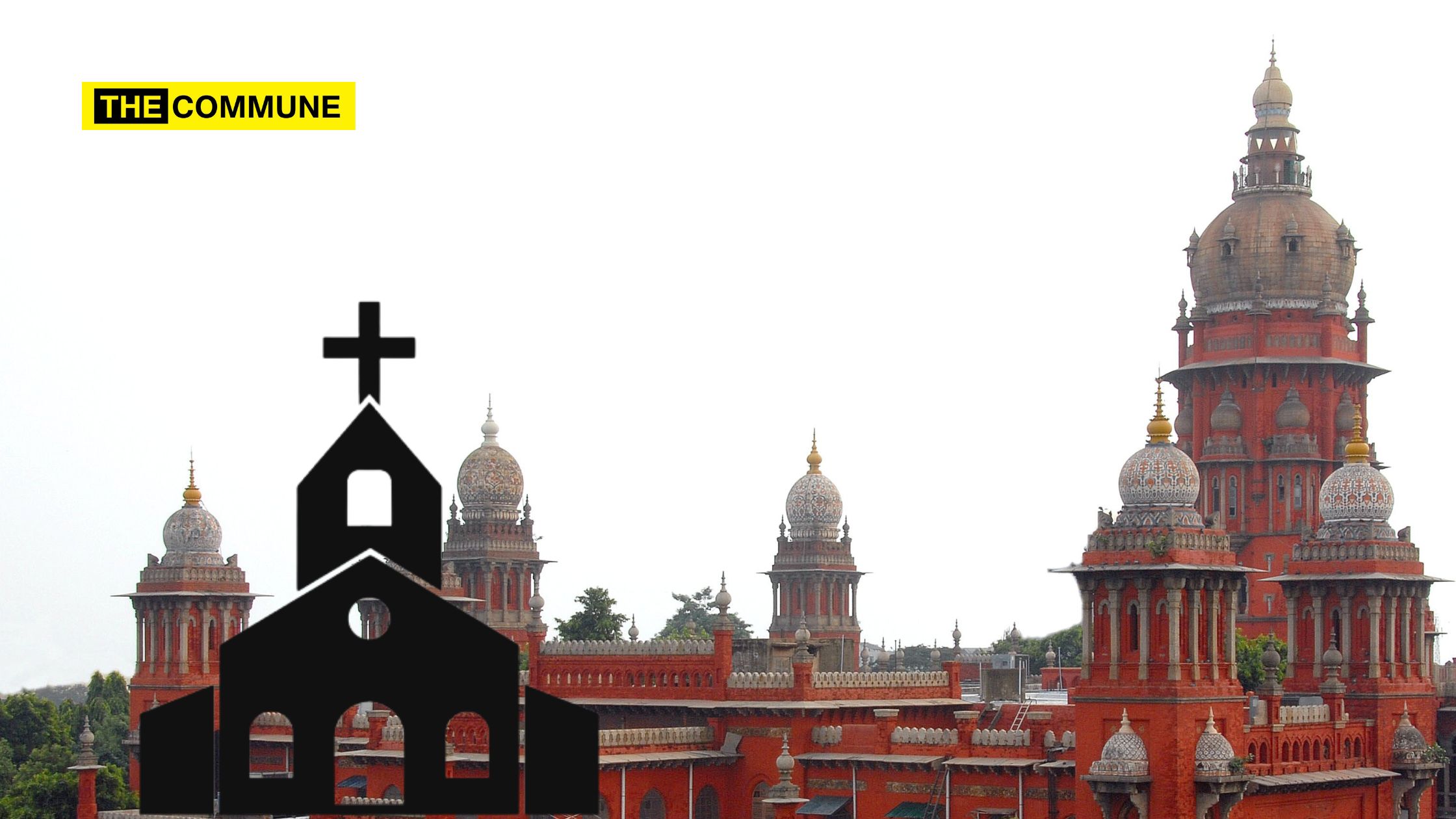
The Madras High Court has directed the Central and Tamil Nadu governments to respond on the issue of creating a separate statutory body to regulate and administer properties belonging to Christian churches, on the lines of the Hindu Religious and Charitable Endowments (HR&CE) Department and the Waqf Board.
The direction was issued during the hearing of an appeal filed by those declared elected in the CSI Thoothukudi–Nazareth Diocese election. The matter came up before a division bench comprising Justices N. Sathish Kumar and R. Sakthivel.
After hearing submissions from all sides, the bench ordered an interim stay on the earlier order passed by a single judge in connection with the diocesan election dispute. The court further directed that the case be reheard after granting opportunity to both parties.
During the proceedings, the bench noted that numerous litigations concerning Christian churches are pending before courts. It also observed that substantial properties, educational institutions, and hospitals are being run in the name of churches, leading to intense contestation over administrative control and electoral positions within church bodies.
The court remarked that safeguarding church properties across the country is essential. It pointed out that in Tamil Nadu, Hindu temples are administered through the HR&CE Department, which regulates properties, finances, and related expenditures, while Islamic religious properties are administered through the Waqf Board.
In this context, the bench observed that a similar regulatory mechanism may be required to streamline the administration and financial management of Christian churches.
The court impleaded the Union Home Ministry Secretary and the Tamil Nadu Chief Secretary as respondents in the case and directed them to file responses on the feasibility of establishing a statutory framework or authority to legally administer church properties, educational institutions, and hospitals.
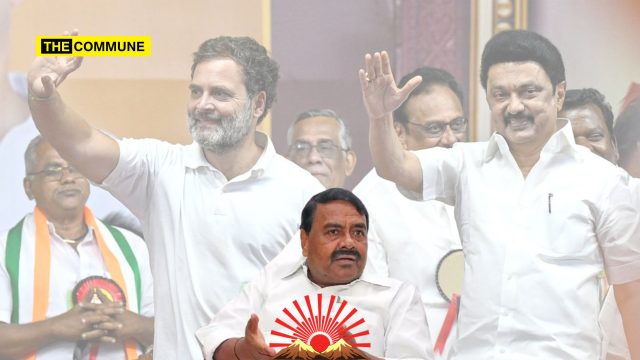
DMK Minister Raja Kannappan on Monday, 9 February 2026, criticised the Congress party while speaking at a public event in Pudukkottai, remarking on the party’s current strength and its role within the alliance.
Addressing the gathering, Kannappan said, “In Congress, once upon a time till ’67, people were there in large numbers – can they come (to power) now? If I say something, they get offended. Is there even a functioning alliance? One or two people remain and are draining the life out of us.”
He added that alliance decisions rested with party leadership and said, “We are not saying we don’t want them – that is the leader’s wish. Alliance is his decision. Even yesterday, I attended a wedding in Chennai where Selvaperunthagai was also present, what to do, we are in an alliance, we go, we attend, we pose for photos… that is a different matter.”
Kannappan also spoke about political challengers to the Dravidian movement, stating, “But to defeat the Dravidian movement, someone has to be born again. Who is going to come? People keep saying this person will come, that person will come – TVK that this, let anyone come.”
Referring to film personalities entering politics, he said, “Even if actors come in large numbers – can they be better than MGR Jayalalithaa? What is their caste? There is no caste.”
He further added, “We may belong to different castes, but being united is what matters. Caste will not win elections.”
Subscribe to our channels on WhatsApp, Telegram,Instagram and YouTube to get the best stories of the day delivered to you personally.
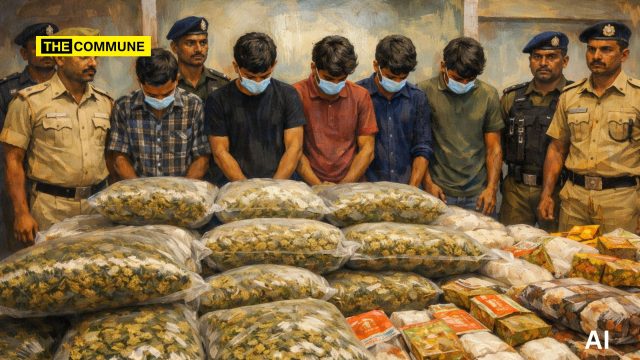
In a major anti-narcotics operation, the Air Intelligence Unit (AIU) of Chennai Airport Customs seized 23 kilograms of high-grade hydroponic ganja valued at approximately ₹23 crore in the illicit market and arrested six youths from Kerala for allegedly smuggling the contraband from Thailand through two separate passenger flights.
Hydroponic ganja is a high-potency cannabis variant grown in a soil-free system using nutrient-rich water solutions.
Acting on specific intelligence, AIU officers mounted surveillance on passengers arriving from Bangkok earlier this week.
On Thursday, 5 February 2026, officers intercepted four Kerala-based youths who had travelled to Thailand as tourists and were returning to India. During baggage checks, officials recovered 15 kg of hydroponic ganja concealed inside packaged food items and chocolate packets. The seized contraband was valued at ₹15 crore in the illicit market. All four were arrested.
In a follow-up operation in the early hours of Friday, 6 February 2026, officers intercepted two more Kerala-based youths arriving from Bangkok on another passenger flight. Searches of their luggage led to the recovery of 8 kg of hydroponic ganja hidden inside packaged food packets. This seizure was valued at ₹8 crore. Both accused were taken into custody.
The total haul across the two operations stood at 23 kg, with an estimated combined illicit market value of ₹23 crore.
Sources said preliminary investigations revealed that all six accused are graduates, including some with engineering backgrounds, and were allegedly acting as couriers for an international drug syndicate.
It is claimed that economic distress or lack of lucrative employment opportunities may have motivated the accused were mentioned in source inputs but have not been officially confirmed by customs authorities.
This is a showcase of everything going wrong in kerala
Educated but unemployed
High level of materialism
Quick buck syndrome
Wants money without hardwork pic.twitter.com/KXcx7IqWuP
Hydroponic ganja is cultivated without soil using nutrient-rich water solutions, a method known to produce high-potency marijuana with elevated THC levels. Such variants command significantly higher prices in illicit markets compared to conventional cannabis.
While Indian law does not differentiate between cannabis types, its higher potency increases its value for traffickers.
Officials indicated that trafficking through Southeast Asian routes, particularly Bangkok, has figured in multiple recent cases. Thailand’s legal cannabis market has been cited in enforcement inputs as a factor traffickers exploit to move drugs into India through passenger routes.
Recent enforcement actions include seizures at other Indian airports, including a case at Hyderabad’s Rajiv Gandhi International Airport where over 27 kg of similar contraband was recovered in a separate intelligence-led operation.
All six accused have been booked under the Narcotic Drugs and Psychotropic Substances (NDPS) Act.
Authorities said further investigation is under way to identify the wider network involved. Agencies are examining travel histories, financial transactions, mobile phone data, and communication records to trace links to larger domestic and international drug syndicates.
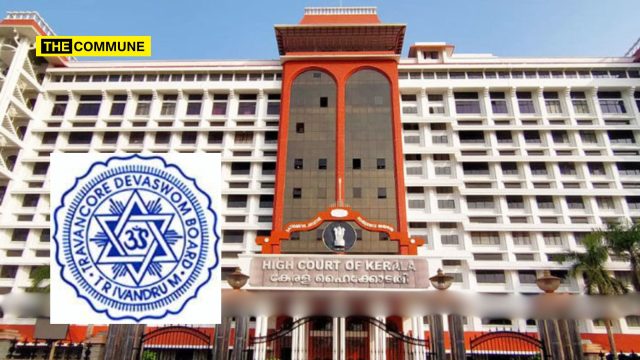
The Kerala High Court on Monday, 9 February 2026, directed the Travancore Devaswom Board (TDB) and its officials to exercise due diligence while publishing or approving content that could hurt the religious sentiments of devotees.
The directive was issued by a division bench comprising Justice K. V Jayakumar and Justice Raja Vijayaraghavan V while hearing a petition filed against the Devaswom Board and the Advisory Committee of the Kollam Rameswaram Mahadeva Temple.
The petition challenged a notice issued in connection with the temple’s Thiruvathira Aarattu Maholsavam, which carried an advertisement for an event sponsor. The notice featured images of non-vegetarian food, triggering objections from devotees.
According to the complaint, the inclusion of non-vegetarian food visuals was contrary to temple customs and violated guidelines framed by the temple’s advisory committee regarding acceptable content in festival-related publications.
After hearing submissions from counsel representing the Travancore Devaswom Board, the court directed the Board and its officials to exercise caution while approving notices and brochures linked to temple festivals.
The bench observed that both the Temple Advisory Committee and the Devaswom Board bear responsibility to ensure that festival-related publications do not contain objectionable material that could offend the religious sentiments of devotees.
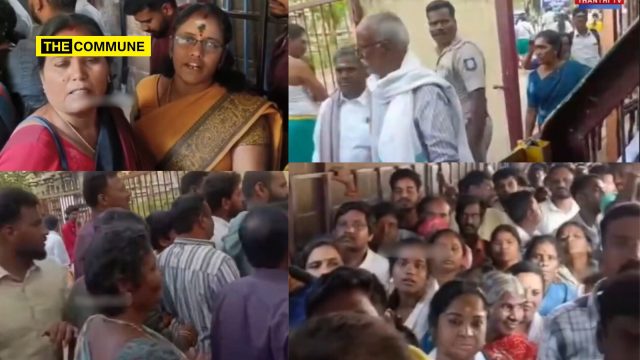
Devotees visiting the Arunachaleswarar Temple in Tiruvannamalai have levelled serious allegations of bribery, middlemen exploitation, and administrative inaction, stating that some intermediaries are targeting outstation pilgrims and collecting money to facilitate quicker darshan.
According to devotees, certain middlemen are allegedly receiving payments and escorting devotees directly for darshan, bypassing the regular queues. Pilgrims said this has resulted in ordinary devotees being forced to wait in long lines ranging from four to seven hours.
Devotees also expressed dissatisfaction with the temple administration and officials of the Hindu Religious and Charitable Endowments (HR&CE) Department, alleging that no action has been taken despite recurring complaints.
One devotee in the queue said, “They are charging 500 per person in Tiruvannamalai. We are standing in the queue since 2PM. They did not allow anyone in. We are coming for girivalam every month, but this month has been the worst. Neither is the TN government doing anything about it nor is the HR&CE department.”
An advocate from Tiruppur who was present at the site also raised allegations of malpractice and police misconduct. He said, “Here too much malpractice is going on. Police is taking money and permitting people beyond the limit. There are many women with infants here. There are many diabetics and other patients too. Even if we faint, the police pay no heed. They don’t even give water. They are taking bribes and working. All teh policemen are using abusive language. No one is capable and worthy. Sekar Babu has to see this with his own eyes. Follow this up to the CM. Complain to the CM, don’t leave this. We will take action through court.”
Devotees further alleged that police personnel were verbally abusing people waiting in queues and allowing devotees from other states through separate lines.
The allegations have triggered anger among pilgrims, particularly regular girivalam devotees, who claim that the situation has worsened in recent weeks. No official response has been issued so far by temple authorities or the HR&CE Department regarding the complaints.
Subscribe to our channels on WhatsApp, Telegram,Instagram and YouTube to get the best stories of the day delivered to you personally.
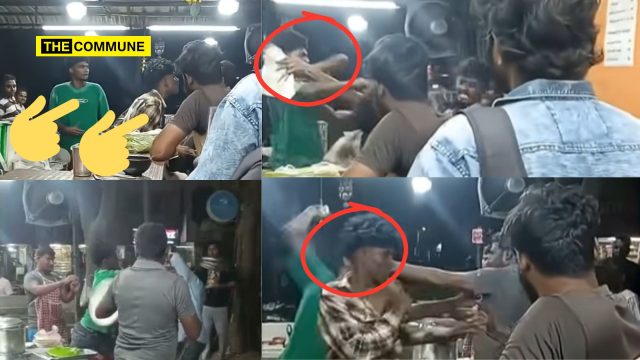
Chennai police have arrested two youths, including college students, after a group of three allegedly dined at a hotel in Kodungaiyur and attempted to leave without paying the bill before assaulting staff and vandalising the premises.
According to preliminary information, the three youths visited the eatery late at night and ate to their fill before trying to walk out without settling the payment. When the hotel cashier and staff demanded the bill amount, the trio turned aggressive.
The accused were reported to have shouted at the staff, verbally abused them in foul language, and then physically assaulted employees. During the altercation, they also damaged property inside the hotel by throwing objects and creating a ruckus.
The sudden violence triggered panic among customers dining at the time, forcing several to flee the premises.
Despite being assaulted, one of the hotel staff members reportedly ran inside the establishment, picked up a knife, and confronted the miscreants. On seeing the weapon, the three youths fled the spot.
Police launched an investigation based on CCTV footage recovered from the hotel. Two of the accused have since been arrested, while efforts are underway to trace and apprehend the third youth.
Officials confirmed that two among the accused are college students. Visuals of the incident, including footage of the miscreants being chased away, have gone viral on social media, drawing public attention to the episode.
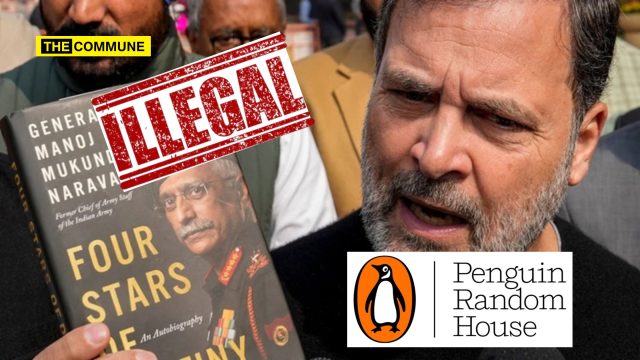
Just a few days ago, Congress scion Rahul Gandhi flashed a ‘hardcover copy’ of the unpublished memoir ‘Four Stars of Destiny’ of former Indian Army chief MM Naravane. On Monday, 9 February 2026, the book’s publisher Penguin Random House India issued a clarification.
The publisher said it holds the sole publishing rights to the book and that it has not yet been released. It stated that no copies, print or digital, have been published, distributed, sold, or otherwise made available to the public.
In an official statement, Penguin Random House India said, “In light of recent public discourse and media reporting, Penguin Random House India would like to clarify that we hold the sole publishing rights for the book Four Stars of Destiny, a memoir by General Manoj Mukund Naravane, former Chief of the Indian Army.”
The publisher added, “We wish to make it clear that the book has not gone into publication. No copies of the book – in print or digital form – have been published, distributed, sold, or otherwise made available to the public by Penguin Random House India.”
Warning against unauthorised circulation, the statement said, “Any copies of the book currently in circulation, in whole or in part, whether in print, digital, PDF, or any other format, online or offline, on any platform, constitutes an infringement of PRHI’s copyright and must immediately be ceased.”
The company further said it would pursue legal remedies against violations. “Penguin Random House India shall be exercising remedies available in law against the illegal and unauthorised dissemination of the book,” it said, adding, “This statement is being issued to place the publisher’s position on record.”
A political row broke out after Leader of Opposition and Congress leader Rahul Gandhi attempted to quote from what he described as a “pre-print” version of the memoir during his speech in the Lok Sabha on the Motion of Thanks to the President’s Address last week.
Gandhi sought to read an excerpt relating to the 2017 Doklam stand-off with China but was unable to proceed amid repeated interruptions by Union ministers, including Amit Shah and Rajnath Singh. Treasury bench members strongly objected to his remarks.
Following multiple adjournments over the issue, the Lok Sabha later adopted the Motion of Thanks by voice vote amid sloganeering by Opposition members.
Delhi Police register FIR
Meanwhile, Delhi Police said it had taken cognisance of information circulating on social media platforms and news forums claiming that a pre-print copy of Four Stars of Destiny was being shared.
According to ANI, the Special Cell has registered an FIR regarding the circulation of the unpublished book online. The case relates to a “purported leak/breach of a yet to be approved publication.”
Police officials said an investigation has been initiated into claims about the availability and dissemination of the alleged pre-print copy.
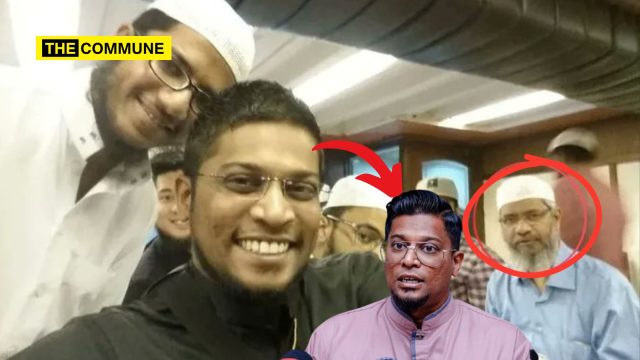
Two men, controversial preacher Zamri Vinoth and TanahMalaya.com founder Tamim Dahari Abdul Razak, were remanded for two days following a rally protesting the construction of allegedly illegal temples (“kuil haram”) in Kuala Lumpur on Saturday, 7 February 2026, police said.
Kuala Lumpur police chief Comm Datuk Fadil Marsus said both were taken into custody after authorities denied permission for the “Anti-Illegal Houses of Worship” rally planned outside Sogo Kuala Lumpur.
Fadil said police had received more than 100 reports ahead of the gathering and had conducted intelligence and security assessments before refusing approval for the assembly. He stated that a total of 131 police reports had been lodged in relation to the planned rally.
According to police, at around 8 PM on Saturday, officers detected approximately 100 individuals assembled in front of the Sogo complex demanding action over alleged encroachment linked to the construction of a kuil haram and a place of worship built without approval.
Police subsequently detained 19 individuals believed to be participants in the gathering, including 15 men and four women, all Malaysians aged between 30 and 64. Most were later released after their statements were recorded.
Authorities said Zamri Vinoth and Tamim Dahari Abdul Razak were being held at the Dang Wangi district police headquarters, with investigations initiated under the Sedition Act, the Penal Code, and the Communications and Multimedia Act.
Fadil also said security considerations tied to the official visit of Indian Prime Minister Narendra Modi had influenced the decision to deny permission for the rally. He rejected allegations that enforcement action had targeted only one group.
He added that three men had also been arrested in Klang for uploading TikTok videos related to the issue, noting that investigations on all sides would proceed simultaneously as the matters were connected.
Fadil emphasised that maintaining public peace and harmony was a shared responsibility. He said that if disputes arose over allegedly illegal places of worship, police would cooperate with court orders and take action in accordance with the law. He warned that any attempt to exploit race, religion, or royalty (3R) sensitivities would be investigated and met with firm action.
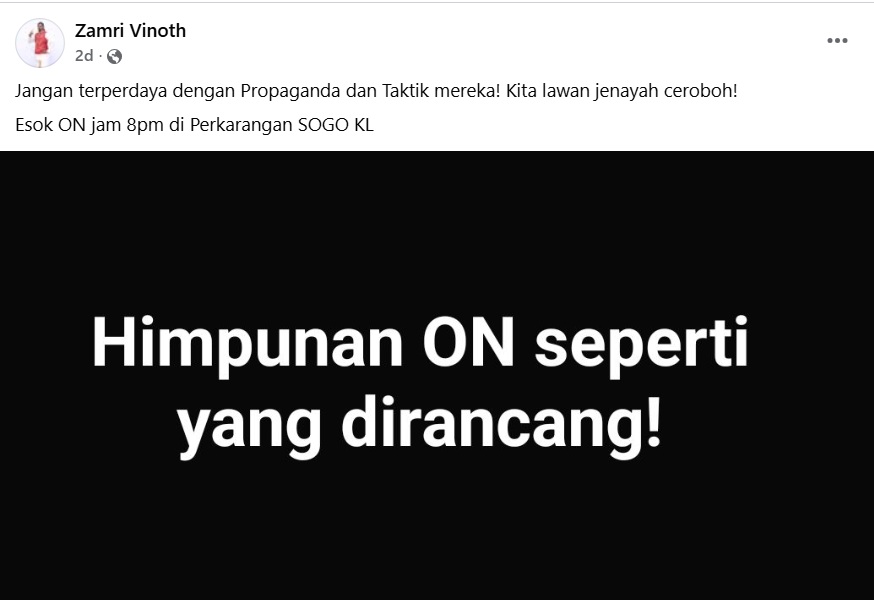
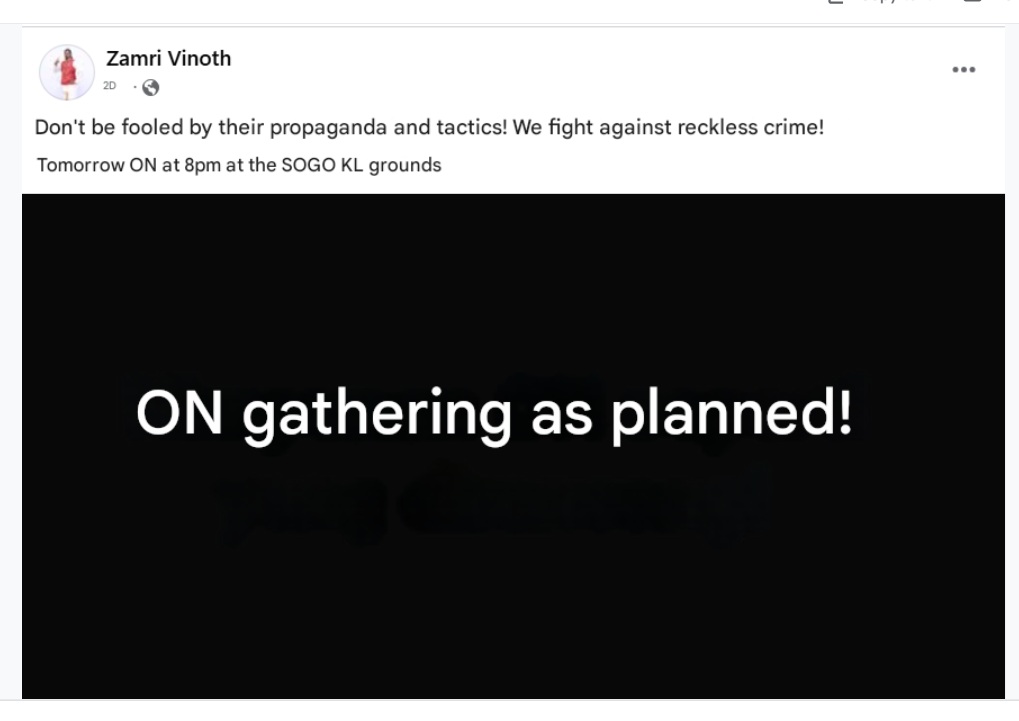
Vinoth had posted on his Facebook about proceeding with the protest despite directions from the government to withdraw.
Translation:
Who Is Zamri Vinoth?
Zamri Vinoth Kalimuthu, aged 41, is of Malaysian Tamil origin and was born a Hindu under the name Vinoth Kalimuthu before converting to Islam. Since his conversion, he has emerged as a polarising Islamic preacher known for making inflammatory remarks about Hindu beliefs and practices.
He is widely described as a follower of fugitive islamic preacher Zakir Naik, who has been granted asylum in Malaysia. Zamri has previously pledged to renounce his Malaysian citizenship if Naik were extradited to India.
History of Controversies
Zamri’s record includes multiple run-ins with the law and public outrage:
2019 Arrest: Malaysian police detained him after derogatory remarks about Hinduism triggered 867 police complaints. He was investigated under Section 298A of the Penal Code and Section 233 of the Communications and Multimedia Act.
2024 TikTok Videos: He posted videos interpreted as insulting Hindu deities, including Lord Shiva, prompting political leaders to demand action.
2025 Kavadi Mockery: Zamri mocked the Hindu kavadi ritual on Facebook, describing devotees as appearing “possessed and drunk,” drawing condemnation from Malaysian Indian leaders.
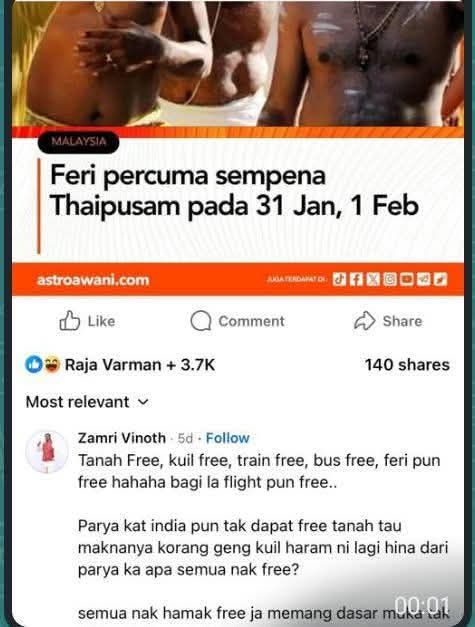
‘Kuil Haram’ Campaign: His latest campaign labelled Hindu temples as “illegal” or ‘Haram’ and used derogatory caste slurs such as ‘parya’ (pariah) against Hindus, when he commented on free ferry services for Thaipusam earlier this year. He wrote, “Free land, free temples, free trains, free buses, even free ferries hahaha for him, flights are also free. Even the pariah people in India don’t get free land, you know, so you guys, this illegal temple gang, are even more despicable than the common people, why do you all want free land? Everyone wants to have free food, that’s the basic principle.”
Image Source: Facebook
Despite nearly 900 cumulative complaints over the years, critics allege that enforcement action against him has been inconsistent.
Comparison With Firdaus Wong Wai Hung
Observers have drawn parallels between Zamri Vinoth and another high-profile Malaysian convert-preacher, Firdaus Wong Wai Hung who also studied under Zakir Naik, has also faced legal and constitutional scrutiny over his religious activism.
In a landmark judgment, the Kuala Lumpur High Court ruled that a TikTok video by Firdaus Wong encouraging non-Muslim minors to convert to Islam without parental knowledge was unconstitutional and unlawful.
Justice Amarjeet Singh ordered the immediate removal of the video from all platforms, a permanent injunction against similar content, and a payment of RM10,000 in legal costs to eight non-Muslim parents who filed the case.
The controversy stemmed from a June 2024 video in which Firdaus allegedly advised keeping underage conversions secret and unregistered.
Emerging Pattern Of Convert-Preacher Activism
Analysts note that both Zamri Vinoth and Firdaus Wong represent a growing class of high-visibility convert-preachers who leverage social media for religious mobilisation often triggering legal, constitutional, and communal flashpoints.
While Zamri’s controversies centre on anti-Hindu rhetoric and temple protests, Firdaus’ legal battle has focused on conversion outreach, particularly involving minors.
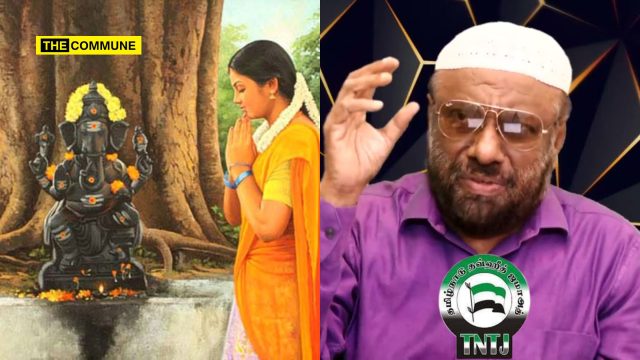
In an undated video clipping that was part of an interview between Dravidianist YouTuber Jeeva Sagapthan and Islamic scholar P. Jainulabdeen, founder of the Tamil Nadu Thowheed Jamath, a series of remarks were made criticising idol worship and atheism. It is noteworthy that TNTJ is an organization previously flagged in connection with the 2019 Sri Lanka Easter bombings.
The video clip was shared on Jeeva Today’s Instagram handle a few days ago.
In the exchange, P Jainulabdeen questioned the theological basis of idol worship, arguing that those who create idols themselves should recognise their material nature.
“He does not understand, does he not know this is a stone? Of course he knows; haven’t people gone and taken it right before his eyes? … It does not speak, does it? It does not move, does it?” he said, dismissing the sanctity attributed to idols.
Responding to Jeeva’s counter, that God should directly make non-believers realise the truth, Jainulabdeen maintained that divine intervention was unnecessary because humans had been given intelligence.
“He has said it, I have understood it, if you don’t understand what can I do? God didn’t come directly and tell me; but because I understood it myself. God did not come and tell me personally, I realised it,” he said.
When Jeeva argued that such belief systems were shaped by birth into particular religions, Jainulabdeen rejected the premise.
“No, it can come even if you are born elsewhere. Can’t you understand that a stone is a stone? … After creating by yourself, if you say, ‘This is my God,’ how would that God, from His perspective, take it?” he asked.
The discussion grew more pointed when the subject turned to divine judgment, atheism, and unbelief.
Jeeva pressed Jainulabdeen on whether those who commit shirk or disbelief should face punishment, to which PJ responded, “Yes, punishment,” while adding that “Punishment has many forms.”
“If you take atheists — the same question arises. Atheists cannot even question God — because they say He does not exist,” Jainulabdeen said, adding an analogy: “Like a father who raises and provides for his children and the child says, ‘My father does not exist,’ how would that father feel?”
He further stated, “More than that, God would feel anger, ‘I created everything, and you deny Me?’ … Only one who has the power to be angered at such denial can be God.”
Congress leader Mohan Kumaramangalam has triggered political discussion over the I.N.D.I alliance framework in Tamil Nadu after posting remarks on social media while quoting a video of Congress MP Karti Chidambaram speaking about alliance talks with the DMK.
Sharing Karti Chidambaram’s video clip, Kumaramangalam commented on how the I.N.D.I. bloc was being framed in the context of upcoming state elections.
“INDIA alliance is a formation for parliamentary elections. I haven’t heard the DMK chief or anybody in the upper echelons of his party refer to this election as INDIA vs NDA. Even in the recent Bihar elections, nobody said it was INDIA vs NDA. In fact the phrasing used was Mahagathbandan vs NDA. I can’t fathom why anybody would use this phrasing for a state election.”
INDIA alliance is a formation for parliamentary elections. I haven’t heard the DMK chief or anybody in the upper echelons of his party refer to this election as INDIA vs NDA. Even in the recent bihar elections, nobody said it was INDIA vs NDA. In fact the phrasing used was… https://t.co/TNSEPQPfYe
— Mohan மோகன் Kumaramangalam (@MKumaramangalam) February 8, 2026
His remarks quickly drew attention online, with some social media users interpreting them as a signal that the Congress might be reconsidering its alliance positioning with the DMK in the Assembly polls.
One netizen sought clarification, asking whether his comments implied that the Congress was not inclined toward continuing the alliance.
Responding to this, Kumaramangalam clarified, “I never said that. Whether we are in an alliance or not is something for the leadership of Congress to determine.”
I never said that. Whether we are in an alliance or not is something for the leadership of congress to determine.
— Mohan மோகன் Kumaramangalam (@MKumaramangalam) February 8, 2026
On Friday, 6 February 2026, Congress MP Karti Chidambaram, in a press meet, said the DMK had yet to constitute a committee for alliance talks despite preliminary discussions. He noted that while the Congress had already formed a five-member panel, negotiations could begin only after the DMK set up its team.
Downplaying public barbs between party functionaries, he said leadership-level talks would decide seat sharing. Chidambaram asserted that both parties recognised the need to remain together electorally. He described the Congress as a “value-addition” and “multiplier” force in alliances, providing a secular stamp, while adding that fan enthusiasm around new entrants like TVK may not automatically translate into seats.
Subscribe to our channels on Telegram, WhatsApp, and Instagram and get the best stories of the day delivered to you personally.