Home Blog Page 1391

China plans to operationalise its biggest Aircraft Carrier Type 003 by 2025

According to reports, the Type 003 aircraft carrier which China started building in 2018 with a CATOBAR system and electromagnetic (EM) launch catapults will be most likely be ready by 2025.

The CATOBAR is a launch and recovery system for aircraft takeoff and landing on the flight deck of an aircraft carrier

Satellite images unveiled on May 30, 2021, show that the Chinese are using prefabricated components and the vessel’s hull have been assembled and the flight deck is almost finished. 

The Type 003 will be a bigger ship than its predecessors, the Type 001 and Type 002, which each measure around 304 meters in length, and the Chinese have designed Type 003 similar to the Nimitz-class nuclear-powered aircraft carrier in service with the U.S. Navy. 

China’s state-controlled news agencies have reported the Type 003 carriers may have a displacement of 80,000 tons to 85,000 tons and will fly the J-15 or Flying Shark from its deck. the J-15 is a copy of the Russian Su-33 Flanker aircraft design that can operate from carriers equipped with a ski ramp rather than catapults.

With such tonnage, this new ship operated by the People’s Liberation Army Navy (PLAN) will be able to carry about 60 carrier-based aircraft, and that number could be increased to about 80 in a extreme state.

China recently showcased its fifth-generation stealth fighter J-20 in Eastern Ladakh but it also has plans to develop a carrier-capable variant of its FC-31 fifth-generation stealth fighter to succeed the J-15 on catapult-equipped Chinese carriers.

To protect such a large ship, China is also developing a carrier-based airborne early warning (AEW) aircraft, called the KJ-600 similar to the U.S. Navy’s carrier-based E-2 Hawkeye AEW aircraft for electronic surveillance and warfare.

Click here to subscribe to The Commune on Telegram and get the best stories of the day delivered to you personally.
TISS student publishes dissertation calling Kashmir as ‘India occupied Kashmir’, institute approves and awards degree, later says it doesn’t endorse

Tata Institute of Social Science (TISS) Hyderabad has come under fire for a dissertation published by a student of the institute in which she has called Kashmir has ‘India occupied Kashmir’.

The dissertation titled “Engendering Conflict: Understanding the impact of Militarization, Conflict and Pandemic-Induced Lockdown on Domestic Violence in India occupied Kashmir” published by a post graduate student named Ananya Kundu has come under the scanner for its separatist and seditious intent and content.

The paper calls the invasion of Jammu and Kashmir after independence by Pakistan as a ‘freedom movement’ saying that freedom fighters (Kashmiri Muslims) took help from Pakistan to overthrow the rule of the Dogras.

“These freedom fighters took help from Pakistan to overthrow the rule of the Dogras. Hari Singh’s army was being defeated and the King who had now been overthrown sought assistance from India. What history terms as invasion was the freedom struggle of Kashmiris from foreign rule, just like India’s movement against the British,” the paper said.

The paper further says “The area they were successful in freeing is referred to as Pakistan Administered Kashmir. India calls it POK or Pakistan Occupied Kashmir but the people living there refer to it as Azad Kashmir, a name which stands testimony to their fight for freedom against foreign rule and its partial success.”

Source: OpIndia

It also says that gender based violence in Kashmir can be reduced only if the political aspirations of Kashmiris for self-determination and autonomy is realized.

“All issues of gender-based violence in Kashmir are impacted by the on-going conflict and militarization. So in order to resolve the issue of gender-based violence, the conflict and militarization needs to be brought to an end. This will require the government to address the political aspirations of Kashmiris for self determination an autonomy.”, the paper says.

The student Ananya Kundu has published this paper under the supervision of one Dr. Nilanjana Ray, an Associate Professor belonging to the School of Gender Studies.

Demo Image
Dr Nilanjana Ray

In essence, what the student tries to say is that Kashmir must be made independent and blames the Indian Army and the government for ‘gender-based’ domestic violence.

The issue was brought to light by a Twitter user named Abhinav Prakash. Following the social media backlash, TISS Hyderabad issued a statement in which it said that it does not endorse the title and added that necessary action has been taken for ‘fact finding’.

Image

Many on social media called out TISS for blatantly endorsing separatism and sedition against the nation. They said that such content cannot get cover under ‘academic freedom’ and ‘critical thinking’.

https://twitter.com/_SiddharthNayak/status/1406276140008755203

https://twitter.com/BBTheorist/status/1406251083421282304

Click here to subscribe to The Commune on Telegram and get the best stories of the day delivered to you personally.
Unauthorized Church erected in Kanyakumari, BJP MLA and Hindu activists arrested for protesting released later

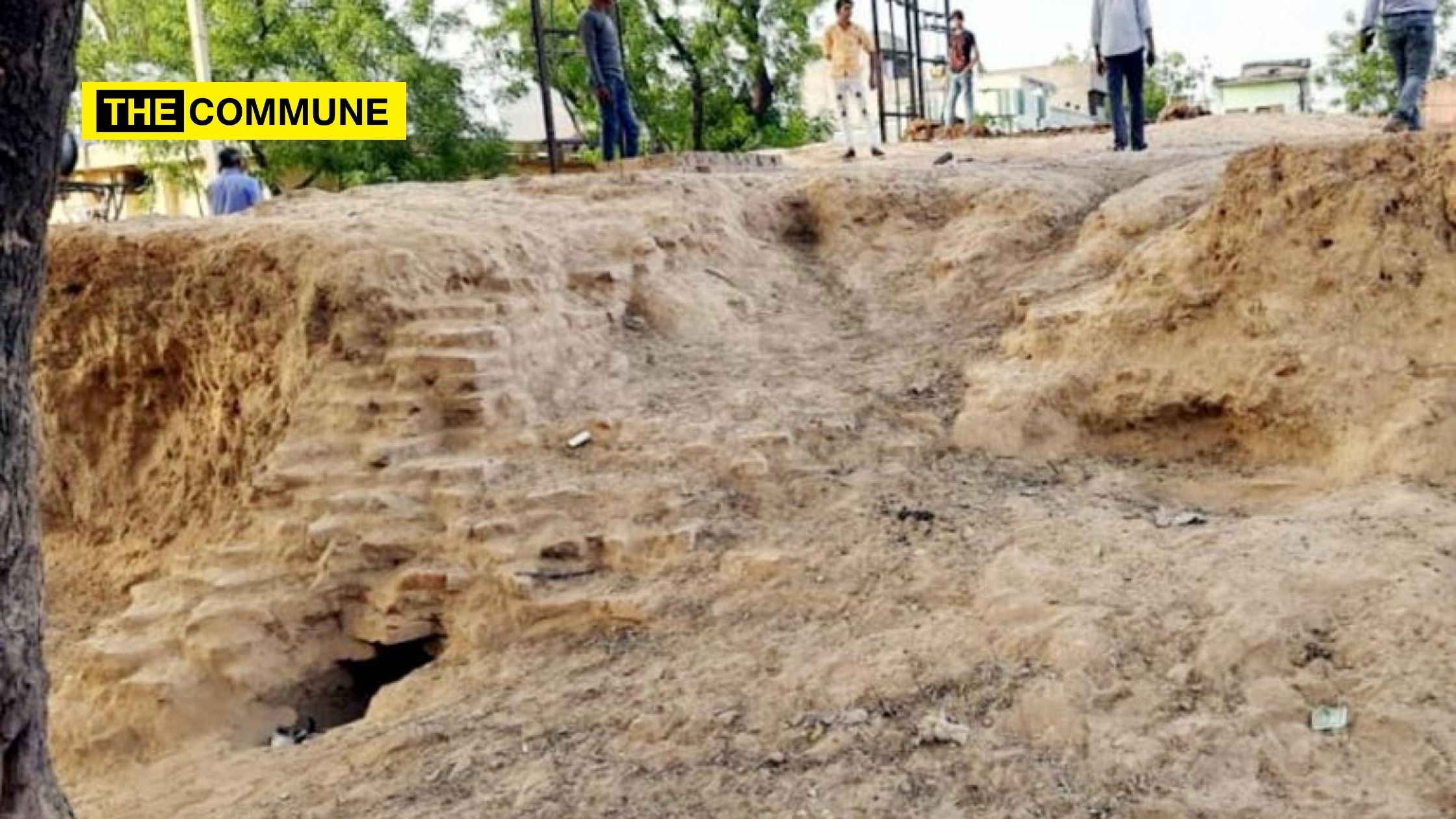
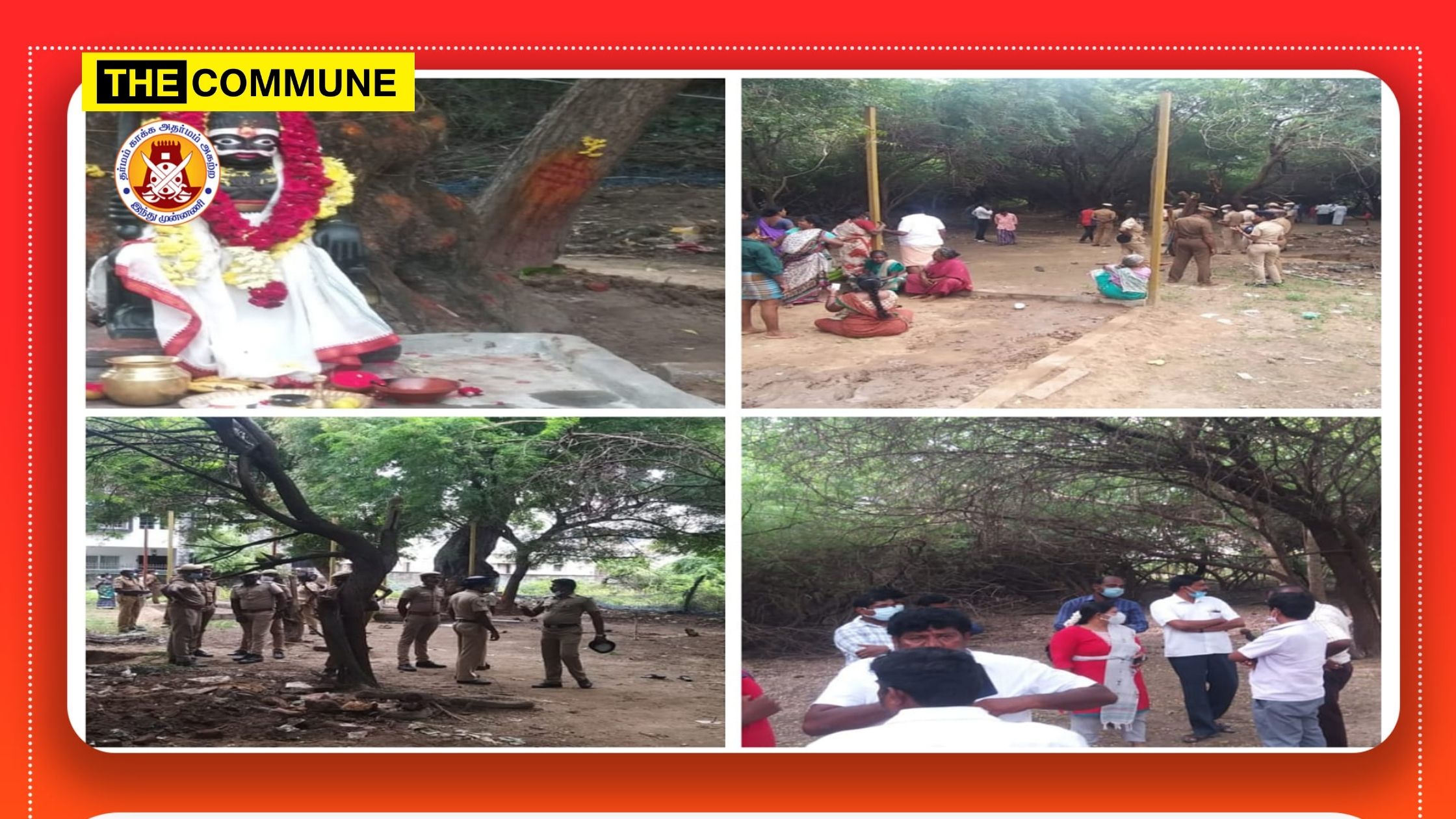
Hundreds of BJP cadres and Hindu activists staged a roadblock since morning on Saturday (June 19), demanding the removal of an unauthorized church erected near the Mathur Aqueduct in Kalkulam Taluk of Kanyakumari district.

More than 300 people belonging to the RSS and Hindu Munnani along with local villagers were arrested for staging roadblocks at around 50 places. Nagercoil BJP MLA M.R. Gandhi and BJP Kanyakumari District President Dharmaraj were also arrested.

Locals alleged that the church has been built illegally without permission. One of the Hindu Munnani leaders The Commune spoke to said that as per the Venugopal Commission report, no Church can be built even on private land leave alone public land post the Mandaikadu communal riots. He said that Christian missionaries clandestinely take over a building on rent and erect a cross later. “Sometimes, they build a structure without permission and function without electricity connection for years. Later, they use their influence and regularize the Church. There are hundreds of Churches in the district like this.”, he said.

Those arrested were later released in the evening. BJP MLA M.R. Gandhi along with BJP District President Dharmaraj, RSS leader Rajendran, Misa Soman from Hindu Munnani and other Hindu activists held a consultation with the sub-collector. The sub-collector had said that permission was not granted to build a new church and that as an interim arrangement, the building would be covered by tarpaulin.


Image

Click here to subscribe to The Commune on Telegram and get the best stories of the day delivered to you personally.
Sea water desalination through solar thermal forward osmosis brings relief to drought prone Tamil Nadu village

Narippaiyur, a village in Ramanathapuram District, a drought prone area situated in the South East corner of Tamil Nadu will benefit from 20,000 litres per day of fresh water produced from sea water – thanks to the solar thermal Forward Osmosis (FO) sea water desalination system installed in the place.

The customized demand driven convergent water solution through FO will supply two litres of good quality drinking water per person per day for 10,000 people in the village, successfully overcoming a major drinking water shortage in the village. The FO system facilitates high recovery, low energy consumption, potential for resource recovery, especially in solutions of high osmotic pressure, less fouling of the membrane because of low pressure operation, easier and more effective cleaning of the membrane, longer membrane life and lower operating costs.

Tamil Nadu IIT Madras in collaboration with Empereal – KGDS Renewable Energy have successfully established and demonstrated this system to address prevalent and emerging water challenges in Mission Mode in the village.

Ramanathapuram District, situated in the South-East corner of Tamil Nadu, is severely affected by scarcity of potable water due to salinity, brackishness and also poor sources of ground water. The district of 423000 hectares has a long coastal line measuring about 265 kilometres accounting for nearly 1/4th of the total length of the coastal line of the state.

The Water Technology Initiative, Department of Science & Technology (DST) has supported this field based effort in the district through the consortium members led by Indian Institute of Technology Madras (IITM), KGiSL Institute of Technology (KITE), Empereal– KGDS Renewable Energy (P) and ICT Mumbai.

The sea water FO technology operates at near 2 bar pressure unlike sea water RO that operates at 50 bar pressure. It is versatile, has high energy efficiency and low operation and maintenance costs compared to other technologies.

The produced water will be supplied to the local people with the support of villagers and panchayat. This initiative of DST can pave way for scaling up the emerging technology in various coastal rural areas of the country to address drinking water shortage.

(Published from PIB)

Click here to subscribe to The Commune on Telegram and get the best stories of the day delivered to you personally.
Finance Ministry refutes news media reports of alleged black money held by Indians in Switzerland

forex reserves india

Following reports have appearing in the media stating that funds of Indians in Swiss Banks have risen to over ₹ 20,700 crore at the end of 2020 adding that this is also the highest figure of deposits in the last 13 years, the Finance Ministry has refuted and has issued a statement regarding the same.

“Media reports allude to the fact that the figures reported are official figures reported by banks to Swiss National Bank (SNB) and do not indicate the quantum of much debated alleged black money held by Indians in Switzerland. Further, these statistics do not include the money that Indians, NRIs or others might have in Swiss banks in the names of third–country entities.”, the press release from Finance Ministry said.

It said that the customer deposits have actually fallen from the end of 2019. “The funds held through fiduciaries has also more than halved from end of 2019. The biggest increase is in “Other amounts due from customers”. These are in form of bonds, securities and various other financial instruments.”, the press release added.

It is pertinent to point out that India and Switzerland are signatories to the Multilateral Convention on Mutual Administrative Assistance in Tax Matters (MAAC) and both countries have also signed the Multilateral Competent Authority Agreement (MCAA) pursuant to which, the Automatic Exchange of Information (AEOI) is activated between the two countries for sharing of financial account information annually for calendar year 2018 onwards.

“Exchanges of Financial Account information in respect of residents of each country have taken place between both countries in 2019 as well as 2020. In view of the existing legal arrangement for exchange of information of financial accounts (which has a significant deterrent effect on tax evasion through undisclosed assets abroad), there does not appear to be any significant possibility of the increase of deposits in the Swiss banks which is out of undeclared incomes of Indian residents.”, the Finance Ministry said.

The Ministry also listed out four points explaining the increase in deposits:

  1. Increase in the deposits held by Indian companies in Switzerland owing to increased business transactions
  2. Increase in deposits owing to the business of Swiss Bank branches located in India
  3. Increase in Inter- bank transactions between Swiss and Indian Banks
  4. A capital increase for a subsidiary of a Swiss Company in India and

Increase in the liabilities connected with the outstanding derivative financial instruments

“The Swiss Authorities have been requested to provide the relevant facts along with their view on possible reasons for increase/decrease in the light of the media reports highlighted above.”, the statement concluded.

Click here to subscribe to The Commune on Telegram and get the best stories of the day delivered to you personally.

India Army to raise procurement of extreme cold weather clothing system to counter China in Ladakh

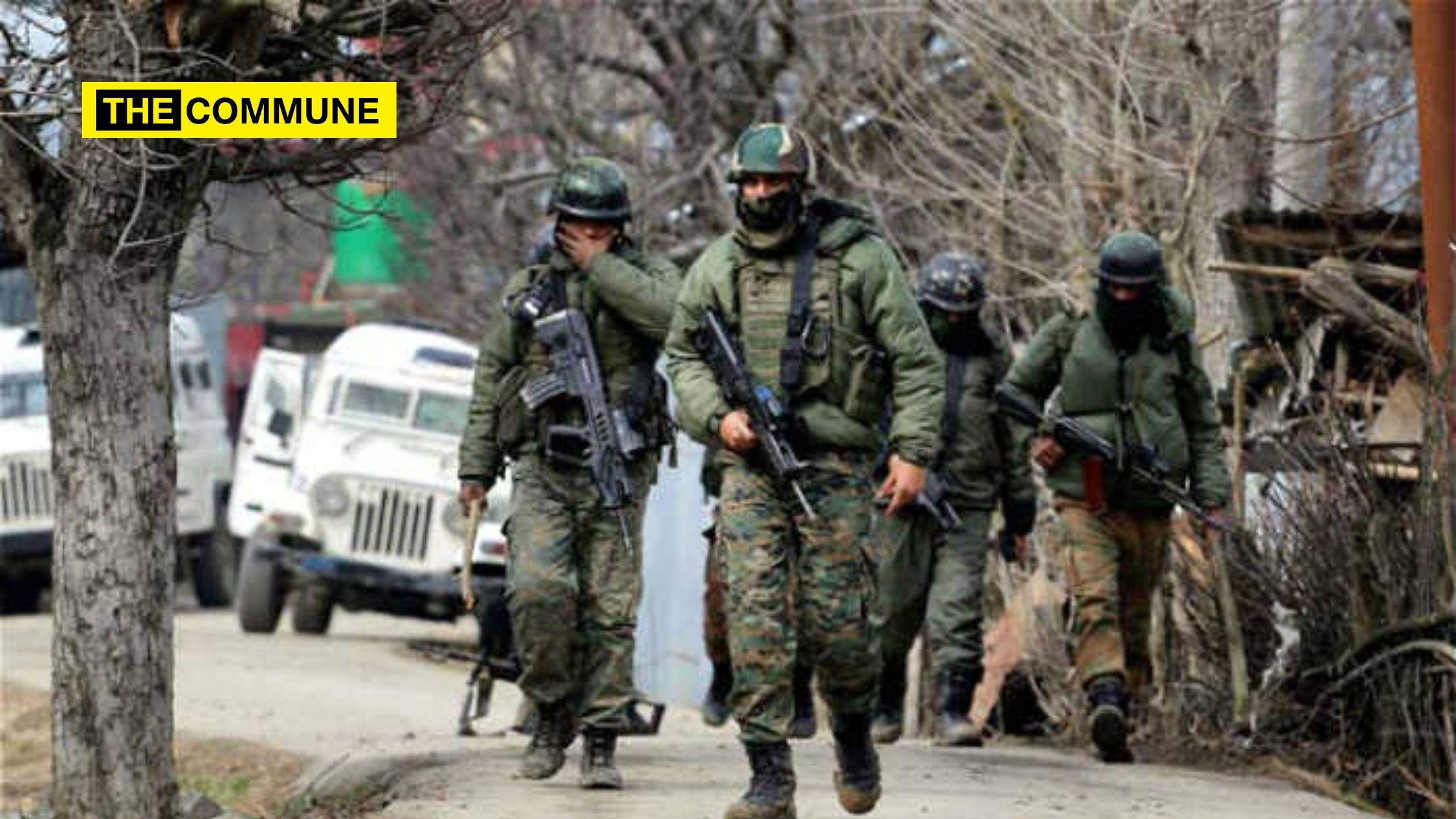
As China keeps strengthening its position in Eastern Ladakh and has also increased its deployment of troops in several extreme high altitude areas, the Indian Army is looking at raising procurement of special clothing and mountaineering equipment.

The Indian army on Thursday (June 17) released a list and projected figures of higher procurement of 17 types of special clothing and mountaineering equipment and priority will be given to Indian manufacturers, who make the said equipment, under the Make of India initiative as most of these items are imported.

Also, special clothing and mountaineering equipment will have to be procured from indigenous sources starting January 2023 because it falls under the “second positive indigenisation list” of 108 items notified by the Ministry of Defence last month given in the Defence Acquisition Procedure (DAP) 2020.

As per the army’s projections, it needs 50,000 to 90,000 sets of Extreme Cold Weather Clothing System and a similar number of special sleeping bags, rucksacks, summer suit for super high altitude area, multipurpose boots and snow goggles.

Additional requirements include about 12,000 special woollen socks, about three lakh sets of two- and three-layer gloves, about 500 High Altitude Pulmonary Oedema (HAPO) chambers, which is a mandatory requirement for providing emergency treatment to soldiers deployed in extreme cold and high altitude areas.

Along with this, the Army has projected an annual requirement of 3,000 to 5,000 avalanche airbags and a similar number of avalanche victim detectors.

These types of equipment are a must for the Indian army to operate super-high altitude areas and “Every individual being inducted is given a fresh set of such clothing and with the additional troops an annual requirement of approximately 30,000 such sets is expected,” the officer said on condition of anonymity.

“While jackets, trousers and gloves are a part of the personal protective equipment of a soldier, avalanche victim detectors and avalanche cords are rescue equipment while HAPO bags are essential life-saving equipment,” the officer said.

It is also the fact that the Indian army suffers more casualties in Siachen and many higher super high altitude posts due to weather as compared to enemy action and as per data shared in the Parliament, 74 Army personnel had died due to avalanches in three years till 2019.

“This clothing and equipment is essential to protect the soldier from the elements and assist in his duties. It is currently being procured from various countries and especially due to the sudden situation last year, emergency procurement was made from few countries as they were not available with Indian manufacturers,” said the second officer, who didn’t wish to be named.

Click here to subscribe to The Commune on Telegram and get the best stories of the day delivered to you personally.

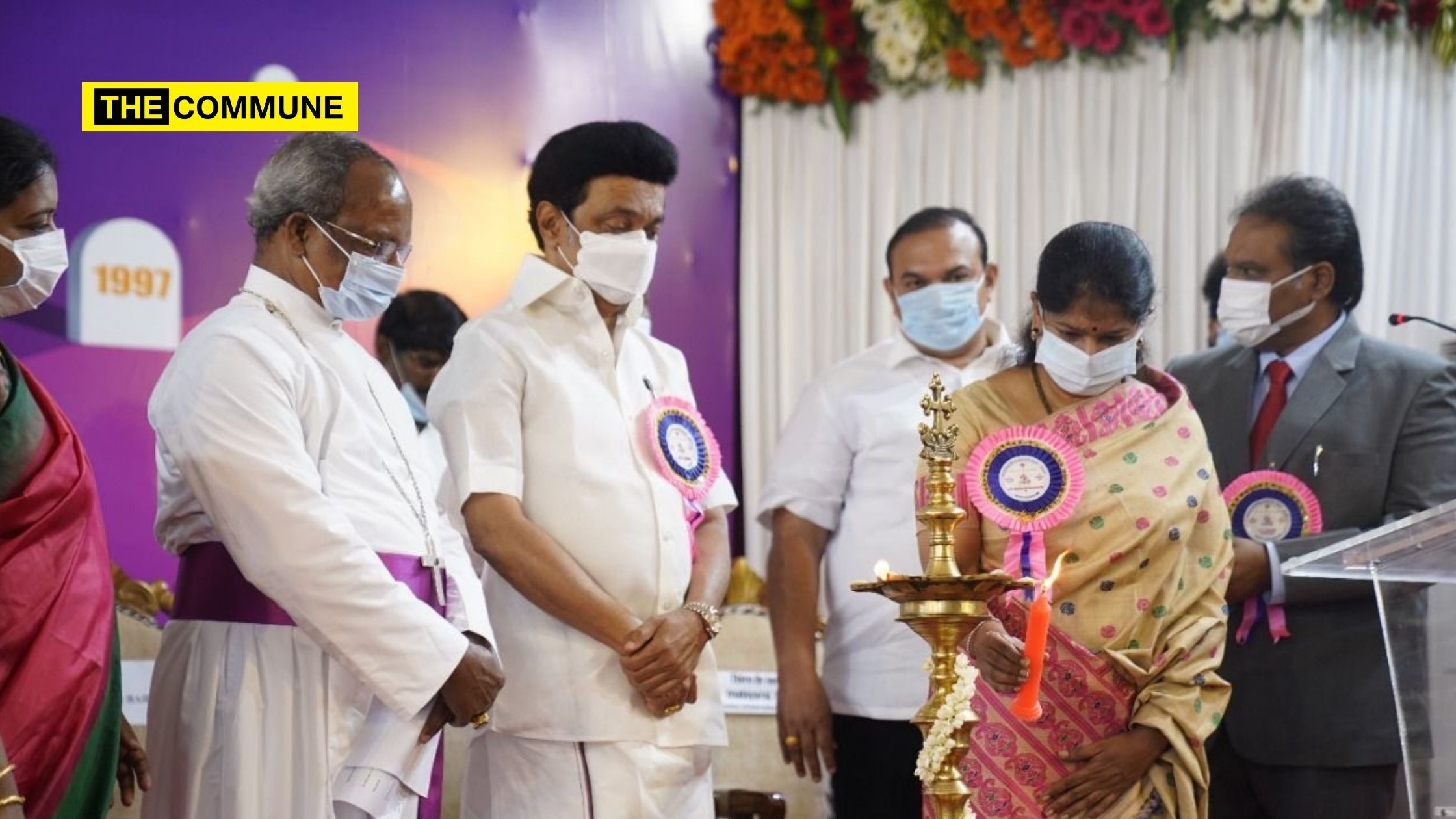
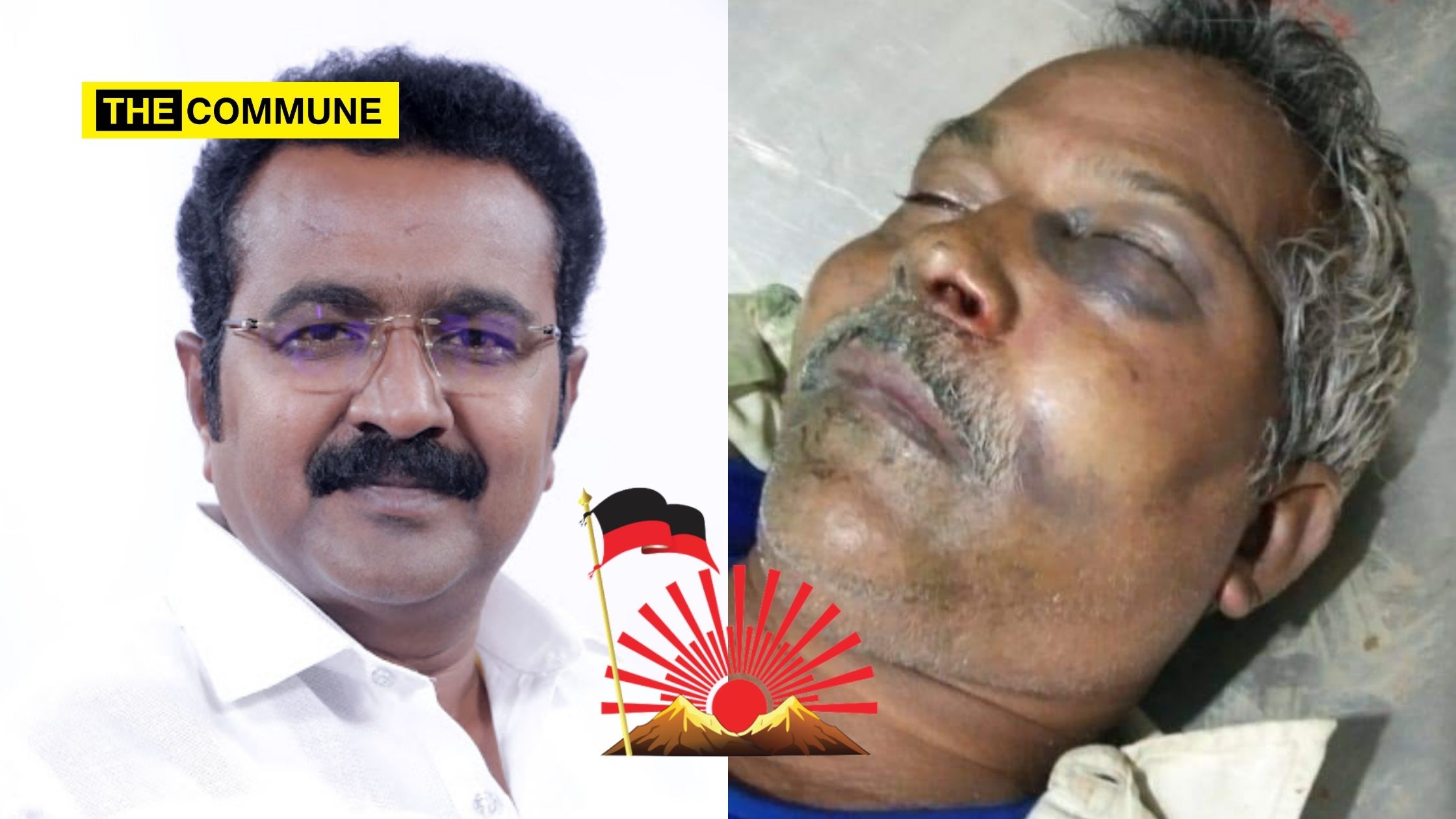
DMK cadres assault ADMK cadres with sickles in Ramanathapuram

Tension erupted in the Kamuthi area of Ramanathapuram district as three ADMK members were severely assaulted with lethal weapons by DMK cadres.

It is said that the relationship between ADMK and DMK members in Muthupetti village in Kamuthi was already hostile due to local body elections.

In this situation, DMK cadres from Ammanpatti assaulted ADMK cadre Muthu Irulandi, his son Muthu Ramalingam and ADMK IT wing union secretary Kannan in Muthupatti village. ADMK cadres were bleeding after being assaulted with a sickle and were taken to the Ramanathapuram government hospital. Muthuramalingam was severely injured and still is in critical condition.

Police filed an FIR and investigated the case after receiving the complaint. According to preliminary inquiry, the assaulters have been identified as Ravikanth and Maruthu from the DMK party.

The case is currently being investigated further.

(with inputs from NewsJ)

Click here to subscribe to The Commune on Telegram and get the best stories of the day delivered to you personally.
Climate change to increase sea level in Lakshadweep Islands, will affect airport & residential areas: Study

Sea-level will rise around the Lakshadweep Islands in the range between 0.4 mm/year to 0.9 mm/year, says a study conducted projecting different greenhouse gas scenarios.

The study highlights that the worst possible inundation scenarios projected for Lakshadweep Islands are almost similar under different emission scenarios projected and all the islands in the archipelago would be vulnerable to impact from sea-level rise.

One of the major threats in the coming years is rising sea level and its significant impact on small islands and this is for the first time, that climate model projections were used to assess the potential areas of inundation over the archipelago of Lakshadweep Islands in the Arabian Sea.

A team of scientists including Aysha Jennath, Athira Krishnan, Saikat Kumar Paul, Prasad K. Bhaskaran jointly from the Department of Architecture & Regional Planning and Department of Ocean Engineering & Naval Architecture, IIT Kharagpur, with support from the Department of Science & Technology, Government of India under the Climate Change Programme (CCP), studied the Climate projections of sea level rise and associated coastal inundation in atoll islands, a ring-shaped coral reef or island.

The study estimated that smaller islands Chetlat and Amini are expected to have major land-loss. Projection mapping indicated that about 60%-70% of existing shoreline would experience land-loss in Amini and about 70%-80% in Chetlat. The present work highlights that, larger islands Minicoy and the capital Kavaratti are also vulnerable to sea-level rise, and expected to experience land-loss along 60% of the existing shoreline. Sea-level rise effects are seen to have the least impact on Androth Island under all emission scenarios.

The research that was published in the journal ‘Regional Studies in Marine Science, Elsevier recently showed that the coastal inundation could have wide socio-economic impact. According to the team, projected inundation due to sea-level rise can impact the islanders as residential areas are quite close to the present coastline. Also, the only airport in the archipelago is located at the southern tip of Agatti Island, and has a high likelihood of damage due to inundation from sea-level rise.

The authors have suggested that keeping in view the impacts from projected sea-level rise for Lakshadweep, it is necessary to have appropriate coastal protection measures and best-practices to formulate planning guidelines.

This study also opens up a new outlook and dimension on future research to assess the directional nature of wave energy, impact of storminess in the Arabian Sea region, islands that are exposed and sheltered and amenities such as potable water, sanitation and so on.

This noteworthy study has practical value and can be immensely useful to policy makers and decision making authorities for both short and long-term planning that benefit the population in Lakshadweep Islands.

(Published from PIB)

Click here to subscribe to The Commune on Telegram and get the best stories of the day delivered to you personally.

Dindigul BJP office bearer arrested for criticizing DMK government, released after protest

BJP IT wing office-bearer Saravana Kumar from Dindigul was arrested for allegedly criticizing the DMK government and later released following a protest by BJP cadres in front of the police station.

On Friday, BJP IT Wing office-bearer Saravana Kumar from Dindigul, who had a political discussion with a DMK executive on a social media platform, was arrested by the police for criticizing the DMK government.

BJP cadres lead by Palani Kanagaraj, Dindigul district secretary, staged a demonstration in front of the police station and courted arrest demanding the release of Saravana Kumar.

After learning about the incident, Nirmal Kumar, the BJP’s State President for IT and Social Media, organized a protest throughout the district and a roadblock in front of the police station.

https://twitter.com/CTR_Nirmalkumar/status/1405797227637841921?s=20

Police decided to release all BJP cadres and leaders, including Saravana Kumar, after realizing the situation was getting out of control.

Saravana Kumar was released on his own bail, while a complaint was filed against DMK executive Ganeshan for making derogatory comments against Prime Minister Narendra Modi on social media.

Several BJP leaders criticized the DMK government for its intolerance and suppression of critics. CTR Nirmal Kumar said in a tweet that the BJP isn’t like the Dravida Munnetra Kazhagam, which mortgaged the party and Tamil Nadu to the Italian Congress. He went on to say that any threat from the DMK would simply speed up their opposition to the party.

https://twitter.com/CTR_Nirmalkumar/status/1405906070875168770?s=20                                              

BJP spokesperson SG Suryah criticized the DMK government for suppressing the critics by arresting political workers ever since they came to power on May 7th. He thanked BJP Tamil Nadu IT wing President CTR Nirmal Kumar and District Secretary Palani Kanagaraj for successfully organizing the demonstration and securing the release of the detained BJP office-bearer.

In a series of tweets, Tamil Nadu BJP spokesperson Narayanan Tirupathi criticized the DMK government for being intolerant and suppressing freedom of speech.


Click here to subscribe to The Commune on Telegram and get the best stories of the day delivered to you personally.

Parliament saves ₹9 crores annually by doing away with canteen subsidy

On Thursday (June 17), Lok Sabha Speaker Om Birla posted on social media that the Parliament has made a record by saving a whopping ₹249 crores for the financial year 2020-21.

He said that the 17th Lok Sabha cut down on unnecessary expenditure by emphasizing on financial reforms.

“₹151.44 crores were saved in the first year, this year the figure of saving was 249.54 crores which is about 100 crores more than last year.”, he said.

He also said that the Parliament has saved ₹9 crores annually by ending the canteen subsidy.

Earlier, the Parliament spent canteen received a subsidy of ₹14 crores every year. One plate of vegetarian meals used to cost just ₹18. A bowl of boiled vegetables costed just ₹5. A chicken biryani was sold at ₹65. Now, the rates have been revised to ₹100, ₹50 and ₹100 respectively. Fish and chips which was sold for a meagre ₹25 now costs ₹110.

The 17th Lok Sabha chose to do away with food subsidy unanimously. It was noted that apart from Parliamentarians, the staff and media persons too enjoyed food at subsidized rate.

Click here to subscribe to The Commune on Telegram and get the best stories of the day delivered to you personally.