Home Blog Page 1392

Complaint filed against alleged unauthorized installation of Tipu Sultan statue in AP

tipu sultan

A complaint has been filed by legal activism organization Legal Rights Protection Forum (LRPF) against the proposed installation of Tipu Sultan statue at Proddutur Town in Kadapa District, Andhra Pradesh.

The complaint pointed out the Supreme Court judgement which states that installation of statues at public places is illegal.

The Transport, Roads & Buildings Department of the Government of Andhra Pradesh had also issued an order in 2013 in abidance of the Supreme Court’s judgement in which it said that the Government hereby has decided to not given permission for installation of any statue or construction of any structure in public roads, pavements, sideways, etc.

“Hence, the proposed construction of the statue at Produttur town is a clear violation of the G.O. No. 18 and tends to the contempt of the Supreme Court’s orders.” the complaint by LRPF noted.

It was reported that the Member of Legislative Assembly from Proddutur Constituency R. Shiva Prasad Reddy had earlier performed special prayers at Maidukur Road-Jinnah Road Junction, the site where the statue is proposed to be installed. Local Muslims had approached the legislator with the proposal.

The Andhra Pradesh unit of the BJP has warned of protests and demolition of the structure if built. It has said that the move could cause communal tension in the area and has instead asked for the statue of Abdul Kalam be built.

Click here to subscribe to The Commune on Telegram and get the best stories of the day delivered to you personally.
ECI releases an Atlas on General Elections 2019

Chief Election Commissioner Sushil Chandra along with Election Commissioner Rajiv Kumar and Election Commissioner Anup Chandra Pandey released ‘General Elections 2019 – An Atlas’ on June 15, 2021.  Sushil Chandra commended the officers of the Commission for compiling this innovative document and hoped that this would inspire academicians and researchers to further explore the vast landscape of the Indian elections.

The Atlas encompasses all the data and statistical figures of this monumental event. It has 42 thematic maps and 90 tables depicting various facets of the elections. The Atlas also shares interesting facts, anecdotes and legal provisions related to the Indian elections.

Since the first General Elections in 1951-52, the Commission has been publishing compilation of electoral data in the form of narrative and statistical books. 17th General Elections conducted in 2019 were the largest democratic exercise in human history which witnessed the participation of 61.468 crore voters at 10.378 lakh polling stations spread over 32 lakh square kilometer territory of India.

In Indian elections, electoral data is primarily collected during the preparation of Electoral Roll by the Electoral Registration Officers and also in the process of conduct of elections by the Returning Officers. This data is then collated by these statutory authorities. Thereafter, after the culmination of the electoral process, the Election Commission of India collects this electoral data and prepares various reports for compilation, record and dissemination purposes.

In October 2019, the Commission released statistical reports based on the electoral data made available by the Returning Officers of 543 Parliamentary Constituencies. The maps and tables as placed in this Atlas depict that information and provide for better understanding and appreciation of electoral diversity of the country. In addition to contextualizing the data, these detailed maps reveal electoral patterns at various levels as well as indicate its spatial and temporal settings. With an aim to better visualize and represent the electoral data, this Atlas serves as an informative and illustrative document that brings to light the nuances of the Indian electoral process and empowers readers to analyse trends and changes.

The Atlas brings out salient features such as data of the 23 States and Uts where women voting percentage was more than the male voting percentage; information about the largest & smallest parliamentary constituency in terms of electors, candidates and performance of political parties amongst other parameters.

The Atlas depicts the electors data in different categories and through various comparison charts like Elector Gender Ratio and electors in different age categories. The 2019 General Elections witnessed the lowest gender gap in the history of Indian elections. The Elector Gender Ratio which has shown a positive trend since 1971 was 926 in 2019 General Elections.

The Atlas also compares the average number of electors per polling station in different states during 2014 & 2019 General Elections. The Election Commission of India set up over 10 lakh polling stations in General Elections 2019 with the lowest number of electors per polling station (365) in Arunachal Pradesh.

Amongst the various other categories, the atlas compares the number of contesting candidates in the General Elections since 1951. In the 2019 General Elections, there were 8054 qualified contesting candidates after rejection of nominations & withdrawals from a total of 11692 nominations filed across the country.

To check out the details, the e-Atlas is available at https://eci.gov.in/ebooks/eci-atlas/index.html. Suggestions, if any, can be shared with the EDMD division of the Commission.

(Published from PIB)

Click here to subscribe to The Commune on Telegram and get the best stories of the day delivered to you personally.
Isha to host online music and Yoga program in run-up to Yoga Day

Isha announced that it will host a unique live online music and Yoga event tomorrow at 6 p.m. as a precursor to the International Day of Yoga on 21st June.  It will be telecast live on Isha’s official YouTube channel and on Sadhguru Tamil Channel.

The 90-minute event will feature renowned musicians Padmasree Dr. Sirkazhi Sivachidambaram, Kalaimamani Smt. Gayathri Girish and Smt. Anusha Thiagarajan. Other performers include the mandolin duo U.P. Raju and Nagamani Raju;  violinist S. Radhakrishna from Neyveli; Rajaraman (Kadam music); and N. Ramakrishnan (Mridangam music).

The event will also feature a short talk by Sadhguru about Yoga Day followed by a demonstration of ‘Simha Kriya’.  Specially designed by Sadhguru to strengthen the immune system, this 3-minute Yogic practice has gained widespread global popularity after it was scientifically tested and was proven to enhance the body’s immune system.

The objective of the event is to help people overcome stress and fear due to COVID and learn simple practices to keep the body and mind healthy.

Click here to subscribe to The Commune on Telegram and get the best stories of the day delivered to you personally.
Preliminary study shows DRDO developed 2-DG anti Wuhan virus drug is effective against all variants of Covid-19

There is good news in the fight against the Wuhan virus as a new study has claimed that the Defence Research and Development Organisation (DRDO) developed the 2-DG drug is effective against all variants of Covid-19 and even reduces the multiplicity of the SARS-CoV-2 virus, reports The Hindustan Times.

The preliminary study also showed that DRDO’s anti-Covid drug alleviates cells from infection-induced cytopathic effect (CPE) and cell death, according to its abstract reviewed by news agency ANI.

DRDO’s Covid-19 drug, 2-deoxy-D-glucose (2-DG), was released at a crucial time by Union ministers Rajnath Singh and Dr Harsh Vardhan on May 17, wherein the central government claimed that the drug has the potential to reduce a patient’s average recovery time by two and a half days and oxygen demand by up to 40%.

That is why authorisation was given for emergency use by the Drugs Controller General of India (DCGI) on June 1 as an adjunct therapy for moderate to severe coronavirus patients.

The new study assessing the viability of DRDO’s anti-Covid drug was conducted by Abhishek Kumar, Dhiviya Vedagiri, Annat Narayan Bhatt, Yogesh Rai, and others. It has not been peer-reviewed yet, ANI noted.

DRDO’s anti-Covid drug according to the government will be priced at 900 per sachet in the market, and this drug is manufactured by the Hyderabad-based Dr Reddy’s Laboratories (DRL).

However, the central government has said that it will also provide the drug at discounted prices to the central and state governments.

Click here to subscribe to The Commune on Telegram and get the best stories of the day delivered to you personally.
6 watchdogs and 4 guards deployed by couple to guard world’s costliest mango day and night

The world’s most expensive mangoes are available in Madhya Pradesh. A kilo is sold for ₹2.70 lakh. The couple who owns them has appointed 6 dogs and 4 guards to protect the 7 mango trees in their garden. Heavy security has been arranged this year as the mangoes were stolen by thieves last year.

Sankalp Parihar hails from Jabalpur, Madhya Pradesh. Sankalp and his wife Rani have been cultivating mango saplings in their garden, which has now been transformed into an orchard. Little did they know that one of the saplings belonged to Japan’s Miyazaki mangoes.

Known as one of the most expensive mangoes in the world, Japan’s Miyazaki mangoes are found to grow red in colour, and sell for much higher prices than gold and silver jewelry. The price of this Miyazaki mango went up to ₹2.7 lakh per kg last year. To protect their mangoes from thieves they have 4 guards and 6 dogs guarding their orchard 24 hours a day. Sankalp says security personnel have been appointed this time as thieves stole the fruit last year.

Speaking about this to reporters, Sankalp said, “last year, thieves broke into our garden and stole an expensive Japanese Miyazaki mango. The mango is rarely grown in India and its price is high in the international market.”

Explaining as to how he chanced upon these rare mangoes, he said, “I met a man on the train in Chennai and he gave me two rare Japanese mango saplings. I have been calling these mangoes ‘Tamini’, after the person who gave me the saplings, since I wasn’t aware of its actual name. Some thieves who knew about the value of this mango stole it last year and this year, we have hired people for security. We have no plans to sell these mangoes. We are going to grow more trees using the seeds. ”

Miyazaki mangoes from Japan are called ‘sun eggs’ and each mango sells for up to ₹21,000. They are the most expensive in the world, and sell for ₹2.70 lakh per kg in the international market.

Click here to subscribe to The Commune on Telegram and get the best stories of the day delivered to you personally.

PM launches ‘Customized Crash Course programme for Covid 19 Frontline workers’

The Prime Minister, Shri Narendra Modi launched ‘Customized Crash Course programme for Covid 19 Frontline workers’ today via video conferencing. The training programme would be conducted in 111 training centres spread over 26 states. About one lakh frontline workers will be trained in this initiative. The Union Minister of Skill Development and Entrepreneurship Dr Mahendra Nath Pandey, and many other Union Ministers, Ministers from States, experts and other stakeholders were also present on the occasion.

Addressing the event, the Prime Minister said that this launch is an important next step in the fight against Corona. The Prime Minister cautioned that the virus is present and possibility of mutation is also  there. The second wave of the pandemic illustrated the kind of challenges that the virus may present to us. The Country needs to stay prepared to meet the challenges and training more than one lakh frontline warriors is a step in that direction, said the Prime Minister.

The Prime Minister reminded us that the pandemic has tested the strength of every country, institution, society, family and person of the world. At the same time, this alerted us to expand our capabilities as science, government, society, institution or individuals. India took up this challenge and status of PPE kits, testing and other medical infrastructure related to covid care and treatment bears testimony to the efforts. Shri Modi pointed out that far-flung hospitals are being provided with ventilators and oxygen concentrators. More than 1500 oxygen plants are being established at war footing. Amidst all these efforts, skilled manpower is critical. For this and to support the current force of corona warriors one lakh youth is being trained. This training should be over in two-three months, said the Prime Minister.

The Prime Minister informed that the top experts of the country have designed these six courses, launched today, as per demands of the states and union territories . The training will be imparted to Covid warriors in six customised job roles namely Home Care Support, Basic Care Support, Advanced Care Support, Emergency Care Support, Sample Collection Support, and Medical Equipment Support. This will include fresh skilling as well as upskilling of those who have some training in this type of work. This campaign will give fresh energy to the health sector frontline force and will also provide job opportunities to our youth.

The Prime Minister said that the Corona period has proved how important the mantra of skill, re-skill and up-skill. The Prime Minister said the Skill India Mission was started separately for the first time in the country, a Skill Development Ministry was created and the Prime Minister’s Skill Development Centers were opened across the country. Today Skill India Mission is helping millions of this country’s youth every year in providing training according to the needs of the day. Since last year the Ministry of Skill Development has trained lakhs of health workers across the country, even amidst the pandemic.

The Prime Minister said given the size of our population, it is necessary to keep increasing the number of doctors, nurses and paramedics in the health sector. Work has been done with a focused approach over the last 7 years to start new AIIMS, new medical colleges and new nursing colleges. Similarly, reforms are being encouraged in medical education and related institutions. The seriousness and the pace at which the work on preparing the health professionals is going on now is unprecedented.

The Prime Minister said that health professionals like ASHA workers, ANM, Anganwadi and health workers deployed in the dispensaries in the villages are one of the strong pillars of our health sector and are often left out of the discussion. They are playing an important role in preventing infection to support the world’s largest vaccination campaign. The Prime Minister lauded these health workers for their work during all the adversities for the safety of each and every countryman. He said their role is huge in preventing the spread of infection in villages in remote areas and in hilly and tribal areas.

The Prime Minister said many guidelines have been issued related to the campaign which is to start from 21st June. People below 45 years of age will get the same treatment for vaccination as for people above 45 years of age from June 21st. The Union Government is committed to give free vaccines to every citizen while following corona protocol.

The Prime Minister wished the trainees and said he believed that their new skills will be used in saving the lives of the countrymen.

Published from PIB

Click here to subscribe to The Commune on Telegram and get the best stories of the day delivered to you personally.


POWERGRID’s consolidated Profit After Tax crosses ₹ 12,000 crore

Power Grid Corporation of India Limited (POWERGRID) , a Maharatna CPSU under Ministry of Power has posted total Income of ₹ 40,824 crore and Profit After Tax of ₹12,036 crore on consolidated basis for the financial year ended March 31, 2021, registering a growth of 6 % and 9% respectively over corresponding amounts for FY 2019-20.  On a standalone basis, the Company achieved total Income of ₹ 40,527 crore  and Profit After Tax (PAT) of ₹ 11,936 crore  registering a growth of 6% and 10% respectively over the previous financial year.

For the fourth quarter (Jan-March, 2021), the Total Income and Profit After Tax on consolidated basis are ₹ 10,816 crore and ₹ 3,526 crore respectively, while on standalone basis, the Total Income and Profit After Tax are ₹ 10,705 crore and ₹3,516 crore respectively.

During the financial year FY 2020-21, the Company incurred a Capital Expenditure of ₹ 11,284 crore and capitalized assets worth ₹ 21,467 crore (excluding FERV) on consolidated basis. POWERGRID’s Gross Fixed Assets on a consolidated basis stood at ₹ 2,41,498 crore as on March 31, 2021 as against ₹ 2,27,543 crore as on March 31, 2020.

With the use of state-of-the-art maintenance techniques, automation and digitization, POWERGRID maintained average transmission system availability of 99.76% for FY 2020-21.

For the first time, the POWERGRID Board has recommended issuance of common shares of the Company as bonus shares in the ratio of 1:3 to its shareholders.

The Company has proposed a final dividend of 30% (₹ 3 per share on a face value of ₹ 10/- each) in addition to first and second interim dividends aggregating to  90% (₹ 9 per share on a face value of ₹ 10/- each) already paid for the financial year 2020-21.  The total dividend for the year thus amounts to ₹12 per share compared to ₹10 per share paid for the previous year.

In FY 2020-21, major transmission elements commissioned include Bipole-I of ±800 kV Raigarh – Pugalur HVDC system enhancing total Inter-Regional Power transfer capacity by 3,000 MW between Southern Region and Western Region, and state-of-the-art VSC technology based ±320 kV Monopole-II(1000MW) of Pugalur (Tamilnadu)-Thrissur(Kerala) HVDC system.

During the year, POWERGRID acquired the balance (74%) stake  in Jaypee Powergrid Limited and assets of Srinagar- Leh Transmission System were transferred to POWERGRID by the Government of India.

POWERGRID has been successful bidder in all the five TBCB (ISTS) projects with aggregate annual levelized tariff of ₹ 515.84 crore in FY 2020-21.

Central Transmission Utility of India Limited, a 100% owned subsidiary of POWERGRID has been designated as the CTU w.e.f 01.04.2021. This subsidiary will be subsequently made a separate Government owned company.

At the end of FY 2021, the total transmission assets of POWERGRID and its subsidiaries stood at 1,69,829 ckm of transmission lines and 4,37,223 MVA of transformation capacity registering y-o-y growth of 4% and 7% respectively.

Published from PIB

Click here to subscribe to The Commune on Telegram and get the best stories of the day delivered to you personally.
 

Indian Coast Guard rescues all 16 crew of sinking MV Mangalam near Revdanda port of Maharashtra

Indian Coast Guard (ICG) rescued all 16 crew of sinking MV Mangalam near Revdanda port of Maharashtra on June 17, 2021. The Maritime Rescue Coordination Centre (MRCC) Mumbai had received information from Indian flagged MV Mangalam that the vessel was partially sinking with 16 crew onboard around three kms from Revdanda Port.

The MRCC team initiated a rescue operation with ICG Ship Subhadra Kumari Chauhan pressed into action. Two ICG Chetak helicopters were also deployed from Indian Coast Guard Air Station, Daman. Braving gusting monsoon winds, ICG carried out a swift sea-air coordinated operation and saved 16 lives.

The rescued crew was taken to Revdanda and administered first aid. All crew are safe and healthy.

Published from PIB

Click here to subscribe to The Commune on Telegram and get the best stories of the day delivered to you personally.



Indian Coast Guard on alert as oil spill reported from Haldia-bound Portuguese flag Container ship

Indian Coast Guard (ICG) received information from Maritime Rescue Coordination Centre (MRCC) Colombo in late hours of June 16, 2021 about a mid-sea oil spill about 450 kms South East of Chennai. On further investigation, it was revealed that a Portuguese flag Container ship MV Devon, on passage from Colombo to Haldia, West Bengal, developed an underwater crack in the fuel tank containing about 120 KL of Very Low Sulphur Fuel Oil

The crack resulted in spillage of about 10 KL of oil into the sea before preventive action was taken and remaining oil in tank was transferred to another tank by the ship’s crew. The vessel is carrying 10,795 tonnes of general cargo in 382 containers and manned by 17 crew. The ship is continuing its voyage to Haldia and likely to reach on June 18, 2021.

The ICG is in continuous contact with MV Devon and the master has reported that the vessel is stable. ICG Pollution response team at Chennai has been alerted and kept on standby. In addition, ICG ships & aircraft deployed at sea are also put on alert in pollution response configuration.

Published from PIB

Click here to subscribe to The Commune on Telegram and get the best stories of the day delivered to you personally.

 

China’s PLA recruit Tibetan youths to man border posts and gather intel against India

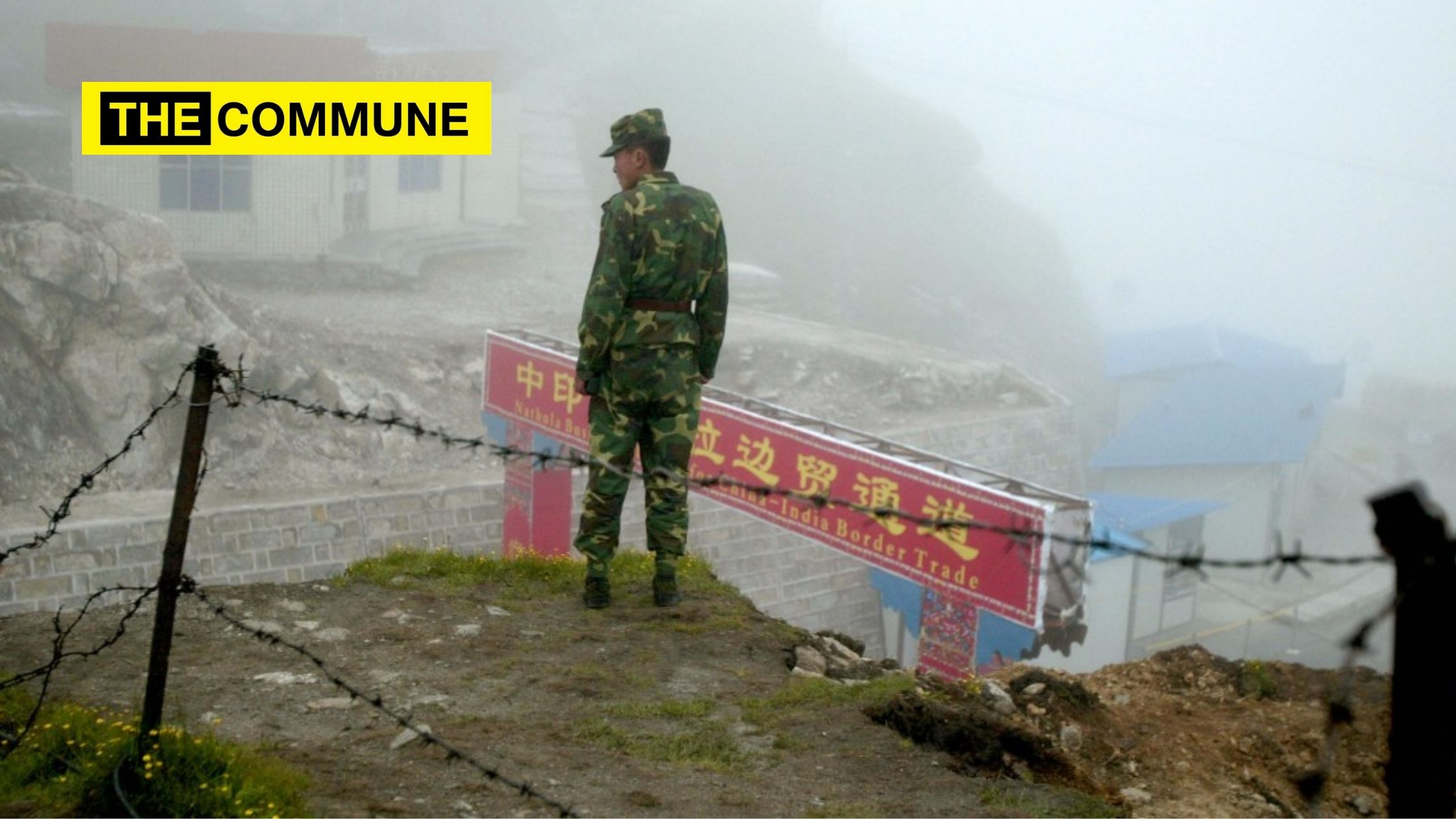
As the majority of Han Chinese struggle with the high altitudes of Tibet and Eastern Ladakh, the Chinese People’s Liberation Army (PLA) has now started to recruit local, unemployed youth in Tibet to form a “volunteer militia” in areas across the border from the Yadong county, located opposite Sikkim, intelligence reports have suggested.

The Indian military and intelligence agencies are as of now keeping an eye on this new development.

India’s border with China is 3,488-km long and it runs from Ladakh at one end to Arunachal Pradesh. This drive to get the locals is clearly to fill its gaps when it comes to high altitude warfare. 

As per reports, the PLA is recruiting unemployed youths who will be sent to police and PLA centres for training and subsequent employment once the indoctrination is completed.

President Xi Jinping in 2013 had said, “To govern the country well we must first govern the frontiers well, and to govern the frontiers well we must first ensure stability in Tibet,”.

Once these locals are complete their training they could be deployed as reinforcements for the regular Chinese army units to keep a watch on border residents at the LAC and gather intelligence.

China is also trying to create a force modeled like the Indo-Tibetan Border Police (ITBP) and the Special Frontier Force (SFF) with men recruited from Tibet Autonomous Region and create a Special Tibetan Army Unit.

Lt Gen. S.L. Narasimhan (Retd), who is a member of the National Security Advisory Board, said “Firstly, the border areas are well held in that sector by troops on our side, so it is not easy for anyone to come across and gain access to our side. In a few areas, where the troops may not be manning right up to the LAC, the terrain is so rugged that it would not help in any kind of intel gathering,”.

“In the 1954 agreement on trade with Tibet, it was mentioned that the Tibetan Autonomous Region is a part of China. So, if China is recruiting Tibetan youth in the area, it is their decision. We have to maintain a constant watch along the LAC,” he said.

Click here to subscribe to The Commune on Telegram and get the best stories of the day delivered to you personally.