Home Blog Page 1084

ISIS Propaganda Magazine Calls For Violence Against Hindus And Threatens Haryana BJP Min, Quotes Islamist Journo Meer Faisal

The Islamic State of Iraq and Syria (ISIS), also known as the Islamist State, has published the 28th edition of its propaganda magazine called “Voice of Khurasan”.

This magazine is released by the ISIS publication front al-Azaim Foundation. In this recent issue, the ISIS publication has targeted Hindus, particularly in the context of the Nuh violence that unfolded during the shobha yatra. The extremist group called for violent actions against Hindus, advocating for their killing, and the destruction of their homes, businesses, crops, and religious idols in the name of Islam.

Furthermore, the publication issued threats towards Anil Vij, the Home Minister of Haryana, due to his involvement in the demolition of illegal structures after the Nuh violence. ISIS seemed angered by the arrest of more than 500 suspected Islamists associated with the anti-Hindu violence in Nuh. They also pointed fingers at Monu Manesar and Bittu Bajrangi for allegedly inciting violence, despite police confirming their innocence in this matter.

According to OpIndia, in a chapter titled “Bring Back The Golden Ages of Crashing Idols,” ISIS labeled Hindus as cowards who were unable to repel Muslim invaders. They argued that British colonization was responsible for the decline of Muslim rule in India, while gloating over the destruction of Hindu temples during invasions. The publication also accused certain imposters within the Muslim ranks of aiding British efforts to suppress Islamic rule.

The article continued to accuse India and Hindus of oppressing and persecuting Muslims. It criticized Hindus for pursuing legal actions to claim the disputed structure at Gyanvapi. The article highlighted the emergence of the Ayodhya dispute and how it reflected a growing Hindu resistance against Islam and Muslims.

As the Indian Supreme Court permitted an archaeological survey of the disputed site, ISIS disparaged the court as “The Supreme Court of the Hindu Tawagheet,” using a term from Islamic doctrine that signifies worshiping entities other than Allah.

The article ultimately called for “Jihad” against Hindus, urging Muslims in India to engage in violence against them. It advocated for burning Hindus alive, destroying their properties, and employing various lethal methods to eliminate them.

Additionally, in another section titled “Ibadaah of Bloodshed: the Ultimate Treatment of Hindus in This Worldly Life,” ISIS targeted Anil Vij and accused him of permitting a Hindu procession armed with weapons through Muslim-majority areas in Nuh. They also blamed Monu Manesar and Bittu Bajrangi for allegedly inciting violence through social media videos, despite evidence to the contrary.

ISIS accused Hindus of killing an Imam and demolishing Muslim houses, while denouncing police actions and Supreme Court decisions. The group threatened to avenge what they saw as injustices committed by Hindus, calling for more violence against them.

The magazine also quoted Meer Faisal, an Islamist and a self-proclaimed journalist. He was cited in three posts from July 30, which ISIS likely used as a basis for its propaganda magazine.

Meer Faisal’s has history of spreading false information accusing Hindus of violence and promoting divisive narratives. He had once spewed venom saying all non-Muslims are the same, “kafirs” (an insulting term in Islam for those who don’t believe in Allah).

Click here to subscribe to The Commune on Telegram and get the best stories of the day delivered to you personally.

Congress & IUML Object To Kumbakonam Congress Mayor’s Participation In Holy Water Collection From Mahamaham Tank For Ayodhya Ram Temple Kumbabishegam

Feature Image Courtesy: Vikatan

The meeting of the Kumbakonam Corporation was held a few days ago at the Corporation Hall under the chairmanship of Mayor K. Saravanan who belongs to the Congress party.

The Deputy Mayor S.P. Tamilazhagan and Corporation Commissioner Lakshmanan too participated. A large number of ward councillors belonging to different parties were in attendance.

Right after the meeting startedthe 4th ward councillor Benazir Nihar belonging to the Indian Union Muslim League objected to the Mayor participating in the event where Hindu organizations collected water from the Mahamaham tank to be sent for the Ayodhya Ram Janmabhoomi Temple Kumbabishegam ceremony.

She said “It is wrong of the Kumbakonam Mayor who belongs to the secular Congress party to have participated a few days ago, in an event where holy water from the Kumbakonam Mahamaham tank was sent to the Ayodhya Ram Temple for Kumababisheam ceremony, on behalf of Hindu organizations. He should explain why he acted in violation of his paty’s principles.”

It was also pointed out that members of his own party (Congress) had pasted wall posters condemning the Mayor for participating in it.

“This has caused embarassment for alliance parties like us.”, the IUML councillor Benazir Nihar added.

Responding to this, the Mayor reportedly said that it happened unexpectedly when he was on his way to partake in a protest.

“Since there was a delay in starting the protest I went to the Mahamaham tank. There the Suryanarkovil Adheenam met and spoke with me placed and the holy water laden pot in my hand and I had no choice but to accept it. This incident is no way related to me violating my party’s principles.”, Mayor Saravanan said.

Unsatisfied with the response, the Deputy Mayor Tamilazhagan advised the Mayor that he should fully realize the responsibility of a Mayor and act in such a way that he does not cause emabarassment to his party or his allies.

(With inputs from Dinathanthi)

Click here to subscribe to The Commune on Telegram and get the best stories of the day delivered to you personally.
Indian Railways’ Solar Capacity Increases 54 Times In Last 9 Years

The Railways had posted on X that solar capacity increased 54x in the last 9 years.

Until March 2024, a total solar power capacity of 3.68 megawatts was put into operation. From 2014 to 2023, the commissioned solar power capacity reached 200.31 megawatts. These figures clearly illustrate the rapid expansion of solar power and its effective implementation.

Essential elements of the Net Zero Carbon Emission Mission by the Indian Railways include:

1. Electrification: A substantial portion of the initiative involves electrifying the railway network, replacing diesel locomotives with electric ones. This not only decreases carbon emissions but also reduces operating expenses and is more ecologically sound.

2. Renewable Energy: The Indian Railways aims to generate a significant proportion of its energy from renewable sources like solar and wind power. This encompasses installing solar panels at railway stations and utilizing wind energy to propel trains.

3. Energy Efficiency: Enhancing energy efficiency throughout the railway system is another crucial aspect. This involves adopting energy-efficient technologies, better resource management, and the adoption of environmentally friendly practices.

4. Green Stations: The mission also encompasses the creation of environmentally conscious ‘green stations,’ which incorporate features like rainwater harvesting, waste recycling, and sustainable landscaping.

5. Bio-Toilets: To diminish pollution from human waste, bio-toilets have been introduced in trains and stations.

6. Hydrogen Fuel Cell Trains: The mission explores the feasibility of employing hydrogen fuel cells to energize trains, which only emit water vapor as a byproduct.

7Afforestation: Extensive afforestation campaigns along the railway tracks are planned to counterbalance carbon emissions.

Click here to subscribe to The Commune on Telegram and get the best stories of the day delivered to you personally.
Modi Govt Reduces LPG Cylinder Price By ₹200

In a move that will bring respite to households across the nation, the Narendra Modi government, has announced a substantial reduction in the price of cooking gas. Effective 30.08.2023, the price of a 14.2 Kg LPG cylinder will be reduced by ₹200 in all markets across the country. In Delhi for instance, the decision will bring down the cost of a 14.2 Kg cylinder from the existing ₹1103 per cylinder to a more affordable ₹903 per cylinder. Prime Minister Narendra Modi said, “This is a gift to crores of my sisters of the country on the occasion of Raksha Bandhan. Our Government will always do everything possible that improves people’s quality of life and benefits the poor and middle class.”

This reduction is in addition to the existing targeted subsidy of ₹200 per cylinder to PMUY households, which will continue. For PMUY households therefore, the effective price in Delhi after this reduction will be ₹703 per cylinder.

It may be noted that there are more than 31 Cr domestic LPG consumers in the country including 9.6 Cr PMUY beneficiary families and this reduction will help all LPG consumers in the country. To clear pending PMUY applications and to provide deposit free LPG connection to all eligible households, Government will shortly start distribution of PMUY connections to 75 lacs women from poor households who do not have an LPG connection. This will increase the total number of beneficiaries under PMUY from 9.6 cr to 10.35 cr.

These decisions come as part of the Government’s ongoing efforts to ease the financial burden on citizens and promote the welfare of households. The reduction in cooking gas prices reflects the Government’s commitment to prioritize the well-being of its citizens and ensure access to essential commodities at reasonable rates.

Sh. Hardeep Singh Puri, Minister of Petroleum and Natural Gas, expressed his happiness with the decision, stating, “We understand the challenges faced by households in managing their budgets. The reduction in cooking gas prices is aimed at providing direct relief to families and individuals, while also supporting Government’s larger goal of ensuring affordable access to essential items.”

The reduction in cooking gas prices is expected to have a positive impact on the cost of living for a wide spectrum of society. Government’s proactive step is projected to save significant expenses for households, making an appreciable contribution to the disposable income of citizens.

The Government has been taking various steps to ease the burden of the people and this reduction in cooking gas prices is a testament to the Government’s responsiveness to the needs of the people and its unwavering dedication to their welfare.

Click here to subscribe to The Commune on Telegram and get the best stories of the day delivered to you personally.
TN Speaker Appavu Indirectly Spews Hatred On Brahmins And Sanatana Dharama In Christian College Graduation Ceremony

Tamil Nadu legislative assembly speaker Appavu, who is expected to be non-partisan, has once again spewed hate speech on Brahmins indirectly in front of college students. He also spewed hatred on Sanatana Dharama, the term which Dravidian Stockist uses indirectly to refer Hindu religion.

The Assembly Speaker, Appavu, renowned for his controversial statements concerning Hinduism, or Sanatana Dharma, and his outspoken support for Christianity, is once again making headlines for all the wrong reasons. During his speech at a graduation ceremony at a Christian college in Thoothudi, Speaker Appavu indirectly targeted the Brahmin community and propagated misinformation about Sanatana Dharma, stirring controversy and criticism.

Appavu said, “Some people (BJP/RSS) will claim that it is Sanatana Dharma which developed this country. But I wanted you all to know what Sanatana Dharma is. They (Brahmins) have orchestrated divisions among us based on caste, subjected us to oppression, and actively worked against our access to rights. A mere 2% of the population (Brahmins) ensured that educational opportunities were limited to only themselves within this country, utilizing institutions and the nation for their exclusive benefit. Only those 2% people (Brahmins) occcupied all government authorities, educational institutions. They wanted us to be their slaves.”

DMK’s Appavu continued to indirectly express animosity towards Brahmins, stating, “Even in present times, there exists a Gurukulam near Villupuram, accessible solely to a specific community (Brahmins). It is those 2% people (Brahmins) who brought NEET exam to disrupt education in Tamil Nadu.”

It should be noted that the event in which Appavu spewed hatred on Sanatana Dharma and Brahmins was attended DMK minister Geetha Jeevan.

Speaker Appavu has a history of expressing animosity towards the Hindu religion, and this is not the first instance of such remarks from him.

On June 29, 2022, DMK MLA and Tamil Nadu Assembly Speaker M. Appavu had declared that the MK Stalin-led government in the state was formed by Christians and for Christians. Appavu openly admitted that the DMK came to power because of the ‘fasting’ and support of Roman Catholic Christians and that Chief Minister MK Stalin acknowledges that the DMK government was installed with the help of Christians. “I frequently tell this. This is ‘your’ government. A government that has been formed by ‘you’. A government that has been formed because of your ‘fasting’. A government that has been brought by your prayers and wishes to the Lord. This is a government for ‘you’.” the DMK MLA said while addressing a gathering of Catholic Christians on the occasion of St. Paul’s Seminary held in Trichy.

Again while speaking at the Tirunelveli Social Service Society, an outfit of the Catholic Diocese of Palyamkottai in November 2022, Appavu said that the evolution of schemes like ‘Pudhumai Penn’ (₹1000 stifend for girl students) originated from the Church which the DMK government is implementing. He also hailed Macaulay and the Christian missionaries.

(with inputs from Mediyaan)

Click here to subscribe to The Commune on Telegram and get the best stories of the day delivered to you personally.
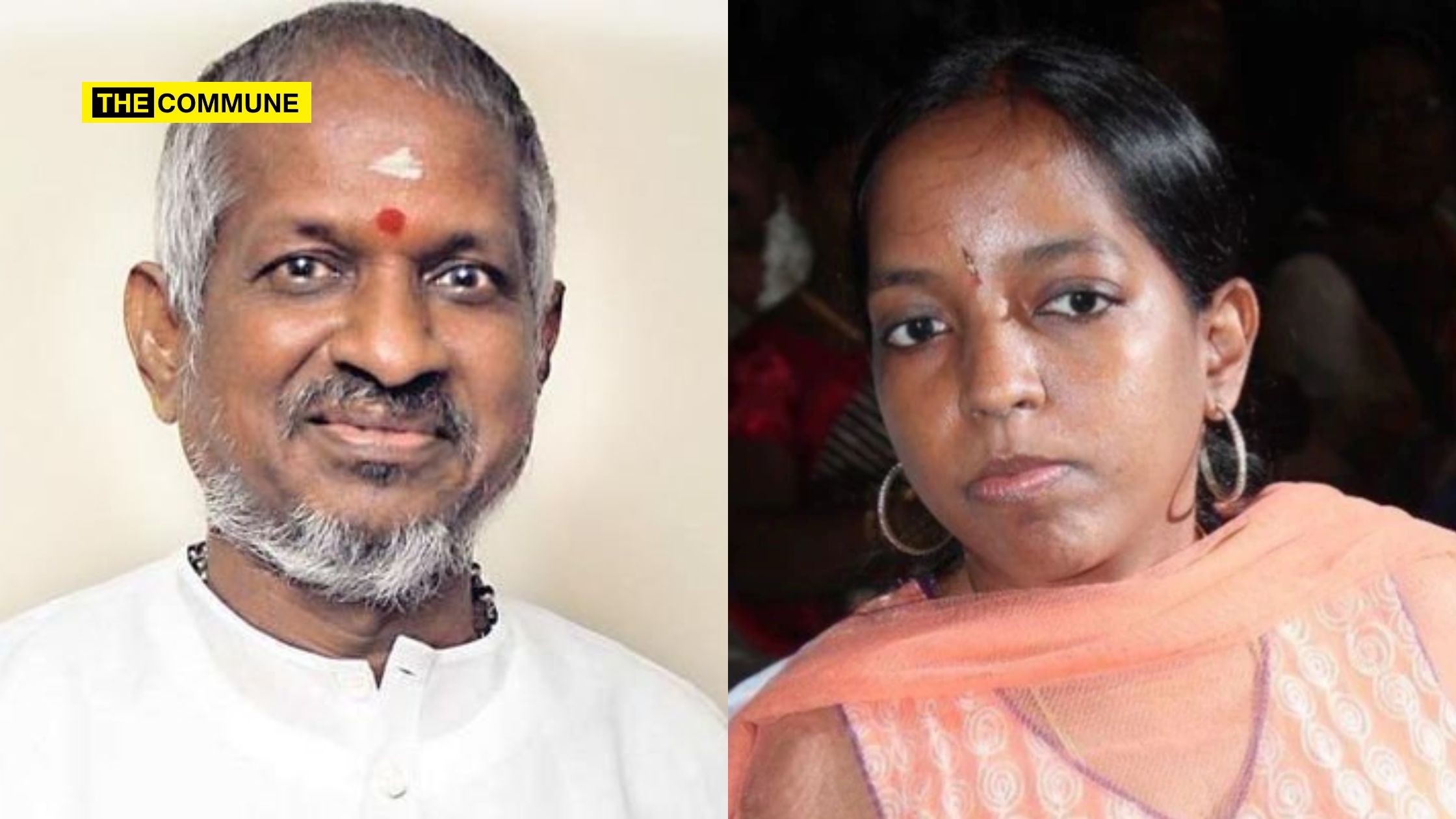
 

Jayakumar Calls Dindigul Leoni “A Drunk Street Dog, Poramboke” For Derogating Jaya, Tells Udhayanidhi “What You Did To Nayan Will Be Exposed”

Dindigul Leoni, a controversial Tamil orator and a member of the Dravida Munnetra Kazhagam (DMK), known for his egregious and misogynistic comments about women, has made it to the news once again.

Leoni has previously drawn attention to former Tamil Nadu Chief Minister J Jayalalithaa’s frequent use of DMK leader K Karunanidhi’s name as her having great affection for him. His consistent and degrading remarks about women’s appearances have sparked widespread outrage. He has repeatedly objectified and ridiculed women, often targeting their physique. He had said during an election rally, “Women are now drinking milk from foreign cows, which is the reason behind them putting on extra kilos.” He went on to say that women used to be “thin and their hips would have curves”.

“In a cowshed, people use a milking machine for foreign cows. These days, women drink milk from foreign cows because of which they have put on weight. Those days, a woman’s hip resembled the number 8 [had curves]. When she lifted her child, the little one stayed put on the hip. But now they’ve become like a barrel because of which women cannot carry their children on their hips,” Dindigul Leoni added. The inappropriate hand gestures that accompanied this action added fuel to the fire.

In a recent speech, Leoni quoted a comment allegedly made by K. Kalimuthu, member of the All India Anna Dravida Munnetra Kazhagam (ADMK) regarding Jayalalithaa. He said, “If I see Janaki amma (wife of MGR and later leader of ADMK), I feel like folding my hands in reverence to her, but if I see Jayalalithaa I feel like I want to “call” her (derogatory).”

Leoni shifted blame asserting that the controversy surrounding the late Jayalalithaa was instigated by the BJP Finance Minister, Nirmala Sitharaman, accusing the latter of tarnishing the ADMK’s image by bringing up the distressing events that occurred in the Tamil Nadu Assembly to J Jayalalithaa.

In response, D Jayakumar, a leader of the ADMK, launched a scathing attack on Leoni. Speaking to the press said, “Leoni is a drunkard, a street dog, dont know what he drinks and speaks. Had he been born to a good mother, he would not have made such distasteful comments about Amma (J Jayalalithaa). He is of low birth, he is a poramboke (waste barren land in Tamil), that poramboke has no right to speak about Amma and you expect me to comment on that? It is better that poramboke like him don’t speak any further. We all know what happened in Malaysia, he got it back from the Malaysian public and had to return to India, What an embarrassment, aren’t you ashamed? If you had an ounce of honour, you’d have hanged yourself to death.”

Earlier this year, Dindigul Leoni’s visit to Malaysia for a series of debates (pattimandram) in Kuala Lumpur and Penang took an unfavourable turn. He failed to arrive on time for the Penang event, infuriating the audience who questioned his commitment and professionalism.

Adding to the controversy, Leoni holds the position of Chairman at the Tamil Nadu Textbook Corporation, a move criticised by many due to his history of offensive comments. Despite the backlash, he continues to retain this position.

The AIADMK has taken legal action against Dindigul Leoni for his crass remarks about J Jayalalithaa. His pattern of offensive speech, consistently objectifying and demeaning women, has prompted calls for his accountability and raised doubts about his suitability for any public role or platform.

Jayakumar also trained his guns towards DMK Minister Udhayanidhi Stalin who while speaking at a meeting insinuated the AIADMK leader of sexual misconduct.

Udhayanidhi had said “In Madurai, a public meeting was held. It stands as an example of how a public meeting should not be conducted, a joke of a meeting they (AIADMK) conducted. Have you ever seen a public meeting like that? The organizers of the meeting had no clue of why the meeting was conducted. The participants of the meeting were clueless about why they were participating. The meeting happened on 20 August 2032. You look at the papers of 21 August 2023. Look at what news about the meeting was carried. Two days back, an AIADMK functionary had given a complaint to the police station. You know what is the complaint? That his wife whom he had taken to the meeting was missing. I’m not joking. This is real news. An AIADMK functionary has given a complaint to the police station. The police are investigating. Whom should they investigate first? They should investigate Jayakumar first. Because, he is one of the organizers of the meeting. I did not say with any wrong intention. If you take it wrongly, I am not responsible.

Responding to this comment of Udhayanidhi, AIADMK leader Jayakumar said in the press meet “Your grandfather’s sleazy mischiefs. Your father’s sleazy mischiefs. Your sleazy mischiefs. If we start writing about it, we would have to take those volumes of books in four vehicles. You are making personal remarks on people as if you are a saint and a virtuous man. We will tarnish your reputation by putting the Ceylon Laila matter and your father’s matter. Then what you did to Nayan will be exposed. Look at the dirt behind your back first.

Click here to subscribe to The Commune on Telegram and get the best stories of the day delivered to you personally.
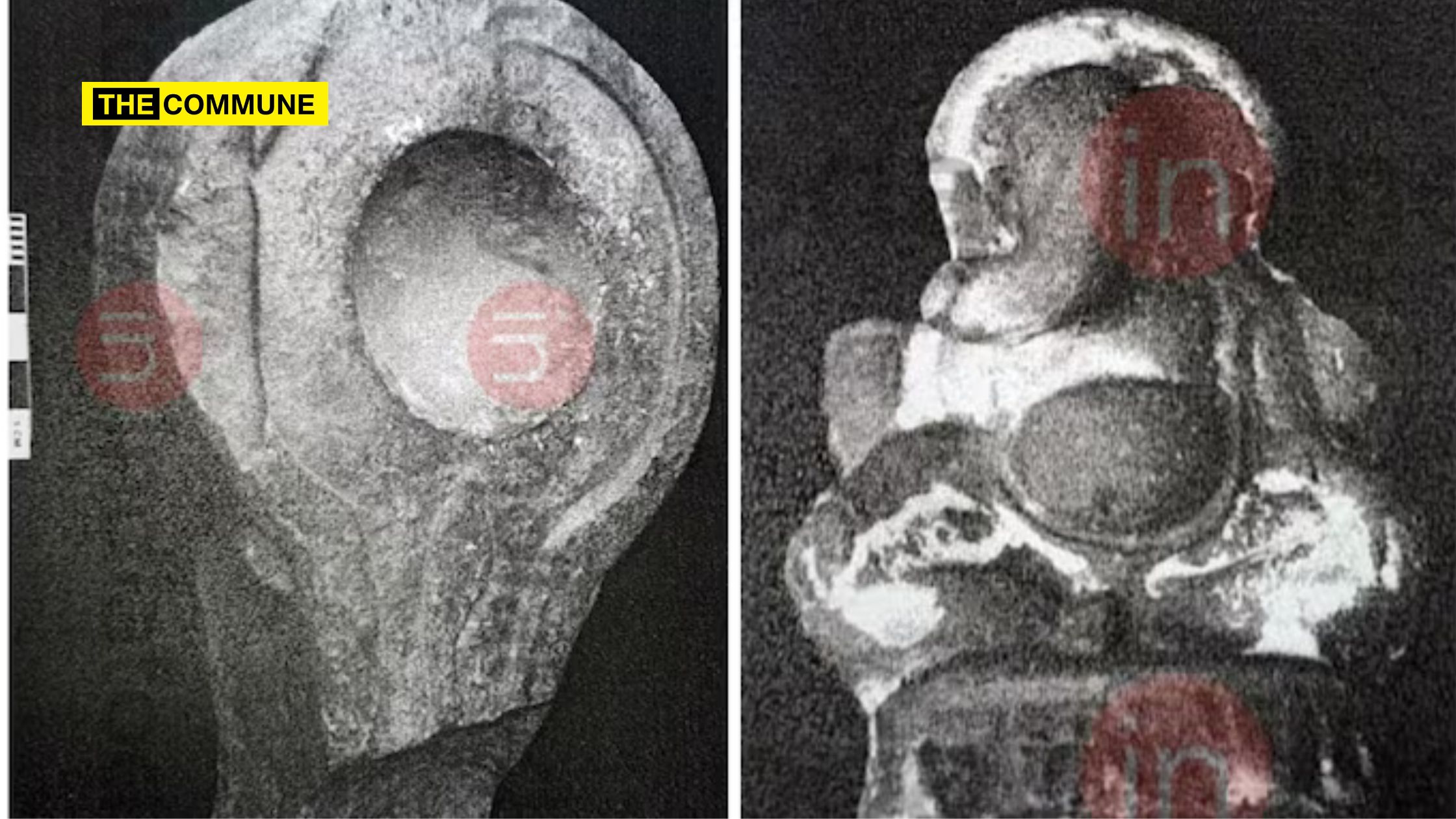
Vamana And Mahabali: An Iconographical Inquiry Into The Legend

The historical memory of any individual and society is temporary. Any memory can be manipulated or erased from the collective memory, if not reminded and preserved properly; an example for this can be the legend of lord Trivikrama and Mahabali. The legend of Vamana, otherwise known as Trivikrama, which means “one who strides over the three worlds” and Mahabali has been subject to various interpretations and distortions. According to the Puranas, Trivikrama was the son of Rishi Kashyapa and his wife Aditi. The concept of Trivikrama can be traced as far as back to the Vedic period. In earlier times, Trivikrama was regarded as the deity of perpetual motion, which moves forward the entire cosmos. In the later traditions, the deity was incorporated into the Dasavatara concept. Trivikrama is mentioned in many prominent ancient treatises such as Yaska’s Nirukta. The popular festival of Onam, celebrated in Kerala is closely associated with the Vamana- Mahabali legend. The legend can be briefly narrated as follows.

Bali’s story goes like this: He was the son of Asura ruler Virochana and grandson of Prahlada, the renowned devotee of Vishnu, who was able to defeat the Devas thanks to the strength he gained through religious penances. As a result, Indra was pushed out of his kingdom, which upset Aditi, his mother, who begged to Vishnu to be born as her son, defeat the Asuras, and restore Indra to his celestial dominion. As a result, Vishnu assumed the avatar of Vamana, and went to the site where Bali was performing his hundredth Ashvameda sacrifice; an important Yaga described in the Vedas, and begged him for some land to be given as a gift. When Bali saw the Brahmin lad disguised as a Brahmachari or Vedic student, he dutifully honoured him and requested him to offer for himself whatever he desired as a sacrificial present. Sukracharya, the guru of the Asuras, knowing that the young Brahmachari was no other than Vishnu himself, warned his disciple Bali to be careful in making promises. The noble and generous-hearted Bali however, paid no heed to this warning, and said that, if Vishnu who, as Yajna-Purusha, is the divine embodiment of the sacrifice and for whose acceptance he was offering the sacrifice, have himself come to him to ask for a favour on the occasion of the sacrifice, he would consider it to be the greatest honour shown to him, and would certainly promise to give him anything asked. The boy then asked Bali, the emperor of the Asuras to bestow upon him the gift of just three paces of space, which was of course readily promised and confirmed by the ceremonial pouring out of water. At once this Vamana, the young dwarfish boy, assumed a gigantic form; with one pace he measured the whole of the Bhuloka or the earth world and with another the Antariksha-loka or the mid-world between the earth and the heaven. There was thus nothing left for measuring out the third pace of space which Bali had promised. What happed then-after is subject to many interpretations and is the subject of discussion here.

In the academic narratives, the Vamana-Bali legend in context of Kerala has stimulated heated debates, discussions and re-interpretations based on philosophical, religious and political views. However, the objective of the present study is to trace the patterns in which Vamana- Mahabali legend has been represented in Indian art and iconography. As stated above, the veneration of Vamana as a god-head could have its origins right from the Vedic period. By the time of Gupta Empire, Vamana worship, art and iconography had already assumed its distinctive form and structure, many of which have survived into our own times. Sanskrit literatures discussing about art provides very detailed characteristics of Vamana iconography. Vamana is represented as a young Vedic student of short stature adorning deer skin, kundalas and the sacred thread, with a Kamandalu (Water-jar) in one hand and an umbrella in the other. On the crown of the head there should be a tuft of hair tied up in a knot. In other sources, Vamana is not regarded as a young boy but an ill shaped man with protruding joints of bones and a big belly. In actual representations, we find both these sets of features displayed prominently. The iconographic representation of Trivikrama, the transformed state of Vamana is shown in three different poses; his left leg raised upto the right knees, or upto the navel or upto the forehead. The sculptures with left leg raised upto the right leg represents the deity striding over the earth, wheras a raised leg upto the navel and forehead is for mid-world and the heaven respectively. In some sculptures, Trivikrama has four hands, holding conch shell, Chakra in two hands, wheras the right palm is raised upwards and the left hand hung parallel to the raised feet. Sculptures with eight hands are also known, in case of which the deity bears the conch shell, Sudarshana Chakra, Mace, bow and plough, the other two hands sculpted as in the former case. The remaining hand is raised in the Abhaya-Mudra. Along with Trivikrama, Shiva, Brahma, the Sun, Moon and the Devas are depicted on the top of the sculpture and Asuras and Nagas in the bottom.

Trivikrama At Rajim

The earliest known Vamana sculpture is available to us in the Rajivalochan Mandir, in Rajim, Chhattisgarh. The sculpture is weathered and its facial features partially worn out. The limbs are in a fragmented state. However the Kundalas in both ears and the scant clothing are intact. The left hand bears an umbrella. Another, more intact sculpture of Vishnu in Trivikrama form is found in the same temple, which has the deity, raised his legs upto the navel. The four hands bear conch shell and Chakra. What makes the sculpture distinct is that Adi Shesha, the serpent king is depicted below the feets of the deity with his hands in a bowing posture. It is to be noted that Mahabali is not depicted in the sculpture, which might suggest that Mahabali was not yet associated with Trivikrama concept during this period. Trivikrama is a deity associated exclusively with motion, and as such has an independent identity of its own different from the Vamana-Bali episode.

Trivikrama at Badami

The 6th Century Trivikrama sculpture at cave 3 of Badami bears a close resemblance to the art of Mahabalipuram, except that the deities Brahma and Shiva are not portrayed in this panel. Trivikrama raises his leg upto his chest. Quite interestingly, Vamana too is also depicted in the sculpture, which is shown as receiving the jar of holy water from Mahabali, his queen and retinue being depicted as well. Mahabali is shown without a crown, implying that he is attending a yajna ceremony.

Trivikrama at Mahabalipuram

Mahabalipuram, the capital of the Pallava dynasty is known for its fine temple Architecture, especially the unique stone ratha structures and delicate wall carvings. Among the numerous deities represented in the Pallava wall art are a 7th century artwork that represents Trivikrama and the Mahabali episode, which is intricately carved in a panel south to the Ganesha Ratha. This Trivikrama form has eight hands wielding the usual symbols of Vishnu iconography. The left leg is lifted upto the forehead. The panel also depicts other deities namely Brahma, Shiva, Surya and Chandra. What makes the art unique is that Jambavan can also be seen playing a drum. Next to the right leg of Trivikrama are Mahabali and other Asuras, worshipping him.

Trivikrama at Ellora

The 8th Century sculpture at cave no. 15 in the Dasavatara cave complex is yet another notable representation of Trivikrama.  The typical features of Eight hands, leg raised upto the navel are depicted wheras the sword held sideways along the hip stands out as a unique feature. Similar to the art of Badami, Mahabali and his queen gifting Vamana finds its depiction here too, showing continuity.

Another notable representation of Trivikrama is the Chalukya-Hoysala sculpture displayed at the art Museum, Kolkata. Relatively simple in its form and technique, the Deity has four legs. Vamana, Mahabali and his queen are depicted. Similar sculptures are also found at Belur and Nagalapura.

The concept is also described in the major Puranas namely Vamana Purana and Harivamsha Purana. Apart from Hindu literature, Buddhist and Jain texts also provide their own version of the Vamana concept. Even though the Vamana avatar remains as one  among  the most popular forms of Lord Vishnu worshipped all over India, the Trivikrama concept was a much more older one, going all the way back to the Vedic period.  The Trivikrama and Vamana concepts might have been merged together at a later point of time. Even so, the Trivikrama form possesses an independent identity and existence of its own, free from both the concepts of Vamana avatar and Mahabali. This can be a reason why both Trivikrama and Vamana were portrayed separately in the earliest sculptures which depicted these forms. Mahabali, on the other hand, is one of the Ashta chiranjeevi or the famed eight immortals of Hindu belief, along with Parashurama, Vibhishana and Hanuman, and so, a venerated figure among devote Hindus.

A prominent rendering among the academic circles is that Vamana, after “conquering” the entire world with his strides, placed his leg on Mahabali’s head and pushed him to Patala or the underworld beneath the earth, an interpretation of which is that the entire story was the commemoration of a supposed class or race struggle in the past. However, even when Bali was introduced into the already existing legend of Trivikrama, he was never shown as being stomped down by the deity in the earliest iconographies, as we have discussed in detail above. A painting from Mankot in Kashmir painted in the early part of 18th century depicts both Mahabali and Sukracharya as fair-skinned, while the dwarf Vamana is shown as dark-skinned.

In the light of all such overwhelming evidences, can’t it be said that portraying the story of Mahabali and Vamana through the prism of casteism and racism is unhistorical? Also, since most of the iconographic depictions of this legend was found outside of the modern state of Kerala, can this legend and its characters be in anyway be restricted within the narrow borders of regionalism?

Lalkrishna M is a Research Scholar at Centre for Historical Studies, Jawaharlal Nehru University, Delhi 

Click here to subscribe to The Commune on Telegram and get the best stories of the day delivered to you personally.
Aavin Rescinds Informal Order Limiting Milk Packets To Agents Following BJP MLA Vanathi Srinivasan’s Demands

Following the demand made by BJP MLA Vanathi Srinivasan in Tamil Nadu, the state’s dairy cooperative Aavin has chosen to eliminate the restrictions on dairy packet allocations for individual agents. This decision, previously perceived as benefiting private dairy companies, has now been revised.

A few days ago, there were reports indicating that Aavin had imposed restrictions on the number of milk packets allocated to individual agents, a move perceived to be advantageous to private dairy enterprises. Numerous concerned citizens reached out to Coimbatore South BJP MLA Vanathi Srinivasan, expressing their apprehensions about the limitations, which would have a direct impact on consumers. Responding to the pleas of these concerned citizens, Vanathi Srinivasan released a press statement condemning Aavin’s actions and called for the immediate removal of the restrictions imposed on agents.

In a press statement issued on August 25, 2023, MLA Vanathi Srinivasan said, “Throughout the various districts of Tamil Nadu, individuals from middle and economically disadvantaged backgrounds residing in rural locales rely on dairy cattle farming as their means of livelihood. A substantial portion of the populace supplies milk to Aavin. Regrettably, following the establishment of the DMK government, Aavin’s milk procurement has encountered a significant downturn spanning over two years.”

MLA Vanathi Srinivasan further commented, “The Aavin management and the dairy department, responsible for boosting milk production, have shown no intent in this regard. The lack of action by the DMK government appears to be favoring private milk companies. Additionally, in the Coimbatore district, there has been a sudden reduction of 10 to 20 percent in the daily milk packet allocations to milk agents, starting from August 23, 2023. This decision was informally communicated and has been implemented throughout the Coimbatore district. Consequently, residents of the Coimbatore district have been compelled to purchase private milk due to the unavailability of the required quantity of milk.”

The press statement states, “Historically, Coimbatore has consistently procured 200,000 liters of milk daily. However, recent reports from milk agents indicate that the procurement has dwindled to merely 96,000 liters. These developments raise suspicions regarding the management’s intentions, suggesting a possible inclination to favor private milk companies and subsequently creating a deficit in milk availability. Such actions are deeply reprehensible.”

MLA Vanathi Srinivasan concluded by saying, “It is imperative that the Aavin administration and the dairy department proactively enhance milk procurement, guaranteeing the seamless availability of dairy products such as milk, curd, butter, ghee, and paneer. I urge Chief Minister MK Stalin to personally intervene in this matter and initiate measures to safeguard the welfare of both milk producers and consumers.”

Under these circumstances, it has been reported that the Aavin administration has rescinded its informal directives restricting the allocation of milk packets to individual agents. Instead, they will revert to the previous protocol, a decision made in response to the appeals put forth by BJP MLA Vanathi Srinivasan. MLA Vanathi Srinivasan took to social media to thank the Aavin administration for heeding her demands.

Click here to subscribe to The Commune on Telegram and get the best stories of the day delivered to you personally.

 

Onam: An Enquiry Through Literature

onam secular hindu festival

This article intends to trace the historical evidence and sources associated with Onam and the concept of Vamana and Mahabali. The story spread in association with Onam is that of Mahabali and Vamana, in which the narratives are constructed in such a way as to establish the authority of Mahabali. The historical accuracy to prove Onam as a festival of Mahabali is very limited and almost non-existent. In contrast, it can be seen as a festival of Vamana everywhere in the subcontinent. From the Epics of Bharata to other modern works, references to Vamana, Bali, and Onam can be traced. It is clear from the historical records that the festival celebrated as Onam in Kerala is not limited to Kerala only but is a festival that has importance throughout India.  

References Related to Vamana in Rigveda

This celebration is believed to have deep historical roots in India, as suggested by ancient literary sources and eulogistic evidence. The origins of the narrative surrounding Vamana, the deity who obtained dominion over the earth through the acquisition of three strides, can be traced back to the Rigveda. Rigveda mentions:

यो रजांसि विममे पार्थिवानि त्रिश्चिद्विष्णुर्मनवे बाधिताय। तस्य ते शर्मन्नुपदद्यमाने राया मदेम तन्वा३ तना च ॥१३॥                                                         

– (Rigveda: 6th Mandala – 49th Sooktha – 13th Mantra)

This means – “O lord all-pervasive, Vishnu, who have created the three regions of the universe for humanity and sustain the three to save us from the limitations of suffering and darkness, we pray that with the abundant and expansive gifts of health and wealth, we may live and enjoy life in this vast home given by you.” 

Epics And Onam

Shanti Parva (326th Shloka) of Mahabharata mentions the story of Krishna, who suppresses the asura king Bali. Two times in the Mahabharata, Vamana is the only character mentioned; Bali is left out. Draupadi mentions how Lord Vishnu measures the cosmos in three steps when speaking to Lord Krishna in Vana Parva. Shanti Parva symbolises Vishnu’s birth as Vamana. However, the Bali narrative has been explored as the Bali-Vasava Samvada in Shanti Parva. The Mahabharata’s Vana and Shanti Parva have a section on the Vamana-Bali tale. Son of Aditi, a young Brahmachari who approached Bali, the Danava king, and measured the entire globe with just three steps, is how Mahavishnu is described as being born in this passage. In Adi Parva, the genealogy of Bali is explained. Virochana was the father of Bali. He was the brother of Kumbha and Nikumba, who were Prahlada’s children. Prahlada was the son of Hiranyakashyapu, who was the son of Diti. While taking Lakshmana and Sree Rama to the Siddha Asrama to defend Yaga in the Balakanda of Ramayana, Rishi Vishwamitra tells them the tale of the Vamana Incarnation.

References Of Vamana And Bali In Brahmanas And Puranas 

Vamana and Bali characters can be seen in Brahmanas and Puranas also. In Brahmanas, Vishnu appears as Trivikrama in various forms, whereas in Shatapatha, Brahmana Vishnu appears as Vamana. According to the Skanda Purana, the capital of Mahabali is located close to Someshwara of Vastrapath in the Saurashtra Desha, and he performed Aswamedha at Gurukulya Theertha on the banks of Narmada. As per the Bhagavatapurana, that yajna was held at Bhrigukachchha, on the Narmada River’s northern banks. According to the Vamana Purana, Vamana belongs to Kurukshetra. Vamana was born in the Shravani Nakshatra on Bhadrapada Ekadasi, according to the Bhavishya Purana. At the same time, the Bhagavata places Shravana as the period of his birth, Shronam, later changed to Onam, during Bhadrapada’s Shukla Dwadashi. Vamana, Vishnu’s Vishwaroopa Trivikrama form, is also extensively described in the Skanda, Matsya, Bhagavata, Brahmanda, and Vamana Puranas. Most Puranas claim that after sending Mahabali to Sutala, Trivikrama Vamana took the incarnation of Vishnu and vanished.

Onam In Sangam Literature And Tamil Nadu

The inception of Onam celebrations is said to have originated in the Sangam era. The historical documentation of festive commemorations can be traced back to the Kulasekhara Perumals, which occurred about 800 CE. The duration of Onam celebrations spanned a month. The festival’s historical roots may be traced to ancient times, as evidenced in the Pathupaattu of Mathuraikanchi, a literary composition by Mankudi Marutanar. He recorded the ten-day Onam celebration in Madurai’s Kanchi as ‘Mayon Meya Ona Nan Naan Konam Dinla’. This text explains the celebration of Onam festivals by those affiliated with the Madurai temple in Tamil Nadu during the historical period of the Pandya empire. The Pandyan king Nednchezhiyan of Talaialankanam and its citizens celebrated Onam before 1500 years was evidenced from this literature. Mankudi Maruthanar provides a comprehensive depiction of the festival. In the regal courtyard, the monarch would bestow esteemed gifts upon the poets, dancers, singers, and soldiers hailing from his realm. The elephant altercation held significant significance at that era of the event. The commemoration involves engaging in various leisure activities and festivities inside the confines of the temple grounds. 

In his literary composition titled Thevaram, dating back to the 7th Century, the Shaivite saint Thirugnanasambandar documented the occurrence of the Onam festivities held at the Kapaleeswarar temple in Mylapore during the Tamil month of Aipassi. The Nalayiram Divyaprabandha, a sacred text within the Vaishnava tradition, references the commemoration of Thiruvona Thiruvizha, a festival that marks the birth of Lord Vishnu. One of the notable figures associated with this festival is Nammalvar, a revered saint within the Vaishnava community. The festival of Onam, or a comparable occasion, is commemorated by numerous temples throughout the historic Tamil region as the auspicious birth anniversary of Lord Vishnu. Additionally, the text refers to a total of 108 sacred sites, with Thrikkakkara being among them. The 9th-century literary works “Pallas” and “Pathikas,” authored by Periyazharwar, provide a detailed account of a celebration characterized by offering oblations to Lord Vishnu, communal activities, and festive banquets. The inscription attributed to Jadavarman Sundarapandyan, dated 1276 CE, references a Pandya monarch, Mavalivanadirayan.

References Of Onam In Kerala And Malayalam Literature

A copper plate from Sthanu Ravivarma’s (861 C.E.) reign identified at Thiruvalla refers to the Thiruvattruvayi temple’s Onam rituals. Inscriptions of donations made by one Chendan Changaran provide a reference that Onam was celebrated during the 7th Century CE. Another inscription from Thiruvalla dates to the 12th Century and discusses the income and expenses associated with the Shree Vallabha temple’s Avani Onam celebration. Onam is referred to in a stone inscription of the Manalikkara Azhwar temple in Kanyakumari of Travancore. Moozhikulam Kacham, a medieval code of law, provides evidence of the observance of the festival of Onam during the reign of Indukotha Varma, a ruler of Kerala in the 10th Century.


mahabali
Fig.: Thiruvalla (Thiruvattruvayi copper plates) of 9th Century C.E.


The inscription at the Thrikkakara temple, dating back to the 11th Century, elucidates the Onam festival, described as a religious observance dedicated to Vamana, an avatar of the Hindu deity Vishnu. In the past, individuals would prepare in advance, typically two days before the occasion known as ‘Thiru Onam,’ to make offerings. The inscription from the 11th Century, authored under the reign of Bhaskara Ravivarman, refers to Puradam, Utradam, and Thiruvonam as days of great significance within the temple’s auspicious calendar. The region around Thrikakkara has been historically designated as Kal Karai Nadu. The event, attended by the rulers of Kerala in the past, is characterized by twenty-eight days and is celebrated with grandeur and magnificence.

The carnival in question is referenced in the 12th-century inscription found in the Thiruvalla temple. Additionally, it is mentioned that this temple was bestowed with a donation in the form of an offering. Uddanda Shastrikal, a Sanskrit poet associated with the Zamorin, articulated the Sravana celebration. Contemporary historians suggest that the festival is called Onam, as Sravana corresponds to the Sanskrit designation for the Thiruvonam constellation.

The Thirunizhalmala inscriptions, a 13th-century literary work, make mention of the Vamana avatar and Mahabali, extolling the god Lord Vishnu of Aaranamula. The 14th-century work, Unnuneelisandesham, refers to Onam, drawing a parallel between the festivities and ceremoniously receiving guests. The narrative delineates the attire the five-year-old character wore during the Onam festival and their engagement in many customary pursuits. Consequently, more than the available evidence within early Malayalam literature is needed to substantiate the prevailing presumption that Onam is a festival commemorating the reign of King Mahabali.

Foreigners’ Observations

Nevertheless, a comprehensive and accurate depiction of Onam can be found in a memoir from 16th-century Europe. The text highlights that this propitious commemoration takes place in September as an act of reverence towards Laxmi, the deity associated with affluence and opulence. Bartolommeo, a missionary who visited the Malabar region in 1776, documented the observance of the Onam festival during the 16th Century in his literary work titled ‘A Voyage to the East Indians.

The book titled “Livro da Seita dos Indios Orientales” authored by Jacobo Fenicio, a Jesuit European missionary who was active in Kerala during the 17th Century provides the initial and potentially singular mention of Onam as a commemoration dedicated to the homecoming of Mahabali. Fenicio further alludes to a poet who exhibited disobedience and a critical attitude against Brahmins and their customary rituals. The poet in question is widely believed to be the author of modern poetry centered around the reign of Mahabali. According to Francis Day’s book on Kochi in the 19th Century, it is argued that Vishnu, rather than the commonly held notion, is the deity that visits the local population during the festival of Onam. Upon William Logan’s realization that Vishnu and Parashurama were present on that particular day, he inferred that the Onam festivities were conducted as a commemoration of Mahabali.

Last Word

Ancient literature, including Rigveda, references the story of Lord Mahavishnu’s incarnation as Vamana. Thiruvonam, which occurs during the month of Shravana, is considered to be Vamana’s or Mahavishnu’s birth star, and the entire country of India celebrates this occasion. The same festival is observed around Kerala, although it is most prominent in Maveli. This story was told so that it may be interpreted as a struggle between those who are oppressed and those who do the oppressing from a Marxist point of view.

These views are the product of the underlying fallacy that Kerala is the only area in the world where Mahabali is worshiped as a deity. Except for books written in the 17th Century by Westerners, no reliable evidence connects the Onam celebrations held in houses with the Mahabali story.

R. Harinarayanan is a Ph.D scholar at Department of History, University of Kerala.

Click here to subscribe to The Commune on Telegram and get the best stories of the day delivered to you personally.
Chennai Girl Commits Suicide Due To Alleged Torture By VCK Functionary

In an incident that was not so surprising, a member of the Viduthalai Chiruthaigal Katchi (VCK) party reportedly engaged in an extramarital affair, eloped with the partner, and subsequently subjected the girl to torture, ultimately leading to the tragic demise of a young woman from Chennai.

Govindaraj, hailing from Maraimalai Nagar, has been working as a cable TV operator. Tamilvaanan, a VCK functionary, was working under him. Reportedly, there was romantic affection between Tamilvaanan and Govindaraj’s elder daughter, Pavithra. However, Govindaraj, disapproving of their relationship, managed to persuade his daughter Pavithra to wed a relative named Purushothaman instead. Consequently, Pavithra chose to sever ties with Tamilvaanan, deactivating her SIM card and discontinuing all communication with him.

Pavithra who got married to Purushothaman in 2016, has a daughter aged four. Amidst this backdrop, VCK functionary Tamilvaanan reached out to Pavithra via social media and rekindled their romantic involvement. Allegedly, Pavithra reciprocated the interest, leading them to clandestinely roam around the city without the knowledge of Pavithra’s husband, Purushothaman.

In this situation, four months ago, Pavithra eloped with Tamilvaanan and was living with her baby at Potheri in Chennai. However, Pavithra did not know that the real intention of Tamilvaanan was to extort money from her. Within a few days of eloping, VCK Tamilvaanan started torturing Pavithra and demanding money from her. A few days back, Pavithra who met her father Govindaraj explained to him the ordeals she was facing from Tamilvaanan. She had reportedly said to her father that Tamilvaanan was demanding ₹10 lakhs of cash. Govindaraj agreed to pay 10 lakhs to Tamilvaanan and her daughter Pavithra said that she would return home after paying the money he demanded. However, two days ago, Govindaraj received a call from the police that her daughter committed suicide by hanging.

In this situation, the parents of Pavithra lodged a complaint with the police demanding the arrest of VCK functionary Tamilvaanan. They said that the Tamilvaanan enjoys the support of the party and that the police are not taking any action against him. They also alleged that Tamilvaanan is threatening to kidnap their second daughter if they fail to withdraw the case.

(with inputs from NewsTamil24x7)

Click here to subscribe to The Commune on Telegram and get the best stories of the day delivered to you personally.