Home Blog Page 1049

Debunking The Deshbhakt Akash Banerjee’s Half-Truths On The Election Commission
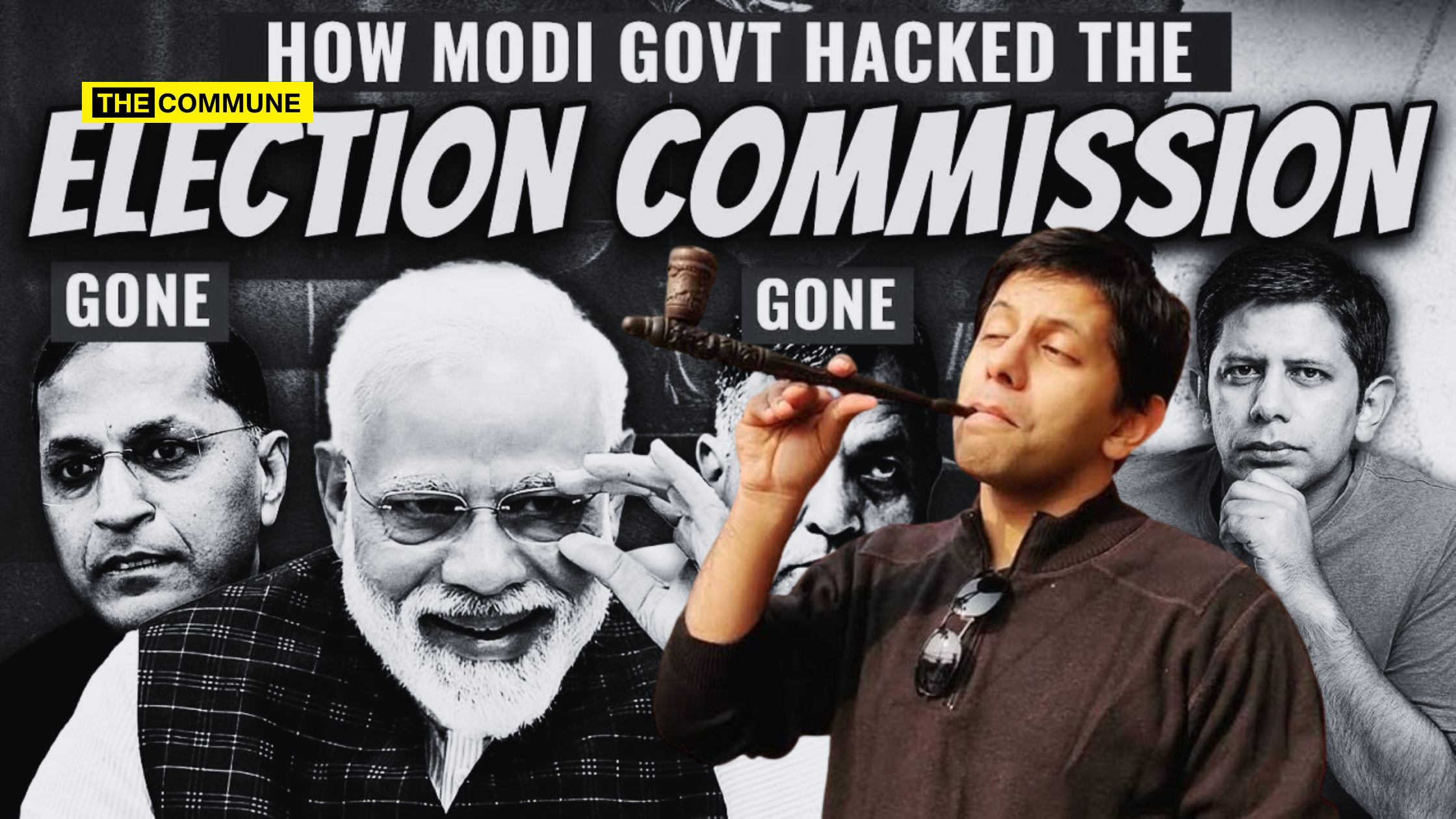
In recent times, social media platforms have become breeding grounds for misinformation and propaganda, often peddled under the guise of activism or journalism. One such instance is the blatant propaganda spread by “The Deshbhakt” YouTube channel’s Akash Banerjee. In his latest video on the recent resignation of Election Commissioner Arun Goel, Banerjee pretends to “speak the truth” but he only shows one side of the story. Let’s dissect each claim made by Banerjee and bust his claims with facts. 

Claim 1: Allegations of Bias Among The Recent Election Commissioners

Banerjee alleges that past Election Commissioners (ECs) and Chief Election Commissioners (CECs) have displayed bias by affiliating with political parties. What he doesn’t tell the audience is that former CECs like TN Seshan and M.S. Gill had political affiliations especially, the fact that they joined the Congress after their tenures. TN Seshan fought in LS polls on a Congress ticket while MS Gill was selected by Congress as their candidate for the Rajya Sabha election from Punjab. Following a cabinet reshuffle in 2008, Gill was appointed as the Minister of State (Independent Charge) in the Ministry of Youth Affairs and Sports.

It is also alleged that Navin Chawla was closely associated with the Congress. The then-CEC N Gopalaswami had cited 12 instances to conclude that Chawla has not remained impartial in his role as Election Commissioner.

It seems Banerjee has not peeped into the past and only focused on the Modi years to make his video.

Claim 2: Allegations of Unfair Appointments of ECs and CECs

Banerjee alleges that the new law passed by the Modi government which gives the power of appointment of ECs and CECs to the Prime Minister compromises the independence and fairness of the electoral process. However, this assertion fails to acknowledge the established process and criteria for appointing ECs and CECs.

All 25 Chief Election Commissioners appointed since independence have been directly appointed by the Prime Minister of India. Approximately 20 out of the 25 were appointed by Prime Ministers belonging to the Congress party. It is not accurate to say that all elections held since 1950 were not free and fair. One can take the case of Navin Chawla himself and his alleged close links with the Congress that could have enabled him to be appointed as CEC. 

Banerjee did not mention that the appointment of ECs and CECs is governed by constitutional provisions and established norms, ensuring transparency and accountability in the selection process.

Before the enactment of the new law governing the appointment of the Chief Election Commissioner and Election Commissioners, the President appointed the commissioners based on the government’s recommendation. It was customary for the most senior commissioner to be appointed as the Chief Election Commissioner. But Akash will not tell you that.

Banerjee goes ballistic at this point as if it is time for an apocalypse. He said, “Around 14-15 March, a high-level panel meeting will be held under the leadership of PM Modi. And you will get the names of two new election commissioners. This work has become easier for the government. The power is now with the Prime Minister that he should head that selection committee which will appoint a new election commissioner. Two other members are there in this committee One leader of the opposition, or the leader of the largest party, and a union cabinet minister. Meaning, that the PM and minister can decide and vote for their choice of election commissioner with a 2:1 majority. Supreme Court suggested a way to balance the appointment of election commissioner because free and fair elections should be conducted

The suggestion was a three-member committee – PM, CJI, and leader of the opposition or largest party But this suggestion was put in the dustbin And the Chief Justice of India was removed from the selection committee. Basically, the election that will decide the fate of any prime minister the person overseeing the elections will be chosen by PM Pro-level Fakiri is going on here.”

Claim 3: Allegations of Interference in EC Appointments by the Government

Banerjee alleges that recent changes in the appointment process for ECs undermine the independence of the Election Commission. However, a closer examination reveals a different picture.

The current law as mentioned above involves the Prime Minister, the Leader of the Opposition, and a Union Cabinet Minister in the appointment process aims to ensure representation and consensus across political parties. In its order, the Supreme Court instructed the government to include the Chief Justice of India (CJI) in the Appointment Panel for the Chief Election Commissioner (CEC) until a new law is enacted by Parliament.

The Modi government however has expanded the appointment panel to include the Leader of the Opposition (LOP). In previous appointments, no input or suggestion was sought from any member of the opposition. But Banerjee will not tell you this. 

Claim 4: EC Ashok Lavasa & Family Harassed

Banerjee claimed that the former Election Commissioner (EC) Ashok Lavasa and his family faced harassment through repeated notices and income tax raids. However, what Banerjee did not tell you is why notices from the Income Tax Department were issued to Lavasa’s family – namely his wife and son. 

Lavasa’s wife Novel, came under scrutiny for alleged inconsistencies in her income tax returns related to her directorship in ten companies. 

Additionally, his son Abir Lavasa’s company, Nourish Organics, faced investigation over investments originating from Mauritius. Reports suggest allegations of favouritism towards certain private companies during Lavasa’s tenure in senior government positions between 2014 and 2017.

Banerjee towards the latter part of the video parrots Congress’s line – One Nation One Election One Election Commissioner. He says, “Actually, three election commissioners were appointed for this reason. Because the post of CEC is very powerful and the process of removing the Chief Election Commissioner is like removing a senior judge. It is very difficult and virtually impossible. That is why we need three Election Commissioners to keep the balance. But now we are back to one nation, one leader, one CEC, one election. One result will also come.”

Banerjee is probably not updated himself that news reports suggest that there will be 2 ECs and he mentions above that there will be one CEC, yes there has been only 1 CEC and two ECs in the past. Maybe he was not aware? News reports mention that by 15 March 2024, two ECs will be appointed.

On top of all this, Banerjee claims that Electoral Bonds is a scam and just a small part of the issue called Election Commission that has “weakened” over the past few years. Setting a negative narrative and how!

We hope Banerjee will read this and learn to speak the truth and not hoodwink his unsuspecting followers. 

Subscribe to our channels on TelegramWhatsApp, and Instagram and get the best stories of the day delivered to you personally
#ArrestZubair Trends As Alleged Fact-Checker Peddles Half-Truths On Gujarat University Clash, Video Shows Afghan Student Hitting Hindu Youth

Once again, self-styled fact-checker Mohammed Zubair has been exposed for spreading a false narrative, seizing the chance to stoke tensions between Muslims and Hindus.

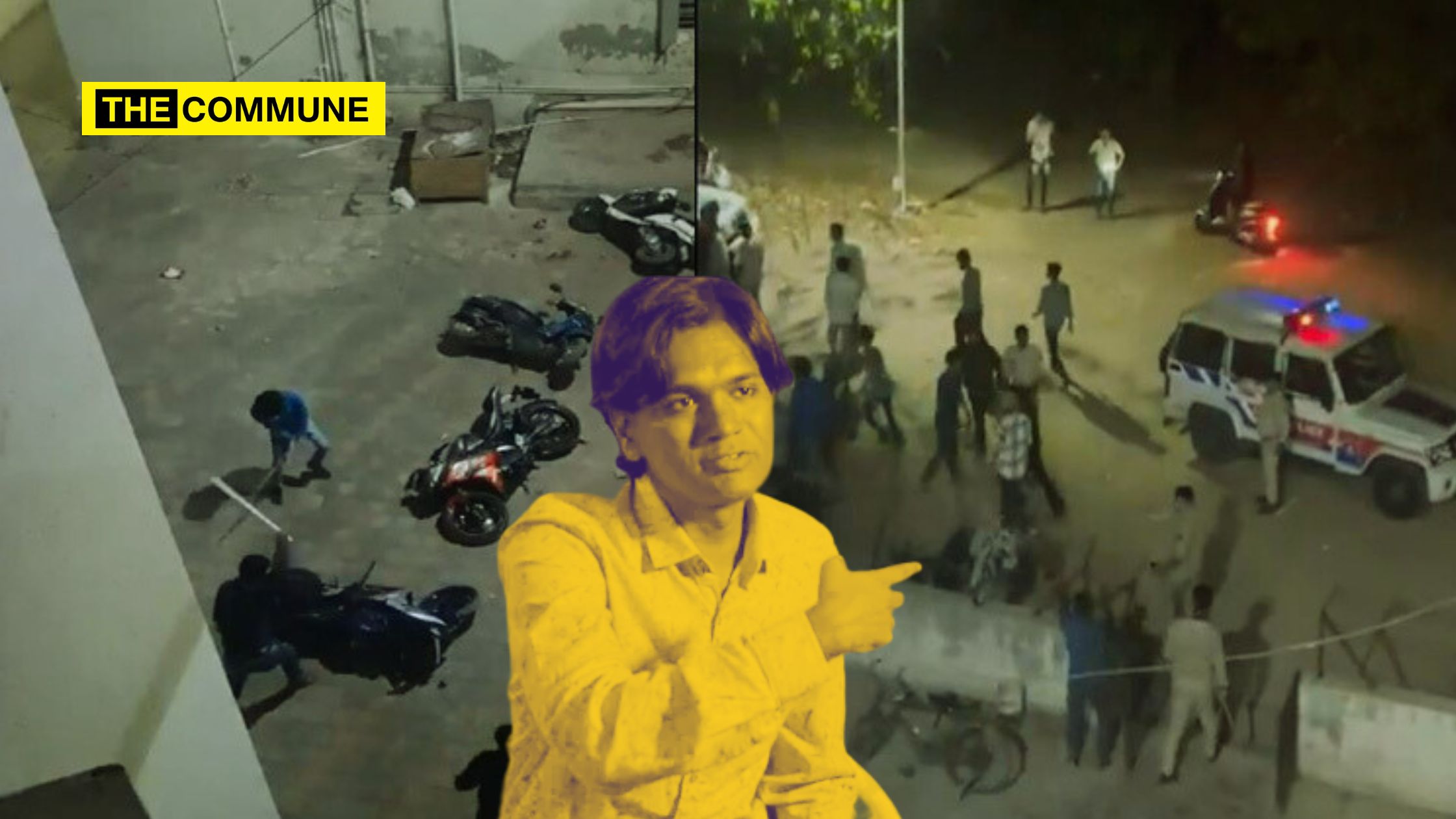
On the night of 16 March 2024, international students from various countries such as Africa, Uzbekistan, and Afghanistan, who are enrolled at Gujarat University, reported incidents of physical assault, stone-throwing, and vandalism. These attacks occurred while the students were observing Ramazan Taraweeh prayers in a designated area within their hostel, A-Block.

The students were offering Namaz in an open area when questioned by around 25 Hindu students about the location’s suitability. This led to an altercation, escalating into a clash where stones were thrown, and rooms vandalized, causing injuries. Some students sustained injuries and are presently receiving treatment at SVP Hospital.

Two foreign students, one from Sri Lanka and the other from Kazakhstan, reportedly sustained injuries. The City Police Commissioner reported swift police response and ongoing scrutiny of videos capturing the incident.

Reports say that foreign students had been using a wall and stage as an open mosque, where Arabic script was displayed. Congress and AIMIM expressed support for the foreign Muslim students involved, with AIMIM sharing videos from their perspective, escalating communal tensions. Authorities including the Vice Chancellor and investigative teams are addressing the situation, with a state-level meeting convened to further address the matter.

As is his custom, he manipulated the incident to suit his agenda, altering the video to craft a biased portrayal suggesting Hindu students attacked Muslim students during prayers.

This post rapidly disseminated, causing individuals, news media and political figures to accept its validity and propagate it through their social media accounts.

However, contrary to the fabricated narrative, the true sequence of events unfolded on 16th March 2024 at the Gujarat University hostel, where a confrontation erupted between local and foreign students. This altercation resulted in the destruction of property, including laptops, AC units, and other belongings in room number 23 of the ‘A’ block, as well as damage to vehicles parked outside. The incident transpired around 10 PM, leading to the filing of a police report at 12:45 AM, following a complaint from the hostel’s security personnel.

The Gujarat University hostel houses approximately 300 foreign students from countries such as Afghanistan, various African nations, Sri Lanka, and others. Among these, 75 students reside in the ‘A’ block. On the 16th of March, some of these students were engaged in offering Namaz in an open area within the hostel grounds. However, a group of approximately 25 Hindu students raised objections to their choice of location, arguing that the ground was a public space and not designated as a mosque or madrasa. In response, an Afghan student named Harun Afghani approached and slapped a Hindu youth, sparking the initial altercation which rapidly escalated into a clash. During the confrontation, stones were thrown, and rooms were vandalized, resulting in property damage and injuries to several students.

The City Police Commissioner stated that law enforcement reached the scene within ten minutes of the incident. Additionally, he noted that several videos depicting the confrontation, including a significant slap, are currently being examined closely. Investigations have unveiled that foreign students recently misused a wall and stage, converting them into an unauthorized mosque. The wall bore Arabic script stating ‘Bismillah al-Rahman al-Rahim’ (In the name of God, the Most Gracious, the Most Merciful), serving as a place where groups of foreign students gathered for Namaz prayers five times a day.

Additionally Ahmedabad Commissioner of Police GS Malik said, “Around 300 foreign students study in Gujarat University and around 75 foreign students stay in A Block (Hostel). Yesterday, at around 10:30 pm a group of students were offering Namaz. Around 20-25 people came and asked them why they were offering Namaz here & should instead read it in the Masjid. An argument broke out between them, stones were pelted and their rooms were vandalized by the people who came from outside…Police took swift action & FIR has been registered against 20-25 people…Action will be taken against those involved in this…One person has been identified. Law & order situation is under control now…Two students from Sri Lanka & Tajikistan are admitted to the hospital

As online users grew increasingly upset with Mohammed Zubair, a fact-checker known for promoting biased narratives, his reports were accused of fueling communal tension and quickly became a top trending in India topic under #ArrestZubair. It’s worth mentioning that Zubair has previously faced criticism for his role in sparking tensions and advocating for the arrest of Nupur Sharma through provocative propaganda.

(With Inputs From OpIndia)

Subscribe to our channels on TelegramWhatsApp, and Instagram and get the best stories of the day delivered to you personally.

‘Minjur’ Saleem Arrested For Social Media Posts Critical Of DMK, Annamalai Slams Stalin Govt For Using Police To Target Dissenting Social Media Voices Instead Of Anti-Social Elements

The police department under the DMK government in Tamil Nadu has been on an arrest spree targeting those critical of the DMK on social media.

Minjur Saleem, a pro-BJP activist found himself detained and later arrested for his dissenting views regarding the DMK Party’s governance, which he expressed on the social media platform X (formerly Twitter).

Authorities accused him of spreading rumors and inciting hatred against minority groups, leading to his unlawful detention and subsequent arrest.

On four separate occasions (8 November 2022; 1 January 2024; 2 January 2024; and 27 January 2024), Saleem voiced his concerns about the DMK Government’s perceived biased treatment towards Hindu and Muslim communities. According to sources, the Cyber Crime Police Chennai alerted X regarding the potentially unlawful content under India’s Information Technology Act. However, X informed Saleem that no action had been taken against his posts yet.

After receiving these notifications, Minjur Saleem took the precaution of promptly deleting the mentioned contents. However, even after the deletion, law enforcement officials were able to locate and issue a Lookout Circular (LOC) against Saleem, without informing him of the charges or providing a copy of the FIR. Saleem, a who resides in the United States with his family, was blindsided by this development.

On 14 March 2024, Minjur Saleem and his family traveled to India to celebrate Ramadan with relatives. However, upon their arrival at Kempegowda International Airport Bengaluru at 6 AM, the Tamil Nadu Police Department detained Saleem in front of his young children and wife, according to his lawyers.

He was taken to a nearby police station in Bengaluru, where his wife was expelled from the premises when she sought information about his detention. The following day, on 15 March 2024, at 7:20 AM, Saleem was transported to the Office of Commissionerate, CCB, Vepery, Chennai. To his astonishment, Saleem was detained without being provided any explanation for his arrest. He was later informed that four First Information Reports had been filed against him, yet he had not received any notices under Section 41A of the Criminal Procedure Code for the respective crimes, nor had he been given copies of the FIRs lodged against him.

Lawyers of Minjur Saleem note that he endured over 24 hours of detention at the CCB Police Station, during which the Police Department declined to furnish the crime numbers and legal provisions under which he was charged to his legal representatives. Subsequently, the Police Department sought to remand Saleem to the Additional Chief Metropolitan Magistrate Court on charges under Sections 153, 153A(1)(a), and 505(1)(b) of the Indian Penal Code. However, objections were raised against the remand petition citing the failure to issue a Section 41A notice, refusal to provide a copy of the FIR, and violations of Supreme Court guidelines established in cases such as Arnesh Kumar, Satender Kumar Antil, and Youth Bar Association v. U.O.I and Anr.

Despite these objections, the Police Department argued for remand, asserting a ‘national security threat’ and suggesting Saleem might be a ‘fringe element’ requiring investigation. The court ultimately granted the remand petition, though it noted the absence of publicly available FIRs registered under the Cyber Crime Department on the department’s website.

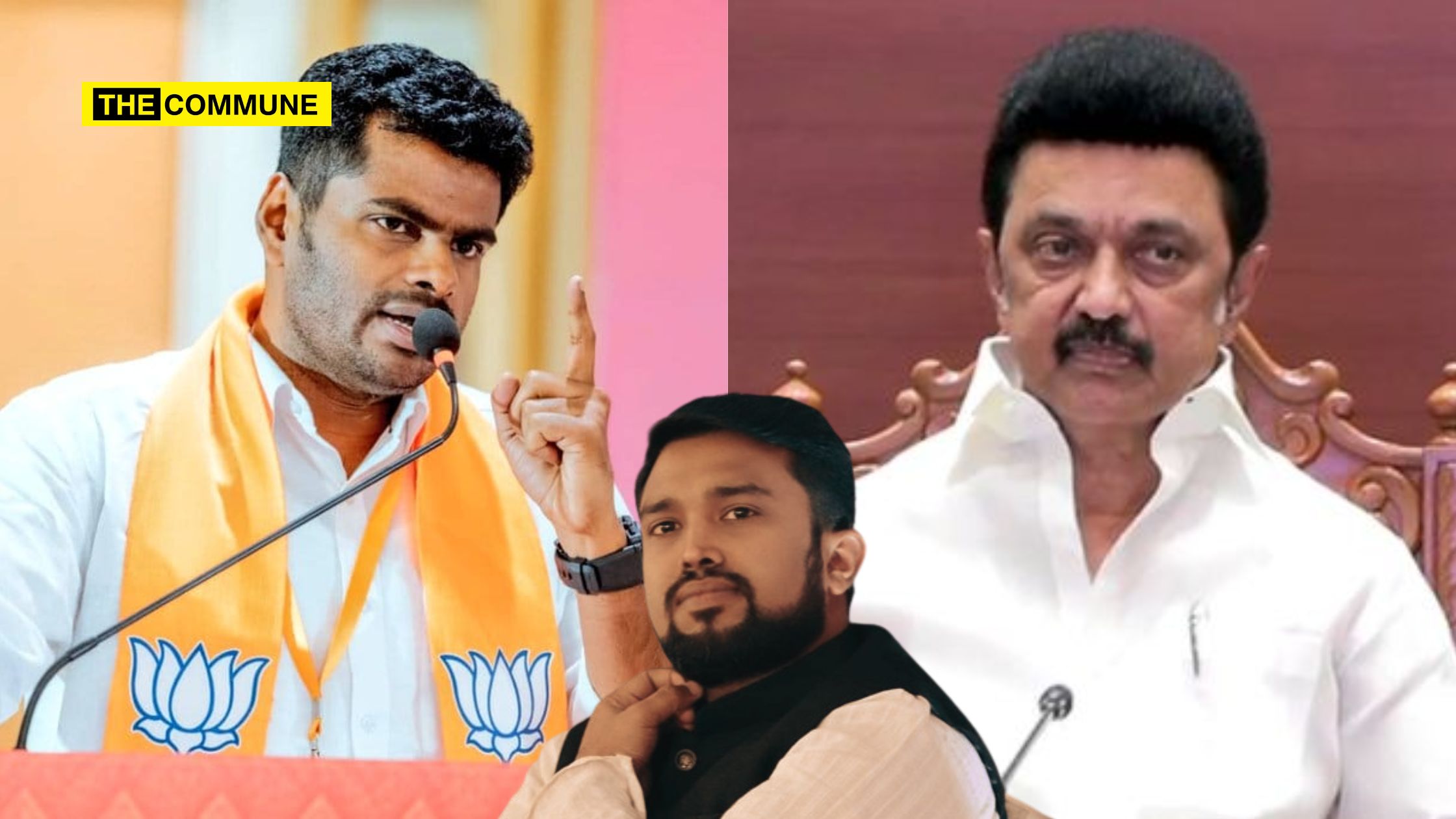
Tamil Nadu’s BJP President, K Annamalai, strongly criticized the DMK government’s actions regarding the arrest of Minjur Saleem through his official X platform that, “Brother @Minjursaleem, who has been exposing DMK’s double role and separatist politics on social media, has been arrested by the Tamil Nadu Police reaching Bengaluru airport. We strongly condemn the corrupt DMK government for continuing to suppress the fundamental right of freedom of expression guaranteed by the Constitution. DMK, which gives party status to those who sell drugs, ganja and counterfeit liquor, It is a routine to search and arrest those who criticize the DMK on social media, even in other states.”

“The Tamil Nadu Police, equivalent to the Scottish Police, under the DMK regime, is used only to silence the voices of social media, leaving aside all anti-social elements, which is regrettable and tarnishes the dignity of the police. I urge the DMK to stop using the police as their propaganda department.

This comes as yet another incident that highlights the concerning trend of Tamil Nadu Police prioritizing the prosecution of individuals expressing dissenting views online over addressing more serious crimes such as drug peddling, rape, and murder.

Below are the list of past actions of the DMK government, which involved stifling the expression of dissenting opinions, led to a crackdown on freedom of speech.

  • The Commune and its directors faced legal action for reporting on the confrontation between Podu Deekshitars of the Chidambaram Nataraja Temple and HR&CE officials.
  • BJP IT Wing and Social Media State Secretary Trichy Pugal Machendran was arrested for an alleged provocative Facebook post celebrating the death of the terrorist Palani Baba on his death anniversary. The post referred to Palani Baba as a “poisonous influence.”
  • TN BJP Functionary Pravin Raj was arrested in the wee hours of 1 October 2023 for his posts targeting the ruling party and the Congress.
  • The Tamil Nadu police even went up to Noida to try to arrest journalist Abhijit Majumder for his article on Udhayanidhi Stalin’s eradicate Sanathana Dharma remarks. 
  • Critic of the DMK, Badri Seshadri, was arrested for his comments in an interview on a YouTube channel regarding the Manipur issue, during which he made remarks about the Chief Justice of India.
  • Tamil Nadu BJP State Secretary SG Suryah was taken into custody under non-bailable sections for his comments regarding Madurai CPI-M MP Su Venkatesan concerning a sanitation worker’s tragic death during drain cleaning in Pennadam town, Cuddalore district.
  • An AIADMK IT wing member was apprehended under non-bailable sections for sharing a video meme that humorously referenced MK Stalin’s video statement on Senthilbalaji’s arrest. The meme did not contain derogatory content.
  • A Pro-BJP Twitter user was arrested for sharing an old article and allegedly misattributing DMK to an illegal liquor-producing gang in Tiruppur, following the recent hooch tragedy in Marakkanam.
  • A Pro-BJP Twitter user was arrested for sharing an old article and allegedly misattributing DMK to an illegal liquor-producing gang in Tiruppur, following the recent hooch tragedy in Marakkanam.
  • Vice President of Tamil Nadu BJP’s Industrial Cell, Selva Kumar, was arrested for criticizing DMK Minister Senthilbalaji.
  • The admin of Voice of Savukku Shankar X handle was arrested for a video meme targeting CM MK Stalin and DMK Minister PTR Palanivel Thiagarajan regarding the “eligible household” clause in the monthly assistance scheme for women.
  • The DMK government traveled to Gujarat to arrest BJP cadre John Ravi, who had made satirical social media posts about CM MK Stalin and his late father, Karunanidhi.
  • N Muthuramalingam, the State Propaganda Secretary of South India Forward Bloc, was arrested for expressing his views on Facebook regarding the release of terrorists convicted in the 1998 Coimbatore serial blasts case. Muthuramalingam had criticized Dravidian parties for considering the release of 36 prisoners, including those convicted for life in the Coimbatore terror attack, leading to his arrest.

Subscribe to our channels on TelegramWhatsApp, and Instagram and get the best stories of the day delivered to you personally.


‘All Set For A Third Term’: Rahul Shivshankar’s Book Launch Event In Chennai Echoes The Mood Of The Nation

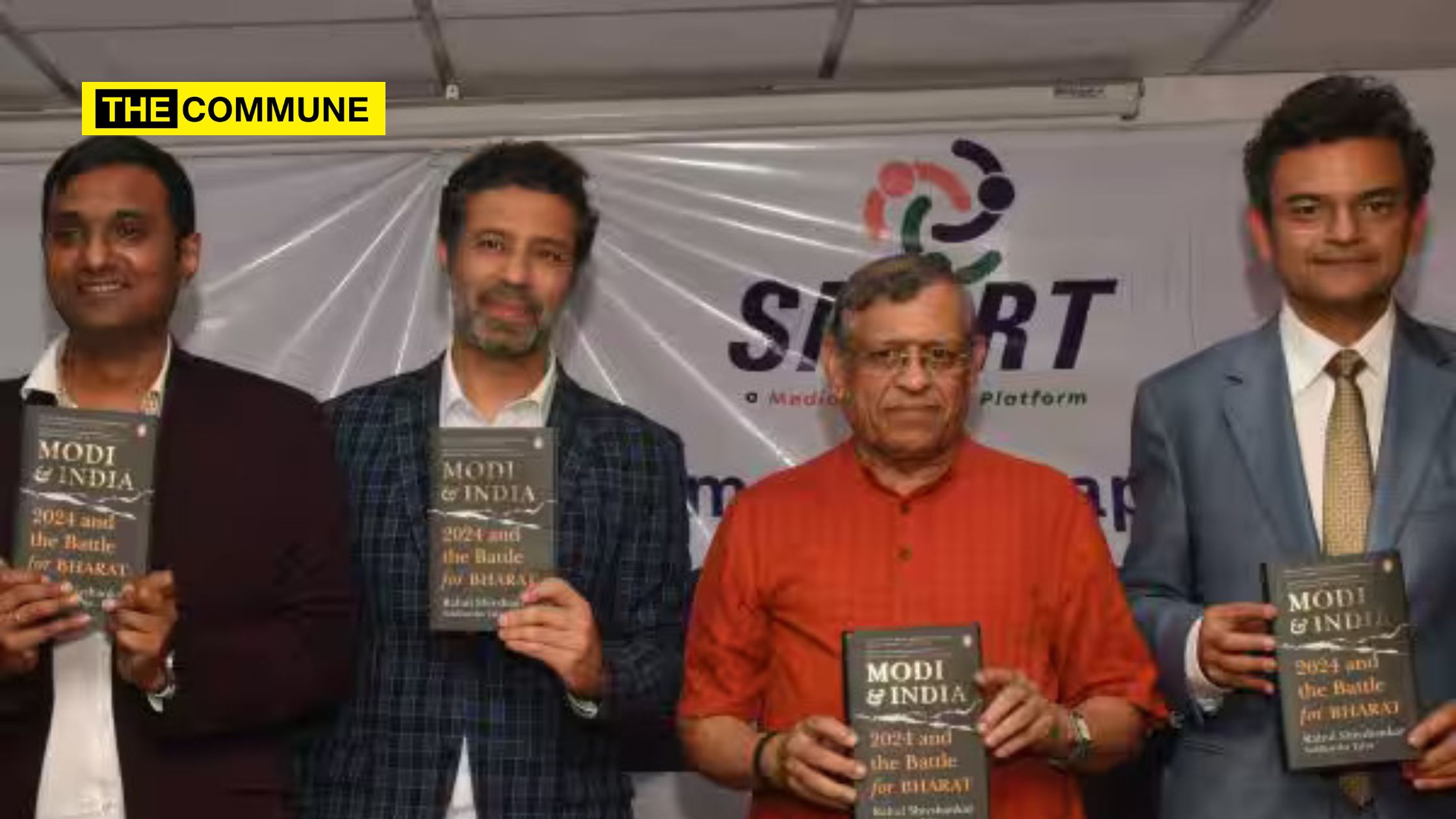
The launch event of “Modi & India: 2024 and the Battle for Bharat” book by SMaRT concluded successfully on 16 March 2024, in Alwarpet, Chennai. The event featured distinguished personalities such as S Gurumurthy, Chief Editor of Thuglaq, as the chief guest, and Dr. Anand Ranganathan, a renowned orator, scientist, and author, as the special guest.

During the launch, Gurumurthy, Chief Editor of Thuglaq, who unveiled the book, emphasized the significant role of the RSS in safeguarding India’s culture and tradition over the past century, culminating in the success of Prime Minister Modi’s leadership over the last decade. He expressed confidence in Modi’s ability to secure a third term as Prime Minister, citing his widespread appeal among the Indian populace.

Rahul Shivshankar, the author of  Modi & India: 2024 and the Battle for Bharat, highlighted the relentless efforts of leftist and liberal factions to undermine Modi’s leadership, emphasizing Modi’s emergence as a celebrated leader who has transformed India’s landscape through his tenure as Chief Minister of Gujarat and subsequently as Prime Minister. Further commenting he said “Prime Minister Modi is sure to win the Lok Sabha elections for the third time and achieve a ‘hat-trick’ record,”

Anand Ranganathan, scientist, and author, underscored Prime Minister Modi’s achievements over the past decade, including initiatives such as universal toilet access, free cooking gas connections for millions of families, and the Ayushman Bharat medical insurance scheme. Ranganathan expressed certainty in Modi’s electoral victory for a third consecutive term, foreseeing a historic “hat-trick” record.

(With Inputs From Dinamalar)

Subscribe to our channels on TelegramWhatsApp, and Instagram and get the best stories of the day delivered to you personally.

Alleged Fact-Checker Zubair Peddles Half-Truths; Links EB Purchase By Hetero Drugs To IT Raids Even As Its Chairman Was Given Rajya Sabha Seat By TRS (Now BRS)

As the details of the Electoral Bonds were made public, alleged fact-checkers like Mohammed Zubair started setting a narrative that it was the BJP that benefitted the most and that there was a link between the purchase of bonds to ED or IT raids on the donors. 

In this instance, Zubair connected Hetero Drugs and Hetero Labs to the IT raids. He wrote, “Hetero Drugs and Hetero Labs donated ₹60 crore via Electoral Bonds to Political Parties. In 2021, There was an IT raid on Hetero Drugs & Hetero Labs offices at Sanath Nagar, the IT department said 550 cr unaccounted income was detected.”

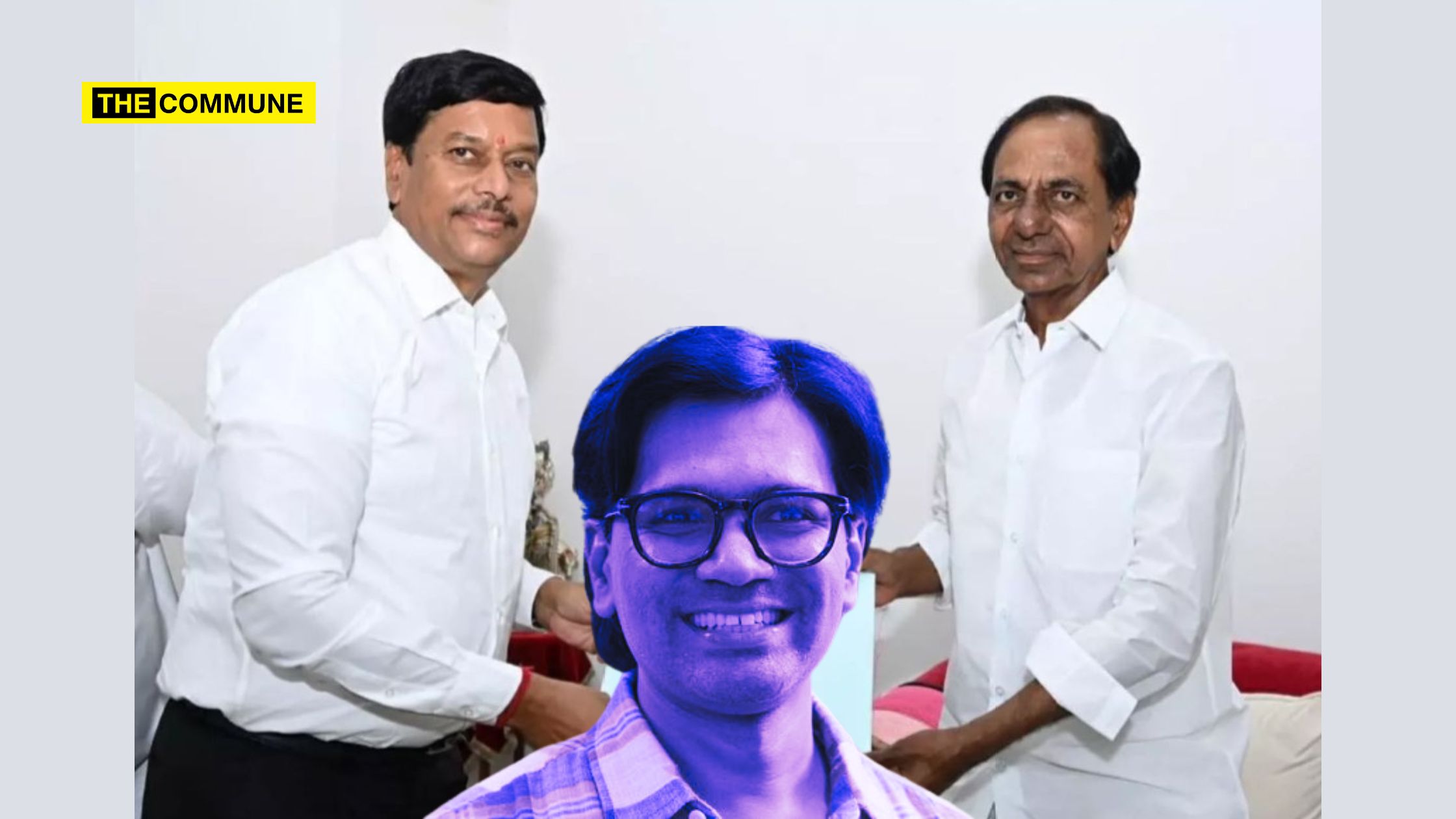
However, netizens were quick to disprove Zubair. It is noteworthy that the Chairman of Hetero Labs, Bandi Parthasaradhi Reddy was among 3 candidates for consideration for Rajya Sabha MP for KCR’s BRS party. He was ultimately selected for the post. 

It is noteworthy that Hetero Labs purchased bonds in April 2022 and in May 2022, the names for the RS MP seats were announced. 


Netizens questioned the logic behind suggesting how a TRS MP could have bought bonds from the BJP when they actually benefitted from the TRS. 


Despite being shown the mirror, Zubair has not deleted the said post. 

In another instance, Zubair peddled wrong data on the BJP’s electoral money and deleted it after a sizeable number of people had seen it. This data was picked up by the DMK IT Wing and they still have not deleted the false information. Zubair had claimed that the Bharatiya Janata Party received ₹11562 crores through electoral bonds. 

He deleted this post stating, “There were a few double entries. Will share it again with corrections.”

And followed it up with this post where he claimed “Update: BREAKING! BJP RECEIVED ₹6061 (47.46%) CRORE! Electoral bonds data received from SBI, Here is the summary of the amount received by the political parties. Also included top donors.”

The likes of Zubair seem to be intentionally spreading false information, hiding the truth from the public and trying to set a narrative just as the election dates for 2024 Parliamentary polls are set to be announced. 

Subscribe to our channels on TelegramWhatsApp, and Instagram and get the best stories of the day delivered to you personally.

Govt Of India Suspends FCRA License Of Jesus Redeems Run By Mohan C Lazarus

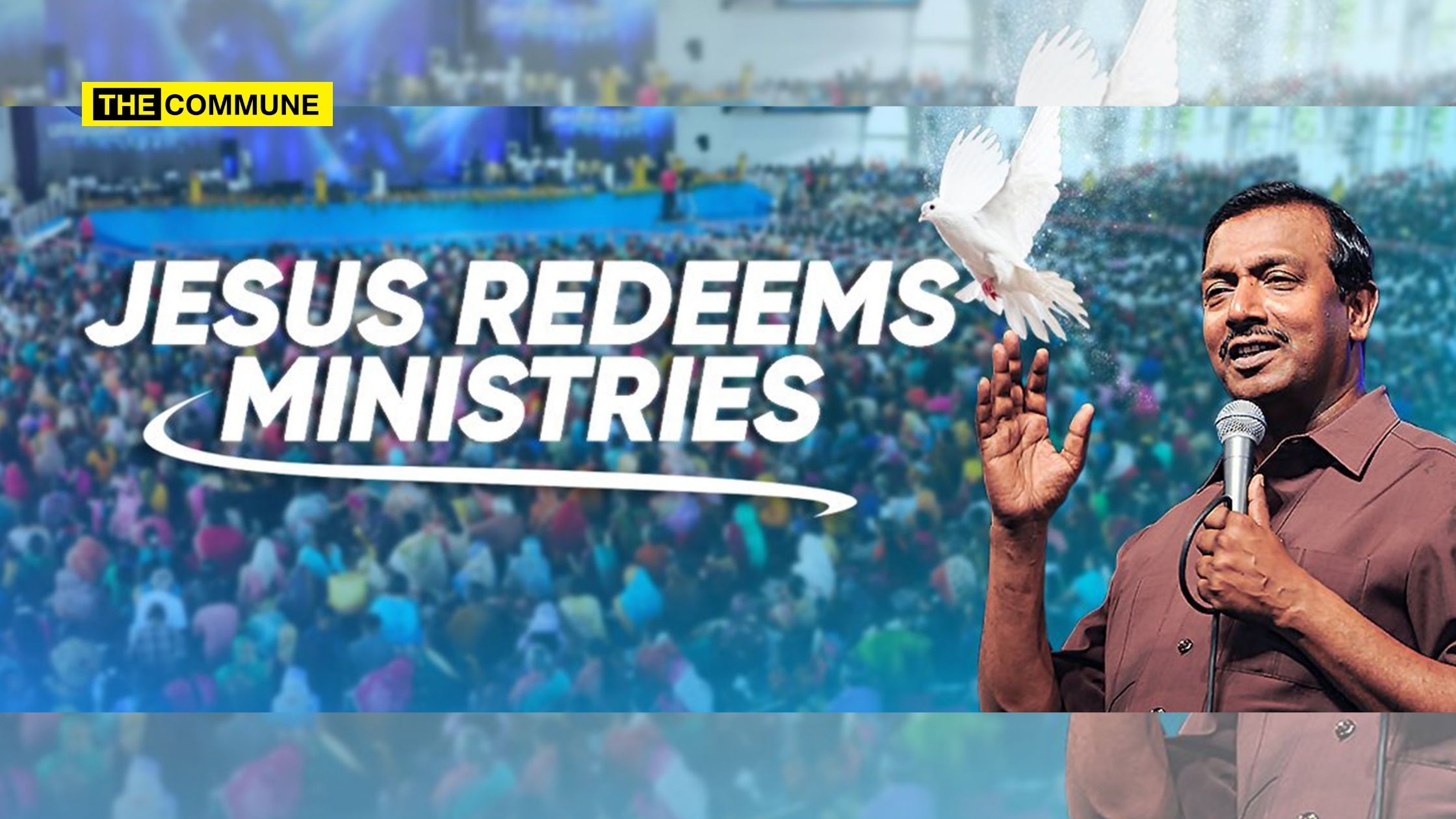
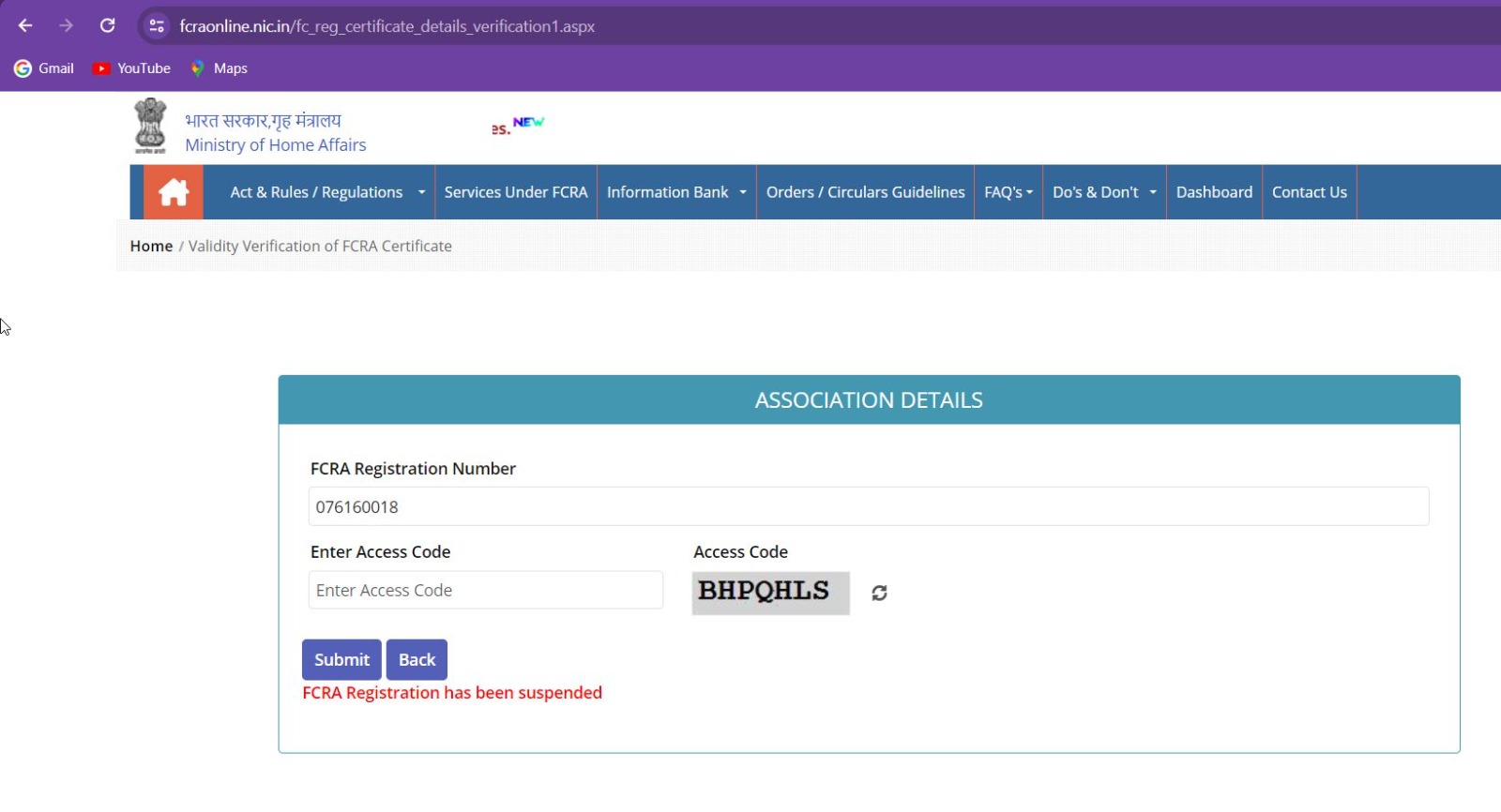
In a major development, the Ministry of Home Affairs has suspended the FCRA license of controversial Christian missionary outfit Jesus Redeems, run by Mohan C Lazarus.

The action by the Indian government comes following a complaint by Legal Rights Protection Forum, a legal activist group, allegeing serious violations of the Foreign Contribution Regulation Act (FCRA) provisions.

Background

Mohan C Lazarus run a Christian organization named Jesus Redeems through which he does religious proselytization activities. He is known for his notoriety in disturbing communal harmony by making anti-Hindu statements.

Multiple FIRs were registered against him at different police stations of Tamil Nadu state under Sections 153, 153-A(1)(a) & (b), 295-A, 505(1)(b) and 505(2) of the Indian Penal Code for making statements against Hindu Temples and Hindu Gods during a mass religious gathering.

It is noteworthy that in another case, the Regional Passport officer refused to issue a new passport to Mr Mohan Lazarus alias Mohan C. Lazarus because he intentionally suppressed information that he had 4 criminal cases pending against him while submitting the passport application.

In February 2021, the Madras High Court came down heavy and issued a warning to the rabid evangelist pastor for making reckless statements against Hindus and Hindu religion.

However, Lazarus got relief from the High Court through case number W.P.(MD)No.15829 of 2020, asserting his ‘Right to Travel’ as a fundamental right guaranteed under Article 21 of the Indian Constitution. 

The LRPF has pointed out that Mohan C Lazarus and his organization Jesus Redeems attract provisions of the FCRA, 2010 which amounts to suspension/cancellation of the FCRA registration as he has a history of disturbing communal harmony by making provocative speeches and indulging in proselytization activities.

FCRA Violations

‘Jesus Redeems’ is a registered Christian religious organisation operating under the Indian Trusts Act, 1882, and holds FCRA registration number 076160018. The founder and signatory authority, Mohan Lazarus alias Mohan C. Lazarus, is also the Chief Executive Officer of a US registered Public Charity organization named ‘Jesus Redeems Ministries Inc.’

One of the key allegations revolves around the recent amendments to the FCRA rules, which explicitly state that the Chief Functionary of the recipient Indian organization should not be a part of the donor organization. ‘Jesus Redeems’ allegedly received significant foreign contributions from ‘Jesus Redeems Ministries Inc., (US),’ a major foreign donor.

Foreign Funds From Christian NGO Compassion International

It has been discovered that foreign donations from Compassion International (USA) to Caruna Bal Vikas, an NGO based in Chennai, were funneled to ‘Jesus Redeems.’ Records indicate that Jesus Redeems received ₹1,67,68,189, more than 1.5 Crore, from Caruna Bal Vikas between 2009 and 2015 under the guise of ‘Welfare of Children.’ From 2014 onward, Compassion International started donating directly to the FCRA-designated bank account of Jesus Redeems, totaling ₹1,13,04,681. This clearly indicates that Jesus Redeems is the primary affiliate of Compassion International (US) and Caruna Bal Vikas. The chronological receipt of foreign contributions from Caruna Bal Vikas and Compassion International (US) is detailed in the attached Annexure-7.

In 2017, the Indian government prohibited Compassion International (US) from donating to Indian NGOs due to various controversies involving child conversion and fundraising through child sponsorship schemes globally and in India. Following a complaint by the Director, FCRA Wing, Ministry of Home Affairs, New Delhi, the Economic Offenses Wing of the Central Bureau of Investigation, Delhi Zone, registered an FIR (RC2202020E003 dated 20-02-2020) against Chennai-based organizations Caruna Bal Vikas and M/s Adhane Management Consultants Pvt Ltd. The complaint highlighted Caruna Bal Vikas’s stated objective of ‘converting poor children into fulfilled Christian adults,’ engaging in religious activities, including conversions to Christianity, which have the potential to disrupt communal harmony, and therefore, violate FCRA, 2010. The complaint also asserted that Compassion International India funded Caruna Bal Vikas and M/s Adhane Management Consultants Pvt Ltd for conversion activities.

The Chinese Link

The complaint further noted a foreign contribution of ₹6,21,274 from BRO Devakumar VG Edwin, identified as the Managing Director of DANGOTE Group, Nigeria, in 2016. DANGOTE Group, a mining conglomerate in Nigeria, has close ties with Sinoma International Engineering Co. Ltd, a Chinese state-owned company, raising concerns about potential foreign influence.

This connection with China raises concerns more so because of the recent instances of arrest of Prabir Purkayastha, Founder of the NewsClick website, and Amit Chakravorty, its Head of Human Resources, on charges of conspiracy to disrupt India’s sovereignty and territorial integrity.

The arrests were prompted by an investigative report in The New York Times, which alleged that NewsClick had received funding from a network involved in disseminating Chinese propaganda. The arrests highlight concerns about foreign contributions and their potential impact on national security, aligning with the broader context of efforts to curb external influence in India.

Publication Activities

Jesus Redeems is also accused of publishing monthly magazines in various languages without providing the necessary details and declarations required by the FCRA Act. The FCRA Act, 2010 mandates that NGOs engaged in publishing activities must provide details and declarations under the Press Registration of Books Act, 1867. Additionally, they need a certificate from the Registrar of Newspapers of India confirming that their publication doesn’t fall under the category of newspapers. The complaint filed requested the verification of compliance of Mr. Mohan C. Lazarus regarding these requirements, particularly in relation to the official magazine of ‘Jesus Redeems,’ by the Ministry of Home Affairs.

Furthermore, the magazine suggests that ‘Jesus Redeems’ operates in multiple countries, including the United States, Australia, Dubai, Malaysia, New Zealand, Singapore, Canada, and Sri Lanka. The organisation is reportedly hosting Christian religious events abroad, inviting pastors from various countries, including China. With all the information put together, it looks like Mr. Mohan Lazarus is the editor-in-chief, owner, and publisher of these magazines. 

The complaint also noted from the copy of the FCRA return filed by Jesus Redeems that it had received an amount of ₹3,71,154 from an individual named Mr. Shirly Rohan whose residential address in Bangalore. It requests for the basis of receiving donations into the FCRA account from Indian residents.

Subscribe to our channels on TelegramWhatsApp, and Instagram and get the best stories of the day delivered to you personally.

Hypocrisy Much? TNM Which Raised ‘Undisclosed Sum’ From Money Laundering-Accused Raghav Bahl Gives Sermons On Electoral Bonds

Ever since the details of Electoral Bonds have been made public, it appears that the detractors of the Bharatiya Janata Party are ensuring that the narrative of a “scam” is somehow set.

Fingers are being pointed out at the BJP alone while conveniently ignoring the fact that the party has the largest number of MPs in the country and is in power in 12 states, with 4 states as coalition partners. 

The Commune analyzed how regional parties had actually received more donations in comparison with the number of MPs they had. Union Minister Amit Shah speaking at the India Today Conclave 2024 refuted all the allegations made by these media houses as well as political parties. 

Despite all this, detractors such as political commentators and leftist-communist news portals are ensuring that the narrative of a “scam” goes mainstream. 

Political commentator Sumanth Raman is convinced (by what measure, it is not clear) that it is a scam.

Despite asking for evidence (and providing proof that it isn’t), such individuals are seemingly agreeing to the fact that donations and corporate donations to political parties are scams. 

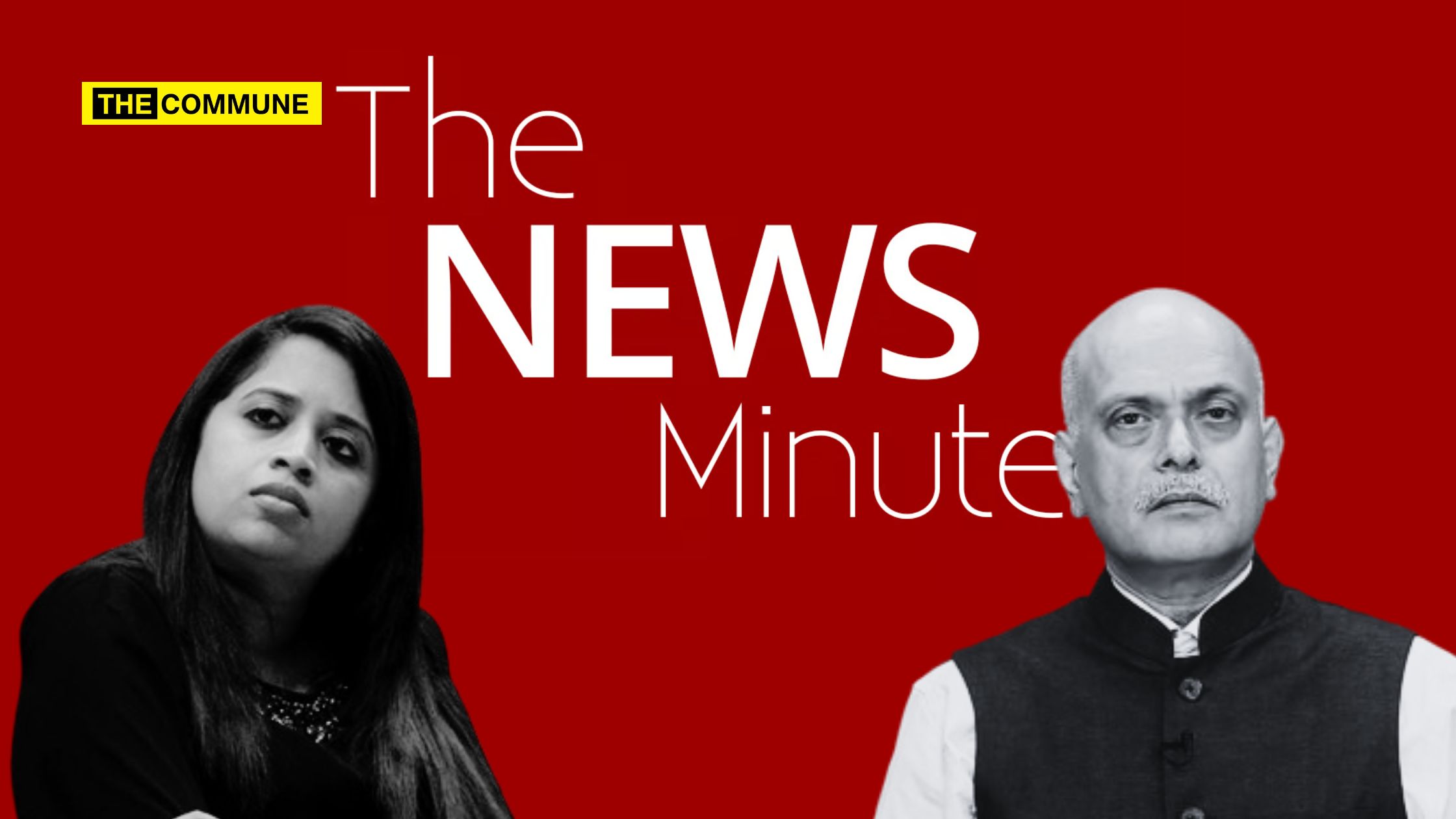
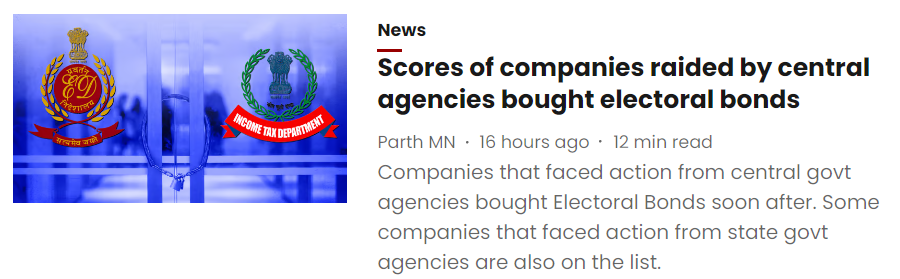
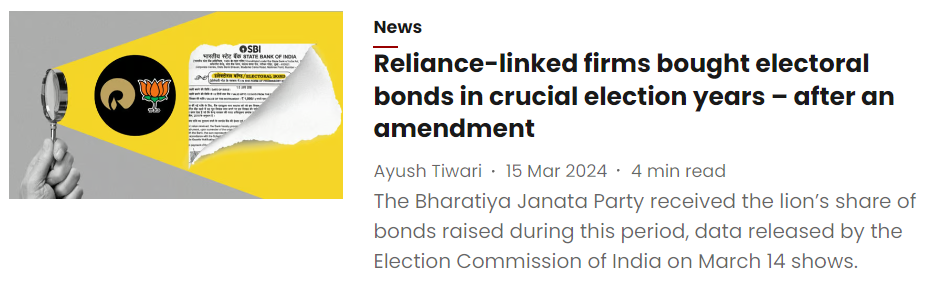
Now, The News Minute itching to be a part of the narrative setting jumps into action. The portal has been publishing articles after articles on electoral bonds trying to implicate the BJP while looking the other way on donations received by Congress and other Opposition parties. 

Here’s a sample:

Responding to political observer BR Sreenivasan’s post which questioned how electoral bonds are being seen as a scam, Dhanya Rajendran, the Editor-in-chief wrote, “Simple. Party against corruption aka BJP comes to power. Makes changes in many laws, allows companies to donate as much as they want, removes caps, allows Indian subsidiaries of foreign companies to donate. Also increases action by ED, IT, etc. Who benefits the most? BJP.”

However, it is pertinent to mention that The News Minute received an ‘undisclosed’ amounts as funding from its investor Quintillion Media whose founders Raghav Bahl and Ritu Kapoor have been accused of corruption and money laundering.

Yes, it is true that some start-ups do not disclose the amount raised as capital. However, since The News Minute portrays itself to be a transparency champion and claims itself to be doing journalism for public good asking readers to pay for ‘good journalism’, shouldn’t the ‘undisclosed amount’ of funding it received be disclosed, is a question to be asked. 

Who Is Raghav Bahl?

Raghav Bahl, an Indian businessman and serial entrepreneur, founded Network18 Group in 1993, which grew into a major media conglomerate. After financial challenges, Reliance Industries took over in 2014. Bahl then co-founded Quintillion Media Pvt Ltd and currently promotes Quint Digital Media Limited, controlling Thequint.com. He also collaborated with Bloomberg for BloombergQuint.

The Quint is part of “independent internet-based media platforms” which also includes the likes of The News Minute, Newslaundry, The Wire, Scroll.in, and ScoopWhoop. Wikipedia says that they are “challenging” traditional Indian news outlets. It is noteworthy that The Quint is “certified” by the Poynter Institute’s International Fact-Checking Network for its WebQoof division. It must be remembered here that in 2017, the Poynter Institute was granted $1.3 million by the Omidyar Network and the Open Society Foundation to “support new projects in three main areas: fact-checking technology, impact tracking, and financial awards through innovation grants and crowdfunding matches.”

In October 2018, the Income Tax Department of India raided The Quint’s offices and Raghav Bahl’s residence as part of an investigation into an alleged case of tax evasion. The raid was officially referred to as a survey by the Income Tax officers.

In 2019, media owner Raghav Bahl (founder of ‘The Quint’) faced money laundering accusations by the Enforcement Directorate for allegedly understating a London property’s investment value by GBP 2.73 lakh (around ₹2.45 crore) and failing to explain the source of funds. Bahl’s properties were raided previously, prompting him to release details. His assets, including a London flat, were declared in income tax filings under the Liberalised Remittance Scheme.

In August 2023, the Delhi High Court temporarily lifted a lookout circular (LOC) against Raghav Bahl and his wife Ritu Kapur, allowing them to travel abroad for business meetings amidst the Enforcement Directorate’s (ED) money laundering probe. The High Court had earlier dismissed Bahl’s plea to quash the ED’s complaint, deeming it premature, and rejected his request to annul the LOC, granting only conditional travel permissions. Kapur’s plea against the ED probe is pending, asserting her non-involvement under the Black Money Act. The Income Tax Department initiated proceedings against Bahl under the Black Money Act, followed by the ED’s complaint under the Prevention of Money Laundering Act.

Subscribe to our channels on TelegramWhatsApp, and Instagram and get the best stories of the day delivered to you personally.

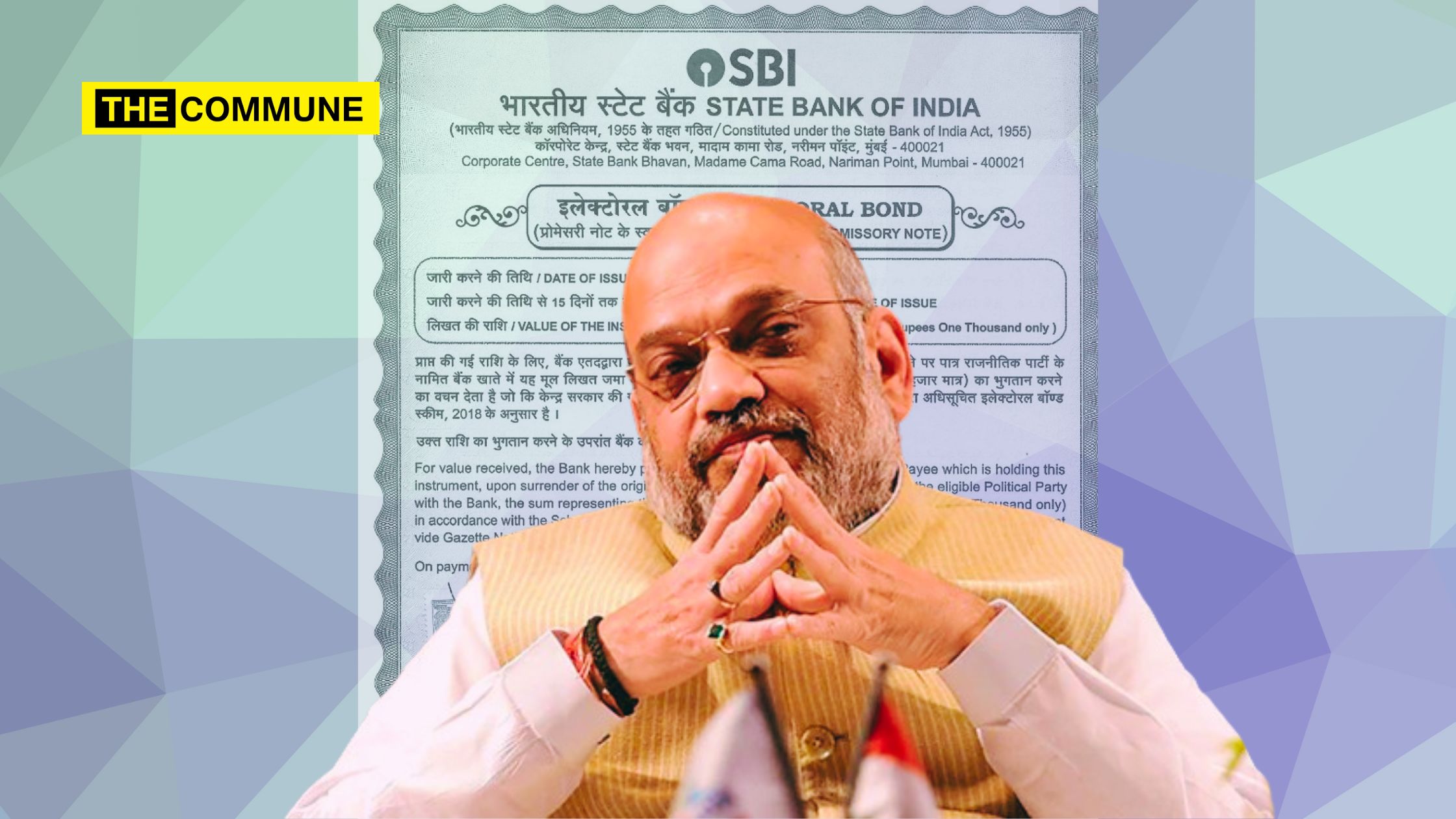
HM Amit Shah Busts The False Rhetoric Surrounding Electoral Bonds

Union Home Minister Amit Shah stated on 15 March 2023 that the discontinued electoral bond scheme was implemented with the aim of “eradicating black money” from the political funding system. 

A few days ago, the Election Commission posted the details of the Electoral Bonds on its website and what followed was a load of fake news and misinformation spread. Addressing the India Today Conclave 2024, Union Home Minister Amit Shah busted the false rhetoric surrounding electoral bonds. 

He expressed apprehension that with the scheme now defunct, there is a concern that “black money” may resurface within the funding process.

Union Home Minister Amit Shah, speaking at India Today conclave, when asked about the controversy surrounding electoral bonds, particularly in light of the recent revelation that many of the top 30 donors have ongoing CBI or ED cases against them, with opposition leaders alleging it has become a mechanism of extortion, Amit Shah replied, “Electoral bonds were brought in to end the dominance of black money in Indian politics. Can someone explain to me that before electoral bonds were in place how the donations used to be made? How they come through bonds is that a company’s cheque is given to the RBI and bonds are purchased, there is a question of confidentiality in it. What happened to the donations earlier that used to come in cash? Whose name has been revealed? Tell me, has it happened to anyone to date? It did not happen to anyone, but I would like to answer the political things in more detail. The perception is being spread that the Bharatiya Janata Party has got a big benefit from the electoral bonds, that the BJP is in power blah blah blah, and now Rahul Gandhi has made a statement that electoral bonds are the means of biggest extortion in the world. I don’t know who writes all this to them.”

Amit Shah criticized opposition parties for their scrutiny of the BJP’s electoral bond receipts, highlighting what he deemed disproportionate amounts received by various parties relative to their seats in the Lok Sabha. He cited examples, noting that the Trinamool Congress encashed bonds amounting to ₹1,600 crore, Congress received ₹1,400 crore, Bharat Rashtra Samithi received ₹1,200 crore, BJD received ₹775 crore, and DMK received ₹649 crore. He also added, “I assure you that when the accounts are opened, these people will not be able to face you.”

Amit Shah countered accusations of industrialists contributing by questioning the historical transparency of political donations. He argued that before the existence of electoral bonds, political funding origins were obscured, raising suspicions of black money. He defended the electoral bond system as a means to eliminate such opacity, highlighting its reflection in the balance sheets of both parties and companies involved. He attributed the confidentiality of the process to fears of reprisal from opposing parties depending on the political landscape. Additionally, Amit Shah criticized the Congress Party’s historical practices of accepting cash donations, alleging a tendency to underreport funds. He emphasized that electoral bonds ensure transparency by directly depositing the entire sum into the party’s account. 

Amit Shah emphasized the absence of secrecy following the implementation of the electoral bonds scheme, stating, “The amount is reflected in the bank accounts of both the parties and the donors.” He criticized the Congress Party, alleging, “When donations were made through cash transactions, they deposit ₹100 in the party and keep ₹1,000 in their homes.” Shah added that the Congress had done this for years.

When asked about the concerns about information asymmetry with the electoral bond scheme, where it’s alleged that government officials could potentially access information on who donated to opposition parties, Amit Shah clarified that they never sought such information from the State Bank of India, emphasizing that the donation amounts are transparently reflected in the balance sheets of political parties, including the Congress Party and their own. 

Shah noted that the Election Commission of India makes these balance sheets public, ensuring transparency for all. When asked about potential solutions following the Supreme Court’s ruling, he expressed uncertainty, suggesting that finding a viable solution might be challenging. Despite acknowledging the imperfections of the electoral bond scheme, Amit Shah believed it was a step in the right direction and should have been improved rather than scrapped. However, he also said he respected the decision of the Supreme Court on the matter.

Subscribe to our channels on TelegramWhatsApp, and Instagram and get the best stories of the day delivered to you personally.

Did A Regional Party Like The DMK Get More Donations Through Electoral Bonds Than A National Party Like The BJP?

The electoral bonds have created a lot of buzz in social media for the past couple of days. News channels, web portals, alleged fact-checkers, and political party IT wing handles alike are posting that it is the Bharatiya Janata Party that received maximum donations from donors. 

Before we delve deeper into this, it is important to understand that political parties have historically received donations in various forms from companies and individuals. These donations used to be done as cash in briefcases and these would most often go unaccounted. The Tatas set an example by sending a cheque to Chief Minister Mamata Banerjee in 2013. This was rejected by Mamata then. 

The data uploaded by the Election Commission on its website is segmented into two sections: the initial portion, spanning 337 pages, contains details about the entities acquiring electoral bonds, including purchase dates. The subsequent section, spanning 426 pages, provides information about political parties, their associated dates, and the respective bond amounts. However, it is important to note that the data does not explicitly indicate which entities purchased bonds for specific political parties.

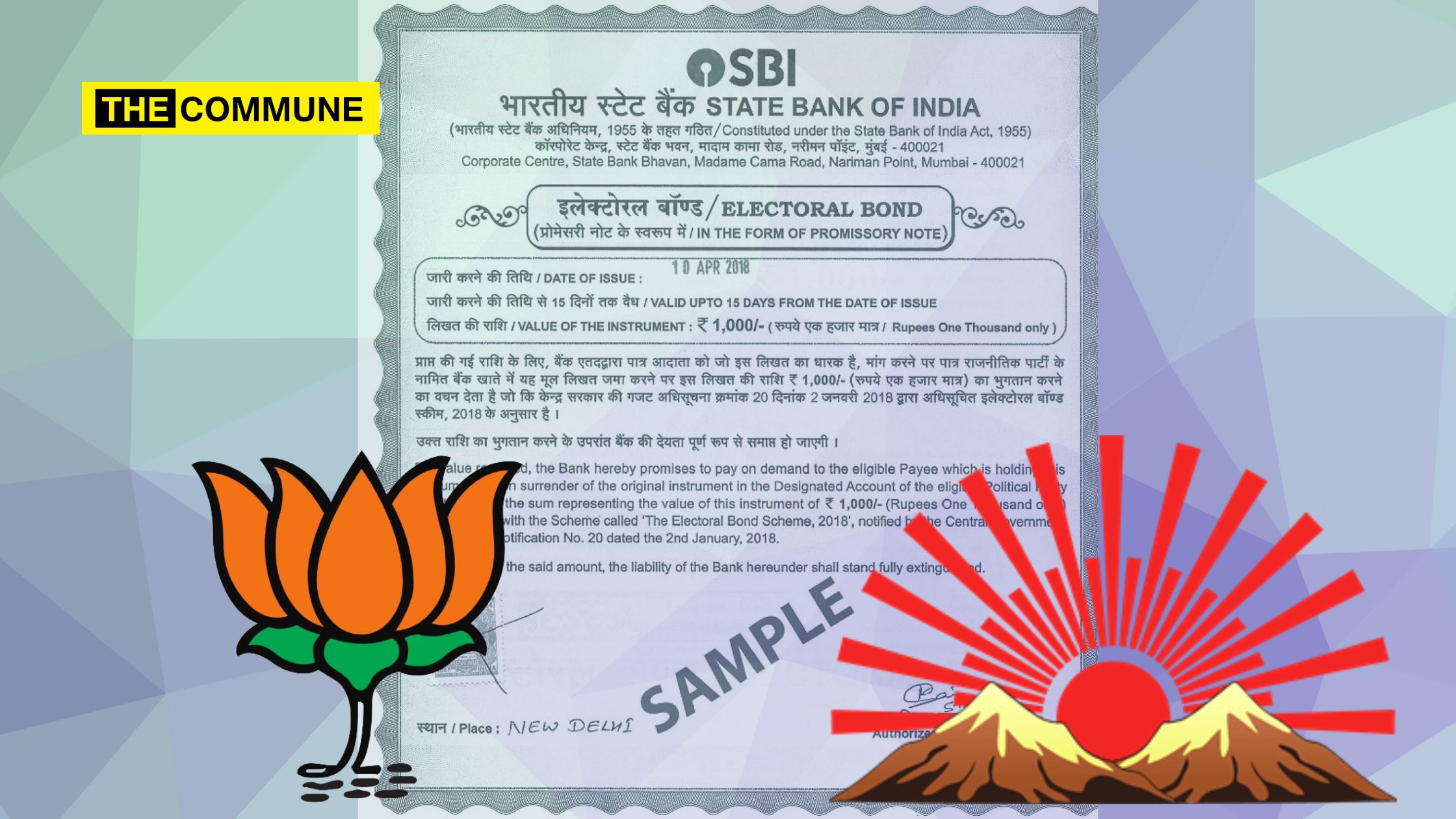
In the six financial years since its inception in 2018, electoral bonds have supplanted conventional funding channels for at least three political entities — TMC, DMK, and BJD — which now exclusively rely on this method for all donations exceeding ₹20,000.

Of all donations facilitated by electoral bonds, over half, approximately ₹6,500 crore, has been directed to the BJP. Notably, electoral bonds began to significantly dominate funding sources and entirely eclipse others for the ruling regional parties TMC, BJD, and DMK in the fiscal year 2022-23.

The DMK, currently ruling in Tamil Nadu, initially received no funding through bonds in the first two years. However, since then, the proportion of bonds in its total contributions (above ₹20,000) has surged to nearly 100%. Starting at 94.18% in 2019-2020, when it garnered ₹45 crore through this avenue, the share of bonds in the DMK’s donations dipped to 70.17% in 2020-21 before rebounding to 99.3% in 2021-22 and 99.26% in 2022-23. It received ₹306 crore and ₹185 crore in the last two financial years via bonds.

In the election year of 2019-20, BRS received 99.54% of its donations in Electoral Bonds (EBs), which dropped to zero in 2020-21, then surged to 79% and 77% in 2021-22 and 2022-23, respectively. The YSRCP received 99.99% of its donations in the form of EBs in 2020-21.

The BJP leads as the top recipient, securing over ₹6,061 crore through electoral bonds, while the TMC received ₹1,610 crore. The Congress received ₹1,422 crore through this funding mechanism.

Next in line is the Bharat Rashtra Samithi (BRS) with a total of ₹1,215 crore received via electoral bonds. The Biju Janta Dal (BJD) obtained funding of ₹776 crore through this channel.

There are several factors one must consider. The BJP currently holds power in 12 out of India’s 28 states and is part of the ruling coalition in four additional states. That makes it a part of the ruling government in 16 states (for convenience’s sake). In contrast, the Congress party now rules over only three states: Telangana, Karnataka, and Himachal Pradesh.

The TMC, DMK, BJP, and TRS (BRS) rule in just one state each. 

So is the comparison valid, is it right to say that the BJP gained more from electoral bonds considering that they are the largest party in the country with 12 states where they are in power and 4 where they are in a coalition? 

If we compare on a per MP basis, the results are shockingly different. 


Here is a comparison of a regional party getting more than a national party.


A netizen Anand explains how people think it is a scam without understanding what electoral bonds are and forgetting history. 

It is noteworthy that the DMK received 3 times more money through Electoral Bonds than the BJP compared to the Ratio of States ruled. Even though BJP is ruling 166+ states, they only received ₹400 crore (PS). While the DMK received an astounding 1300 crore.

Here is an example where the DMK received more donations than the BJP in just 6 months.

In 2020, the DMK received more donations than the BJP. 

This post shows a comparison of donations through Electoral Bond as % of their total donation.

This “scam” is similar to the “Rafale scam” and is a plain narrative setting by opposition parties. It is important that people, the general public understand that making such donations legal and reducing black money in the country. 

Subscribe to our channels on TelegramWhatsApp, and Instagram and get the best stories of the day delivered to you personally.

Calling Out The Xenophobia And Hate Spewed By Arvind Kejriwal Against Persecuted Hindu Refugees

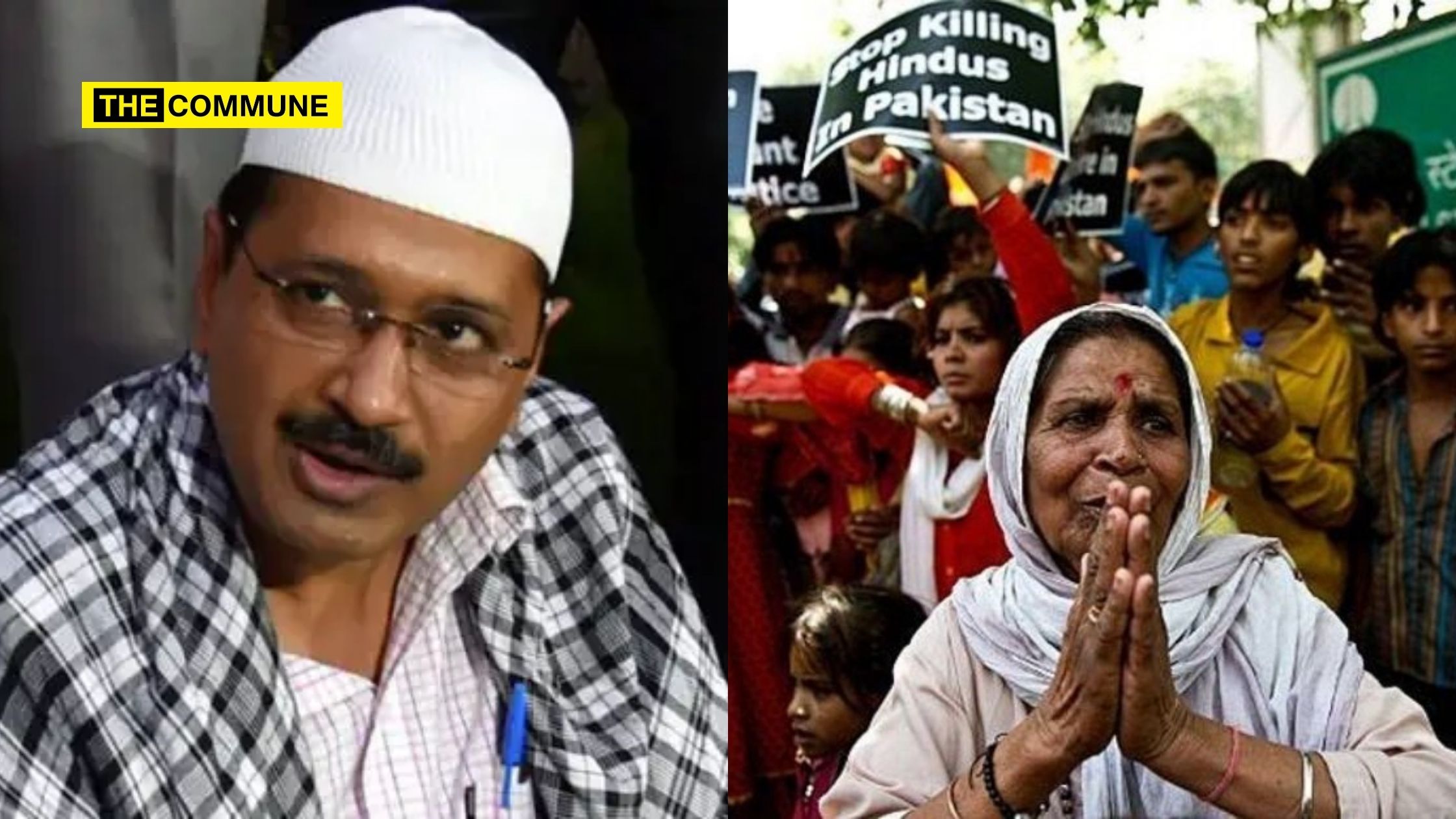
Arvind Kejriwal, Chief Minister of Delhi and party chief of the Aam Aadmi Party (AAP)  has been engaging in serious of disparaging comments against Hindu and Sikh refugees from Pakistan, Afghanistan, and Bangladesh who are seeking asylum. He has been continuously labeling them as ‘Pakistanis’, ‘infiltrators’, ‘harassers’, ‘thieves’, and perpetrators of sexual assault.

This controversy arises against the backdrop of Kejriwal’s opposition to the Citizenship Amendment Act (CAA), which officially came into effect on 11 March 2024. With Kejriwal issuing a press statement that, “There are approximately 2.5-3 crore people put together who are minorities in Pakistan, Afghanistan and Bangladesh. These are poor countries. Out of these 2.5-3 crore people, if even 1-1.5 crore people come to India, where will we settle them? How will we give them jobs? The jobs meant for our people will go to them. The whole law & order situation will crumble. There will be a rise in cases of robberies, rapes. There will be riots all around. What will happen to the security situation in the country?”


In response, Hindu and Sikh refugees staged a protest near Kejriwal’s residence, demanding an apology for his remarks against the implementation of the CAA. Following the protest, the Delhi CM responded by labeling the protesters as “Pakistanis” on his official social media account, and accused both the BJP and Delhi police of supporting them, thereby betraying India. Subsequently, he postulated a theory suggesting that these refugees, upon arrival, would disperse across the nation, potentially causing disturbance and inconvenience among citizens. With the BJP convert them as a Vote bank.

Kejriwal stated, “Today some Pakistanis demonstrated and created ruckus in front of my house. Delhi Police gave him full respect and protection. BJP fully supported him. Have they got so much courage that they are asking the CM elected by the people of Delhi with an overwhelming majority to enter our country and apologise? And BJP is supporting them? While hating me, BJP stood with Pakistanis and started betraying India? After this CAA, these Pakistanis will spread all over the country and will harass and create ruckus among the people of our own country. BJP wants to make them its vote bank.”


The following day, he continued to stir controversy by criticizing, and provoking refugees via his official social media account X. “The audacity of these Pakistanis? First, they infiltrated our country illegally and broke the laws of our country. They should have been in jail. Have they got so much courage that they are protesting and creating ruckus in our country? After CAA, Pakistanis and Bangladeshis will spread across the country and harass people. In the selfish interest of making them their vote bank, BJP is pushing the entire country into trouble.” Kejriwal post read  further exacerbating tensions.

Arvind Kejriwal and his party appear to have a contrasting stance on migration. While they oppose the Citizenship Amendment Act (CAA), they support the immigration of Rohingya Muslims. This perceived inconsistency in their approach, labeled as minority-centric and pseudo-secularist, has drawn significant criticism from social media users.

The Aam Aadmi Party staunchly supported addressing refugee crises, particularly advocating for the resettlement and protection of Rohingya Muslims. However, their support did not extend equally to refugees of  Hindus, Sikhs, Buddhists etc who were persecuted as minorities from Pakistan, Afghanistan, and Bangladesh.

In a widely circulated video gaining traction on social media, the spokesperson for AAP elaborates on the party’s position regarding Rohingya crisis that, “Rohingyas are refugees, the responsibility of settling refugees lies with the government, to give them place is the responsibility of central governmnet , if the central government gives them place, they will leave from here. we have not settled them there , how they are living in slums, in heat they dont have anything to eat , its just a matter of humanity.”.

When questioned about the admission of CAA refugees, specifically those from religiously persecuted minorities, into India, AAP’s Arvind Kejriwal raised concerns regarding their integration. He queried, “Who will provide them with employment opportunities? Where will they be accommodated? How will housing be arranged for them? Will they be settled in Delhi, Mumbai, Gujarat, Assam, Tripura, or elsewhere?”

Subscribe to our channels on TelegramWhatsApp, and Instagram and get the best stories of the day delivered to you personally.