Home Blog Page 1029

Kakinada SP In Soup For Inaction Against Religious And Political Speeches Made By Foreign Nationals, Complaint Filed

A formal complaint has been filed by the Legal Rights Protection Forum against Mr. S. Satish Kumar IPS, Superintendent of Police, Kakinada District, Andhra Pradesh, seeking disciplinary action for his alleged endorsement of religious and political speeches by foreign nationals, a violation of Indian visa provisions.

The complaint, addressed to the Home Secretary, the IPS Cadre Controlling Authority, and the Department of Personnel & Training, was also copied to Union Home Minister Amit Shah, and Jitendra Singh. Minister of State, Ministry of Personnel, Government of India.

The complaint revolves around the “Global Crusade with Kumuyi” event held at McLaurin High School Grounds, Kakinada City, Andhra Pradesh, on September 17-19, 2023. Foreign nationals from Nigeria, Mr. & Mrs. William Kumuyi, an international Christian pastor, attended the event as chief guests. The complaint alleges that Mr. Kumuyi delivered religious and political statements during the event, including predicting the political future of Andhra Pradesh.

A formal complaint lodged on 16 November 2023, by Sri Cheduluri Gavariah, representing Hindu Dharma Raksha Samiti, Kakinada, against the participation of Mr. William Kumuyi in the event, was reportedly ignored by Mr. S. Satish Kumar IPS. The complaint contends that Mr. Kumuyi’s actions may be politically influencing the masses of Andhra Pradesh.

The Legal Rights Protection Forum emphasizes that foreigners, regardless of visa type, are not supposed to participate in religious and political activities in India. Section 14(b) of the Foreigners Act, 1946, specifies penalties for contravention of visa conditions, including imprisonment for up to five years and fines.

Moreover, the complaint brings attention to Mr. Kumuyi’s international news coverage related to alleged child sexual abuse at Deeper Life High School in Nigeria, a school associated with the Deeper Christian Life Ministries where Mr. Kumuyi serves as the General Overseer. The LRPF asserts that this is not merely a religious matter but a concern for national integrity, security, and sovereignty.

The complaint urges authorities to take action against the organizers, participants, and Mr. S. Satish Kumar IPS for permitting such an event, emphasizing the gravity of the situation.

As the complaint unfolds, scrutiny remains on the alleged violation of visa provisions and the potential impact on national interests.

Subscribe to our channels on TelegramWhatsApp, and Instagram and get the best stories of the day delivered to you personally.
Controversial Christian Priest Jegath Gasper’s NGO Faces Allegations Of FCRA Violations

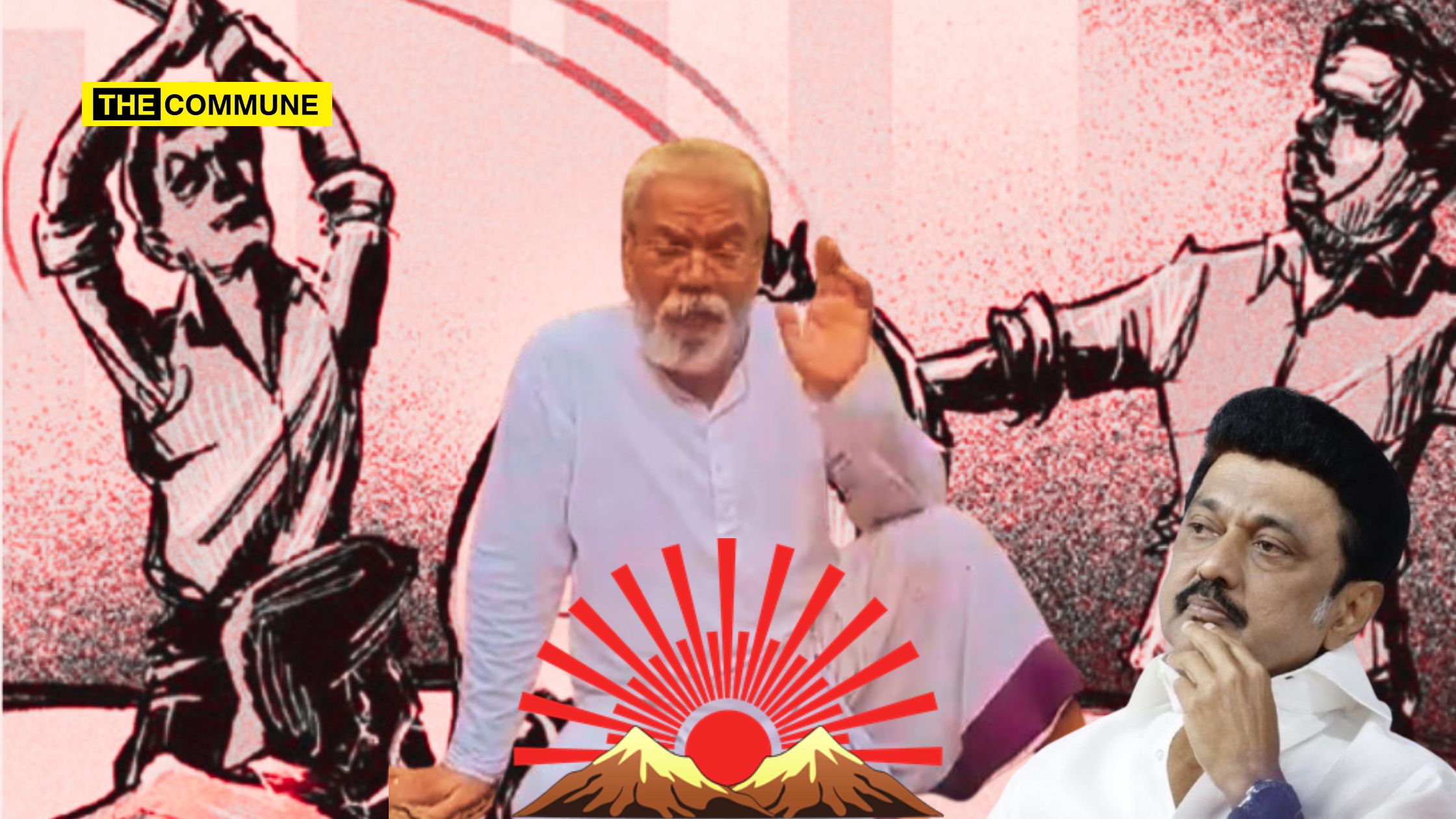
In a significant development, the Legal Rights Protection Forum has lodged a formal complaint with the FCRA Division of the Ministry of Home Affairs against Development Activities for Rural People (DARP), a Madurai-based NGO. The complaint, dated 2 December 2023, outlines alleged violations of the Foreign Contribution Regulation Act (FCRA) by DARP, including its purported connection to LTTE (Liberation Tigers of Tamil Eelam) Terror Funding.

The Board of Trustees of DARP, as listed in the complaint, includes Gaspar Raj Mariapaulian (Treasurer), Shanthi Ravikumar (Member), Raeshma Jegath (Member), M S Albert Leenus (President), and Wilsto Dhaspin (Secretary).

The crux of the complaint centers on an indictment issued against Mr. Jegath Gaspar Raj Maria Paulian, also known as Fr Jegath Gaspar Raj, the Treasurer of DARP. The indictment, issued by the Federal Bureau of Investigation (FBI) to the Court of the Eastern District of New York on August 18, 2006, unveils serious charges related to LTTE Terror Funding. The detailed observations made by the FBI, enclosed with the complaint, include accusations against Mr. Gaspar Raj Maria Paulian and others for facilitating LTTE projects and serving as intermediaries between LTTE supporters in the United States, Europe, and Sri Lankan leadership.

In addition to the LTTE-related allegations, the complaint raises concerns about the foreign contributions received by DARP from 2013 to 2021, totaling more than ₹13 lakh Notably, the organization lacks an online presence, raising questions about transparency and accessibility of information regarding its activities.

The complaint also highlights the utilization of funds, alleging that foreign funds received into the FCRA-designated bank account of DARP are directly utilized without being transferred to the Utilization Account. These funds are purportedly being transferred directly to individuals and entities, with reports suggesting a connection to a YouTube channel named ‘Tamil Niram,’ known for supporting LTTE and propagating against the Government of India.

Father Jegath Gaspar Raj, is a Catholic priest close to the ruling DMK in Tamil Nadu. He had earlier issued a clarion call instigating Muslims to demand a separate electorate and a separate sovereign territory apart from taking help from ‘external forces’ to protect themselves. He also runs a dubious NGO called Tamil Maiyam which has been interfering in the Keezhadi excavations in a bid to establish the notion of “Dravidian civilization”, meant to serve as a fodder for separatism.

Given the severity of the allegations and their potential impact on foreign relations, the Legal Rights Protection Forum has called for the immediate suspension of DARP’s FCRA license. The complaint urges authorities to refer the case to the Enforcement Directorate for further investigation and necessary action.

Subscribe to our channels on TelegramWhatsApp, and Instagram and get the best stories of the day delivered to you personally.
“Temples Are Abode Of Gods, Not Laboratories”: DMK Govt Gets Another Knock From Madras HC Over Appointment Of Untrained Archakas In Thiruchendhur Murugan Temple

The MK Stalin-led DMK government in Tamil Nadu has received yet another knock from the Madras High Court, this time over the appointment of archakas at the Thiruchendur Subramania Swamy Temple.

A petition was filed by Thiruchenduar Subramania Swamy Temple independent Paripalana Sthalastar Sabha President Veerabagu Murthy and Joint Secretary Harihara Subramanian against the Government Order (GO) issued by the Hindu Religious & Charitable Endowments (HR&CE) department. The GO passed on 28 August 2023 ordered to appoint those who underwent training under the ‘All Castes Can Become Priests’ scheme as trainee priests under a senior priest. The petitioners contend that this GO was illegal.

According to the petitioners, there are already the Thirisudhandhirargal who have undergone rigorous training of the Agamas (a doctrine comprising of temple rituals, cosmology, epistemology, philosophy, and other practices).

They noted in their petition that it takes atleast 5-6 years to study the Vedas and Agamas completely and that it is impossible to learn them fully under the government’s one year training programme. They said that appointing them as new archakas is unwarranted as apprentice priests for one year under the senior priest will be paid a salary of ₹8000 per month from the temple fund. Highlighting these, the petitioners moved the High Court for a stay on the GO.

The counsel for the government argued that the matter pertains to appointment of individuals and that an association/body cannot file a case on their behalf.

After hearing the arguments, Justice S. Srimathy noted that the petitioners only contend that they cannot be trained in agamic temples and added that even private agama training centers in Pilliyarpatti and Tiruparangunram do not conduct archaka training in temples. The judge noted that it is against the agamas to train inside the temple under a senior archaka.

Temples are the abodes of Gods. Devotees go to temple to worship Gods. Temples cannot be considered as training centres or laboratories.“, the judge observed.

The judge also pointed out that the HR&CE department did not even mention under which agama the candidates under the government scheme were trained.

Justice Srimathy noted that a priest should be trained in a particular agama from the first day of the training course and that one cannot change from one Agama to another Agama. She noted that it is against the ordinance passed by the HR&CE departmnt in 2007 to employ an untrained priest in the temple and then train them under the senior priest without specifying the agama under which they were trained. Justice Srimathy ruled in favour of the petitioners imposing an interim stay on the DMK Government’s order saying it is against the Supreme Court and High Court orders with a case related to this matter already pending in the Supreme Court.

Interestingly none of the top mainstream media outlets had reported about this incident.

(With inputs from Dinamalar)

Subscribe to our channels on TelegramWhatsApp, and Instagram and get the best stories of the day delivered to you personally.
DMK Functionary Issues Threats To Officials Following Exposé Of Illegal Red Sand Mining In Pudhukottai

A video that has surfaced on social media and shared by BJP Tamil Nadu President K. Annamalai shows a prominent DMK functionary from Pudhukottai who has allegedly been involved in illegal red sand mining.

The accused DMK functionary not only engaged in unauthorized mining activities but also resorted to intimidating tactics when confronted by a whistleblower and the local Village Administrative Officer (VAO).

The incident came to light when a courageous individual exposed the illicit red sand mining operations undertaken by the DMK functionary. Subsequently, the whistleblower and the VAO faced severe threats and intimidation from the accused DMK functionary.

In a damning video expose, a bold individual captured footage of a JCB engaged in illegal red sand mining, allegedly led by a DMK functionary in Pudhukottai. The whistleblower, undeterred by the potential risks, instructs viewers to inform the Tahsildhar and diligently notes down the number plate details of the vehicles involved.

The situation takes a hostile turn as the DMK functionary, evidently perturbed by the exposure of the illicit activities, launches a verbal assault on the person behind the camera. In a heated exchange, the accused questions the whistleblower’s motives, sneering, “Is this your work all the time? What can you do with this?

The vigilant individual stands firm, responding, “The Thasildhar will come, and I will show him the recording. If a member of the ruling party is involved in extracting sand illegally, will you keep coming like this?

In a brazen display of arrogance, the DMK functionary dismisses the questioning, retorting, “Who the *** are you to question?” The verbal altercation escalates further as the accused threatens the whistleblower, ominously stating, “I will finish you. I’m warning you.

The DMK functionary then boasts about his political affiliation and position within the ruling party, arguing, “I belong to the ruling party, holding a position. If I cannot extract sand for my own needs, what is the need of this government?

This unapologetic admission raises serious concerns about the extent of corruption and abuse of power within the ruling party, casting a dark shadow over the integrity of the government’s operations.

The video capturing the confrontation and threats was made public by Tamil Nadu BJP Chief Annamalai via his official X handle.

In April 2023, a Village Administrative Officer (VAO) in Thoothukudi was hacked to death in broad daylight inside his office allegedly by the sand mafia in Murapanadu in Thoothukudi district of Tamil Nadu.

Of late, illegal sand mining involving DMK functionaries including senior Ministers have been making news with ED launching probe to establish the money laundering trail.

Subscribe to our channels on TelegramWhatsApp, and Instagram and get the best stories of the day delivered to you personally.
Andhra HC’s Verdict Upholding Termination Of Converted Christian’s Employment At Hindu Temple Offers A Ray Of Hope

A significant Andhra Pradesh High Court judgement with an impact on employment at state-managed Hindu religious organizations and temples, has not received adequate publicity by the mainstream “secular” media firms.

Less than a month ago, on 8 November 2023, the Andhra Pradesh High Court delivered a clear, concise, significant judgement in the case of a Temple Board Vs a converted Christian ex-employee of the Hindu temple in question. The case involves the ex-employee’s conversion to Christianity, while working at a Hindu temple, an outright violation of the terms and conditions of his employment agreement with the temple. The petitioner, an ex employee of the state-managed temple, had filed a case of wrongful termination of employment.

The court dismissed the petitioner’s plea of wrongful termination of employment and upheld the right of the temple authorities to terminate the petitioner’s employment at the temple, based on sufficient evidence of his conversion to Christianity. The court reiterated the temple’s rights to terminate the services of the petitioner in accordance with Article 16(5) of the Constitution of India and the Statutory Powers conferred by Rule 3 of the Andhra Pradesh Hindu Religious institutions and Endowments Act, specifically dealing with conditions of employment for all office holders and employees.

Article 16(5) of the Indian Constitution, makes a provision for a law to mandate, that the incumbent of an office, related to a religious or denominational institution or a member of its governing body, should belong to that particular religion or denomination. Accordingly, the Andhra Pradesh government back in 2000, under the then TDP government, had added an additional clause to the existing Andhra Pradesh HR&CE Act – the additional “Rule 3” of the Act that enables Hindu temples, charitable and endowment institutions, to employ exclusively those who professed/practiced Hinduism.

This case sounds familiar to several Hindu individuals and organizations that have long been complaining of lies and deceit on state-controlled temple boards and among all ranks of temple employees, ever since an exponential rise in covert Christian-conversions, more than two decades ago. The Andhra High Court’s judgement brings solace and hope to many Hindu complainants, whose similar grievances in the past against such converted fellow employees (both colleagues and contractors) had fallen on deaf ears.

The “secular” press had been unwilling to write at length on such issues, in the past. However, they had covered it extensively when back in 2018 the Hyderabad Court ordered that Muslim and Christian staff at Tirumala Tirupati Devasthanams (TTD) should not be terminated.

With little-to-none press coverage on this controversial subject, most ordinary Hindu citizens, pilgrims and donors to temples and religious organizations were unaware of a persistent problem in Hindu establishments run by state-controlled HR&CE (Hindu Religious and Charitable Endowments) departments.

The Andhra Pradesh High Court judgement is simple, concise and clear – the employee in question, a convert to Christianity had indeed violated the terms of employment at the temple, including the signing of his employment contract, which clearly mentioned that the temple, a religious Hindu organization would hire and continue to employ, only people professing the Hindu faith.

This case is a stark reminder of classic “crypto” Christianity or covert conversion to Christianity – practicing the newly acquired faith, yet deceiving the state authorities by continuing to utilize a Hindu name and caste certificate, to take advantage of government benefits meant for lower caste Hindus. Typically, crypto Christians practice their new religion with great vigor, attend church services regularly, make donations to Christian organizations and actively participate in Christian endeavors like preaching (formally or informally) in an effort to assist in further conversion activities.

In this particular case, the accused was married to a Christian woman in a church ceremony, presided over by a Christian pastor and the marriage certificate indicated his religion as Christianity, along with his signature on it, implying his consent to all the printed information on the certificate. Yet, the man claimed he had not converted to Christianity, even though his religion was stated as Christianity, on the marriage certificate. He claimed he had remained a Hindu although he had married a Christian woman. He argued that he had not lied about his religion and displayed a previously issued Hindu caste certificate.

The court stated that the petitioner cannot claim non-conversion to Christianity, since his marriage certificate was clearly a Christian one, which he himself had signed. The court pointed out that there was a different legal procedure, form and certificate for marriage, in the true case of an inter-religious wedding. It asked the petitioner who appeared educated enough, why he had a Christian ceremony and a Christian marriage certificate issued on his name, instead of an inter-religious one? The judge was referring to the Special Marriage Act, 1954 (SMA) and marriage certificate for inter-religious weddings, issued under Section 13 of the SMA.

Justice Harinath did not accept the petitioner’s claims of innocence nor his attempt to claim that he was still a Hindu, based on his birth and caste certificates. It can be safely assumed that the court understood the statistical and administrative problem of converted “crypto” Christians, not following due government-mandated procedure, by reporting their conversion to a new religion, instead, further continuing to fraudulently utilize their previously obtained Hindu caste certificates, in order to avail government benefits.

The judgement in this case, brings both relief and hope to many Hindu individuals and organizations, who have been silently fighting a biased state-controlled system under the HR&CE Act, where non-Hindus, especially Christian converts, were observed openly deriding Hinduism and Indian culture, while making their daily wages and a handsome living, off the faith and devotion of millions of Hindu devotees. Shockingly, such instances have been observed even with the larger, internationally known temples and organizations, like the famous Lord Venkateswara Swamy temple at Tirupati, managed by the board of TTD (Tirupati Tirumala Devastanam).

According to many devotees in the Telugu states, the situation got worse, spun out of control and experienced the worst circumstances, when Y S Rajasekhar Reddy (current Andhra Pradesh CM, Y S Jagan Reddy’s father) had become the chief minister of the larger, undivided Andhra state in 2004. He was Chief Minister from 2004 to 2009. He came from a family of converted Christians and a large part of his political and financial success was attributed to a vast network of financial and social support from church organizations.

Y S Rajasekhar Reddy was a Congress party politician, widely reputed to have been a big fan of Sonia Gandhi, who is also Christian. He is said to have favored many Christian organizations, which in turn, allegedly indulged in higher levels of conversions in the state during his Chief Ministership. Reddy was a man, who openly discussed and announced government-subsidized religious pilgrimages for Christians of the state, to Jerusalem in Israel. This was the Christian equivalent of the heavily subsidized pilgrimage packages, offered to Muslims in India by the Congress and other “secular” parties in various states. India’s “secular” parties go unquestioned by its majoritarian Hindu electorate, as they continue to blatantly violate the principles of secularism, enshrined in the Indian Constitution, specifically prohibiting positive or negative discrimination on the basis of religion.

Y S Rajashekar Reddy’s son, Jagan Mohan Reddy was elected to power, ten years after his father’s untimely helicopter accident and death in 2009. It is interesting to note that the entire Reddy family of converted Christians, continues to use Indian-Hindu names with no overt indication of their religion. Jagan Reddy is said have utilized a similar political strategy as his late father, to oust the previous TDP government in Andhra – a potent combination of Christian mobilization, Christian funds and a network of Christian “volunteers” while keeping the Hindu vote divided by playing the caste card.

Soon after coming to power in 2019, Jagan Reddy had announced monthly stipends for Christian pastors and increased financial assistance for both Muslims and Christians, going on pilgrimage to Saudi Arabia (Mecca for Muslims) and Israel-Palestine (Jerusalem for Christians). Both measures were criticized at the time, in Andhra Pradesh as well as on a national level, as yet another example of unnecessary tax-payer /state funds, towards extreme minority-appeasement schemes, which flagrantly flout constitutional validity. In the first three years of the Jagan Reddy government, there were several complaints of open Christian aggression, increased conversion activities in Andhra, reminiscent of the years, when his late father was in power. There have also been several reports of temple vandalism, damage to physical structures and the idols within the temples, as well as mismanagement of temple funds. Hindu organizations are hoping for a change of government in the upcoming 2024 state elections, with leaders reminding Hindus, not to fall for political maneuvers that seek to keep the minorities united, while simultaneously, trying to keep the Hindu vote divided and scattered, along caste lines.

Shivani is a freelance writer based out of Vijayawada. 

Subscribe to our channels on TelegramWhatsApp, and Instagram and get the best stories of the day delivered to you personally

ED Allegations In Illegal Sand Mining Case: What The Dravidianist Media Won’t Tell You

Early this week, the Enforcement Directorate (ED) filed a petition in the Madras High Court in the illegal sand mining case. The petition ran to 21 pages, and out of those 21 pages, the most important pages are the last three related to the sand quarries and the surveys conducted at the sand quarries with the help of IIT Kanpur and ISRO. The ED alleged that illegal sand mining worth more than ₹4370 crore has occurred. The last three pages are the most critical parts of the petition, containing all these details.

When the ED finished their raids and issued summons to the Water Resources department officials. Following this, the officials from the department appeared before the ED, and the investigation began. One of the officials gave a statement of the entire wrongdoing that happened.

A few points from these three pages are noteworthy in the petition filed by the ED. First, it is mentioned in the statement that sand was mined beyond the sanctioned 4.5 acres.

Secondly, the mining was done beyond the permitted depth in the sand quarry. It was also said that no inspection was done to check whether theft was taking place, whether the account books were being maintained properly, whether the transactions were taking place legally, or if any malpractices were taking place. But there is malpractice going on, and it is a known fact.

Coming to the government’s bill book. It has also been found that all transactions took place outside the bill book. Now, how this happens is
In order to collect the sand, there has to be a lorry in the first place and the signature of the lorry driver, as well as the designated officer’s signature. After the signatures are obtained, the lorry can enter the quarry. But this does not happen; they are creating fake records to mine sand illegally. So, the ED alleges that all this is happening outside government records. This is the second point mentioned in ED’s petition.

The 3rd point mentioned by the ED in the petition is:

The officer gave his statements over ten days, from 3 October 2023 to 13 October 2023. However, all of a sudden, he goes missing on 14 October 2023 along with his family. The ED landed at his home, but no one was found to be there. Even his phone is switched off. The ED, unable to locate him, sent the summons via email.

The 4th point mentioned is that after receiving the summons by email, the officer appears before the ED. He stated that the Water Resources Department, Addnl Chief Secretary Sandeep Saxena, an IAS Officer, called up this officer and asked him to stop giving the statements and go into hiding.

The 5th point says that another executive engineer called the said officer and conveyed the information that Sandeep Saxena and Duraimurugan, the minister for water resources, do not wish that you stay in Chennai and asked him to go in hiding with his family for some days and also asked him to switch off his mobile phone. This is also given as a statement as submitted by ED.

The 6th statement says that Umapathi, Duraimurugan’s PA, calls up this officer and also asks him to go into hiding with his family and switch off his phone; altogether it looks like the higher-ups had pressurized the officer to go missing on 14 October 2023.

The ED also stated that as far as the illegal sand mining case is concerned, they cannot conclude that it is only the officials of the Water Resources Dept who have committed the wrongdoing because the District Collector is also responsible for that particular district where the illegalities occurred. The police of that district are also responsible for preventing such illegal activities. The responsibilities also lie with the Forest Department and the Mineral Resources Department, the most important being the SP (police dept) and the Collector. The one who prevented all these officials from taking any action against the illegal mining was the department, and no action was taken on the wrongdoers because of the department (minister), alleged the ED.

Political activist Maridhas has alleged that the points placed by the ED before the High Court only reveals that the DMK government headed by MK Stalin is protecting the people involved in the illegal sand mining.

The ED also stated that they are not eligible or do not have the power to take action against these criminal activities. But the money earned from this illegal sand mining could have been laundered, and they were keen on investigating that aspect of the case.

Notably, an FIR has yet to be filed against the mafia behind the illegal sand mining. Even if there are a few, it would only lead to small-timers who come on bullock carts and collect sand.

The case should have ideally been filed on Pudukottai Ramachandran, Dindigul Rathinam, or Karikalan, who are alleged to be the top people behind the illegal sand mining. Since there is no FIR on these people, it becomes difficult for the ED to take any action or investigate the said people.

The Madras High Court on 28 November 2023 stayed the ED’s summons to collectors in this case, however it stated that the investigations can be carried on.

Amidst this, an executive engineer in the Water Resources Department, R Devarajan, who was under suspension was dismissed from his post on 28 November 2023. In a video he posted on social media, Devarajan said that DMK Minister Duraimurugan, Additional Chief Secretary  Sandeep Saxena, and Chief Engineer Muthaiya were involved in the ₹4700 crore scam case.

Prior to that, Gudiyatham Kumaran, who was recently ousted from the DMK, leveled accusations against senior DMK Minister Duraimurugan and his MP son Kathir Anand saying that they had looted ₹60,000 crores through sand mining.

(With inputs from Maridhas)

Subscribe to our channels on TelegramWhatsApp, and Instagram and get the best stories of the day delivered to you personally.
Former Principal Secretary To PM Modi Reveals How PM Rejected The Tradition Of Carrying Press Personnel On Official Foreign Tours

Former Principal Secretary to Prime Minister Narendra Modi, Nripendra Misra, shared in an ANI podcast how PM Narendra Modi deviated from the convention set by Congress governments of bringing media personnel on official foreign visits.

During an appearance on “ANI Podcast With Smita Prakash” on November 29, Misra recounted the initial instance when PM Modi was heading abroad. In line with past prime ministers, Misra presented a list of journalists accompanying him. However, PM Modi, after examining the list, remained silent. After a few hours, Misra, sensing a delay, inquired about the clearance.

Misra said, “The first time he (PM Modi) was visiting abroad, like all previous prime ministers, I carried the names of the press guys who will go with him so he looked at it and then didn’t comment anything. After about 2-3 hours, I asked him we are getting late, didn’t you clear it. So he (PM Modi) asked if he didn’t take any press person along, what will happen.”

Despite Misra explaining the convention, PM Modi decisively declared that no press representatives would accompany him, bringing an end to the longstanding tradition.

“No press representative will go with me. That’s all…so that was his decision. It was final,” Misra said.

In 2014, PM Modi’s decision to limit the accompanying journalists, specifically favoring those from state-affiliated media, stirred discussions and drew criticism from the media accustomed to VIP treatment during the previous UPA government.

PM Modi’s inclination for a modest media entourage during early foreign visits, such as those to Bhutan and Brazil for the BRICS summit, signaled his departure from the tradition of taking around 30 journalists from various media outlets. Before this change, the PMO, with assistance from the Ministry of External Affairs, compiled the roster of accompanying journalists, who traveled on the same plane as the Prime Minister. The government covered their flight expenses, while journalists paid for their accommodations at selected hotels. Free food and drinks were provided, and these trips facilitated access to high-ranking officials.

PM Modi, in discussing the policy shift, criticized the flawed nature of the tradition, arguing that large media houses repeatedly sent journalists. He highlighted that modern journalists had access to information regardless of their location, eliminating the need for their physical presence on the prime minister’s foreign trips.

Notably, PM Modi also abstains from taking guests on official foreign trips, as confirmed by Minister of State for Ministry of External Affairs V Muraleedharan in response to an inquiry regarding guests accompanying PM Modi on foreign visits in 2023.

Subscribe to our channels on TelegramWhatsApp, and Instagram and get the best stories of the day delivered to you personally

“Indira Was A B*t*h, Indians Are B*s*a*d* Anyway”: How Former US Secretary Of State Henry Kissinger Viewed India And Indians

Henry Kissinger, the former US Secretary of State, passed away at the age of 100 in his Connecticut home on 29 November 2023. With that news, netizens shared information on how he was influential in various decisions made by the US at that time, especially during the Bangladesh Liberation in 1971 when it came to the Indian subcontinent. 

In the crucible of the Pakistan-Bangladesh War of 1971, the United States found itself entangled in a delicate diplomatic dance, carefully navigating the complex geopolitical landscape of South Asia. A declassified summary sheds light on the multifaceted role the U.S. played during this pivotal moment in history.

At the heart of the crisis was the struggle for autonomy in East Pakistan (now Bangladesh) following the 1970 general elections. The U.S. administration, led by President Richard Nixon and his National Security Assistant Henry Kissinger, initially sought to avoid entanglement in South Asian affairs. However, as events unfolded, the challenge of maintaining a neutral stance became increasingly difficult.

The political crisis intensified when President Yahya Khan postponed the scheduled meeting of the National Assembly, sparking demands for autonomy in East Pakistan. The subsequent conflict between India and Pakistan resulted in the creation of Bangladesh. The U.S., using Pakistan as a conduit for secret negotiations with China, attempted to defuse the crisis and prevent hostilities between India and Pakistan.

As tensions escalated, the Nixon administration adopted a strategic tilt towards Pakistan. This tilt involved deploying the aircraft carrier Enterprise to the Bay of Bengal, a move designed to intimidate the Indian government. Concurrently, the U.S. encouraged China to take military action as a deterrent and assured China of protection against the Soviet Union if a conflict arose. These maneuvers were reflective of a delicate balancing act, with the U.S. cautiously managing its relationships with China, the Soviet Union, and the nations involved in the conflict.

The trigger for the crisis in East Pakistan was President Yahya Khan’s announcement of the indefinite postponement of the National Assembly meeting. The U.S. response was initially characterized by a hands-off policy, avoiding involvement in Pakistan’s internal politics. Reports of human rights violations and atrocities in East Pakistan prompted internal dissent within the U.S. government. Diplomatic efforts were considered to pressure Pakistan to restrain its actions, but the U.S. refrained from taking direct action.

The refugee crisis that ensued, with millions pouring into India, further strained the region. The U.S. threatened to cut off economic aid to India if it intervened militarily. While diplomatic channels were explored, including proposals for mutual withdrawal of forces, the U.S. found itself grappling with the broader implications of the conflict.

In a bid to counter Soviet influence, the U.S. urged restraint on India and sought Soviet cooperation in resolving the crisis. Simultaneously, the U.S. engaged in secret negotiations with China, using Pakistan as an intermediary. The delicate balance sought by the U.S. was evident in the desire to protect its channel to China while managing relations with the Soviet Union.

As the crisis reached a boiling point, the U.S. contemplated military options, including the deployment of the carrier Enterprise, to pressure India. The specter of a potential military confrontation between the U.S. and the Soviet Union loomed briefly, emphasizing the high-stakes nature of the diplomatic maneuvering.

Ultimately, the crisis concluded with a cease-fire, but the geopolitical landscape shifted. India emerged as the preeminent power in the region, and Soviet influence increased. The U.S. found itself adjusting to a new reality, having played a nuanced role in the South Asia Crisis of 1971.

His Opinion On Indians & India As A Whole

Several other documentaries and audio files were also circulated over the past few days showing what kind of an opinion Kissinger and Nixon had of India and the then Prime Minister Indira Gandhi. 

Nixon called Indira a “b****” while Kissinger addressed Indians as “bast***s”. When Indira Gandhi tried to prevent genocide in Bangladesh, Kissinger says to Nixon, “But, Mr. President, even though she was a bitch, we shouldn’t overlook the fact that we got what we wanted, which was we kept her from going out of here saying that the United States kicked her in the teeth.”

The conversation goes like this:

Nixon:  This is just the point when she is a bitch.

Kissinger:  Well, the Indians are bastards anyway. They are starting a war there. It’s to them East Pakistan is no longer the issue. Now, I found it very interesting how she carried on to you yesterday about West Pakistan.

Nixon:  I think I’ll make the meeting today a rather briefxcool. [unclear] I don’t mean by that cool in terms of not trying to bring up [unclear] I’ll talk to her a little about Vietnam, and

Kissinger:  I’d let her talk a little more, maybe today

Nixon:  Yeah?

Kissinger: to be a little less forthcoming. But basically, Mr. President

Nixon:  So I was trying to give her no excuses. Now I’ve talked to her, told her everything we’re going to do. Now it’s up to her.

Kissinger:  While she was a bitch, we got what we wanted too. You very subtle I mean, she will not be able to go home and say that the United States didn’t give her a warm reception and therefore, in despair, she’s got to go to war.

Nixon:  Yeah.

Kissinger:  So her objective she has a right to be a little sore because you thwarted her objective. She would rather have had you give her a cool reception

Nixon: That’s right.

Kissinger: so that she could say that she was really put upon.

Nixon:  Oh, we really

Kissinger:  And

Nixon:  We really slobbered over the old witch.

Kissinger:  How you slobbered over her in things that did not matter, but in the things that did matter

Nixon:  Yeah.

Kissinger: you didn’t give her an inch. 

The entire declassified transcript of the conversation can be accessed here 

Another clipping of a conversation between Kissinger and Nixon on East Pakistan surfaced where Kissinger says, “First of all, no one likes the Indians. And secondly, I think they’re going to look worse and worse as time goes on. Don’t you think a little of the fact that they’ve been terribly cruel and deceitful is beginning to get through?”

He also said, “There are more verified cases of atrocities under their rule than they were under the Pakistan rule. There were never any pictures of.”

The US kept harping on the point that India was keen on occupying East Pakistan and that India was unleashing horror and terror on the then East Pakistanis (later Bangladeshis) when the reality was totally the opposite. It was Pakistan that was carrying out inhuman atrocities on its own population.

Years later, Kissinger openly acknowledged that the U.S. stance during the Bangladesh Liberation War was a glaring example of political misjudgment. It appears that Kissinger’s primary motive was to prevent India from aligning with the Soviet Union and, concurrently, to foster a new relationship with China. In pursuit of these objectives, he supported Pakistan as a counterbalance in the former case and as a facilitator in the latter. However, this strategic choice also inadvertently supported Pakistan’s brutal campaign against Bengali rebels, resulting in widespread atrocities, including mass killings and brutal rapes. The horror was so profound that Bengali women were left lifeless as they endured unspeakable acts of violence.

Despite his numerous endeavours, including unsuccessful attempts to intimidate India and establish enduring friendly ties with China, Kissinger’s legacy is marred by his apparent indifference to the democratic struggles of smaller nations. This indifference is particularly striking given Kissinger’s personal history – a Jewish individual who fled his own country when the Nazis ascended to power and prominence in Germany. The irony lies in Kissinger’s failure to empathise with the struggles of other nations seeking freedom and democracy, considering his own experience as a refugee fleeing persecution.

Subscribe to our channels on TelegramWhatsApp, and Instagram and get the best stories of the day delivered to you personally

HR&CE Dept Refuses Permission For Kumbabishegam Of Annur Perumal Temple That Was Repaired And Renovated By Devotees

In the nondescript town of Annur near Coimbatore stands the Kari Varadaraja Perumal Temple, believed to be around five centuries old. 14 years have elapsed since the last kumbabishegam (temple consecration) happened.

As the temple showed signs of dilapidation, devotees repaired and renovated the temple with their by pooling contributions on their own.

A mandapam and a sannadhi (shrine) for 12 Azhwars was constructed along with the expansion of the circumambulatory path. The thiruppani group (temple devotee volunteers) had applied to the Hindu Religious & Charitable Endowments (HR&CE) department last month for conducting the temple consecration. Sacred waters were brought from the Bhavani sangamam were brought and other rituals were commenced. The Kumbabishegam was slated to be held on 1 December 2023 with grand fervor and invitations were already printed and distributed.

Amidst this, on the evening of 29 November 2023, officials from the office of the Joint Commissioner of the HR&CE department informed them to “complete the pending work” and then hold the kumbabishegam causing shock among the devotees. However, the thiruupani group has stated that they’ve completed all the work and that no work was pending adding that the temple consecration would happen on a date approved by the HR&CE officials.

A report by Dinamalar quotes the Joint Commissioner Ramesh saying that there are two committees – state level committee and mandal level committee – to give permission to conduct kumbabishegam adding that the thiruppani group did not follow the guidelines given by the committees. He said that once “all the pending work” is completed the committees will once again review and then give permission.

The Coimbatore North BJP District President Sangeetha in a statement said that the temple was repaired and renovated without taking a single penny from the government through voluntary contribution of devotees. She said that it shows the anti-Hindu attitude of the DMK government as the permission was denied despite applying for the same one month before the consecration. She threatened that the BJP would protest if permission is not given to the temple in the next few days.

Selva Kumar, Vice President of BJP Tamil Nadu’s Industrial Cell alleged that the permission was denied as the devotees refused to pay 30% commission to the government officials. He claimed that the Joint Commissioner Ramesh threatened to arrest the hundreds of devotees who had gathered at 5.00 PM yesterday and locked the temple.

Yesterday 29.11.23 Yagasala Pujas started from 5.00 AM. However, due to non-payment of the 30% commission due, Ramesh, the HR&CE officer, threatened to arrest the hundreds of devotees who had gathered at 5.00 PM and locked the temple. An unprecedented event in Tamil Nadu, the HR&CE department has dared to stop the temple consecration for the sake of the commission. Is this fair?”, he posted. 

Subscribe to our channels on TelegramWhatsApp, and Instagram and get the best stories of the day delivered to you personally