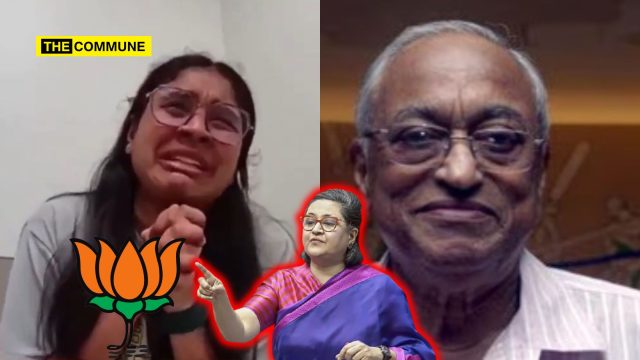
A few days ago, social media was abuzz with yet another case of a South Asian woman caught shoplifting in the US. Owing to her Indian subcontinent-like appearance, many assumed she was Indian and began targeting Gujaratis in particular, likely because the previous case had involved an accused woman reportedly from Gujarat. However, while some news outlets reported that the woman was Indian, there has been no official confirmation from the police, US authorities, or credible mainstream sources identifying her as Gujarati.
Rabeya sultana from Bangladesh was caught shoplifting in U.S.
Conglus made her Gujrati, Indian. pic.twitter.com/wOzYcexeqj
— Kalesh Adda😝 (@kaleshadda) November 4, 2025
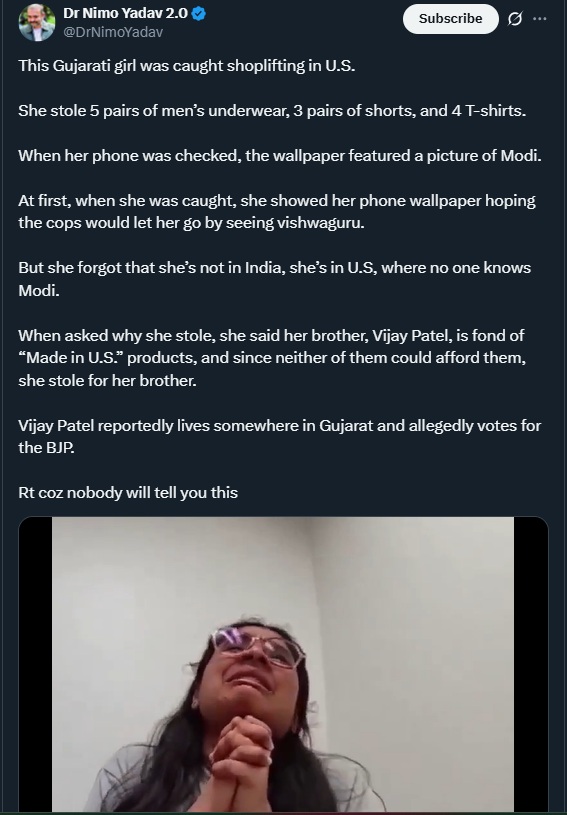
Congress supporters and leftists came down heavily with their comments. One even claimed the girl had PM Modi’s image on her phone’s screen.
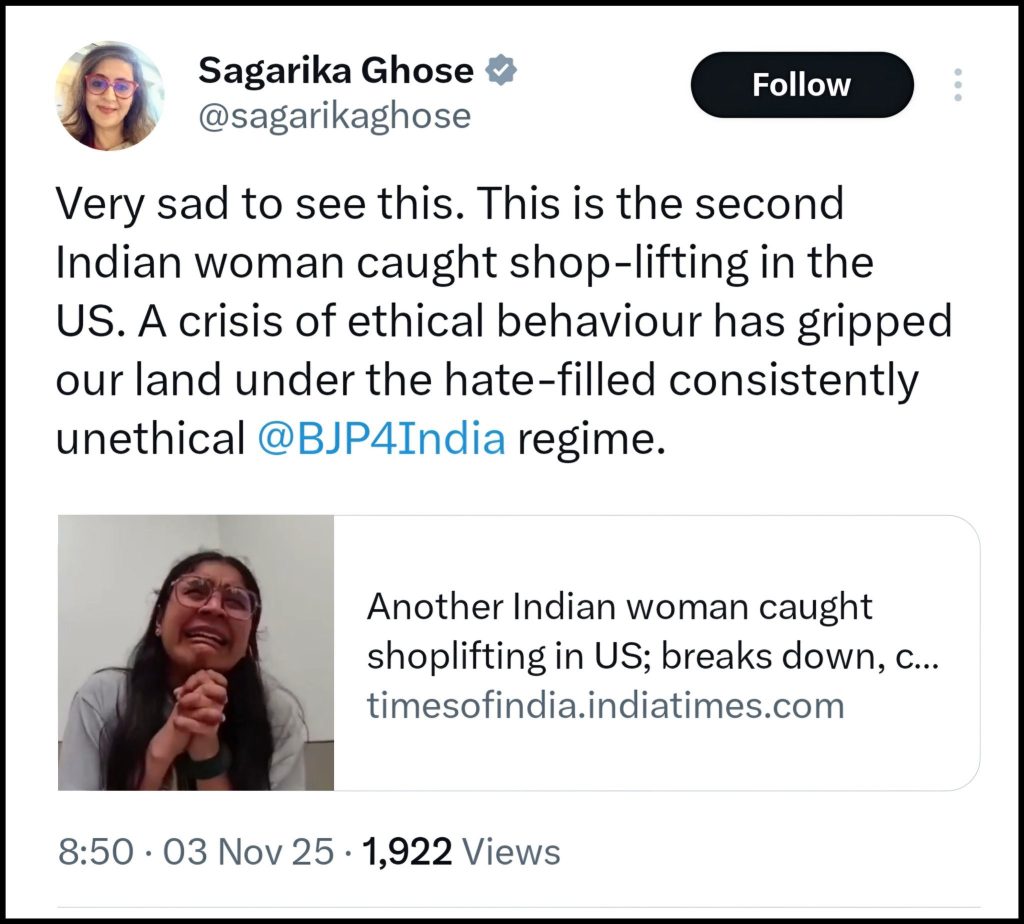
And not surprisingly, among those who badmouthed Indians was ‘journalist’ and TMC Rajya Sabha MP Sagarika Ghose. Ghose went on to connect everything under the sun with the BJP. She wrote, “Very sad to see this. This is the second Indian woman caught shoplifting in the US. A crisis of ethical behaviour has gripped our land under the hate-filled consistently unethical @BJP4India regime.”
It seems like she forgot to blame the BJP for her father-in-law’s arrest and subsequent judicial custody in 1993 for FERA violations of $6.89 million – since it was in the aftermath of the ‘sanghis’ and the BJP demolishing the Babri Masjid in 1992.
What Was The FERA Violation About?
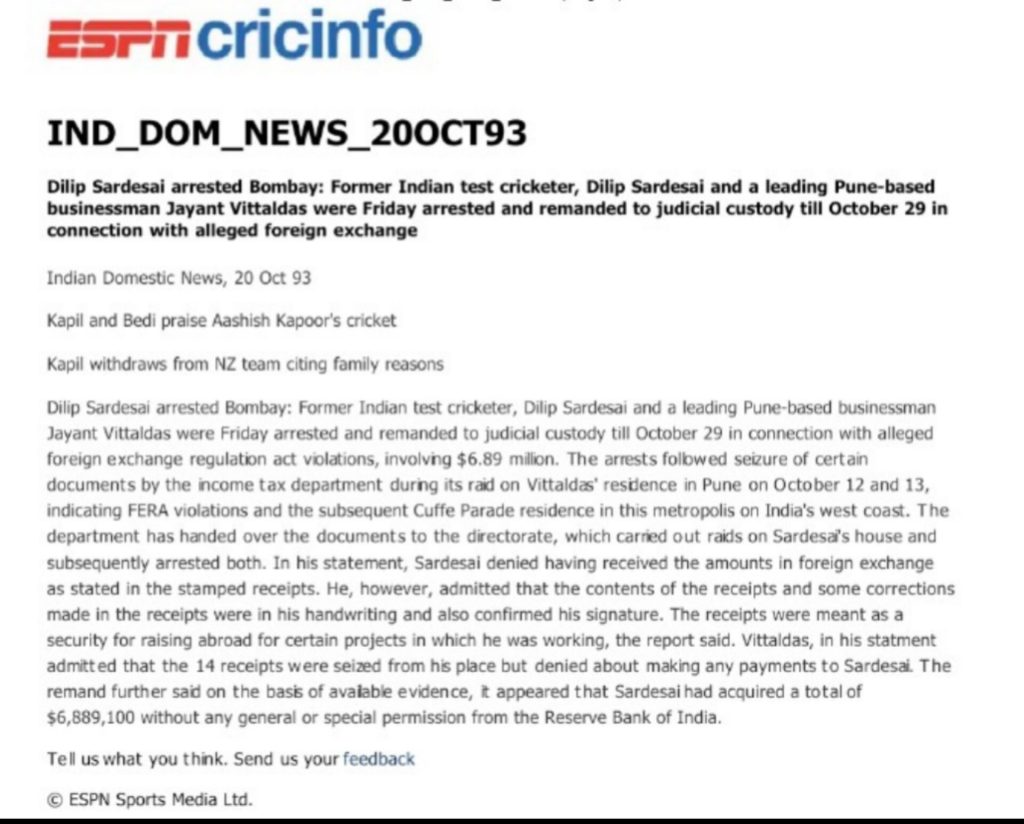
Former Indian Test cricketer Dilip Sardesai (who is Sagarika Ghose’s father-in-law and Rajdeep Sardesai’s father) and Pune businessman Jayant Vittaldas were arrested in Bombay and remanded to judicial custody till 29 October 1993, for alleged violations of the Foreign Exchange Regulation Act involving $6.89 million.
The arrests followed an income tax raid on Vittaldas’ Pune residence on October 12–13, during which documents suggesting FERA violations were seized and later handed to the Directorate of Enforcement. Subsequent raids on Sardesai’s Cuffe Parade residence led to their arrest.
Sardesai denied receiving any foreign exchange but admitted that the receipts, bearing his handwriting and signature, were issued as security for overseas fund-raising projects. Vittaldas acknowledged that 14 receipts were found at his residence but denied making payments to Sardesai.
Authorities stated that Sardesai had acquired $6,889,100 without Reserve Bank approval.
Sardesai was arrested but was eventually discharged from the case in 2001 after reportedly paying a penalty.
Subscribe to our channels on WhatsApp, Telegram, Instagram and YouTube to get the best stories of the day delivered to you personally.