For decades, India has been told that questioning any aspect of reservation is equivalent to questioning social justice itself.
Supporting reservation does not mean supporting a system that allows its benefits to be monopolised by the same families for generations. The real betrayal of social justice is not reforming reservation; it is refusing to acknowledge that the system has developed glaring inequities within the very communities it was meant to uplift.
The uncomfortable truth is this: affirmative action cannot become hereditary.
Reservation in India was built to break caste hierarchy, not to manufacture a new one. Seventy-five years on, that is exactly what parts of the system have become: a hereditary asset, passed down like property, from an IAS officer to his children, and then to theirs. It is time to say plainly what millions already know – the creamy layer must be excluded from SC/ST reservations, and the benefit itself must be capped at two generations.
Start with the obvious injustice. The child of say a district judge and the child of a landless agricultural labourer may share a caste certificate, but they do not share a starting line. One grows up with English-medium schooling, coaching institutes, and a home full of the very cultural capital that competitive exams reward. The other grows up without electricity some days. Treating both as equally “backward” for the purposes of a quota is not social justice. It is a bureaucratic fiction that lets privilege reproduce itself under the flag of equality.
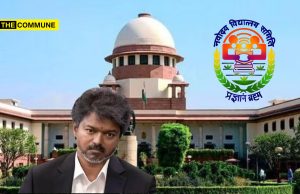
The Supreme Court itself has now said as much. The Court’s 2024 ruling calling for creamy layer exclusion within SC/ST reservations was not, as some critics howled, a dilution of the constitutional promise. It was a correction of six decades of drift – an admission that a policy built to lift the most oppressed had been quietly captured by those who no longer needed lifting. When a sitting judge on that bench states outright that an IAS officer’s child cannot be equated with a poor labourer’s child merely because they check the same caste box, that is not an attack on reservation. That is reservation being forced back to its original purpose.
The two-generation cap follows the same logic to its honest conclusion. If a family has already used reservation to produce a doctor, an engineer, a civil servant, has already broken through into the socio-economic mainstream – what exactly is the continuing justification for the grandchildren of that success to draw from the same well? None. The framers of the Constitution, Ambedkar included, envisioned reservation as a corrective mechanism with an exit ramp, not a permanent entitlement passed down like a family heirloom. A judge on the same bench went further still, suggesting the benefit should ideally stop at the first generation. That is not radical. That is reservation doing its job and then stepping aside so the next family in line can be uplifted too.
Here is the part the defenders of the status quo do not want said out loud: every seat cornered by a third-generation beneficiary who already has every material advantage is a seat stolen from a Dalit or Adivasi student still fighting poverty, illiteracy, and discrimination in their own village. The lifeboat was built to save the drowning. It cannot keep circling back for people who have already reached the shore, while others go under waiting their turn.
Predictably, any suggestion of reform gets met with the same tired accusation – that questioning who benefits from reservation is an attack on reservation itself. It is the opposite. Defending a system that lets the grandchildren of privilege monopolise quotas meant for the poorest is what actually undermines the policy’s legitimacy. It is what feeds the resentment that anti-reservation movements thrive on. If the goal is genuine social justice rather than a permanent political vote bank, then narrowing the beneficiary pool to those who are still actually backward is not betrayal, it is the only way to keep the policy honest.
None of this is an argument for scrapping reservation. It is an argument for making reservation work the way it was designed to: as a ladder for those still at the bottom, not a throne for those who have already climbed it. Income-based review, a hard generational limit, and the courage to say that some families have graduated out of need – these are not radical demands. They are the bare minimum required to stop a policy of justice from calcifying into a new caste of gatekeepers.
The choice before the country is simple. Either reservation continues to serve the most disadvantaged, or it continues to serve whoever got there first. It cannot do both. Seventy-five years in, it is long past time to choose.
Subscribe to our channels on WhatsApp, Telegram, Instagram and YouTube to get the best stories of the day delivered to you personally.