Just over a year after the deadly Pahalgam terror attack, Lalita Ramdas, widow of former Chief of Naval Staff Admiral L. Ramdas, is among 117 Indian and Pakistani signatories who have appealed to Prime Ministers Narendra Modi and Shehbaz Sharif to resume comprehensive bilateral dialogue, reopen discussions on Jammu and Kashmir, and take steps towards demilitarisation and de-escalation.
The joint open letter, dated 1 July 2026, was spearheaded by O.P. Shah, Chairman of the Centre for Peace and Progress. Addressed to the Prime Ministers of both countries, the signatories argued that dialogue remains the only viable path to resolving disputes and restoring stability in South Asia.
THE STAR CAST OF 61 INDIAN “CIVIL” SOCIETY THAT HAVE WRITTEN TO MODI-SHARIF DEMANDING AN END TO “OP SINDOOR”.
None of these people have any qualms about sharing space with separatists who don’t recognise the Indian Constitution or giving Pak a breather. None have written a… pic.twitter.com/t8QPYxzTfP— Rahul Shivshankar (@RShivshankar) July 1, 2026
The timing of the appeal has, however, drawn attention given India’s long-standing position that meaningful dialogue cannot coexist with cross-border terrorism. Since the Pahalgam attack, New Delhi has maintained that Pakistan must first take credible and verifiable action against terrorist infrastructure operating from its soil before any substantive engagement can be considered.
Lalita Ramdas Among Indian Signatories
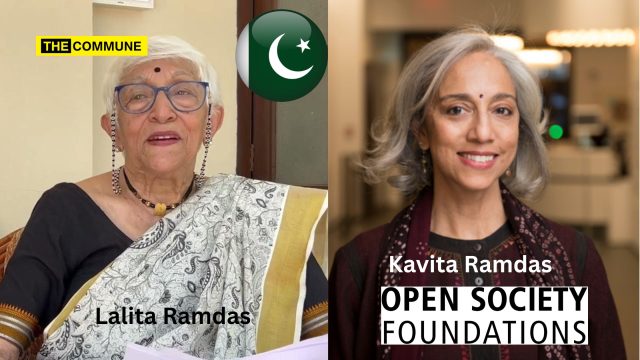
Among the Indian signatories is ‘peace’ activist Lalita Ramdas, widow of former Chief of Naval Staff Admiral L. Ramdas, who was a Magsaysay Award winner.
Following Admiral Ramdas’ retirement from the Indian Navy after serving as Chief of Naval Staff between 1990 and 1993, he and Lalita Ramdas became prominent advocates of India-Pakistan engagement and co-founded the Pakistan-India Peoples’ Forum for Peace and Democracy, a civil society platform promoting dialogue, regional cooperation and disarmament.
Admiral Ramdas later served as the internal Ombudsman of the Aam Aadmi Party until 2015.
Their daughter, Kavita Ramdas, is an international human rights and gender equity advocate who married Zulfiqar Ahmad, the nephew of noted Pakistani academic and anti-war intellectual Eqbal Ahmad, after the two met while studying in the United States in 1990.
View this post on Instagram
Kavita Ramdas later served as Director of the Women’s Rights Program at George Soros’ Open Society Foundations, where she oversaw a $100 million philanthropic commitment announced in support of the Generation Equality Forum in 2021.
Letter Calls For Kashmir Talks, Demilitarisation And Restoration Of Bilateral Ties
In their appeal, the 117 signatories urged the governments of India and Pakistan to reopen comprehensive bilateral dialogue covering all outstanding issues between the two countries. The letter specifically called for the resumption of discussions on Jammu and Kashmir, including revisiting the framework negotiated between 2004 and 2007, while advocating steps towards demilitarisation and de-escalation to create lasting peace in the region. It also urged both countries to address each other’s “legitimate security concerns,” as reported in The Hindu.
Beyond security issues, the signatories sought the restoration of full diplomatic relations, resumption of normal visa services, and greater people-to-people exchanges involving families, students, academics, journalists, artists, businesspersons and civil society groups. The letter further proposed reopening the Attari-Wagah land border for trade and travel, restarting the Srinagar-Muzaffarabad and Delhi-Lahore bus services, reopening the Kargil-Skardu route, and allowing commercial airlines to once again use each other’s airspace.
“This appeal is not an endorsement of any political position. It is a call to place the welfare, aspirations and future of nearly two billion people above conflict, confrontation, and division. We believe that peace, dialogue and cooperation offer the surest path towards a stable, prosperous and secure South Asia,” the letter stated.
Among the Indian signatories were National Conference president Dr. Farooq Abdullah, PDP chief Mehbooba Mufti, Hurriyat chairman Mirwaiz Umar Farooq, Congress leader Mani Shankar Aiyar, Rashtriya Janata Dal MP Prof. Manoj Jha, former RAW chief A.S. Dulat, CPI(M) leader Mohamad Yousuf Tarigami, human rights advocate Rita Manchanda and peace activist Lalita Ramdas. From Pakistan, the letter was signed by former Foreign Minister Khurshid Mahmud Kasuri, former diplomat Ashraf Jehangir Qazi, diplomat Shamsher Ahmed Khan and journalist Beena Sarwar, among others.
Supporting the appeal, Mirwaiz Umar Farooq said, “The people of J&K have suffered enough and deserve peace, closure, justice and a dignified resolution.” National Conference MLA Tanvir Sadiq also reiterated his party’s long-standing support for dialogue, stating that discussions should move forward while adding that Pakistan too bears responsibility.
Peace Without Accountability?
The timing of this appeal is difficult to ignore. Barely a year after the Pahalgam terror attack, which once again underscored the threat of Pakistan-sponsored terrorism, asking India to reopen dialogue, discuss Jammu and Kashmir, pursue demilitarisation and restore normal ties appears detached from the security realities India continues to face. For decades, New Delhi has repeatedly extended the hand of peace, only for it to be followed by terror attacks – from Parliament and Mumbai to Uri, Pulwama and now Pahalgam.
The pattern has shaped India’s consistent position that terrorism and dialogue cannot proceed in parallel. Any call for peace that does not unequivocally demand the dismantling of Pakistan’s terror infrastructure risks overlooking the principal obstacle to lasting normalcy. Peace is unquestionably desirable, but it cannot come at the cost of national security. The monent Pakistan demonstrates through sustained and verifiable action that it has abandoned terrorism as an instrument of state policy, India will automatically change its position – but will Pakistan mend its ways? Can these signatories vouch for that?
Subscribe to our channels on WhatsApp, Telegram, Instagram and YouTube to get the best stories of the day delivered to you personally.