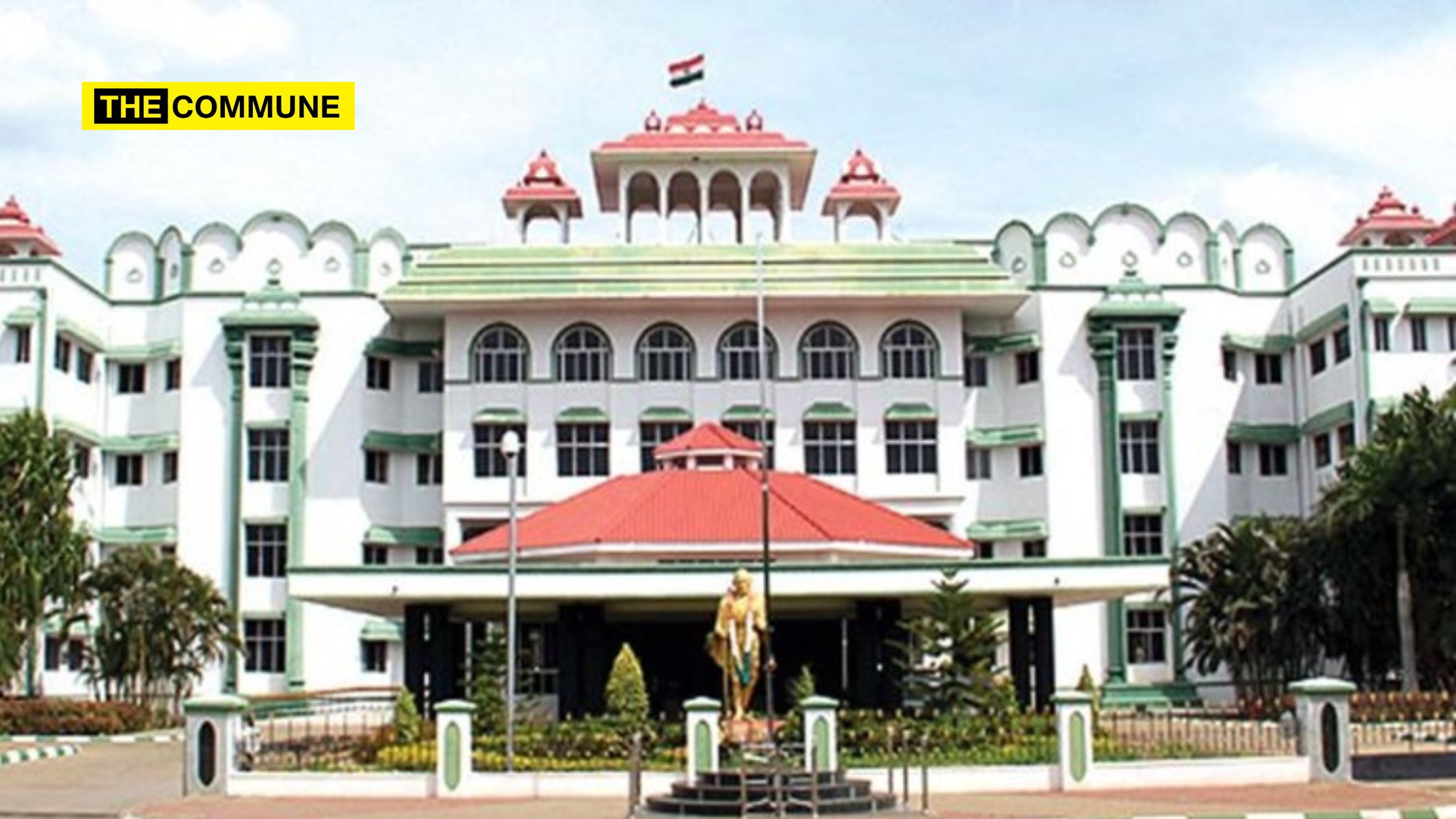
The Madras High Court has directed that women participating in cultural programmes held during temple festivals must not be portrayed in an “obscene or undignified manner” and has prescribed a dress code for performers while laying down an extensive set of conditions governing Aadal Paadal orchestra programmes across Tamil Nadu, as reported in Law Beat.
The directions were issued by Justice L. Victoria Gowri while allowing a petition filed by Pichai Raja seeking police permission to conduct an Aadal Paadal orchestra programme as part of the Sri Aathi Parameshwari Amman Temple festival at Mukkani village in Thoothukudi district.
While permitting the programme, the court relied on earlier circulars issued by the Director General of Police governing such cultural events and made the permission subject to more than two dozen conditions aimed at preserving the sanctity of temple festivals, maintaining public order and preventing obscenity, political messaging and communal disharmony.
Organisers Held Responsible For Conduct Of Programme
The court directed that the organisers, who are responsible members of the temple festival committee, must ensure that only cultural programmes relevant to the temple or the festival are staged.
It prohibited obscene dances, vulgar dialogues and performances that could be considered indecent. The court further directed that women participating in the programme should not be “depicted or portrayed in an obscene or undignified manner either in the form of clothing or otherwise.”
The court also held that the music played during the programme should be consistent with the sanctity of the temple premises and must not include double-meaning songs “so as to spoil the minds of students and youths.”
In addition, the programme must conclude by 10 p.m.
High Court Prescribes Dress Code For Performers
As part of the conditions, the court prescribed specific attire for performers participating in the event.
Male artistes have been directed to wear dhotis or pyjamas with an upper cloth, while female artistes must wear sarees, half-sarees or chudithars with an upper cloth.
Children participating in the programme have been directed to wear fully covered dresses.
The court further stipulated that the attire of dancers should be modest and “should not involve exposure of the midriff, thighs, legs or chest.”
It warned that any violation of this condition would invite legal action, including the arrest of the organisers as well as all members of the temple festival committee.
Political And Communal Content Prohibited
The High Court imposed strict restrictions on political and communal content during temple festival programmes.
It prohibited any song or dance exhibiting a political tone, tenor or colour or promoting any religion, caste or community.
The court also barred slogans or speeches supporting or opposing any political party or political leader. Political symbols, banners and flex boards have also been prohibited at the venue.
Songs praising communal leaders or carrying communal overtones have likewise been disallowed.
Additionally, the court prohibited donations or prizes being distributed in the name of political parties during the event.
Alcohol Banned, Organisers Directed To Maintain Public Order
The court directed that no alcohol or any other intoxicating substance should be supplied to participants or members of the audience in and around the venue.
It further directed that the programme should not disturb caste, religious or communal harmony and must be conducted without any form of discrimination.
The organisers have also been directed to videograph the entire programme, obtain all statutory permissions from the competent authorities and bear the police bandobust charges.
The court authorised the police to stop the programme if it continued beyond the permitted time or if any of the conditions imposed by the court were violated.
Holding the organisers accountable for maintaining law and order, the court observed that they would be responsible for any untoward incident occurring during the programme.
It further clarified that in the event of any violation of the imposed conditions, the authorities would be free to initiate action in accordance with law. The police have also been given the liberty to impose additional conditions depending on the ground situation.
Part Of A Series Of Similar Orders
The present order is consistent with a series of directions issued by the Madras High Court over the years while granting permission for cultural programmes conducted in connection with temple festivals across Tamil Nadu.
Such permission orders have routinely included conditions relating to obscenity, maintenance of public order, political neutrality and communal harmony.
Earlier this year, the Madras High Court had also directed the Hindu Religious and Charitable Endowments (HR&CE) Department to ensure that caste names are not printed in temple festival invitations, particularly alongside the names of donors.
Subscribe to our channels on WhatsApp, Telegram, Instagram and YouTube to get the best stories of the day delivered to you personally.