More than a month after the Tamil Nadu Assembly election results brought an end to the DMK’s tenure in power, party leaders, functionaries and strategists are continuing to assess the reasons behind the party’s unexpected defeat at the hands of the Tamilaga Vettri Kazhagam (TVK).
According to interviews conducted by The New Indian Express with over 40 party functionaries, strategists and leaders, the setback was caused by a combination of internal power struggles, conflicting campaign strategies, inadequate feedback mechanisms, failure to address anti-incumbency sentiments and governance-related concerns.
Days before the June 3 celebrations marking the 103rd birth anniversary of former Chief Minister M. Karunanidhi, party headquarters Anna Arivalayam reportedly lacked the activity that had characterised previous years when the party was in power. Party workers who had gathered from different districts were said to be discussing the election outcome and attempting to understand how the party lost power to a relatively new political formation.
While senior leaders publicly attributed the defeat in part to social media influence and the popularity of actor-turned-politician and Chief Minister Vijay, party insiders told TNIE that the reasons extended far beyond those factors.
Multiple Strategy Teams Created Confusion
According to party sources, the DMK entered the election with at least five separate strategy teams functioning simultaneously.
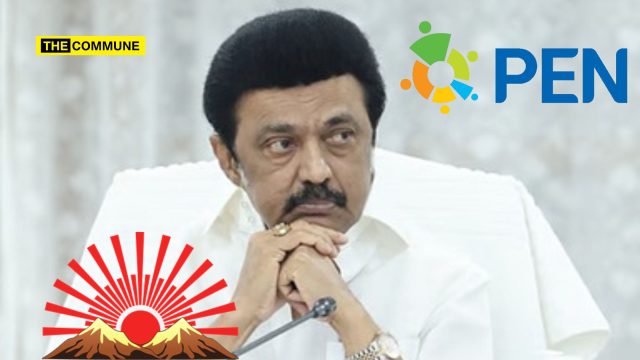
Among them were the Populus Empowerment Network (PEN), which worked closely with both the party and the then Chief Minister; separate teams handling the political image and strategy of Deputy Chief Minister Udhayanidhi Stalin; a consultancy engaged by Kanimozhi Karunanidhi for public outreach and social media management; political consulting firm IPAC; and political strategist Robbin Sharma’s Showtime Consulting.
An IPAC functionary told TNIE that disagreements frequently emerged between strategy teams, with proposals from one group often being rejected by another. Though IPAC was expected to formulate strategy and PEN was responsible for implementation, district-level leaders reportedly received conflicting instructions from different centres of authority.
District secretaries from various regions complained that multiple command structures created confusion and hampered constituency-level campaign efforts.
A PEN analyst told TNIE that shortly after the 2024 Lok Sabha elections, the organisation had warned the party leadership that its anti-BJP campaign framework centred on a “Delhi versus Tamil Nadu” narrative was losing effectiveness among voters. The analyst said the warning was not adequately acted upon because too many competing voices were involved in decision-making.
According to PEN sources, the emergence of Vijay as a state-level political challenger had significantly altered the political landscape, reducing the effectiveness of previously successful campaign narratives.
Sources also claimed that some strategists had advised the party to engage politically with TVK and Vijay during the campaign. However, that advice was allegedly not followed.
Several district-level leaders further alleged that PEN’s functioning kept even senior party leaders inadequately informed about ground realities and local voter sentiment.
Anti-Incumbency Not Properly Addressed
Party functionaries told TNIE that excessive reliance on consultants and centralised decision-making distanced the leadership from grassroots realities.
A second-rung leader stated that earlier election campaigns had been built around direct public engagement through local meetings and constituency-specific interventions. Traditionally, party leaders would identify emerging dissatisfaction and attempt to resolve local grievances months before elections.
The leader cited examples from previous elections where infrastructure problems such as damaged roads would be addressed before polling, helping reduce voter dissatisfaction. According to the leader, similar efforts were largely absent this time.
Several leaders also suggested that the party became reluctant to respond to criticism from opposition parties and civil society groups, allowing public grievances to accumulate without adequate response.
Former members of the party’s IT wing reportedly acknowledged that social media supporters associated with the party often adopted an aggressive and confrontational tone online. According to one former functionary, such behaviour alienated potential supporters rather than attracting them.
The impact of these failures was reportedly most visible in Chennai and surrounding districts, where the party suffered major electoral losses.
A DMK youth wing functionary told TNIE that concerns about the situation in Chennai emerged only during the final stages of campaigning, prompting senior leaders to redirect attention to the capital region shortly before polling.
Sources familiar with internal discussions also claimed that the party had considered shifting the constituencies from which Stalin and Udhayanidhi Stalin would contest. However, after the issue became part of TVK’s campaign narrative, strategists reportedly advised the leadership to retain the original constituencies.
The DMK eventually lost 14 of Chennai’s 16 Assembly seats, with only Udhayanidhi Stalin and Sekar Babu retaining their constituencies.
Regional Power Centres Influenced Candidate Selection
Several party leaders argued that powerful regional figures and district secretaries exercised considerable influence over both campaign strategy and candidate selection.
One strategist cited the handling of protests by sanitary workers in Chennai as an example of local leaders underestimating public dissatisfaction.
A second-rung leader from southern Tamil Nadu told TNIE that district secretaries often possessed enough influence to override or reshape decisions preferred by the party high command.
The Egmore constituency was cited as an example. Sources claimed that while the leadership preferred one candidate, district-level leadership succeeded in securing the nomination for another.
According to a source familiar with internal discussions, Stalin himself allegedly expressed concern that some district secretaries could undermine candidates they did not support.
The influence of regional leaders reportedly contributed to dissatisfaction among party workers and was also blamed for limiting opportunities for new entrants. Some party functionaries argued that the party continued to rely heavily on politically connected families despite facing criticism over nepotism.
Governance Issues Added to Public Discontent
Senior bureaucratic sources told TNIE that corruption and governance concerns played a major role in shaping public opinion.
One senior IAS officer stated that voters were less concerned about issues such as marginal increases in liquor prices and more concerned about corruption in government offices and allegations involving ministers.
The officer alleged that while top leaders were prepared to take corrective action in some cases, influential second-rung leaders often prevented meaningful intervention.
The same official also claimed that several welfare and infrastructure initiatives faced delays because of resistance from senior ministers and entrenched interests within the administration.
Questions Over Future Course Correction
The DMK returned to power in 2021 after spending a decade in opposition. While party leaders have noted that the 2026 defeat was not as severe as the party’s historic loss in 1991, many within the organisation believe the emergence of TVK has fundamentally altered Tamil Nadu’s political landscape.
Party members are now awaiting the findings of an internal committee report scheduled to be submitted on June 10. The report is expected to examine the causes of the electoral defeat and recommend corrective measures.
According to party insiders, the effectiveness of that review process may determine whether the DMK emerges from defeat as a rejuvenated opposition force or continues to struggle with internal divisions and organisational challenges.
Subscribe to our channels on WhatsApp, Telegram, Instagram and YouTube to get the best stories of the day delivered to you personally.