Home Blog Page 955

Dravidian Model: After Hiking Property Tax, Electricity Tariff, Water Tax, DMK Govt Increases Professional Tax By 35%

In April 2022, the DMK government in Tamil Nadu announced a property tax hike ranging from 25% to 150% across various corporations, municipalities, and panchayats. In Chennai, houses under 600 sq ft saw a 50% increase, those between 600-1200 sq ft saw a 75% rise, and houses between 1,201-1,800 sq ft experienced a 100% increase. Properties over 1,801 sq ft faced a 150% hike.

In April 2023, Chennai Metrowater increased water and sewerage charges by 5% for residential and 10% for commercial consumers to address revenue-expenditure gaps. Residential charges rose from ₹80 to ₹84 per month, and commercial from ₹250 to ₹263. Metered connections started at ₹42 (up to 10 kl) from ₹40. Mobile water tanker fees also increased, with a 6-kl load costing ₹499, up from ₹475.

In July 2024, TANGEDCO increased the electricity tariff by 4.83% for all consumers in the state. Being a bi-monthly billing, this further burdens the end user.

People of the state have been burdened by the tax increases ever since the DMK government came to power. To add more salt to injury, the Chennai corporation passed a resolution to increase professional tax by 35%. This resolution was passed during the monthly council meeting of the Chennai Corporation, chaired by Mayor Priya on 30 July 2024.

During the session, over 30 resolutions were approved, including notable decisions such as raising the fine for stray cows on roads from ₹5,000 to ₹10,000.

According to the Tamil Nadu Urban Local Bodies Act, 1998 Section 1/7 A-1 and the Tamil Nadu Urban Local Bodies Rules 2023 Sections 274-288, professional tax rates can be revised every five years, with an increase ranging from 25% to 35%. The last increase in Chennai was in 2018. The new resolution implements a 35% increase from the existing tabular amount.

The revised tax structure exempts individuals with a monthly income below ₹21,000 from any increase. For those earning between ₹21,000 and ₹30,000, the tax will rise from ₹135 to ₹180. Individuals with an income between ₹30,000 and ₹45,000 will see an increase from ₹315 to ₹430. Those earning between ₹45,000 and ₹60,000 will experience a rise from ₹690 to ₹930. This tax is payable every six months.

Additionally, the council passed a resolution proposing to the government the uniform implementation of professional tax rates across Tamil Nadu based on the corporation’s recommendations regarding the revision.

Netizens were enraged by this move and pointed out that it was the Dravidian Model, which always hiked tax rates and tariffs for its residents, and that it was better to do business elsewhere in the country.

Subscribe to our channels on TelegramWhatsApp, and Instagram and get the best stories of the day delivered to you personally.

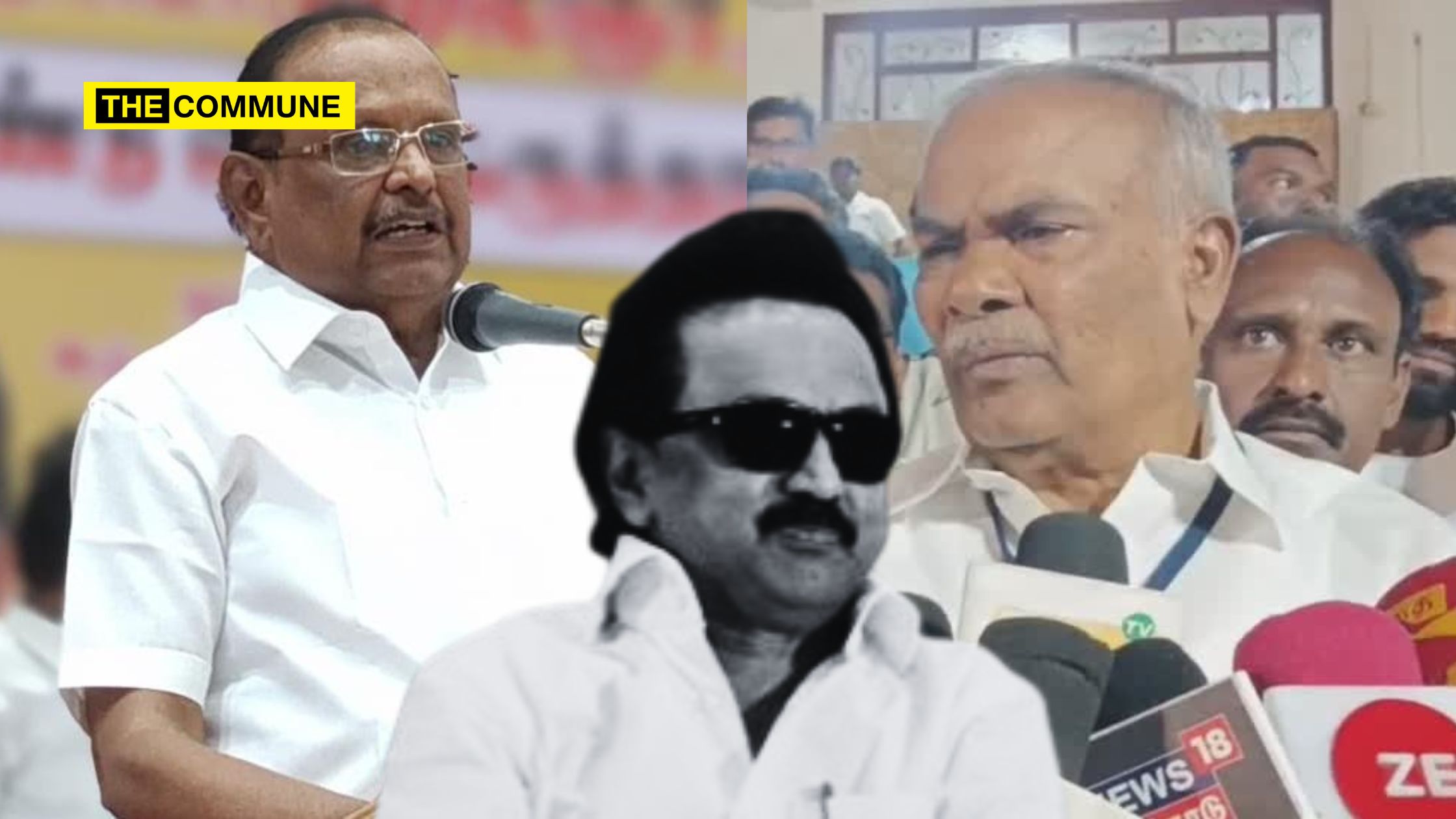
“Murders Keep Happening, Govt Can’t Do Anything”: DMK Law Minister & Speaker’s Dismissive Remarks On Rising Crime In TN Receive Netizen Backlash

The DMK government in Tamil Nadu is grappling with persistent issues, as the opposition parties accuse it of failing to maintain law and order in the state. There has been a noticeable rise in political, caste, and revenge-related violence, alongside widespread drug abuse. When news reporters inquired about the state of law and order, citing the opposition’s concerns, the sitting DMK ministers and the Speaker of the State Assembly dismissed the situation as a minor issue not warranting significant state intervention. This response has led to widespread criticism and mockery from netizens, who are frustrated with the ministers’ indifference and neglect.

On 29 July 2024, traders and the Nadar Sangam organized a welfare event at a private wedding hall in Thiruverkadu to celebrate Kamaraj’s birthday. Tamil Nadu Legislative Assembly Speaker Appavu attended as a special guest, where he distributed welfare aid to 1,122 beneficiaries and handed out textbooks to school students.

During a media interaction at the event, Speaker Appavu commented, “Murder crimes will continue to happen. We need to see whether actions are being taken. For any crime happening in Tamil Nadu, the necessary actions are being taken. You should ask if there is no action regarding these crimes.”

Similarly, Law Minister of Tamil Nadu Raghupathi gave a press meeting responding to AIADMK General Secretary Edappadi Palaniswami’s allegations concerning law and order, stating that the murders occurring in Tamil Nadu are largely driven by revenge. Still, aside from these, there have been no significant incidents of violence. Even the violent incidents in Puducherry are being incorrectly attributed to Tamil Nadu.

DMK Minister Raghupathi asserted that Law and order in Tamil Nadu remains strong. The state is considered a beacon of peace in India. Minister Raghupathi emphasized that the government is actively working to address new criminal activities.

He stated, “The previous incidents were associated with the (EPS) regime, but there have been no recent acts of violence linked to the current administration.” He further explained, “Edappadi Palaniswami has mentioned five incidents in Tamil Nadu on the 26th, 27th, and 28th. However, one of these incidents took place in Puducherry, which Palaniswami incorrectly attributed to Tamil Nadu. The remaining four violent cases are unrelated to the government and are rooted in personal disputes or acts of revenge. Therefore, there is no overall breakdown in law and order in the state.”

The DMK Minister also noted that the increase in population might have contributed to a perceived rise in crime rates, but this should not be seen as the government’s responsibility.

While acts of revenge do occur, the government is making considerable efforts to prevent them and manage recidivism. New criminals are emerging, and the government is continuously working to address this challenge. We are prepared to enhance security if political leaders report specific threats, though no such threats have been reported thus far.

Netizens began trolling the ministers’ response, arguing that instead of taking decisive action to control violent mobs, the ministers are dismissing the government’s responsibility for the violence in Tamil Nadu. Some of the criticisms expressed are as follows:


https://twitter.com/thalapathii_/status/1817776805895684218

Subscribe to our channels on TelegramWhatsApp, and Instagram and get the best stories of the day delivered to you personally.
Controversial Tamil YouTuber ‘Biriyani Man’ Arrested After Suicide Attempt Livestream

A Tamil YouTuber named Biriyani Man, aka Abbishek Rabi, has been in the news for the past few days. Recently, he also tried to livestream his suicide attempt on his YouTube channel. He was arrested on 30 July 2024 by the Chennai Cyber Crime Police. He faces charges under four sections of the Violence Against Women Act and for the misuse of technology.

On 29 July 2024, Rabi live-streamed a three-hour video on YouTube, claiming he intended to commit suicide. For the past week, there have been allegations that he made obscene remarks about food reviewer Irfan.

Irfan was in the news recently for posting a video on his unborn child’s gender reveal event. The TN government sent him a legal notice for posting the video. However, Irfan is known to have shared content on his channel, where he posted visuals with DMK’s Udayanidhi Stalin and Kanimozhi.

Rabi gained notoriety by targeting well-known YouTubers to gain attention, leading to clashes among their supporters. He allegedly defamed popular YouTuber Irfan, who was involved in a controversial car accident last year that resulted in an elderly woman’s death. Reportedly, Irfan was not driving then. However, Biriyani Man blistered him over this accident.

Biryani Man also targeted Tailor Akka, a YouTuber who posts tailoring videos. He posted an obscene video mocking her work and made disparaging comments about women and Semmozhi Park. These actions attracted significant backlash against him.

After his distressing livestream, where he blamed someone named Jason for his alleged suicide attempt, netizens contacted his mother, who intervened and saved him. Following this event, a woman filed a complaint, leading to his arrest. He is now in custody, facing charges related to violence against women and misuse of technology.

Biriyani Man has regularly posted problematic content for views and engagement on his channel.

Hinduphobic content

In a video where he talks about Thiruvalluvar wearing saffron robes, he says, “They recently did something. They made Thiruvalluvar wear saffron robes and called him ‘Santana Dharma’s icon'” – here, he mocks the phrase Sanatana Dharma and says, “I am finding it so difficult to pronounce it.”

This video is just one example of the many Hinduphobic remarks he made.

Christians

He cracks a “joke” on Christians and says, “What are two Christians having sex called? Christian Missionary, and does some weird dance.

Speaking against RN Ravi & Supporting DMK

Rabi says, “TN Governor RN Ravi’s ideology and actions are completely against Dravidianism.” He then shares a TOI report from February 2022 about Gov Ravi returning TN’s anti-NEET bill. Rabi then says, “The TN Governor supports NEET. He has been holding this stand because he favours the BJP. It is a shame if you do not know what the BJP did in the North, especially in Gujarat.”

In all his videos, Biriyani Man attacks Irfan, a “mukbanger”, meaning a food blogger who eats on camera. He states that Guv Ravi supports the BJP and that BJP is a problematic party. The YouTuber also condemns Irfan for being associated with and milking BJP members and those supporting the party for his benefit. He then asks if Irfan was not embarrassed for visiting the Governor for tea because, according to BM, in the BJP-ruled states, Muslims are “slaughtered”.

https://twitter.com/SaffronTweetz/status/1817832220368777483

Subscribe to our TelegramWhatsApp, and Instagram channels and get the best stories of the day delivered to you personally.
Madras HC Grants Temporary Injunction To TN BJP Leader Ashvathaman, Halts Further Arrest In Bomb Blast Victim Memorial Day Speech Case

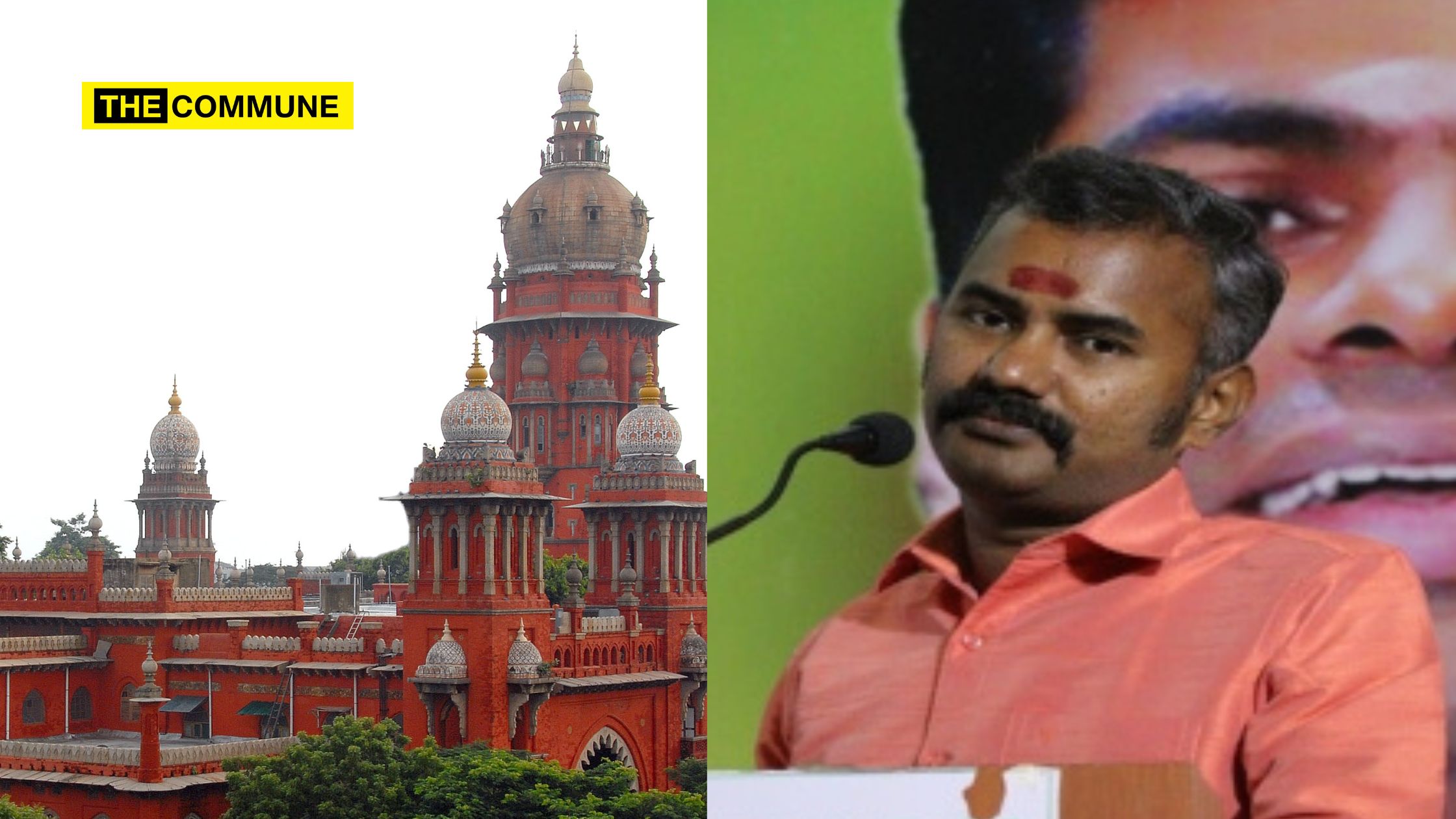
The Madras High Court has issued a temporary injunction preventing the arrest of A. Ashvathaman, the Tamil Nadu BJP State Secretary. He sought anticipatory bail on the case initiated by Nagore police on 23 July 2024.

The case was initiated by the Nagore VAO against Ashvathaman on the grounds of public disturbance and inciting religious hatred. This action follows Ashvathaman’s involvement in a memorial event for Thangammal, the wife of Hindu activist T. Muthukrishnan, who was killed in a parcel bomb blast on 3 July 1995 in what was then the Nagai Qaid-e-Milleth district. The event was held on 7 July 2024.

In this regard, Ashvathaman submitted a petition to the High Court requesting anticipatory bail. Justice T.V. Tamilselvi heard the case on 29 July 2024. During the proceedings, the police argued that Ashvathaman, the BJP State Secretary, had been making inflammatory speeches, and thus, anticipatory bail should not be granted. They requested additional time to provide a detailed response. Following this, the judge postponed the hearing to 1 August 2024 and issued a temporary injunction preventing Ashvathaman’s arrest until then.

Background

A 1995 report from India Today and a Rajya Sabha debate highlighted Tamil Nadu’s declining reputation due to a series of violent incidents. The latest tragedy involved a parcel bomb that killed Thangammal, who was opening a Ramayana book when the bomb exploded. The attack, aimed at her husband, T. Muthukrishnan, a leader of the Hindu Munnani organization, resulted in her death and injuries to her daughters. The blast was part of a disturbing trend of violence in the region, including previous attacks involving RSS and Munnani offices and other bombings.

Every year, a memorial event is held to honour Thangammal’s death, but recently, the DMK government has obstructed these gatherings. Last year, the authorities arrested several attendees and barred them from participating. This year, despite initially denying permission, the BJP secured approval through legal channels. However, as anticipated, the DMK police filed an urgent FIR at 8:00 PM on 23 July 2024 against those who spoke at the event held on 7 July 2024.

The FIR noted: “I (Deva Kumar) am working as the Village Administrative Officer in Nagapattinam District, including Nagore, I report that on July 7, 2024, a public meeting was held to commemorate the 29th anniversary of Thangammal, the wife of Tanga Muthu Krishnan, on Nagore Main Road, near Kamakshi Amman Templeon that day from 17.10 pm to 20.44 pm on the said public meeting platform. 1. Thanga Muthukrishna – Activist from Nagore, 2. Bala – State General Secretary, Hindu Makkal Katchi Anuman Sena 3. Vijay Krishna – State Spokesperson, Shiv Sena, 4. Kannadasan – Lawyer, 5.Subramaniyan M. R. – Member, Cauvery Farmers Association, 6. Prabhu R. D. – State President, Hindu Munanni 7. Rajaguru – State President, Hindu Athiradipadai, 8. Ashvathaman – State Secretary, Bharatiya Janata Party (BJP) 9. Selvam V. K – Organization Secretary, Hindu Makkal Katchi. During the meeting, these individuals reportedly referred to Muslims as terrorists, labelled the Muslim religion as divisive, and made statements that disturbed public peace, offended religious sentiments, and incited hatred between Hindus and Muslims. Their remarks also included criticism of alleged dereliction of duty. Therefore, I request that appropriate legal action be taken against those who spoke in a manner that fosters religious animosity.

The plaintiff’s complaint was registered under sections 196, 299, 353(1), 353(2), and 352 of the Bharatiya Nyaya Sanhita (BNS), 2023, on 23 July 2024, following receipt of the petition.

Regarding this matter, Hindu organizations, including those led by Thanga Muthukrishnan, stated that the police report identified the bomb parcel in Thangammal’s murder as being sent by Muslim terrorists. They argued that mentioning Abu Bakr Siddique, a suspect in the case, as a Muslim extremist and discussing this on public platforms was aligned with the police’s findings. Ashwathaman also reiterated these points. The police have labelled such statements as violating religious sentiments.

Subscribe to our channels on TelegramWhatsApp, and Instagram and get the best stories of the day delivered to you personally.
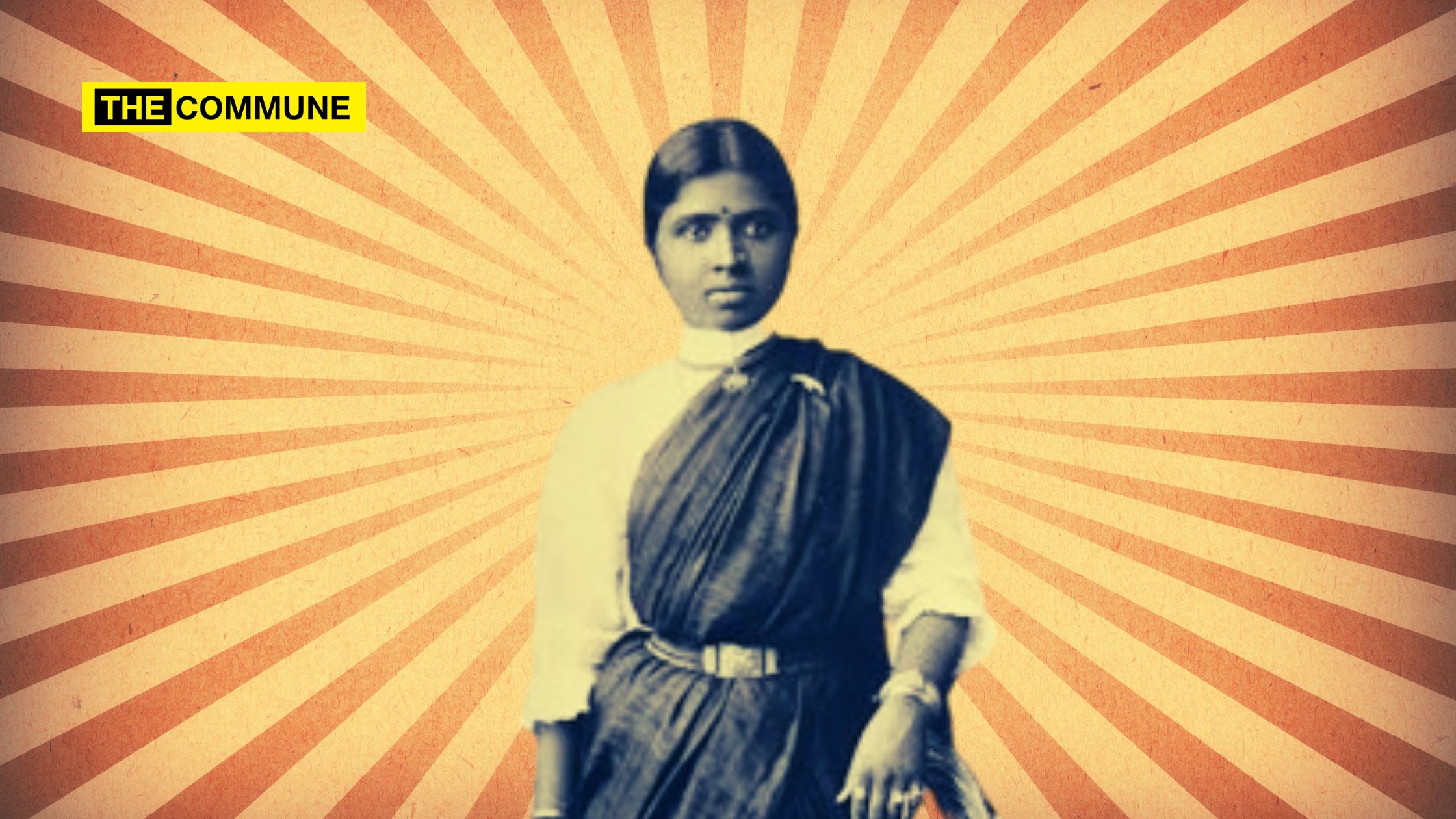
Dr. Muthulakshmi Reddy: Reclaiming Her True Legacy As A Pioneering Indian Reformer From Dravidian Misrepresentation

In contemporary Bharat, there are 4 categories of people.

  1. There are great people.
  2. There are great people whom we cannot talk about.
  3. There are great people we can talk about.
  4. There are great people whose greatness we cannot talk about without ascribing it to a nonexistent mentor or ideology.

Dr. Muthulakshmi Reddy belongs to category 4.

You cannot speak about her without invoking the imaginary Brahmin hegemony and, more importantly, without invoking the nonexistent greatness of a ‘little’ man. In this piece, let us take a quick look at Dr. Muthulakshmi Reddy’s greatness. Why does she need to be celebrated? We will also examine how she has traditionally been presented to us and how this utterly false narrative has been carefully built over the Dravidian basement.

Dr Reddy was born to Sri. S. Narayanaswami Iyer and Smt. Chandrammal on 30 July 1886, in the princely state of Pudukkottai. Sri. Narayanaswami Iyer was the Principal of Maharaja’s College in Pudukottai. He was keen on educating all his four children. As was the practice then, she went to a Pial school (1), which was the norm. She then progressed to a boy’s school where she learned the English alphabet thanks to the teachers who saw the potential in this little girl. It took till she cleared her First Form for her father to realise her potential. In a subsequent rollercoaster of a learning ride, Muthulakshmi was taken off school by her mother, put back in school because one of her teachers pleaded with her mother, again pulled off school when she was 13, homeschooled by her father and passed her matriculation in 1902. That year, out of the 100 students who appeared to matriculate from schools and privately, only ten cleared the exam. While Muthulakshmi wanted to go to Trichy or Palayamkottai for college, her father applied for a seat at the local men’s college. After a long, protracted struggle and an intervention by the ruler of Pudukottai, she was finally given admission to the pre-university course. It is important to note that, Sri. S. Sathyamurthi, who famously appears in an episode involving Dr Muthulakshmi Reddy (cooked up by vested interests), was her classmate at the pre-university level.

In 1907, she came to Chennai to join the Madras Medical College. Initially, the college offered her the L. M&S or the Licentiate, not the degree course. Not one to be cowed down by impediments, the young Muthulakshmi fought her way to the degree course and passed the MB & CM degree with many medals and accolades as the number one in her batch. Those days, a senior professor and surgeon in the Obstetrics department, Col. Giffard2, wouldn’t let women sit in his lectures. He would have an assistant professor lecture the women instead. When the prize and medal exams were thrown open to the women, Col. Giffard was so impressed with Muthulakshmi’s knowledge that he allowed women to sit in his classes. Dr Reddy finished her MB & CM course with flying colours, scoring 100% in her final year surgery course.

During her medical college days, she became acquainted with the freedom movement and its stalwarts. She became a favourite of Mahakavi Bharatiyar, who asked her to contribute articles for the ‘India’ magazine and invited her to speak at his home meetings. Young Muthulakshmi also got to know Smt. Sarojini Naidu, Dr Annie Besant, and many other leaders of the freedom movement.

Dr. Reddy was much ahead of her time. When Dr T Sundara Reddy, a medical doctor educated in England, asked for her hand, she famously told him, “Promise me that you would always respect me as an equal and never cross my wishes.” After being engaged for a year, Dr Muthulakshmi Reddy and Dr T Sundara Reddy married in April 1914. The couple had two sons, Rammohan and Krishnamurthy.

In 1925, she went to London on a Government of India scholarship for her post-graduate studies. Dr. Muthulakshmi Reddy was keen to study and specialise in cancer treatment. After losing her younger sister Sundarambal (25) to rectal cancer, she resolved to find a remedy for this human scourge.

There are umpteen things to discuss when discussing Dr Muthulakshmi Reddy’s greatness. The most famous episode is her moving the legislation to abolish the Devadasi service in the temples and prevent girls from being dedicated to temples. There are two versions here: what Dr Reddy says in her autobiography and while chronicling her legislative years. And two, the carefully cultivated Dravidian falsehood3 is built on a speech by someone quoting someone else and then someone else writing a book about this someone else and quoting what was quoted in the speech.

Falsehood 1: E V Ramaswamy mentored and inspired Dr Muthulakshmi Reddy to move the bill for abolishing the Devadasi system.

Dr Reddy moved this bill in 1926, when E V Ramaswamy, having resigned from Congress, was between jobs. EVR was probably busy contemplating his visit to various nations worldwide on a learning tour (1929-32). Most of us also know about his visit to Germany as part of this tour and his learning expedition to ‘certain’ beaches. On a serious note, no documentary evidence draws a remote connection between EVR and this bill.

Falsehood 2: When Dr Reddy moved this bill in the legislature, many prominent Brahmin members, including S Satyamurthi, vehemently opposed it. Dr Reddy is supposed to have retorted sharply saying, “Don’t you have sisters? Don’t you have any womenfolk in your family? Don’t you have wives? Will you send any of them to this profession?” It is said that there was a stunned silence in the legislature and this argument clinched the bill in Dr Reddy’s favour.

Satyamurthi indeed opposed certain sections of the bill. In 1929, during a discussion about certain amendments to the bill, Satyamurthi spoke about why he opposed it. He pointed to how the word ‘Devadasi’ had been defined in the bill. He feared it might include any other unmarried woman worker in the temple, like a sweeper, and hinder the service they are rendering to the temple. Therefore, he asked for this definition to be dropped in favour of a definition everyone was aware of. Apart from this one, we don’t have any other speeches Satyamurthi made on the house floor or outside. More importantly, we don’t have any other reference to S Satyamurthi except one positive reference where Dr Reddy talks about how he and Rajaji wanted her to contest the elections for the legislative in 1937 on a Congress ticket. Later, she is very critical about how Rajaji went back on his word by not allotting a seat to her.

There is no mention of S Satyamurthi except that he was one of the two people who wanted her to contest the elections on a Congress ticket. There is also another place where she says that Rajaji proved to be an opponent of social reforms in our society, but not one word about S Satyamurti (I am sure Dr Reddy would have if she indeed had to). The bill was finally passed as Madras Act XXXI of 1947, making the dedication of women to temples illegal. This was four years after S Sathyamurthi passed away.

In summary, no document worth its salt mentions Satyamurthi saying what the Dravidian ideologues say he did. And there is also no evidence that Dr Reddy retorted the way she was supposed to have.

Three things are clear:

  1. S Satyamurthi was not part of the house when the bill was first moved.
  2. S Satyamurthi spoke once during the long period this bill was under discussion. That, too, was an intervention opposing a specific amendment that was moved.
  3. S Satyamurthi had passed away when the legislature finally passed this bill.

So, the Dravidian trope about Dr Reddy being EVR’s student, that she had his blessing for the bill, and that she and S Sathyamurthi had a heated exchange on the floor of the legislature is nothing but a hoax, a white lie.

Whatever the Dravidian falsehoods, Dr Reddy always held the culture and history of Bharat in high esteem. In July 1936, speaking at the International Conference of Women in Paris, where women from 42 countries participated, she said that she came from a land that celebrates women’s power as Sakthi and has gods depicted as Ardhanareeshwara. According to her, these examples show the influence of women in Indian society.

In Paris, discussing the then-state of the Devadasi system, she said, “Foreigners seem to be under the wrong impression that it is an institution sanctioned by the Hindu religion. The old religious idea was one of service. That is, girls were given away to temples by all communities for pure religious service.”

While talking about her stay in Madras as a medical college student, she talks about fellow students staying at the YWCA in Poonamallee Road, “They would invite me to their rooms and lecture me about the advantages of Christianity and would persuade me to become a convert. But I was more than equal to them. “

In another instance in delivering her address to the International Congress for Women, she said that practices like Child Marriage and the Purdah system (women covering themselves with veils) are outcomes of the turbulent and warlike period in the past to protect them from the hands of invaders.

While we have taken much of this piece to burst the Dravidian white lie that Dr. Muthulakshmi Reddy is a follower of EV Ramaswami and took instructions from him on important matters, Dr Reddy is much bigger than that one legislation—the abolition of the Devadasi system. Here is a short list of the great things that Dr. Reddy accomplished.

She went to London for her post-graduation on a government scholarship. There, she studied the advancements in cancer treatment and maternity and infant care. She became the first lady to sit in the Indian legislature, the Madras Legislative Council, and served as its Deputy President.

Dr Muthulakshmi Reddy was a founding member of the Women’s India Association, which was founded in Adyar, Chennai, in 1917. She had very sharp views about the menace of alcohol and prohibition. She said, “I rise to give expression to the opinion of the enlightened women of this country regarding this question of prohibition, it is admitted by everybody that this drinking habit is harmful to the individual and to the nation from the medical and human point of view.”

In 1928-29, she successfully moved a bill for the prohibition of child marriage and to raise the year of consent. Her active discussions about this issue made some women members of the legislature start talking about raising the marriageable age of women to 18. She was a prominent voice talking about the prevalent conditions and welfare of the plantation workers in Ceylon. She visited them on a fact-finding tour in 1929 and spoke about the conditions very vocally, to the extent that the tea estate management(s) created a ruckus at the venue where she spoke.

In 1931, she launched the Avvai Home to shelter, protect, and educate orphan girls. Through Avvai Home, she also ensured that they trained teachers, midwives, nurses, health visitors, and Grama Sevikas.

In 1930, she successfully moved the Act for the Suppression of Immoral Traffic in Women and Children. She was the founder of the Vigilance Association of Madras and its rescue home, Sree Sadhana. She was also instrumental in passing legislation about the urgent need to establish a Children’s hospital in Madras.

On 8 May 1930, she resigned from the legislature, protesting against the arrest of Gandhiji. This was a time when cancer was called a disease of the old. As someone who lost her young sister of only 25 to rectal cancer, Dr Reddy resolved that she would find a remedy for this human scourge. In 1935, during the centenary celebrations of the Madras Medical College, she steered a resolution asking for a cancer hospital in Madras. That resolution hit a roadblock because the funds were diverted for other purposes. She took it upon herself to ensure that a speciality cancer care hospital was built in Madras. In 1952, the then-prime minister, Jawaharlal Nehru, laid the foundation for this great institution that continues to provide yeoman service.

As the Alderwoman of the Madras corporation, she opened a home for Leperatic and Diseased Beggers. In 1936, she started Avvai Rural Medical Service, a free medical dispensary.

The Dravidian propaganda machinery can constrict great leaders as leaders representing one caste or as anti-Hindu, Brahmin-hating people. They have tried this age-old trick on Dr Muthulakshmi Reddy to date. They tend to ignore, brush aside, or foul mouth the Brahmin ancestry of Dr Reddy. Bring EVR in as Dr Reddy’s guiding light, and mentor. As one who was responsible for her education and indoctrination and as the reason for all her success. Talk only about the imaginary exchange between her and her college mate, a colleague in the legislature, S Sathyamurthi.
Therefore, few people know much about Dr. Muthulakshmi Reddy. It is time we tore open the Dravida Maaya and brought the truth out. More importantly, we should have a special place of pride for great leaders such as Amma Dr. Muthulakshimi Reddy.

This Thirukkural seems to fit the legacy of Dr Muthulakshmi Reddy
தோன்றின் புகழொடு தோன்றுக அஃதிலார்
தோன்றலின் தோன்றாமை நன்று.
Thondrin Pugalodu Thondruga Akdilar
Thondralin Thondramai Nandru
Tirukkural, Chapter 24, Kural 236

If men must need to be born into the world, let them earn glory: as to those who earn it not, it was better for them not to have been born at all.4
The Kural or The Maxims of Thiruvalluvar by VVS Iyer.

Aneka Koti naman to this great leader on her birth anniversary today.

Notes and References

  • 1Pial school, or Thinnai Pallikoodam (in Tamil), is a single-teacher school that convenes in a little platform-like structure outside any traditional Tamil house. In most cases, the school functioned in the pial of the teacher’s home.
  • 2You can still see a block in Col. Giffard’s name in the Government Women’s and Children’s Hospital, Egmore, honoring his contribution to Obstetrics.
  • 3It is an age-old Dravidian Party trick to speak about (baseless and falsehood) things on a stage. Then, get someone to write a book quoting what was spoken on stage so that this book becomes the source of credence to the falsehood and turns it into history/ truth.
  • 4I would request the reader to read and enjoy the meaning of this Thirukkural and not get struck on the pronouns like the wokes
  • Autobiography of Dr. (Mrs) S. Muthulakshmi Reddy MB & CM, Avvai Homes Publication
  • Dr (Mrs) S. Muthulakshmi Reddy, My Experience as a Legislator, Current Thought Press, Triplicane (1930)
  • Ma Venkatesan, Devadasi Abolition Act (தேவதாசி ஒழிப்புச் சட்டம்), Tamil, Swasam Publication (April 2024)

Raja Baradwaj is a marketing communications professional who is currently working with a leading technology multi-national company. He is an avid reader, a history buff, cricket player, writer, Sanskrit & Dharma Sastra student.

Subscribe to our channels on TelegramWhatsApp, and Instagram and get the best stories of the day delivered to you personally.
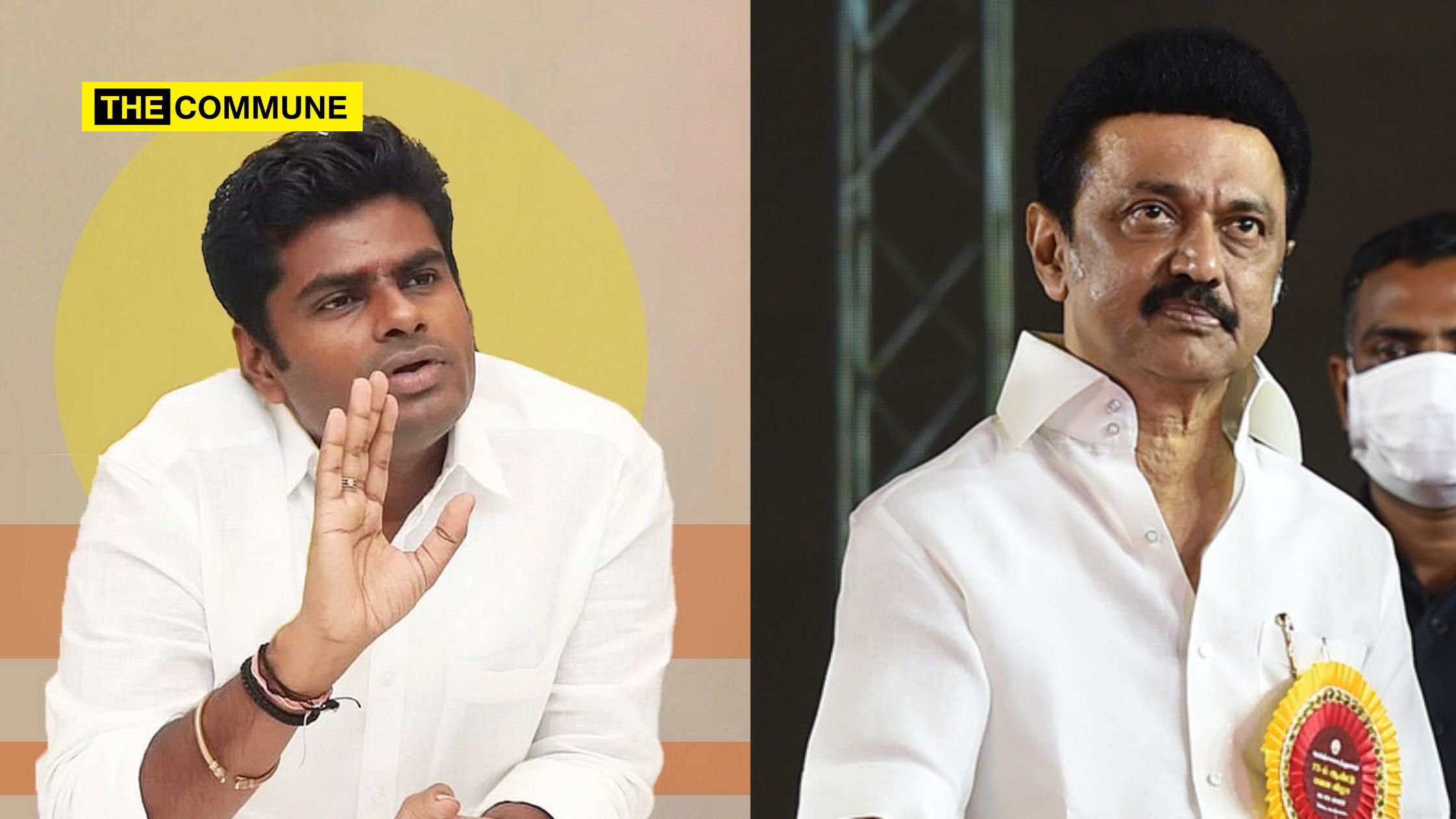
TN BJP Chief Annamalai Accuses DMK Govt Of Hypocrisy And Hindering Higher Educational Progress In State

K Annamalai and MK Stalin
Annamalai fires DMK for misleading the public on electricity rates and the unemployment situation in Tamil Nadu.

Tamil Nadu BJP President K. Annamalai has accused the ruling DMK government of politicizing the state’s educational progress and obstructing central funds by stalling their process. He has challenged Chief Minister M.K. Stalin, questioning whether his personal ego is obstructing the advancement of educational institutions in the state.

Annamalai, via his official X account, argued that the DMK government in Tamil Nadu lacks the vision to enhance educational infrastructure in government schools and colleges. This failure has negatively impacted the state’s reputation in recent years and accused the DMK of obstructing initiatives from PM Narendra Modi and depriving Tamil Nadu’s people of the benefits from central government programs.

Annamalai noted that despite committing to sign an MoU for PM-Shri Schools, the Tamil Nadu government has yet to finalize the agreement, even as the academic year has begun. Meanwhile, DMK MPs in Parliament have criticized the central government’s efforts to improve higher education institutions, underscoring the urgent need for progress. He asserted that the Pradhan Mantri Uchchatar Shiksha Abhiyan (PM-USHA), launched last year by the Prime Minister with an investment of ₹12,926.10 crore, aims to address the needs of educationally underserved areas has the potential to significantly enhance the educational landscape in Tamil Nadu and nationwide.

Annamalai stated, “The DMK Government in TN lacks the vision to upgrade Educational Infrastructure in Government Schools/Colleges in Tamil Nadu, which would bridge the gap of proficiency that has constantly put TN in a bad light in the last few years. The DMK Government has stonewalled our Honourable PM Thiru @narendramodi avl’s initiatives and has deprived the TN’s people of benefiting from the central government programmes.”

Despite committing to sign the MoU for PM-Shri Schools this year in April after consultation, the TN Government has yet to do so, even with the academic year already underway. Today, the DMK MPs in the parliament questioned the Government on the steps taken by the central government to improve the quality of the higher education institutions, highlighting the pressing need for action.” He stated.

The Pradhan Mantri Uchchatar Shiksha Abhiyan (PM-USHA), a crucial initiative launched last year by our Hon PM at an outlay of ₹12926.10 crore, is designed to cater to the needs of educationally unserved/underserved areas in our country. This initiative has the potential to significantly improve the educational landscape in Tamil Nadu and across the nation.” He further stated.

The DMK MPs questioning the government’s initiatives should have known that the DMK Government in TN has yet to sign the MoU for implementing PM-USHA, the scheme specifically designed to cater to improving the quality of Higher Education in states. It’s time for TN CM Thiru @mkstalin to answer the question: Is your bloated ego taking precedence over the upgradation of Educational institutions in TN?”  he finally asked.

Attached is an unstarred question answered on 29 July 2024 regarding allocating funds to state government universities. CN Annadurai, Selvam G, and Navaskani K have inquired whether the Minister of Education would provide detailed information. The question seeks to understand the specifics of the financial support provided to these universities, aiming to clarify the extent and nature of the funding allocated by the central government.

  • (a) whether the Government is providing funds to the specific State Government Universities and colleges so as to improve the overall quality of existing state higher educational institutions;
  • (b) if so, the details thereof;
  • (c) the quantum of financial outlay sanctioned by the Government for the year 2023-2024 to 2024-2025;
  • (d) the number of State Universities and colleges that have been benefitted during the last three years in the State of Tamil Nadu; and
  • (e) What steps has the government taken or is taking to improve higher education in the country?”

The Minister of State in the Ministry of Education, Dr Sukanta Majumdar, provided the following response, “(a) to (d): Education is a subject which falls under the concurrent list of the Constitution of India, where both Centre as well as State have legislative power to make laws. State Universities are established by an Act of the State Legislation, function under the administrative control of the concerned State and development fund for improving the overall quality of existing State higher educational institution is primarily the concern of that State Government.”

“With a vision for improving access, equity and excellence in State Higher Education system through support under various components viz Multi-Disciplinary Education and Research Universities (MERU), grants to strengthen Universities, Grants to strengthen Colleges, New Model Degree Colleges (NMDC) and Gender inclusion and Equity Initiatives. The Central Government launched the third phase of Rashtriya Uchchatar Shiksha Abhiyan (RUSA) in June 2023 in the form of Pradhan Mantri Uchchatar Shiksha Abhiyan (PM-USHA) with an outlay of ₹12926.10 crore for the period 2023-24 to 2025-26 to cater to needs of educationally unserved/underserved areas,” it added.

Under PM-USHA, priority is given to Focus Districts. The focus districts are identified by the concerned States/Union Territories based on various criteria, including low Gross Enrolment Ratio, Gender Parity, population proportion and enrolment proportion for females, transgenders, Scheduled castes, Scheduled Tribes and Other Backward Classes, Aspirational/Border Area/Left Wing Extremism prone districts etc.” it further added.

Under the scheme, 440 units have been approved with a total amount of ₹5613.12 crore under various components. Tamil Nadu has not signed the Memorandum of Understanding (MoU) with the Ministry to implement PM-USHA in the State. During the last three years funds to 09 state Universities and 22 colleges have been released for the state of Tamil Nadu under the previous phases of RUSA.” it further added.

For the question E, the ministers reply was, “In higher education, various transformative changes include providing muchneeded flexibility, allowing creative combination of subjects, providing multiple pathways, establishing equivalence and mobility to the students through National Credit Framework (NCrF), National Higher Education Qualification Framework, Academic Bank of Credit (ABC), multiple entry/exit; offering of courses and books / course materials in Indian Languages; conducting entrance exams such as Joint Entrance Examination (JEE), The National Eligibility cum Entrance Test (NEET), The Common University Entrance Test (CUET) in 13 Indian languages; use of technology to enhance access to education and for administration and governance of Universities and Higher Education Institutes (HEIs); permitting learners to avail upto 40% credit Courses from Study Web of Active-Learning for Young Aspiring Minds (SWAYAM) platform; industry academia collaboration for internships and to develop courses and curriculum to meet the industry and societal needs, offering of industry-aligned courses; promoting Indian and Foreign HEIs for setting of campuses abroad and in India respectively; enhanced reputation of the Indian HEIs in international ranking; embedding of Indian Knowledge system in the education etc.

Subscribe to our channels on TelegramWhatsApp, and Instagram and get the best stories of the day delivered to you personally.
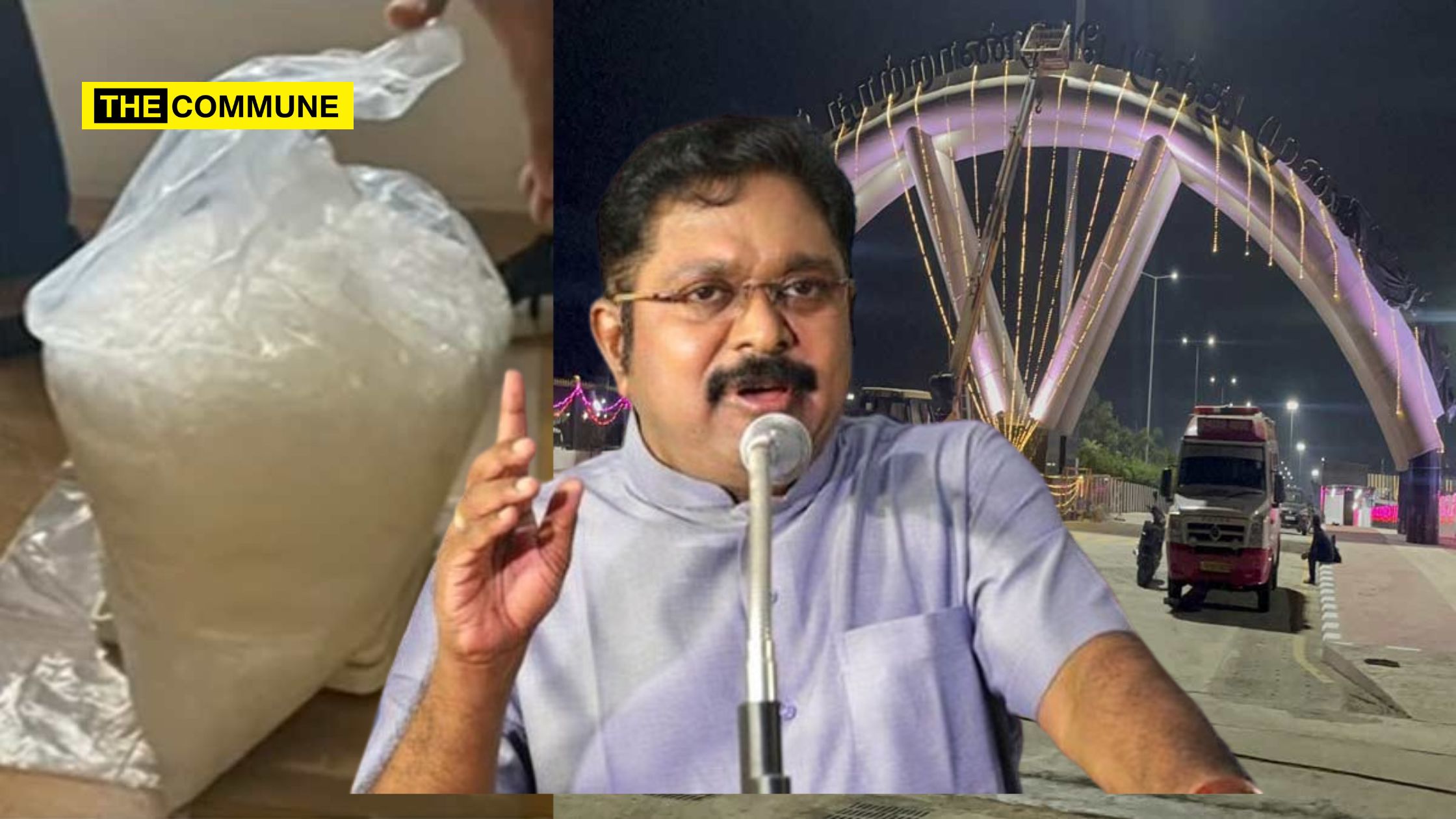
Methamphetamine Worth ₹70 Crore Seized At Kilambakkam Bus Terminus, T.T.V. Dhinakaran Demands Action Against Drug Smuggling Network

Approximately 6 kg of methamphetamine, valued at ₹70 crores on the international market, has been seized at the Integrated New Bus Terminus in Kilambakkam near Tambaram, Chennai.

Central Narcotics Control Bureau officers intercepted the methamphetamine, which was destined for smuggling from Chennai to Ramanathapuram by bus. Three individuals have been arrested after the seizure. Their names are Mansoor Rahman from Ramanathapuram, Ibrahim and Mansoor, both from Chennai.

Initial investigations indicate that the methamphetamine was intended to be transported to Ramanathapuram and subsequently smuggled to Sri Lanka. Additionally, one kilogram of methamphetamine was recovered near Redhills, Chennai, where cotton was reportedly used as part of the smuggling operation. Alongside the drugs, ₹7 lakh in cash was also confiscated. Authorities are conducting a thorough investigation to determine the source of the drugs, the identity of those involved in the smuggling network, and any potential connections to further criminal activities. The seizure has generated significant concern and scrutiny in Chennai.

In this context, T.T.V. Dhinakaran, the General Secretary of Amma Makkal Munnetra Kazhagam (AMMK), has criticized the DMK for its inaction and urged the party to fulfil its responsibilities by apprehending those involved in the smuggling operation.

Dhinakaran, via his official X account, stated, “Seizure of deadly drug Methamphetamine Worth ₹70 Crore at Kilambakkam Bus Station- When Will the Narcotics Trade Plaguing Our Youth Be Stopped?Recent reports reveal that 6 kg of deadly drug methamphetamine, which was to be smuggled to Sri Lanka via Ramanathapuram from Kilambakkam bus stand, and subsequently, a separate godown was found to be operating near Redhills for stashing drugs was intercepted and seized. In the last three years of the DMK rule, drug addiction among school and college students and the younger community to drugs, including ganja, which is abundantly available in Tamil Nadu’s villages, has sparked widespread fear and distress.”

“The DMK government is the root cause of law and order disturbances, including murder and robbery, which take place every day in Tamil Nadu, not taken any action despite repeated requests to control the movement of narcotics including ganja, which at present has created a situation that drugs worth 70 crores of rupees are casually smuggled via buses.” He added.

“The DMK administration is criticized for failing to address law and order issues, including daily occurrences of murder and robbery. Despite numerous appeals to curb the trafficking of narcotics, including ganja, the current situation permits the smuggling of drugs worth ₹70 crore via buses. Therefore, I urge the Government of Tamil Nadu to conduct a thorough investigation into those arrested at Kilambakkam bus station and take decisive action against those behind this smuggling network.” He further added.

(With Inputs From TimesNow)

Subscribe to our channels on TelegramWhatsApp, and Instagram and get the best stories of the day delivered to you personally.
DVK Chief Kolathur Mani’s Peddles Fake Narrative Of Indian Freedom Fighters Out Of Brahmin Hate

Kolathur Mani, the President of Dravidar Viduthalai Kazhagam (DVK), has once again demonstrated his extreme animosity towards Brahmins, pushing his rhetoric to an unacceptable level. This time, he has made a series of unfounded claims, presenting his personal interpretations as historical fact and distorting the truth to an egregious degree. Such actions are deeply troubling.

Individuals like Kolathur Mani, who wants to sustain the Nazi-like Dravidian ideology, often face issues with the accuracy of historical records and existing documents. When crafting their narratives, they position themselves as historians and fabricate stories to persuade their audience. If their accounts encounter gaps or inconsistencies, they frequently attribute these to statements made by historical leaders or obscure references to other books, often citing their own ideologically-driven works as sources.

In light of this, it’s crucial to critically examine and dismantle these fabricated narratives one by one. The first instance of distortion in Kolathur Mani’s narrative concerns Rukmini Laxmipathi, an Indian independence activist and politician. Mani disparaged her achievements by suggesting that the only reason a road was named after her was due to her Brahmin caste.

Kolathur Mani narrated, “There is a road called Rukmini Laxmipathi Road in Chennai. She is a great independence activist, but, what she did was sit in the car and distributed the Congress notice, for which the British caught her and filed a case. For giving Congress notice. In this issue she became a martyr and a road has been named for that sacrifice. Whatever the Paapaan (slur word for Brahmins) does they get magnified, while our efforts becomes dismissed.

Mani’s portrayal is not only inaccurate but also dismissive of Laxmipathi’s genuine contributions. If he had reviewed Tamil Nadu’s history school textbooks, he would have learned that his critique is misplaced. In reality, Rukmini Laxmipathi was a dedicated follower of Gandhi and actively participated in the Salt Satyagraha of 1930 in Vedaranyam, where she was jailed for a year, becoming the first female prisoner in India. She was significantly influenced by leaders such as Mahatma Gandhi, C Rajagopalachari, and Sarojini Naidu.

In 1934, Laxmipathi was elected to the Madras Legislative Council, and three years later, she became the first woman member of the Legislative Assembly. In 1946, she served as the Minister of Health in the Madras Presidency cabinet, marking her as the first female minister in the state. Her contributions to Indian politics and social reform were significant and deserving of the honor of having a road named after her.

In his next narrative, Kolathur Mani turned his attention to another Indian independence activist, Vanchinathan, and propagated the misleading claim that Vanchinathan was motivated by casteism rather than genuine patriotism. Mani suggested that Vanchinathan killed British officer Ashe solely to uphold the caste hierarchy.

Mani cleverly recounted a story he attributed to Iyothee Thass Pandithar’s Tamilan magazine. According to that, Ashe was travelling in a chariot when a woman carrying heavy fodder fell and cried out in labour pain. Ashe, trying to help, ordered the woman be carried in his chariot to the hospital. However, Brahmins supposedly blocked their path, stating low caste people should not cross their street and Ashe had to threaten them with his revolver to gain passage through the Brahmin streets. Mani claimed that this incident led Brahmins to plot the assassination of Ashe.

However, there is no substantial evidence supporting this narrative. Iyothee Thass Pandithar, a prominent scheduled caste leader and an influential figure, ran his magazine from 1907 until his death in 1914, but there is no record of his magazine publishing such a story about the murder of Ashe.  Mani further claimed that Vanchinathan’s own suicide note, which purportedly detailed his reasons for shooting Ashe, contained statements about defending Sanatana Dharma. Mani interpreted this to mean that Vanchinathan’s motives were rooted in caste protection rather than the fight for freedom. According to Mani, Vanchinathan’s letter described how the presence of oppressed people on Brahmin streets violated Sanatana Dharma and stated that the killing of George Ashe was a reaction to such violations.

Mani peddled that, “Vanchinathan wrote a letter why I shot Ashe, in that he gives explanation to sanatana dharma what he says, It is against Sanatana Dharma if oppressed people carried through our streets. He has written that we have decide to kill George Panchaman, who eats cow meat and tramples our Sanatana Dharma.”

Mani’s portrayal thus seeks to redefine Vanchinathan’s legacy from that of a freedom fighter to a caste defender, fabricating a narrative that lacks historical corroboration.

The martyrdom of Vanchinathan deserves to be honoured and remembered. Inspired by the Surat Congress of December 1907, VO Chidambaram Pillai, a pioneering figure in Indian shipping, organized political meetings in Tuticorin and Tirunelveli. These meetings were marked by passionate speeches from Subramania Siva, contributing to the spread of the freedom struggle. In February 1908, around 1,000 workers went on strike at the Coral Mills in Tuticorin. The collector, Robert William Escourt Ashe, had imposed Section 144, which restricted the workers’ union activities and was strongly opposed to them.

The situation escalated when patriotic leaders planned to commemorate Bipin Chandra Pal’s release as Swarajya Day, only to face violent repression from the district administration. By March 1908, VOC, Siva, and Padmanabha Iyengar were arrested, and riots erupted in Tuticorin and Tirunelveli, described as acts of incendiarism. Additionally, Ashe’s actions were believed to have contributed to the downfall of VOC’s Swadeshi Steam Navigation Company.

Robert Ashe, born in Ireland in 1872, began his career in India as an Assistant Collector in 1895, eventually rising to the positions of District Magistrate and Collector. By 1907, he was stationed in Tirunelveli and temporarily officiated in Tuticorin, where significant events unfolded. On 17 June 1911, while traveling with his wife, Mary Lillian Patterson, Ashe’s train stopped at Maniyachi. There, a man dressed in traditional attire and another in a dhoti approached the carriage and shot Ashe at point-blank range with a Belgian-made pistol. The assailant then ran to the latrine and committed suicide. He was associated with the Bharatha Matha Association.

In contrast to Kolathur Mani’s claims, the 1918 Rowlatt Committee report, chaired by a judge from the King’s Bench Division of His Majesty’s High Court of Justice, provides a different account. According to the report, “Upon the body of the murderer was found a letter in the Tamil language which stated that every Indian was trying to drive out the English and restore swarajya and the Sanatan Dharma. Rama, Sivaji, Krishna, Guru Govind and Arjum ruled over the land protecting all religion, but now the English were preparing to crown in India George V, a Mlecftlta, who ate the flesh of cows. Three thousand Madrasis had taken a vow to kill George V, as soon as he landed in the country. To make known their intention to others, he, Vanchi, the least in the company, had done that deed that day.

Subscribe to our channels on TelegramWhatsApp, and Instagram and get the best stories of the day delivered to you personally.
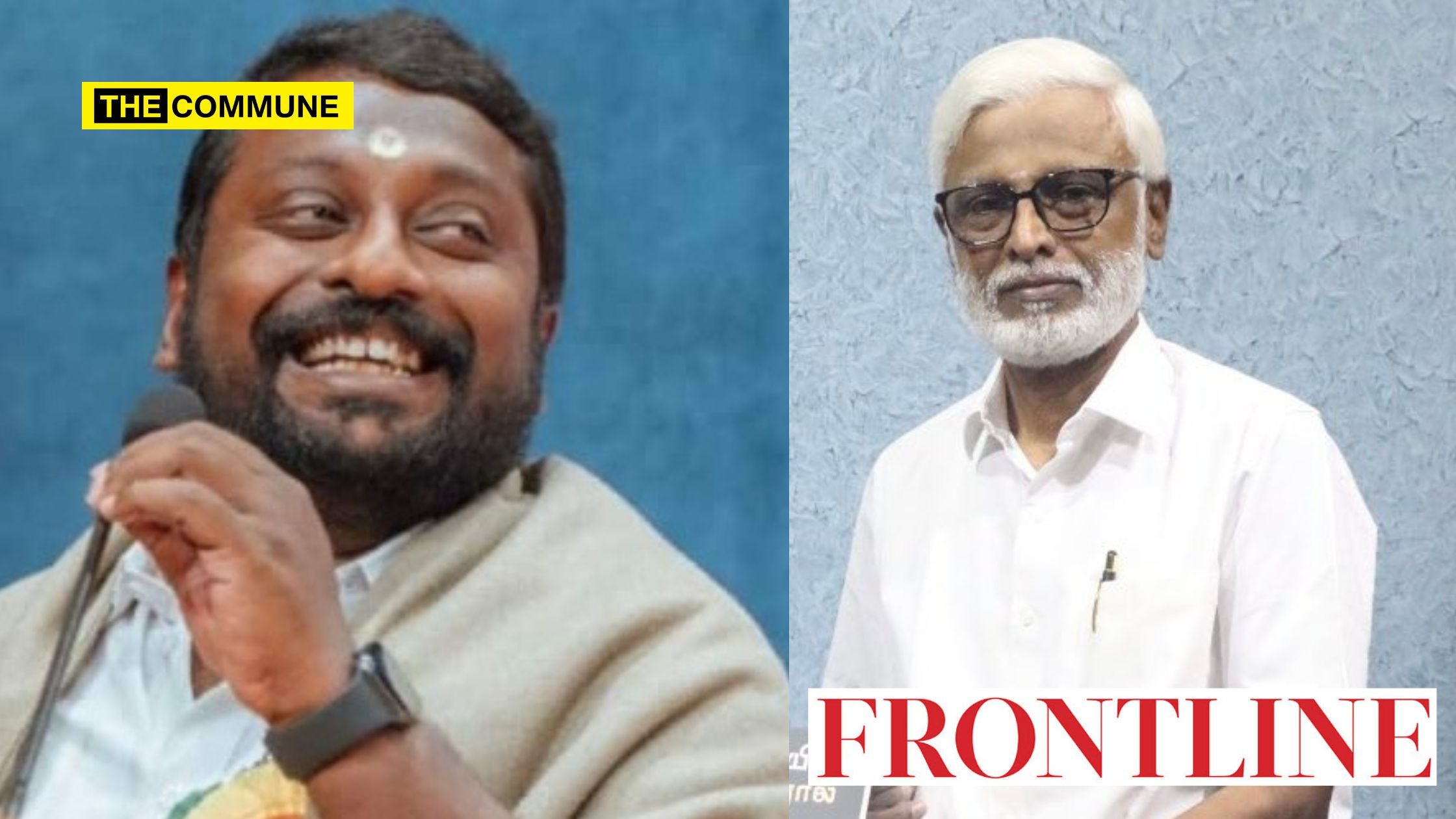
TN BJP Leader SG Suryah Slams The Hindu Frontline’s Dravidianist Journo Ilangovan Rajasekaran For Downplaying Political Murders In TN

Ilangovan Rajasekaran, Associate Editor-Consultant at ‘The Hindu Frontline,’ has stirred controversy by buttressing the ruling DMK government in Tamil Nadu. He argued that the recent wave of political murders in the state is not unusual and happens regularly.

In a post on his official social media account on X, Rajasekaran remarked that Tamil Nadu’s deep political engagement means that a substantial portion of its eight crore residents hold party memberships. Consequently, he suggested that killings of lower-level party functionaries or activists might not always be politically motivated and could sometimes be driven by personal issues.

This statement received significant backlash from netizens, who questioned how a journalist from a respected news magazine could make such comments, seemingly echoing the perspective of a DMK party worker. Critics pointed out that even if the victims were low-level party members and personal issues were involved, the prevalence of these murders in the past would have prompted different reactions if they had occurred under the previous administration. They urged Rajasekaran to stop sympathizing with the DMK and maintain journalistic impartiality.

In response, Tamil Nadu BJP State Secretary SG Suryah criticized the journalist from ‘The Hindu’, questioning their integrity. SG Suryah in his official X account stated, “What a fall? “The Hindu” journalist is Justifying murders with this tweet even if it’s ‘personal’?? How difficult is it for you to understand the problem which is absence of “fear of law” with a Weak Chief Minister at helm?”

A netizen asked, “what kind of justification is this.”

Another netizen ridiculed the post saying, “Sabhaash, sabhaash, Excellent. And these murderers should not be punished. If sent to jail, the murderers families should get 8,000 rupees per month as special allowance.”

Another netizen pointing out his hypocrisy queried, “If this was AIADMK rule, would Elango’s mouth have spoken like this… There is a limit for your Jalra.”

Another netizen ridiculed the post stating, “Wow… justification of murder…yuck.”

Ilangovan Rajasekaran has also been criticized for using his social media accounts to repeatedly promote Dravidian ideology and Dravidian leaders while focusing his criticisms solely on the BJP. He is often seen echoing DMK’s viewpoints and aligning closely with their narrative. For instance, in one of his posts, the so-called journalist attributed Tamil Nadu’s decline to BJP State Chief Annamalai and NTK Chief Seeman, suggesting that only Dravidianism should be present in the state.

In another post, Ilangovan parrots the same tone of the DMK that the ruling BJP government at the centre is seeking revenge against Tamil Nadu and its people for political reasons. The stance appears to be that if you do not support me, you become an enemy, undermining democratic principles by causing an economic crisis.

Subscribe to our channels on TelegramWhatsApp, and Instagram and get the best stories of the day delivered to you personally.
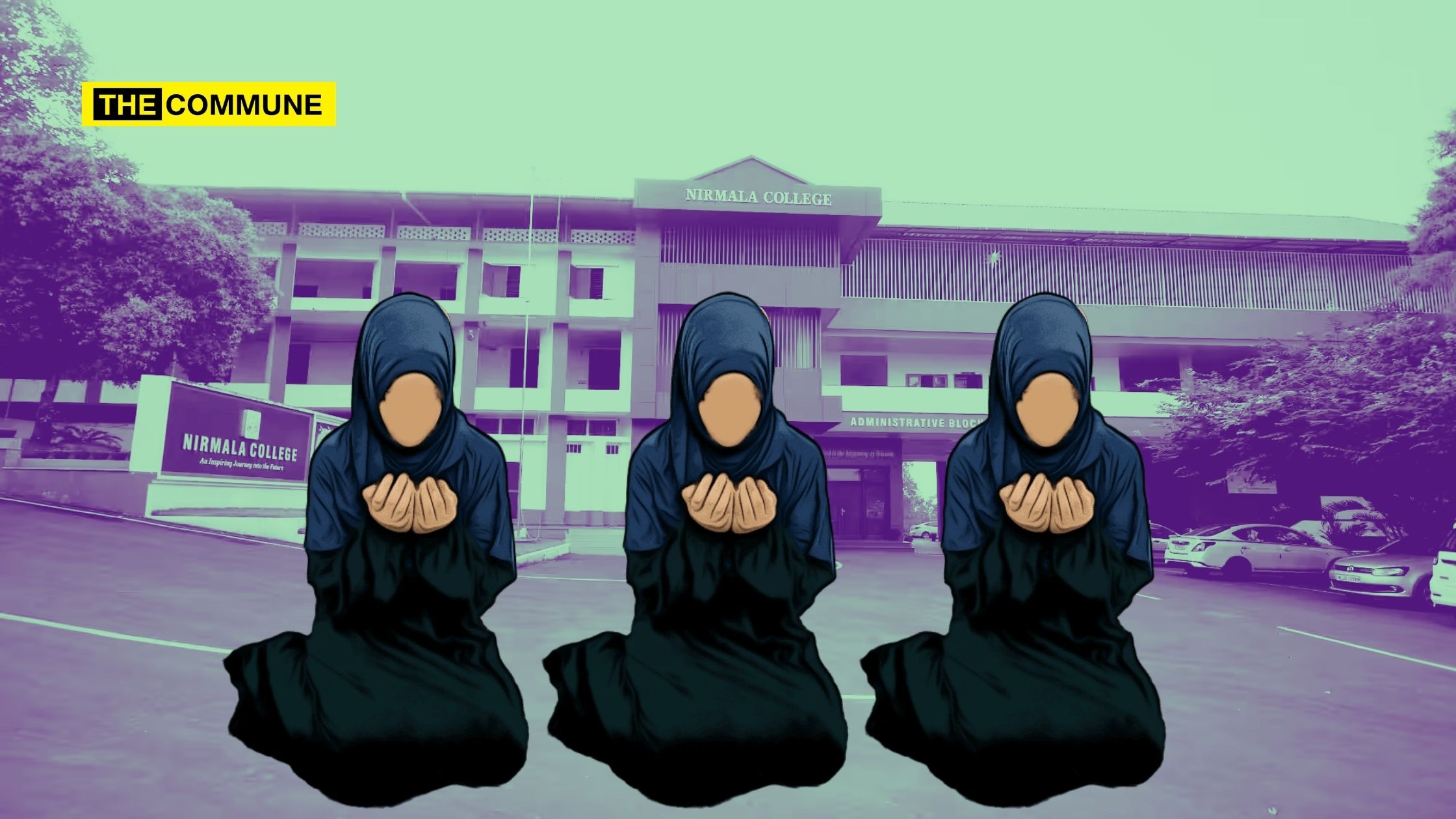
Muslim Girls Demand Namaz Space At Christian College After Mosque Denies Entry, Students Gherao Principal For Refusing, Leftist Media Which Went Bonkers Over Sabarimala Silent

A controversy arose when a Catholic Church-run college in Muvattupuzha, Kerala, refused to provide space on campus for Muslim students to offer namaz, a decision supported by the Bharatiya Janata Party (BJP).

On Friday, Father Kannadan Francis, the principal of Nirmala College, received a complaint about a group of Muslim female students using the college’s common room for namaz.

When objections were raised, the Muslim students requested a designated room for namaz, but the college also declined this request.

The situation escalated when other Muslim students joined in, allegedly surrounding Father Francis.

He explained that there is a mosque just 200 meters from the college, where boys are allowed to pray at noon, but the girls claimed they were not permitted to use the mosque.

However, Kevin Peter from the Church’s Auxiliary for Social Actions (CASA) noted that another mosque nearby permitted women to pray.

We have informed them that the college cannot provide a room for prayers,” Father Francis was quoted saying, noting that the students making the request were not affiliated with any specific student organization.

BJP state president K Surendran labelled the demanding students as “extremist elements” and criticized the INDI Alliance, including the Left and Congress, for supporting the demand.

Do Muslim-managed colleges provide prayer spaces for students of other religions? If Muslim groups cause trouble in colleges, BJP will offer protection,” he stated.

Meanwhile, the Students’ Federation of India (SFI), the student wing of the ruling CPI(M), clarified that it stands for secularism and does not support the demand for religious practices on campus.

Many on social media called out the double standards of leftist media like The News Minute which went hammer and tongs over Sabarimala Temple not allowing women of menstrual age to enter the temple. None of them have even care to report on the incident.

Where are the feminists? They were doing overtime to get into Garbh Griha of Sabrimala temple in the same Kerala, calling Hinduism regressive full of patriarchy. Won’t they fight for these MusIim girls? Won’t they protest against mosques?“, a user asked on social media.

Syro-Malabar Church Slams Students

The Public Affairs Committee (PAC) of the Syro-Malabar Church has labeled the actions taken by some students against Nirmala College in Muvattupuzha, Kerala, as a “serious” issue.

In a statement on Sunday, Bishop Thomas Tharayil, convener of the PAC, expressed concern over what he described as a systematic and deliberate effort against Christian minority institutions. The recent events at Nirmala College are part of a broader religious and communal “invasion” on such institutions, the statement continued. Bishop Tharayil asserted that any attempts to destabilize Christian minority institutions would be met with a strong response.

Nirmala College has a history of maintaining high academic standards, but the recent developments threaten to disrupt its operations and academic activities. A group of students has staged a sit-in outside the Principal’s office, demanding a room for a specific religious group to offer prayers. This demand lacks both legal and moral justification and is intended to create discord on the college campus.


Subscribe to our channels on TelegramWhatsApp, and Instagram and get the best stories of the day delivered to you personally.