Home Blog Page 870

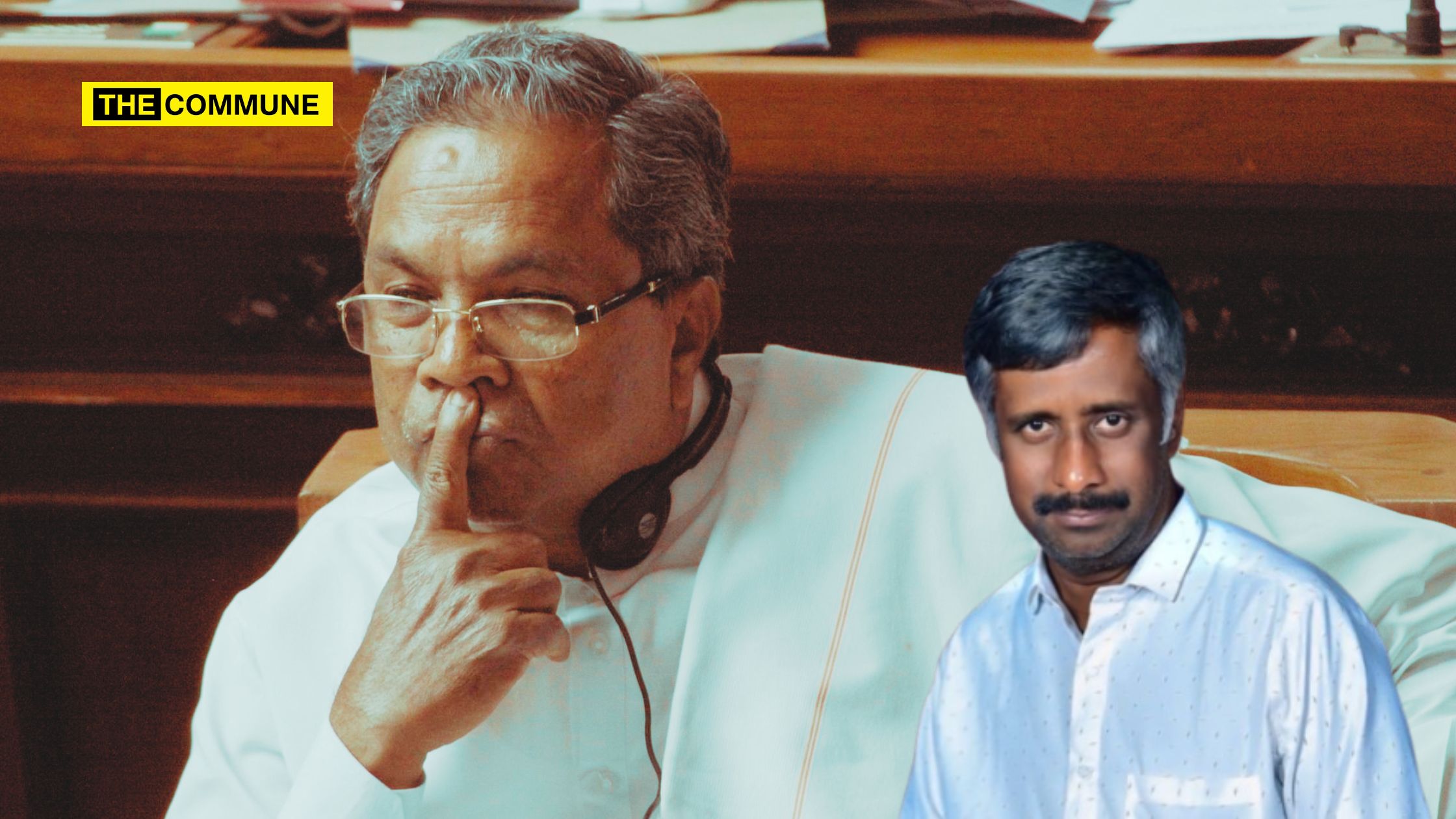
“Justice Chandru Has Taken A New Avatar As DMK’s Policy Outreach Secretary”, TN BJP President Annamalai Slams Former Judge Chandru

Tamil Nadu BJP president Annamalai has criticized former judge Chandru for his remarks against the BJP, suggesting he should officially join the DMK if he wants to engage in politics. He accused Chandru of participating in government committees for self-interest and imposing DMK ideologies through committee reports on student communities.

This criticism was sparked by Chandru’s recent comments at a book fair in Hosur, where he criticized the Annamalai report without apparently reading it. Chandru claimed to have conducted extensive research for a government-commissioned education report, which he handed over to Chief Minister Stalin. However, he lamented that the report’s content remained undisclosed and criticized opposition leaders for dismissing it without review. Further remarked that fascists historically fear an educated society. He drew parallels to the burning of libraries in Germany during the 1930s and similar incidents in Eelam, emphasizing that fascists fear an enlightened public and the knowledge found in books.

In response to criticism, Annamalai, via his official X account, issued a detailed rebuttal to former judge Chandru, highlighting that the recommendations were met with public opposition, including from various parties and social organizations, including the BJP specifically, objections to proposals such as integrating Kallar Reform and Adi Dravidian Welfare department schools into the Department of School Education without adequate research into the educational needs and progress of these communities over the years. He also criticized suggestions like denying senior positions to community teachers and ridiculed humorous recommendations like organizing students into groups based on the first letter of their names, Social Justice Student Groups, and viewing these as undue interference in the duties of school principals and teachers.

Annamalai further contested recommendations that appeared to restrict Hindu students from wearing Vibhuthi, Kungumam, and sacred threads, calling it symbolic religious suppression orchestrated by the DMK. He also criticized proposals to hold student elections in schools, arguing that this would politicize educational institutions unnecessarily. Regarding Chandru’s remarks about libraries and morality, Annamalai highlighted initiatives by Prime Minister Narendra Modi’s government to restore and support libraries in Jaffna, Sri Lanka, emphasizing the BJP’s commitment to culture and education.

Annamalai concluded by urging Chandru not to lecture on issues of morality and culture, particularly as a member of committees under the DMK government, which he accused of prioritizing liquor sales over societal values. He reiterated that the BJP’s opposition was aimed at the government’s policies affecting Tamil Nadu’s student community, not Chandru personally. He also challenged Chandru’s impartiality in his report, accusing it of being politically motivated and aimed at undermining traditional cultural values. In essence, Annamalai’s response aimed to clarify the BJP’s stance against the imposition of DMK’s ideologies on educational institutions in Tamil Nadu.

Annamalai in his X account stated,Unable to tolerate the objections to his statement, Justice Mr. Chandru has taken a new avatar as DMK’s Policy Outreach Secretary. He should at least realize that if DMK’s policies are given as a manifesto, there will be protests and criticism from the public.”

The statement read,Last 12th August 2023 on behalf of Govt in Tamil Nadu to avoid violence arising out of caste and ethnic sentiments among school and college students and to create harmony, a one-man panel headed by former Justice Chandru was set up. The committee’s report was presented to Chief Minister Stalin and details of its recommendations were released to the media. Many of the recommendations made in the report were unacceptable to the public. Sow diversity among the student community. Therefore, various parties and social organizations, including the BJP, had registered their opposition to certain aspects of the report. On behalf of the Tamil Nadu BJP, on 19th June, in a press conference, we spoke about the unacceptable recommendations in this report.”

Specifically, a recommendation to bring Kallar Reform and Adi Dravidian Welfare department schools under the Department of School Education. How can this recommendation be accepted without any research findings on the education of students from these communities or their social progress over the years? One more suggestion is that the community teachers, who are the majority in their respective areas, are denied senior positions in those schools,he queried.

Why has this doubt not arisen on the faculty members for so many years since the time of the great leader Kamaraj, the golden age of education, why is it coming now? Humorous suggestions include seating students by first letter of name, to form something called a Social Justice Student Group. How can we accept that the ruling party’s committee interferes with all the work that school principals and class teachers have to do?He further queried.

The recommendation of that preventing only Hindu Students from keeping Vibhuthi, Kungumam on their foreheads, and sacred thread tying on the hands will be seen as the symbolic destruction of religion and whatever other reason is given, it is DMK’s drama. He added.

Recommendation of conducting student elections is dangerous in schools, Is it not enough that the DMK and other parties have ruined the student society entering the college elections? Do you want to sacrifice school students too for your political gain? That is why in our executive committee meeting held last 6th July, we had passed a censure resolution against This ex-judge Chandru’s report, which wants to destroy our country’s culture and identity of our society, He added.

It seems that Chandru is upset by this. Speaking about this report at a function recently, he talked about libraries and morality and asked what the BJP knows about these. It was the government led by the Hon’ble Prime Minister of India, Narendra Modi, who opened a special section for Indian books in the Jaffna library that had been burnt down and made arrangements to provide 16,000 books. In the same Jaffna, it was Prime Minister Modi’s government that set up a cultural center at a cost of about 11 million US dollars,he further wrote.

“I first request Chandru not to lecture us about library, morality, and culture, who is part of a committee of DMK government which keeps TASMAC shops open from street to street. Ever since the DMK came to power, it seems that former judge Chandru, who has been a member of several committees such as one-man committee, other group committee, could not accept the opposition to his report, he further stated.

“Chandru, the protest here is only against the report of the committee set up by the government to affect the student community across Tamil Nadu, not against the serial or the novel written by you. It is the Tamil Nadu Government who has to answer that, not Chandru as an individual. The first question of Chandru’s report should have been why such caste divisions did not exist on a large scale among the student community before the DMK came to power. But he must have been an impartial person to pose that question. Your political position and the purpose of this report are clear when you mention the word saffronization in Recommendation No. 19 (C) of the report, he further added.

Chandru sir, you have forgotten that your mission was complete when you submitted the report. In a democracy, it is the job of a responsible opposition to support and oppose the government’s public policies. We are opposing the imposition of DMK’s policies on the student community. If there is a desire to talk politics, Chandru can officially join the DMK. Instead of that, sitting in the committees formed by the government for self-interest, and imposing DMK’s ideologies on the student community in the name of committee report, with the tax money of the people, I am sure that there will be opposition to it,” he concluded.

Justice Chandru’s committee was formed as the result of the disturbing Nanguneri incident in Tirunelveli district where two Scheduled Caste students were attacked by students from an intermediate caste on the night of 9 August 2023.

The Committee & Its Recommendations

To prevent such caste-based violence, the government set up a one-man committee. Retired Madras High Court judge Justice K. Chandru submitted the report to CM Stalin and recommendedsignificant” changes to eliminate caste indicators in Tamil Nadu schools. The recommendations include banning coloured sacred wrist threads, rings, and forehead marks – tilak that signify caste, and removing caste-related names from schools. Point 8B states, Students should be prohibited from wearing any coloured wristbands, rings, or forehead marks (Tilaka). They must also refrain from coming to school on bicycles painted with reference to their caste or exhibiting any caste-related sentiments. Failure to comply with these rules must result in appropriate action being taken, in addition to advising their parents or guardians.”

Some of the other recommendations include:

  • The report advises that students must not display any caste-related sentiments, including using bicycles marked with caste references. Non-compliance should result in appropriate actions and parental advisement.
  • State-run schools should remove terms likeKallar Reclamation’ andAdi Dravidar Welfare’ from their names. Private schools should be requested to drop caste appellations, with legal action considered for non-compliance, potentially through legislative changes.
  • The committee also recommends that student attendance registers omit any caste-related details. Teachers should avoid calling students by their caste or making derogatory remarks linked to caste.
  • To enforce these changes, the report suggests amending the Tamil Nadu Societies Registration Act, 1975, to prevent societies intending to start educational institutions from using caste-based names.
  • The report also calls for new legislation to promote social inclusion and eradicate caste discrimination, imposing responsibilities on students, staff, and school management, with mechanisms for supervision and penalties for non-compliance.

Additionally, the committee proposes enhancing local bodies’ control over primary education, granting block-level administrations full authority over schools, including staffing decisions. The state government should handle curriculum guidelines, standards, and board exams while formulating new laws to empower local bodies and amend the Tamil Nadu Panchayat Act of 1994 for a more community-focused education system.

This removal of caste names, hiding/”protectingcaste names, and prohibiting wearing Tilak and sacred wrist threads is akin to the Dravidian model of making Hindus remove their caste/surnames. The Dravidian ideologues enforced this removal of a person’s surname as a means toabolish/eradicatecaste. Ironically, despite having succeeded in removing surnames as a mode of eradicating caste differences, incidents like Nanguneri continue day in and day out.

Critics see this move as a method to divide the Hindus further based on caste and also ensure that Hindus lose their identities forever. Instead of creating awareness and empathy in children about various castes and fostering harmony, recommending such drastic and Hinduphobic measures will only lead to dividing the society further and deepening the Dravidianist ideologies in the minds of the people and destroying society.

Subscribe to our channels on TelegramWhatsApp, and Instagram and get the best stories of the day delivered to you personally.

Tamil Nadu Hikes Electricity Tariffs By 4.83%, Surpassing Gujarat Rates Despite Dravidianist Claims

The Tamil Nadu Electricity Regulatory Commission (TNERC) has announced a 4.83% hike in electricity tariffs for all consumers, effective from 1 July 2024. This increase, based on consumer price inflation (CPI), affects both energy and fixed charges.

For domestic consumers, the new tariff order introduces changes across various consumption slabs. For instance, the cost per unit under the minimum slab of 400 units bi-monthly will rise from ₹4.60 to ₹4.80. For the 401-500 units slab, the price will increase from ₹6.15 to ₹6.45 per unit; for 501-600 units, from ₹8.15 to ₹8.55; for 601-800 units, from ₹9.20 to ₹9.65; for 801-1000 units, from ₹10.20 to ₹10.70; and for usage above 1,000 units, the cost will rise from ₹11.25 to ₹11.80 per unit. Consequently, a consumer using 500 units will now pay ₹2,565 bi-monthly, up from ₹2,455.

The hike also affects common facilities in multi-storey apartments, public lighting, water supply, sewage, places of worship, cottage, and micro industries, private educational institutions and hostels, industries, and IT services. Specifically, for multi-storey apartments (LT tariff category 1E), the rate increases from ₹8.15 to ₹8.55 per unit, with fixed charges rising from ₹102 to ₹107 per kilowatt per month.

This tariff hike comes amid claims from Dravidianist groups that electricity charges in Gujarat are higher than those in Tamil Nadu.


However, a comparison of electricity rates between the two states debunks this myth:

  • For 600 units, the electricity bill in Tamil Nadu is ₹2,940, whereas in Gujarat it is ₹2,745.
  • For 800 units, Tamil Nadu consumers pay ₹4,870, compared to ₹3,755 in Gujarat.
  • For 1,000 units, the bill in Tamil Nadu amounts to ₹7,010, while in Gujarat it is ₹4,765.
Source: GERC

Gujarat’s Residential General Purpose (RGP) tariff, applicable to all services in residential premises, also shows lower fixed and energy charges. For non-BPL consumers, the fixed charges are Rs. 25 per month for single-phase supply and Rs. 65 per month for three-phase supply. Energy charges vary from 320 paise per unit for the first 50 units to 505 paise per unit for consumption above 250 units. BPL consumers enjoy even lower rates, with the first 50 units charged at 150 paise per unit.

Subscribe to our channels on TelegramWhatsApp, and Instagram and get the best stories of the day delivered to you personally.
Unmasking The Campaign Against Isha Foundation: Debunking Myths & Allegations Peddled By Dravidianist Media

The Isha Foundation in Tamil Nadu has consistently faced attacks from Dravidianists and Periyarists who view the foundation as a threat to their pseudo-atheism, which opposes only Hinduism. Their ongoing mission is to tarnish the reputation of the Isha Foundation. They devise strategic plots to damage its image, leveraging their favored news media for a ‘Hit and Run’ job, followed by deliberate silence. The Dravidian media in Tamil Nadu refrains from follow-ups that do not align with their agenda.

This orchestrated effort aims to create a perception among the public that Isha is at fault. However, there is always another side to the story. Despite all allegations, every accusation against the Isha Foundation has been proven false in a court of law.

Myth#1 – Crematorium Case

The all-famous The News Minute (TNM), sympathetic to the Dravidianist and Periyarist cause, peddled misinformation that an FIR had been lodged against the Isha Yoga Foundation in Coimbatore, following a complaint from the Thanthai Periyar Dravida Kazhagam (TPDK). Allegedly, TPDK activists were attacked on 15 June 2024 while visiting an allegedly illegally constructed crematorium at Boluvampatti village, attributed to Isha Yoga.

TNM strategically presented one side of the story, portraying the Isha Foundation negatively that TPDK’s general secretary informed police that their vehicle was stopped and its window broken by individuals associated with Isha Yoga. However, the dispute between TPDK and the Isha Yoga center stemmed from TPDK activists visiting without official sanction, claiming to be a ‘Fact-Finding Committee’. A scuffle ensued, following which TPDK tactically filed an FIR at Alandurai police station, playing the victim. Rather than stopping there, TNM promoted TPDK almost as if it were a tribal activist group, highlighting allegations against the Isha Foundation that had already been refuted.

The Tamil “journal” Nakheeran presented a narrative from Periyarists and Dravidianists suggesting that there are ample crematoriums in the vicinity, implying that Isha Foundation’s construction of one is arbitrary and linked to mysterious deaths.

The truth of the matter concerning the crematorium is that the area is predominantly inhabited by Scheduled Tribes. These villages lack adequate cremation facilities, with the nearest crematorium located 20 km away. In response to local requests, the Isha Yoga Centre initiated construction of a modern electric crematorium to serve these villages. In fact, residents from six villages near the Poondi hills, including several Scheduled Tribes communities, petitioned the Coimbatore District Collector to take action against those spreading rumors about the upcoming Isha crematorium. They clarified that the construction was a response to their genuine need for closer cremation facilities, dispelling misinformation spread by a few individuals.

Earlier, Subramanian, identified as a Dravidianist, filed a case against the crematorium in the Madras High Court. During the court proceedings, the Madras High Court directed the Pollution Control Board to inspect the electric crematorium and provide a detailed report. On 14 June 2024, members of the TPDK, posing as a ‘Fact-Finding Committee‘, attempted to enter the Isha premises. This action led to a confrontational situation between the administrators and TPDK members. It’s worth noting that the Coimbatore District Court had already issued an order prohibiting unauthorized individuals from accessing the construction site of the electric crematorium.

The Madras High Court has intervened to halt the Alandurai police in Coimbatore district from concluding their investigation into a criminal intimidation case involving C.R. Dinesh Raja, an administrator at the Isha Yoga Centre and directed the registration of a case and the submission of an investigation report against members of  TPDK. Justice G Jayachandran provided temporary relief by issuing an order to restrain any final report until further notice, scheduling a returnable date for 21 August 2024. The judge expressed skepticism regarding the complaint, noting its lack of specific details about the alleged offence and questioned the authority under which they attempted to enter the Isha premises.

Interestingly, neither TNM nor other Dravidianist media outlets, which previously portrayed the Isha Yoga Foundation in a negative light, reported on these court proceedings. These cases effectively discredited the false allegations made by the TPDK, which sought to present itself as a victim. It is evident that their agenda primarily targets Hinduism rather than any genuine tribal or environmental activism.

Myth#2 – The Elephant Corridor & Isha Mahashivaratri Ban

The Isha Foundation itself clarified that, In the affidavits submitted by the Tamil Nadu Forest Department to the National Green Tribunal’s Southern Zone, Chennai, there is no mention that Isha is situated within an elephant corridor. Similarly, the Ministry of Environment, Forests & Climate Change, in its counter affidavit, does not indicate that Isha falls within an elephant corridor. Additionally, the Principal Chief Conservator of Forests (PCCF), in response to an RTI query, did not include Isha or its vicinity in the list of elephant corridors in Tamil Nadu. The Gajah Report by the Elephant Task Force and the document ‘Right Of Passage – Elephant Corridors of India’ by the Wildlife Trust of India also do not identify the area where Isha is located as an elephant corridor. Eminent scientists specializing in elephant conservation have explicitly stated that the Isha Foundation is not situated near an elephant corridor.

Every year as Mahashivaratri approaches, there are cases filed against the Isha Yoga Center for organizing the celebration. Various groups aligned with Periyarist and Dravidian ideologies seek to ban the event, often making headlines in Tamil media, claiming that the festivities could disturb animals in the nearby hilly areas. However, after the initial uproar, these claims typically fade into silence.

Regarding the Vetriselvan case at the southern bench of the National Green Tribunal, the court allowed the Isha Foundation to conduct its Mahashivaratri festival, provided it obtained the necessary permissions from the district administration, police, and forest department. The case was filed due to concerns that the foundation had been built on encroached land and that the festival could disturb an elephant corridor, potentially leading to human-wildlife conflict.

In its ruling, the Tribunal noted, “The Regional Chief Conservator of Forests confirmed that there is no encroachment by the Isha Foundation in the forest area. Although the area is not designated as an elephant corridor, restrictions have been imposed due to the passage of elephants in that region. The Tribunal directed the removal of certain structures erected during the Maha Shivaratri function and mandated the maintenance of a green belt to mitigate noise pollution.” The Tribunal also acknowledged that matters concerning encroachment are pending before the High Court and refrained from making decisions on those issues. It instructed the Tamil Nadu State Pollution Control Board to ensure that noise levels during the event comply with permissible limits.

Throughout this process, the Isha Foundation has consistently denied any violation of environmental laws and has repeatedly rejected claims that it is located within an elephant corridor. The Tribunal’s order explicitly stated that no incidents of human-wildlife conflict have been reported during the Maha Shivaratri festival, and it affirmed that the Isha Yoga Centre is not situated within an elephant corridor.

Even the recently concluded Mahashivaratri festival organized by the Isha Foundation faced legal challenges, some Dravidianists sought a ban through the High Court. The DMK-owned Sun News promptly highlighted this as breaking news, but the festival proceeded as planned. Shouldn’t the media’s responsibility be to also cover why the celebration was allowed to continue? Despite this, media sympathetic to the Dravidianist cause continues to allege that the Isha Yoga Center is situated within an elephant corridor.

Myth#3 – Brainwashing Volunteers

Several allegations were leveled against the Isha Foundation, including one highlighted by Dravidianist groups regarding a case filed by a retired professor. He accused the Center of brainwashing his two daughters into becoming sanyasins, leading to a Habeas Corpus petition in the Madras High Court. This narrative gained traction in Dravidianist media outlets but was ultimately debunked by the Madras High Court itself through a fact-finding process.

The Division Bench of Justices S. Nagamuthu and V. Bharathidasan dismissed the plea after reviewing the report of the Principal District Judge (PDJ), who had visited the Isha Yoga Center and interviewed Maa Mathi and Maa Maayu on August 10. The court’s order in H.C.P.No.1656 of 2016 highlighted that the PDJ’s report “categorically mentioned that there is no truth in the allegation, and that the individuals are staying at the Foundation voluntarily.

In their ruling, the bench refuted the baseless allegations against the foundation, stating, “We are satisfied that the individuals are staying in the Isha Foundation on their own volition following a path of Sanyasin which they like. Therefore, no relief as prayed for in this petition can be granted… As a result, this Habeas Corpus Petition is dismissed”

The Isha Foundation expressed gratitude to the Madras High Court for affirming the truth and putting an end to misinformation spread by detractors against them.

Furthermore, the foundation clarified that all accusations of captivity, brainwashing, or coercion into sanyas or brahmacharya are entirely false. It emphasized that the establishment aims to promote human wellbeing, and the volunteers, numbering over 3 million worldwide, participate willingly. Approximately 1500 full-time volunteers, including brahmacharis and married individuals, reside at the Isha Yoga Center by their own choice and can leave freely anytime.

Specifically addressing the case of Maa Mathi (34) and Maa Maayu (31), who have been at the ashram for seven years and chose brahmacharya five years ago, the foundation reiterated that their decision was entirely voluntary and reflects their spiritual path. Brahmacharya, seen as a sacred commitment in Isha, is not imposed but carefully considered by applicants through introspection and self-assessment. The foundation emphasized that the idea of forcing brahmacharya on anyone is against their principles, and acceptance into this path is based on personal commitment, integrity, and sincere aspiration.

Myth#4 – Missing Volunteers Case

Another accusation is the volunteers were mysteriously missing but this too was busted. The Tamil Nadu police announced on 18 April 2024 that they had cleared Isha Foundation of any wrongdoing regarding the disappearance of six volunteers from its yoga center at the base of Velliangiri in Coimbatore district. They stated that most of the missing volunteers had returned, having left the center for personal reasons.

This announcement came during proceedings before Justices MS Ramesh and Sunder Mohan, who were overseeing a habeas corpus petition filed by C Thirumalai of Kulasekarapatti in Tirunelveli district, concerning his missing brother C Ganesan since March 2023.

According to the petitioner, Ganesan was serving as a volunteer at the yoga center. He received a call from the center on 2 March 2024, inquiring about Ganesan’s whereabouts, which alerted him to his brother’s disappearance. The center’s administrator, Dinesh, filed a complaint with the Alandurai police on 5 March 2024, leading to a missing person case being registered. As Ganesan remained untraceable, Thirumalai filed the habeas corpus petition.

During the hearing, Additional Public Prosecutor E Raj Thilak informed the court that 36 individuals, including employees and volunteers at the Isha Yoga Center, had been questioned. However, more time was requested to compile a comprehensive status report.

Responding to queries about other missing volunteers mentioned in previous hearings, the prosecutor stated that while five more volunteers were initially reported missing, most had since returned to the center, attributing their absence to personal reasons.  The Madras High Court cautioned that if the petitioner, who lodged the lawsuit concerning his brother’s disappearance, fails to attend the hearing, the case will be dismissed. Notably, neither the petitioner nor his attorney were present during the hearing, as observed by the bench. Consequently, the judges took note of the submissions made in their absence and instructed the High Court registry to schedule the case for 7 June 2024, with the designation “For Dismissal,” emphasizing that it would represent the final opportunity for the petitioner to appear.

Myth#5 – Isha’s Samskriti Case

Vetriselvan, who had previously pushed for a ban on the Isha Yoga Mahashivaratri celebration, also sought to restrict Isha schools that teach Vedic knowledge and traditional Indian martial arts like Kalari. However, the Madras High Court dismissed a petition filed by lawyer M. Vetriselvan, which sought an interim injunction to prevent an Isha school from admitting children aged six to eight and teaching Veda and other subjects. The court criticized Vetriselvan’s petition, stating it attempted to constrain educational diversity.

The First Bench, comprising Chief Justice Sanjay Kishan Kaul and Justice M. M. Sundresh, observed that India has various educational systems, noting the historical method where children learned under scholars, and later the adoption of boarding schools influenced by English education. The court emphasized that today, multiple forms of education exist and it is inappropriate for any individual to impose a singular model. The bench dismissed the application, viewing it as having potential ulterior motives.

The case stemmed from Vetriselvan’s original PIL concerning the Isha Foundation’s activities in the Vellingiri foothills of Coimbatore, specifically focusing on Isha Samskriti, a school for children aged 6 to 18, housed in what he termed an ‘unapproved’ building. He alleged violations of Constitutional Articles 14 and 21, and criticized the School and Elementary Education departments for purportedly neglecting their duties. Vetriselvan claimed that the foundation did not adhere to Tamil Nadu government standards for education, thereby depriving children of their right to free and compulsory education from ages 6 to 14.

It is to be noted, the Isha Samskriti program represents a unique amalgamation of Yogic practices, traditional Indian arts like Bharatanatyam and Classical Music, and martial arts such as Kalaripayattu, rooted in Dhanurveda, aimed at fostering physical and mental balance and stability in children. These ancient art forms, far from being mere entertainment or hobbies, have served as profound spiritual practices for millennia. The program also emphasizes Samskrit, a language renowned for its spiritual depth, as a significant component of the curriculum. Alongside this, children study English and basic Mathematics.

In an environment characterized by dedication, discipline, and focused learning, every aspect of the children’s daily lives is meticulously designed to nurture their inner potential. Starting around ages 7 to 8, they undergo a comprehensive, life-oriented education that continues until they reach 18. Through this holistic approach, children evolve into dynamic, competent, and committed individuals poised to positively impact the world around them.

In conclusion, the Isha Foundation has faced persistent and unfounded attacks from Periyarist and Dravidianist groups, who have repeatedly defamed it with fabricated narratives and false allegations. Despite courts consistently debunking these claims as baseless, these efforts continue unabated. The biased portrayal by sympathetic media in Tamil Nadu, which often presents only half-truths, remains a troubling reality.

Interestingly, Karunya University, designated as a Christian minority institution, has not been subjected to similar levels of litigation and allegations by these groups. Environmentalists have pointed out that the institutions face similar issues regarding violations and lack of approvals. For instance, Karunya University, sprawling over 800 acres, is located in an elephant corridor that includes wetlands and numerous water sources of the River Noyyal.

(With inputs from Einstein & Agathiyar)

Subscribe to our channels on TelegramWhatsApp, and Instagram and get the best stories of the day delivered to you personally.
Karnataka CM Siddaramaiah Acknowledges Financial Irregularity In Maharishi Valmiki ST Development Corporation

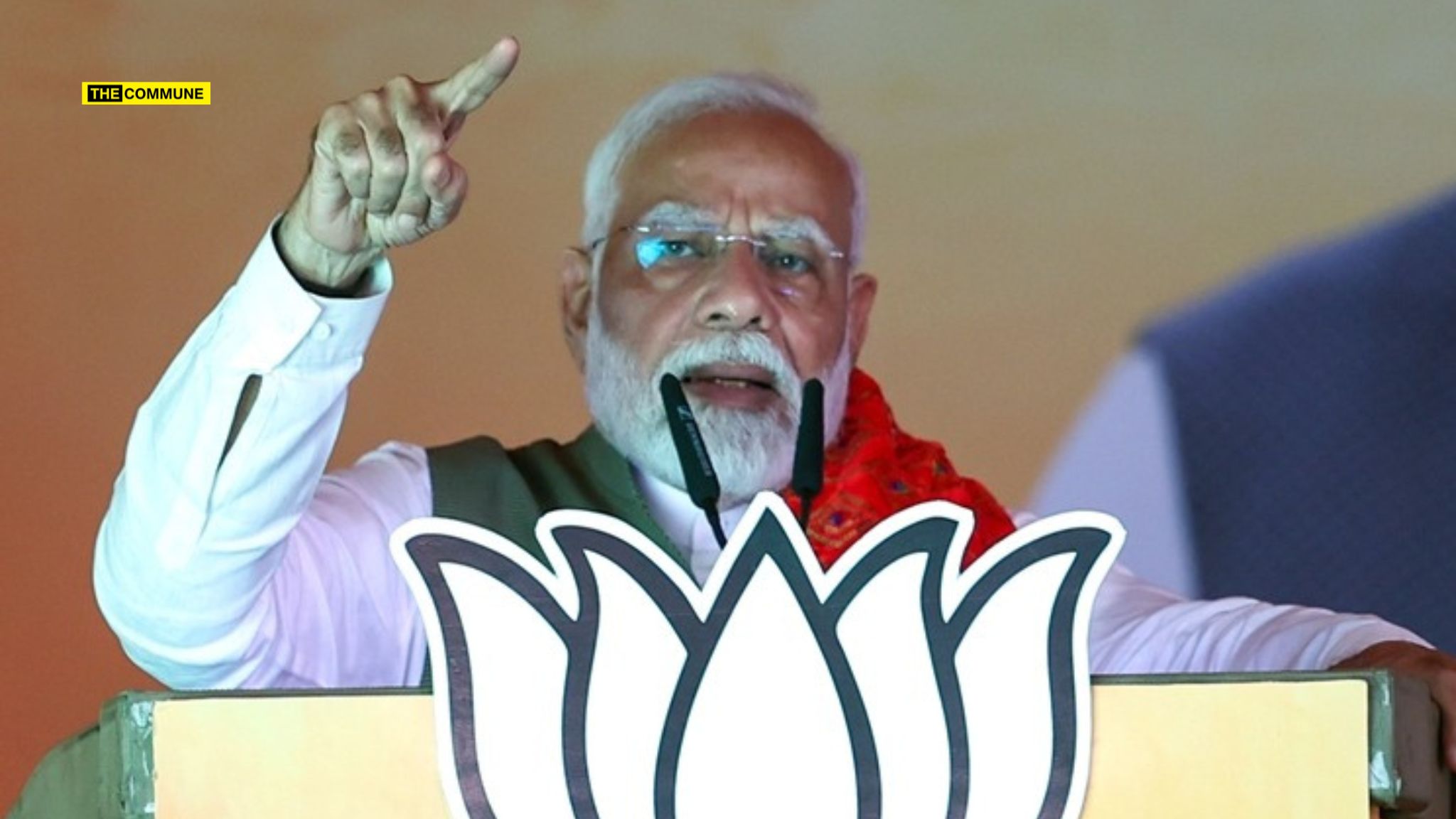
On 15 July 2024, Karnataka Chief Minister Siddaramaiah acknowledged a financial irregularity amounting to ₹89.6 crore within the Karnataka Maharishi Valmiki ST Development Corporation, which contrasted with the opposition’s assertion of ₹187 crore. This admission occurred during a contentious debate initiated by BJP’s Leader of the Opposition R Ashoka in the legislative assembly.

Siddaramaiah intervened during Ashoka’s opening remarks to refute allegations connecting former ST minister B Nagendra to electoral funding fraud, specifically denying any admissions regarding funds for Ballari LS elections as claimed by the BJP and Ashoka.

The debate grew heated as the ED’s arguments in legal proceedings were discussed. Ashoka accused unidentified entities of orchestrating the scam covertly, lamenting the death of accountant Chandrashekar and labeling him a “martyr” who allegedly succumbed under pressure to manipulate funds.

Amidst calls from BJP for a CBI inquiry due to concerns over perceived bias of state police and suspicions of a government cover-up, Ashoka stressed the importance of transparency given the gravity of the allegations.

The debate in the assembly was tumultuous, marked by repeated adjournments due to objections from Congress members who argued that ongoing probes by the CBI, ED, and SIT should prevent discussion. Congress members also attempted to delay proceedings, leading council chairman Basavaraj Horatti to consult advocate general Shashi Shetty. After deliberation, Horatti allowed discussion on the condition that no individuals linked to the case were named during the proceedings.

Previously, the principal accused in the ST fund scandal reportedly purchased a pre-owned Lamborghini from a Hyderabad dealership, using ₹3.3 crore diverted from funds designated for the development of Scheduled Tribes in Karnataka. However, this extravagant purchase was short-lived. Law enforcement swiftly tracked the money, located the car, seized it, and returned it to the dealer. They also recovered the misappropriated ₹3.3 crore.

Satyanarayana Varma, 36, was apprehended by the SIT in Hyderabad on 13th June. During the operation, authorities seized ₹8.2 crore linked to the Karnataka Maharshi Valmiki ST Development Corporation Ltd.

Varma claimed that the Lamborghini had cost him ₹3.3 crore. Following his arrest in Hyderabad, Varma was brought to Bengaluru for further questioning by the SIT. He allegedly admitted to the purchase during interrogation. SIT officials verified this by contacting the dealership, though they did not disclose specifics such as the model of the vehicle involved.

Separately, the Congress government in Karnataka faced fresh allegations on Monday as the BJP raised concerns about a ₹120 crore scandal related to rice procurement for the state’s ‘Anna Bhagya’ programme. BJP’s N Ravikumar highlighted significant irregularities under the scheme, pointing out differing purchase prices where the Food and Civil Supplies Department procured rice at ₹34.6 per kg for Anna Bhagya, while the School Education Department paid ₹29.3 per kg for midday meals. In defense, Food Minister KH Muniyappa justified the price disparity, emphasizing the quality of rice distributed under Anna Bhagya.

(With Inputs From TOI)

Subscribe to our channels on TelegramWhatsApp, and Instagram and get the best stories of the day delivered to you personally.
Dravidian Model: TNPSC Calls Freedom Fighter Vanchinathan As ‘Accused’ In Ashe Murder Case In Group-1 Exam

The Tamil Nadu Public Service Commission (TNPSC) is facing strong criticism for portraying Tamil Nadu freedom fighter Vanchinathan as a criminal in the assassination case of Robert Ashe during India’s struggle for independence, which is seen as aligning with colonial British perspectives.

In the recently concluded Group 1 examination held on 13 July 2024, TNPSC included a question that states, “Who was the first accused in Ashe murder’s case?.” This question has offended many individuals and sparked criticism of the TNPSC on the internet and social media.

In response, the Hindu Munani has issued a statement condemning the incident and calling for an apology, stating, “A question asked in the recently held TNPSC Group Examination question paper has shaken the mind of every Indian citizen. Freedom fighter #Vaanchinathon who shot the brutal collector #Ashe who enslaved this country and killed many people.”

“It is the TNPSC examination board that has questioned Indian freedom fighter Vanjinathan in the question paper as a murderer! Don’t denigrate the sacrifice of a hero who died for our nation like this! Don’t spread hatred among the younger generation! Tamil Nadu government should immediately apologize for this… @TNPSC_Office @CMOTamilnadu @mkstalin,” Further added.

Another netizen shared his displeasure stating, “Vanjinathan guilty in TNPSC GROUP 1 question, Not only the eyes..! The whole body is disturbed! This is what happens when traitors are in power?”

Another netizen criticized the ruling government for such question in the exams

Who is Vanchinathan?

The Communemag published an in-depth history of Vanchinathan, revealing his true story and dispelling myths about Dravidian movements in the article titled, “Veera Vanchinathan: The Hero Who Turned Ashe To Ashes, Unmasking The Falsehood Peddled By Dravidian Gangs.”

Vanchinathan is celebrated as an Indian independence activist who gained prominence by assassinating Robert Ashe, the district collector of Tirunelveli on 17 June 1911, at Maniyachchi railway station. Ashe was known for suppressing independence movements and ordering violent crackdowns.

Vanchinathan targeted Robert William Escourt d’Ashe because Ashe was instrumental in the arrest of V.O.Chidambaranar Pillai (V.O.C) and in dismantling the Swadeshi Steam Navigation Company founded by V.O.C. Ashe, an ICS officer serving as collector of Tinnevely district (now Tirunelveli), earned the ire of many young nationalists who turned to vigilantism against British authorities. Vanchinathan’s act of assassinating Ashe symbolized their commitment to complete independence (Poorna Swaraj) from British rule.

Part of the Bharatha Matha Association, a group of revolutionary youth planning actions against British colonial rule, Vanchinathan aimed to send a direct message to King George V, who had permitted the use of cowhide in military equipment. By assassinating Ashe, the top British bureaucrat in the area, Vanchinathan intended to communicate their resolve to challenge imperial authority.

Vanchinathan, after killing Robert Ashe, took his own life while attempting to evade capture. The assassination marked a significant moment in the South Indian independence movement, fueling the revolutionary spirit against British domination.

Dravidianists Derogating Vanchinathan

In recent years, a new narrative has emerged surrounding the assassination of Collector Ashe. Dravidianists have begun projecting Ashe as a “crusader of social justice” and painting Vanchinathan as a casteist Brahmin. They claim that Vanchinatha Iyer was provoked by Ashe’s wife, Mary Lillian Patterson, who assisted a pregnant outcast woman in need of immediate medical treatment to pass through the agraharam. According to this claim, Vanchinathan killed Ashe to protect the Brahminical establishment. However, there is no evidence to prove the occurrence of this incident.

However this narrative has been busted as there is no conclusive evidence to prove the occurrence of this incident.

Subscribe to our channels on TelegramWhatsApp, and Instagram and get the best stories of the day delivered to you personally. 

Why Karnataka Congress Govt’s Reservation For “Locals” Is Not Just Unconstitutional But A Dangerous Plan That Will Balkanize India 

On 15 July 2024, the Karnataka Cabinet approved a bill mandating that a significant portion of jobs in the private sector be reserved for local candidates. The Karnataka State Employment of Local Candidates in the Industries, Factories, and Other Establishments Bill, 2024, will be presented in the current legislative session. This legislation requires specific quotas for local candidates in various sectors.

The Bill defines a local candidate as, “who is born in the State of Karnataka and who is domiciled in the State for a period of 15 years and who is capable of speaking, reading and writing Kannada in a legible way and has passed a required test conducted by the nodal agency”.  

What Does The Bill Stipulate?

The Bill stipulates that 50% of management positions and 75% of non-management positions must be allocated to local candidates. Management positions include roles such as supervisory, managerial, technical, operational, and administrative positions, excluding directors. Non-management roles encompass clerical, unskilled, semi-skilled, skilled, IT/ITES, contract, and casual work.

The bill also mandates that industries collaborate with the government to train local candidates within three years if enough qualified local candidates are not available. Quota exemptions are allowed, but local candidate minimums must remain at 25% for management and 50% for non-management roles. Non-compliance could result in penalties ranging from ₹10,000 to ₹25,000. Additionally, a daily penalty of ₹100 will be imposed for each day the contravention continues. The bill applies to any entity employing more than 10 people, thereby encompassing a wide range of sectors including IT, services, manufacturing, retail, and other establishments.

Chief Minister Siddaramaiah emphasized that 100% of C and D-grade posts in private industries should be reserved for Kannadigas. These posts include roles such as clerks, lab technicians, and pharmacists, with monthly salaries ranging from ₹25,000 to ₹40,000.

The Bill addresses longstanding demands for job reservations for Kannadigas. Kannada organizations recently held rallies advocating for the implementation of the Sarojini Mahishi report, which recommended job quotas for locals in both government and private sectors. The report was originally submitted in 1984 and put forth 58 recommendations, one of which included a 100% reservation for local candidates in group C and D jobs within Union government departments and public sector undertakings operating in Karnataka.

A previous attempt by the Siddaramaiah-led Congress government to introduce a 100% reservation for locals in all private industries, excluding the IT-BT sector, was halted by the Law Department, citing unconstitutionality under Articles 14 and 16 of the Constitution.

When CM Siddaramaiah tweeted about his government’s move, there was a lot of backlash from people and concerns raised by the business community which ultimately made him to delete his tweet.

Karnataka Minister MB Patil has stated that they will address the confusion by discussing it with the CM to ensure it doesn’t have any negative impact.

What Are Industrialists Saying?

Several industry leaders in Karnataka expressed strong objections to the proposed bill mandating local reservations in private-sector jobs.

Founder of Biocon, Kiran Mazumdar-Shaw, emphasized that while the goal is to provide jobs for locals, the bill should not compromise Karnataka’s leading position in technology. She advocated for exemptions for highly skilled recruitment to avoid negatively impacting the tech industry.

Mohandas Pai, Chairman of Manipal Global Education Services, called the bill “fascist” and unconstitutional. He criticized it as discriminatory and regressive, highlighting concerns over government certification and language tests for private-sector employment. Pai suggested that a government officer’s involvement in private recruitment is akin to the oppressive measures in George Orwell’s “Animal Farm.”

RK Misra, Co-Chairman of ASSOCHAM Karnataka and Co-Founder of YULU labelled the bill as shortsighted. He warned that the requirement for a government officer in every private company to monitor the bill’s implementation would deter Indian IT and Global Capability Centres, potentially scaring them away from Karnataka.

It is noteworthy that in 2023, the Punjab and Haryana High Court invalidated the Haryana State Employment of Local Candidates Act, 2020, which had stipulated a 75% reservation for state residents in private sector jobs with monthly salaries under ₹30,000, calling it “unconstitutional“. The court ruled that the Act exceeded the State’s legislative authority and violated constitutional guarantees of equality under Article 14 and freedom under Article 19. The High Court in its order said, “The underlying object of the legislation, as has been succinctly put by counsel for the petitioners, is to create an artificial gap and a discrimination qua the citizens of India.”  The matter is in the Supreme Court and the apex court sought a response from the Centre in this regard.

Why This Is A Wrong Move

The Congress, often emphasizing the Constitution, is violating fundamental rights with this move.

Article 14 guarantees equality before the law for every Indian, but this action denies equal treatment to those from other states working in Karnataka.

Article 19 ensures the freedom to move, reside, and work anywhere in India, which this move also infringes upon.

Such a draconian measure not only violates the Constitution but also defies basic economic logic.

Restricting companies’ hiring rights will deter investors, strangle the private sector, and lead to a loss of jobs, businesses, and state revenue.

Ultimately, these laws will harm the state’s economic growth and development.

Most often locals will not be sufficiently talented/skilled for a specific job. In such cases, other state candidates will have to be hired. Although the bill states that local candidates must be trained if the specific skilled candidates are unavailable, this is something companies will not indulge in.

Training means an expenditure of resources – time, money, etc and this is something industries will not be happy to spend.

Such a move can also be seen as an infringement of the state into the rights of company decisions in terms of hiring.

The private sector will be strangled as it depends on the availability of skilled, qualified and efficient workforce.

Implementing such reservations could dilute the talent pool, leading to reduced performance among companies. This might compel businesses to relocate out of the state or even out of the country, thereby negatively impacting the state’s revenue.

In essence, this move can turn out to be counterproductive and detrimental to the economic growth and development of the state.

Reservations should ideally be targeted toward low-income households and maintained at moderate levels to balance inclusivity with economic efficiency.

Had the West decided to implement such reservation, we would have seen plenty of Indians return home.

Is This A Broader Agenda Of The Congress To Divide And Rule?

We have often heard Congress scion Rahul Gandhi call India as a “union of states” rather than a country in itself.

Even recently, during his trip to Manipur, Rahul Gandhi reiterated that “Manipur is one of the most beautiful states of the Indian Union.”

The Karnataka Congress government’s parochial move to reserve jobs for locals in the state could set a precedent for other states to follow suit. If this trend spreads, it may lead to a fragmentation of the national labour market. Such policies could hinder the vision of a unified, integrated, and mobile workforce across India, effectively undermining the concept of ‘One nation, One market’. This balkanisation of the labour market could, in turn, contribute to a broader balkanisation of India itself, creating barriers between states and potentially weakening national cohesion.

Subscribe to our channels on TelegramWhatsApp, and Instagram and get the best stories of the day delivered to you personally. 
Karnataka Doctor Faces Legal Action For Social Media Comment; No FoE For Hindus, Say Netizens

On 13 July 2024, YouTubers Abhi and Niyu posted on their official X handle asking their followers If you could delete one thing from the planet today – what would it be?” The responses ranged from targeting the YouTuber duo to diseases to war and whatnot. One netizen who goes by the name Dr. Upadhya wrote, Muslim community

A criminal case was registered in Udipi against the said Dr. Upadhya, whose full name is Dr Keertan Upadhya. Dr. Upadhya works as a laparoscopic surgeon at a private hospital in Brahmavar. The case was filed, followingallegations of posting derogatory and divisive remarks against Islam and Muslims on social media”. This became a big controversy after screenshots of his comments began circulating online, leading to widespread outrage. Several netizens tagged authorities including the Karnataka Director General of Police (DGP) and urged them to intervene.

As reported in Mangalorean, in response to the backlash, Sub-Inspector (Wireless) Ajmal Ibrahim EA, head of the Udupi District Police’s Social Media Monitoring Cell, filed a complaint against Dr. Upadhya. The complaint requested legal action against the surgeon for attempting tofoment religious hatred and disrupt communal harmonythrough his provocative comments.

The police registered a case against Dr. Upadhya under sections 196 and 353 of the Bharatiya Nyaya Sanhita (Indian Penal Code).

Dr. Upadhya later stated that his account had been hacked and subsequently deleted the controversial post. However, police sources confirmed that Dr. Upadhya did not file a formal complaint regarding the alleged hacking of his account.

Netizens wrote that Hindus had no freedom to write anything against the alleged minority community.

This is the state of Hindus who may have acontroversialopinion on the alleged minority community. However, when Islamists go on the streets shoutingSar Tan Se Juda“, there is no case filed for anattempt to foment communal hatred and fan religious tension.Just a day ago, the Ajmer court acquitted the Dargah cleric and others in thesar tan se judaslogan case citing a lack of evidence.

This seems to be yet another case of freedom of expression when it comes to Islamists whereas hate speech when it comes to Hindus. 

Subscribe to our channels on TelegramWhatsApp, and Instagram and get the best stories of the day delivered to you personally. 

Ajmer Court Acquits Dargah Cleric And Others In ‘Sar Tan Se Juda’ Slogan Case Citing Lack Of Evidence

In a shocking turn of events, on 16 July 2024, Ajmer court in Rajasthan has acquitted Gohar Chisti, a dargah cleric and five others who were accused of chanting provocative slogans ‘Sar Tan Se Juda’ at the Moinuddin Chishti Dargah gate. This incident followed suspended BJP leader Nupur Sharma’s alleged derogatory remarks about Prophet Mohammed in 2022.

The slogans were reportedly raised during a public protest at the dargah gate in response to Sharma’s remarks, which had sparked widespread outrage. In the widely circulated video, Chishti was observed chanting the slogan ‘sar tan se juda’ in response to Nupur Sharma’s alleged controversy for making offensive comments about Prophet Muhammad during a TV debate. Sharma later reported receiving numerous death threats due to her remarks. Subsequently, a case was filed against Gauhar Chishti, who subsequently disappeared.

According to the report, Gohar Chisti and others raised the slogan “gustakhi-e-nabi ki ek hi saza, sar tan se juda sar tan se juda” (Beheading is the only punishment for those who insult Prophet Muhammad) on 17 June 2022, during the rally protesting Sharma’s alleged statement.

Chisti was arrested in July 2022 after an FIR was filed on 25th June, accusing him of delivering an inflammatory speech from the Nizam Gate. The case included charges under various sections of the IPC such as abetting offences by the public, unlawful assembly, disobedience to public servants’ orders, intentional insult, criminal intimidation, and others.

Chisti’s defense argued that their protest was peaceful and lawful, organized in response to what they viewed as a serious insult to their community’s religious sentiments. The state had contended that video clips of the alleged slogans circulated online, leading to violent incidents in Udaipur and Amravati, where individuals were reportedly beheaded due to religious animosity stirred by such slogans. Thus, they argued that more serious charges under IPC Section 302/115 should apply.

However, Additional District and Session Judge Ritu Meena found insufficient evidence to support the allegations against them. A detailed judgment on the case is expected later.

In summary, the court’s decision rested on the lack of sufficient evidence to convict Chisti and the others accused of chanting provocative slogans during the protest.

(With inputs from Live Law)

Subscribe to our channels on TelegramWhatsApp, and Instagram and get the best stories of the day delivered to you personally. 

Kumbakonam Police Registers Case Against VCK Functionary For Harboring Assault Suspects And Weapons At His Residence

The Kumbakonam police have filed a case against Viduthalai Chiruthaigal Katch (VCK) functionary for harboring four rowdies who were being sought by the police in connection with an assault near the new bus stand.

Two weeks ago, Vishwa was riding his motorcycle near the new bus stand in Fathimapuram, within the jurisdiction of Kumbakonam West Police Station, suffered serious injuries in an assault by a group of four individuals. An investigation was promptly launched based on Vishwa’s complaint at Kumbakonam West Police Station. Authorities were actively pursuing four suspects in connection with the incident, Gail Antony, Arnold Antony, Arunkumar, and Paulsamy.

Meanwhile, confidential information indicated that Alex, the spouse of Kumbakonam Corporation 24th Ward Councilor Rubinsha and a VCK functionary, was harboring dangerous weapons in his residence. Subsequently, police sought a court warrant to conduct a search of Alex’s house.

Following court approval, more than 10 officers led by Police Inspector Jagatheesan from Kumbakonam West Police Station conducted a thorough search at Alex’s residence a few days ago. During the search, various weapons including knives, sickles, and iron rods were discovered under the bed in one of the bedrooms. These items were seized by the police, who continued their search. At that time, Gail Antony, Arnold Antony, Arun Kumar, and Paulsamy, wanted for attempted murder, were found hiding under the bed and were subsequently apprehended.

Subscribe to our channels on TelegramWhatsApp, and Instagram and get the best stories of the day delivered to you personally. 
Pakistan: Young Hindu Girl Abducted, Forcibly Converted To Islam

A minor Hindu girl in Pakistan, who works as a maid, has narrated the distressing tale of how her employer persistently pressured her to convert to Islam by reciting the Kalma. This incident is part of a troubling pattern in the region.

The girl’s aunt, Sunita, 25, also a domestic worker, was forcibly converted to Islam and married off. According to reports, Sunita managed to contact her family, revealing she was taken against her will and coerced into converting.

Sunita, who was kidnapped from Zubaida Heights Apartments where she worked, was forced to convert to Islam the next day in Hyderabad. She contacted her elder sister from Hyderabad’s Chandni Chowk, explaining that an unknown Muslim woman, with the help of several men, had abducted her at gunpoint under the pretense of securing a job. They then transported her to Hyderabad and forced her to recite the Kalma loudly.

Further details from Sunita’s niece indicate that a Muslim woman on the sixth floor of Zubeida Heights, where Sunita worked, had persistently pressured her to recite the Kalma and planned to take her to Karachi without informing her parents.

Hindus in Pakistan have reduced to about 1% of the total population. Every single day, reports of abductions, forced conversions and forced marriages of young (mostly minor) Hindu girls keep surfacing from Pakistan. And yet, no action is taken by international community about the Hindu minorities in Pakistan.

Subscribe to our channels on TelegramWhatsApp, and Instagram and get the best stories of the day delivered to you personally.