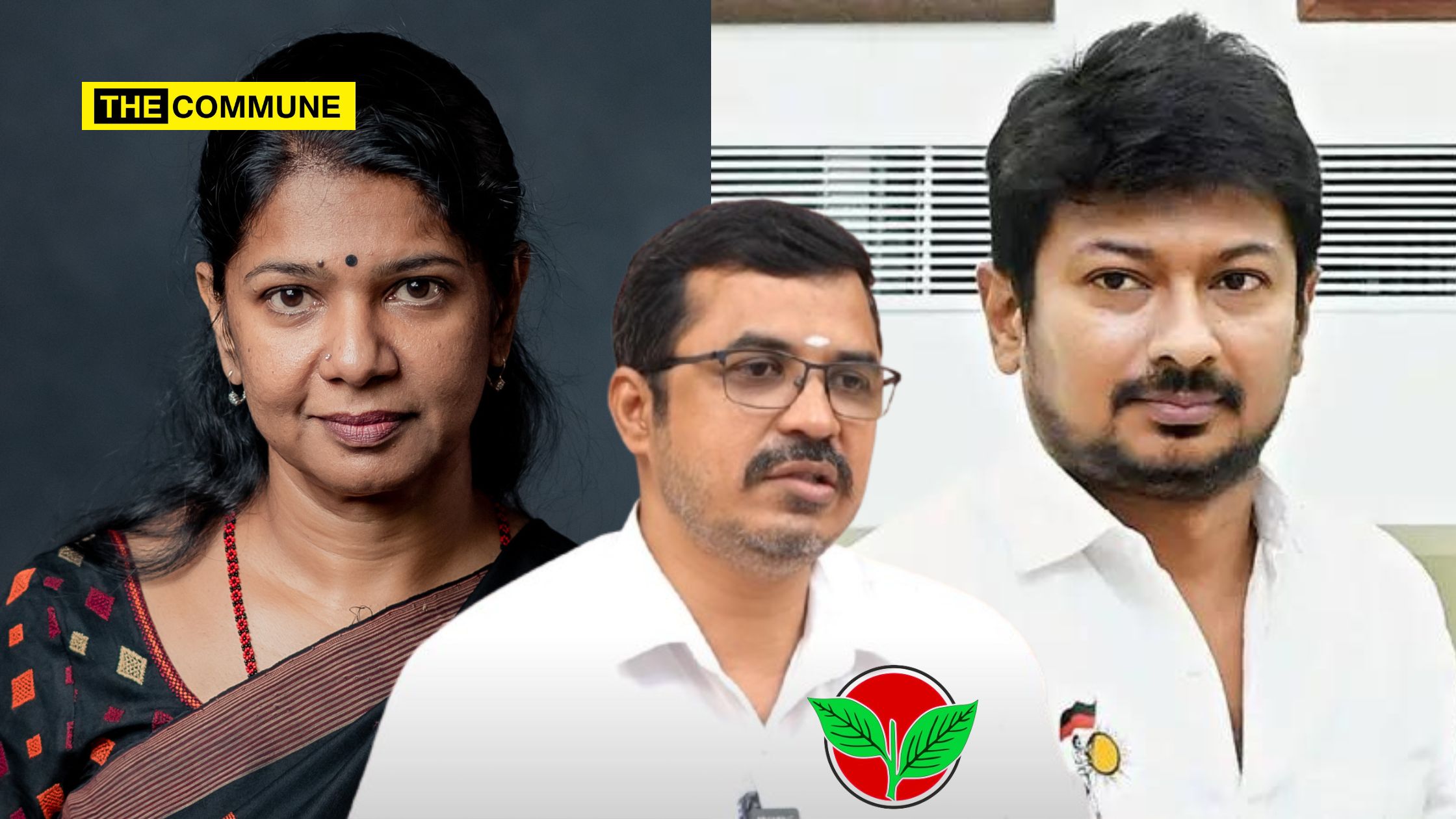
AIADMK spokesperson Kovai Sathyan has strongly criticized the DMK for elevating its crown prince Udhayanidhi Stalin, asserting that the party is likely to split into two or three factions by the 2026 state legislative assembly elections, when the crown prince Udhayanidhi Stalin is positioned as the face of the DMK and declared the chief ministerial candidate.
During a recent event organized by the AIADMK in Cuddalore, Kovai Sathyan reflected on his earlier speech in Vellore. He mentioned that since that address, he has received praise from DMK members for openly discussing nepotism within their party and for his support of Kanimozhi, the daughter of M. Karunanidhi.
Sathyan stated, “I said Crown Prince Udhayanidhi is going to become the deputy chief minister. After becoming the deputy chief minister he is the chief minister candidate in 2026. If such a thing happens, now, a rift has started within the Dravida Munnetra Kazhagam, but there will be a rift within the DMK and it will break into two or three before 2026. I said that one group which breaks is called “KDMK”. Do you know what “KDMK” means? It is Karunanidhi Dravida Munnetra Kazhagam. I said that the leader for KDMK is Kanimozhi.”
Sathyan recounted that following his speech, he received a barrage of phone calls over the next two weeks. He was surprised because, in the past, after similar speeches, the opposition would typically call to scold him harshly. This time, however, the critics reached out to praise him, highlighting the ongoing disgruntlement within the DMK due to Udhayanidhi’s elevation. Many callers apparently echoed his statements, as they viewed Kanimozhi as their leader, but Udhayanidhi Stalin took the forefront.
“It’s not just DMK’s allies that will split—DMK itself will fracture into 2-3 factions. After my speech in Vellore last month where I predicted this, with one breakaway group potentially called KDMK (Karunanidhi Dravida Munnetra Kazhagam) under Kanimozhi’s leadership, I received over 500 calls within two weeks supporting the idea.“, he said.
He criticized the DMK when he saw cadres pleading for money to support their children’s education during the DMK conference, all while Udhayanidhi’s son sat behind him on stage. This led him to label the DMK cadres as “hereditary slaves.” He questioned what qualifications Udhayanidhi had to become Deputy Chief Minister except for being the son of Stalin and the grandson of Karunanidhi.
திமுக கூட்டணி மட்டுமல்ல திமுகவே 2026ல் உடையும்.
போன மாதம் வேலூர் பொதுக்கூட்டத்தில் #கதிமுக உருவாகும் அதற்கு கனிமொழி தலைமை என்ற பேசிய பின் 500ம் மேல் அலைபேசி அழைப்புகள் நாங்கள் தகுந்த நேரத்திற்கு காத்திருக்கிறோம் என்று. கடலூர் பொதுக்கூட்டத்தில் நேற்று. #வாழ்த்துக்கள்கதிமுக. pic.twitter.com/DZ1WB2t39x
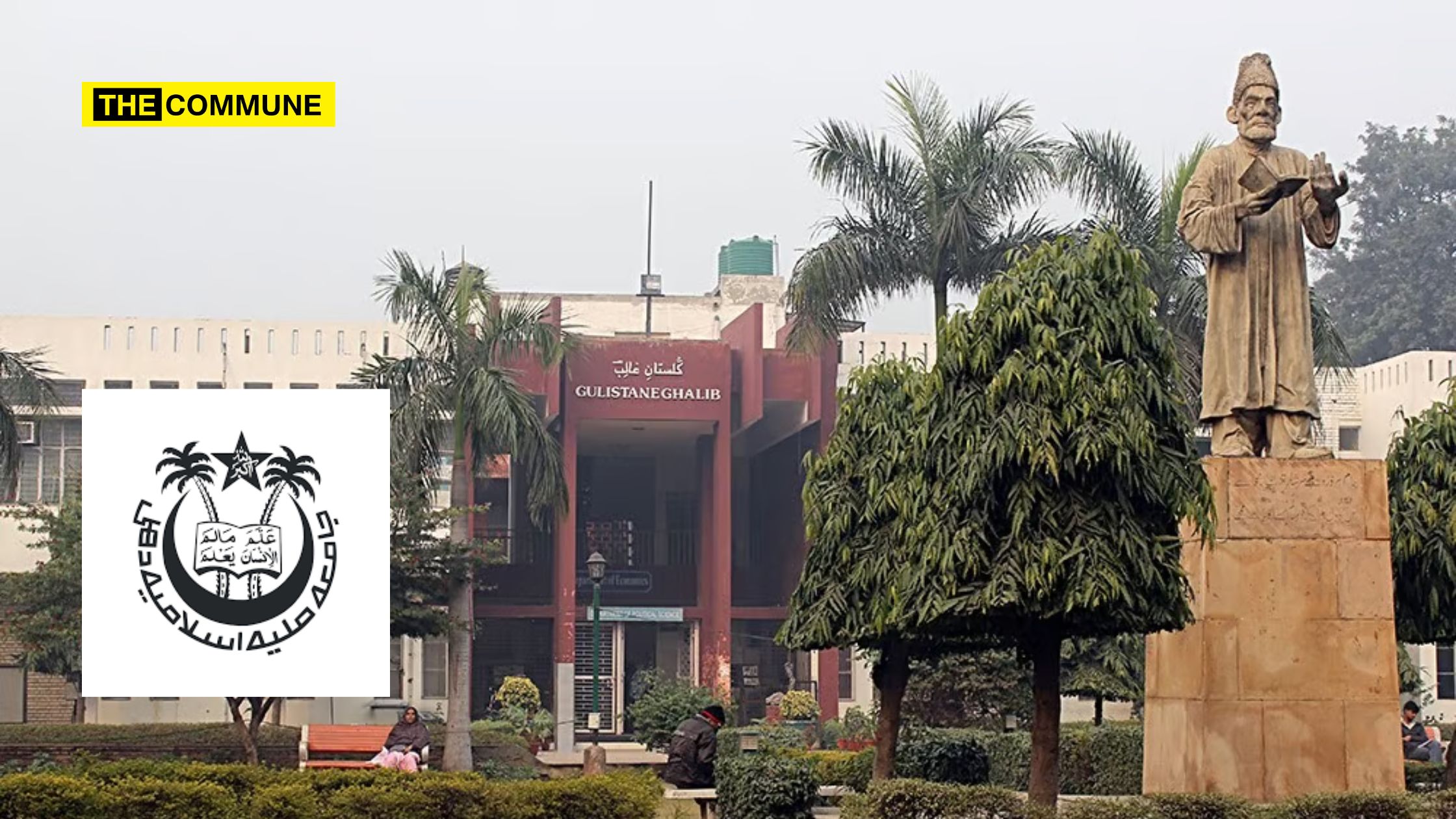
A scuffle erupted at Jamia Millia Islamia University during Deepavali celebrations on the night of 22 October 2024, involving two groups of students. The altercation occurred amid rangoli-making festivities, with reports indicating that the conflict began when one group vandalized the rangoli. Slogans such as “Allahu Akbar” and “Palestine Zindabad” were allegedly chanted during the chaos. The Akhil Bharatiya Vidyarthi Parishad (ABVP), which organized the event, condemned the administration for inaction and claimed that “outsiders” and “anti-social elements” disrupted the festivities. The Student Federation of India (SFI) accused the administration of inviting outsiders to create communal tension. Police were deployed, and although no formal complaints were filed, a lathi charge was reported, causing injuries and fear among students. This is the first instance. This incident follows previous clashes at the university, let us take a look at 6 other instances of anti-Hindu activities at Jamia Millia Islamia University in the recent past.
2. Inhuman Treatment, Forced Conversion At Jamia Islamia – July 2024
Delhi Police registered an FIR against Jamia Millia Islamia officials, including Registrar Nazim Hussain Al Jafri, Deputy Registrar Mohammed Naseem Haider, and Professor Shahid Tasleem, under SC/ST Act sections 3(1)(p) and 3(1)(q) based on a complaint from Ram Niwas Singh, an assistant in the Natural Sciences department. Singh, who has alleged caste-based discrimination, accused them of using derogatory language, forcing him to convert to Islam and harassment. Singh claimed he faced retaliation after filing a complaint with the SC Commission and sought legal recourse, leading to increased hostility from university officials, including fake complaints against him.
3. Pro-Babri Masjid Slogans Raised At Jamia Millia Islamia – January 2024
On 22 January 2024, tensions flared at Delhi’s Jamia Millia Islamia as videos surfaced of students chanting pro-Babri Masjid slogans on the day of the Ram Mandir Pran Pratishtha celebrations in Ayodhya. In response, Delhi Police deployed personnel outside the campus as a precautionary measure, although no arrests were made due to a lack of official complaints. The university administration reported that academic activities were not disrupted and that only a few students were involved. The slogans, which called for a boycott of classes, sparked controversy given the recent Supreme Court ruling favoring the Ram Janmabhoomi.
Boycott for Babri Resistance is Remembrance
Fraternity Movement Jamia Millia Islamia organized a university-wide strike, urging students to boycott classes and reading rooms in solidarity with Babri Masjid.
4. Protest Blaming Hindus For Nuh Violence – August 2023
A week after violence erupted in Nuh, Haryana in August 2023, following an attack on a Hindu procession, students at Jamia Millia Islamia staged a protest, labeling the attackers as victims and accusing Hindus of aggression. Despite reports of assaults on Hindu devotees, including deaths and injuries, protesters claimed the violence was anti-Muslim. Eyewitness accounts and FIRs revealed a premeditated attack by a mob targeting Hindu participants and locals. The situation has prompted efforts from certain groups to distort the narrative, portraying the attackers as victims while downplaying the violence against Hindus.
Visuals from Jamia university today: Left students’ union backed protest completely turning the reality of Nuh on its head, calling it “anti-Muslim pogrom”. Says Bajrang Dal people went to Nuh with weapons while locals were totally unarmed!
5. Muslim Students In Jamia Millia Islamia Intimidate, Threaten Other Students Against Celebrating Holi On Campus – March 2023
On 1 March 2023, during a Holi celebration event called ‘Rangotsav’ at Jamia Millia Islamia University, some Muslim students opposed the festivities, threatening peers who participated. Videos shared on social media showed one student criticizing the administration and intimidating revelers, while an Instagram story from another student condemned participation in Hindu festivals, citing religious beliefs.
6. Muslim Students Of Jamia Millia Raised Slogans Against Hindu Student Organisations – January 2023
Jamia Millia Islamia University took action against students from the Students’ Federation of India (SFI) who proposed to screen a controversial BBC documentary on PM Modi and the 2002 Gujarat riots, citing “disruption of peace.” Over 70 students have been detained by Delhi Police in connection with the planned screening and subsequent protests. University Vice-Chancellor Najma Akhtar condemned the SFI’s actions, emphasizing the need to maintain harmony on campus. The administration reiterated that no screenings or gatherings were allowed without prior permission, threatening strict disciplinary measures against organizers for any violations.
7. Principal Asks Dalit Teacher To Wash Utensils, Make Tea – July 2022
In July 2022, Harendra Kumar, a Scheduled Caste employee at Jamia Millia Islamia University, filed a complaint with the National Scheduled Caste Commission alleging that the university failed to implement reservations for Scheduled Castes and Tribes in appointments and promotions. Kumar accused the university’s officials of discrimination and colluding against him, which led to his wrongful termination from a guest computer teacher position. To support his claims, he provided evidence of threats and harassment from university authorities, including demands to perform menial tasks. Kumar’s actions prompted an investigation by a three-member committee formed by the commission to address the grievances he raised.
They not only indulged in anti-Hindu activities, but they also have been involving themselves in anti-national/anti-India activities over the years. Read more here.
Subscribe to our Telegram, WhatsApp, and Instagram channels and get the best stories of the day delivered to you personally.
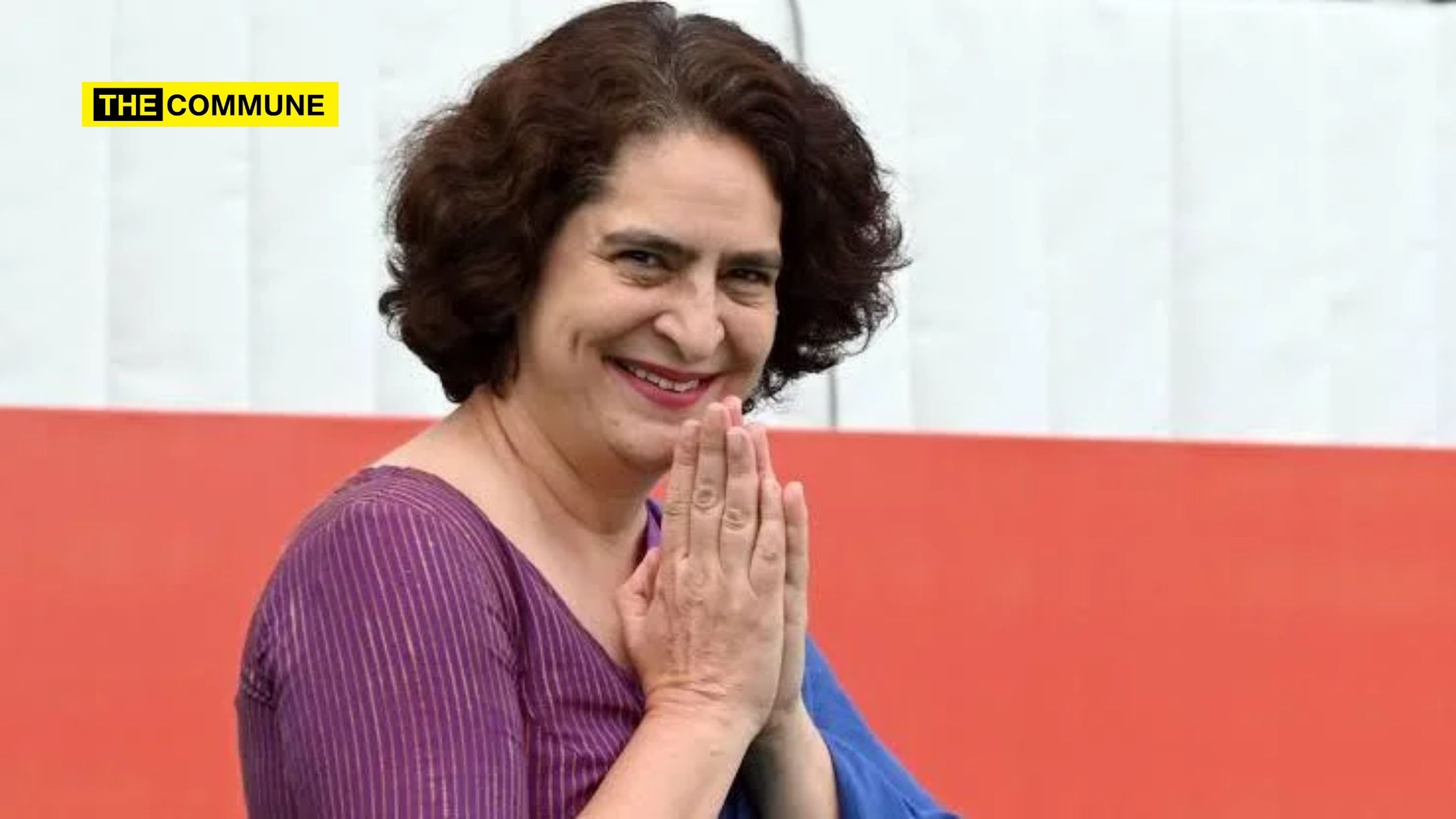
Congress General Secretary Priyanka Gandhi Vadra often criticises the government, but her key investment choice includes PSU shares.
According to the affidavit submitted by Priyanka Gandhi, who is making her electoral debut by contesting the by-election for the Wayanad Lok Sabha in Kerala, she has also invested in the stock market. Her portfolio includes 18 companies, six of which are PSU stocks.
As per the information in the affidavit, the value of the total stock portfolio of the Congress leader is ₹65,72,012 as of October 18. Out of the total, ₹19,08,875 is invested in government stocks.
Priyanka Gandhi holds 1,000 shares of IRCON International Ltd, and their value is ₹2,21,800. She has 2,000 National Aluminum shares and 1,000 shares of NMDC, valued at ₹4,64,000 and ₹2,31,450, respectively.
Apart from this, Priyanka Gandhi has 1,000-1,000 shares of Rail Vikas Nigam Ltd and Rites Ltd. Their value is ₹4,77,200 and ₹3,02,800, respectively. She also holds 500 shares of Railtel Corporation of India.
Its value is ₹2,11,625. Priyanka Gandhi has also invested in companies like Usha Martin, Infosys, NIIT, Tata Power, SpiceJet, PC Jewellers, and Finolex Industries.
According to the election affidavit, the Congress leader has also invested in mutual funds, the value of which is ₹2 crore 24 lakh and ₹17 lakh is deposited in her PPF account.
She has also invested in gold and silver. She has 59.83 kg of silver items, valued at ₹29.55 lakh, and 4.41 kg of jewellery, which includes 2.5 kg of gold items, valued at ₹1.15 crore. She also has a farmhouse in Shimla.
–IANS
Subscribe to our Telegram, WhatsApp, and Instagram channels and get the best stories of the day delivered to you personally.
Jamia Millia Islamia University witnessed a scuffle between two groups of students during a Diwali event on 23 October 2024. The university administration blamed “outsiders” for instigating the chaos, calling it a “sponsored” effort to disrupt the campus’s peaceful atmosphere. The event remained peaceful until 7:30 PM, when unidentified individuals began raising slogans, leading to counter-sloganeering and a scuffle that involved the destruction of a rangoli. Communal and pro-Palestine slogans were allegedly chanted by both sides. Vice-Chancellor Mohammed Shakeel assured that strict action would be taken against the troublemakers once identified. A formal complaint was lodged with the Jamia Nagar police, and police and paramilitary forces were deployed outside the university as a precaution. No students were detained, and non-students were removed from the scene by the police.
This is not the first time that anti-India activities have occurred at Jamia Millia Islamia University. Here is a list of 12 other instances of anti-India activities that took place there over the years.
1. Jamia PhD Student Arshad Warsi, Arrested In ISIS Pune Terror Module Case – October 2023
On 2 October 2023, Mohammad Arshad Warsi, arrested by the Delhi Police Special Cell for his involvement in the ISIS Pune module, was also linked to the conspirators behind the anti-Hindu riots in Delhi in 2020. A Ph.D. student at Jamia Millia Islamia, Warsi played a key role in the communal violence during the CAA-NRC protests and was in contact with Sharjeel Imam. Alongside Warsi, two other suspects, Shahnawaz and Mohammed Rizwan Ashraf, were apprehended; Shahnawaz had previously evaded capture despite being wanted. Investigations revealed that the trio had engaged in extensive online radicalization and planned terrorist attacks, leading to the seizure of bomb-making materials and firearms.
2. Protest Erupts Against CAA – March 2024
On 11 March 2024, shortly after the Government of India announced the rules for the Citizenship (Amendment) Act (CAA), protests erupted at Jamia Millia Islamia in Delhi, led by the Muslim Students Federation (MSF) and the Congress-affiliated National Students’ Union of India (NSUI). The university’s Vice Chancellor, Eqbal Hussain, declared that no protests would be permitted on or near the campus, tightening security to prevent any agitation. In response, MSF condemned the government’s move as “fascist” and shared videos of their gathering at the central canteen. NSUI echoed similar sentiments, calling the CAA unconstitutional and labeling it a “farce.” Despite their strong objections, they did not clarify their rationale for protesting against what they deemed a diversion from “real issues.”
Following notification of Citizenship (Amendment) Act (#CAA) rules by the Centre government, protests were registerd at Delhi's Jamia Millia Islamia campus, which has been a focal point of opposition to the law deemed discriminatory. Deployment of Delhi Police has been made. pic.twitter.com/RaWIWUVgnU
3. Jamaat-E-Islami (JeI)-Backed Student Group In Jamia Millia Islamia – October 2023
On 13 October 2023, during the ongoing conflict between Israel and Hamas, a student group at Jamia Millia Islamia expressed support for Hamas. Students affiliated with the Students Islamic Organisation (SIO) were seen wearing badges and headbands inscribed with “with Hamas” and chanting slogans like “Intifada Inquilab.” This demonstration was part of a larger call for “global jihad” initiated by Hamas leaders. The SIO, along with other leftist and Islamist student groups, mobilized students to show solidarity with Palestine and hope for the downfall of Israel, responding to calls for action from Hamas leaders.
Shocking. Open support to terror and massacre in Delhi’s Jamia Milia Islamia today. Students wearing ‘With Hamas’ badge on head. Raise slogans of Intifada Inquilab. Visuals verified
4. ‘Fight For Allah’: A Student’s Platform Champions Supremacist Causes At Jamia – May 2023
The organization ‘Al Haya Min Allah,’ founded in 2019, was operating at Aligarh Muslim University (AMU) and Jamia Millia Islamia with a highly controversial agenda. Under the guise of promoting Islamic values, it ran the ‘Haya’ campaign, which propagates Islamic fundamentalism, anti-democratic views, and supremacist ideologies. The organization rejected democracy, advocating for Sharia law and dismissing other religions as false. Its activities included door-to-door campaigns, promoting hijab for women, and campaigns against Hindu festivals like Holi. Al Haya Min Allah also opposed nationalism, labeling it a “ridiculous ideology” and criticized secularism and liberalism. The group actively participated in anti-CAA protests, supporting figures like Sharjeel Imam and opposing the Indian Constitution, which it deemed “fascist.” The organization’s promotion of radical views, its communal stance, and its patriarchal agenda raised significant concerns about its influence on impressionable students at AMU and Jamia.
5. Jamia Students Create Ruckus After Varsity Cancels Admission Of Delhi Riots Accused Safoora Zargar – September 2022
Students at Jamia Millia Islamia University protested after the institution revoked the admission of Safoora Zargar, an accused in the Delhi riots. Slogans like “RSS Ki Kabr Khudegi” were raised by the protesters. Zargar’s admission to the MPhil/PhD program was canceled due to unsatisfactory progress and failure to submit her dissertation within the stipulated time, despite a COVID-19 extension. Zargar was arrested in April 2020 under the Unlawful Activities (Prevention) Act for her alleged role in the Delhi riots conspiracy. She was granted bail in June 2020 on humanitarian grounds after the Central Government raised no objections.
6. Jamia Engg Student Mohsin Ahmed Turns Out To Be ISIS Terrorist – August 2022
On 7 August 2022, the NIA arrested Jamia Millia Islamia student Mohsin Ahmed Khan from Delhi’s Batla House for collecting funds for ISIS. Mohsin, originally from Patna, was an active member of ISIS, running campaigns both on-ground and online. He collected funds from India and abroad, transferring them to Syria via cryptocurrency. The NIA is investigating his connections and the extent of his involvement. Mohsin’s family denies the charges, claiming he was innocent and portraying him as a charitable person. He was reported by classmates and found to be in contact with 35 ISIS commanders in Syria.
#BREAKING Big catch for the NIA. ISIS sympathiser held in Delhi. He is accused of carrying out suspicious activities for #ISIS@shankar_news18 with more details
7. Delhi Riots Accused Jamia ‘Student’ Found Welcoming Taliban Rule In Viral Audio Clip – August 2021
Asif Iqbal Tanha, a Jamia Millia Islamia student and Delhi riots accused sparked controversy on 15 August 2021, by praising the Taliban’s takeover of Afghanistan during a conversation on Twitter Space. Tanha celebrated the resignation of Afghan President Ashraf Ghani and hailed the establishment of the Islamic Emirate, urging others to draw inspiration from the Taliban’s “freedom movement.” Tanha, a member of the Students Islamic Organisation (SIO), had been arrested under the Unlawful Activities (Prevention) Act (UAPA) for his role in the 2020 Delhi riots. He admitted to organizing protests against the Citizenship Amendment Act (CAA), inciting violence, and delivering provocative speeches nationwide. Tanha also confessed to orchestrating protests under the guise of peaceful marches to encourage more participation. Following his release after 13 months in jail, he expressed joy on social media. Tanha’s comments were supported by journalist Ali Sohrab, known for his controversial content.
8. FIR Registered Against Jamia Millia Islamia Law Student Mahoor Parvez In UP – May 2020
Jamia Millia Islamia student Mahoor Parvez was bookedin Bulandshahr, UP, for referring to Indian soldiers martyred in a Handwara encounter as “war criminals” in an Instagram post. A complaint was filed by Bajrang Dal member Praveen Bhati, accusing Parvez of sowing division in society. She was charged under non-bailable IPC sections and the IT Act. Parvez had claimed Indian forces had been illegally occupying Kashmir for over 70 years and criticized the glorification of soldiers as martyrs. After backlash, she deleted her social media accounts. Some Islamists defended her remarks as “freedom of expression.”
9. Jamia Student Shadab Najar Bats For Islamic Terrorism In Kashmir – May 2020
Shadab Najar, a student from Jamia Millia Islamia who was injuredduring the Citizenship Amendment Act protests, expressed support for Islamic terrorism in Kashmir. He shared an Al Jazeera article quoting Hizbul Mujahideen commander Riaz Naikoo, who advocated violence against Indian forces. Najar’s social media activity has long shown his radical views, including posts likening the Indian Army to terrorists and spreading false claims about the military. He also supported conspiracy theories after the Pulwama attack. His recent post backing the Hizbul commander is part of a pattern of pro-terrorist rhetoric from some Jamia students.
10. Delhi Police Arrest Jamia Alumni Association President Shifa Ur-Rehman – April 2020
Shifa-Ur-Rehman, president of the Jamia Alumni Association, was arrested by the Delhi Police Special Cell under the UAPA for his alleged involvement in the 2020 Delhi Anti-Hindu riots. He was caught on CCTV in riot-hit areas, and evidence such as call records and WhatsApp messages suggested his role in inciting violence. Police claim he coordinated protests and received funding from Jamia alumni in the Middle East. Other leaders, including Umar Khalid, Meeran Haider, and Safoora Zargar, have also been arrested under UAPA for their roles in what police describe as a “premeditated conspiracy” behind the riots.
11. RJD leader & Jamia PhD Student Meeran Haider Arrested For Instigating Violence – April 2020
Meeran Haider, a 35-year-old Jamia Millia Islamia PhD student and president of the Rashtriya Janata Dal’s youth wing in Delhi, was arrested by Delhi Police for his involvement in instigating violence during the 2020 anti-Hindu Delhi riots. Accused of mobilizing around 60 people, Haider allegedly used WhatsApp groups to incite riots and was present in the Chand Bagh area during the unrest, which left 53 dead and over 400 injured. His role in funding the violence and protests against the Citizenship Amendment Act (CAA) is under investigation. The Jamia Coordination Committee condemned his arrest as baseless.
12. Jamia Millia Islamia ‘Suspends’ Professor Who failed Non-Muslim Students For Supporting CAA – March 2020
Jamia Millia Islamia University suspended Dr. Abrar Ahmad, an assistant professor, for claiming in a tweet that he failed 15 non-Muslim students for supporting the Citizenship Amendment Act (CAA) in March 2020. In the now-retracted tweet, Ahmad also threatened the students, suggesting a majority of Muslim students would target them if they continued supporting the CAA. Following widespread criticism, Ahmad claimed his tweet was a “parody” meant to illustrate perceived discrimination. However, the university has suspended him pending an investigation. The CAA grants fast-tracked citizenship to persecuted minorities from Afghanistan, Pakistan, and Bangladesh, excluding Indian citizens.
Dr. Abrar Ahmad, Asstt Professor of @jmiu_official tweeted in public domain as to failing 15 non-muslim students in an exam. This is a serious misconduct inciting communal disharmony under CCS CONDUCT RULES.The university suspends him pending inquiry.@DrRPNishank@HRDMinistry
— Jamia Millia Islamia (NAAC A++ Grade Central Univ) (@jmiu_official) March 25, 2020
Subscribe to our Telegram, WhatsApp, and Instagram channels and get the best stories of the day delivered to you personally.
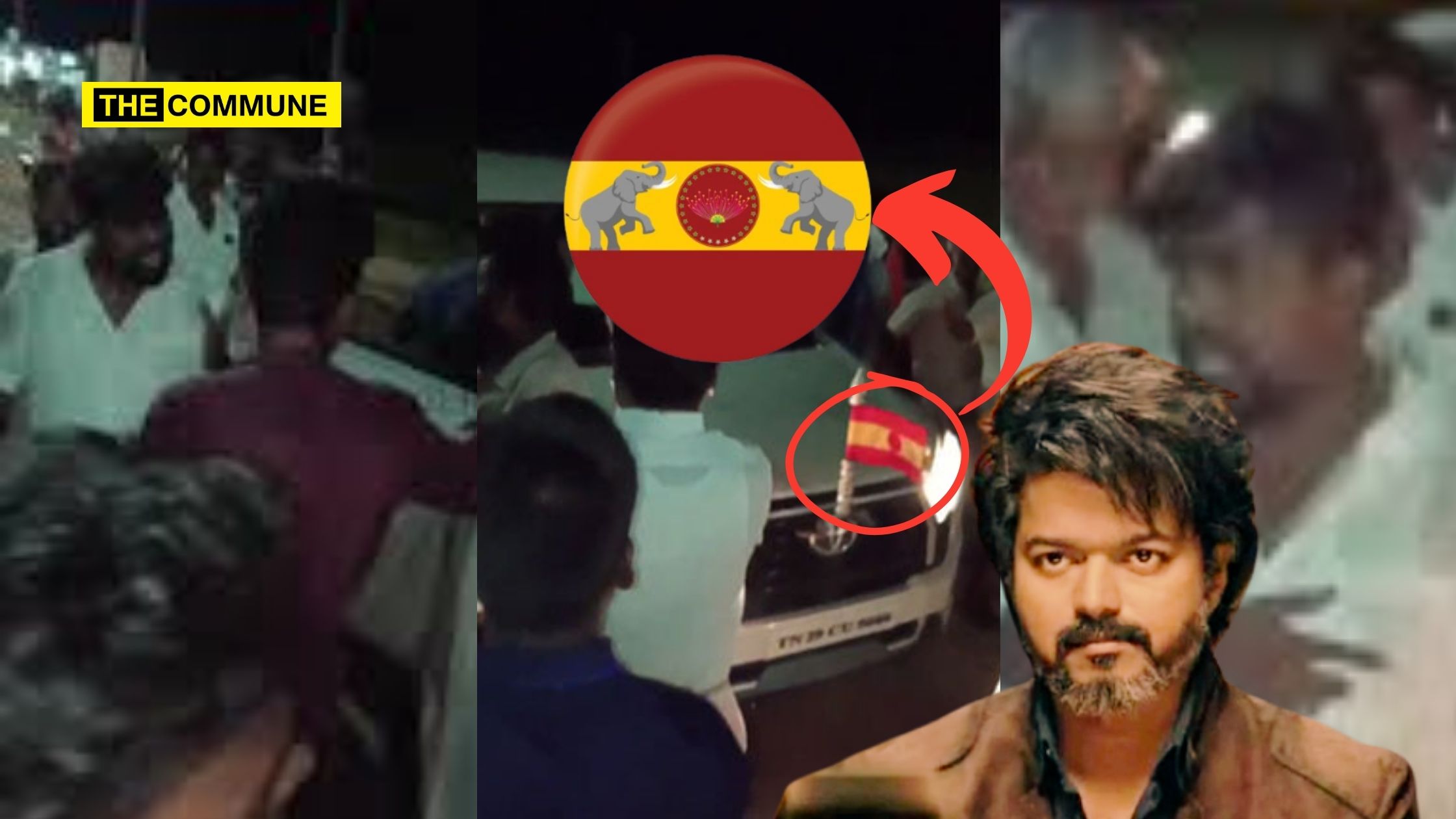
The Tamilaga Vettri Kazhagam (TVK) hasn’t even held its first conference, within that its members and officials have already started to behave like untouchable politicians. They’ve gotten into a dispute at a toll booth, refusing to pay and asking, “Do they know who we are?”
The incident occurred at the Kariyamangalam toll booth near Chengam in the Thiruvannamalai district, where a car displaying the TVK flag attempted to pass through without paying the toll. When the employee on duty questioned them, the situation escalated into a fight, as the intoxicated passengers allegedly attacked the employee.
As the employee was assaulted, other staff members intervened to block the car from leaving, leading to a heated argument. The passengers in the car, clearly inebriated, made empty threats, claiming, “You don’t know who we are; we’re here after overseeing the Vikravandi conference.”
“நாங்க யாருன்னு தெரியாம பேசுறீங்க நீங்க..!” த.வெ.க. கட்சி எல்லோருக்குமானது.. என்ன சரக்கு போட்டு பிரச்சனை செய்றீங்களா..? கரியமங்கலம் சுங்கச்சாவடியில் சுங்கக் கட்டணம் செலுத்தாமல் ஊழியர்களை தாக்கி அடாவடி செய்த த.வெ.க. கட்சியினர்..#Tiruvannamalai | #Tollgate | #MoneyIssue | #TVK |… pic.twitter.com/Nkv7CIe6dN
A heated confrontation unfolded during the Tamizhaga Vettri Kazhagam’s Tanjore North District advisory meeting on 29 September 2024, at a private wedding hall in Kumbakonam. The meeting, led by TVK general secretary Anand, took a dramatic turn when an emotional woman approached the stage to address her brother’s exclusion from the party.
She questioned Anand, saying, “My brother sold his property and supported the Vijay Makkal Iyakkam. Why has he been left out?” Her brother, Thangadurai, was a former district president of the Vijay Makkal Iyakkam in Thanjavur and had played a significant role in the party’s early efforts.
Tensions rose as security personnel, including bouncers, forcibly removed the woman from the stage, dragging her away and locking her in a room within the hall, which led to a commotion. Reporters attempting to cover the incident were blocked by party officials, resulting in further arguments.
This incident highlights growing dissatisfaction within the party, as some members claim that Thangadurai has been sidelined despite his contributions after the movement gained traction. The woman’s sister, Pushpa, also engaged in a verbal altercation with General Secretary Anand, escalating the turmoil.
Kollywood actor Vijay’s eagerly awaited first conference for his party, Tamizhaga Vetri Kazhagam (TVK), is scheduled for 27 October 2024, in Vikravandi, Viluppuram district. This event is highly anticipated as Vijay has remained largely silent about his political ideology since the party’s inception eight months ago. Observers are curious about his vision and how he plans to navigate the political landscape, particularly as he aligned himself closely to Dravidian ideology.
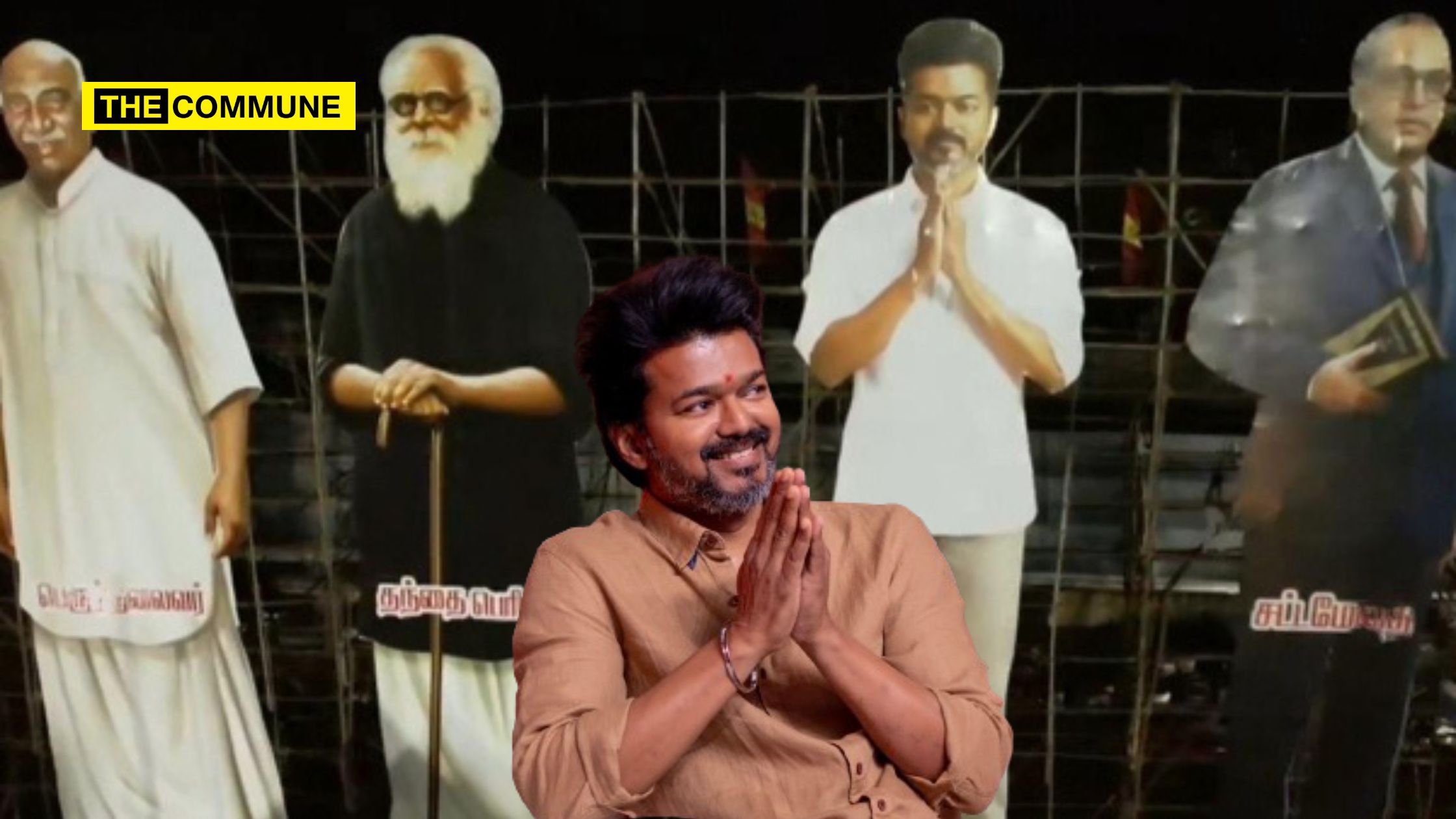
In this context, preparations for the conference have been in full swing, but they have now become embroiled in controversy due to cutouts featuring Vijay alongside anti-Hindu figures EVR and Ambedkar, positioned in the corner after Vijay, which have drawn significant criticism from netizens.
One netizen said, “This generations have started realizing people like #EVR #Anna #Karunanidhi who tried to dilute the identity, culture and spirituality of Tamil Nadu by talking about separatism for their political selfishness. If #Vijay understands that he will escape, if not will become ten among the eleven…”
தமிழகத்தின் சுயத்தை, கலாச்சாரத்தை, ஆன்மீகத்தை தங்கள் அரசியல் சுயநலத்திற்காக பிரிவினைவாதம் பேசி நீர்த்துப்போக செய்ய முயன்ற #ஈவேரா#அண்ணா#கருணாநிதி போன்றோர்களை இந்த தலைமுறைகள் உணர துவங்கிவிட்டன
அதை புரிந்துகொண்டால் #விஜய் தப்பித்துக்கொள்வார். தவறினால், பத்தோடு பதினொன்று…#தவெக
Another netizen said, “There is no need to wait for the conference to take place…for the policy to be announced… No need to look for a reason to not support TVK… Rusty #EVR”
மாநாடு நடக்கட்டும் என்றோ… கொள்கையை அறிவிக்கட்டும் என்றோ… காத்திருக்க தேவை இல்லை…
தவெக'வை ஆதரிக்காமல் இருக்க இனியும் காரணம் தேட வேண்டியதில்லை… இத்துப்போன #ஈவேரா
அதாவது அண்ணல் அம்பேத்கர கடைசியா போட்டு இவர அதுக்கு முன்னாடி போடுவீங்க… ஒழுங்கு மரியாதையா அண்ணல தூக்கி முன்னாடி போட்டு அணில் போட்டோவ தூக்கி பின்னாடி போடுற… த்தா அண்ணலவிட நீ என்ன பெரிய புடுங்கியா?@tvkvijayhq@actorvijaypic.twitter.com/lYuj1wyVCc
He has largely followed the Dravidianists and EVR’s ideology, which is simply anti-Hindu. Previously, he did not extend wishes for Hindu festivals but was quick to acknowledge minority celebrations. After facing significant backlash, he recently surprised many by wishing people for Pooja celebrations, including Ayudha Pooja, Saraswati Pooja, and Vijayadasami. This marks a notable shift for Vijay, who had previously avoided acknowledging Hindu festivals and faced criticism for it.
His recent gestures to celebrate Hindu festivals suggest a move toward treating all faiths equally and stepping beyond Dravidian narratives.
Vijay faced considerable backlash for not wishing the Hindu community on major occasions, such as Tamil New Year, while he extended greetings for Onam, a Hindu festival celebrated in Kerala. This inconsistency drew accusations of hypocrisy, aligning him with the DMK’s approach.
Here’s a list of his previous political gestures since launching his party, which primarily consisted of online messages sending indirect signals:
Not Wishing for Vinayakar Chaturthi: Vijay did not acknowledge Vinayakar Chaturthi, a significant festival for the majority Hindu population, leading to accusations of disregarding Hindu cultural values.
Not Wishing for Tamil New Year (Puthandu): Instead of recognizing Tamil New Year, Vijay chose to greet his followers for Ambedkar Jayanti, which falls on the same day a strategy similar to the DMK’s treatment of Hindu festivals.
No Wishes for Krishna Jayanti: He also neglected to acknowledge Krishna Jayanti on August 26, 2024.
Wishing for Onam: In an apparent effort to connect with his Malayali audience, Vijay wished them for Onam, similar to DMK leader MK Stalin’s gestures in the past.
Acknowledging Christian and Muslim Festivals: He consistently wished for festivals like Ramzan, Eid, and Easter, along with other special days like Labour Day and Independence Day.
This divide-and-rule approach was evident in Vijay’s political statements, where he aligned himself with the DMK on issues like NEET and CAA. However, his strategy faced backlash, particularly during Vinayagar Chaturthi, when critics pointed out that while he releases films on such festivals for profit, he fails to wish the Hindu community.
Now, with the recent cutouts featuring EVR, critics wonder if Vijay is attempting to appease the DMK once again.
Subscribe to our Telegram, WhatsApp, and Instagram channels and get the best stories of the day delivered to you personally.
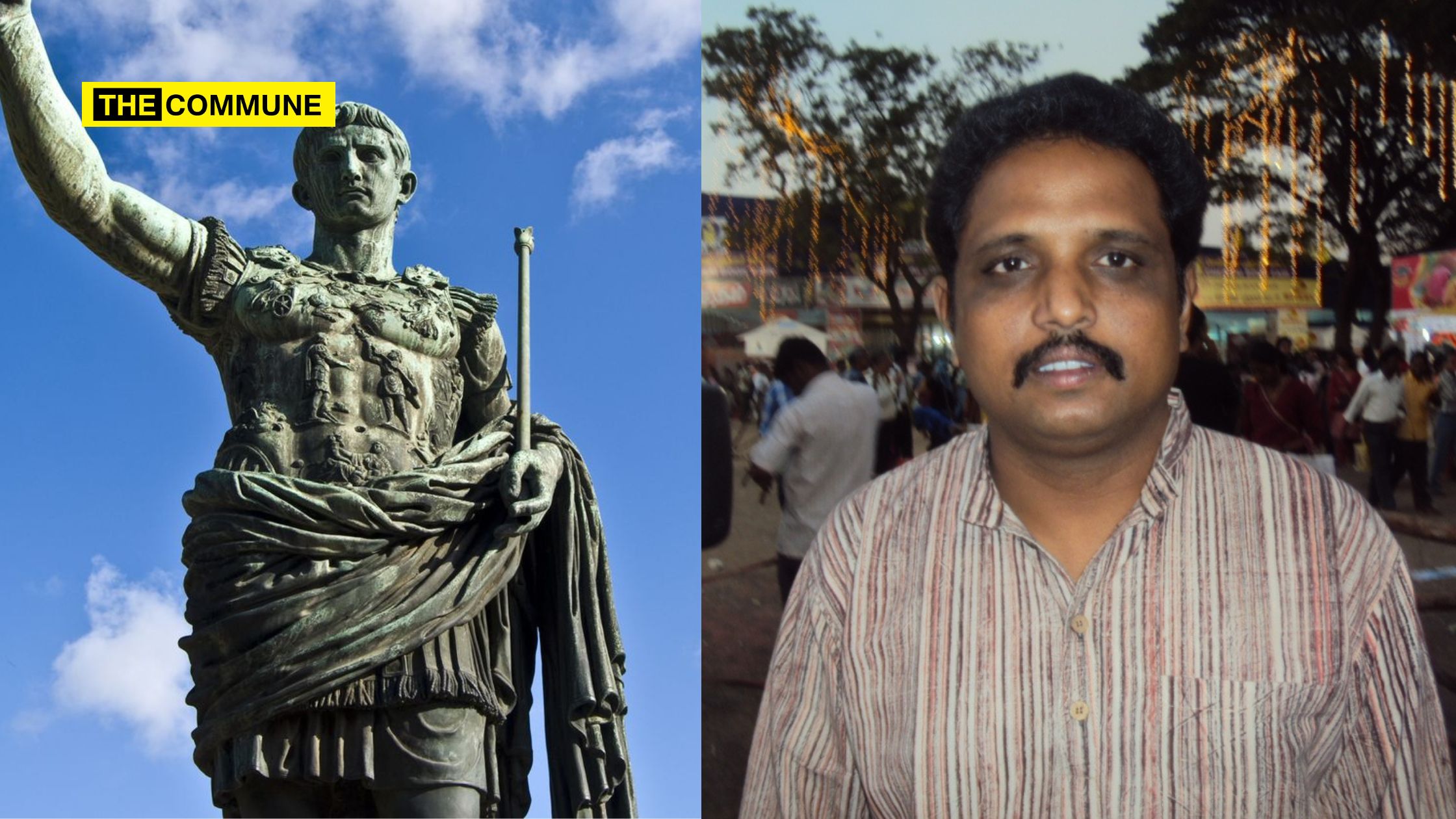
Communist MP Su Venkatesan is once again in the news – this time it is for his “history” lessons about Roman King Julius Caesar, or was he a Greek King, according to the Communist history?
In an event held a few days ago, he is seen speaking about the greatness of the city of Madurai. In the speech, he touches upon Rakhigarhi and its findings, Keeladi, and talks about how historically important the city is. Suddenly, he touches upon something very interesting.
He says,“Construction of the present Madura Coats Mill began in 1899. When digging the ground to build the foundation, they found old coins. Upon investigation, it was found that those coins featured Julius Caesar who ruled Greece 2200 years ago. In 1932, the American Missionary wrote and published a book on the discovery of the coins. American Madura Mission was an important Mission – Pasumalai School, andAmerican College, were founded by the missionaries. I found that book which I had been looking for a very long time at a shop near the Regal Theatre. In the book, a father had written, thatcoins were found when they were digging the ground to build Madura Coats Mill. Those coins were those of Julius Caesar. These coins must be kept safe, so we gave them to the American College for safekeeping.” Julius Caesar ruled 2400 years ago andthe coin he used during his reign was exchanged with a trader living on the banks of the Vaigai River for some trade.”
Many netizens on social media called out his ignorance of world history since the Communist leader himself has written books on historical topics like the Indus Valley Civilization, Vaigai River Civilization, etc.
Julius Caesar was a Greek king from 2200 years ago. Communist history lessons from the Madurai MP. pic.twitter.com/2DvRA93RaF
While his pronunciation may be defective (he seems to say Majura Coats instead of Madura Coats), in reality, in 1889, Madura Mills Co. Ltd., also known as Madura Coats,was established by Scottish brothers Andrew and Frank Harvey who were involved in cotton trading.
Who Was Julius Caesar?
Wikipedia says Gaius Julius Caesar (12 July 100 BC – 15 March 44 BC) was a prominent Roman general and statesman. As a key member of the First Triumvirate, he commanded Roman forces during the Gallic Wars and later triumphed over his political rival Pompey in a civil war. This victory paved the way for him to assume the role of dictator from 49 BC until his assassination in 44 BC. Caesar’s actions were pivotal in the fall of the Roman Republic and the eventual emergence of the Roman Empire. Although he was Roman, Caesar could speak Greek.
Did Julius Caesar Rule Greece?
However, Caesar did not rule Greece. The Battle of Pharsalus is said to have taken place in 48 BC in Greece. The battle was primarily between two factions of Romans: Julius Caesar’s army and Pompey the Great’s forces. Both armies consisted mainly of Roman soldiers, with some foreign auxiliaries from regions supporting Caesar or Pompey. That is the closest Caesar gets to Greece.
The definitive Roman occupation of the Greek world was solidified after the Battle of Actium in 31 BC, where Augustus defeated Cleopatra VII, the last Greek Ptolemaic queen of Egypt, and the Roman general Mark Antony. Following this victory, Augustus conquered Alexandria in 30 BC, marking the end of Hellenistic Egypt as a significant power. The Roman era in Greek history continued with Emperor Constantine the Great, who established Byzantium as Nova Roma, the new capital of the Roman Empire, in 330 AD. This city was later renamed Constantinople.
Roman Coins In Madurai
In 2023, excavations in Keeladi, Tamil Nadu, uncovered significant Roman artifacts, including silver coins attributed to Augustus Caesar, indicating possible trade links between ancient Rome and this region during the Sangam age. The Archaeological Survey of India (ASI) reports that findings from the site date back to as early as the 8th century BCE, revealing brick structures, decorative jars, and various antiquities. These discoveries challenge previous assumptions about urbanization in Tamil Nadu, showcasing Keeladi as a vital urban center and opening avenues for further archaeological investigations across South India.
Dr Nagaswamy’s book “Tamil Coins” also mentions coins being found in 1882. It says, “We have seen that Roman coins (Honorius and Arcadius) were found in the city of Madurai in 1882. That Roman coins were in circulation even after 5th century is thus attested.”
Ancient Roman coins have been unearthed in the coastal town of Arikamedu, Tamil Nadu. Archaeologists discovered a 2,100-year-old Roman coin alongside five others that date back 1,700 years, along with various artifacts, providing evidence of trade conducted by the Romans in the region. Between 1899 and 1904, excavators uncovered numerous artifacts, including burial urns and skeletal remains, while iron and bronze objects were particularly notable for their craftsmanship.
The findings of Roman coins and artifacts in South India, particularly in the Coimbatore and Madurai districts, indicate a significant trade relationship with Rome during the Imperial age, especially from Augustus to Nero. During this period, Roman demand for Indian goods such as spices, perfumes, ivory, fine muslins, precious stones, and cotton surged. The most notable export was the beryl, sourced from specific locations in the Coimbatore District, believed to be the purest in the world.
Archaeological excavations have revealed substantial quantities of Roman coins in Southern India. Specifically, 612 gold coins and 1,187 silver coins have been documented, along with numerous hoards described in various quantities, including thousands found in earthen pots. This suggests a thriving trade network between Rome and the region, with the city of Madura, the capital of the Pāṇḍyan kingdom, emerging as a critical center for these exchanges.
Subscribe to our channels onTelegram, WhatsApp, and Instagram and get the best stories of the day delivered to you personally.
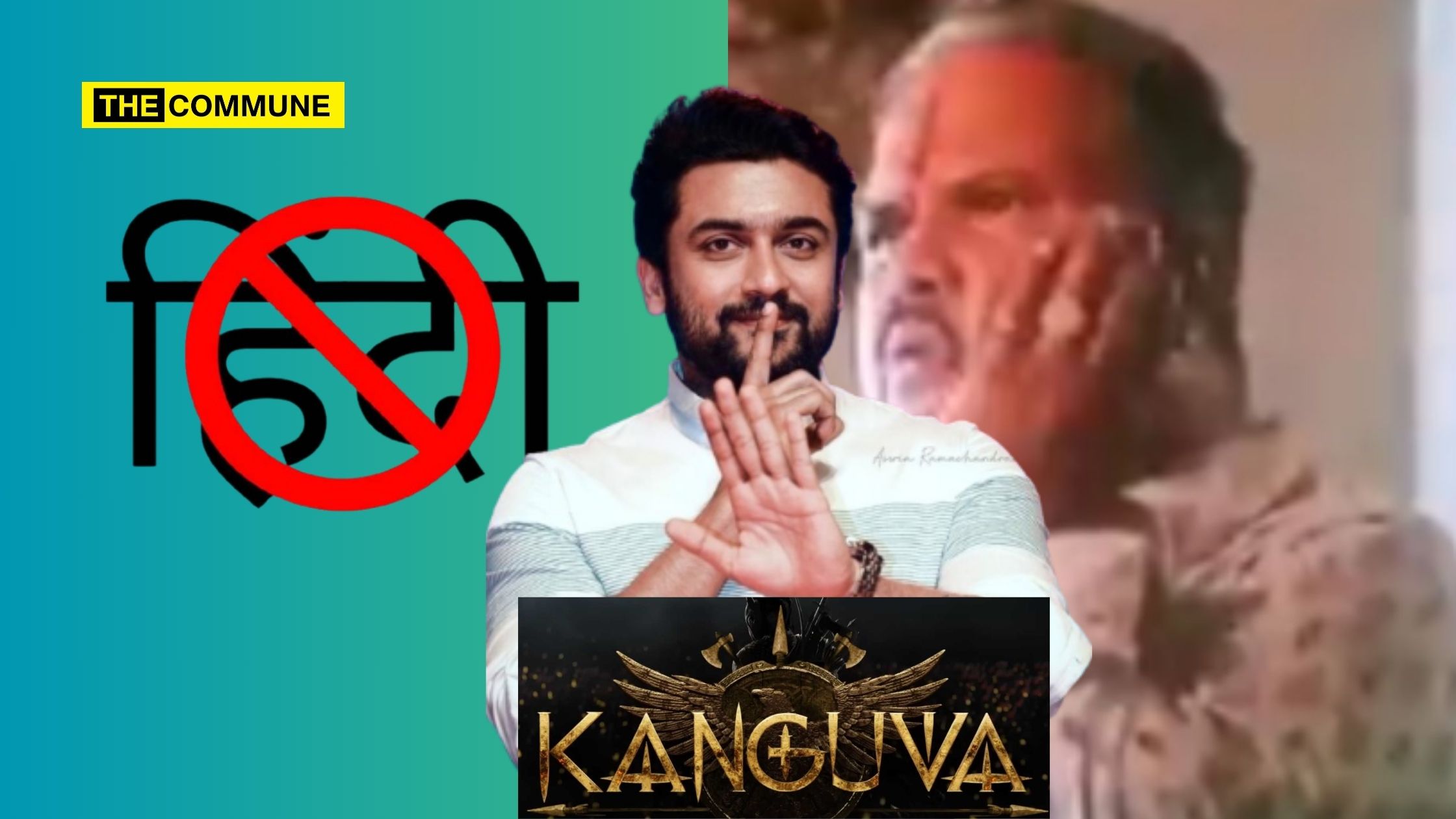
Dravidianist and virtue-signaling actor Suriya, who opposed teaching Hindi to students in Tamil Nadu and featured a scene in his film where a North Indian man is slapped for speaking Hindi, has now journeyed to Mumbai and Delhi to promote his upcoming movie Kanguva in Hindi. This starkly reveals the hypocrisy of Suriya and his family, who publicly criticize the language preventing others from benefiting from it in Tamil Nadu, all while lining their own pockets.
No To Hindi; Yes To Revenue From It
It’s true that actor Suriya has begun promoting his film in Hindi, alongside his film unit. Recently, he was seen in Mumbai with lead actress Disha Patani and director Siva, focusing primarily on Hindi promotions over other languages.
The team behind Kanguva aims for the film to be a nationwide success. The trailer, released ahead of its worldwide premiere on 14 November, has already garnered positive feedback. As the promotional efforts ramp up, interviews in various languages are expected to follow. Suriya is placing high hopes on Kanguva, especially since he hasn’t had a significant hit in recent years.
The film has generated considerable interest, with the producer targeting an ambitious revenue of ₹2000 crore, particularly seeking a strong foothold in North of India. To ensure a substantial presence in Bollywood, a promotional budget of ₹15 crore has been allocated for Kanguva in Hindi.
With stars like Disha Patani and Bobby Deol involved, the strategy is to aggressively market the film in the Hindi-speaking market, serving as a crucial introduction for Suriya to Bollywood.
In addition to the promotional budget, the producer is investing another ₹7 crore for prints and theatrical expenses, aiming for a wide release across 3500 screens in North India.
Suriya’s Hindi Opposition Stunt To Appease DMK
The husband-wife duo has indulged in virtue-signalling the public over Hindi, over building hospitals and schools instead of temples in the past. Here is a look at their past actions.
In 2019, Suriya opposed the National Education Policy’s three-language system. However, when it came to his own film, Kanguva, he posted on his social media X handle in six languages, including Hindi, to promote the film. Suriya had argued that the policy imposed Hindi on non-Hindi-speaking states and disadvantaged rural students.
After all the talk about Hindi imposition, Suriya and his family including his wife Jothika and two childrenmoved to Mumbai in March 2023 into a ₹70 crore apartment.
In his film, Jai Bhim, in the Tamil version, there is a scene where a character gets slapped for speaking in Hindi. In the scene, Prakash Raj, who plays the role of a police officer, slaps a north Indian (who has been stereotyped as a ‘Marwari’ Seth) for speaking in Hindi and asks him to speak in Tamil. This scene is however absent in the Hindi version of the film. Many pointed out that this was deliberately done to appease the ruling DMK in Tamil Nadu, the party which is known for inciting hatred in the name of a non-existent ‘Hindi imposition’.
Prakash Raj with his propaganda in the movie ‘Jay Bhim’ where he slaps a person who speaks in Hindi. pic.twitter.com/1SwPVssbK7
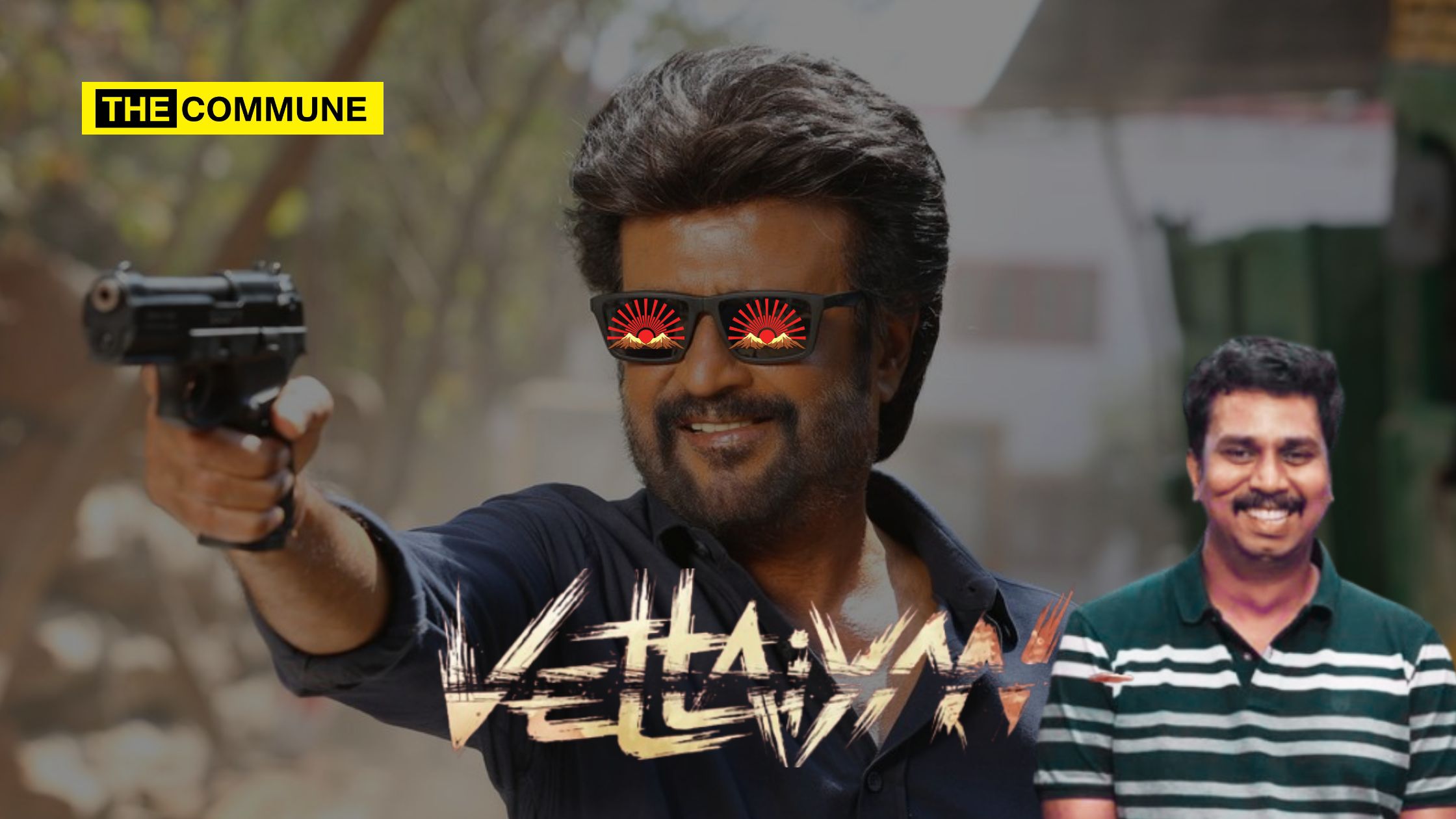
Rajinikanth’s latest film, Vettaiyan, has become yet another instance where the superstar’s allure failed to resonate at the box office. Directed by TJ Gnanavel, the film featured a star-studded cast and was heavily promoted for the long-anticipated reunion of Rajinikanth and Amitabh Bachchan since their collaboration in Hum (1991), alongside Fahadh Faasil. However, the film managed to earn only ₹207 crores globally, prompting Lyca Productions to allegedly reach out to Rajinikanth for compensation regarding the losses.
According to reports, the production house has requested Rajinikanth to take on another project for them and also to consider reducing his fee for future collaborations. While these reports are circulating, there has been no official confirmation. Previous films by the production house with Rajinikanth, including Kaala, Lal Salaam, and Darbar, similarly failed to meet expectations at the box office.
In Vettaiyan, Rajinikanth reprises his role as a cop with a troubled past. At a recent press conference, Gnanavel expressed interest in creating a prequel titled Vettaiyan: The Hunter, which would explore Rajinikanth’s character Athiyan’s journey to becoming an encounter specialist and delve into Fahadh Faasil’s character transformation into a thief and informant.
Vettaiyan: Total Box Office Collection So Far
Currently, the movie has grossed ₹238.95 crores worldwide, with a net collection of ₹138 crores or ₹164 crores gross. The action drama, coinciding with Dussehra, was released on 10 October 2024 and initially opened strong. However, it faced a sharp decline during the first week.
Though Vettaiyan had impressive pre-sales, ranking as the second highest for a Kollywood film after Vijay’s The GOAT. It enjoyed a solid opening day and surpassed ₹100 crores in its debut weekend. Unfortunately, it experienced a drastic drop of over 70% on its first Monday and has struggled to recover since then.
After 10 days of release, by 21 October 2024, Vettaiyan recorded a dismal occupancy rate of just 14.13% in Tamil markets, with morning shows at 13.36%, afternoon shows at 14.63%, evening shows at 14.39%, and no attendance for night shows. The film fared even worse in the Telugu and Hindi markets, with occupancy rates dropping to 12.58% and a mere 5.66%, respectively.
The film had a strong opening, earning ₹31.7 crore on its first day, followed by ₹24 crore on the second day and ₹26.75 crore on the third. However, it experienced a downturn during the weekdays, bringing in ₹5.6 crore on the first Monday, dropping to ₹4.3 crore on Tuesday and Wednesday. While the film’s crew attributes its poor performance to mixed reviews, higher earnings were anticipated at this stage. Unfortunately, the movie lacked substance, with subpar music being a major factor in its failure.
Budget vs. Box Office Collection
Originally intended as a mid-budget film, costs escalated by including stars like Fahadh Faasil and Amitabh Bachchan. The estimated budget is around ₹300 crores. Even considering the total worldwide gross, the film has a significant journey ahead before it reaches profitability.
Why did it flop? Right after its release, the film faced heavy criticism from all angles, including from Rajinikanth’s own fans, who felt it was not a Rajinikanth film and merely propaganda. Additionally, it was seen as relying on the same tiring lies, with little effort made to verify the facts presented.
Film Review: Vettaiyan
Vettaiyan, starring Rajinikanth, opens with a tribute to Thomas Babington Macaulay, setting a controversial tone right from the start. While the film aims to tackle serious issues like drug abuse in government schools, it quickly devolves into a series of absurd scenarios that feel more like propaganda than genuine storytelling.
Directed by TJ Gnanavel, known for his contentious work in “Jai Bhim,” the film perpetuates inaccuracies, particularly regarding the portrayal of communities. For instance, it misrepresents the background of a key character involved in a custodial death, drawing ire from the Vanniyar community.
The narrative introduces a series of implausible events, such as a petty thief making millions through fake QR codes, which raises unnecessary fears about digital transactions. The film’s depiction of the NEET exam further pushes an unfounded agenda, casting it as a tool of privilege without any real evidence.
Visually, Vettaiyan features a musical number that, while colorful, hints at cultural appeasement, which might leave audiences questioning the intent behind such choices.
As Rajinikanth’s character delivers lines that promote Dravidianist ideology, the film reinforces negative stereotypes about Hindus while portraying minority communities in a predominantly positive light. This biased representation detracts from the film’s potential impact and alienates a segment of its audience.
In the end, Vettaiyan feels more like a vehicle for a specific political narrative than a well-crafted film. For longtime fans of Rajinikanth, this alignment with propaganda over storytelling is disheartening, making it difficult to reconcile the superstar’s legacy with his recent choices.
Subscribe to our channels onTelegram, WhatsApp, and Instagram and get the best stories of the day delivered to you personally.
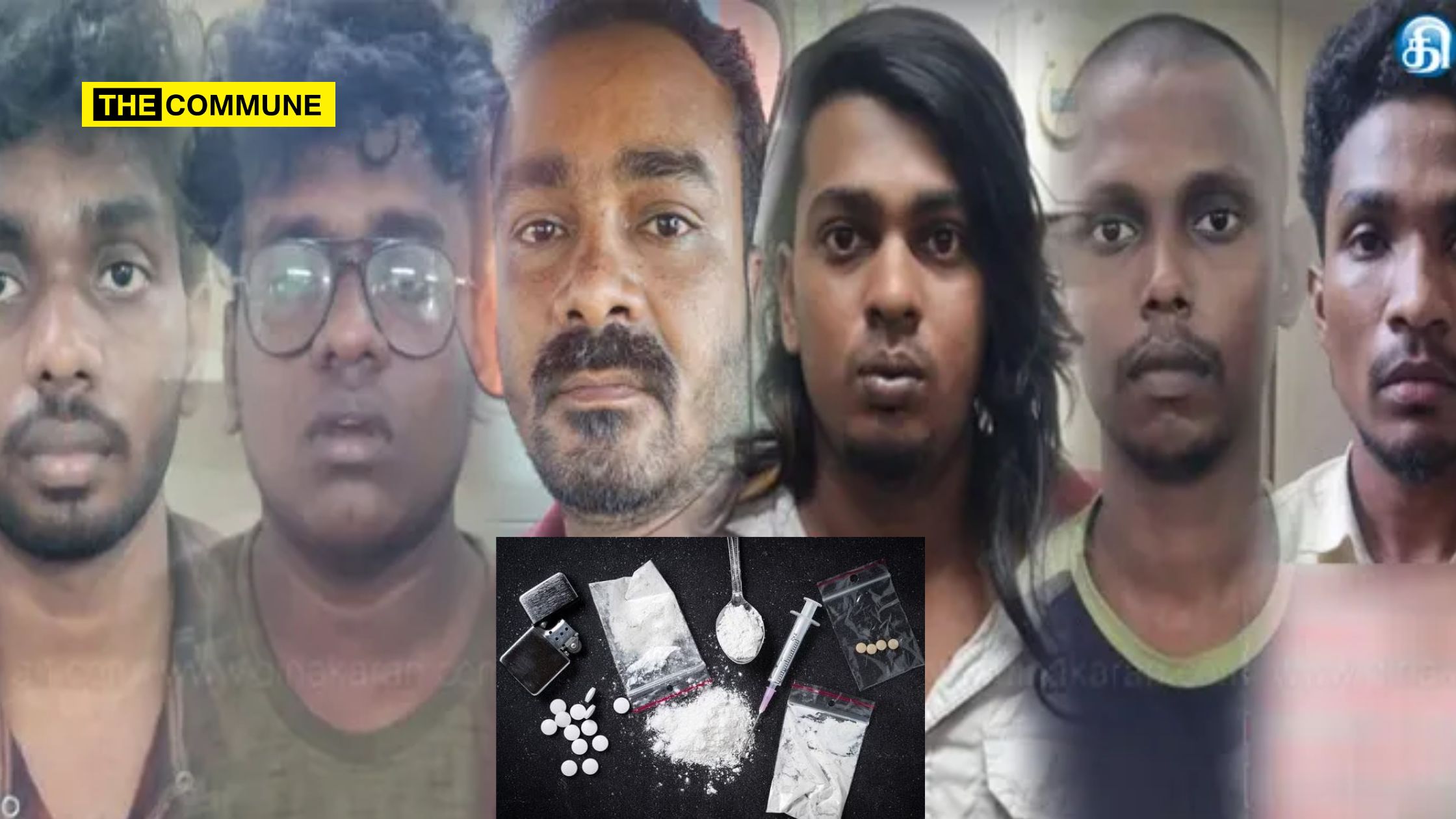
In a major bust by the city’snewly formed Anti-Drug Intelligence Unit (ADIU), seven individuals, including students, were arrested for manufacturing methamphetamine in a makeshift laboratory set up in a residence in Kodungaiyur. The suspects include Gnanapandian, 22, an MSc Chemistry student, and robotics engineering graduates Pravin Pranav, 21; Kishore, 21; Naveen, 22; and Dhanush, 23. Fleming Francis, 21, and Arunkumar, 22, were also involved.
The police seized 250g of meth, valued at approximately ₹10 lakh, along with two laptops, seven mobile phones, a chemical weighing machine, and an array of lab equipment, including test tubes, pipettes, burettes, raw chemicals, and jars. The group had converted Pravin’s house into a lab, sourcing chemicals from pharmaceutical firms, online portals, and the Sowcarpet area of Chennai. Initially, their parents believed they were conducting academic research.
The ADIU had been tracking the group for some time after receiving tips about suspicious activity at Pravin’s home. When officers raided the house, they discovered the meth lab and arrested all seven individuals. Police revealed that the students, frustrated with a low-quality drug batch purchased from a dealer named Arun, decided to produce methamphetamine themselves, relying on Gnanapandian’s chemistry expertise.
The group initially experimented with drug production and later began selling meth to college students and acquaintances. The investigation revealed that Kishore, one of the arrested, is the son of DMK councillor Katiravan from Meenjoor, as reported in OneIndia Tamil.
Following the arrests, Arun, who initially supplied the low-quality drugs, was also apprehended. The police are currently searching for another individual from the Red Hills area who reportedly supplied drugs to Arun. The entire operation has sent shockwaves through the local community.
Authorities continue investigating to uncover broader connections to other cities’ criminal networks.
Subscribe to our channels on Telegram and WhatsApp and get the best stories of the day delivered to you personally.