Home Blog Page 803

India Seeks Review Of Indus Water Treaty, Serves Notice To Pakistan

India Seeks Review Of Indus Water Treaty, Serves Notice To Pakistan

India has served a formal notice to Pakistan seeking a review and modification of the Indus Water Treaty (IWT) citing “fundamental and unforeseen changes in circumstances” that require a reassessment of obligations, government sources confirmed on Wednesday.

Under the Indus Water Treaty signed between India and Pakistan in 1960, waters of three rivers – Ravi, Sutlej and Beas – averaging around 33 Million Acre Feet (MAF) were allocated to India for exclusive use. The waters of Western rivers – Indus, Jhelum, and Chenab – averaging to around 135 MAF were allocated to Pakistan except for specified domestic, non-consumptive and agricultural use permitted to India as provided in the Treaty.

In the notice that was served to Pakistan on August 30 this year, India highlighted that, under Article XII(3) of the IWT, its provision may from time to time be modified by a duly ratified Treaty concluded for that purpose between the two governments. “India’s notification highlights fundamental and unforeseen changes in circumstances that require a reassessment of obligations under various Articles of the Treaty. Among various concerns, important ones include change in population demographics; environmental issues – need to accelerate development of clean energy to meet India’s emission targets; impact of persistent cross border terrorism, etc,” the source mentioned.

The notification was issued in the background of a separate prolonged controversy with respect to Kishanganga and Ratle Hydro Projects. “In this regard, the World Bank has simultaneously activated both the Neutral Expert mechanism and the Court of Arbitration on the same set of issues. The Indian side has, therefore, also called for reconsideration of the dispute resolution mechanism under the Treaty. With this Notification, India has called Pakistan to begin government-to-government negotiations in order to review the Treaty under the provisions of Article XII(3),” the official mentioned.

–IANS

Subscribe to our TelegramWhatsApp, and Instagram channels and get the best stories of the day delivered to you personally.

Bharat Takes A Giant Stride Towards Electoral Reforms: Amit Shah On ONOE’s Cabinet Nod

Union Home Minister Amit Shah on Wednesday welcomed the Cabinet nod for ‘One Nation, One Election’ (ONOE), saying this will pave the way for a giant leap towards landmark electoral reforms in the country.

Taking to X, the Home Minister wrote: “Under the leadership of Prime Minister Narendra Modi, Bharat has been witnessing transformative reforms. Today, in this direction, Bharat takes a giant stride towards landmark electoral reforms with the Union Cabinet accepting the recommendations of the High-Level Committee on One Nation One Election.” The proposal for conducting simultaneous Lok Sabha and State Assembly elections under the ONOE and the recommendations of the former President Ram Nath Kovind-led panel were accepted by the Union Cabinet earlier in the day.

The committee headed by former President Kovind had submitted the report in March and was placed before the Cabinet on Wednesday, for getting its nod. A Bill to the same effect is likely to be brought in the next session of Parliament. Amit Shah further said that the ONOE clearance reflects PM Modi’s iron will to bolster democracy through clean and financially efficient elections, adding it will accelerate economic growth through more productive allocation of resources.

BJP President J.P. Nadda also appreciated the move and said that this will go a long way in streamlining the electoral process. “The current system of holding elections at different times across states hampers development efforts and burdens the national treasury. This landmark decision aims to streamline the electoral process and ensure better governance,” J.P. Nadda said. He further said that adopting “One Nation, One Election” will help lower election-related expenses and financial burden on the government.

Notably, the recommendations made by a high-level panel led by Ram Nath Kovind lays out a comprehensive roadmap for the implementation of simultaneous elections. The panel has recommended conducting concurrent elections for the Lok Sabha and state Assemblies as the first phase, to be followed by synchronised local body polls within a 100-day period.

–IANS

Subscribe to our TelegramWhatsApp, and Instagram channels and get the best stories of the day delivered to you personally.
India Is ‘Vishwa Mitra’ & ‘Vishwa Bandhu’ In Global World Order: CDS Chauhan

On Wednesday, Chief of Defence Staff (CDS) Gen Anil Chauhan said that India is a ‘Vishwa Mitra’ and a ‘Vishwa Bandhu’ in the global world order.

“India’s position is of a ‘Vishwa Mitra’ and a ‘Vishwa Bandhu’ in the global world order. India’s focus is on operational readiness, modernisation and strategic autonomy through ‘Aatmanirbharta’,” said CDS Chauhan while addressing a conclave for Foreign Service Attaches (FSAs) hosted by the Defence Intelligence Agency of Headquarters Integrated Defence Staff at New Delhi.

He added that in the most violent decade since World War II, there is a growing propensity amongst nations to use force to contain conflicts. The growing uncertainty and insecurity are leading nations to renew their national security strategy and increase expenditure on defence. The CDS said this while highlighting four distinct areas of India’s Defence vis-a-vis operational preparedness, modernisation, transformation and indigenisation. He emphasised the significance of Data-Centric Warfare and the role of Artificial Intelligence in revolutionising warfare. The CDS gave an insight into India’s Atmanirbharta for defence capability development and strategic autonomy.

Director General Defence Intelligence Agency (DG DIA) Lt Gen DS Rana apprised the FSAs that India’s Defence Diplomacy was expanding steadily regarding the nature of activities and geographic coverage, wherein security cooperation was a key component. He highlighted the vision of Atmanirbharta and indigenisation in Defence and implored FSAs to gain first-hand experience in modernisation programmes. A holistic overview of India’s strategic perspective was given to the FSAs by Defence Subject Matter Experts.

Lt Gen Raj Shukla (Retd) spoke on ‘India’s National Security, Challenges and Opportunities’, Vice Admiral Pradeep Chauhan (Retd) deliberated upon ‘Indo-Pacific Region Competition, Cooperation and Challenges’ and Lt Gen Rakesh Sharma (Retd) gave insights on ‘Grey Zone Warfare and Impact on Security Dynamics’.

–IANS

Subscribe to our TelegramWhatsApp, and Instagram channels and get the best stories of the day delivered to you personally.
An Important Step Towards Democracy, PM Modi Hails Nod To Simultaneous Elections

An Important Step Towards Democracy, PM Modi Hails Nod To Simultaneous Elections

Prime Minister Narendra Modi has hailed the government’s approval of simultaneous elections as a significant step toward enhancing India’s democracy. He also thanked former President Ram Nath Kovind for painstakingly spearheading the nationwide consultation process.

In a post on X on Wednesday, PM Modi said, “The Cabinet has accepted the recommendations of the High-Level Committee on Simultaneous Elections. I compliment our former President, Ram Nath Kovind Ji, for spearheading this effort and consulting many stakeholders.” “This is an important step towards making our democracy even more vibrant and participative,” he added.

Earlier, the Union Cabinet, chaired by Prime Minister Modi on Wednesday, accepted the high-level committee’s recommendations on simultaneous elections under the chairmanship of former President Ram Nath Kovind. The committee, in its report, said that elections had been held simultaneously between 1951 and 1967. The Law Commission, in its 170th report (1999), also said that one election to Lok Sabha and all Legislative Assemblies in five years should be held. The Parliamentary Committee’s 79th Report (2015) suggested methods for simultaneous elections in two phases.

The High-Level Committee chaired by Ram Nath Kovind extensively consulted a broad spectrum of stakeholders including political parties and experts. Extensive feedback has shown there is widespread support for simultaneous elections in the country. The Kovind committee had recommended common electoral rolls for all elections and an implementation group to supervise the whole process.

A bill to implement simultaneous elections is expected to be introduced in the Winter session of Parliament. This initiative aims to synchronise Parliamentary and Assembly elections, which has been a part of the Modi government’s 100-day agenda. Prime Minister Modi has frequently emphasized the need for this system, arguing that the country incurs significant costs and disruptions from ongoing election seasons.

–IANS

Subscribe to our TelegramWhatsApp, and Instagram channels and get the best stories of the day delivered to you personally.
ED Files Chargesheet Against Ex-DMK Functionary Jaffer Sadiq And His Bestie Dravidianist Director Ameer Sultan In Drugs-Cum-Money Laundering Case

ED Files Chargesheet Against Ex-DMK Functionary Jaffer Sadiq And His Bestie Dravidianist Director Ameer Sultan In Drugs-Cum-Money Laundering Case

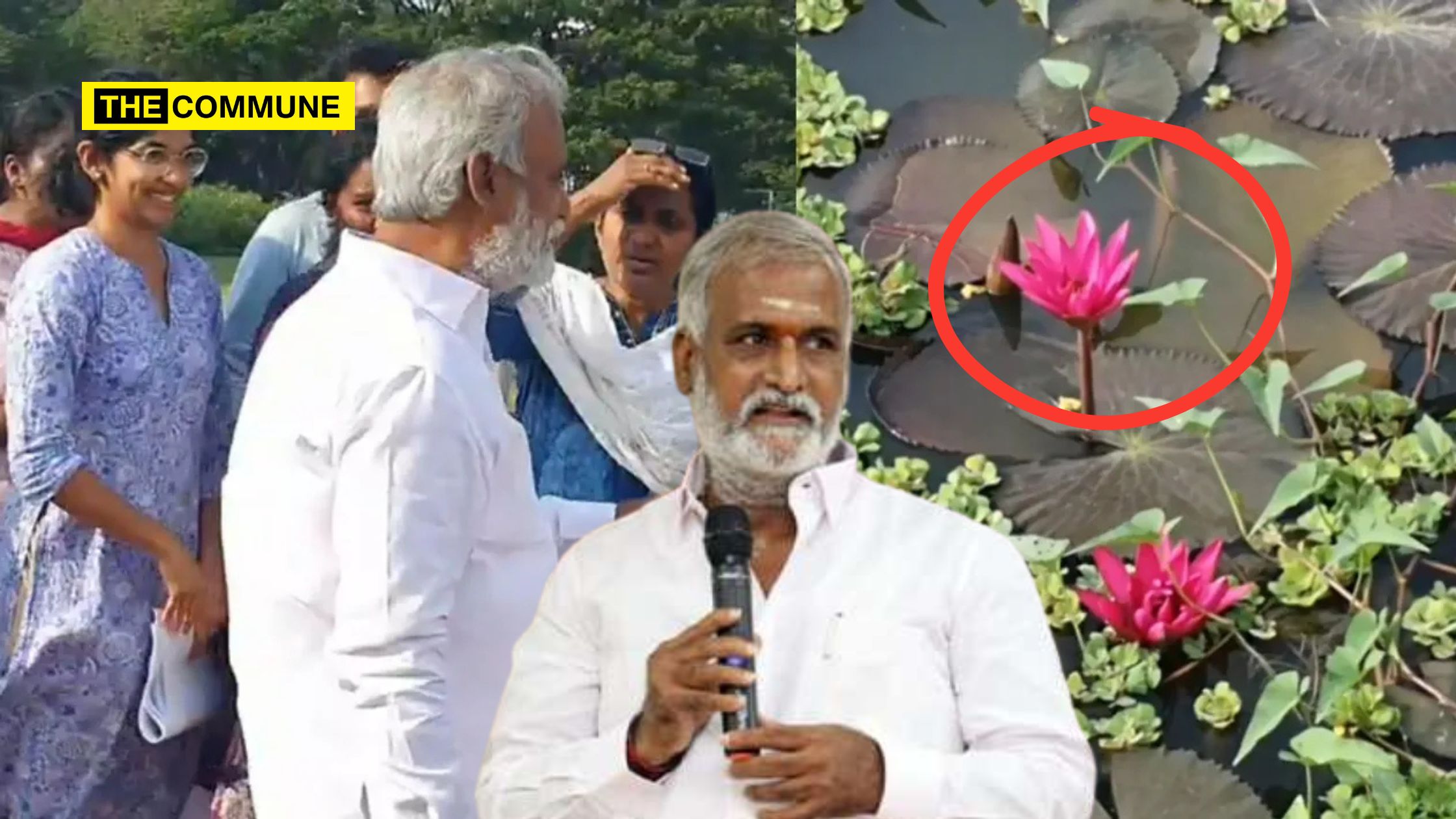
The Enforcement Directorate (ED) filed a chargesheet on Wednesday (18 September 2024) against expelled DMK member Jaffer Sadiq, his bestie Dravidianist actor-director Ameer, and others in a money laundering case connected to drug activities.

The chargesheet, submitted to the Principal Sessions Court, named 12 individuals, including Sadiq’s wife and brother. The court has yet to officially register the chargesheet.

This development comes shortly after ED’s Chennai office provisionally seized assets worth Rs 55.30 crore belonging to Sadiq and his associates under the Prevention of Money Laundering Act (PMLA), 2002.

The ED’s investigation followed Sadiq’s expulsion from the DMK after his arrest by the Narcotics Control Bureau for allegedly heading a drug cartel involved in smuggling pseudoephedrine and ketamine. The probe revealed that Sadiq, along with his brother Mohammed Saleem and others, was involved in the export and concealment of narcotics. Mohammed Saleem, the now-expelled VCK functionary admitted to the Enforcement Directorate (ED) that they engaged in drug smuggling under Sadiq’s direction. This admission follows Saleem’s arrest by the ED on 13 August 2024 regarding the high-profile drug smuggling and money laundering case.

Sadiq, previously associated with the DMK, is imprisoned in Puzhal Jail over charges related to drug trafficking and illegal money transfers. Mohammed Saleem, who was a member of the VCK, was taken into custody by the ED and is undergoing a seven-day interrogation concerning drug smuggling and money laundering operations.

According to the ED, Sadiq and his associates used various firms and entities to launder the proceeds from drug trafficking.

It is important to remember that Ameer had initally tried to wash his hands off of Sadiq by claiming that he was unaware of Sadiq’s “other face” and also stated that the shooting of the film Iraivan Miga Periyavan was halted abruptly following the news of the ₹2000 crore drug bust.

Ameer on 1 March 2024 shared a video of his in which he tried to establish is Muslim identity in an attempt to play victim card and tried to distance himself away from Jaffer Sadiq and the drug bust.

However, during launch function of his now abandoned film “Iraivan Miga Periyavan” in February 2022, Ameer is seen saying Jaffer Sadiq is a distant relative of his. He also mentions that Sadiq had been requesting Ameer to direct a film under his banner for 5 years.

Another video surfaced on social media platform X where Ameer is seen wishing all success to Jaffer Sadiq. He says, “I have been closely watching his meteoric rise in all businesses he has begun. I pray he achieves success with this film (production business) Iraivan Miga Periyavan too.”

It is noteworthy that he addresses Sadiq as “thambi” and Sadiq addresses Ameer as “Anna”.

Director Ameer and Jaffer Sadiq opened a coffee shop called 4AM Coffee and Kitchen under the Mahyan Pvt Ltd company, located at ECR near Chennai. The organization’s managing director, Abdul Basith, is also a director at Zuko Overseas Pvt Ltd alongside Jaffer Sadiq. Notably, Ameer, also known as Ameer Sulthan, is a director of Zuko Overseas Pvt Ltd as well.

Director Vetrimaran and actor Soori attended the launch of the coffee shop. Another establishment, Law Cafe, was opened at Radhakrishnan Salai under the Mahyan Group of Companies, which Ameer and Sadiq run.

Ameer, Vetrimaran, and Jaffer Sadiq have often been seen together in photographs, highlighting the close connections between directors and so-called producers in the Tamil film industry.

Some of the films produced by Jaffer Sadiq include Ameer’s Iraivan Miga Periyavan, Mangai, and Indira, all under the JSM Pictures banner. Interestingly, Sadiq’s social media cover photo features four posters, including these three films and another called Maayavalai, which is produced by Ameer’s production house and co-produced by Vetrimaran’s Grass Root Film alongside Sadiq.

It is noteworthy that DMK Minister Udhayanidhi Stalin’s wife Kiruthiga Udhayanidhi was the chief guest at the launch of a single from the film Mangai.

Sadiq is also associated with the Saleem Bhai Biriyani chain, which Ameer inaugurated. In media interactions, Ameer has mentioned that the biriyani shop is one of Sadiq’s business ventures.

Subscribe to our TelegramWhatsApp, and Instagram channels and get the best stories of the day delivered to you personally.
 

Hindu Munnani President Accuses DMK Government Of Hypocrisy In Festival Celebrations Favoring Minorities

"Is Tamil Nadu Turning Into A Taliban State?" Hindu Munnani Slams DMK govt

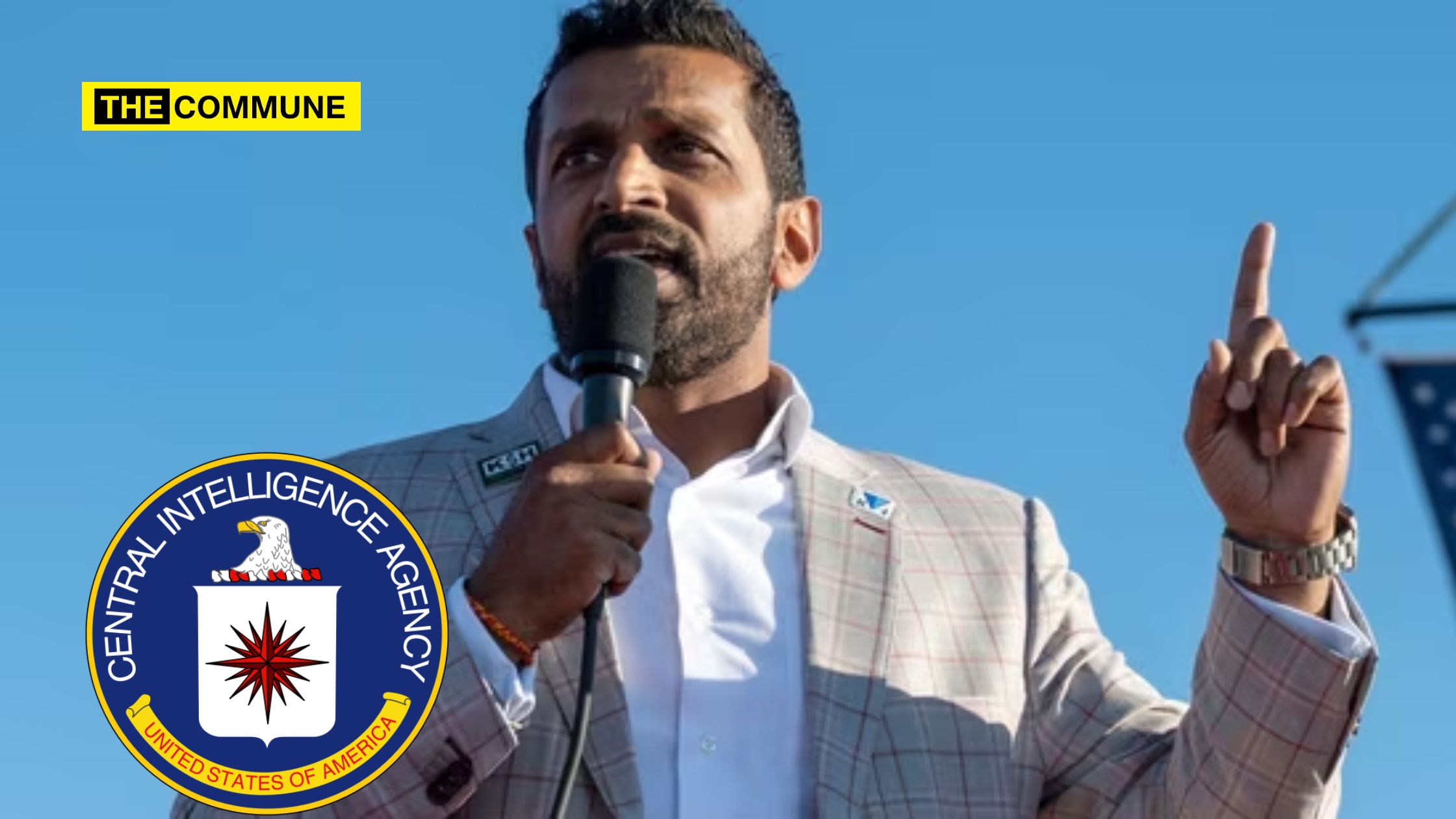
Hindu Munnani State President Kadeswara C Subramaniam has criticized the ruling DMK government for showing hypocrisy and indifference towards Hindus, accusing it of favouring minority communities through appeasement politics. He pointed out that while the Vinayagar Chaturthi festival faced severe restrictions, the Milad un-Nabi celebration saw participants chanting bigotry slogans and the government officials participating did not take this issue seriously, merely observing the situation.

In his statement, Subramaniam highlighted that during the Milad un-Nabi procession in Ooty, participants displayed Islamic symbols resembling the Pakistani flag and paraded in a mosque-shaped vehicle. The Hindu Munnani president questioned the inconsistency in enforcing animal cruelty laws, noting that Hindu processions are often prohibited from featuring animals. At the same time, a Muslim participant rode a horse in the Milad procession. He questioned whether a Muslim riding a horse would not incur penalties under the Animal Cruelty Act.

The Hindu Munnani chief expressed concern over the DMK government’s actions during the Vinayagar Chaturthi celebrations, alleging that police imposed new obstacles and denied permissions for Ganesha idol installations in various locations, particularly when faced with protests from Muslim groups. In contrast, he observed that Milad un-Nabi processions were allowed in predominantly Hindu areas.

Subramaniam urged Hindus to recognize the Tamil Nadu government’s double standards in restricting Hindu festivals while accommodating minority celebrations. He also criticized local authorities for participating in a religious procession favoring one community while neglecting Hindu sentiments. The Hindu Munnai chief concluded by asserting that all religious processions should be treated equally, calling for Tamil Nadu’s DMK government to operate impartially and respect the sentiments of all communities.

https://www.instagram.com/_nature_lover_tn43/reel/DABJzjtvVhB/

Subscribe to our TelegramWhatsApp, and Instagram channels and get the best stories of the day delivered instantly.

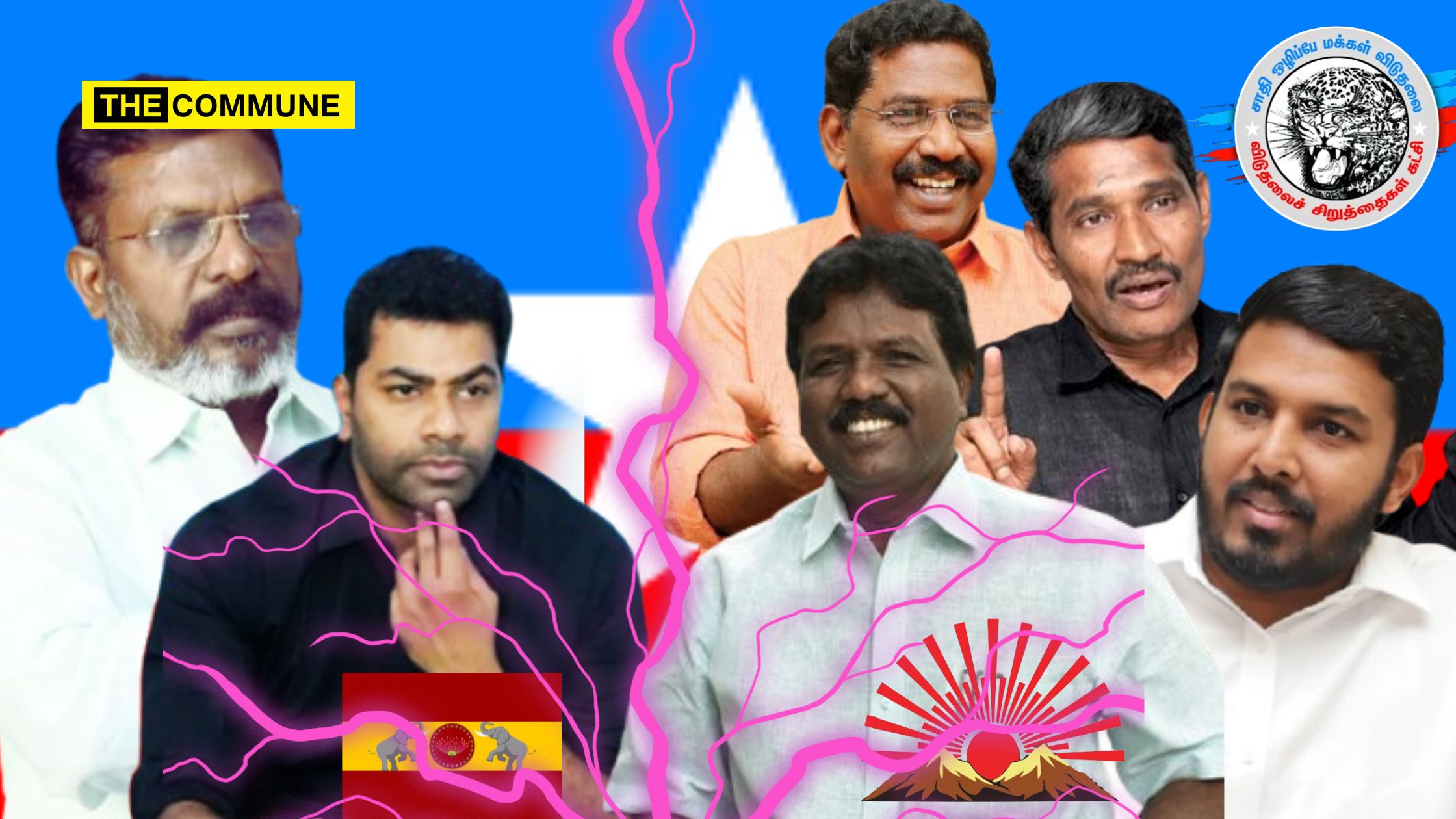
VCK Chief Thirumavalavan Sets Up ‘Missionary’ Task Force To Abolish Alcohol & Drugs In TN

VCK Chief Thirumavalavan Sets Up 'Missionary' Task Force To Abolish Alcohol & Drugs In TN

Viduthalai Chiruthaigal Katchi (VCK) chief Thirumavalavan has once again made headlines, but this time, the surprise was for everyone, including the party itself. He has left everyone wondering about the rationale behind his new decision to set up a task force to coordinate Christian organizations for the upcoming Women’s Conference aimed at abolishing Alcohol and Drug Abuse in the state.

On 18 September 2024, Thirumavalavan, via his official X account, announced the controversial decision, stating, “Women’s Conference on eradicating Alcohol and Drug Abuse. The Task Force for Coordinating Christian Organizations is set up as follows.” He also included a list of members from the Christian committee, comprising nine reverends and five pastors from various churches, including CSI, ESI, and TELC.

Many political analysts and critics struggle to understand the message VCK chief Thirumavalavan conveys following his recent controversial actions that have stirred up the political landscape within the DMK alliance. There is ongoing debate about whether the conference aims to address issues for all communities or if it is primarily focused on appeasement politics targeting a specific group.

Recent Political Plays By Thirumavalavan

After facing prolonged criticism for remaining in the DMK alliance and not challenging the government’s injustices against scheduled castes and tribes, Thirumavalavan has recently taken a stand. He publicly criticized the DMK’s alcohol policy and announced a women’s conference aimed at abolishing alcohol and drug abuse in the state as a strategy to show protest.

Thirumavalavan Criticizes DMK, Invites AIADMK For Alcohol Prohibition Conference

On 10 September 2024, during a press conference at his party headquarters, Thirumavalavan criticized and blamed the DMK indirectly for the severe alcohol addiction in the state and Kallakuruchi hooch tragedy.

He remarked, “A country cannot become a superpower by turning everyone into an alcoholic. There is no use in welfare programs after creating alcoholics in every family, so we place these demands to the state government and central ruling union government.”

During a subsequent press briefing, Thirumavalavan stirred controversy by inviting the AIADMK to his conference. Reporters pressed him to clarify his criticism of parties that support liquor prohibition but are reluctant to act, specifically asking if he was referring to the DMK.

Thirumavalavan responded, “I’m saying to whoever is hesitant, even AIADMK is saying that (prohibition), but they have not implemented it. If they want, they can join our conference. AIADMK can also join. Any party can join. Whoever has the consensus to prohibit liquor can come.”

DMK Reaction

This statement sparked considerable unrest within the DMK alliance, prompting responses from various figures. DMK scion Udhayanidhi Stalin remarked that the VCK has the right to invite anyone they wish, stating, “They will discuss it, and participation is entirely up to them.” Meanwhile, DMK Minister for Health and Family Welfare, Ma. Subramanian, assured, “There is no issue within the DMK alliance, and it will remain strong through many more elections.”

The following day, the VCK faced heightened tension as the fascist DMK, moved to remove their prominent 62-foot VCK’s flagpole. This pole had replaced the original 20-foot post erected by VCK leader Thol. Thirumavalavan when the party was founded. Situated in Villur, Madurai district, the flagpole was taken down by local authorities, who claimed it interfered with road extension plans.

Despite recognizing the underlying political motives behind this action, Thirumavalavan chose not to criticize the ruling DMK directly. Instead, he strongly condemned the district administration, particularly Collector M.S. Sangeetha, accusing them of deliberately targeting the VCK and its activities. Thirumavalavan stated that the issue had been escalated to the government and DMK ministers, and he anticipated a favourable resolution. This incident has prompted speculation about the VCK’s relationship with the DMK and Thirumavalavan’s next moves.

‘We Need Power Sharing’ Statement

As the situation exacerbated within their alliance, on 14 September 2024, Thirumavalavan posted a video on his official X account that quickly went viral. In the video, he stated, “A party that raised the voice for a coalition government in 2016 is Viduthalai Chiruthaigal Katchi. Cabinet should be shared, not merely seat share but we need power share. I don’t know the history of whether previous organizations have discussed it… Power sharing is different from seat sharing. To ask for a seat in the cabinet is power sharing, and to participate in the coalition is ‘seat sharing’. Some 4 or 5 seats will be allocated in that, too, power comes individually. Power sharing means that I also want to share in the power.”

Meeting With Stalin

Thirumavalavan and other VCK leaders met with Chief Minister MK Stalin at the DMK headquarters, Anna Arivalayam, to address several key issues. Following the meeting, Thirumavalavan told the press that a major topic of discussion was the VCK’s upcoming anti-liquor conference scheduled for 2 October 2024, in Kallakurichi, which aims to advocate for total alcohol prohibition. He emphasized his party’s commitment to prohibition and reminded Stalin that both DMK founder C.N. Annadurai and former Chief Minister M. Karunanidhi had supported this cause.

What was surprising was Thirumavalavan’s shift in stance. Despite his previous strong advocacy for a complete liquor ban, he now reported that Stalin had agreed only to reduce sales. Thirumavalavan also mentioned that he had asked the DMK for support in pursuing a national liquor ban as outlined in Article 47 of the Indian Constitution. Stalin reportedly assured that DMK representatives would attend the 2 October conference and that the state government would consider a phased implementation of prohibition.

This development on task force seems almost farcical, given Thirumavalavan’s earlier fervent rhetoric. If he could not confront Stalin directly with his demands, it raises questions about his effectiveness and the purpose of his role as a representative. One might wonder why he holds such a position if he is merely subservient to the DMK rather than advocating strongly for his constituents’ needs. This situation starkly reveals how the DMK keeps its alliances under control.

Thirumavalavan, despite being aware that DMK leaders control distilleries and breweries that profit from liquor sales, called for a ban on alcohol while threatening to shift alliances if his demands weren’t met. Yet, the DMK must have known that, like other allied parties, the VCK lacks the fortitude to stand firm on real issues and would be easily suppressed. Shamelessly, Thirumavalavan, who once proclaimed that they were no one’s slaves, now remains silent, just avoiding the spotlight altogether.

Subscribe to our channels on TelegramWhatsApp, and Instagram and get the best stories of the day delivered to you personally.
16 Instances Of Attacks On Ganesha Processions By Islamists Across India During 2024 Vinayakar Chaturthi

Stones Pelted At Ganpati Visarjan Procession In Mandya While Passing Through Dargah, Karnataka Home Min Calls It "Accidental" Ganesh Chaturthi attack

Ganeshotsav, one of India’s most cherished festivals, is known for its spiritual significance, communal harmony, and grand celebrations. However, this year several instances of attacks on Ganesha processions were also reported. Let us take a look at 16 major incidents in India involving attacks on Ganesha Chaturthi festivities and processions.

1. Bhiwandi (Maharashtra)

A Ganesha idol was pelted with stones by Islamist miscreants near the Hindustani Masjid on 17 September 2024 during Ganapati immersion in Bhiwandi, breaking the statue. When those involved in the immersion protested, the police lathi-charged them, in which many were seriously injured.

2. Balrampur (Chhattisgarh)

On 17 September 2024, Islamist rioters pelted stones during the immersion of a Ganesha idol in Ara village. Many people including Sheila Yadav suffered serious head injuries in the violence. Balrampur police detained Hashib, Imam, Ittakhab, and Islam on charges of violence.

3. Trilokpuri (Delhi)

On 16 September 2024, armed Islamist mobs attack Hindu devotees returning from Ganesha immersion. Two devotees were seriously injured in the attack. चशमदीद devotees said that the miscreants also pulled women’s dupattas.

4. Farrukhabad (Uttar Pradesh)

On 16 September 2024, an Islamist mob attacked people returning from the immersion with sticks, sticks, and bricks under the Shamshabad police station area during Ganesha visarjan. The rioters also raised slogans of Pakistan Zindabad.

5. Balrampur (Uttar Pradesh)

On 16 September 2024, an Islamist crowd waved green flags in front of the Ganesh Pandal in the procession of Barawwfat and said, ‘Hindustan में रहना है है तो, Khwaja-Khwaja केहना है.’ The Siddhi Vinayak Seva Samiti complained and said, “The miscreants were shouting obscene slogans and threatening to attack.”

6. Jhansi (Uttar Pradesh)

During Ganesh immersion on 15 September 2024 in the Madarganj Mohalla of Month police station, Hindus who were chanting gulal were first abused by Islamist rioters.

While returning from the immersion, the rioters attacked the devotees in a well-planned manner. In the case of violence, Jhansi police detained Shahid and 2 other rioters.

7. Pune (Maharashtra)

On 14 September 2024 in the Daund area, Yasin Ismail Syed attacked the Ganesha festival program organized by Sitara Torve and threatened to kill the Torve. The police registered a case under sections 109, 118(1), and 351(2) of the Indian Penal Code.

8. Mahoba (Uttar Pradesh)

During the Ganesh Visarjan procession being taken out on 14 September 2024 in the Kasuratori area, angry with a small child bursting firecracker, miscreants pelted stones and threw water on the people participating in the procession in the Muslim-majority area.

9. Mandya (Karnataka)

As soon as the Ganesha immersion procession was taken out from Nagmangala town by Hindu devotees of Badarikoppalu village on the night of 11 September 2024 and reached a mosque, the Islamist rioters started pelting stones at the immersion procession. Armed miscreants set fire to 4-5 bikes standing on the road.

Mandya Police arrested Yusuf and Nasir of the terrorist organization Popular Front of India (residents of Malappuram, Kerala) on charges of violence.

10. Surat (Gujarat)

On 10 September 2024, Laima Sheikh and Rubika Pathan incited their minor children to smash 10 Lord Ganesha idols in the shop of Vishal Hiralal Khalasi at Soni Palia Bazar in Athwa area, causing a loss of ₹60 thousand to Vishal. Both the Islamist women were detained by the Gujarat police.

11. Bharuch (Gujarat)

In the Gokulnagar area on the night of 10 September 2024, on the occasion of the Hindu festival Ganeshotsav, Islamists forcibly started putting up their Islamic flags and pylons on the houses of Hindus for Eid preparations.

When the Hindus opposed it, the rioters attacked. Bharuch police detained 17 people in connection with the violence.

12. Lucknow (Uttar Pradesh)

On 10 September 2024, Islamists pelted stones near the idol of Lord Ganesha, chanting slogans of ‘Allah hu Akbar‘, at the Ganesh pandal set up near the house of Kiran Chaurasia, a resident of Chhoti Masjid in Ganga Vihar Colony, Chinhat. Broke the pot. Lucknow Police has detained 2 minors accused in the case of violence.

13. Kutch (Gujarat)

An Islamist mob pelted stones at the idol of Lord Ganesha installed in a pandal on 10 September 2024 in Jarodar village of Kota area of ​​Nakhtrana. Ganesh statue’s nose was broken by this stone pelting. The miscreants also buried an Islamic flag in a Hindu temple near the pandal. Kutch police registered a case and arrested 4 other accused including 3 minor accused, Maulana Ghulam Hussain Jafar, Asif Sumra Padhiar, Sahil Ramzan, and Hanif Jusan.

14. Ratlam (Madhya Pradesh)

During the Ganesh Chaturthi procession being taken out on 8 September 2024 from Khetalpur to Mehndikui Balaji, rioters pelted stones on the Ganesh idol and devotees near Haathikhan Mochipura, a Muslim-majority area. Devotees said that the first stone was pelted on the idol, then the people involved in the procession and the police vehicles were also pelted with stones. An FIR was registered against 150 people and 3 people were arrested in connection with the violence.

15. Surat (Gujarat)

On 7 September 2024, Islamist rioters pelted stones at the shrine of Lord Ganesh in the Lalgate area. When thousands of Hindus took to the streets in protest, the police took swift action and arrested 27 stone-pelters, including 6 conspirators. About 1,000 policemen are stationed around the Ganpati Pandal.

16. Lohdarga (Jharkhand)

On 6 September 2024 in Valmiki Nagar, an Islamist mob attacked the organizing committee and people of the Hindu organization at the place of Ganesh Puja. The people of the Muslim community said that if the worship is done in the street, otherwise they will not allow the worship to be completed in any condition.

Subscribe to our TelegramWhatsApp, and Instagram channels and get the best stories of the day delivered to you personally.
Modi Cabinet Approves Chandrayaan-4, Venus Orbiter Mission, First Module Of India’s Own Space Station

Modi Cabinet Approves Chandrayaan-4, ₹1,000 Cr Earmarked For Venture Fund To Indian Space Startups space industry chandrayaan india

Expanding the Chandrayaan series, the Union Cabinet approved the fourth mission to the Moon on Wednesday. It also gave a green signal for building the first unit of the Bharatiya Antariksh Station (BAS) by 2028.

The Cabinet chaired by Prime Minister Narendra Modi approved Chandrayaan-4 to develop and demonstrate technologies to help astronauts return to Earth after successfully landing on the Moon.

The mission also aims to collect Moon samples, bring them back safely and analyse them on Earth. The “Chandrayaan-4 mission will achieve the foundational technologies capabilities eventually for an Indian landing on the Moon (planned by year 2040) and return safely back to Earth,” according to a Cabinet Communique.

“Major technologies that are required for docking/undocking, landing, safe return to Earth and also accomplish lunar sample collection and analysis would be demonstrated,” it added.

Chandrayaan-3 successfully demonstrated the safe and soft landing of Lander on the tricky lunar surface. It established vital technologies and demonstrated capabilities that only a few other nations possess. The ability to collect lunar samples and return them safely back to Earth remains the next challenge.

The Chandrayaan-4 mission is “planned for ₹2,104.06 crore”, and the development of the spacecraft and its launch will be handled by ISRO.

The Cabinet said the “cost includes spacecraft development and realisation, two launch vehicle missions of LVM3, external deep space network support and conducting special tests for design validation, finally leading to the mission of landing on the Moon’s surface and safe return to Earth along with the collected lunar sample.”

The mission is expected to be “completed within 36 months of approval”, the Cabinet said. Meanwhile, expanding the vision for the Indian space programme, the government had envisaged an Indian Space Station by 2035 and an Indian to land on the lunar surface by 2040. Towards this goal, the Cabinet on Wednesday approved the development of the first module of BAS-1.

The Cabinet also revised the Gaganyaan Programme to include the scope of development and precursor missions for BAS, and factored an additional uncrewed mission.

“With a net additional funding of ₹11,170 crore in the already approved programme, the total funding for Gaganyaan Programme with the revised scope has been enhanced to ₹20,193 crore,” the Cabinet said. “The target is to develop and demonstrate critical technologies for long duration human space missions,” it said.

Under the programme eight missions are envisaged — four under the ongoing Gaganyaan Programme by 2026, and development of BAS-1, and another four missions for demonstration and validation of various technologies by December 2028.

–IANS

Subscribe to our TelegramWhatsApp, and Instagram channels and get the best stories of the day delivered to you personally.
EVR Had Moonlit Escapades With Prostitutes As Exposed By His Own Biographer

On 17 September 2024, social media erupted in conflict after Kollywood actor and Tamizhaga Vettri Kazhagam (TVK) chief Vijay visited Periyar Thidal. There, he paid his respects by offering flowers and garlanding the statue of E.V. Ramasamy Naicker, known as Periyar to his followers, barefoot to commemorate his 146th birth anniversary. This event sparked significant online debate among netizens criticizing him.

However, that criticism gradually transformed into a discussion rooted in historical facts and data. Critics spotlighted a documentary based on Samy Chidambaranar’s 1939 book “Tamizhar Thalaivar,” which describes how EVR had nocturnal escapades with prostitutes on river banks while making his wife cook for such picnics.

Many netizens highlighted inconsistencies in actor Vijay’s tweet praising E.V. Ramasamy (EVR) for his contributions to “women’s rights, women’s education, and women’s protection.” Critics pointed out this hypocrisy and referenced a two-part documentary that draws heavily from the book “Tamizhar Thalaivar,” authored by Samy Chidambaranar under EVR’s supervision and published in 1939.

Under the title “Family Mischief” (Kudumba Kurumbugal), Samy Chidambaranar narrates that “Ramasamy was a great “Minor” (flirt) before he ventured into public life. His friends will joke about his ‘minor’ exploits quite quirkily. Sometimes he (EVR) would also talk about it. In those days, EVR was mostly in the houses of prostitutes – entering and departing. There were many partners for this. Ramasamy and his associates would go to the banks of River Cauvery with a group of prostitutes during the lunar nights. They would spend the whole night in the river ‘having fun’ and return home only early in the morning. The food for these meetings should come from EVR’s house only. Parents should not know about food delivery. For this, EVR will seek the help of Nagammai. She will, too, unbeknownst to the family, would cook the food that her husband wanted, and the food would be sent through the backdoor and taken to the Cauvery by a cart.”


When EVR Visited Prostitutes In Cauvery River Bed With Food Prepared By His Wife, Tamilar Thalaivar Periyar book

Critics argue that such actions effectively turned the woman who entered the marriage into a form of slavery. They contend that EVR took advantage of her lack of education and awareness. This context raises questions about how someone like him could be praised for contributions to “women’s rights, women’s education, and women’s protection,” as TVK chief Vijay claimed.

Subscribe to our TelegramWhatsApp, and Instagram channels and get the best stories of the day delivered to you personally.