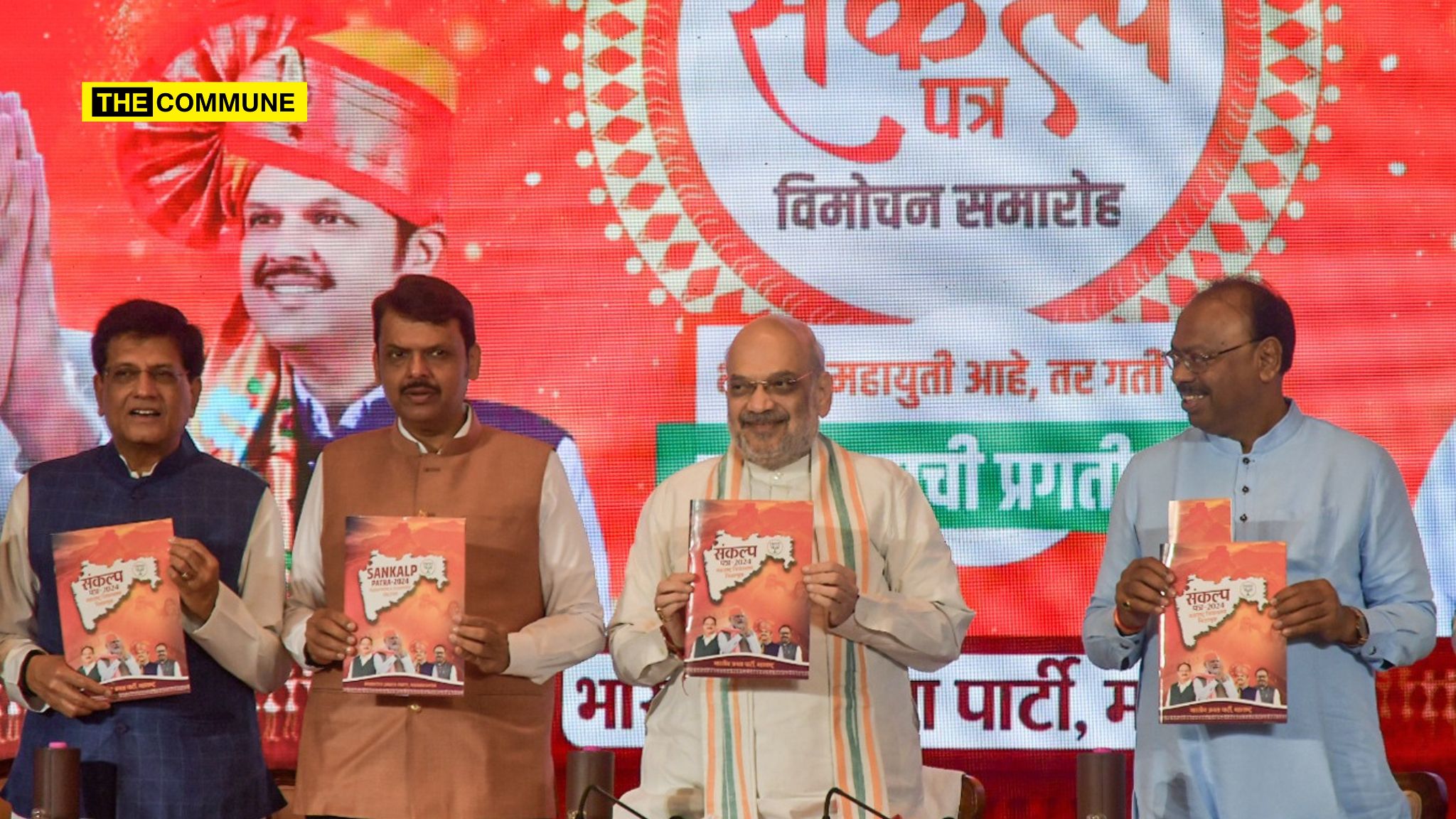
Terming it a roadmap for Maharashtra’s development, the BJP, the big brother in the MahaYuti alliance, released its manifesto for the upcoming Assembly elections on Sunday. The party promised strict laws against forced and fraudulent conversions in the manifesto.
Further, the party has promised free ration for low-income families under the Akshay Anna Yojana, a rebate to farmers in State GST on the purchase of fertilisers, Rs 6,000 per quintal as MSP for soybean, Bhavantar Yojana to pay farmers the difference between the MSP and the rate at which they sell their crops, Skill Census, Rs 15 lakh interest-free loans for SC, ST and OBC entrepreneurs, reimbursement of tuition and examination fees for OBC, SEBC, EWS, NT and VJNT students.
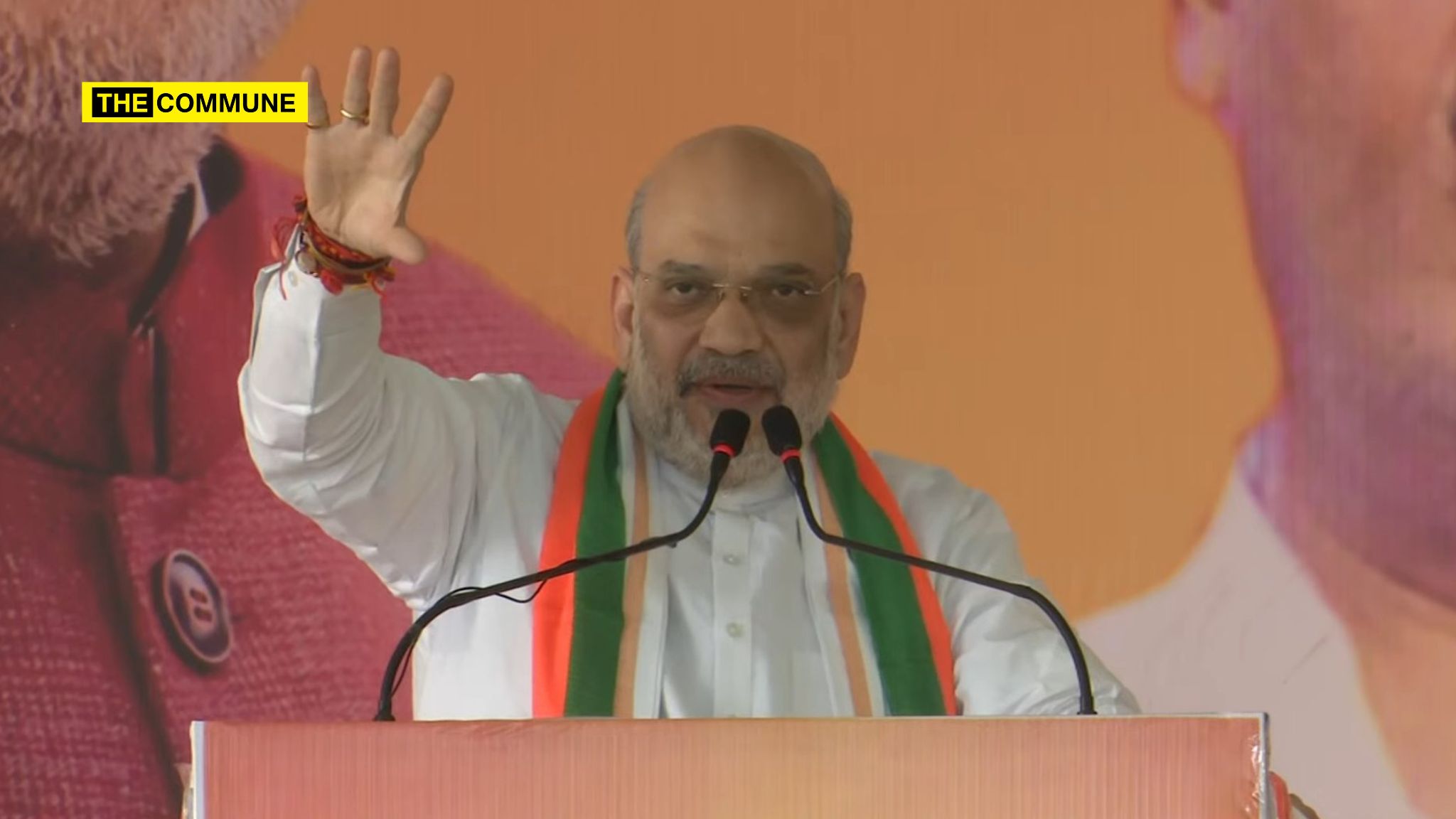
The manifesto also consists of the MahaYuti’s 10 guarantees announced last week by Chief Minister Eknath Shinde, including increase in the monthly financial aid to Rs 2,100 from Rs 1,500 to women beneficiaries under the Ladki Bahin Yojana, farm loan waiver, rise in Samman Nidhi to Rs 15,000 from Rs 12,000, price stabilisation scheme for essential commodities and increase in old age pension to Rs 21,00 from Rs 1,500. The manifesto titled ‘Sankalp Patra-24’ was released on Sunday by Union Home Minister Amit Shah who said that the party’s manifesto is meant for all sections of the society to further increase the pace of Maharashtra’s development in the coming five years.
He said the MahaYuti alliance partners, which are BJP, Shiv Sena, and NCP, will release their separate manifestos. After the formation of the government, a committee will be formed to select the promises from these documents for their implementation based on priority. The BJP has promised Maharashtra to become a $1 trillion economy by 2028, making the state the capital of Fintech and AI, while Nagpur, Pune and Nashik will be Aerospace hubs. It has proposed creating 50 lakh Lakhpati Didis by 2027 and establishing industrial clusters for every 500 SHGs with a revolving fund of Rs 1,000 crore. Further, the MAHARATHI-ATL will be conducted to analyse the skill gaps based on industry needs. It has proposed establishing Chhatrapati Shivaji Maharaj Akanksha Kendra in every district, whereby 10 lakh new entrepreneurs will be created.
BJP has promised to launch the Swami Vivekananda Youth Health Card for annual health checkups of youth, establish the Fort Development Authority to preserve and promote their heritage, adopt the Senior Citizens First policy and implement Aadhaar-enabled service delivery to ensure automated services. Deputy Chief Minister Devendra Fadnavis took a dig at the Maha Vikas Aghadi, terming its manifesto as ”sthagiti” (stay) document, meaning that it will be a document suggesting how the Maha Vikas Aghadi government will stop the welfare and development schemes launched by the MahaYuti government after being voted to power.
–IANS
Subscribe to our Telegram, WhatsApp, and Instagram channels and get the best stories of the day delivered instantly.
The Union Government earned over ₹650 crore from scrap disposal during the cleanliness campaign carried out in October, according to a statement issued by the Ministry of Personnel. Inspired by Prime Minister Narendra Modi’s directions, the special campaigns conducted by the government from 2021-24 have generated a revenue of ₹2,364 crore through scrap disposal and resulted in freeing up more office space for officials to function more effectively, the statement said.
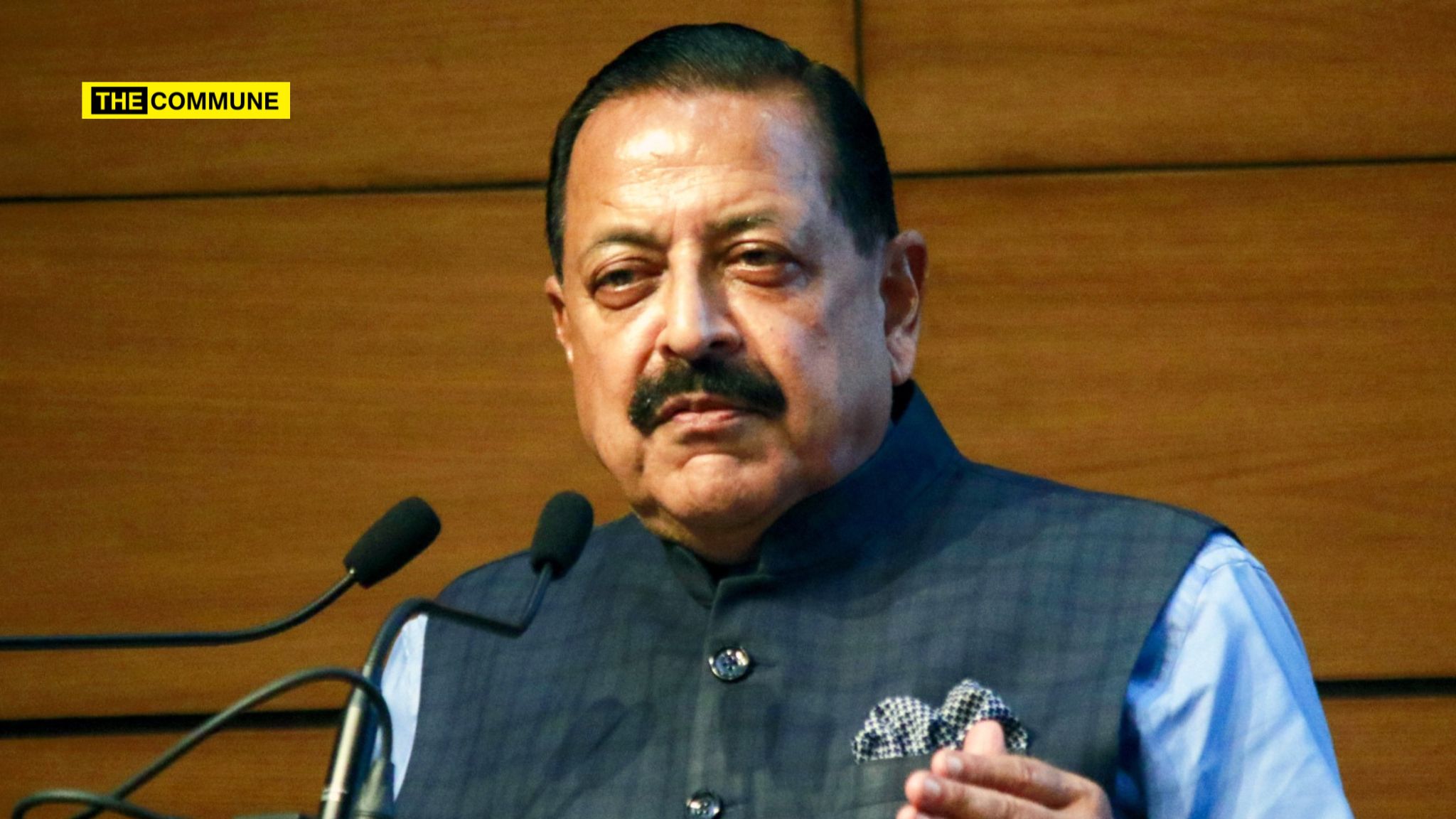
Union Minister of State for Personnel Jitendra Singh said that the special campaign 4.0 was India’s largest campaign for institutionalising Swachhata and reducing pendency in the government offices and has witnessed many best practices and milestones. The saturation approach was adopted in special campaign 4.0 for Swachhata and reduced pendency. The Special Campaign 4.0 has seen Swachhata campaigns being undertaken in more than 5.97 lakh sites and resulted in freeing up 190 lakh square feet of space for effective office use. Jitendra Singh said that with every passing year, the size and scale of the Special Campaign was increasing with more than 5.97 lakh sites covered in 2024 as against 2.59 lakh sites in 2023.
The special campaign 4.0 was reviewed by the cabinet ministers, ministers of state and secretaries to the Union government providing leadership and guidance in implementation. The progress of special campaign 4.0 was monitored on a dedicated portal (https:cdpm.nic.in/SpecialCampaign4) on a daily basis. Singh appreciated the reduction in pendency in the central secretariat under the special campaign 4.0 with most of the ministries/ departments achieving 90-100 per cent of reported targets. He called on all officials to continue the momentum of Special Campaign 4.0 throughout the year and make it a way of life. The campaign concluded on October 31, with outstanding results, and after collating all the data, the evaluation phase will start from November 14, the statement said.
The Ministry also listed the best practices in institutionalising Swachhata that emerged during Special Campaign 4.0. These include scrap cleared from old cooling towers after auctioning through MSTC at Pune Airport, AAI, Ministry of Civil Aviation, scrap cleared from Recreation room, National Bal Bhawan, New Delhi, Ministry of Education, the launch of a special drive for Digital Life Certificate by SBI for Ease of Living for senior and super senior citizens, Department of Financial Services. Conservation of manuscripts and historical documents by Asiatic Society, Ministry of Culture, crafting a 12.5 feet tall idol of Lord Ganesha with scrap material, Raipur, Ministry of Railways and disposal of about 105.72 lakh sticks of smuggled cigarettes worth ₹8.7 crore by CBIC also form part of the achievements list.
–IANS
Subscribe to our Telegram, WhatsApp, and Instagram channels and get the best stories of the day delivered instantly.
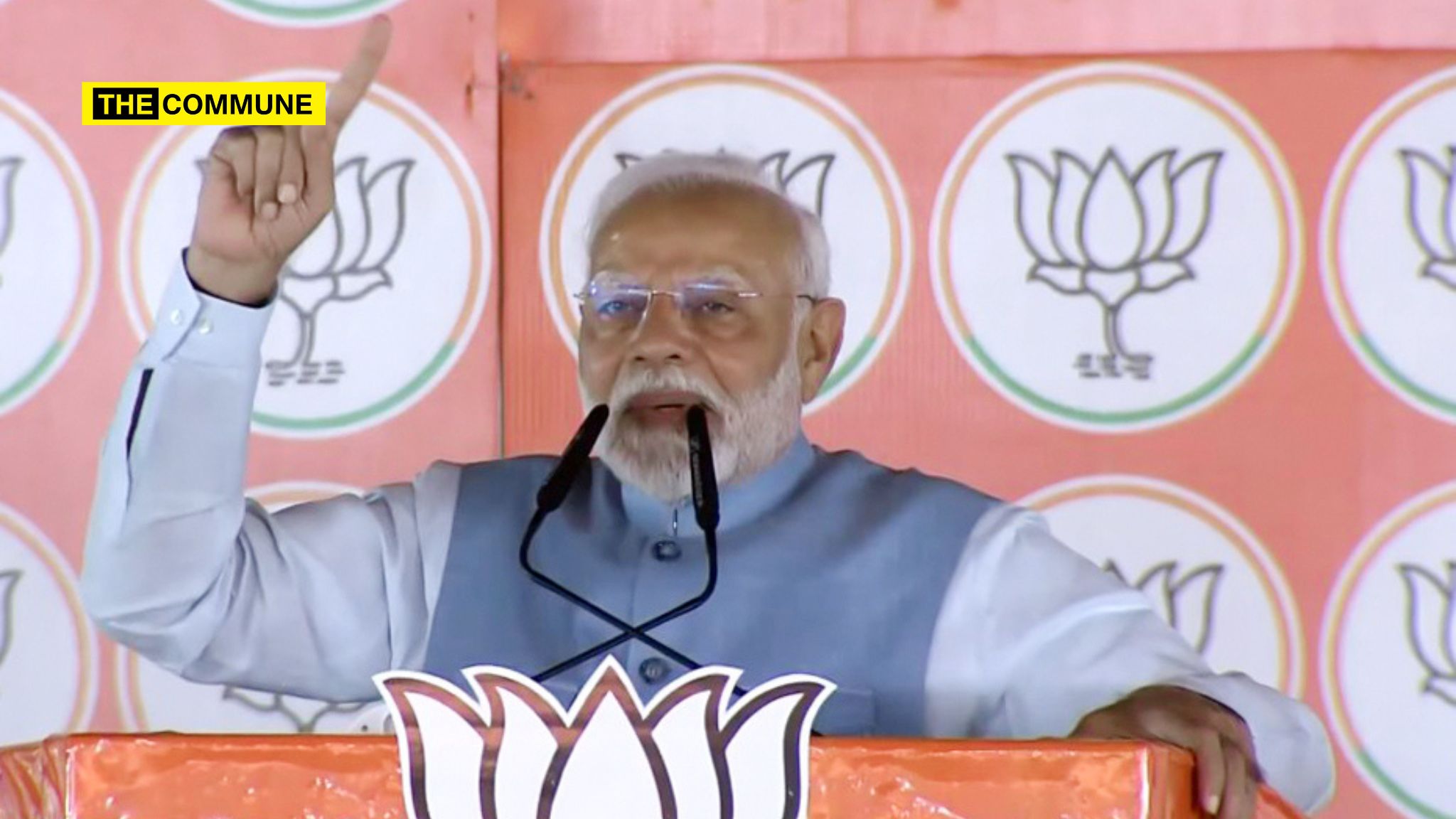
Promising a corruption-free government in Jharkhand, Prime Minister Narendra Modi on Sunday slammed the Congress-JMM for their bid to divide OBCs and asked the marginalised communities to junk their politics over caste census by following the slogan of “Ek rahenge, toh safe rahenge” (United we will remain safe).
Addressing a Vijay Sankalp Sabha in Jharkhand’s Bokaro, PM Modi announced “Modi ki Guarantee” of delivering financial assistance to women for running their households; giving jobs to youths without corruption; jailing the corrupt; stopping infiltration and providing affordable piped cooking gas and assisting in solar power generation for zero monthly electricity bills of households. “We want to make Jharkhand a top-class state and give as many permanent jobs as possible to youths,” said PM Modi, highlighting how the new BJP government in Haryana had started offering jobs without “kharchi or parchi” (Bundles of notes or recommendation letters). He also promised a check over paper leaks saying, “Modi will foil conspiracies of all those who have dared to play with youths’ future.”
With an eye on Dalit and OBC voters, the PM targeted the Congress for disrespecting B.R. Ambedkar and obstructing the implementation of the Constitution created by him in Jammu and Kashmir for 70 years. Highlighting the removal of Article 370 in J&K, PM Modi said, “The Congress is unable to digest the removal of Article 370. For the past seven decades, B.R. Ambedkar’s Constitution was not valid in J&K.” “Modi has demolished the wall of Article 370 and implemented Baba Saheb Ambedkar’s Constitution in J&K. For the first time in Independent India, the new Chief Minister of J&K took the oath of Baba Saheb Ambedkar’s Constitution. This is Modi’s tribute to B.R. Ambedkar,” he said. The Congress has now moved a proposal in the Assembly to revive Article 370 in J&K and the JMM is supporting that party, which wants to bar Baba Saheh Ambedkar’s Constitution in that state and revive terrorism. “Is this disrespect of Baba Saheh Ambedkar’s Constitution acceptable to you?” he asked the crowd.
Looking to blunt the Congress’ attempt to woo Dalit and OBC voters with the promise of caste census, PM Modi said the unity of SC, ST, OBC, Tribal and Dalit communities has always been an eyesore for the Congress which has continued to rule and loot using the divide and rule formula. “But ever since the Dalits and OBCs got together and got the reservation, the Congress has never got more than 250 seats in parliament. The Congress wants to divide Dalits and OBCs,” he said. In Bokaro, there are 125 OBC communities, including Yadav, Teli Kurmi, Mali, Prajapat, Lohar, Nayi, Pansari, and the Congress and JMM want to pit these communities against each other, he said. “The Congress wants OBC communities to fight each other and stop identifying themselves as a united community. This will weaken your voice. They want to break you into 125 communities,” he said. “So, we must remember, Ek Rahenge toh Safe Rahenge,” he said.
Sharing figures to prove that the NDA government has given four times more Central funds to Jharkhand than the UPA in the past decade, PM Modi said the Congress-JMM government in the state looted this money meant for people. While the people of Jharkhand were struggling to get a handful of sand, ministers in the state were making crores of rupees through sand smuggling, he said. “Let me assure you, once a BJP government is formed in Jharkhand, we will make sure that all corrupts land in jail,” he said. “The BJP has created Jharkhand and only we will make it prosperous,” said the PM, promising to punish the corrupt. Touching upon the emotive issue of infiltration into Jharkhand, the PM said, “To secure your daughters and land, a BJP government is needed in Jharkhand. We will also check infiltration. We want to make Jharkhand a top state, so you have to vote for candidates of BJP, AJSU, JD-U, LJP.” “You have to take my message of ‘Roti, Maati, Beti’ to each house,” he said.
He said ‘Sab ka Prayas’ is needed for Jharkhand’s development and people need to guard against Congress-JMM’s conspiracy to come to power, promising that air services would soon begin in Bokaro and people wearing “Hawai chappal” will be able to fly in Hawai Jahaj” (People wearing slippers will be able to fly in planes). PM Modi said efforts are on to bring down to zero the electricity bills of Jharkhand residents through solar power generation in households. “Rs 75000-80,000 will be given by the government to households to generate solar power, use it for their own consumption and sell the surplus supply. Earlier you were paying money to the government for electricity, now we are going to ensure government pays you for electricity,” he said.
He also promised all-round development and launch of new projects in the state, along with efforts to reopen shut plants like the Sindri fertilizer unit that has offered jobs to youths. Voting in Jharkhand will be held in two phases on November 13 and November 20 to pick a new 81-member Assembly. The results will be declared on November 23.
–IANS
Subscribe to our Telegram, WhatsApp, and Instagram channels and get the best stories of the day delivered instantly.
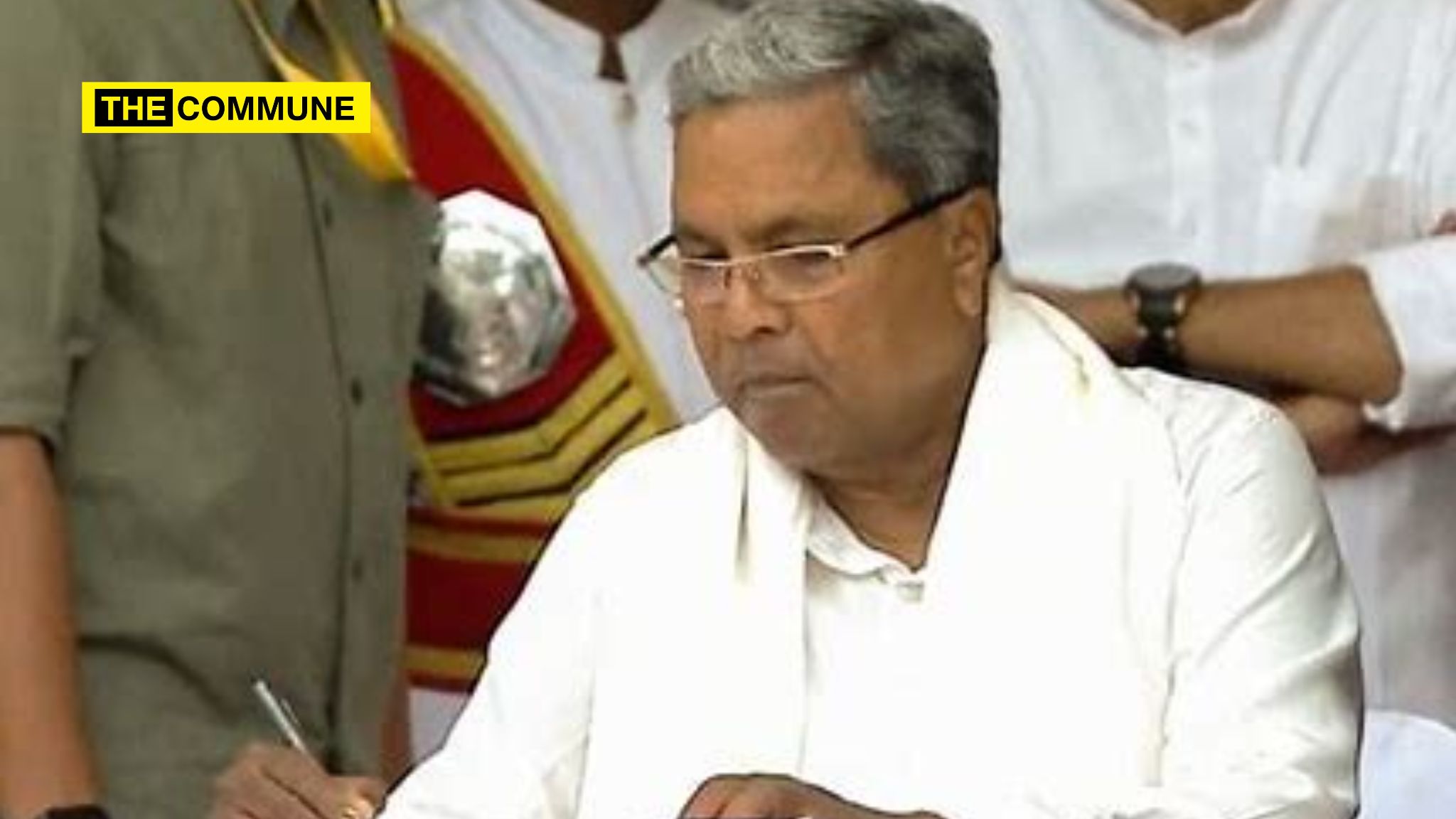
Under attack from the opposition for allegedly changing land records and giving ownership of farmers’ lands and other properties to the Waqf board, Karnataka CM Siddaramaiah has ordered halting the land mutation process. Land Mutation is the process of updating property records in the land revenue department to reflect a change in ownership.
The BJP, which launched an all-out agitation and verbal attack on the Congress government and Chief Minister Siddaramaiah over the issue, was upbeat about the development. The principal secretary of the Revenue Department has sent the order to all Regional Commissioners and Deputy Commissioners. The order also underlined that no action should be initiated against the farmers tilling such agricultural lands. The order issued by B. Uday Kumar Shetty, Additional Secretary of the Revenue Department (Land Grants, Land Reformation and Land Revenue) states that as per the directions of the Chief Minister, the official communications of April 15, April 24 and November 7 are withdrawn. Action will be initiated against the officers who released the order on November 7 despite the Chief Minister’s directions against it.
Chief Minister Siddaramaiah issued direction after holding a meeting on Saturday regarding complaints of farmers’ lands being named as the Waqf property. Union Minister Pralhad Joshi and prominent state leaders have given a call to farmers to organise and chase away the officers if the latter arrive to issue notices claiming ownership of their lands to the Waqf board. BJP MLA Basanagouda Patil had launched an indefinite strike in Vijayapura city, demanding the withdrawal of notices to farmers by authorities claiming ownership of their lands to the Waqf board. MLA Yatnal also demanded the nationalisation of all the Waqf property for the welfare of all sections of the society.
–IANS
Subscribe to our Telegram, WhatsApp, and Instagram channels and get the best stories of the day delivered instantly.
On Sunday, Union Home Minister Amit Shah accused Maha Vikas Aghadi (MVA) of playing appeasement politics with the sole intention of achieving power in Maharashtra.
The Home Minister at the poll rally in Jalgaon district’s Raver for BJP and MahaYuti candidates, said: “An organisation of Ulemas demanded 10 per cent reservation for the Muslims in Maharashtra from the Congress. The Maha Vikas Aghadi has crossed all the limits of appeasement due to the greed for power. They cannot do good for Maharashtra.”
The Home Minister added that at least 50 per cent of reservations have already been allocated and to give reservations to the minorities, they would have to take away reservations of the SCs, STs and backward class.
“The Aghadi (Maha Vikas Aghadi comprising Congress, Shiv Sena UBT and NCP-SP) is blinded by the power. However, I assure you that minorities will not be given reservations,” Minister Shah said.
He asserted that the BJP’s alliance has been formed to protect the culture of Maharashtra, adding that the BJP’s alliance is an alliance of parties following the principles of Shivaji Maharaj which will make Maharashtra prosperous. “November 10 is a very important day not only for Maharashtra but for the whole country as it is being celebrated as ‘Shiv Pratap Day’. In 1659, Chhatrapati Shivaji Maharaj hoisted the saffron flag after killing Afzal Khan,” the Home Minister said.
He appealed to vote for the BJP and MahaYuti which will follow the principles of Chhatrapati Shivaji Maharaj. Amit Shah strongly defended the Centre’s move to table the Waqf Board Amendment Bill saying that opposition parties are strongly opposing it. “Recently, entire villages in Karnataka were declared as Waqf property. Many temples, farmers’ land, and houses of villagers became Wakf property. The same is going to happen in Maharashtra as soon as the Aghadi government is formed, but don’t worry, Modi has decided to amend the Waqf Act,” the Home Minister said. “When our coalition government named Aurangabad after Maharaj Sambhaji, the Aghadi people protested. When Ram Temple was built, they opposed it, they opposed the removal of Article 370 from Jammu and Kashmir, they opposed the abolition of triple talaq,” he asserted.
Home Minister Shah led a scathing attack against the Maha Vikas Aghadi for accusing the MahaYuti government of industries not coming to Maharashtra. “When the MVA government was in power and Uddhav ji was the Chief Minister, Maharashtra was in the fourth place in FDI. Devendra Fadnavis became Deputy Chief Minister and Eknath became Chief Minister. For the last two years, the highest FDI in the whole of India has come to Maharashtra. Maharashtra is number one in investment,” he claimed.
The Home Minister also attacked the MVA for criticising the Ladki Bahin Yojana and said that as soon as the MahaYuti government is formed the monthly financial assistance under the scheme will be increased to Rs 2,100 from Rs 1,500. “Under the Ladli Bahin Yojana, women get Rs 1500, and the Aghadi intends to stop it if they come to power. Be rest assured, that the MahaYuti government is going to be formed. As soon as the government is formed, Rs 1,500 will be increased to Rs 2100,” the Home Minister said. Further, Amit Shah said that the MahaYuti government through Pradhan Mantri Kisan Samman Nidhi (PM-KISAN) will give Rs 15,000 annually to every farmer and it will increase 20 per cent MSP. “The pensions of the senior citizens, widows and divyangs will be increased to Rs 2,100 from Rs 1,500. Every year 25 lakh jobs will be created by the MahaYuti government,” he said.
–IANS
Subscribe to our Telegram, WhatsApp, and Instagram channels and get the best stories of the day delivered instantly.
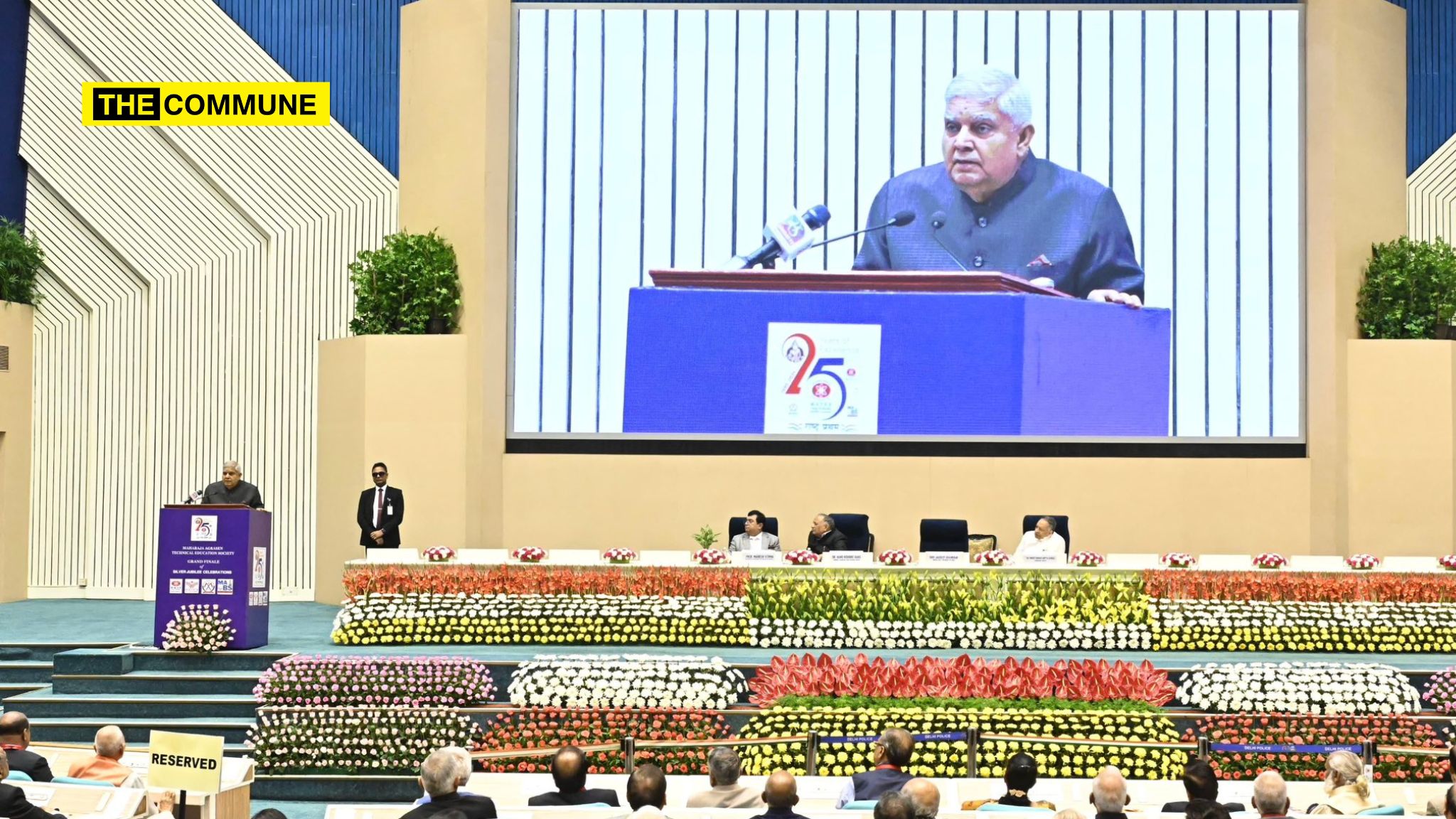
Vice President Jagdeep Dhankhar on Sunday exhorted the youth and Gen Z to adopt economic nationalism and keep the nation first, calling them the driving force behind politics, economy, growth, and social harmony.
“You are the driving force behind politics and economy, social harmony and growth. I would therefore urge you to kindly set your targets because you are in a Bharat that is performing admirably in the sea, on land, in the sky and in space,” said VP Dhankhar while delivering the Chief Guest’s address at the culmination of Silver Jubilee Celebrations of Maharaja Agrasen Technical Education Society (MATES) at Vigyan Bhawan in New Delhi. Exhorting the youth and Gen-Z to adopt economic nationalism and keep the nation first, he said, “I would urge you, whatever choice you make, believe in your nation, believe in your nationalism.” “This is greatly of your concern because our economic nationalism is getting compromised because some people care more about fiscal gain. No fiscal gain can justify the compromise of economic nationalism,” he said.
Stressing the need to develop entrepreneurial skills, VP Dhankhar said, “Look at our imports in billions that are avoidable. You are the category, young boys and girls, along with Gen-Z, to find a solution. You can take a resolve, we will cut down avoidable imports because of our entrepreneurship. It will have an immediate impact. We will save billions in foreign exchange.” “Our people will get work here in thousands and lakhs. I would therefore urge, when you think of the economy, to think of Swadeshi. Swadeshi should be our basic mantra,” said Dhankhar. Underlining the importance of the faculty members over the infrastructure in any institution, Dhankhar said, “An institution is defined by faculty more than the infrastructure. Infrastructure is the need of the society, the need of the institution but faculty is its fragrance.”
Reflecting on the need to focus on duties as a citizen along with rights, he said, “We are very conscious of our rights, but every right is qualified by your duty.” “Just as the nation’s interest is above political and personal interests, similarly, your every right, your fundamental right, is superseded by your responsibility. It is your civic duty. Duties must always take precedence over rights,” he said. Asking the youth to help build a tolerant society, he said: “I urge all of you, be receptive, be tolerant; that will always be rewarding. And in every action, ask yourself, how can I increase social harmony? At the end of the day, we are not robots to promote the economy. We are human beings. We are part of a nation that is a 5,000-year-old civilization.” “Tolerance is a virtue. It is deeply embedded in the ethos of our civilisation. It is the premise of harmony and inclusivity in society. It is an inalienable facet of social harmony,” he said.
–IANS
Subscribe to our Telegram, WhatsApp, and Instagram channels and get the best stories of the day delivered instantly.
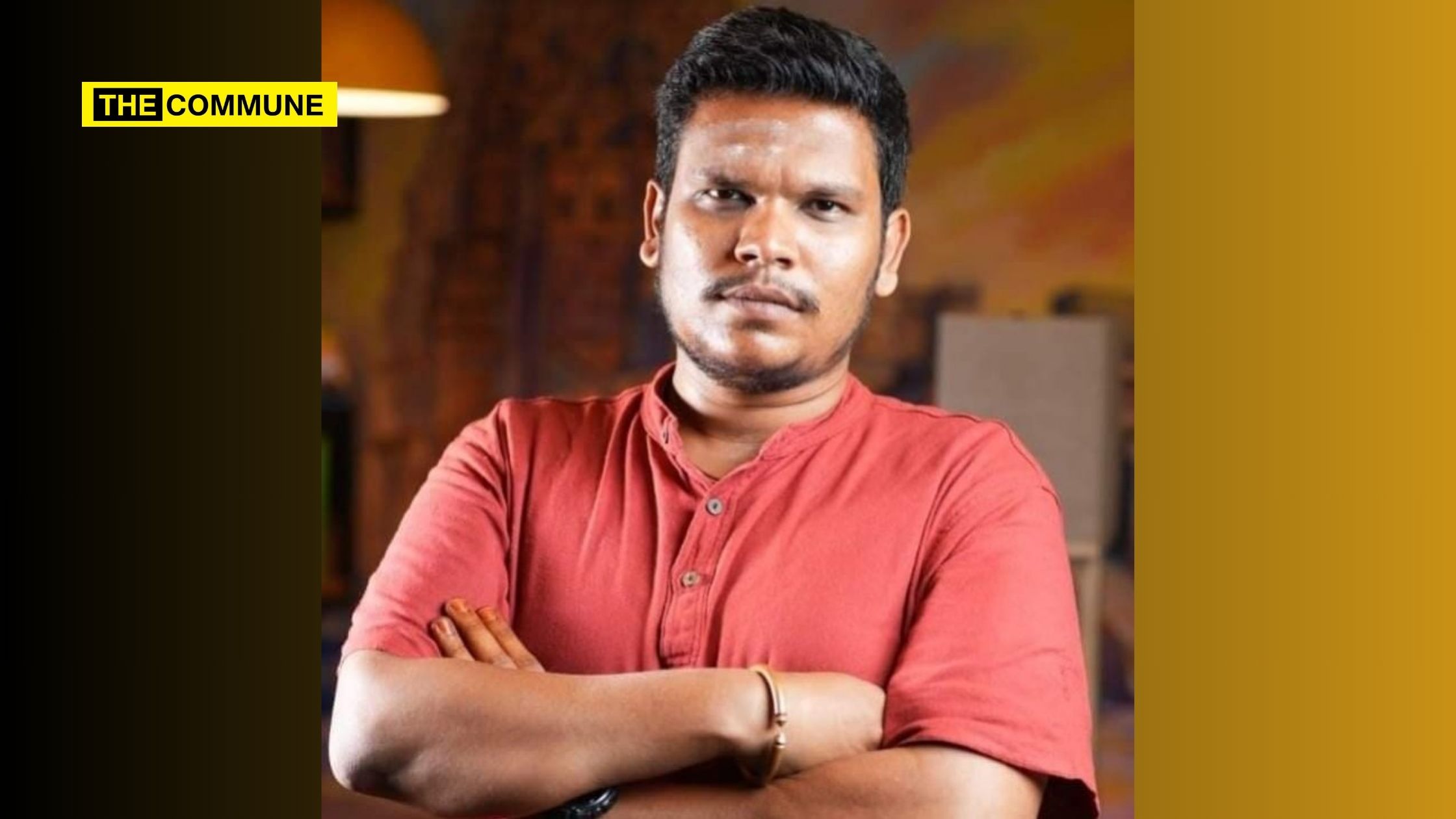
Indu Makkal Katchi (IMK) leader Arjun Sampath’s son, Omkar Balaji, who also heads the party’s youth wing, has been arrested for allegedly “threatening” Dravidian journalist ‘Nakkheeran’ Gopal, who runs the tabloid Nakkheeran, during a protest.
The protest, organized by IMK near the Racecourse station in Coimbatore on 27 October 2024, was held to denounce critics of Sadhguru Jaggi Vasudev’s Isha Foundation and the Isha Yoga Centre at the foothills of Velliangiri.
IMK president Arjun Sampath and Omkar Balaji were both present at the event. According to reports, a DMK member and auto-rickshaw dealer, A. Abdul Jaleel, who apparently “overheard” Omkar’s speech while on his way for personal errands, filed a police complaint the following day.
The complaint alleges that Omkar Balaji had threatened to drag Mr. Gopal through the streets, handcuff him, and imprison him once the DMK loses power in Tamil Nadu. He is also accused of threatening to cut off the journalist’s tongue. IMK cadres note that Omkar had just used a commonly used colloquial remark in the heat of the moment.
Omkar was standing up for Isha against Nakkeran Gopal’s vicious lies.
In the heat of the moment, he used a common Tamil slang—“your tongue will be pulled out & cut off”—which was meant symbolically.
Citing the seriousness of these accusations, the Government Advocate requested the court to reject Omkar Balaji’s anticipatory bail plea. The Madras High Court had directed Omkar Balaji to appear before the court on November 13 and issue a formal apology for his remarks.
However, Omkar was arrested by the Tamil Nadu police during the wee hours of Saturday (09 November 2024) which the IMK says is contempt of court.
In order to condemn this, the IMK had called for a demonstration to be held on 10 November 2024 demanding the release of Mr. Omkar Balaji. The party executives and volunteers started gathering in front of Coimbatore C 2 Racecourse Police Station from 8 AM. Following this, the police officials negotiated with the cadres and released Omkar Balaji.
Subscribe to our Telegram, WhatsApp, and Instagram channels and get the best stories of the day delivered instantly.
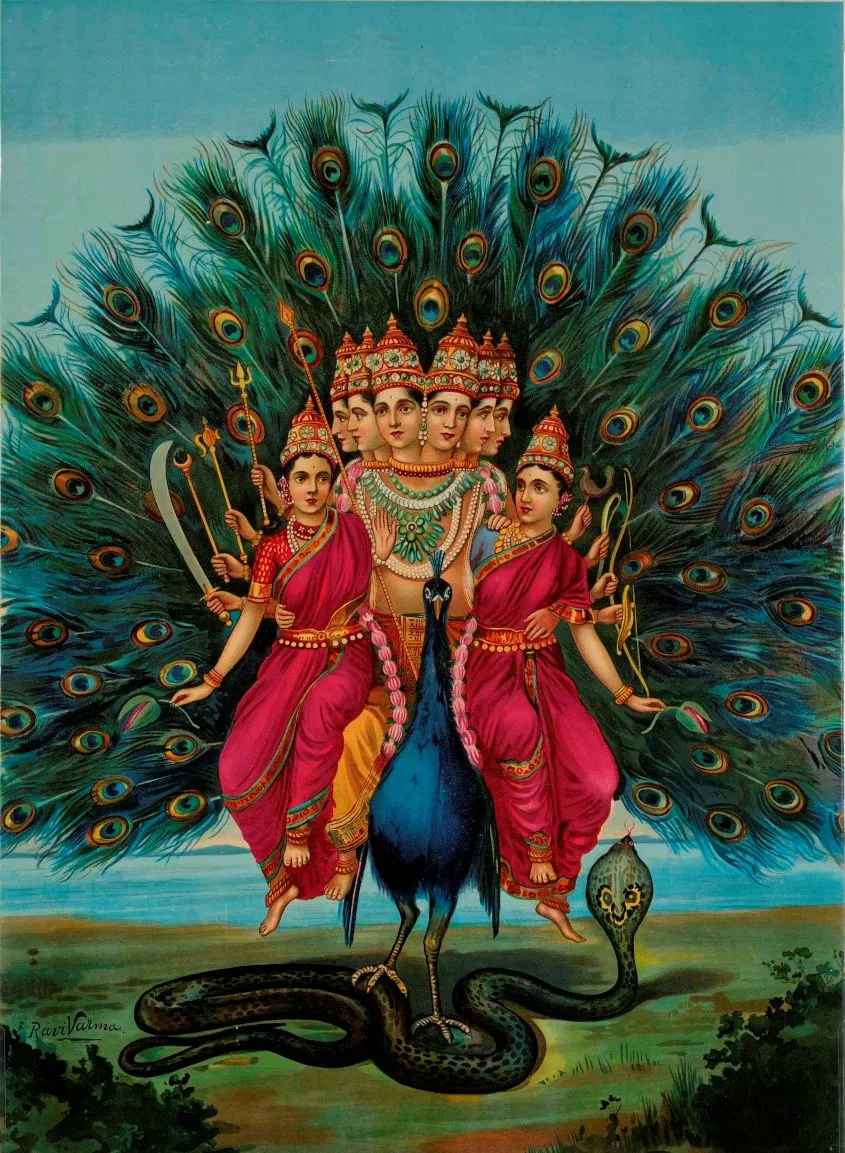
To truly understand the multifaceted nature of Muruga, also known as Karthikeya, Subrahmanya, and Shanmukha, one must explore the rich tapestry of mysticism, spirituality, astronomy, and ancient knowledge systems like Tantra, Alchemy, and Kundalini yoga.
Astronomical And Mythological Origins
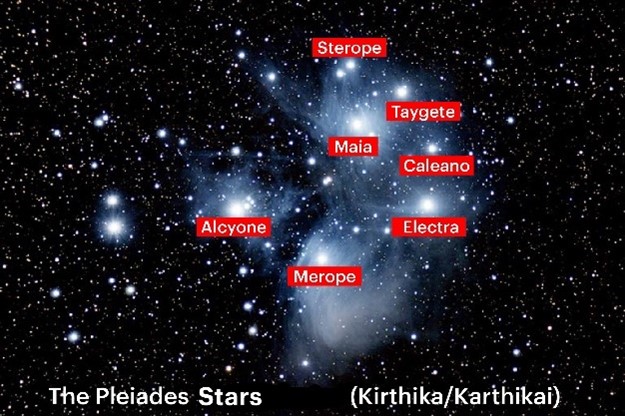
Muruga’s birth story is deeply intertwined with both astronomy and the esoteric science of Kundalini yoga, passed down through ancient allegories and metaphoric hymns. In Hindu mythology, the Pleiades star cluster, known as the Krittikas, are identified as the celestial mothers of Karthikeya. This star cluster, also referred to as the Seven Sisters in Greek mythology, exists within the Taurus constellation. These stars, burning bright blue, signify youth and vitality, with an estimated age of over 100 million years.
The legend goes that Karthikeya was born from the divine spark of Lord Shiva, nurtured by the six celestial maidens of the Krittikas. This symbolism connects Muruga to the mysteries of the cosmos. His birth is not just a mythological event but also an allegory representing the emergence of cosmic energy and higher consciousness. He is metaphorically seen as Alcyone, one of the brightest stars in the Pleiades, symbolizing a young and powerful cosmic force.
The Sapta Rishis And Their Consorts
The connection between the Pleiades and the Sapta Rishis (Seven Sages) is another layer of this ancient knowledge. According to Indian mythology, these sages’ wives, symbolized as the Krittikas, are associated with Muruga’s upbringing.
At the dawn of creation, Lord Brahma realized the need for beings who could oversee the formation of the universe. To fulfill this, he brought forth 10 Prajapatis (progenitors of humanity) from his mind (Manas) and 9 from his body.
The 10 Prajapatis are:
Marichi
Atri
Angirasa
Pulaha
Pulasthya
Krathu
Vasishta
Prachethas
Bhrigu
Narada
Each Saptarishi was married to a celestial wife, associated with the Krittika or Pleiades star cluster:
Saptarishis (Husbands – Ursa Major Constellation) | Wives (Krittika/Pleiades Constellation)
Marichi – Kala
Atri – Anasuya
Vasishta – Arundhathi
Angirasa – Shraddha
Pulaha – Havubhuh
Pulasthya – Gathih
Krathu – Kriya
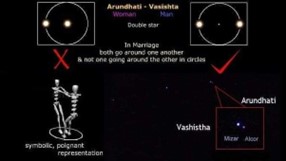
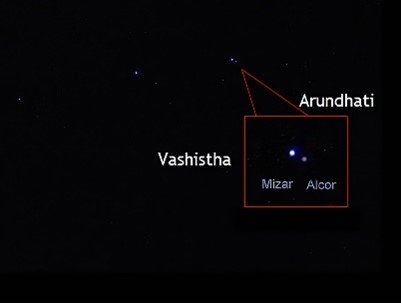
Notably, the binary stars Vasishta and Arundhati in the Ursa Major constellation symbolize harmony and partnership, inspiring the tradition of newlyweds observing them to imbibe this eternal unity.
Born to Kardama and Devahooti, they are also the Seven Sisters of Kapila, who propounded the Natural Philosophy of Sankhya!
Incidentally, Kapila had two more sisters – Khyathi (Fame) and Shanti (Peace).
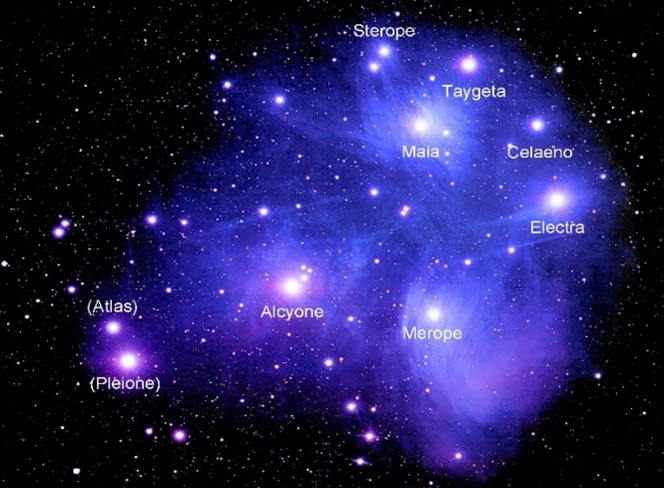
Their names in the Greek mythology are: Maia Electra, Taygete, Alcyone, Caleano, Sterope, Merope.
In Greek mythology, the Seven Sisters were pursued by Orion, the Hunter. To protect them, Jupiter transformed them into doves and placed them among the stars. In Indian mythology, these sisters are known as the wives of the Seven Rishis. There’s an unverified astronomical theory suggesting that our Sun orbits around Alcyone, a central star in the Pleiades cluster, whose parents were Atlas and Pleione.
Additionally, Karthikeya, also known as Murugan, is considered the nephew of Tirumaal (Mahavishnu). If Tirumaal represents the entire known and unknown universe, Karthikeya might be symbolically linked to the Alcyone star, which is part of a youthful star cluster (as blue stars are generally very young).
Symbolically, Lord Karthikeya is said to have been born from Agni and Svaha, who took on the forms of the six stars in the Pleiades constellation, known as Karthika. This is how he got the name Karthikeya. While Arundhati remained faithful to her husband Vasishta, the other six Rishis separated from their wives. Karthikeya was then nurtured by these six sisters, who became known as Karthika, while Arundhati (represented by the star Alcor) stayed close to Vasishta (represented by the star Mizar).
(Note: Vasishta and Arundhati are a pair of binary stars that orbit each other, which is why newlyweds are traditionally asked to view Arundhati, symbolizing a relationship where both partners revolve around one another rather than one dominating the other).
As the Sun moves through the constellation of Karthika, beginning from May 11th, Kerala, located 10.30 degrees north of the Equator, experiences relief from the intense heat. This marks the end of the scorching months of Sidereal Aquarius and Pisces (Kumbham and Meenam), bringing much-needed rainfall to the parched land. The rains intensify during the Sun’s transit of Rohini (Aldebaran), starting on May 25th, and continue to pour heavily after the solar transit of Meissa in the Mriga Sira Njattuvela, beginning June 8th, bringing Kerala its monsoon rains.
The Spiritual Significance Of Muruga
Muruga embodies the triad of divine energies: Iccha Shakti (Willpower), Jnana Shakti (Knowledge), and Kriya Shakti (Action). His two consorts, Valli and Devasena, represent the energies of desire and action, respectively, while Muruga himself symbolizes the power of divine wisdom.
Valli signifies the Ida Nadi (left energy channel).
Devasena signifies the Pingala Nadi (right energy channel).
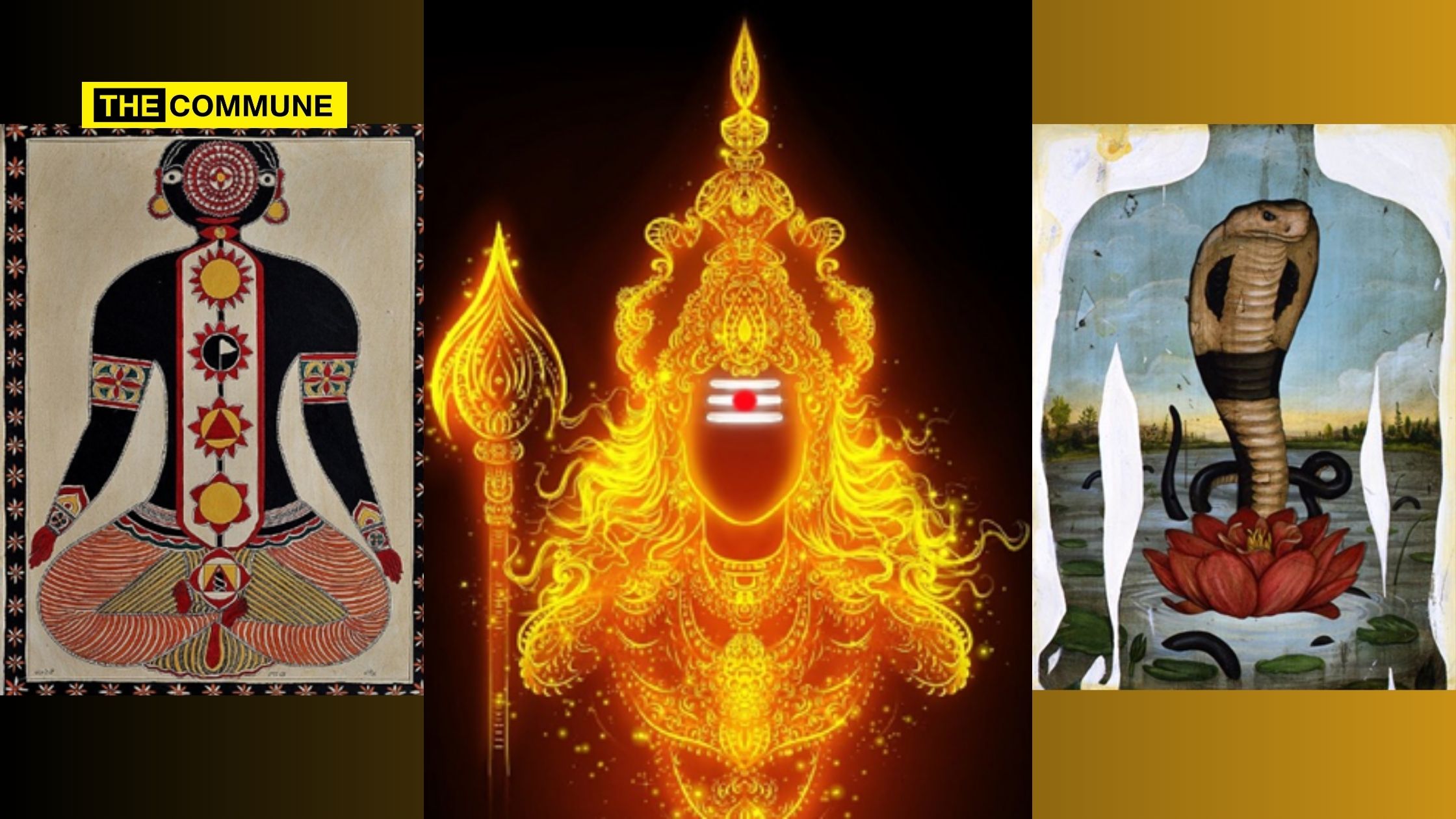
The Vel (Spear) represents the Sushumna Nadi, the central energy channel that rises through the chakras, guiding the Kundalini energy towards enlightenment.
Muruga’s divine attributes include his mount, the peacock, symbolizing the mastery of the conscious mind, and the rooster on his flag, a symbol of vigilance and discipline.
Kundalini Awakening And Chakra System
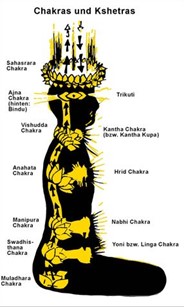
Muruga’s spiritual symbolism is deeply rooted in Kundalini yoga. The Vel, his weapon, is believed to pierce through the six chakras, activating them, and ultimately merging the Kundalini Shakti with the Sahasrara (crown chakra), which symbolizes union with the divine consciousness. This journey of the Kundalini from Mooladhara (root) to Sahasrara is the ultimate spiritual ascent, representing liberation (moksha).
Muruga’s battle with the demon Surapadman is a metaphor for the inner struggle against ego and ignorance. The six-day festival of Skanda Sashti, commemorating this victory, parallels the activation of the six chakras in the human body. On the seventh day, known as Thirukalyanam, it symbolizes the union of Kundalini Shakti with divine consciousness.
Kundalini is the mystical journey towards Moksha, the ultimate liberation. It is a dormant energy residing in the higher centers of the body, waiting to be awakened. When this powerful force is activated, it ascends through six chakras or spiritual energy centers, illuminating them one by one. Muruga, the divine warrior, is the embodiment of Kundalini itself, wielding his Jnana Vela (sacred lance) to open and energize all the chakras, not just the Kundalini. This connection ties Muruga to each chakra, symbolizing his role in guiding us beyond human limitations, such as desire, lust, greed, attachment, and religious dogma. Upon reaching this state, one transcends into Nirlipta—complete detachment. Here, you experience the profound realization of “Śivoham” (I am Shiva, where Shiva represents Brahman) or “Subrahmaṇyoham” (I am Subrahmanya, symbolizing Brahman), achieving ultimate self-realization. This is the moment of true enlightenment!
Muruga is also revered as Bahuleyan, the younger brother of Ganapathy (Ganesha). In this divine family, Ganapathy represents the Mooladhara Chakra, the foundation of all spiritual practice. Every endeavor begins by invoking Ganapathy, symbolizing the mantra ‘LAM’ (Lambhodharan). The sacred Swastik symbol reflects the four petals of the Mooladhara Chakra. The famous Carnatic song, “Mooladhara Moortee,” honors this energy center with the lyrics:
“Mooladhara Moorti Gaja Mukhane, Sharanam Unadhu Ubhaya CharaNam” —
Oh, embodiment of the root chakra, elephant-faced one, I seek refuge in your divine feet.
As you progress in your spiritual journey, you merge with the essence of Muruga, dissolving your ego and worldly desires. Just as Tarakasura’s ego was shattered and he became a devotee of Muruga, so too does the spiritual seeker conquer their ego. In this state, you rise above mundane cravings, finding divine fulfillment in the presence of Muruga.
The inner demons we face are symbolized by Tarakasura and his three sons—Tarakaksha, Vidyunmali, and Kamalaksha, collectively known as the Tripurasura. These figures represent the psychic knots or granthis within our body, which block spiritual progress. By overcoming the ego (Tarakasura) and these knots, one can achieve a state of spiritual liberation and unity with the divine essence of Muruga.
According to the Skanda Purana, Parvati bestowed upon Murugan a divine spear known as the Vel. Accompanied by Virabahu, his commander-in-chief, and eight others — sons born of the nine Shaktis emerging from the gems of Parvati’s broken anklet — Murugan set out to battle the demon Surapadman. These nine warriors were known as the Nava-Veerarkal.
When Murugan was tasked with vanquishing Surapadman, Virabahu and the Nava-Veerarkal led a formidable army southward. As they reached the Vindhya mountains, they encountered Surapadman’s brothers, Krauncha, transformed into a mountain, and Tarakasura. Murugan engaged in battle with Tarakasura, striking him at the heart with his spear. He then hurled the Vel at Krauncha, reducing him to dust.
The festival of Thaipusam is celebrated to honor Murugan’s victory over Surapadman.
Note: These stories are allegorical, symbolizing the journey of Kundalini Yoga. The use of pranayama helps to release psychic knots and open the chakras. The reference to “going south” symbolizes the descent of prana to the lower chakras. Krauncha, which means Heron, also ties into Krounchasana, a yoga posture used in Kundalini practice.
Philosophical And Upanishadic Essence
Muruga is revered as the embodiment of divine knowledge, often described as “Jnana Pandita.” He is seen as the essence of the Upanishadic Mahavakyas, encapsulating the profound truths of existence. His form at Palani, where he is depicted as an ascetic clad in a loincloth, symbolizes detachment from worldly desires and the pursuit of spiritual wisdom.
The Tamil poetess Avvaiyar’s invocation, “Pazham Nee Appa,” praising Muruga as the “fruit of wisdom,” indicates that the ultimate goal of spiritual pursuit is to attain divine knowledge and bliss.
In Ramayana the three Granthis are denoted as
Brahma granthi – Lanka Dahanam (Burning of Lanka/materialistic desires)
Vishnu Granthi – Lakshmana Moorcha (Giving life to Lakshmana/getting back consciousness)
Rudra Granthi – Ravana Vadham ( Killing Ravana/ Destroying the Ego)
Bagavath Gita Chapter Chapter 10, Verse 24 says
पुरोधसां च मुख्यं मां विद्धि पार्थ बृहस्पतिम् |
सेनानीनामहं स्कन्द: सरसामस्मि सागर: || 24||
purodhasāṁ cha mukhyaṁ māṁ viddhi pārtha bṛihaspatim
senānīnām ahaṁ skandaḥ sarasām asmi sāgaraḥ
O Arjuna, amongst priests I am Brihaspati; amongst warrior chiefs I am Skanda/Kartikeya;
and amongst reservoirs of water, I am the ocean.
Śrī Ādi Śhankarāchārya says Karthikeya represents Upaniśhadic Mahā-Vākyas.
Meaning, Karthikeya is the essence of all Upanishads!
Once you kill all the demons and the Ego, you’ll realise Muruga/ Om/Aum (the consciousness) and become Muruga himself.
There are totally 9 snakes which represent the 9 nagas in the human body. (Ananta, Vasuki, Sesha, Padmanabha, Kambala, Sankhapala, Dritharashtra, Takshaka, Kaliya). Other than Anantha; which denotes consciousness, rest of the snakes denote evil qualities.
Thiru Muruga Kripananda varriar has written a book on Ashta Naaga Bhandham. Bhandham means ‘to lock’ or ‘to tie’. Ashta Naga bhandham also comes in Vaishnava agama called Vaikhanasa agama and in Atharva veda sect where tantra is a major part.
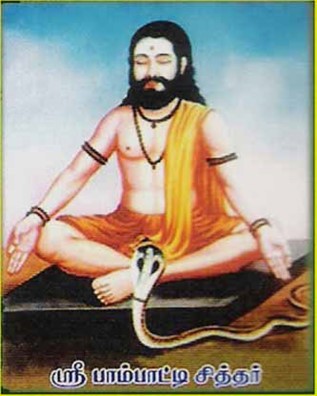
Pambatti Siddhar sings
“எட்டுநாகந் தம்மைக்கையா லெடுத்தேயாட்டுவோம்
இந்திரனார் உலகத்தை இங்கே காட்டுவோம்
கட்டுக்கடங் காதபாம்பைக் கட்டி விடுவோம்
கடுவிஷத் தன்னைக்கக்கி யாடு பாம்பே.”
We will charm all the 8 snakes
We will show the Indraloka here within us
We will tie the snakes which does not obey
Spit out the poison and dance gracefully O’ snake!
The Rooster, Peacock, And Serpent Symbols
The Peacock: Represents a disciplined, awakened mind that can tame the ego (symbolized by the serpent).
The Rooster: Known for heralding the dawn, it signifies awakening to higher truths and aligns with the natural rhythm of the universe.
The Serpent: Represents the ego and base desires, which are controlled and subdued by spiritual discipline.
The Nine Nagas And Inner Transformation
Muruga is also linked to the concept of the Nine Nagas, which represent different energies and qualities within the human body. His divine energy is believed to be capable of awakening and harmonizing these forces, leading to spiritual enlightenment.
The song by Pambatti Siddhar, a revered Tamil Siddha, encapsulates the journey of taming these inner serpentine energies to reach higher states of consciousness.
தெளிந்து தெளிந்துதெளிந் தாடுபாம்பே –
சிவன் சீர்பாதங் கண்டுதெளிந் தாடு பாம்பே
ஆடும்பாம்பே தெளிந்தாடு பாம்பே –
சிவன் அடியினைக் கண்டோமென் றாடு பாம்பே.
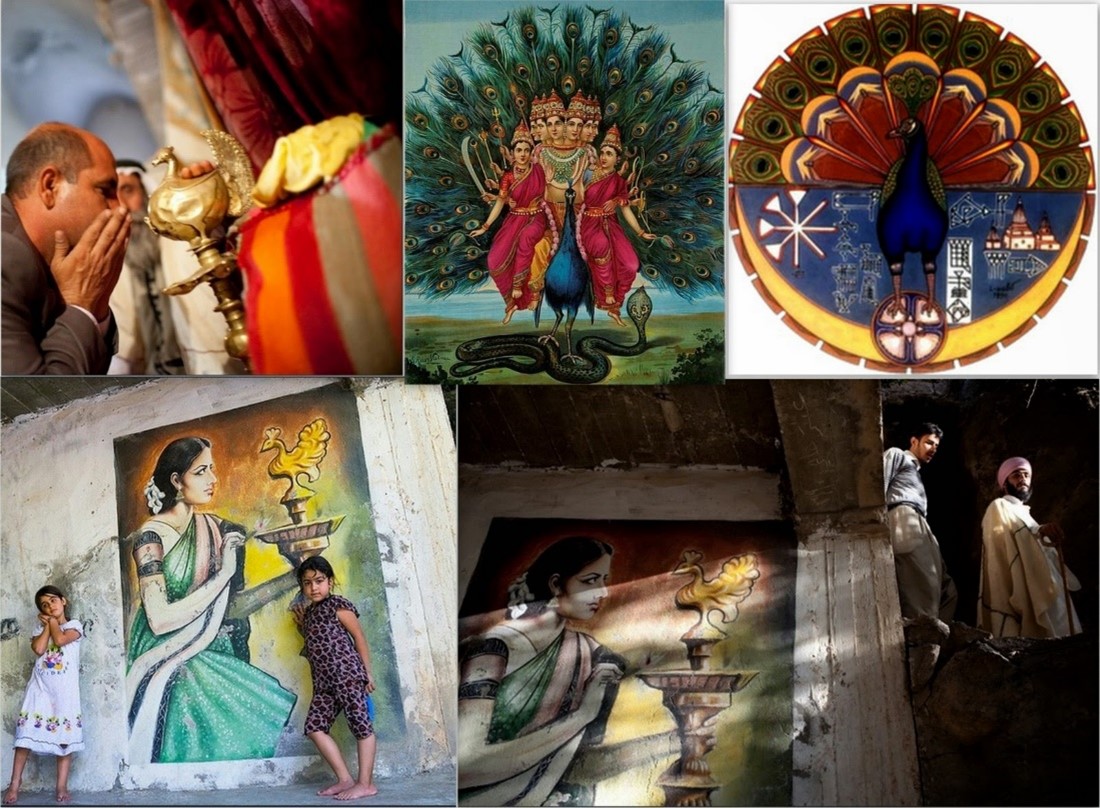
This practice of worshipping natural elements like the sun and fire is observed in various ancient cultures around the world. A notable example is the Yazidi community of Iraq, one of the oldest known civilizations. The Yazidis continue to perform rituals such as sunrise and sunset prayers, similar to the Surya Vandana practiced in other traditions, where they pay homage to the sun. They also conduct Agnihotra fire rituals, which involve offering prayers and oblations to the sacred fire.
Interestingly, the Yazidis use instruments like the dholak (a type of drum) and the shankh (conch shell) in their ceremonies, and they place a high significance on taking ritualistic baths in rivers. One of the most intriguing aspects of Yazidi worship is their reverence for the peacock, embodied in the figure of Malek Taus, the Peacock Angel. What makes this unique is that peacocks are not native to the region where the Yazidis live; they are found in abundance primarily in India. This suggests a fascinating cultural link or shared symbolism that transcends geographical boundaries, highlighting the universal elements in ancient religious practices.
Muruga’s Compassion And Divine Grace
Muruga is often referred to as “Karunai Kadal” (Ocean of Compassion). His benevolence is seen in the way he forgives his adversaries and transforms them into allies. The most notable example is his acceptance of Soorapadman, who, after being vanquished, became Muruga’s symbolic vahana (vehicle) and emblem.
Conclusion
Muruga is not merely a deity but a cosmic principle symbolizing the journey of the soul from ignorance to enlightenment. His essence lies in overcoming the ego, embracing divine wisdom, and aligning oneself with the cosmic rhythm. Thus, invoking Muruga is akin to invoking the latent spiritual energy within, aiming for the ultimate realization of one’s divine nature—“Subrahmanyoham” or “I am Subrahmanya.”
The journey of understanding Muruga is a journey into the depths of one’s own consciousness, a call to awaken the dormant spiritual potential within each of us. Harohara! Harohara!
Dark Knight is a writer trying to bring out metaphors, allegories and the hidden essence of Sanatana Dharma.
Subscribe to our Telegram, WhatsApp, and Instagram channels and get the best stories of the day delivered instantly.
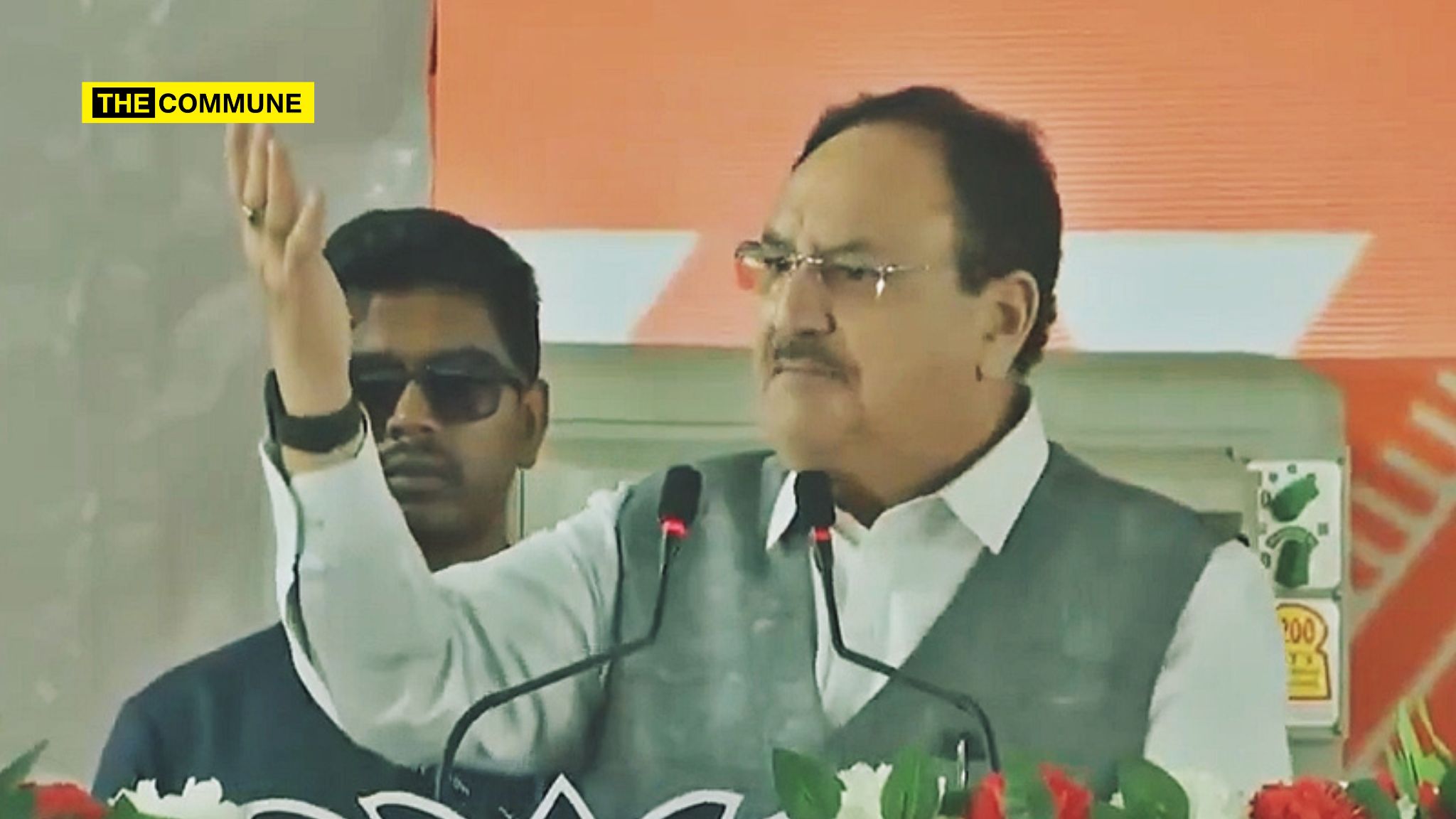
Bharatiya Janata Party (BJP) president J.P. Nadda, on an election campaign in Jharkhand on Saturday, lambasted the Hemant Soren government for ‘stalling’ the development of the state through its ‘regressive and anti-people’ policies. Addressing election rallies in Ramgarh and Bishrampur, J.P. Nadda described the coalition government of JMM-Congress and RJD as an alliance of corrupt people and asserted that the people of the state have resolved to overthrow the government, this time.
The BJP president, pointing to many Opposition leaders behind bars for alleged graft, said that corruption has become the identity of the INDI alliance. “In Jharkhand, in the past five years, they looted forests and land and endangered the existence of tribals. Rs 350 crore was found from the house of the Congress MP here and Rs 35 crore was found from the house of the PA of the minister. There is a need to think how the minister might have committed the loot,” he pointed out. J.P. Nadda further told the gathering about PM Modi’s special affinity for the state and highlighted the series of schemes launched in the state including Ayushman Bharat, PM Jan Dhan, Vikas Bharat Yatra. “None of the governments in the country for 70 years did anything for the tribals. As soon as Narendra Modi became the Prime Minister, he took steps to make the tribes proud. The birth anniversary of Lord Birsa Munda was declared Tribal Pride Day. When Lord Birsa’s 150th birth anniversary will be celebrated on November 15 this year, big events will be organized across the country to commemorate it. The government has declared 2025 as the Year of Tribal Pride,” J.P. Nadda told the crowd, amid cheers and applause.
He said that Prime Minister Narendra Modi has allotted Rs 130 crore for the tap water scheme in Jharkhand, but the government here did not allow it to get off the ground. “The government increased the budget for tribal development by three times and the budget for Eklavya schools for tribal areas by 21 times,” he said. The BJP chief further promised that once a double-engine government is formed in the state, development will gain wings. At least 10 new medical colleges will be opened. Under the Gogo Didi scheme, women will be given Rs 2,100 in their accounts every month.
–IANS
Subscribe to our Telegram, WhatsApp, and Instagram channels and get the best stories of the day delivered instantly.
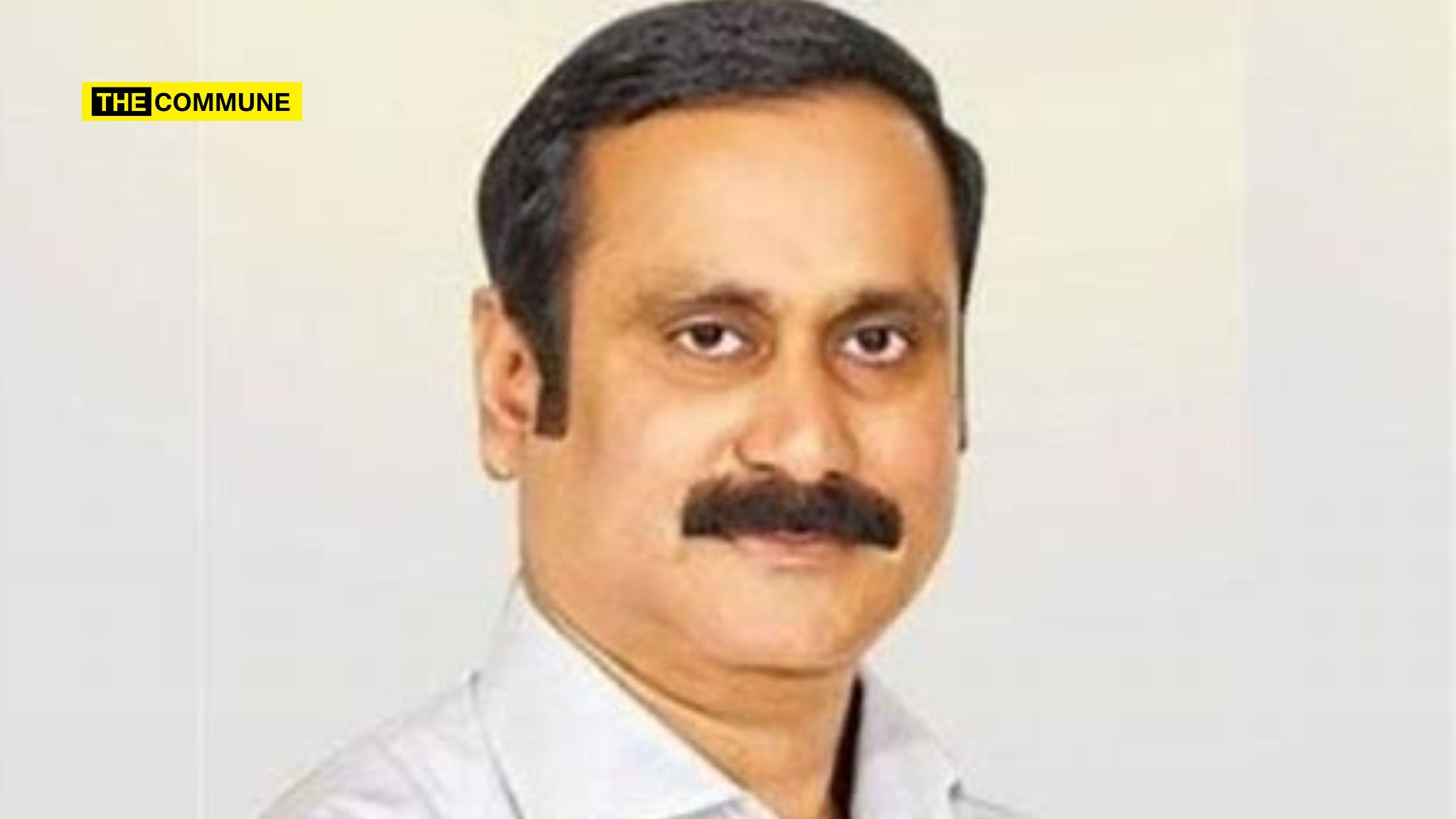
Anbumani Ramadoss, the state president of Pattali Makkal Katchi (PMK) and former Union Minister, has urged the Tamil Nadu government to ensure a regular supply of fertilisers for Samba paddy farmers. In a statement on Saturday, Ramadoss highlighted that farmers in Tamil Nadu’s Delta region are facing difficulties due to a shortage of fertilisers.
He emphasised that essential fertilisers such as urea and potash are unavailable even in local shops, causing distress among Samba paddy cultivators in districts like Mayiladuthurai, Thanjavur, Tiruvarur, and Nagapattinam. Ramadoss also noted that some private stores with fertiliser stock are reportedly charging over 25 per cent above the standard prices for urea and potash. The PMK leader pointed out that Tamil Nadu’s Minister for Cooperatives, S. Periyakaruppan, recently claimed the state’s cooperative societies have significant stocks—32,755 tonnes of urea, 13,773 tonnes of potash, 16,792 tonnes of di-ammonium phosphate (DAP), and 22,866 tonnes of complex fertilisers. “If the minister’s statement is accurate, why are farmers still suffering from a lack of fertilizers for Samba cultivation,” Ramadoss questioned.
He called on the state government to guarantee an uninterrupted supply of fertilisers for Samba paddy farmers, who recently experienced a reduced yield during the Kuruvai paddy season, with cultivation area dropping by about 1.7 lakh acres. Farmers were hopeful for a good Samba crop this season, but the shortage of essential fertilisers, including urea, potash, and DAP, has dampened their optimism. Farmers in several Delta districts have also complained that private sellers are pressuring them to buy additional products, such as pesticides, along with fertilisers.
They urged authorities to increase fertiliser allocations to prevent exploitation by private traders. Samba paddy cultivation has already commenced in the Delta districts, and plants that are now 25-30 days old require urea, potash, and DAP. C. Palani, a farmer from Anthanallur block, shared his frustration, stating: “Private traders are exploiting us, and the fertiliser shortage is the main reason they’re forcing us to buy unnecessary items like costly pesticides.” Official sources said that delays in fertiliser shipments caused by Cyclone Dana have now been resolved, and regular shipments have started arriving in Tamil Nadu.
–IANS
Subscribe to our Telegram, WhatsApp, and Instagram channels and get the best stories of the day delivered instantly.