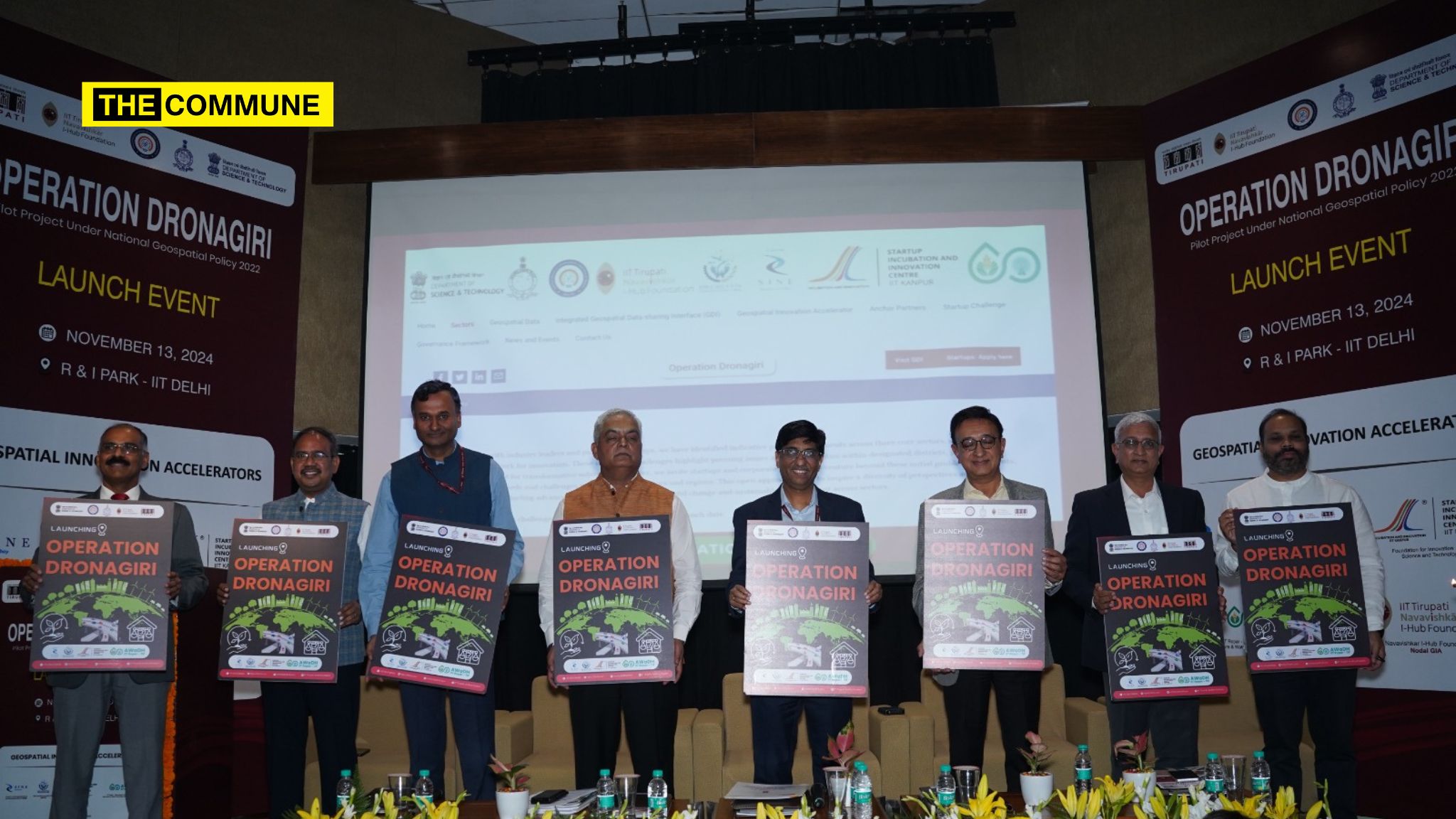
The Ministry of Science and Technology on Thursday launched Operation Dronagiri — a pilot project under National Geospatial Policy 2022. Operation Dronagiri will demonstrate the potential applications of geospatial technologies and innovations in improving the quality of life of citizens and ease of doing business. It was launched by Science and Technology Department Secretary, Professor Abhay Karandikar, at the Foundation for Innovation and Technology Transfer (FITT), Indian Institute of Technology Delhi.
“In the first phase, Operation Dronagiri will be implemented in the states of Uttar Pradesh, Haryana, Assam, Andhra Pradesh, and Maharashtra, where pilot projects will be run and use cases will be demonstrated to showcase the potential applications of integration of geospatial data and technology in 3 sectors — agriculture, livelihoods, logistics, and transport,” Karandikar said, in his keynote address. “Several government departments, industries, corporates, and startups will be partnered with in the first phase. This will create the base for its nationwide roll-out,” he added. Karandikar noted that Operation Dronagiri is part of the numerous efforts of DST in liberalising geospatial data, developing geospatial infrastructure, geospatial skill and knowledge as well as standards in implementing the policy.
He added that Operation Dronagiri comes with support from the integrated Geospatial Data Sharing Interface (GDI). It will help “make spatial data accessible, bringing transformation similar to the process in which UPI has brought about financial inclusion”. He said that similar to UPI’s deployment, a “nationwide rollout is envisioned under a PPP model”. “Operation Dronagiri represents a crucial step within the National Geospatial Policy, designed to position India as a global leader in geospatial technology,” Geospatial Data Promotion and Development Committee (GDPDC) Chairman, Dr Srikant Sastri, said. He stressed the role of the private sector and startups in making geospatial data accessible and impactful. Operation Dronagiri’s focus is on turning data into actionable solutions that bring real, socioeconomic benefits on the ground.
–IANS
Subscribe to our channels onTelegram, WhatsApp, and Instagram and get the best stories of the day delivered to you personally.
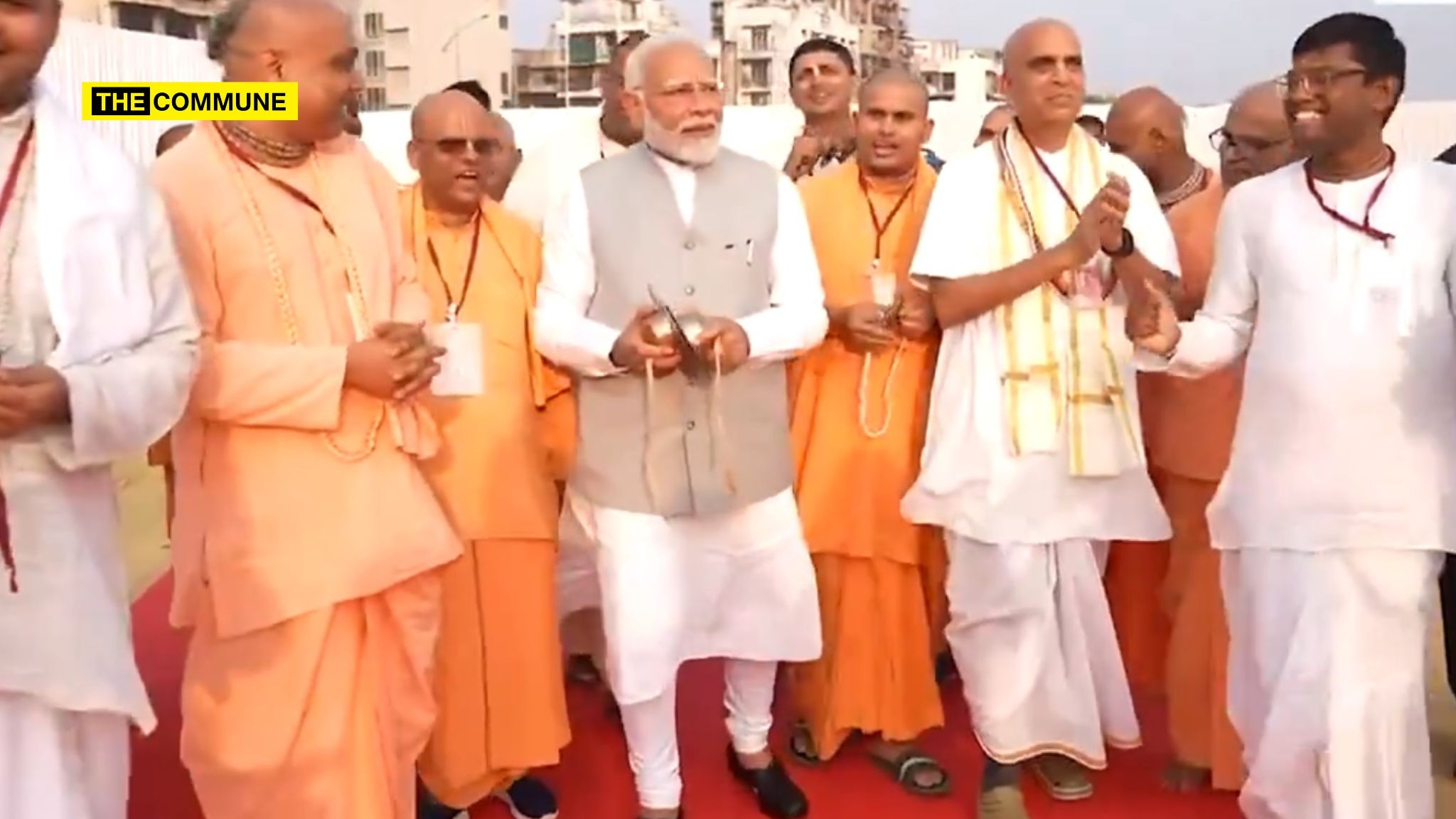
Prime Minister Narendra Modi was warmly received by ISKCON (International Society for Krishna Consciousness) monks upon his arrival in Panvel, Maharashtra, on Thursday. In a heartwarming display of devotion, ISKCON volunteers welcomed the Prime Minister with the chanting of “Hare Rama, Hare Krishna”. PM Modi also joined in by playing the cymbals. This added a special spiritual touch to the moment. He also visited the temple and had a brief interaction with the monks present there. The event highlighted the deep connection between the Prime Minister and the ISKCON movement, spotlighting the significance of spirituality and cultural heritage.
During his visit, PM Modi’s gesture of solidarity with the ISKCON monks was seen widely as a sign of his care and commitment to their well-being. The Prime Minister’s appearance among the monks in Panvel was viewed as a message of protection and reassurance for the ISKCON community, both in India and abroad. Many believe that PM Modi’s public support for ISKCON sends a clear signal that India stands with them, no matter where they carry out their religious practice.
This highlighted the nation’s commitment to safeguarding religious freedoms worldwide. This display of unity comes in the wake of a troubling incident in August, when an ISKCON temple in Meherpur, located in Bangladesh’s Khulna division, was vandalised and set on fire amidst unrest in the country following the resignation of then Prime Minister Sheikh Hasina. The attack was part of a broader wave of violence targeting Hindu temples across Bangladesh, with the Meherpur temple being completely destroyed. In response to the attacks, India had expressed strong condemnation. The Ministry of External Affairs (MEA) then called the incidents “deplorable” and urged the Bangladesh government to take immediate action to protect the safety of Hindus and other minorities.
PM Modi personally monitored the situation, stressing that the safety and security of religious communities, particularly Hindus, should be a priority for the Bangladeshi government. Experts believe that by spending time with the ISKCON members in Panvel, PM Modi not only reinforced his government’s commitment to protecting religious groups but also sent a broader message of international solidarity.
–IANS
Subscribe to our channels onTelegram, WhatsApp, and Instagram and get the best stories of the day delivered to you personally.
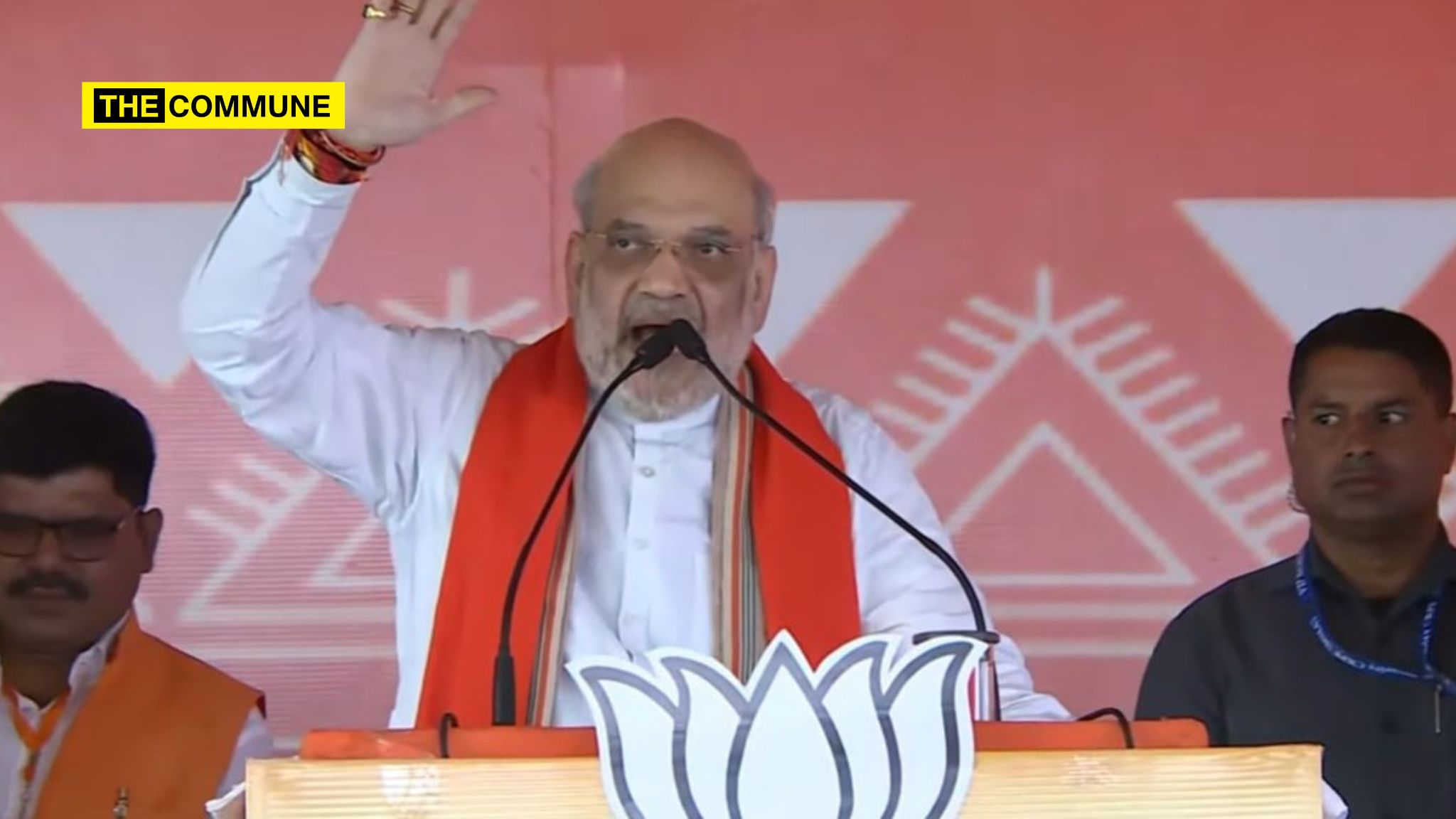
Union Home and Cooperation Minister Amit Shah asserted on Thursday that after the first phase of voting in Jharkhand, it is evident that a BJP-led government will be formed in the state. Addressing an election rally in Giridih in support of BJP candidate Nirbhay Shahabadi, Amit Shah claimed that the Congress-JMM alliance in Jharkhand has been decimated in the first phase itself.
“The public has shown overwhelming support for BJP-NDA candidates,” he said. The Home Minister emphasised Jharkhand’s potential, describing it as a “centre of energy” and one of India’s most resource-rich states. “Jharkhand is blessed with abundant minerals and coal reserves that can fuel the entire country. Despite its wealth, the state’s people are poor,” he noted. He urged voters to elect Nirbhay Shahabadi, promising that a BJP victory would prevent the state’s youth from migrating due to lack of opportunities. “We will establish new factories and create jobs locally,” he assured.
Addressing the issue of Bangladeshi infiltration, the Home Minister accused the Hemant Soren-led government of prioritizing the settlement of infiltrators. “These infiltrators not only encroach upon our land but also marry local daughters to secure their foothold,” he alleged. He promised strict action against infiltrators if BJP comes to power, saying, “Not even a bird will be allowed to trespass. We will implement stringent laws to reclaim every inch of land usurped by them.” Amit Shah also took aim at Congress, claiming that the party intends to restore Article 370 in Kashmir. “Let me tell Rahul Gandhi, not even four generations of your family can reinstate Article 370,” he declared.
He gave the example of the Modi government’s decisive actions in Uri and Pulwama, where he said the BJP government had responded to terrorist attacks with precision. On Maoist activities, the Home Minister pointed out that Jharkhand has long been plagued by insurgency. “Maoists have caused immense damage here, but we will eradicate it before March 31, 2026,” he pledged. Taking a jibe at Rahul Gandhi, Amit Shah quipped that Sonia Gandhi is very eager to promote her son. “She has launched a ‘plane’ named Rahul at least 20 times, yet it crashes every time. In this election also, his plane will crash for the 21st time,” he mocked.
He predicted that the Congress would struggle to cross even a single-digit tally in Jharkhand. He also criticised Rahul Gandhi and Hemant Soren for opposing amendments to the Waqf Act. “Regardless of their objections, we will proceed with necessary changes to the Waqf Act in Parliament,” the Home Minister asserted.
–IANS
Subscribe to our channels onTelegram, WhatsApp, and Instagram and get the best stories of the day delivered to you personally.
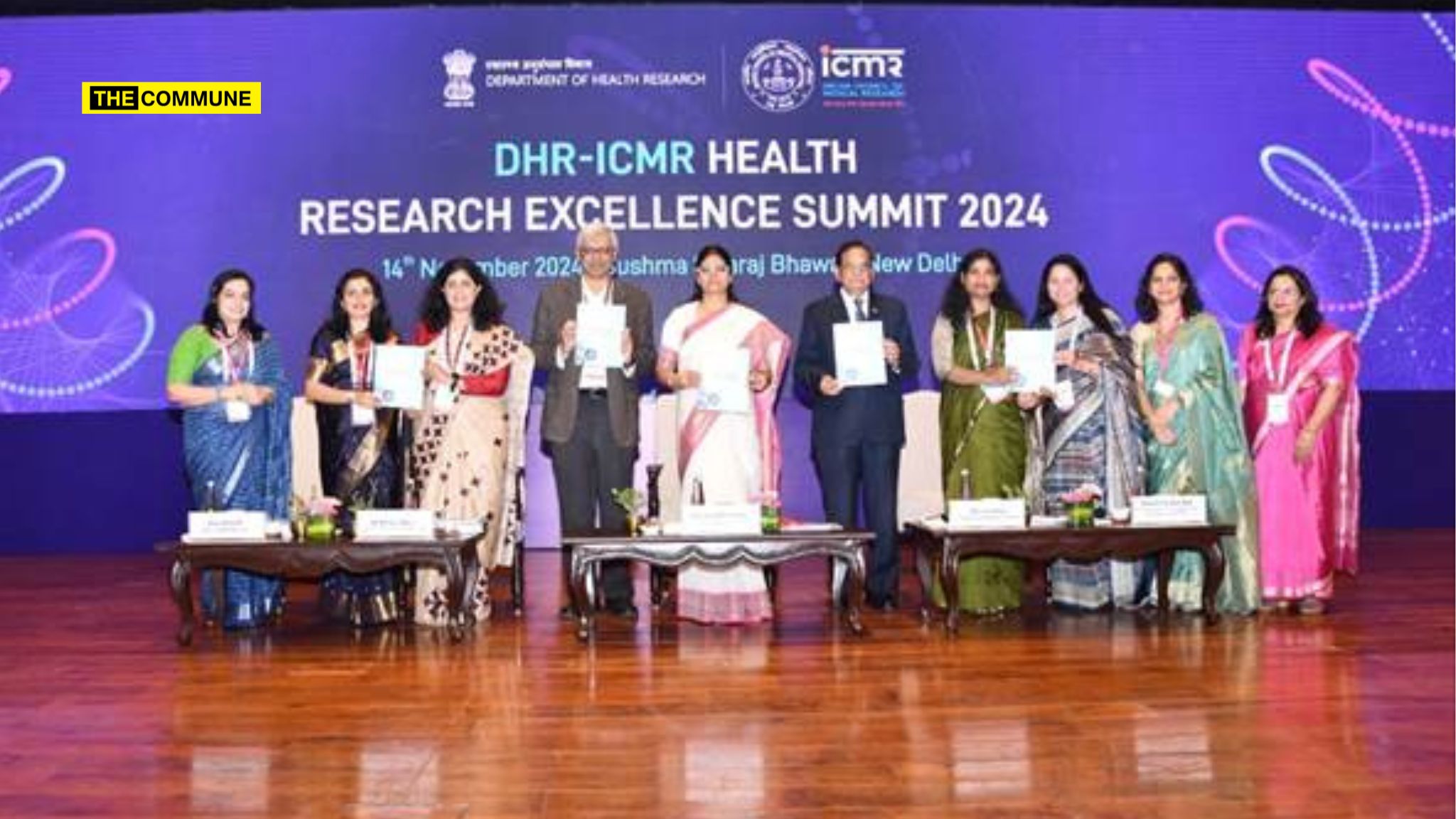
Indian Council of Medical Research (ICMR) has played a significant role in addressing India’s critical health issues transforming the healthcare care research landscape, said JP Nadda, Union Minister for Health & Family Welfare on Thursday. Nadda said this while in his virtual address at the Department of Health Research and the ICMR (DHR-ICMR) Health Research Excellence Summit 2024 in the national capital. T
The event also marked ICMR’s 113th Foundation Day, celebrating the institution’s commitment to advancing biomedical research in India.
“Today, we celebrate over a century of ICMR’s unwavering commitment to advancing health research and improving the lives of millions. ICMR has been at the forefront of biomedical research, playing a pivotal role in addressing some of the most critical health challenges.” Nadda said. “From combating infectious diseases like tuberculosis, malaria, and Covid-19, to advancing solutions for non-communicable diseases, maternal and child health, and nutritional disorders — ICMR has left an indelible mark on India’s healthcare landscape,” he added. Anupriya Patel, Minister of State of Health lauded ICMR for being a “pioneer in advancing scientific research and innovation in India” Dr. V.K. Paul, Member (Health), NITI Aayog said that ICMR’s contributions will “position India as a global leader in health research”.
Meanwhile, the ICMR has launched a first-of-its-kind initiative — First in the World Challenge research grant — to foster novel, out-of-the-box, futuristic ideas from researchers across the country. The ideas can include new knowledge, discovery or development of breakthrough health technologies (vaccines, drugs or therapeutics, diagnostics, interventions, etc.) which has never been thought, tested or tried in the world to date. The apex research body noted that the “grant calling for bold research idea” is inspired by the Chandryaan-3 mission, which made a historic landing on the south pole of the Moon.
–IANS
Subscribe to our channels onTelegram, WhatsApp, and Instagram and get the best stories of the day delivered to you personally.
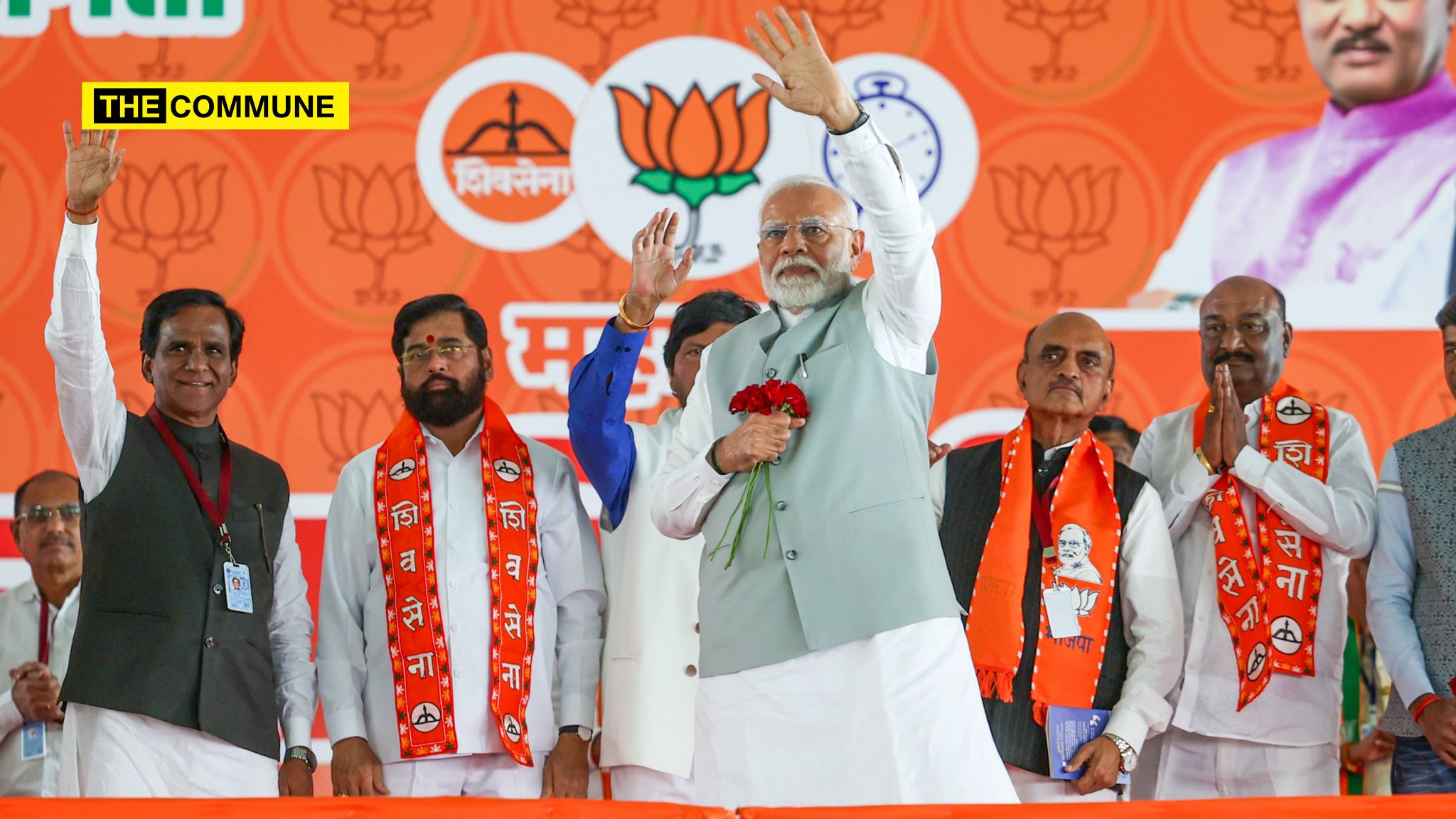
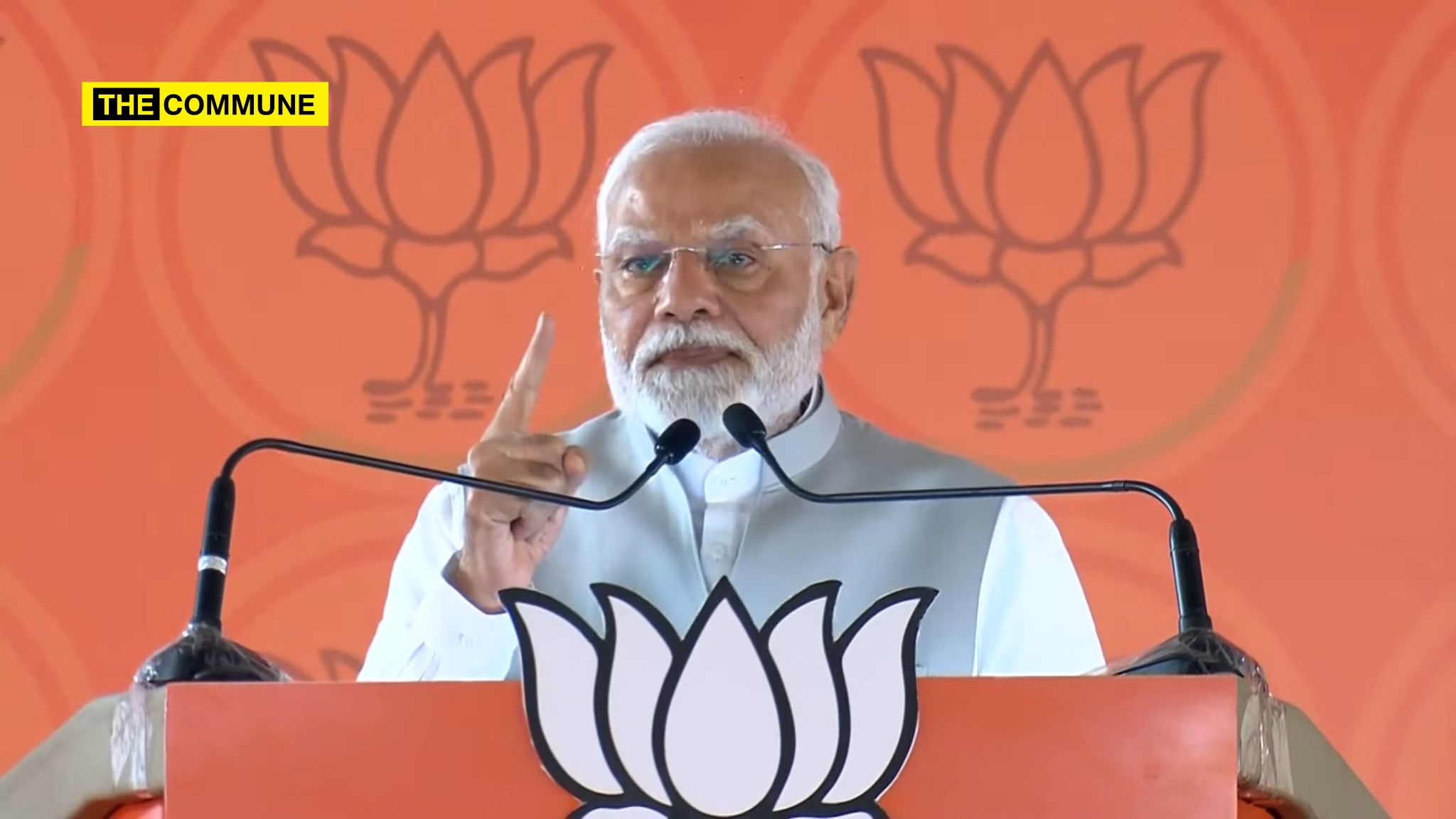
Prime Minister Narendra Modi on Thursday accused the Congress party of being a pioneer in the politics of vote banks and also an enemy of the poor. He further targeted the Congress over the announcement by its leader from Jharkhand to give free cylinders to Rohingyas and Bangladeshis by playing a game with the country to get votes. “While they are questioning us on providing free ration to the poor, one of the leaders of Congress from Jharkhand has announced to give free cylinders to Hindus, Muslims and infiltrators too. They are openly announcing to give free cylinders to Rohingyas and Bangladeshis. It’s a prime example of how they are playing a game with the country and the future of your children to get votes. Therefore, we need to keep in mind that Congress is a pioneer in the politics of vote banks and they are also enemies of the poor,” said PM Modi in his address at the poll rally for BJP and MahaYuti candidates.
He further added that it is, therefore, the responsibility of the poor to stop Congress, adding that they (Congress) say why the 25 crore people who have come out of poverty are getting free ration. “Congress wants the expenses of these people to increase so that they go back into poverty. If the Aghadi people get a chance, they will do the same in Maharashtra,” said the Prime Minister. PM Modi alleged that the Congress governments did not have the intention that the poor should come forward and demand their rights. “That is why even today Congress vehemently opposes every welfare scheme for the poor. That’s why my poor man could not come out of the difficulties of life. Even after 70 years of independence, most of the people in the country are still struggling to get food, clothing and shelter,” he said.
PM Modi said that Congress has always worked on the agenda of keeping the poor poor, adding that generations after generations of these people kept giving the false slogan of eradicating poverty but in the name of the slogan of eradicating poverty, Congress has looted poor. The Prime Minister said that the situation has changed for the first time in the last 10 years, adding that for the first time, a government has brought 25 crore people out of poverty. “Today, the policies of the MahaYuti government are becoming the strength of the exploited and the deprived. The work that was done in 10 years could have been done earlier also,” he added.
PM Modi exhorted the people to re-elect the MahaYuti, saying that Maharashtra will become the most important growth engine of developed India. “This entire area of Panvel-Raigad is rich in marine wealth. The government is empowering the coastal economy and working for our fisherman brothers and sisters,” he said, adding, “Development of Maharashtra is the first priority for the BJP and MahaYurti government. We are working with the aim of a bright future for Maharashtra. We have brought to reality the tasks that previous governments had made impossible.”
–IANS
Subscribe to our channels onTelegram, WhatsApp, and Instagram and get the best stories of the day delivered to you personally.
Prime Minister Narendra Modi on Thursday accused Congress and Maha Vikas Aghadi (MVA) of not renaming Aurangabad after Chhatrapati Sambhaji Maharaj (a Maratha military king). “When the MahaYuti government formed the government, we renamed it. Maharashtra election is not just an election to elect a new government. In this election, on one side there are patriots who are believers of Sambhaji Maharaj and on the other side, there are people who praise Aurangzeb,” said PM Modi while targeting the Congress and its allies during a poll rally for BJP and MahaYuti nominees.
He asked the people to re-elect the MahaYuti to expedite the state’s development. “Who was most hurt when Aurangabad was renamed as Chhatrapati Sambhaji Nagar? Maharashtra knows that Balasaheb Thackeray raised the demand. The Aghadi government was in power for 2.5 years but did not dare to do so under the pressure of the Congress party. The MahaYuti government renamed the city as soon as it came to power. We fulfilled your wish, we fulfilled Balasaheb Thackeray’s wish,” said the Prime Minister.
The Prime Minister said that Maharashtra has to lead the vision of Viksit Bharat. “BJP and MahaYuti are working for the same Sankalp. To achieve this, modern infrastructure is being built. In this entire region, the railway is being modernised. Maharashtra has attracted maximum FDI after the formation of the MahaYuti government. The people have benefitted due to the investment. In this region alone contracts of more than Rs 70,000 crore have been finalised. This will open up new opportunities for development and mobilise more jobs for the youth,” said PM Modi The Prime Minister also blamed the MVA for doing “nothing” except increasing the “problems” of the state.
“MVA has only exacerbated the problems of Maharashtra. There has been a water crisis in Marathwada for a long time but the Congress and Aghadi people always remained sitting idle. During our tenure, concrete efforts were made to fight drought. When the Devendra Fadnavis-led government was in power, it had launched the Jalyukt Shivar Yojana to make Marathwada drought free but it was closed by the MVA government. However, it was again revived after MahaYuti came to power,” the Prime Minister said. He claimed that the Congress party relies on division and not on development to form the government. “Congress stops Dalits, backward classes and tribals from progressing so that they can retain power from generation to generation. That is why Congress has been against reservation from the very beginning,” PM Modi alleged.
He claimed that Congress used to say that reservations were against the country, adding that it considered reservations against merit. “The mentality and agenda of the Congress remained unchanged. They can not come to terms with the fact that an OBC has been the PM in the country for the last 10 years,” PM Modi said. “The ‘Prince’ of Congress, therefore, only claims that his party will scrap reservations when he goes abroad. To further their agenda, Congress and Aghadi are conspiring to divide SCs, STs and OBCs into small castes,” claimed the Prime Minister.
–IANS
Subscribe to our channels onTelegram, WhatsApp, and Instagram and get the best stories of the day delivered to you personally.
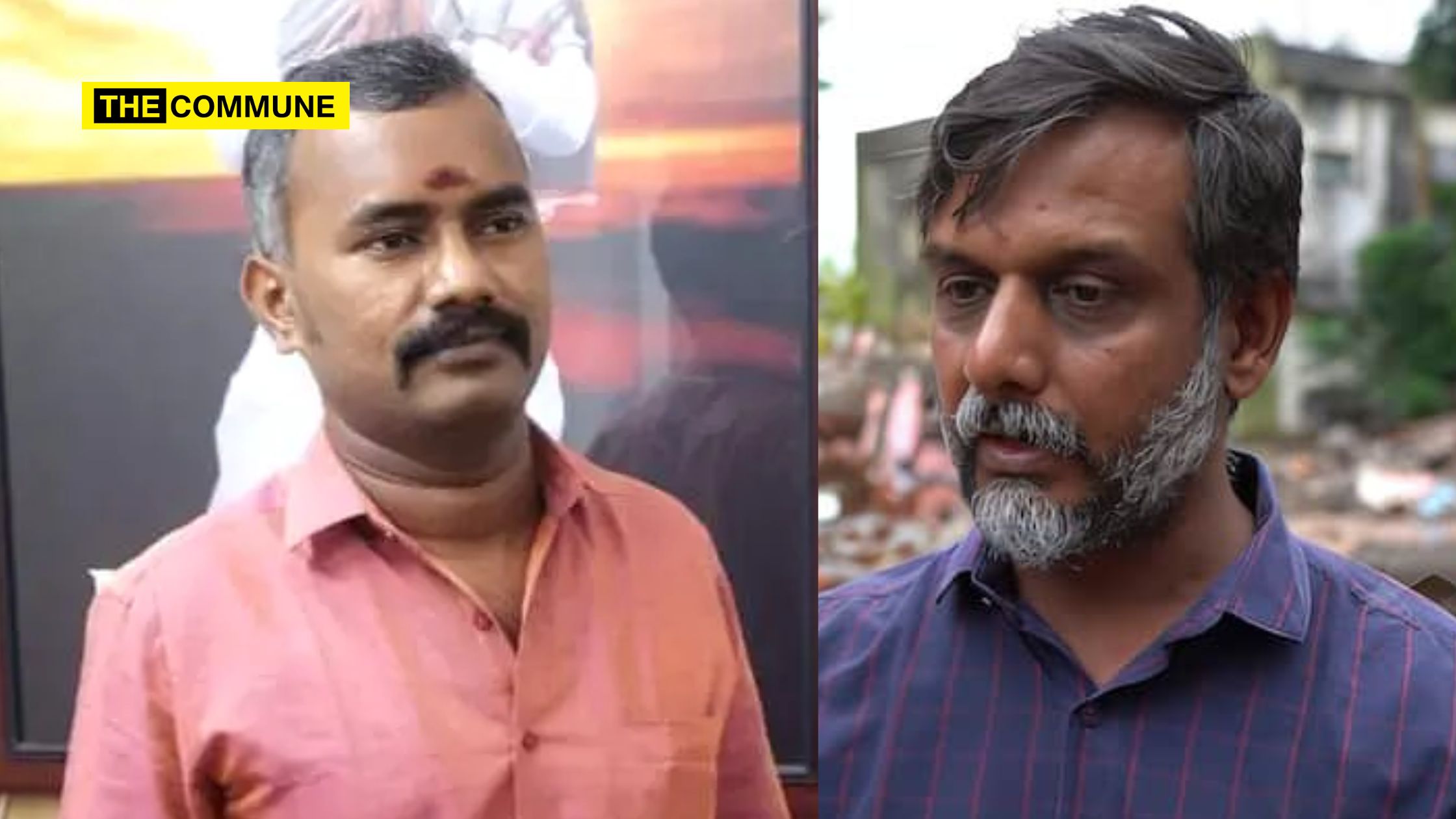
A. Ashvathaman, State Secretary of the Bharatiya Janata Party (BJP) in Tamil Nadu, has filed a formal complaint against Thirumurugan Gandhi, the leader of the May 17 group, accusing him of offences including treason, inciting separatism, and spreading anti-national sentiments. The complaint, submitted to the Commissioner of Police in Chennai, highlights statements made by Gandhi during a press conference on 6 November 2024, regarding the recently released movie Amaran.
Dravidianist separatist and terror sympathiser Thirumurugan Gandhi labelled Major Mukund Varadarajan as a “war criminal.”. He also objected to the portrayal of Indian Army soldiers shouting “Jai Bajrangbali” without realizing that it is the battle cry used by the Indian Army’s Rashtriya Rifles and the Rajput Regiment military units.
In a recent press conference, Thirumurugan Gandhi, raised objections and criticized ‘Amaran’ for allegedly depicting the entire Kashmiri population as enemies, which he claimed is a “one-sided” narrative that undermines the rights of the people of Kashmir. He argued that the film reflects a biased political stance and called on the producer and director to answer for the portrayal.
In his press conference, Gandhi reportedly referred to Kashmiri terrorist leaders as “people’s rights fighters” and described Kashmiri terrorist groups as “national liberation fighters,” terms typically used by Pakistan to justify its support for militancy in the region. He also criticized the Indian Army, accusing them of human rights violations in Kashmir and labeling Mukund Varadarajan, an Ashoka Chakra awardee, as a war criminal.
Ashvathaman’s complaint alleges that Gandhi’s comments undermine the sovereignty of India and incite separatism and hostility against the Indian government and armed forces. He further claims that Gandhi’s statements could cultivate anti-military sentiment among the public, which he describes as a direct threat to national security.
This is not the first time Gandhi has been targeted for his remarks. Ashvathaman referenced a prior complaint he had filed against Gandhi for similar charges but lamented that action had not been taken at that time. He has now requested the police to register a case under Section 152 of the Indian Penal Code, which pertains to offenses that disturb the peace and incite discontent, urging the authorities to take swift and decisive action.
Ashvathaman’s complaint has stirred political and public discussions about the growing divide on sensitive issues related to Kashmir and the military, and the potential consequences of such provocative statements. The Chennai Police have yet to respond to the complaint, and it remains to be seen whether any charges will be brought against Gandhi.
Subscribe to our Telegram, WhatsApp, and Instagram channels and get the best stories of the day delivered to you personally.
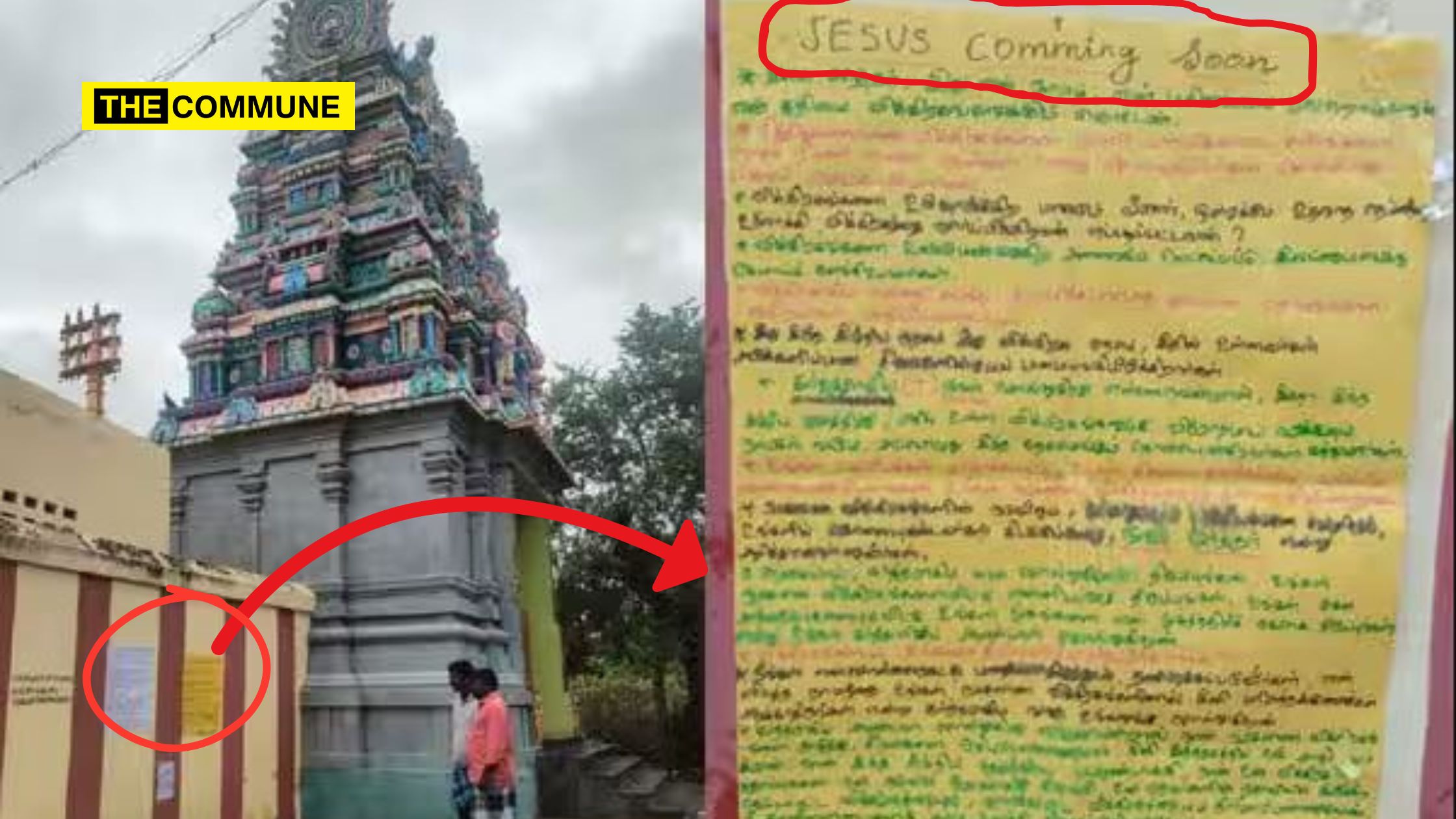
In an act of shocking atrocity in Kachirayapalayam, a village near Karadisithur in Kallakurichi District, several temples dedicated to Shiva, Pillayar, and Perumal, situated at different locations, became the target of a mysterious incident.
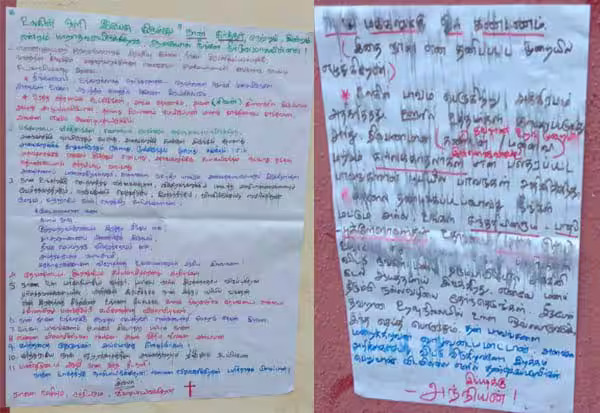
Overnight, unknown individuals pasted handwritten Bible verses and slogans like ‘Jesus coming soon’, on the walls surrounding these temples in Kachirayapalayam. Along with the scriptures, the perpetrators included a warning stating that the idols would be removed and replaced.
They also posted a series of comments under the title “A Condemnation to the Commons,” signed “Anniya/Stranger.”
Upon receiving the report, the Kachirayapalam police arrived at the scene and have launched an investigation to identify those responsible for the posters. The incident has caused significant unrest in the local community, sparking concern and curiosity in the area.
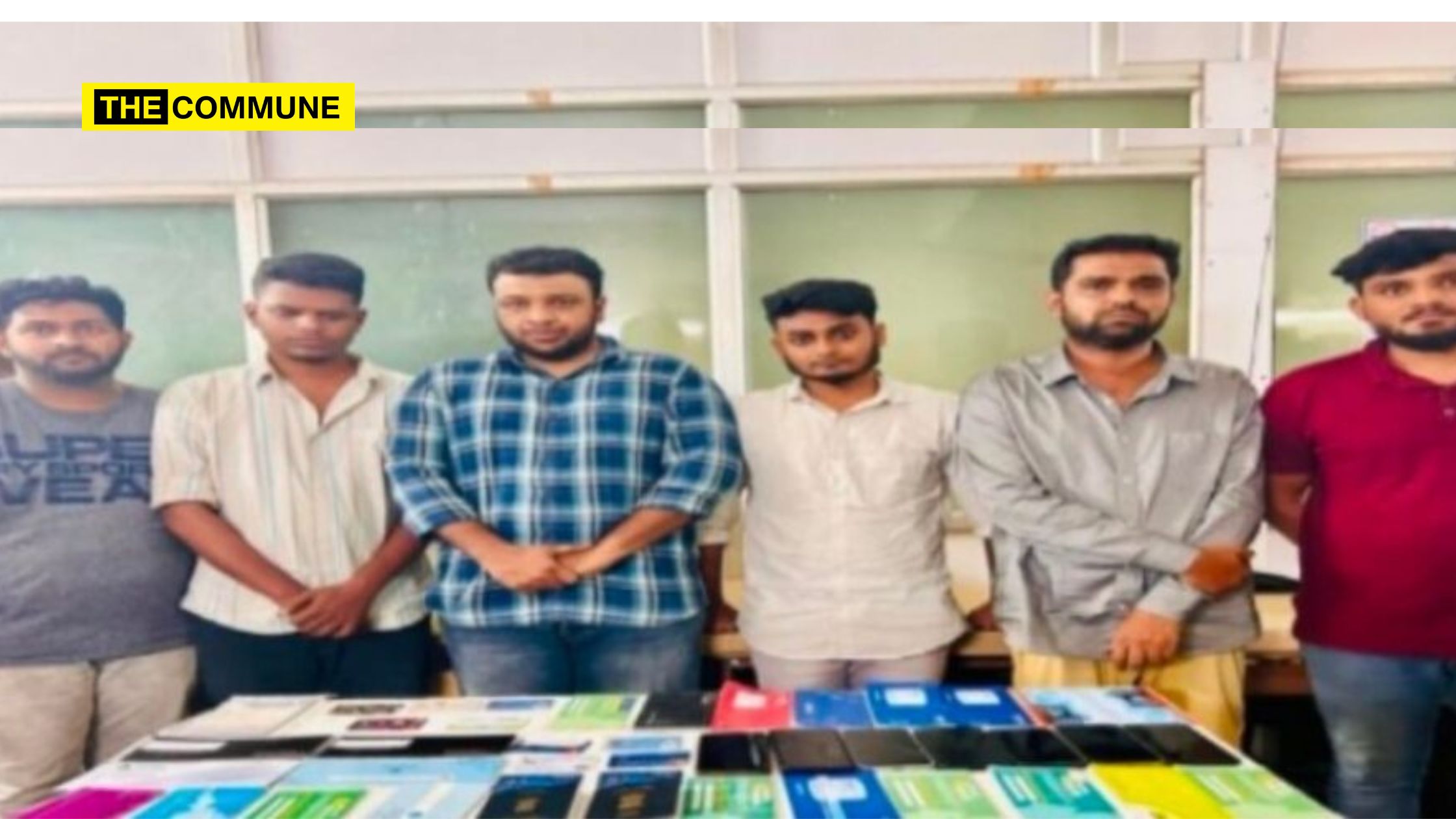
The Cyber Crime Wing of the Tamil Nadu Police has arrested six individuals for defrauding ₹96.5 lakh through an online share market trading scam.
The incident came to light in June when a petitioner from Madurai reported being tricked into losing ₹96.5 lakh after responding to a WhatsApp advertisement promoting a high-profit “international share market trading business.” Believing the claims, the victim transferred money to several bank accounts, but after seeing no returns, he realized he had been scammed. The victim then filed a complaint with the Madurai District Cyber Crime Police, requesting action and recovery of the funds.
The investigation focused on ₹38 lakh frozen in various bank accounts linked to the suspects. Upon further examination of the victim’s transaction history, investigators found that ₹22 lakh had been sent to a single account, which was later transferred to two accounts belonging to Seeni Mohamed from Alwar Thoppu, Thennur, in Tiruchi. Additional investigation revealed that Mohamed had withdrawn the funds using cheques. His accounts were subsequently frozen, and Mohamed was arrested.
As the investigation progressed, it emerged that Ibrahim from Uraiyur, Trichy, masterminded the scam, working with four accomplices: Mohamed Sabeer, Mohamed Riyaz, Mohamed Azharudeen from Tiruchi, and Mohamed Marzuk from Ayyampettai, Thanjavur.
The suspects had reportedly withdrawn the fraudulent funds and handed them over to a person who provided a code word via WhatsApp. The money was then funneled through multiple bank accounts, with the accused receiving a commission of ₹1,000 for every ₹1 lakh transferred.
The cybercrime team arrested all six suspects and uncovered that they had laundered approximately ₹1 crore through a network of bank accounts. The investigation further revealed that these individuals were involved in similar cybercrimes across several states, including Karnataka, West Bengal, Delhi, and various regions in Tamil Nadu.
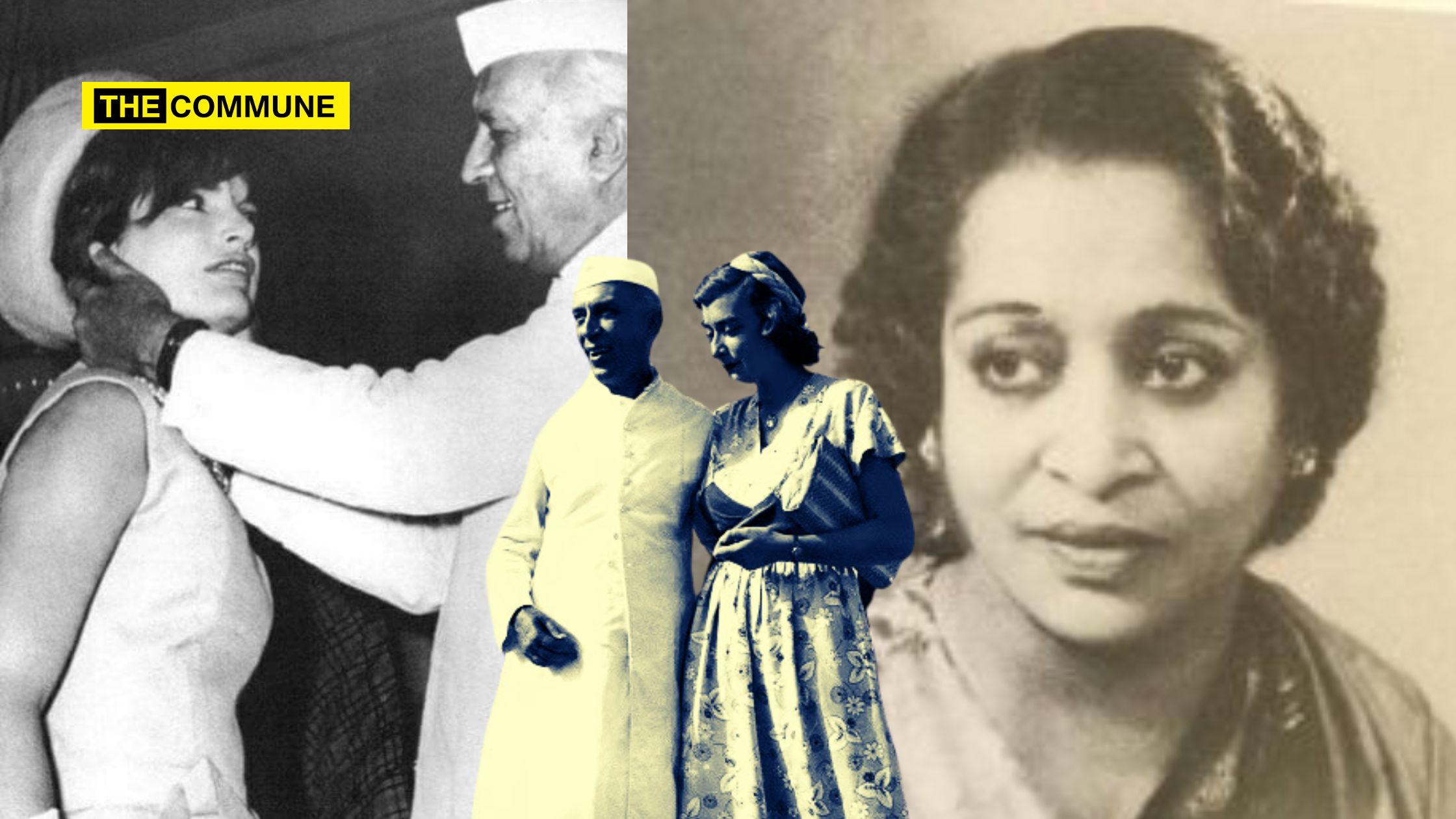
Jawaharlal Nehru, India’s first Prime Minister, is often portrayed by politicians as a visionary for a modern, secular India, but his personal life, particularly his relationships with prominent women of his time, has always left people wondering if this was the same Nehru that people praised so much. Historical accounts and letters suggest that Nehru’s flirtatious character, which is referred to as “charisma” to be politically correct, extended beyond his political sphere and earned him a reputation as a “ladies’ man.” His close relationships with women like Lady Edwina Mountbatten and his “admiration” for former American first lady, Jacqueline Kennedy have been the subject of considerable scrutiny.
It must be noted that Nehru and Kamala’s arranged marriage in 1916 began with challenges as the young Kamala struggled to fit into the politically active, English-speaking Nehru family. However, Kamala’s health declined in later years due to tuberculosis, and Nehru was deeply affected by her suffering. Her death in 1936 left an enduring void in his life, reflected in his writings. Did this “void” make him “seek” companionship with other women?
Let’stake a look at each one of these women in Nehru’s life.
Lady Edwina Mountbatten
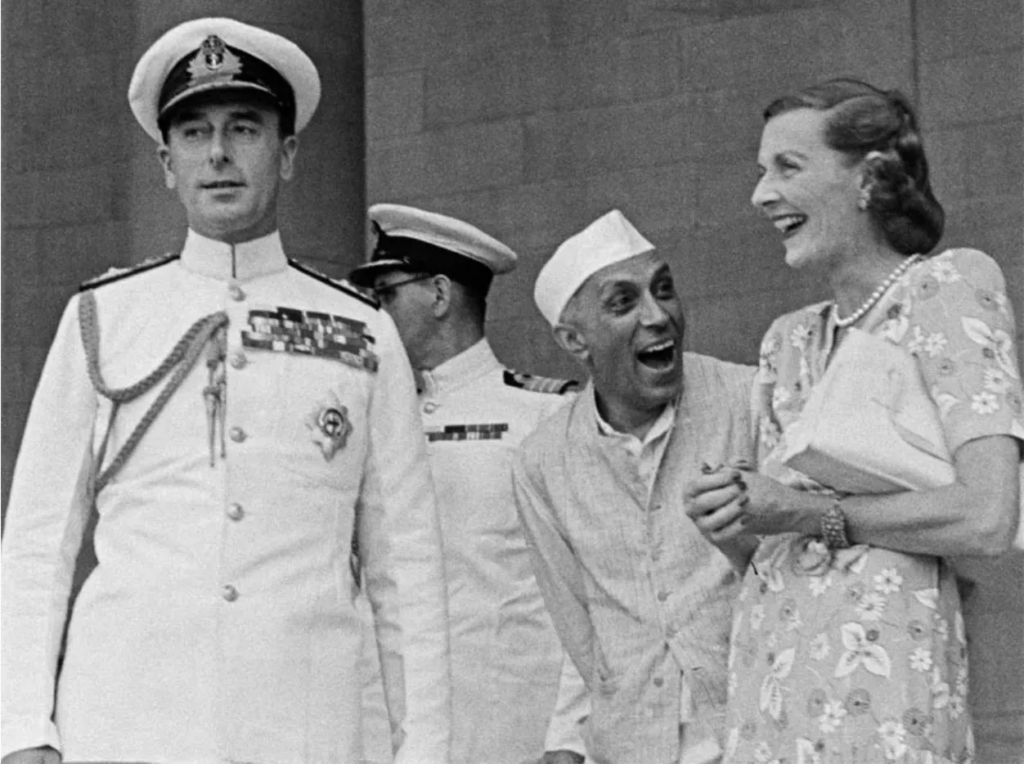
The connection between Jawaharlal Nehru and Lady Edwina Mountbatten has been a topic of intense scrutiny for decades. Edwina, the wife of Lord Louis Mountbatten, the last Viceroy of British India, met Nehru during the final days of the British Empire’s rule in India. Their “friendship” blossomed rapidly, evolving into a deep, affectionate relationship that would span years. Historical records, including letters and memoirs, reveal intimate exchanges and a profound emotional bond between the two.
The Nehru-Edwina relationship was especially controversial because Edwina was married to a powerful British official, yet her affection for Nehru was open enough that Lord Mountbatten reportedly accepted their closeness. Louis Mountbatten’sown statements suggest that he saw Edwina and Nehru’s connection as one of mutual respect and emotional intimacy. For Nehru, Edwina was a “confidante with whom he could share personal thoughts“, particularly during the challenging early years of Indian independence.
Nehru was so close with Edwina that he sent the INS Trishul for her funeral!
Mountbatten’s daughter has acknowledged that her father used Edwina to influence Nehru in Kashmir. According to the book, Daughter of Empire: Life as a Mountbatten, first published in 2012 in the United Kingdom, Pamela claimed that Edwina and Nehru were in love buttheydidn’t have a physical relationship.
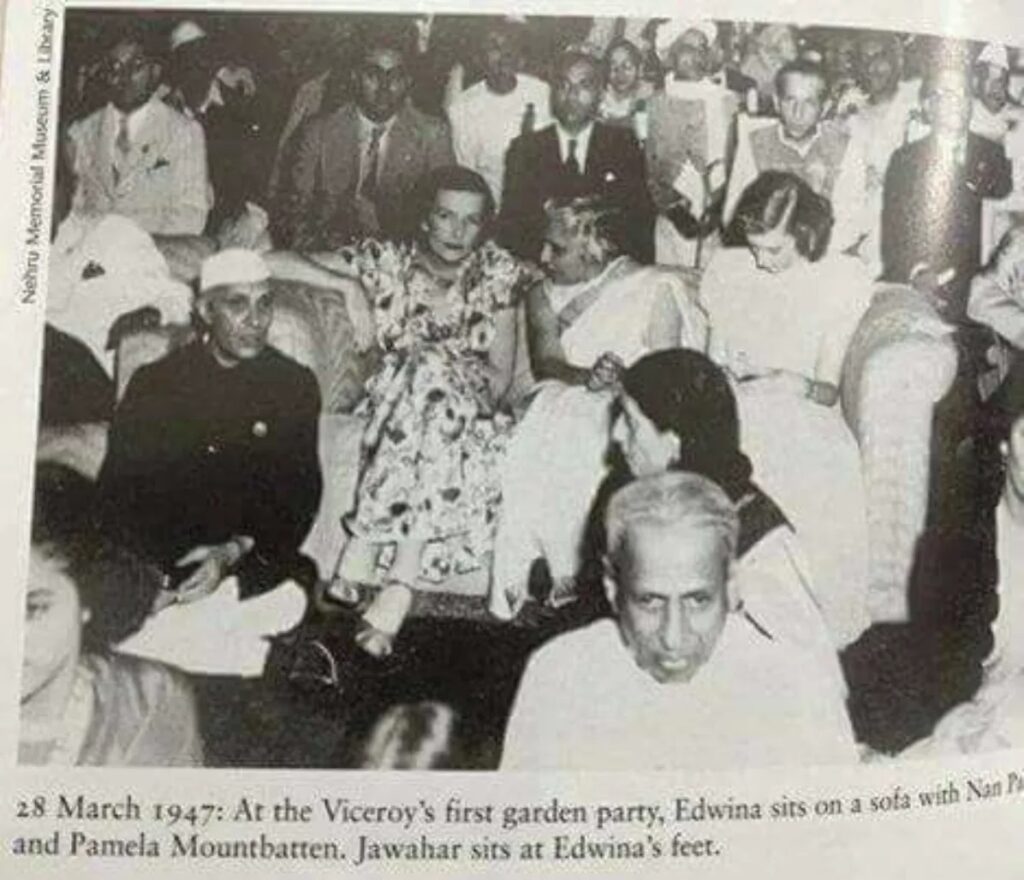
On February 21, 1960, Edwina Mountbatten was found dead, with a pile of letters from Jawaharlal Nehru by her side. The two shared a close relationship that began when Edwina and her husband, Louis Mountbatten, arrived in Delhi on 22 March1947, amidst India’s turbulent path to independence. While the Mountbattens had a strained relationship with Jinnah, they quickly bonded with Nehru. A photograph fromMarch 28, 1947, captured the closeness between Edwina and Nehru, who sat at her feet. Their relationship intertwined both affection and influence during a critical period in India’s history.
Nehru With Lord Mountbatten & Edwina Mountbatten
Edwina’s wish was to be buried at sea, a request honored in 1960 after her death at age 59. Family members, including Prince Philip’s mother, Princess Andrew of Greece, gathered as her coffin was taken aboard HMS Wakeful off Portsmouth. Lord Mountbatten and their daughters joined the Archbishop of Canterbury in a solemn ceremony, releasing her remains 12 miles out at sea. An additional tribute came from Nehru, who sent the Indian Navy frigate INS Trishul to accompany Wakeful“and, on Panditji’s instructions, marigolds were scattered upon the waves”.
The relationship between Jawaharlal Nehru and Edwina Mountbatten is featuredin the popular Netflix series The Crown, a historical drama that explores Queen Elizabeth’s life, reign, and the private lives of the British royals. In the very first episode of Season 1, during Queen Elizabeth and Prince Philip’s wedding, Winston Churchill seems to suggest that Lord Mountbatten played a key role in “losing India” for Britain. Others at the ceremony echo this sentiment. Later, in Season 2, Lord Mountbatten acknowledges his wife Edwina’s relationship with Nehru in a conversation with Queen Elizabeth.
Edwina’s presence in Nehru’s life and her impact on him is seen as profound, though her daughter Indira Gandhi reportedly viewed Edwina with disfavour due to her closeness with Nehru.
Nehru’s “vulnerability” to Edwina’s influence, even subconsciously, has led some to question the objectivity of his political choices concerning Britain.
Padmaja Naidu
Padmaja Naidu’s relationship with Nehru represents yet another facet of his associations with women – one allegedly based on shared intellectual and political ideals. Jawaharlal Nehru’s relationship with Padmaja Naidu, the daughter of Sarojini Naidu, was marked by deep personal and emotional ties. Nehru and Padmaja shared a very close bond, often communicating through letters, some of which reflected a more intimate and complex dynamic between them. Some of the letters have been published in the book Selected Works of Jawaharlal Nehru, Volume 1.
The love story between Jawaharlal Nehru and Padmaja Naidu is a poignant and complex chapter in Indian history. After the death of his wife, Kamala Nehru, in 1936, Nehru became emotionally isolated. During this time, he grew closer to Padmaja, the daughter of Sarojini Naidu, a fellow freedom fighter. Their relationship blossomed in the late 1930s, with Nehru writing nearly 50 personal letters to Padmaja, some of which were love letters. Nehru affectionately called her “Bebee” in his letters, expressing admiration for her affection.
At one point, Nehru is even alleged to have considered marrying Padmaja, who was 11 years younger than him. However, the marriage never took place. Nehru’s daughter, Indira Gandhi is said to have played a crucial role in this decision. After Kamala Nehru’s death, Indira was emotionally vulnerable and required Nehru’s care, leading him to cancel the marriage plans. Indira was reportedly not fond of their relationship and even removed pictures of Padmaja from Nehru’s room, which led to a heated argument between father and daughter.
The situation grew more complicated with the arrival of Edwina Mountbatten, whom Nehru became close to. Padmaja, feeling jealous, withdrew from Nehru and even threatened suicide, later offering to hand over all the letters Nehru had written to her to Indira. After Nehru’s death, Padmaja continued to live near his residence, at Teen Murti Bhawan, where she cherished memories of him. She passed away on May 2, 1975.
A letter dated November 1946, which is found in Selected Works of Jawaharlal Nehru, Volume 1, illustrates Nehru’s candid reflections during a turbulent time in India’s history.
In this particular letter, Nehru describes his emotional reaction to the violence that erupted in Bihar following the Noakhali massacre, where Hindu peasants had risen against the Muslim atrocities in Bengal. In a letter to Sarojini Naidu’s sister and his alleged lover, Padmaja Naidu, Nehru said he was “relieved” over the murder of 400 Hindus.
“My dear,
Why exactlyI am writing to you just at this present moment, nearing midnight, when I am tired out, I do not quite know. But suddenly after the excessive strain of the last two days, I had a feeling of reaction and relaxation and I thought of you and wanted to write.
This evening I returned by air from Bhagalpur. On arrival, I learnt that the military had fired on a peasant mob in the rural areas some miles from here, and about 400 had been killed. Normallysuch a thing would have horrified me. But would you believe it? I was greatly relieved to hear it! So we change with changing circumstances as layers of fresh experience and feeling cover up the past accumulation.”
“I have had horror enough during the past two days. Something incredible has happened here, or something that I would have refused to believe in, a few days ago. Hindu peasant mobs have behaved in a manner that is the extreme of brutality and inhumanity. How many have been done to death by them I do not yet know, but it must be a vast number. To think that the simple, unsophisticated, rather likable Bihar peasant can go completely mad en masse upsets all my sense of values.”
Without referencing the Hindu pogrom in Noakhali, he asserted that Hindus in Bihar had been unrestrained in their retaliation. In the letter, he emphasized that a careful equilibrium had been maintained by authorizing security forces to engage in large-scale killings of Hindus. He added,“For a few days they had it their own way, with few checks or hindrances. And so when the news came that they have been stopped at last in one place and that 400 of them had died, I felt that the balance had been very slightly righted.”
2/7
On Nov. 4th, Nehru threatened Hindus saying the “Govt. would not show any mercy…. they will be FIRED UPON & BOMBED from the air if necessary”. He exhorted Hindus whose families were raped & massacred at Noakhali to protect Muslims “even at the cost of sacrificing your all”! pic.twitter.com/zUiSXZMuyV
— Savitri Mumukshu – सावित्री मुमुक्षु (@MumukshuSavitri) November 14, 2023
The letter reveals a rather unsettling perspective of Nehru during this period, where he seemed to justify the deaths of Hindus in Bihar while failing to address the magnitude of the earlier atrocities in Noakhali.
“Admiration” For Jacqueline Kennedy
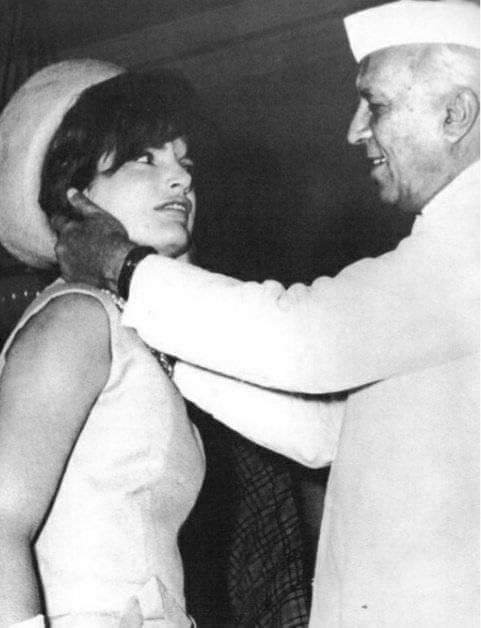
Nehru’s admiration with Jacqueline Kennedy, the young and glamorous First Lady of the United States, added another layer to his complex image. Their interactions began when Jackie visited India in 1962, a visit that generated significant media interest. Nehru was in his early seventies at the time, while Jackie was young and considered one of the most beautiful and fashionable women globally. Their public appearances together were closely documented, and photos often showed Nehru visibly charmed by Jackie’s presence.
Critics argue that Nehru’s enthusiasm for Jackie’s visit was a distraction at a time when India faced severe domestic issues, including economic challenges.
In a 2016 public event video, Bruce Riedel, a former CIA analyst and author of JFK’s Forgotten Crisis, discussed an interesting incident involving Jawaharlal Nehru and Jacqueline Kennedy. Riedel revealed that Nehru was “smitten” by the U.S. First Lady, mentioning that the Indian Prime Minister kept a photograph of her on his bedside table for the rest of his life. He quickly added that while the gesture was unusual, it highlighted the significant diplomatic role Jacqueline Kennedy played in fostering U.S.-India relations.
But here is what Jackie thought of Nehru. Jacqueline Kennedy, the First Lady of the United States, did not have a positive relationship with Jawaharlal Nehru or his daughter, Indira Gandhi, as revealed in the book ‘Jacqueline Kennedy: Historic Conversations on Life with John F Kennedy‘. When Nehru visited the U.S. in November 1961, John F. Kennedy referred to the visit as “the worst head-of-state visit” and made a derogatory comment about Nehru’s final days in power, describing it as “the town preacher being caught in the whorehouse.” Jackie Kennedy shared her distaste for Indira Gandhi, calling her a “real prune” and criticizing her as “bitter, kind of pushy, [and] horrible.” She also remarked that Indira always looked like “she’s been sucking a lemon.” These sentiments reflect the personal tension between the Kennedys and the prominent Indian leaders during their interactions.
Nehru’s relationships with powerful women—intellectual companions or political confidantes—reveal a man whose personal life was as complex and controversial as his leadership. While some revere him as a visionary architect of modern India, others see his flirtations and emotional dependencies as a distraction from the grave responsibilities of his office. His alleged infatuations with women like Edwina Mountbatten, Padmaja Naidu, and Jacqueline Kennedy raise serious questions about his focus and priorities during India’s tumultuous early years of independence. Was the man who shaped a nation too entangled in his personal whims to steer the course of history truly? The truth may be less flattering than the iconic legacy he carefully crafted.
Subscribe to our channels onTelegram, WhatsApp, and Instagram and get the best stories of the day delivered to you personally.