A felicitation ceremony of the Indian National Lok Dal (INLD) to mark the victory of its two legislators in the Haryana Assembly elections 2014, both hailing from the Chautala family saw the participation of Abdul Rehman Kanju, a Parliamentarian from Pakistan. The event, coinciding with Diwali celebrations turned many heads and also set tongues wagging among locals particularly youth as they curiously discussed the attendance of a Pakistani lawmaker in an event organised at the popular Chautala village in Sirsa.
The party also shared on its social media handle how Chautala residents held a grand reception for the chief guest of the event – Pakistani politician Abdul Rehman Kanju. The felicitation ceremony was organised to celebrate the resurgence of INLD in Haryana politics and also to mark the Chautala clan taking on the mantle of its ancestors. In the 2019 elections, INLD was completely decimated with just Abhay Singh Chautala securing his seat; however, in the 2024 elections, the party’s vote share has seen modest gains. Arjun Chautala won Rania Assembly seat and Aditya Devilal Chautala won Dabwali, both with a margin of about 50,000 votes. Abdul Rehman Kanju thanked the residents of Chautala village for giving a warm reception and said that he was overwhelmed with their love and warmth.
Recalling his ancestral links to a village near Punjab, he said that he lost his father at an early age and talked about the support he got from the Chautala family. He expressed gratitude to the family for supporting him through the difficult phases of life and said that the Chautala family has been committed to people’s welfare for many decades and continues to do so till date. He also extended Diwali greetings to all the villagers and prayed for the long life of former Chief Minister Om Prakash Chautala. “I appeal to the youth to always respect their elders as they are our guiding force,” he said addressing the crowd.
The INLD also issued an official statement on last evening’s felicitation Diwali function and said that the chief guest from Pakistan made the event more special. “The hearts of all the villagers and our family member and MP Abdul Rehman Saheb, who came as the chief guest from Pakistan on this special occasion, for the felicitation ceremony organised to welcome Aditya Devi Lal and Arjun Singh Chautala on the land of our ancestral village Chautala yesterday evening, express our deepest gratitude. His participation in the event has made it all the more special. Notably, Chautala village in Haryana’s Sirsa district has been home to as many as five Members of Parliament, 14 MLAs and a Deputy Prime Minister.
–IANS
Subscribe to our channels onTelegram, WhatsApp, and Instagram and get the best stories of the day delivered to you personally.
Nationalist Congress Party (NCP) president and Deputy Maharashtra Chief Minister Ajit Pawar, who is pitted against nephew and NCP-SP nominee Yugendra Pawar, in a bid to cheer up his supporters, declared that “MahaYuti yenar yenar yenar” (MahaYuti will come back to power). Pawar’s announcement was similar to what ex-CM Devendra Fadnavis said in the run-up to the 2019 assembly elections – ‘Mi Punha Yein’ (I will return).
Ajit Pawar, who is camping in Baramati during the Diwali festival, has been visiting villages and meeting the voters since early morning. He is seeking votes on the basis of a slew of development works carried out in Baramati and also a number of welfare and development schemes including Ladki Bahin Yojana implemented by the MahaYuti government. Ajit Pawar, who is not leaving any stone unturned for his victory, especially after his wife Sunetra Pawar lost to his estranged uncle Sharad Pawar’s daughter Supriya Sule in the general elections from Baramati, at Zargarwadi village on Friday, claimed that he will emerge victorious on the strength of development of Baramati.
“I will win based on Baramati’s progress, which was possible due to a number of initiatives launched during my term. In order to benefit Baramati taluka more, no matter what happens tomorrow, the MahaYuti government will come back to power (yenar, yenar, yenar) and I will get a good position in the government,” he said amid thunderous applause from the people gathered for the meeting. Ajit Pawar, who deserted Sharad Pawar and joined BJP and Shiv Sena, dropped hints that voters would vote for MahaYuti in order to further increase the pace of development and get more Central funds. By declaring that MahaYuti will come back to power, his attempt was to appeal to the voters not to get carried away by the Maha Vikas Aghadi’s narrative and especially by NCP-SP chief Sharad Pawar’s poll tactics, not only in Baramati, but also in the state.
Further, Ajit Pawar has stepped up his outreach with voters knowing that his mentor and NCP-SP chief Sharad Pawar, cannot be underestimated in luring voters due to his political career of over five decades. Ajit Pawar, without naming Sharad Pawar, said: “Some had decided to elect Tai (Supriya) to the Lok Sabha and Dada (Ajit Pawar) to the legislative Assembly. However, I won’t say much about it. During the 2019 assembly elections, I was elected by 1,95,641 votes. Because of my election, I brought funds worth Rs 9,000 crore to Baramati.” He appealed to the voters to give him yet another chance to win with a good margin of votes in the Assembly elections slated for November 20. “I have come to you on the basis of my work. My request is… I have been doing your work for five years, now you support me. I am bound to do your work for the next five years,” said Ajit Pawar.
He told the party workers and people from Baramati that he will try to visit every village and interact with them. Ajit Pawar’s move to stay in Baramati during Diwali festival is important as Sharad Pawar is also camping there and meeting people. The senior Pawar addressed several small meetings on Thursday and Friday and tomorrow he will meet a stream of people who will come to Baramati to wish him on the occasion of Diwali Padwa. On November 5, Sharad Pawar will hold meetings at Shirsuphal, Supe, Morgaon and Someshwar in Baramati taluka and on the same day he also interact with businessmen, lawyers and doctors.
–IANS
Subscribe to our channels onTelegram, WhatsApp, and Instagram and get the best stories of the day delivered to you personally.
Assam Chief Minister and Jharkhand BJP election co-in-charge Himanta Biswa Sarma has mounted attack on the ruling JMM-Congress-RJD government in Jharkhand over Bangladeshi infiltration, claiming the coalition relies on the infiltrators for votes.
At an election rally in support of BJP candidate Neera Yadav in Markacho, Koderma here on Friday, Sarma said that there is no district in Jharkhand free of Bangladeshi infiltrators, who he said have become a core vote bank for the JMM, Congress, and the RJD. He urged Hindu voters to unite, warning that a lack of action would embolden these groups. Sarma emphasised that the election will determine if infiltrators will stay or be expelled. “As soon as the BJP forms the government, we will use the law to expel them,” he vowed, adding, “Jharkhand was created not for infiltrators but to protect the rights of locals.” He further criticised past state administrations, attributing issues like sand mafias and corruption to leaders such as Alamgir Alam and Irfan Ansari. In his speech, Sarma accused Jharkhand Chief Minister Hemant Soren of dishonesty, labeling him the “nation’s leading liar.”
Referring to the promises Hemant Soren allegedly made such as providing daughters with gold coins or cash for marriage and offering women an annual stipend of Rs 72,000, Sarma said they were never fulfilled. He also hit out at the Chief Minister for stopping old-age pensions. Earlier, Union Minister of State for Defence and Ranchi MP Sanjay Seth called for an investigation into Chief Minister Soren’s election affidavits, accusing him of age-related discrepancies. Seth alleged that in 2019 Soren declared his age as 42, while in 2024, he reported it as 49, an inconsistency Seth claimed could indicate fraud against the Election Commission.
Meanwhile, Chief Minister Hemant Soren has requested the Election Commission to allow leave to government employees for upcoming festivals, including Bhaiya Dooj, Sohrai, and Chhath. He said that these are important cultural and religious events, and the refusal of leave by the district administration due to elections and the Prime Minister’s visit has caused discontent among employees. Jharkhand will go to elections for its 81 Assembly seats on November 13 and 20. The nomination and withdrawal processes for both phases are already over, and authorities have instructed government personnel to remain at headquarters on duty.
–IANS
Subscribe to our channels onTelegram, WhatsApp, and Instagram and get the best stories of the day delivered to you personally.
Prime Minister Narendra Modi on Friday slammed the Congress for “unfulfilled” poll promises and said that the fiscal health of the Congress-ruled states is turning from bad to worse. “The Congress Party is realising the hard way that making unreal promises is easy but implementing them properly is tough or impossible. Campaign after campaign they promise things to the people, which they also know they will never be able to deliver. Now, they stand badly exposed in front of the people!” PM Modi said in a post on X on Friday.
He claimed that the developmental trajectory of Congress-ruled states is worse. “Check any state where the Congress has Governments today – Himachal Pradesh, Karnataka and Telangana – the developmental trajectory and fiscal health is turning from bad to worse. Their so-called Guarantees lie unfulfilled, which is a terrible deceit upon the people of these states. The victims of such politics are the poor, youngsters, farmers and women, who are not only denied the benefits of these promises but also see their existing schemes diluted,” PM Modi further said. He said, in Karnataka, Congress is busier in intra-party politics and loot instead of even bothering to deliver on development.
“Not only that, they are also going to roll back existing schemes. In Himachal Pradesh, salaries of government workers are not paid on time. In Telangana, farmers are waiting for the waiver they were promised. Previously, in Chhattisgarh and Rajasthan, they promised certain allowances which were never implemented for five years. There are numerous such examples of how Congress works,” the Prime Minister added. Warning the people of the country, PM Modi said: “The people of the country will have to be vigilant against the Congress-sponsored culture of fake promises! We saw recently how the people of Haryana rejected their lies and preferred a Government that is stable, progress-oriented and action-driven. There is a growing realisation across India that a vote for Congress is a vote for non-governance, poor economics and unparalleled loot. The people of India want development and progress, not the same old fake promises of Congress.”
The Prime Minister’s statement came three days after Karnataka Deputy Chief Minister D.K. Shivakumar indicated that there is need to revisit the ‘Shakti’ scheme, which provides free bus ride for all women of the state. Congress President Mallikarjun Kharge had also cautioned the Congress leaders of Karnataka to make only those promises for which there is financial provision.
–IANS
Subscribe to our channels onTelegram, WhatsApp, and Instagram and get the best stories of the day delivered to you personally.
Former Karnataka Deputy Chief Minister and BJP MLA CN Ashwath Narayan on Friday criticised the Congress government’s decision to transfer the land of farmers and citizens to the Waqf board, alleging that by issuing notices and making land record changes has snatched away the rights of people and farmers. Speaking to media at the BJP state office, Jagannath Bhavan in Bengaluru, he said that these attempts by the Congress government are condemnable.
He demanded that the Waqf property notification be revoked and that the state Waqf and Housing Minister Zameer Ahmad Khan be dismissed. He accused Minister Zameer of misusing his power. The former Deputy Chief Minister said a protest across the state will be held on November 4 against the usurping of people’s land in the name of Waqf property. Ashwath Narayan urged the state government to withdraw all declarations of Waqf properties in land records and warned that merely withdrawing notices would not suffice.
In Vijayapura district, land records under farmers’ names have been changed to the name of Waqf, the BJP leader said. Referring to Minister Zameer’s statements and behaviour, Ashwath Narayan alleged: “There seems to be an intention to bulldoze, evict, and bring us down. Minister Zameer in a video is even seen labelling those occupying land alleged to be Waqf property as “demons”.
He also accused the state government, saying that Minister Zameer, with the support of Chief Minister Siddaramaiah, is seizing lands in the name of Waqf against Hindus and farmers. He alleged that Minister Zameer has initiated a campaign to declare land as Waqf property through the Waqf Adalats. Ashwath Narayan also criticised the state government, saying that instead of directly revoking guarantees, the government is withdrawing Below Poverty Line cards of the poor, depriving them of government benefits. He said that although Deputy Chief Minister Shivakumar has spoken of revising the Shakthi scheme, Congress President Mallikarjun Kharge has opposed the move, highlighting discontent within the Karnataka government.
–IANS
Subscribe to our channels onTelegram, WhatsApp, and Instagram and get the best stories of the day delivered to you personally.
The film Amaran, based on the life of Major Mukund Varadarajan, is said to be inspired by the book India’s Most Fearless by Shiv Aroor and Rahul Singh ambitiously seeks to capture the spirit and sacrifices of a remarkable soldier. However, despite its earnest intent, the execution falls short on a few fronts, detracting from what could have been a powerful film. There are several spoilers, so please read with caution.
From the opening scenes, where army personnel each speak a different language while praying, it’s clear the film aims to depict diversity within the ranks. Yet, the attempt feels forced, with two soldiers performing namaz in the backdrop of Hanuman Chalisa on the player prominently displayed to emphasize inclusivity. The next few scenes introduce us to the character where Sivakarthikeyan, playing the role of Major Mukund Varadarajan, calls for a rallying cry akin to Uri’s “How’s the Josh?” – in this film, they shout “Rashtriya Rifles!” but without the same impact – at least in the opening scenes.
Sai Pallavi, cast as Major Mukund’s love interest, seems to have been cast in the role because of her curly hair and the fact that she played the role of a Tamil-speaking lecturer in Premam, a Malayalam film. In this film there is a scene where she speaks to her professor in Malayalam, even though her character is shown to study media and is spoken to in English. This choice appears incongruent, especially as she remains the only one speaking her native language in scenes where others use English, creating an odd dissonance. Sai Pallavi’sMalayalam dialogues could have been dubbed by a Malayali rather than herself, it would have felt more authentic.
While being from Kerala, her dialogue about Kerala’s cultural relevance in Mukund’s life feels like an attempt to connect Mukund’s heritage, yet the film fails to acknowledge he was born and grew up in Kerala, a detail even Wikipedia missed—this point could have added meaningful depth to his character’s background.
Portrayal Of Major Mukund’s Family & Community
The portrayal of Mukund’s family is another area where Amaran stumbles. It is still unclear why the director decided not to portray Major Mukund’s family as an Iyengar family. The film depicts his father as a silent figure – almost like a background prop, overshadowed by a stern mother who openly disapproves of his career choice multiple times, refusing to take part in significant moments like his pipping ceremony during the passing out parade. Sivakarthikeyan is also seen addressing his father as “Naina” all through the film and it seems deliberate.
Why is it a problem for the director, producer – part-time politician Kamal Hassan, (and probably the distributor – Red Giant owned by the DMK first family) to depict a hero to be from the community he really is from? Is the director playing his part in staying true to the “Brahmins in Tamil Nadu do not join the Army” Dravidianist narrative?
We respect soldiers as soldiers, not for their caste, creed, religion or whatever – they are all our guardians without whom we will not be safe even for a minute. But when care is taken to highlight Indhu Rebecca (Major Mukund’s widow) as a Christian in almost every scene, one wonders why this care is not given to Major Mukund equally. In reality, in the pictures available on the internet, Indhu is hardly seen with the cross around her neck. She is also shown as very god-fearing, it is not clear how much of that is true – if all these intricacies could have been made note of, the same effort could have been taken for Major Mukund’s character as well – there is only one scene where he shows his “ishta deivata” – Swami Ayyappan and that’s all.
One cannot call it a biopic if such important details are missed deliberately. We saw this distortion in films like Soorarai Potru, said to be the biopic of Captain Gopinath, a Tamil Brahmin, but in the film, he is portrayed as a follower of the anti-Hindu bigot EV Ramasamy Naicker and from a different community.
While the mother would be one of the most influential figures in Major Mukund’s life, her character is reduced to someone who is unsupportive of his choice of bride, disapproving of his choice of profession – it is in very tiny bits that the parents’ love is shown in the film.
Yes, we see the film through his wife’s eyes but for a biopic, every detail is important.
In the film, Mukund is seen modestly denying coming from an “army family,“however, their role in shaping his aspirations definitely needs acknowledgment – his grandfather and uncles were members of the IAF, and he wanted to emulate them. This part is completely left out.
In terms of character portrayal, the physical miscasting of Mukund as a 5’9” actor instead of the towering 6’3” stature of the real Major diminishes his presence to some extent.
One of the film’s biggest letdowns is its slightly unbalanced focus on the love story, which often eclipses Mukund’s illustrious military life. Youth in the audience seemed to cheer more for romantic gestures than for the courageous acts he performed on duty. While a love story could be the perfect ingredient for a biopic like this one, is the director trying to send a message that interreligious marriages must be encouraged, and only then one can find success in life? Or, come what may, stick to your selfish interest and ignore your parents’ words?
In the film, the couple faces hardships over the parents’ acceptance of their love – in reality, Mukund’s parents yielded first and pretty quickly rather than Indhu’s parents. It is also unclear why Major Mukund’s mother who in reality is from Kerala is shown dissing his choice of bride for being Malayali! She says,“Respect is for Tamil only.” – a dialogue that again feels out of place – was it forced fit to suit the Dravidianist agenda?
In the scene where he is inducted into 44 Rashtriya Rifles by his CO AS Dabas, the history of Kashmir, from the time of partition to the ascension of J&K to India and its status to date, is updated to Major Mukund by the CO himself! It is a fact that soldiers are expected to read national and international history during their training days.
The CO may give the incoming officer the latest updates, but teaching him lessons on the entire history is funny—it could have been narrated in the background instead of reducing the CO to this stature.
Most Glaring Addition
One wonders why the song on Azadi was even a part of the film – is the director in appreciation of the terrorists’ slogans? The lyrics of the song and its placement are a total misfit and come across as supportive of separatist sentiment rather than respectful of the Indian Army’s efforts.
The slogans chanted by terrorists make up the lyrics of this song:
“Hum kya chahthe?
Are zor se bolo!
Are saare bolo!
Hai haq humaari!
Hai shaan humaari!
Jaan se pyaari!
Hum cheen lenge
Hum kaat denge
Tum he deni padegi
Chaahe dande maaro
Chaahe goli maaro
Aag laga do”
This is interspersed with lyrics in Tamil that seem to adulate Major Mukund and his bravery. But having these slogans as a part of the lyrics will make every single youth start singing along without understanding the meaning and intention of these slogans that are only chanted by terrorists!
What Works
Sivakarthikeyan shines through in the role, his development over the years from a college goer to a Gentleman Cadet to a Major in 44 RR is remarkable.
The BGM by GV Prakash in crucial portions works well, it helps to show Army officers in the same light as other film heroes – this jingoism (or not) is necessary especially to drive the point about an Army man being a real-life hero among the youth who have been fed fantasy and Dravidian nonsense all their lives. It is high time that our real-life heroes – our army men, the guardians of our country, are shown in a positive light.
The terrorists are not glorified, the issues in Kashmir are shown fairly well without any bias, andthe gory scenes seem to have been cut off a little as mentioned in the censor certificate.
It was a joy to listen to Jai Bajarang Bali – the war cry of Rashtriya Rifles which is not a common feature in Kollywood films, let alone chants of other deities.
The depiction of the counterterrorist operations is handled pretty well in the film. There are 2 times when Major Mukund begins to become larger than life = when he neutralizes the wanted terrorist Altaf Baba and says “This is the face of the Indian Army” and the scene where he carries his team member Waheed on his shoulders rescuing him from a daredevil operation just as he is going to be beheaded – that moment Major Mukund shone like a bright star – the film should have had more such moments.
The words “When you go home tell them of us and say, for your tomorrow we gave our today” seen a couple of times in the film leaves one with a lump in their throats, as does the final moments and goodbye of the martyr.
What Could Have Been Better
Staying true to the reality could have been a better strategy. Amaran could have honestly shown that Major Mukund was from an Iyengar family. Better characters could have played his parents. The relationship with his parents could have been depicted reasonably well. His love for his daughter seems underwhelming compared to his love for his wife (as shown in the film).
His love for the Army and country was not portrayed realistically—it could have been better. The focus seemed to be on showing Major Mukund as the hero. Yes, he is a hero, but also showing what he loved the most, more than the human relations he valued—the Army.
The final moments, where Mukund’s last wishes are conveyed, also suffer from a reductionist approach. He is said to have wished to have his parents, wife, and child cared for – but it gets distorted a bit. It would also have been better if they had shown his words to his CO in English rather than in Tamil. The last respects for Major Mukund were a revelation – people from all walks of life travelled to his residence to pay their final respects – even neighbourhood autorickshaw drivers – unfortunately, that is not shown. It would have added to the majestic image that the biopic aimed to create about Major Mukund.
While Amaran has its negatives, it also has all the elements of a blockbuster – a hero, a love story, a mission. For Kollywood, this is a start, this film can be the guiding light of sorts for nationalist-themed films, films on the armed forces, real-life heroes, freedom fighters etc, to be made in a state that has given the country 1 Param Vir Chakra and 4 Ashoka Chakras. The director could have done a little more homework and tightened the script further. But for a state that churns out action movies and over-the-top stuff, this is a good beginning especially when there are people in the state and the country who are allergic to “hypernationalistic nonsense”.
Subscribe to our channels onTelegram, WhatsApp, and Instagram and get the best stories of the day delivered to you personally.
The much-anticipated biopic on the martyred Major Mukund Varadarajan, Chennai’s ownherowas released on 31 October 2024 to house-full shows. It is noteworthy that Major Mukund Varadarajan was the fourth recipient of Ashoka Chakra award from Tamil Nadu.
While the cinematic depiction of the martyr’s life has probably motivated several youngsters, the film does not exactly show all the details.
The film is said to have been inspired by the chapter on Ashoka Chakra awardee Major Mukund Varadarajan in India Today anchor Shiv Aroor’s book India’s Most Fearless, co-authored by Rahul Singh. The chapter on Major Mukund details how he neutralizes the targets he sets his mind to – Altaf Baba and Altaf Wani (Asif Wani in the film) – the Qazipathri operation to neutralize Wani becomes fatal and his final operation as an Army officer.
Childhood & Early Life
While the film shows his life from 2004 during his postgraduate course study at Madras Christian College, it does not trace his family background or his early life much. Here’s something on that.
Major Mukund Varadarajan was born on 12 April 1983, in Kerala’s Kozhikode district in an Iyengar family. Mukund was a courageous kid right from his childhood and was always said to be surrounded by his friends – we do not get to see this aspect of his life in the film. He was a very naughty kid at that – In an interview with Rediff, his mother GeethaVaradarajanstates, “I lost count of the windowpanes I have paid for! But he was a brave, courageous child who led from the front even at that age.”
Since Mukund was deeply passionate about joining the army, Varadarajan considered enrolling him in a Sainik School. However, he had to set aside the plan when he was transferred from Thiruvananthapuram to Alappuzha.
Major Mukund earned his bachelor’s degree in commerce from Sri Chandrasekharendra Saraswathi Viswa Mahavidyalaya in Enathur, Tamil Nadu, and later completed a diploma in journalism from Madras Christian College in Tambaram.
Major Mukund’s Parents
Mukund’s father and mother who are not given ample screen time in the film need to be spoken about. His father worked in a public sector bank, and he came from a family where his father and two of his cousins served in the Indian Air Force.Varadarajan himself hoped to join the Air Force like them, but as the only son, his parents persuaded him to pursue a different path. More importantly, Major Mukund would not (in real life) address his father as “Naina“, but rather use the term “Appa“.
While Major Mukund’s mother was adamant about him joining the Army, the film registers her dislike in a very uneasy way. They do not show how he had asked his father for Rs 10000 to get a modelling portfolio which he refused and decided to join the Army as an alternate profession. His mother later laments that had they agreed to give him that money, Major Mukund would still have been around in flesh and blood.
His Love For His Parents
The 2015 Rediff interview with Major Mukund’s parents also shows how much he loved his parents – something that is not shown sufficiently in the film – it tends to focus more on his wife. While it is not right to belittle the strength of an Army wife, the parents who brought him into this world and loved him to bits are not depicted as well as they should have been. Major Mukund’s mother reportedly stopped making sweets after his martyrdom since it was her son’s favourite.
In the film, he is not shown how much time he spent talking to his mother and how much he said he missed his family. It is reported that after he joined the Army, he would speak for hours with his mother whenever he spoke.The fact that the Army was his life was not depictedenough. He loved the forces so much that while his heroics need to be spoken about, his real love for the Army did not shine through adequately.
Before every operation, Major Mukund would tell his mother to Pray for him, he would not divulge the details but he would tell her to do this. However, for the operation to neutralize Altaf Wani, he did not tell her to. The last time he spoke to his parents was on his birthdayand that is not shown in the film. In the film, he is seen telling his wife that he will be in town after the elections and asks her to keep it a secret from his daughter. In reality, he had toldthisto his father and asked him to keep it a secret from his mother.
His Love For Food
Yes, it is difficult to depict as many aspects as possible of a person’s life, especially if it is a biopic, but small things like his love for food was nowhere to be seen. Rediff reports that he loved dosas and since he grew up in Kerala, his love for puttu and kadala curry was also noted.
Last Words
The dying words of Major Mukund have also not been depictedproperly – the officer accompanying his mortal remains home stated that the last words still echo painfully, “Please take care of my parents, wife, and child.”
Subscribe to our channels onTelegram, WhatsApp, and Instagram and get the best stories of the day delivered to you personally.
The Legal Rights Protection Forum (LRPF) has lodged a formal complaint with the National Commission for Protection of Child Rights (NCPCR), alleging that Stella Maris School in Visakhapatnam engaged minor students in an anti-Diwali rally, which comes across as instilling negative sentiments towards Hinduism.
The complaint, dated November 1, 2024, was sent to the NCPCR Chairperson, demanding an investigation into the incident on October 30.
According to the LRPF, the rally reportedly involved young students carrying placards and voicing slogans critical of Diwali, which is celebrated by crores of Hindus worldwide.
The organization contends that the school’s management may have influenced the students, including Hindu students, to express opposition to the festival, thereby promoting a biased stance against Hindu traditions. “Diwali is celebrated with devotion and joy by millions, and this rally appears to undermine that,” reads the complaint.
LRPF further suggested that such activities could have lasting psychological effects on the young participants, potentially fostering religious intolerance.
The organization has called on the NCPCR to alert the Police Commissioner of Visakhapatnam and has requested that the District Collector consider withdrawing Stella Maris School’s official recognition under applicable legal provisions.
The NCPCR has yet to respond publicly to the complaint, and Stella Maris School has not issued a statement regarding the allegations.
Subscribe to our channels on Telegram, WhatsApp, and Instagram and get the best stories of the day delivered to you personally.
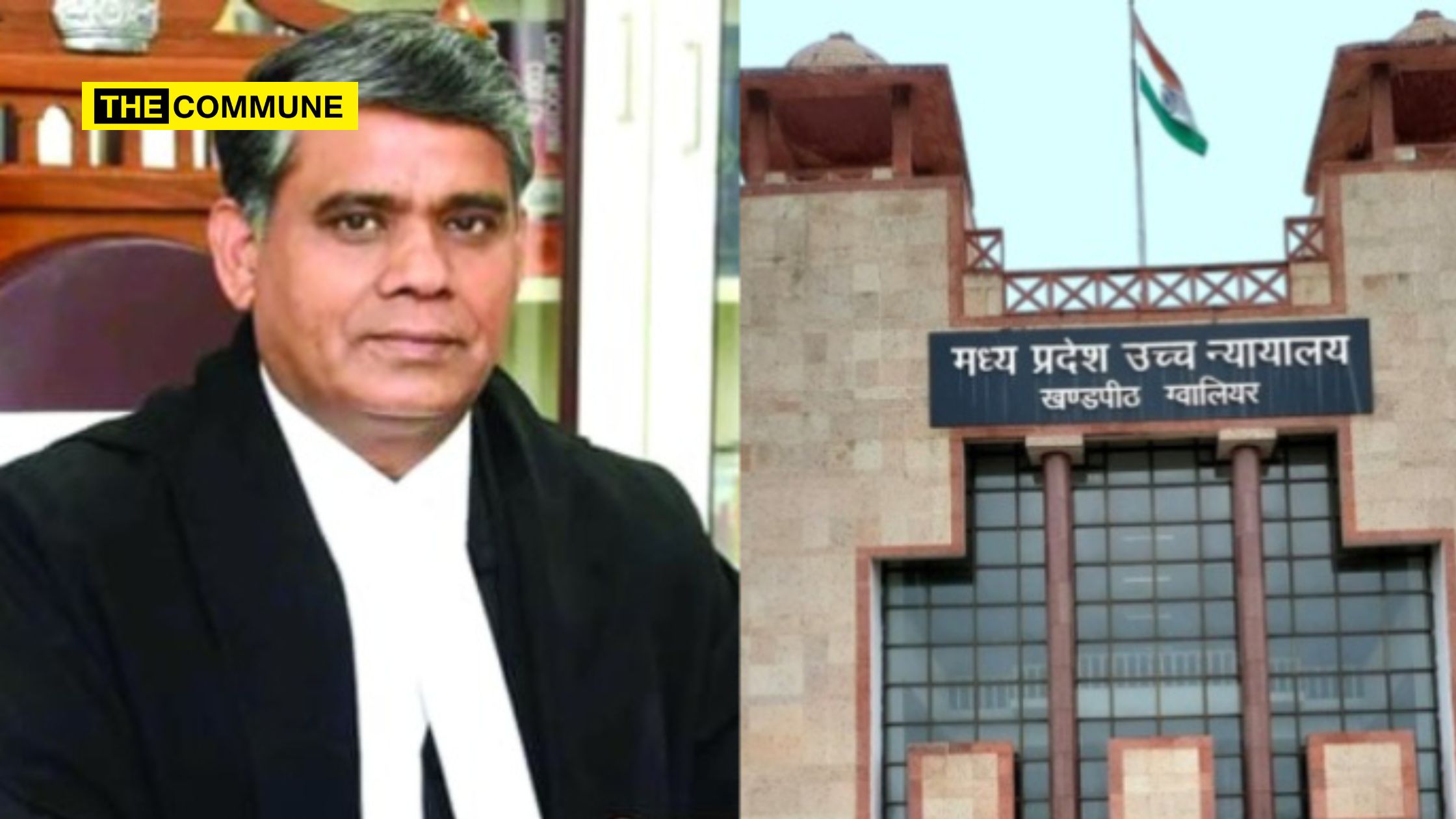
Defence Minister Rajnath Singh on Thursday said India and China have achieved a broad consensus to restore the ground situation in certain areas along the Line of Actual Control (LAC). “India and China have been holding talks at both diplomatic and military levels to resolve the differences in some areas along the LAC…As a result of the talks, a broad consensus was developed on the basis of equal and mutual security. The consensus includes the rights of patrolling and grazing in traditional areas. Based on this consensus, the process of disengagement is almost complete. Our efforts will be to take the matter beyond disengagement but for that, we will have to wait a little longer,” the Defence Minister said after virtually dedicating to the nation ‘Desh ka Vallabh’ statue of Sardar Vallabhbhai Patel, and Major Ralengnao ‘Bob’ Khathing ‘Museum of Valour’ at Tawang, Arunachal Pradesh.
Singh carried out the inauguration from 4 Corps Headquarters in Assam’s Tezpur. He was supposed to visit Tawang, but could not due to bad weather. The unveiling coincided with the festival of lights ‘Diwali’ as well as ‘Rashtriya Ekta Diwas’ which is celebrated on October 31 every year to commemorate the birth anniversary of India’s first Deputy Prime Minister and Home Minister Sardar Vallabhbhai Patel. The Minister paid glowing tributes to Sardar Patel, also known as the ‘Iron Man of India’, acknowledging his instrumental role in unifying over 560 princely states post-Independence, a feat that stands as a testament to his indomitable resolve and commitment to a unified India.
“This statue ‘Desh Ka Vallabh’ will inspire people, reminding them of the strength in unity and the unwavering spirit required to build a nation as diverse as ours,” he said. The Defence Minister also paid homage to Major Bob Khathing, an extraordinary figure who made invaluable contributions to the northeast region of the country and national security. “Major Khathing not only led the peaceful integration of Tawang into India but also established essential military and security frameworks, including the Sashastra Seema Bal, Nagaland Armed Police, and the Naga Regiment. The ‘Museum of Valour’ now stands as a tribute to his bravery and foresight, inspiring generations to come,” he said.
Singh underscored the significance of unity and harmony, and the northeast’s unique role in the nation’s identity. He reiterated Prime Minister Narendra Modi’s vision of ensuring the economic and infrastructure development of the entire region. “Holistic development of the nation is possible only when the Northeast prospers. We will create such a Northeast which is strong and prosperous not only naturally and culturally but also economically,” he added. The Defence Minister highlighted the crucial role of the Border Roads Organisation (BRO) in the progress of the region. He made special mention of the Sela Tunnel linking Assam and Tawang, a project which enhances connectivity across Northeast regions. “In the times to come, the Arunachal Frontier Highway project will play a major role in connecting the entire Northeast region, especially the border areas. This 2,000-km long highway will prove to be an important strategic and economic asset for the region as well as the entire nation,” he added.
Singh also commended the Armed Forces’ engagement in the region, from NCC initiatives and local economic support to crucial disaster relief efforts. “Armed Forces not only provide security but also become a medium for development in that region by cooperating with the people of the border areas. This further strengthens India’s commitment to ensuring development, peace, and security in the Northeast region of India,” he said.
Governor of Arunachal Pradesh Lt Gen K.T. Parnaik (Retd), Chief Minister of Arunachal Pradesh Pema Khandu, his Manipur counterpart N. Biren Singh, Union Minister of Parliamentary Affairs Kiren Rijiju, Deputy Chief Minister of Arunachal Pradesh Chowna Mein and the family of Major Bob Khathing were present at the inauguration site. Chief of the Army Staff General Upendra Dwivedi, General Officer Commanding-in-Chief, Eastern Command Lt Gen R.C. Tewari, GOC 4 Corps Lt Gen Gambhir Singh and other senior civil and military officials joined the event virtually along with the Defence Minister.
–IANS
Subscribe to our channels on Telegram and WhatsApp and get the best stories of the day delivered to you personally.
Karnataka BJP on Thursday alleged that along with agricultural lands in Karnataka, the Hindu temples have also been marked as Waqf properties. Karnataka Leader of the Opposition (LoP) R. Ashoka said that a massive protest will be launched on November 4 against the Waqf Board and the state government for encroaching on farmers’ lands and temple properties.
“After Vijayapura, temple properties in Kolar are being marked as Waqf properties. Similarly, in places like Nagamangala, Channapatna, and Belagavi, farmers’ lands have been recorded as Waqf properties to seize them,” said Ashoka while addressing the media persons. He claimed that it’s not just land grabbers but the government itself that is officially occupying these lands, adding that the farmer organisations must protest strongly against this. “In the past, Muslim rulers attacked and imposed their religion by force; Tipu Sultan forcibly converted people in Kodagu, and now, similar land grabbing is taking place. Chief Minister Siddaramaiah is supporting such people,” he claimed.
In response to Siddaramaiah’s remark that the BJP does not take any issue to a logical conclusion, Ashoka said: “We protested, and hence the cases were filed against the Chief Minister. The Lokayukta and ED are investigating, even his supporters are being probed. This fight has reached its logical conclusion, and now we’ll pursue it legally.” He pointed out that the farmers are protesting against the Waqf Board, and the BJP has supported them, adding that the Chief Minister lacks the courage to imprison the officials who served these notices to farmers. “This government is a laughingstock which is running things like the Tughlaq era. Two of their guarantee schemes turned out to be a flop. Shivakumar claims that women are calling him saying they don’t need the scheme. Like a thief’s excuse, he’s using this as a reason to scrap the scheme,” he claimed.
He added that the state government is also setting many conditions to cancel ration cards, adding that the government act as if it can do anything after coming to power. “We predicted that after the Lok Sabha elections, the guarantees would be dropped, and now the government has taken its first step,” he stated. He added that the transport department is in financial loss, and the government owes crores to it.
–IANS
Subscribe to our channels on Telegram and WhatsApp and get the best stories of the day delivered to you personally.