Home Blog Page 72

Mosques Without Women: How Clerical Control Is Defying Islam And The Constitution, A Nationalist Muslim’s Rebuttal To AIMPLB
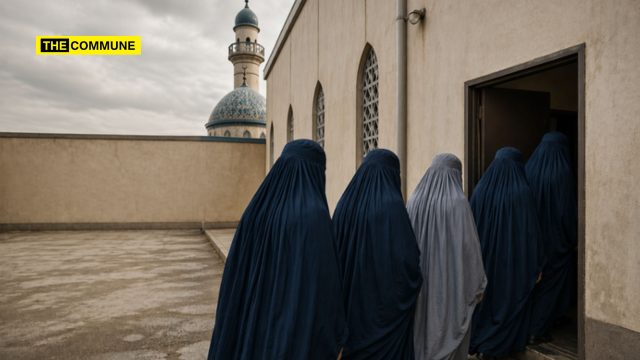
The petition filed by the Peerzade family before the Supreme Court of India seeking equal worship rights for Muslim women in mosques has reopened a long-suppressed debate within the Indian Muslim community. The response of the All India Muslim Personal Law Board—while acknowledging that Islam does not prohibit women from entering mosques—continues to defend restrictions through arguments such as “non-mandatory worship” and enforced segregation. As a nationalist Muslim and a member of the Rashtriya Muslim Manch, I argue that this position is Islamically weak, constitutionally unsustainable, and culturally alien to India.

The Indian Constitution remains the highest social and moral contract for all citizens, including Muslims, and religious freedom under it cannot be used to justify gender-based exclusion. Articles 14 and 15 guarantee equality before the law and prohibit discrimination on the grounds of sex, while Article 21 protects dignity and the right to a meaningful life. Article 25 safeguards freedom of conscience and religious practice, but makes it clear that such freedom operates within the framework of constitutional equality. Denying Muslim women access to mosques undermines their equality, restricts their religious conscience, and compromises their dignity as believers.

The claim that mosque attendance is “not compulsory” is constitutionally irrelevant. Fundamental rights protect voluntary religious practices, not merely obligatory rituals. Many Islamic practices—such as nafl prayers, religious gatherings, i‘tikaf, and learning circles—are non-mandatory, yet access to them is never denied. Non-obligation does not amount to prohibition. The AIMPLB’s argument therefore collapses both legally and logically, as denying access to mosques clearly violates Article 25 read with Articles 14 and 21.

The strongest counter to this position arises not from modern constitutional law but from Islam itself. Prophet Muhammad categorically declared, “Do not prevent the female servants of Allah from the mosques of Allah.” This clear and authentic command leaves no room for institutional practices that seek to restrict or deny women’s access. It is explicit, unconditional, and unambiguous. There is no evidence that the Prophet ordered a permanent ban, mandated barriers as a condition of entry, or restricted mosque access on the basis of social concerns. No religious body, regardless of its stature, can override a direct Prophetic instruction.

The AIMPLB’s attempt to present segregation as an essential Islamic requirement is historically inaccurate. In the Prophet’s mosque, men and women prayed in the same space. Rows were arranged, but there was no architectural exclusion. Physical barriers emerged later, shaped by changing social conditions rather than divine command. Islamic jurisprudence recognises context and evolution; it does not freeze historically contingent practices into eternal religious obligations.

The frequently cited claim that Caliph ʿUmar restricted women from mosques also requires careful clarification. There was no formal or universal ban imposed during his time. Any caution that may have been exercised was linked to concerns of public decorum and safety, not theological prohibition. Crucially, the Prophetic instruction permitting women’s mosque access was never annulled. Invoking early contextual caution to justify permanent exclusion today is therefore historically inaccurate and juristically unsound.

India’s civilizational tradition is inherently collective and participatory, where shared worship remains the norm. Across traditions, places of worship are accessible to both men and women. Islam in India historically coexisted within this inclusive cultural framework. By insisting on exclusionary practices, the AIMPLB risks socially isolating Muslims, alienating Muslim women, and weakening mosque-centered community life. A religion that withdraws from society risks stagnation, while one that engages with its social environment continues to thrive.

From a nationalist Muslim perspective, Indian Muslims must think in terms of Indian constitutional values, not imported rigidity. Our rights, dignity, and security are safeguarded by the Constitution, not by external clerical authority. Within this framework, Islam can flourish alongside Indian nationalism. Upholding women’s dignity strengthens the community, while defensiveness and exclusion only weaken it.

The Peerzade petition does not seek to alter Islamic theology or impose social disruption. It does not call for mixed-gender prayers or the abandonment of modesty. It simply seeks to ensure that Muslim women are not arbitrarily excluded from mosques. At its core, it demands access, dignity, and equal participation as believers and citizens. It is a restorative demand, aligned with the Qur’an, supported by Prophetic tradition, and grounded in constitutional morality.

In conclusion, the AIMPLB must reconsider its position in the larger interest of Indian Islam. Its current stance is Islamically weak, as it contradicts clear Prophetic guidance; constitutionally indefensible, as it violates equality and dignity; and culturally disconnected from India’s inclusive ethos. Excluding women from mosques has no Qur’anic basis and runs contrary to the Sunnah. The strength of Indian Islam lies in confidence, inclusion, and alignment with constitutional morality—not in fear-driven exclusion. A mosque that welcomes women is not less Islamic, but more faithful to the Prophet’s teachings, the Constitution, and the nation itself.

Imran has a degree from TISS Mumbai and is part of Rashtriya Muslim Manch.

DMK’s Political Consultancy Firm PEN Spent Over ₹40 Crore On Just Digital Propaganda Since April 2025

Populus Empowerment Network Private Limited (PEN), the DMK’s in-house political consultancy firm unofficially helmed by MK Stalin’s son-in-law Sabarisan Vedamurthy splurged crores and crores of money on digital ads for the 2026 Tamil Nadu Assembly Elections.

Data from Google’s Ads Transparency Center and Meta’s Ad Library exposes a coordinated, large-scale ad blitz that outspends several political rivals.

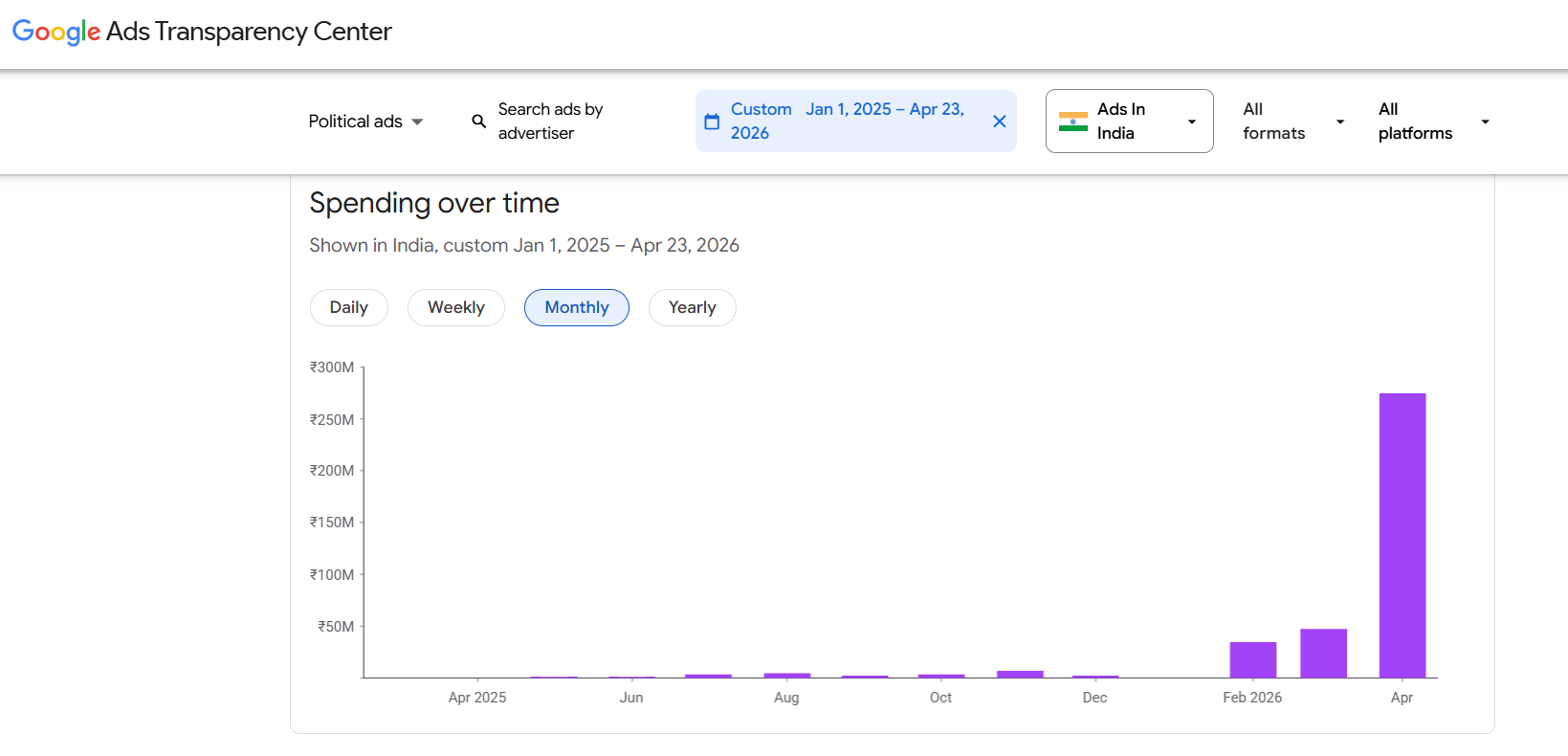
Earlier reporting had already highlighted that the DMK’s political communications firm, Populus Empowerment Network (PEN), spent around ₹1.5 crore on digital advertising between January and October 2025. The latest figures now suggest that this was only the beginning of a much larger digital push.

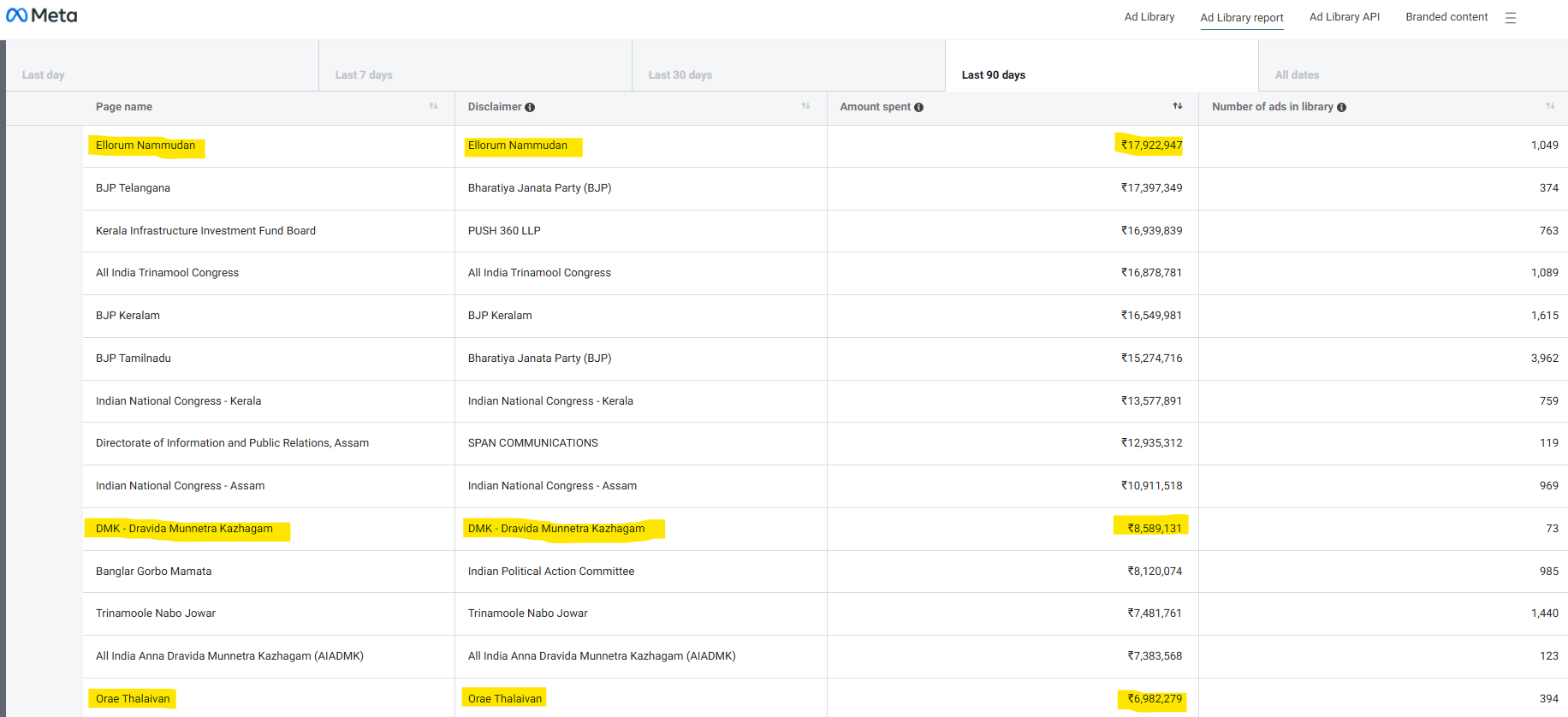
Data from Meta’s Ad Library for the last 90 days indicates spending across multiple pages associated with DMK-linked messaging:

  • Ellorum Nammudan – ₹1.79 crore
  • DMK (official page) – ₹85.89 lakh
  • Orae Thalaivan – ₹69.82 lakh

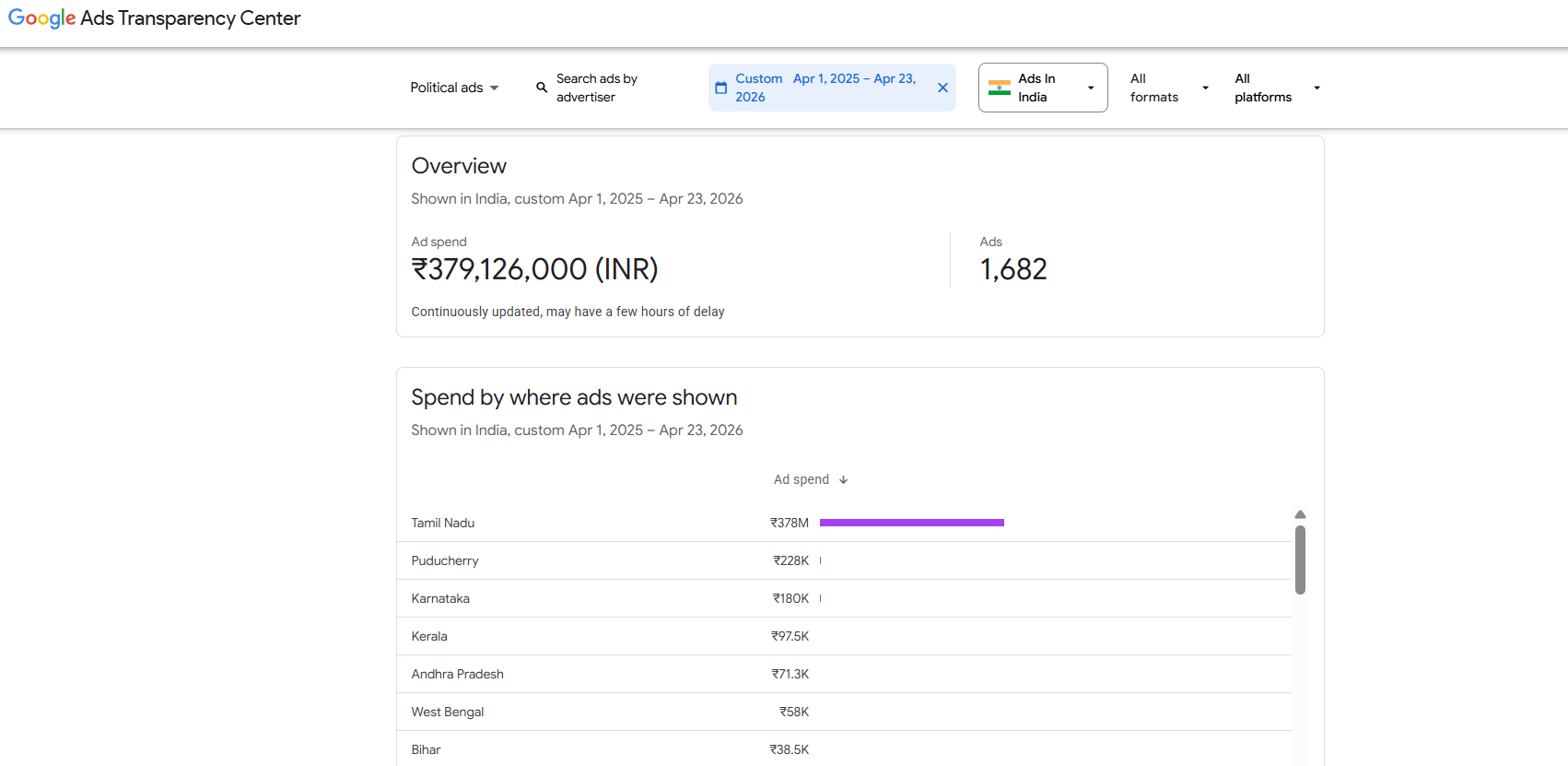
According to Google Ads Transparency data: PEN spent approximately ₹37.91 crore between April 1, 2025 and April 23, 2026.

Figures from the Google Ads Transparency Center for the period between March 22 and April 23, 2026 show that Chennai-based Populus Empowerment Network (PEN) spent more on Google platforms than any political party, including the ruling BJP.

M. K. Stalin, in his 2026 Kolathur nomination (filed March 30/31), declared total assets of ₹6.26 crore—₹3.30 crore movable and ₹2.96 crore immovable—reportedly lower than in previous election cycles, with no declared vehicles or gold. His wife, Durga Stalin, reported additional assets of around ₹3.43 crore, and his stated annual income stands at ₹30.94 lakh from “public service.” Meanwhile, Udhayanidhi Stalin, in his 2026 Chepauk–Thiruvallikeni affidavit, declared personal assets of ₹20.64 crore (₹12.92 crore movable and ₹7.72 crore immovable), with his wife holding movable assets worth ₹13.25 crore. Yet, when placed alongside the scale of digital advertising spends attributed to entities within the DMK’s campaign ecosystem—running into tens of crores—the contrast is striking.

Subscribe to our channels on WhatsAppTelegram, Instagram and YouTube to get the best stories of the day delivered to you personally.

85.1% Turnout But Lower Votes Polled: Tamil Nadu’s Election Numbers Tell A Different Story

85.1% Turnout But Lower Votes Polled: Tamil Nadu’s Election Numbers Tell A Different Story

A detailed analysis of voting patterns in Tamil Nadu shows that while the State recorded a high turnout percentage in the 2026 Assembly election, the increase in absolute voter numbers remained lower than in previous election cycles, with distinct regional and demographic variations shaping the trend.

According to provisional data, Tamil Nadu recorded an all-time high turnout of 85.1%, which has been attributed to the Special Intensive Revision (SIR) exercise that led to the deletion of around 68 lakh electors from the rolls. Despite this, the net addition in the number of voters who turned out stood at approximately 24.8 lakh, which is lower than the increase of 31.1 lakh between 2016 and 2021 and 64.8 lakh between 2011 and 2016.

At the constituency level, variations were evident across the State. Of the 234 Assembly constituencies, 220 recorded an increase in voter turnout, while 14 saw a decline. Among constituencies, Sriperumbudur registered the highest increase with over 64,000 additional voters, followed by Madhavaram (over 57,000) and Sholinganallur (over 56,000). On the other hand, Madurai South recorded a decline of around 7,200 voters, R.K. Nagar saw a drop of about 6,300, and Thousand Lights registered a decrease of approximately 5,700 voters.

Segment-wise analysis showed that semi-urban constituencies witnessed the strongest growth, with a median increase of 13,652 voters, accounting for nearly 5% of the median electorate in those seats. This was significantly higher than urban areas, which recorded a median increase of 5,175 voters (2.1%). Semi-rural constituencies saw a median increase of 8,962 voters (3.7%), while rural areas recorded a median increase of 7,616 voters (3.2%).

Region-wise data indicated that northern Tamil Nadu experienced the highest growth, with all 41 constituencies in the region recording an increase and a median gain of 10,754 voters, representing a 4.5% rise. Western Tamil Nadu followed with a median increase of 9,154 voters across 56 of its 57 constituencies. Greater Chennai recorded increases in 28 out of 37 constituencies, with nine constituencies registering a decline and a median increase of 8,964 voters (3.4%). The delta region saw gains in 40 of 41 constituencies with a median increase of 7,529 voters (3.2%), while southern Tamil Nadu recorded increases in 55 of 58 constituencies with a median gain of 8,368 voters (3.4%). Overall, the State recorded a median increase of 8,868 voters across constituencies, translating to a 3.6% rise.

The relatively muted growth in urban areas, particularly in Chennai, was attributed to the SIR exercise, which led to higher deletions in electoral rolls. In Chennai alone, nine constituencies recorded a net decline in voter numbers. The city’s electorate dropped from over 40 lakhs in 2021 to about 28.3 lakh in 2026.

Data from Chennai also showed a divergence between turnout percentage and absolute votes. While turnout rose to 83.7% in 2026 from 60% in 2021 and 61.2% in 2016, the total number of votes polled stood at 23.7 lakh, lower than 24.16 lakh in 2021 and 24.3 lakh in 2016. The decline amounted to around 47,000 votes compared to 2021 levels, despite the higher turnout percentage, reflecting the impact of a reduced voter base.

Within Chennai’s constituencies, mixed trends were observed. Kolathur recorded an increase of around 5,000 voters, Thiru Vi Ka Nagar saw a rise of about 7,000, and Velachery recorded an increase of approximately 2,000 voters. Chepauk and Royapuram saw increases of around 1,000 and 3,000 respectively. In contrast, R.K. Nagar recorded a decline of about 10,000 voters, Villivakkam saw 7,000 fewer voters, and Perambur recorded turnout levels similar to the previous election at around two lakh votes, as reported in Times of India.

It is noteworthy that Mannargudi recorded a decline of around 2,600 voters since 2021. Overall, while a majority of constituencies witnessed gains, the data pointed to uneven growth patterns shaped by geography, urbanisation, and electoral roll revisions.

Experts stated that the revised electoral rolls reflect a more realistic electorate and that turnout in absolute numbers does not necessarily determine electoral outcomes. They noted that vote distribution and the presence of multi-cornered contests are likely to play a more decisive role in the election results.

Subscribe to our channels on WhatsAppTelegram, Instagram and YouTube to get the best stories of the day delivered to you personally.

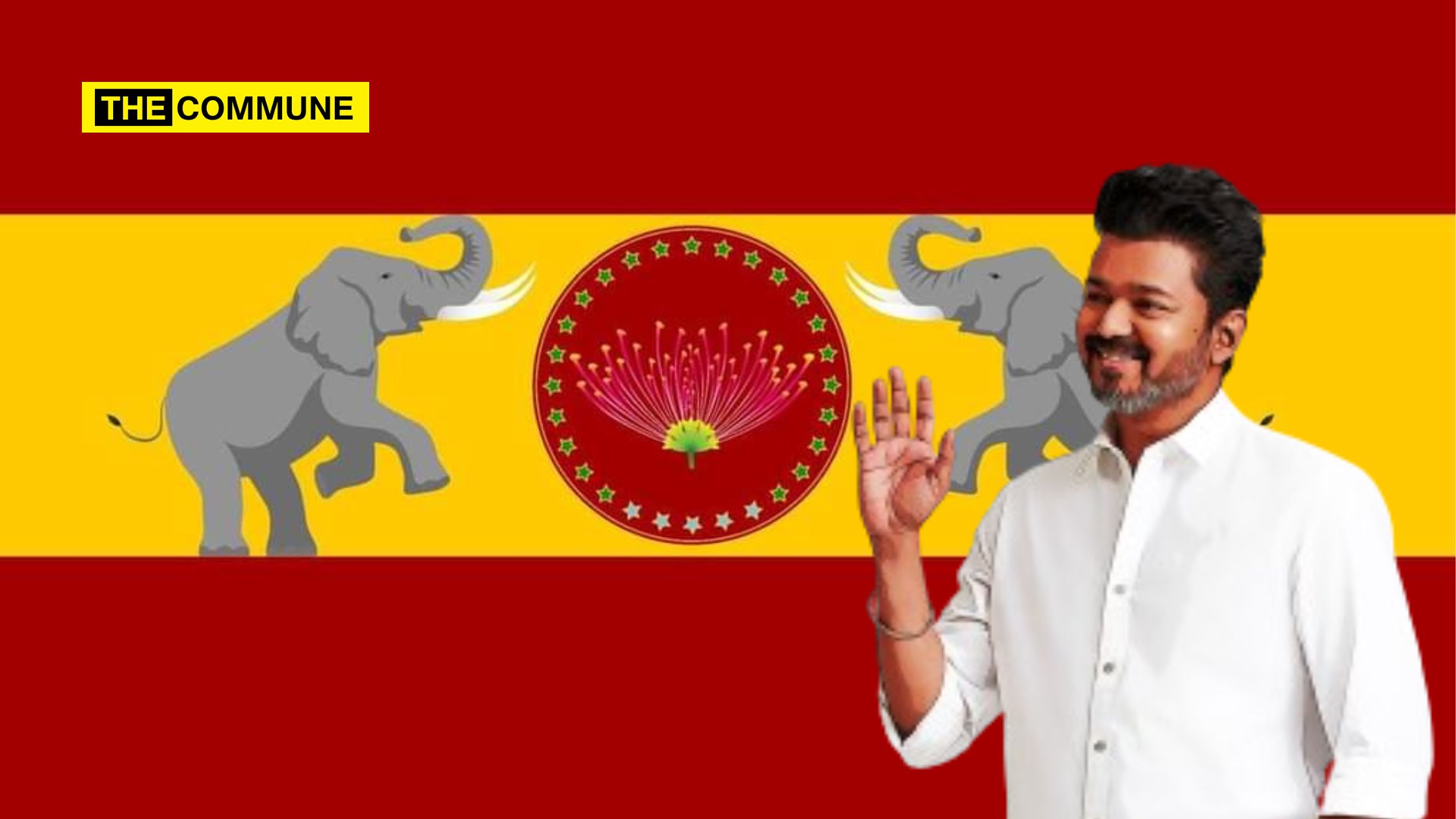
VCK Functionary Files Complaint Against Joseph Vijay Over ‘Ask Your Parents To Vote’ Appeal To Children

Vijay TVK First State Conference

A complaint has been filed against actor turned politician Joseph Vijay in Coimbatore alleging that his recent election speech appealed to children in a manner that caused psychological distress.

The complaint was submitted by Balakrishnan, a member of Viduthalai Chiruthaigal Katchi, at the Coimbatore City Police Commissioner’s office. According to the complaint, during an election campaign event in Chennai, Vijay, who leads Tamilaga Vettri Kazhagam, had urged children to persuade their parents to vote for his party, comparing it to how children insist on getting chocolates.

The complainant stated that following this appeal, there were instances of children pressuring their parents to vote for the party. It was further alleged that the speech had led to distress among children, with reports of stubborn behaviour, including refusal to eat food, resulting in tension within families.

The complaint has sought the registration of a case against Vijay and called for an investigation, alleging that the speech had adverse psychological effects on children.

Subscribe to our channels on WhatsAppTelegram, Instagram and YouTube to get the best stories of the day delivered to you personally.

Kerala: Yemeni National Held In Kochi For Staying & Working At Mandi Restaurant Without Valid Visa

Kerala: Yemeni National Held In Kochi For Staying & Working At Mandi Restaurant Without Valid Visa

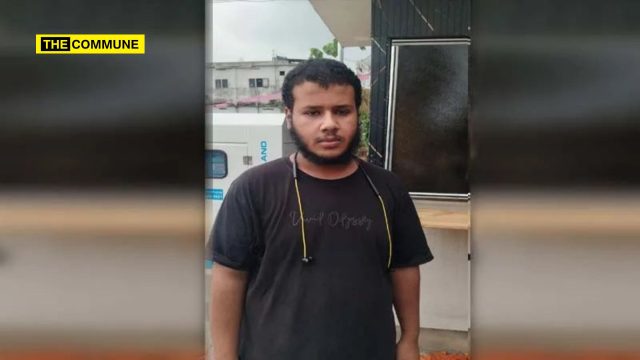
A 21-year-old Yemeni national was arrested near Nedumbassery airport in Kochi for allegedly residing and working in Kerala without valid visa and travel documents, as reported in Deepika.

The accused, identified as Tamam Alavi Al Mahel, had been staying in Kannur district and working at a mandi restaurant in Iritty for the past few months. According to police, he did not possess valid documents, following which he was reportedly removed from his job.

Officials said he later travelled to Nedumbassery with the intention of securing employment at another hotel in Kochi. He was apprehended by Iritty police during this time.

Police stated that despite being a foreign national, he had continued to stay and work in India even after the expiry of his visa and passport. The arrest was made in connection with a case registered by Iritty police last month.

Authorities have also named the owners of the mandi restaurant in Iritty as accused in the case for allegedly employing him without verifying valid documentation.

Subscribe to our channels on WhatsAppTelegram, Instagram and YouTube to get the best stories of the day delivered to you personally.

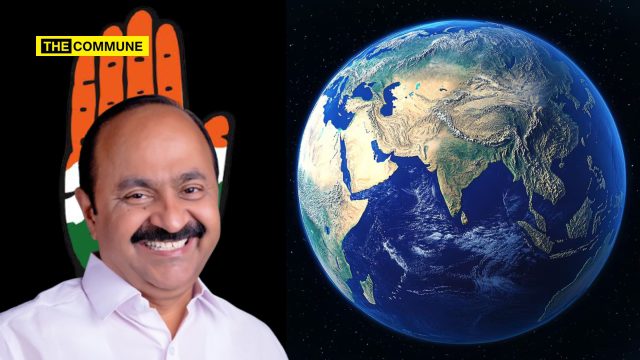
“Earth Was Flat, Prophet Said It Revolves Around Sun, Science Proved It Later”, Says Kerala Congress Leader VD Satheesan; But Here’s What The Quran Says

A viral video clip has sparked outrage on social media after Kerala Leader of Opposition VD Satheesan (Congress) was attributed with a controversial statement praising Prophet Muhammad for allegedly predicting modern scientific facts centuries ahead of time.

In the clip circulating widely, Satheesan is heard saying, “Even scientific matters were predicted in advance. Even in the era when people widely believed that the Earth was flat, the Prophet said that it is a sphere revolving around the Sun in an orbit. Science proved that only later. Science proved it later. All the things that science proved later were already predicted in advance. That’s why I often say that these are events that happened ahead of their time.”

Satheesan, a key Congress figure positioning himself as a CM contender amid internal rivalries with leaders like Ramesh Chennithala and K.C. Venugopal, is accused of making the remark to appease the Indian Union Muslim League (IUML), a crucial UDF ally.

Shape Of The Earth As Per Islamic Theology

The statement attributed to V. D. Satheesan—that the Prophet Muhammad described the Earth as a sphere revolving around the Sun centuries before modern science—finds no support in primary Islamic sources. Neither the Qur’an nor established hadith collections contain any explicit assertion of heliocentrism or a scientifically defined spherical Earth. While certain Qur’anic verses describe celestial bodies as moving in orbits, they do not specify a Sun-centered system or outline planetary motion in modern astronomical terms.

Islamic scripture, particularly the Qur’an, contains several verses that have been interpreted by literalist readers as describing a flat Earth. For instance, Surah Al-Ghashiyah (88:20) asks believers to reflect on “how the earth is spread out” (sutihat), a term that can imply flattening. Similarly, Surah Ar-Ra’d (13:3) and Al-Hijr (15:19) describe the earth as “spread out” (madda, madadna), while Surah Nuh (71:19) likens it to a “carpet” (bisāṭan) and Surah Al-Baqarah (2:22) calls it a “bed” (firāsh). Taken together in a strictly literal sense, these descriptions portray the Earth as an extended, level surface laid out for human habitation, which some interpreters argue aligns more naturally with a flat-Earth conception than a spherical one.

Subscribe to our channels on WhatsAppTelegram, Instagram and YouTube to get the best stories of the day delivered to you personally.

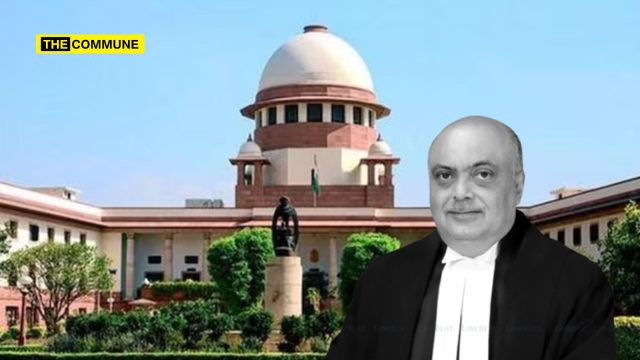
“If Everybody Goes, Who Will Look After The Children?” Justice Amanullah On Women Offering Namaz In Mosques

“If Everybody Goes, Who Will Look After The Children?” Justice Amanullah On Women Offering Namaz In Mosques

The All India Muslim Personal Law Board told the Supreme Court of India on Thursday (23 April 2026) that while women in Islam are permitted to enter mosques, they are not allowed to do so through the front entrance and must follow certain prescribed practices. The submissions were made during the ongoing hearing of the Sabarimala reference case, as reported in OpIndia.

Appearing for the AIMPLB, Senior Advocate M. R. Shamshad responded to queries from Chief Justice of India Surya Kant, stating, “There is no quarrel among the religious denominations in Muslims that women can enter into mosques. And that too for prayer… But there is a certain discipline that has to be followed.”

He further explained, “As far as men’s position is concerned, it is obligatory for him to be part of the congregation. For that, you need a mosque. For women, it is preferable that she stays at home and she gets the same religious reward which the man gets in the mosque. But at the same time, if a woman wants to come, (according to the Hadith) ‘come to the mosque. Don’t stop her’.”

Seeking clarification, the Chief Justice asked, “For factual clarity, are women allowed to enter the mosque?” The nine-judge bench, headed by CJI Surya Kant, is examining constitutional questions arising from petitions seeking a review of the 2018 verdict on women’s entry into the Sabarimala temple.

During the hearing, Justice Amanullah asked the counsel to clarify that women’s entry into mosques has not historically been disputed in Islam. “You should elaborate for everybody’s consumption that right from the beginning, there is also no dispute (that women can enter) and that it started from the holy Prophet himself,” he said.

Justice Amanullah also asked for reasons why it is not mandatory for Muslim women to offer prayers in mosques. “Give the reason also. The reason was if everybody goes from the house, who will look after the children… If she has the time, the capacity, she can also go, but then the crux comes. These are all managed by tradition right from the Prophet’s time itself,” he added.

In response, Shamshad submitted that although there is no prohibition on women entering mosques, there is a consensus that it is not essential for them to be part of congregational prayers.

The court was also hearing petitions seeking permission for Muslim women to enter mosques and offer prayers. One such plea, filed by a Pune-based couple, Yasmeen Zuber Ahmad Peerzade and her husband Zuber, sought directions to allow women entry into mosques and access to the main prayer area.

Opposing the plea, Shamshad said that Muslim women do not have a right to access the Musallah (main sanctuary). He argued that demands “to permit Islamic women to enter through the main door, have an Islamic right to visual and auditory access to Musallah (main sanctuary)” and “to pray in the Musallah without being separated by barrier” should be rejected.

He further contended that the petitioners were incorrectly equating mosque spaces with temple structures. “Sanctum sanctorum has no place in a mosque. If the religion believes that there is no sanctum sanctorum inside the mosque, then nobody can insist that ‘I have to stand at a particular place’ or ‘I have to be first to lead the namaz’,” he said.

The submissions were made on the eighth day of hearings in the Sabarimala reference, which began on April 16 before a nine-judge Constitution bench comprising the Chief Justice and Justices B V Nagarathna, M M Sundresh, Aravind Kumar, Augustine George Masih, Prasanna B Varale, R Mahadevan, and Joymalya Bagchi.

Subscribe to our channels on WhatsAppTelegram, Instagram and YouTube to get the best stories of the day delivered to you personally.

Dravidian Model Resurfaces In Karnataka: Students Asked To Remove Sacred Thread At KCET Bengaluru Centre, 3 Staff Suspended After Complaint

sacred thread remove karnataka bengaluru kcet exam centre

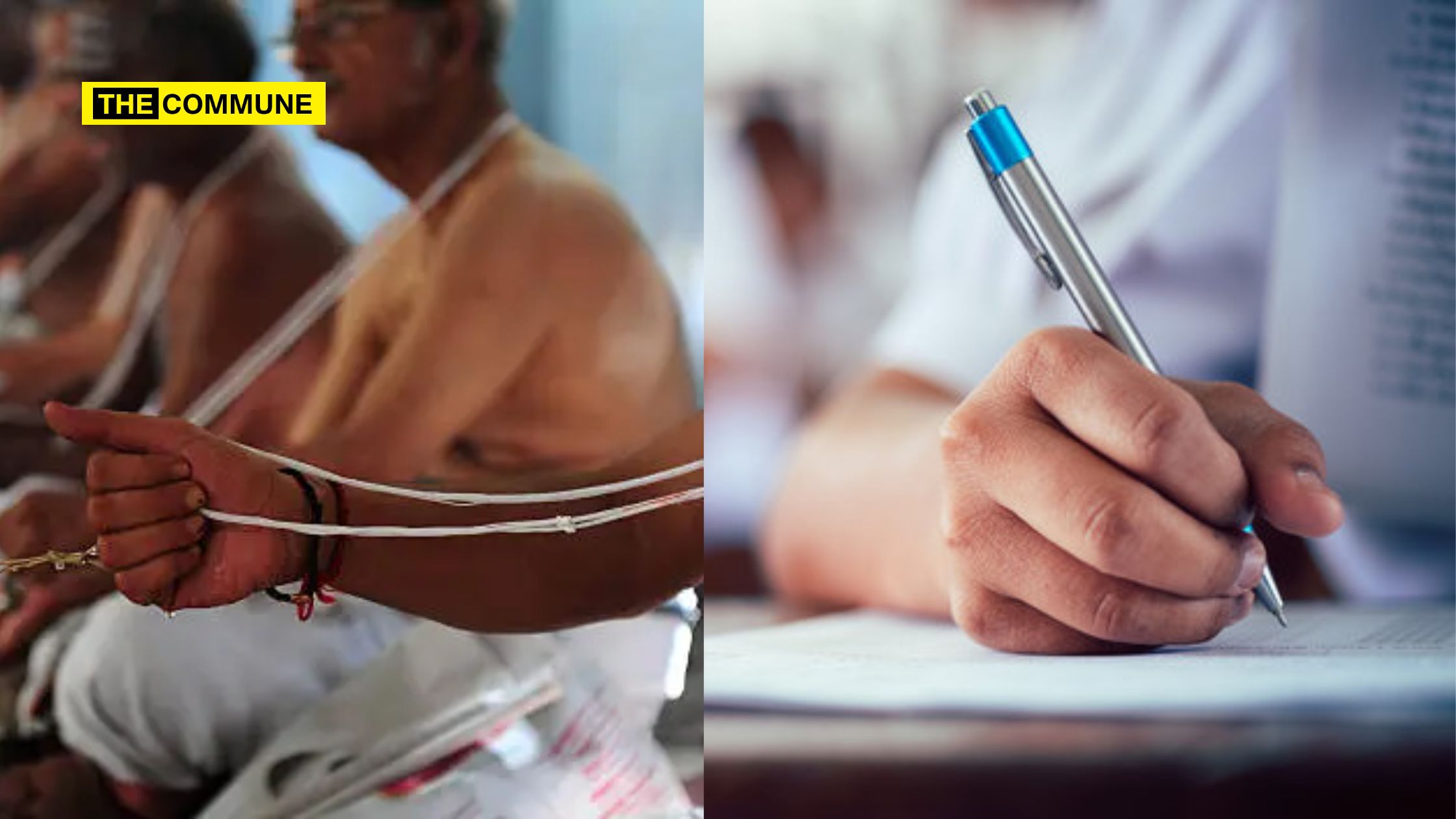
Three staff members of Krupanidhi Pre-University College in Bengaluru were suspended on Friday after a police case was registered against them over allegations that a student was not allowed to enter a Karnataka Common Entrance Test (KCET) examination hall unless he removed his janivara (sacred thread), leading to complaints of hurt religious sentiments, as reported in Indian Express.

According to the complaint, the incident took place on April 23 when the candidate arrived at the college to write the KCET Physics examination. It was alleged that staff members on duty instructed him to remove his sacred thread before permitting entry into the examination hall. The candidate subsequently removed the thread and appeared for the exam but later stated that the action had hurt his religious sentiments.

The student approached the Madiwala police station on April 24 and filed a formal complaint. Based on this, the police registered a case and initiated an inquiry. The three staff members on examination duty Sudhakar D, Girijamma, and Saritha R who were involved in entry checks at the centre were questioned as part of the investigation.

Following the complaint, the college placed the three employees under immediate suspension pending inquiry. The suspension orders directed them not to report to duty and to remain available for further proceedings. The college described the suspension as a precautionary measure and clarified that it did not amount to a final determination of guilt. The investigation is ongoing.

The Karnataka Examinations Authority issued a clarification stating that the KCET Physics and Chemistry examinations were conducted on April 23 across 745 centres in the state, including the Bengaluru college. The authority said that clear guidelines on examination procedures and dress code had been communicated and that candidates were not required to remove religious symbols such as the sacred thread. It added that these instructions had also been reiterated during training sessions for invigilators.

The KEA stated that if the reported incident was confirmed, it would be treated as a serious procedural lapse warranting strict action. It further said that senior officials had conducted an inquiry and sought a detailed report, and that legal action would be taken in accordance with the rules.

Meanwhile, Leader of Opposition R. Ashoka alleged that students were being asked to remove the sacred thread during CET examinations with the support of the Congress government and called for such incidents to be stopped immediately. After meeting the Bengaluru Police Commissioner, he described the episode as a serious violation of religious sentiment and questioned how it occurred despite existing court directions. He stated that forcing students to remove the sacred thread could cause mental distress.

Ashoka further alleged that such incidents could not occur without government backing and said he had raised the issue with police and district authorities. He criticised the delay in action against the staff involved. He also claimed that around 20 students were affected, including one from Padmanabhanagar, and said at least six complaints had been filed. He accused the state government of hurting Hindu sentiments and called for a fair investigation, reiterating his allegations on X.

In April 2025, two second-year Pre-University students were allegedly forced to remove their janeu (sacred thread) by security staff at the Aadichunchanagiri Independent PU College CET examination centre in Shivamogga on 16 April 2025, triggering protests from the local Brahmin community.

Subscribe to our channels on WhatsAppTelegram, Instagram and YouTube to get the best stories of the day delivered to you personally.

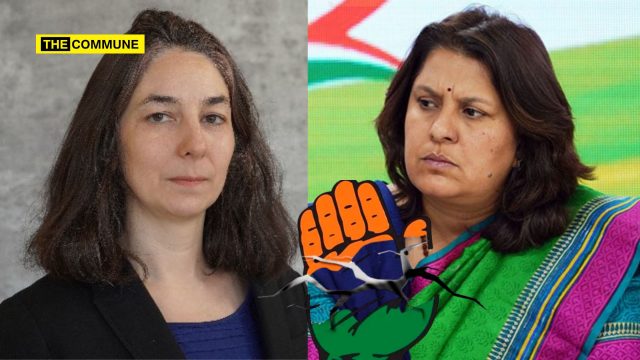
Congress Spokie Amplifies Anti-India And Anti-Hindu Distorian Audrey Truschke’s Fake Narrative On Voter List Revision

Congress-Spokie-Amplifies-Anti-India-And-Anti-Hindu-Distorian-Audrey-Truschke's Fake Narrative On Voter List Revision

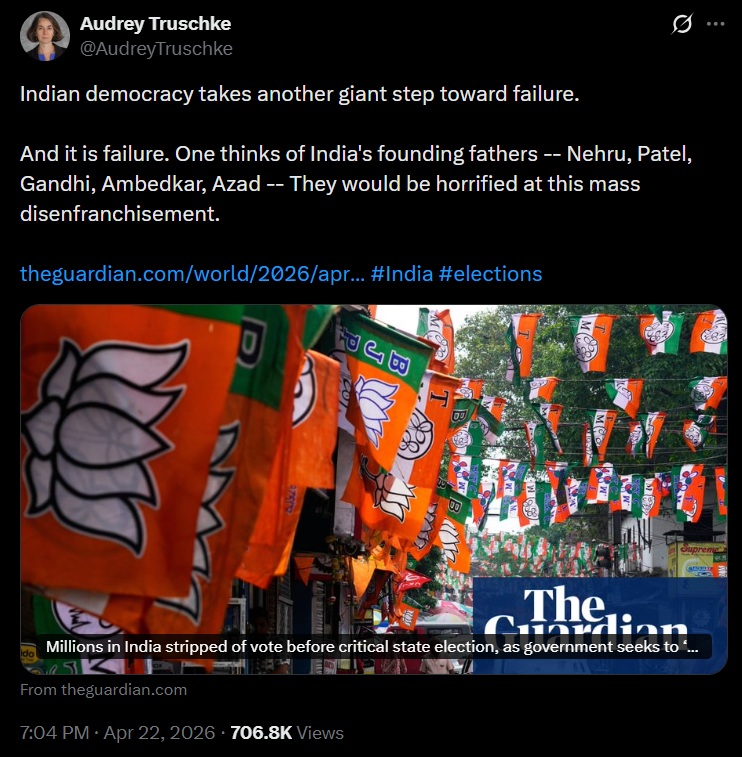
As the election dates for states in India were nearing, anti-India and pro-Pakistan ‘researcher’ Audrey Truschke shared a news link which claimed, “Millions in India stripped of vote before critical state election, as government seeks to ‘purify’ electoral roll”.

Her post read, “Indian democracy takes another giant step toward failure. And it is failure. One thinks of India’s founding fathers – Nehru, Patel, Gandhi, Ambedkar, Azad – They would be horrified at this mass disenfranchisement.”

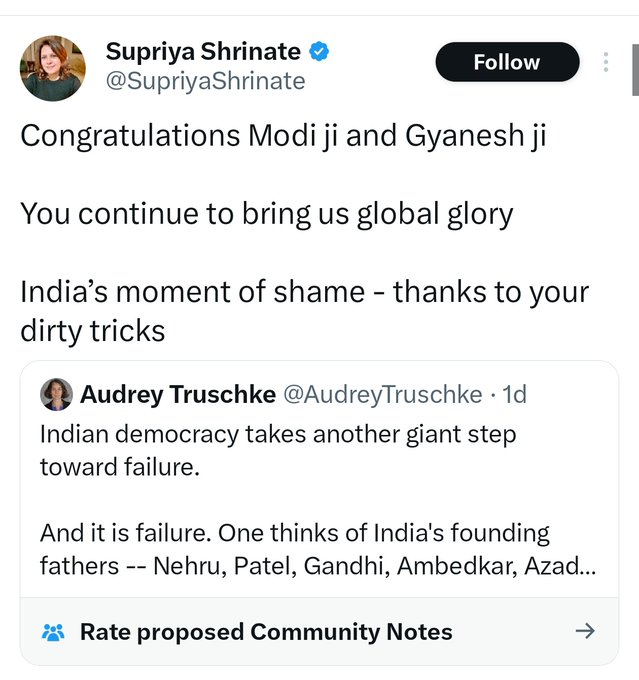
And this post was reshared by Congress member Supriya Shrinate amplifying her anti-India narrative. She wrote, “Congratulations Modi ji and Gyanesh ji You continue to bring us global glory India’s moment of shame – thanks to your dirty tricks”

Truschke is just doing her role as an anti-India propagandist. But for a Congress member to amplify her post speaks a lot about the party’s intentions.

Subscribe to our channels on WhatsAppTelegram, Instagram and YouTube to get the best stories of the day delivered to you personally.

ED Probes ‘The Timothy Initiative’ – ₹95 Crore Routed Via Foreign Debit Cards Into Naxal-Affected Regions

The Enforcement Directorate (ED) on Friday, 23 April 2026, said it has initiated an investigation into a global Christian mission, The Timothy Initiative (TTI), over the alleged use of foreign debit cards to withdraw large sums of money in Naxal-violence-affected regions of India, as reported in Rediff.

According to the agency, the probe relates to suspected violations of foreign exchange regulations under the Foreign Exchange Management Act (FEMA). The ED stated that approximately ₹95 crore was channelled into India over a five-month period between November 2025 and April 2026 through foreign bank-issued debit cards.

In an official statement, the ED said it conducted search operations on April 18 and 19, 2026, at six locations across multiple states in connection with the case. The searches were linked to the alleged withdrawal and utilisation of funds using foreign debit cards while bypassing regulatory channels, as reported by TimesNow.

During the raids, officials seized 25 foreign bank debit cards, ₹40 lakh in cash, along with digital devices and documents described as incriminating.

The agency stated that the investigation pertains to activities associated with TTI in India and individuals connected with the movement. It alleged that foreign debit cards linked to Truist Bank in the United States were brought into India and used repeatedly to withdraw cash from ATMs across multiple states.

The ED further reported that some withdrawals appeared “unusual” and “suspicious,” amounting to about ₹6.5 crore over the past few years in Left Wing Extremism (LWE)-affected regions, including Dhamtari district and the Bastar region of Chhattisgarh.

According to the agency, the withdrawn cash was subsequently used to meet expenses related to TTI’s activities in India. It noted that TTI is not registered under the Foreign Contribution (Regulation) Act (FCRA).

The ED also stated that access to TTI’s web portal from India displays a message reading, “Country Blocked. Access to this page is forbidden.”

As part of the investigation, the Bureau of Immigration intercepted an individual identified as Micah Mark at Bengaluru International Airport following the issuance of a Look Out Circular by the ED. Officials said he was found carrying 24 foreign debit cards, which the agency described as being brought into India illegally.

The ED said its findings indicate the possible involvement of multiple individuals in the withdrawal of cash using foreign debit cards outside formal banking channels. It added that an online billing and accounting platform was used to maintain records of these withdrawals and their utilisation, and that the platform is purportedly controlled by entities operating from outside India.

The agency stated that the emergence of such a parallel cash-based system in Naxal-affected areas poses a serious threat to the country’s security and financial integrity and may facilitate the movement of illicit funds for unlawful activities.

Subscribe to our channels on WhatsAppTelegram, Instagram and YouTube to get the best stories of the day delivered to you personally.