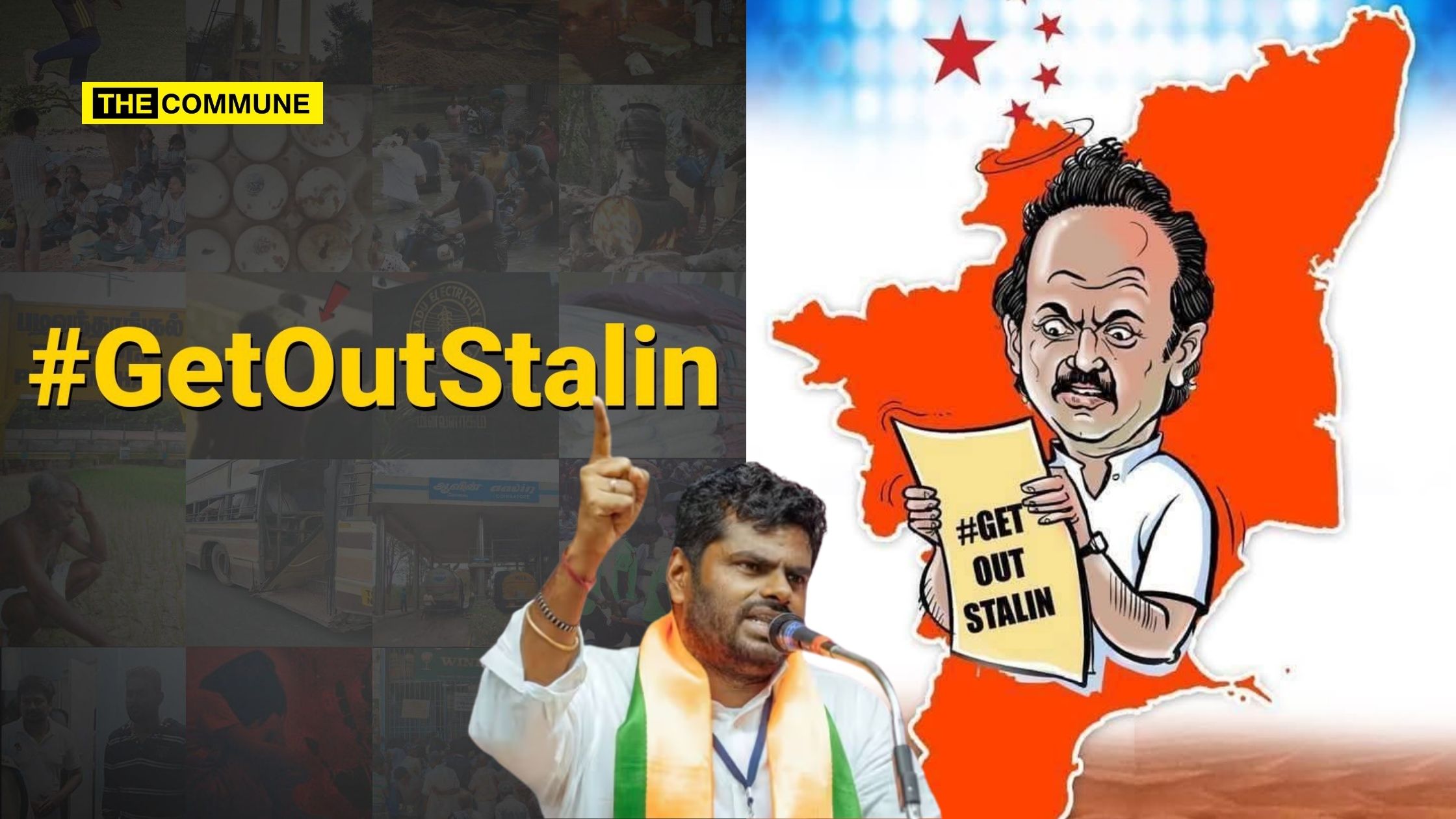
Social media in Tamil Nadu is currently witnessing an intense showdown between the Tamil Nadu BJP and the ruling DMK. BJP Tamil Nadu President K. Annamalai has thrown down the gauntlet to the DMK IT wing, challenging them to a social media battle on platform X. He dared them to tweet the slogan “Get Out Modi” throughout the night, while he would respond with “Get Out Stalin” at 6 am, claiming the challenge would demonstrate which slogan garnered more traction on social media.
Annamalai’s challenge was sparked by remarks from Udhayanidhi Stalin, who had suggested that if the BJP government continued pushing Hindi, Tamil Nadu would soon be chanting “Get Out Modi” instead of “Go Back Modi” against Prime Minister Narendra Modi.
In his tweet, Annamalai took aim at the DMK, accusing the party of creating an atmosphere of corruption, lawlessness, and economic decline in the state. He further criticized the DMK-led government for issues like the deteriorating education system, women’s safety concerns, and rising debt.
Doubling down on his challenge, Annamalai declared that he would post “Get Out Stalin” on X at 6 am and encouraged the DMK IT wing to use all their resources to tweet as much as they could. “Let’s see the reach of both our tweets. From 6 am, it’s BJP’s time,” he said.
True to his challenge, Annamalai kicked off the social media battle at 6 AM with a sharp post, with #GetOutStalin and stating, “For high handedness of one family, having a tainted cabinet, being an epicentre of corruption, turning a blind eye to lawlessness, turning TN into a haven for drugs & illicit liquor, mounting debt, dilapidated education ministry, precarious environment for women & children, divisive politics based on caste & religion, ceaseless failures in delivering good governance, flawed policies & not fulfilling electoral promises, this DMK led govt in TN will be dethroned by the people soon.”
For high handedness of one family, having a tainted cabinet, being an epicentre of corruption, turning a blind eye to lawlessness, turning TN into a haven for drugs & illicit liquor, mounting debt, dilapidated education ministry, precarious environment for women & children,… pic.twitter.com/VyD0BgPLfk
The post quickly went viral on social media, gaining massive traction. With widespread anti-incumbency sentiment, the hashtag soared, amassing 4.15 lakh tweets within the first half hours and maintaining its position as a top trend crossing 820k tweets.
The Enforcement Directorate (ED) officials have started probing the influential links of a racket involved in massive irregularities in admission to private medical colleges in West Bengal under the Non-Resident Indian (NRI) quota.
The probe was started after specific clues were sourced by the agency. Sources said the new line of investigation on the influential links is based on two factors, the first being some communication between the kingpins of the racket with some local politically influential persons and the second being certain fictitious bank transactions in this connection, clues on which are already available with the investigating officials.
Apart from that, sources added, the investigating officials have also been able to trace politically influential family links of those candidates who allegedly secured admissions under this particular quota despite not being NRIs. A total of eight private medical college & hospitals operating from the state are currently under the scanner of the ED officials.
The investigation is being carried out based on specific information that such irregularities were done against hefty cash payments. The investigation into the matter started in December last year on the basis of a specific complaint filed at a local police station in the northern outskirts of Kolkata. Since then there had been two rounds of marathon raid and search operations by the ED sleuths, the latest of which was Thursday.
In December last year, ED officials conducted similar raid and search operations at multiple locations in the state, including the premises of two politically influential persons. Then, at the industrial township of Haldia in East Midnapore district, the raid and search operations were conducted at the residence of the former CPI(M) Lok Sabha member from Tamluk Lakshman Seth, who runs an NGO that operates private medical and dental colleges at Haldia.
At Birbhum, the private medical college, where the ED raid and search operations are going on, is owned by businessman Malay Pith, whose name first surfaced in connection with the multi-crore cattle smuggling case in West Bengal.
The matter of irregularities in the medical admissions under the NRI quota was first highlighted by Suvendu Adhikari, the Leader of Opposition in the West Bengal Assembly, in September last year.
He alleged that in many such admissions, there were severe irregularities against hefty cash transactions which even included admission through the production of fake certificates. Adhikari also accused some senior officials attached to the state health department of being involved in the case.
Subscribe to our channels on Telegram, WhatsApp, and Instagram and get the best stories of the day delivered to you personally.
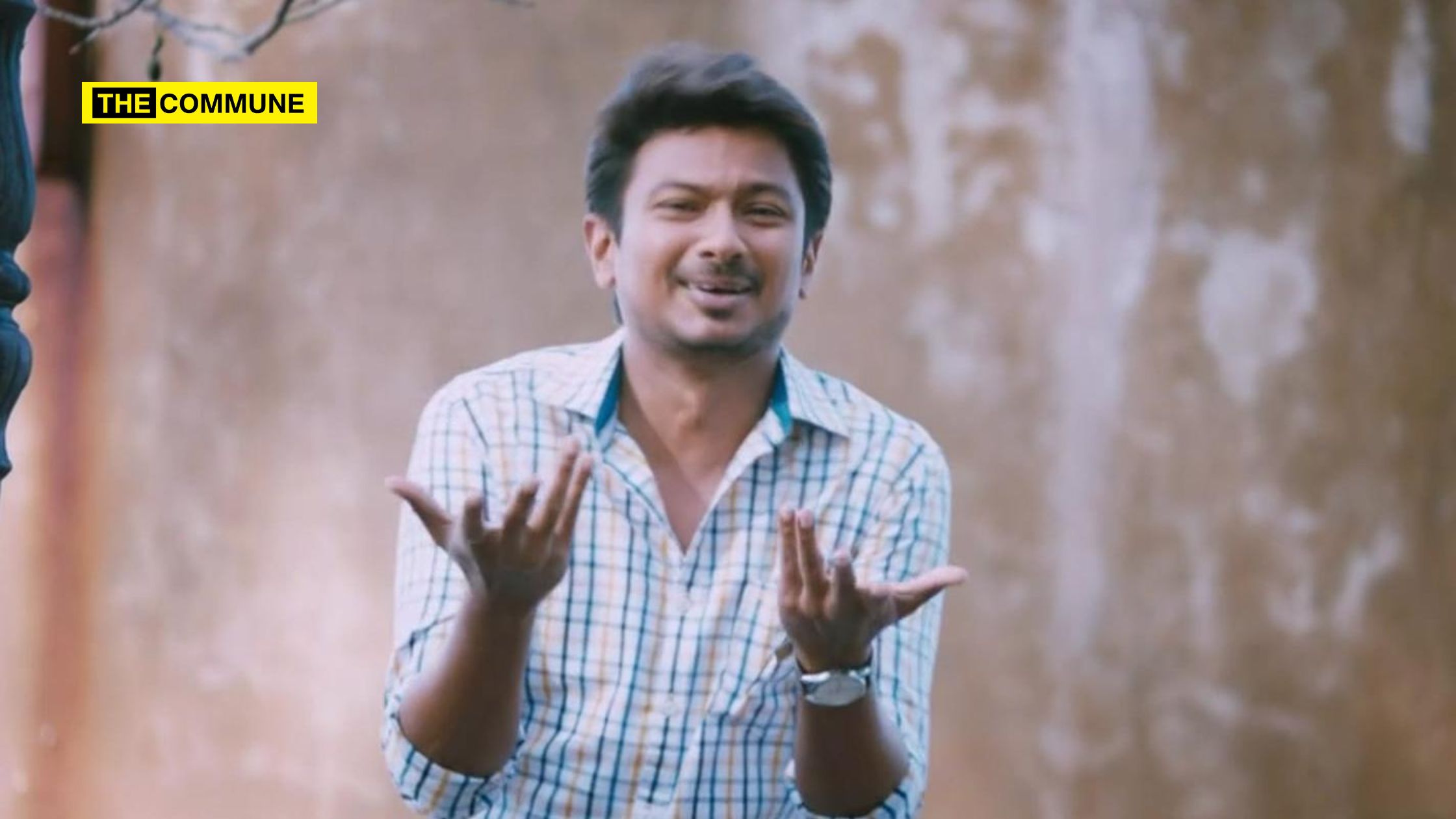
Udhayanidhi Stalin, the privileged prince of Tamil Nadu’s most nepotistic political dynasty, has built his career on a foundation of half-truths, hypocrisy, and hand-me-down power. From delivering scripted outrage to peddling outright lies, he has perfected the DMK’s age-old tactic of twisting narratives to suit his political convenience. Whether it’s spewing baseless claims about Sanatana Dharma, distorting history, or pretending to champion social justice while his own family hoards power and wealth, Udhayanidhi’s words are as unreliable as his party’s promises. In a state where theatrics often pass for leadership, he remains a shining example of how entitlement and deception go hand in hand.
Let’s take a look at how Udhayanidhi Stalin has been lying over the years especially with respect to his political career.
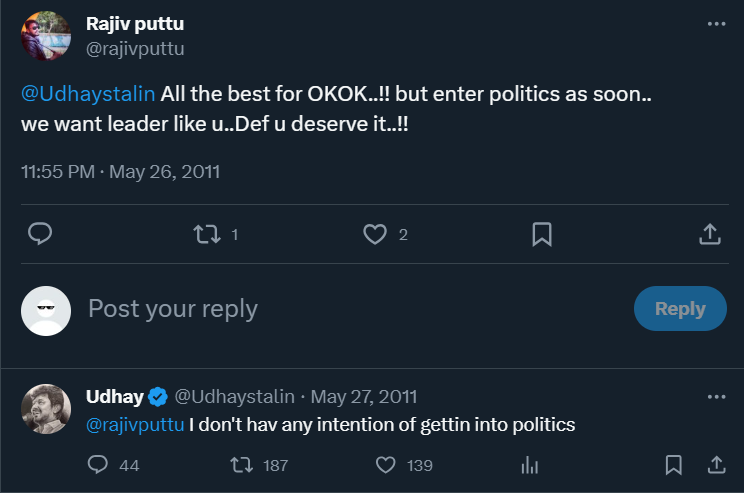
Will Not Enter Politics
MK Stalin had once said, “No one, neither my son, son-in-law, nor anyone from my family, will enter politics.” However, today his son, Udhayanidhi, serves as the deputy chief minister.
Udhayanidhi, initially stating that it was unnecessary for him to enter politics just because he came from a political family, later joined the DMK’s youth wing.
Will Not Contest Elections
He initially claimed he would only serve as a grassroots worker and would not contest elections. Yet, he was given the Chepauk constituency to contest and became an MLA.
Will Not Be A Member Of Cabinet
Udhayanidhi had further questioned why he would become a minister when many senior leaders were available, only to later take on the role himself.
Will Not Become Dy CM
When rumors surfaced that he might become deputy chief minister, he dismissed them, stating, “Why should I become one? It’s all media speculation.” However, he is now the deputy CM.
Poll Promises
During the 2021 election campaign, Udhayanidhi made several key promises, including the abolition of NEET, waivers for education and gold loans, reducing gas prices by 100 rupees, cutting petrol prices by 5 rupees, and diesel by 4 rupees. He also vowed to make temporary teaching staff permanent. However, after coming to power, none of these promises have been fulfilled.
The DMK had criticized the previous government for raising electricity and property taxes, but under their own administration, taxes have been hiked to new heights.
Furthermore, the government had promised to provide 2,500 rupees to the public for Pongal, but has yet to fulfill this commitment.
These developments highlight the pattern of the DMK while they make numerous promises to secure power, once in office, many of these promises remain unfulfilled.
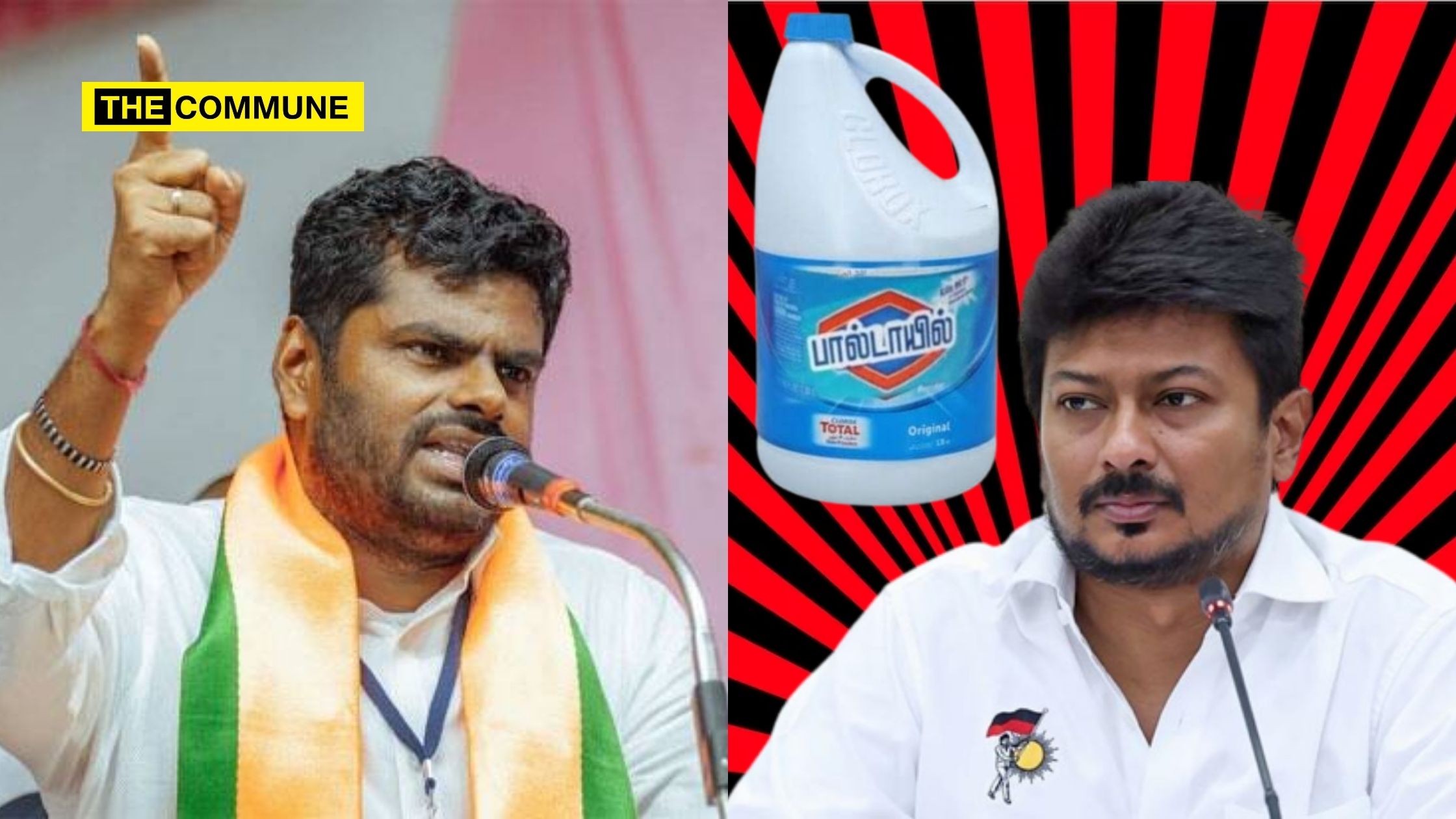
Why Udhayanidhi Stalin Is Called “Paaldail Babu”?
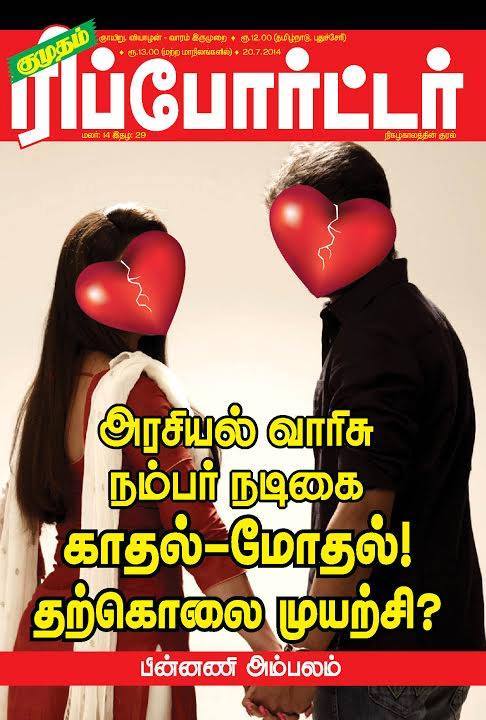
Udhayanidhi Stalin’s nickname “Paaldail Babu,” stems from two different stories. One theory behind the name involves the term “paaldail,” which is an insecticide, allegedly linked to rumors surrounding Udhayanidhi’s personal life. These rumors reportedly began when he was involved with actress whose name rings with a number. It is said that during the shooting of the film Idhu Kathirvelan Kadhal in 2014, Udhayanidhi and the female actor became romantically involved. The pair reportedly visited the Palani temple together, fueling speculation about their relationship.
Despite Udhayanidhi being married at the time, rumors of his affair with the lady film star spread. His grandfather, former Tamil Nadu Chief Minister Karunanidhi, is said to have warned him, but the relationship reportedly continued. In the film Nannbenda, Udhayanidhi cast one specific heroine as the female lead, further intensifying the rumors.
However, when she allegedly rejected his feelings, Udhayanidhi was reported to have attempted suicide, an incident that made headlines in 2014. His supporters blamed the heroine, leading to a significant backlash against the actress. That is why the “polytoil” part came to the fore.
But these have been brushed aside as rumours and that the actor being romantically involved with the actress was not real but was for reel, as they were lead pairs in the film Idhu Kathirvelan Kadhal.
In 2021, actor-politician Radha Ravi reignited the controversy ahead of the Tamil Nadu Assembly elections by questioning Udhayanidhi Stalin’s relationship with the heroine. He made a derogatory remark about her, which led to Udhayanidhi’s political party temporarily distancing itself from Radha Ravi. Despite the controversy, Radha Ravi stated that he did not care about Udhayanidhi and the heroine’s relationship.
The second part of the nickname, “Babu,” is allegedly a reference to a long-standing rumor involving Udhayanidhi Stalin’s father, DMK leader M.K. Stalin. The rumor centers around a supposed relationship between M.K. Stalin and a former newsreader for a TV channel. According to the widely circulated gossip in Tamil Nadu, M.K. Stalin allegedly abducted a female newsreader during the late 1980s when his father, M. Karunanidhi, was the Chief Minister. This story had been circulating for over three decades, but it gained more attention in 2019.
To put an end to the rumors, the newsreader clarified that she was not abducted in the 1980s. She explained that her absence during that period was due to her involvement in a television serial.
Subscribe to our channels on Telegram, WhatsApp, and Instagram and get the best stories of the day delivered to you personally
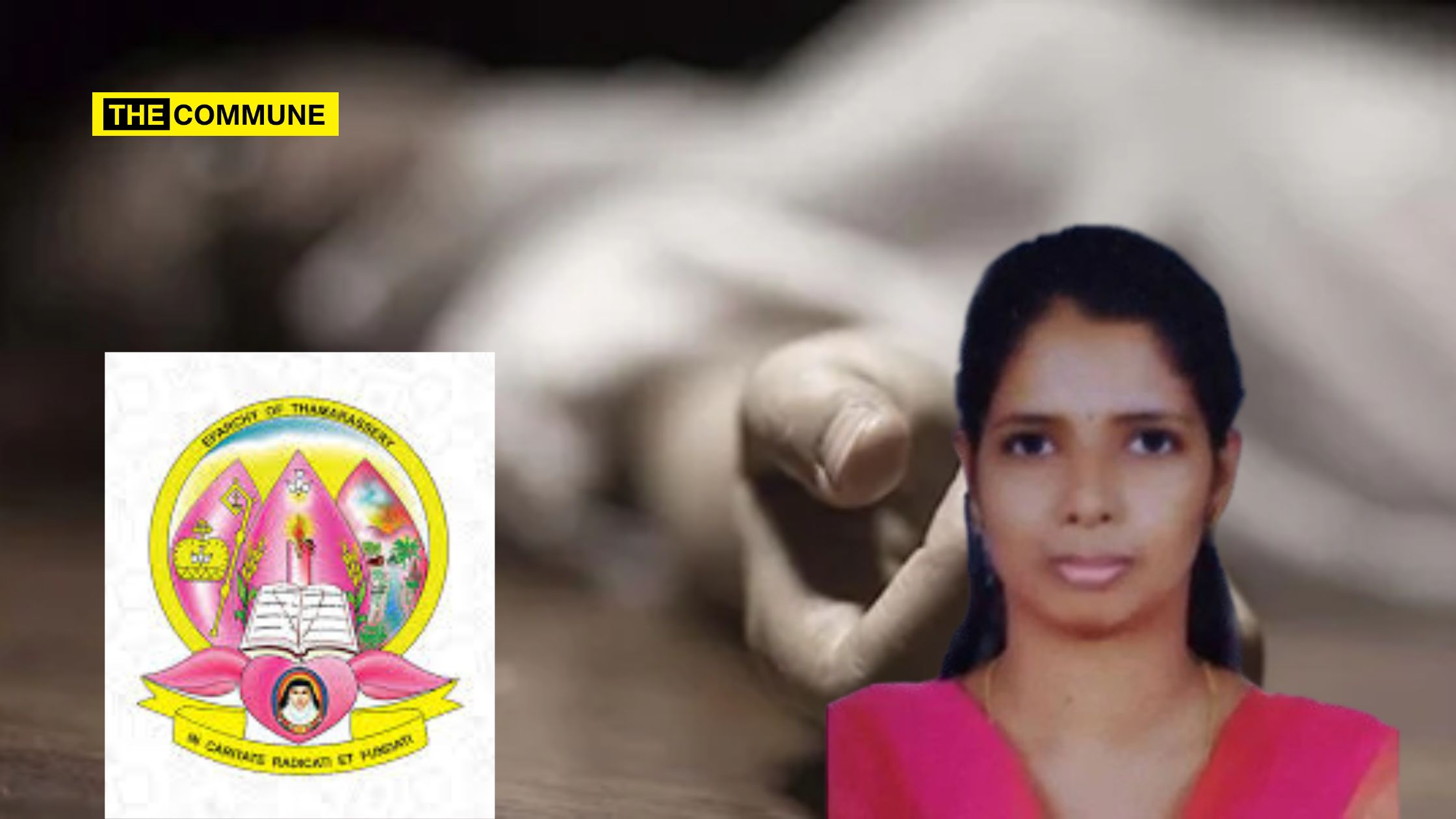
A 29-year-old teacher, Aleena Benny, working at St. Joseph’s Lower Primary School in Kodenchery, Kozhikode, was found dead at her home on the afternoon of 19 February 2025 in a suspected case of suicide. Her family has alleged that years of unpaid wages and mismanagement by the Catholic-run school’s administration led to her extreme step.
Aleena had initially been appointed at Nazareth Lower Primary School in Kattippara, also under the Thamarassery diocese corporate management, but lost her job when the previous occupant of the post returned. Her family claimed that she had to pay ₹13 lakh to secure the job. When she was later transferred to St. Joseph’s LP School in June 2024, she was allegedly forced to sign an undertaking stating that she would not claim a salary for her five years of service at Kattippara. Despite assurances that her new posting would be regularized, her salary remained unpaid, and she relied on ₹3,000 per month from the school’s PTA for transport expenses.
Her father, Benny, directly blamed the school management for her death, accusing them of failing to submit the necessary documents for her appointment to be approved. “The church management did not pay her a single paisa. They told me there were teachers who hadn’t been paid for nine years, but they could have taken steps for my daughter,” he alleged.
Responding to the allegations, Fr. Joseph Varghese, manager of the Thamarassery Diocese Corporate Educational Agency, claimed that several teachers under the diocese were awaiting salary approvals, including Aleena. He attributed the issue to technical delays in government approval but did not address the claims of financial mismanagement.
Kerala Education Minister V. Sivankutty has directed the Director General of Education to investigate the matter, stating that action will be taken based on the findings. Meanwhile, the Catholic Teachers Guild has blamed negligence by education department authorities for the delay in Aleena’s appointment approval.
Her death has sparked widespread outrage, with calls for accountability and reforms in the appointment and salary disbursement of teachers in government-aided schools.
Subscribe to our channels on Telegram, WhatsApp, and Instagram and get the best stories of the day delivered to you personally.
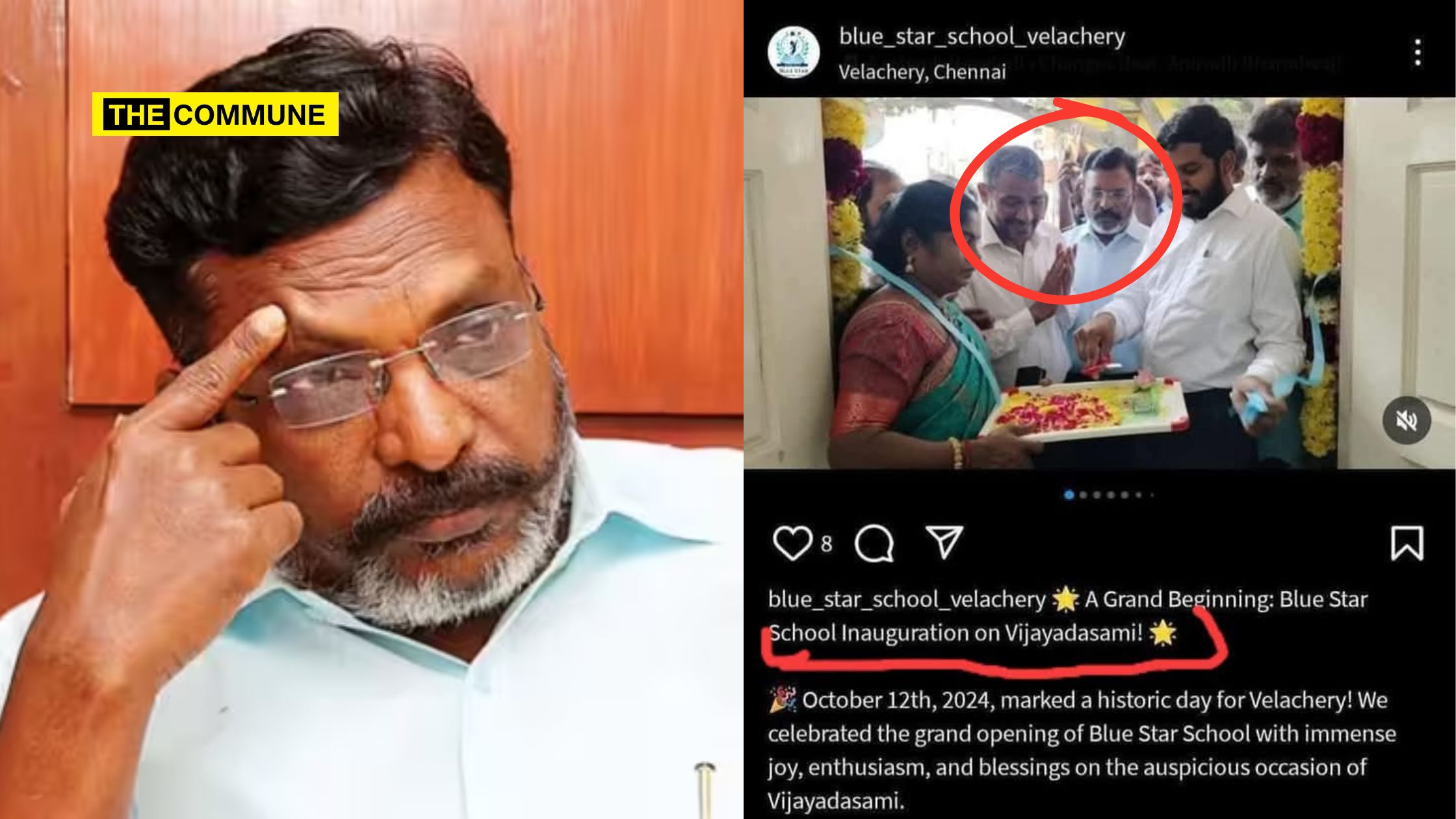
Viduthalai Chiruthaigal Katchi (VCK) leader Thirumavalavan, who has long positioned himself as a critic of Hinduism and vocal opponent of the faith, has recently come under scrutiny for his apparent adherence to Hindu practices. This came to light amid a controversy revealing Thirumavalavan’s role as the director of a CBSE-affiliated school, which offers a trilingual curriculum. What further raised concerns was the fact that he inaugurated the school on Vijayadashami, a day of great significance in Hindu tradition.
— Saravanaprasad Balasubramanian (Modi ka Pariwar) (@BS_Prasad) February 20, 2025
This revelation comes at the backdrop of Tamil Nadu BJP President K. Annamalai wasted no time in exposing the hypocrisy of the DMK and its allies, who protested against implementation of NEP 2020 and opposing the three-language policy in government schools. Annamalai pointed out that while the DMK and VCK, led by Thirumavalavan, have opposed teaching a third language in government schools, Thirumavalavan himself is on the board of Blue Star Secondary School in Velachery, Chennai, which follows a trilingual education system.
In a social media post, Annamalai expressed his disappointment, stating, “I had hoped brother Thirumalavalan wouldn’t be like DMK playing a double game by aligning with the DMK. Unfortunately, I’m disappointed. Brother Thirumalavalan is the chairman of the board at Blue Star Secondary School, Velachery, Chennai which follows the CBSE curriculum. Why is it that those who argue against offering trilingual education to the poor and underprivileged students in government schools are somehow linked with private schools that do offer trilingual education?”
திமுகவுடன் கூட்டணி வைத்துக் கொண்டு, திமுகவினரைப் போலவே இரட்டை வேடம் போடுபவர்கள் வரிசையில், அண்ணன் திரு. திருமாவளவன் இருக்க மாட்டார் என்று நினைத்திருந்தேன். ஏமாற்றம்தான் மிஞ்சுகிறது.
On the same day, Thirumavalavan strongly denied Annamalai’s accusations that he was involved in running a CBSE school. He asserted that no double standards were at play, explaining that a firm had sought approval to establish a school on its land but clarified that there were no school buildings or classrooms at the site. “There isn’t a single classroom or student on the land,” he emphasized. Thirumavalavan further criticized Annamalai for making baseless claims in an attempt to gain media attention, which he deemed surprising.
However, despite Thirumavalavan’s denial, social media pages and advertisements for the school indicate that admissions for the 2025-26 academic year are now open, directly contradicting his statement there is no building or student on the land.
Calls Hinduism A Threat To Liberty, Equality & Fraternity
On 18 October 2024, VCK chief Thirumavalavan via his official X account stated, “How can Savarkar’s descendants tolerate the fact that the entire country is talking about revolutionary Ambedkar? #AmitShah has revealed how much they are fed up. He has torn off his own veil. This is the true face of the Sangh Parivar. The Constitution and revolutionary Ambedkar are their real enemies. This is what the Viduthalai Chiruthaigal has been continuously exposing. All the praise given by the Sangh Parivar to the revolutionary Ambedkar is a great act of deceiving the common people. The revolutionary Ambedkar takes the form of ‘universal form’ (Vishwaroopam). The conspiracy attempts of the Sanadhanis will be in ashes!” He further, with intent, shared an image of Ambedkar along with a quote aimed at criticizing Hinduism and Hindus, seemingly to settle a personal political score, “Whatever Hindus say, Hinduism is a threat to Liberty, Equality, and Fraternity.”
புரட்சியாளர் அம்பேத்கர் அவர்களைப்பற்றி நாடே பேசுகிறது என்பதை சாவர்க்கரின் வாரிசுகளால் எப்படி பொறுத்துக் கொள்ளமுடியும்?
எவ்வளவு வயிற்றெரிச்சல் அவர்களுக்கு என்பதை #அமித்ஷா வெளிப்படுத்தி விட்டார். அவர் தனது முகத்திரையைத் தானே கிழித்துக் கொண்டார். இதுதான் சங்பரிவார்களின் உண்மை… pic.twitter.com/IkMrpjQVSc
During the recent controversy over the presence of beef and pig fat in Tirupati Laddu Prasadam, which sparked outrage among the Hindu community, VCK leader and Chidambaram MP Thol Thirumavalavan intentionally trivialized the issue by claiming that animal fat in sweets is common, further exacerbating the situation.
A laboratory report revealed that beef tallow, fish oil, and palm oil were used to prepare laddus, distributed as prasad at the renowned Sri Venkateswara temple in Tirupati. The report’s findings indicate that the ghee used to prepare the iconic Tirupati laddu prasadam during the YSRCP regime contained traces of animal fat, including beef tallow and fish oil, leading to widespread outrage and claims of disrespect toward religious sentiments.
Speaking to a reporter after hoisting a 62-foot flag of his party near Madurai, Thirumavalavan said, “In most sweets or food products, using animal fat is normal and is a common practice across the world. I don’t know why it is being politicized. If it (Tirupati Laddu) should not contain animal/beef fat, then accordingly guidelines should be framed to prevent such occurrences in the future.”
Called Temples – A Place with Obscene Figurines
Some time ago, Thirumavalavan addressed a gathering, expressing opposition to educational policies based on Sanatana Dharma and humorously criticizes Hindu temples in front of the audience that, “if the building has a dome, it is a mosque. If it is tall and straight, it is a church. And if it has dirty figurines, it is a temple”.
Called For Destruction Of All Hindu Temples
Thirumavalavan is known for his anti-Hindu politics and for spreading canards about Hinduism. He had once called temple gopurams structures with ugly figurines. In 2017, Thirumavalavan called for the destruction of all Hindu temples and building of Buddhist viharas in those places.
Thirumavalavan said, “Destroy all hindu temples and in it place build Buddhist Viharas”. Addressing a gathering convened in Perambalur, VCK Chief Thirumavalavan, asserted that areas housing Shiva and Perumal temples were originally sites of Buddhist monasteries. He contended that these Buddhist structures were replaced by the construction of Shiva and Perumal temples, advocating for their demolition to pave the way for the erection of Buddhist temples in their stead. Furthermore, he proposed the establishment of Buddhist temples at the purported sites of Lord Thiruvaranganathar’s presence and the Kanji Kamachi Amman Temple.
Said Building Temples Is A Business & Profitable
In a book release event held in Chennai, Thirumavalavan said, “Building a temple is a business. I am not joking. Unlike any other business, building temples is the most profitable and provides the highest income. Which other business is more profitable than the income generated by the Tirupati temple? What are the temple’s income and expenditure? People donate money to the Tirupathi temple. People pour money into the Ayyappan temple.”
Called Women Adhering to Sanatana Dharma Prostitutes
In another occurrence during a webinar hosted by Periyarist groups, Thirumavalavan referred to women adhering to the Sanatana tradition as prostitutes. A particular excerpt from his speech circulating on social media highlights, “how are women valued in Sanatana Dharma, how are they treated? From time immemorial, how they have been oppressed and exploited… what does Sanatana Dharma say about women? Basically, women are created as prostitutes by God. All women are prostitutes as per Hindu Dharma…Manu Dharma… All women are prostitutes… that’s how they were created by God… they’re of a status lower than men. It applies to Brahmin women as well as to other women”.
Participated In Eradicate Sanatana Dharma Conference
He also took part in the September 2023 Eradicate Sanatana Dharma conference where Udhayanidhi Stalin had compared Sanatana Dharma to mosquito and dengue and said that it had to be eradicated. In the same conference, Thirumavalavan had said“Sanatana Dharma can be destroyed when we turn OBC against FC (Forward Caste).”
தமிழ்நாடு முற்போக்கு எழுத்தாளர் கலைஞர்கள் சங்கத்தின் சார்பில் நடைபெற்ற #சனாதன ஒழிப்பு மாநாட்டில் கலந்துகொண்டு உரையாற்றினேன். pic.twitter.com/LW6cfV8X9s
Peddled Lies About Sanatana Dharma Comparing It With Islam & Christianity
On International Women’s Day (8 March 2024), a special symposium took place at Chennai Ambedkar Thital, with Thirumavalavan as the chief guest discussing “Revolutionary Ambedkar and Women’s Rights.” He said, “Take Islam, Christianity, Buddhism, Jainism, or any other religion, the core fundamental philosophy of it would be fraternity i.e brotherhood. There is one religion in the world that denies brotherhood completely, they are asking do you know what is Sanatana Dharma? Sanatana Dharma is a dharma that says there should not be brotherhood, they say that we have understood it wrongly. Today a women judge in High Court has said that Sanatana Dharma is different from rituals, yes that’s correct, as we say, rituals and principles are different, but this Sanatana Dharma’s particular principle defines hierarchy based on birth and no one can deny it.”
“The word Sanatana means permanent, that’s different, means unchanging, it is anti-physical, anti-scientific. Nothing is fixed, everything is changing, this is the law of physics, this is the dialectic rule, that is the paradox, but they are… In Sanatana Dharma discrimination is its core, discrimination is the lifeline of Sanatana Dharma in no other religion discrimination will be the basic factor, No one talks about this. They ask why I did not criticize Christianity or Islam, without criticizing them why singling out us, that is because the discrimination is here only. I’m saying that in core principles, RC (Roman Catholic) can have discrimination, it’s an institution. CSI (Church Of South India) can have discrimination, it’s an institution, but there is no discrimination in Christianity that is the difference between the two,” he added.
Thirumavalavan, MP from TN compares Sanatana Dharma & other religions. says – Sanatana dharma is only religion in world that denies brotherhood, discrimination is lifeline of Sanatana dharma. RC or CSI can have discrimination as they are institutions. How is this not hate speech? pic.twitter.com/uZWUo71QZM
During the Nandanar Guru Puja celebration, a sacred thread ceremony was organized to promote inclusivity. One of the key highlights of the event was Governor RN Ravi presiding over a ceremony in which over 100 individuals from Adi Dravidar communities were presented with the sacred thread, known as ‘poonool’ or ‘janeu,’ traditionally worn by Brahmins and other communities. This symbolic gesture aimed to foster inclusivity and equality. However, I.N.D.I.A. ally and VCK MP seized the opportunity to launch a tirade against Hinduism.
Hitting out at Tamil Nadu Governor RN Ravi for presiding over the function in which Nandanar community were adorned the poonool, Thirumavalavan said that the act amounted to denigration the working-class people in the name of upliftment.
“This is what is Sanathanam“, he said condemning the Hindu faith.
“Does the governor say that others who do not wear poonul are inferior? Will the Governor make the Adi Dravidians who are dressed in Poonul as temple priests?“, he added.
“Let us reject the Periya Puranam which denigrates the king Nandan, as a cow-eating Pulayan“, Thirumavalavan said.
நந்தனார் பிறந்த ஊர் ஆதனூரில் 100 பறையர்களுக்கு பூணூல் அணிவிக்காறாராம் ஆளுநர் சனாதனி #ஆர்_என்_ரவி அவர்கள். இது மேன்மைப் படுத்துகிறோம் என்னும் பெயரில் உழைக்கும் மக்களை இழிவுப் படுத்துவதாகும்.
இதுதான் சனாதனம் ஆகும்.
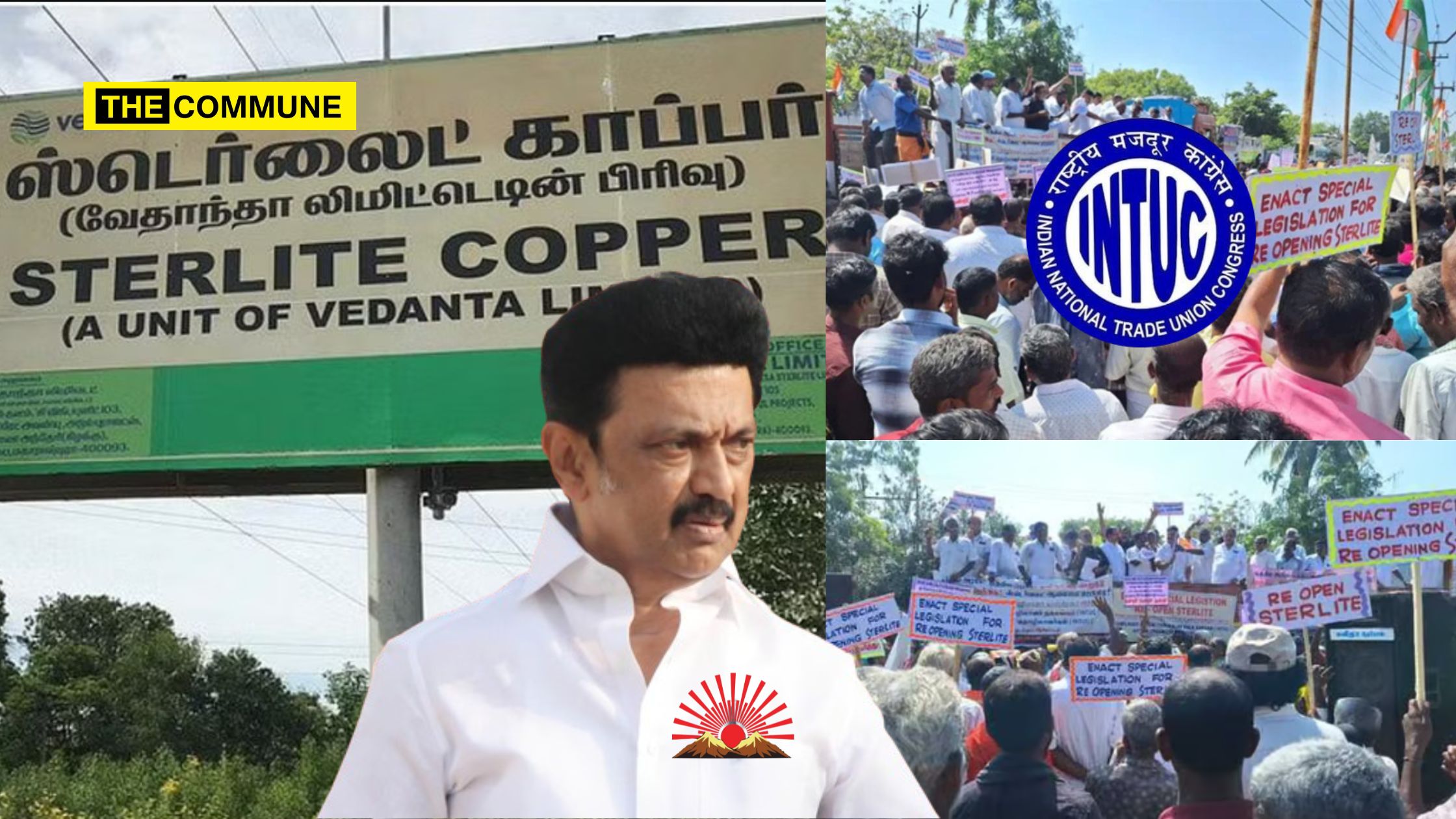
The Indian National Trade Union Congress (INTUC) has questioned the continued closure of the Sterlite Copper plant in Thoothukudi, pointing out that similar smelters in other parts of the country have been allowed to operate. INTUC national secretary Kathirvelu criticized the apparent policy inconsistency, arguing that if environmental concerns were the reason for the shutdown, then the same standard should apply to other copper plants across India.
The Vedanta-owned Sterlite plant was shut down in 2019 following widespread protests over alleged environmental violations, which culminated in police firing that killed 13 demonstrators. The Supreme Court in February 2024 declined permission for its reopening, citing “serious environmental violations and repeated breaches.”
Economic Consequences Of Closure
Despite the court’s ruling, INTUC and industry representatives argue that the factory’s prolonged closure has had severe economic consequences. Kathirvelu stated that thousands of jobs have been lost, particularly in small and medium ancillary industries that relied on the smelter. He pointed out that India’s copper production has dropped since the shutdown, increasing dependence on imports, which could have been avoided if the plant had remained operational.
Kathirvelu also criticized the Tamil Nadu government, stating that while it cites environmental concerns, other states have allowed copper smelters to function, raising questions about whether the Sterlite closure was politically motivated.
Previous Protests
The Namakkal Lorry Owners’ Association and Namakkal Trailer Owners’ Association protested on 6 January 2024, pointing out that the plant’s closure disrupted the transport sector, affecting 6,500 trucks and forcing over 600 lorry owners into alternative jobs. The shutdown has caused a daily economic loss of ₹10 crore, increasing financial instability. Protesters suggested reopening the plant with strict environmental controls to mitigate pollution concerns.
Similarly, the Indian National Trade Union Congress (INTUC) led a protest in December 2024, demanding legislative action to revive the plant. INTUC leaders, including Kathirvel, emphasized that the closure harmed socio-economic development, leading to mass unemployment in Thoothukudi. He warned that India risks becoming a net copper importer, affecting thousands of workers across industries.
In February 2025, the Thoothukudi Contractors’ Association joined the demand, highlighting job losses for 20,000 workers and severe financial strain on 400 SMEs, with income levels dropping by 40%. They have called for a Government Order to restart operations.
Protest Blocked By Police
Trade unions, workers’ associations, and local groups had planned a protest on 20 February 2025 demanding the reopening of the plant and other closed industries in the region. However, police denied permission for the demonstration, citing law and order concerns, after two rounds of peace talks in Thoothukudi. Kathirvelu claimed that around 30,000 people had gathered for the protest but were stopped at the last minute. He added that INTUC may approach the court to challenge the decision and push for the reopening of the plant.
Government employees and teachers in Tamil Nadu have cautioned the ruling DMK that their votes played a decisive role in the party’s narrow victory in the 2021 assembly elections. They have demanded the government fulfill their long-pending requests, including scrapping the Contributory Pension Scheme (CPS) and reinstating the Old Pension Scheme (OPS). Failure to do so, they warned, could impact the party’s prospects in the upcoming elections.
Government employees claim that their postal votes, along with those of their families and colleagues, helped the DMK secure victory in multiple constituencies. They pointed out that in one constituency, the party won by just 43 votes. They also emphasized that their collective voting power could determine electoral outcomes, especially in seats where margins were thin.
Narrow Margins In 2021 Elections
During the 2021 assembly elections, the DMK won 29 constituencies with a margin of less than 6,000 votes and 14 additional constituencies with a margin of less than 10,000 votes. If these margins had swung the other way, they noted, the opposition AIADMK-led alliance could have gained significantly.
Some of the closest contests included:
Thyagaraya Nagar – 137 votes
Tenkasi – 370 votes
Vriddhachalam – 746 votes
Neyveli – 977 votes
Jolarpet – 1,091 votes
Thirumayam – 1,382 votes
Tarapuram – 1,393 votes
Antiyur – 1,275 votes
Uthiramerur – 1,622 votes
Tiruporur – 1,947 votes
Rasipuram – 1,952 votes
Vasudevanallur – 2,367 votes
Mayiladuthurai – 2,742 votes
Thiruchengode – 2,862 votes
In total, the DMK-led alliance won 43 constituencies with slim margins, while the AIADMK-led alliance lost these by a cumulative total of 2 lakh votes across the state.
— Saravanaprasad Balasubramanian (Modi ka Pariwar) (@BS_Prasad) February 21, 2025
Growing Unrest Among Government Employees
The unrest among government employees and teachers has intensified over unmet promises related to salary hikes, job security, and pay parity with central government employees. Various unions, including the Jacto-Geo Federation, have been protesting against the delay in fulfilling these demands.
A one-day statewide strike was initially scheduled for 15 February 2025 but last-minute negotiations with government representatives led to its temporary postponement. Employees had previously organized district-level preparatory meetings and threatened prolonged agitations if their demands were not met before the Tamil Nadu budget session.
With elections approaching, government employees have signaled that their grievances could have direct electoral repercussions. Many have taken to social media, voicing their dissatisfaction and hinting at a shift in their voting behavior if their demands remain ignored. They argued that the government should recognize the role they played in securing DMK’s victory and act before the upcoming elections.
Subscribe to our channels on Telegram, WhatsApp, and Instagram and get the best stories of the day delivered to you personally.
Tamil Nadu BJP President K. Annamalai has fired back at DMK Deputy Chief Minister Udhayanidhi Stalin, who challenged him to come to Anna Salai. In response, Annamalai urged Udhayanidhi to set a specific time and date for the meeting. This exchange has intensified the ongoing verbal clash between the two leaders, with the dispute revolving around national education policy and trilingual education.
Speaking to reporters in Salem, Annamalai called the language policy issue in Tamil Nadu a “God-given opportunity” for the BJP. He emphasized that for the past week, the party has been exposing the stance of Tamil Nadu’s political leaders on this matter. Chief Minister Stalin shared on his Facebook page that the people of Tamil Nadu are opposed to the third language policy, claiming to show their dissent through protests on the streets of Kollam. However, it was later revealed that the protests were orchestrated by a local DMK leader. It appears that the Chief Minister is attempting to divert attention from the real issue by promoting misleading narratives.
He further added that if Udhayanidhi continues with disrespectful comments, he would respond in kind, referring to Udhayanidhi’s disparaging remarks about former Chief Ministers Edappadi Palaniswami and Jayalalithaa. Annamalai also noted the apparent gap between quality and udhayanidhi, likening it to a divide between the North and South poles.
Annamalai said, “Whenever I go to Chennai, presumably next week, let the DMK members mark the date, day, and place. Specify where to come in Anna Salai. Don’t give a general location, but specify where in Anna Salai. Tell me that, ‘brother come her or there in Anna Salai’, and I’ll come alone. The BJP cadres won’t accompany me. If you have the guts, try to stop me using all the DMK cadres and police force. Let’s see what happens.”
அண்ணா சாலையில் எங்கு வரவேண்டும் என்று உதயநிதி சொன்னால் நான் தனியாக வருகிறேன்,
Regarding Udhayanidhi’s dare to come to Anna Salai, Annamalai invited him to specify the time and place, adding that he would be willing to meet separately. He also gave the DMK IT wing a day to post anything they wished on his page, and promised to make “Go back Stalin” a trending topic on his Facebook at 6 AM the following day. Annamalai criticized Stalin’s leadership and suggested that the Chief Minister should leave Tamil Nadu if he cannot manage the state effectively.
Subscribe to our channels on Telegram, WhatsApp, and Instagram and get the best stories of the day delivered to you personally
Bahujan Samaj Party (BSP) chief Mayawati on Friday advised Congress leader Rahul Gandhi to look into himself before blaming others, especially the BSP chief, in any matter.
In a series of posts on social media X, she also accused the Congress party of acting like a “B” team of the BJP in the Delhi Assembly elections, thereby, helping it to come to power.
Calling Rahul Gandhi ‘the supreme leader’ of the Congress, she wrote on X in Hindi (loosely translated as), “It is a common discussion that this time Congress contested the Delhi Assembly elections as BJP’s B team, due to which BJP has come to power here. Otherwise, Congress’ condition would not have been so bad in this election that this party could not even save the deposit of most of its candidates.”
“Therefore, it would be better if the supreme leader of this party, Shri Rahul Gandhi, looks into his own self before pointing fingers at others and especially at the BSP chief in any matter. This is my advice to him,” the BSP chief said.
Her advice comes after Rahul Gandhi said on Thursday that he was disappointed that Mayawati’s BSP did not join Congress to fight the elections against the BJP. On Thursday, the first day of his visit to his Rae Bareli Lok Sabha constituency, he accused her of staying away from the anti-BJP front, the INDIA bloc, during the 2024 general elections.
Gandhi during an interaction with Dalit students in Uttar Pradesh’s Rae Bareli, spoke about BSP founder Kanshi Ram’s impact on Indian politics and how Mayawati had built upon it. He, however, questioned Mayawati’s current political stance, saying that he wanted her to fight alongside the bloc against the BJP, but for some reason, she did not.
“This was deeply disappointing. If all three parties had united, the BJP would never have won,” he said. Mayawati quickly responded, accusing Congress of having a “dual character and casteist mindset”. She wrote on her X handle, “Wherever the Congress is strong or in power, it harbours hostility and casteist attitudes towards BSP and its followers. But in states like UP, where it is weak, it tries to mislead people by talking about an alliance with BSP. If this is not hypocrisy, then what is?”
On Friday, the BSP supremo continued her attack on the Congress leader. She also had a word of advice for the BJP in Delhi, where Rekha Gupta has become the Chief Minister.
“Also, the new BJP government formed in Delhi has the challenge of fulfilling all the promises made during the elections, especially those related to public welfare and development, on time, otherwise the condition of this party may also become as bad as that of Congress in the future,” she wrote on X.
–IANS
Subscribe to our channels on Telegram, WhatsApp, and Instagram and get the best stories of the day delivered to you personally
Annamalai responded strongly to DMK Deputy Chief Minister Udhayanidhi Stalin’s criticism, where Udhayanidhi had claimed that Annamalai should speak with more “quality.” In his rebuttal, Annamalai criticized Udhayanidhi’s past disrespectful and derogatory remarks about senior opposition leaders, including Edappadi Palaniswami and former Chief Minister Jayalalithaa.
Speaking to the press in Salem, Annamalai stated, “Let’s talk about who has more quality here. I want to share some of Udhayanidhi speech before you. For instance, when speaking about Edappadi Palaniswami, former Chief Minister and from this district, Udhayanidhi said, ‘If you had let Edappadi Palaniswami, he would have crawled between Sasikala’s legs.’ This is the certificate given by him. He also said, ‘If Edappadi Palaniswami sees Modi, he will fall flat; if he sees Amit Shah, he will prostrate; and if he sees Sasikala, he will kneel down.’ These are just some of Udhayanidhi Stalin’s ‘golden words.'”
Annamalai then presented images of a 2016 Facebook post by Udhayanidhi Stalin, where he made derogatory remarks about former Chief Minister J. Jayalalithaa. In the post, Udhayanidhi mocked her by comparing her to a glamorous actress in a disrespectful manner.
Annamalai continued, stating, “He called Anbumani Ramadoss a ‘tire licker’ for OPS. He also said that hereafter he will call Prime Minister Narendra Modi as ’29 paise Modi.’ During the 2021 assembly election campaign, he said, ‘Arun Jaitley and Sushma Swaraj were killed by Modi.’ He also told Nirmala Sitharaman, ‘We didn’t ask for your dad’s money,’ and claimed that ‘the people will slap the governor with chappals.'”
Quoting all of these instances, Annamalai mocked Udhayanidhi Stalin, comparing him and quality to the vast distance between the North Pole and the South Pole. He further declared that if there are any unqualified individuals in the state, it is Udhayanidhi, who has been relying on the names of his father and grandfather to survive. Annamalai warned Udhayanidhi that he would respond in kind to how he is provoked.