Home Blog Page 626

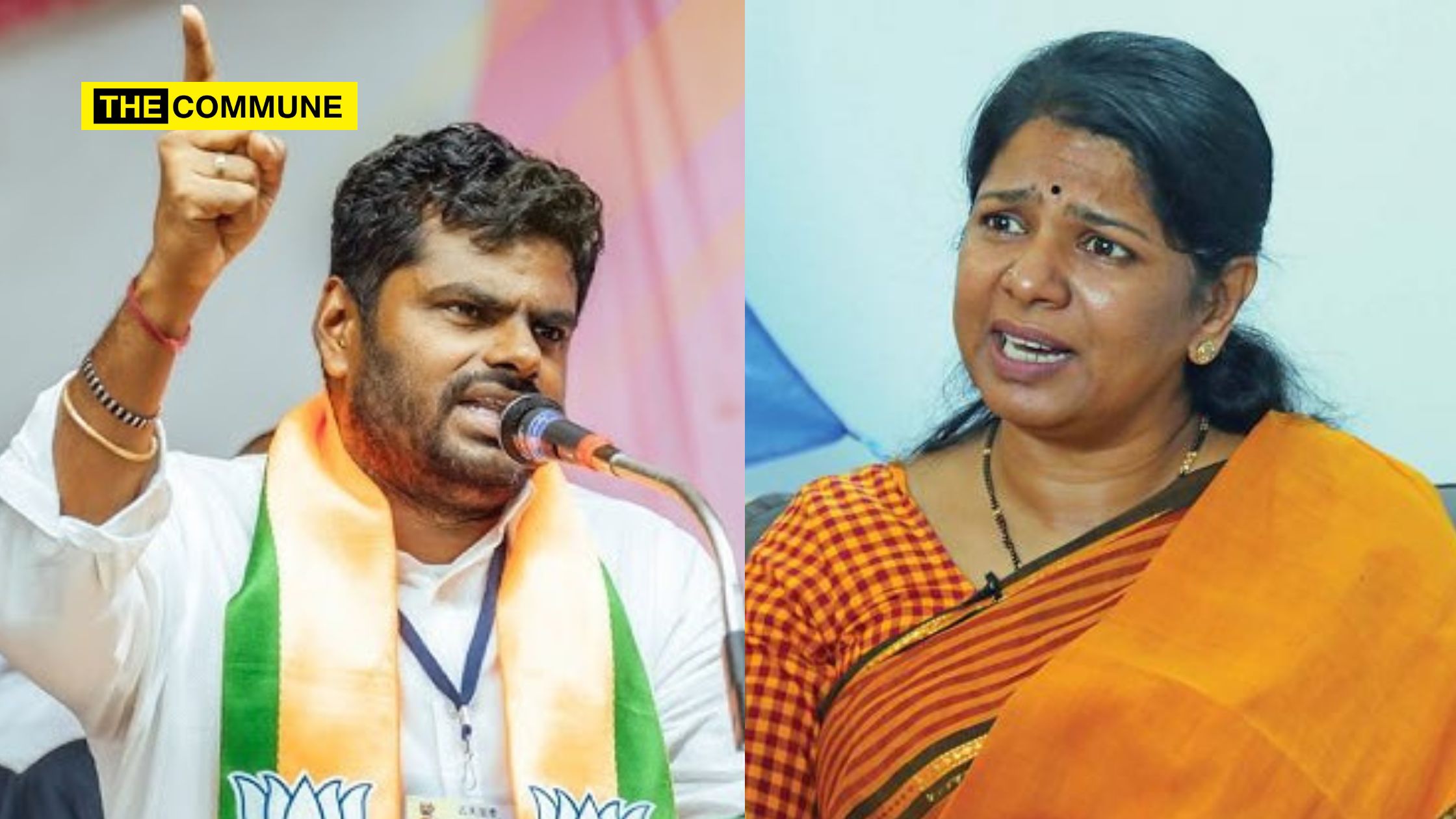
TN BJP Chief Annamalai Slams Kanimozhi’s DMK Rhetoric, Demands Straightforward Answers
annamalai kanimozhi dmk

The war of words over the National Education Policy (NEP) escalated when DMK Deputy General Secretary and Thoothukudi MP Kanimozhi, using the typical victim card tactics employed by the DMK, urged Tamil Nadu BJP Chief Annamalai to ensure that the Centre released education funds if he truly cared about students. This shifted the focus away from the original issue. Annamalai had earlier raised concerns about the DMK’s opposition to the third language policy, especially regarding Hindi, highlighting how it neglects only government school students who are excluded from the policy, while private run matriculation and CBSE school students are given the option to choose. Over the past two days, DMK MP Kanimozhi entered the fray, attempting to buttress the party’s stance, but ignoring the core issue. This time, Annamalai slammed the her political hypocrisy and urged her to get to the point and answer the question directly.

Tamil Nadu BJP President Annamalai, through his official X account, took to task DMK MP Kanimozhi, saying, “Anbu Akka Tmt @KanimozhiDMK, if the GOI-published data is critical of the TN Govt, you would call it biased. If the data is appreciative, you will publish it on the front page of Murasoli & Dhinakaran – typical of Review Gating (Receptive only to positive reviews & filters out negative feedback). The Pseudo truth environment that the DMK wishes to construct will be dismantled even if the GoTN commissions a survey to understand the quality of education imparted. We are confident that the results would point out the deteriorating education standards in TN today under your brother’s regime. Ennum ezhuthum, illam thedi kalvi & morning breakfast scheme were proposed in NEP2020/ Samagra Siksha. As a member of Parliament, you should have known that many of the NEP recommendations were rolled out for implementation in other states even before they were introduced in TN (without the effort of having to invent a new name for pasting stickers). For DMK, politics takes precedence over the future of our children. Did @BJP4TamilNadu compel the DMK Govt to send a letter to the Central Govt committing that PM Shri would be implemented starting this academic year? We are sure you know that PM Shri has subsumed many aspects of Samagra Siksha, even if you & the part-time school education minister of TN say otherwise in front of the media. Your brother and nephew have been avoiding answering this question. Would you at least care to answer? “Why is the opportunity to learn a third language denied to our government school students when it is provided to students studying in private CBSE/ Matriculation schools, including private schools that your family and your ministers run?”

This sharp yet respectful rebuke came from Tamil Nadu BJP Chief Annamalai in response to DMK Thoothukudi MP Kanimozhi’s remarks. Kanimozhi had criticized the ASER 2024 report, claiming that the data provided was manipulated and selectively presented. She repeated the familiar rhetoric, accusing the BJP of financially strangling states while failing to implement schemes for receiving funds.

DMK MP Kanimozhi stated, Thiru @annamalai_k, the world knows how BJP manipulates data—Dr. Parakala Prabhakar exposed it in The Crooked Timber of New India: Essays on a Republic in Crisis. BJP thrives on selectively quoting statistics, twisting numbers to fit its propaganda. Your ASER data? We know how it’s cooked up, which is why we’re conducting our own survey on the real impact of education policies. Even your 2025 Economic Survey praised Tamil Nadu for revolutionizing education through landmark schemes like Illam Thedi Kalvi, Ennum Ezhuthum, and the breakfast scheme for schoolchildren. Unlike BJP-ruled states struggling with literacy, we invest in our students’ future. You claim to care about Tamil Nadu’s students—then why has your government withheld ₹2,152 crore in Samagra Shiksha Abhiyan (SSA) funds rightfully owed to Tamil Nadu? If you truly care, tell your union government to release these funds instead of preaching to us. You talk about fairness, yet Kendriya Vidyalayas (KVs) have removed German and other foreign languages while continuing to impose Hindi and Sanskrit, depriving students of global exposure while pushing BJP’s divisive ideological agenda. If you are truly advocating for a three-language policy, give us the data about how many KV schools teach Tamil? Do you even know that many KVs in Tamil Nadu don’t have Tamil teachers? Tamil Nadu will never accept BJP’s agenda of misinformation, financial strangulation, and Hindi imposition.” 

The exchange of words between DMK Deputy General Secretary and Thoothukudi MP Kanimozhi, and Tamil Nadu BJP Chief Annamalai, was sparked by Annamalai’s criticism of Kanimozhi’s brother, Chief Minister MK Stalin. Stalin had raised concerns about the teaching of a third language in Tamil Nadu schools, questioning why students were being denied this opportunity. He stated, “Some guardians of lopsided policies, wailing in great concern, ask, “Why are you denying Tamil Nadu students the opportunity to learn a third language?” Well, why don’t they first say which third language is being taught up north? If they had just taught two languages properly there, where’s the need for us to learn a third?”

In response, Annamalai argued that supporting the new National Education Policy, which aims to create equality in education, was not a “lopsided” stance. He added, “The education system you wish to impose only on our Govt school students forever, while allowing a different standard for private school students, is lopsided. We are surprised that you trimmed our question to suit your convenience. Our question was, “Why is the opportunity to learn a third language denied to our government school students when it is provided to students studying in private CBSE/ Matriculation schools, including private schools that your family and your ministers run?”

Annamalai also expressed surprise at Stalin’s implication that people in northern India are not proficient in English, challenging him to reflect on Tamil Nadu’s own education system. “We are also surprised that you indicate that the people in the north of India are not conversant in English. How conversant are you, Thiru@mkstalin? Thiru @mkstalin, we humbly request you to take time to read the recent ASER Rural 2024 report on the Tamil language proficiency of our students in Class III, V, and VIII before demeaning others for one’s language proficiency as your part-time School Education Minister is living in denial and jeopardising the future of our children.”

Feeling hurt by the pointed criticism and questions by Annamalai aimed at her brother, Chief Minister MK Stalin, Kanimozhi responded to Annamalai’s post, dismissing the ASER data as false and malicious, claiming it portrayed the state in a negative light.

Subscribe to our channels on TelegramWhatsApp, and Instagram and get the best stories of the day delivered to you personally.

ED Arrests SDPI National President MK Faizy In Terror Outfit PFI-Linked Money Laundering Case

The Enforcement Directorate (ED) has arrested MK Faizy, National President of the Social Democratic Party of India (SDPI), in connection with a money laundering case linked to the banned Popular Front of India (PFI). Faizy was apprehended in Bengaluru and later transferred to the ED office in Delhi for interrogation.

It is reported that the arrest follows an ongoing investigation into financial transactions suspected of violating anti-money laundering laws. Officials stated that the move is part of a broader effort to dismantle financial networks linked to extremist activities.

Faizy, a native of Kanthapuram in Kozhikode, Kerala, was detained late Monday (3 March 2025) night at Delhi’s international airport under the Prevention of Money Laundering Act (PMLA). His arrest comes days after an ED raid at his Kerala residence on 28 February 2025 as part of its probe into financial crimes related to PFI.

The Union government banned the PFI and its affiliated organizations under the Unlawful Activities (Prevention) Act (UAPA) on 28 September 2022, citing alleged involvement in radicalization and terror financing. Prior to the ban, multiple enforcement actions were carried out by the ED, National Investigation Agency (NIA), and state police forces, leading to arrests and the seizure of incriminating documents.

The ED has previously identified SDPI as the “political front” of PFI, a claim the SDPI denies. Founded in 2009 and headquartered in Delhi, the SDPI describes itself as an independent political outfit. Faizy, who has been the party’s national president since 2018, is also known as an Islamic scholar and political observer.

Investigative agencies have alleged that Faizy had financial ties with a Kerala-based PFI leader, Abdul Razak BP, who reportedly transferred ₹2 lakh to him as part of fundraising activities. Authorities are now probing whether this transaction was linked to PFI’s financial operations.

The interrogation of Faizy is expected to shed further light on the extent of financial dealings involving the banned outfit and its alleged political affiliations.

(With inputs from The New Indian Express)

Subscribe to our channels on Telegram, WhatsApp, and Instagram and get the best stories of the day delivered to you personally.
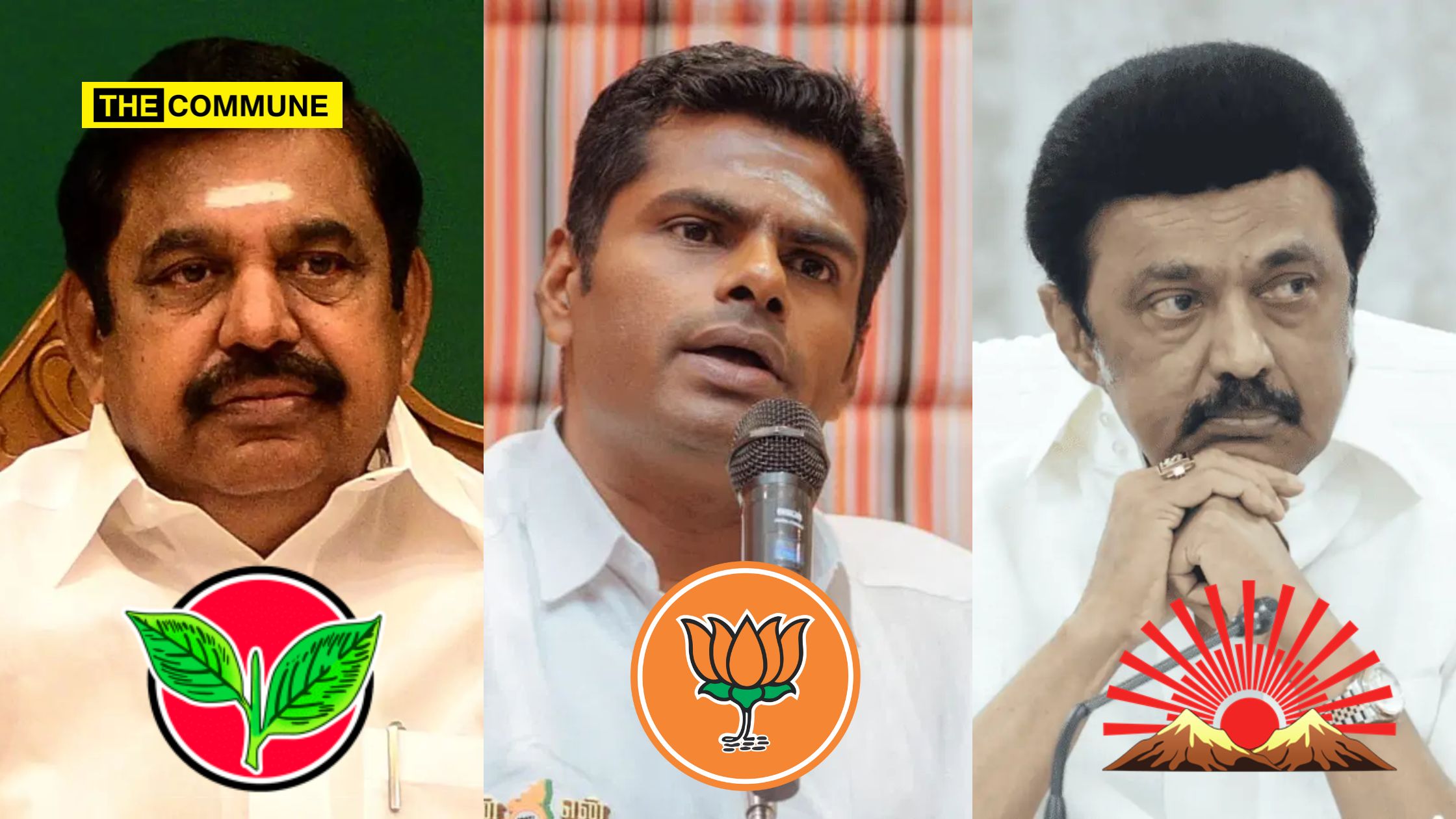
“DMK Is Our Only Enemy, No Other Party Is” – Edappadi Palaniswami On Whether AIADMK Will Ally With BJP For 2026 Elections

AIADMK General Secretary Edappadi K. Palaniswami reaffirmed that DMK remains the party’s only political adversary while addressing the media at a party induction event in Athur, Salem district.

At the event, several members from alternative political groups officially joined AIADMK in Palaniswami’s presence. Speaking at the event, Palaniswami emphasized AIADMK’s inclusive leadership, stating, Everyone in AIADMK is a leader. Even an ordinary worker can rise to the highest positions.”

Highlighting AIADMK’s contributions, he said,We fought for the women’s rights fund in Tamil Nadu. We had promised ₹1,500 assistance, but voters were misled into supporting DMK.”

On the party’s future, he declared,The 2026 assembly elections will end dynastic politics. Just as MGR and Jayalalithaa led AIADMK to success, our workers must continue their unwavering support.”

Responding to a question on alliance with the BJP for the 2026 elections, Edappadi Palaniswami said,I already told you that the ADMK is ready to defeat the DMK. DMK is our only enemy. No other party is our enemy. DMK has to be defeated. That is our goal. Vote should not be scattered; we must come together to gather all these scattering votes, and it is our (ADMK’s) primary duty to defeat the anti-people DMK regime. We will demonstrate this in the 2026 elections. Ask me after six months whether an alliance with the BJP will be formed. Whatever will be done will be done in the open.”

(With inputs from Indian Express Tamil)

Subscribe to our channels on TelegramWhatsApp, and Instagram and get the best stories of the day delivered to you personally.

19-Year-Old Islamist ISI-Trained Youth Arrested For Plotting Terror Attack On Ram Mandir In Ayodhya

A 19-year-old terror suspect, Abdul Rehman, was arrested for attempting to carry out an attack on the Ram Mandir in Ayodhya. Authorities revealed that Rehman had been receiving online training from Pakistan’s ISI on operating an AK-47 assault rifle. This arrest followed a detailed investigation, which uncovered Rehman’s radicalization and the guidance he received from ISI operatives.

Rehman was apprehended near Faridabad, Haryana, by a joint team of the Gujarat Anti-Terrorism Squad (ATS), Haryana Special Task Force (STF), and central agencies. Investigators confirmed that he had been trained to use an AK-47, which he planned to use in the attack on the Ram Mandir.

As part of his preparation, Rehman created a wooden AK-47 model before progressing to online tutorials with ISI operatives to learn to operate the weapon. Additionally, he conducted a reconnaissance of the Ram Mandir in Ayodhya, specifically surveying Gate numbers 1 and 2. Afterward, he traveled to Faridabad, where an ISI handler provided him with two hand grenades.

After his arrest, the grenades were defused, and radical materials were found in his possession. Rehman, who had affiliations with the Islamic State Khorasan Province (ISKP), was involved with ISI operatives in planning the attack.

Rehman has been placed in 10-day judicial custody under the Haryana STF, and further investigations into his connections and the larger terror network are ongoing.

(With Inputs From Newsx)

Subscribe to our channels on TelegramWhatsApp, and Instagram and get the best stories of the day delivered to you personally.

VCK’s Vanniarasu Claims Vijay’s Y-Security Was Due To ‘Muslim Threat’

A political controversy has erupted in Tamil Nadu over the Centre’s decision to grant Y-category security to actor and Tamilaga Vettri Kazhagam (TVK) founder Vijay, following claims that the security was sought due to alleged threats from the Muslim community.

The controversy began after VCK spokesman Vanniarasu alleged that TVK requested security cover fearing threats from Muslims over the actor’s portrayal of the community in his films Kaththi and Beast. “Vijay and TVK believed the actor might face threats from Muslims and sought protection from the Home Ministry,” Vanniarasu told The Times of India. However, he admitted that he did not have a copy of the request letter but cited a reliable police source.

TVK propaganda wing joint secretary I. Thahira strongly refuted the claim, stating, “Muslims hold key positions in TVK, and our leader (Vijay) has openly opposed the Citizenship Amendment Act (CAA) while supporting Muslims. Vanniarasu’s statement is insulting as it suggests Muslims have intent to harm politicians in the state.”

Backing TVK’s stance, Tamil Nadu Muslim League (TNML) founding president V.M.S. Mustafa dismissed the claims as a political ploy by DMK and its allies to damage Vijay’s standing among Muslim voters. “This is a planned campaign to portray Vijay as an enemy of the Muslims and divert their support to the DMK alliance. No letter was submitted by Vijay or TVK seeking security,” Mustafa asserted.

The controversy comes as TVK attempts to establish itself as a political force in Tamil Nadu, ahead of upcoming elections. Vijay, who recently launched his party, has positioned himself as a challenger to the ruling DMK and opposition AIADMK. The granting of Y-category security, which typically includes Central Reserve Police Force (CRPF) protection, has now become a focal point in the ongoing political battle in the state.

(With inputs from Times of India)

Subscribe to our channels on Telegram, WhatsApp, and Instagram and get the best stories of the day delivered to you personally.
Madras High Court Overturns Discharge Order, DMK’s MK Alagiri To Face Full Trial In Land Grab Scandal

The Madras High Court on Tuesday (4 March 2025) reversed a 2021 order by a judicial magistrate in Madurai that had partially discharged former Union Minister M.K. Alagiri from certain provisions of the law in a 2014 land grab case. The court ruled that Alagiri must now face trial on all charges, including those related to cheating, fraud, and forgery.

Justice P. Velmurugan passed the order while allowing a criminal revision petition filed in 2021 by the Inspector of Police, Anti-Land Grabbing Special Unit, Madurai City. The case pertains to allegations of land grabbing for an engineering college established by the M.K. Alagiri Educational Trust at Sivarakottai in Madurai. The case was originally registered during the AIADMK regime.

In 2021, a judicial magistrate in Madurai had discharged Alagiri from charges under the Indian Penal Code (IPC) Sections 420 (cheating), 423 (fraudulent execution of deed), 465 (forgery), and 471 (illegal use of forged document) but ruled that he must still face trial under Sections 120B (criminal conspiracy) and 408 (criminal breach of trust).

Following this ruling, both the prosecution and Alagiri had filed revision petitions— the police sought reinstatement of all charges, while Alagiri sought a complete discharge. When the prosecution’s revision petition was listed before Justice N. Anand Venkatesh on 27 September 2023, the judge directed that both petitions be heard together, given their interconnected nature. As a result, Alagiri’s plea was transferred from the Principal District Court in Madurai to the High Court, where it was renumbered and tagged with the prosecution’s 2021 petition.

With the change in the MP/MLA special portfolio, Justice Velmurugan took up the case and heard arguments earlier this year. On Tuesday, he dismissed Alagiri’s plea for complete discharge and allowed the prosecution’s revision petition, restoring all charges against him.
This ruling effectively returns the case to its original status, requiring Alagiri to stand trial for all offences, including those related to forgery and fraud.

(With inputs from The Hindu)

Subscribe to our channels on Telegram, WhatsApp, and Instagram and get the best stories of the day delivered to you personally.
Madurai Bench Of Madras High Court Directs Parties To Submit Written Responses On Thiruparankundram Hills Issue

madurai bench of madras high court thiruparankundram hill

On 3 March 2025, the Madurai bench of the Madras High Court directed all parties involved in the case related to Thiruparankundram Hill to submit their written responses by 24 March 2025.

A public interest litigation was filed by Kannan and others from Madurai, seeking a ban on the sacrifice of goats and roosters at the sacred Thiruparankundram Hilltop Dargah in Madurai. The Thiruparankundram temple, dating back to the Pandya period, is a significant landmark, housing the Umayandar Cave Temple and 11 other sacred ponds. According to existing regulations, animal sacrifices are prohibited within the temple grounds.

Recent reports suggested that the Muslim fundamentalists attempted to carry goats and roosters to perform sacrifices at the Sikkandar Dargah atop Thiruparankundram Hill in January 2025. The petitions argued that such sacrifices would hurt the sentiments of devotees visiting the Thiruparankundram Subramania Swamy Temple. The petitioners also sought a ban on the slaughtering, cooking, and serving of animal meat on the hill.

In addition, the petitioners requested that Thiruparankundram Hill be placed under the jurisdiction of the Central Government’s Archaeological Survey of India. They also raised concerns about the hill being referred to as Sikandar Hill and sought official recognition of the hill as Jain Hills. Other petitions included calls for better basic facilities on the hill, preventing police interference with the renovation of the Sikandar Dargah, and halting Muslims from offering prayers in the Nellithope area.

The case was heard by Justices Nisha Banu and Srimathi. The lawyer representing the Archaeological Department noted that while permission had been requested from the Collector to survey the Thiruparankundram Hill, it had not yet been granted. The judges adjourned the hearing until 24 March 2025, directing all parties to submit their responses. They also indicated that a decision on the use of drones for measuring the area would be made at that time.

Backdrop

In January 2025, the sacred Hindu site of Thirupparankundram Hills witnessed escalating tensions, sparked by controversial actions by a Muslim politician that fueled divisive rhetoric. Navas Kani, a member of the Indian Union Muslim League and MP from Ramanathapuram, who also served as the chairman of the Tamil Nadu Waqf Board, stirred further discord by declaring that the dargah atop the hill was Waqf property. He also posted on social media, claiming that Muslims had consumed cooked non-vegetarian food at the foothills, which outraged Hindus and devotees. This statement sent shockwaves through the region, further escalating existing tensions.

This development is part of a series of incidents that have strained relations between Hindus and Muslims, who had previously lived in harmony. Some Islamists groups have been attempting to assert their rights to conduct animal sacrifices at the hilltop, furthering their claims that the entire Thirupparankundram Hills should be recognized as Sikkandar Hills.

The situation escalated on 27 December 2024, when Madurai police intervened to detain a group of Muslims family attempting to bring goats and roosters to the hilltop dargah for ritual sacrifice. Syed Abu Dahir, a 53-year-old from Malaiyadipatti in Rajapalayam, arrived with his family and animals for the ceremony but was stopped by authorities at the base of the hill. Police informed them that bringing livestock up the hill was prohibited, which led to a protest by over 20 local Muslims at the foot of the hill in solidarity with the family.

The following week, on 5 January 2025, another large group of Muslim protesters gathered at Thirupparankundram Hills, demanding permission to offer prayers at the mosque located at the top. When the police denied their request, tensions escalated, leading to a brief scuffle and the detention of the protesters.

On 17 January 2025, during the Santhanakoodu Festival at a nearby dargah, social media posts began circulating about an upcoming “Equality Feast” (Samabanthi Bhojan) on 18 January at the hilltop dargah, where goats and roosters were allegedly to be sacrificed. Fearing communal unrest, police set up barricades and conducted searches to prevent the transportation of livestock to the hill. When the dargah Jamath was informed that animal sacrifices were not allowed, protests broke out. Members of the Jamath, along with other Muslim protesters, clashed with the police, causing further disruptions.

The situation was exacerbated by the involvement of the Social Democratic Party of India (SDPI), an ally of AIADMK and a group linked to the banned terror outfit PFI. These elements are believed to be behind the attempts to conduct animal sacrifices at the sacred Thirupparankundram Hill.

Furthering tensions, on 21 January 2025, DMK Manapparai MLA Abdul Samad was accused of conducting an illegal survey around the temple with intentions to gain control of the hill. On the same day, IUML member and Ramanathapuram MP Navas Kani was seen giving an interview near the Thirupparankundram Hills. When asked whether the dargah at the hilltop was under the Waqf Board, Kani confirmed, “Yes, it is under the control of the Tamil Nadu Waqf Board,” further heightening tensions in the area.

Subscribe to our channels on TelegramWhatsApp, and Instagram and get the best stories of the day delivered to you personally

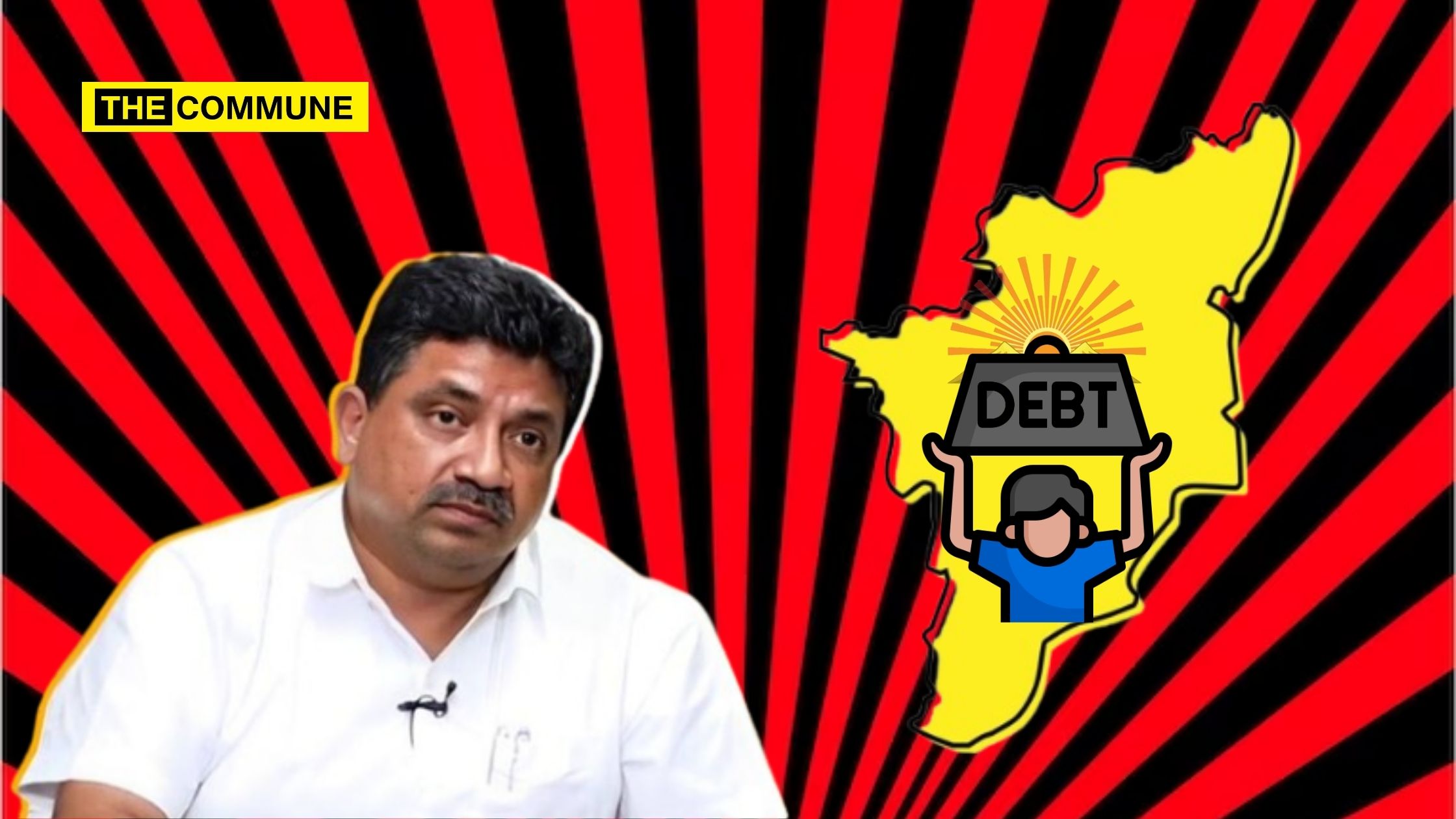
Ph-D Holder, Lehman Bros Fame, Double Watch DMK Min PTR Waxed Eloquent About Rising TN Debt Under ADMK Regime, TN Becomes The Most Debt-Burdened State Under Stalin

There has been growing concerns over the mounting debt on Tamil Nadu that is ultimately going to impact the common person in the state. From 2021 to 2025, the state’s debt has surged significantly, increasing from ₹4,56,660 crore in 2020-2021 to ₹8,33,362 crore in 2024-2025. Opposition parties have strongly criticized the ruling DMK government, accusing it of relying solely on loans and failing to take effective measures to address the escalating debt.

What Does RBI Say?

Did you know that Tamil Nadu has the highest outstanding debt among states, amounting to ₹8.3 lakh crore, reflecting a 108% increase? The state’s debt-to-GDP ratio stands at 31%. According to the RBI’s report titled “State Finances: A Study of Budgets of 2024-25”, Tamil Nadu’s outstanding liabilities from the issuance of State Development Loans (SDLs) stood at ₹5,96,619.2 crore as of 31 March 2024. This figure is projected to rise to ₹6,87,034.3 crore by 31 March 2025.

Of the total outstanding debt, ₹2,03,447.14 crore, or 34.1%, is due for repayment within the next 1 to 5 years. Additionally, 29.2% of the debt is set for redemption in the 5-10 year period, while 19.7% will mature after 20 years. Repayments in the 10-20 year period account for 11.5% of the debt, with 5.5% maturing in less than a year.

The State Finances Audit Report for the year ending March 2023, which was presented in the Assembly earlier this month, indicates that Tamil Nadu’s interest liability over the next decade (from 2023-24) will be ₹28,263.67 crore. Additionally, the state’s principal liability for market loans will amount to ₹3,75,951.97 crore.

According to the Comptroller and Auditor General (CAG), Tamil Nadu’s total liabilities typically include internal debt (such as market loans, ways and means advances from the RBI, special securities issued to the National Small Savings Fund, and loans from financial institutions), as well as loans and advances from the central government and public account liabilities.

As of 31 March 2024, Tamil Nadu’s total outstanding liabilities stood at ₹8,47,022.7 crore, and it is expected to reach ₹9,55,690.5 crore by the end of 31 March 2025, according to the RBI report.

Remembering The Words Of Foreign-Educated, Ph.D, Lehmann Bros Fame, DMK Fin Min Palanivel Thiaga Rajan (PTR)

On 9 August 2021, shortly after releasing a white paper on Tamil Nadu’s financial situation, the then DMK Finance Minister PTR Palanivel Thiagarajan stated, “There is no fiscal headroom left as Tamil Nadu, burdened by rising debt and interest costs, is trapped in a vicious cycle of debt.” He emphasized that the state’s fiscal situation is far worse than what has been publicly revealed, claiming to have merely exposed the tip of the iceberg.

PTR asserted, “Political will and administrative skill are essential,” but failed to outline what specific measures the ruling Dravida Munnetra Kazhagam (DMK) government would prioritize. The white paper, however, highlights a significant challenge in addressing the enormous losses faced by the Tamil Nadu State Electricity Board (TNEB). The state-owned giants, TANGEDCO and TANTRANSCO, are burdened with both high operational costs and poor revenue recovery.

The white paper also pointed out that subsidies, along with various populist schemes and welfare programs, were putting a significant strain on the state’s finances. Subsidies have sharply increased over the years, rising from 12.65% (₹4,841.80 crore) of revenue expenditure and 1.48% of GSDP in 2006-07 to 27.06% (₹62,338.84 crore) of revenue expenditure and 3.21% of GSDP in 2020-21.

PTR called for seizing the current opportunity to implement “once in a generation” reforms with the aim of reducing the state’s debt burden as soon as possible. However, the question remains—has the DMK actually taken the necessary steps to achieve these reforms? The answer seems to be no. The DMK, which came to power with promises of populist schemes without considering sustainable revenue generation, has only managed to increase the state’s debt. This has led to a situation where, in 2025, DMK Finance Minister, Thangam Thennarasu, had to admit that the state government did not have the funds to provide a ₹1,000 Pongal gift.

During his criticism of the Tamil Nadu Budget for 2020-21, following the speech by AIADMK Finance Minister O. Paneerselvam, PTR stated, “No one could have predicted that Tamil Nadu’s finances would reach such a critical point. By the end of this year, the total debt is expected to reach nearly ₹4.60 lakh crores, which equates to roughly ₹57,800 per person, including adults and minors. It is clear to me how we ended up in this situation, as I have been warning about it for the past four years. Our primary issue is that revenue as a percentage of GSDP has significantly decreased.” He explained that when comparing financial performance over time, or between states and countries, nominal figures such as rupees or dollars are not reliable indicators, mainly due to constant fluctuations in purchasing power and exchange rates. Inflation erodes the value of currency, making long-term comparisons based solely on nominal amounts meaningless.

Instead, he argued that the appropriate way to compare performance across time and regions is by using economic activity as a proportion of that period’s GDP or GSDP. PTR also highlighted that the state’s revenue had dropped by around 3.5% to 4% of its GSDP, a point he made in the 2017 Budget Debate. He referenced the Comptroller and Auditor General (CAG) report, which noted that the 14th Finance Commission had projected Tamil Nadu’s own tax revenue for 2017-18 to be Rs. 1,46,893 crores. However, the actual revenue collected was only Rs. 93,737 crores, a shortfall of Rs. 53,156 crores, or 36.19% less than projected. PTR pointed out that this shortfall amounted to 3.7% of the nominal GSDP for the year, consistent with the 3.5% to 4% revenue decline he had previously predicted.

While he acknowledged the validation of his earlier warnings, PTR expressed concern that the state government was not open to constructive criticism and may not be willing to acknowledge the financial issues at hand. Drawing a parallel to the central government’s approach, he criticized their supply-side economic concessions and tax reductions, which primarily benefited the affluent, rather than addressing the needs of the poorest segments of society. He urged the Tamil Nadu Finance Minister to avoid a similar denial of the state’s fiscal challenges and instead confront the problem directly.

In 2021, he said that till 2014 the revenue deficit never went beyond ₹3000 crores, blaming the post-Jayalalithaa AIADMK rule for financial mismanagement.

I’m telling this irrespective of my politics. During the AIADMK rule of Jayalalithaa, DMK government and the AIADMK government before that, things were fine. Only after 2014, this problem came. Between 2004-14, revenue deficit never went beyond ₹3000 crores in any year. After legal and health problems started for Jayalalithaa, it has gone up to 8, 10, 12, 18, 20, 25, 30, 35,000 crores and today we’ve a never-before-seen revenue deficit.”, he said.

To address these issues, he stated that the DMK’s plan was to implement higher taxes on the wealthy rather than burdening the poor or middle class, advocating for a progressive tax system. Contrary to PTR, since the DMK came to power, it has been on a spree of raising property taxes, electricity tariffs, water taxes, and more, increasing the burden on citizens while sparing corporate entities.

Similarly, when PTR claimed that the AIADMK was responsible for the increase in debt, the RBI data presents a different picture. According to the RBI data, the debt-to-GDP ratio from 2006 to 2010 averaged 22.14 during the DMK regime. In contrast, under the AIADMK from 2011 to 2020, the average debt-to-GDP ratio was 21.13. However, once the DMK returned to power, the ratio surged to new heights, reaching 31.5 in 2021, 31.8 in 2022, and 32 in 2023. This clearly indicates that the DMK has become more reliant on loans rather than focusing on increasing revenue to meet its expenditure.

What Does Chief Minister MK Stalin Say? 

Instead of tackling the pressing issues at hand, Chief Minister MK Stalin recently held in-depth discussions with the Economic Advisory Council (EAC). During the meeting, Stalin took the opportunity to highlight and boast about the populist welfare schemes he claims have benefited the state’s residents. These initiatives included the monthly honorarium for women, the Pudhumai Pen scheme for female students, the Naan Mudhalvan scheme, the Chief Minister’s breakfast program for schoolchildren, free bus rides for women, Makkalai Thedi Maruthuvam, and Illam Thedi Kalvi, among others. He emphasized that, over the past four years, around 40 lakh people have secured employment through these programs. The CM concluded by saying, “Given this context, I look forward to your recommendations for advancing Tamil Nadu’s growth to the next level.”

While the CM lauded the positive impact of these welfare programs, one could argue that the implementation of such initiatives, aimed at aiding the underprivileged, comes at the cost of an increasing financial burden. Critics might contend that the DMK government has been borrowing heavily to fund these populist schemes, often with an eye on gaining political favor rather than solely addressing the state’s long-term fiscal health.

The debt-to-GDP ratio is a crucial economic indicator, offering insight into a country’s or state’s ability to manage its debt in relation to its overall economic output. For India, the national debt-to-GDP ratio provides a general understanding of the nation’s debt sustainability. However, this figure alone doesn’t fully reflect the financial status of individual states, where distinct fiscal strategies and borrowing patterns exist.

In this context, the debt-to-GDP ratio of Indian states becomes an important measure for assessing financial health, influencing credit ratings, fiscal policies, and budgetary decisions. The ratio is calculated by dividing a state’s total debt by its GDP, then multiplying by 100 to express it as a percentage. For instance, Tamil Nadu’s ratio stands at 26.4%, while Maharashtra and Gujarat have lower ratios of 18.4% and 15.3%, respectively. According to the Fiscal Responsibility and Budget Management (FRBM) Act, states are advised to maintain their debt-to-GDP ratio within a 20% threshold, a target that Tamil Nadu currently exceeds.

What Does The NCAER Report Say?

In its report titled “The State of the States: Federal Finance in India”, the NCAER analyzed the financial trends of 21 major states, which together represent approximately 96% of India’s population and 95% of its national GDP. The report highlights significant variation in the levels of debt and its increase from 2012-13 to 2022-23 among these states. With the exception of Gujarat, Odisha, West Bengal, and Maharashtra, debt ratios have risen in nearly all states during this period. About half of the states (11 in total) saw an increase of more than 10 percentage points in their debt-to-GSDP ratios over the past decade. States like Tamil Nadu and Kerala are among those that experienced a ‘High Increase in Debt.’

On average, states in this ‘High Increase in Debt’ category saw an 11.7 percentage point rise in their debt-to-GSDP ratio, with Punjab leading the pack, having seen a 15.6 percentage point increase. Five states, including Goa, Assam, Karnataka, Madhya Pradesh, and Uttarakhand, experienced more moderate increases, averaging 5.8 percentage points, and are classified as ‘Medium Increase in Debt’ states.

Meanwhile, the remaining five states—Maharashtra, Gujarat, Odisha, Uttar Pradesh, and West Bengal—demonstrated fiscal prudence, with debt ratios either decreasing or increasing minimally. This highlights the contrast between states like Tamil Nadu, which has faced a sharp increase in its debt, and states like Uttar Pradesh, which has been praised for its fiscal discipline. This report seems to have indirectly slapped Tamil Nadu and DMK leaders, who frequently cite Uttar Pradesh as a reference, boasting their fake achievements by pointing out how the state has managed its finances more prudently.

Comparing How AIADMK & DMK Regimes Borrowed 

Tamil Nadu’s outstanding debt and Debt-to-GDP ratio reflect a decline in financial efficiency under the DMK’s governance. During the 10-year ADMK rule from 2011 to May 2021, the figures remained relatively stable, with an average Debt-to-GDP ratio of 17.86%.

However, in the 4 years since the DMK took power (2021-2025), the debt-to-GDP ratio has risen significantly, from 21.83% to 25.93%. This represents an increase of 82.80% in total debt over this period. The average Debt-to-GDP ratio between 2021 and 2025 alone is 25.18% which is quite alarming.

Did The DMK Fail To Anticipate It?

In 2023, industrialists cautioned the Tamil Nadu government that its ongoing borrowing practices could potentially drive the state into a debt trap. Experts highlighted that if the government continues to rely on borrowing to repay previous debts, rather than focusing on infrastructure development, attracting real investments in manufacturing, curbing leakages, expanding the tax base, and boosting investor confidence, the state is at risk. “Is Tamil Nadu heading toward a debt trap? The answer is a definite yes,” stated Sriram Seshadri, Founder and Managing Partner of Disha Consulting and former Partner and Managing Director of Accenture India.

Seshadri pointed out that Tamil Nadu is borrowing not only to settle existing debt but also to cover revenue expenditures. The state’s interest payments now account for nearly one-third of its revenue, and the cost of borrowing continues to rise year after year. He criticized the state’s indiscriminate distribution of freebies and subsidies.

Dr. Gowri Ramachandran, Economist and Chairperson of the Expert Committee on Economic Affairs at the Hindustan Chamber of Commerce, echoed concerns, emphasizing that highlighted that Tamil Nadu’s debt burden is among the highest in India, with the state’s outstanding liabilities estimated at Rs 7.54 lakh crore by the end of March 2023. This is primarily due to State Development Loans (SDLs), which account for a large portion of the state’s total debt. By 2026, the outstanding debt is expected to increase to 25.9% of GSDP.

Despite Tamil Nadu’s industrial base, other states are becoming more successful in attracting such investments, and Tamil Nadu’s fluctuating political stance on industrial projects, such as its opposition to the Sterlite Copper plant and the Chennai-Salem Expressway, has led to a loss of investor confidence. In conclusion, experts assert that to avoid falling deeper into the debt trap, Tamil Nadu must prioritize infrastructure investment, target subsidies effectively, and reduce financial leakages.

A high debt-to-GDP ratio indicates that a state’s debt burden is significant in relation to its economic output, signaling financial vulnerability and limited fiscal flexibility. With large debt levels, the state faces higher interest payments, which can limit funding for essential services like healthcare and education. This situation can also raise concerns among investors and credit rating agencies, leading to higher borrowing costs.

States dealing with high debt levels encounter several issues:

  1. Budget limitations: The substantial interest payments on debt reduce available funds for crucial sectors such as education and healthcare.
  2. Decreased fiscal flexibility: Elevated debt levels restrict the state’s ability to respond to economic slowdowns or unforeseen crises.
  3. Investor confidence: A high debt burden undermines investor confidence, driving up borrowing costs and stalling economic growth.
  4. Credit rating impact: Elevated debt levels can trigger credit rating downgrades, which increase perceived financial risk and further strain finances.

To address these challenges, states must adopt measures like austerity policies, fiscal reforms, and strategies to reduce debt.

Subscribe to our channels on TelegramWhatsApp, and Instagram and get the best stories of the day delivered to you personally.

“Caste Frenziness Has Gone Beyond Limits, Time To Put Down Caste”, Says Madras HC Rejecting Caste-Based Temple Administration

Madras HC increased security in court campus after country bombs were exchanged among suspects in the Armstrong murder case. Christian shrine

The Madras High Court has ruled that no caste group can claim exclusive rights to administer a temple, emphasizing that caste-based segregation in temple administration is unconstitutional. Justice D. Bharatha Chakravarthy delivered the verdict while dismissing a writ petition seeking to delink the Ponkaliamman temple in Maraparai village, Namakkal district, from its joint administration with two other temples.

The petition was filed by C. Ganesan of Maraparai village in Tiruchengode taluk, who sought the implementation of a recommendation made by an Assistant Commissioner of the Hindu Religious and Charitable Endowments (HR&CE) Department. The recommendation suggested separating the administration of the Ponkaliamman temple. However, Justice Chakravarthy ruled that such a recommendation could not be enforced under the court’s writ jurisdiction as per Article 226 of the Constitution.

In a strongly worded order, Justice Chakravarthy underscored that caste-based claims over temples contradict India’s constitutional vision of a casteless society. He stated, “A casteless society is the constitutional goal. Hence, anything relating to perpetuation of caste could not be considered by the court.”

He further criticized the petitioner’s insistence on caste-based temple control, noting, “This court can very well gauge the seriousness with which the petitioner is pursuing the thing called ‘caste’ from the affidavit filed by him… But the concept that a particular temple belongs to a particular caste is unacceptable. Segregation of temples on the basis of caste would only lead to perpetuation of caste.”

During the hearing, Justice Chakravarthy made scathing remarks about caste-based divisions, particularly in Tamil Nadu’s western region. Addressing the petitioner’s counsel, he said, “This court can see what is happening on the ground. There is a limit to everything. Caste frenziness has gone beyond the limits and to the extent where parents who had given birth to children are murdering them in the name of honour killing. It is time for this thing called ‘caste’ to be put down.”

The judge acknowledged that different social groups may have unique ways of worshipping a deity, and the Supreme Court has upheld their customary rights to do so. However, he made it clear that no law grants a caste group the right to control temple administration.

(With inputs from The Hindu)

Subscribe to our channels on Telegram, WhatsApp, and Instagram and get the best stories of the day delivered to you personally.
“Appears To Be A Huge Racket”: SC Orders Inquiry Into Fake Caste Certificates In Tamil Nadu

Supreme Court Constitutes SIT To Probe Chennai Minor Sexual Assault Case. statehood ncpcr muslim girl marriage free speech

The Supreme Court on 3 March 2025 made a prima facie observation regarding the existence of a large-scale racket in Tamil Nadu involved in the issuance of fraudulent caste certificates. A bench comprising Justices J.B. Pardiwala and R. Mahadevan raised concerns over thousands of such certificates being issued to individuals falsely claiming to belong to the Hindu Konda Reddis community, which is designated as a Scheduled Tribe in the state.

The court, while hearing multiple petitions on the matter, noted that the issue of fake caste certificates in Tamil Nadu appeared to be abig problemand required thorough investigation. For the present, we do not level any allegations, but prima facie it appears to be a huge racket. This is something extremely dangerous, the bench observed.

To address the matter, the Supreme Court directed a State Level Scrutiny Committee to verify the authenticity of the caste certificates in question and submit a report within six weeks. The bench emphasized the need for a fair, transparent, and impartial inquiry to determine the genuineness of these certificates and understand the extent of the issue.

The case before the court arose from a petition filed by a woman who had applied for a caste certificate for her son, claiming they belonged to the Hindu Konda Reddis community. However, an inquiry conducted by the Revenue Divisional Officer (RDO) led to the rejection of her request. Subsequently, the woman approached the Madras High Court, which ruled in her favor and ordered the issuance of the certificate, subject to verification by the State Level Scrutiny Committee.

The Tamil Nadu government challenged the High Court’s decision in the Supreme Court, which initially granted an interim stay on the order. However, last week, the apex court modified its previous ruling to ensure proper verification of the caste certificates before any final determination.

The bench stated that the court would examine each case independently once the scrutiny report was submitted. We would like to ensure whether these certificates are genuine or not. We would also like to know in what manner such caste certificates have been procured by thousands of people in the area,the court remarked.

Subscribe to our channels on Telegram, WhatsApp, and Instagram and get the best stories of the day delivered to you personally.