The rise of Abhijit Dipke, Saurav Das, Ashutosh and Neha Bora as prominent faces amid the Cockroach party protests has echoes of another generation of student activists who became national political figures almost a decade ago.
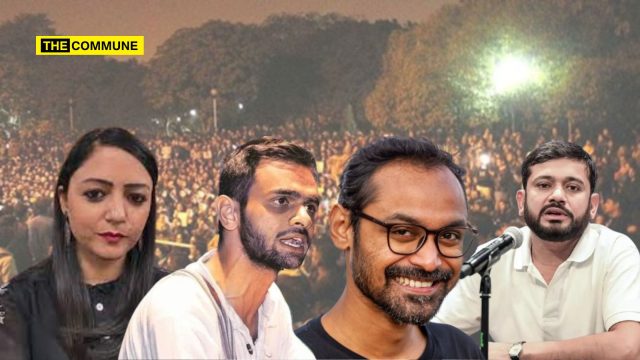
In 2016, four JNU students, Shehla Rashid, Kanhaiya Kumar, Umar Khalid and Anirban Bhattacharya, were catapulted into the national spotlight following the controversy at Jawaharlal Nehru University.
They became familiar faces on television, at protests and across social media. They were presented by supporters as the young faces of a new political resistance and were referred to as the “Tukde-Tukde gang” because of the slogans they raised.
Ten years later, however, their lives have taken very different directions.
That history provides an interesting comparison with the new generation of CJP protest leaders. Like their predecessors, they have acquired national visibility through protests, speeches, social media and confrontation with the Narendra Modi government.
But political fame during a protest is one thing. What happens after the crowds go home is another.
Shehla Rashid: From Aspiring Politician To Government Professor
Shehla Rashid was among the most prominent faces of the 2016 JNU movement.
At the time, she was politically ambitious and reportedly wanted to enter Parliament. She became associated with the Left student movement and emerged as one of the most recognisable young voices from JNU.
Her political journey, however, eventually moved in a very different direction.
After leaving active politics, Rashid focused on her academic career. She completed her PhD and eventually cleared the examination to become a sociology professor in a government college in Jammu and Kashmir.
Her political views also underwent a significant change.
After the abrogation of Article 370, Rashid reassessed her earlier political positions and later publicly praised the Narendra Modi government’s handling of Kashmir.
The woman who once stood on protest stages as a prominent critic of the government ultimately moved away from frontline politics altogether.
That is the first lesson for today’s protest leaders: political positions can change; careers can change and the person standing on the protest stage today may be doing something entirely different ten years later.
Kanhaiya Kumar: From JNU Radical To Congress Politician
Kanhaiya Kumar became perhaps the most recognisable political face to emerge from the 2016 JNU controversy.
His speeches made him a national celebrity. His arrest and subsequent release turned him into a major opposition figure, and he soon became a regular presence at political rallies and television debates.
Kanhaiya attempted to convert that popularity into electoral politics.
He contested the 2019 Lok Sabha election from Begusarai as a CPI candidate but lost.
Two years later, he left the CPI and joined the Congress.
Today, he remains active within the Congress and works as a mainstream opposition politician.
His transformation is particularly relevant to the CJP comparison.
A student leader can begin by challenging the political establishment from outside the system and eventually become part of an established political party.
The protest stage can become an entry point into mainstream politics.
Umar Khalid: From Protest Leader To Prisoner
Umar Khalid’s journey has been the most dramatic.
He became one of the most controversial figures associated with the 2016 JNU controversy and subsequently remained active in protests against the Citizenship Amendment Act and other government policies.
His political activities later became part of the investigation into the alleged larger conspiracy behind the February 2020 Delhi riots.
Khalid has been in custody since September 2020 under the UAPA.
In January 2026, the Supreme Court declined to grant him bail in the Delhi riots larger conspiracy case. The Court held that the material placed before it disclosed a prima facie case against Khalid and Sharjeel Imam and said that the two were on a different footing from five other accused who were granted bail.
The Court also said Khalid and Imam could renew their bail applications after the examination of protected witnesses or after one year from the date of the order.
His case remains pending before the courts.
Khalid’s trajectory shows perhaps most clearly how far a protest leader’s life can move away from the original stage on which he became famous.
Anirban Bhattacharya: The One Who Simply Moved On
Anirban Bhattacharya was perhaps the least visible of the four JNU figures.
Unlike Kanhaiya, he did not enter electoral politics. Unlike Umar, he did not remain at the centre of a major political and legal controversy. And unlike Shehla, he did not publicly reinvent himself as a supporter of the government.
He largely stepped away from the political spotlight.
Bhattacharya completed his PhD and worked in the research and human-rights sector. He later became involved in research work for media projects.
His story is perhaps the most ordinary of the four.
He became famous because of a political moment but eventually returned to professional life.
And that may be the fate of many protest leaders once the cameras disappear.
Today’s so called students leader: Abhijit Dipke, Saurav Das, Ashutosh & Neha
Many think they will bring Modi Ji to his knees.
But history has a short memory. Exactly 4 tried the same in 10 yrs ago.
Where are allegedly “Tukde-Tukde” gang now?
Shehla Rashid:
– Wanted to… pic.twitter.com/xwf0eklIIP— Jassi (@ra48995) August 6, 2026
Abhijit Dipke: The New Generation Takes The Stage
Abhijit Dipke is among the prominent young faces associated with the current CJP protests.
Like the JNU activists before him, his visibility has been built around student politics, protest mobilisation and opposition to the Modi government.
The major difference is the speed at which today’s political personalities can acquire recognition.
A decade ago, a student leader needed television coverage and newspaper reports to become a national figure.
Today, one viral video can do the job.
The question is whether Dipke’s current visibility will translate into a sustained political career once the present protest cycle ends.
Saurav Das: From Protest Spokesperson To Social-Media Celebrity?
Saurav Das has emerged as another prominent CJP spokesperson.
His public profile illustrates how dramatically political communication has changed since 2016.
A protest leader today does not merely appear at a rally. He becomes a face on Instagram, YouTube and X. Speeches are clipped into short videos. Personalities can become as important as political messages.
That creates visibility, but visibility is not the same as political influence.
The JNU experience demonstrates that a person can become nationally famous at a young age without necessarily remaining politically dominant.
Whether Das eventually enters electoral politics, joins an established political organisation or moves into another profession remains to be seen.
Ashutosh Ranka: The Protest Platform Is Only The Beginning
Ashutosh is another of the young figures who has gained visibility through the CJP protest movement.
Like the other current leaders, his political relevance is closely connected to the present protest environment.
That makes the next few years crucial.
Will the movement develop into an enduring political organisation? Will its young leaders contest elections? Will they join other political formations? Or will the protest eventually fade and take its most visible faces with it?
The JNU generation shows that all four possibilities are realistic.
Neha Bora: From Protest Mobilisation To What Next?
Neha Bora has also emerged as a prominent face of the current protests.
Her visibility as a co-hunger striker as a part of AISA reflects another major change in student politics.
Young activists today can build a large audience without depending entirely on traditional media. A speech delivered at a protest can reach millions through social-media platforms within hours.
But that attention can also disappear just as quickly.
The JNU activists were once unavoidable figures in India’s political conversation. A decade later, their individual careers have taken dramatically different paths.
The same could happen to today’s CJP leaders.
The Biggest Difference: 2016 Had Television. 2026 Has The Algorithm.
The JNU movement and the CJP protests belong to two different media eras.
In 2016, television debates, newspaper front pages and prime-time coverage played a major role in creating political celebrities.
In 2026, social media performs much of that function.
A 30-second clip can turn an unknown activist into a national personality.
A meme can reach more people than a political speech.
A protest spokesperson can acquire followers who know the person’s face long before they know the organisation’s political programme.
This makes today’s political fame much faster — and potentially much more disposable.
Ten Years Later, Where Were The JNU ‘Leaders’?
The four JNU activists began from broadly the same political moment but ended up in completely different places.
Shehla Rashid moved away from active politics and became a government professor.
Kanhaiya Kumar moved from the CPI to the Congress and remains active in mainstream politics.
Umar Khalid remains in prison while fighting the case against him.
Anirban Bhattacharya moved into research and largely left frontline politics.
There was no single destination.
That is important when looking at the four CJP leaders today.
It is easy to assume that the people who dominate a protest today will dominate politics tomorrow.
History suggests otherwise.
The Protest Is Not The Political Career
The current CJP leaders may become important political figures. They may build an organisation, contest elections and remain in public life for decades.
Or they may not.
The JNU experience shows that a protest can create enormous visibility without guaranteeing a permanent political career.
Student politics can provide a platform. A protest can provide an audience. Social media can provide reach.
But sustaining political relevance requires something much harder: organisation, public credibility, electoral support and the ability to remain relevant after the original controversy has disappeared.
The four JNU activists were once presented as symbols of a political generation.
Ten years later, they have four very different stories.
The same question now hangs over Abhijit Dipke, Saurav Das, Ashutosh and Neha Bora:
Will they become the next generation of lasting political leaders — or will the next decade turn them into another set of names remembered mainly for the protest that made them famous?
Subscribe to our channels on WhatsApp, Telegram, Instagram and YouTube to get the best stories of the day delivered to you personally.