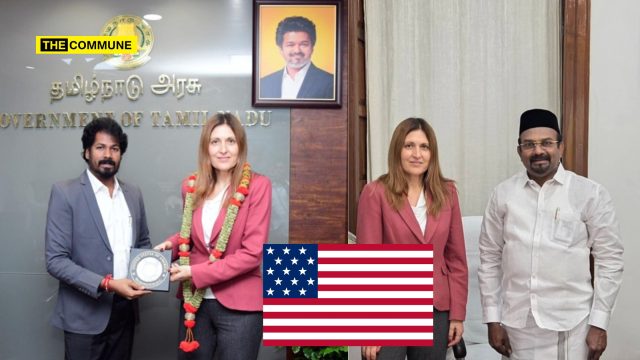
U.S. Consul General in Chennai Mariana L. Neisuler recently held separate meetings with TVK government ministers, discussing agricultural trade and possible areas of cooperation with the United States.
Neisuler met TVK Minister for Agriculture and Farmers’ Welfare R. Vinoth and discussed ‘U.S. government priorities relating to bilateral trade in the agricultural sector’.
View this post on Instagram
She also paid a courtesy call on newly appointed Tamil Nadu Minister for Minorities Welfare A. M. Shahjahan and discussed ‘potential areas of collaboration’ between Tamil Nadu and the United States.
View this post on Instagram
The meetings come at a time when India-U.S. relations are dealing with sensitive issues on two fronts – NGO foreign funding regulations and agricultural market access.
FCRA Bill Becomes A Point Of Friction
The Foreign Contribution (Regulation) Amendment Bill, 2026, has triggered meltdown from sections in the United States, particularly over provisions dealing with foreign-funded NGOs and their assets.
The Bill, introduced in the Lok Sabha in March 2026, proposes a framework under which a designated authority can take custody, manage and dispose of foreign contributions and assets of organisations whose FCRA registration ceases because it is cancelled, surrendered or otherwise comes to an end. The proposed framework also covers assets created using foreign contributions.
The proposed changes have drawn objections from Christian organisations and other groups, who have argued that the provisions could ‘affect’ religious and charitable institutions receiving foreign funding.
U.S. lawmakers have also criticised the proposed legislation. Republican Congressman Riley Moore has described the Bill as a ‘threat to Christians in India’, raising eyebrows.
The Indian government, however, has defended the proposed changes as part of efforts to strengthen oversight of foreign contributions and prevent misuse of foreign funds. The government has also pointed out that several other countries have laws regulating foreign funding, foreign influence and lobbying.
The Centre has separately sought to address concerns surrounding the legislation, with Union Home Minister Amit Shah assuring stakeholders that the proposed law would not be applied retrospectively.
Against this backdrop, the U.S. Consul General’s meeting with Tamil Nadu’s Minorities Welfare Minister assumes significance, particularly as foreign-funded organisations and minority institutions have been among those raising concerns about the proposed FCRA changes.
Agriculture At The Centre Of India-US Trade Talks
Agriculture remains another sensitive area in India-U.S. trade negotiations.
The United States has been seeking greater access to the Indian market for American agricultural products as part of broader efforts to expand bilateral trade.
The negotiations have generated concerns among Indian farmers and agricultural groups over the possibility of increased imports of American farm products and their impact on domestic producers.
At the same time, the Indian government has maintained that the interests of Indian farmers will not be compromised.
The Centre has previously stated that sensitive agricultural and dairy products, including wheat, rice, maize, soybean, poultry, milk and cheese, would remain protected.
India has nevertheless agreed to provide greater market access for certain U.S. agricultural products under the broader trade arrangement. These include products such as soybean oil, tree nuts, fresh and processed fruits and animal-feed products, according to reporting on the agreement.
The issue is particularly important for India because millions of farmers depend on agriculture for their livelihoods, while American agricultural production operates on a substantially different scale.
Indian farmer organisations have therefore raised concerns that cheaper imported commodities could put pressure on domestic prices and make it harder for small and marginal farmers to compete.
Why The Chennai Meetings Raise Eyebrows
Neisuler’s meetings with the two Tamil Nadu ministers bring these larger India-U.S. issues into the state-level political and administrative sphere.
Her discussion with Agriculture Minister R. Vinoth reportedly focused on U.S. priorities in agricultural trade, an area where Washington has been pushing for greater market access and New Delhi has been trying to balance trade objectives with the interests of Indian farmers.
Her meeting with Minorities Welfare Minister A. M. Shahjahan comes amid continuing international attention over India’s proposed changes to the FCRA framework and concerns raised by organisations dependent on foreign contributions.
The two meetings, while described as diplomatic and courtesy engagements, therefore come against the backdrop of two contentious areas in India-U.S. relations: how India regulates foreign money entering the country and how far it should open its agricultural market to American products.
For Tamil Nadu, both issues have a direct domestic dimension – agriculture remains a major livelihood sector, while the state has a large network of religious, charitable and civil society organisations that operate within the country’s foreign-contribution regulatory framework.
Subscribe to our channels on WhatsApp, Telegram, Instagram and YouTube to get the best stories of the day delivered to you personally.