Home Blog Page 615

‘Is This Your Bilingual Policy?’: Annamalai Slams PTR Over Language Education Double Standards
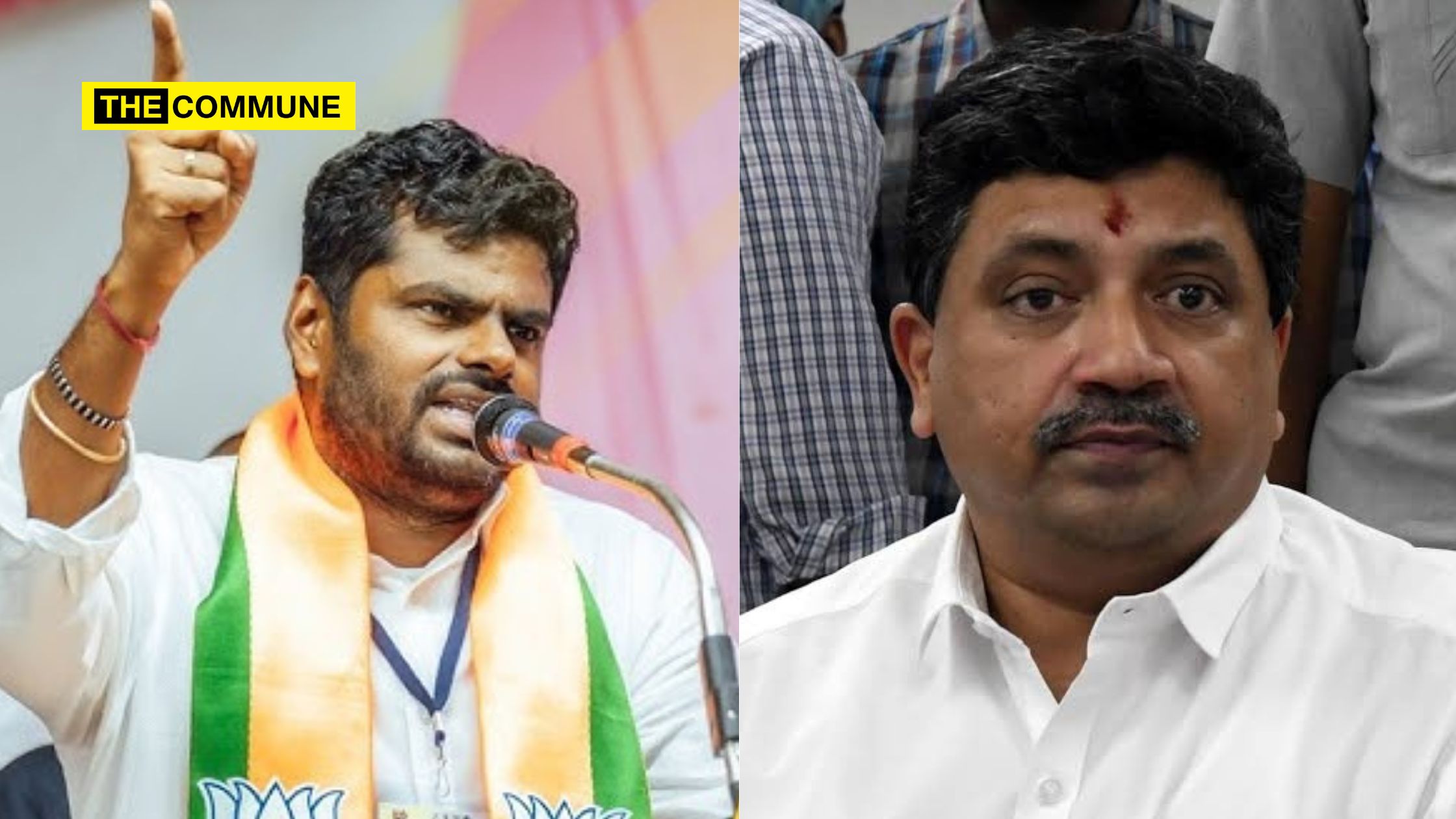
Annamalai Takes A Jibe At DMK Min PTR Sycophantic Praise Of Udhayanidhi Stalin

Tamil Nadu BJP president K Annamalai on Thursday, 13 March 2025, took aim at state minister Dr. P Thiaga Rajan (PTR) over the ongoing debate on the three-language formula under the National Education Policy (NEP) 2020. In a lengthy social media post, Annamalai accused PTR of hypocrisy, highlighting that his children were educated under a bilingual system that did not include any Indian languages.

PTR had previously stated that his sons studied under the two-language policy, but Annamalai pointed out that the languages in question were English and French/Spanish, rather than Tamil or any other Indian language. “Is this your bilingual policy?” Annamalai questioned, flagging what he called the DMK’s double standards on language education. On his X handle, Annamalai wrote, “I asked Minister @ptrmadurai for his response to a question I asked at a press conference yesterday. He has said that his two sons were educated under the dual language policy. However, his brother Mr. PTR Palanivel Thiagarajan forgot to tell him which two languages ​​they were. The two languages ​​his sons learned, First language: English Second language: French/Spanish. Is this your bilingual policy? We are asking for a national education policy that will provide our government school students with the opportunity to learn a third Indian language, along with Tamil and English, or a foreign language at the higher levels. Why all this drama to stop that? I sincerely wish my brother PTR and his two sons the best in life. We ask that the opportunity to learn many languages ​​that they have had should also be extended to the children of the poor and needy studying in our government schools.”

Tamil Nadu vs Centre: The Language Policy Clash

The Tamil Nadu government has consistently opposed the three-language formula, arguing that the state’s existing two-language system (Tamil and English) has been successful. Criticizing the Centre’s approach, PTR called the three-language policy a “failed model”, questioning why Tamil Nadu should replace a working system with one that has not succeeded elsewhere. He said, “Two language policy has been implemented successfully here and if you ask us to change it, will someone with wisdom follow it?”

PTR argued that the problem would not exist if English education were strengthened in northern states like Uttar Pradesh and Bihar. He also insisted that the Centre has “no authority or right to impose any language,” echoing Chief Minister MK Stalin’s stance, who had earlier called the NEP a “destructive Nagpur plan.”

In response, Annamalai said, “Where is PTR’s son studying? He has to say that, he keeps talking everywhere and met with press at Madurai. He used the word “people with wisdom”. When a minister says that people with wisdom will not accept it, I have a question for the minister. Is your son an Indian citizen or an American citizen? Which school is your son studying in? If he is studying in a school that follows a 3-language policy, doesn’t it mean that you have no wisdom? Is PTR looking in the mirror and talking? As far as TN is concerned, all the ministers’ children and grandchildren are all studying in schools offering 3 languages.”

Annamalai countered that the three-language policy would benefit government school students, allowing them to learn a third Indian language alongside Tamil and English. He accused the DMK of creating unnecessary controversy over the issue, saying, “Why all this drama to stop that?”

Under NEP 2020, students at the secondary level can also opt for foreign languages such as Korean, Japanese, French, German, and Spanish in addition to Indian languages and English. However, Tamil Nadu has refused to implement the policy, arguing that it is a step toward Hindi imposition.

The standoff between the state and Centre has had financial repercussions, with the DMK government alleging that the Union government is withholding ₹573 crore in education assistance under the Samagra Shiksha Abhiyan (SSA). However, it is essential to note that as per SSA regulations, states must comply with NEP guidelines to receive the funding, of which 60% is provided by the Centre.

(With inputs from Business Today)

Subscribe to our channels on Telegram, WhatsApp, and Instagram and get the best stories of the day delivered to you personally.
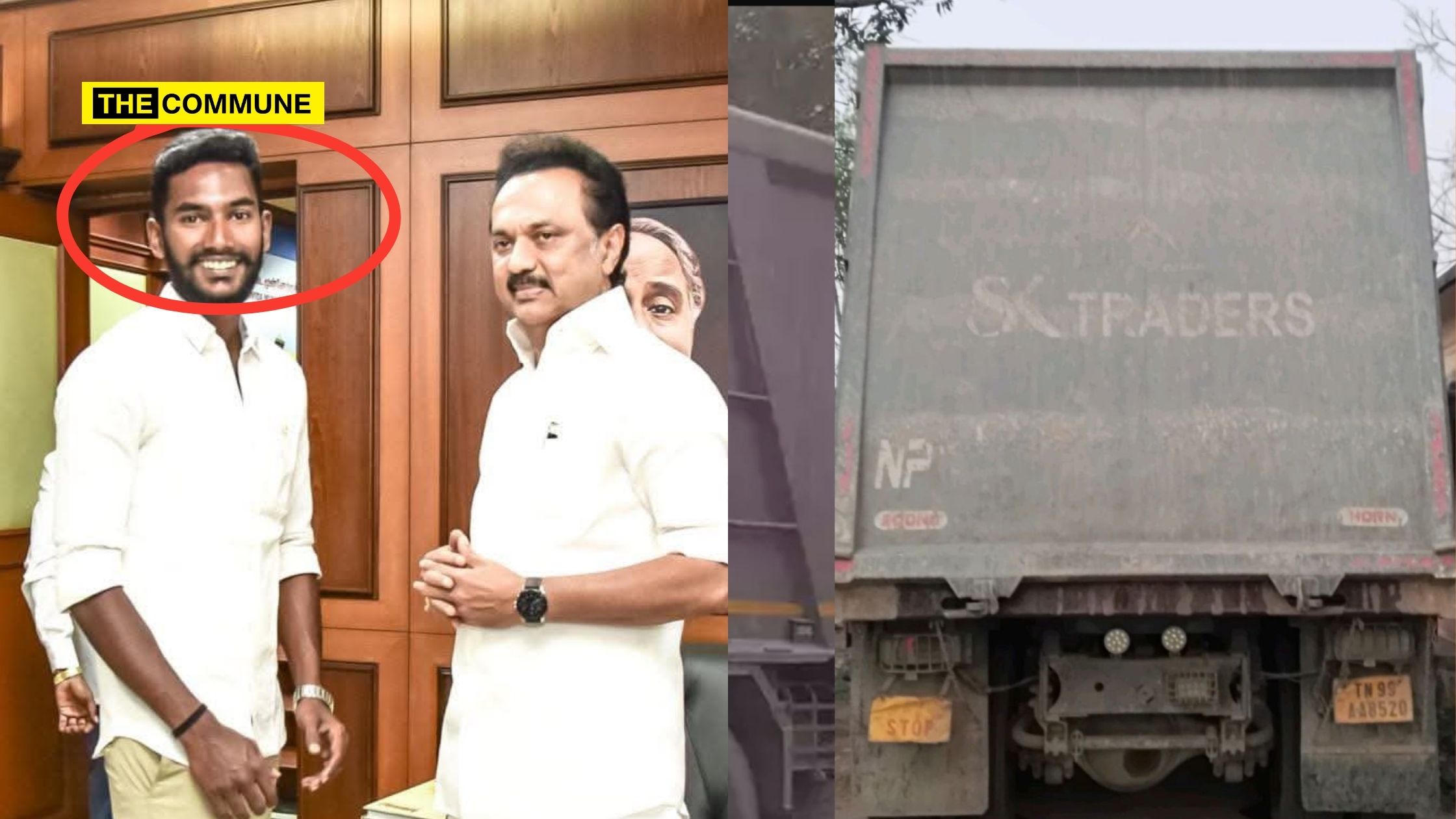
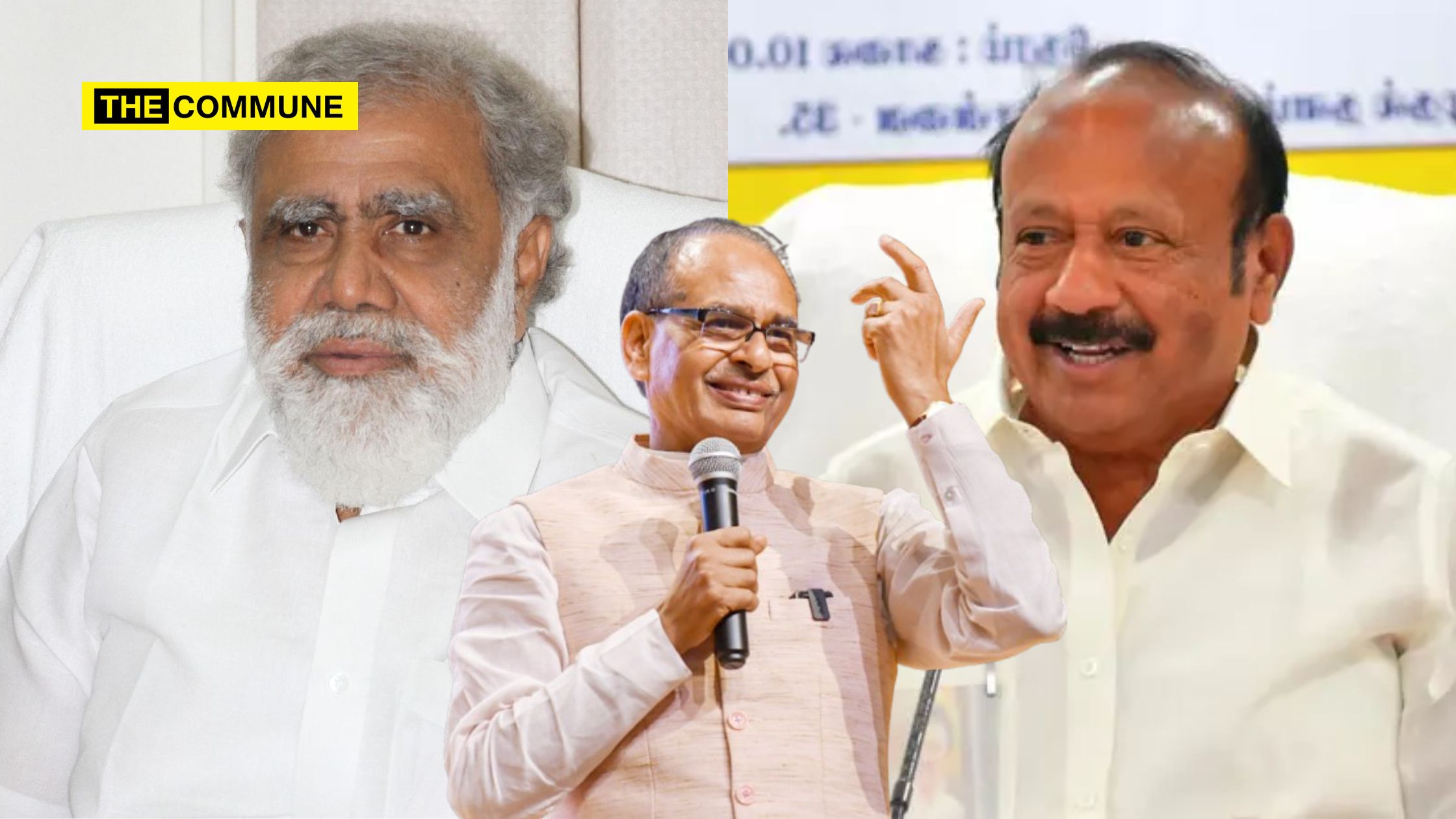
Meet Dravidian Stock Sharook Khan, Caught Red-Handed in Illegal Mining Racket

A few days ago, in a major crackdown on illegal mineral smuggling, authorities seized three heavy vehicles involved in unauthorized mining operations—two of which belong to Sharook Khan, the son of Coimbatore Madukkarai DMK Municipality Chairwoman Noorjahan Naser. The case exposes yet another instance of large-scale looting of Tamil Nadu’s natural resources under the DMK regime.

Illegal Mining Operation Uncovered

Acting on multiple complaints of illegal mineral smuggling from Coimbatore to Kerala, officials from the Geology and Mining Department, along with local authorities, launched inspections in the Madukkarai and Kinathukadavu areas. Following direct orders from the Additional Chief Secretary of the Natural Resources Department, Phanindra Reddy, and the Commissioner of the Geology and Mining Department, Saravana Velraj, a raid was carried out on 14 March 2025.

During vehicle checks on the Palathurai – Thirumalaiyampalayam road near Madukkarai, officers stopped two tipper trucks. Upon inspection, it was revealed that both were illegally transporting six units of minerals without permits. The truck drivers, realizing they had been caught, fled the scene, abandoning the vehicles. Further investigation revealed that the trucks were owned by Sharook Khan. Officials immediately seized the vehicles and registered a case against those involved.

Meanwhile, in Kinathukadavu, another truck carrying illegal minerals without documentation was also confiscated.

The DMK’s Mining Mafia

The exposure of Sharook Khan’s illegal mining operation has once again highlighted the rampant looting of Tamil Nadu’s mineral resources under the DMK rule. Ever since the party came to power, large-scale smuggling has continued unabated, causing a severe shortage of essential building materials and driving up construction costs for ordinary citizens.

Despite these illegal activities being widespread, only a handful of trucks have been seized, while thousands more continue to cross into Kerala unchecked. The question remains—when will the DMK government take real action against the politically connected mining mafia operating along the Tamil Nadu-Kerala border?

While Tamil Nadu’s natural wealth is plundered, the DMK government remains a mute spectator. With officials now cracking down on select cases, will this be the beginning of genuine accountability, or just another cover-up to protect those in power?

Subscribe to our channels on Telegram, WhatsApp, and Instagram and get the best stories of the day delivered to you personally.
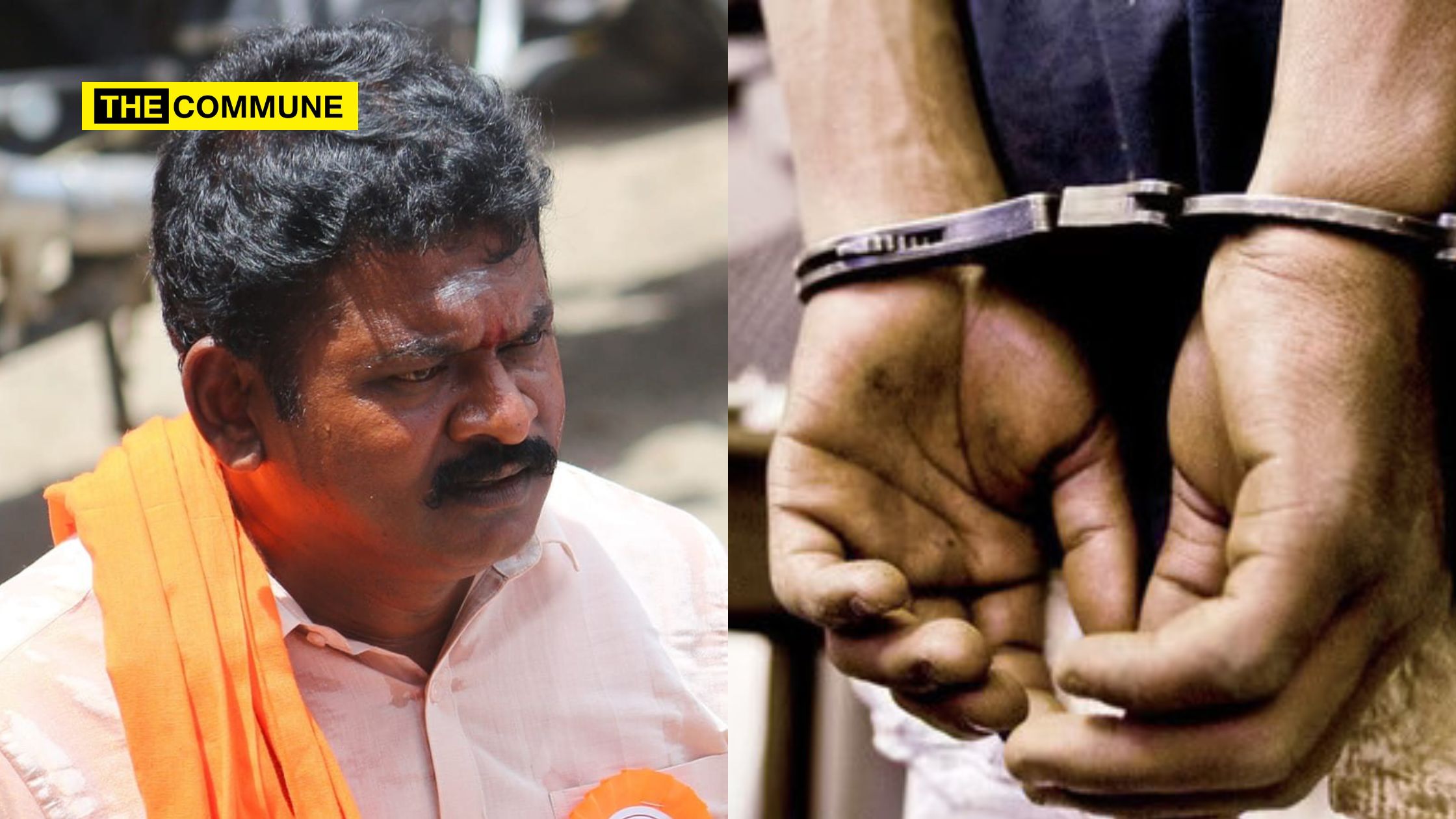
“Visited TN Twice, Neither Agriculture Nor Rural Ministers Attended The Meeting”, Union Agri Minister Shivraj Singh Chouhan Slams DMK Ministers For Lack Of Cooperation On Rural Development Initiatives

Union Agriculture Minister Shivraj Singh Chouhan responded to concerns raised by DMK Arani MP  M.S. Tharanivendhan regarding difficulties in applying for the PM Kisan Samman Nidhi scheme. He emphasized that the central government is fully prepared to support all states without discrimination. However, he pointed out that during both of his recent visits to Tamil Nadu, neither the state’s Agriculture Minister nor the Rural Development Minister attended the scheduled meetings.

The second phase of the Parliament Budget Session, which commenced on 10 March 2025, witnessed disruptions due to protests against the alleged imposition of Hindi. Tensions escalated in the Lok Sabha when DMK members objected to Union Education Minister Dharmendra Pradhan’s statement, accusing the Tamil Nadu government of dishonesty in implementing the PM Schools for Rising India (PM SHRI) scheme. Against this backdrop, Chouhan blamed Tamil Nadu ministers for not cooperating with the Centre on farmer-related initiatives.

Speaking in the Lok Sabha during Question Hour, Chouhan reiterated the Centre’s commitment to providing an annual financial benefit of ₹6,000 to all eligible farmers under the PM Kisan Samman Nidhi scheme. He urged state governments to cooperate in identifying farmers who had not yet been enrolled and ensure their inclusion. “If any eligible farmer is left out, we request states to help us include them. The government will also ensure that past instalments are provided to those who were previously excluded,” Chouhan stated.

He reassured that funds under the scheme would be directly transferred to farmers’ bank accounts in three equal instalments of ₹2,000, with no delays.

Chouhan Asserts Centre’s Neutral Stance On Tamil Nadu 

Addressing concerns about Tamil Nadu, Chouhan stressed that the central government does not discriminate against any state. However, he expressed disappointment that, during his two visits to Tamil Nadu for agriculture and rural development discussions, state ministers failed to attend the meetings. “As a union minister, I have so far visited Tamil Nadu twice. Once for the work related to the agriculture ministry and the other for the works of the rural development ministry. In both occasions, neither the state agriculture minister nor the rural development minister came for the meeting,” he said.

“I am willing to visit Tamil Nadu again to discuss farmers’ issues. The central government remains committed to serving the people of Tamil Nadu and holds deep respect for them,” he asserted.

Overview of PM Kisan Scheme

The PM Kisan Samman Nidhi is a fully centrally funded scheme that has been in operation since 1 December 2018. Under this initiative, all land-owning farmer families receive annual financial assistance of ₹6,000 in three equal instalments.

State governments and Union Territories are responsible for identifying eligible farmer families as per the scheme’s guidelines.

On 24 February 2025, the latest instalment was disbursed through Direct Benefit Transfer (DBT), amounting to ₹22,000 crore. This payment benefitted 9.8 crore farmers nationwide, including 2.41 crore women farmers.

(With inputs from Business Standard)

Subscribe to our channels on TelegramWhatsApp, and Instagram and get the best stories of the day delivered to you personally.

Hindu Munnani Leader Arrested For Social Media Post Alleging Temple Demolition

The Krishnagiri police have arrested Kalai Gopi, the district leader of Hindu Munnani, following a complaint that he allegedly spread false information on social media regarding the demolition of the Navaneetha Venugopal Swamy Temple.

It is alleged that, Kalai Gopi, 47, had posted on social media on 1 March 2025, claiming that the Hindu Religious and Charitable Endowments (HR&CE) Department planned to demolish the 800-year-old Sri Navaneetha Venugopal Swamy Temple, located on Krishna Sami Street, Salem Road, Krishnagiri. His post urged people to take action, stating, “If we don’t stop this, they will take away our deity. Join, let us protect the temple built by our ancestors.”

Following the complaint, the Krishnagiri Town police launched an investigation and increased security around the temple. Their inquiry revealed that Kalai Gopi had used an image of a different temple to spread misleading information. As a result, he was arrested and later remanded in custody. Officials from the HR&CE Department have urged the public not to believe or spread false information circulating on social media regarding the temple.

(With inputs from Dinamalar)

Subscribe to our channels on TelegramWhatsApp, and Instagram and get the best stories of the day delivered to you personally.


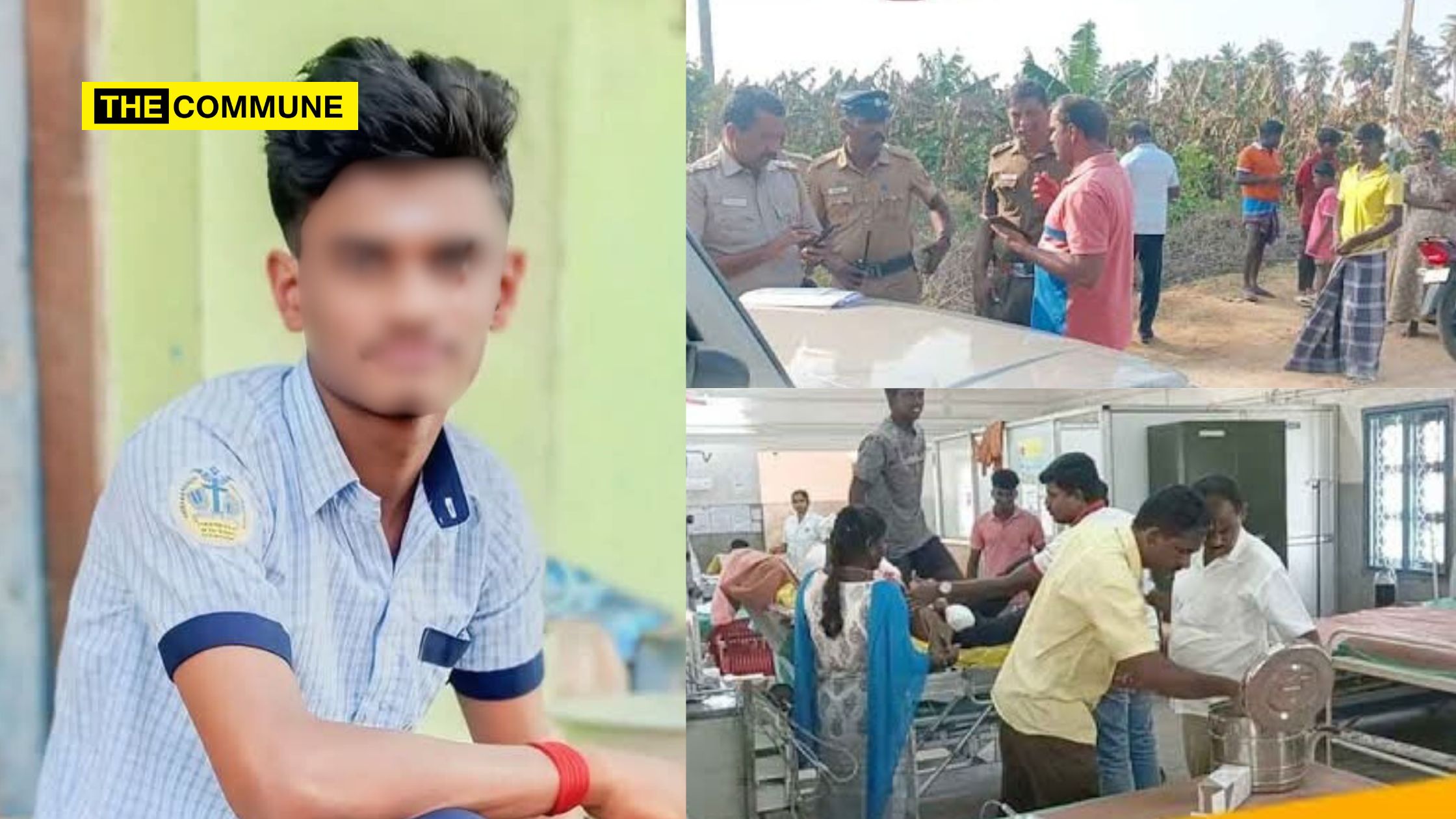
SC Student In Thoothukudi Brutally Attacked By Dominant Caste Peers Over Alleged Kabaddi Rivalry And Eve-Teasing

In a shocking caste-related incident in Thoothukudi, a 17-year-old Scheduled Caste (Devendra Kula Vellalar) student suffered serious injuries on 10 March 2025, after being brutally attacked with machetes by three individuals from dominant Maravar caste, including two minors, following an alleged eve-teasing incident. The assault left him with critical head wounds, a severed right thumb, and several damaged fingers, necessitating plastic surgery.

The victim, a Class XI student, was on his way to school in Palayamkottai in the morning. when the assailants stopped the bus at Kettiayammalpuram and forcibly dragged him out. They then attacked him with machetes, striking his head and back, causing him to collapse unconscious on the road.

According to reports, the victim, a resident of Ariyanayagipuram, had allegedly harassed a fellow Class XI student, the sister of one of the attackers, who belonged to a caste Hindu community. Despite previous warnings from the girl’s brother, the victim reportedly continued his behavior, leading to the violent retaliation. Police noted that tensions between the victim and the accused had escalated earlier during a kabaddi match.

Srivaikuntam Inspector of Police, Padmanabha Pillai, visited the crime scene and conducted inquiries. Following a complaint, Srivaikuntam police registered a case under Section 307 of the IPC and the SC/ST (Prevention of Atrocities) Act. All three suspects were arrested, including a 19-year-old identified as M. Lakshmanan alias Periyavan, while the other two were minors.

Dr. C. Revathy Balan, Dean of Tirunelveli Government Medical College, confirmed that the victim is in stable condition. “He suffered significant blood loss due to deep wounds on his head and back. His right thumb was severed, and multiple fingers were badly injured, requiring plastic surgery. A team of seven doctors is overseeing his treatment,” hospital sources stated to DT Next.

(With inputs from DTNext)

Subscribe to our channels on TelegramWhatsApp, and Instagram and get the best stories of the day delivered to you personally.

Dravidianist & DMK Cheerleader Suresh Sambandam Caught Lying Again – No, TN Doesn’t Spend 10x More On Education! Has He Even Seen UP & MH’s Budgets?

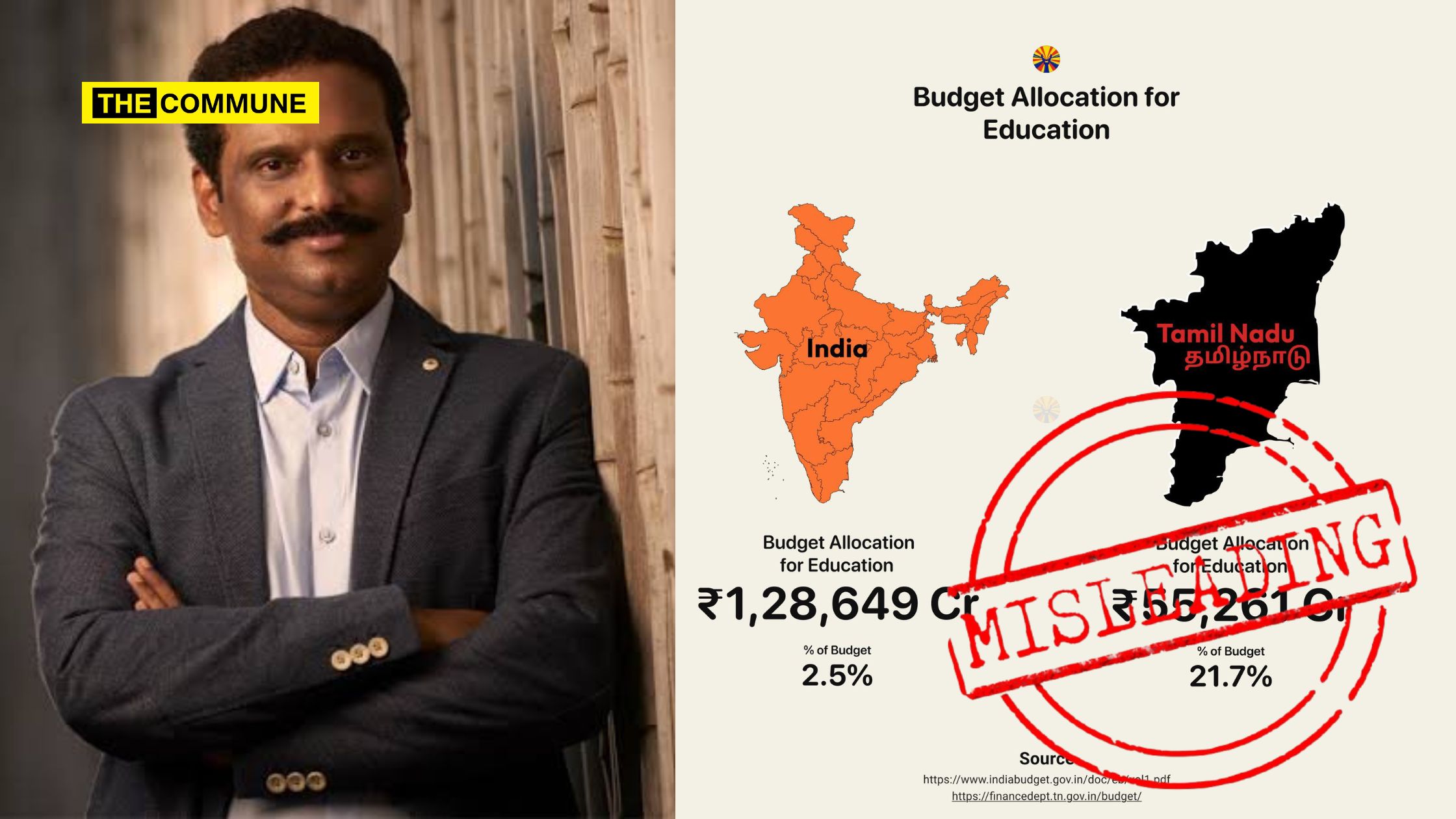
Suresh Sambandam, CEO of Chennai-based Software-as-a-Service (SaaS) firm Kissflow and a known Dravidianist sympathizer has once again sparked controversy with his claims on Tamil Nadu’s education budget. Amid ongoing debates over the three-language policy and Tamil Nadu’s spending on education, Sambandam recently made a post on his X handle asserting that the state spends ten times more on education than the national average.

Sambandam’s Claim

In his post, Sambandam wrote, “This is #TamilNaduModel #DravidianModel. TN Spends 10x more (2% vs 21%) for education compared to India. If you educate people ofcourse the educated citizen will come back after 10 years and ask the same politicans tough questions and challenge them. This is absolutely okay, without this any society cannot grow and progress. India and other states that understand this nuance will grow. If your politicians are not investing in education (budget allocated) then they are directly implying that they want to keep the people uneducated so that they don’t challenge the politicians.”

Reality Check: How Tamil Nadu’s Spending Compares to Other States

Contrary to Sambandam’s claim, official budget data indicates that several other states, including Uttar Pradesh and Maharashtra, allocate significantly higher amounts to education:

  • Uttar Pradesh has earmarked ₹1.06 lakh crore for education in its 2025-26 budget, making it one of the largest allocations in the country.
  • Maharashtra allocated ₹98,438 crore for education and allied sectors in its last budget. The state utilized ₹95,523 crore in the previous fiscal year and ₹91,647 crore in 2023-24. In 2019-20, education, sports, arts, and culture collectively accounted for 17.6% of Maharashtra’s total budget allocation.
  • Tamil Nadu, in comparison, allocated ₹43,799 crore for education in FY23, which is significantly lower than UP and Maharashtra. For the 2025-26 financial year, the Tamil Nadu government has allocated ₹55,261 crore to the School and Higher Education Department, with ₹46,767 crore designated for School Education and ₹8,494 crore for Higher Education. In percentage terms, Tamil Nadu allocated 14.1% of its budget to education, close to the national average of 14.7%. Only this year
  • States that allocated a higher percentage of their budget to education include Rajasthan (19.5%), Chhattisgarh (19.4%), Delhi (22%), Assam (20%), and Himachal Pradesh (19%).

Misleading Comparisons

Sambandam’s assertion that Tamil Nadu spends 10 times more on education appears to rely on percentage comparisons rather than absolute figures. While Tamil Nadu’s budget allocation for education is comparable to other states in percentage terms, larger states like Uttar Pradesh and Maharashtra have significantly higher overall expenditures on education due to their larger economies and populations. Moreover, states like Rajasthan and Chhattisgarh allocate a much higher percentage of their total budget to education than Tamil Nadu.

Data from PRS Legislative Research’s State of State Finances 2023-24 indicated that all five South Indian states allocated a lower percentage of their budget to education than the national average.

Critics argue that Sambandam’s claims are part of a broader narrative attempting to present the Dravidian model as superior without a nuanced understanding of state budgets.

Subscribe to our channels on Telegram, WhatsApp, and Instagram and get the best stories of the day delivered to you personally.
Did You Know Tamil Nadu Has One Of The Highest Juvenile Crime Rates In India?

Dr. Panneerselvam, former state president of the Tamil Nadu Psychiatric Association, has expressed concern over the increasing rate of juvenile crime in the state, highlighting that Tamil Nadu ranks fourth in the country in this category.

According to him, juveniles (those under the age of 18) make up 33% of India’s population, with 6-7% involved in criminal activities. Among them, 80% are male and 20% are female. Tamil Nadu follows West Bengal, Uttar Pradesh, and Bihar in juvenile crime rates and leads among southern states, with 16.4% of its youth engaged in criminal activities. A study conducted last year revealed that violence and drug abuse are growing concerns among juveniles.

The study found that out of every one lakh juveniles, 17% exhibit aggressive tendencies, leading them to engage in physical attacks. Additionally, 44% have a habit of provoking others with verbal abuse, while 15% struggle with misconceptions about sexuality. Alarmingly, 50% of children aged 14 to 18 have used drugs at least once, and observations from mental health centers suggest that substance abuse is becoming a serious issue among youth.

Dr. Panneerselvam pointed out that factors such as parental conflicts, exposure to alcohol and smoking, bad company, and living conditions contribute to juvenile delinquency. He stressed the need for parents and teachers to closely monitor children’s behavior and emphasized that training programs are being conducted to address these concerns.

Juvenile Crime On The Rise In Tamil Nadu

Juvenile crime cases in Tamil Nadu have increased, with 2,607 cases reported in 2022, compared to 2,212 cases in 2021. Nationally, Tamil Nadu ranks fourth, while Maharashtra tops the list with 4,406 cases, followed by Madhya Pradesh (3,795 cases) and Rajasthan (3,063 cases).

According to NCRB data, the most common juvenile offenses in Tamil Nadu include:

  • Theft – 548 cases
  • Assault – 425 cases
  • Rash driving – 208 cases
  • Murder – 102 cases
  • Attempt to murder – 101 cases

Additionally, under Special and Local Laws (SLL), Tamil Nadu recorded 238 cases under the POCSO Act and 33 cases under the Prohibition Act.

Legal Outcomes and Background of Juvenile Offenders

Among 3,287 juveniles arrested in 2022:

  • 170 were released during investigation
  • 35 were sentenced to imprisonment
  • 510 were acquitted or discharged
  • 1,044 were sent home with parental supervision after counseling
  • 751 were placed in special homes
  • 189 were fined

In terms of education and family background:

  • 1,782 came from families where parents had studied up to higher secondary level
  • 769 belonged to families with education beyond higher secondary
  • 2,955 juveniles lived with their parents, while 146 were pavement dwellers

Chennai Among Top Metro Cities in Juvenile Crime

Among metropolitan cities, Chennai recorded 521 juvenile crime incidents in 2022, up from 496 in 2021, making it the second highest after Delhi, which reported 2,336 cases in 2022. The previous year, Delhi had 2,618 cases, showing a slight decline.

Experts stress the urgent need for intervention through education, counseling, and stricter monitoring to curb juvenile crime and prevent young individuals from falling into delinquency.

(With inputs from Dinamalar)

Subscribe to our channels on TelegramWhatsApp, and Instagram and get the best stories of the day delivered to you personally.


HR&CE Allocates Maasani Amman Temple Revenue For Resort Construction

A major controversy has erupted over the Tamil Nadu Hindu Religious & Charitable Endowments (HR&CE) Department’s decision to allocate funds from the Maasani Amman Temple in Aanamalai for the construction of a resort near the Arulmigu Subramania Swamy Temple in Kandal, Ooty.

According to a Dinamalar report, approximately ₹100 crore in offerings made by devotees at the Maasani Amman Temple has been deposited in a bank.

An order dated 2 January 2025 indicates that the HR&CE department has reportedly decided to withdraw ₹13.84 crore from this amount to fund the resort project in Ooty.

The move has been met with strong opposition from the temple’s trustees and devotees, who argue that temple funds should be used exclusively for the maintenance and development of the Maasani Amman Temple itself.

Project Details And Official Approval

Government documents reveal that the HR&CE department received administrative approval for the project under an ordinance issued by the Tamil Nadu government. The plan includes demolishing old residences near the Subramania Swamy Temple and constructing new accommodations along with the resort. The total estimated cost of the project is ₹15.30 crore, with ₹13.84 crore being sourced from the Maasani Amman Temple’s funds.

An official government order dated December 24, 2024, outlines the financial breakdown of the project:

  • Civil construction costs: ₹9.61 crore
  • Electrical works: ₹1.63 crore
  • GST (18%): ₹2.02 crore
  • Other charges (supervision, licensing, etc.): ₹57.68 lakh

The government justified the decision by stating that the project falls under broader efforts to improve infrastructure for devotees at major temples across Tamil Nadu.

Allegations Of Political Influence

Opponents of the move allege that the project is being pushed by a businessman with links to the ruling DMK. It is claimed that HR&CE officials are facilitating management changes at the Maasani Amman Temple to prevent resistance to the fund transfer.

Devotees have expressed their outrage, warning that diverting temple funds for external projects could damage the DMK’s reputation in the region. Several petitions have been submitted to the Tamil Nadu Governor and Chief Minister, urging them to intervene and halt the resort construction.

With the term of the current Maasani Amman Temple trustees nearing its end, concerns have been raised over the lack of transparency in the decision-making process. Temple trustees argue that if funds are to be used, they should be directed toward improving facilities at the Maasani Amman Temple itself rather than a separate project in another district.

Subscribe to our channels on Telegram, WhatsApp, and Instagram and get the best stories of the day delivered to you personally.
Famous Pechi Amman Temple Property Vandalized In Kanyakumari, Suspect ‘Bennett’ On The Run

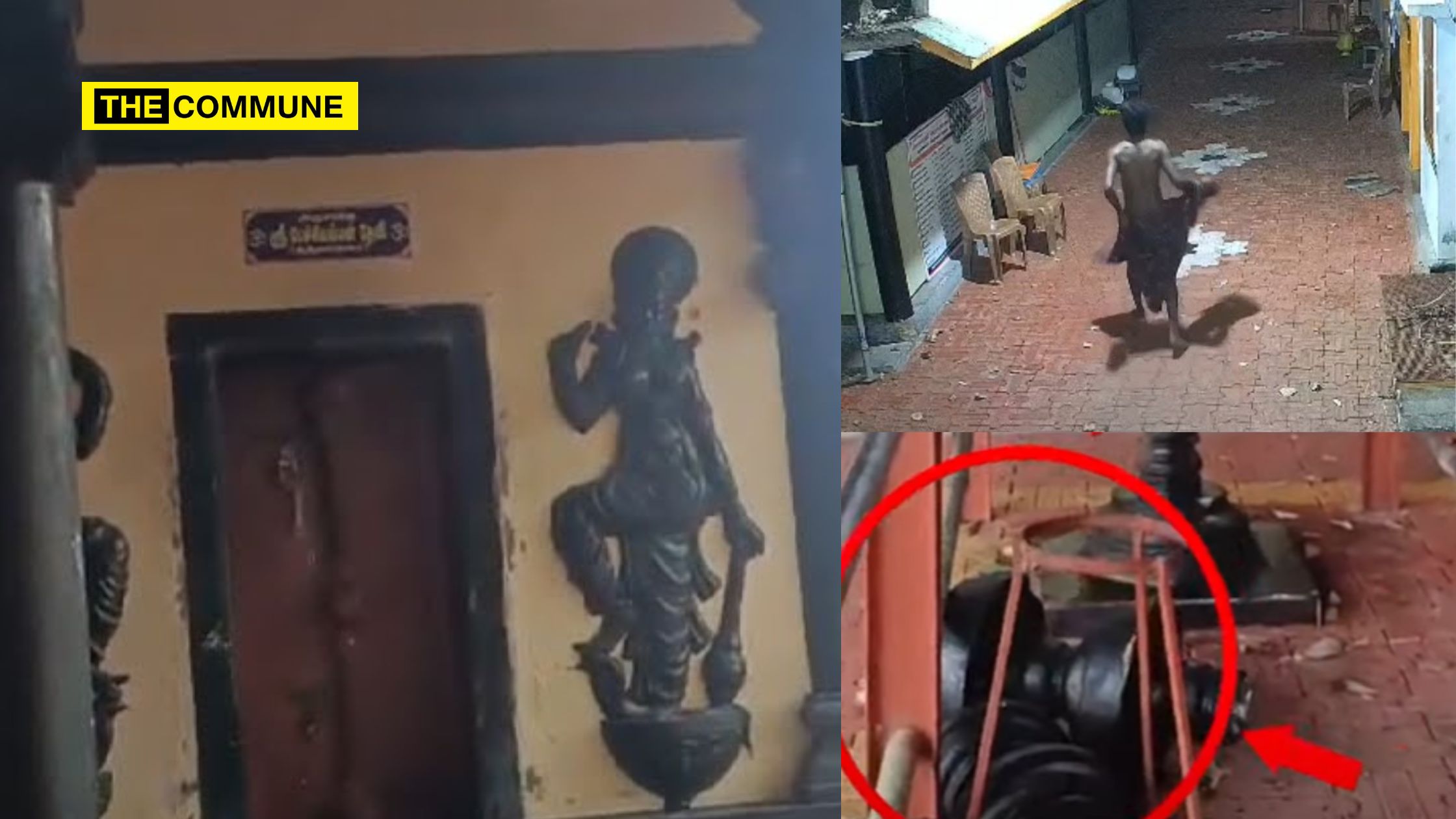
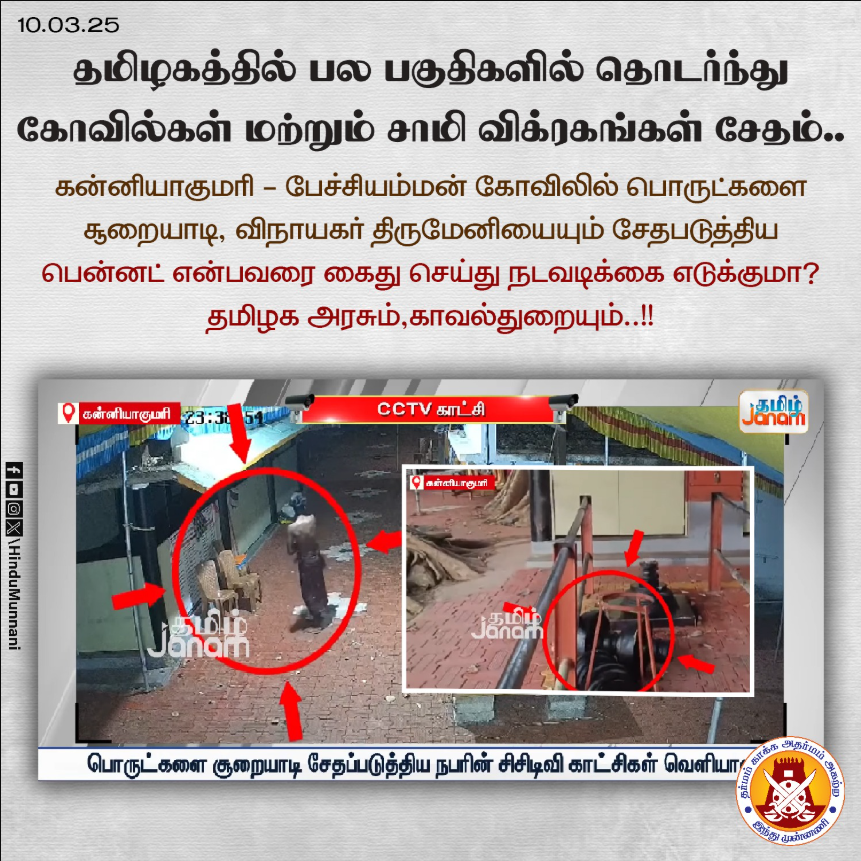
The Hindu Munnani has expressed deep concern over the rising incidents of temple properties and idols being vandalized and looted. The organization has questioned whether the Tamil Nadu government and police will take strict action and apprehend the culprit responsible for the recent act of vandalism at the Pechi Amman temple in Kanyakumari, reportedly carried out by a man named Bennett.

The Pechi Amman temple, an old and well-known shrine in Pechiparai, Kanyakumari, is managed by a trust. Recently, the temple trustees discovered that several bronze lamps had been damaged. Upon reviewing CCTV footage, they identified the suspect as Bennett, a local fisheries department worker. Following this, the trustees filed a complaint at the Pechiparai police station. However, the accused is currently in hiding, and the police are actively searching for him.

In response to this incident, the Hindu Munnani took to its official X account to voice its concerns, raising a series of pointed questions to the Tamil Nadu government. The organization highlighted that temple vandalism and idol destruction have become frequent occurrences across the state. They questioned whether the authorities would take decisive action against Bennett for looting valuables from the Pechi Amman temple and damaging the Ganesha idol.

Furthermore, the Hindu Munnani criticized the state government, the Hindu Religious and Charitable Endowments Department, and the police for their alleged inaction, pointing out that thefts and desecrations continue unchecked in various temples. They also raised concerns about culprits being released under claims of mental illness. The organization demanded that the Tamil Nadu government and police not only arrest Bennett but also implement measures to prevent such incidents in the future.

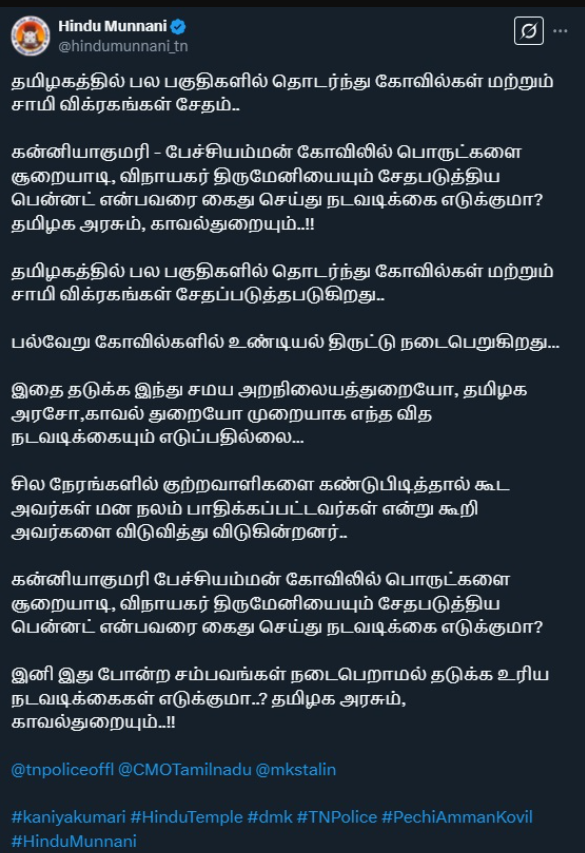
The Hindu Munnani, through its official X account, queried, “Temples and idols are being damaged continuously in many parts of Tamil Nadu.Will the Tamil Nadu government and police arrest and take action against Bennett, who looted items at the Kanyakumari Pechiyamman temple and damaged the Ganesha idol..!! Temples and idols are being damaged continuously in many parts of Tamil Nadu. Banknote theft is taking place in various temples. Neither the Hindu Religious Endowments Department, the Tamil Nadu government, nor the police department are taking any proper action to stop this…Sometimes even when the culprits are found, they are released on the grounds that they are mentally ill. Will the Tamil Nadu government and police arrest and take action against Bennett, who looted items at the Kanyakumari Pechiyamman temple and damaged the Ganesha idol? Will the Tamil Nadu government and police take appropriate action to prevent such incidents from happening again..!!”

Last month, in February 2025, a similar incident occurred in Kanyakumari, sparking widespread outrage. A video surfaced showing a mob vandalizing and destroying idols at the Isakki Amman Temple.

The incident initially began on 25 December 2024, when a local man named Sajin attacked Sundar, a temple priest performing puja, and damaged the temple’s main idol. Following a complaint filed by Sundar at the Thiruvattar police station, Sajin was arrested but later released on bail.

However, on 29 January 2025, Sajin returned to the temple with a group of over 15 people in a tempo van, armed with sticks and other weapons. The mob proceeded to ransack the temple, causing significant damage. Temple priests Sundar, Ramesh, and Chandrashekar tried to intervene but were met with verbal abuse and threats.

Local residents who witnessed the attack recorded videos and shared them on social media, drawing widespread attention to the incident. After the footage reached the district police, authorities arrested Sajin along with three other individuals involved in the attack.

During interrogation, Sajin reportedly admitted that he targeted the temple based on claims made by a pastor from a local church. The pastor allegedly told him that “Satan resides near their village” and encouraged them to “eliminate it.

Subscribe to our channels on Telegram, WhatsApp, and Instagram and get the best stories of the day delivered to you personally.
TN Govt-Aided ‘Thiru Iruthaya’ School Headmaster Caught Caning Student, Video Goes Viral

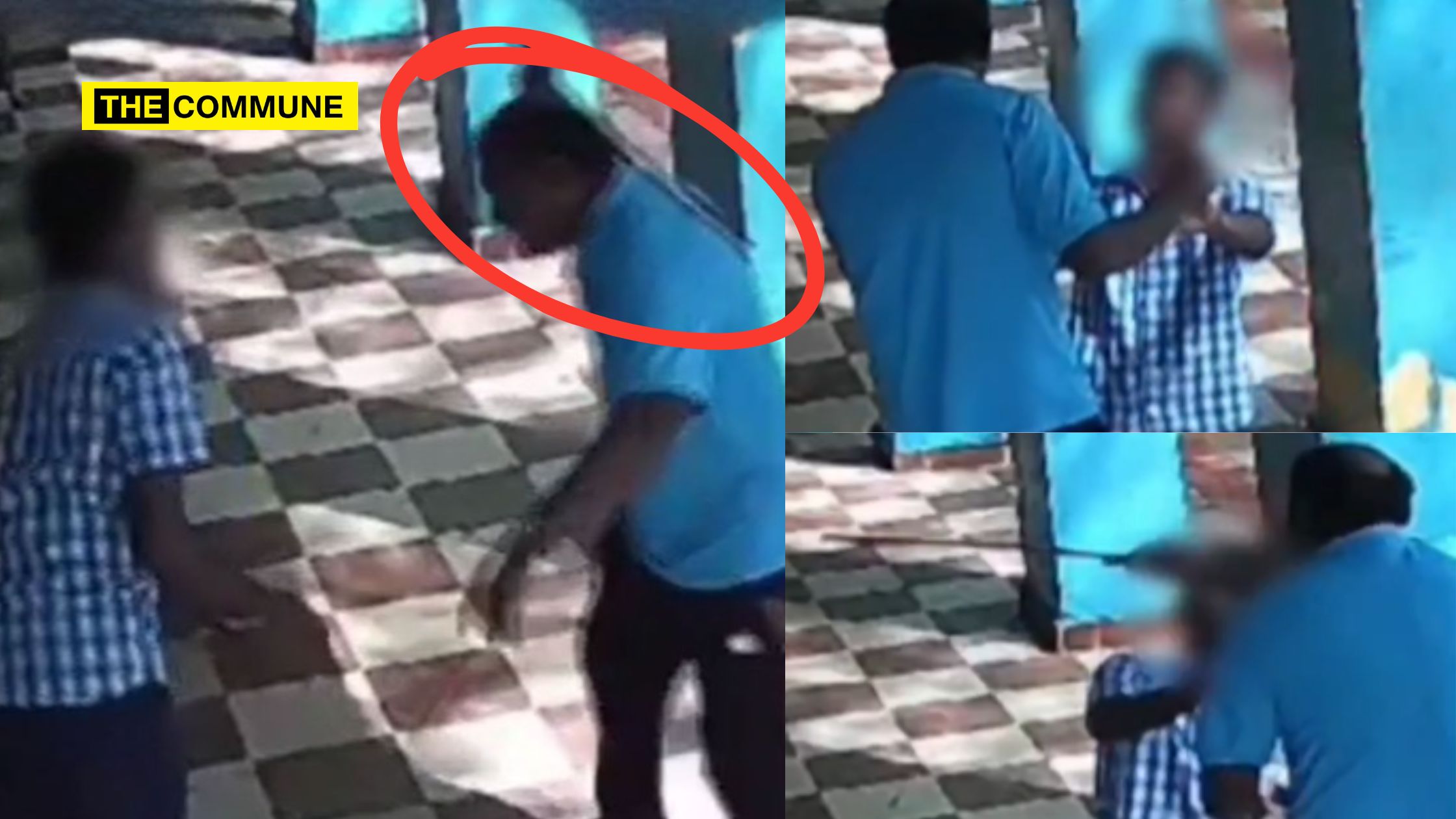
In a shocking incident, a video of a Tamil Nadu government-aided school headmaster caning a student has surfaced online and gone viral. The student was allegedly punished for failing to complete a task assigned by the headmaster.

The incident took place at Thiru Iruthaya Government Aided Higher Secondary School in Ponmalaipatti, Trichy, which has over 750 students and a hostel accommodating 85 students from outside the district. The video shows the headmaster, Gerald Francis Xavier, caning a student, sparking outrage among students and parents. Reports suggest that the student was beaten for not complying with an order given by the headmaster during class.

Further reports indicated that tensions exist between the headmaster and the principal within the school community, reportedly due to their belonging to different communities. Some sources suggest that a group of individuals intentionally recorded and leaked the video as part of an ongoing internal conflict. However, despite these disputes, it was emphasized that under no circumstances should a student be subjected to physical punishment.  They stated that even if a student misbehaves, they should be disciplined with care rather than physical force, as caning students violates educational guidelines.

Following the video’s release, education activists and parents have urged the relevant education department authorities to personally investigate the incident and take appropriate action against those responsible.

(With inputs from Rockfort Times)

Subscribe to our channels on TelegramWhatsApp, and Instagram and get the best stories of the day delivered to you personally.