Home Blog Page 598

Lottery Martin’s Son Jose Charles Martin Criticizes His Brother-In-Law & TVK Elections General Secretary Aadhav Arjuna For Remarks On TN BJP Chief Annamalai
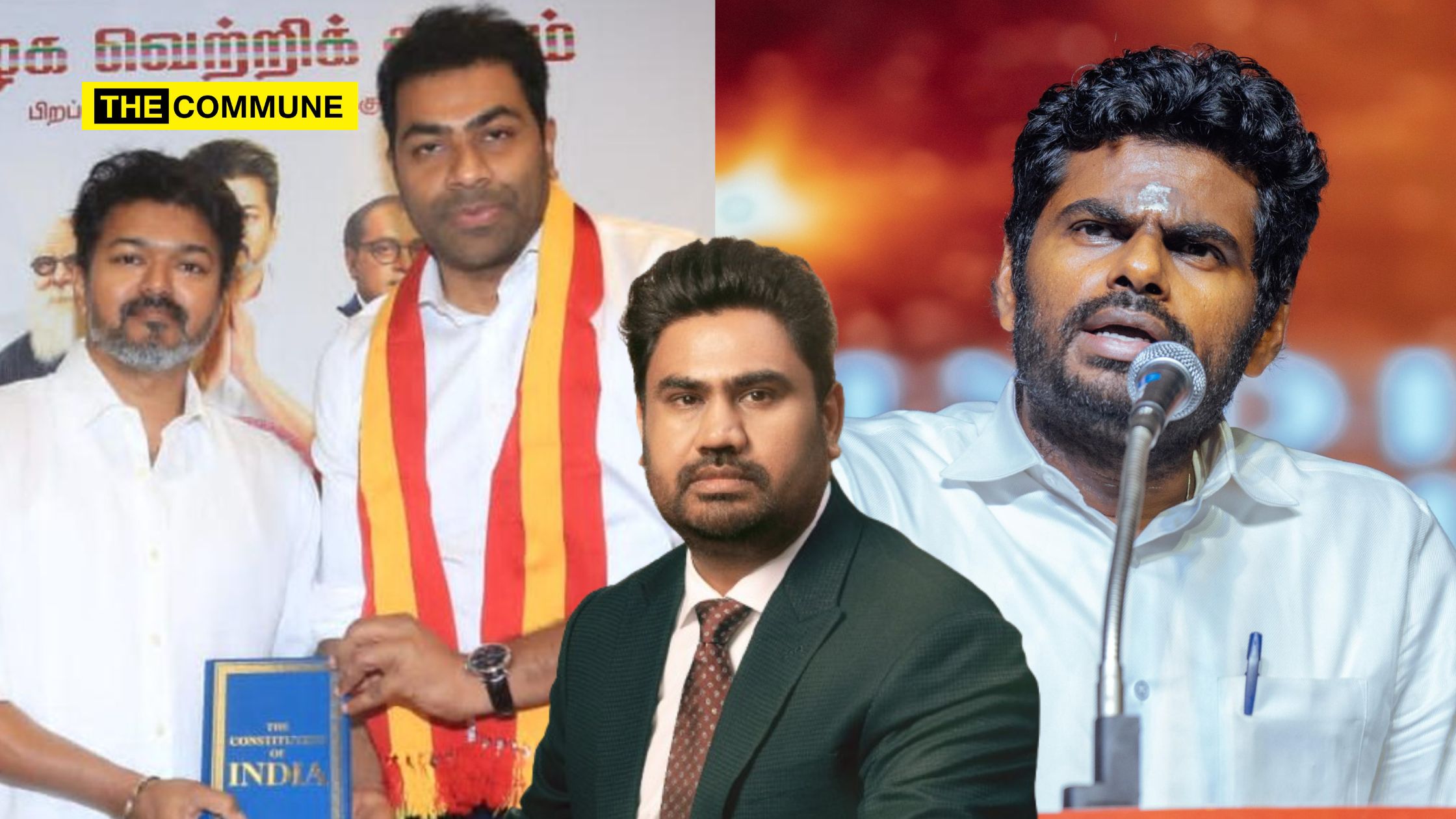
Controversial businessman Lottery Martin’s son, Jose Charles Martin, has sharply criticized his brother-in-law, Aadhav Arjuna, for making a recent inappropriate statement targeting Tamil Nadu BJP Chief Annamalai. Jose also condemned Aadhav Arjuna, the current General Secretary of the Tamilaga Vetti Kazhagam party’s election campaign, accusing him of misusing his father-in-law’s money, tarnishing the family’s reputation, and causing unnecessary conflicts.

Jose clarified that he has no involvement in Arjun’s actions and firmly stated that if any further repercussions arise from his brother-in-law’s behavior, he will take all necessary legal measures to protect his own reputation.

In a statement posted on his X account, Jose Charles Martin emphasized,  “I state my objection and apology against Arjun adhava’s unparliamentary statement against Tamil Nadu BJP president Thiru k Annamalai who is tirelessly working towards welfare of the people of Tamil Nadu. I also support his statement that “ he is misusing his father in laws money that is my father’s money, damaging our family’s reputation and creating all kind of unnecessary issues” by joining random political parties to satisfy his political and financial greed by aligning with Prasanth Kishore. I take this opportunity to clarify that I am nowhere connected with his stupidity and if any further consequence occur due to his action I will take all necessary steps to safe guard my reputation by approaching The Court.”

This clarification and criticism from Lottery Martin’s family comes in the wake of recently concluded Tamilaga Vettri Kazhagam’s (TVK) General Council Meeting. During the meeting, the party’s General Secretary for Election Campaign, Aadhav Arjuna, launching strong attacks on the DMK and its allies, while warning the AIADMK about the potential risks of aligning with the BJP in future elections.

In his speech, Arjuna compared the DMK’s political tactics to those of Nazi Germany, accusing the party of inadvertently strengthening the BJP in Tamil Nadu by constantly positioning Annamalai as their primary adversary.

“They are creating an enemy in Annamalai. Every day, Annamalai shouts, and they respond. But this only helps the BJP grow,” he said.

Arjuna also claimed that the DMK had orchestrated a situation where Tamil Nadu’s political climate was set against Vijay, comparing the scenario to a “sleeping tiger” being provoked by a “jumping goat” trying to attract attention. He further argued that this strategy was being manipulated by the BJP from Delhi, with Annamalai being the pawn in the game.

“Annamalai has been set up by DMK as a distraction. When Modi is in Delhi, controlling other states, DMK has made Annamalai the focal point to divert attention,” Arjuna claimed.

He also suggested that Annamalai’s attacks were in retaliation to comments made by the BJP leader, who had previously accused Vijay of sitting idly on a film set and making statements while allegedly behaving inappropriately towards an actress.

Additionally, Arjuna contended that the DMK’s opposition to the BJP since 2021 was nothing more than a vote-bank strategy. He further alleged that the party was laying the groundwork for a political succession plan to install Udhayanidhi Stalin as the next Chief Minister. “DMK is creating a situation in Delhi to position Udhayanidhi as the future CM,” he asserted.

It’s important to note that this isn’t the first time Lottery Martin’s family has raised concerns regarding Aadhav Arjuna. Previously, his wife, Daisy Martin Arjuna, issued a statement clarifying that there is no overlap between their personal and political lives. She emphasized that all professional and political decisions are made independently and have no connection to their family.

Through her social media, Daisy Martin Arjuna shared, “I Daisy, wish to inform everyone that Aadhav Arjuna and I always chosen to keep our personal and professional lives separate. All professional, political decisions and stance are made independently and it has nothing to do with our family. This announcement aims to eliminate all the disinformation, speculations, rumours and conjectures that has been disseminated regarding our involvement with each other’s lives. We both individuals have unique views with distinct work lives who respect and value each other’s privacy and opinions. We would object to anyone making any false claims that are otherwise. In our mutual best interest, we respectfully request our friends, relatives and well-wishers to abstain from entangling our family into each other’s professional and public life.”

https://www.instagram.com/daisymartinarjuna/p/DGkI96Mze6R

Subscribe to our channels on TelegramWhatsApp, and Instagram and get the best stories of the day delivered to you personally.

Trump Administration Launches Federal Review Of Harvard Over Rising ‘Anti-Semitism’ In Campus

In a major escalation of its efforts to combat campus anti-Semitism, the Trump administration has announced a “comprehensive review” of federal contracts and grants at Harvard University and its affiliates.

The decision, revealed on Monday by the Departments of Education (ED), Health and Human Services (HHS), and the US General Services Administration (GSA), is part of an ongoing initiative led by the Joint Task Force to Combat Anti-Semitism. The task force will examine over $255.6 million in federal contracts with Harvard, along with more than $8.7 billion in multi-year grant commitments, to ensure compliance with federal regulations, including civil rights obligations, according to a statement from the US Department of State (DoS). “Harvard has served as a symbol of the American Dream for generations — the pinnacle aspiration for students all over the world to work hard and earn admission to the storied institution,” said Secretary of Education Linda McMahon.

Taking aim at the Ivy League university, she added, “Harvard’s failure to protect students on campus from anti-Semitic discrimination — all while promoting divisive ideologies over free inquiry — has put its reputation in serious jeopardy. Harvard can right these wrongs and restore itself to a campus dedicated to academic excellence and truth-seeking, where all students feel safe.” The review follows a similar ongoing investigation into Columbia University, which resulted in the institution agreeing to comply with nine preconditions to regain access to cancelled federal funds.

This initiative strengthens enforcement of President Trump’s Executive Order titled ‘Additional Measures to Combat Anti-Semitism.’ “The Task Force ensures that federally funded institutions uphold their legal and ethical responsibilities to prevent anti-Semitic harassment,” the statement read. The same task force previously cut $400 million in funding from Columbia University and warned that billions more could be at risk unless specific demands were met. Columbia recently agreed to several of the federal government’s conditions, drawing praise from Jewish advocacy groups while raising concerns among free speech organisations about government overreach. Harvard and Columbia are not alone in facing scrutiny. The Trump administration has reportedly placed dozens of other universities on notice, signalling they could face similar reviews over allegations of anti-Semitism. Given the federal government’s role as a major source of research funding for American universities, these reviews carry significant financial implications.

According to the US DoS, the administration will collaborate with relevant contracting agencies to assess whether Stop Work Orders should be issued for any contracts under review. Additionally, Harvard has been directed to submit a comprehensive list of all its contracts — both direct and through affiliates — that were not initially included in the investigation. HHS Acting General Counsel and Task Force member Sean Keveney reaffirmed the administration’s commitment, stating, “The Task Force will continue its efforts to root out anti-Semitism and to refocus our institutions of higher learning on the core values that undergird a liberal education. We are pleased that Harvard is willing to engage with us on these goals.” Any institution found to be in violation of federal compliance standards could face severe administrative actions, including contract terminations. T

he review will be facilitated by GSA, which will oversee grant and contract evaluations across the federal government. “Hate in any form goes against the foundational principles of America. While Harvard’s recent actions to curb institutionalised anti-Semitism — though long overdue — are welcome, there is much more that the university must do to retain the privilege of receiving federal taxpayer’s hard-earned dollars,” said FAS Commissioner and Task Force member Josh Gruenbaum. “This administration has proven that we will take swift action to hold institutions accountable if they allow anti-Semitism to fester. We will not hesitate to act if Harvard fails to do so,” he added.

–IANS

Subscribe to our channels on TelegramWhatsApp, and Instagram and get the best stories of the day delivered to you personally.

Amazing, Just Amazing: Sunita Williams About How India Looked From Space

Indian-origin astronaut Sunita Williams, days after landing on Earth following her extended mission aboard the International Space Station (ISS), recalled her awe-inspiring experiences of viewing India from space during a press conference.

Having spent 286 days in space, Williams, when asked about how India appeared from above, replied with a simple yet profound, “Amazing, just amazing.” Williams, known for frequently sharing her Indian heritage, was particularly captivated by the breathtaking views of the Himalayas.

She fondly described how, every time the ISS passed over the majestic mountain range, her fellow astronaut, Butch Wilmore, would capture stunning photographs. “Every time we went over the Himalayas, Butch got incredible pictures; it is just amazing,” she said during the press conference, visibly nostalgic about the views. For Williams, who often speaks of her Indian roots, the sight of India from space felt like a personal connection to her heritage. “I have described it before like this ripple that happened when the plates collided, and then, as it flows down into India, it is many-many colours,” she explained.

She also described how, on seeing Gujarat and Mumbai from above, the fishing fleets off the coast became a familiar landmark, offering a sense of homecoming. “It gives you a little bit of a beacon, here we come,” Williams added. Moreover, Williams highlighted the remarkable view of India at night, with a “network of lights” stretching from larger cities to smaller ones, and the grandeur of the Himalayas as the backdrop. This unique perspective, according to her, was truly “incredible.”

The 59-year-old astronaut also shared her excitement about NASA’s upcoming Axiom mission, which will take four astronauts to space, including Subhanshu Shukla, an Indian Air Force test pilot and ISRO astronaut. “It’s pretty awesome,” she said, acknowledging the significance of Shukla being a “hometown hero” for India. Williams also expressed her willingness to contribute to India’s space program, saying she hopes to share her experiences and support the country’s growing space ambitions.

“I would love to be a part of that and help them along,” she stated. The astronaut, whose parents were born in India, also expressed a desire to visit her “father’s country” soon. As she chatted with Wilmore, the two joked about taking their crew members on a trip to India. “You might stick out a little bit. That is okay. We will get you all primed of some spicy food,” she said with a laugh.

–IANS

Subscribe to our channels on TelegramWhatsApp, and Instagram and get the best stories of the day delivered to you personally.

Noida Pornography Racket Exposed By ED, International Links Unearthed

On March 28, the Enforcement Directorate (ED) revealed in a statement that it had exposed a large-scale pornography operation running out of a residence in Noida’s Sector 105. The illicit enterprise was allegedly managed by a married couple, Ujjwal Kishore and Neelu Srivastava.
The duo is said to have enticed numerous women via social media with promises of modeling opportunities, only to record adult videos instead. These recordings were then sold to Technius Limited, a Cyprus-based firm linked to adult websites such as Stripchat and XHamster.
According to news outlets, the operation had been active for approximately five years. During the raid, authorities found three women on-site producing adult content. The ED documented statements from those involved. Officials noted that the profits were misrepresented as “service fees,” breaching the Foreign Exchange Management Act (FEMA).

Sources within the ED estimate that more than 400 women were drawn into the scheme over the past five years, primarily recruited from the Delhi-NCR region through platforms like Facebook, Instagram, and WhatsApp with offers of modeling jobs. The content was divided into categories such as “partial face reveal,” “full face reveal,” and “fully nude.”

Reports indicate that Ujjwal Kishore’s prior involvement in a Russian sex trafficking network may have aided the growth of this operation. The couple rented the Noida bungalow from a Delhi-based physician and transformed it into a filming studio equipped with lighting, cameras, and other gear. As their venture expanded, they posted deceptive casting notices online to lure additional recruits.

The ED conducted its searches under Section 37 of FEMA alongside Section 132 of the Income Tax Act. The couple operated their activities through a company called Subdigi Ventures Private Limited. Investigations uncovered that the firm and its directors regularly received overseas payments disguised as compensation for services like advertising, market surveys, and polling.

However, the agency alleges these funds were profits from adult content featured on XHamster. The raid revealed a high-tech studio tailored for streaming such material. The ED stated, “The couple recruited models via social media channels. We’ve traced illegal transfers exceeding ₹15.6 crore into the company’s and directors’ bank accounts. Additionally, a hidden account in the Netherlands received roughly ₹7 crore from Technius Limited.”

The agency found that money in the foreign account was accessed as cash withdrawals in India via international debit cards. Investigations suggest the couple kept about 75% of the revenue, distributing only a small portion to the models. During the operation, authorities confiscated ₹8 lakh in cash and gathered substantial evidence against the pair. The probe remains ongoing.

Significantly, the presence of such Indian-origin content has surged on platforms like XHamster, XVideos, and PornHub. Although these sites are blocked in India, they remain accessible domestically through VPNs and are popular internationally.

(With inputs from OpIndia)

Subscribe to our channels on TelegramWhatsApp, and Instagram and get the best stories of the day delivered to you personally.

Why Financial Literacy Is The Missing Link In India’s Growth Story

Every February, as the sweet aroma of halwa fills the corridors of North Block and the Finance Minister unveils the iconic bahi-khata, Budget season officially begins. But soon, attention fades, and terms like “fiscal deficit” and “capital expenditure” start to feel alien. Despite the budget shaping everything from petrol prices to job creation, most citizens simply don’t tune in. Even the well-educated often shrug it off.

This isn’t laziness—it’s a symptom of a deeper issue: Bharat’s chronic lack of financial literacy.

Most Indians don’t speak the language of money—not because they can’t, but because they were never taught to. In a nation where digital wallets are replacing physical ones and credit offers pop up faster than WhatsApp forwards, financial ignorance can cost more than inflation ever will.

So, what exactly is financial literacy? It’s not about stock tips or balance sheets. It’s about knowing how to manage your salary, track your spending, avoid debt traps, invest wisely, and protect your hard-earned money. It’s understanding that your paisa should work for you—not the other way around.

But here’s a reality check: most of our youth—our so-called demographic dividend—enter the real world without ever learning how to file a tax return or budget their monthly expenses. They might ace calculus but have no idea how compound interest works on a loan. This gap isn’t just unfair—it’s dangerous.

Now, here’s the bigger irony. The National Education Policy (NEP), hailed as revolutionary, promotes skill-based, holistic learning—but completely skips financial education. There’s no mandate to teach students about banking, taxation, insurance, or investment basics. After 15 years of schooling, they step into the real world clueless about one of life’s most essential skills: managing money.

The gap widens further in rural Bharat. Most State Board students lack exposure to financial education—no workshops, no finance Olympiads. Such opportunities are largely reserved for CBSE and ICSE students in urban areas. While one group learns about mutual funds in classrooms, another struggles with basic savings. This isn’t just an educational divide—it’s an economic one.

Thankfully, there are sparks of change. The National Centre for Financial Education (NCFE), backed by RBI, SEBI, IRDAI, and PFRDA, runs programs like Financial Literacy Week, aiming to reach schoolchildren early. Some universities are offering elective courses in personal finance, and the response is promising—students show better saving habits, more confidence in money management, and smarter financial behavior.

But these sparks need to be fanned into flames. Financial education must move from being an extra-credit topic to a non-negotiable part of every student’s journey. From middle school itself, children should learn how to open a bank account, understand interest, track expenses, and evaluate a loan.

Teachers, too, need training—not just in theory, but in real-world financial application. Schools can’t teach what teachers don’t know. We need a financial literacy mission that reaches every panchayat, every basti, every school in the country.

But this isn’t just an academic issue—it’s cultural. In most Indian households, money is a taboo topic. Parents rarely discuss income or financial struggles with their children. Talking about money feels awkward—even shameful. As a result, financial learning never happens at home either. This silence is breeding generations of financially unprepared individuals.

It’s time to change the script. We need to normalize conversations about money—between parents and children, teachers and students, and friends and peers. Let money be discussed not just in banks and boardrooms but at dining tables and in classrooms.

Because when people know how to manage money, they also know how to plan, invest, and grow—and contribute meaningfully to the economy. A financially literate Bharat is not just smarter—it’s stronger.

Let’s not forget: financial literacy is directly tied to financial inclusion. People who understand banking and digital finance are far more likely to use formal financial services. This means less dependence on local moneylenders, fewer scams, more security, and greater empowerment. It also fuels the economy—when citizens invest, insure, and save better, national growth becomes sustainable and inclusive.

So, where do we go from here? We need mandatory financial education across all school boards, especially state boards. We need local-language content, mobile-first learning, and teacher training programs. We need collaborations between schools, banks, fintech platforms, and NGOs. We need gamified apps, digital simulations, and, above all, a shift in mindset about discussing money.

Because the truth is, “PAISA BOLTA HAI”—but only if you understand what it’s saying.

And if Bharat wants to build a future that’s not just digitally connected but financially empowered, it’s time we made sure that every Indian knows how to manage, protect, and grow their paisa.

Karthik HP is a National Media Team Member of ABVP.

Sriram RM is the Co-Founder of The Right Moves.

Subscribe to our channels on TelegramWhatsApp, and Instagram and get the best stories of the day delivered to you personally.

Dravidian Model Of Hypocrisy: “Aise Karo, Upar Neeche” – Viral Video Shows DMK MLA Speaking Fluent Hindi To Migrant Worker During Bhoomi Puja Ritual

A video of a DMK MLA conversing in Hindi with a North Indian worker about the practice of twirling pumpkins to remove drishti during a ritual near Kattupakkam, Chennai, has gone viral. This has sparked criticism, with many questioning whether DMK members—who strongly oppose the three-language policy—are the only ones permitted to speak in Hindi.

The incident occurred during a bhoomi puja held for the construction of a new community hall worth ₹7 crore in Kattupakkam panchayat near Poonamallee, under the Chennai Metropolitan Development Corporation’s housing and urban development department.

DMK MLA Krishnasamy, who attended the event, officially inaugurated the bhoomi puja. Later, while participating in the pumpkin-twirling ritual, he was seen speaking in Hindi to a laborer from northern India. He is seen saying, “Aise karo, aise aise, ab upar neeche.” (Do like this, like this, now up and down.)

Now, the viral video of the MLA receiving instructions in Hindi on how to twirl pumpkins has further fueled public criticism, with people questioning the apparent contradiction in DMK’s stance on the language policy.

(With inputs from Tamil Janam)

Subscribe to our channels on TelegramWhatsApp, and Instagram and get the best stories of the day delivered to you personally.

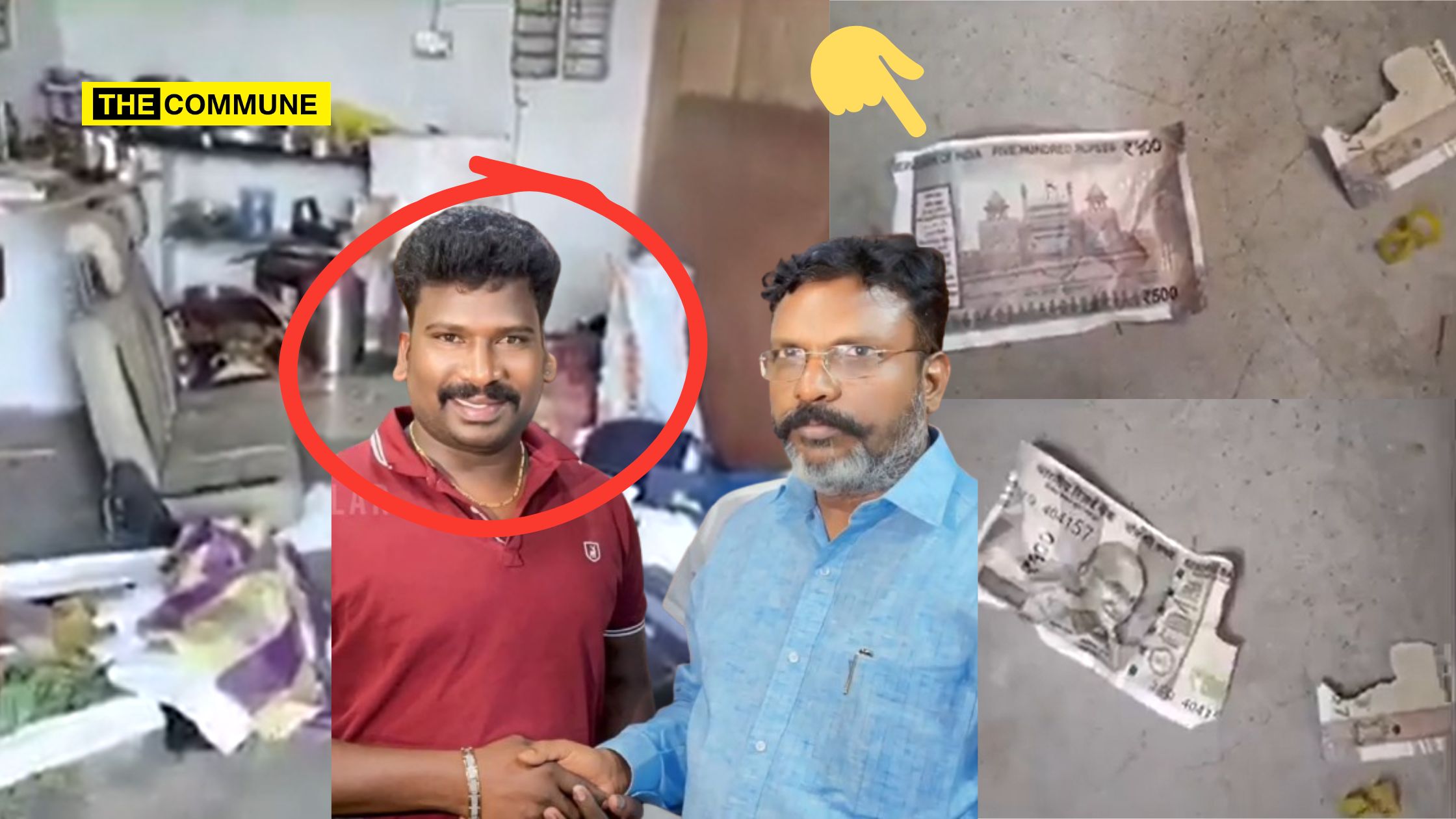
VCK District Treasurer On The Run After Police Raids Counterfeit Currency Notes Printing Unit

vck counterfeit currency

In a major crackdown on counterfeit currency, the Ramanatham police raided a shed in Atharnatham village near Thittakudi in Cuddalore, allegedly used for printing fake notes. The shed, located on land owned by Selvam, the district treasurer of the Viduthalai Chiruthaigal Katchi (VCK), was found to house counterfeit currency and printing equipment.

According to police sources, Selvam and his associates fled the scene upon spotting law enforcement officials approaching. A subsequent search of the premises led to the seizure of fake currency worth ₹83,000 in ₹500 denominations, along with a walkie-talkie, an air gun, a pistol, a printing machine, a currency counting machine, and a bundle of specialized paper used for counterfeiting.

The police have launched a manhunt for Selvam and his accomplices, who remain at large. Meanwhile, in response to the developments, the VCK has ordered Selvam’s removal from all responsibilities, including his basic membership in the organization.

Subscribe to our channels on Telegram, WhatsApp, and Instagram and get the best stories of the day delivered to you personally.
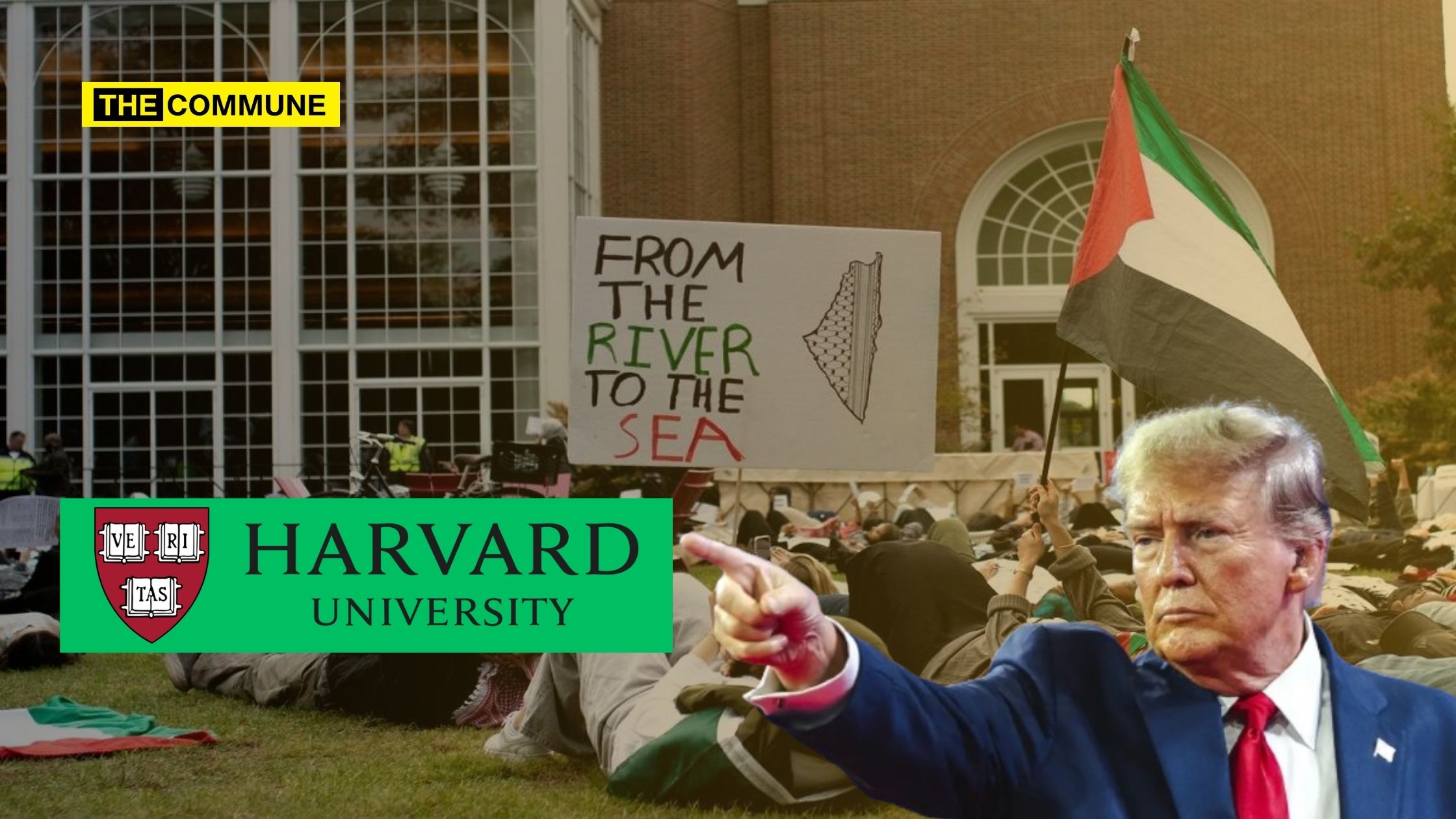
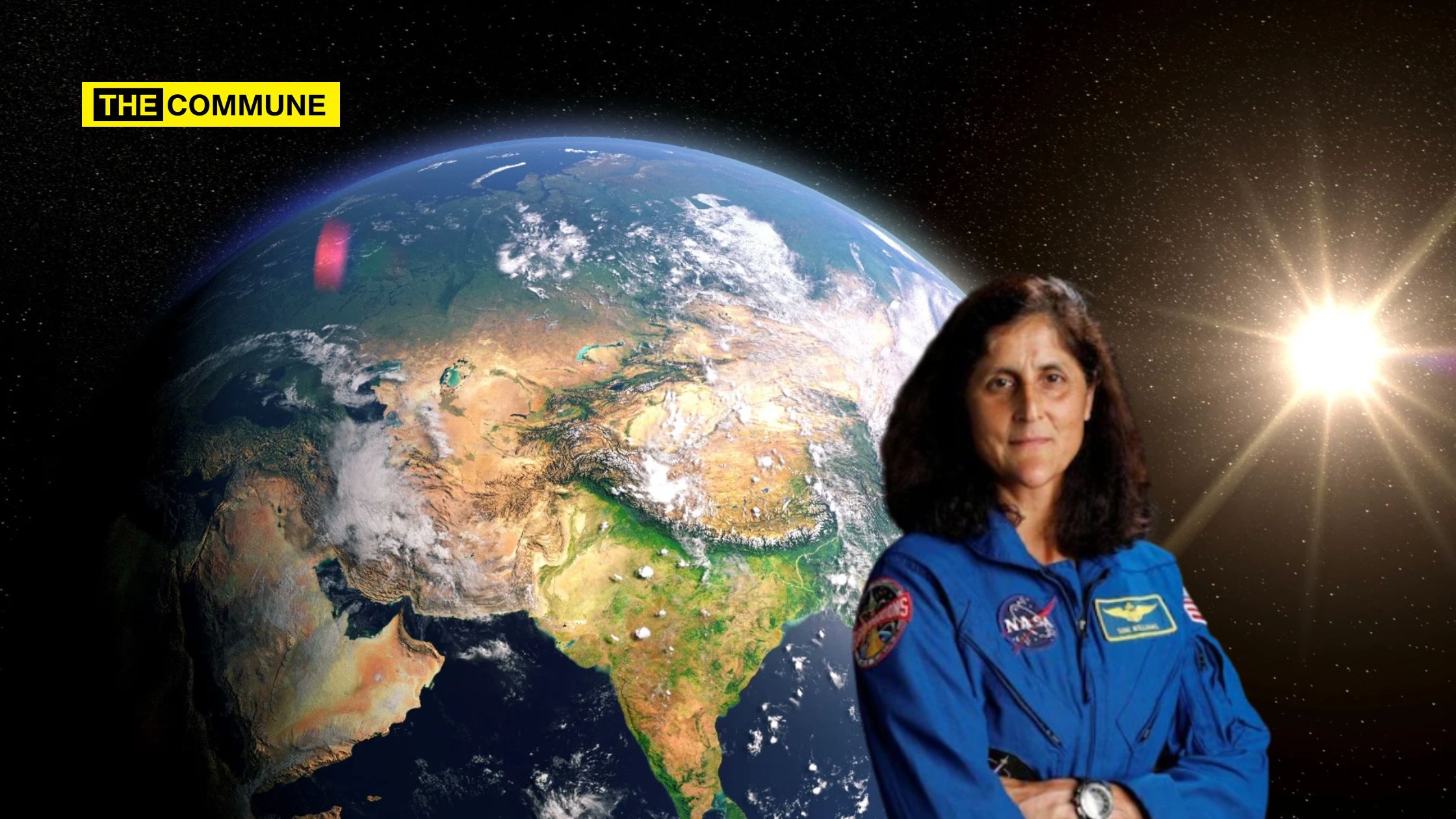
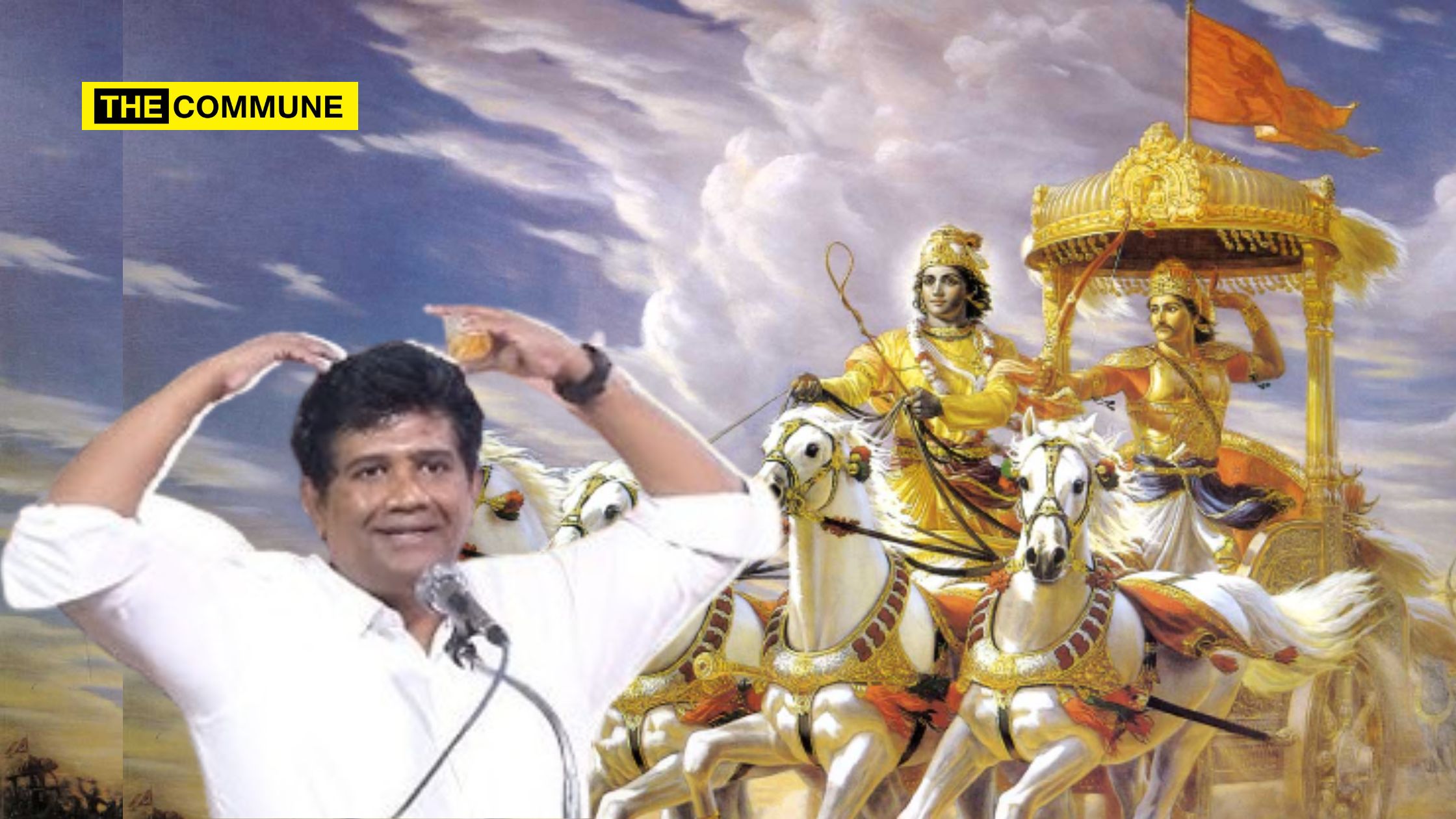
“Dei, War Is On And You’re Giving Advice? Gita Is An Extra Fitting”, DMK MLA Ezhilan Mocks Bhagavad Gita, Derogates Hinduism

DMK Thousand Lights MLA Ezhilan Naganathan is facing intense backlash after a recent video of him went viral, in which he propagated divisive views and ridiculed the highly revered spiritual text, the Bhagavad Gita. The incident took place at a book launch event for Dravidian Stock’s translation of Kalaignar’s Thirukkural, where he mocked Hindu spiritual texts like the Gita and Upanishads. His statements, aligned with a familiar agenda, have been criticized for being completely contrary to historical facts and for distorting them to fit the Dravidian narrative.

Speaking at the event DMK MLA Ezhilan said, “Have you noticed that even today, Kamba Ramayana festivals are being conducted in palatial five-star hotels under the guise of Bhagavad Gita oration? They declare it as ‘elite,’ delivering narrations in English, and then you have Englishmen’s narration, exclaiming, ‘Wow! awesome! The Bhagavad Gita is a perceptional change!’ That (Gita) itself an extra fitting. The Mahabharata unfolds on one side, and it is evident that this (Gita) was cleverly inserted in the middle. Suddenly, at the peak of the war, Krishna begins advising Arjuna—this is what they call the Gita.”

He laughed and said, “Dei, there’s a war happening, people are killing each other, and now you’re giving advice? Comrades, we have studied many war stories from around the world—have you ever read anything like this? We’ve read the Iliad and the Odyssey. We have the Puranaanooru, which even depicts elephants. That’s fine. We’ve also spoken of Kalingathu Parani. But tell me—have you ever seen a moment in the middle of a war where, as arrows fly, someone says, “Wait, I’m advising him!”? Do you understand any of the logic behind this? They inserted it into the Bhagavad Gita and used it to influence/killing us (Vachu Seiran), but there is no originality in it, comrades.'”

Then DMK MLA Ezhilan argues that the Bhagavad Gita and Upanishads were deliberately crafted as a strategic response to counter Buddhist influence. Furthermore, Ezhilan continues, stating that the tradition (without directly naming Hinduism) contains mantras primarily for destruction—mantras for jaundice and diseases, for urination, and even for constipation. He remarks, “If you study them, you’ll find it laughable; it’s an extensive content.”

This is not the first time DMK MLA Ezhilan has been accused of offending Hindu sentiments. On June 3, 2021, in a controversial move, DMK cadres set up a stage in front of Chennai’s Perumal Temple to mark Karunanidhi’s 98th birth anniversary, distributing chicken and mutton biryani despite COVID restrictions. The event, attended by leaders including DMK MP Dayanidhi Maran and MLA Ezhilan Naganathan, drew backlash for obstructing the temple entrance and serving non-vegetarian food. Hindu organizations strongly condemned the act, leading to widespread public outrage.

In another old video, the DMK leader can be seen spewing venom against Hindu Gods much like what was done by the rabid anti-Hindu YouTube channel Karuppar Koottam.

In the video, Naganathan can be heard saying, “Narada is a known face in Hindu mythology. But, did you know that all he wanted was to be sexually involved with a lot of women?”

He then went on to say how Lord Vishnu had acted like a ‘pimp’ and had asked Narada to go around to the houses on Earth and take every beautiful girl who was present there for himself.

“When Narada had entered any house on Earth, Lord Vishnu was found to be sprawling on the laps of these women. When Narada had questioned this, Lord Vishnu had merely laughed. This caused Narada to proceed to transform himself into a woman, just so he could sleep with Lord Vishnu”, Naganathan can be heard saying in the video.

Another time, the DMK leader called those smearing sacred ash and thiruman as fools. He also insults Hindu worship by saying that women go in front of a stone and pray to fix their husbands.

Subscribe to our channels on TelegramWhatsApp, and Instagram and get the best stories of the day delivered to you personally.

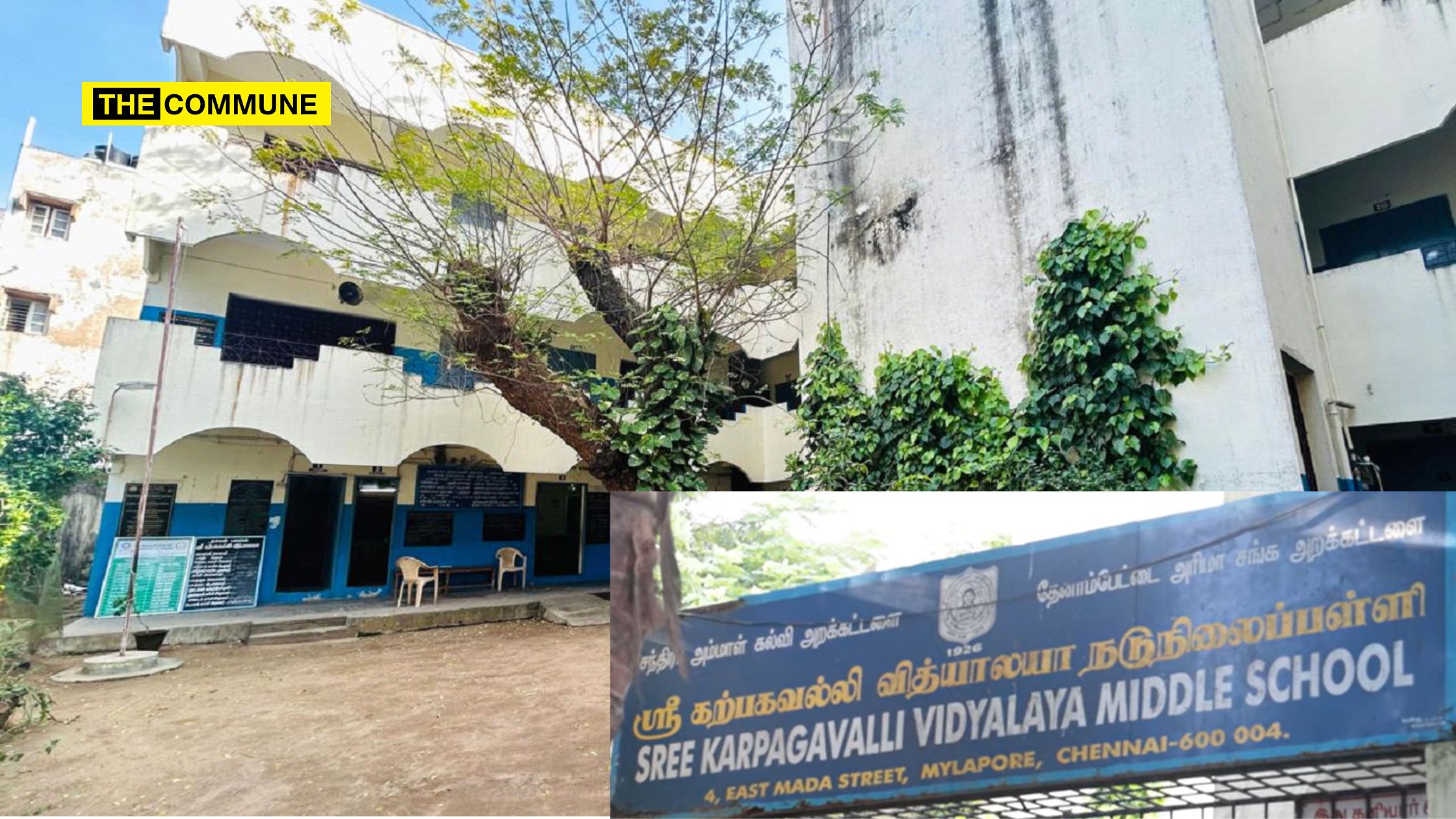
Dhaadi Vaadhyar’s Vision Lives On: New Trustees Look Forward To Revive Century-Old Chennai School

The board that reads ‘Sree Karpagavalli Vidyalaya Middle School’ can barely be missed by the residents of Mylapore at the junction of North and East Mada streets. It stands as testimony to the selfless intent of Dharmaraja Iyer who started it in 1926 to impart high-quality education to one and all. Due to Dharmaraja Iyer’s flowing beard, it was referred to lovingly by the students as “Dhaadi Vaadhyar” school. The school, nestled in a peaceful ambiance, has had stalwarts such as former Thuglak magazine editor Cho S. Ramaswamy, former Indian Bank MD & Chairman M.S. Sundararajan, politician and lawyer Jayanthi Natarajan, the grandchildren of former Governor of Madras (1946) Mohammad Usman, and the nephews and nieces of former Tamil Nadu Chief Minister M.G.R., among many others who studied here. Many of them have openly credited the school for the quality of education they received. Even after half a century, the school’s alumni still hold fond memories of Dhaadi Vaadhyar School.

Over the years, the school became a government-aided institution and continues to serve children from economically disadvantaged backgrounds while maintaining the same high quality of education as in its early years. However, with the passage of time, the preference for English as the medium of instruction has taken a strong hold on people’s minds. This, combined with the Right to Education (RTE) Act, which encourages admissions to English-medium schools, has made the situation even more challenging. As a result, this wonderful institution of learning has faced difficult times in recent years.

With student enrollment dwindling to just 10 in the academic year 2024-25, the school’s management has recently been taken over by a new group of trustees dedicated to restoring its former glory and reputation. The trustees – Shivakumar R, Prabhu Nambiappan, Harshavardhana R, Yamuna Harshavardhana, Sripriya Anand, and Sriram U R – are making every effort to ensure this revival, as the school celebrates its centenary during this academic year.

To begin with, the school is organizing a free weekend summer camp for children aged 4 to 8, starting on 29 March 2025, with flyers being distributed to spread the word. Kindergarten classes will commence in June, offering the added benefit of a safe daycare facility on the school premises.

Spoken English will be taught by competent and caring instructors to ensure that students develop the ability to communicate effectively with people from different linguistic backgrounds.

Girls will receive additional support, as ₹2,000 per year will be deposited into their accounts for each year they remain in the school. With free breakfast, lunch, and evening snacks provided, students will receive the necessary nutrition to support their energy and growth during their formative years.

Additionally, tuition fees, uniforms, and ID cards will be provided free of cost for all students. To ease commuting, the school will arrange transportation for children traveling together from the same locality.

The trustees bring with them rich experience from diverse backgrounds and are committed to working for the school’s benefit in a multifaceted manner. They are eager to lead the school into its second century of service in a grand and meaningful way, as a tribute to Dhaadi Vaadhyar’s vision.

Support in any form is welcome—whether by spreading the word to help enroll children, volunteering, or contributing through sponsorships or donations.

For more information, please contact SKVVMSchool@outlook.com

Yamuna Harshavardhana is a Chennai based educator, researcher and author.

Subscribe to our channels on Telegram, WhatsApp, and Instagram and get the best stories of the day delivered to you personally.
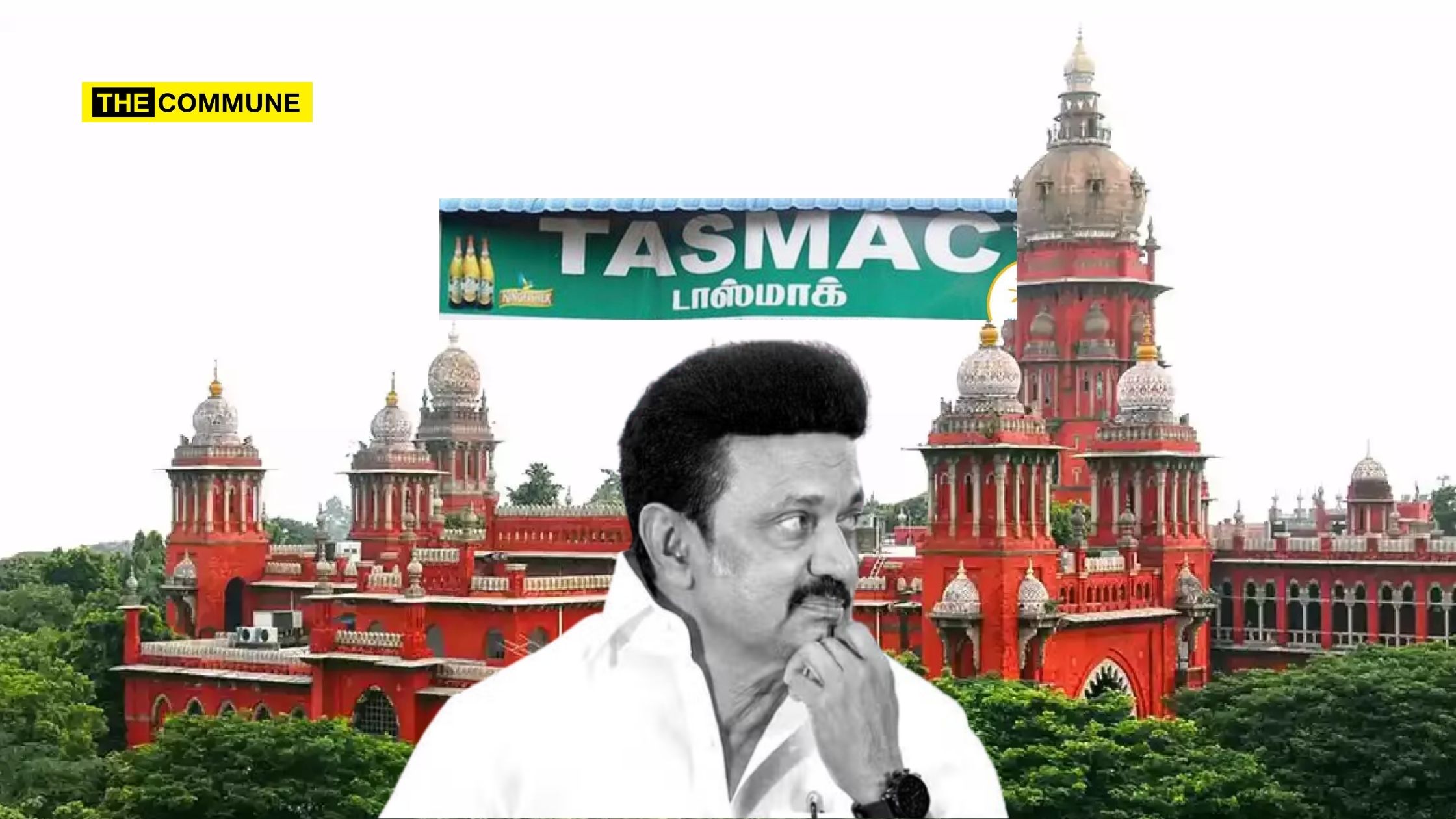
Madras HC Division Bench To Hear TN Govt’s Petition On TASMAC Searches On April 1

A Division Bench of the Madras High Court will hear an amended writ petition filed by the Tamil Nadu government on April 1, challenging the Directorate of Enforcement’s (ED) search and seizure operations at the Tamil Nadu State Marketing Corporation (TASMAC) headquarters in Chennai.

The searches were carried out between March 6 and March 8 this year. The Bench, comprising Justices S.M. Subramaniam and K. Rajasekar, will also hear two separate writ petitions filed by TASMAC, seeking a declaration that the ED’s search and seizure operations were illegal. Additionally, the court will consider the TN government’s request to restrain the ED from allegedly harassing its staff.

The state government amended its original plea following observations made by another Bench—Justices M.S. Ramesh and N. Senthilkumar—on March 20. That Bench had questioned the possibility of issuing a blanket order barring the ED from conducting searches in TN without prior consent from the state. Subsequently, the same Bench recused itself from the case after a preliminary hearing.

In its amended petition, the state government has asked the court to interpret the definition of ‘person’ under Section 2(1)(s) of the Prevention of Money Laundering Act (PMLA), 2002, in a way that excludes authorities, regulators, or officers of either the Central or State governments. The government also seeks a declaration that State officers’ obligations under the PMLA should be limited to providing assistance to ED officials, as per the law.

Further, the petition requests that the ED be directed to engage only those officers who have been specifically authorised under Section 54 of the PMLA and to seek such assistance solely under that Section. It also seeks to bar the ED from exercising its powers under Sections 17 (search and seizure) and 50 (summons, production of documents, and recording statements) on State government premises or State-owned corporations.

Meanwhile, Chennai-based activist S. Muralidharan has filed an impleading petition seeking permission to become a party to the proceedings. He intends to oppose the writ petitions filed by the TN government and TASMAC. The three writ petitions—two by TASMAC and one joint petition by the State government and TASMAC—along with the activist’s impleading petition, have all been clubbed together and listed for hearing on Tuesday before the Bench of Justices Subramaniam and Rajasekar.

—IANS

Subscribe to our channels on TelegramWhatsApp, and Instagram and get the best stories of the day delivered to you personally.