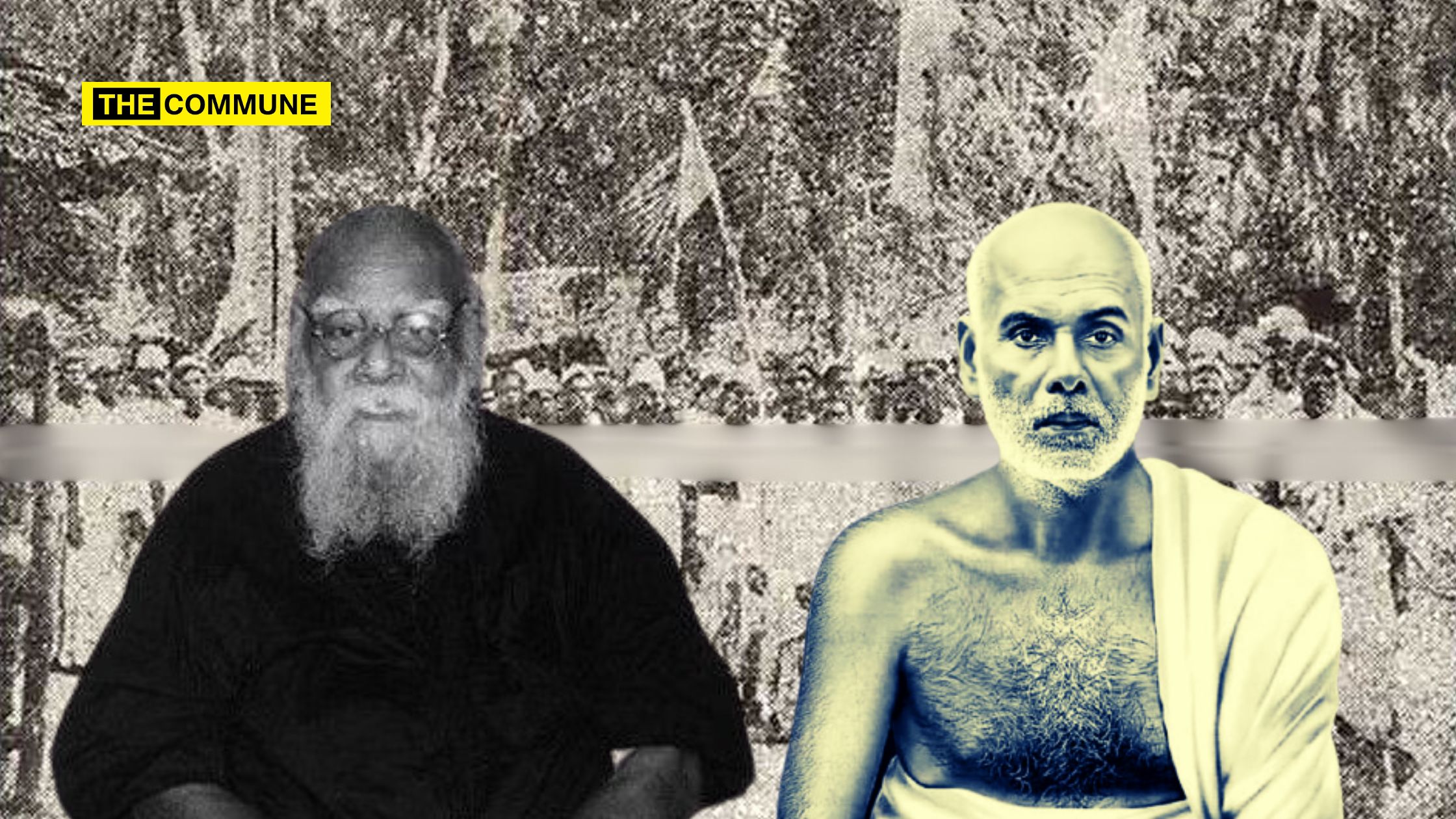
It was not EV Ramaswamy Naicker but Sree Narayana Gurudevan who provided the most exemplary and practical model for eradicating caste discrimination. Kerala, rather than Tamil Nadu, stands as the most successful laboratory for this social experiment. Even so, what is the political agenda behind attributing the paternity of the Vaikom Satyagraha, inspired by Gurudevan, to the failed Naicker?
A century later, as we reflect on the Vaikom Satyagraha, which spanned from 1924 to 1925, it becomes clear that it was far more than a locally organized protest for mere temple entry. In truth, it was a natural extension of the great Hindu reawakening that had begun centuries earlier across Bharat. Beyond its immediate objectives, the Satyagraha carried a profound historical mission: to shape new social realities and drive the reformation of Hindu society that would unfold in post-independence Kerala nearly 25 years later.
The Hindu reawakening in modern Bharat, which began with Sri Adi Shankaracharya, clearly articulated the need to liberate society not just from caste discrimination but from the very system of caste itself. Sri Shankaracharya unequivocally emphasized this in his teachings, which called for the rejection of all societal constraints tied to caste.
In his Upadesa Sahasri (17-76), Adi Shankaracharya declares:
Hitvā jātyādi sambhandān vācho’nyāḥ sahakarmabhiḥ
Omityevaṁ sadātmānaṁ sarvaṁ tulyam prapadyatha
(“After abandoning all attachments to caste, including conversations and actions surrounding it, meditate upon the pure Self that embraces all in the form of Om.”)
The essence of this teaching is to renounce caste-related thoughts and focus on meditating upon the Supreme Being. In other words, without transcending caste consciousness, meditation on the divine cannot lead to self-realization. Shankaracharya’s profound message, “Na mṛtyur na śoka na me jāti-bheda” (“There is no death, no sorrow, no distinction of caste for me”), further highlights this truth.
However, the orthodoxy of later generations, who claimed allegiance to Shankaracharya’s lineage, paradoxically misused interpolations such as the apashudrādhikaraṇa section in the Brahmasutra Bhashya, which scholars widely regard as a later addition, to justify caste-based discrimination and social inequalities. This contradiction did not escape the notice of Mahatma Gandhi, who critiqued such misinterpretations. In his dialogues with opponents of temple entry for marginalized communities, Gandhiji directly addressed this hypocrisy. What is particularly striking is that Gandhiji engaged with the orthodoxy by adopting a shruti-based argument, emphasizing that true adherence to the scriptures demands a rejection of caste-based exclusion and an embrace of inclusivity.
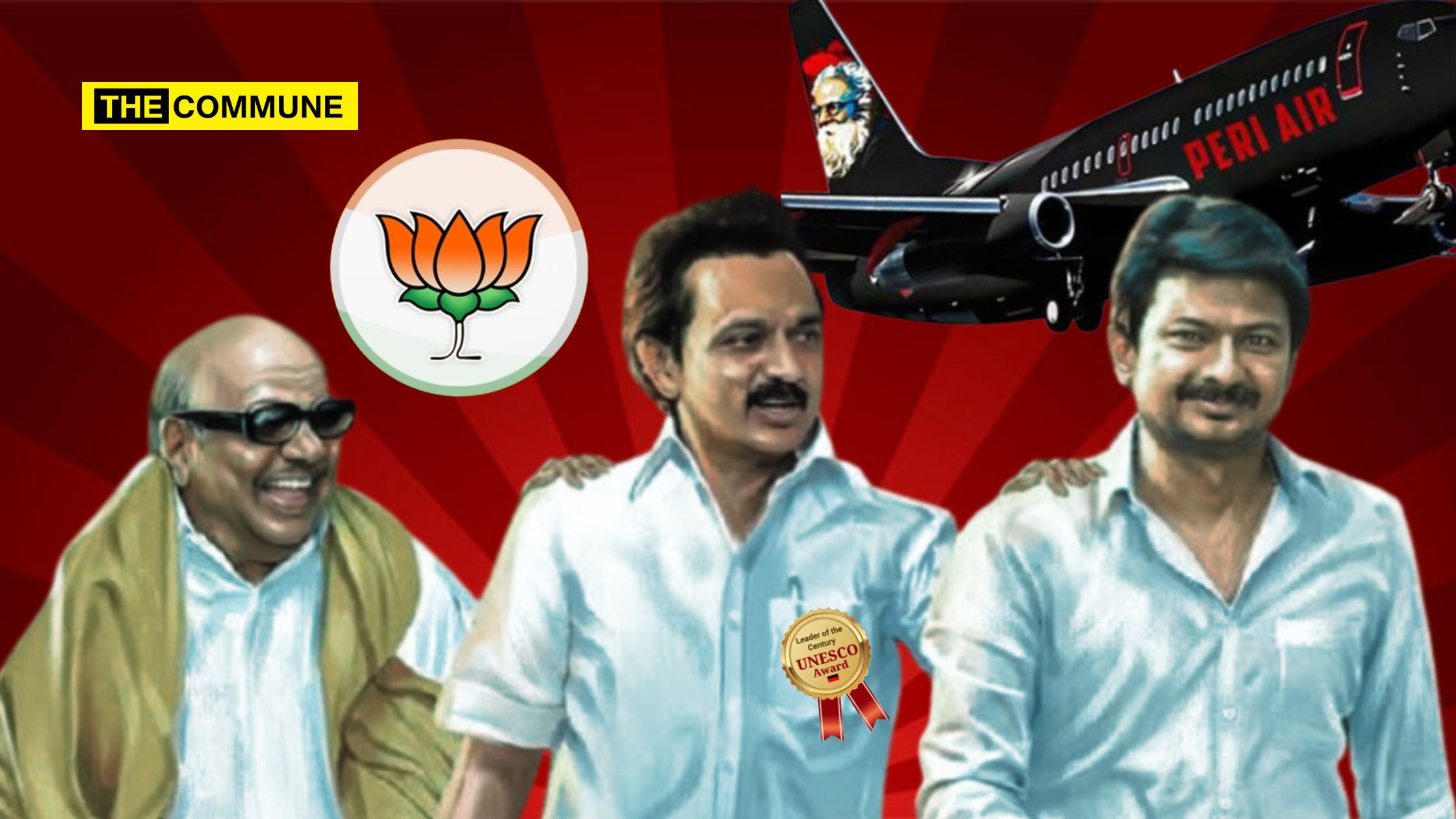
Can the history of the Vaikom Satyagraha be reduced to a mere value of one thousand rupees? If so, there is a chance for a comparison. The contribution made by Sree Narayana Guru to the Satyagraha fund and the subsequent misappropriation of those funds by E.V. Ramaswamy Naicker share the same value—one thousand rupees! By disregarding the leadership, intellectual, and financial support provided by Sree Narayana Guru to the Satyagraha, the CPI(M)-DMK alliance’s “Cutting South” agenda, which seeks to elevate the distorted image of Naicker, must not go unquestioned.
The Vaikom Satyagraha, thus, was not merely an isolated struggle but part of a larger philosophical and social evolution. It carried forward the transformative ideals of equality and justice rooted in India’s spiritual heritage, paving the way for a more inclusive society.
Whenever humanity strays from the authority of sacred scriptures and embraces practices not rooted in the traditions of the sages (anārṣa sampradāyas), history shows that it inevitably leads to social decline. This is always followed by an unavoidable internal, independent, and spiritual cleansing process. When this internal purification manifests as a social movement, it is invariably inspired by a great teacher deeply rooted in the authority of the Vedas. This is evident in the reformative efforts led by figures like Maharshi Dayananda Saraswati, Sree Narayana Gurudevan, and Swami Shraddhananda. Their contributions to such reawakenings reflect a natural and spontaneous process rather than one driven by external forces.
The grand movement that began with Sri Shankaracharya, found direction through Shri Ramanujacharya and reached fulfillment in Maharshi Dayananda Saraswati, saw its culmination in Kerala under the profound guidance of Sree Narayana Gurudevan. In the context of the Vaikom Satyagraha, the philosophical and historical significance of Gurudevan’s social interventions and his reinterpretation of dharma shastras, which laid the foundations of subsequent Hindu reform, remain underexplored by Malayalis.
Sree Narayana Guru And The Vaikom Satyagraha
The ideological roots of the Vaikom Satyagraha can be traced to Sree Narayana Guru’s disciple, T.K. Madhavan, who played a pivotal role in initiating the movement. Alongside the Guru and his chief disciple, leaders like Mahatma Gandhi, K.P. Kesava Menon, K. Kelappan, Swami Shraddhananda, Kurur Neelakandan Namboothiri, T.R. Krishnaswami Iyer, K. Velu Thampi Menon, and later figures like Krishnan Embranthiri (who became Swami Agamananda) and Mannath Padmanabhan led this historic struggle.
Despite this rich legacy, it is disheartening that the Kerala state government today insists on presenting the Vaikom Satyagraha primarily through the lens of E.V. Ramasamy Naicker (hailed as ‘Periyar’ by his followers) and M.K. Stalin, sidelining the crucial contributions of others. The government’s decision to ascribe exclusive leadership of the satyagraha to EVR while ignoring figures like Chittedath Shanku Pillai, the movement’s sole martyr, reflects an agenda rooted in divisive and sectarian motives. It is imperative that we recognize and address the historical distortions and sectarian narratives propagated through such actions.
The 100th-anniversary stage of the Vaikom Satyagraha has been transformed into a platform for political declarations by the Left-Islamic axis under the banner of “Cutting South,” orchestrated by the Left government. For generations of Malayalis, the mention of the Vaikom Satyagraha immediately evoked the name and image of Sree Narayana Guru, as it was deeply embedded in the collective social consciousness. The movement symbolized a monumental struggle for the fundamental rights of a vast section of the Hindu community labeled as Avarnas (the marginalized). These individuals, alongside non-Avarna communities of Travancore, bore the brunt of oppression, faced violence, and even sacrificed their lives. Today, however, the CPM and the Left government are making concerted efforts to erase these truths from history. This has led to the exclusion of heroes like Chittedath Shanku Pillai, the brave martyr of the Vaikom Satyagraha, from historical narratives.
The Vaikom Satyagraha was a shining example of Hindu brotherhood and unity, which stood as a testament to the inclusive social fabric of that time. The deliberate attempt to erase this history aligns with the shared political agendas of the CPM and DMK, which have increasingly adopted divisive, anti-Hindu policies as part of their strategies.
The Controversial History Of Travel Restrictions
The roots of the travel restrictions around the Vaikom temple trace back to the 19th century. In 1865, the Travancore government issued an order granting the right of public access to all roads. In July 1884, another order emphasized the seriousness of implementing the earlier directive.
However, when the matter came before the courts, the judiciary distinguished roads into raja veedhis (royal roads) and grama veedhis (village roads). It ruled that the 1865 order only applied to royal roads, declaring the pathways around the Vaikom temple as village roads. Consequently, despite the proclamations, these roads remained inaccessible to the marginalized for 65 years.
There had been efforts to address this issue at the legislative and political levels right from the beginning. The matter was raised in the Shri Moolam Popular Assembly in 1905 but yielded no results. In 1920-21, renowned poet and Gurudev’s dearest disciple Kumaran Asan, a member of the Assembly, raised the issue but failed to achieve a resolution. Later, T.K. Madhavan, a prominent leader of the SNDP (Sree Narayana Dharma Paripalana) Yogam, presented the issue to Dewan Raghaviah, only to receive an unsympathetic response.
The Catalyst: An Incident Involving Sree Narayana Guru
A significant incident that served as the immediate provocation for the Satyagraha occurred when Sree Narayana Guru was traveling by rickshaw near the Vaikom temple. His journey was interrupted when someone pointed out a tīṇḍāppalaka (a board prohibiting the entry of untouchables), which read, ‘From here onwards, entry is prohibited to Ezhavas and other untouchable castes.‘ This incident reportedly disrupted his journey. Sarasakavi Muloor references this event in one of his poems.
Hearing about this, T.K. Madhavan visited Sivagiri to learn the story directly from the Guru. It is believed that this incident served as a turning point for Madhavan, leading him to embark on the organized struggle that culminated in the Vaikom Satyagraha.
On September 27, 1917, at the Tirunelveli Congress session, T.K. Madhavan first brought the plight of untouchability in Kerala to the national attention. Following this, at the Kakinada Congress session in December 1923, the Indian National Congress passed a resolution elevating the eradication of untouchability to a matter of national importance. This resolution marked the entry of the Kerala Pradesh Congress Committee into the forefront of the Vaikom Satyagraha.
The first Satyagraha, which began on March 30, 1924, featured participants from diverse communities, including Kunjuppi, a Pulaya youth; Bahuleyan, an Ezhava; and Govinda Panikkar, a Nair. The method of the protest was revolutionary for its time. Protesters from different communities walked together up to fifty feet from the prohibitory signboards. From there, only three representatives were chosen to move forward. When the police stopped them and inquired about their caste, the Satyagrahi from the upper caste declared that they would only proceed together with their non-upper-caste counterparts. This act of solidarity resulted in the arrest and imprisonment of all three individuals.
Under the direct inspiration of Sree Narayana Guru, T.K. Madhavan led the Vaikom Satyagraha with a team that included stalwarts like Mannath Padmanabhan, K. Kelappan, and K.P. Kesava Menon. Guru’s prominent disciples played a pivotal role in supporting the movement. The list of leaders includes luminaries such as Kumaran Asan, A.K. Govindadas, C.V. Kunhiraman, Satyavrata Swamikal, K.P. Kayyalaykkal, N. Kumaran, Kottukoyikkal Velayudhan, Sahodaran Ayyappan, and Panavalli Krishnan Vaidyar.
Sree Narayana Guru himself visited the Satyagraha Ashram on September 27, 1924, offering Rs. 1,000 to the Satyagraha fund and installed a Bhandaram (charitable collection) at the Sivagiri Ashram to raise funds. Devoted women supporters collected rice (Pidiyari) for the cause. Guru’s disciples, including Bodhananda Swami, Krishnananda Swami, Sree Narayana Teerthar Swami, and Ramananda Swami, contributed by providing Ayurvedic medicines and treating the Satyagrahis.
In February 1925, Mahatma Gandhi visited Vaikom and subsequently went to Sivagiri to meet Sree Narayana Guru. This visit epitomized the greatness of the Narayana Guru model of inclusivity, which underpinned the Vaikom Satyagraha. It showcased an unprecedented unity and social reform initiative, deeply rooted in the Guru’s philosophy and guided by his disciples’ unwavering dedication.
Arya Samaj And Vaikom Satyagraha
The influence and contributions of the Arya Samaj to the Vaikom Satyagraha are undeniable. The Arya Samaj’s efforts to establish a caste-free society had a significant impact on the movement. As a result of their efforts, some oppressed castes in Vaikom, who had been converted to Vedic Dharma through Arya Samaj’s initiatives, were initially granted the freedom to walk on the roads near the temple, which had been previously denied to them. However, this freedom was short-lived as the temple authorities reinstated the restrictions, questioning the legitimacy of the conversions initiated by the Arya Samaj. The caste elites made it clear that even becoming Arya Samajis could not guarantee freedom of movement for these individuals; instead, they suggested that only converting to Islam or Christianity would ensure such rights.
This discriminatory attitude prompted Swami Shraddhananda, a disciple of Maharshi Dayananda Saraswati, and Pandit Rishiram, an Arya Samaj preacher, to intervene. The Arya Samaj played a pivotal role in bringing the Vaikom Satyagraha to national attention. Swami Shraddhananda personally visited Vaikom to support the Satyagraha, not only offering his moral support but also contributing Rs. 2,000 to the movement’s fund. His involvement and contributions are documented throughout the records of the Satyagraha. Dr. B.R. Ambedkar, while lauding Swami Shraddhananda’s work for the upliftment of the oppressed castes, described him as “the most loyal and great champion of the untouchables.”
One of the most historically significant aspects of the movement was Swami Shraddhananda’s interaction with Sree Narayana Guru. This meeting held profound historical and philosophical importance. As part of their discussion, Guru presented the famous Homa Mantram, composed in the style of Vedic mantras, to Swami Shraddhananda and the Arya Samaj sannyasis accompanying him. Guru asked them, “Could this be used in your Homa rituals?” This unique moment symbolized the shared vision of these two great reformers for an inclusive, caste-free Hindu society and underscored their mutual respect and collaboration in the fight for social equality.
“Our Sanatana Dharma must be preserved; Religious matters are greater than matters of the state”: E.V. Ramaswamy Naicker.
In the context of the Vaikom Satyagraha, the contribution of Ramaswamy Naicker can be confined to a single line, as it is referenced in historical accounts of the movement. Ramaswamy participated in the struggle as a representative of Sanatana Dharma. His public speech at Vaikom was rooted in the fear that the Hindu religion was in decline, especially when compared to other faiths.
He expressed his concern by saying, “In Hinduism, the population is dwindling, while in other religions, the numbers are increasing.“ This worried him deeply and said that if religious conversions due to untouchability and caste issues continued, even the term “Hinduism (Sanatana Dharma)” might eventually disappear. Ramaswamy Naicker articulated a clear belief that Hinduism (Sanatana Dharma) was in a state of decline, with Christianity and Islam witnessing population increases, while Hinduism itself faced a decrease. He argued that religion was more important than politics, emphasizing that devotion to religion was superior to devotion to the state. He claimed that despite Hinduism’s ancient roots, it was now one of the most degraded religions. In his view, the significant Christian population in Kerala was primarily due to religious conversions driven by caste-based oppression.
“We shall consider that our present-day Hinduism has declined. The Christian population has increased by 22%, the Muslim population by 52%, and the Hindu population has decreased by 5%. Are we not marrying? Are our women not giving birth? … Religious matters are greater than matters of the state. Compared to religious devotion, allegiance to the state is insignificant. Even though Hinduism is ancient, today it is the weakest religion. The reason why Christians are more numerous in Travancore compared to other parts of India is due to religious conversions resulting from the practice of untouchability here. Vaikom Satyagraha is not aimed at abolishing caste. It was initiated to establish freedom of movement for a section of Hindu believers. Mahatmaji has never said that caste should be abolished entirely, but that the distinction between ‘upper’ and ‘lower’ castes should be eradicated,” said Ramaswamy at Vaikom.
Ramaswamy clarified that the Vaikom Satyagraha was not aimed at destroying caste but was an effort to grant the oppressed sections of Hindu society the right to access public spaces. He insisted that the goal was not to abolish caste per se but to eliminate the practices of untouchability and caste-based discrimination. Endorsing Mahatma Gandhi, he said the aim was about removing the barriers of high and low castes, not eliminating caste altogether!
(Source: News reports quoted in the Vaikom Satyagraha Rekhakal)
A few years later, in 1933, at a conference held in Thrissur, it is reported in Kudi Arasu, a publication of E.V. Ramaswamy Naicker (which he established after his imprisonment and did not have his own newspaper during the time of the movement), that Naicker criticized K. Kelappan, the leader of the Vaikom Satyagraha. In his speech, Naicker reflected openly on the self-deception he felt regarding his role in the Satyagraha. He expressed that temple entry was meaningless and stated: “Dear friend K. Kelappan has expressed his doubt about whether God exists or not. How much suffering and hardship have we endured for something that we are unsure about? How much time have we wasted? Think about it… Only by abandoning the concepts of God, religion, and the Vedas can humanity achieve true freedom. The belief that liberation can be obtained through belief in God is absurd. Such belief in God enslaves humanity, turning them into religious fundamentalists, pushing them into temples to worship stones, and that is a very unfortunate thing.“ (Kudi Arasu, February 26, 1933).
The ‘Vaikom Veerar’ Who Embezzled The Satyagraha Fund
The name of the noble person who donated one thousand rupees to the Vaikom Satyagraha Fund is a common question in Kerala PSC exams. The answer, of course, is Sree Narayana Guru. However, what would the answer be to the question: Who embezzled one thousand rupees from the Vaikom Satyagraha Fund? The answer to that question is none other than E. V. Ramaswamy Naicker.
When Congress decided that Ramaswamy should travel to Vaikom, the Tamil Nadu Congress Committee sent him off with a donation of one thousand rupees to the Satyagraha Fund. However, these one thousand rupees never reached the fund. This scandalous act of embezzlement made headline news in Tamil newspapers. The controversy didn’t just remain confined to Tamil Nadu; it reached the ears of the national leadership of Congress, who asked EVR for an explanation. However, EVR failed to provide any satisfactory explanation. This incident might have played a significant role in Naicker’s eventual departure from the Congress.
To address the accusations, EVR issued two clarifications. Only the Dravida Kazhagam version of his defense remains before us today. The flaws in his justifications are evident in his fragile arguments. The controversy, as posed in question-answer format, is included below. (Source: Vaikom Satyagraham by P. Athiyamaan).
Question: The Dinamani newspaper accused Periyar of misappropriating the funds received for the freedom struggle. Based on this news, it has been alleged that the Congress Committee’s allocation of 1000 rupees for the Vaikom Satyagraha was not accounted for properly. What do you have to say about this?
Answer: “The exact account of how the one thousand rupees were spent was submitted at that time. If anyone needs further clarification, I am ready to provide the detailed accounts if they visit Erode.” (Kudi Arasu, August 2, 1935)
This controversy, which began in August, remained unresolved for three months. During this time, several accusations were leveled against EVR, some of which are as follows: Isn’t it necessary for our friend Ramaswami Naicker to provide a proper account regarding the Vaikom Satyagraha Fund? Is it right to respond to those questioning with the counter-question, are you even worthy to question this? Similarly, is it appropriate to say that there is no time to respond to this while handling other important matters? Shouldn’t the ones questioning be the self-sacrificing individuals who have devoted themselves to the nation? And so on. Is it right not to give a clear response?
EVR indeed received 1000 rupees for the expenses of the Vaikom Satyagraha. He provided an account twice for this, and there is evidence of it. “Earlier, I submitted the accounts twice. The documents, including receipts, that I first submitted were lost from the Congress office. When I was asked for the accounts a second time, I responded that I had already submitted the accounts, including vouchers. Following that, Muthurangam Muthaliyar came to the office for an inquiry. It was during this time that I was strongly criticizing the functioning of the Congress. Muthaliyar came with a clear objective to corner me. He went through all the documents using a magnifying glass but found no evidence against me. Frustrated, he urgently sent me a registered notice demanding the 1000 rupees’ account. The letter even included a threat to inform the press if I did not provide a satisfactory response. Upon receiving this letter, I promptly sent the detailed accounts back by registered post,” EVR is quoted as saying.
This is the legacy of EVR in relation to the Vaikom Satyagraha. Overstating his involvement in the movement serves a political agenda, aimed at undermining the contributions of Sree Narayana Guru and his followers, as it challenges the ‘renaissance narrative‘ promoted by the CPM.
1486: A Precedent For The Temple Entry Proclamation
Nearly five centuries before the Vaikom Satyagraha, a similar situation prevailed in Perayantherru in Nagercoil in 1486, where the ruler of Venad (later known as Travancore), King Jayasimha Devan, implemented a reform that remains noteworthy in this context. Traditionally, those who dyed cloth at Perantheru were the beneficiaries of this reform. These individuals, who had settled there from distant lands, were victims of extreme caste discrimination. Unlike the higher castes, they were not allowed the freedom to worship the village deities. In every way, they were burdened with taxes and had restrictions on approaching the king. They were also subject to punishments, being exiled from the village and prohibited from drawing water from public wells.
When King Jayasimha Devan visited Vadassery, those unfortunate people informed him of their plight. Moved by compassion and sensitivity, the king issued the following decrees:
- If these individuals have any grievances, they could bring them to the king while he attends the public.
- All taxes, except those necessary for the maintenance and protection of the military and navy, are to be canceled.
- Higher castes are forbidden from interfering with their religious practices or festivals.
- No one is allowed to subject them to unfair treatment.
- Without any restrictions, they are allowed to use public wells and bathing places.
- Any interference in their affairs by Brahmins, higher caste individuals, or others would invite the wrath of the king and punishment.
In the fifteenth century, King Jayasimha Devan issued such a decree, demonstrating his sense of Dharma in eliminating caste discrimination and the denial of rights. He needed no negotiations or consensus to make this decision, as his understanding of Dharma was clear and resolute.
Upper-Caste Women Demanded For Dalits’ Temple Entry Through Public Vote
Regarding the support provided by the upper-caste sections to the Vaikom Satyagraha, the records of the movement describe the events as follows: “A procession of only upper-caste individuals, led by the Nair community leader Mannath Padmanabhan, reached the capital of Travancore, Thiruvananthapuram, where they demonstrated unity with the lower-caste members and expressed their support for their demands, as Gandhi had suggested. A 500-member procession began from Vaikom on November 1, 1924, and made its way to Thiruvananthapuram. The reception upon their arrival was overwhelming. The group swelled in size as more people joined along the way. The travelers paused at Shivagiri, where they received the blessings of Sree Narayana Guru. By the time they reached Thiruvananthapuram, the procession had grown to about 10,000 people. On the same day, another similar procession, led by Perumal Naidu from Shucheendran, consisting of 1,000 people, also reached Thiruvananthapuram. A public meeting was held there as well.”
Furthermore, on November 13, 1924, a representative group led by Changanassery Parameswaran Pillai met with the Regent Maharani Sethu Lakshmi Bayi and presented a memorandum signed by 25,000 upper-caste individuals. The content of the memorandum called for the opening of the Vaikom Temple and the surrounding roads to all people, regardless of caste or religion. Notably, in his speech on March 10, 1925, at Vaikom, Mahatma Gandhi introduced himself as “a Sanatana Hindu.“
Formation Of The Temple Entry Committee In November 1932 And The Response To The Vaikom Satyagraha
In November 1932, a nine-member ‘Temple Entry Committee’ was formed to investigate and report on how marginalized and oppressed communities, especially those affected by caste discrimination, approached the emotional issue of temple entry. The majority of the committee members were from the upper-caste community. The committee’s chairman was Shri V.S. Subrahmanyan Ayyar (former Dewan of Travancore), and the other members included Shri C.K. Parameswaran Pillai (High Court Judge), Shri S.K. Mahadevan Ayyar, Shri M. Govindan (former Dewan Peshkars), Shri T.K. Veluppilla (High Court Advocate), Shri T. Keshavan Shastri (representative of the Pulaya community), Shri Punnasseri Nambi Neelakandan Sharma (Principal of Pattambi Sanskrit College), and Shri Narayan Bhattathiripad (from Thiruvallakkara).
The committee traveled extensively throughout the region to gather public opinion. As part of this process, they prepared questionnaires and sent them to 5774 people, including village leaders, organizational representatives, numerous upper-caste individuals, and women. Of the 3122 responses received, 8 were from women and 2867 were from upper-caste individuals. The committee conducted a detailed study analyzing the pros and cons of this bold and revolutionary action. They held comprehensive discussions with Brahmins, particularly the Namboothiris, scholars, religious leaders, and other learned individuals. Rituals, ceremonies, and laws were all subject to scrutiny and study.
At one stage, the committee concluded that there was a strong opinion in favor of permitting temple entry among the upper-caste community. This was the prevailing mindset within the Hindu consciousness of that time. The history of similar opinion surveys conducted during that period will help us understand that the majority of the upper caste population, especially women expressed solidarity with the Dalit population. The women belonging to the so-called upper castes voted in favour of Dalits’ temple entry and strongly advocated for their right to worship.
Cutting South Agenda: The Betrayal Of Sree Narayana Guru And The Rise Of The Revolutionary Discourse
During the centenary celebrations of the Vaikom Satyagraha, along with the commemoration of the 200th anniversary of the Resistance Movement in Tamil Nadu, Kerala’s Chief Minister Pinarayi Vijayan was invited as a distinguished guest. It was at this event that the “Cutting South” agenda, which aligns the CPM with the PFI and DMK, became evident. This is a political alignment that we must critically assess.
In March 2023, during the conference held in Kanyakumari, Kerala’s Chief Minister was invited to the podium with the following introduction: “The leader who uprooted Sanatana Dharma from the soil of Kerala…” No Malayalam media outlet reported on that hate speech. The speech delivered by Pinarayi Vijayan at the event was fiercely anti-Hindu, harping on the divisive agenda of DMK. In fact, his address was a direct breach of the oath he had taken. In his speech, he stated that the source of all social evils was Sanatana Dharma and the rulers who followed it, particularly the rulers of Travancore. It is astonishing that this vehemently anti-Hindu speech did not trigger a discussion in Kerala. The political implications of the Vaikom-Kanyakumari transactions must be understood and debated by patriotic citizens of this region. Later in Vaikom, during the centenary celebrations of the Vaikom Satyagraha, the Kerala chief minister repeatedly relaunched his fierce attack on Sanatana Dharma in the presence of Tamil Nadu Chief Minister M. K. Stalin. A key element of this strategy is to alienate Sree Narayana Gurudevan from Sanatana Dharma, attempting to degrade him as a Kerala counterpart to E.V. Ramaswamy Naicker.
This brings us to a key issue: the legacy of the Vaikom Satyagraha, organized entirely under Hindu leadership long before the rise of Communism, cannot be seamlessly integrated into the CPM’s “Renaissance” narrative. A proper historical account must acknowledge the contributions of organizations like the SNDP, NSS, and Arya Samaj, which played pivotal roles in this movement. To navigate this inconvenient truth, the CPM introduced E.V. Ramasamy (EVR) into the discourse, forging an alliance with the DMK based on a mutually beneficial policy of “you scratch my back, I’ll scratch yours.”
The DMK’s conspiracy to elevate revolutionary figures like Ram Swami Naicker in place of the revered figure of Sree Narayana Guru, who is seen as the face of Bharat’s progressive discourse, is a betrayal of the values that both Kerala and the entire Sree Narayana movement. When the CPM aligns with this effort, it is a grave betrayal of both Kerala’s traditions and the legacy of Sree Narayana Guru. Unfortunately, no social or political organization has yet raised its voice to challenge this historical distortion. The crux of this issue is the deliberate erasure and distortion of historical narratives. It is not just an ideological challenge, but a full-scale manipulation of history, which is to be thwarted at any cost.
Failed Naicker Vs Invincible Gurudev
The Dravida ideology, which was initially shaped by E.V. Ramasamy Naicker in the fight against the caste system, ultimately lost its depth and substance, devolving into mere political theatrics. His movement miserably failed to offer a viable solution to the fundamental social issues in Tamil Nadu. Instead, it turned into a divisive and hate-driven ideology, promoting regionalism, and hatred towards other communities, and often leading to violence and conflict. Naicker’s path, marked by antagonism and utter denial of Hindu dharma, never provided the true answer to Bharat’s social challenges.
On the other hand, Sree Narayana Guru’s approach to caste discrimination was both profound and practical, providing a true solution to the caste problem. The struggle against caste inequality that he led became a shining example of a genuine and non-violent approach to social reform. In Kerala, under the guidance of the Guru, the concept of social unity, transcending caste barriers, took root. Guru’s philosophy was based on the fundamental principles of Sanatana Dharma, non-violence (Ahimsa), and brotherhood (Sahodaryam), emphasizing the importance of unity and harmony in society. His path exemplified the universal values of human dignity and equality, representing an authentic vision for a just society.
Sree Narayana Guru’s inclusive Dharmic vision for society was the embodiment of a timeless and unified vision of humanity that transcended caste, religion, and social divisions. His teachings continue to guide us toward a harmonious coexistence rooted in universal human values, in stark contrast to the divisive rhetoric of modern political ideologies that propagate hatred and conflict.
The example set by the Vaikom Satyagraha, which was not merely a political protest but a social and spiritual movement for equality and inclusion, remains a powerful reminder of the true path of unity and social justice. Kerala, through the efforts of Sree Narayana Guru, set a historical precedent in social reform by combating caste oppression in a non-violent, constructive manner.
Now, as we face the resurgence of divisive forces in the form of the “Cutting South” agenda, spearheaded by political forces like the CPM and its allies, society must remain vigilant. These forces, who attempt to revive old British narratives of fanaticism, regionalism, and separatism, cannot provide the solution to India’s social issues. The legacy of the Vaikom Satyagraha and the visionary work of Sree Narayana Guru stand as a stark contrast to these attempts at societal fragmentation. Bharat’s future lies in following the path of social harmony, as envisioned by the Guru and rejecting divisive and destructive ideologies that seek to tear apart the fabric of society.
In this regard, future movements based on the ideals of unity and equality, like those inspired by the Vaikom Satyagraha, will continue to challenge and overcome the divisive forces that threaten to undo the social and spiritual progress we have made. The wisdom of Sree Narayana Guru’s teachings is more relevant than ever, and it is through following his principles that Bharat will triumph over attempts to divide and rule.
References:
1.Vaikom Satyagraha Rekhakal, editor: Adv. P. K. Harikumar (Malayalam)
2. History Liberated: The Shri Chithira Thirunal Saga
3. Keralavum Swathanthrya Samaravum by A Sreedharan Menon (Malayalam)
4. Agamananda Swamikal: Nilakkatha Veeravani (Malayalam)
5. The Epic of Travancore by Mahadev Desai
6. Vaikom Satyagraham by Pazha Athiyaman (Malayalam)
7. Vaikom Satyagraha: The Non-violent Struggle led by the Sree Narayana Movement – Sachidananda Swami (Malayalam)
8. Maattuvin Chattangale by Shri Ranga Hari Ji
Ganesh Radhakrishnan is a journalist and author with over a decade of experience, specializing in politics, national security, Hindu Darshana, history, and culture.
Subscribe to our channels on Telegram, WhatsApp, and Instagram and get the best stories of the day delivered to you personally.