Home Blog Page 572

Thoothukudi Contractors’ Association Calls For G.O. To Reopen Sterlite Vedanta Copper Plant, Cites Job Losses And Impact On Small Businesses

Following calls from the INTUC, Namakkal Lorry Owners’ Association, and Namakkal Trailer Owners’ Association, the Thoothukudi Contractors’ Association has now urged for the reopening of the Sterlite Vedanta copper smelting plant, which was shut down in 2018.

In a statement, they highlighted that the plant’s closure led to the loss of 20,000 jobs and severely impacted 400 small and medium-sized enterprises (SMEs), with income levels dropping by 40%. They have called on the government to issue a Government Order and reopen the plant. Just a month ago, employees had also voiced their demand for its reopening.

Previously, on 6 January 2024, the Namakkal Lorry Owners’ Association and Namakkal Trailer Owners’ Association organized a protest to highlight the severe economic impacts faced by the freight and logistics sector due to the closure of the Sterlite Copper plant in Thoothukudi. The truck community in Namakkal had been vital to the plant’s operations, supplying trucks and trailers during its years of activity. The plant was shut down in 2018 after sustained protests from local residents, concerned about pollution and its harmful health effects on the surrounding areas.

The closure of the copper smelting plant has had far-reaching effects on the local economy, with the transport sector and the livelihoods of thousands of families suffering. Around 6,500 trucks were linked to the plant’s operations, and more than 600 lorry owners have been forced to shift to driving, exacerbating unemployment. The shutdown has caused a daily economic loss of over ₹10 crore, leading to financial instability and increased debt for many families. The protest, with 500 participants, highlighted the struggles of workers, business owners, and their families who are facing dwindling opportunities and rising operating costs. The demonstrators called for the reopening of the plant under strict environmental supervision, suggesting that advanced emission control technologies be implemented to minimize environmental damage.

Similarly, on 20 December 2024, the Indian National Trade Union Congress (INTUC) held a protest in Chidambaranagar, urging the state government to reopen the Sterlite Copper plant and create more employment opportunities in the region. Over 500 people participated in the demonstration, with INTUC Working President Kathirvel leading the call for the plant’s reopening. Protesters demanded special legislation to allow the facility’s revival, which was shut down following Supreme Court orders.

Kathirvel, who also serves as the General Secretary of the National Harbour Workers’ Union and a trustee of the VOC Port Trust, emphasized that the closure of Sterlite Copper and other industries had harmed Thoothukudi’s socio-economic development and employment prospects. He pointed out that automation at VOC Port had displaced 7,000 manual laborers, while the reduction in salt pan areas had affected women’s employment. He also warned that the plant’s permanent closure would result in India becoming a net importer of copper after 18 years and cause significant job losses, including 3,000 truck drivers and 4,000 daily wage laborers. Kathirvel supported MP Kanimozhi’s appeal for new industries in the region, including semiconductor manufacturing units, but urged the government to reconsider reopening the copper plant to boost local economic recovery.

Impact Of Sterlite Copper Plant Closure On Indian Economy

The closure of the Sterlite Copper plant in Thoothukudi, Tamil Nadu, in May 2018 has had significant economic ramifications, with estimates indicating a loss of over ₹14,000 crore to the Indian economy. According to a report by Consumer Unity & Trust Society (CUTS) International, this figure, which translates to nearly $2 billion, reflects the cumulative losses experienced by various stakeholders, including the government, state, ports, and investors. The loss amounts to approximately 0.72% of Tamil Nadu’s State Gross Domestic Product (SGDP) for the four-year period of the plant’s closure.

The closure did not only affect the company, Sterlite Copper, which reportedly faced a loss of ₹4,777 crore, but also had widespread consequences for the Indian economy. While the precise distribution of the company’s losses is unclear, the closure has also resulted in substantial revenue losses for both central and state governments, particularly in terms of taxes and duties. A separate report commissioned by NITI Aayog examined the broader economic impact, which included significant reductions in tax revenue.

Impact On Copper Production And India’s Trade Balance

Before its closure, Sterlite Copper was responsible for producing 40% of India’s copper. The plant’s shutdown marked a significant shift in India’s copper trade balance, turning the country from a net exporter to a net importer of copper. The closure has had a profound effect on the country’s ability to meet domestic copper demand, with India’s copper exports plummeting by 70% following the plant’s closure. Notably, India, which had been one of the top five copper exporters globally, saw its exports drop dramatically from 378,000 tonnes in 2017–2018 to just 48,000 tonnes in 2018–2019.

China’s Gain And Challenge To India’s Atmanirbhar Bharat

China, a major global player in copper production, emerged as one of the biggest beneficiaries of India’s copper shortage, with its copper exports to India doubling. This shift has been detrimental to India’s Atmanirbhar Bharat initiative, as copper is critical for industries ranging from electricals to automotive manufacturing. With copper demand set to rise due to the growing electric vehicle (EV) market, renewable energy push, and rapid urbanization, India faces significant challenges in meeting its future copper needs.

Rising Copper Demand And India’s Future Needs

As per estimates, copper demand in India is expected to grow by over 9.3% annually, reaching around 2.5–3.5 million metric tons by 2030. This demand will be driven by industries such as renewable energy, electric vehicles, and power grid expansion. For instance, electric vehicles (EVs) require substantial quantities of copper, with each EV car using approximately 83 kg of copper, and EV buses requiring 224 kg. As India aims to achieve 30% EV penetration by 2030, the demand for copper will soar. Additionally, with the government’s focus on increasing solar and wind energy capacity, copper’s role in energy production and transmission will be crucial.

The Shift In Investment: India To Saudi Arabia

The prolonged closure of the Sterlite Copper plant has led Vedanta, the parent company, to reconsider its investment strategy. With repeated denials for reopening the plant, Vedanta has decided to invest in copper projects abroad, particularly in Saudi Arabia. The company has signed a memorandum of understanding (MoU) to invest $2 billion in establishing copper smelting and refining facilities in the country. This shift represents a significant blow to Thoothukudi’s economy and India’s industrial prospects, as Vedanta’s investment in Saudi Arabia is expected to contribute $19 billion to Saudi Arabia’s GDP.

Allegations Of Foreign Influence On Protests

The protests leading to the closure of the Sterlite Copper plant have raised questions about foreign involvement. Allegations have been made that foreign-funded entities, including Chinese companies with vested economic interests in India’s copper imports, played a role in inciting protests against the plant. These protests were reportedly supported by NGOs and other groups that violated the Foreign Contribution Regulation Act (FCRA) by accepting foreign funds, even after their FCRA registrations were canceled. This has further complicated the issue, as it suggests that external influences may have contributed to the economic damage caused by the plant’s shutdown.

Similar to protests seen in other parts of the world, such as the Carmichael coal mine in Australia, opposition to the Sterlite plant was driven by ‘environmental’ concerns. However, the lack of swift resolution by state and national bodies resulted in economic losses for India. The closure of Sterlite Copper, which had been an important part of Thoothukudi’s industrial ecosystem, is seen as a case of missed opportunities for balanced decision-making.

The closure of the Sterlite Copper plant has had far-reaching economic consequences for India, both in terms of lost employment opportunities and reduced copper production. As the country struggles to meet rising copper demand, the closure has shifted the balance of trade, with China and other countries reaping the benefits. Moving forward, India must prioritize the revival of its copper industry to ensure it remains competitive in the global market and meets its growing demand for this essential metal.

Subscribe to our channels on Telegram, WhatsApp, and Instagram and get the best stories of the day delivered to you personally.

Union Budget 2025-26: Key Announcements For India’s Middle Class

The Union Budget 2025-26 brings a host of measures aimed at tax relief, home ownership, employment, education, healthcare, and social security, all designed to benefit India’s growing middle class. Here’s a breakdown of the key highlights:

1. Income Tax Relief: Bigger Savings for Salaried & Middle-Class Families

The new tax regime has been significantly restructured, offering relief to salaried individuals and small taxpayers:

✅ No income tax for earnings up to ₹12 lakh (₹12.75 lakh for salaried individuals due to the standard deduction).
✅ Revised tax slabs under the new tax regime:

  • ₹0 – ₹4 lakh → Nil tax
  • ₹4 – ₹8 lakh → 5% (TDS only)
  • ₹8 – ₹12 lakh → 10% (TDS only)
  • ₹12 – ₹16 lakh → 15%
  • ₹16 – ₹20 lakh → 20%
  • ₹20 – ₹24 lakh → 25%
  • Above ₹24 lakh → 30%

🔹 Increased rebate benefits, ensuring that individuals earning up to ₹12 lakh pay zero tax.
🔹 TDS burden reduced:

  • Senior citizens’ interest income exemption raised from ₹50,000 to ₹1 lakh.
  • TDS on rent threshold increased from ₹2.40 lakh to ₹6 lakh, benefiting small landlords.

2. Housing & Home Ownership: A Boost for Middle-Class Homebuyers

To support urban homebuyers, the government has launched:

🏠 SWAMIH Fund 2 (₹15,000 crore)

  • Targets stalled housing projects, ensuring completion of nearly 1 lakh delayed homes.

🏠 Affordable & Mid-Income Housing Support

  • Under SWAMIH Fund 1, an additional 40,000 housing units will be completed in 2025.

3. Employment & Entrepreneurship Support

Small businesses and entrepreneurs are set to gain from new credit schemes:

💼 MSME Credit Guarantee Scheme Expanded

  • Loan limit for micro and small enterprises increased from ₹5 crore to ₹10 crore.
  • ₹1.5 lakh crore additional credit available for MSMEs.

💳 Custom Credit Cards for Micro Enterprises

  • ₹5 lakh credit limit for Udyam-registered micro-businesses.

🚚 Revamped PM SVANidhi Scheme

  • ₹30,000 UPI-linked credit cards for street vendors to improve financial inclusion.

4. Education & Skill Development: Strengthening India’s Workforce

The budget focuses on improving education quality and skilling programs:

📚 50,000 Atal Tinkering Labs in government schools over five years.
📖 Bharatiya Bhasha Pustak Scheme

  • Digital availability of Indian language books for schools and colleges.

🏫 Expansion of IITs

  • More seats and infrastructure in five IITs established after 2014, including IIT Patna.

👩‍⚕️ 10,000 new medical seats to be added in 2025-26.

🏭 Five National Centres of Excellence for Skilling

  • Industry partnerships to provide cutting-edge skill training.

5. Healthcare & Social Security: Better Access & Protection for Citizens

The government has prioritized affordable healthcare and social security measures:

🏥 Day Care Cancer Centres

  • 200 district hospitals will be equipped with cancer treatment centers.

👷 Social Security for Gig Workers

  • Identity cards and PM Jan Arogya Yojana healthcare benefits extended to nearly 1 crore gig workers in India.

6. Infrastructure & Connectivity: Transforming Urban Middle-Class Living

🚰 Jal Jeevan Mission Extended Until 2028

  • Ensuring 100% potable water coverage in urban and rural areas.

🏙 Urban Challenge Fund (₹1 lakh crore)

  • Focuses on affordable housing, clean cities, and urban transport.

✈ Expansion of Regional Air Connectivity (UDAN)

  • 120 new destinations added to improve affordable domestic travel.

7. Support for Savings & Investments

📈 Higher Investment Limit for Sovereign & Pension Funds

  • Extended until 2030 to promote long-term financial security.

🏡 Grameen Credit Score Framework

  • New system to enhance credit access for rural middle-class families.

8. Digital & Financial Reforms

💳 Simplified KYC Norms

  • Central KYC Registry introduced for faster financial transactions.

🏢 Faster Company Mergers & Business Approvals

  • Reducing delays and encouraging ease of doing business.

🌍 Bilateral Investment Treaties Revamped

  • Boosting foreign investments in startups and industries.

How the Budget Benefits the Middle Class

✅ Lower tax burden (zero tax up to ₹12 lakh).
✅ Better access to homeownership (SWAMIH Fund for stalled projects).
✅ Higher employment opportunities (expanded MSME credit & entrepreneurship support).
✅ Stronger education system (IIT expansions, Atal Labs, medical seats).
✅ Improved healthcare access (Day Care Cancer Centres, gig worker security).
✅ Better urban infrastructure (Jal Jeevan Mission, air connectivity, clean cities).

The Union Budget 2025-26 focuses on economic empowerment, job creation, and better living conditions for India’s middle class. By increasing disposable income, supporting homeownership, and enhancing skill development, these reforms aim to create a financially secure and upwardly mobile middle class.

Modi Govt’s Gift For Middle Class: No Income Tax Payable On Income Up To ₹12 lakh

In a big boost to the Indian middle class, Finance Minister Nirmala Sitharaman on Saturday announced that there will be no income tax payable for incomes up to Rs 12 lakh, and Rs 12.75 lakh for salaried taxpayers (including standard deduction).

In the new tax regime, the revised tax rate structure is Rs 0-4 lakh (zero tax), Rs 4-8 lakh (5 per cent), Rs 8-12 lakh (10 per cent), Rs 12-16 lakh (15 per cent), Rs 16-20 lakh (20 per cent), Rs 20-24 lakh (25 per cent), and above Rs 24 lakh (30 per cent).

“The new tax structure would substantially reduce tax for the middle class,” announced FM Sitharaman.

Presenting the Union Budget 2025-26, FM Sitharaman said that the tax deduction at source (TDS) rates will be rationalised and the limit for tax deduction for senior citizens will be doubled to Rs 1 lakh.

FM Sitharaman also proposed to extend the time limit to file the updated return from two years to four years. The threshold to collect TDS on remittances under the Liberalised Remittance Scheme (LRS) would be increased to Rs 10 lakh from Rs 7 lakh and an annual limit of Rs 2.4 lakh for TDS on rent has been raised to Rs 6 lakh. Delay for payment of TCS up to the due date would be decriminalised, according to the Finance Minister, adding that TCS on remittances, if a loan was taken for education, has been waived.

The Union Budget also proposes to exempt withdrawals from National Savings Scheme (NSS) accounts on or after August 2024 from tax. The Budget Session of Parliament, which commenced on Friday, will be conducted in two phases – the first started on January 31 and will conclude on February 13, while the second phase will begin on March 10 and end on April 4.

–IANS

Subscribe to our channels on TelegramWhatsApp, and Instagram and get the best stories of the day delivered to you personally.

Budget 2025: FM Announces PM Dhan Dhanya Krishi Yojana, To Benefit 1.7 Crore Farmers

Union Finance Minister Nirmala Sitharaman on Saturday announced PM Dhan Dhanya Krishi Yojana, that will benefit 1.7 crore farmers. The PM Dhan Dhanya Krishi Yojana will enhance agricultural productivity, adopt crop diversification, augment post-harvest storage at panchayat and block levels, bolster irrigation and improve availability of short and long-term credit.

“PM Dhan Dhanya Krishi Yojana will benefit 1.7 crore farmers and aims to create ample opportunity for rural areas so that migration becomes an option, not a necessity,” the Finance Minister noted.

With the rising income levels, consumption of vegetables and fruits are increasing across the country. “The government is working towards achieving self-sufficiency in pulses. Consumption of pulses has increased significantly, and the government will launch a 6-year mission for self-sufficiency in pulses. A comprehensive programme for vegetables, fruits would be launched,” said FM Sitharaman.

She also announced to set up a Makhana Board in Bihar. To further augment urea supply, a plant with annual capacity of 12.7 lakh metric tonnes will be set up in Assam. The Finance Minister also listed 10 broad areas focussing on the poor, youth, farmers and women.

The Budget Session of Parliament, which commenced on Friday, will be conducted in two phases – the first started on January 31 and will conclude on February 13, while the second phase will begin on March 10 and end on April 4. The economic survey has also highlighted that rising private consumption is playing a key role in helping India’s domestic economy remain steady amid global uncertainties.

–IANS

Subscribe to our channels on TelegramWhatsApp, and Instagram and get the best stories of the day delivered to you personally.

Make In India Booster: FM Nirmala Sitharaman Announces Launch Of National Manufacturing Mission In Budget 2025

Finance Minister Nirmala Sitharaman on Saturday announced a National Manufacturing Mission to further boost the ‘Make In India’ initiative across industries, as the country becomes a bright spot on the global manufacturing map. Presenting the Union Budget 2025-26, the Finance Minister said that the National Manufacturing Mission would support clean tech, and build an ecosystem for solar cells, EV batteries, and high voltage transmission equipment manufacturing at the local level.

The credit guarantee cover is to be enhanced for MSMEs to Rs 10 crore from Rs 5 crore and investment and turnover limit for classification of all MSMEs will be enhanced to 2.5 and 2 times, respectively. The government will also introduce customised credit cards with a Rs 5 lakh limit for registered MSMEs. The Finance Minister also announced Centres of Excellence in artificial intelligence (AI) for education, to be set up with a total outlay of Rs 500 crore.

The Union Budget focuses on 10 broad areas, including supporting MSMEs and promoting exports, agricultural growth and rural prosperity, manufacturing and financial inclusion, inclusive growth and development and a special focus on the poor, youth, farmers, and women. “A scheme for socio-economic upliftment of urban workers to be set up. Social Security Scheme for the welfare of online platform workers would also be set up,” said FM Sitharaman.

The government will also launch a focused product scheme for the footwear and leather sector, creating 22 lakh new jobs while generating significant exports. The Budget Session of Parliament, which commenced on Friday, will be conducted in two phases – the first started on January 31 and will conclude on February 13, while the second phase will begin on March 10 and end on April 4.

–IANS

Subscribe to our channels on TelegramWhatsApp, and Instagram and get the best stories of the day delivered to you personally.

27 Bangladeshi Illegal Immigrants With Forged Documents Arrested In Kochi

On 31 January 2025, police reported the arrest of 27 Bangladeshis who were illegally residing and working near Kochi. The arrests were made during a joint operation by Ernakulam Rural Police and the Anti-Terrorist Squad (ATS) in North Paravur, Ernakulam district.

The individuals, who were posing as migrant workers from West Bengal, had been working at various locations in the area. Authorities are currently conducting detailed interrogations of those arrested, according to a senior police official.

These arrests are part of an ongoing special operation called ‘Operation Clean,’ which was initiated by Ernakulam Rural District Police Chief Vaibhav Saxena after the arrest of 28-year-old Thaslima Begum two weeks prior. Acting on a tip-off about the presence of Bangladeshi nationals in North Paravur, the police, supported by the ATS, conducted the search.

Two Bangladeshi women, Kobitiba (22) and Rubina Sheikh (19), were also arrested in Kochi. They had crossed the border from West Bengal, obtained fake Aadhaar cards in Bengaluru, and eventually settled in Kerala. Both women are now in judicial custody. This comes after the National Investigation Agency (NIA) had previously warned about Bangladeshi terrorists infiltrating India using fraudulent identities. While migrant workers are aware of the situation, many remain silent out of fear.

Upon verification, it was confirmed that the arrested individuals were Bangladeshi nationals who had illegally entered India, presenting themselves as Indian citizens. They had crossed the border from West Bengal, where they procured fake documents, including Aadhaar cards, through agents before moving to Kochi.

They were employed in various sectors, with some staying in labor camps. Police are continuing their investigation into their activities. A senior officer stated that more details would be disclosed later, noting that this could be the largest arrest of Bangladeshi nationals in India in a month.

With these latest arrests, the total number of Bangladeshi nationals detained in the Ernakulam rural district this month has risen to 34. Following the operation, police have decided to extend their investigation into West Bengal to trace the agents responsible for facilitating illegal border crossings and issuing counterfeit documents.

(With Inputs From ETV Bharat)

Subscribe to our channels on Telegram, WhatsApp, and Instagram and get the best stories of the day delivered to you personally.
Wild Elephant Enters Coimbatore’s Karunya University Campus Again, Netizens Slam University’s Location In Elephant Corridor, Question Dravidian Model Govt’s Double Standards

Once again, a wild elephant has entered the campus of Coimbatore’s Karunya University in search of food. Panicked students alerted the administration, who in turn contacted the forest department. The department responded swiftly and made efforts to drive the elephant away from the campus. A video showing the forest department personnel working to drive the elephant from the campus has since gone viral, sparking criticism from netizens who point out that Karunya University is located within an elephant corridor.

In December 2024, a lone tusker broke into the premises of Karunya University, damaging a wall and consuming all the rice cultivated on the campus for the agriculture students’ camp. The incident caused panic among the administration and the video quickly went viral.

Despite frequent incidents of human-wildlife conflict on its campus, Karunya University, a Christian minority institution and deemed university, has not faced the same level of legal scrutiny as the Isha organization, located just 13 kilometers away.

Environmentalists have expressed concerns over the university’s environmental violations, particularly its location within the Kalkothi-Valayar elephant corridor. The university has faced criticism for downplaying the adverse impact of its presence on local wildlife, including elephants. Its sprawling campus, which spans over 1,200 acres, is situated within the same corridor that also includes wetlands and vital water sources feeding the River Noyyal, exacerbating the environmental issues in the region.

Previously, the university’s construction in Mathuvarayapuram, near the Western Ghats foothills, has raised alarms due to its encroachment on sensitive ecological areas. Built without the required permissions, it violates the Town and Country Planning Act 1971. Environmentalists have emphasized how the university’s placement disrupts the natural migration routes of elephants and damages the ecosystem, especially wetlands and water sources that are vital for the region’s wildlife.

The proliferation of educational, religious, and social institutions in this ecologically sensitive area, despite vocal opposition from environmentalists and local communities, is seen as being driven by political and religious support. This has made it harder to address the growing environmental degradation.

Founded in 1986, Karunya University expanded rapidly after gaining deemed university status in 2005. However, it has repeatedly ignored notices from the Directorate of Town and Country Planning (DTCP) concerning unauthorized construction. The university’s failure to secure necessary approvals for its buildings has led to violations of both the DTCP and Hill Area Conservation Authority (HACA) regulations.

As the university’s development encroaches on elephant migratory routes, it has contributed to an increase in both human and wildlife casualties, deepening the ongoing man-animal conflict. The construction activities continue to threaten local forests and wetlands, and while smaller institutions face penalties, Karunya University has largely avoided accountability due to its political influence and resources.

Below are some of the criticisms by netizens where they point out the hypocrisy of the Dravidianists who frequently target Isha Yoga Centre over it being situated in elephant corridor.

A netizen questioned self-proclaimed ‘green activist’ G. Sundarrajan of Poovulagin Nanbargal, who also serves on the DMK government’s Governing Council on Climate Change, poinitng out how he selectively targets Isha while ignoring Karunya University, despite the latter encroachment on an elephant corridor.

Another person asked where are those groups which claim that any path taken by an elephant is an elephant corridor?

“Karunya is in elephant corridor, will the Tamil Nadu government raze it down?” asked another pointing at the bias of Dravidian Model DMK government.

Another netizen said that Karunya University which has been built by destroying forests should be razed down.

Subscribe to our channels on TelegramWhatsApp, and Instagram and get the best stories of the day delivered to you personally.
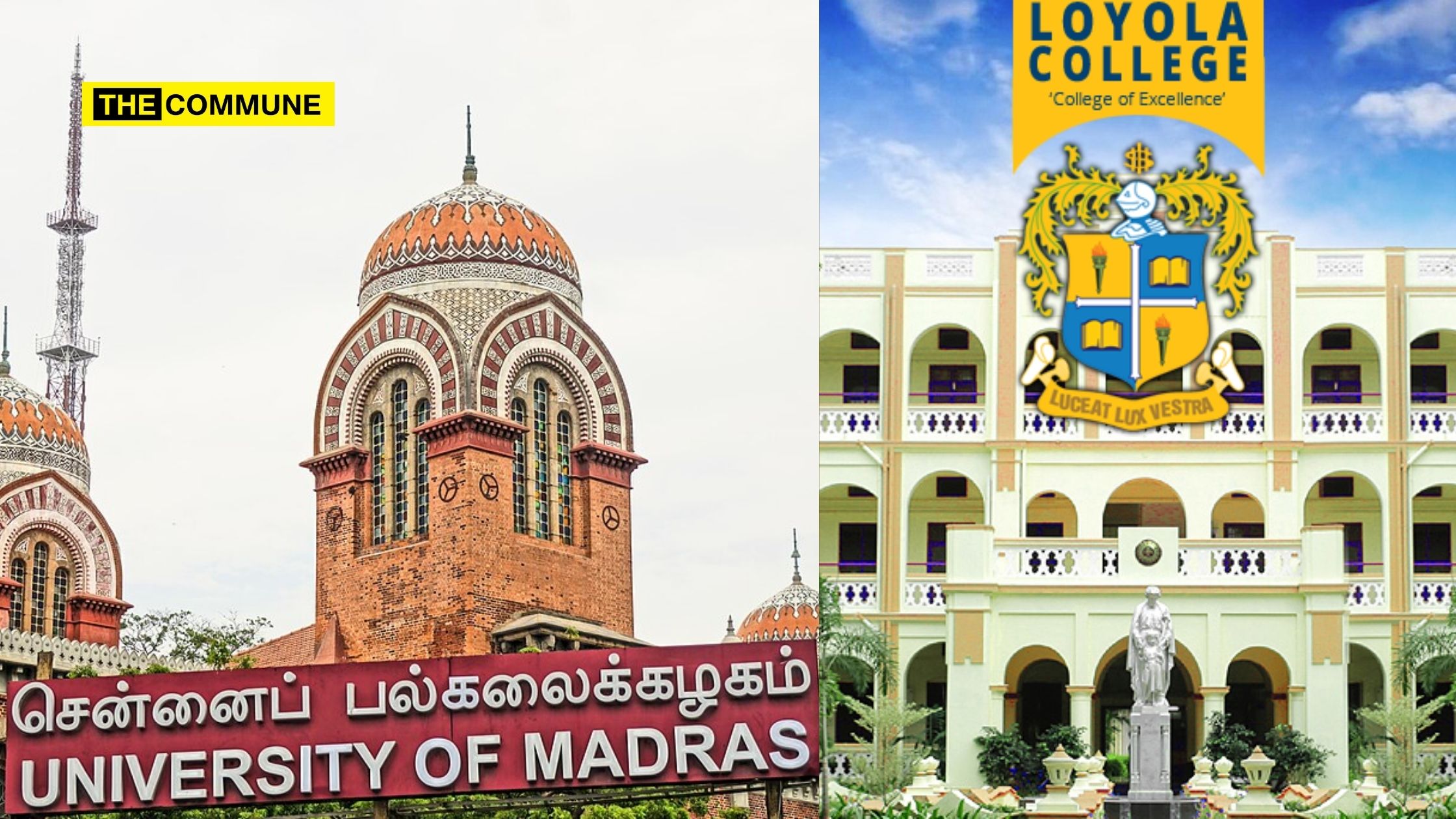
LIBA Alumnus Declines Chrysalis 2025 Judging Role, Supports Clergy Abuse Victims; Calls for Renaming Building After Founder Fr. Casimir Raj

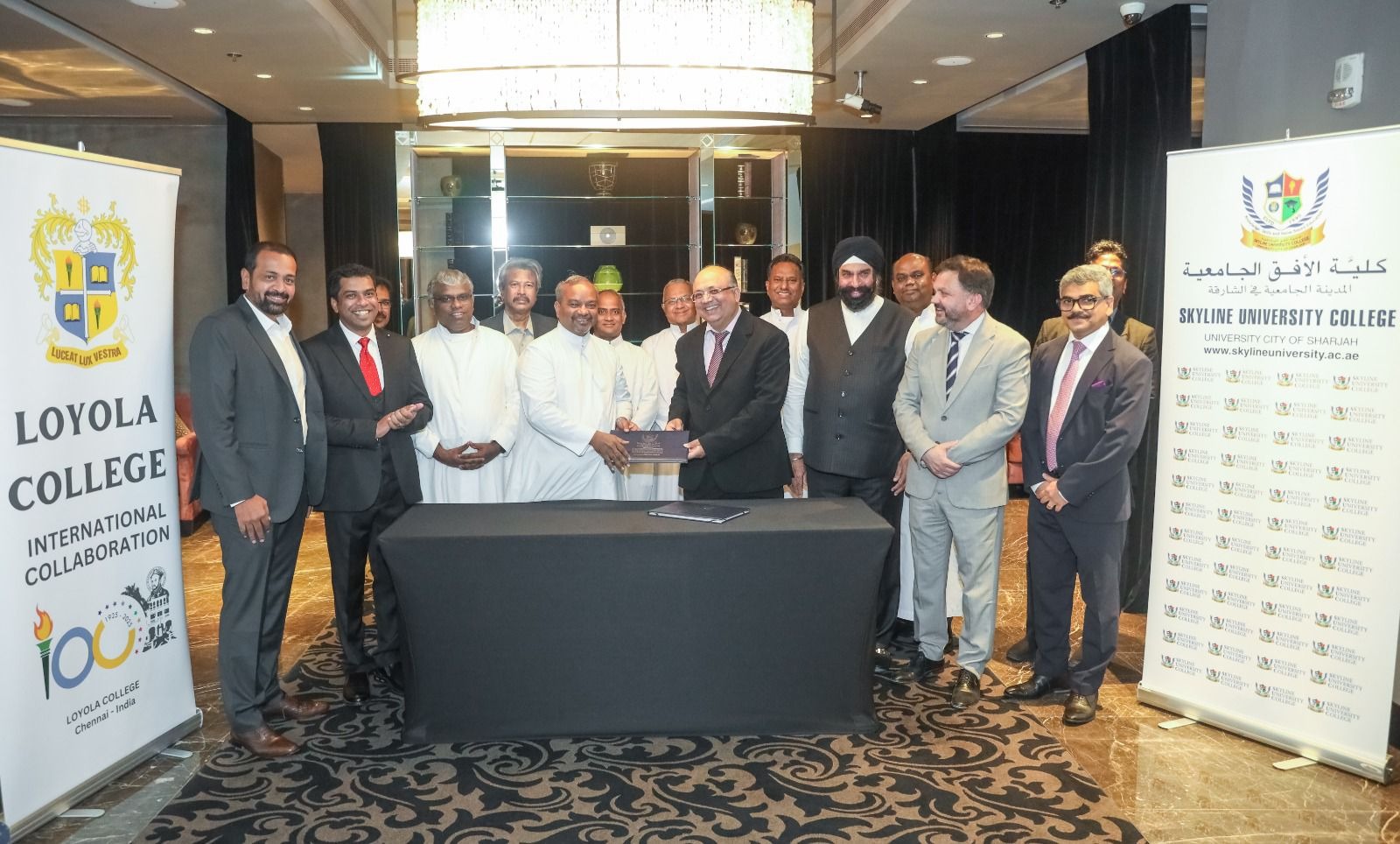
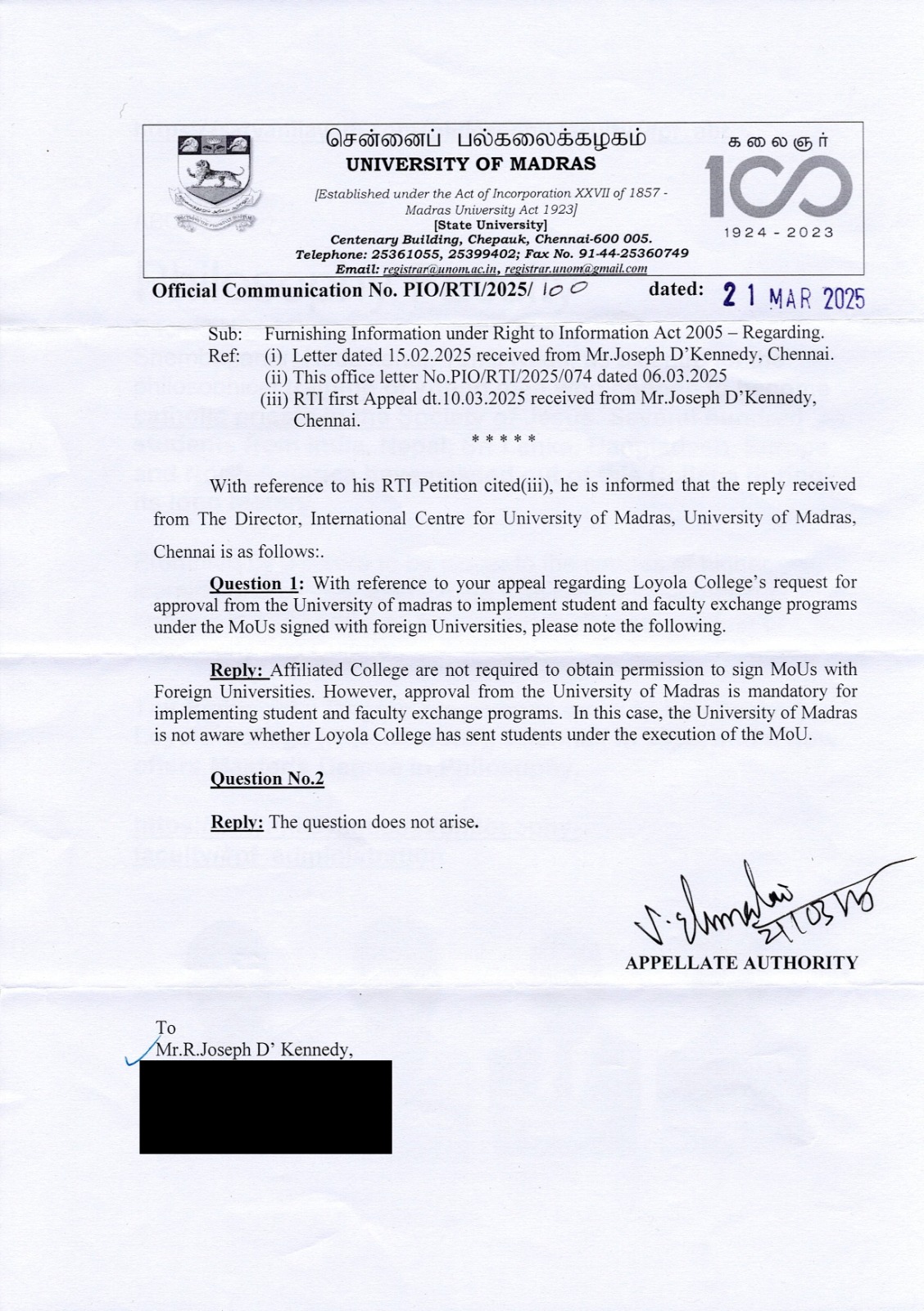
R. Joseph D’ Kennedy, a distinguished alumnus of the Loyola Institute of Business Administration (LIBA) has declined an invitation to judge Chrysalis 2025, LIBA’s prestigious annual event. In a letter addressed to the event organiser, Kennedy cited three significant reasons for his decision, including his support for victims of clergy abuse, unresolved concerns about Loyola College’s governance, and the controversial naming of an auditorium after an individual linked to tax fraud.

Kennedy, who was the recipient of the TVS Electronics Special Prize for Creativity in 2004, expressed his deep gratitude for his time at LIBA and the lasting impact of its founder, Fr. Casimir Raj. However, he stated that his decision to decline the invitation was rooted in his commitment to justice and accountability.

Standing with Victims of Clergy Abuse

In his letter, the ECA (Ending Clergy Abuse) – India representative extended his unwavering support to victims of sexual abuse by Jesuits belonging to the Chennai/Madurai Jesuit Province. He emphasized that he could not, in good conscience, associate himself with an institution that has failed to adequately address these grave injustices. “Their ongoing fight for justice is a cause I stand firmly behind,” he wrote.

Concerns Over Loyola College’s Governance

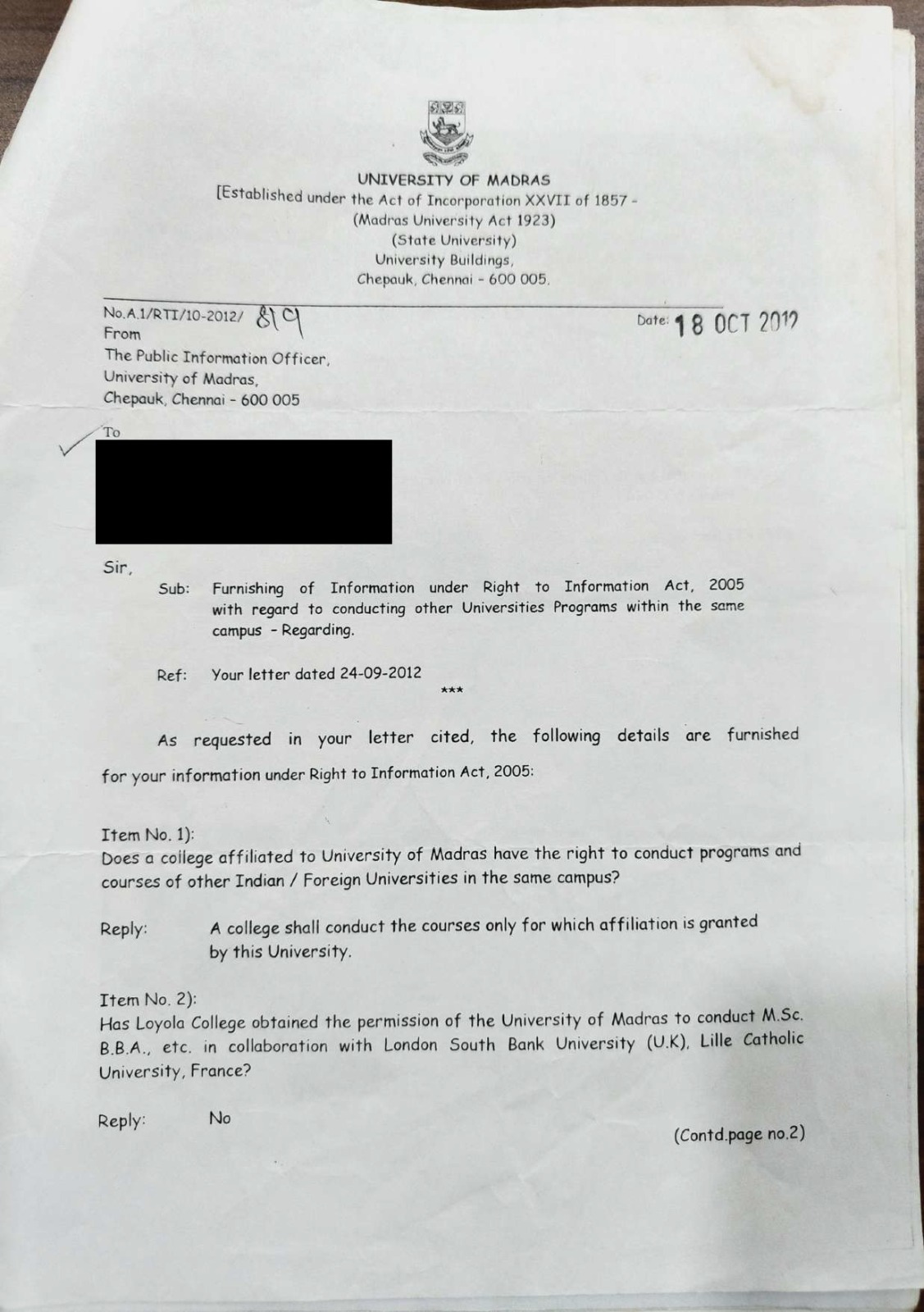
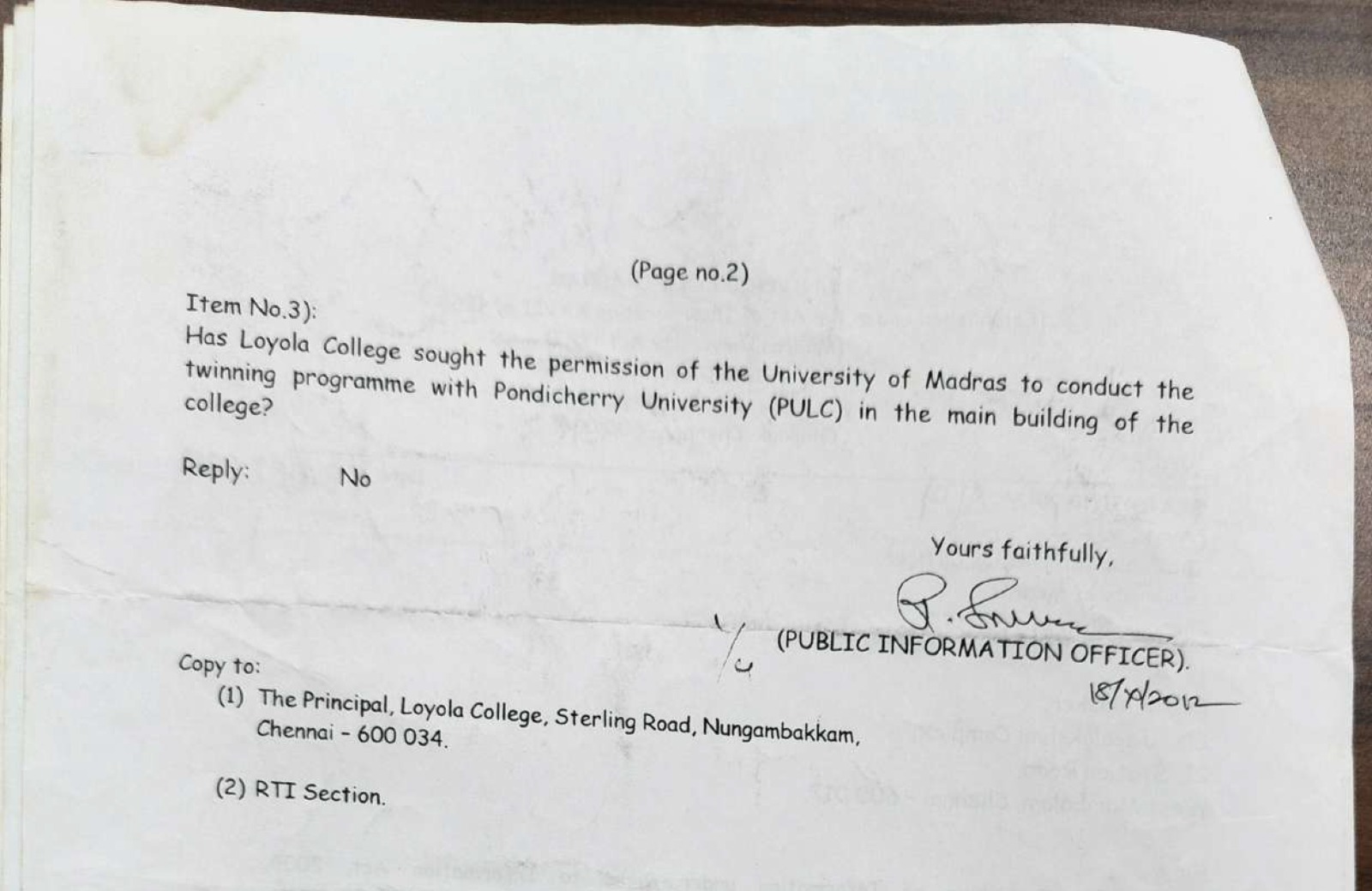
He also highlighted his concerns about Loyola College’s governance, referencing a detailed 41-page report he submitted to the University Grants Commission (UGC) in December 2022. The report, titled “Loyola College, Chennai is at a Dangerous Inflection Point and Granting University Status Will Be Extremely Suicidal for India as a Nation and the Christian Faithful,” led to the UGC denying Loyola’s application for university status. His’s concerns remain unresolved, and he believes it would be inconsistent to participate in an event hosted by an institution with which he has fundamental disagreements.

Controversial Naming of Auditorium

Kennedy expressed deep disappointment over the decision to name an auditorium after an individual who has been raided multiple times for tax fraud and settled for a substantial tax composition. The same individual was awarded the “Star of Loyola” by the management of Loyola College, Chennai. He lamented, “Sadly, the man raided for tax evasion is the role model LIBA / Loyola College sets as an example to its students.” He argued that this decision undermines the values of integrity and accountability that LIBA and Loyola College should uphold. He called for the building to be renamed after LIBA’s founder, Fr. Casimir Raj, a world-renowned scholar.

A Call for Dialogue and Resolution

Despite his decision, Kennedy reiterated his respect for LIBA’s mission and its efforts to foster leadership and innovation among students. He wished the participants of Chrysalis 2025 success in exploring the theme of “AIVolution” and expressed hope for constructive dialogue on the issues he raised.

Kennedy’s letter has sparked a broader conversation about accountability, transparency, and the values that educational institutions should embody. As the debate continues, many are watching to see how LIBA and Loyola College will respond to these pressing concerns.

Subscribe to our channels on TelegramWhatsApp, and Instagram and get the best stories of the day delivered to you personally.

Aadhav Arjuna From VCK, CTR Nirmal Kumar From ADMK To Join Vijay’s TVK

On 31 January 2025, Aadhav Arjuna, former deputy general secretary of Viduthalai Chiruthaigal Katchi (VCK), and C.T.R. Nirmal Kumar, former joint secretary of the AIADMK’s IT wing, officially joined the Tamilaga Vettri Kazhagam (TVK) in a ceremony held at the party headquarters in Panaiyur. TVK President Vijay was present to welcome them.

Both Arjuna and Nirmal Kumar have been appointed to significant roles within the party. In December 2024, Arjuna had launched his book “Ambedkar: A Leader for All” and during the event, he criticized the state’s political dynasties, stating, “In Tamil Nadu, only monarchy exists. In 2026, we need to end this monarchy. Chief Ministers should not be chosen based on birth. We need leaders who are ideologically committed to ruling Tamil Nadu, and a common man, a Dalit, should become Chief Minister.”

Arjuna’s remarks against the DMK’s dynastic politics created a stir, especially since VCK is part of the DMK-led alliance. As a result, Thirumavalavan, founder of VCK and Chidambaram MP, suspended Arjuna for six months. Shortly after, Arjuna decided to leave the VCK and pursue a new political path.

Nirmal Kumar, who previously led the BJP’s IT and social media unit in Tamil Nadu, joined the AIADMK in March 2023, accusing the state BJP of mismanagement.

It is also rumored that another functionary from the Naam Tamilar Katchi is set to join Vijay’s TVK, adding to the growing momentum.

(With inputs from The Hindu)

Subscribe to our channels on TelegramWhatsApp, and Instagram and get the best stories of the day delivered to you personally.

BJP Leader SG Suryah Slams DMK For Removing Pasumpon Muthuramalinga Thevar’s Name From Kovilpatti Market, Demands Official Restoration

Tamil Nadu BJP state secretary SG Suryah has strongly criticized the DMK government and the Kovilpatti municipality for removing the name of Pasumpon Muthuramalinga Thevar from the Daily Market in Kovilpatti and replacing it with “Kovilpatti Municipality Daily Market.” He questioned whether, under the current DMK regime, any public buildings or institutions can bear the name of anyone other than former Chief Minister M. Karunanidhi.

Following public outcry over the municipality’s decision to remove Muthuramalinga Thevar’s name on 28 January 2025, the authorities only applied simple stickers with his name to the board. In response, SG Suryah condemned the action and called on the government to formally restore and inscribe Muthuramalinga Thevar’s name.

In a statement on 29 January 2025, SG Suryah wrote on his official social media, “The Pasumpon Muthuramalinga Thevar daily market in Kovilpatti has been renamed as Kovilpatti Municipal Daily Market. Have you decided that no other leaders other than Karunanidhi should be named during the DMK regime? There can be projects, bus stand, and libraries in the name of Karunanidhi but they are determined to change it no matter who else’s name it is in. This action of the DMK government is an insult to Pasumpon Muthuramalinga Thevar, who lived with the principles of nationalism and divinity. Chief Minister Stalin, during his visit to Pasumpon for the Thevar Jayanti festival, disrespected him by wiping off the sacred ash from his forehead once. Now, they’ve also deliberately erased Muthuramalinga Thevar’s name. After public backlash, it is learnt that the Kovilpatti Municipality has placed a sticker with his name of Muthuramalinga Thevar on the name board. It is condemnable that, despite the outrage, they haven’t acknowledged their mistake. On behalf of Tamil Nadu BJP, we demand that the name of Muthuramalinga Thevar be formally restored and inscribed.”

Subscribe to our channels on Telegram, WhatsApp, and Instagram and get the best stories of the day delivered to you personally.