Home Blog Page 485

Kerala: Communist Govt Files Case Over RSS Founder Hedgewar’s Portrait Being Displayed At Pooram Festival In Kollam; No Case For Displaying Terrorist Portraits?

The Communist-led Kerala government is facing heavy criticism after registering a case under the Religious Institutions Act over the display of Indian nationalist and RSS founder Dr. K.B. Hedgewar during a Hindu festival—while taking no action against the public display of Hamas leaders, despite their designation as terrorists previously. The move was widely amplified on social media by Left-leaning media outlets and supporters of Congress and CPI(M).

The incident took place during the annual Pooram festival at the Ashramam Sree Krishna Temple in Kollam, where a portrait of Dr. Hedgewar was featured on an umbrella used in the elephant parade. This festival is a vibrant cultural competition between the Puthiyakavu Bhagavathi Temple—managed by an RSS-inspired trust—and the Thamarakkulam Ganapati Temple. Both temples traditionally parade 15 decorated elephants each, with changing umbrella designs (Kutamattam) that display images of deities, national icons, social reformers, scientists, and even global sports stars like Messi and Ronaldo.

This year, the display of Dr. Hedgewar’s image did not initially spark backlash. However, after media coverage and criticism from some Congress and left-wing figures, the issue escalated. The Youth Congress State Vice President filed a complaint, resulting in the Pandalam City Police registering a case under Sections 3, 4, and 5 of the Religious Institutions Act. The portrait, notably, was displayed alongside icons such as Swami Vivekananda, Sreenarayana Guru, and Dr. Ambedkar.

Despite the temple not being under the control of the CPM-led Travancore Devaswom Board, media attention intensified, framing the incident as politically motivated. Local RSS supporters, however, downplayed the matter, suggesting that the controversy was artificially fueled.

Critics have pointed out a stark contrast in the state’s response to another incident during the Uroos festival in Thrithala, Palakkad, earlier in February. Banners displaying Hamas leaders Yahya Sinwar and Ismail Haniyeh—figures associated with a group designated as a terrorist organization by the U.S., European Union, and others—were paraded atop elephants in front of thousands, including children. Despite the event’s visuals circulating widely online, no case was registered, and no official action was taken. CPI(M) Minister M.B. Rajesh and Congress leader V.T. Balram reportedly attended the event.

This perceived inconsistency in the government’s actions has reignited accusations of political bias. BJP leaders, including former State President K. Surendran, have strongly criticized the ruling government. “It’s troubling that nationalist figures face legal cases, while public displays featuring globally recognized terrorist leaders are ignored,” he stated.

This isn’t the first instance where alleged pro-Hamas sentiment has stirred controversy in Kerala. In 2024, the Kerala University Youth Festival was forced to change its name from “Intifada” due to backlash over its militant implications. A year earlier, former Hamas leader Khaled Mashal delivered a virtual speech at a rally in Malappuram organized by the Solidarity Youth Movement, intensifying concerns over extremist affiliations.

The contrasting handling of the two incidents—one involving a national figure and another involving internationally designated terrorists—has prompted a wider debate over law enforcement impartiality and accusations of appeasement politics within Kerala’s left-leaning governance.

(With inputs from Organiser)

Subscribe to our channels on TelegramWhatsApp, and Instagram and get the best stories of the day delivered to you personally.
Reflections On BR Ambedkar’s ‘Annihilation Of Caste’ – Is Total Erasure The Only Path?

There is an old story, inspired by Mahabharata, that used to be shared by family elders at home. It was about a small village, where two neighbours, say X and Y, watched the same festival procession. X, harbouring old grudges, saw only chaos and noise, muttering about the participants’ flaws. Y, open-hearted, saw joy and unity in the same scene. The procession hadn’t changed; their lenses had. X’s bitterness clouded his view, while Y’s clarity revealed beauty.

Various versions of this story, with the same theme, have been running in my head for several years. More so in the context of viewing the caste systems. There is little to no nuanced discussion around the same. Hierarchy and oppression are literally the only two words associated with the caste system.

But then, isn’t viewing the caste system solely through the lens of hierarchy and oppression risks oversimplifying its complexity and ignoring its role as a repository of cultural practices, identities, and community cohesion that have persisted for centuries?

In Annihilation of Caste (1936), B.R. Ambedkar delivers a scathing critique of the caste system, arguing that it is fundamentally incompatible with social justice and equality. A key observation from the text is his assertion that caste is not merely a division of labour but a division of labourers, inherently designed to enforce hierarchy and dehumanization – “Caste is not a physical object like a wall of bricks or a line of barbed wire which prevents the Hindus from commingling… It is a notion, it is a state of mind. The destruction of caste does not therefore mean the destruction of a physical barrier, but the destruction of a mental attitude.”

His observation codifies caste as a psychological and ideological construct that perpetuates inequality by embedding notions of superiority and inferiority in society’s collective consciousness. Ambedkar argues that caste’s rigidity—especially its hereditary nature and the practice of untouchability—creates a moral and social evil that cannot be reformed but must be annihilated entirely.

Powerful, as it sounds, and as it is, it does, in my humble view, it skips nuance for the hammer, and buries all possibilities of any discussion or debate or constructive dialogue. Ambedkar’s focus on caste as a tool of oppression eminently overlooks its role as a cultural institution for several reasons –

Caste as Cultural Identity

Castes / sub-castes often embody distinct traditions, rituals, cuisines, occupations, and social networks that have shaped regional and local identities in India. For example, specific jatis are tied to unique artisanal skills (e.g., weavers, potters) or religious roles, preserving knowledge and practices across generations. These aspects foster a sense of belonging and continuity, which many communities value, even today. Many artisanal or mercantile jatis see their traditions as valuable heritage, not merely as products of hierarchy.

Ambedkar’s lens prioritizes the hierarchical and exclusionary aspects of caste, particularly its impact on Dalits, whom he represented. He views caste’s cultural practices—such as jati-specific rituals, occupations, or traditions—as inseparable from the system’s oppressive framework.

By framing caste as a “state of mind” to be eradicated, he implicitly dismisses the possibility that jati identities could be sources of cultural pride, community cohesion, or historical continuity for non-oppressive groups.

Oversimplification & Universal Condemnation

By framing caste only as a problem to be eradicated, reformers may overlook its role in cultural preservation and social organization. For instance, affirmative action in India, while addressing inequality, sometimes reinforces caste identities by institutionalizing them. A blanket rejection of caste can alienate communities who see their jati as a source of pride, not subjugation.

Ambedkar’s call for annihilation rejects any reformist approach that might preserve caste’s non-hierarchical elements. He argues that even seemingly benign cultural practices reinforce caste boundaries and perpetuate division. This totalizing critique leaves little room to consider how jati-based identities could exist without enforcing superiority or inferiority, as seen in some modern contexts where caste functions more as a cultural marker than a rigid hierarchy.

Historical Context

The caste system’s endurance reflects its adaptability, providing social structure in diverse contexts, from ancient kingdoms to colonial rule. It functioned as a decentralized system of mutual support, with jatis often acting as self-regulating communities for marriage, dispute resolution, and economic cooperation.

Writing as a Dalit leader in a deeply unequal society, Ambedkar’s condemnation stems from the lived experience of untouchability and systemic exclusion. His focus on dismantling caste entirely reflects the need to prioritize justice for the most marginalized, for whom caste offered no cultural benefits, only dehumanization. This context makes it understandable why he overlooks caste’s role as a cultural institution for communities higher up the hierarchy or those less affected by its worst excesses.

Neglect of Regional Diversity

Ambedkar’s analysis, while incisive, generalizes caste across India, underplaying regional variations where jati functions more as a cultural or professional network than a strict hierarchy. In many parts of India or among certain mercantile communities, jatis have historically fostered economic cooperation and cultural distinctiveness without always enforcing rigid oppression. His blanket condemnation doesn’t fully account for these nuances.

Balanced View

Ambedkar’s observation is powerful and morally compelling, especially for highlighting caste’s role in perpetuating inequality. However, by framing caste solely as a divisive mindset, he sidelines its function as a cultural institution that has preserved diverse traditions, social structures, and identities for centuries.

Admittedly, acknowledging caste’s cultural significance doesn’t negate its discriminatory aspects. A fair approach might involve dismantling oppressive hierarchies (e.g., untouchability, restricted mobility) while respecting the organic, community-driven aspects of jati identity that don’t harm others. This could mean focusing on equality of opportunity without erasing cultural diversity.

This nuanced approach distinguishes between caste’s oppressive mechanisms (which Ambedkar rightly targets) and its cultural expressions, allowing for reform that eliminates hierarchy while respecting non-harmful aspects of jati identity. This tension remains central to India’s ongoing grapple with caste’s legacy.

In short, reducing caste to hierarchy alone misses its multifaceted nature—both its strengths as a cultural institution and its flaws as a system of inequality. Recognizing this duality allows for a more constructive dialogue about reform that respects India’s pluralistic heritage while addressing injustice.

Taking inspiration from the Bard’s Julius Caesar, am presenting you a rephrased/improvised version to ponder over, “The fault, dear Brutus, is not in our stars, but in ourselves, that we are underlings. Our vision, often, is clouded not by the world’s deeds, but by the lens of our own prejudices.”

G Saimukundhan is a Chartered Accountant.

Subscribe to our channels on TelegramWhatsApp, and Instagram and get the best stories of the day delivered to you personally.
Gruesome Murder In Tenkasi: Man Beheaded In Front Of Wife, Head Found 8 KM Away Near Temple

In a chilling act of violence that stunned Tenkasi on 16 April 2025, a man was brutally beheaded in front of his wife by an unidentified gang, who then escaped with the severed head and placed it near a temple approximately eight kilometers from the crime scene.

The victim was identified as 35-year-old K. Kuthalingam from Kasimajorpuram, who had been residing with his wife in Keezhapuliyoor. According to police reports, the couple had gone to a public distribution system (PDS) shop in their village on 16 April evening when they were ambushed by a gang of four. Armed with sickles, the assailants attacked Kuthalingam. Despite his wife’s desperate attempts to intervene, the gang managed to decapitate him and fled with his head.

The horrified woman immediately informed the Tenkasi police, who registered a case of murder against the unknown attackers. Soon after, authorities were alerted that a severed head had been discovered near a temple in Kasimajorpuram. Police quickly reached the scene and transported both the body and the head to the Tenkasi Government Hospital for postmortem examination.

Initial police findings suggest the murder might have been an act of vengeance. Kuthalingam was reportedly one of the accused in the murder of a young man near the same temple in November 2023. Investigations are ongoing to determine the motive and to identify and apprehend those responsible.

(With Inputs From TOI)

Subscribe to our channels on TelegramWhatsApp, and Instagram and get the best stories of the day delivered to you personally.
PIL Filed In Madras HC Seeking DMK Minister K Ponmudy’s Removal Over Derogatory Remarks On Hinduism And Women

ponmudi madras high court

Tamil Nadu Forest Minister K. Ponmudy has found himself embroiled in controversy after making derogatory remarks about Shaivism and Vaishnavism, along with indecent and offensive comments about women during a public event organized by the Thanthai Periyar Dravidar Kazhagam. In response, a Public Interest Litigation (PIL) has been filed in the Madras High Court, seeking his removal from the state cabinet. The PIL, submitted by advocate B Jagannath, claims that Ponmudy’s statements are a violation of the responsibilities entrusted to a public servant under the Constitution and calls for his immediate dismissal from ministerial duties.

The controversy erupted after Ponmudy, while speaking at an event organized by the Thanthai Periyar Dravidar Kazhagam, recounted a vulgar anecdote that linked sacred Hindu religious symbols to sexual positions. The minister referenced a crude joke historically shared in Dravidian movement circles, which equated the forehead markings of Shaivites and Vaishnavites to different sexual acts. The remarks, which quickly went viral, drew widespread condemnation from various political and religious groups.

He said, “A man goes to the home of a sex worker. She asked him if he was a Shaivaite or a Vaishnavite. He did not understand. If she had asked for ₹5 or ₹10, it would have been okay. He pondered why she asked if he was a Shaivaite or Vaishnavite coming to a sex worker’s home. When he asked, he did not understand her question. She said if you are a Shaivaite, you wear holy ash this way, and if you are Vaishnavaite, you wear it this way. He did not understand. He asked her what she meant. She said if you are Shaivaite, it means intercourse in a lying position, and if it is Vaishnavaite, intercourse in a standing position.” This went viral and received criticism from all quarters.

B Jagannath, in his PIL, criticized the lack of police response despite multiple complaints being filed, including one by BJP leaders with the Chennai Police Commissioner. He emphasized that Ponmudy, as an elected official, is constitutionally bound to respect and protect the sentiments of all citizens, regardless of religious affiliation.

Facing intense backlash, Ponmudy issued a public apology on 12 April 2025, acknowledging the inappropriateness of his comments. “I sincerely apologize for the words I used. It was a lapse in judgment. I regret having caused offense and embarrassment to many,” he said in a statement, expressing remorse for the hurt his remarks caused.

In response to the uproar, the ruling Dravida Munnetra Kazhagam (DMK) removed Ponmudy from his position as the party’s Deputy General Secretary. However, he continues to serve as the Forest Minister, a decision that has drawn criticism from opposition parties and civil society alike.

DMK MP Kanimozhi, sister of Chief Minister and party leader M.K. Stalin, condemned Ponmudy’s comments, labeling them “unacceptable.” AIADMK leader Sellur Raju also criticized the minister, accusing him of frequently making disparaging remarks about women and marginalized communities.

BJP spokesperson C.R. Kesavan demanded Ponmudy’s immediate dismissal from the cabinet, stating that his statements have stripped him of any moral right to hold public office.

The PIL is expected to be heard by the Madras High Court on 24 April 2025, as pressure mounts on the state government to take firmer action.

(With inputs from Federal News)

Subscribe to our channels on TelegramWhatsApp, and Instagram and get the best stories of the day delivered to you personally.
“Will Muslims Now Serve On Hindu Temple Boards Too?”, Asks Supreme Court On Religious Composition Of Waqf Board

supreme court assets constitution

On 16 April 2025, the Supreme Court voiced concern over the inclusion of non-Muslim members in Waqf boards during a hearing on the constitutional validity of the Waqf (Amendment) Act, 2025. Petitioners challenging the amendment argued that such provisions interfere with the Muslim community’s right to independently oversee and manage its religious and charitable institutions.

Chief Justice of India Sanjiv Khanna posed a pointed question to Solicitor General Tushar Mehta, asking, “Are you now suggesting that Muslims should also be appointed to Hindu endowment boards? Please state that clearly.” His comment highlighted the perceived inconsistency in allowing cross-religious representation in religious bodies.

The bench raised the issue of whether non-Muslims should be involved in Waqf-related decision-making, especially since the reverse scenario does not occur in Hindu religious institutions. The Chief Justice noted that under the current framework, most Waqf board members are Muslim—eight out of ten—leaving minimal representation from other communities. He questioned why similar inclusivity wasn’t considered for Hindu religious boards.

The Chief Justice asked, “Tushar Mehta, are you suggesting that members of minority communities, including Muslims, will now be permitted to serve on the Boards or Councils of Hindu religious or endowment bodies? If so, please state that clearly and openly.”

When the Solicitor General implied that, by the same reasoning, the judges themselves should not hear the case, the court reacted strongly. Chief Justice Khanna responded sharply, stating, “When we sit on this bench, we leave our religion at the door. We serve all equally. Comparing judges to board members is not appropriate.”

Justice KV Viswanathan also weighed in, pointing out that understanding the internal workings of mosques—such as access routes—may require familiarity with the space, reinforcing the need for community-specific representation. Mehta countered that such logistical matters could be handled by the Charity Commissioner.

The three-judge panel, comprising CJI Sanjiv Khanna, Justice Sanjay Kumar, and Justice Viswanathan, is set to resume the hearing on Thursday.

Background 

The Supreme Court is currently examining a set of petitions that challenge the Waqf (Amendment) Act, 2025. A key concern is the introduction of non-Muslim members to Waqf boards, which critics argue undermines the right of the Muslim community to manage its religious properties and institutions.

Another contentious issue is the legal treatment of historic mosques that were established through long-standing community use rather than formal documentation like sale deeds. The Court highlighted the difficulty in reversing Waqf status for such centuries-old properties.

As a temporary measure, the Court has ruled that any property recognized as Waqf by a court cannot be removed from that designation while the case is ongoing. It also suspended the provision that barred properties under investigation by the District Collector from being considered Waqf during that time. The Court emphasized that all appointed Waqf board members must be Muslim, apart from those holding positions ex officio.

(With inputs from India Today)

Subscribe to our channels on TelegramWhatsApp, and Instagram and get the best stories of the day delivered to you personally.
Pa Ranjith Jealous Of Mari Selvaraj? Whines That Pariyerum Perumal Was Praised Without Recognizing His Banner Neelam Productions

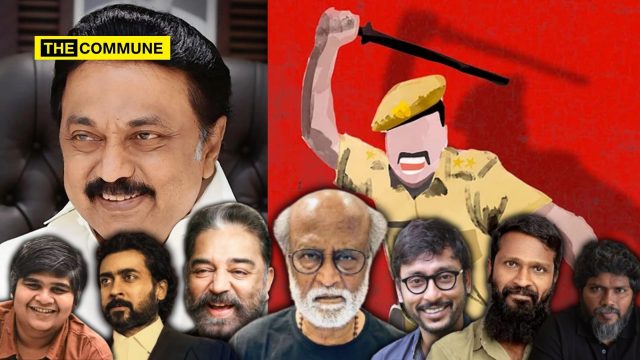
The “triple flop” Dravidianist director Pa Ranjith, known for his ideologically-driven cinema, has once again stirred controversy this time at the Verchol Dalit Literary Festival—by expressing apparent resentment toward the rising success of Mari Selvaraj. In a noticeably bitter tone, Ranjith revisited his association with director Mari Selvaraj, claiming that he was the one who introduced Selvaraj through the critically acclaimed film Pariyerum Perumal. He lamented that, despite being the producer of the film, he has not been duly recognized for its success—an unusual complaint, as industry norms typically celebrate the director as the creative force behind a film’s success or failure.

Ranjith appeared to express envy over Mari Selvaraj’s rising acclaim and attempted to reclaim part of that credit by emphasizing his role in launching Selvaraj’s career. However, Mari Selvaraj has carved his own path through impactful, socially resonant films that have earned both public and critical praise, without relying on ideological narratives as heavily as Ranjith.

Rather than self-reflection, Ranjith used the platform to rationalize his string of underwhelming releases, attributing lack of recognition to others instead of acknowledging potential flaws in storytelling and audience disconnect. He went further to suggest that he has been the sole torchbearer of Dalit-focused cinema and workplace inclusion, seemingly demanding acknowledgment for championing such causes.

Why Kaala Was A Flop – A Pa Ranjith Narrative

Pa Ranjith, in an attempt to explain the commercial failure of his film Kaala, offered a string of justifications during his speech. He said, “What happened during the time of Kaala was that, immediately after Rajinikanth announced his entry into politics, everyone began to write that he was using me. Particularly, what Viduthalai Chiruthaigal Katchi’s Ravi Kumar did then was…,” Ranjith paused mid-sentence, seemingly avoiding direct criticism, and continued, “Some people started writing that I was being motivated and funded by the RSS, that I was portraying Rajinikanth as an Ambedkarite and taking him to the slums. I didn’t know what to make of all this. Kaala is a film that openly opposed RSS ideology and stands till today. I presented that straight away. The conflict is black and white. In the climax, I had said that three colours should unify. I was confused and don’t know what more I was expected to take. I’m confused as to why the film was criticized so much.”

He went on to say that the entire Tamil community turned against Kaala after comments made by Rajinikanth about the Thoothukudi firing incident, claiming that those remarks triggered widespread negative campaigning against the film. Then he lamented that, “No one showed mercy that I was the one who directed it. ‘Ranjith was sold out’. That’s all that mattered. Many others have worked with Superstar Rajinikanth, but they were never sold-out directors, but I was the only one who was.”

Envy Towards Mari Selvaraj? Pa Ranjith’s Attempt To Overshadow His Protégé’s Success

In a later part of his speech, Pa Ranjith appeared to repeatedly downplay Mari Selvaraj’s success, claiming that Pariyerum Perumal—the film that launched Mari’s career—only came to be because of his backing. He seemed intent on reminding the audience that he produced the film and, in doing so, tried to shift the spotlight back onto himself.

Speaking at the event, Ranjith said, “We have made Pariyerum Perumal and released it—it became a huge hit. But what happened at that time was… Pariyerum Perumal was a movie that I invested my own money in. I’m its producer. While releasing the movie, I had previously given some money to my wife for savings. I got that from her and released the movie. But after watching the movie, I saw an article, I think it was Vikatan, they had not even mentioned that it was produced by Neelam Production, but had written that Pariyerum Perumal was awesome. A director wrote ‘Director Ram’s upbringing led to this film being made.’ I’m asking, what is wrong with you praising me? What is the problem with writing ‘Neelam Production’? When a good movie comes out, who is it being produced by?”

Ranjith went on to say that he had no clear expectations about whether the film would succeed. He admitted that only two scenes truly resonated with him. One was the moment where the character says, “I’m going to become a doctor.” After watching that scene, Ranjith told the team, “That alone is enough for me.” The other was the professor’s line, “If you back down in fear, will they spare you?”—a moment that ultimately convinced him to go ahead and release the film.

He concluded by subtly expressing resentment that, “Even then, everyone seemed to have an issue acknowledging that it was a Ranjith production. But fine, let it be. But a Mari Selvaraj rose from that, didn’t he? And now he’s reached great heights, hasn’t he?”

Ranjith Attempt to Claim Sole Ownership Over Dalit Representation Simply To Undermine Mari Selvaraj

Perhaps the most disappointing moment came when flop director Pa Ranjith appeared to craft a narrative positioning himself as the only true advocate for Dalit representation in cinema—while subtly discrediting director Mari Selvaraj’s contributions. In a surprising and divisive remark, Ranjith suggested indirectly a notion that Mari Selvaraj was not committed to offering opportunities or showing preferential support to Dalits in his film projects. He implied that, unlike himself, Mari was reluctant to prioritize the upliftment of marginalized communities in his work.

Ranjith said, “Mari Selvaraj came and asked me how many people have come to work in your production, how many have come to make films, and how many of them are non-Dalits. How many people are working with your movement, and when there are this many non-Dalits, how are you going to respond to the accusations against you? I said I don’t care about that. Yes, I am a Dalit. I live for Dalits. I will give a chance only to Dalits. I don’t care and I don’t understand. I know who I am. Why should I come to you and give a certification in written to trust me? I don’t need it.”

Subscribe to our channels on TelegramWhatsApp, and Instagram and get the best stories of the day delivered to you personally.
All India Muslim Jamaat Issues Fatwa Against TVK Chief Vijay Joseph For Allegedly Inviting Anti-Social Elements To Iftar Party

The All India Muslim Jamaat, a Sunni organization based in Bareilly, Uttar Pradesh, has issued a religious decree (fatwa) against Tamil actor-turned-politician and Tamilaga Vettri Kazhagam leader Vijay. The fatwa was prompted by allegations that Vijay invited drunkards and gamblers to an Iftar gathering, which the Jamaat declared as both sinful and unlawful in Islam. The group also advised the Muslim community in Tamil Nadu to refrain from including such individuals in religious functions or trusting them in matters of faith.

Maulana Shahabuddin Razvi Bareilvi, who serves as the National President of the All India Muslim Jamaat and Chief Mufti at Chashme Darul Ifta, issued the fatwa in response to a specific query. In it, he labeled Vijay as someone with a track record of actions contrary to Islamic principles, describing him as “anti-Muslim” based on his past behavior and public statements.

The fatwa specifically criticizes Vijay for what it describes as an attempt to gain political favor by exploiting Muslim sentiments. Maulana Razvi referenced the actor’s film The Beast, accusing it of portraying Muslims negatively by linking them to terrorism and portraying them as villains. According to Razvi, these depictions show Vijay’s past insensitivity towards the Muslim community.

Maulana Razvi Bareilvi said, “There’s prominent personality from TamilNadu named Vijay Thalapathy. He has formed a political party and maintained cordial relations with Muslims. However, he has portrayed Muslims in a negative way as those who spread terrorism in his films. Gamblers and liquor consumers were invited to his Iftar party. Due to all this, Sunni Muslims of Tamil Nadu are angry with him. They asked for a fatwa. So, in my answer, I have issued a fatwa mentioning that Muslims should not stand with Vijay.”

Further, he condemned the actor for allegedly disrespecting the holy month of Ramadan by inviting people who were not observing the fast or Islamic practices to an Iftar event. Razvi mentioned that Sunni Muslims in Tamil Nadu had even lodged a police complaint regarding the incident.

He concluded by calling on Muslims to avoid supporting Vijay politically or socially, urging them to neither attend his events nor include him in religious functions.

Subscribe to our channels on TelegramWhatsApp, and Instagram and get the best stories of the day delivered to you personally.
NCW Delegation To Visit Violence-Affected Areas In West Bengal And Meet Victims

A National Commission for Women (NCW) delegation will visit violence-affected areas in West Bengal and meet the victims. The delegation will arrive in Kolkata on Thursday evening and proceed to Malda on April 18 and Murshidabad on April 19.

The NCW enquiry committee will probe the Murshidabad violence and NCW Chairperson Vijaya Rahatkar will personally visit violence-hit areas and meet the victims.

Several areas in the district witnessed violent protests over the newly-promulgated Waqf (Amendment) Act last week. The total number of arrests in connection with the violence in pockets of Murshidabad district of West Bengal has crossed 200 till now, a senior official of the state police said.

The West Bengal Police on Wednesday announced the constitution of a nine-member Special Investigation Team (SIT) to probe the violence and riot-like situation in the minority-dominated Murshidabad district throughout almost the entire last week over protests against the Waqf Amendment Act becoming violent.

The NCW on Wednesday, announced the formation of an enquiry committee to investigate the violence. The NCW stated that the decision to form its probe committee was taken after the commission took suo motu cognizance of reports of several women enduring molestation during the communal unrest in the Mandirpara area of Dhulian, Murshidabad district.

“The violence has led to the exodus of hundreds of women, many of whom were forced to cross the Bhagirathi River in search of safety, seeking refuge in the nearby district of Malda. These women have been torn from their homes, living in fear and uncertainty, facing unimaginable trauma and loss,” the NCW statement read.

“The committee will also include Dr. Archana Majumdar, Member of the NCW, and Dr. Shivani Dey, Deputy Secretary of the NCW, to support the enquiry and ensure a thorough investigation,” the NCW statement read.

Meanwhile, the nine-member SIT of the state police will be headed by an officer of the rank of additional superintendent of police, who will be assisted by two officers in the ranks of deputy superintendents of police and six inspector-ranking officers.

The SIT will have representations from various departments of state police namely Intelligence Branch, Counter Insurgency Force, Criminal Investigation Department, and Cyber Crime Division.

The two announcements came on a day when a petition has already been filed at Calcutta High Court by some victim families of Murshidabad seeking a probe by the National Investigation Agency (NIA) into the violence. The hearing on the matter will be held on Thursday.

–IANS

Subscribe to our channels on TelegramWhatsApp, and Instagram and get the best stories of the day delivered to you personally.
Trump Administration Embroiled In Standoff With Judges Raising Threats Of Contempt Proceedings

trump russia ceasefire pakistan oil threat tariff

President Donald Trump’s administration has become embroiled in a standoff with the judiciary over its program to send to El Salvador illegal migrants who are allegedly members of criminal gangs now declared as foreign terrorist organisations.

A federal judge on Wednesday threatened criminal contempt proceedings against the administration for not following his order to return to the US a plane that was ferrying Venezuelan migrants to a notorious high-security detention centre in El Salvador.

Another federal judge had on Tuesday told the Justice Department that she was going to move against it for failing to comply with orders to bring back a Salvadoran migrant whom the government admitted had been erroneously deported to El Salvador.

She also held out the possibility of contempt proceedings against officials. The threats by the two judges in separate cases to rein in the administration’s deportation actions test the Constitution’s separation of powers between the executive and judicial branches of government.

Trump and his officials have brushed off the judiciary’s threats. Judge James Boasberg said that there was probable cause to hold the administration in contempt for failing to return the migrants en route to El Salvador to give them a chance to challenge their deportation in a US court.

The Justice Department maintains that once the planes were in flight they were out of the court’s jurisdiction and could not be returned. “The Constitution does not tolerate willful disobedience of judicial orders — especially by officials of a coordinate branch who have sworn an oath to uphold it”, Boasberg said.

The administration, which invoked the Alien Enemies Act to deport them, has refused to provide him with details about the migrants, asserting that it would compromise state secrets.

The administration asserted that 238 Venezuelans were members of the dangerous criminal gang Tren de Aragua involved in crimes in the US and abroad and since it has been declared a foreign terrorist organisation it could act against them under the Alien Enemies Act, a 1798 law.

Boasberg said that the government would not have to bring them back, but only give them a chance to challenge their deportation in court.

Failing that, he would require officials to testify under oath to identify those who disregarded his order and prosecute whoever was responsible, he said. When a court cites someone for criminal contempt, the Justice Department prosecutes them.

If it refused to prosecute, Boasberg indicated he would appoint an outside lawyer as the prosecutor. The Trump administration said it would challenge Boasberg, taking it to the Supreme Court where it had earlier notched a partial victory against him in another matter.

On appeal, the Supreme Court struck down a temporary order by Boasberg to stop deportations under the Alien Enemies Act, but upheld the rights of those facing deportation under the law to challenge it in court.

In the other case, the Salvadoran man Kilmar Abrego Garcia was deported by mistake although a judge had ordered that he should not be sent to El Salvador where he may face violence. Judge Paula Xinis ordered the government to bring him back.

On an appeal, the Supreme Court partially sided with the judge, ordering the government to only “facilitate” his return, rather than actually bring him back as Xinis ordered. On Monday, at a White House meeting with Trump, El Salvador’s President Nayib Bukele said he would not release Garcia from the dreaded Centro de Confinamiento del Terrorismo (CECOT) prison for hardened criminals. Attorney General Pam Bondi said that the matter was in the hands of Bukele and Garcia was “not coming back” and it was the “end of story”.

Taking a narrow interpretation of the Supreme Court’s dictum to “facilitate” Garcia’s return, Bondi said if El Salvador released him the US would provide a plane to bring him back.

The government says that though the deportation was a mistake, Garcia belonged to MS-13, a notorious gang with roots in El Salvador. Xinis had asked the Justice Department to provide regular updates on what it was doing to facilitate his return, and information on his case. Frustrated by the government’s refusal to fully respond, she said, “There will be no tolerance for gamesmanship or grandstanding”.

She ordered four government officials to sit for a deposition next week with Garcia’s lawyers. The Administration’s lawyer Dave Ensign indicated that the government may appeal her ruling. Ultimately, the Supreme Court may have the final say on contempt proceedings, and were they to come about it could set the scene for a momentous confrontation between the Trump administration and the judiciary.

Trump has called Boasberg a “radical left lunatic” and a group of Republican members of the House of Representatives have introduced a resolution to impeach him.

–IANS

Subscribe to our channels on TelegramWhatsApp, and Instagram and get the best stories of the day delivered to you personally.
Drinking Water Transported In Garbage Truck For DMK Pandal In Tiruppur

A video showing drinking water being transported in a garbage truck to a DMK-organised Neer Mor (buttermilk) stall in Chamalapuram, near Palladam, has triggered widespread criticism on social media and among local residents. The incident, which involved the use of a municipal sanitation vehicle, raised serious concerns about hygiene and misuse of public resources.

The buttermilk stall was reportedly opened over 40 days ago as part of birthday celebrations for Chief Minister M.K. Stalin. It was overseen by Chamalapuram Town Panchayat Chairman and DMK functionary Vinayaka Palaniswami.

In the video, which has since gone viral, a sanitation worker was seen drawing water from a public tap and loading it into a garbage truck before transporting it to the Neer Mor pandal. When questioned, the worker claimed he was acting on instructions from local officials.

The incident sparked strong condemnation from social activists and local residents, who expressed concern over the potential health risks. They alleged that the buttermilk distributed at the stall was mainly consumed by daily wage workers, children, and the elderly, and that using unfiltered water carried in a waste collection vehicle posed a risk of infection. The activists also criticised the use of a government vehicle for what they described as a political party’s activity.

Efforts to reach Chairman Palaniswami for clarification reportedly failed, as his phone was found to be unreachable.

Chamalapuram Town Panchayat Executive Officer Sivakumar later acknowledged the incident and said he became aware of it only after the video surfaced. He confirmed that a garbage truck was used and stated that a temporary sanitation worker had transported the water without his knowledge. He added that disciplinary action would be taken against the worker and that an inspection would be conducted at the site to assess whether unsanitary water had been used.

However, local activists questioned this explanation and alleged that the worker was being made a scapegoat to protect senior officials. They argued that such an action could not have been carried out without authorisation from higher authorities within the town panchayat.

(With inputs from Vikatan)

Subscribe to our channels on Telegram, WhatsApp, and Instagram and get the best stories of the day delivered to you personally.