Home Blog Page 475

‘Does He Know His Grandmother Praised Savarkar?’: Supreme Court Slams Rahul Gandhi, Grants Stay But Warns Against ‘Irresponsible Statements On Freedom Fighters’

The Supreme Court on Friday strongly criticised Leader of Opposition Rahul Gandhi for calling freedom fighter Vinayak Damodar Savarkar a “British collaborator” who received a pension from the British. While staying the summons issued to Gandhi by a Lucknow Magistrate in a related criminal case, the Court warned it would initiate suo motu action if similar remarks were made again.

A Bench comprising Justices Dipankar Datta and Manmohan expressed its displeasure over Gandhi’s comments, calling them “irresponsible” and disrespectful to freedom fighters.

“Let him not make irresponsible statements about freedom fighters,” the Bench observed. “You cannot make such statements without knowing history or geography of freedom fighters.”

The Court was hearing Gandhi’s plea challenging an Allahabad High Court order that had refused to quash the summons. The summons had been issued by a Magistrate court on December 12, 2024, in connection with Gandhi’s remarks made during his Bharat Jodo Yatra on 17 November 2022.

At the time, Gandhi had referred to Savarkar as a collaborator with the British and claimed that he received a pension from them. These remarks led advocate Nripendra Pandey to file a complaint, alleging they promoted enmity in society and were aimed at inciting hatred.

The Bench remarked: “You have a good point on law and you will get a stay. But any further statement by him will be taken up suo motu. No words on our freedom fighters. They gave us freedom and we treat them like this? Issue notice. Stay on impugned order.”

The Court also reminded Gandhi’s counsel, Senior Advocate Abhishek Manu Singhvi, that even members of Gandhi’s family had shown respect towards Savarkar in the past.

“Does he (know) that even Mahatma Gandhi used the words ‘your faithful servant’? the Bench questioned.

During the hearing today, the Supreme Court posed sharp questions to Gandhi. “Does Rahul Gandhi know that his grandmother, former Prime Minister Indira Gandhi, also sent a letter on Veer Savarkar praising him?” the Bench remarked. “How can he make irresponsible statements on our freedom fighters without knowing history, geography about it!”

The Court was referring to a letter dated 20 May 1980, written by Indira Gandhi in response to Pandit Bakhle, secretary of the Swatantryaveer Savarkar Rashtriya Smarak, regarding celebrations for Savarkar’s birth centenary. In the letter, Indira Gandhi wrote, “I have received your letter of 8th May 1980. Veer Savarkar’s daring defiance of the British Government has its own importance in the annals of our Freedom movement. I wish success to the plans to celebrate the birth centenary of the remarkable son of India.”

Earlier, the Allahabad High Court had refused to entertain Gandhi’s plea, stating that he had the alternative remedy of moving the Sessions Court under Section 397 of the CrPC. The Sessions Court had remanded the matter back to the Magistrate after an earlier dismissal by the Additional Chief Judicial Magistrate (ACJM).

The trial court, while issuing the summons, had observed that Gandhi’s remarks — that Savarkar was a “British servant who received a pension” — had spread hatred and ill-will, forming a prima facie case under Sections 153A (promoting enmity) and 505 (public mischief) of the Indian Penal Code.

Gandhi has also been fined ₹200 by the trial court for a previous non-appearance in the case.

(With inputs from Bar and Bench)

Subscribe to our channels on Telegram, WhatsApp, and Instagram and get the best stories of the day delivered to you personally.


Train Derailment Attempt Foiled Near Tiruvalangadu Railway Station, Tiruvallur

An attempt to sabotage a train near Tiruvallur was narrowly prevented after bolts and nuts were found missing from a section of the railway track near Tiruvalangadu station. The incident has raised serious concerns, prompting an in-depth investigation by railway police.

The issue came to light in the Harichandrapuram area, close to Tiruvalangadu, where the railway line heads toward Chennai. A railway lineman spotted the missing fasteners during a routine inspection and quickly disabled the signal system, thereby preventing a potential disaster.

Authorities suspect foul play and are probing the incident to determine who tampered with the track. Railway officials, upon arriving at the scene, began investigating whether this was part of a deliberate attempt to derail a train.

As part of the investigation, a sniffer dog named Nancy was brought in to assist, while police continue to search for clues and question possible suspects.

(With inputs from Deccan Herald)

Subscribe to our channels on TelegramWhatsApp, and Instagram and get the best stories of the day delivered to you personally.

“Pahalgam Strike” – How The Hindu Sounds More Like Pakistani Newspaper ‘Dawn’

In the wake of the Pahalgam terror attack that killed 28 civilians in Jammu and Kashmir, The Hindu, one of India’s national dailies, has come under scrutiny for its choice of language in a news report written by Suhasini Haider. The newspaper’s use of the term “Pahalgam strike” in headlines and reports has drawn criticism on social media and from sections of the media fraternity, with some accusing it of downplaying the severity of the incident.

Critics argue that the phrase “Pahalgam strike” lacks the directness of terms like “terror attack” or “massacre,” which have been used by other national outlets in their reporting. The concern is that such terminology, whether deliberate or editorially standardised, may appear to soften the nature of the violence—especially when unarmed civilians were targeted.

Comparisons have also been drawn between The Hindu‘s editorial tone and that of Pakistan’s English daily Dawn, which similarly used the term “Pahalgam strike” in its coverage. This has led to allegations that The Hindu’s language aligns too closely with the narrative coming out of Pakistan, where the government has condemned the attack but simultaneously warned India against any “misadventure” in response.

The attack carried out by terrorists affiliated with the Pakistan-based Lashkar-e-Taiba group, has prompted a series of retaliatory diplomatic steps from India, including revoking visas issued to Pakistani nationals and suspending parts of the Indus Waters Treaty. Pakistan, in turn, has shut its airspace to Indian aircraft and closed the Wagah border.

How Dawn Reported The Terror Attack A Few Days Ago

Pakistan’s Dawn newspaper referred to the attackers as “gunmen” and repeatedly avoided using the term “terrorist.” The newspaper even denied Jammu and Kashmir as an integral part of India, instead referring to the region as “Indian-Occupied Kashmir” (IOK). It further added to the narrative by calling the assailants a “little-known group” rather than acknowledging them as well-established terror outfits with ties to Pakistani insurgents. Dawn’s coverage also downplayed the significance of the attack by calling the region a “Muslim-majority area” and framing the terrorists’ actions as part of a “Kashmir Resistance.

Language used in headlines and reports not only informs public understanding but can also shape perceptions about accountability and severity.

Subscribe to our channels on Telegram, WhatsApp, and Instagram and get the best stories of the day delivered to you personally.
CPI-M Affiliate DYFI Leader Muhsin Arrested With MDMA Drug In Joint Operation By DANSAF And Kerala Police

In a joint anti-drug operation conducted by the District Anti-Narcotic Special Action Force (DANSAF) and Kottarakkara police, a local leader of the Democratic Youth Federation of India (DYFI) was arrested after being found in possession of MDMA. The arrested individual has been identified as Muhsin (20), a resident of Punalur and a member of the DYFI Karavaloor West Regional Committee. Authorities recovered two grams of MDMA from him.

The operation took place near Thalachira junction on the night of 22 April 2025. According to police, a group of three individuals arrived in a car and handed over a packet of drugs to Muhsin, who was waiting nearby on a motorcycle. The police, who had been monitoring the area, intervened immediately. The trio, upon noticing the officers, attempted to flee in their car, tossing approximately 18 grams of MDMA onto the roadside during the chase.

Despite a pursuit that stretched from Thalachira to Anchal, the suspects managed to evade capture. However, their vehicle was later found abandoned near Alencherry. Police seized the car, Muhsin’s motorcycle, and three mobile phones believed to belong to the fleeing group.

During the arrest, Muhsin allegedly resisted and attempted to flee custody but was recaptured after a chase. He reportedly tried to intimidate the officers by claiming to be a DYFI leader and making threats.

Investigations revealed that the trio involved are suspected to be district-level drug traffickers who procure narcotics in bulk from Bengaluru and distribute them in local markets, particularly around schools and colleges. Authorities are actively working to track down and apprehend the remaining suspects.

The arrest was carried out by a team led by Kollam Rural DANSAF Sub-Inspector K.S. Deepu, along with officers Sajumon, Abhilash, Dileep, Vipin Cletus, Kottarakkara SI Abhilash, GSI Rajan, Abisalam, Kiran, and Ganesh.

(With inputs from Mathrubhumi)

Subscribe to our channels on TelegramWhatsApp, and Instagram and get the best stories of the day delivered to you personally.

Madurai Tailor, Abdul Majeed Khan, Arrested Under POCSO For Sexually Harassing Minor Girls

A 61-year-old tailor, Abdul Majeed Khan, was arrested by the All Women Police (South) in Madurai for allegedly sexually harassing two minor girls. The accused, a resident of Ellis Nagar, reportedly targeted the victims—both aged 10—while they were playing in a park.

According to police sources, Khan, who is known to the family of one of the survivors, had taken the girl to the park under the pretext of letting her play. There, he allegedly assaulted her and another girl present at the spot. After returning home, the victims informed their parents, who immediately lodged a complaint with the police.

Following an investigation, Khan was booked under the Protection of Children from Sexual Offences (POCSO) Act and taken into custody. Further legal proceedings are underway.

Authorities have urged parents to remain vigilant and report any suspicious behavior to law enforcement immediately.

(With inputs from Dinamalar)

Subscribe to our channels on Telegram, WhatsApp, and Instagram and get the best stories of the day delivered to you personally.
Operation Zeppelin: Mossad Reveals Congress Scion Rahul Gandhi Allegedly Met Hindenburg Associates In Palo Alto To Target Adani

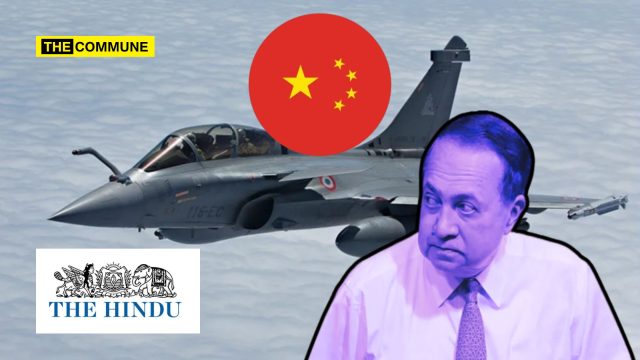
In a bombshell disclosure, it has been reported that Israel’s intelligence agency, Mossad, carried out a covert mission—codenamed Operation Zeppelin—with the objective of protecting Indian business magnate Gautam Adani from what was perceived as an orchestrated defamation effort linked to the Hindenburg Research report. The revelation, based on a media report cited by IANS, suggests that the directive came straight from Israeli Prime Minister Benjamin Netanyahu himself.

The timing of the Hindenburg report was especially critical, emerging just days before Adani Ports was to complete a $1.2 billion acquisition of Israel’s Haifa Port—a strategically vital deal in which Netanyahu had taken personal interest. Concerned that the controversy could derail the transaction and damage burgeoning India-Israel relations, Netanyahu reportedly instructed Mossad to investigate the forces behind the report.

According to the report, Mossad deployed two of its elite divisions—Tzomet (human intelligence) and Keshet (cyber operations)—to trace the origins of what it believed was a globally coordinated campaign against Adani. Their investigation spanned multiple nations, including the United States, UK, Australia, and countries across Europe. Individuals allegedly involved ranged from hedge fund operatives and investigative journalists to political activists and figures supposedly tied to the Biden administration and financier George Soros.

Among the more startling allegations was Mossad’s surveillance of senior Indian opposition leaders. Notably, Sam Pitroda—chairman of the Indian Overseas Congress—was reportedly targeted, with claims that his home servers in Illinois were hacked in search of links to the Hindenburg report. The operation allegedly uncovered encrypted communications that hinted at potential coordination between opposition politicians and Hindenburg associates.

Congress leader Rahul Gandhi was also reportedly monitored. Mossad is said to have tracked his movements, including an alleged meeting in May 2023 in Palo Alto, California, with individuals connected to the Hindenburg network. In internal communications, Mossad reportedly referred to Gandhi using the codename “Bitter Dynast.

By early 2024, Mossad had compiled what was internally dubbed the Zeppelin Dossier—a 353-page intelligence report identifying a complex web of entities, including USAID, OCCRP (Organized Crime and Corruption Reporting Project), and certain Western media groups, as being part of a coordinated campaign against Adani. While most international media outlets reportedly declined to publish the findings, French outlet Mediapart went ahead with the story.

Tensions escalated later in 2024 when U.S. authorities, including the DOJ and SEC, initiated investigations into Adani Group. However, these efforts reportedly fell apart under scrutiny, culminating in the resignation of U.S. Attorney Breon Peace. Around the same time, Adani’s legal team—led by Quinn Emanuel—issued a legal warning to Hindenburg Research.

In a dramatic turn of events, Hindenburg founder Nathan Anderson reportedly agreed to dissolve the firm in exchange for legal immunity in January 2025. This alleged agreement was said to be nullified following the return of Donald Trump to the U.S. presidency on 20 January 2025.

Throughout this time, Mossad is believed to have maintained close surveillance on Indian opposition figures, convinced that the smear campaign against Adani was driven by wider geopolitical motives—particularly an effort to undermine the growing India-Israel partnership.

Timeline of Key Events in Operation Zeppelin

  • 14 July 2022: Adani Group emerges as the lowest bidder to operate Israel’s Haifa Port for 30 years, offering $1.18 billion.
  • 11 January 2023: Adani finalizes the Haifa Port deal, required to pay the full amount of $1.18 billion within a month.
  • 24 January 2023: Hindenburg Research releases a scathing report accusing Adani Group of fraud, wiping out around $150 billion in market value and triggering a massive stock market crash in India.
  • 31 January 2023: Adani meets Netanyahu to reaffirm the Haifa deal despite the report. Netanyahu grows suspicious and asks Mossad to investigate.
  • 22 February 2023: Adani completes the full payment for the port, while Mossad begins surveillance on Hindenburg and its founder, Nathan Anderson.
  • 31 May 2023: Mossad allegedly uncovers a secret meeting between Rahul Gandhi and Hindenburg-linked figures in Palo Alto, California.
  • September 2023: Mossad agents infiltrate the Indian Overseas Congress premises in Illinois and decrypt emails suggesting a larger anti-Adani campaign. They find references to future attacks coordinated globally.
  • 31 August 2023: OCCRP publishes a new report alleging Adani’s use of opaque financial structures.
  • January 2024: Gautam Adani is briefed on the findings of Operation Zeppelin in Switzerland and receives the full dossier outlining international coordination against his business empire.
  • November 2024: Mossad leaks details of the operation to major outlets; only Mediapart publishes the story.
  • December 2024: The Biden administration reportedly ramps up legal actions against Adani, but cases falter. Adani’s legal team sends a formal notice to Hindenburg.
  • January 2025: U.S. Attorney Breon Peace resigns. Hindenburg founder Nathan Anderson reportedly agrees to shut down the firm in exchange for immunity, which is later revoked after Trump’s return to office.

While the full details of Operation Zeppelin remain classified, the emerging narrative paints a picture of high-stakes espionage, international politics, and corporate warfare, with Mossad playing a central role in shielding strategic Indo-Israeli interests from what it viewed as a hostile global agenda.

(With Inputs From Sputnik & IANS)

Subscribe to our channels on TelegramWhatsApp, and Instagram and get the best stories of the day delivered to you personally.

Pahalgam Terror Attack: Baisaran Opened Without Alerting Security Forces, Says Govt

In the wake of the deadly terror attack in Pahalgam, Jammu and Kashmir, which claimed the lives of 28 people—mostly Hindu tourists—the central government admitted to possible security lapses during a high-level all-party meeting held on Thursday. The closed-door meeting, chaired by Defence Minister Rajnath Singh, brought together senior ministers and key opposition leaders to discuss the incident and India’s response.

“If nothing had gone wrong, why would we be sitting here? There have been lapses somewhere that we have to find out,” a senior government figure reportedly told opposition members during the briefing, according to sources.

The attack in the Baisaran meadow area of Anantnag district has ignited political outrage across the country. Opposition leaders pressed the government for answers on the apparent failure in security arrangements. “Where were the security forces? Where was the CRPF?” several participants reportedly asked.

In response, Home Minister Amit Shah reportedly clarified that the Baisaran area had been opened to tourists without police clearance, in violation of standing procedures. According to Shah, local authorities, hotels in the region failed to inform security agencies about tourist movements, despite the area traditionally remaining closed to visitors until the annual Amarnath Yatra in June.

Shah further informed the gathering that while 500 security personnel were deployed in Pahalgam that day, none were stationed at Baisaran. The nearest CRPF and Army camps were located 5–7 km away. The CRPF, alerted by local pony operators, was the first to respond to the scene. The Army, citing standard policy, said it had no specific intelligence and was instructed to avoid tourist-heavy areas in the absence of credible threats.

Officials also revealed that the terrorists behind the attack had maintained strict radio silence, using no communication signals within a 50-kilometre radius for at least five days prior to the assault. The remote nature of the location — a 45-minute uphill trek from the nearest road — and the absence of a dedicated Standard Operating Procedure (SOP) for emergencies further delayed response efforts.

Despite intense discussions and sharp questions from the Opposition, the meeting concluded on a unified note. Parliamentary Affairs Minister Kiren Rijiju told reporters that all parties expressed their full support to the government in combating terrorism.

(With inputs from India Today)

Subscribe to our channels on Telegram, WhatsApp, and Instagram and get the best stories of the day delivered to you personally.

Pahalgam Terror Attack: DMK Supporter And The Hindu’s Frontline Editor Radhakrishnan Blames Modi Govt Whitewashing Terror Attack By Islamist Terrorists

In the aftermath of the brutal terrorist attack in Pahalgam, Anantnag district of Jammu & Kashmir—where Islamist militants, having openly declared jihad, specifically targeted and killed Hindu tourists—certain sections of Tamil Nadu’s media shockingly chose to downplay the violence. Rather than condemning the murder of 28 innocent civilians, these self-proclaimed journalists used the tragedy as a political opportunity to attack the central government, particularly Prime Minister Narendra Modi and Home Minister Amit Shah.

One glaring example of this shameful response came from The Hindu‘s Frontline Editor, R.K. Radhakrishnan. In a series of social media posts, he launched into a tirade—not against the terrorists—but against the Centre. Moments after news of the terror strike broke, Radhakrishnan tweeted from his official account, I’m not “shocked;” I’m fed up of being told lies and propaganda of “normalcy” in Kashmir #PahalgamTerroristAttack.”

His words raised eyebrows—not for their journalistic insight, but for their complete lack of humanity. Instead of mourning the victims or condemning the barbarity of the attack, Radhakrishnan focused his outrage on the ruling BJP government in the centre.

It became evident that his anger was not rooted in concern for the victims but was rather an extension of his political stance—opposing the abrogation of Article 370. The same agenda echoed through the responses he highlighted in his post, particularly a reply by a user named ‘Akratic’ who wrote by praising the Congress rule, “💯 correct sir. i went to kashmir as newly weds to celebrate our 1st wedding anniversary in 2012. the valley was like garrison town with soldiers behind sand bags every 200m and triple security perimeter around the airport.”

The commenter then doubled down with a follow-up, “what tangible change has abrogation of 370 produced? nothing! instead i sense complacency & pr and forgetting to do the basics right mms did the basics right sans the chest thumping.” 

This entire exchange exposed a disturbing priority—where the focus was not on condemning terrorism or empathizing with victims, but on using a tragedy to push a political narrative aligned with the Congress party’s stance on Kashmir. Rather than uniting against terrorism, such commentary sadly dilutes the seriousness of the threat and turns national security into a point-scoring game.

Radhakrishnan continued his rant—this time directing his frustration at Tamil Nadu’s media outlets for reporting the harsh truth that Hindu tourists were deliberately targeted. Reports revealed that the attackers had asked victims to recite the Kalma and, upon refusal, opened fire. Instead of acknowledging the severity of this communal targeting, Radhakrishnan criticized the local media for allegedly being instructed to push hashtags linking the attack to “Islamic terror.

In his response, he insinuated that the Tamil media was being used to promote a specific narrative and wrote, The media, including the sheep in Tamilnadu, have been told to run hashtags on Islamic Terror, it appears. Hindus can go on tour and be killed by random terrorists in Kashmir, but neither the incompetent LG nor the saffronised Union Home Ministry, will do much because these killings will be used for propaganda against Muslims in India – regardless of the fact that @PMOIndia is closest to UAE and tries to cozy up to MBS!”

He brazenly implied that the terror attack was orchestrated not just as an act of violence, but as part of a larger conspiracy—suggesting that the killings would be exploited to fuel propaganda against Muslims in India.

In another post Radhakrishnan wrote, Very clear that @TamilJanamNews says @AmitShah failed to protect Hindus!” 

What was even more outrageous was R.K. Radhakrishnan’s final claim—he insinuated that Prime Minister Narendra Modi was using the Pahalgam terror attack as a political tool to campaign ahead of the upcoming Bihar elections. This narrative stood in stark contrast to the facts. Back on 30 March 2025, multiple news outlets had already reported that the Prime Minister was scheduled to visit Bihar for a major development project and to attend National Panchayati Raj Day events in Madhubani on 24 April 2025.

Yet, dismissing these pre-announced official engagements, The Hindu’s Frontline editor Radhakrishnan shamelessly peddled, “All indications in #Dharbhanga (police presence, preparations) point to the fact that @PMOIndia ’s visit is on for April 24, even though his presence is imperative in Delhi. As always, he starts campaigning five months ahead of #Bihar election – though it will be given an official-sounding reason!”

In yet another mocking post, he questioned the motive behind the retaliation, saying, “One encounter before Modiji’s Dharbhanga meeting ?”

Subscribe to our channels on TelegramWhatsApp, and Instagram and get the best stories of the day delivered to you personally.

Lawyer Receives Death Threat Over Land Dispute In Thiruvarur; VCK Union Secretary Among 5 Arrested

The Needamangalam police have arrested five individuals, including the Needamangalam union secretary of the Viduthalai Chiruthaigal Katchi, in connection with a death threat issued to a lawyer over a land dispute.

Kesavan (38), a lawyer and party member residing in Manalur, had recently purchased a 23-cent plot near his home. The dispute began when Puthivan (49), the union secretary of the same party, claimed longstanding rights over the land, leading to ongoing tensions between the two.

Two days ago, Kesavan erected a fence around the property. In response, Puthivan and his relatives allegedly demolished the fence and issued death threats. Following a complaint by Kesavan, police registered a case under five sections and arrested Puthivan, his younger brother Bhaskar (47), Rajendran (50), Vijayakumar (39), and Sridhar (42). Investigations are ongoing.

(With inputs from Kamadhenu)

Subscribe to our channels on TelegramWhatsApp, and Instagram and get the best stories of the day delivered to you personally.

Dravidian Model: Heavy Police Security At Mosques In Tamil Nadu Following Pahalgam Terror Attack

In what comes as a weird response to the recent terror attack in Pahalgam, Jammu and Kashmir, the DMK government in Tamil Nadu has ramped up security measures across the state, particularly around places of worship. Police presence has been significantly increased at mosques, including those in Chennai, with officers instructed to conduct frequent patrols and maintain strict overnight vigilance.

Security has also been tightened at key public locations such as railway stations and bus stands. Authorities are closely monitoring social media platforms to detect and prevent any potential unrest or misinformation.

It is noteworthy that the DMK government announced its ₹65 crore plan to build a new Haj House in Nanganallur in March 2025, despite an existing one in Periyamedu. Critics accused the party of minority appeasement and vote-bank politics ahead of elections, citing unfulfilled promises like the ₹1,000 crore allocation for temple development. The move drew ire for neglecting temple upkeep while prioritizing Muslim-focused projects. Concerns also arose over the Haj House’s location in a Hindu-majority area near Chennai Airport, with fears of law and order issues and potential misuse for smuggling activities, further fueling controversy around the DMK’s governance priorities.

Subscribe to our channels on TelegramWhatsApp, and Instagram and get the best stories of the day delivered to you personally.