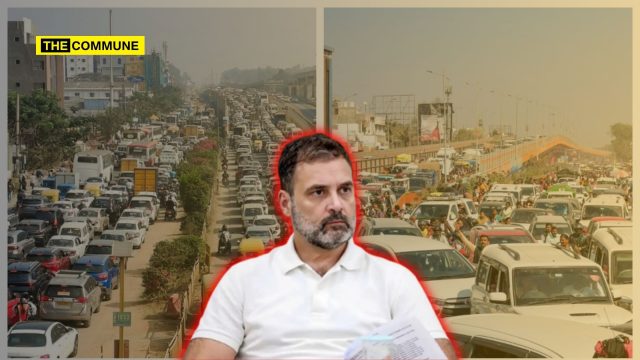
Bihar’s capital is set to witness major political activity as Congress MP and Leader of the Opposition (LoP) in Lok Sabha Rahul Gandhi will visit Patna on July 9 to lead the Grand Alliance’s ‘chakka jam’ against the ongoing Special Intensive Revision (SIR) of the voter list.
LoP Rahul Gandhi will participate in a march from the Income Tax roundabout to the Election Commission office near the Bihar Assembly at 10 AM, marking his seventh visit to Bihar in the last five months.
The Congress party, along with the RJD and Left parties, has announced participation in the statewide protest, alleging that the voter list revision process is biased and anti-people. “This is a direct attack on the voting rights of the poor, migrants, and deprived sections,” said Rajesh Ram, the Congress state president of Bihar, adding that the public will register their protest on the streets of Patna on July 9.
During the ‘chakka jam’, traffic is expected to be halted at major intersections and routes across Patna, with the Grand Alliance mobilising workers from across the state. Sources indicate that LoP Rahul Gandhi may also visit the family of slain businessman Gopal Khemka, who was shot dead outside his residence near Gandhi Maidan at 11:37 PM on July 4. The incident has triggered a political uproar, with the opposition targeting the state government over law and order.
The Election Commission began a special intensive revision in Bihar on June 24, making it mandatory for voters to fill out forms and submit any of 11 specified documents as identity proof. The Grand Alliance, including Congress and RJD, alleges that this process could deprive migrants, Dalits, Mahadalits, and poor voters of their rights, calling the campaign a “conspiracy to block votes” ahead of the Bihar Assembly Elections, which are due in three months. As the Election Commission proceeds with the voter list update, the July 9 ‘chakka jam’ led by LoP Rahul Gandhi is expected to further intensify the political temperature in Bihar ahead of the crucial elections.
Subscribe to our channels on Telegram, WhatsApp, and Instagram and get the best stories of the day delivered to you personally.
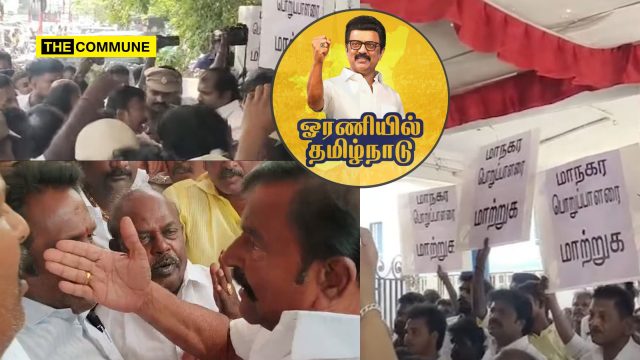
Tensions flared within the DMK at a booth committee’ meeting in Pudukkottai North District, as Urban Development Minister K.N. Nehru, along with Minerals And Mines Minister S Regupathy and Minister of Backward Classes Welfare Meyyanathan, faced a hostile reception from their own party cadres. DMK circle secretaries and local members obstructed the ministers’ entry, waving protest banners and demanding the immediate replacement of the Pudukkottai North City in-charge.
What Was The Dispute?
There were two separate flashpoints during the event the first arose when supporters of Minister for Backward Classes Welfare Meyyanathan created a commotion over his photo being excluded from the meeting banner, demanding an explanation for the omission. The second issue centered around the controversy surrounding the appointment of the DMK City Secretary for Pudukkottai North, which has already sparked ongoing discontent within party ranks.
தி.மு.க சார்பில் வைக்கப்பட்ட பிளக்ஸ், பேனர்களில் அமைச்சர் மெய்யநாதன் படம் எங்கே..? கே.என்.நேரு, ரகுபதியிடம் ஆதரவாளர்கள் கடும் வாக்குவாதம்.. சட்டென கோபப்பட்ட அமைச்சர் நேரு.. தி.மு.க பூத் கமிட்டி முகவர்கள் கூட்டத்தில் சலசலப்பு#Pudukkottai | #DMK | #Minister | #BannerIssuepic.twitter.com/yzpVFaSOd0
The controversy of appointment began after the sudden demise of Senthil, who served as the DMK City Secretary of Pudukkottai North and was also the husband of the Pudukkottai Corporation Mayor, Thilagavathy. Since his death due to a heart attack last December, the position has remained vacant.
Several senior DMK leaders, who had long been associated with the party and hoped to be appointed to the post, had lobbied the leadership for a chance, backed by their respective supporters. However, the DMK high command, reportedly influenced by Rajya Sabha MP Abdullah, named Rajesh a supporter of Abdullah as the new city in-charge three months ago.
Rajesh’s appointment triggered widespread dissatisfaction among party ranks. Many senior members viewed the decision as a snub and began voicing opposition. Over the past three months, protests have taken place at every major DMK event in the region, with Pudukkottai Corporation office-bearers, local secretaries, and party workers consistently demanding Rajesh’s removal.
These frustrations reached a boiling point during a DMK meeting at a private hall near Palpannai, under Pudukkottai Corporation limits. When the ministers arrived, they were intercepted by agitated DMK workers who blocked their path with placards, demanding Rajesh’s ouster. A heated exchange ensued between Minister Nehru and the protesting members. Amid the confrontation, Nehru was seen attempting to lash out at a party worker, sparking chaos.
While the ministers eventually urged the protesters to come inside and discuss the matter, the workers remained firm. They expressed dismay, stating that they had raised the issue for months with no response from the leadership. Dissatisfied, they walked out of the hall and staged a protest outside.
Party Discord Out In The Open
The incident laid bare internal cracks within the DMK. The fact that ministers were confronted and halted by their own party members at an organizational meeting has raised serious questions among the cadre. Many are now wondering how the party intends to win elections when such unresolved disputes fester within.
Amidst this, social media users began mocking Chief Minister M.K. Stalin’s much-publicized “Oraniyil Tamil Nadu” (Tamil Nadu in One Team) initiative, aimed to foster unity between leaders and grassroots workers to propagate DMK’s achievements. The Pudukkottai episode, however, has painted a very different picture, pointing out the irony that the party’s very unity the campaign aims to promote.
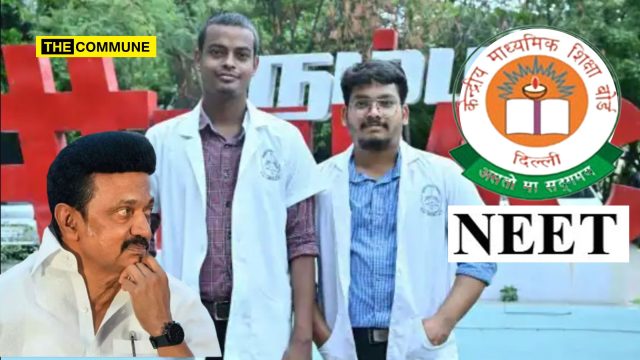
While the DMK and the Dravidian ecosystem frequently criticized NEET claiming it disadvantages rural and government-school students many of those very students credit the exam with enabling their medical education.
Thanks to a 7.5% quota introduced by the AIADMK government in 2020 for students from government schools (from Class VI to XII), 2,818 students are currently studying medicine under this reservation. Before NEET, fewer than 20 government-school students in Tamil Nadu secured medical seats each year, with 99% of places being dominated by private-school graduates.
After the quota was established, 435 students from government schools enrolled in medical colleges during the 2020–21 year, with the state covering their tuition, accommodation, books, and other fees.
Now in their one-year mandatory internships, many of these students credit NEET and the quota system with transforming their lives. One final-year MBBS student, Jeevithkumar from D.Vadipatti in Theni district, shared, “I scored 548 in both Plus Two and NEET in 2019, but still didn’t secure a seat. After coaching, I scored 664 in 2020. Under the quota, I ranked first and got into Chennai Medical College. The government is funding my entire course.”
He added, “Training at my government school was inadequate, which is why I sought private coaching. While the situation seems better now, the government should improve its infrastructure so future students can compete without leaving the public system.”
Another student, Narasimhan from Chennai, whose father is an auto-rickshaw driver, echoed this sentiment, “In 2019, I scored 220 in NEET, then improved to 508 in 2020 under the quota and joined medical college. Without NEET and the quota, my dream would have remained out of reach. I’m thankful for this policy.”
Officials from the Directorate of Medical Education confirmed that despite initial resistance such as a refusal from the then-Governor the quota was enacted through an emergency ordinance and has since been upheld across administrations.
The reservation has now expanded beyond medicine to extend 7.5% quotas in engineering, veterinary, AYUSH, law, and agriculture studies, with thousands of government-school students benefiting. Thanks to government-funded tuition and support costs, these students can focus fully on their studies.
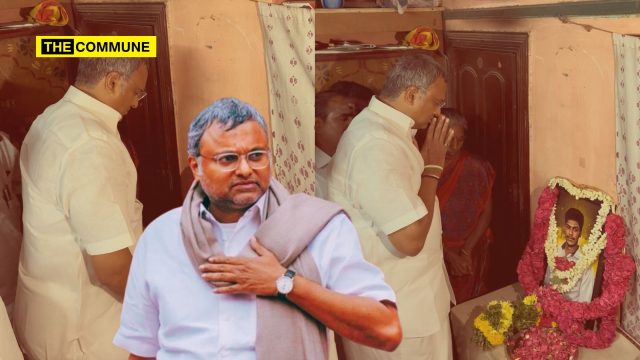
On 8 July 2025, Sivaganga Congress MP Karti Chidambaram visited the family of Ajith Kumar, the 27-year-old from Thirubhuvanam in Sivaganga district, who died after reportedly being beaten by a special police unit. Chidambaram offered his sincere condolences and expressed full support to the grieving family.
Speaking to reporters, Chidambaram strongly criticized the police, calling their methods unprofessional and calling for a full-scale overhaul including psychological screening and comprehensive retraining of all personnel. He urged the CBI to swiftly investigate the incident and make their findings public.
He said, “If they are using that method (third degree investigation), it means they have no professionalism. What kind of investigative capacity is this? A complaint came in about eight sovereigns of gold being stolen – I don’t know if that complaint is true or false. If this police force uses third-degree methods to investigate that, what kind of professionalism does this police force have? What kind of capacity do they possess? The police force with no capacity at all. Therefore, this is a systemic problem. I don’t see this as a political problem or an issue with the current government. Similar incidents have occurred in past administrations; the Bennix, Jayakumar (Jayaraj) incident happened under a previous government. However, what worries me is that there has been no change since then. So, if a wholesale change is needed – a complete transformation – then in my opinion, everyone from the DGP down to the last constable must undergo re-training. Not just re-training, but also psychological evaluation. Everyone needs to undergo a mental assessment. I accept that police officers are under a lot of stress, but they too need psychological evaluation. They need a complete re-training. Change will only happen with a wholesale reform. Because I don’t believe this will stop with Ajith Kumar. If this culture continues, what happened to Ajith Kumar today will happen to someone else tomorrow.”
A reported questioned, “They say there was pressure from the secretariat.”
Karti Chidambaram responded, “All of that must be investigated by the CBI. The CBI must investigate. Why did a special team go to investigate a small theft? I know that many incidents happen in many places. Special teams don’t go for everything. However, all the news I receive comes from the media. Why did a special team go? Who sent this special team? The CBI must investigate all this quickly and submit their findings to the public.”
He further said, “It is wrong to say that this happened because of this government, this is a cultural problem. Similar incidents have occurred in the previous government also. I won’t blame that government for those incidents. I won’t say the Sathankulam incident happened because of Edappadi Palaniswami. This is the culture of the police. The police is a colonial police, they have not shed their colonial mindset of the British. As long as they have this colonial mindset, this will not change. Neither is Edappadi Palaniswami the reason for this nor is today’s chief minister, Stalin. Edappadi Palaniswami did not create this problem and pass it on to this government nor did this government create it themselves. The real reason for this problem is the mindset of the police. It is the Jallianwala Bagh mentality. General Dyer’s mentality continues to this day and for that to change wholesale police reform has to take place.”
Ajith Kumar, a 27-year-old youth from Thirubhuvanam in Tamil Nadu’s Sivaganga district, died after allegedly being subjected to custodial violence by a special police team. The incident has triggered widespread outrage across the state, drawing comparisons to the 2020 custodial deaths of Jayaraj and Bennix in Sathankulam.
According to reports, Ajith Kumar worked as a security guard at the Bhadrakalyamman temple in Madapuram. On 27 June 2025, a woman named Sivagami, accompanied by her daughter Nikitha, visited the temple. Sivagami, who has mobility issues, arrived in a car and handed over the vehicle keys to Ajith Kumar. As he did not know how to drive, he arranged for someone else to park the car and later returned the keys.
Subsequently, Nikitha alleged that 9.5 sovereigns of gold jewelry and ₹2,500 in cash had gone missing from the vehicle. A complaint was filed with the Thirubhuvanam police. Without registering a formal FIR, police officers reportedly detained Ajith Kumar and held him in the temple’s cowshed, where he was subjected to a violent assault by a special police unit. He died as a result of the injuries sustained during the interrogation.
Following public outcry, five police personnel involved in the incident have been arrested and remanded to judicial custody. The Tamil Nadu government has announced that the investigation will be transferred to the Central Bureau of Investigation (CBI), and a judicial inquiry is also underway.
Subscribe to our channels on Telegram, WhatsApp, and Instagram and get the best stories of the day delivered to you personally.
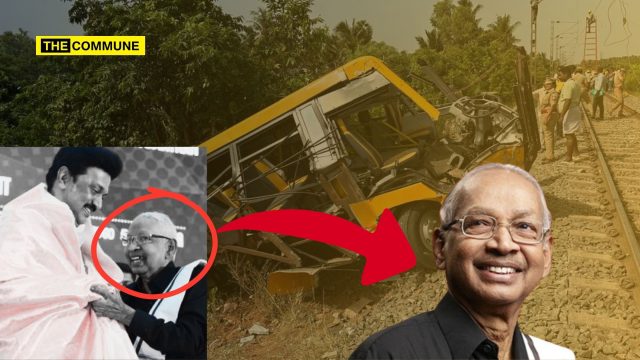
Following the footsteps of Dravidianist mouthpieces like Sun News and Puthiya Thalaimurai, the parent organization of the DMK – Dravidar Kazhagam leader Veeramani has made a statement on the distressing tragedy of the Cuddalore train accident.
Veeramani attributed the tragic train accident in Cuddalore, which claimed the lives of three school students, to the employment of railway staff who allegedly do not know Tamil. The incident has reignited debates over language-based employment policies in Tamil Nadu.
Earlier on 8 July 2025, at around 8 AM, a school van attempting to cross a railway gate at Chemmaguppam near Cuddalore was struck by the Villupuram-Mayiladuthurai passenger train. The collision resulted in the deaths of three students, while several others sustained injuries.
In a strongly worded statement, Veeramani blamed the accident on the alleged linguistic incompetence of the gatekeeper, identified as Pankaj Sharma, a non-Tamil speaker from North India. He criticized the railway administration for what he called a “poor practice” of appointing personnel unfamiliar with the local language, claiming it endangered public safety.
Expressing grief over the incident, Veeramani extended condolences to the bereaved families and praised the Tamil Nadu government’s swift response. Chief Minister M.K. Stalin immediately announced compensation of ₹5 lakh each to the families of the deceased, ₹1 lakh for the severely injured, and ₹50,000 for those with minor injuries from the Chief Minister’s Relief Fund.
He urged authorities to halt the recruitment of non-Tamil speakers in critical roles within the state, calling it a recurring cause of avoidable tragedies. His remarks align with the long-standing Dravidian political stance advocating for linguistic priority in employment.
On 16 June 2025, during Milan Fashion Week, Italian luxury label Prada unveiled its Men’s Spring/Summer 2026 collection, which featured open-toe leather sandals that closely resembled Kolhapuri chappals – traditional handcrafted footwear from the Kolhapur district in Maharashtra, India. The striking similarity led to widespread criticism, particularly because Prada initially failed to acknowledge the Indian origin or the artisans behind the original design.
The controversy deepened when it was revealed that Prada’s version of the sandals was priced at approximately ₹1.2 lakh (around $1,400), a stark contrast to authentic Kolhapuri chappals which typically retail in India for between ₹1,000 and ₹4,000. This significant price markup, coupled with the lack of attribution, sparked anger among over 20,000 artisans from Kolhapur who felt their cultural legacy and craft were being exploited for commercial gain without due recognition.
Kolhapuri chappals just hit the Prada runway—at ₹1.16 lakh—with zero credit to India’s craftsmen.
These iconic sandals, handmade in Maharashtra for centuries, tell stories of tradition, resilience, and royalty. Yet, artisans still battle low profits and fading recognition.… pic.twitter.com/iZsdgndCW2
Kolhapuri chappals are unisex leather sandals renowned for their braided straps, detailed cutwork, and use of vegetable-tanned leather. Rooted in regional identity, these sandals have been crafted using traditional techniques passed down through generations and were granted a Geographical Indication (GI) tag on 11 December 2018, to protect their authenticity and origin.
Following the backlash, Prada issued a statement on June 28, 2025, acknowledging that the design was indeed inspired by traditional Indian footwear from Maharashtra and Karnataka. The company stated its commitment to responsible design, cultural sensitivity, and initiating meaningful dialogue with local Indian artisan communities.
This incident is not an isolated case. Over the years, there have been several instances of Indian culture being appropriated in global fashion and entertainment. From Western celebrities wearing bindis and nose rings without context, to the use of maang tikkas in stylized shoots, to yoga being repackaged devoid of its Indian roots, cultural borrowing has repeatedly crossed into appropriation, especially when done without respect or credit. Let’s take a look at few of them.
#1 Dior Faces Backlash for Not Crediting Indian Artisans For Mukaish Embroidery
Days after Prada’s Kolhapuri chappal controversy, Dior is under fire for failing to credit Indian artisans for intricate mukaish embroidery in a $200,000 coat from Jonathan Anderson’s debut collection. Fashion commentator Hanan Besnovic highlighted that the detailed metal-thread embroidery, native to Lucknow, was crafted by 12 Indian artisans over 34 days. The absence of acknowledgment has sparked criticism online, with users questioning the disparity in recognition and compensation.
$200K Mukaish Coat How Dior “Stole” the Show with Indian Craft
After Prada’s Kohlapuri controversy, French luxury brand Dior is facing backlash after unveiling a $200,000 coat featuring traditional Indian Mukaish embroidery at Paris Fashion Week. Despite reportedly employing 12… pic.twitter.com/bYOxKCrgaD
In 2022, Kim Kardashian found herself at the center of a cultural appropriation controversy. During Paris Fashion Week earlier this year, Kardashian and her daughter North West were seen wearing nose rings. The issue resurfaced when singer Lizzo wore a similar accessory at the MTV Video Music Awards, and a British publication credited Kim Kardashian with popularizing the trend.
Although the article acknowledged the nose ring’s roots in Indian culture, it angered many Indian social media users, who pointed out that South Asian and African women have worn nose rings for centuries. Critics accused the publication of cultural insensitivity, saying traditional practices are often labeled “uncivilized” when worn by people of color but become fashionable when adopted by Western celebrities. While some defended Kardashian, arguing she didn’t intend to appropriate, most criticism was directed at the media for erasing cultural history and misattributing long-standing traditions.
#3 Gucci’s ₹2.5 Lakh ‘Kaftan’
In 2021, luxury fashion house Gucci drew backlash after listing a new “kaftan” for $3,500 (around ₹2.5 lakh), which many Indians pointed out looks identical to a traditional kurta. Social media users quickly mocked the pricing and mislabeling, with many sharing photos and sarcastic comments like, “I can get this for ₹500 from a local market.”
Gucci ladies Kaftan for 3500 dollars 😱 How much would u get almost same Kaftan in your local market? pic.twitter.com/QJzhbQ1paH
Critics also slammed Gucci for calling it a kaftan, despite its clear resemblance to a kurta, and for selling a common South Asian garment at an exorbitant price without cultural acknowledgment. Others joked about selling similar designs to Gucci or flying to India to buy dozens of such outfits for the same amount. This isn’t the first time a global brand has been accused of repackaging South Asian staples.
#4 Zara’s ₹5,700 ‘Mini Skirt’ That Looked Exactly Like a Lungi
In 2019, Zara’s design, a ₹5,728 ($89.90) “check mini skirt”, stirred a wave of mockery online for its uncanny resemblance to a traditional Indian lungi. Described as a “flowing skirt with draped detail,” the design immediately caught the eye of Indian X users, many of whom pointed out that similar lungis are sold for as little as ₹357. Users joked that Zara was simply rebranding Indian staples at luxury prices.
Western Muslims need to stop bringing American culture wars into Islam. A White Muslim wearing a thobe to the masjid is not 'cultural appropriation.' True appropriation is when Zara sells a lungi made by Muslim sweatshop workers in Bangladesh to hipsters for $70. pic.twitter.com/7R3MY4Igza
The lungi, a common garment worn across South Asia, has also featured in pop culture – from Shah Rukh Khan’s Chennai Express to Kevin Spacey’s “lungi dance” at IIFA 2014. While Zara continued to enjoy celebrity endorsements, many questioned the ethics of turning everyday desi wear into overpriced high fashion without context or credit.
#5 Kim Kardashian Wears Maang Tikka to Sunday Service
In April 2019, Kim Kardashian sparked accusations of cultural appropriation after she wore a traditional Indian maang tikka to a Christian Sunday Service. In an Instagram post captioned “Sunday Service Vibe,” she appeared in a white off-shoulder gown accessorized with gold earrings, a cuff bracelet, and the maang tikka – a ceremonial hair ornament typically worn by Indian brides.
While some admired the look, many criticized it for being culturally insensitive, pointing out that the maang tikka holds deep cultural and religious significance in Indian weddings. Social media users also noted that white is traditionally worn during mourning in Indian culture, making the styling further inappropriate. Comments flooded her post, calling out the lack of cultural awareness and accusing her of using sacred symbols as mere fashion accessories.
#6 Coldplay and Beyoncé in “Hymn for the Weekend” Song Video
Coldplay’s 2016 music video for “Hymn for the Weekend,” featuring Beyoncé, was filmed in India and showcased vibrant colors, traditional clothing, Holi celebrations, temples, and religious imagery to present Indian culture. The director stated that the goal was to capture “the essence of incredible India.” However, the video faced backlash for portraying India as an exotic backdrop and was accused of reinforcing colonial stereotypes.
Many critics pointed out that the use of Indian visual elements was primarily for aesthetic appeal, without providing proper cultural or spiritual context. This led to accusations of cultural appropriation, as the video seemed to reduce complex cultural symbols to decorative props rather than representing them with authenticity and respect.
#7 Selena Gomez’s Bindi at Billboard and MTV Awards
Selena Gomez sparked controversy in 2013 for wearing a bindi during her live performance of “Come & Get It” at the MTV Movie Awards. The look included Bollywood-inspired choreography and traditional Indian aesthetics. Critics, including Rajan Zed, President of the Universal Society of Hinduism, condemned the performance for trivializing a religious symbol with deep spiritual significance. The bindi, traditionally worn on the forehead and symbolizing a third eye or spiritual focus, was viewed by many as reduced to a fashion accessory.
Hi, i will never forgive selena gomez for wearing a bindi and using hinduism to make a sexy music video. Bye pic.twitter.com/pEehmQ8iH5
The controversy resurfaced a month later when Gomez wore another bindi-accessorized outfit during her Billboard Music Awards performance.
Despite prior criticism, she repeated the look, prompting renewed backlash from Hindu leaders. Zed criticized Gomez for remaining insensitive to Hindu sentiments, emphasizing that Hindu symbols have defined meanings and should not be used casually for onstage dramatics.
#8 Vanessa Hudgens Appropriating Bindi at Coachella
Actress Vanessa Hudgens has also been criticized for incorporating Indian elements like bindis and henna tattoos into her Coachella outfits. This happened in 2014.
While intended as aesthetic choices, these accessories sparked backlash from those who felt that deeply cultural items were being reduced to fashion trends in a festival setting, often associated with oversexualization and frivolity.
Vanessa was earlier called out for appropriating other cultures such as wearing dreamcatchers on her hair and box braids.
#9 Iggy Azalea’s “Bounce” Video
In the music video for “Bounce,” Iggy Azalea dons saris, rides an elephant, and dances through an Indian wedding procession, attempting to recreate a Bollywood-inspired spectacle. However, the video was widely criticized for cultural appropriation and exoticizing Indian culture. Critics argued that Azalea reduced sacred and traditional Indian symbols to fashion accessories and entertainment props, devoid of context or understanding.
Wired magazine’s Bruce Sterling attempted to excuse the appropriation by comparing Azalea’s video to Kareena Kapoor’s “Hai Re Hai Re” from Khushi (2003), invoking a misplaced class analysis to defend Azalea’s background as a high-school dropout who used to clean hotels, as opposed to Kapoor’s Bollywood lineage. This deflection, seen by many as textbook “hipster racism,” ignored the core issue of cultural misuse.
# 10 Appropriation Of Yoga, Ayurveda & Indian Traditions
Yoga and Ayurveda, deeply rooted in Hindu, Buddhist, and Jain traditions, are often reduced to commercial trends in the West. Yoga is marketed primarily as a fitness regimen, while Ayurveda is treated as a wellness fad. The spiritual and philosophical essence of yoga has been sidelined by rebranded versions like Christian yoga, goat yoga, and rage yoga—alongside slogans like “Namaste Bitches” and products like Yoga Barbie dolls. Meanwhile, the U.S. Patent and Trademark Office has granted 150 yoga-related patents, 134 trademarks on accessories, and over 2,300 yoga trademarks, with 1,500 more patents pending. Ayurvedic herbs and treatments have been patented by Western companies without recognizing or compensating the Indian communities from which this ancient knowledge originates. This commodification strips these traditions of their cultural and spiritual integrity, perpetuating appropriation rather than appreciation.
Some of the appropriation of yoga poses and techniques include:
Pranayama appropriated as Cardiac Coherence Breathing
Sama vritti pranayama appropriated as Box breathing
Brahmari pranayama appropriated as Bumble bee breathing
Yoganidra appropriated as “Non-sleep deep rest”
Dandayamana Bharmanasana appropriated as Balancing Table Pose
Renaming Yoga as Christian/Cross/Jesus yoga
Some other appropriations include Ayurvedic therapies like Shirodhara rebranded as “Mindful Mind Cleanse,” haldi doodh/turmeric milk as Golden Milk or Turmeric Latte, upvaas (fasting) as intermittent fasting, mantra chanting as “affirmations”,
#11 ‘Scandinavian’ Fashion Draws Backlash for Cultural Appropriation
In April 2025, controversy erupted again as Western fashion brands label garments resembling South Asian attire as “Scandinavian” outfits. Viral TikTok videos highlighted that these so-called Scandinavian dresses and scarves closely mirrored kurtas, anarkalis, and dupattas. Indian-origin creators accused brands of cultural appropriation, repackaging traditional styles without acknowledgment.
Critics slammed the hypocrisy of celebrating these designs while historically dismissing South Asian fashion and communities. Many pointed out the irony of borrowing from a culture still facing racism, calling the trend exploitative and disrespectful.
Subscribe to our channels on Telegram, WhatsApp, and Instagram and get the best stories of the day delivered to you personally.
In several Indian states, there has been a noticeable and organized rise in the construction of religious structures in the vicinity of prominent Hindu temples. Over the years, the number of mosques and churches near major temples and Jyotirlingas appears to be steadily increasing.
While only a few such locations have been identified so far using limited data from Google Maps, experts suggest that a comprehensive ground survey could reveal hundreds of additional sites.
This report presents a Google Maps-based analysis of mosques and churches located near 12 major Hindu temples. It lists their names, exact locations, and their distances from the respective temples, offering a spatial overview of this emerging pattern.
Meenakshi Temple – Madurai, Tamil Nadu
This temple is dedicated to Goddess Meenakshi (Parvati) and Sundareswarar (Shiva).
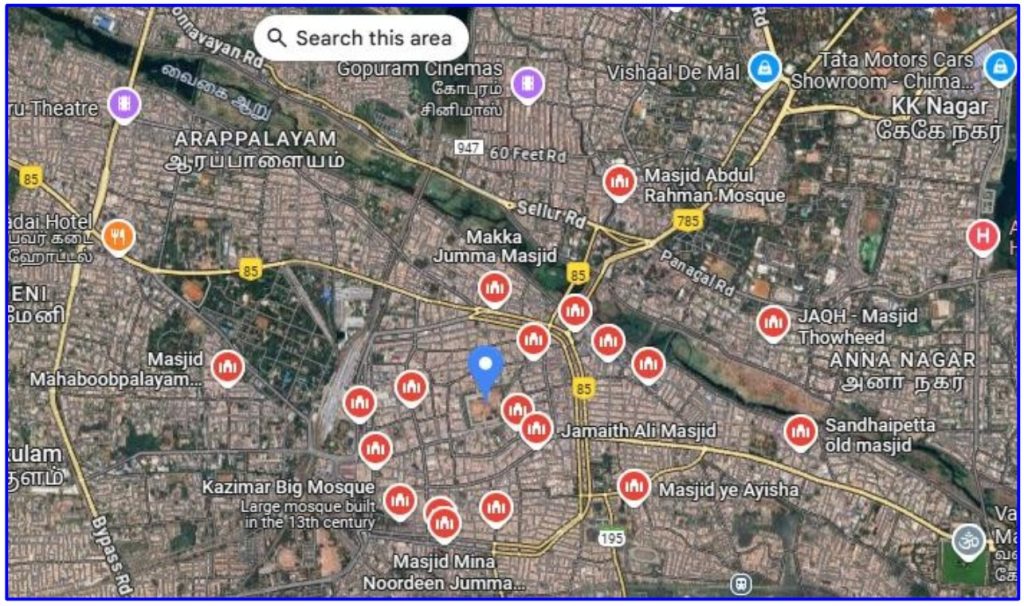
On searching for mosques near Meenakshi Temple on Google Maps, a total of 19 mosques are visible within a range of 1-2.3 km (Walking distance) from the temple.
Name of mosque and distance from Meenakshi Temple:
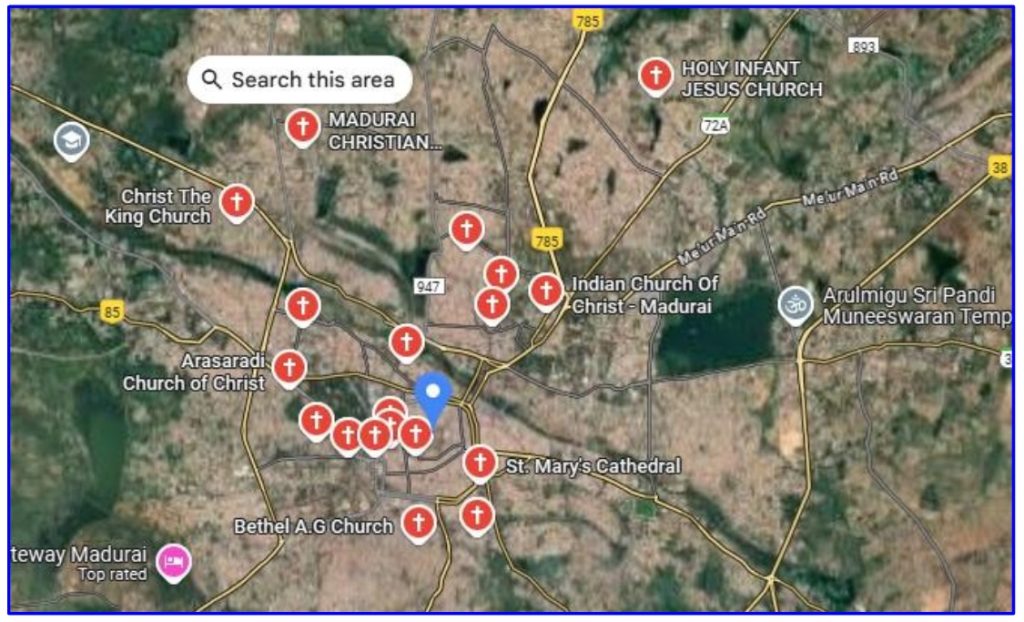
On searching for churches near Meenakshi Temple on Google Maps, a total of 19 church are visible within a range of 1 to 9 km (Walking distance) from the temple.
Name of churches and distance from Meenakshi Temple:
St. George’s Church – Anglican Church (350 m)
HOLY ROSARY CHURCH – Catholic (800 m)
Central A.G Sabai Church (1.3 km)
St. Mary’s Cathedral – Catholic Cathedral (1.4 km)
Madurai city AG Church (1.7 km)
T.E.L.C Holy Redeemer’s Church – Lutheran Church (1.9 km)
CSI Cathedral Madurai – Cathedral (2.0 km)
C.S.I Immanuel Church – Protestant Church (2.7 km)
First Baptist Church of Madurai – Baptist Church (2.8 km)
Indian Church Of Christ-Madurai Church (3.0 km)
Maranatha Church (2.4 km)
Arasaradi Church of Christ (3.5 km)
Arasaradi Church of Christ – Coronation Street (3.5 km)
Bethel A.G Church – Christian Church (3.4 km)
St. Joseph’s Church – Gnanavolivupuram – Catholic Church (3.9 km)
Arulbalikum Sahaya Annai Alayam – Catholic Church (4.0 km)
MADURAI CHRISTIAN FELLOWSHIP CHURCH (6.1 km)
Madurai Christian Fellowship Church (6.7 km)
HOLY INFANT JESUS CHURCH – Catholic Church (8.5 km)
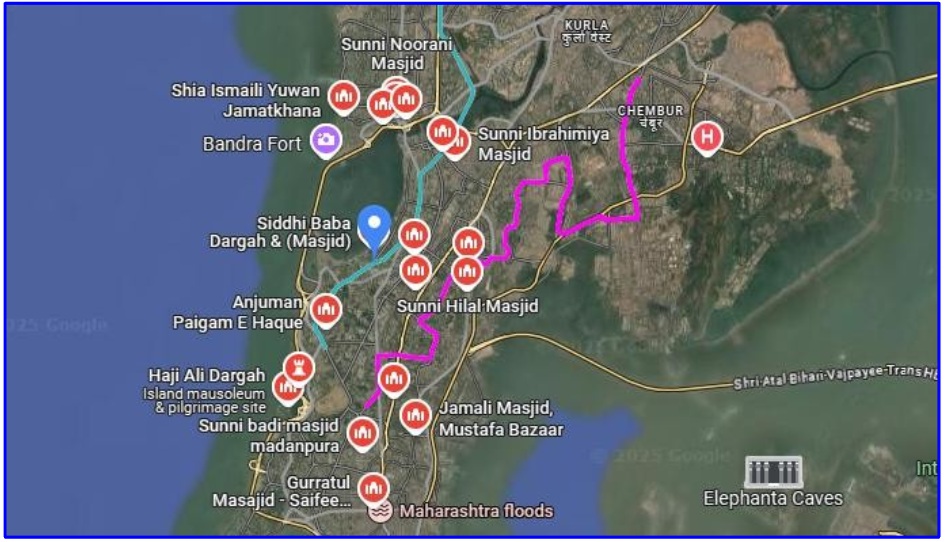
On searching for mosques near Siddhivinayak Temple on Google Maps, a total of 19 mosques are visible within a range of 1-7 km (Walking distance) from the temple.
Name of mosque and distance from Siddhivinayak Temple:
Siddhi Baba Dargah & Masjid – 650 m
PIR Bagdadi Dargah and Masjid – 1.3 km
Dadar Road Khatri Ishaque Moosa Masjid Trust Mosque – 2.4 km
Anjuman Paigam E Haque – 2.6 km
Sunni Noori Masjid – 3.1 km
Sunni Hilal Masjid – 3.1 km
Nawab Ayaz Ali Masjid Mosque – 4.3 km
Jama Masjid – 4.3 km
Ma Hajiani Dargah – 4.5 km
Jamat E Jamhuria Masjid Mosque – 4.5 km
Sunni Noorani Masjid – 4.6 km
Sunni Ibrahimiya Masjid Mosque – 4.6 km
Zakaria Masjid Mosque – 4.1 km
Sunni Badi Masjid, Madanpura – 5.4 km
Bahr Al Hikmah Masjid & Madrasa Mosque – 5.1 km
Jamali Masjid, Mustafa Bazaar Mosque – 5.7 km
Haji Ali Dargah – 6.1 km
Shia Ismaili Yuwan Jamatkhana Mosque – 6.1 km
Gurratul Masajid – Saifee Masjid (Dawoodi Bohra) – 7.0 km
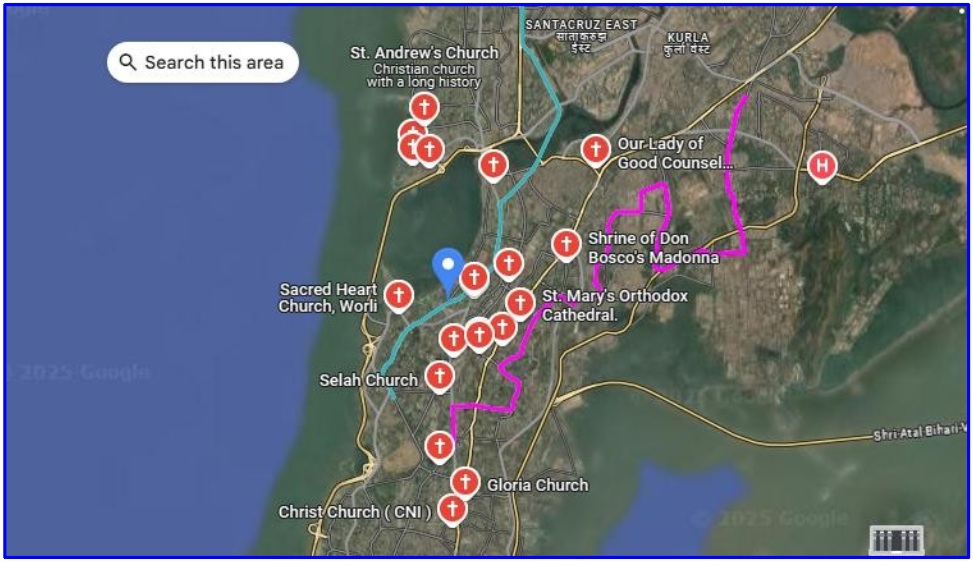
On searching for churches near Siddhivinayak Temple on Google Maps, a total of 17 churches are visible within a range of 1 to 7 km (Walking distance) from the temple.
Name of churches and distance from Siddhivinayak Temple:
Our Lady of Salvation Church (Portuguese Church) – 750 m
Mumbai Catholic Charismatic Renewal – 800 m
Holy Cross Church (Catholic Church) – 1.4 km
Sacred Heart Church, Worli (Catholic Church) – 1.6 km
Rahator Memorial Methodist Church – 1.7 km
The Church of Saint Mary The Virgin (CNI) – 1.7 km
IPC Dadar (Pentecostal Church) – 1.9 km
St. Paul’s Catholic Church – 2.3 km
St. Mary’s Orthodox Cathedral – 2.3 km
Selah Church – 2.5 km
St. Michael’s Church, Mahim (Catholic Church) – 3.3 km
Shrine of Don Bosco’s Madonna (Catholic Church) – 3.7 km
St. Andrew’s Church (Catholic Church) – 5.8 km
St. Francis of Assisi Church (Catholic Church) – 6.2 km
Basilica of Our Lady of the Mount (Mount St. Mary Church) – 6.3 km
Saint Stephen’s Church – CNI (Protestant Church) – 6.3km
Our Lady of Good Counsel Church, Sion (Catholic Church) – 6.9km
Kashi Vishwanath Temple – Varanasi, Uttar Pradesh
This temple is dedicated to Lord Shiva; one of the 12 Jyotirlingas.
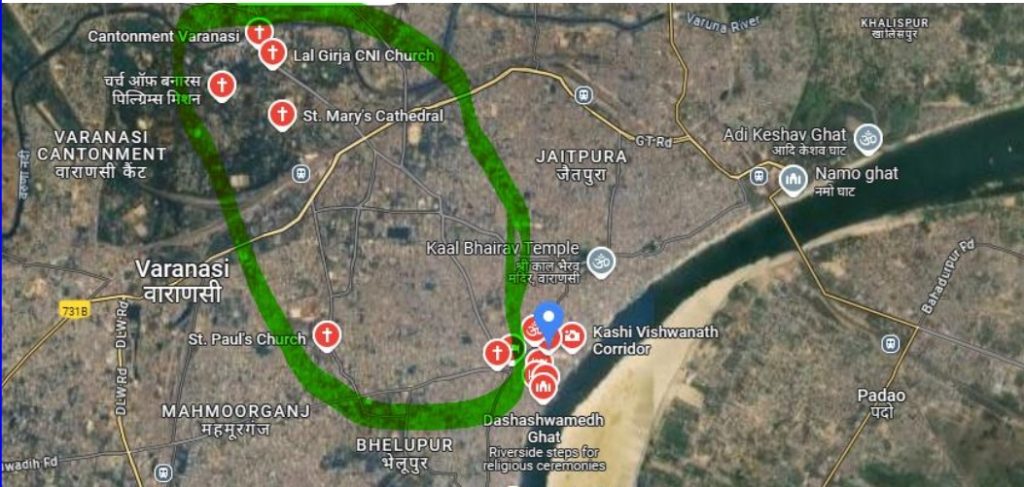
On searching for churches near Kashi Vishwanath Temple on Google Maps, a total of 6 churches are visible within a range of 1 to 5.4 km from the temple.
Name of churches and distance from Kashi Vishwanath temple
St. Thomas Church- (400 m)
St. Paul’s Church- (2.9 km)
St. Mary’s Cathedral- (4.7 km)
Lal Girja CNI Church- (5 km)
Cantonment Varanasi- (5.2 km)
Church of Benares Pilgrims Mission- (5.4 km)
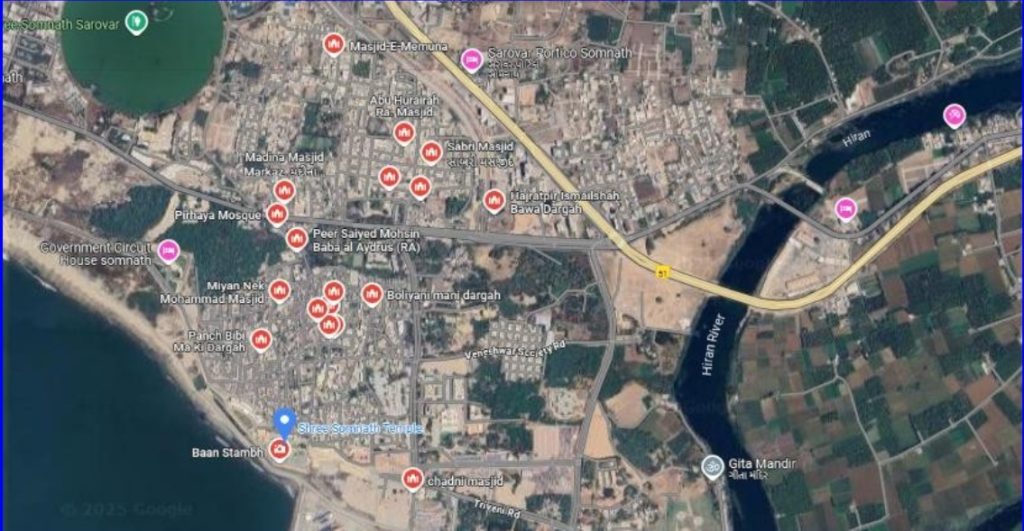
Somnath Temple – Gujarat
This is the first among the 12 Jyotirlingas; repeatedly rebuilt after invasions.
On searching for mosques near Somnath Temple on Google Maps, a total of 19 mosques are visible within a range of 1-2 km (walking distance) from the temple.
Name of mosque and distance from Somnath Temple:
Chadni masjid – (500 m)
Saiyed shelanishah sarkar – (600 m)
Masjid e Selani Mosque – (600 m)
Makka masjid Eibad gaah Mosque – (650 m)
Boliyani mani dargah – (650 m)
Vadla Masjid,- (700 m)
Panch Bibi Ma Ki Dargah- (800 m)
Hazrat Pir Selanishah Dargah – (850 m)
Miyan Nek Mohammad Masjid,Mosque – (950 m)
Peer Saiyed Mohsin Baba al Aydrus (R.A) -(1.0 km)
Pirhaya mosque -(1.1 km)
Hazrat Rangeela Shah Baba Dargah -(1.3 km)
Noorani Masjid – (1.3 km)
Madina Masjid Markaz.- (1.2 km)
Sabri Masjid – (1.4 km)
Abu Hurairah Ra. Masjid – (1.5 km)
Hajratpir Ismailshah Bawa Dargah, Mosque – (1.5 km)
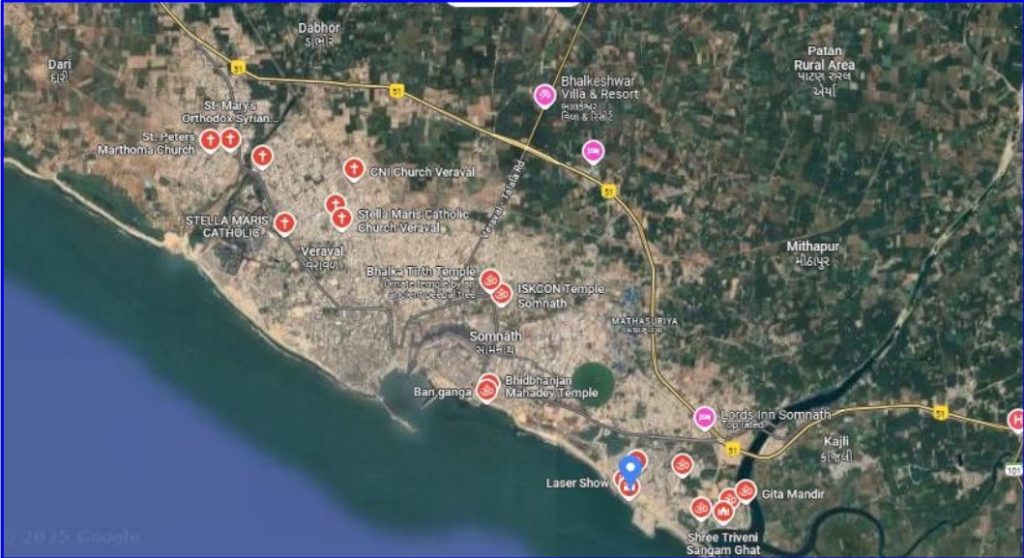
On searching for churches near Somnath Temple on Google Maps, a total of 6 churches are visible within a range of 1 to 8.9 km (Walking distance) from the temple.
Name of churches and distance from Somnath Temple
Stella Maris Catholic Church Veraval- (6.7 km)
Veraval AG Church – (6.8 km)
C.N.I Church Veraval – (7.0 km)
STELLA MARIS CATHOLIC CHURCH VERAVAL – (7.2 km)
Pentecostal Church of God – (8.2 km)
St. Mary’s Orthodox Syrian Church, Veraval – (8.6 km)
St. Peters Marthoma Church – (8.9 km)
Shri Dakshineswar Kali Temple – Kolkata, West Bengal
Dakshineswar Kali Temple is a Hindu Navaratna style temple in Dakshineswar on the eastern bank of the Hooghly River.
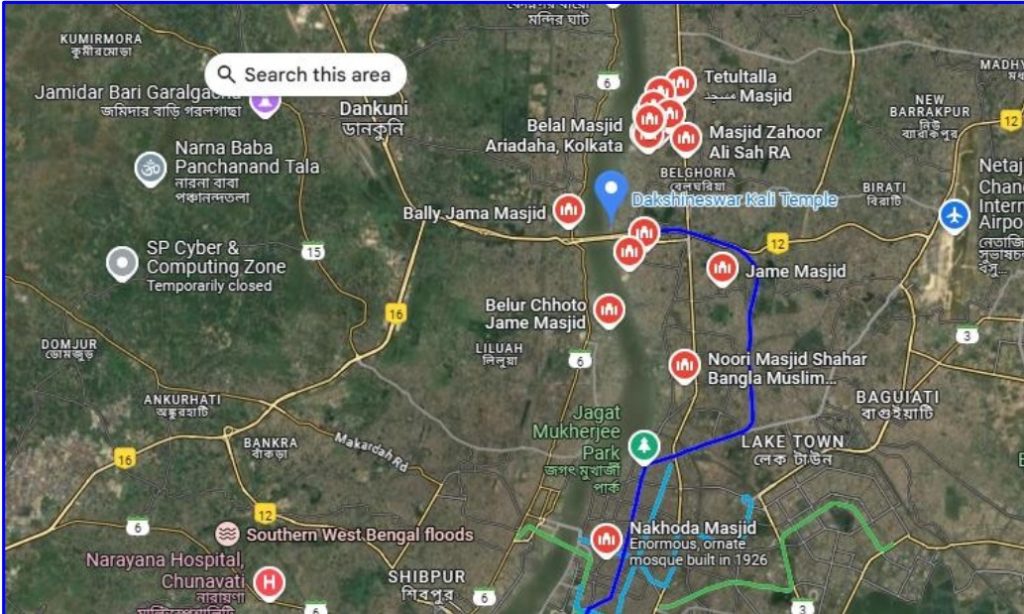
Mosques near Shri Dakshineswar Kali Temple – Google Map Link
On searching for mosques near Shri Dakshineswar Kali Temple on Google Maps, a total of 19 mosques are visible within a range of 1-11 km (Walking distance) from the temple.
Name of mosque and distance from Shri Dakshineswar Kali Temple:
Kalakar Para Makka Masjid – (1.4 km)
Alambazar Jama Masjid – (1.7 km)
Bally Jama Masjid – (1.8 km)
Belal Masjid Ariadaha, Kolkata – (2.9 km)
Hazrat Bilal Masjid – (3.0 km)
Mohammedia (sa) Masjid & Madrasa – (3.3 km)
Kamarhati Baro Jame Masjid – (3.3 km)
Masjid Umar Farooq – Ruhani Markaz – (3.3 km)
Noorani Masjid – (3.4 km)
Masjid Zahoor Ali Sah R.A – (3.5 km)
Gaushia Islahi Jame Masjid – (3.6 km)
Belur Chhoto Jame Masjid – (3.7 km)
Raza Jama Masjid – (3.7 km)
JAMA MASJID – (3.9 km)
Jame Masjid – (4.0 km)
Noori Jama Masjid (Madarsha Jamiah Nooria) – (4.3 km)
Tetultalla Masjid – (4.9 km)
Noori Masjid Shahar Bangla Muslim Burial Ground – (5.5km)
Nakhoda Masjid – (10.4 km)
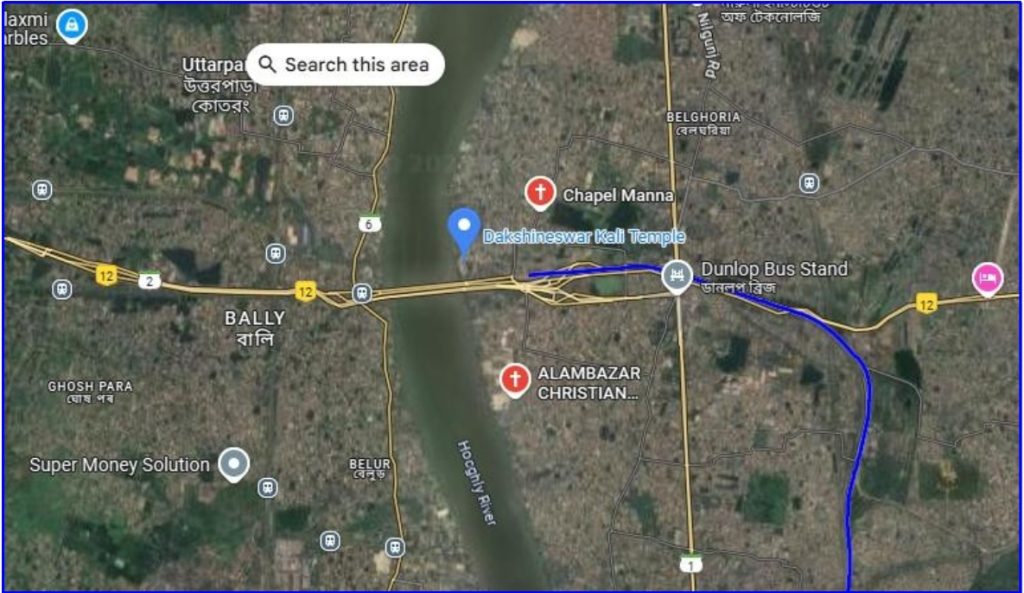
Churches near Shri Dakshineswar Kali Temple – Google Map Link
On searching for churches near Shri Dakshineswar Kali Temple on Google Maps, a total of 2 churches are visible within a range of 1 to 2 km (Walking distance) from the temple.
Name of churches and distance from Shri Dakshineswar Kali Temple:
Chapel Manna Church – (1.3 km)
ALAMBAZAR CHRISTIAN CHURCH – (1.9 km)
Shri Akshardham Temple (Delhi)
BAPS Swaminarayan Sanstha as a tribute to Bhagwan Swaminarayan.
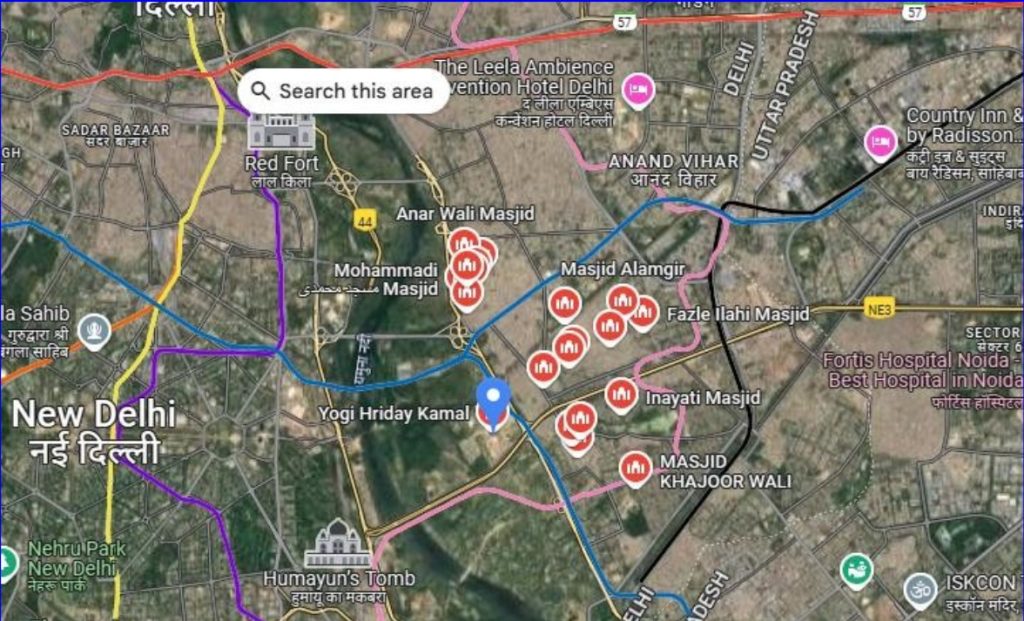
On searching for mosques near Shri Akshardham Temple on Google Maps, a total of 18 mosques are visible within a range of 1-4.2 km (Walking distance) from the temple.
Name of mosque and distance from Shri Akshardham Temple:
Fatimah Masjid – (2.2 km)
Shahi Masjid “Jumma Khuthba” – (2.5 km)
Masjid – (2.7 km)
Masjid-E-Aqsa – (2.7 km)
Chand Masjid – (3.1 km)
Pero Wali Masjid – (3.1 km)
Ek Minar Masjid – (3.1 km) 8.Mohammadi Masjid – (3.3 km)
Jama Masjid, Mandawali – (3.6 km)
Masjid Gareeb Nawaz (Juma Namaz 1:30 PM) – (3.6 km)
Badi Masjid Ramesh Park (Juma Namaz 1:50 PM)– (3.6km)
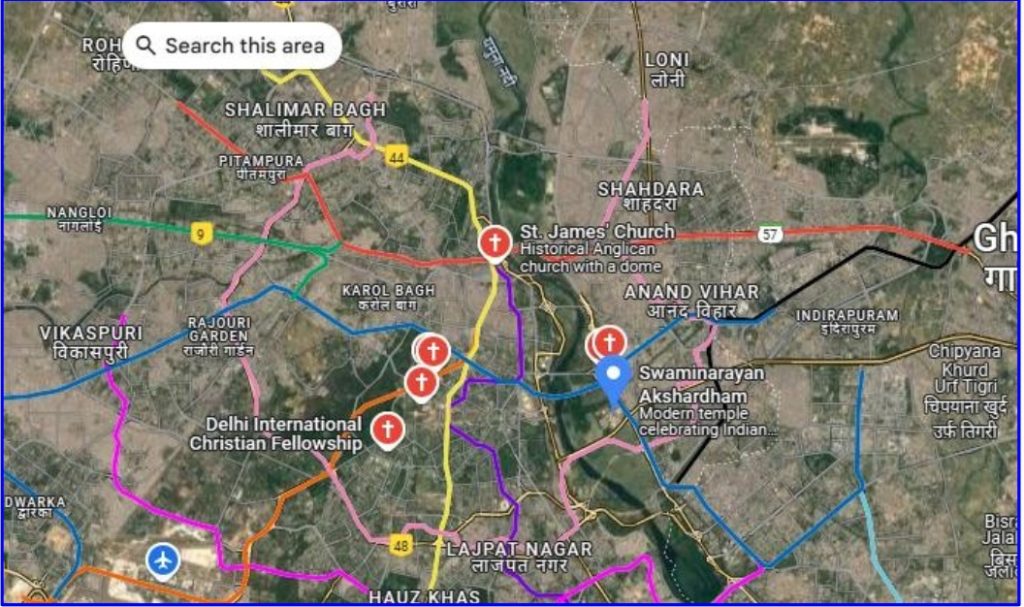
On searching for churches near Shri Akshardham Temple on Google Maps, a total of 7 churches are visible within a range of 1 to 14 km (Walking distance) from the temple.
Name of churches and distance from Shri Akshardham Temple-
Sharon Church of Christ – (3.2 km)
Christ Church Trans Yamuna – (4.1 km)
Sacred Heart Cathedral – (9.3 km)
St. Peter’s Jacobite Syrian Cathedral – (9.6 km)
Cathedral Church of The Redemption (C.N.I.) – (10.2 km)
St. James’ Church – (10.5 km)
Delhi International Christian Fellowship and Church – (13.6 km)
Maa Kamakhya Temple – (Nilachal Hill- Guwahati, Assam)
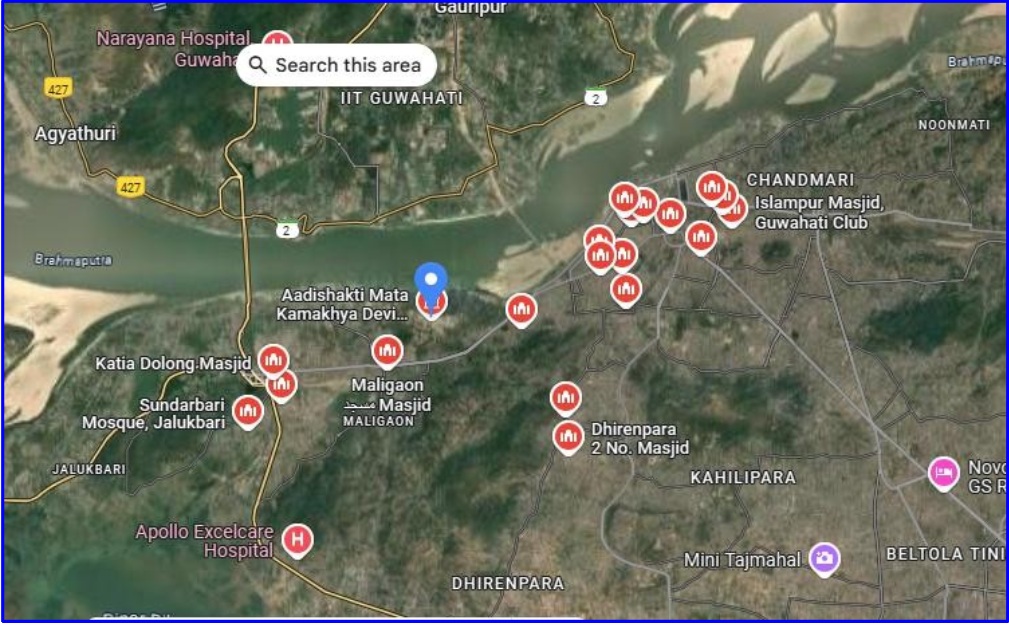
On searching for mosques near Kamakhya Temple on Google Maps, a total of 20 mosques are visible within a range of 1-11 km (Walking distance) from the temple.
Name of mosque and distance from Kamakhya Temple:
Maligaon Masjid – (2.5 km)
Katia Dolong Masjid – (3.5 km)
Kumarpara Masjid Mosque – (3.7 km)
Athgaon Jama Masjid – (4.3 km)
North Jalukbari New Jama Masjid – (4.5 km)
Lakhtokia 2 No. Masjid – (4.6 km)
Kamarpatty Masjid – (4.7 km)
Sundarbari Mosque, Jalukbari – (4.9 km)
Jama Masjid: Lakhtokia – (4.9 km)
Paltan Bazar Masjid – (5.0 km)
Ulubari Jama Masjid – (5.8 km)
Birubari Jama Masjid – (6.2 km)
Islampur Masjid, Guwahati Club – (6.3 km)
Burha Jame Masjid, Ambari – (6.5 km)
Hedayetpur Jame Masjid, Guwahati Club AGAR – (6.7 km)
Anowarpur Masjid, Bhangaghar / BAGHARBARI Mosque – (7.5 km)
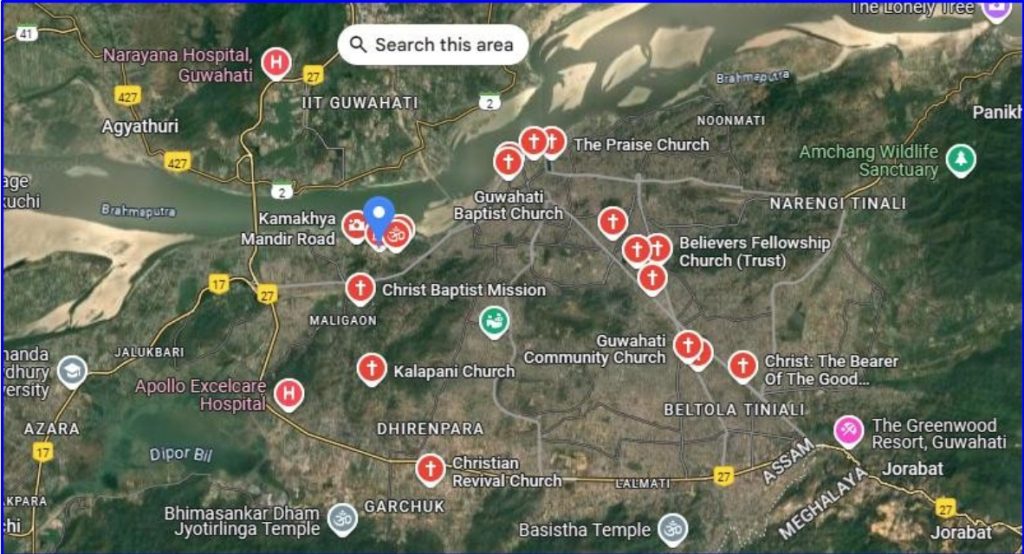
On searching for churches near Kamakhya Temple on Google Maps, a total of 14 churches are visible within a range of 1 to 13 km (Walking distance) from the temple.
Name of churches and distance from Kamakhya Temple:
Dispur Baptist Church – (8.9 km)
Believers Fellowship Church (Trust) – (9.2 km)
St. Thomas Church, ChristianPara – (9.9 km)
Christian Revival Church – (10.5 km)
Guwahati Community Church – (11.1 km)
Word of Life Church – (11.5 km)
Christ: The Bearer Of The Good News Cathedral – (12.4 km)
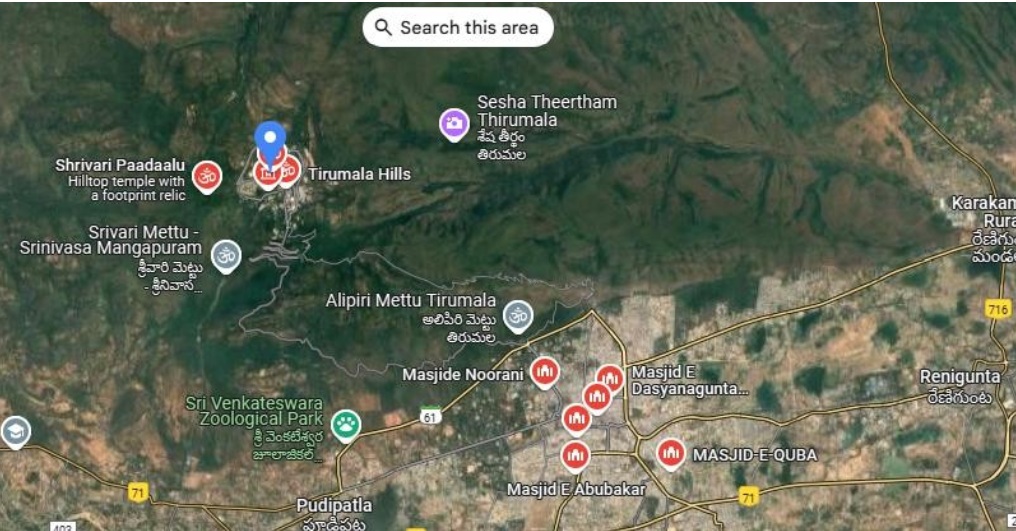
Sri Venkateswara Swamy Temple (Tirumala Tirupathi Devasthanam)
Mosques near Sri Venkateswara Swamy Temple – Google Map Link
On searching for mosques near Sri Venkateswara Swamy Temple on Google Maps, a total of 6 mosques are visible within a range of 1-15 km (Walking distance) from the temple.
Name of mosque and distance from Sri Venkateswara Swamy Temple:
Masjide Noorani – (10.8 km)
Masjid E Rehmania – (11.9 km)
Masjid E Mubarak Musalla Tirupati Mosque – (12.0 km)
Masjid E Dasyanagunta Tirupati – (12.0 km)
Masjid E Abubakar – (13.0 km)
MASJID-E-QUBA – (14.8 km)
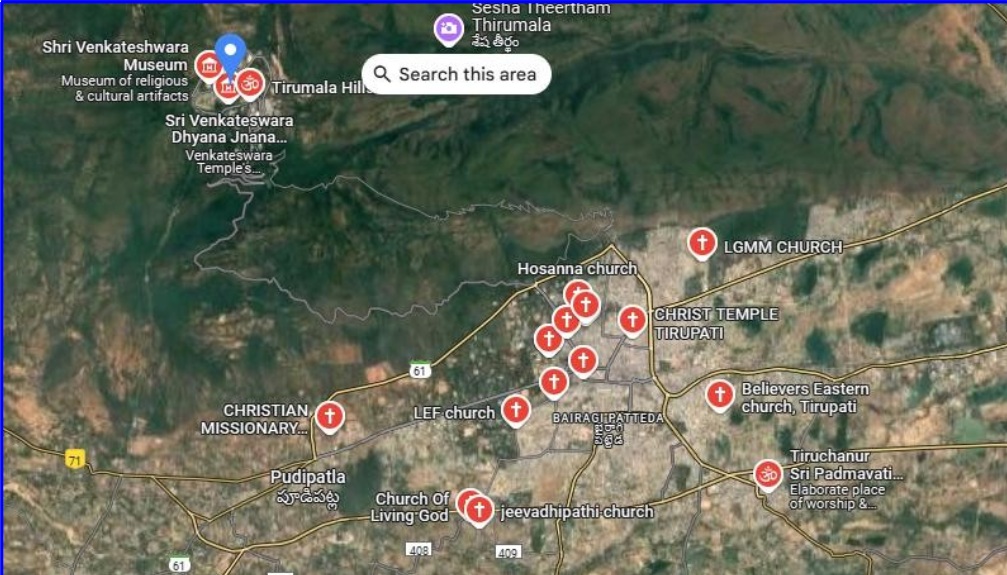
Churches near Sri Venkateswara Swamy Temple – Google Map Link
On searching for churches near Sri Venkateswara Swamy Temple on Google Maps, a total of 14 churches are visible within a range of 1 to 18 km (Walking distance) from the temple.
Name of churches and distance from Sri Venkateswara Swamy Temple:
Hosanna Church – (10.5 km)
House Of Worship, Tirupati (Bakht Singh Fellowship) – (10.5 km)
East Church – (10.6 km)
St. Peter’s Lutheran Church – (10.7 km)
Church of Christ, Tirupati – (11.3 km)
Church of Christ, Ranipeta Church – (11.6 km)
CHRIST TEMPLE, Tirupati – (11.8 km)
CHRISTIAN MISSIONARY CHURCHES – (12.7 km)
Christ Church S.A.L.C (West Parish) – (12.2 km)
LEF Church – (13.2 km)
LGMM Church – (14.0 km)
Believers Eastern Church, Tirupati – (14.8 km)
Church of Living God – (17.3 km)
Jeevadhipathi Church – (17.6 km)
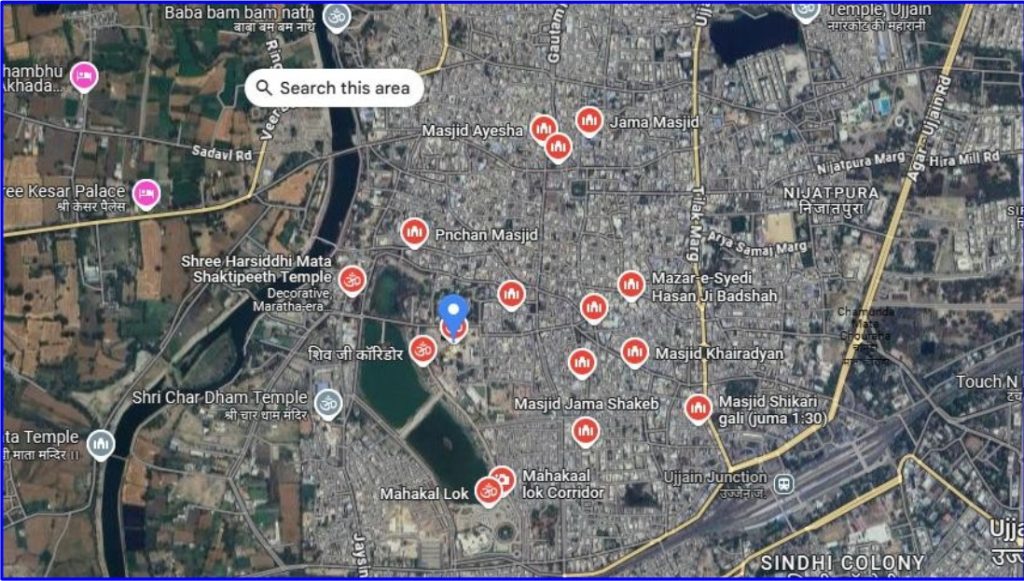
Mahakaleshwar Temple – Ujjain, Madhya Pradesh
Jyotirlinga temple with unique Bhasma Aarti tradition
On searching for mosques near Mahakaleshwar Temple on Google Maps, a total of 11 mosques are visible within a range of 1-1.2 km (Walking distance) from the temple.
Name of mosque and distance from Mahakaleshwar Temple:
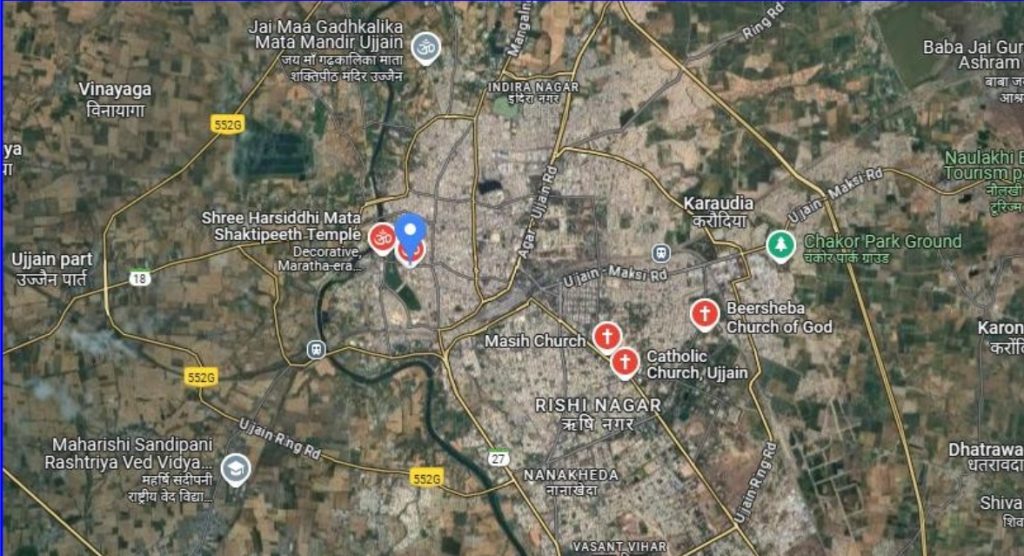
On searching for churches near Mahakaleshwar Temple on Google Maps, a total of 3 churches are visible within a range of 1 to 5 km (Walking distance) from the temple.
Name of churches and distance from Mahakaleshwar Temple:
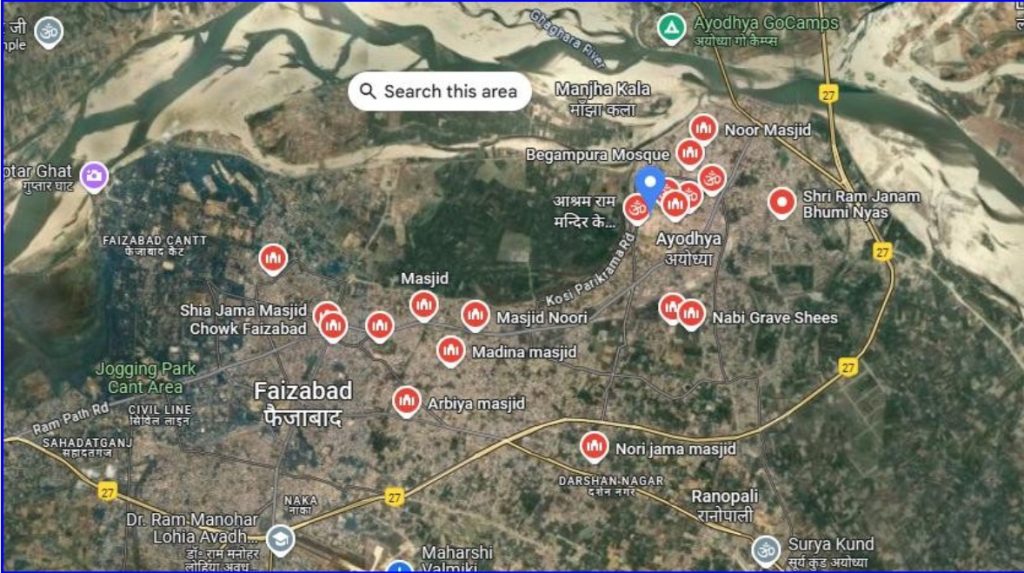
On searching for mosques near Shri Ram Janmabhoomi Temple on Google Maps, a total of 12 mosques are visible within a range of 1-7 km (Walking distance) from the temple.
Name of mosque and distance from Shri Ram Janmabhoomi Temple:
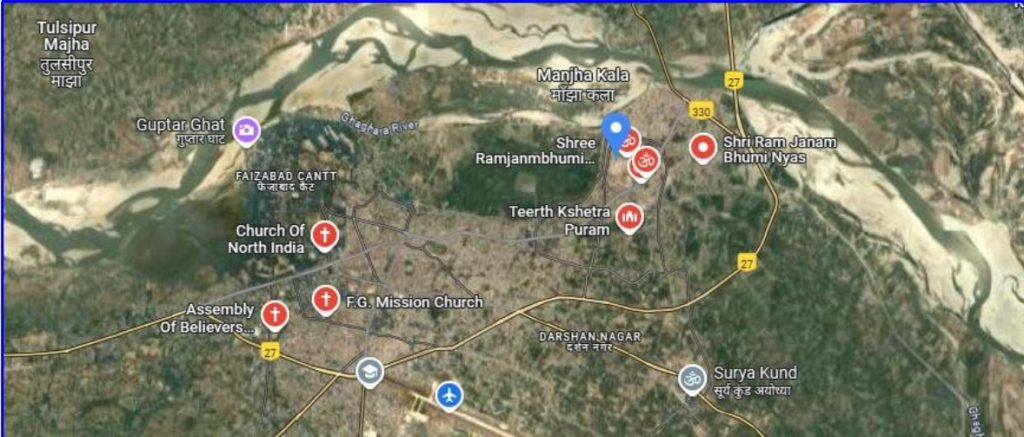
On searching for churches near Janmabhoomi Temple on Google Maps, a total of 3 churches are visible within a range of 1 to 12 km (Walking distance) from the temple.
Name of churches and distance from Shri Ram Janmabhoomi Temple:
Church Of North India Church – (8.7 km)
F.G. Mission Church – (9.4 km)
Assembly Of Believers church Ayodhya Church – (11.1 km)
Vaishno Devi Temple (Katra, Jammu & Kashmir)
Dedicated to Goddess Vaishno Devi, the temple is located in the Trikuta Hills.
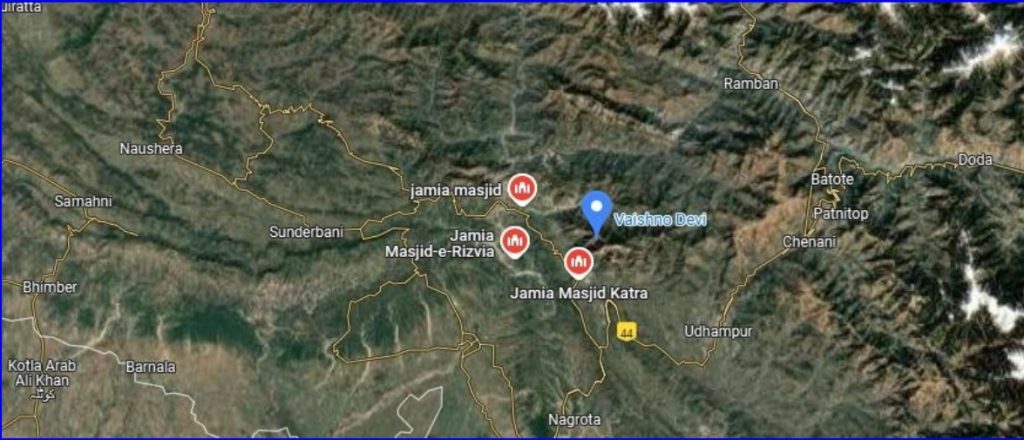
On searching for mosques near Vaishno Devi Temple on Google Maps, a total of 3 mosques are visible within a range of 1-40 km (Walking distance) from the temple.
Name of mosque and distance from Vaishno Devi Temple –
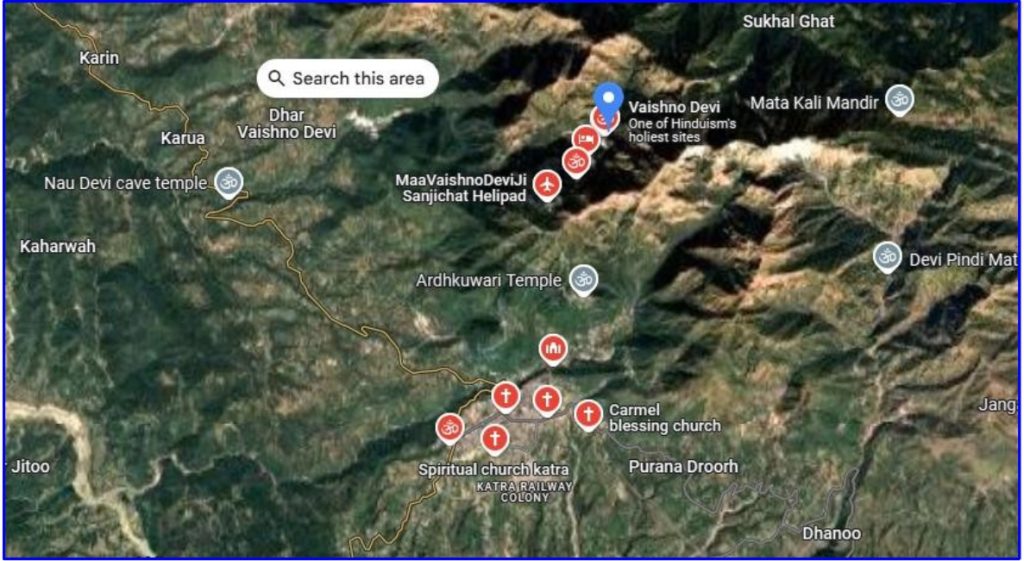
On searching for churches near Vaishno Devi Temple on Google Maps, a total of 3 churches are visible within a range of 1 to 16 km (Walking distance) from the temple.
Name of churches and distance from Vaishno Devi Temple:
Beersheba Church Of God – (14.5 km)
Spiritual church Katra – (15.3 km)
Carmel blessing church – (15.5 km)
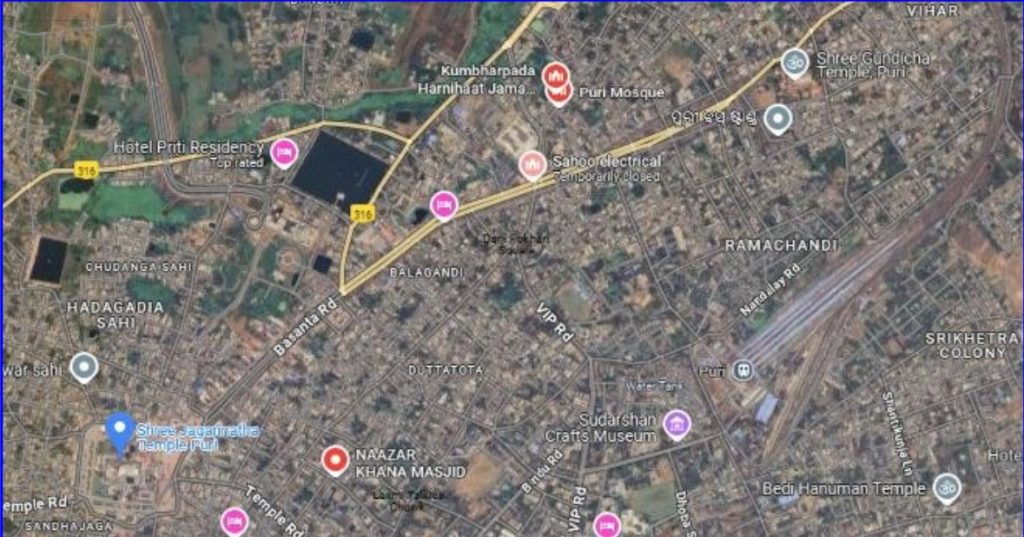
Jagannath Temple – Puri, Odisha
One of the Char Dham temples; known for the Rath Yatra
On searching for mosques near Jagannath Temple on Google Maps, a total of 3 mosques are visible within a range of 1-2 km (Walking distance) from the temple.
Name of mosque and distance from Jagannath Temple:
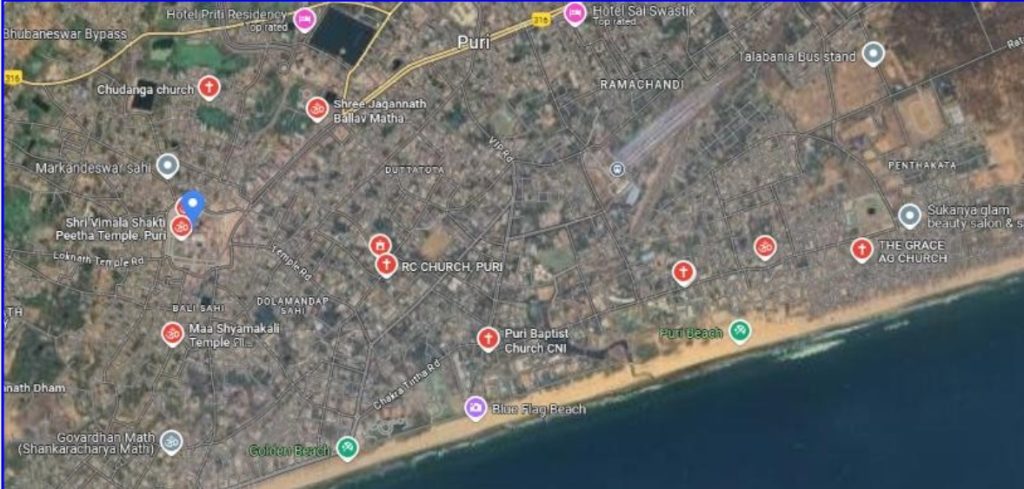
On searching for churches near Jagannath Temple on Google Maps, a total of 5 churches are visible within a range of 1 to 4 km (Walking distance) from the temple.
Name of churches and distance from Jagannath Temple:
Chudanga church- (900 m)
RC CHURCH, PURI- (950 m)
Puri Baptist Church C.N.I- (1.7 km)
Church of Christ, Puri- (2.7 km)
THE GRACE A.G CHURCH-(3.7 km)
Subscribe to our channels on Telegram, WhatsApp, and Instagram and get the best stories of the day delivered to you personally.
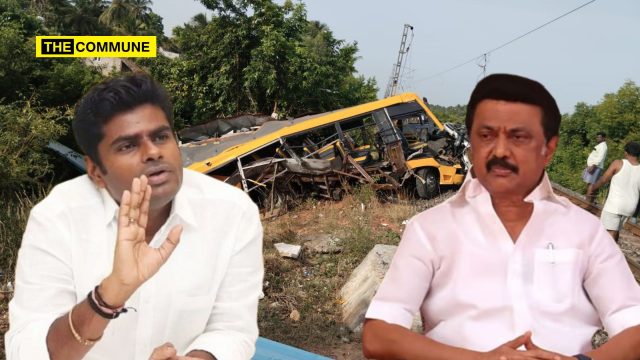
In the aftermath of a tragic accident near Cuddalore on 9 July 2025, where two schoolchildren were killed after a train collided with a school van at a manned railway crossing, former Tamil Nadu BJP president K. Annamalai extended his heartfelt condolences to the grieving families. Expressing solidarity with the victims, Annamalai also raised serious questions about the DMK government’s inaction and delays in critical infrastructure projects.
The collision occurred around 7:45 AM at the Semmankuppam railway level crossing when a private van carrying four students was struck by the Villupuram–Mayiladuthurai passenger train. The vehicle was dragged for nearly 50 meters due to the impact. Two students Charumathi (15) and Venkatesh (10) lost their lives, while the driver and two other students sustained serious injuries and were admitted to the Cuddalore Government General Hospital.
Local residents rushed to the scene before rescue teams could arrive and assisted in transporting the injured. According to eyewitnesses, the gatekeeper at the crossing, Pankaj Sharma, allegedly failed to close the gate and was found asleep. Some villagers reportedly confronted and assaulted him. Sharma, however, claimed the van driver insisted on crossing to avoid school delay.
Southern Railway later suspended Sharma, pending a full inquiry. Cuddalore SP S. Jeyakumar confirmed that an investigation is underway and final conclusions will follow the official report.
A now-deleted Southern Railway press release stated that preliminary findings suggested the gate was closed, but the van driver pressured the gatekeeper to allow passage, which violated safety protocols. The release also revealed that the gatekeeper has been arrested and booked for criminal negligence, and the process for his dismissal is underway.
Crucially, the same press note also revealed that an underpass at this crossing had already been sanctioned a year ago fully funded by the Railways. However, construction has been delayed for over a year due to pending approval from the district administration, specifically the District Collector.
Reacting to this, Annamalai posted a strongly worded message on social media, “Our hearts go out to the children and the parents of today’s most unfortunate accident in Cuddalore, when a school van carrying four children was hit by the Villupuram-Mayiladuthurai passenger train while attempting to cross the railway level crossing gate. What was meant to be an ordinary day turned into an unimaginable nightmare for the bright young minds. We stand in sorrow and solidarity with the grieving parents during this deeply painful time. Two versions of the cause of accident have come to light: one stating that the railway crossing gate was open for vehicles to pass, and the other, put out by Southern Railway, claiming that the van driver insisted on crossing the gate to avoid delay in reaching the school, and the gate was opened upon the van driver’s insistence. Southern Railways has clarified that permitting passage violates the laid-down rules and protocol, and has initiated the process of dismissing the Gatekeeper. An FIR for criminal negligence has been lodged against the gatekeeper, and he has been arrested. We have to wait for investigative agencies to conclude on the cause of the accident.”
He added “According to the statement released by Southern Railway, it has become apparent that an underpass at this railway crossing, with full railway funding, was sanctioned a year ago by our Hon. Railway Minister, Thiru @AshwiniVaishnaw avl, but has been pending commencement due to a delay in obtaining permission from the District Collector. TN CM Thiru @mkstalin should explain to the people of Tamil Nadu why even critical development works, such as permitting the construction of a railway underpass, are also moving at a snail’s pace in your Government in TN. Will you ever act with responsibility?”
Our hearts go out to the children and the parents of today’s most unfortunate accident in Cuddalore, when a school van carrying four children was hit by the Villupuram-Mayiladuthurai passenger train while attempting to cross the railway level crossing gate. What was meant to be…
Annamalai’s remarks underscore growing public frustration over administrative delays in executing life-saving infrastructure and highlight the need for urgent governance reforms to prevent such tragedies in the future.
Subscribe to our channels on Telegram, WhatsApp, and Instagram and get the best stories of the day delivered to you personally.
On 1 April 2025, India’s defence exports hit a record high of ₹23,622 crore (approximately US$2.76 billion) for the financial year 2024–25. This marks a significant surge, with Defence Public Sector Undertakings (DPSUs) registering a 42.85% increase in export figures.
This report presents a detailed analysis of India’s defence exports to various countries, explores the key drivers behind the growth, and offers a year-by-year breakdown from 2014 to 2025.
#1 India’s Defence Exports Hit All-Time High in FY 2024–25
On 1 April 2025, India’s defence exports reached a record ₹23,622 crore (approx. US$2.76 billion), marking a 12.04% rise over the previous year. The Defence Public Sector Undertakings (DPSUs) saw a remarkable 42.85% growth, contributing ₹8,389 crore, while the private sector accounted for ₹15,233 crore. India exported arms to 80 countries, with the U.S., France, and Armenia among top buyers. Raksha Mantri Rajnath Singh praised the achievement and reaffirmed India’s goal of reaching ₹50,000 crore in exports by 2029 under PM Modi’s leadership. The growth highlights India’s rising presence in the global defence market.
#2 India’s Defence Manufacturing Soars Under ‘Make in India’ In FY 2023-24
India’s defence production surged to ₹1.27 lakh crore in FY 2023-24 – a 174% rise since 2014-15, driven by the ‘Make in India’ initiative. Exports also jumped 30-fold in a decade to ₹21,083 crore, reaching over 100 countries. Major contributions include ATAGS artillery, Tejas aircraft, and indigenous warships. Schemes like iDEX, ADITI, and SRIJAN boosted private sector and startup participation. India now manufactures 65% of its defence needs, reversing a decade-old import trend. With ambitious targets of ₹3 lakh crore in production and ₹50,000 crore in exports by 2029, India is positioning itself as a global defence manufacturing leader.
#3 India’s Defence Exports Hit ₹16,000 Cr in FY23, Marking 23-Fold Growth
India’s defence exports surged to a record ₹16,000 crore in FY 2022-23, a 23-fold jump from ₹686 crore in 2013-14, reflecting India’s emergence as a global defence exporter. Defence production crossed ₹1 trillion ($12 billion), registering 12% year-on-year growth. Over 100 Indian firms now export to 85+ countries, showcasing capabilities in platforms like Dornier aircraft, BrahMos missiles, and PINAKA systems. Foreign procurement dropped from 46% (2018-19) to 36.7% (2022).
#4 India’s Defence Exports Reach Record ₹13,000 Cr in FY22, Up 54%
India exported defence goods worth ₹13,000 crore in FY 2021-22, marking a 54.1% increase over the previous year and the highest-ever recorded. Exports, primarily to the US, Philippines, Southeast Asia, the Middle East, and Africa, were nearly eight times higher than in 2015-16. Despite COVID-19 setbacks, the sector rebounded strongly. Private firms contributed around 90% of the exports, with public sector undertakings making notable gains at 30%.
#5 India’s Defence Exports Rise to ₹8,434 Cr in FY21, Driven by Policy Reforms
India exported defence equipment worth ₹8,434.84 crore in FY 2020-21, up from ₹1,940.64 crore in 2014-15, reflecting a major policy push under the Modi government. Key reforms included easing SCOMET export restrictions, creating a dedicated export coordination office, empowering DPSUs, and launching an online export clearance portal. The government also promoted indigenisation through the Defence Acquisition Procedure 2020 and two Positive Indigenisation Lists.
#6 India’s Defence Exports Dip Slightly in FY20
In FY 2019-20, India’s defence exports totaled ₹9,115 crore (approx. $1.2 billion), a slight decline from ₹10,745 crore in 2018-19. Despite the dip, the broader trend shows a steady rise, driven by the government’s push for indigenous defence production and export promotion. Exports grew from ₹4,682 crore in 2017-18 to ₹15,920 crore in 2022-23. Defence Minister Rajnath Singh hailed the recent record as a “remarkable achievement.”
#7 India’s Defence Exports Hit ₹10,745 Cr in FY19, Exports to 85 Nations
In FY 2018-19, India’s defence exports touched a record ₹10,745 crore, marking a major step in its emergence as a global defence exporter. The country exported military hardware like missiles, ALHs, patrol vessels, and surveillance systems to 85 countries. Despite a slight dip in later years, exports rebounded, hitting ₹15,920 crore by FY 2022-23—a tenfold jump from 2016-17. Government reforms, indigenisation efforts, and a growing list of banned imports have helped India reduce dependency and boost exports. Major export prospects included Tejas jets, Akash missiles, and artillery systems.
#8 India’s Defence Exports Rise to ₹4,682 Cr in FY18, Total ₹38,500 Cr Since 2014
India exported defence equipment worth ₹4,682.36 crore in 2017-18, marking a sharp rise from ₹1,521.91 crore in 2016-17. Between 2014-15 and 2020-21, total defence exports stood at ₹38,500 crore. Major exports included armoured vehicles, radars, lightweight torpedoes, fire control systems, and tear gas launchers. Defence Minister of State Ajay Bhatt noted that exports are being made to around 75 countries, though names remain undisclosed for strategic reasons. The Ministry of Defence credited improved governance and end-user controls for India’s strengthening global defence position. War Memorial digital upgrades and DRDO tech initiatives were also highlighted.
#9 Defence Exports Cross ₹1,521 Cr in FY 2016-17, Laying Foundation for Export Growth
In the financial year 2016-17, India’s defence exports stood at ₹1,521 crore, marking a crucial starting point in the country’s push toward self-reliance in military manufacturing. This year laid the groundwork for exponential growth in exports under the ‘Aatmanirbhar Bharat’ and ‘Make in India’ initiatives. With streamlined export procedures and enhanced policy support, India began its transition from a major importer to an emerging global exporter of defence equipment.
#10 India’s Defence Exports Rise to ₹1,379 Cr in FY 2015-16 Amid Private Sector Growth
In FY 2015-16, India’s defence exports surged to ₹1,379.42 crore, reflecting strong momentum in military manufacturing, particularly from the private sector. About 12–14 private firms drove much of this growth. Major export destinations included Afghanistan, Israel, the UK, and Vietnam. Key exports ranged from offshore patrol vessels and Cheetal helicopters to protective gear and electronic systems. The government’s reforms—such as easing NoC norms and updating export procedures—boosted industry participation. With 319 industrial licences issued by January 2016, India’s shift toward domestic production and global defence trade gained strategic traction under the ‘Make in India’ initiative.
#11 India’s Defence Exports at ₹670 Cr in FY 2014-15 Amid Push for Indigenous Production
In FY 2014-15, India’s defence exports stood at ₹669.88 crore, slightly down from ₹686.27 crore the previous year. Major export destinations included the US, UK, Russia, and Nepal. Key items exported were aircraft spares, helicopters, and bulletproof gear. Over ₹2,605 crore worth of defence items were exported over five years, with contributions from DPSUs, OFB, and private firms. The Defence Production Policy 2011 and Defence Export Strategy aimed to boost indigenous manufacturing, support SMEs, ease licensing norms, and prioritize Indian procurement categories to reduce import dependence and build a self-reliant defence industry.
Subscribe to our channels on Telegram, WhatsApp, and Instagram and get the best stories of the day delivered to you personally.
In the wake of a heartbreaking accident near Cuddalore where two schoolchildren lost their lives after a train collided with a van at a manned level crossing, the Dravidianist ecosystem has already begun spinning the narrative with sections of the media firmly backing the DMK’s line.
Shockingly, the focus has shifted from the tragic loss of life to linguistic blame. The gatekeeper, a Hindi-speaking worker, is now being painted as the root cause not based on facts, but seemingly for not speaking Tamil.
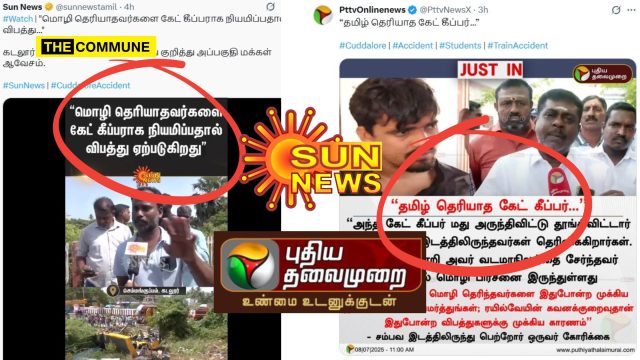
Dravidianist media, the Puthiya Thalaimurai, a news channel often seen echoing the ruling party’s stance, ran a news card with the headline, “Gatekeeper who doesn’t know Tamil.”
Not far behind, Sun News widely regarded as the DMK’s unofficial propaganda arm also framed the story around language, running the caption: “Accidents happen because those who don’t speak the language are appointed as gatekeepers…”
#Watch | "மொழி தெரியாதவர்களை கேட் கீப்பராக நியமிப்பதால் விபத்து…"
These attempts to communalize and linguistically polarize a tragedy have been met with disbelief and criticism. For many, it’s yet another example of how journalism in Tamil Nadu is increasingly becoming a political tool where even moments of mourning are hijacked to reinforce ideological talking points and distract from governance failures.
What Actually Happened?
On the morning of 9 July 2025, a private school van carrying four students attempted to cross a railway level crossing at Semmankuppam in Cuddalore district when it was hit by a fast-moving train traveling from Villupuram to Mayiladuthurai. The impact was devastating the van was dragged for over 50 metres.
Two students, Charumathi (15) and Venkatesh (10), were killed. The van driver, Sankar (45), and two other students were seriously injured and taken to the Cuddalore Government General Hospital.
Local villagers, who reached the scene before emergency services, rescued the injured and helped transport them to the hospital. Eyewitnesses blamed the gatekeeper, alleging that he had failed to close the crossing gate and was asleep at the time of the incident. Some villagers reportedly assaulted the gatekeeper, later identified as Pankaj Sharma. Sharma, in his defense, claimed that the van driver had pressured him to keep the gate open, a claim that has yet to be verified.
In response to the incident, Southern Railway has suspended Sharma pending a full inquiry. Cuddalore Superintendent of Police S. Jeyakumar stated that the cause of the tragedy will only be confirmed after a thorough investigation.
Subscribe to our channels on Telegram, WhatsApp, and Instagram and get the best stories of the day delivered to you personally.