Home Blog Page 363

Tamil Nadu Chief Minister MK Stalin’s Foreign Trips Deliver Little To No Tangible Gains
mk stalin foreign trip europe uk germany investments

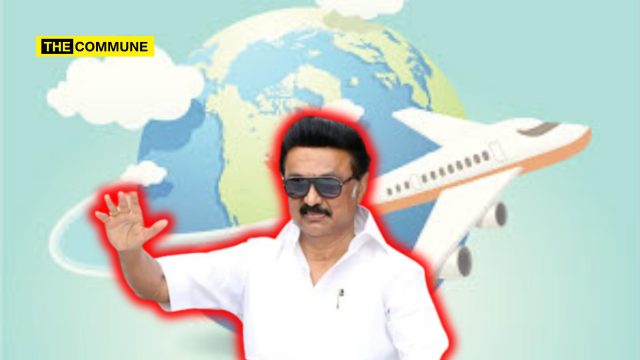
Chief Minister MK Stalin of Tamil Nadu embarked on his fifth foreign trip during his current term, this time visiting Germany and the United Kingdom from 30 August to 8 September 2025. The objective, as stated by the state government, was to boost foreign investments and drive Tamil Nadu’s economy closer to its target of becoming a $1 trillion economy by the year 2030.

However, while the ruling DMK often highlights these foreign tours as landmark efforts in investment promotion, skepticism surrounds the actual outcomes of the signed Memorandums of Understanding (MoUs), which are frequently celebrated without substantial evidence of implementation. Furthermore, the Chief Minister refused to release a white paper, asserting that such disclosures were not customary practice. Critics argue that despite claims of attracting investments worth thousands of crores, many of these deals have not materialized on the ground, and the government has yet to release a white paper detailing the tangible results of these agreements.

United Arab Emirates (Dubai Expo), March 2022

The first such foreign visit under Stalin’s leadership was to the United Arab Emirates for the Dubai Expo in March 2022. The trip, which took place from 24 to 28 March, was officially intended to secure investment opportunities for Tamil Nadu. The government claimed to have signed MoUs worth ₹6,100 crore, with an expectation of creating around 15,100 jobs. However, independent assessments suggest that the actual figures may have been lower, with investments likely in the range of ₹3,660 to ₹4,270 crore and job creation between 9,000 and 10,500. Furthermore, a Right to Information (RTI) inquiry revealed that approximately ₹7.12 crore has been spent so far on the Chief Minister’s foreign trips since he assumed office in May 2021. Interestingly, the administration refused to disclose the cost details specifically related to the Dubai visit, raising concerns over transparency. RTI activist M. Kasimayan publicly accused the government of misusing public funds, an allegation that quickly drew criticism from opposition parties and civil society alike.

Further fueling the controversy, it was reported that while the official delegation to Dubai comprised 11 members including Industries Minister Thangam Thennarasu, CM’s secretary T. Udhayachandran IAS, and personal secretary Dinesh Kumar the actual travel group exceeded 20 individuals. Allegedly, Stalin’s wife, son Udhayanidhi Stalin (who was later inducted into the Cabinet), and daughter-in-law also accompanied him, giving the opposition reason to label the trip as a “family vacation” sponsored by the state.

Singapore & Japan, May 2023

In May 2023, Stalin visited Singapore and Japan, promoting technological partnerships and business collaboration. Although the trip was projected to generate over 2,000 jobs from MoUs totaling ₹1,342 crore, the impact was limited, as most of the interested investors were already operating within Tamil Nadu. For example, Hi-P International Pvt Ltd pledged ₹312 crore for an electronics manufacturing unit, expected to employ 700 people. Discussions were also held with prominent industry leaders from Temasek, Sembcorp, and CapitaLand regarding expansions into sectors like renewable energy, logistics, food processing, and fisheries. However, many of these prospects have yet to translate into actual projects.

Spain, Early 2024

In early 2024, Stalin’s tour of Spain reportedly secured MoUs valued at ₹3,440 crore. However, specific data regarding job creation from this visit remains unavailable. Questions also arose about the timing of the visit, given Spain’s own economic slowdown post-pandemic. Economic forecasts indicated a drop in GDP growth from 5.8% in 2022 to a projected 1.4% in the following year casting doubts on the feasibility of attracting substantial investments from the country.

As with the earlier Dubai trip, reports indicate that Chief Minister M.K. Stalin was once again accompanied by his wife, Durgavathy Stalin, along with his personal secretary Dinesh Kumar and security personnel Selvaraju and Nitin John. Also part of the delegation were Industries Minister TRB Rajaa, his personal assistant Ayyappan, an individual named Shreyas, and a senior representative from the Industries Department. The list of officials included Umanath IAS (Chief Minister’s personal secretary), Senthilvelan IPS, Inspector Vivekanandhan, Balaganesan from the Core Cell of Tamil Nadu, and Vishnu IAS, who currently serves as the Managing Director and CEO of Guidance Tamil Nadu.

United States, August–September 2024

A more high-profile visit followed in August and September 2024, when Stalin toured the United States. During this trip, he met with major corporations, including tech giants Google and Apple. The DMK claimed that the visit yielded 19 MoUs worth ₹7,618 crore, expected to generate over 11,500 jobs across various districts in Tamil Nadu such as Tiruchy, Madurai, Coimbatore, Chennai, and Krishnagiri. These deals were signed in San Francisco and Chicago and involved representatives from 18 Fortune 500 companies.

Yet, while the DMK celebrated these agreements as a major diplomatic success, critics pointed to Maharashtra’s example. That state secured ₹1.2 lakh crore in investments 16 times more than Tamil Nadu without undertaking any such foreign tours. This contrast raised questions about the effectiveness and necessity of international travel for investment promotion.

Adding to the skepticism were concerns over the composition of Stalin’s entourage. Reports circulating on social media listed not just government officials like Industries Minister TRB Rajaa and bureaucrats such as Vishnu IAS (CEO of Guidance Tamil Nadu), but also family members including his wife and personal staff. This again sparked debate over whether the trips were entirely professional in nature or served dual purposes.

Germany & United Kingdom (TN Rising Europe Tour), Late August – Early September 2025

The most recent foreign mission, named the “TN Rising Europe Tour,” took place between 30 August and 8 September 2025, and included Germany and the UK. In Germany, Tamil Nadu signed 26 MoUs worth ₹7,020 crore, projecting the creation of over 15,000 jobs. Notable companies included Knorr-Bremse, investing ₹2,000 crore for railway component manufacturing, Nordex Group with ₹1,000 crore for wind turbines, and ebm-papst planning a ₹201 crore expansion of its operations. However, these firms already have a presence in the state, raising concerns about the necessity of the Chief Minister’s overseas involvement in deals that might have progressed without such high-level political visits.

In the UK leg of the trip, Stalin presided over the signing of six MoUs across sectors like defense, aerospace, renewable energy, and textile technology. Key deals included a ₹520 crore investment from Britannia RFID and collaborations with institutions like the University of Exeter and Lloyd’s List Intelligence. Stalin also used the visit for cultural diplomacy, unveiling a portrait of social reformer Periyar at Oxford University. While the symbolism was appreciated in some quarters, others viewed it as theatrical rather than substantive.

Last Word

Despite the tall claims and elaborate ceremonies accompanying each visit, the DMK-led government has consistently avoided publishing a comprehensive white paper detailing the real outcomes of these tours. Critics argue that without verified data on how many investments have been realized, these trips remain largely performative. The repeated emphasis on signing MoUs many with existing investors without concrete follow-through, has led some to dismiss these international engagements as more spectacle than strategy.

In conclusion, while Chief Minister Stalin’s foreign tours have been marketed as bold steps in economic diplomacy, questions about their cost-effectiveness, transparency, and actual outcomes continue to cloud the narrative. Until a full accounting is made public, the gap between promise and delivery remains a matter of concern for both the electorate and Tamil Nadu’s economic future.

Subscribe to our channels on TelegramWhatsApp, and Instagram and get the best stories of the day delivered to you personally.

Karnataka Congress Withdraws 60 Cases, Months After High Court Set Aside Hubballi Riot Case Withdrawal

karnataka congress hubbali riot

In a decision that has drawn intense political scrutiny, the Congress-led government in Karnataka has moved to withdraw 62 criminal cases, many of which involve its political supporters, individuals linked to communal unrest, and activists aligned with Ambedkarite ideologies.

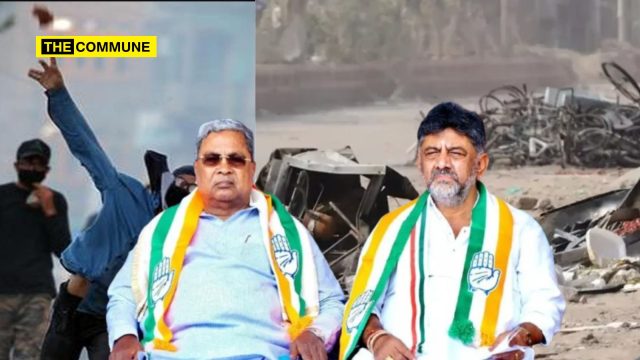
On 4 September 2025, the state formally cleared the withdrawal of cases tied to the 2019 Chittapur stone-pelting episode as well as protests that erupted following the Enforcement Directorate’s arrest of Deputy Chief Minister D.K. Shivakumar. In addition, cases connected to disturbances during Ganesh Chaturthi celebrations and recent demonstrations in Shivamogga have also been dropped.

This latest wave of case withdrawals has stirred controversy, particularly because the move reportedly ignored strong objections from the Home Department, senior police officials, and legal advisors. Despite concerns raised by the Director General of Police, the Director of Prosecutions, and the Law Department who collectively advised that these cases lacked merit for withdrawal and did not serve public interest, the government went ahead with its decision.

One particularly contentious withdrawal involves a 2019 case in Chittapur where a group of young men allegedly pelted stones at police officers after a tip-off from Hindu activists about illegal cattle transport. The request to drop this case reportedly came from IT and BT Minister Priyank Kharge. Similarly, the government has dismissed charges against supporters of D.K. Shivakumar who were accused of damaging public property, including buses and government offices, in Kanakapura during protests over his 2019 arrest. In another instance, cases against those backing Shivakumar’s brother, D.K. Suresh, were also scrapped. These pertained to a 2012 protest where Suresh’s supporters surrounded the then-Chief Minister over being excluded from a ceremonial event honoring Dr. B.R. Ambedkar.

The pattern of leniency continues with cases dropped against those involved in disruptions during Ganesh Chaturthi processions in various districts such as Ramanagara and Koppal. In some of these incidents, participants were accused of misconduct towards law enforcement officers or violating event regulations, including organizing prohibited activities like ram fights. Former Home Minister Araga Jnanendra is believed to have advocated for these withdrawals.

Further, the government has erased records related to four cases from Shikaripura in Shivamogga district, linked to 2023 protests over the BJP government’s decision on internal reservations for Scheduled Caste communities. In total, three petitions filed by Home Minister Dr. G. Parameshwara and government Chief Whip Ashok Pattan led to additional case dismissals.

Law and Parliamentary Affairs Minister H.K. Patil confirmed the action, stating that the administration has annulled around 60 government-initiated cases, including those against farmers, student protestors, and Kannada activists, across multiple police jurisdictions.

This is not the first instance of the Congress administration facing backlash for similar decisions. Back in October 2024, the Siddaramaiah-led government attempted to revoke charges against All India Majlis-e-Ittehadul Muslimeen (AIMIM) leaders and others involved in the 2022 Hubballi riots. The incident had seen a large group allegedly mobilized by Muslim leaders attacking the Old Hubballi police station, pelting stones at officers and damaging nearby properties, including a temple and a hospital. The proposed withdrawal was eventually overturned by the Karnataka High Court after a PIL was filed by advocate Girish Bhardwaj.

Despite repeated objections from legal and law enforcement authorities, the Congress government has persisted in dropping cases, many of which involve individuals aligned with or supportive of the party. This has prompted fierce criticism from opposition parties, who accuse the government of politicizing justice and undermining law and order for electoral gain.

(With inputs from OpIndia)

Subscribe to our channels on TelegramWhatsApp, and Instagram and get the best stories of the day delivered to you personally.

Precision At 17,000 ft: Indian Army Executes High-Risk Night Rescue Of 2 South Korean Nationals In Ladakh

indian army rescue ladakh south korean nationals

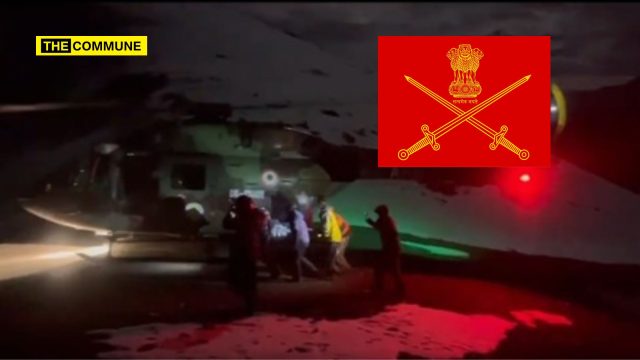
In a daring late-night operation on September 4, the Indian Army Aviation carried out a high-altitude casualty evacuation mission to rescue two South Korean nationals stranded at Kongmaru La Pass in Ladakh. At 8:05 P.M., the Army received an urgent message requesting evacuation of Hyun Woo Kim, a citizen of South Korea, and his wife, stranded at Kongmaru La Pass in Ladakh at an altitude of over 17,000 feet.

The snow-laden terrain and razor-sharp ridgelines made the mission exceptionally challenging. With no time to lose, the Army Aviation helicopter squadron was mobilised by 8:20 P.M. The task required a precision landing using Night Vision Goggles (NVG) at an unprepared helipad — a feat demanding extraordinary skill and composure from the aircrew.

Braving icy winds, reduced visibility, and near-zero margin for error, the pilots guided their aircraft to the designated spot, touching down at around 9:15 P.M. The swift landing and extraction under such hostile conditions underscored the unmatched training and professionalism of the squadron.

The South Korean couple was quickly airlifted to safety and handed over to medical authorities for immediate treatment. This rescue mission reflects a textbook display of courage, coordination, and precision under extreme duress, highlighting the Army’s readiness to respond to emergencies, even in the harshest of environments.

The daring operation not only reaffirmed the Indian Army’s operational capabilities in high-altitude regions but also carried strong humanitarian undertones, showcasing India’s commitment to aiding foreign nationals in distress.

For the Army Aviation wing, the successful NVG rescue in Ladakh adds another feather to its illustrious record of high-risk missions in some of the world’s most unforgiving terrains. It is worthy to note here that although the Indian Army’s primary role is to safeguard the borders and to give a befitting reply to the nation’s enemies in any critical or warlike situation but the Indian Army is among the first to help stranded citizens in any such situation, irrespective of their nationality.

Notably, at a time when the northern part of India including Uttarakhand, Punjab, Himachal Pradesh and Jammu Kashmir is witnessing floods which have created havoc, the Indian Army is standing shoulder-to-shoulder with the other concerned agencies and is providing critical humanitarian assistance, from delivering food via helicopters and drones, evacuating people and giving them medical assistance.

-IANS

Subscribe to our channels on TelegramWhatsApp, and Instagram and get the best stories of the day delivered to you personally.

Onam Liquor Sales Cross Last Year’s Record, ₹137 Crore On Uthradam Alone In Kerala

onam liquor sales

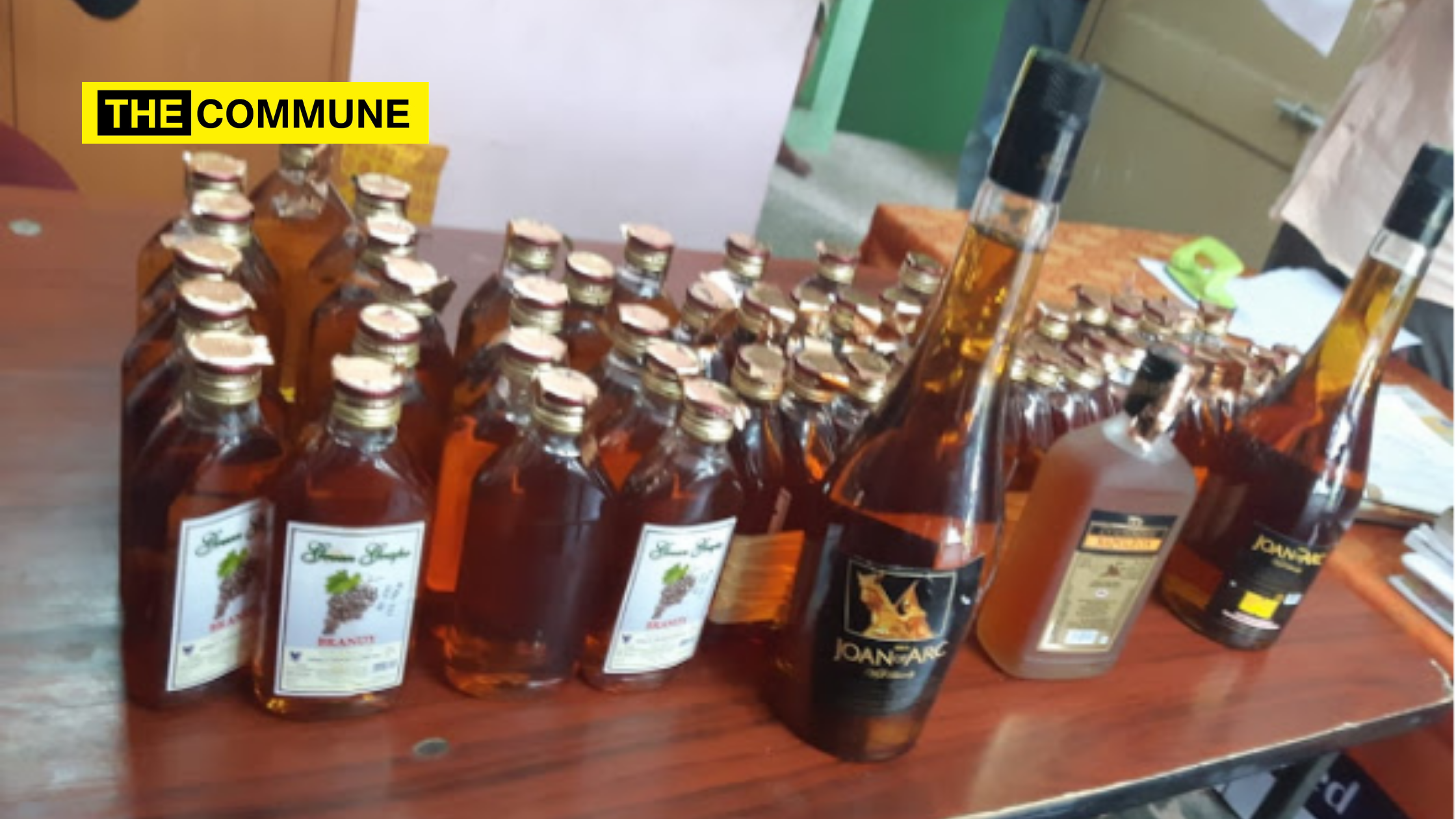
Liquor sales in Kerala during this year’s Onam season have touched a record high, with earnings surpassing last year’s figures. According to reports, liquor worth Rs 826.38 crore was sold in the ten days leading up to Uthradam.

This is around Rs 50 crore more than the sales recorded during the same period last year. On Uthradam day alone, liquor sales touched Rs 137 crore, compared to Rs 126 crore on the same day in 2024. The sharp rise highlights the continuing demand for liquor during the state’s biggest festival season.

Among outlets, the Karunagappally store registered the highest sales, clocking Rs 146.08 lakh on Uthradam day. It was followed by the Asramam outlet in Kollam, which recorded sales of Rs 123 lakh, and the Edappal outlet with Rs 110.79 lakh.

Reports said six outlets across Kerala recorded sales of more than Rs one crore each during the season. Liquor sales remain one of the most important sources of revenue for the Kerala government. The state, which consistently records the highest per capita alcohol consumption in the country, depends heavily on the revenue from its state-run liquor outlets.

Officials said the surge in Onam sales has once again ensured strong income for the exchequer. At the same time, health experts and social groups have raised concerns over the steady increase in alcohol consumption during festive periods. They point out that the social and health costs of heavy drinking remain a challenge for the state, even as sales continue to rise year after year.

Liquor is sold through around 325 retail outlets owned by the Corporation and the state-backed cooperative organisation Consumerfed. The profile of liquor users in Kerala reveals that 32.9 lakh people out of the 3.34 crore in the state consume liquor, which includes 29.8 lakh men and 3.1 lakh women. Around five lakh people consume liquor daily.

Out of this, 83,851 people (including 1,043 women) are addicted to alcohol. The latest figures underline a clear pattern as Onam remains the single largest driver of liquor sales in Kerala. With this year’s numbers reaching a new peak, the debate between revenue generation and public health concerns is likely to continue.

-IANS

Subscribe to our channels on TelegramWhatsApp, and Instagram and get the best stories of the day delivered to you personally.

“Nothing Wrong In Ballot Papers, Ready To Make Preparations”, Says Karnataka SEC After Congress Govt Move

karnataka congress ballot paper sec

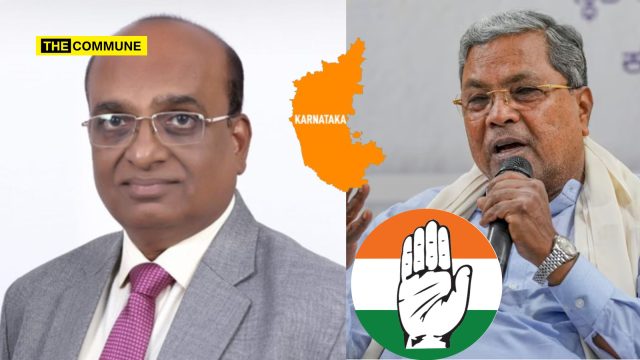
State Election Commissioner G.S. Sangreshi has said that there was nothing wrong in conducting elections using ballot papers, and the poll body is ready to make preparations in this regard. He said this following the cabinet decision of the Congress-led government in Karnataka to recommend to the State Election Commission (SEC) that all local body elections be conducted using ballot papers instead of Electronic Voting Machines (EVMs).

Speaking to the media on Friday in Bengaluru, Commissioner Sangreshi said, “If the state government brings an enactment legally and guidelines are framed, we will have to implement it. Whether it is justifiable or not has been decided by them. They have considered public opinion and held discussions on the matter. Hence, there will be no hindrance to using ballot papers.”

He further stated, “Instead of EVMs, ballot papers will be used. Voting through EVMs has been in place at all levels except gram panchayats for the last 20 to 25 years. For gram panchayat elections, ballot papers are still used. Hence, at the village and rural level, people are familiar with ballot papers. Therefore, I feel the use of ballot papers will not pose any setback or cause for concern.”

“We need not seek permission from the Central Election Commission for using ballot papers, because the State Election Commission is an independent constitutional body. The SEC has powers equal to those of the Central Election Commission,” he stressed.

“There is no need for us to seek their (ECI) approval. In total, as per the guidelines and law, elections must be conducted — this is the objective,” Commissioner Sangreshi stated. He added that the state government, after taking officials into confidence, must implement the decision, as personnel will be required for the process.

Preparations for the voters’ list will be carried out under the monitoring of the State Election Commission. “The Constitution has provided rights and laid down procedures,” he said. “We will conduct panchayat and local body elections with transparency, reliability, commitment, and in a judicious manner,” he assured.

The Congress-led government in Karnataka has decided to bring an amendment to use ballot papers instead of EVMs in the upcoming local body polls in the state. Minister for Law H.K. Patil made the statement in this regard after the cabinet meeting on Thursday at Vidhana Soudha in Bengaluru. Minister Patil stated, “The state cabinet has resolved to recommend necessary legal amendments and framing of rules to facilitate the conduct of all upcoming local body elections through ballot papers instead of the EVM system. Earlier, the data from the Assembly elections was being used. Now, a decision has been taken to recommend revision, correction, and reconstitution of the voters’ list, so that the State Election Commission can prepare a high-quality electoral roll.”

Coming down heavily on the Congress-led government for deciding to bring an amendment to use ballot papers instead of EVMs in the upcoming local body polls in the state, Karnataka BJP said, “By deciding to replace EVM machines with ballot papers in the upcoming local body elections, the Congress-led government in Karnataka has itself admitted that it came to power in the state through electoral fraud.”

BJP State President and MLA B.Y. Vijayendra took to X, made the statement on Friday. “In this context, the 136 Congress MLAs who were elected in the 2023 state elections through EVMs should first resign. The nine Congress MPs elected to the Lok Sabha from Karnataka should also resign. They should contest again and win using ballot papers. Otherwise, they must admit that they have come to power through election fraud,” Vijayendra stated.

-IANS

Subscribe to our channels on Telegram, WhatsApp, and Instagram and get the best stories of the day delivered to you personally.
AIADMK MLA Sengottaiyan Calls For Party Unity, Says Split Will Doom Party; Gives 10-Day Ultimatum To EPS To Re-Induct Expelled Leaders

eps sengottaiyan aiadmk

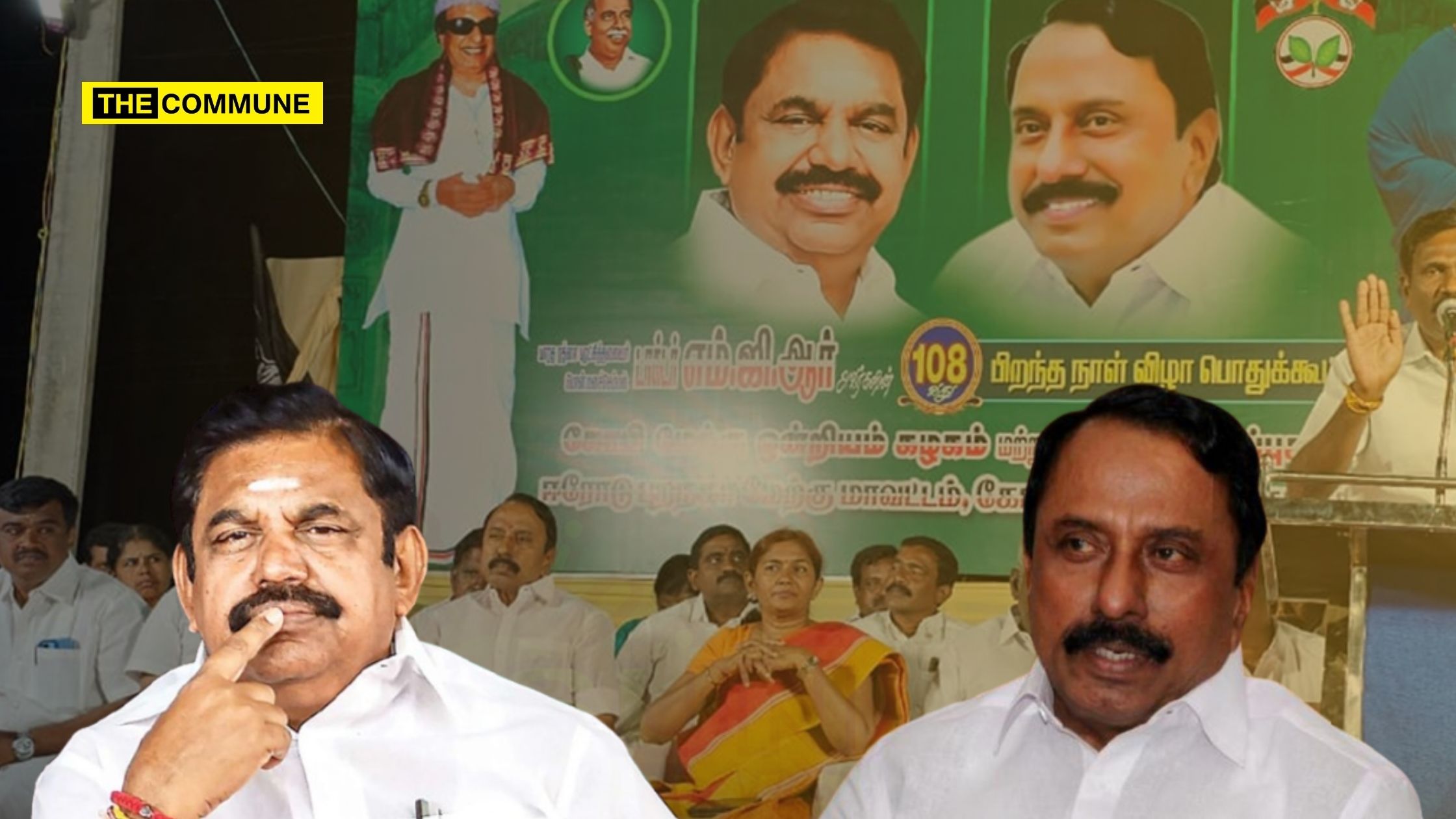
Senior AIADMK leader and former minister K.A. Sengottaiyan on 5 September 2025 sent a sharp signal to the party’s leadership, EPS, stressing that electoral victory in Tamil Nadu was impossible unless the AIADMK reunited with leaders who had walked away or been expelled after J. Jayalalithaa’s death.

At a press conference in Gobichettipalayam, Sengottaiyan spoke at length about the party’s past struggles, its present crisis, and the path forward. “A movement should not break up. The reason this movement has survived is because of the millions of volunteers who believe in it. Our responsibility is to protect that faith,” he said, invoking the party’s legacy under M.G. Ramachandran and Jayalalithaa.

“Embrace the one who went out”

Sengottaiyan also urged reconciliation with the ones who have been silent and the ones who have walked out of the party. “We should embrace the one who went out. Those who are silent today should also be brought back. Only then can we achieve victory,” he declared.

He argued that in the absence of unity, the AIADMK would continue to face defeat in elections. Referring to the 2024 Lok Sabha results, he said the BJP alliance did not yield success because the AIADMK house was not in order. “Even a strong national party with us did not bring victory. That is why all sections of this movement must come together,” he explained.

10-day Ultimatum

Sengottaiyan delivered a strong message to the party’s general secretary Edappadi K. Palaniswami (EPS), warning that the AIADMK could not hope for electoral victory without reuniting its divided factions and setting a 10-day deadline for decisive action.

He revealed that a delegation of six senior leaders – himself, S.P. Velumani, Natham Viswanathan, C.V. Shanmugam, Thangamani and Anbazhagan, had earlier urged EPS to begin a reconciliation process: “Six leaders, including Natham R Viswanathan, SP Velumani, P Thangamani, KP Anbalagan, and CV Shanmugam, have met Edappadi K Palaniswami to reunite the expelled leaders, but he did not accept our opinion. The expelled leaders wanted to rejoin the party without any conditions. I am saying this to ensure that the party does not get split. I am ready for any sacrifice. Even when I got opportunities twice, I worked for the party’s unity.”

Sengottaiyan said their appeal was ignored. “If no decision is taken within 10 days, we will all take the lead in implementing it,” he warned, signalling that senior functionaries could bypass EPS if necessary. This also seems to indicate the discontent simmering within the party.

The 77-year-old former minister and nine-time legislator said the decision ultimately lay with general secretary Edappadi K. Palaniswami, but insisted that leaders who had once held key responsibilities must be reinstated. “The general secretary can decide who should return, but leaders who held key responsibilities must be reinstated. If this does not happen, like-minded leaders will unite and do it,” he warned.

Underscoring the importance of unity, Sengottaiyan cited precedents set by party founder M.G. Ramachandran and his successor Jayalalithaa, who had readmitted critics such as S.D. Somasundaram and Kalimuthu to strengthen the party despite past differences.

Not targeting EPS, but “crores of workers”

When asked if his statements were directed against EPS, Sengottaiyan denied hostility but stressed that his stand reflected the mood of the rank-and-file. “My mindset is the mindset of crores of workers. This is the right time for this movement to succeed,” he said, carefully balancing his criticism with loyalty to the leadership structure.

He repeatedly stressed that his position was rooted not in personal ambition but in concern for the movement. “This is not about individuals. The people of Tamil Nadu want a change in government. But that can only happen if the AIADMK comes together as one family,” he said.

“Movement will not survive on splits”

Drawing from history, Sengottaiyan said the AIADMK had faced existential crises in the past but had survived only because it stayed united. “From MGR’s time to Amma’s time, this movement survived because it did not split. When Amma was alive, there were many challenges, but unity was the shield. If we allow cracks today, the people will lose faith,” he cautioned.

He added that the sacrifices of lakhs of cadres over decades could not be wasted by leadership tussles. “A movement is not about one or two people. It is about the lakhs of cadres who have stood in the sun and rain for years,” he said.

Push for reconciliation ahead of 2026 polls

Sengottaiyan’s press conference comes at a crucial moment, with the 2026 Tamil Nadu Assembly elections less than two years away. Within the AIADMK, several leaders fear that without regrouping particularly with OPS and Sasikala’s factions, the party may struggle to mount a serious challenge to the DMK.

Political observers note that Sengottaiyan, a respected senior figure with decades of organisational experience, rarely addresses the press in such direct terms. His intervention is being read as an attempt to nudge EPS towards a course correction, especially after the AIADMK’s recent string of electoral setbacks.

No movement without the people

Throughout his address, Sengottaiyan repeatedly underlined that the AIADMK’s survival was tied to the sentiments of its cadre base. “People want change. People want this movement to succeed. We cannot disappoint them,” he said.

He also highlighted the limitations of alliances and electoral arithmetic in the absence of internal strength. “Alliances alone will not bring victory. Only unity can,” he said.

Sengottaiyan’s intervention is a reminder of the AIADMK’s precarious position: a once-dominant movement now struggling with splits, leadership disputes, and electoral setbacks. His warning that “only unity will bring victory” frames the central dilemma before the party, whether it can put aside personal rivalries and return to collective strength, or risk being sidelined in Tamil Nadu’s political landscape.

Subscribe to our channels on Telegram, WhatsApp, and Instagram and get the best stories of the day delivered to you personally. 
ED Launches Initial Probe Into Alleged Foreign Funding Behind Dharmasthala Controversy

ED dharmasthala

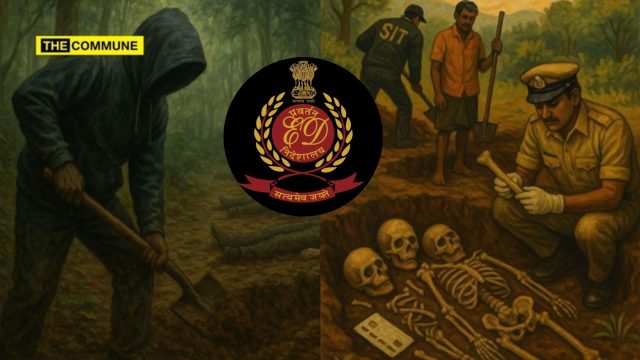
The Enforcement Directorate (ED) has begun a preliminary inquiry into allegations of questionable foreign funding possibly being used to incite communal unrest in connection with the ongoing Dharmasthala controversy in Karnataka, official sources confirmed on 4 September 2025.

According to reports, the ED is currently collecting relevant information and documentation involving various individuals and organizations, including certain NGOs, that are suspected of utilizing foreign contributions to inflame tensions.

The agency is conducting the probe under provisions of the Foreign Exchange Management Act (FEMA). Further steps will be taken if evidence surfaces indicating violations related to foreign funding regulations or the misuse of overseas funds, sources told PTI.

The controversy gained political traction on 1 September, when the Karnataka unit of the BJP organized a “Dharmasthala Chalo” protest march. The rally was aimed at denouncing what the party claims is a conspiracy and misinformation campaign targeting the temple town located in the Dakshina Kannada district.

The BJP also called for a National Investigation Agency (NIA) probe into the issue and criticized the Congress-led state government for what it described as a poor and politically biased response to the matter.

The dispute began following allegations made by Chinnaiah, a former sanitation worker employed in Dharmasthala from 1995 to 2014. He alleged that he was coerced into burying multiple bodies including those of women and minors some allegedly bearing signs of sexual violence. His accusations hinted at the possible involvement of temple authorities.

Chinnaiah was later arrested for perjury, casting doubt on the veracity of his claims. In response to the controversy, the state government formed a Special Investigation Team (SIT), which has since launched a thorough probe. The SIT conducted excavations at several forested sites near the Netravathi River, as identified by the complainant. Skeletal remains were reportedly uncovered at two of these locations.

Meanwhile, Karnataka Minister Priyank Kharge on 4 September 2025 accused two activists Girish Mattannavar and Mahesh Shetty Thimarody of having links with the Rashtriya Swayamsevak Sangh (RSS) and the BJP, suggesting a political motive behind their involvement in the case.

Police have registered two separate FIRs against the duo for allegedly producing and sharing videos on social media platforms that are believed to have incited communal tensions and hurt public sentiments.

(With inputs from Deccan Herald)

Subscribe to our channels on TelegramWhatsApp, and Instagram and get the best stories of the day delivered to you personally.

Karjat’s ‘Sukoon Empire’ Halal Township Sparks Row, NHRC Issues Notice

sukoon empire karjat halal community township muslim nhrc

A township project coming up in Karjat, around 100 km from Mumbai, has sparked a major controversy after promotional videos described it as offering a “Halal lifestyle” exclusively for Muslims.

The project, named Sukoon Empire, drew attention after National Human Rights Commission (NHRC) member Priyank Kanoongo shared one such video on X. The clip featured a woman in a hijab promoting the township as a place for “authentic community living with like-minded families, children growing safely in a Halal environment, elders being respected, prayer spaces within walking distance, and spiritual wellness.”

Posting the video, Kanoongo wrote: “This is not advertisement, it is poison… a township is being built only for people of the Muslim faith, offering a Halal lifestyle. This is nothing less than a ‘Nation within the Nation.’ A notice is being sent to the Maharashtra government.”

The NHRC has since issued a notice to the Maharashtra Chief Secretary, seeking a detailed report within two weeks. The Commission said the matter raises “serious concerns of human rights violations.”

Critics argue the project promotes religious segregation and violates the Constitution. “Houses will be built only for people of one religion. Houses will be sold to people of this religion… This is a challenge to the Constitution of India,” the NHRC stated, warning that such developments could lead to demands for religiously exclusive schools, services, and even separate states. It further described the promotion as “a call for Ghazwa-e-Hind” and demanded strict action against the builders and withdrawal of the advertisements.

Meanwhile, some voices online defended the project, arguing that Muslims face housing discrimination in urban India and are therefore forced to create safe spaces for themselves. Hindutva groups, however, slammed the township as “communal gentrification.”

The Maharashtra government has yet to respond formally, though officials have indicated the matter is under review. The township site at Neral-Karjat remained closed in recent days, with construction expected to begin soon.

Subscribe to our channels on Telegram, WhatsApp, and Instagram and get the best stories of the day delivered to you personally.
“Not A Matter Of Individual Right”: Bombay High Court Bars Ganpati Idol Immersion At Banganga

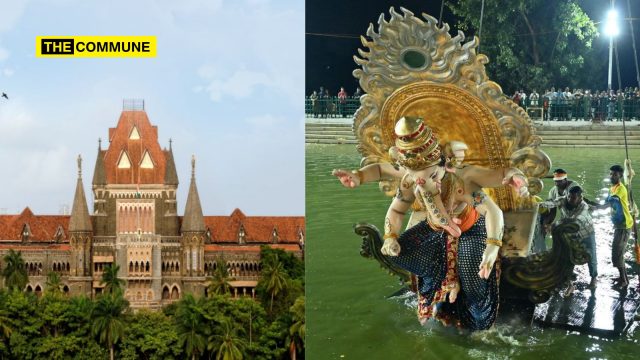
The Bombay High Court on 4 September 2025 declined to permit the immersion of eco-friendly Ganpati idols at Banganga Talao, a historic and sacred water tank located in South Mumbai’s Walkeshwar area, during the ongoing Ganesh Chaturthi celebrations.

“When the court is faced with an issue regarding enforcement of an individual right, may be the fundamental right of the citizen and the right of the community, it should always bear in the minds of the court that some hardship to an individual or a mere infraction of a right of a citizen shall not be a ground to entertain the petition where larger issues are involved,” the bench observed while refusing permission.

The division bench of Acting Chief Justice Shree Chandrashekhar and Justice Aarti Sathe dismissed a plea filed by local resident Sanjay Shirke, ruling that questions of public interest and heritage preservation outweighed individual or community rights.

The petition challenged a Maharashtra Pollution Control Board (MPCB) notification dated August 26, which directed that idols under six feet in height be immersed in artificial ponds. Advocate Bhavesh Thakur, appearing for Shirke, argued that the directive contradicted an earlier High Court order mandating only Plaster of Paris idols to be immersed in artificial tanks. He contended that eco-friendly idols should not be subject to the same restrictions.

Opposing the plea, Advocate General Dr Birendra Saraf, representing the state, said the MPCB’s move promoted environmentally safe practices and did not infringe on any absolute right. “Banganga is a protected monument and a heritage structure. The archaeology department has not granted any permission for immersions there. There are several artificial tanks nearby, and citizens are not entitled to insist on immersing idols only at Banganga,” Saraf submitted. He added that alternatives like Girgaon Chowpatty were available for immersion.

The court found the plea to be without merit. “We are not satisfied that this case even requires any notice. The petitioner has provided no data on the number of people involved or the duration for which the immersion tradition has been followed at Banganga,” the bench noted, declining to invoke its powers under Article 226 of the Constitution.

(With Inputs From India Today)

Subscribe to our channels on TelegramWhatsApp, and Instagram and get the best stories of the day delivered to you personally.