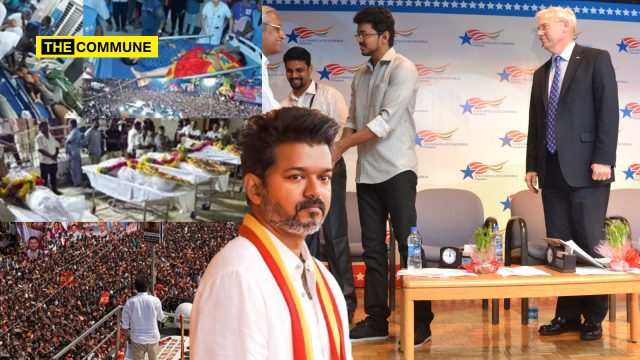
Following the stampede at a Tamilaga Vettri Kazhagam (TVK) rally in Karur that claimed 41 lives, foreign embassies have reportedly expressed interest in meeting actor and party leader Vijay.
According to sources cited in a recent report by Dinamalar, ambassadors from several countries have written to External Affairs Minister S. Jaishankar seeking permission to hold discussions with the TVK chief. India has around 85 embassies, and many of them routinely send political reports to their respective governments, particularly ahead of major elections.
Officials said foreign envoys are keen to understand the political direction and policies of the newly formed TVK, which has emerged as a significant force in Tamil Nadu politics. Senior diplomats, including those from the United States consulate in Chennai, are said to have already submitted preliminary reports on Vijay’s political activities.
Under protocol, ambassadors and senior embassy officials are required to obtain prior approval from the Ministry of External Affairs before meeting political leaders, ministers, or other prominent public figures. The ministry has reportedly granted permission for such meetings, and diplomatic sources in Delhi indicated that interactions between Vijay and foreign representatives may take place soon.
Subscribe to our channels on Telegram,Instagram and YouTube to get the best stories of the day delivered to you personally.
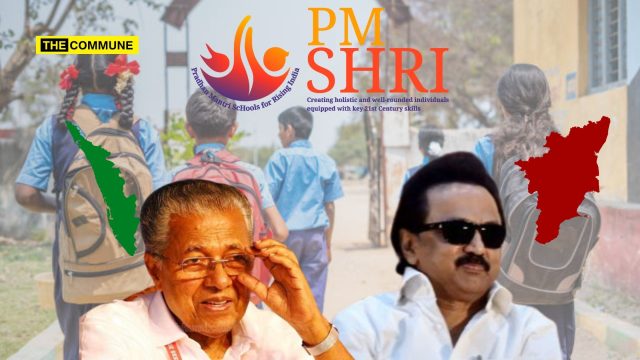
In a significant policy reversal, the CPI(M)-led Kerala government has decided to join the Centre’s Pradhan Mantri Schools for Rising India (PM SHRI) scheme, citing an urgent need for funds to pay teacher salaries and provide student grants. The move ends a prolonged standoff during which the state had denounced the scheme as a tool for the “saffronisation” of education.
The state’s reluctance to sign a Memorandum of Understanding (MoU) with the Union Education Ministry had led the central government to withhold the release of over ₹1,000 crore earmarked for Kerala’s general education sector. This financial pressure ultimately forced the state’s hand.
State Education Minister V. Sivankutty announced the decision on Sunday, framing it as a pragmatic choice compelled by financial necessity. “There are arrears of ₹1,466 crore that we have to receive from the Centre. It is money that must be spent on our children,” Sivankutty stated. “Many expenses, such as grants to students and salaries to teachers, can be met only if we get this fund.”
The minister defended the U-turn by arguing that the Centre’s funds belong to all citizens and that other state departments like Health and Agriculture had already accepted central assistance. He accused the Centre of withholding aid on “silly grounds,” but pledged that Kerala would continue to uphold its own educational policies. “We will adopt a practical approach,” he said.
The government’s decision highlights a stark contrast in how states are responding to the scheme. While Kerala has now pragmatically joined to access crucial funds, states like Tamil Nadu have chosen to continue their ideological opposition, potentially at the cost of their own students’ development and welfare.
Facing withheld funds of nearly ₹2,500 crore tied to the National Education Policy (NEP) 2020, the Tamil Nadu government, led by the DMK, is protesting the Centre’s conditions. Union Minister Dharmendra Pradhan has clarified that Sarva Shiksha Abhiyan (SSA) funds are linked to the implementation of the NEP and the PM SHRI schools scheme, which the state has outright rejected, decrying it as “Hindi imposition.” This has created a contradictory stance: the DMK is publicly protesting to demand the release of funds for a central scheme it officially refuses to join, leading to accusations of political posturing over a policy it has consistently opposed.
The PM SHRI scheme, which aims to upgrade existing schools, requires state governments to bear 40% of the project cost. So far, 12,400 schools across 670 districts in the country have been incorporated under the initiative. The Kerala government, however, maintained that it has already independently implemented many of the scheme’s infrastructure components, including setting up 40,000 smart classrooms with broadband connectivity.
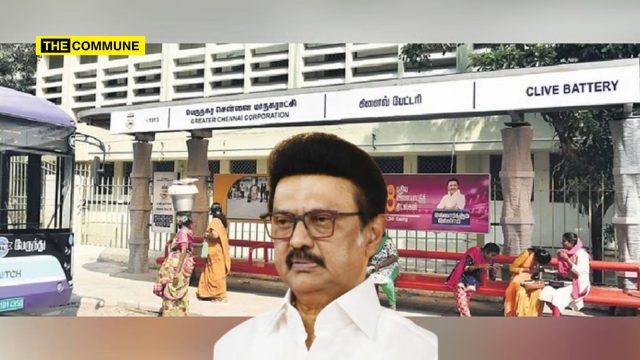
A plan by the Greater Chennai Corporation (GCC) to construct new bus shelters across 24 locations using councillors’ ward development funds has raised serious questions about financial prudence and administrative oversight, an investigation by The New Indian Express has revealed.
Despite tenders being floated in September for shelters costing ₹10-20 lakh each, a ground visit found at least five proposed locations already have functional bus shelters. Furthermore, several ward councillors claimed ignorance about projects supposedly funded from their own ward development allocations.
At locations including Vivekananda Illam near the MLA office, Rajaji Salai (Clive Battery), Ibrahim Salai, Tharamani 100 Feet Road, and Cathedral Road near Stella Maris College, existing shelters were found to be in adequate condition. Notably, a new 3D-printed shelter has recently been constructed near Stella Maris College.
“I was unaware that a new bus shelter was proposed near Stella Maris College with my ward development funds,” said Ward 118 Councillor Malliga Yuvaraj. “There are already adequate shelters here. Anything beyond that is unnecessary.”
The investigation uncovered multiple inconsistencies in the project:
Councillor Ignorance and Shifting Explanations
Ward 116 Councillor ARPM Kamaraj initially expressed unawareness of the project in his ward, while contractors provided conflicting justifications. One contractor first claimed a replacement was needed due to poor condition, then changed his story to say it was an “addition” based on school requests when the existing shelter was found to be in good shape.
Questionable Locations and “Typographical Errors”
At Clive Battery, where both sides of the stretch already have sufficient stops, Ward 60 Councillor Azad Z claimed the new shelter was needed because “buses often skip the existing stop and park slightly further away from there.” However, a 3D-printed shelter was recently built at the same location.
More strikingly, one tender mentions a proposed shelter in Ward 142 on “CIT Nagar Main Road” – a road that doesn’t exist. Councillors attributed this to a “typo.”
Minimal Damage, Maximum Spending
At Ibrahim Salai, the existing shelter built during the AIADMK regime is slated for replacement. During inspection, only three seats were found missing. When questioned why repairs weren’t sufficient, officials claimed there was “no legal provision for repairs – only for new construction.”
திமுக அரசு மூன்று லட்சத்தில் முடிய வேண்டிய சாதாரண பேருந்து நிழற் குடை 25 லட்சம் என்று கணக்கு காட்டுகிறார்கள்🤦♀️🤦♀️🤦♀️#DMKFailsTNpic.twitter.com/sC0yfDSvWv
Similarly, in Tharamani, a new shelter is proposed just 50 meters from an existing one, with the justification that the current shelter’s proximity to a traffic signal “obstructs the pedestrian pathway.”
Repeated attempts to contact the superintending engineer of the Bus Route Roads department and Deputy Commissioner (Works) V Sivakrishnamurthy for clarification were unsuccessful.
The revelations have sparked concerns about potential misuse of public funds, particularly given the significant cost variations for shelters with identical specifications and the apparent duplication of infrastructure in already well-served areas.
The Supreme Court came under spotlight after it temporarily suspended the life sentence of Father Edwin Pigarez, a Roman Catholic priest convicted of raping a minor girl. The bench, consisting of Chief Justice BR Gavai and Justice K Vinod Chandran, granted bail to Pigarez while his appeals against the High Court’s conviction ruling are still pending.
In this report, we look at ten judicial verdicts from 2021 to 2025 involving individuals associated with Christian institutions in India, who were accused in cases of abuse and murder – instances where higher courts have intervened in the decisions of lower courts, resulting in acquittals, sentence reductions, bail grants, or suspension of sentences.
#1 Supreme Court Suspends Sentence of Priest in Minor Rape Case
On 17 September 2025, the Supreme Court suspended the life sentence and granted bail to Father Edwin Pigarez, a Catholic priest convicted of repeatedly raping a minor girl in Kerala between 2014 and 2015. The Kerala High Court had earlier upheld the conviction but reduced the sentence from life imprisonment to 20 years of rigorous imprisonment. The Supreme Court’s decision to grant bail pending his appeal was based on the fact that the accused had already served nearly ten years in custody, which constituted half of the reduced sentence imposed by the High Court.
#2 Pune Court Discharges Bishop in Sexual Abuse Case
On 8 August 2025, an Additional Sessions Court in Pune discharged Bishop Thomas Dabre in a high-profile sexual abuse case. The case involved the sexual abuse of a 15-year-old boy by Father Vincent Pereira in 2018. The court absolved Bishop Dabre of criminal responsibility, stating that there was no evidence he had failed to report the abuse. The judgment noted that the Bishop had, in fact, advised the victim’s family to approach the police and had reported the matter to the appropriate church authorities, leading to his discharge.
#3 Kerala High Court Acquits Pastor in POCSO Case
On 18 July 2025, the Kerala High Court acquitted Pastor Shibu, who had been convicted by a trial court for the aggravated penetrative sexual assault of a 10-year-old girl in 2014. The trial court had sentenced him to double life imprisonment. However, the High Court set aside the conviction, ruling the victim’s testimony as “highly improbable and unbelievable” due to inconsistencies with the medical evidence presented during the trial. The acquittal overturned the lower court’s verdict entirely.
#4 Allahabad High Court Stays Arrest of Teacher in Conversion Case
On 30 May 2024, the Allahabad High Court stayed the arrest of a schoolteacher, Miss Olive Rohit alias Olive Rose Caleb, accused of forcing a male student to convert to Christianity and pressuring him into a sexual relationship. An FIR was lodged under the UP Prohibition of Unlawful Conversion of Religion Act and the POCSO Act. The court’s decision to grant a stay on arrest followed a school inquiry that suggested the student’s allegations might be fabricated, and it ordered a cyber cell investigation before any coercive action could be taken.
#5 Kerala High Court Reduces Sentence for Priest in Sexual Assault
On 7 February 2024, the Kerala High Court reduced the sentence of Father Edwin Figarez for the sexual assault of a minor girl. The priest was originally sentenced to double life imprisonment by a POCSO court in 2016. The High Court reduced the sentence to 20 years of rigorous imprisonment without remission, deeming it sufficient and proportional. The court also fully acquitted the priest’s brother, Silvester Figarez, who was accused of helping him hide, due to a lack of conclusive evidence.
#6 Supreme Court Grants Bail in Pune Murder Case After 11 Years
On 25 September 2023, the Supreme Court suspended the life sentence and granted bail to Dinesh alias Paul Daniel Khajekar, who was convicted for the 2011 murder of Tanmay Ashok More in Pune. The bench noted that the accused had already spent over eleven years in jail and that his appeal had been pending before the Bombay High Court for six years. The suspension of sentence was granted pending the final hearing of his long-delayed appeal.
#7 Bishop Franco Mulakkal Acquitted in Nun Rape Case
On 14 January 2022, the Kottayam Additional District and Sessions Court acquitted Bishop Franco Mulakkal of charges of repeatedly raping a 46-year-old nun between 2014 and 2016. Despite a extensive investigation involving 89 witnesses, the court found the prosecution’s evidence inconsistent and unreliable. The judgment stated that there were no credible witnesses and that the medical reports were disputed, leading to insufficient proof of guilt beyond a reasonable doubt, resulting in the bishop’s acquittal.
#8 Priest and 18 Others Acquitted in 2002 Factional Murder
On 24 April 2023, a Special CBI Court in Kochi acquitted Father Varghese Thekkekakkara and eighteen others in the brutal 2002 murder of T.M. Varghese. The murder was rooted in a long-standing property dispute between two factions of the Malankara Orthodox Church. After a trial lasting nearly two decades, the court presided over by Judge Anil K. Baskar acquitted all accused due to a lack of sufficient and conclusive evidence to prove their guilt beyond a reasonable doubt.
#9 Kerala HC Suspends Life Terms in Sister Abhaya Murder Case
On 23 June 2022, the Kerala High Court suspended the life sentences of Father Thomas Kottoor and nun Sister Sephy, convicted for the 1992 murder of Sister Abhaya. The division bench granted them interim bail pending their appeal, observing that the conviction by the CBI Special Court was based on insufficient and unreliable evidence. The court specifically pointed to weaknesses in crucial witness testimonies that formed the basis of the lower court’s verdict.
#10 Kerala High Court Reduces Sentence in Kottiyoor Priest Rape Case
On 1 December 2021, the Kerala High Court reduced the sentence of Father Robin Vadakkumcheril, convicted for sexually assaulting a minor girl who subsequently gave birth in 2017. The Special POCSO Court had initially sentenced him to 20 years of rigorous imprisonment. The High Court reduced the sentence to 10 years, ruling that the priest was not in a “position of trust or authority” over the victim, which led to a lesser charge and a consequently reduced sentence.
Subscribe to our channels on Telegram,Instagram and YouTube to get the best stories of the day delivered to you personally.
A panchayat development officer in Karnataka was suspended for attending a Rashtriya Swayamsevak Sangh (RSS) centenary event, triggering a political clash between the ruling Congress and the opposition BJP.
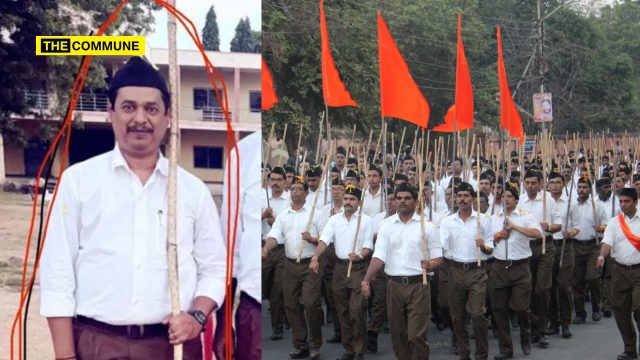
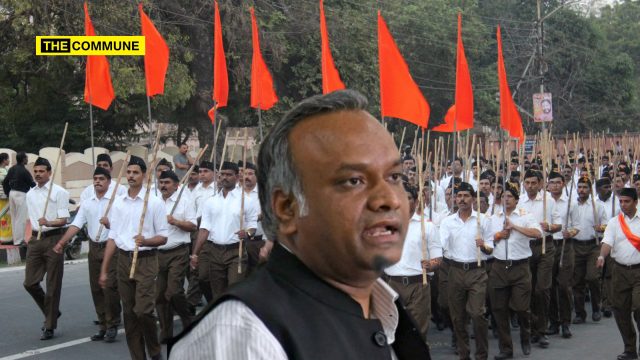
The officer, Praveen Kumar K.P., serving in Sirwar taluk of Raichur district, participated in an RSS route march in Lingsugur on 12 October 2025, wearing the organisation’s uniform and carrying a stick. The Rural Development and Panchayat Raj (RDPR) Department suspended him on Friday, citing violations of service conduct rules.
According to the suspension order issued by IAS officer Arundhati Chandrashekar, Kumar’s participation breached Rule 3 of the Karnataka Civil Services (Conduct) Rules, 2021, which requires government employees to maintain political neutrality, integrity, and conduct consistent with the dignity of public service. The order stated that his actions were “inconsistent with the standards expected of a public servant.” Kumar will remain under suspension with subsistence allowance pending a departmental inquiry.
The suspension comes days after the state government introduced rules requiring prior permission for all organisations, including the RSS, to hold public events. The move followed Minister Priyank Kharge’s call to restrict RSS activities in government spaces such as schools and colleges.
I have spoken to the officer suspended for taking part in RSS Pathsanchalan by the State Government.
Assured him that I will personally appear before the concerned tribunal and courts to challenge this illegal and unlawful suspension.
It is noteworthy that in July 2024, the central government led by the Bharatiya Janata Party lifted a decades-old ban on government employees participating in activities of the Rashtriya Swayamsevak Sangh (RSS). The order shared by many political leaders from all political parties read, “The undersigned is directed to refer to the OM (office memorandum)..dated 30.11.1966, OM No. 7/4/70-Est.(B) dated 25.07.1970 and OM No. 15014/3(S)/80- Estt. (B) dated 28.10.1980 on the above subject. 2. The aforesaid instructions have been reviewedand it has been decided to remove the mention of Rashtriya Swayam Sewak Sangh (R.S.S.S) from the impugned OMs dated 30.11.1966, 25.07.1970, and 28.10.1980.”
Echoes from A 1966 Judicial Verdict
The current suspension stands in stark contrast to a landmark 1966 judgment by the Mysore High Court in Ranganathachar Agnihotri v. State of Mysore. In that case, the court had ruled decisively in favor of a government servant’s right to RSS membership.
The 1966 case involved Mr. Agnihotri, who had secured the 14th rank in the Munsiff’s competitive examination but was denied appointment solely because he was “an active member and organiser of the local RSS unit.” The state government had then argued, much like its current position, that RSS’s tenets were “subversive and secretive and opposed to secularism.”
However, the High Court, after examining the RSS Constitution and various documents, found no evidence to support these allegations. Justice Sadasivayya, in his ruling, noted that the RSS was not a banned organization and its constitution expressly stated it had “no politics” and was devoted to “purely cultural work.”
The court categorically held that “mere membership of the RSS cannot make a person unsuitable for judicial service” and that “suitability must be judged on character and conduct, not on ideological association.” The judges directed the state to appoint Agnihotri as Munsiff, ruling that the government’s decision was based on “irrelevant considerations” and violated constitutional principles.
Contrasting Approaches
The 1966 judgment established several key principles that appear challenged by the current suspension:
Membership vs. Active Participation: While the current case involves active participation in uniform, the 1966 court made no distinction between mere membership and active organization, protecting both.
Evidence Requirement: The historic judgment required concrete evidence that an organization’s activities were unconstitutional, which the government failed to provide then and hasn’t addressed now.
Individual Conduct: The court emphasized that suitability must be determined by individual character and conduct rather than organizational affiliation.
Justice Sadasivayya observed that while the Government had the power to assess suitability, such discretion “cannot be formed arbitrarily but must rest on relevant considerations.” Since no adverse conduct or criminal antecedents were attributed to Agnihotri, the reliance on his alleged RSS association was deemed irrelevant.
The Court directed the State to appoint Agnihotri as Munsiff, placing him above respondents 2–8 in seniority, subject to medical fitness, and awarded costs of ₹200 against the Government.
While upholding the validity of Rule 4(2), the judgment clarified that the Government’s discretion under the rule must be exercised on relevant and objective grounds. The ruling established that association with a non-banned cultural body, without evidence of misconduct or anti-state activity, cannot by itself justify denial of appointment to a judicial office.
Ranganathachar Agnihotri v. State of Mysore (1966):
1. The State rejected the petitioner’s appointment because he was an active member of RSS, alleging it was “subversive, secretive and opposed to secularism.”
2. The Court found no evidence supporting these allegations.
3. RSS… pic.twitter.com/rVcDvHosrO
A complex web of foreign funding, pharmaceutical interests, and media manipulation has emerged around the Thakur Family Foundation (TFF), a US-based organization, raising serious questions about its influence on Indian media and public health narratives.
Recent revelations concerning substantial grants from TFF to individuals closely associated with the fact-checking website Alt News have brought these concerns into sharp focus, suggesting potential violations of Indian laws and a coordinated agenda against India’s pharmaceutical and traditional medicine sectors.
The Thakur Family Foundation: Origins And Key Figures
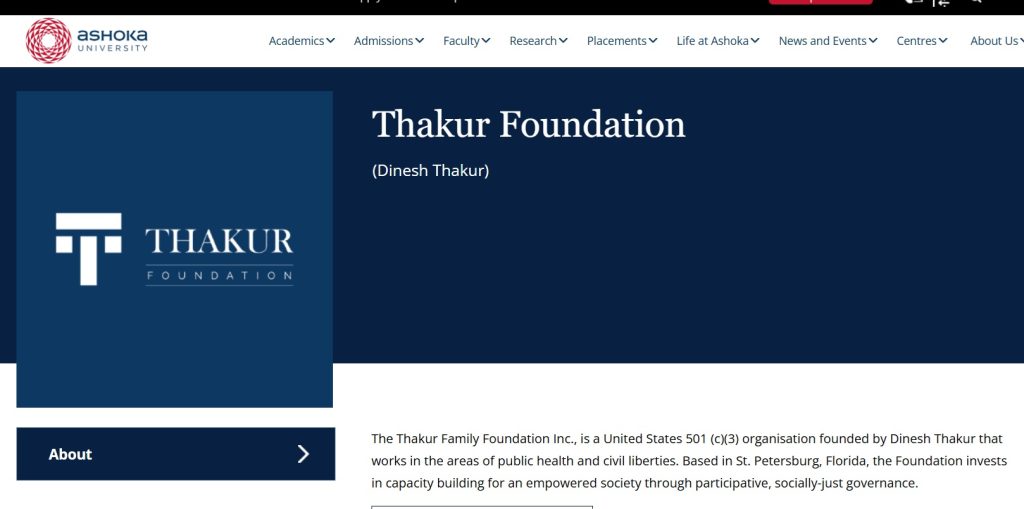
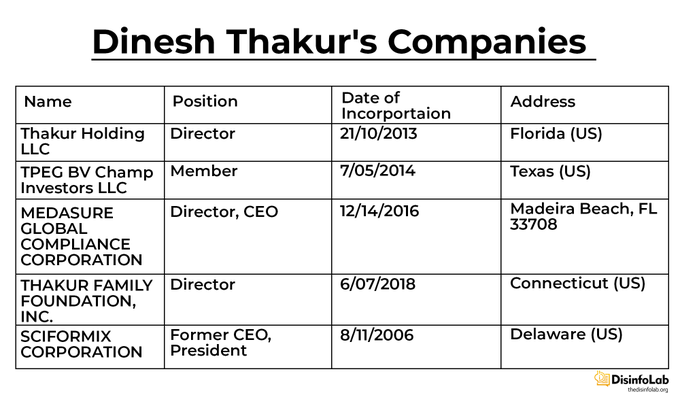
The Thakur Family Foundation Inc. is a United States 501(c)(3) organization founded by Dinesh S. Thakur, based in St. Petersburg, Florida. The foundation describes its mission as working in “public health and civil liberties” and “invests in capacity building for an empowered society through participative, socially-just governance,” according to its profile on Ashoka University.
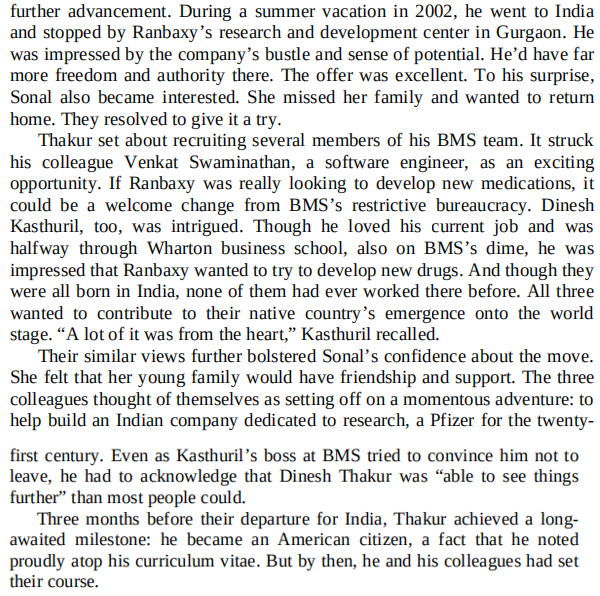
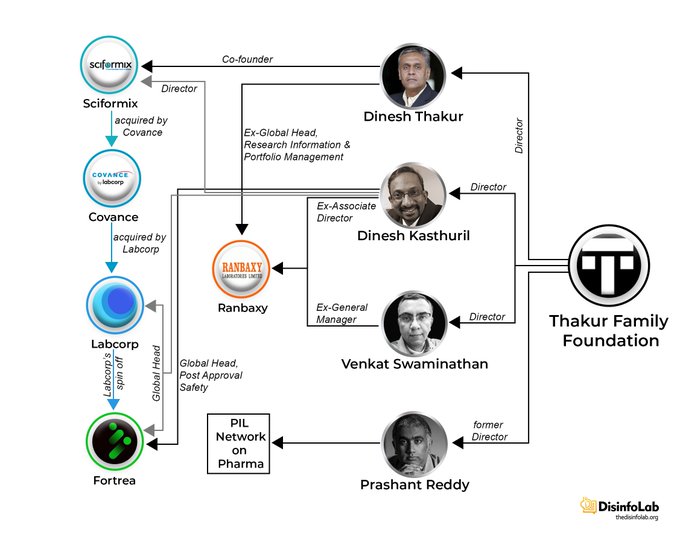
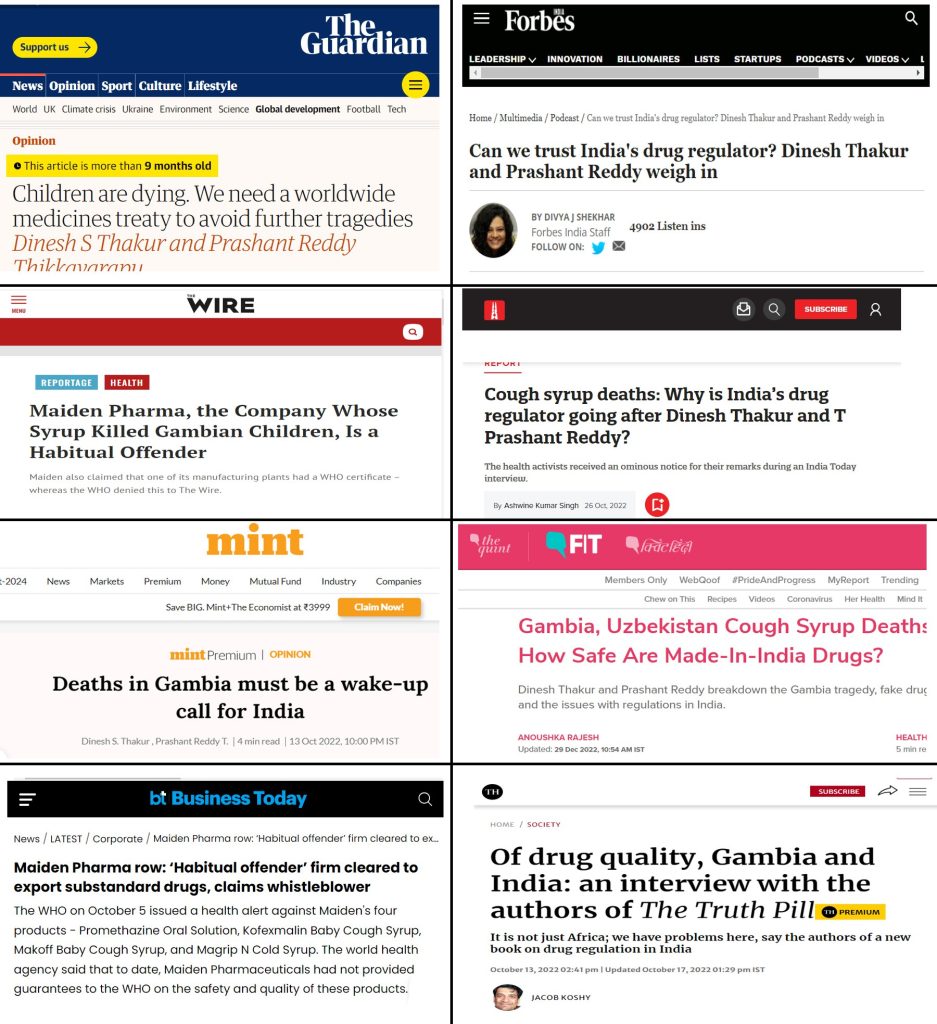
Dinesh Thakur’s history is pivotal to understanding the foundation’s activities. In the early 2000s, after working for a decade in senior positions at US pharmaceutical giant Bristol-Myers Squibb (BMS), Thakur surprisingly quit to “serve India.” He joined Ranbaxy in 2003, coincidentally around the same time that Ranbaxy was engaged in a legal dispute with Pfizer over the generic version of Lipitor, which threatened Pfizer’s billion-dollar market.
During his brief 2–3-year stint at Ranbaxy, two other BMS colleagues – Dinesh Kasthuril and Venkat Swaminathan – also joined the Indian pharmaceutical company in different branches. All three subsequently left Ranbaxy and returned to the US, after which Thakur “exposed” Ranbaxy to the US FDA. This resulted in Ranbaxy being fined USD 500 million, with Thakur receiving a whistleblower reward of USD 48.6 million.
While Ranbaxy was indeed at fault, the narrative that emerged targeted not just one company but extended to “Indian pharma” and “generic medicine” broadly. This pattern of targeting Indian pharmaceutical interests has continued through Thakur’s foundation activities.
The TFF’s leadership includes Thakur’s former BMS and Ranbaxy colleagues. Swaminathan and Dinesh Kasthuril serve as directors of the foundation, recreating their earlier professional alignment. Kasthuril also joined Thakur’s venture Sciformix before moving to LabCorp’s Fortrea.
The Alt News Connection: Foreign Funding And Conflicting Narratives
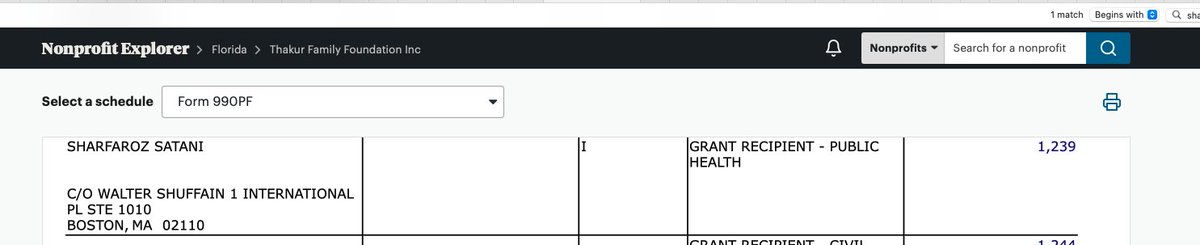
The controversy intensified with the discovery that TFF provided significant grants to two individuals closely associated with Alt News:
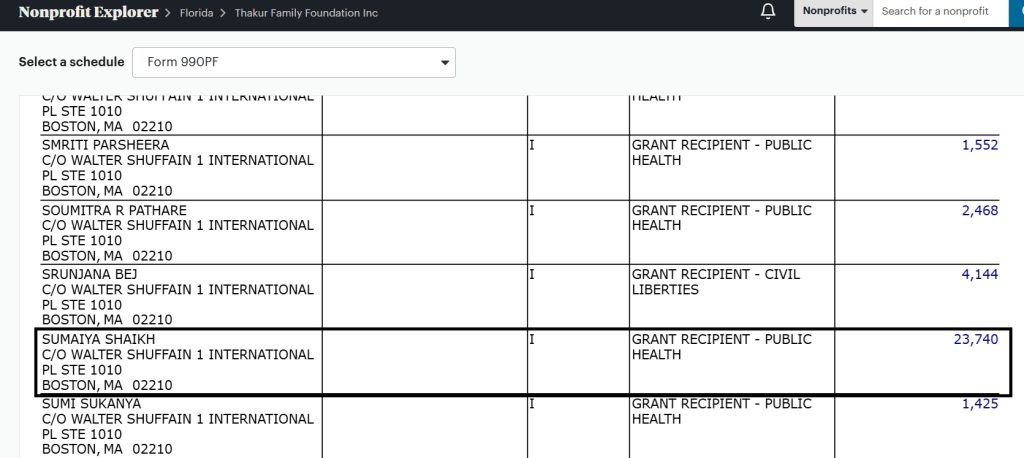
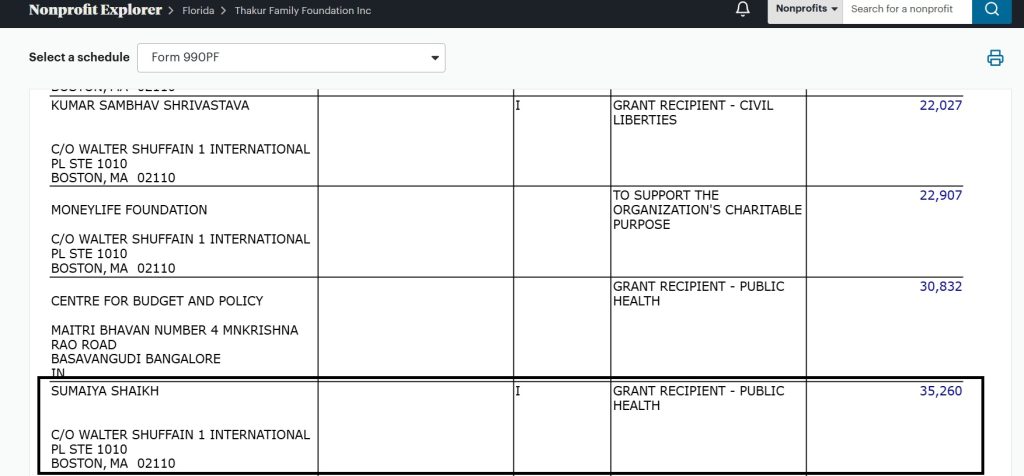
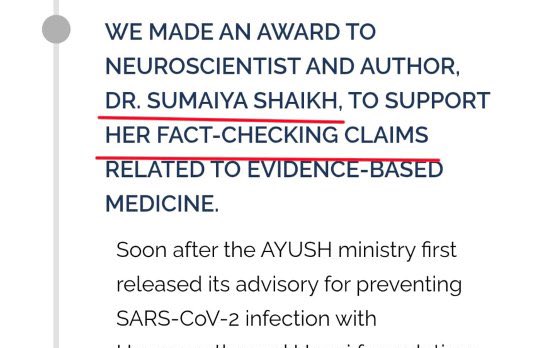
Dr. Sumaiya Shaikh, a neuroscientist and author, received a substantial grant from TFF.
Image Source: PropublicaImage Source: Propublica
Another Alt News ‘contributor’ Sharfaroz Satani, reportedly received USD 5,907 (approximately ₹4.43 lakh) between 2020 and 2021 from the Thakur Family Foundation. When combined with the grant to Dr. Sumaiya Shaikh, the total amount comes to around ₹50 lakh. Since Alt News does not possess an FCRA licence, it is not permitted to accept foreign contributions directly — yet the funds appear to have reached the platform indirectly through its employees.
The Grant’s Purpose And Propaganda
Documentation from the Thakur Family Foundation’s website explicitly states the purpose of the award: “WE MADE AN AWARD TO NEUROSCIENTIST AND AUTHOR, DR. SUMAIYA SHAIKH, TO SUPPORT HER FACT-CHECKING CLAIMS RELATED TO EVIDENCE-BASED MEDICINE.”
There are also links to the specific articles produced under this grant on Alt News website. These articles, which were published on platforms associated with the individuals, are alleged ‘fact-checking’ pieces that apparently debunked various claims related to COVID-19. The articles include:
Debunking claims that Vitamin C and lemon-infused hot water can protect against coronavirus or cancer.
Addressing exaggerated effects of the “Janta curfew” as a 14-hour period to kill the coronavirus on surfaces.
Countering claims of genetic superiority of Indians in dealing with COVID-19.
Investigating the scientific basis of Patanjali’s Coronil as a cure for COVID-19.
Scrutinizing home remedies promoted by an Ayurvedic practitioner and the AYUSH ministry’s promotion of “immunity boosters” like Arsenicum Album 30 and Ayush Kwath.
The Larger Pattern: TFF’s Media Network In India
The Alt News funding represents just one node in TFF’s extensive network of media influence in India:
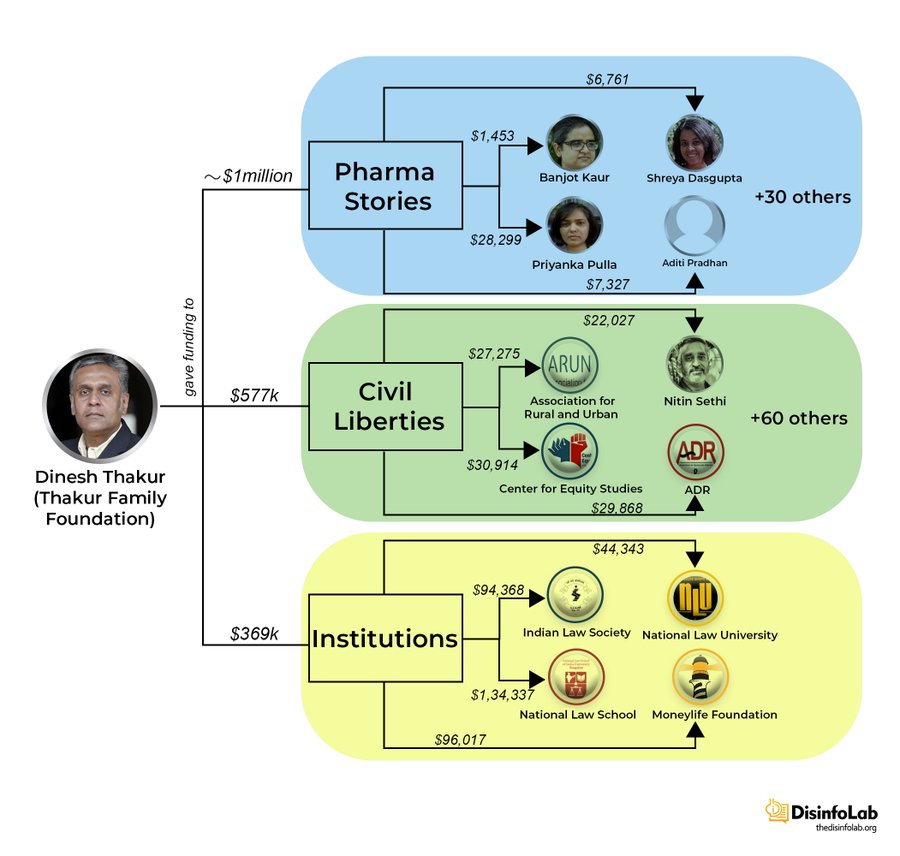
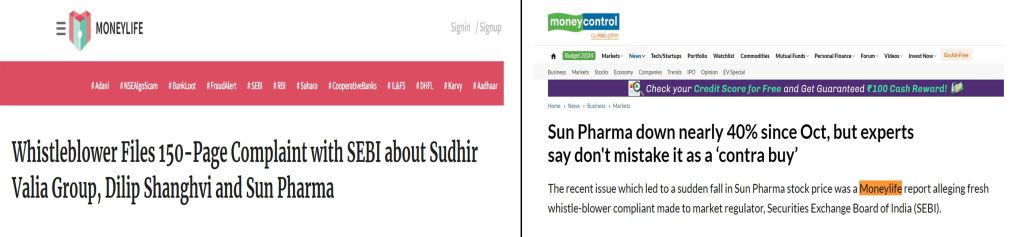
MoneyLife Foundation: Sucheta Dalal’s “startup” received seed funding from Thakur in 2017 and “generous funding” of approximately USD 100,000. Coincidentally, MLF subsequently “exposed” Sun Pharma, which had taken over Ranbaxy in 2015, causing its stock to crash.
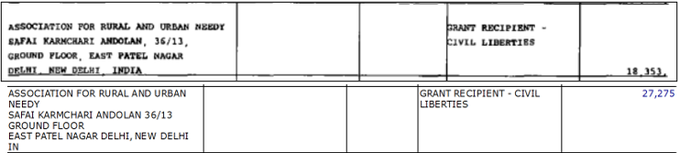
Bezwada Wilson/ARUNK (Safai Karmachari group): A grant (~USD 45,628) is reported in the dossier; critics note Wilson’s institutional links and membership roles (including presence in DIGIPUB forums).
The Wire: Received direct grants from TFF, with four of its journalists receiving approximately $75,000 for COVID-19 coverage. The Wire’s founder, Siddharth Varadarajan, has longstanding ties with Thakur, serving on the advisory board of Thakur-funded “Project 39A.” The Wire’s coverage consistently favored foreign vaccines (Pfizer and Moderna) while criticizing Indian vaccines as “hasty” and “risky.”
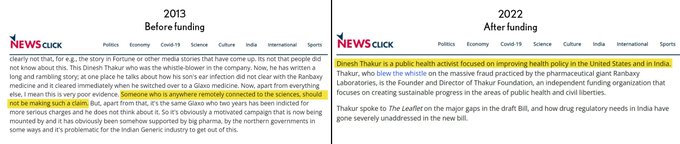
Similarly with Newsclick
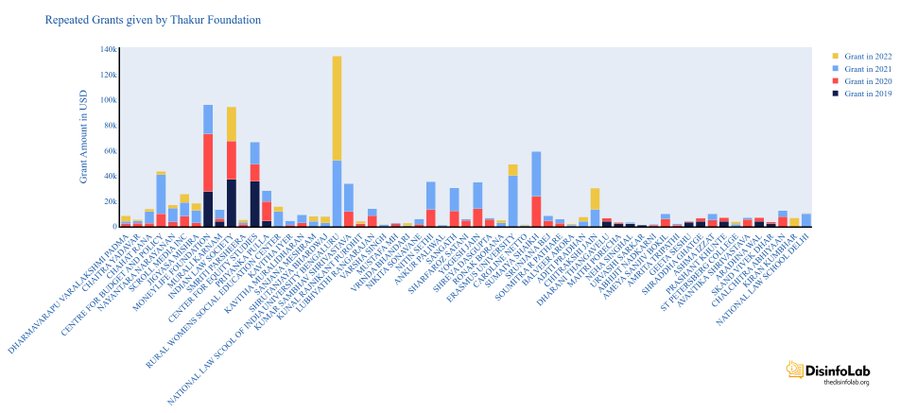
Multiple News Portals: TFF grants to various Indian news portals over three years amounted to INR 16 crore, creating a extensive network of media influence.
The Pharmaceutical Connection and Larger Agenda
The pattern suggests a coordinated effort to undermine confidence in Indian pharmaceuticals and traditional medicine:
Global Narrative Building: A series of reports about “bad Indian medicine” emerged simultaneously across multiple countries (Gambia, Indonesia, Sri Lanka, Iraq), creating a global narrative against Indian pharma.
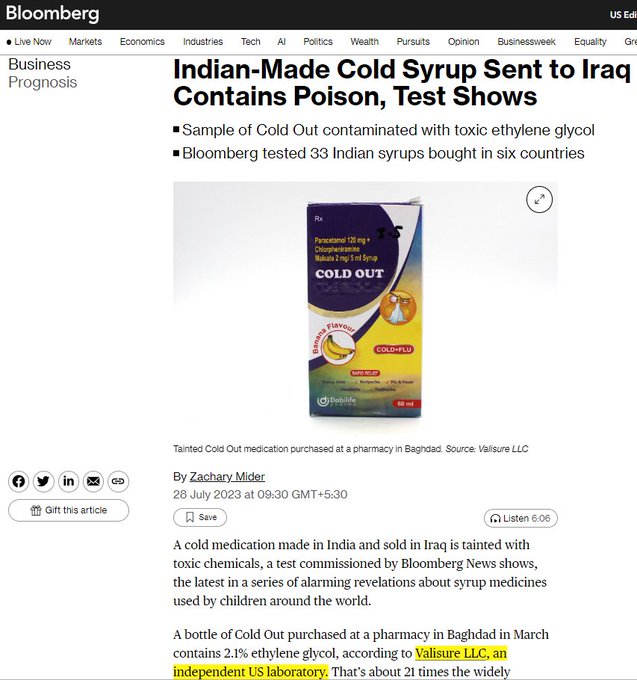
Questionable Testing Methods: The Bloomberg report that found “bad Indian medicine” in Iraq used US firm Valisure for testing, which had previously been admonished by US courts for “utilizing unreliable methods” and received warnings from US authorities in 2022 for “invalid methods & subpar equipment.”
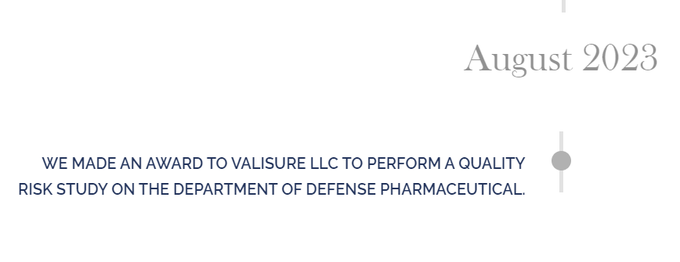
Valisure Connection: Valisure received awards from Thakur’s foundation around the same time it was producing reports critical of Indian medicines.
Strategic Timing: Thakur’s book “Truth Pill,” co-authored with Prashant Reddy, was published precisely when the Gambia case broke, providing the perfect backdrop for its launch.
Last Word
The Thakur Foundation’s activities represent a sophisticated network leveraging foreign funding to influence Indian public discourse, particularly around pharmaceuticals and healthcare. The pattern suggests a coordinated strategy to undermine Indian generic medicine, traditional healthcare systems like Ayurveda, and promote specific corporate interests under the guise of public health advocacy.
The Alt News case exemplifies how foreign funding can potentially bypass Indian laws to influence public narrative, while the larger TFF network demonstrates how multiple media organizations can be leveraged to create an echo chamber supporting specific agendas.
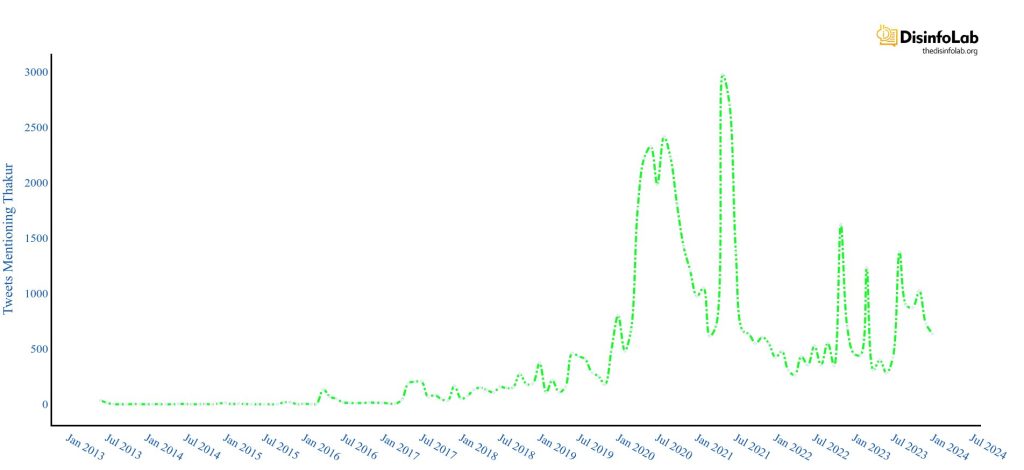
(This article is based on an X thread by Disinfo Lab)
Subscribe to our channels on Telegram,Instagram and YouTube to get the best stories of the day delivered to you personally.
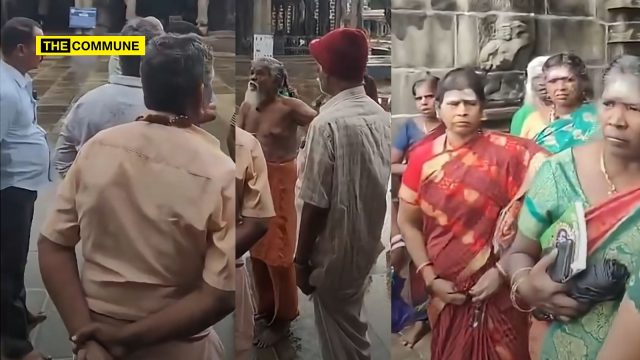
A dispute has broken out at a Shiva temple in Tenkasi, with devotees alleging that officials from the Hindu Religious and Charitable Endowments (HR&CE) Department attempted to stop them from reading Thiruvasagam (holy Tamil Saivite hymns) within the temple premises, leading to a heated confrontation.
The incident, which was captured in a video that has since circulated online, centers on a group of devotees who were reciting the Thiruvasagam, a classic Tamil devotional text, inside the temple. The devotees claim that despite having prior permission for their activities, they were asked to leave and continue their recitation outside.
The video reveals a tense exchange. One devotee can be heard asking the devotees, “You have taken permission for all this and are reading? You have already submitted a letter saying that you are going to read it, right?” And the devotees affirm this. This indicates that the group had obtained formal authorization, which they believe was being unjustly revoked.
It is alleged that the EO had spoken derogatorily to the devotees, especially the guru of the group. Another devotee alleged that the EO nearly came to assault him with an umbrella and spoke disrespectfully. The devotees said, “We consider him as our god, he is our guru.”
Another devotee alleged that the temple authorities questioned who allowed them in and that they would file a police complaint if they didn’t leave.
The devotees seemed very furious and agitated by the behaviour of the temple authorities – it is alleged that the temple is administered by the HR&CE department of the Tamil Nadu government.
Subscribe to our channels on Telegram,Instagram and YouTube to get the best stories of the day delivered to you personally.
The Karnataka Congress government, on 19 October 2025, issued an order making prior permission compulsory for any event held on government property. The directive, issued by the Home Department on Saturday, comes after a state Cabinet decision to regulate the use of public spaces.
The order defines ‘government property’ broadly, encompassing any land, building, structure, road, park, playground, waterbody, or other immovable property owned and managed by a local authority, department, board, or corporation.
This comes amid Karnataka Congress Minister Priyank Kharge’s call to the state government to ban RSS activities in Karnataka.
As per the Government Order (GO), organisations seeking to hold events must apply to jurisdictional revenue and police officials at least three days in advance. The competent authority is required to dispose of the application at least one day before the scheduled event by issuing a written order, provided the applicant meets all requisitions and is given a reasonable opportunity for a hearing.
The order stated that any program or procession held in violation of these rules will be considered unlawful under the provisions of the Bharatiya Nyaya Sanhita, and the local police are empowered to register a suo motu case. The government has noted that detailed guidelines for the use of public spaces will be issued by respective departments.
The implementation of this order came into immediate focus in Chittapur, Kalaburagi district, – Priyank Kharge’s constituency, where permissions for two proposed rallies were denied. The Rashtriya Swayamsevak Sangh (RSS) had planned a route march, and the Bhim Army had scheduled a counter-event for the same day.
The Chittapur tahsildar rejected the RSS’s application, citing that the organisation had not sought prior permission, failed to provide details on the number of attendees, and did not submit registration documents or information about ‘lathis and other weapons’. The rejection letter stated the application would be reviewed only if the sought details were furnished.
🚨 Shameful misuse of power!
In Priyank Kharge’s Chittapur constituency, police removed @RSSorg Path Sanchalan banners even after official permission & ₹6,000 payment to City Municipality.
A police report highlighted that simultaneous rallies by the RSS, Bhim Army, and another group, the Bharatiya Dalit Panther, could lead to clashes and disturb public peace. The report also noted heightened tensions in Chittapur following a recent incident where an RSS activist allegedly verbally abused and issued a death threat to Karnataka IT/BT Minister Priyank Kharge, who represents the constituency. Earlier, the installation of saffron flags and banners for the RSS event had also sparked tensions, leading authorities to conduct a clearance drive citing lack of permission.
Court Permits RSS Pathasanchalan
In a subsequent legal development, the Karnataka High Court allowed the RSS to hold its route march in Chittapur on 2 November 2025. The court was hearing a petition filed by Ashok Patil, convenor of RSS Kalaburagi, who challenged the authorities’ inaction on the original application for a Sunday event.
During the hearing, Justice MGS Kamal observed that everyone’s sentiments must be respected and questioned the state government on its plans to accommodate the event. The petitioner’s counsel argued that all official queries had been answered and pointed out that similar processions were conducted peacefully elsewhere in the state.
The petitioner agreed to hold the event on the new date. The High Court directed the petitioner to submit a fresh application with all required details to the Deputy Commissioner of Kalaburagi and asked the authorities to consider it and file a report before the next hearing on 24 October 2025. The court also noted that other organisations, including the Bhim Army and Bharatiya Dalit Panther, were similarly denied permission for their rallies.
In his pre-release interview with Sudhir Srinivasan, Mari Selvaraj spoke of offering the people of his region and community a bird’s-eye view — showing them how he sees them, from the perspective of an outsider who has journeyed far in his evolution as a filmmaker.
And that’s precisely what he does in Bison Kaalamaadan. He lays bare how impulsive rage has kept old flames smoldering, how small grievances are fanned into generations-long conflicts, and how this cycle shapes the lives of those trapped within it.
Mari Selvaraj’s Bison Kaalamaadan isn’t just a film — it’s an act of cinematic courage. Set against the volatile socio-political backdrop of southern Tamil Nadu during the Pasupathi Pandian–Venkatesh Pannaiyar era, Mari blends historical realism with haunting fiction. The result is a deeply rooted, emotionally stirring tale that looks caste, conflict, and identity straight in the eye — without flinching, without sermonizing.
Right from the opening frame, Mari signals that we are in for something audacious. The first shot — a breathtaking bottom-up view of the inside of a cylindrical high-rise, with identical floors circling upward — evokes the horns of a bison stacked behind one another. Something like this:
It’s both a literal and symbolic tunnel: the viewer being drawn into the world of the Bison, and a visual metaphor for the odds the protagonist must rise above. As a big fan of Mari’s visual grammar, I was hooked – this is the world of Bison, and we’re being pulled right into its spine.
At its heart, Bison Kaalamaadan tells the story of Kittan (Dhruv Vikram), a young man from a so-called “untouchable” community whose life revolves around kabaddi — a sport built on touch. Mari uses this irony brilliantly, turning the game into both metaphor and battleground. Kittan’s journey is one of discrimination, betrayal, and redemption — but not in the simplistic “oppressor versus oppressed” binary we’ve been fed by recent Dravidianist narratives.
Mari does something far more honest and courageous. He holds up a mirror to his own community, revealing the caste prejudices that thrive even among those who are generalized as “oppressed”. Kittan faces discrimination and violence both from members of his “rival” community but also from within — from an extended family member, a caste zealot who rallies behind the Dalit leader Pandiarajan. And Mari doesn’t resort to token symbolism or virtue signaling. He doesn’t show someone cutting a poonool to make a statement. Instead, he stages a far more powerful image — the PT teacher snipping away the caste-marker threads of red-green, green-blue, yellow-red. The message lands quietly yet firmly: on the kabaddi ground, caste doesn’t speak — talent does. It’s a moment of profound self-introspection and rare honesty, one that few filmmakers in Tamil cinema would dare to attempt.
And yet, it’s people from the so-called “rival” communities who lift him higher. The PT teacher (Madankumar Dakshinamoorthy) who first encourages him, Kandasamy (Lal) — a kabaddi coach from the “dominant” caste who spots his talent and breaks bread with him — and Kaandippan (Azhagam Perumal), whose home proudly displays a portrait of freedom fighter Arthanareesa Varma, all become agents of change in Kittan’s life for the better.
This is where Mari Selvaraj’s brilliance truly shines. He doesn’t villainize. He doesn’t glorify. He humanizes. Even when Kandasamy’s relationship with Kittan fractures under the weight of social violence, Mari refuses to demonize him. Instead, he lets pragmatism and pain coexist — Lal’s Kandasamy isn’t evil, just trapped in a brutal world order. And even in separation, he ensures Kittan’s growth by recommending him to another club. It’s rare empathy in today’s polarizing cinematic landscape.
Cinematically, Bison Kaalamaadan is a masterclass in pace and tension. Despite running close to three hours, the film never drags. The rapid-fire edits, the claustrophobic camera work, and Nivas Prasanna’s tense score create an atmosphere thick with urgency and danger. The qualifying match sequence, intercut with Kittan’s father dancing in a trance before their clan deity, stands as one of Mari’s most powerful visual montages — a scene where religion, sport, and emotion merge into something almost transcendental. The pounding Rajamelam that we heard in Karnan and Dhruv’s fierce energy make it pure goosebump cinema.
Like every Mari Selvaraj film, animals in Bison Kaalamaadan carry deep symbolic weight. From Karuppi the dog in Pariyerum Perumal to the tied donkey in Karnan, the pigs in Maamannan, and the cow that wanders into a banana plantation in Vaazhai, Mari has always used animals as living metaphors — pivots that elevate the story, heighten the tension, and mirror the human condition. In Bison, it is a goat that pisses inside a bus.
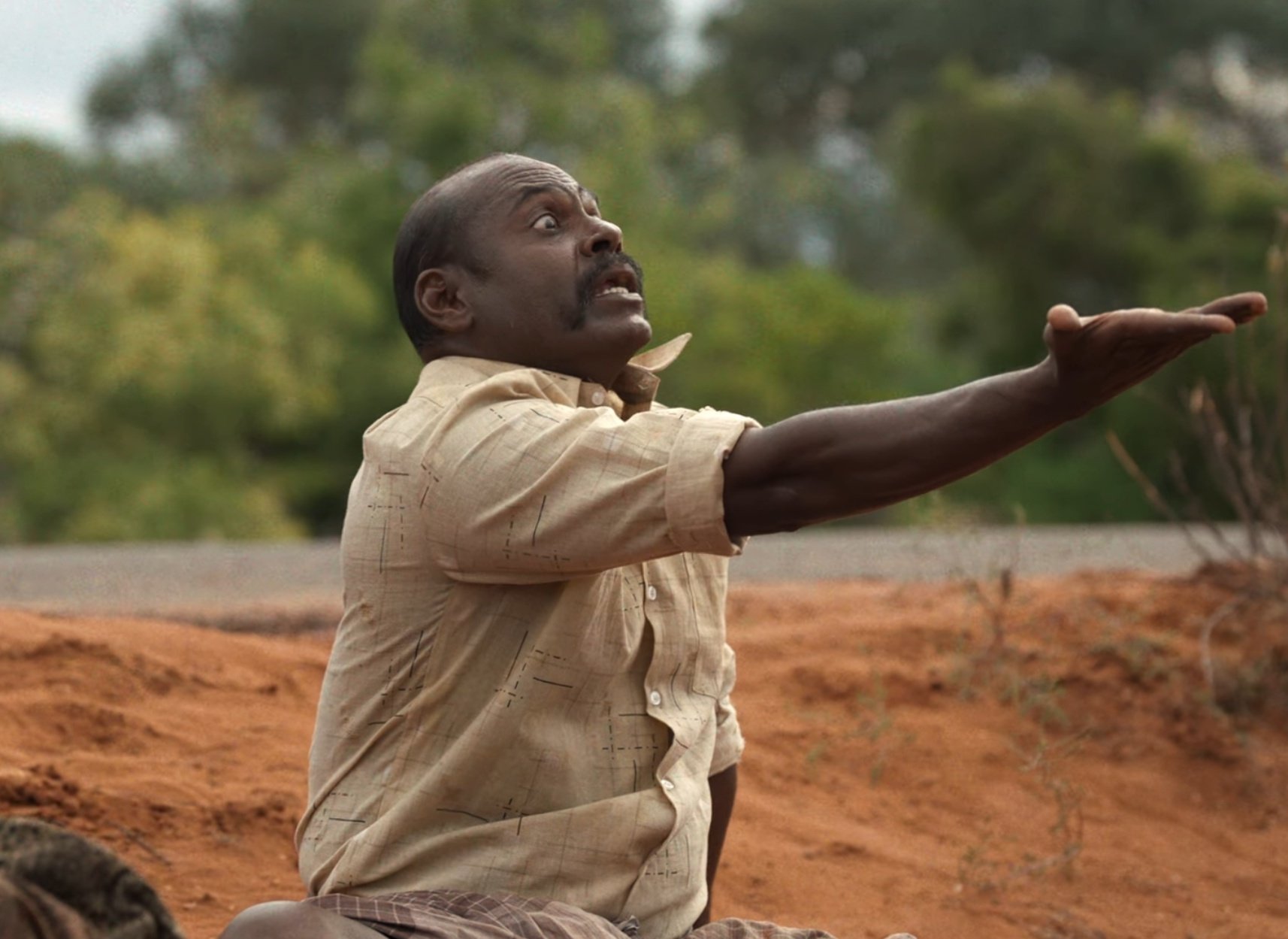
Dhruv Vikram delivers a deeply committed performance, his physical transformation as a kabaddi player evident in every move. But it’s Pasupathi who owns the film. It wouldn’t be unfair to say that he’s the real hero. His portrayal is extraordinary — every flicker of his eyes, every muscle under his cheek tells a story of trauma, endurance, and pride. His performance alone is reason enough to watch Bison Kaalamaadan.
Lal and Ameer have also done their job quite well giving a sense of what the rivalry between Pasupathi Pandian and Venkatesh Pannaiyar would’ve been like.
What’s perhaps most striking about Mari’s evolution is how he rejects the tired Dravidianist clichés that plague modern Tamil cinema. There’s no Brahmin-bashing. No north-versus-south sloganeering. No preachy political inserts. In fact, a Tamil man casually speaking Hindi becomes a quiet but powerful moment — a reminder that embracing another language isn’t betrayal, and that identity and inclusivity can coexist without bitterness.
And then comes the final image — the Indian tricolour flying high. It’s not jingoism, but a visual of triumph and unity. After all the blood, discrimination, and chaos, the flag becomes a symbol of transcendence — of belonging to something larger than caste, creed, or conflict. When was the last time you saw a Tamil film end with the Indian flag shown with such dignity, such purity?
And underpinning it all is Mari’s central message — that anger, when channelled right, can be transformative. For Kittan, anger births achievement; for Mari, it births art. The film stands as a testament to what righteous fury can create when guided by compassion and self-awareness.
“Everything that you speak out loud, let it be spoken from within the seeds”
Those were Mari’s opening words in the video of Naan Yaar song from Pariyerum Perumal — and with Bison Kaalamaadan, he has done exactly that. He has spoken from the roots, from the soil that shaped him.
As noted in my review of Vaazhai, Mari Selvaraj is a gifted filmmaker at the height of his cinematic mastery and storytelling craft — a storyteller who should continue to chronicle his life, his journey, and his community’s struggles through such deeply rooted, resonant tales.
Kaushik is a film buff and political writer.
Subscribe to our channels on Telegram and Instagram and get the best stories of the day delivered to you personally.