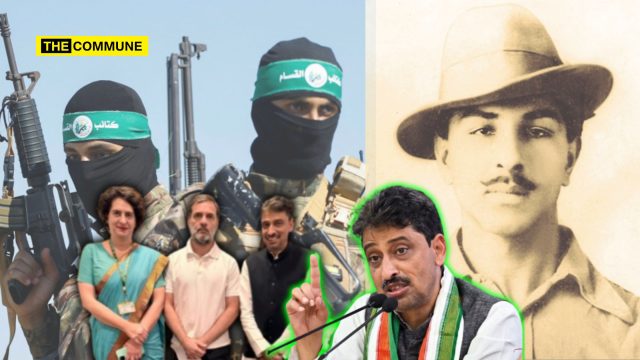
Congress MP Imran Masood has triggered a major political controversy after he compared Indian freedom fighter Bhagat Singh to the Palestinian militant group Hamas during a podcast discussion on the 7 October 2023, attacks on Israel.
During the conversation, Masood reportedly became agitated when he was told that Hamas was a terrorist organisation, responding, “Was Bhagat Singh a terrorist as well?” When asked directly whether there was a comparison between Bhagat Singh and Hamas, he replied in the affirmative, saying, “They are fighting for their land. Bhagat Singh was also fighting for his land.”
Masood elaborated, “Bhagat Singh made the supreme sacrifice for his land. For you, Hamas is a terrorist organisation. I believe Hamas is fighting for its freedom. You are looking at their 250 hostages they (Hamas) had taken, but you are not looking at 1 lakh people Israel has killed. Israel is the occupier.”
SHOCKING NEWS 🚨 Congress MP Imran Masood compares Terrorist organisation Hamas with India’s great Freedom Fighter Bhagat Singh 🤯
Hamas had launched an unprecedented attack on Israel on 7 October 2023, when its terrorists breached the Israeli border, killing more than 1,200 people, mostly civilians, and taking 250 hostages. The attack marked the deadliest day in Israel’s history and triggered a full-scale war in Gaza.
Israel responded with a massive military offensive against Hamas, which, according to reports, has killed more than 67,000 Palestinians and created a severe humanitarian crisis. Tens of thousands of Palestinians have been displaced, while international agencies have warned of famine conditions in the Gaza Strip due to Israel’s blockade on aid.
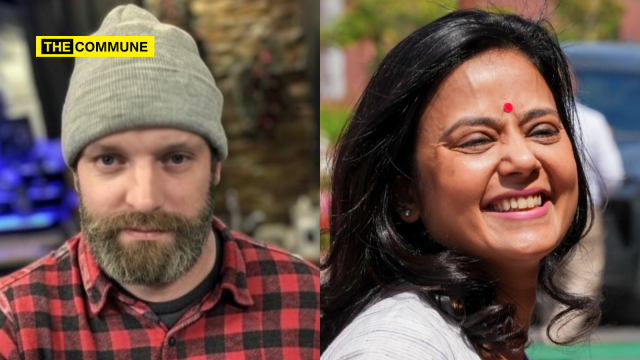
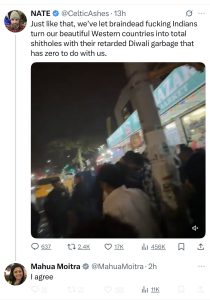
Member of Parliament Mahua Moitra from the All India Trinamool Congress (TMC) has come under fire for endorsing a white supremacist’s derogatory remarks about Indians and their cultural practices. The controversy erupted after a handle named Nate (@CelticAshes) posted a video of a chaotic street scene, captioned with vitriolic language deriding Indians for supposedly turning Western countries into “total shitholes” with their “retarded Diwali garbage.” The post, which has since amassed over 2,400 likes and 486,000 views, was met with widespread condemnation for its racist undertones.
However, TMC MP Mahua Moitra, known for her shrill rhetoric and criticism of the Indian government, agreed with the comments made by the White Supremacist.
Mahua Moitra’s apparent endorsement of such inflammatory rhetoric is particularly egregious given the timing, coinciding with Diwali’s growing recognition as a significant cultural event in Western nations. A recent New York Times article on October 21, 2025, noted the festival’s increasing prominence, with U.S. states like California and New York City officially recognizing it as a public holiday. This recognition is a testament to the contributions of the approximately 25 million Indians living abroad, who have played a crucial role in promoting Indian culture globally.
Mahua Moitra’s comments are even more ironical because while she agrees with derogatory comments spewed on Indian immigrants abroad for celebrating their culture, her party has been unapologetic about pandering to illegal Bangladeshi immigrants who are changing the demography of Bengal, vandalising Hindu temples, and posing a threat to national security. altering the social fabric and trampling on Bengali Hindu culture. Her actions, therefore, are seen as a betrayal of the very community she represents. Many have accused her of hating her own country and pandering to anti-Indian narratives, drawing parallels to historical instances of such sentiment. Mahua Moitra’s apparent alignment with these views is seen as a disgraceful capitulation to forces that seek to undermine Indian identity and heritage.
The backlash has been swift and severe, with social media users demanding Moitra’s expulsion from Parliament and even the revocation of her citizenship.
This is not the first time Moitra has courted controversy. Her political career has been marred by scandals, including her expulsion from Parliament in 2023 over a cash-for-query scandal, though she was re-elected in 2024. Additionally, a CBI raid at her Kolkata residence on March 23, 2024, during the general election campaign, further tarnished her reputation. However, this latest incident is particularly damaging, as it strikes at the heart of cultural pride and national identity, especially for the Indian diaspora who have worked tirelessly to foster understanding and appreciation of their heritage abroad. As of 10:12 PM IST tonight, neither Moitra nor her party has issued an official statement addressing the controversy, leaving many to speculate whether this was an accidental like or a deliberate endorsement.
Subscribe to our channels on Telegram, Instagram and YouTube to get the best stories of the day delivered to you personally.
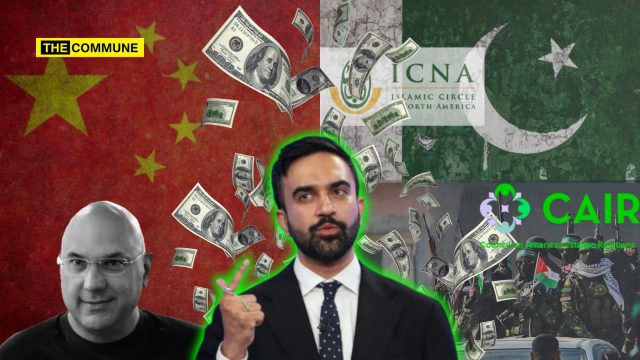
An investigation by the New York Post has revealed that the campaign of Democratic socialist and mayoral frontrunner Zohran Mamdani accepted nearly $13,000 in potentially illegal foreign donations, while its legal fundraising network includes donors with links to the Chinese Communist Party and organizations tied to Islamist terrorist groups.
The campaign quietly took in contributions from at least 170 donors with addresses outside the United States among its nearly 54,000 contributions, according to an examination of NYC Campaign Finance Board records. Federal, state, and city law strictly prohibit political contributions from anyone who is not a U.S. citizen or permanent legal resident, with violators facing potential hefty fines and imprisonment.
Unreturned Foreign Funds
While the Mamdani campaign has returned $5,608 in foreign donations including a $500 contribution from his mother-in-law, Dr. Bariah Dardari, a pediatrician in Dubai, records show it has failed to return 88 other foreign donations worth a total of $7,190.
When presented with a detailed breakdown of these unreturned donations, the campaign issued a statement Saturday saying, “we will of course return any donations that are not in compliance with CFB law.” However, a campaign spokesperson declined to explain why the funds remained in their war chest. Mamdani’s campaign has raised $4 million in private donations and received $12.7 million in public matching funds, leaving it with nearly $6.1 million on hand less than a month before the election.
The foreign donations, which began increasing in June ahead of Mamdani’s upset primary victory, came from a global pool of supporters including tech professionals, doctors, professors, students, and retired teachers. Donations ranged from as little as $1 to the maximum $2,100.
Notable foreign donors include:
James Furlaud, an environmental scientist at Australia’s University of Tasmania, who donated $2,100.
Ada Diaz Ahmed, a Dubai-based investor, who contributed $2,100.
Jun-Dai Bates Kobashigawa, a software developer in Montreal, Canada, who gave $250.
Ugur Macit, a software engineer in Germany, who donated $250.
Ahmed Enbya, a physician in Calgary, Canada, who contributed $100.
One permitted donation came from Nupur Amin Marquardt, a U.S. citizen working in Germany, who told The Post she supported Mamdani because “It’s the only campaign I’ve seen that’s not trying to win by convincing a group of people to hate another group of people.”
City campaign filings reveal that the majority of contributions to the socialist mayoral candidate’s campaign have come from outside New York City. Over the past several weeks, the frontrunner has raised a total of $1.05 million, more than twice the $507,000 reported by Andrew Cuomo.
Donations From Controversial Elements
The investigation also uncovered that Mamdani’s legal donations include contributions from individuals and groups with controversial backgrounds:
Relatives of China-based billionaire Neville Roy Singham, who has funded radical anti-Israel and Marxist groups, have contributed thousands to Mamdani. His niece, Alicia Goodwin, is a donor and founded “Jews for Zohran.”
Omer Hasan and Mohammad Javed, who each donated $250,000 to a Mamdani-supporting PAC, made their wealth as executives at tech firm AppLovin. Short-selling firm Culper Research has raised national security concerns about the company, noting that Chinese national Hao Tang controls nearly 10% of it.
The Council on American-Islamic Relations (CAIR), via its “Unity & Justice Fund,” directed $100,000 to Mamdani’s campaign. CAIR was named an unindicted co-conspirator in the 2007 Holy Land Foundation terrorism financing trial, where five leaders were convicted of funneling over $12 million to Hamas.
Five staffers of the Islamic Circle of North America (ICNA) contributed $1,300 to the campaign. ICNA, the North American branch of Jamaat-e-Islami, is banned in India and Russia as a terrorist organization. Its former New York head, Ashrafuzzaman Khan, was sentenced to death in absentia for his role in the murder of 18 Bangladeshi intellectuals.
Mamdani’s campaign has raised $4 million in private donations and received $12.7 million in public matching funds, with $6.1 million still on hand less than a month before the election. Most contributions have come from outside New York City.
The city’s Campaign Finance Board declined to comment, noting it is auditing all campaigns citywide.
Mamdani, who rapped “My love to the Holy Land Five/You better look ’em up” in a 2017 song, has been vocal about his socialist policies and criticism of Israel. The findings highlight concerns about the sources of his campaign funding, both legal and illegal, as the election approaches.
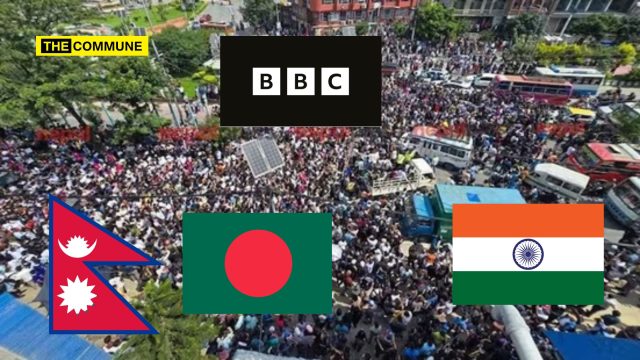
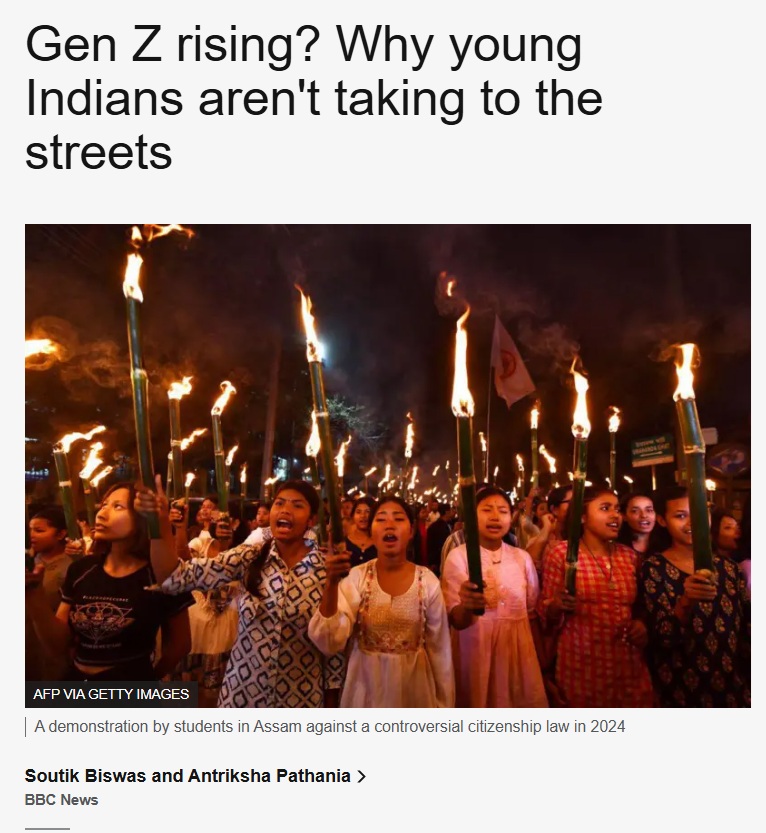
The BBC’s latest piece, “Gen Z rising? Why young Indians aren’t taking to the streets”, reads less like a report and more like a wistful manifesto wishing India’s youth were angrier. It paints a picture of a “restless and hyper-connected” Generation Z, supposedly on the brink of rebellion, while lamenting that they haven’t yet taken to the streets like their peers in Nepal or Bangladesh.
But behind the romantic language lies a familiar Western gaze – one that struggles to reconcile India’s democratic stability and economic momentum with its own nostalgia for chaos-driven political change.
The Subtext: Why Isn’t India Burning Yet?
The article begins by juxtaposing India’s calm with youth uprisings in neighbouring countries. In Nepal, “young protesters brought down a government in 48 hours.” In Bangladesh, youth “brought regime change.” The suggestion is clear: India’s Gen Z, too, should be doing something similar.
This rhetorical device of comparing democratic India to unstable political systems in South Asia is plain provocation. The BBC calls India’s Gen Z “restless” and “aware of corruption,” then wonders why they are not “rebelling.” It never occurs to the writers that awareness in a democracy does not have to manifest as street violence.
Reality Check: India’s Gen Z Is Building, Not Breaking
India’s youth are not apathetic; they’re pragmatic. They are innovating, launching start-ups, upskilling, migrating for global opportunities, and participating in electoral politics through digital advocacy and entrepreneurship.
The BBC romanticises protest as the only legitimate form of youth engagement. But in India, millions of young people channel their frustration into innovation, civil service preparation, or community initiatives. They are not disinterested; they are simply too busy doing the hard work of building a future to indulge in performative rage.
The “Anti-National” Frame – Another Lazy Trope
Predictably, the piece invokes the “fear of being branded anti-national” as a key reason why youth don’t protest. This is a lazy and overused Western trope that flattens India’s nuanced civic discourse into an authoritarian caricature.
Yes, public dissent comes with scrutiny, as it does in any democracy, but India remains one of the most politically noisy nations on earth. From student groups and digital campaigns to issue-based movements on climate, caste, and gender, young Indians speak up every day without fear. The BBC’s claim that youth are “afraid” is not based on evidence; it’s based on narrative convenience.
BBC’s Selective Amnesia on Violence and Accountability
When the article mentions protests against the Citizenship Amendment Act (CAA), it conveniently omits the violence that accompanied them – police injuries, arson, and deaths or the political groups that exploited those movements. To the BBC, protest equals progress, even if it destroys public property or divides communities.
This is part of a larger pattern in Western media coverage of India: glorifying disorder as “democracy in action” while downplaying civic resilience and institutional functioning as signs of “suppression.”
Diverse, Decentralised, Democratic – Not Dysfunctional
India’s Gen Z is indeed diverse – linguistically, socially, economically, and that’s precisely why there isn’t a single “uprising.” That’s not weakness; that’s democracy. The BBC treats diversity as fragmentation, when in fact it’s a reflection of how power and protest are distributed in India’s federal system.
Unlike smaller states where discontent concentrates into rebellion, India’s scale ensures that political churn is constant, electoral, and peaceful.
The Real Story the BBC Missed
India’s youth are not quiet because they’re afraid; they’re quiet because they’re working. They are driving the country’s booming digital economy, spearheading the gig revolution, topping global education enrollments, and contributing to India’s rise as the fastest-growing major economy.
They are not dreaming of toppling governments; they are dreaming of launching companies, buying homes, and securing their futures.
The BBC, meanwhile, seems nostalgic for the era of street revolutions, as though India’s stability is somehow disappointing. But to the young Indians building startups, coding apps, and preparing for UPSC exams, the real revolution is already underway — and it’s powered by ambition, not anger.
Subscribe to our channels on Telegram,Instagram and YouTube to get the best stories of the day delivered to you personally.
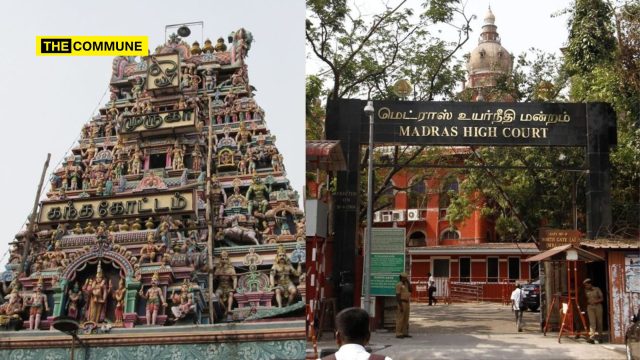
In a significant ruling aimed at safeguarding the sanctity of temple lands across Tamil Nadu, the Madras High Court has ordered the state’s Hindu Religious and Charitable Endowments (HR&CE) Department to issue a circular prohibiting the construction of commercial and residential complexes on temple properties.
The court directive came in response to a petition filed by A.P. Palani, who sought a permanent ban on commercial development on the land belonging to the historic Kandhakottam Muthukumaraswamy Temple, located in the Parrys Corner area near Chennai Central Railway Station.
Established in the early 17th century, the Kandhakottam temple is a prominent landmark in Tamil Saivite history, known for its grand Utsava idols, vibrant festivals, and substantial landholdings. Citing the Hindu Religious Endowments Act, the petitioner argued that temple lands, considered sacred, should not be repurposed for profit-making ventures.
The High Court agreed with the petitioner’s concerns, stating that allowing construction of commercial or residential projects on temple lands would violate both the spirit of the law and the religious sentiments of devotees. As a result, the court directed the HR&CE Department to issue a statewide circular reinforcing the prohibition of such developments using temple funds or property.
In addition, the Court has directed the Tamil Nadu government and the HR&CE Department to file a response in the matter by 22 November 2025.
This order is expected to have far-reaching implications, potentially setting a precedent for the preservation of religious lands across the state. Legal experts note that the case could strengthen broader efforts to protect temple assets from encroachment or misuse.
The temple administration and devotees have welcomed the ruling, viewing it as a long-awaited affirmation of the spiritual and cultural importance of sacred spaces in urban settings.
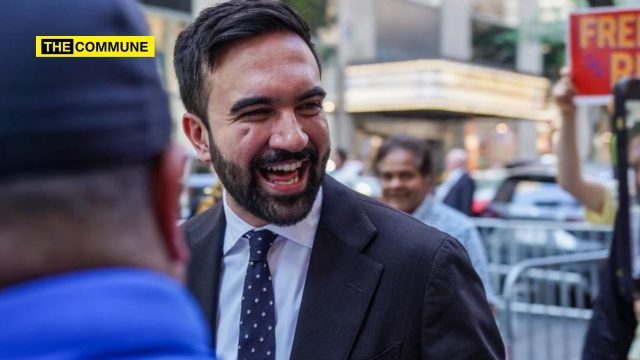
An undated video containing several clippings circulating on social media has sparked controversy after New York City Mayoral candidate Zohran Mamdani appeared to evade a question about Sharia law during a public interaction.
In the footage, an unidentified attendee can be heard asking Mamdani, “Do you denounce Sharia law?” Mamdani responds by repeatedly asking, “What is Sharia law?” without directly addressing the question.
The exchange prompted mixed reactions online. Critics accused the legislator of deliberately avoiding a clear stance, while supporters argued that the question was framed provocatively and intended to target his faith.
The clip also features another segment in which a separate speaker, identified as Robert Akleh, responds angrily to questions about police views on Mamdani, saying, “Who gives a [expletive] what they think? You get told what to do, shut up.”
This is horrifying
Zohran Mamdani is outright asked to denounce Sharia Law
Not only does he refuse to denounce Sharia Law, he pretends he has no idea what it is to avoid the question
Zohran Mamdani is a practicing Muslim. Islam tells them to lie to advance takeovers pic.twitter.com/IM3upPa2J6
The incident has reignited debates around religious scrutiny of Muslim elected officials and the use of religious tests in political discourse. Mamdani, who represents Queens’ 36th Assembly District and is affiliated with the Democratic Socialists of America, has not yet issued a public statement on the exchange.
Mamdani’s hatred for Hindus mirrors his hatred for Jews, both are enemies in the Islamist worldview.
Wants Jizya & Sharia Law: Mamdani faced backlash for proposing higher property taxes on “richer, whiter neighborhoods,” a plan critics liken to race-based redistribution. Dubbed “the Fidel Castro of New York,” Mamdani also declared that “billionaires shouldn’t exist” and pushed for socialist policies like free buses, rent freezes, and city-run supermarkets. He refused to condemn the antisemitic slogan “globalize the intifada,” drawing criticism from Democratic leader Hakeem Jeffries.
One of Mamdani’s key legislative pushes is forcing all NYC public schools to serve halal food. He framed it as “inclusion,” but this is a Trojan Horse for Islamization. Halal certification is controlled by groups with ties to extremist funding networks. It sets a precedent for religious imposition on taxpayer-funded institutions, while Christian and Jewish dietary laws are ignored.
WARNING NYC 🚨 Zohran Mamdani Isn’t Running a Campaign — He’s Leading an Islamic Political Insurgency
What we’re witnessing in New York isn’t a mayoral race. It’s civilizational jihad, and Zohran Mamdani is its smiling face.
In a January 2025 post on social media, Mamdani stated that he was attending Jummah prayers at the Islamic Society of Bay Ridge. He also appeared in photos standing next to Imam Muhammad Al-Barr, a religious leader known for praising Hamas and calling for divine guidance for their attacks on Israel.
It was a privilege to join Jummah prayers at the Islamic Society of Bay Ridge today. pic.twitter.com/3WjtQLohtv
Mamdani also refused to condemn “Globalize the Intifada” – a call for Jewish genocide. Mamdani has repeatedly refused to denounce the phrase “Globalize the Intifada,” a rallying cry for global jihad against Jews. When pressed, he compared it to the Warsaw Ghetto Uprising, a grotesque inversion of Holocaust history. He said, “I think what’s difficult also is that the very word has been used by the Holocaust Museum when translating the Warsaw Ghetto Uprising into Arabic, because it’s a word that means struggle,” and added, “And as a Muslim man who grew up post-9/11, I’m all too familiar in the way in which Arabic words can be twisted, can be distorted, can be used to justify any kind of meaning.”
Mamdani, on The Bulwark podcast, says ‘Globalize the Intifada’ chant signifies, to him, a call for Palestinian human rights.
Adds: “The word has been used by the Holocaust Museum when translating the Warsaw Ghetto Uprising into Arabic — because it’s a word that means struggle.” pic.twitter.com/k2yeiSJpMy
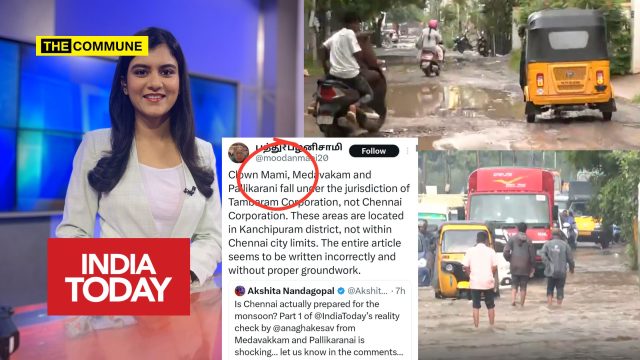
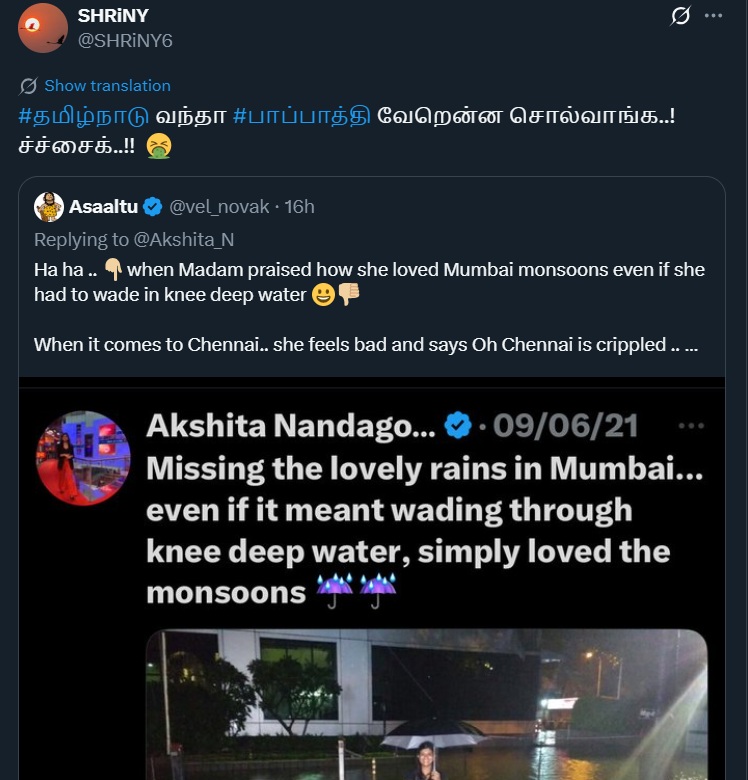
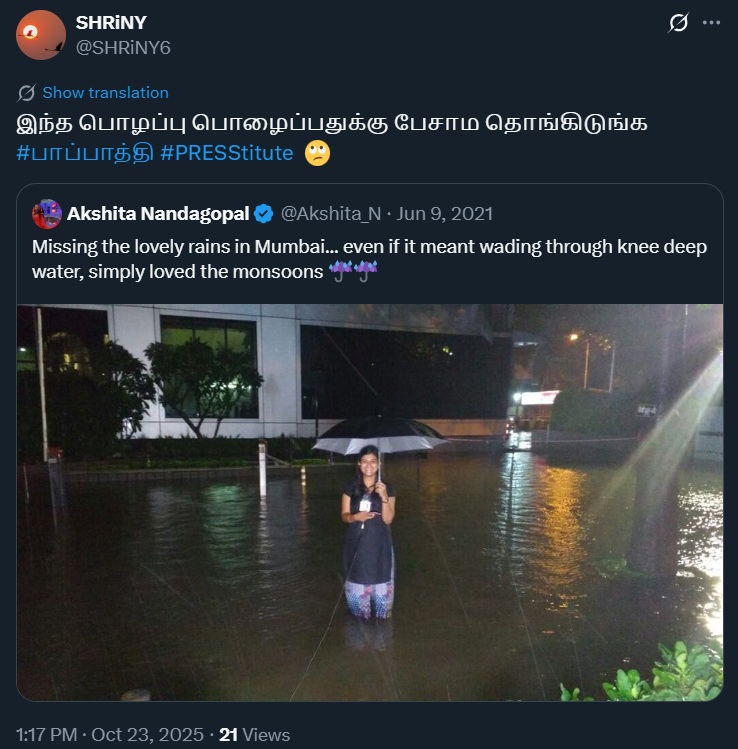
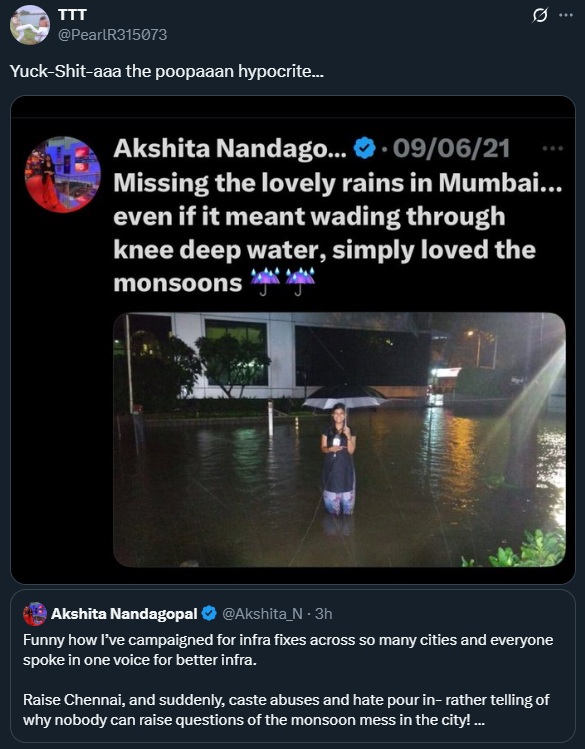
As the northeast monsoon exposes Chennai’s fragile civic systems, an India Today journalist faced a barrage of caste-based abuse online after highlighting the city’s deteriorating roads and poor drainage.
Senior Editor Akshita Nandagopal and reporter Anagha Keshav recently aired a ground report from Pallikaranai, Medavakkam, and Madipakkam, showing how potholes, waterlogging, and incomplete repairs had turned major stretches into what residents described as “death traps.” The segment featured visuals of damaged arterial roads and commuters struggling through flooded lanes.
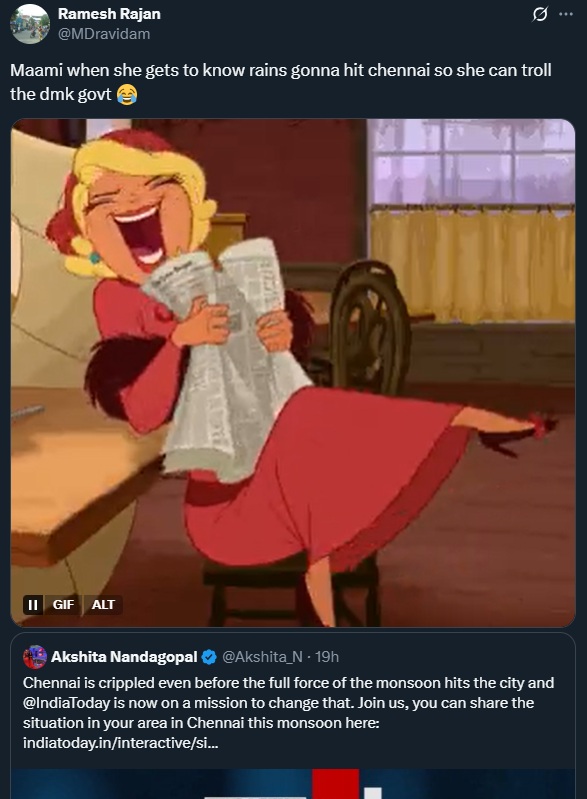
Following the broadcast, Nandagopal shared the report on social media, noting that “Chennai is crippled even before the full force of the monsoon hits the city” and inviting citizens to share their local concerns.
Chennai is crippled even before the full force of the monsoon hits the city and @IndiaToday is now on a mission to change that. Join us, you can share the situation in your area in Chennai this monsoon here: https://t.co/R7Vc5iziP0pic.twitter.com/2TUTxj5Dlu
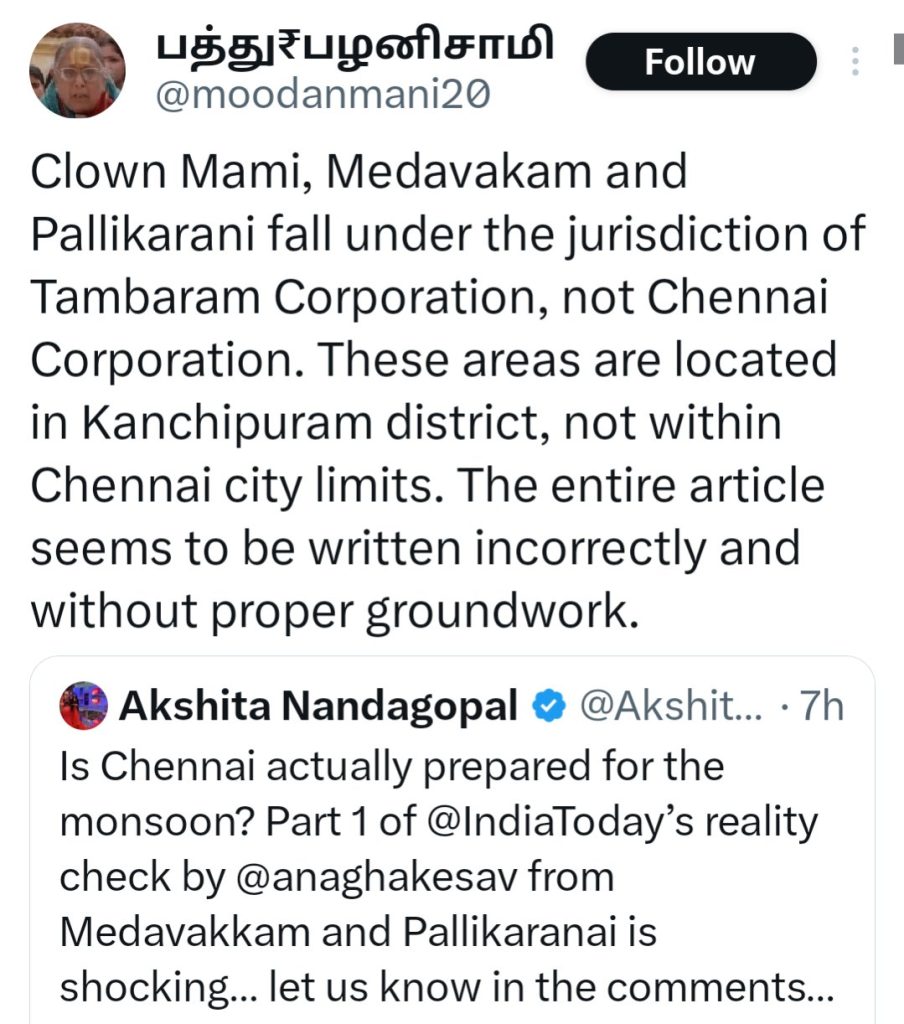
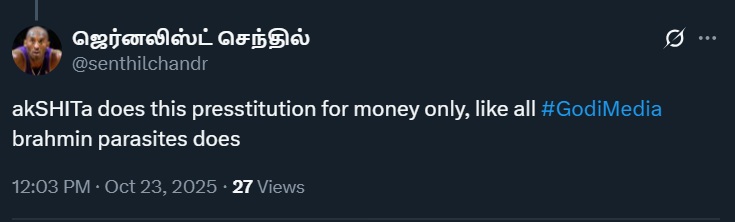
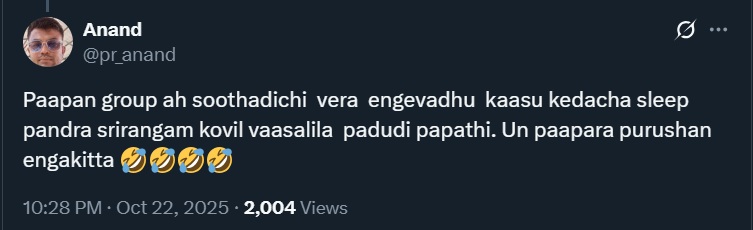
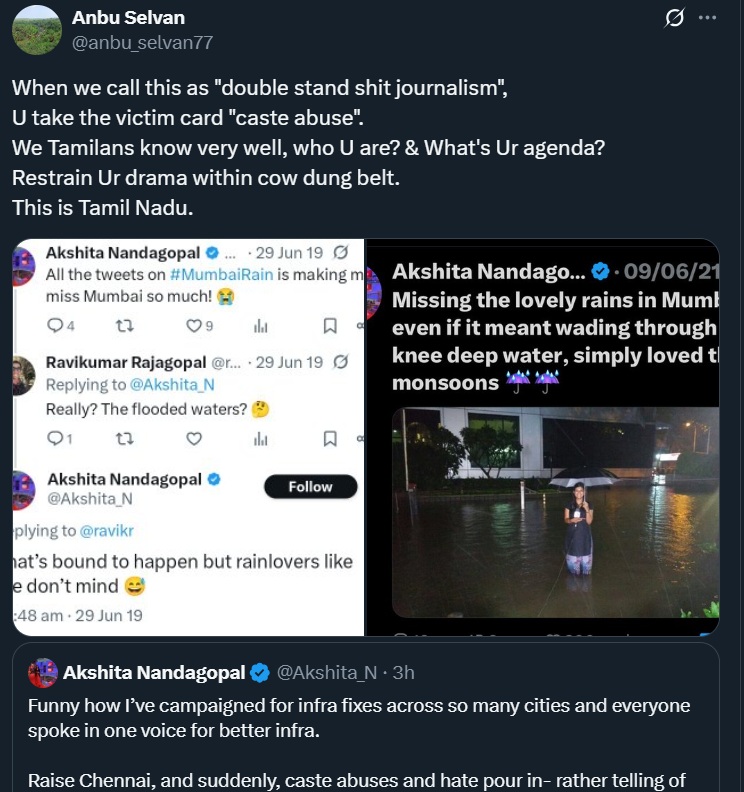
The post, however, triggered a wave of online hostility, with several accounts hurling casteist slurs, calling her “mami”, “papathi” and branding India Today “godi media.”
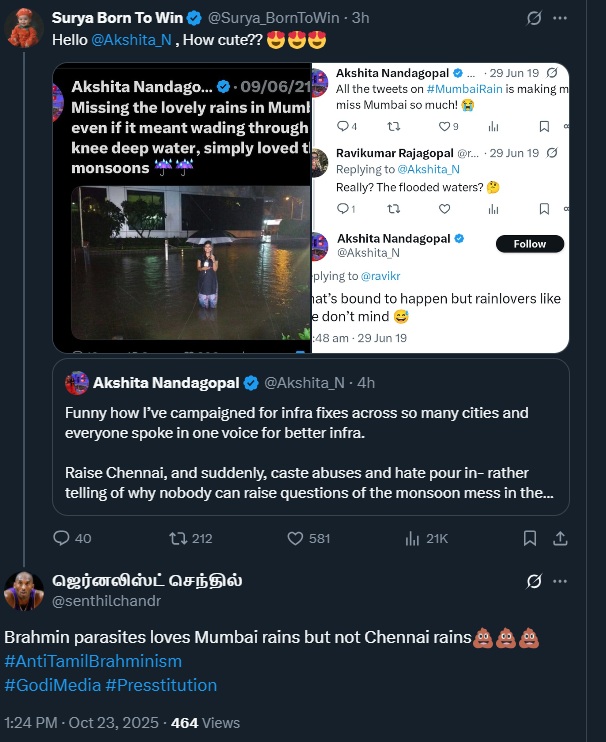
In response, Nandagopal expressed dismay at the reaction, stating that while infrastructure issues in other cities are discussed unanimously, raising the same concerns in Chennai leads to “caste abuses and hate.”
Funny how I’ve campaigned for infra fixes across so many cities and everyone spoke in one voice for better infra.
Raise Chennai, and suddenly, caste abuses and hate pour in- rather telling of why nobody can raise questions of the monsoon mess in the city! https://t.co/xMKM9JriFB
The backlash reportedly came from self-identified Dravidianist handles angered by the portrayal of Chennai’s civic failures under the DMK-led administration.
Meanwhile, on the ground, the situation continues to worsen. A follow-up report showed that the Velachery–Tambaram Road, a key four-lane stretch, turned treacherous after temporary cement fillings for potholes washed away in the rain, leaving vehicles stuck and commuters moving at barely 10 kmph.
Residents criticized the decision to undertake patchwork repairs during rainfall, calling it a poor use of public funds. State Highways officials said bituminous work was ongoing but admitted that jurisdiction overlaps between Tambaram Corporation and the Highways Department had delayed coordinated repairs.
Elsewhere, Old Mahabalipuram Road (OMR), Porur, and parts of North Chennai, including Pattalam and Vyasarpadi, faced severe flooding after brief downpours. The Times of India’s independent audit confirmed that the first two monsoon spells had already crippled several neighbourhoods, contradicting official claims of preparedness.
A red alert remains in place for multiple Tamil Nadu districts, with the India Meteorological Department warning of extremely heavy rainfall. Despite Deputy Chief Minister Udhayanidhi Stalin’s inspection rounds, residents in multiple zones say the city’s civic infrastructure has yet to withstand even mild showers.
Subscribe to our channels on Telegram,Instagram and YouTube to get the best stories of the day delivered to you personally.
Dhanya Rajendran, Co-founder and Editor-in-Chief of The News Minute (TNM), has been nominated for the Reporters Without Borders (RSF) Impact Prize of the Year 2025 from India.
The RSF nomination recognizes Rajendran for her “full-blown fight for press freedom in India” and notes that “under her leadership, The News Minute has established itself as a benchmark for quality journalism.” However, this characterization stands in stark contrast to TNM’s handling of the most recent Dharmasthala story, which many media watchdogs have criticized as activist journalism masquerading as objective reporting.
This ‘award’ comes even as serious questions persist about her outlet’s controversial coverage of the Dharmasthala “mass burial” case that collapsed due to lack of evidence.
And it was not just that, Dhanya and her TNM unit have almost always peddled the leftist-Dravidianist narrative showing their loyalty to their paymasters.
Let’s just take a look at the most recent ‘reportage’ or rather the ‘pièce de résistance’ of Dhanya Rajendran – The Dharmasthala Lie
The Dharmasthala Debacle: A Case Study in Questionable Journalism
TNM’s coverage of the Dharmasthala allegations exposed fundamental flaws in the outlet’s editorial approach. The portal treated the extraordinary claims of a single “masked man”, who alleged he had buried hundreds of murder victims over two decades, as established fact rather than allegations requiring rigorous verification.
Throughout July and August 2025, TNM ran over two dozen stories, videos, and podcasts amplifying the unproven allegations. Reporter Pooja Prasanna’s “explainer” videos systematically shifted the discussion from “if” the mass burials occurred to “how” they happened, presupposing the temple management’s guilt while ignoring basic journalistic questions about the logistical impossibility of such crimes occurring undetected in one of Karnataka’s busiest pilgrimage centers.
The portal’s methodology consistently favored speculation over evidence. TNM strategically linked the unproven allegations to decades-old, unrelated tragedies, creating a false pattern through guilt by association. During interviews with local officials, reporters badgered the Gram Panchayat Vice President for documents he didn’t possess while failing to apply similar scrutiny to the masked man’s ever-changing story.
The Narrative Collapses
The entire narrative unraveled when forensic evidence revealed that the skeletal remains, which TNM had triumphantly declared as the “soil speaking up” belonged to men who had died decades before the alleged crimes. The masked man later confessed to being coached by a gang in Chennai, while key “witnesses” admitted to lying. Throughout this unravelling, TNM maintained conspicuous silence about their role in amplifying a fabricated story that damaged the reputation of a revered religious institution.
Award Nomination Raises Eyebrows
The RSF nomination has sparked criticism from media observers who question the timing and message of honoring an editor whose outlet recently promoted what proved to be a completely baseless story. Critics argue that the Dharmasthala coverage demonstrates how activist journalism can harm public discourse and damage innocent institutions.
RSF’s recognition comes despite TNM’s failure to issue corrections or acknowledge their flawed reporting methodology in the Dharmasthala case. The organization noted that Rajendran “and her team have been repeatedly subjected to lawsuits and are harassed online because of their work,” but made no mention of the legitimate criticism regarding their factual inaccuracies.
The Press Freedom Awards ceremony will be held on 15 November 2025, in Paris, where Rajendran will be considered alongside nominees from Palestine, Chile, Syria, and Vietnam. So one wonders whether Dhanya is being considered for the ‘award’ for the narrative setting and ‘impact’ it created rather than actual truthful journalism.
Subscribe to our channels on Telegram,Instagram and YouTube to get the best stories of the day delivered to you personally.
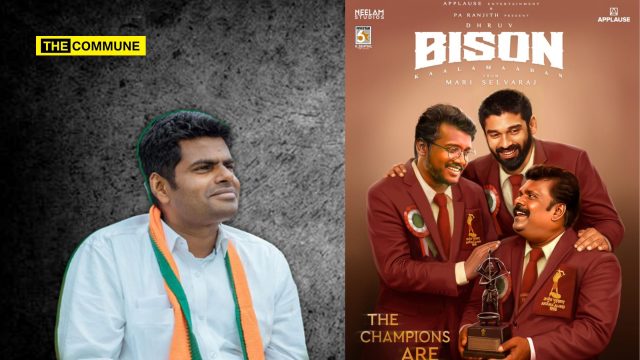
BJP leader K Annamalai has publicly lauded director Mari Selvaraj’s latest film, Bison (Bison – Kaalamadan), calling it a “wonderful, emotionally charged” cinematic achievement. In a detailed post on social media platform X, the BJP leader extended his “heartfelt congratulations and appreciation” to Selvaraj and the entire film crew.
Annamalai, who recently viewed the film, expressed a deep personal connection to its narrative. He stated that Selvaraj has powerfully brought to the screen the struggles of a village youth in achieving his dreams, along with the societal challenges and complications he faces. “In many scenes of the film, I was able to emotionally relate to it personally,” Annamalai wrote.
The BJP leader highlighted that the film is a biopic of Indian kabaddi player and Arjuna Award winner, Manathi Ganesan. He praised the director for magnificently portraying Ganesan’s life, noting that his achievements “did not come so easily.” Annamalai described the protagonist’s journey as an example for all aspiring youth, showing “how one must grow beyond the height of those barriers” that society erects.
Significantly, Annamalai commended the film’s underlying social message, noting that Selvaraj has “expressed his deep desire for social unity in a way that everyone can accept.”
The political leader also applauded the cast’s performances, stating that lead actor Dhruv Vikram “has dedicated himself entirely to this film.” He also reserved praise for veteran actors Pasupathy and Laal, adding that “all the actors have showcased their wonderful talents.”
Concluding his post, Annamalai expressed his hope that Mari Selvaraj would “deliver many more wonderful films,” wishing him success on his journey of “uniting people, building an equitable society, and continuing his socially conscious path excellently.” The public endorsement from a prominent BJP leader for a film by Mari Selvaraj, known for his hard-hitting socio-political narratives, has drawn significant attention in political and cultural circles.
அன்புச் சகோதரர் திரு @mari_selvaraj அவர்கள் இயக்கியுள்ள, பைசன் – காளமாடன் திரைப்படத்தைக் காணும் வாய்ப்பு கிடைத்தது. ஒரு அற்புதமான, உணர்வுப் பூர்வமான திரைப்படத்தைத் தந்திருக்கிறார். அவருக்கும், படக் குழுவினருக்கும் எனது மனமார்ந்த வாழ்த்துக்களையும், பாராட்டுக்களையும் தெரிவித்துக்… pic.twitter.com/nRumcGQbnd
Starting 12 November 2025, the Supreme Court will conduct continuous hearings on a proposal by Indira Jaising seeking to legally permit sexual activity among teenagers, effectively attempting to lower the age of sexual consent from 18 to 16. Critics warn that such a move would put millions of minors at risk, as the protection of children remains non-negotiable. Notably, major outlets like Times of India, Hindustan Times, and international organizations including UNICEF India have allegedly consistently advocated for lowering the age of consent, which would decriminalize sexual activity with minors.
In line with this, The Hindustan Times opinion piece, “Mind the Gap: How a law to protect children was weaponized against consensual teen sex”,published on 4 August 2025, attempts to make a case for decriminalizing sexual relations between teenagers and minors aged 16–17. On the surface, it frames the debate as one about adolescent love and overreach by the legal system. But a closer look reveals serious one-sided reasoning, selective framing, and a troubling moral and legal blind spot.
The article repeatedly emphasizes stories of “teenagers in love” where a 16- or 17-year-old girl is in a relationship with an 18–20-year-old boy, portraying the parents’ intervention and the police action as overbearing and even unjust. Justice Jasmeet Singh’s recent acquittal of a 19-year-old man is quoted as vindication, with the judge labeling the punishment a “perversity of justice.” Yet, the piece glosses over the constitutional and social rationale behind the current law: the protection of minors from sexual exploitation and abuse.
Selective Use of Statistics
The article cites NFHS-5 data showing 39% of girls have sex before 18, and studies highlighting that roughly 20–25% of POCSO cases involve “romantic relationships.” But this framing is misleading. It conflates consensual sex with potential statutory violations and implies that parents filing complaints are acting out of malice or conservatism, ignoring the law’s protective purpose. The same surveys and case studies reveal that many minors are married off by parents, coerced, or exploited, yet these nuances are downplayed to create a narrative of “victimized adolescent couples.”
The Age of Consent Debate
HT’s article laments that the age of consent was raised from 16 to 18 in 2012 under POCSO and quotes advocates like Indira Jaising arguing for autonomy and “mature consent” of minors. But the piece fails to grapple with the critical reality: 16–17-year-old girls are legally children, not autonomous adults. Laws like POCSO exist precisely because minors are vulnerable to coercion, manipulation, and abuse. Suggesting a “close-in-age exception” risks creating a legal loophole that predators could exploit and dangerously blurs the line between consensual relationships and statutory rape.
Romanticization of Risky Relationships
The article repeatedly frames these relationships as “teenage love” or “adolescent choice,” invoking emotional imagery from films like Bulbul Can Sing. Yet it ignores the power imbalance inherent in even slightly older partners, the psychological and social pressures on minor girls, and the serious consequences of early pregnancies. The narrative subtly shifts the blame from adult males or coercive adults to the parents, painting legal protection as oppressive.
Hypocrisy and One-Sided Framing
The most glaring hypocrisy is the selective outrage: HT is quick to condemn “overzealous parents” and “misuse of POCSO,” but provides little attention to the real-world abuses POCSO addresses, including child sexual abuse, trafficking, and grooming. While 53% of children reportedly faced sexual abuse in 2007, the article’s argument implicitly prioritizes the romantic rights of minors over their safety, dignity, and consent under law.
Moreover, by repeatedly citing acquittals of teenage couples, the piece creates the impression that the legal system is out of touch. But it fails to highlight that the majority of cases still involve exploitation, coercion, or power imbalances that the law is meant to prevent. Using selective examples to argue for a structural legal change is intellectually disingenuous.
Conclusion
The Hindustan Times article frames a morally and legally complex issue as a case of “adolescent love under siege,” effectively romanticizing relationships with minors. While it is true that courts have occasionally recognized consensual relationships among “mature minors,” this is not a justification to undermine protections for children. Protecting minors from sexual exploitation and coercion is not hypocrisy—it is the foundation of constitutional morality and social welfare.
In short, the article’s “heartfelt” narrative masks a dangerous push to normalize sex with minors under the guise of autonomy and romance. The real gap HT should be minding is not between the law and love, but between ethical journalism and advocacy for vulnerable children.
Subscribe to our channels on Telegram,Instagram and YouTube to get the best stories of the day delivered to you personally.

 Meanwhile, on the ground, the