Home Blog Page 257

The New Face Of Terror In India: White-Collar Islamist Sleeper Cells

The recent Faridabad explosives haul and the Red Fort car blast are not isolated events. They are connected parts of a dangerous new strategy being used by Pakistan’s ISI to create terror within India. Instead of relying only on cross-border militants, they are now building secret “sleeper cells” inside the country, and they are deliberately recruiting educated professionals like doctors to lead them.

What is a Sleeper Cell?

Think of a sleeper cell as a secret team of terrorists that stays hidden and inactive for a long time, sometimes years. They live ordinary lives until they receive orders to carry out an attack.

Pakistan’s New Game Plan

After a successful Indian counter-terror operation (Operation Sindoor) in May against the group Jaish-e-Mohammed (JeM), Pakistan’s ISI and JeM have changed their approach. Intelligence reports reveal they are now building four specialized types of sleeper cells:

Logistical Cells: These handle fake IDs, SIM cards, and hideouts.

Financial Cells: These move money through charities and businesses to fund operations and buy materials like chemicals for bombs.

Ideological Cells: These use encrypted apps and social media to radicalize Indian youth. They spread propaganda about Muslims being suppressed to brainwash them.

Operational Cells: These are the action teams that carry out attacks. They now specifically recruit highly skilled people, like doctors and engineers, because they are the “least suspicious.”

The Faridabad-Red Fort Connection

The recent arrests show how this new system works.

Who are the Recruits?

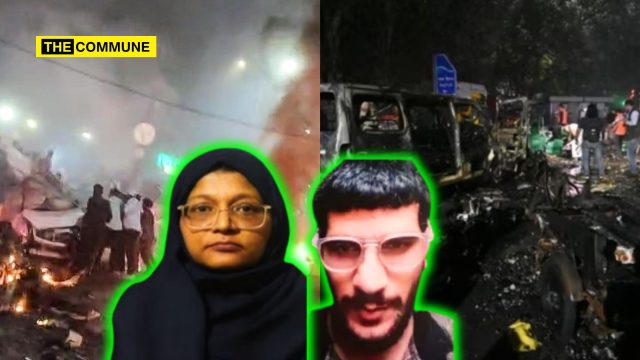
The key arrested individuals are Indian nationals – doctors like Dr. Muzammil Sheikh, Dr. Adil Ahmed, Dr. Shaheen Shahid, and an Imam named Ishtiyaq.

What is the Process?

They were first slowly brainwashed online (cognitive conditioning) with propaganda. Their communication was kept secret through a “compartmentalization” method, meaning each person only knew a few others, so the whole network wouldn’t collapse if one was caught.

What were their Roles?

Dr. Muzammil used his position at a medical college to store huge amounts of ammonium nitrate for making bombs.

Dr. Shaheen handled the logistics, like arranging vehicles.

Imam Ishtiyaq was a recruiter, radicalizing other professionals.

The Attack?

The Red Fort blast was a “fidayeen” or suicide attack, which is the current preferred method to cause maximum damage.

The “White-Collar Terror” Ecosystem

This is the most alarming shift. Terror groups are now creating a “white-collar terror ecosystem.” They are targeting doctors and other educated professionals because:

They are smart and can handle complex tasks like building bombs.

They have access to dangerous chemicals and materials through their jobs.

No one would suspect a respected doctor of being a terrorist.

This raises a terrifying possibility: if they can get materials for bombs, they could also potentially get materials for biological weapons in the future.

Plausible Deniability: Hiding Behind Al-Qaeda

To avoid blame, Pakistan’s ISI is using a clever trick. They are using a group called Ansar Ghazwat-ul-Hind, which is linked to Al-Qaeda. This allows the ISI to say, “We are not responsible; it’s Al-Qaeda.”

In reality, this group is made up of former members of ISI-backed groups like JeM and Lashkar-e-Taiba (LeT). So, the ISI provides the logistics through JeM sleeper cells, while Ansar Ghazwat-ul-Hind handles the brainwashing and recruitment of Indians. This creates a “homegrown” terror module that Pakistan can deny any connection to.

What to Expect Next

The Red Fort attack is likely just the beginning. Security agencies warn that this new model of “homegrown, white-collar terrorism” is a major emerging threat. As the National Investigation Agency (NIA) continues its raids, more of these sleeper cells are expected to be uncovered. The danger is now increasingly coming from within, making it a more complex and challenging fight for India’s security forces.

Subscribe to our channels on WhatsAppTelegram, Instagram and YouTube to get the best stories of the day delivered to you personally.

The 20 Biggest RDX & Ammonium Nitrate Seizures That Expose Deep Terror Web In India

In a joint operation, the Jammu & Kashmir and Haryana Police uncovered a major terror module in Faridabad, seizing over 2,900 kilograms of suspected ammonium nitrate along with a cache of arms and ammunition. The materials were traced to individuals linked to a local medical college, officials said.

Among those arrested were Dr. Muzamil Shakeel and Adil Ahmed, while a woman doctor was detained after investigators recovered a Krinkov rifle from her car. Authorities said the operation was part of an ongoing investigation into a wider network suspected of sourcing explosives and weapons for planned terror strikes.

In this report, we have compiled 20 major RDX and ammonium nitrate seizures in India between 2000 and 2025, involving Islamist and Naxal-linked groups. The dataset summarises dates, locations, quantities seized, and key operational details from police and counterterrorism records, highlighting persistent security vulnerabilities and the scale of explosive trafficking across states.

#1 Major Explosives Haul: 2,900 kg Chemical Seized from Faridabad Doctors – 09 November 2025

In a significant crackdown in Faridabad, Haryana, police busted a terror module linked to medical professionals. The operation led to the seizure of over 2,900 kg of suspected ammonium nitrate. Authorities arrested Dr. Muzamil Shakeel and Adil Ahmed, while Dr. Shaheen Shahid was detained after a Krinkov assault rifle was found in her car. The massive quantity of explosives, recovered from locations connected to the accused doctors, highlighted a sophisticated network operating within the country, raising serious concerns about the infiltration of terror elements into professional sectors.

#2 Punjab Police Thwart BKI Plot, Seize 2.5 kg RDX IED – 09 October 2025

Jalandhar police dismantled a Babbar Khalsa International (BKI) terror module, seizing a 2.5 kg RDX-based Improvised Explosive Device (IED), a remote control, and a motorcycle. The module was allegedly operated under the direction of UK-based handlers Nishan Jaurian and Adesh Jamarai, and BKI mastermind Harwinder Singh alias Rinda. Intelligence inputs indicated the IED was intended for a specific terror attack. The accused, Gurjinder Singh and Deewan Singh, were arrested and booked under the Unlawful Activities (Prevention) Act and the Explosive Substances Act.

#3 Rajasthan Police Uncover 2,075 kg of Explosives in Abandoned Vehicle – 11 May 2025

Police in the Bassi area of Jaipur Rural, Rajasthan, discovered a suspicious abandoned pickup truck near Mohanpura bridge. A search revealed a massive cache of 2,075 kilograms of explosive material, including ammonium nitrate and Opti Star explosive. The vehicle was registered to an individual from Bhilwara who, along with the driver, remained untraceable. The discovery of such a large quantity of explosives in a public area caused alarm, prompting police to seize the vehicle and inform the Petroleum and Explosives Safety Organisation (PESO).

#4 1.16 kg RDX IED Safely Defused in Haryana – 22 September 2022

A potentially devastating incident was averted in Katthal, Haryana, after a 1.16 kg IED packed with RDX was found placed inside an iron box near Kainchi Chowk. The discovery was made based on a tip-off. The Special Task Force immediately secured the area and summoned the bomb disposal squad, which safely defused the explosive. A case was registered under the Explosive Substances Act, though the perpetrators remained unknown, underscoring the persistent threat of hidden explosive devices in public spaces.

#5 Gurdaspur Police Seize 1 kg RDX, Uncover LeT Links – 01 December 2021

In an operation in Dinanagar, Gurdaspur, Punjab Police seized 1 kg of RDX. The accused, Sukhwinder Singh, revealed during interrogation that he had planted the explosive and admitted to having links with Pakistan-based entities. The highly explosive RDX was capable of causing destruction within a 50-meter radius. The arrest led to ongoing investigations to determine connections with other suspects and to verify the extent of the network’s links across the border.

#6 Major Cache of 71 Grenades, 24 kg RDX Destroyed in Reasi – 26 November 2021

Security authorities in Reasi, Jammu & Kashmir, safely destroyed a massive stockpile of explosives that had been seized over the years in anti-terror operations. The cache, stored in police custody, included 71 hand grenades, 24 kg of RDX, detonators, IED fuses, and remotes. After seeking necessary permissions from various courts, the police carried out a controlled destruction of the materials to prevent any accidental blast, drawing a line under several terror cases registered since 2009 in the Mahore-Chassana belt.

#7 12 kg RDX, Ammonium Nitrate Recovered from Jungle Hut in Palghar – 05 November 2016

A significant stock of explosives, including 12 kg of RDX, two packets of ammonium nitrate, 40 gelatin sticks, and 39 detonators, was unearthed from an abandoned hut in a jungle near Satavli village, Palghar. The materials, packed in black plastic bags, were found buried, suggesting long-term storage for potential large-scale blasts. The Mumbai Crime Branch and ATS recovered the cache based on specific intelligence and sent the evidence for forensic analysis to trace the source network.

#8 Over 40 kg Explosives Found Near Atomic Plant in Palghar – 27 October 2016

In a high-stakes operation, the Anti-Terrorism Squad (ATS) recovered over 40 kg of explosives, including RDX, gelatine, detonators, and white and black powder, from an abandoned Public Works Department building in Manor, Palghar. The location’s proximity to the Tarapur Atomic Power Station raised grave concerns, as the explosives were reportedly intended for terrorist activities. Acting on a tip-off, ATS teams used dog squads to locate and safely remove the materials, which were then sent for forensic examination.

#9 RDX from Udgir House Matches German Bakery Blast Evidence – 07 July 2012

Explosive material identified as RDX was seized from the residence of Mirza Himayat Inayat Baig in Udgir, Maharashtra. A sniffer dog confirmed its presence, and subsequent forensic analysis by the National Chemical Laboratory established that the seized RDX matched the components used in the infamous Koregaon Park German Bakery blast in Pune. This critical evidence was presented in court, linking the accused directly to the major terror attack.

#10 Maoist Hideout in Bihar Yields 1 kg RDX, 45 Grenades – 09 May 2012

Following a tip-off, police conducted a combing operation in the Banka forest of Bihar and discovered a Maoist hideout near Bagadhsawa village. The hideout contained a significant arsenal, including 1 kg of RDX, 45 grenades, 2 rifles, 2 can bombs, and empty cartridges. The Maoists managed to escape before the police arrival. All explosives and weapons were seized, and search operations continued in the surrounding forest areas to neutralize the threat.

#11 Security Forces Foil Attack on Kailash Yatra, Recover 3 kg RDX – 31 August 2008

Security forces averted a major tragedy on the Kailash Yatra route in Doda, Jammu & Kashmir, by busting a militant hideout in the Ramtandu area. The recovery included 3 kg of RDX, a .303 rifle, an AK magazine, ammunition, detonators, and 30 kg of ration. The materials indicated a planned attack on the annual pilgrimage, which attracts over 50,000 devotees. The timely sanitization operation prevented potential mass casualties.

#12 Delhi Police Nab LeT Trio with 2 kg RDX Near Red Fort – 20 December 2006

In a significant operation, Delhi Police’s Special Cell arrested three individuals from Manipur with alleged links to Lashkar-e-Taiba (LeT) near the Red Fort. The trio was found carrying 2 kilograms of RDX, two detonators, and a hand grenade after alighting from a Jammu-bound bus. Officials claimed they were planning blasts in crowded Delhi markets, marking a concerning instance of LeT recruiting from India’s northeastern states. The accused were arrested and the explosives seized.

#13 J&K STF Unearths Massive 200 kg RDX Cache in Ramban – 04 November 2006

A major terrorist hideout was unearthed by the J&K Special Task Force in Ramban, containing a massive 200 kg of RDX and 60 detonators, along with 25 kg of fuse wire. The hideout was strategically located near a school. In a separate recovery in Udhampur, additional weapons and 3 kg of explosives were found. Two militants were arrested, while a Hizb-ul Mujahideen commander absconded.

#14 1.5 kg RDX Recovered from LeT Terrorists in Delhi’s Mahipalpur – 11 December 2006

Delhi Police arrested two Kashmir-based Lashkar-e-Taiba terrorists, Guizar Ahmed and Mohd Amin, in the Mahipalpur area. A search led to the recovery of 1.5 kg of RDX, two detonators, and Rs. 2 lakh in cash from their possession. The duo was moving suspiciously when intercepted. The Special Cell took them into custody and began interrogations to uncover their plans and contacts within the national capital.

#15 Army Recovers 25 kg RDX Buried Near Kishtwar Temple – 09 October 2006

During a sanitization operation in Kishtwar, Jammu & Kashmir, army troops recovered 25 kg of RDX and detonators buried in a field near the Sukrala Temple. Intelligence suggested that terrorists planned to use the explosives to target the temple during its annual festival. The timely recovery by security forces ensured the festival proceeded without incident, averting a potential disaster.

#16 Joint Operation Nets 35 kg RDX, IEDs in J&K’s Doda and Kathua – 21 January 2006

In a coordinated effort, security forces recovered 35 kg of RDX in Jammu & Kashmir. In Doda’s Deribagh village, a furnished underground hideout yielded 25 kg RDX, AK rifles, and a remote-control IED. On the Budhi-Nagrota-Ghati road in Kathua, three IEDs containing 10 kg of RDX were found in a bag. Two individuals, Mohammad Subhan and Akhtar Nabaz, were arrested for aiding militants. The bomb squad neutralized the IEDs, preventing a major attack.

#17 76 kg RDX Recovered from Bus and Fields in Bhaderwah – 04 January 2006

A massive haul of 76 kg of RDX was recovered in Bhaderwah, Doda. During a routine check in the Pranu area, 48 kg was found hidden in a bag under a bus seat. Subsequently, based on a tip-off, another 28 kg was unearthed from nearby fields. The bus driver and conductor were arrested, and passengers were questioned, revealing a significant operation for moving and storing high-grade explosives.

#18 35 kg LeT RDX Consignment Unearthed in Gujarat’s Kutch – 18 December 2001

In Kutch, Gujarat, a joint team of police and Border Security Force personnel recovered a 35 kg RDX consignment buried in the Ram of Kutch, linked to Lashkar-e-Taiba. The cache also included an AK-56 rifle, detonators, grenades, and remote control devices. The arrested accused, Muzamil Shahnawaz Husain, disclosed that the explosives were buried by a four-man team, with two returning to Pakistan.

#19 CBI-ATS Joint Op Recovers 5.2 kg RDX, Grenades in Patan – 17 December 2001

A joint operation by the CBI and the Anti-Terrorist Squad in Patan, Gujarat, led to the recovery of 5.2 kg of RDX, 10 hand grenades, grenade-launching rifles, a rocket, mines, pistols, and electronic timers. The materials were buried in a pit near Santalpur. Incriminating evidence, including a ‘Lashkar-e-Taiba’ letterhead and Pakistani newspapers, pointed to a cross-border connection. All items were seized for investigation.

#20 ISI Agent Held in Delhi with 10 kg RDX, Secret Letters – 05 December 2000

Military Intelligence and Delhi Police’s Special Cell arrested Khalid Mehmud, an alleged ISI agent, in Badarpur, South Delhi. From his possession, they recovered 10 kg of RDX, two AB timers, two detonators, and several letters containing sensitive information written in secret ink. A native of Lahore, Mehmud had been gathering intelligence on army movements and infrastructure since 1999. He was taken into custody, and the explosives and letters were seized.

Subscribe to our channels on WhatsAppTelegram, Instagram and YouTube to get the best stories of the day delivered to you personally.

“Biryani Is Ready For Daawat”: Probe Uncovers Encrypted Code Used By Delhi Blast Terror Suspects

Delhi Blast Terror-Accused ‘Dr’ Shaheen Saeed Says Umar Discussed ‘Multiple Attacks’; Explosives Stockpiled For Two Years terror code biryani daawat

New details emerging from court records and investigative reports indicate that the suspects in the recent Delhi blast used food-related codewords to coordinate the attack. According to officials, the terms “Daawat” (feast) and “Biryani” were repeatedly used in encrypted chat exchanges to refer to the explosion and the explosives, respectively.

Investigators say the coded communication was allegedly orchestrated by Dr. Shaheen Saeed, a Lucknow-based woman who is now believed to have played a central role in the conspiracy. Agencies describe her as “highly cunning,” with evidence pointing to her involvement in planning and directing multiple aspects of the operation.

A key message recovered from the suspects’ chat box reads: “Biryani is ready for the Daawat,” which agencies say meant that the explosives had reached their intended location. This message, sent on 13 July 2025, is believed to be Shaheen’s final communication related to the plot. No replies were found after that point.


View this post on Instagram


A post shared by WION (@wionews)

Investigators assert that several other messages exchanged among the accused reveal details of ongoing preparations and movements leading up to the attack. Police teams and central agencies are currently interrogating the arrested suspects and tracing other individuals who may have been connected to them.

Searches are underway to determine whether additional codewords or communication channels were used. Authorities say further revelations are expected as the probe progresses.

Subscribe to our channels on WhatsAppTelegram, Instagram and YouTube to get the best stories of the day delivered to you personally.

VCK’s Aloor Shanavas Sings Murugan Song, Here’s What He Had Said About Pongal A Few Years Ago

VCK's Aloor Shanavas Sings Murugan Song, Here's What He Had Said About Pongal A Few Years Ago

Viduthalai Chiruthaigal Katchi (VCK) leader Aloor Shanavas’ recent public rendition of a Murugan devotional song has triggered debate online, with critics circulating his earlier statements from 2021 in which he urged the removal of Hindu customs from Pongal celebrations.

At a recent event, Shanavas described his performance of a Murugan song as an expression of Tamil Nadu’s secular character. He told the audience that he sang the piece spontaneously, without preparation, and said the song lived “in the layers of his memory.” Shanavas said, “If I had planned in advance, I wouldn’t have been able to sing; I didn’t know that I would be singing today. I didn’t know I would be singing a Murugan song today. I don’t even have my phone with me—my assistant has the phone. I didn’t get a chance to immediately look up, read, or memorize anything. I am singing from my memory. I am singing this song from the layers of my memory. So that’s why I fumbled here and there in between. Maybe I didn’t sing the song perfectly, but I am singing from my memory—how Murugan entered my memory, how D.M.S. sang so wonderfully, whether it is the imagined ‘Karpanai Endralum Karchilai Vai Endralum Kandhane Unai Maraven’ song, how that song entered my memory.”

He further said, “I am someone who follows Saivism, someone associated with Hinduism, yet I was born in the Islamic community and belong to it. How did this song come to me? It’s because when I was young, early in the mornings, I woke up hearing the songs played in the temples around my village, around my house, and I grew up listening to them. I woke up and grew up listening to the songs played in the nearby church. I woke up and grew up listening to the Isai Rasi (music-loving) songs. All of this is inside me. This is Tamil Nadu.”

However, his earlier comments on the celebration of Pongal have resurfaced. In a video from 2021, Shanavas expressed discomfort with Hindu elements in the harvest festival, arguing that certain customs “hurt the religious feelings of Christians and Muslims.” He had said that Pongal should be observed as a Tamil cultural festival, not as a religious ceremony involving worship of Surya Bhagwan or cattle, and urged that Hindu-specific practices be removed to maintain what he described as “Tamil unity.”

Shanavas said, “Hindus who are in majority, celebrate this event out of their religious beliefs. That is, offering food (padayal) to the sun, worshiping, venerating the sun, venerating cows—these are all considered rituals (ceremonies) and forms of worship within that tradition. That is, offering food to the sun, worshiping, venerating the sun, venerating cows—all these are considered as rituals and forms of worship within their tradition. Other, who are atheists, Muslims and Christians who say that they should not worship anyone other than the one true God, they are facing a problem. So, if you stand with the principle that it is a day to celebrate nature, a day to respect farmers, then there is no problem. This becomes a problem when the rituals are upholding a specific religious identity. So, for unity among Tamils, no ritual or worship must come in its way. If it does, the goal will be ruined, the unity will disintegrate, singularity will diminish. So, it must be identified as Tamizhar Thirunaal, there must be no place for prayer or rituals.”

Subscribe to our channels on WhatsAppTelegram, Instagram and YouTube to get the best stories of the day delivered to you personally.

Madras High Court Rules Yethapur Muthumalai Murugan Temple Toll Illegal In Petition Moved By BJP’s SG Suryah; Blocks Collection Until Govt Approval

In a major relief for devotees, the Madras High Court has declared the toll collection at the Yettapur Muthumalai Murugan Temple illegal, ruling that the local body acted without any legal sanction.

The issue began when the local authority at Yettapur passed a resolution to impose toll fees on the road leading to the temple, even displaying a banner at the entrance to announce it. However, the collection was started without any Government Notification or approval, causing hardship to devotees and the general public.

An RTI application seeking the legal basis for this toll revealed that officials had cited Section 95 of the Tamil Nadu Urban Local Bodies Act, 1998 to justify the move. But Section 95 clearly states that toll collection requires a prior Government Gazette Notification specifying the tariff, purpose, mode, duration, and authorised collector. No such notification existed in this case.

The local body bypassed the mandatory legal process and even awarded a tender to a private individual to collect tolls — an action the Court described as ultra vires and arbitrary.

The case was initiated by BJP Tamil Nadu Youth Wing Head Dr. S. G. Suryah, who filed the petition highlighting how the arbitrary toll collection violated legal provisions and burdened devotees visiting the temple. Suryah argued that no local authority has the power to impose tolls without government sanction, and that such actions erode public trust in governance.

After reviewing the records, the Madras High Court observed that no Government Notification was produced by the respondents and held that the toll collection was unlawful. The Court made it clear that until a proper notification is issued, the local body has no authority to collect tolls from devotees or the public.

Speaking on the judgment, BJP leader Dr. S.G. Suryah said,

“Victory to Vel Murugan, the Benevolent One! Justice has prevailed! This is not just about a fee — it was an attack on our heritage, our faith, and on Lord Muruga himself. By the grace of Lord Muruga, we have fulfilled our promise to the devotees.”

Dr. SG Suryah recalled how he had joined Hindu Munnani leader Kadeswara Subramaniam at a mass protest on July 29, where he pledged to take the matter to court. “That day, in front of thousands of devotees, I vowed to reclaim their rights — and today, dharma has triumphed,” he said.

He also thanked the BJP Youth Wing Legal Convener Abhilash G and the legal team who fought tirelessly for the case, calling it “a victory of devotion and justice over exploitation.”

Subscribe to our channels on WhatsApp, Telegram, Instagram and YouTube to get the best stories of the day delivered to you personally.

Madras High Court Pulls Up Authorities For Allowing Encroachments On Kamaraj Govt Hospital Land; Orders Collector, CMO, Municipality Chief To Appear

Madras High Court Pulls Up Authorities For Allowing Encroachments On Kamaraj Govt Hospital Land; Orders Collector, CMO, Municipality Chief To Appear

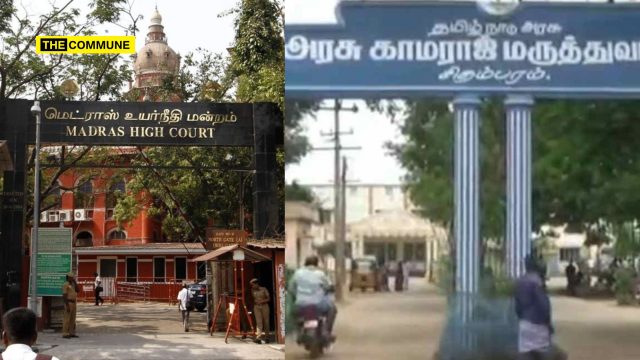
The Madras High Court on Monday, 10 November 2025, directed senior district and municipal officials to appear before it after noting conflicting claims over who controls the land surrounding Kamaraj Government General Hospital in Chidambaram, where 56 encroachments have been identified.

The First Division Bench comprising Chief Justice Manindra Mohan Shrivastava and Justice G Arul Murugan issued the direction while hearing WP No 14027 of 2024, a public interest litigation filed by Subramanian, a senior citizen from Pallipadai in Cuddalore district. The petitioner sought a mandamus directing authorities to remove illegal encroachments on government land earmarked for hospital expansion and to restore the property to the hospital administration.

Represented by counsel B Jagannath, the petitioner argued that the encroachments around the hospital have prevented construction of essential infrastructure, including ICU facilities and additional blocks, resulting in severe space constraints. He contended that removing these structures would allow expansion crucial for treating thousands of patients, especially poor families who depend on the government hospital.

Jagannath referred to documents in the case record asserting that the land in Survey Nos. TS 1123 and 1124/1 belonged to the government and was intended for hospital development. He said the hospital’s doctors were already delivering commendable service and expansion would significantly improve access to critical care.

Opposing the petition, State Government Pleader A. Edwin Prabhakar informed the court that 56 encroachments had been identified during a spot inspection by the Tahsildar on 6 June 2024. He said the municipality was collecting tax from these encroachers, complicating proceedings. Since the land was under municipal control, he said the report had been forwarded to the Chidambaram Municipality for action.

However, counsel for the municipality, P. Srinivas, maintained that the encroachments were located on government land, making it the state’s responsibility to remove them. The disagreement prompted the court to intervene.

Noting the dispute over jurisdiction, the Bench directed the District Collector of Cuddalore, the Chief Medical Officer of Kamaraj Government Hospital, and the Commissioner of Chidambaram Municipality to appear in person at the next hearing with all relevant records.

The case has been posted for 18 November 2025.

Subscribe to our channels on WhatsAppTelegram, Instagram and YouTube to get the best stories of the day delivered to you personally.

“Anna Flyover Not Spared By Ruling Party”: Flagpoles On Medians Draw Madras High Court’s Ire, DMK Govt Told To Act Or Face Contempt

Flagpoles On Medians Draw Madras High Court’s Ire, Govt Told To Act Or Face Contempt

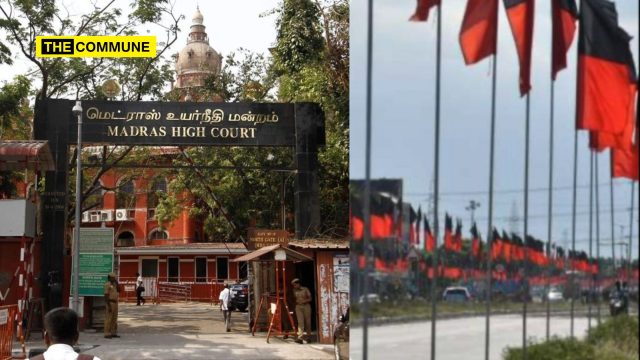
The Madras High Court on Wednesday, 12 November 2025, criticised the state government for failing to curb political flagpoles being erected on road medians, observing that its earlier orders on regulating such installations were being widely violated.

During the hearing of a petition concerning the placement of flagpoles on public roads, Justice GK Ilanthiraiyan said political parties across the spectrum were disregarding the court’s directions. He noted that even the Anna Flyover had not been spared, stating that the ruling party had placed flags on the structure. The judge told the state he had video evidence of the violations and asked officials to produce any permission orders, if granted, for installing flagpoles in such locations.

Additional Advocate General J Ravindran, representing the government, said no permissions had been issued for placing flags on medians or flyovers. He informed the court that the state had already framed standard operating procedures governing temporary flagpole installations along roadsides and that necessary action was being taken against violators. He added that a detailed report would be submitted after obtaining inputs from the district collector.

Justice Ilanthiraiyan cautioned that the court may initiate suo motu contempt proceedings if the authorities fail to act on the violations. The matter was adjourned to 3 December 2025.

(Source: The New Indian Express)

Subscribe to our channels on WhatsAppTelegram, Instagram and YouTube to get the best stories of the day delivered to you personally.
Muhammad Yunus Reveals His True Islamist Face: Bangladesh Govt Stops Hiring Of Sports And Music Teachers In Schools Citing “Administrative & Financial Feasibility”

Over a year ago, so-called ‘student protest’ rocked Bangladesh and it led to the Sheikh Hasina government getting ousted. ‘Nobel Prize’ winner Muhammad Yunus was parachuted as its “chief adviser” in a few days’ time.

Now, a decision by the Yunus ‘government’ to cancel the recruitment of music and physical education teachers in primary schools has triggered nationwide protests across Bangladesh’s major universities, with students and faculty framing the move as an attack on cultural identity rather than an administrative reform.

The Muhammad Yunus–led interim government shelved the hiring plan citing “administrative and financial feasibility.” However, demonstrators argue the decision reflects pressure from Islamist groups that labelled music and physical training “un-Islamic.”

At Dhaka University, hundreds gathered near the Oporajeyo Bangla statue, singing patriotic songs associated with the 1971 Liberation War. Similar demonstrations were held at Chittagong, Rajshahi and Jagannath universities, with students demanding that the government reinstate the teaching posts. Participants said the subjects were crucial to safeguarding Bangladesh’s cultural heritage.

Faculty members echoed these concerns. Dhaka University theatre professor Israfil Shahin told students that culture was central to national identity and warned that removing it from education would create a “hollow” system. Music instructors who joined the demonstrations described the arts as foundational to social and civilisational development.

Groups including Hefazat-e-Islam and Islami Andolon Bangladesh, both of which supported the interim government during its early consolidation of power had previously urged the administration to prioritise religious teachers over music and PT instructors. Critics say the government’s decision reflects a wider trend of yielding to hardline clerical demands.

Artists, student leaders and education sector observers contend that the move signals a shift away from the country’s secular cultural traditions. Singer and activist Shayan, who joined protests at Jagannath University, said the issue went beyond staffing decisions and was tied to questions of national identity. Political analysts have also expressed concern that the policy aligns with attempts to redefine public education along conservative religious lines.

Protesters say the demonstrations will continue until the government reverses its decision, warning that cultural education is essential to the country’s social fabric. They argue that the removal of music and physical training from the curriculum undermines the values that shaped Bangladesh’s formation.

(Source: India Today)

Subscribe to our channels on WhatsAppTelegram, Instagram and YouTube to get the best stories of the day delivered to you personally.
Toll-Rich, Safety-Poor: Why The Maduravoyal-Walajahpet Stretch Of NH-48 Remains Tamil Nadu’s Most Dangerous Road

Toll-Rich, Safety-Poor: Why The Maduravoyal-Walajahpet Stretch Of NH-48 Remains Tamil Nadu’s Most Dangerous Road
Image Source: Times of India

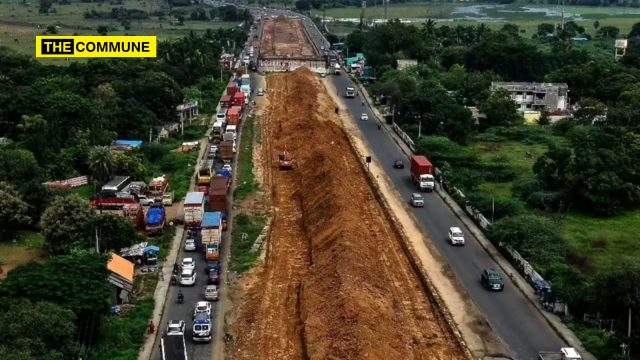
The 100-km NH-48 corridor from Maduravoyal to Walajahpet, part of the Chennai–Bengaluru highway, has become one of Tamil Nadu’s most dangerous stretches despite collecting more than ₹1,000 crore in toll over the past decade. The ₹1,500-crore six-laning project, initiated 13 years ago, remains unfinished, leaving lakhs of commuters navigating narrow diversions, unlit work zones and pothole-ridden surfaces where multiple flyovers and underpasses have been left incomplete.

Motorists say the stretch, especially after dark, has turned into a high-risk zone. Long sections narrow abruptly where elevated structures are under construction, and service lanes carry bumper-to-bumper traffic as heavy vehicles squeeze past barricaded or abandoned worksites. Only seven flyovers have been opened so far. Four more are structurally complete but not accessible to the public.

Why the Project Stalled

NHAI attributes the prolonged delay to contractor failures and state-level bottlenecks.

  • The first contractor was removed in 2016 for slow progress.
  • A second contractor, appointed in 2018, abandoned work in 2021 citing a dispute over fly ash supply, saying material that was contractually supposed to be free was being sold at ₹205 per tonne.
  • After starting three flyovers and restoring parts of the Kancheepuram–Walajapet road, this contractor stopped work citing increasing costs and logistics hurdles.

Following this, NHAI split the project. The 30-km Maduravoyal–Sriperumbudur portion was handed over to the Tamil Nadu Highways Department, while the 36-km Sriperumbudur–Kancheepuram stretch was re-tendered. A third contractor began work in January 2025 but has made little progress, leaving around 20 km in a hazardous condition where speeds often drop to 20 kmph.

State of the Road Today

The highway passes through the state’s largest industrial hub, where manufacturing units say transport delays and damaged consignments have become routine. Around Sipcot, three major grade-separators remain halted mid-construction. At Vedal, vehicles were jammed on service lanes even in mid-afternoon. Similar situations exist at Sunguvarchathram, Nandimedu, Murukkanthangal and Attuputhur.

In many sections, construction dust blankets the road at night. Near Walajahpet, motorists have already begun using an under-construction flyover though the surface is unfinished. The newly relaid stretches between Poonamallee and Sriperumbudur are already riddled with craters across 10 km, and bus operators say accidents are now reported almost every week.

Police units across Kancheepuram and Vellore districts describe the corridor as full of blind spots, with inadequate lighting and poorly placed barricades. District-level crash data indicates close to one accident every two kilometres on the Walajahpet side. Last year, the Ottiyambakkam–Walajahpet belt alone recorded 19 fatalities. Workers and officers describe the Kundrathur–Sriperumbudur section as especially dangerous after sunset due to fog, poorly lit work areas and missing warning signs.

NHAI’s Latest Response

Responding to criticism, NHAI said the 4-laning was completed earlier and that the six-laning is being executed in three packages:

Maduravoyal–Sriperumbudur (23.2 km):
Completed by the State Highways Department and currently under Defect Liability Period. Potholes and surface failures are being repaired, but work has been delayed. NHAI has floated bids for emergency repairs and said the issue is before the Madras High Court. Electrical cable replacements and lighting works are targeted for completion by December 2025.

Sriperumbudur–Karaipettai (34.02 km):
Delayed due to non-availability of fly ash. Of this, 17.19 km is complete. Remaining portions, mainly approach roads to structures, have been re-awarded with a deadline of October 2026. Overlay work, signage and diversions are under way.

Karaipettai–Walajahpet (36.08 km):
Largely complete except for minor works near the toll plaza and a short service-road stretch affected by local issues. Safety features and lighting in built-up areas will be operational once power connections are provided.

NHAI added that tolls on the corridor remain at 75% of the notified rate since work is ongoing. The agency is also planning a six-lane elevated corridor from Maduravoyal to the Outer Ring Road within the current financial year, with a proposed extension to Sriperumbudur alongside the Chennai Metro Rail alignment.

Traffic, Safety and Toll Revenue

The Nemili and Walajahpet toll plazas together generate nearly ₹90 crore annually. Over 35,000 vehicles use some parts of the corridor every day, and bus and truck operators report average speeds of just 20–30 kmph due to potholes, speed breakers placed every 400 metres, and constant lane shifts.

State officials maintain that damage is mainly due to heavy-vehicle load and say the NH Wing has completed its assigned sections. Police forces across districts continue to push NHAI to accelerate work as pedestrian safety too has become a concern, highlighted again after a five-year-old was killed at Poonamallee this week.

Despite phased tendering, emergency overlays and repeated assurances, large parts of the Chennai–Walajahpet highway remain half-built, dimly lit and hazardous, leaving motorists paying tolls to navigate a corridor that continues to function as a construction site rather than a national highway.

(Source: Times of India)

Subscribe to our channels on WhatsAppTelegram, Instagram and YouTube to get the best stories of the day delivered to you personally.

TN Police Decline RTI Request On Extrajudicial Killings, Cite Workload And Administrative Burden

extrajudicial killing

The Tamil Nadu Police has declined to provide data on extrajudicial killings sought through a Right to Information (RTI) application filed by The News Minute (TNM), stating that compiling the information would affect routine police work. The request was submitted to the office of the Director General of Police (DGP) on July 27 following a series of custodial deaths and alleged extrajudicial killings reported across the state in recent months.

TNM received the response on 11 November 2025, in which the DGP’s office said that details on extrajudicial killings from 1990 to March 2025 were not available at the headquarters. The reply stated that retrieving the information from all district and city police units would place a significant administrative burden on the department.

According to the written communication, “collecting and compiling such data would divert the regular work of this department and adversely affect day-to-day functioning,” and therefore the information could not be provided.

Supreme Court Judgment Cited

The police also cited a Supreme Court judgment in CBSE vs Aditya Bandhopadhyaya, in which the court had cautioned against RTI requests that could divert substantial staff time from regular duties. The 2011 judgment, delivered by Justices RV Raveendran and AK Patnaik, noted that public authorities should not be placed in situations where administrative functioning is undermined by excessive information-gathering obligations.

The case itself involved a student seeking evaluated answer sheets from CBSE, with the court recognising the student’s right to inspect them while also emphasising the need for reasonable limits on RTI demands.

RTI Activists Raise Concerns

RTI activist SP Thiyagarajan criticised the police response, calling it an indication of inadequate transparency. He said the requested information was something the police could make public and that, if the data was not available at the headquarters, the DGP’s office should have forwarded the RTI application to the relevant district police units.

He added that Section 4(1)(b) of the RTI Act mandates proactive disclosure of several categories of public information, which he said has not been fully implemented even two decades after the enactment of the law.

Human Rights Group Alleges Attempt to Avoid Scrutiny

Aseervatham, a human rights activist with People’s Watch, alleged that the refusal to provide data may be aimed at preventing public scrutiny of police actions. He claimed that the DGP’s office likely has the information but is unwilling to release it, arguing that disclosure could prompt legal challenges or calls for investigations.

He stated that the refusal “was in an effort to prevent scrutiny” and that petitioners could use the data to seek judicial intervention.

(Source: The News Minute)

Subscribe to our channels on WhatsAppTelegram, Instagram and YouTube to get the best stories of the day delivered to you personally.