Home Blog Page 255

Four Illegal Bangladeshi Migrants Detained In Delhi After Living Undocumented Since 2017; Deportation Underway

12 Bangladeshi Illegals Arrested In Tiruppur, Nearly 98 Arrested In January 2025 Alone

Four illegal Bangladeshi migrants, including three females, were detained in Delhi, police said on Friday, adding that their deportation process has been initiated. The four had been living in the national capital since 2017.

The police acted on secret information received by Head Constable (HC) Sundar Singh, regarding some illegal Bangladeshi female migrants roaming in the Kapashera area. “The individuals were identified and pointed out by the informer,” a Delhi Police statement said.

Acting swiftly on this input, the team approached the suspected individuals, asked for identification documents, and conducted a thorough enquiry. “The individuals failed to produce any valid documents and admitted to being illegal Bangladeshi migrants who had entered India through the Bangaon border and Tripura state in 2017, and some came to India through an Indian visa but did not return,” said police.

They disclosed that they were seeking housekeeping jobs in Mumbai and Delhi but were unable to secure suitable employment. Consequently, they settled in Delhi near Kapashera. On the day of their apprehension, they were searching for work. During analysis of their mobile phones and social media accounts, the team contacted their family members and obtained their identity documents (National ID cards) of Bangladesh.

A total of three females and one male suspect were detained. After thorough verification and enquiry, the necessary legal formalities were completed, leading to the cancellation of their Indian identity, and their deportation was initiated through the Foreigners Regional Registration Office (FRRO), New Delhi. The four were identified as Farjana Akter, a resident of Southpara, Gazirchar Alyamadrasa Ashulia Dhaka, Bangladesh; Nazma Begum, a resident of Kudaliba, Kotwali, District Jessore, Bangladesh; Resma Aktar, a resident of Palpara, Road Shibbari Sonadanga Model Khulna, Bangladesh; and Orko Khan, a resident of Kudaliba, Kotwali Jessore, Bangladesh. The action was taken to prevent crime and monitor foreigners residing illegally in its jurisdiction, said the South West District Police.

The police said that dedicated teams of Operations Cell/SWD have been directed to gather intelligence and take strict action against illegal migrants. “Accordingly, a dedicated team comprising SI Anil, HC Sundar, HC Deepak, HC Sandeep, Ct. Rajesh, Ct. Mohit, W/Ct. Somata, W/Ct. PC & W/Ct. Manisha was constituted under the leadership of Insp. Gajender Singh, I/C Anti Narcotics Cell/SW & under the supervision of Sh. Vijaypal Tomar, ACP/Operations, South West District,” according to the press note issued by Amit Goel, Deputy Commissioner of Police, South West District. The team was briefed to identify illegal migrants by conducting thorough checks, particularly in vulnerable areas of the South-West District.

-IANS

Subscribe to our channels on TelegramWhatsApp, and Instagram and get the best stories of the day delivered to you personally.
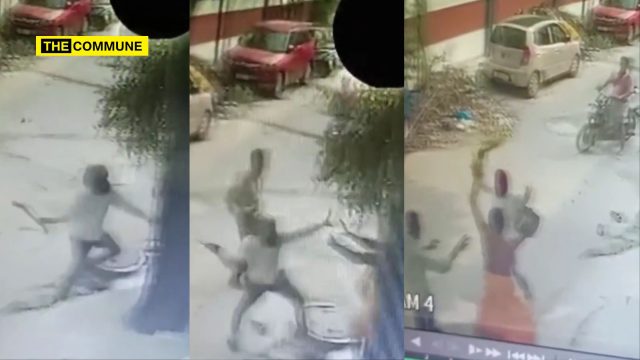
SC Adjourns Bail Pleas Of Sharjeel Imam, Umar Khalid, And Others In 2020 Delhi Riots Case

Supreme Court To Hear Bail Pleas Of 2020 Delhi Riots Accused Sharjeel Imam, Umar Khalid, And Others Today

The Supreme Court on Friday adjourned the hearing on the bail pleas of Sharjeel Imam, Umar Khalid, Meeran Haider, and Gulfisha Fatima all accused in the 2020 Delhi riots conspiracy case till next week.

A Bench of Justices Aravind Kumar and N.V. Anjaria expressed difficulty in taking up the batch of special leave petitions (SLPs), noting that the case files had been circulated very late the previous night. Taking note of the submissions that the accused, booked under the stringent Unlawful Activities (Prevention) Act (UAPA), have challenged the Delhi High Court’s refusal to grant them bail, the Justice Kumar-led Bench directed that the batch of petitions be listed for hearing on 19 September.

Earlier, the Delhi High Court had denied bail to several activists and student leaders in connection with the alleged larger conspiracy behind the North-East Delhi riots. In its order passed on September 2, a Bench of Justices Shalinder Kaur and Navin Chawla observed, prima facie, that there was sufficient material on record to suggest that Imam and Khalid had masterminded the conspiracy.

The Justice Kaur-led Bench noted that Khalid and Imam had delivered inflammatory speeches on February 24, 2020, coinciding with the then US President Donald Trump’s State visit, which the prosecution alleged was deliberately timed to trigger riots on February 23 – 24 and draw international attention. “The alleged inflammatory and provocative speeches delivered by the appellants, when considered in totality, prima facie indicate their role in the alleged conspiracy,” the Delhi High Court said

. In relation to Meeran Haider, it noted that she allegedly provided funds to the Alumni Association of Jamia Millia Islamia (AAJMI), where meetings of the JCC (JMI Coordination Committee) were held. The Justice Kaur-led bench further noted the prosecution’s submission that the completion of the investigation against Haider did not constitute a material change in circumstances to justify bail, citing pending witness examination and the gravity of the alleged conspiracy. According to the prosecution, Gulfisha Fatima used code words to instruct protesters to undertake actions in furtherance of the alleged conspiracy and received funds for it.

The February 2020 Delhi riots, which broke out during protests against the Citizenship Amendment Act (CAA) and the National Register of Citizens (NRC), left 53 people dead and more than 700 injured.

-IANS

Subscribe to our channels on TelegramWhatsApp, and Instagram and get the best stories of the day delivered to you personally.
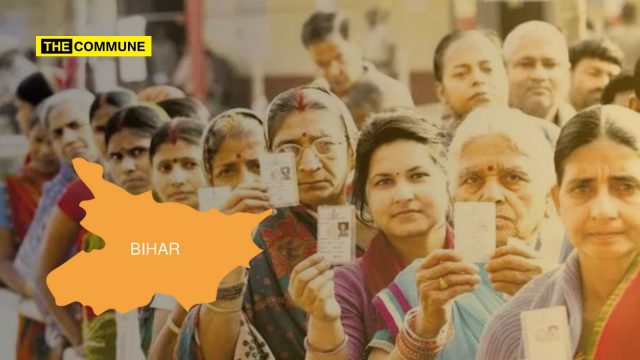
Kerala CPI(M) Penalizes Panchayat Women President For Lighting Lamp Before ‘Bharat Mata’ Image

The Kerala unit of the CPI(M) has taken disciplinary action against K.T. Prameela, President of Thalakkulathur Panchayat, demoting her to branch-level membership for lighting a ceremonial lamp before the ‘Bharatamma‘ idol and participating in an RSS programme.

Prameela, who also served as an area committee member, attended the event organised for handing over a newly constructed house to a poor family under the coordination of Union Minister of State for Tourism, Suresh Gopi. The party cited her participation in the religious ceremony and involvement in the RSS-led programme as violations of CPI(M) discipline, underscoring its strict stance on members’ political and ideological alignment.

The incident comes amid a series of recent controversies in Kerala involving public figures and religious symbolism. Earlier, state ministers P. Prasad and V. Sivankutty faced criticism for actions perceived as protocol breaches. Agriculture Minister Prasad was absent from a state-level inauguration at the official residence of Kerala Governor Rajendra V. Arlekar, while Sivankutty walked out of a meeting, breaking standard protocols for the Governor’s presence. In a separate controversy, a ‘Bharatamma’ (Bharat Mata) picture was placed at a private programme within the Kerala University office complex, where Governor Arlekar was the chief guest.

Although the university registrar had informed the Governor that the programme was cancelled, Governor Arlekar proceeded to inaugurate the event, leading to the registrar’s suspension. CPI(M) insiders say disciplinary actions like the demotion of Prameela are meant to reinforce party discipline and signal that ideological deviations, however minor, will not be tolerated. Critics, however, argue that such measures risk alienating grassroots leaders and stifling social engagement initiatives.

Prameela’s participation in the house key-handover ceremony, which aimed to benefit a poor family, has sparked both sympathy and criticism, highlighting the delicate balance between political allegiance, social service, and ideological conformity in Kerala’s complex political landscape.

-IANS

Subscribe to our channels on TelegramWhatsApp, and Instagram and get the best stories of the day delivered to you personally.
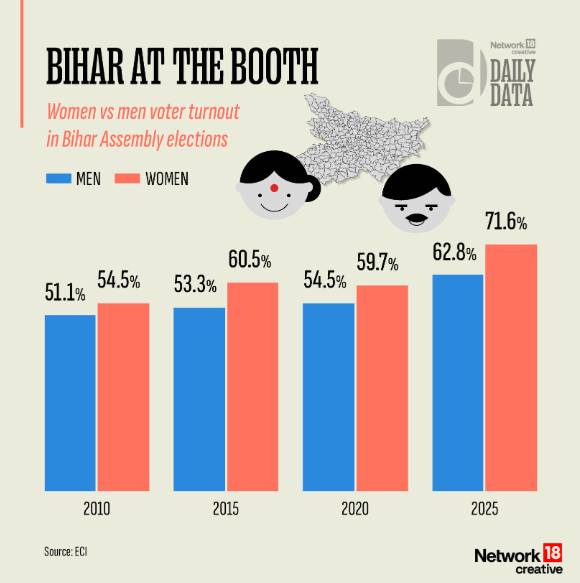
This Gen Z Protest Pattern Isn’t New — It Echoes The Arab Spring, Sri Lanka, And Bangladesh

In focus over the upheavals in Nepal, Bangladesh, and Sri Lanka in recent times is the use of social media as a megaphone reflecting societal fissures while amplifying calls for accountability.

Not to mention the clichéd reference to a weapon for good, or for bad. “Gen Z are the ‘digital natives’ who grew up with the internet and social media, and are thus aware of the nuances of the platform,” explained Dr. Sambit Pal, in-charge Director of the International School of Broadcasting and Journalism at MIT Art, Design and Technology University in Pune.

The term Generation Z, or Gen Z, as being used by the youth protestors in Nepal, refers to people born between 1997 and 2012. “Social media platforms enabled them to bypass mainstream media gatekeepers, frame narratives, and mobilise collective responses to governance issues,” he added. Studies show that social media campaigns can significantly increase voter turnout, spark protests against corruption, and sustain civic dialogues in contexts where traditional media are constrained. “From the Arab uprising to the movements in South Asian countries, protestors have used the internet, which is a powerful tool of communication, with minimal expense and maximum reach since there is no geographical barricade,” said Joydeep Das Gupta, Founder-Director, Media Skills Lab.

Media Skills Lab is an educational-research institute that focuses on media literacy, fact-checking, AI literacy, data journalism, and solutions journalism. According to a Forbes Communications Council post, “Not all social media channels are created the same. Each platform has its particular set of users with their own quirks as to how they interact with content.”

The article highlights 13 practices, including identifying the nature of business, focusing on the core target audience, client demographics, backbone of the digital footprint, research on competitors, etc. Most of the points may sound like the teachings of the Chinese strategist and philosopher Sun Tzu, who had stressed the importance of knowing your enemy.

“With the democratisation of the internet, there are no accessibility issues,” pointed out Das Gupta, “that is how the message spread, and the movement gained momentum.” “Those with pertinent knowledge of social media drive in an entry point, sparking interest, and increasing engagement – leading to the post going ‘viral’,” added Dr. Pal. Thus, when facing revolt, governments usually clamp down on social media handles or the internet itself to curb the spread of messaging.

During the 2022 protests, Sri Lanka temporarily restricted access to social media platforms with the declaration of a state of emergency and imposed curfews. The then-Bangladesh government had also reacted in an almost similar fashion, while in Nepal, the ban was withdrawn with violence erupting on the streets of the capital Kathmandu. However, authorities can not ban web content except in times of an emergency, as the incidents reflect. The platforms are privately held, and even the suggestion of policing the net invites allegations of hindering free speech. But the algorithms of such handles can decide what people see or do not see.

Using legislation with such algorithms, recommendations have been made for reigning in the spread of child abuse, gore, and false narratives with the creation of a “statutory building code”, with mandatory safety and quality requirements for digital platforms. But political and social messages can not, and should not, be bound, according to the experts.

-IANS

Subscribe to our channels on TelegramWhatsApp, and Instagram and get the best stories of the day delivered to you personally.
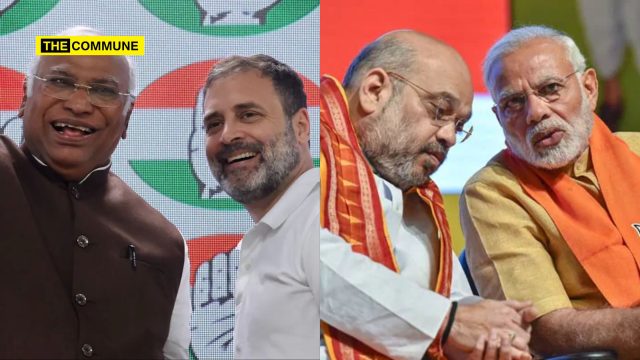
Indian Leftists And ‘Liberals’ Fantasize About J Sai Deepak, Anand Ranganathan, Meeting The Fate Of Charlie Kirk

sai deepak anand ranganathan charlie kirk

As the world comes to terms with the assassination of Charlie Kirk, a prominent conservative commentator and youth leader closely aligned with Donald Trump, a darker, deeply unsettling trend has surfaced on social media platforms like X. The incident, which occurred on 11 September 2025, at Utah Valley University, has drawn widespread condemnation globally. But in certain corners of Indian social media, it has become a springboard for perverse fantasies targeting Indian right-wing voices, particularly J Sai Deepak and Anand Ranganathan.

While civil societies mourned Kirk’s death and reflected on the growing threats to free speech, a segment of India’s so-called progressive and liberal users on X used the moment to engage in macabre wish-fulfillment.

Starting the very day of the assassination, several Indian users began posting comments eerily imagining similar fates for Indian public figures known for their nationalist and conservative views. The names most frequently targeted were J Sai Deepak, a constitutional lawyer and author, and Anand Ranganathan, a scientist and outspoken political commentator.

Among the grotesque posts:

One user commented, “Thinking about J Sai Deepak and Anand Ranganathan today.” 

Another user quipped, “Charlie Kirk was Mr. Sinha / That chutia Tau / ANI wali aunty / J Sai Deepak / iyerwal of USA.”

Another user wrote, “J Sai Deepak has died at the age of 31 after being shot, Donald Trump announces,” accompanied by a photo of Deepak.

Another user said, “When will J Sai Deepak, Anand Ranganathan, Vivek Agnihotri, Abhijit Iyer-Mitra, Smita Prakash, Arnab Goswami & Mayukh Ranjan of India receive the same fatal treatment as Charlie Kirk of the USA? Need of the hour.”

Another mocked, “Someone compared the killing of Charlie Kirk to J Sai Deepak being killed while talking about urban Naxals in an MP college.”

One post even questioned why flags were lowered in the U.S. after Kirk’s death, sarcastically adding, “That’s like Modi announcing all Indian flags to be lowered if J Sai Deepak died.”

These posts weren’t satire or slip-ups they revealed something far more disturbing, a fetishization of violence and a thinly veiled celebration of ideological murder.

Senior advocate J Sai Deepak, upon seeing the coordinated attack, responded by sharing screenshots of several comments and dryly noting, “Apparently this has been going on since yesterday :-)” a response that conveyed both awareness and a grim familiarity with the hate he routinely attracts.

Supporters swiftly rallied behind him, expressing outrage at the normalization of murder fantasies. Some users who had posted the offensive content silently deleted their posts once called out, hoping to evade accountability.

This isn’t an isolated incident of trolling. What we’re witnessing is part of a broader, toxic culture one where ideological opposition justifies dehumanization, and disagreement quickly devolves into digital bloodlust.

Figures like Deepak and Ranganathan, both of whom present reasoned, articulate challenges to the left-liberal consensus, have long been demonized. But these recent posts expose how far political hatred has metastasized in some circles.

Subscribe to our channels on TelegramWhatsApp, and Instagram and get the best stories of the day delivered to you personally.
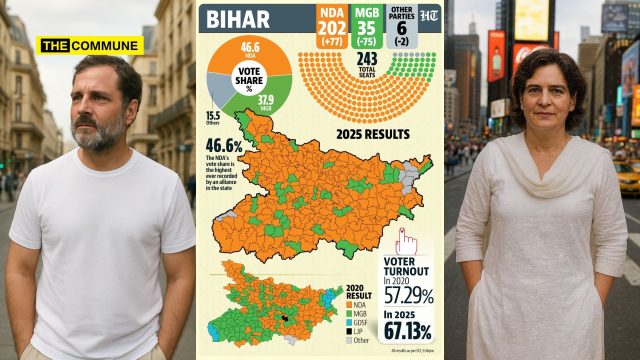
“Thank You For Your Attention To This Matter”: BJP Leader Annamalai Issues Statement On His Land Purchase, Details Financing And Future Plans

annamalai bjp

Days after documents pertaining to a land purchase by former Tamil Nadu BJP president K. Annamalai went viral on social media, the politician issued a detailed statement on his X handle today, defending the transaction as legal and transparent.

Annamalai confirmed purchasing agricultural land on 12 July 2025, stating that the acquisition was funded through a combination of personal savings and debt. He emphasized that all monthly interest payments for the loan have been duly made from his bank account over the past two months.

Addressing speculation about his absence during the registration process, he clarified that he had granted power of attorney to his wife, Akila, at the Kallapatti registrar office on 10 July 2025, where he was physically present. He underscored that all stamp duty and registration fees—totaling ₹40.59 lakh—were fully paid to the state government.

In his statement, Annamalai revealed that he has applied for a loan under the Prime Minister’s Employment Generation Programme (PMEGP) to establish a dairy farm, a project currently under processing. He also stated that this property is his first and only immovable asset.

Looking ahead, the former IPS officer announced plans to launch an early-stage investment company aimed at supporting youth-led startups and social enterprises, particularly those led by first-generation entrepreneurs.

Concluding his message, Annamalai affirmed his commitment to integrity and lawful conduct, saying: “I have maintained top-notch integrity and the highest probity in all my actions. I’m issuing this statement so that ‘some’ can hunt for other skeletons.”

Sharing the statement on his X profile, Annamalai made a tongue-in-cheek reference to Donald Trump with the caption “Thank you for your attention to this matter”.

The explanation comes amid heightened political scrutiny and follows days of online speculation regarding the details of the land deal.

(With inputs from DT Next)

Subscribe to our channels on Telegram, WhatsApp, and Instagram and get the best stories of the day delivered to you personally.

Radical Islamist Congresswoman Ilhan Omar Justifies Charlie Kirk’s Assassination?

In the immediate, shocking aftermath of the assassination of conservative commentator Charlie Kirk, Democratic Congresswoman Ilhan Omar has drawn widespread condemnation for comments justifying the murder, claiming his past statements made him a legitimate target.

The controversial lawmaker made the remarks while grinning, dismissing Kirk’s legacy and the notion that he was a figure who sought civil debate.

Speaking to anti-Hindu former MSNBC host and Zeteo founder Mehdi Hasan, she said, “What I do know for sure is that, Charlie was someone who once said guns save lives um after a school shooting. Charlie was someone who was willing to debate and downplay the death of George Floyd in the hands of Minneapolis police, have no regard, downplayed slavery and what black people have gone through in in this country by saying Junteenth should never exist. I think there are a lot of people who are out there talking about him just wanting to have a civil debate. These people are full of s*** and it’s important for us to call them out while we feel anger and sadness. There is nothing more effed up like than to completely pretend that his words and actions have not been recorded and in existence for the last decade or so.”

IIhan Omar, while grinning, says Charlie Kirk deserved it and had it coming: “He downplayed George Floyd. and slavery.”

Omar’s comments align her with a wave of public celebrations from left-wing individuals who seemed to have lost it.

When netizens called out her behaviour on the podcast, Hasan’s Zeteo’ handle came to support her and wrote, “This is a lie, here’s how @IlhanMN actually reacted with @mehdirhasan to the news of Charlie Kirk’s death in that same interview: with sadness for his wife and kids.”

In the video, her facial expressions, her eyes tell a different story. She said, “It was really mortifying to hear the news, to see the video. All I could think about was his wife, his children. That image is going to live forever.”

But one glance at that 15 second video just reiterates the allegations. Her expressions are very telling.

In a post on social media, Omar further accused Kirk of posting “hateful rhetoric”.

Congresswoman Omar’s decision to attack a victim of assassination rather than condemn the violence has been described by critics as a new low, further eroding civil discourse and openly endorsing violence against political opponents.

Subscribe to our channels on Telegram, WhatsApp, and Instagram and get the best stories of the day delivered to you personally.
FIR Filed Against AAP Leader’s Son Arpit Sharma For Urging Indian Youth To Emulate Nepal-Style Unrest

arpit sharma aap nepal

An FIR has been filed by the police in Bulandshahr, Uttar Pradesh, against an Arpit Sharma, the son of Aam Aadmi Party (AAP) politician Vikas Sharma for a social media post in which he appeared to call for Nepal-style violence in India.

According to Shankar Prasad, the Superintendent of Police (City), the post was made on the platform X and was deemed provocative, with potential implications for national unity and security. “Arpit Sharma shared content referencing the protests in Nepal, which was found to be inflammatory and a threat to the nation’s integrity. An FIR has been lodged under relevant sections of the Bharatiya Nyaya Sanhita (BNS),” the officer said. He also confirmed that Sharma is currently based in England and that a probe is ongoing, including a review of his social media activity by the cyber cell.

Arpit Sharma is reported to be the son of Aam Aadmi Party (AAP) member Vikas Sharma, who had contested the Uttar Pradesh Assembly elections but failed to secure his deposit.

In response to the backlash, Arpit defended his post, stating that his intent was to advocate for peaceful demonstrations rather than inciting violence. Despite the clarification, he later removed the video from his account.

(With inputs from OpIndia)

Subscribe to our channels on TelegramWhatsApp, and Instagram and get the best stories of the day delivered to you personally.
Dravidian Model CM Stalin’s Mini-Bus Scheme Fails To Get On The Road Just Two Months After Launch

stalin mini-bus

Two months after Chief Minister M. K. Stalin launched Tamil Nadu’s new private mini-bus scheme with the promise of revolutionizing suburban transport, the initiative has largely failed to get off the ground. Despite being touted as a transformative solution to fill gaps in public transport, the scheme is facing multiple operational challenges and implementation lapses.

Launched on 17 June 2025, the plan aimed to cover 25,708 km across the state, primarily focusing on areas not served by the Metropolitan Transport Corporation (MTC). Yet only 1,000 operators have come on board, and a little over 1,000 out of 2,000 sanctioned routes have active bus services.

Poor Planning, Lack of Oversight

One of the biggest flaws in the rollout was the lottery-based permit allocation system, which issued approvals to applicants without verifying their financial capability, experience, fleet size, or willingness to serve underserved regions. As a result, many permit holders are operating second-hand buses purchased from Kerala, costing around ₹10 lakh each. Most of these vehicles are past their prime and lack basic safety and monitoring features like GPS tracking.

Currently, only around 60 of the 150 designated routes in Chennai have any functioning service. In several cases, multiple permits were issued for the same busy route, while other areas remain uncovered.

Operators are largely left to their own discretion. They choose their own schedules, stop only where convenient, and in many cases, do not operate on weekends due to low ridership. For example, in Virugambakkam, only four out of the planned nine routes are operational. In OMR, Radial Road, Sholinganallur, Tondiarpet, Ambattur, and similar high-density areas, there is little to no presence of these minibuses.

Public Confusion and Lack of Transparency

The scheme also suffers from a complete lack of visibility and public information. There is no central website or database listing routes, bus stops, or schedules. Buses have no identifiable signage, route numbers, or indicators to suggest they are part of a government-supported public transport scheme, rendering them almost invisible to potential passengers.

Passengers and even officials report confusion. Permit holder Lokesh Kupparao, operating between Meenambakkam and Keelkattalai (6.2 km), only runs his bus up to Pallavaram (4 km) due to low demand beyond that point. He also lacks a hard copy of his permit receiving only an SMS approval and has just one bus covering the entire stretch in a circular route format.

Similarly, Harsh Senthil, who operates on the Chennai-One to Narayanapuram route, confirmed he doesn’t run buses on weekends due to poor turnout.

No Accountability, No Monitoring

The transport department has failed to establish any robust system to monitor compliance or quality. Regional Transport Officers (RTOs) were left to manage route approvals without a coordinated state-level plan. There is no centralised data on route usage, and enforcement appears weak.

While some RTOs, like Arunachalam from Meenambakkam, claim that inspections are underway to identify non-complying operators, the on-ground situation tells a different story. Many routes remain inactive, and buses rarely follow any fixed schedule or stop list.

Officials Say It’s “Still Evolving”

In response to growing criticism, Transport and Road Safety Commissioner R. Gajalakshmi defended the scheme, calling it a “work in progress.” She noted that operators need time to procure buses, and the department is working with RTOs to remove underperforming routes and introduce new ones based on local needs. The government also plans to introduce 1,000 more buses to improve coverage in the coming months.

The private mini-bus scheme is currently facing several critical challenges that hinder its effectiveness and outreach. Out of the 2,000 sanctioned routes, only around 1,063 are currently functional, and just about 1,000 buses are in operation. Despite the scheme’s objective to serve areas lacking public transport, a significant number of these regions remain unserved. Unlike the MTC, the private buses do not offer night services, limiting commuter options during off-peak hours. Additionally, the absence of GPS tracking, clear route signage, and publicly available information on routes or schedules has left passengers confused and unaware of available services. Most operators run only a single bus per route, and many skip operations on weekends due to low footfall, further reducing accessibility. Perhaps most concerning is the lack of a centralized monitoring or enforcement mechanism to ensure compliance and quality, leading to inconsistent service and undermining the scheme’s overall credibility.

What was promoted as a landmark initiative to revolutionize public transport has, so far, become a case study in poor execution. Without proper planning, transparency, or enforcement mechanisms, the private mini-bus scheme is failing to meet the commuting needs it was designed to address. Unless the government takes swift corrective steps including rigorous oversight, public communication, and better operator vetting the scheme risks being remembered as a missed opportunity in Tamil Nadu’s transport reform journey.

Subscribe to our channels on TelegramWhatsApp, and Instagram and get the best stories of the day delivered to you personally.
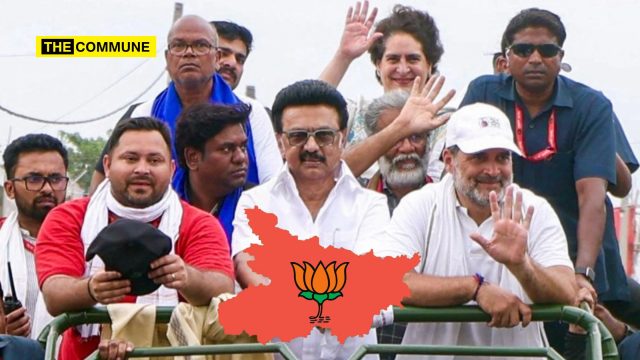
The Man Behind Congress’s ‘Vote Chori’ Stunt: Vikram Srinivas And His Western Connections

vikram srinivas vote chori congress

One of the more conspicuous failed attempts by the Congress party to stir public sentiment as the opposition was its dramatic “Vote Chori” (vote theft) allegation. Congress scion Rahul Gandhi leveled accusations against India’s top constitutional body the Election Commission of India (ECI) even before the electoral process had officially commenced. Ironically, the party’s claims quickly fell flat, with multiple numbers of Congress leaders found registered with the ECI’s systems, exposing a lack of credibility in their own narrative.

But this wasn’t just another political stunt. Many believe the real aim behind this spectacle was to erode public trust in a critical pillar of Indian democracy, the ECI, which oversees the electoral process in the world’s largest democracy. There are growing concerns that international actors may also have an interest in discrediting such institutions, using domestic influencers to do their bidding.

One such example appears to be Vikram Srinivas, a key figure behind the so-called “Vote Chori” propaganda presentation circulated by Congress.

Srinivas was previously affiliated with the Centre for Policy Research (CPR), a think tank that has received funding from the Ford Foundation an organization frequently linked with promoting Western geopolitical interests in India. Critics point out that the Ford Foundation has long been accused of acting as a soft power front for the CIA’s international influence campaigns. Before his association with the Congress party, Vikram was actively involved with CPR, shaping narratives and public policy debates.

His ideological leanings became more evident through his earlier public posts during the CAA-NRC protests, where he echoed typical leftist positions.

Adding to the scrutiny is the fact that Srinivas is an alumnus of one of India’s premier institutions, the Indian Institutes of Technology (IIT) which have long become fertile grounds for ideological indoctrination by left-leaning academics and NGOs.

More controversially, his wife, an assistant professor at IIT Delhi, joined the institution in 2021. Critics question whether ideological bias is creeping into academia, especially when family links between activists and academics come to light.

Organizations like the Transforming Rural India Foundation, which host figures like Srinivas, are also under the radar for receiving foreign funding while collaborating with Indian ministries raising serious questions about external influence on domestic policymaking.

A pressing question arises, why is the Congress party silent about its links to individuals connected to Western-funded institutions preparing campaigns to undermine constitutional bodies like the ECI? If the party genuinely had concerns regarding the Election Commission, the legal route was always open and indeed, they have recently approached the judiciary. However, as outcomes begin to unfold, their arguments are not just being dismissed but are beginning to backfire legally and politically.

Rather than strengthening democratic institutions through constructive engagement, it appears that Congress and its affiliated ecosystem are increasingly relying on theatrics, foreign-funded narratives, and ideological actors to question the credibility of India’s independent bodies. In the long run, such strategies risk not just political failure, but also a deeper erosion of public trust in the very institutions that uphold Indian democracy.

(This article is based on an X Thread By Vijay Patel) 

Subscribe to our channels on TelegramWhatsApp, and Instagram and get the best stories of the day delivered to you personally.