Home Blog Page 228

Who Is Responsible For Karur Stampede – TVK Or DMK Govt? How Vijay’s Crowd Obsession Collided With DMK’s Dirty Politics Leaving Innocent People Dead

tvk vijay stampede dmk

On September 27, 2025, a pall of gloom descended Karur as it turned into a graveyard with 39 lives — including nine children and seventeen women — getting crushed to death due to a stampede at actor Vijay’s Tamilaga Vettri Kazhagam’s (TVK) rally. More than 80 were injured.

Poor planning by the local administration under the DMK government, combined with TVK’s reckless mismanagement, left tens of thousands of people standing for hours under the scorching sun with no proper crowd control. The situation turned catastrophic when the crowd was forced to make way for Vijay’s vehicle, triggering a surge that trapped people in a deadly crush. Panic spread as people fainted, gasped for air, and collapsed — ultimately resulting in a devastating stampede that could have been entirely prevented.

And yet, in the aftermath, both the DMK government and Joseph Vijay’s party are busy trading barbs, as if this was a political blame game rather than a preventable human tragedy.

The truth is uncomfortable but unavoidable: both TVK and DMK have blood on their hands.

TVK’s Reckless Gamble With Lives

As organizers, TVK displayed sheer incompetence — or worse, criminal negligence. According to Tamil Nadu Director General of Police, permission was sought for 10,000 people but around 30,000 people showed up. The site was inadequate, but TVK refused alternative venues. No water, no barricades, no medical facilities, no clear evacuation routes — nothing that even remotely resembled responsible event management.

Adding to the recklessness, Vijay chose to arrive nearly seven hours late. Crowds that had gathered since morning were left stranded in the sweltering heat, surging forward in desperation when word spread of his approach. Was this delay, as some allege, a deliberate stunt to capture dramatic drone shots of “massive crowds”? If so, TVK gambled with lives for optics — and lost.

The result: chaos, suffocation, and a deadly stampede triggered by a wave of human bodies desperate to catch a glimpse of their leader.

Vijay and his party functionaries should have acted responsibly instead of conveniently invoking the ‘cooperation’ of the very state government they endlessly criticize. If the district administration denied every venue they asked for, Vijay could have simply rescheduled his program to another day. And given his personal wealth and resources, he could have easily engaged his own private security forces with the police and district authorities to ensure proper arrangements — if he had truly cared about safety more than optics.

The Madras High Court, while hearing a petition by TVK regarding denied permissions, made a pointed remark: “You, as the leader, should control the crowd,” Justice Sathish Kumar said. Vijay clearly failed in this fundamental responsibility, allowing his frenzied, fanatical mob to surge uncontrollably, turning what should have been a political rally into a deadly stampede.

DMK’s Administrative Failure Or Deliberate Sabotage?

But TVK’s culpability does not absolve the ruling DMK. If TVK was reckless, the DMK govt was incompetent. Currently, the Tamil Nadu police force doesn’t even have a regular Director General of Police due to political reasons. There’s only an acting-DGP.

The police and district administration approved a venue inadequate for the turnout, imposed no safeguards, and deployed insufficient security. No real-time crowd monitoring, no emergency medical teams, no preparedness.

TVK proposed four urban spots (e.g., Bus Stand roundabout), but police rejected them due to population density and traffic risks. Permission was granted for Velusamypuram (an open area previously used for an AIADMK rally), but the site proved inadequate for the turnout. The location where the rally happened cannot even hold a crowd of 5000. On what basis was the location allotted by the local administration? Why were enough security personnel not deployed when we know that there will be uncontrollable crowd coming in not just from Karur but neighbouring districts as well?

While ADGP Davidson Devasirvatham says thats 500 people were deployed, the real ground-level police officers were fewer than 100 in number according to BJP leader Annamalai.

When the surge happened, ambulances were trapped in the same crowd they were supposed to save. Victims died en route to hospitals, some gasping for air while the state machinery remained paralyzed. The power cuts may have been unavoidable, thanks to frenzied TVK fanatics mindlessly scaling electric poles just to glimpse their matinee idol. But what should have been a safety measure only ended up deepening the chaos, plunging the venue into darkness and confusion.

This was not the first warning sign either. Vijay’s Trichy rally earlier in September had exposed glaring lapses, with the Madras High Court itself cautioning the state to tighten guidelines for political gatherings. The DMK government clearly ignored those red flags.

And here lies the darker question: was this just negligence — or something more sinister? Did the DMK deliberately allow such an ill-managed setup to proceed, knowing full well it could backfire on Vijay? A tragedy of this scale not only tarnishes his reputation but also plants seeds of fear among his supporters, potentially shrinking turnout at future rallies. Was this disaster merely incompetence, or was it a calculated attempt to psychologically weaken a rising rival?

And let’s not forget — this is Karur, the political fiefdom of Senthil Balaji. Everyone in Tamil Nadu knows what this man is capable of, given his long track record of intimidation, strong-arm tactics, and murky dealings. In his backyard, nothing happens without his shadow looming large. Which raises an even darker suspicion: was the administrative paralysis in Karur mere incompetence, or was it the deliberate handiwork of a seasoned operator ensuring that Vijay’s show ended in disaster?

Beyond Politics: Negligence Codified In Blood

The law is unambiguous. Bussy N. Anand, CTR Nirmal Kumar, TVK’s Karur District Secretary and others have been charged under the Bharatiya Nyaya Sanhita sections relating to culpable homicide not amounting to murder, acts of rash/negligent conduct endangering human life and disobedience to an order issued by a public servant. They have also been charged under the Tamil Nadu Public Property (Prevention of Damage and Loss) Act.

But should the buck stop there? On December 4, 2024, a stampede at the Pushpa 2 premiere at Sandhya Theatre, Hyderabad, claimed the life of Revathi and left her son Sri Tej injured, triggered by overcrowding during Allu Arjun’s visit. The actor faced arrest and later secured bail. If in Telangana, a star whose actions contributed to a single death was held legally accountable, why is Joseph Vijay allowed to walk away scot-free after a tragedy that claimed 39 lives?

What about the DMK-run police and administration that rubber-stamped permissions, failed to enforce restrictions, and essentially outsourced public safety to amateurs blinded by stardom?

Tamil People Should Come Out Of Cinema Intoxication

Karur was not just a failure of TVK’s planning or the DMK government’s negligence — it was a catastrophe born of arrogance, mismanagement, and mindless devotion. TVK and Vijay prioritized optics over lives, arriving hours late and ignoring basic safety measures. The DMK administration approved inadequate venues, deployed minimal security, and plunged the city into chaos, raising the darker question: was this incompetence, or deliberate sabotage? And yet, the crowd itself bears responsibility. It is utterly reckless to bring toddlers into a throng of tens of thousands, to climb poles and buildings without authorization, risking life for a fleeting glimpse of a star. What is the point? Don’t fans have basic sense? Is Vijay so important that it’s worth your life? This frenzied, zombie-like devotion must end. Tamil people must break free from this cinema star intoxication.

Karur demands justice, and history will not forgive those who chose politics over life.

Subscribe to our channels on TelegramWhatsApp, and Instagram and get the best stories of the day delivered to you personally.
40 Including Children Dead In Stampede Caused By TVK Head Actor Vijay’s Rally In Karur, Vijay Rushes To Chennai From Trichy Airport In His Chartered Flight

A wave of shock and grief swept across Karur after a tragic stampede at Tamilaga Vettri Kazhagam (TVK) leader Vijay’s rally in Veluchamipuram on Saturday evening left 31 people dead and more than 40 injured.

According to Health Minister Ma. Subramanian, the deceased included six children, nine men, and 16 women, all of whom were brought dead to hospitals. He also confirmed that medical reinforcements were being rushed from across the state, with 24 doctors from Tiruchy, 20 from Salem, and five from Dindigul expected to arrive in Karur within an hour.

The Tamil Nadu government has mobilised extensive resources in response to the disaster. Senior health officials, including the Health Secretary and Director of Medical Education, headed to Karur, while additional doctors from Tiruchy, Dindigul, Namakkal, and Madurai Medical College were deployed to Karur Medical College, where most victims were admitted. Dr. R. Suganthy Rajakumari, Director of Medical Education, stated that around 30 doctors were already on site and more would be sent if required. She further noted that 33 bodies had been brought to the college hospital, which has sufficient facilities to handle the crisis.

Chief Minister M.K. Stalin is expected to visit Karur on Sunday to review the situation. School Education Minister Anbil Mahesh Poyyamozhi and former minister Senthil Balaji also reached the hospital to oversee relief measures.

President of India Droupadi Murmu, Prime Minister Narendra Modi, Home Minister Amit Shah have expressed grief over the tragic incident.

The incident occurred during Vijay’s campaign in the Kongu region, part of his preparations for the 2026 Assembly elections. Arriving by chartered flight from Chennai earlier in the day, he had been campaigning in Namakkal before heading to Karur, where his rally drew massive crowds. The chaos broke out during his address, forcing the actor-turned-politician to cut short his speech as people began collapsing in the heat and crush.

Vijay, visibly shaken, appealed to his supporters to make way for ambulances and provide assistance to the injured.

However, many have criticised the TVK chief for failing to meet the families of those killed or injured in the stampede before his departure.

Subscribe to our channels on TelegramWhatsApp, and Instagram and get the best stories of the day delivered to you personally.

Political Killings In India: Radical Left Wing Terror Against RSS-BJP Workers

Political killings are not new in India. When the world was reeling from the shock of Charlie Kirk’s assassination in the US a few days ago, the reactions from the leftists was extreme – they were rejoicing his death. Back in India, the leftist “liberals” also were hoping something similar would happen to conservative voices from the non-left side of the spectrum.

Far from the truth, one must note that killings caused by the left is much more than what is propagated as “right wing extremism”.

The Commune also did an analysis of how radical Islamist terrorists, and the radical left ‘liberals’ are pretty much similar in many ways, especially when it comes to violence.

In this article, we will take a look at the political killings carried out by the left – Communists, Maoists against the members of BJP and RSS.

Maoist Insurgency & Related Political Killings

Over the past 75 years India’s Maoist/Naxalite insurgency has sporadically targeted local politicians and party activists, especially in tribal “red corridor” regions.

The Maoist (Naxalite) insurgency in India traces its roots to a 1967 peasant revolt in Naxalbari, West Bengal. Inspired by Chinese Maoism, the Communist Party of India (Marxist–Leninist) (Charu Majumdar faction) waged guerrilla war against landlords and the state.

Over decades this splintered into numerous groups; in 2004 the People’s War Group (Telangana) and Maoist Communist Centre (Bihar) merged to form the CPI (Maoist). The party’s stated goal is to overthrow the Indian state via “protracted people’s
war”.

In its insurgency strategy, the Maoist armed wing (PLGA) deliberately targets symbols of state and “class enemies.” Official Ministry of Home Affairs (MHA) commentary notes that Maoists aim to “create a vacuum at the grassroots level” by killing “lower-level government officials, police personnel, workers of mainstream political parties and the people’s representatives of the Panchayati Raj system.”

In practice, this has meant systematic ambushes of village officials, elected sarpanches, schoolteachers, and local party cadres whom Maoists label as informers or oppressors. For example, the 2013 Darbha attack was explicitly attributed to
the Maoists’ “Tactical Counter Offensive Campaign” against ruling-party leaders.

Regional and socio-economic context play a major role. Maoism remains strongest in India’s impoverished, tribal-majority “Red Corridor” (see hotspots below). Long-standing grievances over land displacement, mining, forest rights and underdevelopment fuel support among the rural poor. Battlegrounds like Bastar
(Chhattisgarh-Odisha-Telangana border) are rich in minerals (bauxite, coal, iron) and have seen fierce fights between tribal communities, insurgents, and security forces.

An Al Jazeera report (May 2025) described the Bastar/Karrigutta hills as a “warzone” with 40,000 security personnel deployed to counter 27,000 Maoist fighters. Official figures cited 11,000+ total deaths of civilians and security forces in Maoist conflicts from 2000–2024 (many tribals among them).

Despite government offensives, new Maoist recruits exploit the region’s gaps. The Maoists frame their struggle as defending Adivasi land from “exploitation” and neglect. For instance, the 2018 Araku killings occurred amid local protests over a proposed bauxite mining lease.

In West Bengal’s jungle tribal districts (Bankura, Purulia), the uprising is remembered in folklore but today is relatively dormant. Kerala and Tamil Nadu have seen only sporadic Maoist cells, with few attacks on mainstream politicians (though Kerala has experienced violent clashes between rival trade-union communists, e.g. the 2012 murder of dissident MPML leader T.P. Chandrasekharan by CPI(M) cadres).

Geographic Hotspots and Patterns

Left-wing militancy has been concentrated in these key states:

Chhattisgarh (Bastar region) – A longstanding Maoist stronghold. Central Bastar (Bijapur, Sukma, Narayanpur, Kanker districts) has seen repeated attacks on village leaders and security forces. The years 2023-2024 showed a spike in assaults on BJP-affiliated sarpanches and district officials. Bastar’s dense forests and poor road networks make it a favorite guerrilla base, and its tribal populace has been deeply affected by both insurgency and counterinsurgency.

Andhra Pradesh/Telangana – Historically the cradle of modern Naxalism (Telangana armed struggle in the late 1940s, and Naxalbari followers from AP). The 1980s–2000s saw heavy Maoist
activity in the Telangana and Gadchiroli (Maharashtra) triangle. High-profile victims include two AP state legislators (above) and numerous local workers. Maoists here frequently target officials seen as collaborators with state security (for example, Madhava Reddy as former state Home Minister). The Araku hills (AP–Odisha border) remain a flashpoint, especially around mining rights, as seen in the 2018 murders.

Jharkhand/Bihar – Dense forests in Jharkhand (e.g. Giridih, Latehar, Gumla) and adjacent Bihar villages have long Maoist presence. Party cadres (often CPI(ML) Liberation or regional leaders) have occasionally been slain. Aside from the 2005 Singh killing, more recent years saw Maoist ambushes on tribal assemblies. The police have recounted dozens of Maoist-planned attacks, often blunting them through intelligence.

Odisha – Malkangiri and Koraput in southwestern Odisha form part of the Bastar belt. Naxal insurgents are active (targeting police camps) but have seldom claimed prominent tribal politicians’ lives. In 2016, the CPI(M) tribal leader Ramachandra Panda was shot dead by alleged Maoists in Koraput, reflecting tensions over mining and political alignment.

West Bengal (Junglemahal) – In the 1970s–90s, Maoists emerged in tribal border areas of West Bengal (e.g. Jhargram, Purulia). However, under long-time left-wing state governments, most insurgency was crushed or co-opted. Since the 2000s, violence has declined; major incidents typically involve security ambushes, not targeted assassinations of party workers.

Kerala/Mizoram/etc. – Left extremism is negligible. Kerala’s violent episodes have been internecine communist feuds rather than Maoist insurgency.

Political Killings by Maoists/Naxalites

Let us now take a look at Maoist/Naxalite attacks on politicians.

7 March 2000 – Ghatkesar (Andhra Pradesh): A. Madhava Reddy (Telugu Desam Party leader and State Panchayat Raj Minister) was killed in a landmine blast by Naxalites of the outlawed People’s War Group near Hyderabad. He was on a campaign tour when the mine detonated; PWG claimed
responsibility as he was known for hardline policing.

29 December 2001 – Maddimadugu, Mahbubnagar (Andhra Pradesh): Ragya Naik (INC MLA, Devarakonda constituency) was ambushed and shot dead by four Naxalites while visiting a temple
festival. Police identified the gunmen as members of the PWG’s Amrabad guerrilla unit. This was the first known Maoist attack on a sitting Tribal MLA.

15 January 2005 – Durgi Dhabaiya, Giridih (Jharkhand): Mahendra Prasad Singh, the lone CPI(Marxist–Leninist) (Liberation) MLA in Jharkhand, was shot and throat‑slit by three CPI (Maoist) cadres after a public meeting. Witnesses reported ~100 Maoists surrounded the venue. The killing shocked the region as Singh had served three terms (since 1990) and was a tribal rights advocate.

25 May 2013 – Darbha Valley, Sukma (Chhattisgarh): In a major ambush on Congress’s “Parivartan Yatra” convoy, 26–27 people died, including veteran Congress leaders Mahendra Karma
(Chhattisgarh LoP and former Home Minister) and Nand Kumar Patel (state Home Minister). The CPI (Maoist) claimed responsibility, citing a “Counter-Offensive” campaign. Vidya Charan Shukla (former Union Minister) died later from injuries. This high-profile attack underscored Maoist hostility
to anti-insurgency politicians.

23 September 2018 – Dumbriguda, Araku (Andhra Pradesh): TDP MLAs Kidari Sarveswara Rao (then-Araku Valley MLA) and ex-MLA S. Siveri Soma were shot dead by a 40–50 member Maoist team. The assassins reportedly ambushed them while they were negotiating over a tribal bauxite mining issue. Both victims were former Congress members turned TDP, the Andhra government later noted Maoist opposition to new mining contracts in the tribal area.

4 January 2022 – West Singhbhum district, Jharkhand

Former BJP MLA Gurucharan Nayak from Manoharpur constituency was attacked on 4 January 2022. Nayak escaped unhurt, but two of his police bodyguards were killed – Shankar Nayak and Thakur Hembrom had their throats slit by Maoists. Around 100 Maoists belonging to the armed squad of commander Mocchu mixed in the crowd at a football prize distribution ceremony and attacked as Nayak was leaving. They also looted AK-47 and INSAS rifles.

BJP Leaders Killed (2023)

According to documented cases, 7 BJP leaders were killed by Maoists in 2023 in Chhattisgarh alone:

  1. Ratan Dubey – BJP district vice-president, Narayanpur (4 November 2023)
  2. Birju Taram – BJP worker, Ambagarh Chowki (20 October 2023)
  3. Kaka Arjun – BJP leader and former sarpanch, Bijapur (21 June 2023)
  4. Sagar Sahu – BJP district vice-president, Narayanpur (10 February 2023)
  5. Neelkanth Kakem – BJP mandal president, beheaded in Bijapur (5 February 2023)
  6. Ramdhar Alami – BJP leader and party vice president of Barsur district was killed by Maoists (11 February 2023)
  7. Budhram Katram – BJP district leader, was found dead near his home in Jagdalpur, Chhattisgarh (16 January 2025)

5 February 2023 – Paikram village, Bijapur (Chhattisgarh): Neelkanth Kakkem (BJP mandal president, Usoor block) was dragged from his home during a wedding ceremony and hacked to death by Maoists. Over 150 Maoist guerrillas infiltrated the village; Kakkem was attacked with axes and swords in front of family. The CPI(Maoist) was blamed as revenge against local leaders cooperating with security forces.

4 November 2023 – Kaushalnagar, Narayanpur (Chhattisgarh): Ratan Dubey (BJP district vicepresident
and local Panchayat leader) was stabbed and hacked to death during a campaign rally. Police said assailants emerged from the crowd and attacked him; Dubey was the sixth BJP functionary killed by Maoists in Chhattisgarh since early 2022. The incident occurred days before state elections, heightening party and public alarm.

8 March 2024 – Toynar village area, Bijapur (Chhattisgarh): Triupati Katla (BJP Janpad Panchayat
member) was ambushed and fatally hacked on a return journey from a wedding. A “small action team” of Naxals attacked him with sharp weapons, despite heavy police presence. This was noted as the first BJP leader killing in Chhattisgarh in 2024 (and eighth since 2022).

16 April 2024 – Dongargarh area, Narayanpur (Chhattisgarh): Pancham Das Manikpuri (BJP Deputy Sarpanch) was murdered by Maoists near his home. He was returning from evening prayers when insurgents attacked with swords and axes; police say it was retaliation for recent security operations. Manikpuri’s death was widely condemned as the “ninth” BJP cadre killed by Maoists in the past 14 months.

Each event above lists the date, state/district, victim and party, and alleged Maoist/Naxalite perpetrators, as reported in media accounts. (In many cases targets were local functionaries
– Panchayat members or district organizers – rather than senior politicians.)

If we were to look at the cost of human lives to Maoist, the numbers are staggering

The Naxalite-Maoist Insurgency: Left-Wing Extremism’s Deadliest Face

The Communist Party of India (Maoist), formed in 2004 from the merger of People’s War Group and Maoist Communist Centre, represents the most lethal form of left-wing violence in India.

Documented Casualties

Government data reveals the staggering human cost of left-wing extremism:

  • Between 2004-2025, 8,895 people killed by Left Wing Extremists
  • A conservative estimate of 15,000 lives lost in 25 years of Naxal violence
  • Majority of civilian victims are tribals, often labeled as “police informers” before being brutally tortured and killed
  • The tribal and economically underprivileged sections whose cause Maoists claim to espouse have been the biggest victims

Major Naxalite Attacks

The Naxalite movement has perpetrated numerous large-scale attacks:

  • Dantewada Attack (2010): 76 CRPF personnel killed in ambush
  • Dantewada Bus Bombing (2010): 31-44 civilians killed including Special Police Officers
  • Jehanabad Jail Break (2005): Over 1,000 Maoist insurgents attacked prison, freeing 300+ inmates
  • Sukma Attack (2017): 26 CRPF personnel killed in convoy ambush
  • Sukma-Bijapur Attack (2021): 22 security personnel killed in coordinated assault

The Left bastions, i.e., Kerala and West Bengal have a very long running history of such political killings. Here is a list:

Kerala: RSS/BJP Workers Killed by Communists (1947-2025)

The Pioneer Phase (1969-1974): Foundation of Violence

The systematic targeting of RSS workers in Kerala began in 1969, marking the start of what would become decades of political violence.

Vadikkal Ramakrishnan (1969)

Ramakrishnan was an RSS worker and sweets maker in Thalasserry. His murder was the first documented RSS killing in Kerala, allegedly carried out by local CPI(M) workers led by young Pinarayi Vijayan (current Kerala CM) and Kodiyeri Balakrishnan (former state secretary). This set the precedent for systematic targeting of RSS workers. As per records, no prosecutions followed.

Subsequent 1969 Killings

Sreedharan Nair: RSS worker killed in Ponkunnam, Kottayam, one month after Ramakrishnan
Ramakrishnan (Palakkad): Third RSS worker killed in the same year

1970

11 January 1970 – Veliyathunadu Chandran: Chandran was a senior RSS worker and former Pracharak in Parur, Ernakulam District. His murder was significant because it was a targeted killing of senior organizational leader.

Organizational Leaders Targeted (1973-1974)

Sankranarayanan (1973): Mandal Karyavah killed in Nallenkara, Thrissur
Sudheendran (1974): RSS Mandal Karyavah killed in Kochi

The Post-Emergency Escalation (1978 onwards)

The violence intensified after the Emergency period, as documented by regional sources:

Strategic Targeting Pattern: CPI(M) began systematically targeting RSS workers who had gained prominence during Emergency resistance, particularly those who had switched from CPI(M) to RSS.

1980, Kannur, Kerala: ABVP youth district leader Gangadharan was murdered at his office on his first day in a government job. A staff member informed the CPI(M) activists, who attacked and killed him while he was seated.

25 May 1996, Kannur, Kerala: RSS propagandist and BJP district secretary Panniyannoor Chandran was brutally attacked and killed with deadly weapons while returning from Thalassery railway station with his wife. The attack was carried out by CPI(M) activists.

Contemporary Documented Cases (2000-2025)

2002: Meloor Double Murder: The victims, CK Sujeesh and P Sunil (RSS workers), were hacked to death by CPI(M) cadres. Supreme Court upheld life imprisonment for 5 CPI(M) members in January 2025. This is a rare case with successful prosecution to highest court.

August 2005, Kannur, Kerala: BJP worker Elambilayi Sooraj was murdered by nine CPI(M) workers. The assailants first hurled a bomb at him before hacking him to death with axes and machetes. The murder was triggered by political enmity after Sooraj left the CPI(M) to join the BJP. In 2019, the court acquitted all the accused.

October 2005, Kannur, Kerala: BJP-RSS worker Edacholi Preman (27) was attacked by CPI(M) activists while using a PCO booth in Thalassery. He underwent treatment for over a month but succumbed to his injuries on 27 November 2005. A sessions court later acquitted all eight CPI(M) accused.

22 October 2006, Thalassery, Kerala: Mohammed Fazal, a former CPI(M) worker who had joined the National Development Front (NDF), was murdered near Saidarpally. Investigations revealed he was killed for leaving the CPI(M), and a plot was devised to frame an RSS worker by dropping his towel near their house.

1 December 2006: Krishna Kumar (Biju), an RSS activist, was killed in Thiruvananthapuram, allegedly by CPI(M) supporters.

17 December 2006: BJP activist P.S. Sujith was murdered in Engandiyur, Thrissur district, by CPI(M) operatives.

20 January 2007: RSS activist Ravi was killed in Tirur by NDF members.

12 February 2007: BJP/BMS activist Shaju (30) was killed in Kallettumkara, Thrissur district, by CPI(M) operatives.

5 March 2007: PP Valsaraj Kurup (37) was murdered by CPI(M) activists.

16 March 2007: RSS activist Lakshman was killed in Thanur, Malappuram district, by NDF workers.

24 April 2007: RSS Taluk Karivayak G. Chandran was murdered in Vettiyar, near Mavelikkara, by CPI(M) operatives.

16 August 2007: K. Pramod (33), an RSS/BJP activist, was killed in Thalassery, Kannur district, by CPI(M) supporters.

22 October 2007: BJP activist Sunil Kumar was killed in Kodungallur by DYFI operatives.

2 November 2007: RSS activist Vinod Kumar (35) was killed near Manalayam Junction, Chadayamangalam, Thiruvananthapuram, by NDF members.

23 December 2007: RSS Mandal Sareerik Sikshan Pramukh Vinod (25) was killed near his residence by NDF operatives.

March 2008, Kuthuparamba, Kerala: Mahesh (32) was killed by a bomb thrown near a bus stop in Chitriparamba town. The attack, which nearly severed his head, was carried out by 11 CPI(M) workers. The provocation was that Mahesh had left the CPI(M) to join the BJP. In 2018, all 11 convicts were sentenced to life imprisonment.

March 2008, Kannur, Kerala: K.V. Surendran (65), a BJP worker, was brutally murdered in Illathuthazha. The incident was attributed to CPI(M) activists, adding to the long history of political violence in Kannur district.

March 2008: RSS activists Nekhil and Sathyan were killed in Thalassery, Kannur, by CPI(M) supporters.

March 2008: RSS activist Mahesh was killed in Kannur by CPI(M) operatives.

March 2008: RSS activists Suresh Babu and Surendran were killed in Kodiyeri, Kannur, by CPI(M) members.

April 2009, Kannur, Kerala: BJP-RSS worker Sajith Kumar (29) was stabbed to death by a group of 12 assailants near Mattannur while returning from a wedding. His friend, Biju, sustained serious injuries. Police registered cases against 12 CPI(M) workers in connection with the attack.

May 2010, Kannur, Kerala: BJP-RSS volunteers Vijith (30) and K.V. Shinoj (32) were brutally attacked and killed in New Mahe by a five-member CPI(M) group. The assailants first hurled crude bombs and then hacked the victims with swords and axes.

September 2014, Kathiroor, Kannur: Manoj (42, RSS leader) was killed at home. The CBI charged veteran CPI(M) leader P. Jayarajan and others, finding that Manoj was “hacked to death… by a group of CPI‑M workers”.

December 2014, Kannur, Kerala: BJP worker K.K. Rajan (52) suffered a severe head injury when CPI(M) activists pelted stones at his jeep as he returned from a party rally. He underwent treatment for over two months but succumbed to his injuries on 14 February 2015 in a Mangalore hospital.

2016: The Kannur Massacre Year

On 13 February 2016, 27-year-old RSS activist Sujith was murdered, just days after RSS chief Mohan Bhagwat had suggested peace talks to resolve decades of hostility between the RSS and CPM.

On 11 July 2016, BJP worker CK Ramachandran (46) was murdered at his home near Payyanur. Assailants, alleged to be CPI workers, first threw crude bombs to create panic before hacking him to death. Ramachandran, affiliated with the RSS-linked labour union Bharatiya Mazdoor Sangh, died on the way to the hospital.

On 4 September 2016, 26-year-old RSS worker Bineesh was hacked to death in Kannur district, reportedly by CPM supporters. His killing marked the fifth political murder in the district since the Left Front assumed power just three months earlier.

On 12 October 2016, Ramith an RSS supporter and BJP worker, was brutally attacked and killed by a group of eight CPI(M) activists using knives and swords in Pinarayi village. A chargesheet later named 15 local CPI(M) workers. Although nine were arrested, all were eventually released on bail. Notably, Ramith’s father, Uthaman, had also been killed in 2002, allegedly by CPM cadres.

2017: Intensification Under LDF Government

On 19 January 2017, in Kannur’s Dharmadam, a 52-year-old BJP worker named Santhosh was stabbed to death by alleged CPI(M) activists. He was attacked at Andalur and succumbed to his injuries while en route to the hospital. The killing was another addition to the long list of political murders in the politically volatile district of Kannur.

In May 2017, a 33-year-old RSS worker and house painter, K Biju was followed for an hour in Toyota Innova, car crashed into motorcycle, throat slit with sword in Kakkamparai village, Kannur.

In July 2017, a 34-year-old RSS basti karyavah (ward secretary) and mason, SL Rajesh received 83 injuries found on body, hands chopped off after being attacked by 12 people in Kallampally, Thiruvananthapuram. They needed a bedsheet to collect the severed limbs. 8 were arrested including 2 active CPI(M) organization members (CITU/DYFI).

In August 2017, Vipin, an RSS worker in Kodinji, Malappuram accused in conversion-related case, was stabbed to death on roadside after being released on bail.

In November 2017, in Thrissur, Kerala, BJP worker Satheesan (51) died from injuries sustained in an attack by CPI(M) activists at Kaipamangalam. The clash was triggered after a group of 20 Dalits, led by Satheesan, quit the CPI(M) and joined the BJP six months prior.

2018

In May 2018, in Kannur, Kerala, BJP-RSS worker K.P. Shamej, an auto-rickshaw driver, was attacked and later died from his injuries in Mahe. The murder occurred hours after a CPI(M) worker was killed nearby, with authorities suspecting it was a retaliatory act in the ongoing political violence. Three CPI(M) workers were arrested for direct involvement, with five other accused remaining absconding, underscoring the cycle of revenge killings between the factions in Kannur.

2022

February 2022 – Harippad, Alappuzha: Sarath Chandran (26, BJP worker) was stabbed to death after a temple festival. The BJP alleged CPI(M) workers were behind the attack. (Police attributed the murder to a criminal gang, but BJP leaders blamed CPI(M) cadres.)

April 2022 – Palakkad: RSS worker Ranjith Sreenivasan was hacked to death in Palakkad, Kerala, by members of the Popular Front of India (PFI). Police reported that four arrested individuals—Bilal, Rizwan, Sathar, and Riyaz Khan—were involved in the conspiracy, keeping watch over the murder site to avoid detection. Six more suspects remain at large. Srinivasan’s identity and RSS affiliation were confirmed the day after the killing. The murder occurred just one day after the killing of PFI leader Subair in the same district, suggesting a possible retaliatory motive in the cycle of political violence in Palakkad.

Tripura

Political violence has long marred Tripura’s history, but it has received little national attention compared to states like Bengal and Kerala. Successive incidents point to a pattern where dissent, opposition, or even intra-party rivalry has been met with bloodshed and suppression. The carefully cultivated image of a “clean” Left administration under Manik Sarkar collapses under scrutiny of these events.

Major Killings and Incidents in Tripura

2014 onwards – Attacks on BJP workers: With BJP’s rise, political violence escalated.

December 2016: Chand Mohan Tripura, a tribal BJP leader, was brutally murdered.

2017 (Ramzan): BJP district general secretary Ariful Islam’s house was vandalised; women family members abused.

2017: Reports of 25 Muslim families barred from mosques after leaving CPM for BJP.

2017: BJP worker Nanigopal Dey assaulted in Saphijala district by elements allegedly backed by CPM.

3 January 2018 – Rajnagar (Belonia), South Tripura: Amulya Malakar (60, BJP worker) was killed in his house by Gopal Malakar, identified by BJP as a CPI(M) member. BJP leaders called it the seventh BJP member killed by CPI(M) “goons” in recent months.

12 August 2024 – Sonamura (Sepahijala): Asish Paul (BJP worker) was severely beaten by alleged CPI(M) supporters during panchayat vote counting. He suffered grave head injuries and died days later in hospital. BJP officials explicitly accused CPI(M) cadres of the attack.

West Bengal: Communist Political Violence (1947-2025)

The heartland of Communism after Kerala has been under the clutches of Communist regime for several decades. Bengal even saw 34 years of uninterrupted Communist rule – under Jyoti Basu from 1977 till 2000 and then under Buddhadeb Bhattacharjee till 2011. TMC then took over the reins and things are not so different. Some of the documented cases of killings are as below:

Sainbari Murders (March 1970)

Three Sain brothers (Congress supporters) were brutally killed by CPI(M) cadres. Naba Kumar Sain was blinded and had eyes gouged out; brothers Malay and Pranab were hacked to death. Their mother was forced to eat rice smeared with her sons’ blood. The trauma caused the mother to lose her mental balance until her death a decade later.

Marichjhapi Massacre (January 1979)

Bengali Hindu refugees from Bangladesh were killed by Left Front government forces in January 1979. It was estimated that hundreds were killed through police firing, starvation, and drowning. The victims included children, women, and elderly refugees seeking shelter. The bodies dumped in rivers and fed to crocodiles to hide evidence.

Ananda Marg Killings (1982)

In the year 1982, 17 Ananda Marg monks (known as Anand Margis) were burned alive by CPI(M) cadres in Kolkata. The monks were doused in petrol and kerosene at three separate locations. It was a carefully planned execution to eliminate perceived threat to CPI(M)’s growth.

Nanoor Massacre (July 2000)

In July 2000, 11 landless Muslim laborers were killed by CPI(M) cadres for supporting opposition. The victims were agricultural wage workers caught in land dispute. CPI(M) initially labeled them as “dacoits” before admitting they were laborers.

Triple Murder in Murshidabad (October 2019)

In October 2019, Bandhu Prakash Pal (40), a schoolteacher and RSS worker, his pregnant wife Beauty (30), and their five-year-old son Angan were brutally hacked to death in their home in Jiaganj, Murshidabad, West Bengal. The crime, first discovered by a milkman who saw a suspect fleeing, sparked political outrage, with BJP leaders blaming political violence and demanding Mamata Banerjee’s resignation.

Systematic Violence During Left Front Rule 

Thousands were killed during the 34-year Left Front rule. An average of 20 political killings occurred annually from 1999-2016. Violence was used as systematic tool to suppress opposition. If we consider the years 2019-2024, there have been atleast 47 political killings between TMC and BJP workers since 2019 Lok Sabha elections. During the 2023 Panchayat elections, at least 11 were killed and over 200 crude bombs recovered.

Systematic Violence Under TMC Rule (2011-2025)

As mentioned above, the Left regime in West Bengal wreaked havoc in terms of law and order. The violence continues under TMC, inheriting Left Front’s violent political culture. Here are a few reported instances.

In June 2019, political violence in West Bengal intensified after two killings in Howrah’s Amta. On 10 June 2019, BJP worker Samatul Dolui was found hanging from a tree, with his family alleging he had faced threats after leading “Jai Sri Ram” rallies. A day earlier, RSS veteran Swadesh Manna was discovered dead in the same manner in Atchata village, also after organizing similar rallies. BJP blamed Trinamool for both murders, while TMC leaders denied involvement, accusing BJP of conspiracy.

In June 2019 inAmdanga, North 24 Parganas, 38-year-old Najibur Karim (alias Akbar), a BJP worker was beaten and killed, sparking local unrest. The BJP alleged Trinamool involvement, while Trinamool MLA Rafiqur Rahman claimed it stemmed from a dispute among local drinkers. Najibur was attacked by Rakesh Piada near Boichgachi’s old market, hospitalized, and later died.

In 2019, three BJP activists were murdered at Sandeshkhali in North 24 Parganas, West Bengal. Despite a complaint being filed at the Sandeshkhali police station naming Trinamool Congress functionary Sheikh Shahjahan and his associates as accused, the police reportedly took no action for years. In January 2024, following Shahjahan’s arrest in a separate case involving an attack on ED officials, petitioners approached the Calcutta High Court seeking justice for the 2019 murders.

In January 2021, in Patashpur, East Midnapore, 80-year-old BJP supporter Amulya Mandal died after allegedly being pushed by Trinamool workers while trying to protect his son Shankar, who had been beaten during a local procession. Shankar had joined BJP three years earlier and led a BJP rally on January 1. Trinamool denies involvement, claiming Amulya was bedridden and his death was natural, accusing BJP of politicizing the incident. Tensions escalated locally, with BJP leaders condemning what they called attempts to terrorize the area.

In May 2021, Abhijit Sarkar, a 35-year-old BJP worker in north Kolkata, was dragged from his home and brutally murdered in broad daylight during post-poll violence in West Bengal. The attack, allegedly carried out by Trinamool Congress supporters, involved over 30 men; Abhijit was strangled with cable wires and his head smashed. The case, originally registered at Narkeldanga police station, was later handed to the CBI.

Before the Tamluk Lok Sabha elections in Nandigram, BJP worker Rathibala Aari was killed on 23 May 2024. She reportedly intervened when miscreants, allegedly linked to the Trinamool Congress, attacked her son Sanjay with sharp weapons. Rathibala was beaten multiple times while protecting him and later declared dead at the hospital; her son survived after medical treatment.

In August 2025, the killing of BJP booth president Rajib Biswas in Baruipur, South 24 Parganas, West Bengal, sparked political controversy, with BJP alleging that Trinamool Congress supporters had assaulted and set him on fire. Police, however, indicated that preliminary investigations suggest a family dispute may have been the motive. Two individuals, the victim’s father and brother, were arrested in connection with the case. Biswas was reportedly attacked with bamboo poles and stabbed multiple times on the night of August 8, and he later died from his injuries at a hospital the following day.

In the book Hindutva for Changing Times, RSS ideologue J. Nandakumar highlighted political and communal violence in Bengal. He alleged that 90 RSS-BJP workers have been killed, including four for chanting “Jai Shri Ram.” Nandakumar also pointed to incidents like the Kaliachak communal riots, accusing the Mamata Banerjee government of denial and appeasement.

Subscribe to our channels on Telegram, WhatsApp, and Instagram and get the best stories of the day delivered to you personally. 
Unpacking The Politics And Geopolitics Behind The Leh Violence Spearheaded By Sonam Wangchuk

'Climate Activist' Sonam Wangchuk’s Hunger Strike Turns Violent, BJP Office, CRPF Vehicle Torched; Blames Gen-Z While Hiding HIAL Land Defaults leh violence ladakh protest arrest

The recent violent protests in Ladakh have captured national attention, not just for the unrest itself but for the broader questions they raise about development, governance, and strategic security. What may appear as a local agitation for greater autonomy and protections is, on closer inspection, part of a complex interplay of political, environmental, and geopolitical factors that demand careful analysis.

The Protest and Its Roots

The immediate trigger for the protests is a demand to include Ladakh under the Sixth Schedule of the Indian Constitution, which would grant the Union Territory greater autonomy over local governance, taxation, and judicial powers. Protesters argue that such powers are necessary to preserve the region’s unique culture, language, and fragile environment.

Many observers, however, question the choice of the Sixth Schedule rather than the Fifth Schedule. The Fifth Schedule applies to most tribal areas in Central and Southern India and allows local councils to advise on development planning in coordination with the state governor. The Sixth Schedule, which currently covers tribal regions in the Northeast, provides far greater powers, including the ability to execute development projects independently, collect taxes, and manage judicial functions. Granting Sixth Schedule status to Ladakh would thus represent a significant legal and constitutional shift, requiring an amendment.

This legal nuance is critical. Critics argue that if implemented, Sixth Schedule powers could slow down critical infrastructure projects in the region, such as highways, tunnels, and airstrips—projects vital for both local development and national security in this border-sensitive area.

Selective Protest: Who Is Involved?

It is important to note that not all residents of Ladakh are participating in or supporting these protests. Analysts have described the movement as driven by a select group of activists (you know who they are) who have used environmental and cultural concerns to amplify their visibility. These activists claim that India’s development projects are harming Ladakh’s delicate ecology. Yet, similar or even larger-scale projects by China in neighboring regions such as Aksai Chin, Western Tibet, and Xinjiang have not provoked comparable protests.

Over the past few years, China has developed extensive infrastructure in these areas, including strategic highways, airstrips, and military bases, releasing millions of tons of carbon dioxide into the environment in the process. Local observers note the irony: while Chinese development was largely ignored, Indian development in the same ecologically sensitive region is being framed as environmentally destructive. Was the environment not fragile then?

A Strategic Laboratory?

Some analysts have described Ladakh as a “laboratory” for protest tactics. Observers note parallels with developments in Nepal, where protests were reportedly organized under the guise of legal or judicial issues to engineer a regime change. In Ladakh, the protests are framed as environmental and cultural advocacy, but they may serve broader strategic objectives, including testing protest methodologies that could later be applied elsewhere in India.

These tactics include:

  • Street protests – visibly mobilizing citizens on emotive issues like language, culture, and ecology.
  • Media campaigns – amplifying narratives of ecological damage and the insensitivity of the government.
  • Intellectual framing – engaging think tanks, podcasts, and debates to sustain the narrative at a national level.

The careful orchestration of these campaigns suggests that the unrest is not entirely spontaneous but part of a wider, planned strategy.

Geopolitical Dimensions

The protests also have significant geopolitical implications. Analysts point to the role of China’s United Front Work Department, a specialized branch of its Ministry of State Security tasked with shaping foreign narratives and obstructing strategic projects abroad.

According to experts, the department employs a two-pronged approach:

Aggressive media posture – using public statements, renaming of places, and symbolic gestures to influence perceptions. For example, China has repeatedly claimed Arunachal Pradesh as part of South Tibet in international discourse.

Obstructionist campaigns – framing Indian development projects in Ladakh and Kashmir as environmentally destructive, thereby creating delays or resistance at local and national levels.

This strategy aligns with China’s broader objective of maintaining a strategic edge in the Himalayan region by slowing India’s infrastructure parity, particularly in border-sensitive areas.

Development vs Ecology

The protests spotlight a deeper tension between development and ecological concerns. ‘Activists’ like Sonam Wangchuk argue that India’s projects in Ladakh threaten fragile ecosystems and tribal cultures. Yet environmental arguments are selectively applied, as similar large-scale Chinese projects in the region received little to no pushback.

Experts note that climate change and environmental degradation are global commons problems. Industrialization in other parts of the world has contributed far more to atmospheric carbon dioxide than localized development in India. Despite this, India’s projects in Ladakh are criticized, demonstrating the selective framing used in the protest narrative.

Political Implications

Domestically, the protests intersect with ongoing political struggles. Analysts note that the Congress party and certain local actors may be using the unrest to challenge the ruling BJP, weaken public perception of Prime Minister Narendra Modi, and create a broader narrative of governmental insensitivity. We already saw that despite the mob being of an older age group, Congress and supporting handles on social media called it “Gen Z protest” after Wangchuk blamed them for the arson and violence.
While the majority of Ladakh’s population is not involved, a small, vocal ‘activist’ group has been able to attract significant attention, making use of national media and social media platforms.

The Ladakh protests can thus be seen as part of a larger pattern: attempts to create street-level unrest, amplify grievances via media, and frame the narrative in ways that slow down government initiatives. This pattern has parallels with previous campaigns, including protests around the Citizenship Amendment Act (CAA) and other socio-political movements in India.

This comes exactly a week after Rahul Gandhi called on the youth, students, and Gen Z to “save the Constitution, protect democracy, and stop vote theft,” effectively encouraging them to mobilize politically against the government. By framing the youth as defenders of democracy, he positions them to take direct action, which can be interpreted as instigating unrest. His remarks echo regional examples like Nepal, where youth-led movements spiraled into protests and chaos, suggesting a potential blueprint for similar disruption in India. Critics argue that his message is less about safeguarding democracy and more about stirring dissent among young people against the current government, with Rahul himself cast as a guiding figure.

Looking Ahead

While the immediate unrest may have calmed, observers warn that the real work of shaping narratives is only beginning. Intellectual discourse, media debates, and online campaigns are expected to continue framing India’s development as ecologically insensitive, potentially creating long-term obstacles for projects in Ladakh and similar regions.

The protests highlight the need for citizens, policymakers, and analysts to critically assess the motivations behind movements. Not every demonstration is purely local; some may be influenced by broader political or geopolitical agendas. Understanding these layers is crucial, especially in regions like Ladakh, which are simultaneously ecologically fragile, strategically vital, and historically marginalized.

Subscribe to our channels on Telegram, WhatsApp, and Instagram and get the best stories of the day delivered to you personally. 
Pakistani Intelligence Operative Arrested By Ladakh Police Was Allegedly In Touch With Anarchist Sonam Wangchuk

Leh continues to remain under curfew for the fourth consecutive day following large-scale violence on September 24 that left four people dead, and many others injured. Ladakh Director General of Police (DGP) SD Singh Jamwal confirmed the toll on Saturday and said that strict restrictions remained in place across the Union Territory.

Addressing a press conference, Jamwal said the detention of climate activist Sonam Wangchuk under the National Security Act (NSA) was necessary to restore peace. He alleged that Wangchuk and other activists attempted to derail talks between Ladakh groups and the Centre on statehood and Sixth Schedule demands. He further said that Wangchuk’s alleged links with Pakistan had emerged during investigations and were under probe.

September 24 Violence

According to the DGP, nearly 7,000 people pelted stones at buildings, police, and paramilitary forces during the protests in Leh. He said CRPF personnel were “mercilessly beaten,” with one still critical. He added that three women personnel were inside a building when rioters attempted to set it on fire, but they narrowly escaped.

Jamwal described the incident as unprecedented in Ladakh’s history. He said his own vehicle was attacked and he sustained minor injuries. He added that 80 security personnel, including 17 CRPF and 15 Ladakh police, were injured in the violence. He said 70–80 civilians were also injured, including seven who were critically hurt. One girl was airlifted to Delhi for treatment.

Jamwal said firing took place in self-defence, which resulted in four deaths. He noted that three Nepali nationals were among those who sustained bullet injuries.

Allegations Against Sonam Wangchuk

The DGP alleged that Wangchuk had a history of instigation, citing references to movements in Nepal, Bangladesh, and the Arab Spring. He said that Wangchuk had made provocative speeches and statements that attempted to derail the Centre’s discussions with the Leh Apex Body and Kargil Democratic Alliance (KDA). He said FIRs had been registered in connection with the speeches.

Jamwal claimed that possible violations of the Foreign Contribution (Regulation) Act (FCRA), 2010, were being investigated. He said agencies were also probing Wangchuk’s alleged visits to Pakistan and potential foreign funding links.

The DGP said a Pakistan Intelligence Operative (PIO), who was allegedly “reporting” on Wangchuk, had been arrested with incriminating material. He said the PIO had been “in touch” with Wangchuk and was sending reports across the border.

Arrests and Security Measures

Jamwal confirmed that 44 people had been arrested so far, including five to six individuals described as “ringleaders.” He said that police had prior intelligence of possible disturbances, which led to security deployments.

He said that despite the unrest, security forces exercised restraint. He noted that while the forces were entitled to use firearms in self-defence, they worked to control the situation without escalation.

Wangchuk’s Arrest

Major clashes on September 24 saw protesters torch police vehicles and attack the BJP office in Leh. Following the unrest, prohibitory orders banning assembly of more than five people were imposed in major towns, including Kargil.

The police later arrested Wangchuk on Friday. He was taken into custody by a team led by DGP Jamwal and lodged in a jail in Rajasthan’s Jodhpur under NSA provisions.

The Ladakh administration issued a statement late Friday night, saying Wangchuk’s detention was important to restore normalcy in Leh and to prevent him from further acting in a manner prejudicial to public order.

Jamwal said Ladakh police would not spare anyone attempting to destabilise peace. He expressed confidence that Ladakh would overcome the crisis and hold peace.

(With inputs from News18)

Subscribe to our channels on Telegram, WhatsApp, and Instagram and get the best stories of the day delivered to you personally.
Sonam Wangchuk Shenanigans: Two Marriages, Foreign Funds, CIA-Linked Ford Foundation, Pakistan Connection, And The Hidden Agenda Behind His Sixth Schedule Demand

The peaceful Himalayan land of Ladakh turned into a war zone with self-proclaimed ‘climate activist’ Sonam Wangchuk being in the thick of the action.

Like every time, Wangchuk began his “hunger strike” on 10 September 2025 demanding Sixth Schedule status and statehood for Ladakh. Every single day he would post a video, sometimes mock the Central Government and make weird claims.

Last heard in 2024, he was heard to be “fasting unto death”. Then a few days later, he and his supporters decided to embark on a march to Delhi, to urge the central government to reopen discussions regarding their demands. Wangchuk’s demand has been to include Ladakh in the Sixth Schedule of the Constitution, which is meant to grant greater autonomy and protect specific tribal regions, currently applicable to only tribal areas in the four northeastern states of Assam, Meghalaya, Tripura, and Mizoram. This inclusion is said to be essential for better resource management in the area. However, Wangchuk’s track record and his affiliations suggest that he is placing the demand for sinister motives – to prevent development from reaching the strategic location of Ladakh.

On 24 September 2025, a mob incited by Wangchuk ran amok and the protests turned violent. There are allegations of a Congress hand in escalating the violence. But the MHA released a statement pinning the blame on Wangchuk for making incendiary statements. He later laid the blame on “Gen Z” protestors and their anger against the government. But the truth is this anarchist incited a mob with provocative speeches asking people to protest like in Bangladesh, Nepal, Sri Lanka. This lays bare the agenda behind Sonam Wangchuk and the forces behind him.

So, how did Sonam Wangchuk shot to prominence and who is he working for? Let’s take a look.

Who Is Sonam Wangchuk?

Is he the character portrayed by Aamir Khan in the film 3 Idiots? Or is he someone else?

Born in 1966 in Ladakh, Sonam Wangchuk hails from a politically influential family. His father, Sonam Wangyal, was a Congress leader and minister in the J&K government. Far from the humble beginnings depicted in media portrayals or films like 3 Idiots, Wangchuk grew up with access to political networks and resources.

In 1988, Wangchuk founded SECMOL (Students Educational and Cultural Movement of Ladakh) to provide alternative educational opportunities for the region’s youth. In 1995, he launched Operation New Hope, an educational initiative aimed at improving learning outcomes in Ladakh.

From June 1993 until 2005, Wangchuk also founded and served as editor of Ladakh’s only print magazine, Ladags Melong, which provided a voice for Ladakh’s issues.

But he was just getting started. Over the years, he would go on to work in the field of sustainable development which becomes a facade for his political ambitions.

Got Money From Dan Church Aid

His early projects were heavily funded by foreign organizations, including the Ford Foundation, Tata Trust, Dan Church Aid, and Karuna Trust. Questions about the motives of such foreign support have often been raised, particularly regarding Dan Church Aid, which is linked to George Soros’ Open Society Foundation and USAID.

SEMCOL Donors

The funding via Dan Church Aid is pretty suspicious. The Danish NGO claims to support the poorest.

Dan Church Aid is said to be a member of ACT Alliance, which “is composed of more than 140 faith-based member organisations working in long-term development, advocacy and humanitarian assistance.” While they may claim to not indulge in missionary work, we know what is the ultimate motive of such Christian organizations.

Dan Church Aid is said to receive funds from George Soros’ Open Society Foundation and USAID.

In 2023, the Karnataka High Court ruled that mere permanent registration under the Foreign Contribution (Regulation) Act (FCRA), 2010, does not automatically entitle an NGO to receive or utilize foreign funds without clearance from the Ministry of Home Affairs (MHA). This decision arose from a petition by Bengaluru’s MANSA Centre for Development and Social Action, which sought release of Rs 29.12 lakh received from Denmark-based NGO ‘Dan Church Aid’. The bank had frozen the funds following MHA instructions, as Dan Church Aid was under the “Prior Reference/Permission Category” due to field and security inputs. The court upheld that crediting such funds requires explicit MHA clearance, regardless of FCRA registration.

Who Is Sonam Wangchuk’s Wife? Rebecca Or Gitanjali?

The Rebecca Episode And The Exponential Growth Of His Career Graph

In the late 80s or early 90s, he met an American lady named Rebecca Norman and they got married in 1996. We don’t know why this story of Rebecca Norman has been completely erased by the media. Only The Week has a story that mentions his marraige to Rebecca Norman. We do not know if they remain married today. But after meeting Rebecca, Sonam’s life changed completely.

Rebecca earned her bachelor’s in International Studies degree at the School for International Training (SIT) and a master’s in Education from Harvard University. SIT, is a private non-profit regionally accredited institution headquartered in Brattleboro, US. It has a close connection with the State Department.

SIT is funded by the Ford Foundation, the George Soros Open Source Foundation, and the B&MG Foundation. Additionally, Rebecca is a close supporter of Biden also and a huge critic of Donald Trump.


After marrying Rebecca, Sonam suddenly started getting huge support from foreign organizations. In 2002, he received the Ashoka fellowship which is funded by the Skoll Foundation, Schwab Foundation, and Rockefeller Foundation.

In 2004, Manmohan Singh became the Prime Minister of India. Sonam always received special patronage from the Congress party. He was appointed to the Drafting Committee of Ladakh Hill Council Vision Document Ladakh 2025 and entrusted with the formulation of the policy on Education and Tourism in 2004.

The document was formally launched by Manmohan Singh in 2005. In 2005, Wangchuk was appointed as a member of the National Governing Council for Elementary Education in the Ministry of HRD in Manmohan Singh Govt.

From 2007 to 2010, Wangchuk worked as an education advisor for Mellemfolkeligt Samvirk, a Danish NGO working to support the Ministry of Education for education reforms. He received a lot of patronage from the puppet Manmohan Singh government (Sonia Gandhi government). In 2008, Congress signed a secret MoU with China.

China’s popular Hero Amir Khan’s movie 3 Idiots gets released. That film was based on Chetan Bhagat’s novel Five Point Someone. But after some time, one section of the media suddenly started to link this movie with Sonam Wangchuk. The truth is that there is no connection between 3 idiots and Sonam.

Parallel to his education initiatives, Wangchuk turned towards activism, founding the New Ladakh Movement in 2013, which focused on securing Sixth Schedule protections for Ladakh.

Sonam’s best time starts in 2016. In 2016, he received the International Fred M. Packard Award, awarded by the Switzerland-based International Union for Conservation of Nature. This award is funded by Rockefeller, Pew, Packard Foundation, etc.
In 2017, he received the TN Khoshoo Memorial Award which is again funded by the Ford Foundation.

Sonam is associated with an NGO LEAD India which is again funded by … no prizes for guessing…. Ford Foundation!

In 2018, he receives the Magsaysay Award which was established by Rockefeller Brothers Fund and Ford Foundation of USA, both have deep links with the CIA. The CIA channels funds through the Ford Foundation as part of its efforts to influence politics and policies in other countries. Magsaysay Award is especially given to CIA assets – Bangladesh’s Muhammad Yunus for example. And in 2020 both Yunus and Wangchuk met in 2020 at the British High Commission in Dhaka.

Sonam is also associated with the International Association for Ladakh Studies which published a four-volume book on Ladakh culture. This project was funded by the Ford Foundation, and it seems there is a special connection between Sonam, the CIA’s Ford Foundation, and Congress.
Earlier he supported the repeal of Article 370 but later he became unhappy with the repeal of Article 370. Pakistan used his statement against India.

He calls himself a climate activist and education reformist. Wangchuk became known for pioneering low-cost mud houses that maintained a steady 15°C even in harsh -15°C winter conditions. He also designed artificial ice stupas – cone-shaped glaciers storing winter water for release during late spring, when farmers needed irrigation most. However, his ice stupa initiative faced opposition from farmers, who alleged that water meant for agriculture was being diverted to build the structures.

This Ice Stupas project was appreciated by Western media, but his own villagers raised doubt about it.

HIAL And Gitanjali

In 2015, Wangchuk launched the Himalayan Institute of Alternatives, Ladakh (HIAL), with the goal of creating a sustainable university dedicated to Himalayan ecology and technology.

In May 2017, Gitanjali—who, according to publicly available information, is now his wife—joined Sonam Wangchuk’s Himalayan Institute of Alternatives, Ladakh (HIAL), relocating to Ladakh to support its establishment.

In 2018, the Ladakh administration allotted 54 hectares of land in Phyang for HIAL. The terms required a ₹14 crore lease premium to be paid within a year and construction to be completed within two.

But progress stalled. No major construction was undertaken, the institution failed to obtain UGC/AICTE recognition (making potential degrees invalid), and dues escalated to ₹37 crore by 2025 due to penalties. Allegations surfaced of council approval violations and land misuse.

On August 21, 2025, the Ladakh Autonomous Hill Development Council canceled HIAL’s land allotment, citing non-payment and regulatory failures. The institute produced no recognized graduates, leading many to deem it a failure.

Changes Avatar To Social Media ‘Activist’

In 2020, following the India-China clashes in Galwan Valley, he tried to capitalise on the situation and grab attention of Indians by appealing them to boycott Chinese goods, popularizing the slogan: “Cheen ko jawaab… Sena degi bullet se, nagrik dengey wallet se.”

In March 2024, he launched a 21-day hunger strike in freezing temperatures, calling on the government to safeguard Ladakh’s environment and tribal culture. Thousands joined in solidarity through fasting and demonstrations.

Later in September 2024, he began the “Delhi Chalo Padyatra”, a march from Leh to the capital to push the Centre to resume talks on Ladakh’s future. He was briefly stopped at Singur border (as mentioned above) but released on 2 October 2024.

Currently, he is demanding to add Ladakh to the 6th schedule of the constitution which is not possible because the 6th schedule is only for Northeast states. His other demand is to stop construction activity by the Indian Army in Ladakh because it may hurt the climate of Ladakh.

Now this is his background.

The Pakistan Connection

In February 2025, we heard about Wangchuk attending a conference in Pakistan. 

Sonam Wangchuk participated in the ‘Breathe Pakistan’ climate conference in Islamabad, an event organized by Dawn Media to raise awareness about environmental challenges.

During the panel discussion on “Glacial Melt: A Sustainable Strategy for the Water Towers of South Asia,” Wangchuk reportedly stressed the need for urban populations to adopt simpler lifestyles in order to protect mountain ecosystems. He stated that people in cities should reduce their consumption levels so that those living in mountainous regions could sustain themselves without excessive environmental stress.

He also praised Pakistani media outlet, Dawn Media for taking the lead in addressing climate change and expressed hope that other media organizations, including those in India, would assume similar responsibilities. He said, “In Pakistan, I see Dawn Media is taking that responsibility as a champion of environment. I wish all countries and, in my country, and media house really take this responsibility like here.” 

With Sonam arrested under National Security Act, Ladakh’s Director General of Police SD Singh Jamwal said that they’re now probing possible Pakistan link based on his alleged interactions with Islamabad-based officials.

A Pakistan Intelligence Official allegedly in touch with Sonam Wangchuk and was reporting back across the border. Officials say that there is a record of this. This Pakistani spy has also been arrested and investigation is underway.

Anti-Hindu Statement Made By Wangchuk

Let’s now take a look at some of his infamous statements that will show you where his allegiances lie.

In March 2024, he abused Lord Ram and Goddess Sita during an interview with NDTV. While criticizing the Modi government for not fulfilling its promise to include Ladakh in the Sixth Schedule, he compared the government’s actions to Lord Ram rescuing Sita from Ravan but then selling her in the open market. He said, “I see it in the way that they [Central government] turned out to be such Ram who freed Sita from Raavan but didn’t take her home rather they put her on sale in an open market. So like this, they have left Ladakh open for industrialists and mining lobbies without any protection [from the government],” 

He claimed that while Ladakh was freed from one problem, it was left vulnerable to industrialists and mining lobbies without government protection. His remarks drew widespread condemnation on social media for being derogatory toward Hindu deities.

Why Sonam Wangchuk Wants Ladakh To Be Included In Sixth Schedule?

The Sixth Schedule, currently applicable to select regions in the northeastern states, grants special autonomous powers to local governing bodies.

This means that if the Modi government wants to initiate any project in Ladakh, it would require approvals from these local authorities.

It is noteworthy that all this activism has been deliberately kept active in Ladakh’s political movements, which some believe obstruct India’s ability to tap the region’s rich mineral resources including copper, lead, zinc, gold, borax, sulphur, limestone, rubies, and ultra-pure silica sand (crucial for semiconductors).

In other words, if the government intends to expand border infrastructure along the LAC, figures like Sonam Wangchuk could use these bodies to place roadblocks under the guise of environmental protection.

Now you know what the real agenda of Sonam Wangchuk is – to stall development in border areas and keep India’s sensitive and strategic regions vulnerable to external threats.

Subscribe to our channels on TelegramWhatsApp, and Instagram and get the best stories of the day delivered to you personally.
Tamil Nadu Won’t Restructure Waqf Board Until Supreme Court Decision, Says DMK Minister Nasar

dmk waqf supreme court

On 27 September 2025, S.M. Nasar, DMK Minister for Minorities Welfare and Non-Resident Tamils Welfare, stated that the Waqf Board in Tamil Nadu would not undergo reconstitution until the Supreme Court delivers its final judgment on the legal petitions challenging the Waqf (Amendment) Act, 2025.

In an official statement, Nasar explained that the DMK, along with several other parties, had filed a petition in the Supreme Court opposing the amended Act. Following this, the court issued an interim order on 15 September, which temporarily suspended specific provisions of the amendment while allowing the rest of the Act to remain operative.

He further clarified that the Tamil Nadu government would not proceed with reconstituting the Waqf Board under the new provisions, which he criticized as being pushed through hastily by the central government, until the Supreme Court issues a conclusive ruling on the matter.

Supreme Court Upholds Waqf (Amendment) Act, 2025, Stays Specific Clauses

On 15 September 2025, the Supreme Court refused to halt the overall implementation of the Waqf (Amendment) Act, 2025, including the requirement that individuals and institutions register Waqf properties they use. However, the Court intervened on specific controversial clauses, putting them on hold until state governments finalize their respective rules.

A bench led by Chief Justice B.R. Gavai and Justice A.G. Masih observed that, after thoroughly examining the legal trajectory of Waqf legislation from its inception in 1923 to its current iteration there was no legal basis to suspend the entire Act. Nonetheless, the judges acknowledged that certain provisions warranted temporary protection due to potential misuse.

One such provision is Section 3(1)(r), which requires that only individuals who have practiced Islam for a minimum of five years are eligible to establish a Waqf. The Court noted that, without a defined process to verify this requirement, its enforcement could lead to arbitrary decisions. The clause has therefore been suspended until proper state-level mechanisms are put in place.

Another clause placed under judicial scrutiny relates to state-appointed officers being authorized to report if a Waqf property encroaches on government land. The Court flagged this as a serious overreach, warning that allowing executive officers to unilaterally determine property rights undermines the constitutional separation of powers. It ruled that no land rights or third-party claims can be enforced unless established through a valid legal process.

While the Court allowed the provision enabling non-Muslims to be appointed to Waqf Boards, it clarified the cap: no more than four non-Muslims in a 20-member board, and a maximum of three in an 11-member board.

Rampant Waqf Land Grab Claims in TN

The sudden wave of Waqf land claims came as a shock to many villagers across Tamil Nadu, who unexpectedly found themselves unable to sell or transfer ownership of their own land to family members all due to broad and sweeping assertions made under the earlier version of the Waqf Act. While recent amendments have aimed to curb the arbitrary powers of Waqf Boards, the burden on ordinary citizens hasn’t eased entirely.

The latest flashpoint emerged from Virudhachalam, where a villager was reportedly blocked from transferring his land to his son. The incident reignited public concern and drew attention to a series of similar cases unfolding across the state.

Recent Instances Of Waqf Land Grabs

Mangalampettai, Virudhachalam

Villagers gathered in protest outside the Mangalampet sub-registrar’s office after officials refused to process a land transfer, claiming the plot belonged to the Tamil Nadu Waqf Board. The issue arose when Periyasamy, a resident of M. Akaram village, attempted to register land in his son Karthikeyan’s name. The protest, backed by Hindu Munnani and BJP representatives, was eventually resolved after talks with local authorities.

Kattukollai, Vellore 

In April 2025, around 150 families received notices stating that their land now belonged to a dargah. The notice, issued by one Syed Ali Sultan Shah, demanded they vacate or pay tax to the religious institution, triggering widespread unrest.

Thiruchendurai, Trichy 

In September 2022, the Tamil Nadu Waqf Board claimed ownership of the entire Thiruchendurai village in Tiruchirapalli, including temple lands, sparking significant concern among residents. This claim emerged when local farmer Rajagopal was required to obtain a No Objection Certificate from the Waqf Board to register his land sale, despite having proper revenue documents. The claim was recently debated in parliament, including over the 1,500-year-old Manendiyavalli Sametha Chandrasekhara Swamy temple. The Tamil Nadu Registration Department has acknowledged issues with encroachments and disputed properties but struggled to justify the Waqf Board’s claims over temple lands.

Thiruparankundram, Madurai

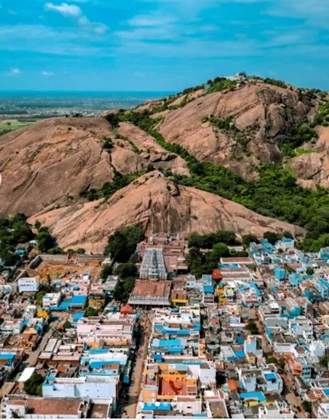
Indian Union Muslim League member and Ramanathapuram MP Navas Kani, who also serves as the Tamil Nadu Waqf Board chairman, has claimed that the dargah at the Thirupparankundram Temple hill is Waqf property.

Peyazhwar Temple, Chennai

Tamil Nadu Waqf Board President Abdul Rahman announced that many Hindu temples are present on Waqf properties, including the 1000-years-old Peyazhwar Temple, on land allegedly owned by the Kutchery Road Mosque.

Balasamudram, Dindigul

In a striking parallel to the Thiruchendurai village land dispute, another property conflict involving the Tamil Nadu Waqf Board has come to light, this time in the Balasamudram Municipality of Dindigul district. With claims dating back to 2020, the Waqf Board asserts ownership over the entire municipality, leaving around 10,000 residents in limbo. Unable to sell their ancestral properties due to unresolved legalities, the community’s frustration culminated in a petition to local authorities in May 2023.

Anganakaundan Puthur, Erode

In 2023, the Tamil Nadu Waqf Board asserted ownership over land allocated to 73 Scheduled Caste families in Anganakaundan Puthur, Erode District. The Tamil Nadu government provided this land in 1980 after a flood, and since then, it has been their home for 40 years. The Waqf Board’s claim has caused significant challenges, including transferring land titles, registering deeds, and obtaining loans.

Veppur Village, Ranipet 

In January 2023, the DMK government wrongly reclassified 57 acres of agricultural land in Veppur village, Ranipet District, as Waqf Board property. This land, which Hindu families had farmed for decades, was abruptly claimed by the Waqf Board without proper notice or due process, causing considerable distress among the affected farmers.

Min Nagar, Kanchipuram 

In January 2025, residents of Min Nagar in Kanchipuram district faced challenges after the Tamil Nadu Waqf Board claimed 2.43 acres of land they’ve lived on for over 40 years. The Kanchipuram Registrar’s Office confirmed the claim, hindering property registrations. The land was purchased in 1982 by employees of the Kanchipuram Electric City Office.

While amendments to the Waqf Act have tried to introduce checks, unresolved disputes continue to impact thousands across Tamil Nadu. Many of these claims date back decades or lack transparency, leaving ordinary citizens entangled in legal and administrative deadlock. As protests grow and more cases surface, pressure is mounting on both state and central authorities to review and address these recurring land conflicts with urgency and fairness.

(With Inputs From The Hindu)

Subscribe to our channels on TelegramWhatsApp, and Instagram and get the best stories of the day delivered to you personally.
DD Becomes Butt Of Memes Over Her Cringe Antics At DMK Propaganda Event “Kalviyil Sirantha Tamil Nadu”

Kalviyil Sirantha Tamil Nadu

The tone-deaf extravagance peaked with television host Dhivyadharshini (DD), whose performance bordering on parody has become the butt of jokes on social media, with netizens trolling her for overacting and cringe-worthy antics at the DMK propaganda event “Kalviyil Sirantha Tamil Nadu” held in Chennai on 25 September 2025.

In a cringe-inducing segment, DD gushed over the quality of sambar served as part of the Chief Minister’s Morning Breakfast Scheme, like it was a food from Tamil Nadu’s popular restaurant chain. Her exaggerated delight complete with dramatic expressions and staged spoonfuls of sambar offered to ministers seemed especially hollow when contrasted with frequent reports of poor food quality in government schools.

One cook who spoke at the event claimed, “I’m the cook at the school. All three of my kids study there. For Pongal items, at home, we only use whatever vegetables we have. But at the school, it’s not like that. The government gives me all the supplies, so I can cook everything properly without any shortages. You’d like to taste it?”

Responding enthusiastically, Dhivyadharshini exclaimed, “Is there any? Please give me some, ma’am. Oh my! I never expected to get such a delicious sambar at this event. Come, ma’am. Let’s try it. Come here. Come to the center. So, is the sambar good? I hope I don’t faint. How is this morning breakfast sambar?”

Some of the students chimed in with excitement, saying, “It will be super.” To that, Dhivyadharshini reacted, “One is saying it will be like wedding sambar!” At this point, another woman interjected to add, “We serve sambar five days a week at the school.”

Dhivyadharshini appeared surprised and asked, “What? do you make sambar five days a week at the school?”

The woman replied, “We serve sambar five days a week at the school. We make it for every dish. We have to make sambar for the children. At home, we might only make it once, but at school, we make it every day.” Another woman joined in to say, “Even those who used to dislike sambar have started eating it with great fondness. We make sambar all five days, and they never get tired of it, ma’am.”

Overwhelmed with joy, Dhivyadharshini said, “Ma’am, you’ve said so much, I have to taste this sambar,” and then made an overly dramatic expression of delight while eating it, adding, “Oh my goodness! The sambar is genuinely amazing! Ma’am, keep this hand that you used to cook, ma’am. This is for you (kissed), and this is for our CM. Sir, if you make a sambar like this, I’ll go back to primary school and study again. It’s that good. Is there any guest who would like to taste it? The Minister is here. Sir, would you like to taste it? We’re down here, would you like to come up? Please come up, sir. Mathiventhan is our honorable minister. Come, sir. Please try it. It would make you happy to try it. Yes, sir, for now, the sambar is all…”

It was an awkward spectacle sentimentality without substance. When the minister sampled the food, he simply said, “Super, oh super!” to which Dhivyadharshini playfully added, “We give him one spoon, but the minister is eating two spoons. Thank you sir.”

Despite the staged excitement, such moments only served to expose the theatrical nature of the event. With consistent reports of poor food quality including viral videos of students finding insects and lizards in their meals this media-driven PR spectacle felt disconnected from the actual conditions on the ground.

This did not sit well with netizens, who trolled her relentlessly. Some of the memes and trolls are shown below.

https://x.com/Dr_Suganya_/status/1971225660296487177

Subscribe to our channels on TelegramWhatsApp, and Instagram and get the best stories of the day delivered to you personally.

Kalviyil Cinema Tamil Nadu: The Brahmin Hate In Two-Bit DMK Stooge Director Thiagarajan Kumararaja’s Speech

Kalviyil Cinema Tamil Nadu The Brahmin Hate In Two Bit DMK Stooge Director Thiagarajan Kumararaja Speech

The DMK government’s latest showpiece event, ‘Kalviyil Sirantha Tamil Nadu’ (Tamil Nadu That Excels In Education), held on 25 September 2025 in Chennai, has drawn widespread criticism for being less a platform for serious educational discourse and more a carefully curated propaganda exercise in the run-up to the 2026 Assembly elections. What was billed as a celebration of Tamil Nadu’s educational achievements quickly devolved into a stage-managed spectacle featuring film celebrities showering excessive praise on the Chief Minister and parroting Dravidian ideological soundbites without a single academic, educator, or policy expert given a voice.

Even in what was supposed to be an educational program, Dravidianist elements couldn’t resist injecting their usual dose of anti-Brahmin vitriol. Director Thiagarajan Kumararaja, for example, used his platform not to assess the state’s educational progress, but to regurgitate tired Aryan-vs-Dravidian tropes, dredging up puranas and itihasas and caste grievances to push a divisive narrative. His speech focused almost entirely on alleged Brahminical oppression, turning the event into yet another opportunity to weaponize history against a single community.

Kumararaja went further, insinuating that central government policies are covertly designed to suppress the social mobility of marginalized communities. His remarks lumped together purana/itihasa figures like Dronacharya and Kripacharya with real-life statesman C. Rajagopalachari, branding them all as part of an unbroken chain of Brahminical gatekeeping. He then lauded the DMK as liberators, holding up populist schemes like free bicycles and laptops as revolutionary acts of social justice.

While such rhetoric may please the DMK’s hardcore ideological base, it ultimately trivializes the complex and nuanced challenges facing education today. By reducing everything to a binary of “oppressors vs. the oppressed,” the event foreclosed any meaningful discussion on policy reform, curriculum development, or systemic improvement. What could have been a platform for educational innovation instead became just another echo chamber for political self-congratulation.

The Sangam Era Poem and Education

Director Kumara Raja Thiagarajan begins by quoting a Purananuru poem (Puram 183) by the Sangam-era Pandya king Aariyappadai Kadantha Nedunjeliyan.

The key lines of the poem (last two lines), “Keelpal oruvan karpin, merpal oruvanum avan kan padume,” translate to, “If a person from a lower-status group acquires knowledge, even a person from a higher-status group will seek him out.”

Contrary to Kumara Raja’s Dravidian-lens interpretation, this poem clearly shows that during the Sangam era, all four so-called social statuses (varnas) had access to education, and learned individuals were respected regardless of their social background. This directly contradicts current political rhetoric suggesting that education was historically denied to certain groups in ancient times.

Instead, this suggests that the widespread loss of access to education occurred much later presumably during the last 1,000 years, coinciding with the Mughal invasions and British colonial rule. This stands in opposition to the claims made by Dravidian ideologues like E.V. Ramasamy (Periyar) and Bishop Robert Caldwell.

Dravidian Education vs. ‘Aryan’ Education

Thiagarajan then introduces a divisive narrative, contrasting “Dravidian Education” with “Aryan Education,” and accuses ancient Acharyas of denying education to the masses following in the footsteps of ideologues who promote blatant anti-Brahmin sentiment. He cites purana/itihasa figures like Dronacharya, Kripacharya, and even former Chief Minister of Tamil Nadu Rajaji (C. Rajagopalachari), accusing them of obstructing public education.

However, these claims are not only baseless but historically flawed.

For example, Kumararaja claims that Guru Dronacharya demanded Ekalavya’s thumb as Guru Dakshina because he was a Brahmin and that this act was to restrict others from learning. But in reality, Dronacharya was teaching Kshatriyas (the Pandavas and Kauravas), not Brahmins. His controversial action, whether right or wrong, was done in favor of the Kshatriyas not the Brahmins undermining the narrative of a Brahmin-led conspiracy to hoard knowledge.

Kumararaja further attacks Rajaji for introducing a skill-based education model in 1953, which the DMK labeled “Kula Kalvi Thittam” (Hereditary Education Scheme), forcing his resignation in 1954. But if the DMK truly opposed Rajaji, why did they later form an alliance with his Swatantra Party in the 1967 elections and win? This reveals a blatant inconsistency in their political stance criticizing when it suits them and partnering when it benefits them.

Moreover, Kumararaja conveniently ignores hereditary politics. He doesn’t seem to object when the same “hereditary system” is followed in political dynasties by birth, such as the Nehru-Gandhi family nationally, or the Karunanidhi family in Tamil Nadu M.K. Stalin, Udhayanidhi, and others.

Despite virtue signaling against caste oppression, Kumararaja never raised his voice during any of the caste-related killings that occurred in Tamil Nadu perhaps he was too busy with film shoots. A classic example of the DMK’s idea of “social justice” and a casteless society is from 2020, when DMK MP Dayanidhi Maran, addressing journalists after a meeting with Chief Secretary K. Shanmugam, said, Are we third-rate citizens? Oppressed?” using the Tamil term ‘thazthapatavaragala’ to describe themselves as “oppressed.”

Again, in July 2024, senior DMK leader and Organizing Secretary R.S. Bharathi allegedly made a derogatory remark, “If it was not for the alms of the Dravidian movement and communal GO, so many doctors and engineers wouldn’t exist today. When I studied BA, only one person in the town had a degree. Now, everyone has one even a dog gets a BA degree. The Dravidian movement is responsible for this development.”

Is this the quality of education and mindset taught under Dravidian ideology? That’s a question left for Director Kumara Raja to answer.

National Education Policy (NEP) Criticism

While Kumararaja criticizes the NEP and promotes the Dravidian agenda on stage, ironically, a student delivered a fluent speech in Japanese and the audience applauded. The NEP also encourages the study of any third language, Indian, yet the DMK opposes this.

However, Tamil Nadu government schools already teach Japanese, Urdu, Telugu, Malayalam, and French while rejecting a formal three-language policy. Where is the consistency in this argument? Is it that they don’t want students from marginalized backgrounds to enjoy elite benefits like language education?

It seems the DMK prefers a spectacle film stars in the front row, while educated officers and retired judges are pushed to the second seat.

Director Thiagarajan Kumararaja’s Full Speech

Speaking at the event Director Thiagarajan Kumararaja said, “A Pandyan king wrote a poem about education 2,000 years ago. Mr. Balakrishnan has spoken about it in many places. The last four lines are very important, “Vetrumai porunthiya naarpaal ullum, Keelpal oruvan karpin melpal oruvanum avan kan padume.” (Even among the four castes, if a person from a lower caste learns, a person from a higher caste will seek him out)

Education has two qualities. One quality is what he is talking about now, if a person from a lower class gets an education, it will force a person from a higher class to respect and associate with them. This is the first reason. The second thing… What does education do is… mentioned in a song from the book Viveka Chintamani, “It cannot be taken by flood, nor burned by fire, nor taken by kings. It will not decrease when given.”

Why do we study? We study to get a good job, earn money, and take care of our family, parents, and children. If I give away one crore rupees to someone, they can live happily, but I will no longer have that one crore. But with education, when we earn money, the knowledge keeps me wise and also makes the receiver wise. The knowledge I have reaches them and makes them my equal or elevates me to their level. This is why from ancient times until now, people have been prevented from getting an education. This is a very, very important point. We must think about why we, who were so educated, lost our education in the middle.

There are two ideologies regarding education. One is the Dravidian ideology that everyone should be educated, and everyone should be intelligent. From the time of the Pandyan Neduncheliyan to the Bharathiyar in the last century, he also said, “Even though you build a thousand inns and a thousand temples…” and at the end of it he said that a greater virtue, a crore times greater, is to provide education to a poor person. Such a virtuous act is providing education. Now, what happened with the Aryan ideology? A boy who wanted to learn went to a teacher and asked to be taught, but he was asked what caste he belonged to and was refused. But when he taught himself archery and stood before him, the teacher took his thumb. When Karna wanted to learn from him, he asked Karna what caste he was and sent him away. When Karna asked Kripacharya, he lied and said he was from a high-class family to learn from him, but when Kripacharya found out he wasn’t, he cursed him, saying all the knowledge he learned would leave him one day, and he took it away from him.

From Dronacharya and Kripacharya to Rajagopalachariar, they have been preventing us from getting an education. But against this ideology, which says there should not be equality, a party and an ideology that says there should be social justice and equality is in power, and they are putting in place as many schemes as possible to make sure everyone gets an education. They provide morning meals, and there are programs like Naan Mudhalvan and Tamil Pudhalvan. They have a series of schemes to make sure everyone gets an education. They even provide laptops and bicycles to people for free. They want you to get an education and rise up. To prevent this, just as they asked for the thumb and cursed Karna with amnesia, they have now brought in a new education policy to stop you from studying. And because we said we would not accept this, they are refusing to give us the 2150 crores that are rightfully ours.

Now, when a party that we disagree with politically is in power at the union, the Chief Minister has worked hard to save the people of Tamil Nadu, like someone who has been thrown into water with their hands and legs tied yet still manages to swim and save others. I express my heartfelt thanks to this Chief Minister. Thank you.”

Subscribe to our channels on TelegramWhatsApp, and Instagram and get the best stories of the day delivered to you personally.

10 Times International Media Justified Leh Violence

10 Times International Media Justified Leh Violence

A review of international media coverage following the violent protests in Leh, Ladakh, on 24 September 2025, has identified a pattern of reporting that appears to justify the unrest. The protests, which resulted in four fatalities and numerous injuries after clashes between demonstrators and police, were covered by numerous global outlets.

In this report, we take a look at ten international media articles published on 24 and 25 September 2025 that consistently framed the events with a bias against the Indian government, portrayed protesters sympathetically, and included contextual details critics deem irrelevant or inflammatory.

#1 Al Jazeera Article Casts Police as ‘Culprits’

On 24 September 2025, an Al Jazeera article was accused of explicitly casting police as the main aggressors, detailing their use of tear gas and batons. It highlighted accusations that the government had not addressed local concerns. By reiterating the region’s religious demographics and direct rule from New Delhi, the report wove together themes of political neglect and state violence. This framing placed the onus for the clash on the authorities, thereby justifying the protesters’ stance and actions as a response to provocation.

#2 DW Highlights ‘Loss of Autonomy’

On 24 September 2025, DW’s coverage described the 2019 reorganization of Ladakh primarily as a “loss of autonomy,” a framing critics argue overlooks the constitutional and legal context. The article included demographic breakdowns of the region’s Muslim and Buddhist populations, details questioned as irrelevant to the immediate report on the violence. By defining the event as a “clash” and anchoring it to the perceived loss of political status, the report was accused of establishing a pretext that implicitly justified the protesters’ actions as an inevitable response to governmental overreach.

#3 Washington Post Blames Environmental, Political Factors

On 25 September 2025, The Washington Post article attempted to portray the violence as a “natural outcome” of local frustrations, both political and environmental. It mentioned protester stone-pelting only after describing police intervention. The report highlighted the region’s religious demographics and introduced claims that militarization since the 2020 China standoff worsened pollution and glacier melt. By blending these issues with the political discontent, the article was accused of constructing a multi-faceted justification for the unrest, framing it as an ecological and political rebellion rather than a violent clash.

#4 Reuters Emphasizes ‘Direct Rule’ from Delhi

On 25 September 2025, Reuters reported that the “Buddhist-Muslim enclave… lost its autonomy in 2019,” to be placed under “direct administration of New Delhi.” It prominently featured a quote from a protest leader stating that past demonstrations had been peaceful and questioning “who gave the orders to shoot.” This framing was seen as portraying the central government as an oppressive force and the protesters as historically reasonable, thereby suggesting that the government’s actions were the primary catalyst for the escalation into violence.

#5 ABC News Echoes WaPo’s Narrative

On 25 September 2025, ABC News published an article identical to The Washington Post’s, replicating its framing of the events. It described the fatalities as “killings” and reported on strike calls in Kargil “against Wednesday’s killings.” This duplication amplified a narrative that presented the violence as a direct and understandable reaction to state actions, with language (“killings”) that implied culpability on the part of authorities, thereby justifying the protestors’ anger and subsequent actions in the eyes of the reader.

#6 BBC Focuses on Job Quotas and ‘Imposed’ Rule

On 25 September 2025, the BBC’s coverage used the term “imposing direct rule” to describe the 2019 changes. It framed the protestors’ demands around pragmatic concerns like “job and land quotas,” suggesting economic disenfranchisement as the core issue. By focusing on these socio-economic grievances and the top-down nature of governance, the report implicitly argued that the violence was a desperate measure by communities fighting for their economic future under a system they perceive as unfairly imposed, providing a rationale for the escalation.

#7 NBC News Sympathizes with Activists, Accuses Police Force 

On 25 September 2025, NBC News reported that protesters threw stones only after police tried to stop their march. It sympathetically described activist Sonam Wangchuk as a “top climate activist” and detailed police use of bullets, tear gas, and batons. This portrayal was accused of minimizing protester violence while emphasizing state aggression, creating a narrative of a peaceful movement met with disproportionate force. This framing serves to justify the protesters’ actions as a defensive response to state-initiated violence.

#8 The New York Times Points to ‘Spilled Over’ Anger

On 25 September 2025, The New York Times article stated that protesters’ “anger spilled over into deadly protests after two hunger strikers were hospitalized.” This language suggests the violence was an inevitable, almost organic, outcome of escalating emotions rather than a deliberate act. The description of Ladakh being under “tight central government control” further contextualized the unrest as a pushback against an authoritarian setup, providing a political justification for the violent expression of dissent.

#9 AP News Suggests ‘Joy Gave Way to Fear’

On 24 September 2025, an AP News report stated that while Ladakh residents initially welcomed the 2019 changes, “joy soon gave way to fears of land grabs” and ecological damage. Like other reports, it mentioned stone-pelting as a reaction to police intervention and described police actions aggressively. This narrative arc of initial hope turning to betrayal was seen as a powerful literary device to rationalize the subsequent anger and violence, framing it as a deeply felt reaction to broken trust and perceived threats to the region’s future.

#10 Al Jazeera Frames Unrest as ‘Gen-Z Movement’

In a 25 September 2025 article, that Al Jazeera titled as “’Bloodiest day’: How Gen-Z protest wave hit India’s Ladakh”, they characterized the violence as a youth-led movement born from frustration over “fake promises.” This came after a 24 September 2025 article which tried to frame police as culprits. The second report emphasized the 2019 constitutional change as a “loss of statehood” leading to rule by “bureaucrats.” By quoting protest leaders calling for peace after the fact and framing the event within a global narrative of youth activism, the article was seen as providing a sympathetic rationale for the violent outburst, shifting focus from the acts of violence to the grievances prompting them.

Subscribe to our channels on TelegramWhatsApp, and Instagram and get the best stories of the day delivered to you personally.