On 8 December 2025, the Supreme Court granted interim bail to an Assam college professor, Mohammed Joynal Abedin, who is accused of making “pro-Pakistan” remarks during this year’s Indo-Pak conflict and of posting obscene content on social media. According to the allegations, Abedin posted messages on Facebook stating, “We are with the brother of Pakistani citizens… we will be with them in future also,” and expressed support for the President of Turkey for backing Pakistani citizens.
In this report, we take a look at 32 different instances between 2014 and 2025 in which courts granted relief to individuals described as radicals, including accused persons in cases involving rape, blackmail, terrorism-related offences, and alleged anti-national activities.
Cases Where Bail Was Granted
#1 Supreme Court Grants Interim Bail to Professor Over Social Media Remarks – 8 December 2025
The Supreme Court of India granted interim bail to Mohammed Joynal Abedin, a college professor from Assam accused of making pro-Pakistan remarks during the Indo-Pak conflict and posting obscene content on social media. According to allegations, Abedin posted on Facebook stating “we are with the brother of Pakistani citizens” and “we will be with them in future also,” while also expressing support for Turkey’s President for siding with Pakistani citizens. The petitioner, employed at a government college, had already been suspended from his position and had spent 179 days in custody at the time of the bail grant. The Supreme Court considered the prolonged detention period while granting relief in this politically sensitive case.
#2 Delhi High Court’s Split Decision in Hizb-ul-Mujahideen Terror Funding Case – 12 August 2025
The Delhi High Court delivered differential bail orders in a case involving alleged terror-funding and secessionist activities linked to the proscribed organization Hizb-ul-Mujahideen operating in Jammu and Kashmir. The court granted bail to Syed Ahmad Shakeel, who had spent approximately six years and eleven months in custody, observing that with uncertainty surrounding trial completion, continued detention would no longer serve justice. However, the same bench denied bail to co-accused Shahid Yusuf, noting a prima facie case existed against him including direct links with known members of the banned organization and alleged receipt of funds intended for terrorist activity.
#3 Rajasthan High Court Suspends Life Sentences in 1992 Ajmer Rape Case – 9 August 2025
The Rajasthan High Court suspended the sentences of four convicts in the notorious 1992 Ajmer rape and blackmail case and granted them bail. Zameer Hussain, Iqbal Bhati, Salim Chisti, and Nafees Chisti were released from Ajmer Central Jail following the order. The case involved a gang that systematically raped and blackmailed school and college girls in Ajmer. A special POCSO court in Ajmer had sentenced six individuals to life imprisonment on 20 August 2024 for their involvement. The case has a lengthy legal history, with twelve individuals initially sentenced to life terms in 1998, followed by convictions of six more in 2024, making this one of India’s most prolonged cases of organized sexual exploitation.
#4 Allahabad High Court Grants Bail to Mosque Committee Chairman in Sambhal Violence – 25 July 2025
Justice Sameer Jain of the Allahabad High Court granted bail to Zafar Ali, Chairman of the Shahi Jama Masjid Committee, in connection with violence that erupted in Sambhal, Uttar Pradesh. The violence occurred on 24 November 2024 when a court-ordered survey was being conducted in the mosque complex to ascertain whether a temple had previously existed at that site. Zafar Ali was arrested in March 2025 and had spent approximately four months in judicial custody before being granted relief.
#5 Kerala High Court Grants Bail to Alleged ISIS Module Leader After Two Years – 23 July 2025
The Kerala High Court granted bail to Syed Nabeel Ahmed, 36, the main accused in an alleged ISIS module case investigated by the National Investigation Agency, after nearly two years in custody. The NIA had alleged that Nabeel was radicalized in Qatar and, having earlier links with the Popular Front of India, was made the ‘Ameer’ (leader) of an ISIS module in Kerala. Accusations included plotting terrorist attacks, conducting reconnaissance of Hindu temples, and participating in a thirty lakh rupee robbery to fund ISIS activities. A division bench comprising Justice Raja Vijayaraghavan V and Justice K.V. Jayakumar granted bail invoking the constitutional principle of equality, despite the serious nature of the allegations against the accused.
#6 Supreme Court Grants Bail to Former PFI General Secretary in UAPA Case – 21 May 2025
The Supreme Court of India granted bail to Abdul Sattar, former General Secretary of the banned organization Popular Front of India, in a case registered under the Unlawful Activities (Prevention) Act. Abdul Sattar had been arrested in Kerala on allegations of conspiring in the 2022 murder of RSS leader Srinivasan and for allegedly organizing violent protests and strikes following the ban on PFI. The Supreme Court’s decision to grant bail in this high-profile case involving the leadership of a banned organization marked a significant development in the legal proceedings against PFI members. The bail grant came despite serious allegations connecting the accused to both conspiracy to murder and organizing violent protests against government action.
#7 Supreme Court Upholds Bail for ISIS Sympathizer in UAPA Case – 14 May 2025
The Supreme Court upheld the Delhi High Court’s decision granting bail to Ammar Abdul Rahiman, who was booked under the Unlawful Activities (Prevention) Act for alleged ISIS links. The Court noted his three-year custody period, cooperation during investigation, and consistent court appearances as factors favoring bail. With over 160 witnesses listed and the trial ongoing, the Supreme Court found no reason to revoke bail granted by the lower court. However, strict conditions were imposed, including a bar on foreign travel without explicit permission.
#8 Bombay High Court Grants Bail to Alleged PFI Promoter Citing Non-Incriminating Evidence – 28 April 2025
The Bombay High Court granted bail to Mohammad Irfan Daulat Khan, an alleged Popular Front of India promoter in Malegaon, who was arrested for inciting anti-government sentiments. The court noted that audio clips and witness statements presented by the Maharashtra Anti-Terrorism Squad were not incriminating and suggested Khan was actually spreading “good messages” like personality development and legal awareness. Bail was granted due to slow trial progress and on grounds of parity with co-accused who had already been released.
#9 Kerala High Court Grants Bail in ISIS Module Recruitment Case – 9 April 2025
The Kerala High Court granted bail to Ashif and T S Shiyas, who were accused of forming an ISIS module and recruiting vulnerable youths in Kerala. The court observed that charges had not yet been framed in the case and the trial was unlikely to commence soon. Considering the prolonged detention and slow investigation process, the bench granted bail with strict conditions including provision of sureties, restrictions on movement, and monitoring of communications during the bail period. The decision reflected judicial concern about indefinite pre-trial detention in cases where the investigation and trial process moved at a glacial pace, potentially violating the accused’s fundamental rights while awaiting trial on serious terrorism charges.
#10 Kerala High Court Grants Bail to Ten PFI Members in RSS Leader Murder – 2 April 2025
The Kerala High Court granted bail to ten Popular Front of India members accused in the 2022 murder of RSS leader K S Sreenivasan in Palakkad. The court cited prolonged pre-trial detention and procedural lapses, including failure to provide arrest grounds to two of the accused, as reasons for granting relief. With trial proceedings stayed by the Supreme Court and over 1,000 witnesses involved, the court noted the improbability of a timely trial and granted conditional bail.
#11 Bombay High Court Grants Bail in PFI-Linked UAPA Case – 28 March 2025
The Bombay High Court granted bail to Shaikh Sadique Isaq Qureshi, arrested in 2022 for alleged links to the banned Popular Front of India under UAPA provisions. While the Anti-Terrorism Squad accused him of being part of a conspiracy to revolt against the government, the court noted that evidence only showed Qureshi gave speeches on legal awareness. The judges held that such activity could not be termed anti-national and found no direct link between his past record and the present charges. The court’s decision emphasized the distinction between legitimate legal awareness activities and genuine anti-national conspiracy, finding that the prosecution had failed to establish evidence of the latter despite invoking stringent anti-terror provisions.
#12 Bombay High Court Grants Conditional Bail to PFI District Functionaries – 17 February 2025
The Bombay High Court’s Aurangabad Bench granted conditional bail to Mohammad Nisar and Mohammed Abdul Karim, former district-level office-bearers of the banned Popular Front of India in Parbhani, who were arrested in 2022 by the Maharashtra Anti-Terrorism Squad under UAPA and IPC charges. The accused were ordered to report daily at Parbhani’s Nanalpeth Police Station, remain within designated jurisdictions, and surrender their passports to authorities. The court issued a stern warning that any tampering with evidence or violation of bail conditions could lead to immediate cancellation of bail.
#13 Madhya Pradesh High Court Imposes Patriotic Conditions for Pro-Pakistan Slogan Case Bail – 15 October 2024
The Madhya Pradesh High Court granted bail to Faizal alias Faizan, who was arrested after an FIR was registered at Misrod Police Station in Bhopal in May 2024 for allegedly raising pro-Pakistan slogans. Justice Paliwal granted bail on condition that Faizan furnish a personal bond of fifty thousand rupees and a solvent surety of the same amount. However, the bail came with unique conditions: to remain out on bail until trial completion, Faizan must raise the slogan “Bharat Mata ki Jai” twice every month and salute the national flag 21 times at a Bhopal police station.
#14 Delhi High Court Grants Bail to SIMI Member Based on Limited Role – 11 September 2024
The Delhi High Court granted bail to Mohammad Haneef, accused of involvement in the banned Students Islamic Movement of India outfit, noting his alleged role was limited to proofreading SIMI’s Islamic Movement magazine rather than authoring provocative content. The Court found that his name surfaced 22 days after the FIR was registered and that evidence pointed more to mistaken identity than direct incitement to violence or terrorism. With no specific criminal act attributed to him personally, and considering that co-accused were already out on bail, the Court allowed his release on a bond of fifty thousand rupees with conditions.
#15 Supreme Court Applies General Bail Principles to UAPA Cases – 13 August 2024
The Supreme Court granted bail to Mohammad Shahabuddin, a former Bihar Police constable accused under the Unlawful Activities (Prevention) Act and held that the principle “bail is the rule and jail is the exception” also applies to special laws such as UAPA. Mohammad Shahabuddin had been arrested in 2022 on allegations of being linked with the Popular Front of India and for allegedly renting one floor of his house to members of the organization for unlawful activities. The Court noted that he had already been in custody for more than two years and the trial had not even begun.
#16 Bombay High Court Grants Default Bail Due to Procedural Lapses – 15 July 2024
The Bombay High Court granted default bail to Momin Moiuddin Gulam Hasan and Asif Aminul Hussain Khan Adhikari, accused of being members of the banned Popular Front of India, citing procedural lapses by the Maharashtra Anti-Terrorism Squad. The court held that the fifteen-day extension granted for awaiting government sanction to file a chargesheet was not legally valid under the Criminal Procedure Code. The bench emphasized that administrative delays cannot override the constitutional right to liberty under Article 21 of the Constitution.
#17 Supreme Court Grants Bail in UAPA Case Due to Prolonged Pre-Trial Detention – 3 July 2024
The Supreme Court granted bail to Javed Gulam Nabi Shaikh, arrested for allegedly smuggling counterfeit currency linked to a cross-border terror plot. The Court noted his four-year incarceration without charges being framed and the National Investigation Agency’s plan to examine 80 witnesses, which would delay the trial indefinitely. Emphasizing Article 21 and the right to a speedy trial, the Court held that bail cannot be denied solely on the basis of the offence’s gravity.
#18 Delhi High Court Grants Bail to Alleged Indian Mujahideen Co-Founder – 10 May 2024
The Delhi High Court granted bail to Abdul Subhan Qureshi, alleged co-founder of Indian Mujahideen and former Students Islamic Movement of India member, citing nearly five years of pre-trial detention that exceeded half the maximum sentence for the offences charged under UAPA and IPC. The Court noted that co-accused were already on bail and the trial was far from conclusion, thus allowing relief under Section 436-A of the Criminal Procedure Code, with specific conditions to be set by the trial court.
#19 Allahabad High Court Grants Bail in Ghazwa-e-Hind Case – 6 May 2024
The Allahabad High Court granted bail to Muneer Alam, accused of receiving funds from the Popular Front of India for anti-national activities linked to establishing “Ghazwa-e-Hind” in India. The court noted that the chargesheet had already been filed and co-accused in the case had previously been granted bail. Observing that the trial would take considerable time due to multiple witnesses and citing prolonged detention since 3 July 2023, the court allowed bail under strict conditions, including mandatory monthly court appearances and movement restrictions.
#20 Telangana High Court Balances Security Concerns with Individual Liberty – 21 March 2024
The Telangana High Court granted conditional bail to seven individuals accused of involvement in terrorist activities linked to the banned Popular Front of India. Originally arrested by Nizamabad Police and later charged by the National Investigation Agency, the accused faced allegations of conspiracy to establish Islamic rule in India. The court balanced concerns of national security and individual liberty, citing insufficient evidence of direct terrorist acts and highlighting the accused’s prior social welfare work. Bail was granted with strict conditions, including non-interference in the trial and surrendering passports.
#21 Lucknow NIA Court Finds No Evidence Against Alleged PFI Member – 7 January 2023
The NIA Special Court in Lucknow granted bail to Abdullah Saud Ansari, a 27-year-old laborer arrested in September 2022 for alleged association with the banned Popular Front of India. Booked under sections of the Indian Penal Code and Unlawful Activities (Prevention) Act, Ansari was accused of being an active PFI member since 2017. However, the court found no substantial evidence linking him to any anti-national activity and noted procedural lapses in his detention. Bail was granted on a bond of fifty thousand rupees with two sureties.
#22 Chennai NIA Court Grants Bail to SDPI General Secretary – 17 October 2023
The NIA Special Court in Chennai granted conditional bail to Moin Mistri, the General Secretary of the Social Democratic Party of India for Theni district, arrested under the Unlawful Activities (Prevention) Act for alleged association with the banned Popular Front of India. The court found the prosecution’s claim that the petitioner may abscond or tamper with evidence as untenable due to his public and political position. It held that his association with PFI predates its ban and relied on precedent set in M. Mohd. Abbas v. State, granting bail with liberty to the prosecution to seek cancellation if conditions are breached. The decision recognized the distinction between lawful political activity and post-ban criminal association.
#23 Madras High Court Emphasizes Constitutional Rights in ISIS Case – 14 November 2023
The Madras High Court granted bail to Mohamed Irfan, a meat seller arrested under UAPA for alleged ISIS links, citing prolonged pre-trial detention since February 2022 without charges being framed. The court emphasized that indefinite detention violates constitutional and human rights, and suspicion alone is not sufficient grounds to deny bail. Irfan was ordered to stay in Chennai and appear daily before the trial court.
#24 Bombay High Court Grants Bail After Seven Years in ISIS Case – 28 June 2022
The Bombay High Court granted bail to Mohammad Raisuddin, accused of ISIS links in the 2016 Parbhani terror case, after spending nearly seven years in custody. The court noted prolonged trial delays and observed that the evidence did not establish a prima facie case strong enough to invoke Section 43-D (5) of the UAPA, which imposes stringent bail restrictions. Drawing parallels to a co-accused who had already been granted bail, the court emphasized the lack of material pointing to Raisuddin’s active role in the alleged offences.
#25 Bombay High Court Grants Bail in ISIS Parbhani Module Case – 13 August 2021
The Bombay High Court granted bail to Iqbal Ahmed Kabir Ahmed, accused of being part of ISIS’s ‘Parbhani module’ planning attacks on police offices. Arrested in August 2016 under UAPA and IPC sections, he had spent five years in custody without trial commencement. The court quashed the special court’s earlier denial of bail, noting the trial hadn’t begun and over 150 witnesses were yet to be examined. Bail was granted with conditions including regular reporting to the National Investigation Agency and prohibition on contacting witnesses.
#26 Bombay High Court Upholds Bail Despite Serious ISIS Allegations – 23 February 2021
The Bombay High Court upheld a special NIA court’s decision to grant bail to Areeb Majeed, accused of joining ISIS and planning attacks in India. While it criticized the lower court’s observations about lack of prima facie evidence, it accepted the bail on grounds of prolonged pre-trial detention. Majeed had been in custody since 2014, and the trial involving over 150 witnesses was moving at a sluggish pace. The High Court stressed that his release with strict conditions would not pose a threat to society, affirming his right to a speedy trial under Article 21.
#27 Kerala’s First Bail Grant to Alleged ISIS Supporter – 9 July 2020
The NIA court in Kochi granted bail to Sheik Hidayathullah alias Firoz Khan, arrested during investigation into Indian links to the 2019 Sri Lanka Easter bombings. The court ruled that there was no material evidence showing he had actively associated with or supported ISIS as required under Sections 38 and 39 of the Unlawful Activities (Prevention) Act. This marked the first instance of bail being granted to an alleged ISIS supporter in Kerala, setting a significant precedent.
#28 NIA Court Grants Bail After Bombay High Court Directions – 17 March 2020
Areeb Majeed, arrested in 2014 for allegedly joining ISIS after traveling to Iraq, was granted bail by the special NIA court in Mumbai following directions from the Bombay High Court. Majeed argued that key prosecution witnesses had already been examined and many did not support the National Investigation Agency’s case. With over 200 witnesses remaining and trial delays mounting, the court found prolonged detention unjustified. However, the bail order was stayed until 27 March to allow NIA to appeal.
#29 Delhi Court Grants Bail in Arms Act Case Lacking Terror Evidence – 18 November 2015
Rehmat Pasha, a Hyderabad-based man arrested by Delhi Police’s Special Cell for suspected ISIS links and booked under the Arms Act, was granted bail after the court found no evidence of terror involvement. Despite the recovery of weapons, the court accepted that agencies had not established any anti-national activity connecting the accused to terrorism. Bail was granted on a personal bond of twenty-five thousand rupees and one surety of the same amount.
Cases Where Accused Was Acquitted
#30 Bombay High Court Acquits All Twelve in 2006 Mumbai Train Blasts – 21 July 2025
The Bombay High Court acquitted all twelve individuals who had been convicted in the 2006 Mumbai train blasts case, overturning a 2015 special MCOCA court verdict that had sentenced five to death and others to life imprisonment. On 11 July 2006, terrorists carried out coordinated bomb blasts inside first-class compartments of Mumbai’s local trains on the Western Railway line at or near Matunga Road, Mahim, Bandra, Khar, Jogeshwari, Borivali, and Mira Road stations. According to official records, 187 people were killed, and 829 others were injured in one of Mumbai’s deadliest terror attacks.
#31 Supreme Court Acquits Akshardham Temple Attack Convicts – 16 May 2014
The Supreme Court strongly criticized the Gujarat Police for poor investigation in the 2002 Akshardham temple terror attack case and acquitted all six accused, including three who had been given the death sentence by a lower court. A bench of Justice A.K. Patnaik and Justice V. Gopala Gowda stated they were deeply disappointed with how carelessly the police handled investigation in such a serious case involving the country’s security. The attack on the Akshardham temple began on the afternoon of 24 September 2002 and continued until the morning of 25 September, killing 33 people and injuring 85. In July 2006, a special POTA court had sentenced Adambhai Sulemanbhai Ajmeri, Abdul Qaiyum Muftisaab Mohmed Bhai, and Achand Khan to death.
#32 Supreme Court Acquits Eleven in 1993 Surat Twin Blasts – 18 July 2014
The Supreme Court acquitted all eleven individuals convicted in the 1993 Surat twin blasts cases after reviewing the evidence. In 1993, two bomb blasts occurred in Surat—one in the Varachha area and one at the railway station. A schoolgirl named Alpa Patel died, and over 30 people were injured in the incidents. In 2008, a special TADA court in Surat had sentenced eleven people, including former Congress minister Mohammad Surti, to jail terms ranging from ten to twenty years. However, upon appellate review, the Supreme Court found the evidence insufficient to sustain convictions and declared all eleven accused not guilty, ordering their release.
Subscribe to our channels on WhatsApp, Telegram, Instagram and YouTube to get the best stories of the day delivered to you personally.





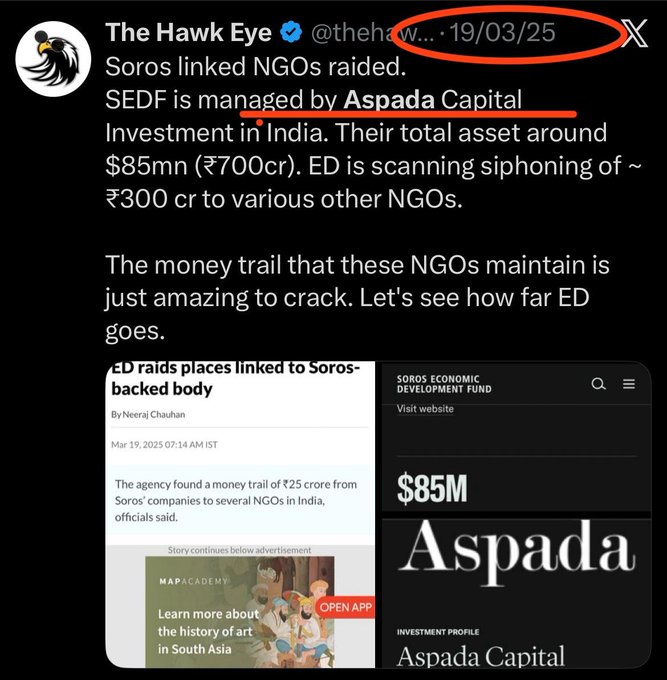 The Abraaj Group Past: Pakistani Deals, Chinese Buyers, And Bribery Allegations
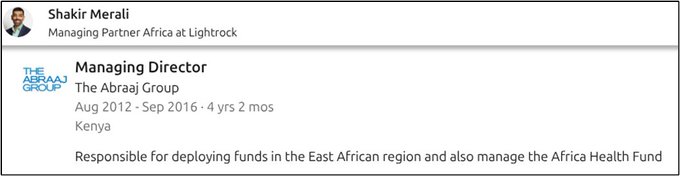 During Merali’s tenure, Abraaj was the majority owner (66.4%) of K-Electric, Pakistan’s largest power utility serving over 20 million people in Karachi.
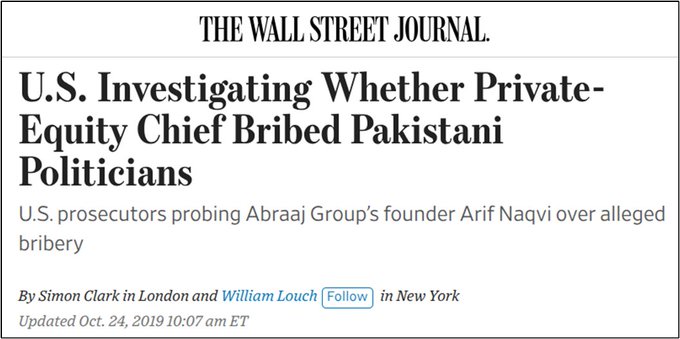 Furthermore, Arif Naqvi’s Abraaj was implicated in channeling foreign corporate money into Pakistani politics.
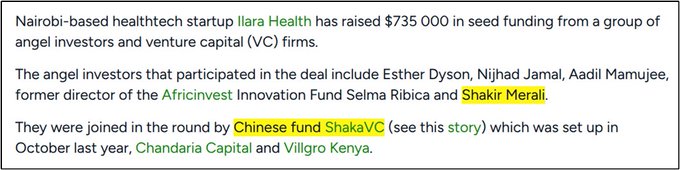
 Pangong Tso is not a tourist destination. It is a live border flashpoint where Indian and Chinese troops have been in a protracted standoff since 2020. The area is one of the most militarily sensitive zones in the country.