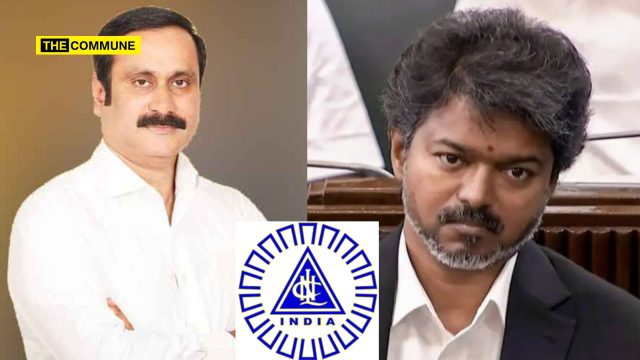
P.T.R. Palanivel Thiagarajan is a man who reeks of entitlement and arrogance, capable only of endlessly trumpeting his dynastic privilege and GRE scores while making headlines through one bloated ego outburst after another. This fourth-gen dynast who flaunts his MIT Sloan PhD has bartered every shred of self-respect to the DMK first family, grovelling with nauseating birthday tributes to the Loyola Viscom graduate Udhayanidhi and becoming a sidekick for his son Inbanidhi.
Yet today, the same man is scurrying about like a deranged headless chicken after actor-director Sundar C — the NDA candidate taking him on in Madurai Central — publicly tore into his pathetic failure to develop the constituency despite two full terms and ministerial power.
மெத்தப்படித்தவர்கள் என்னை ஒருகை பார்க்கும் முன் தங்கள் வலது கை இடது கை பற்றி சிந்திக்கவும்
எனது படிப்பு தொழில் பற்றி எல்லாம் பதில் சொல்லும் நீங்கள் 200 கோடி மாநகராட்சி ஊழல் பற்றியும் பதில் கூறலாமே.அவரவர்
படிப்பு செயலில் தெரிய வேண்டும்.நான் என்ன செய்ய வந்திருக்கிறேன் என எனக்குத்… pic.twitter.com/xPPxL7U0rR
This arrogant non-performing asset of the DMK boasts of his stint at Lehmann Brothers — the very firm from which he conveniently “quit” in 2008, the same year it spectacularly collapsed into bankruptcy. Yet this self-proclaimed financial wizard was humiliatingly stripped of the Finance portfolio after a leaked audio exposed him bitterly railing against the Stalin family’s rampant cash-grabbing operations and the DMK’s murky money ecosystem.
Shunted to the powerless IT ministry, PTR recently confessed during campaign interactions that he “couldn’t do what I planned for Madurai” and took cowardly refuge behind “there are many reasons but can’t speak openly.” He even lamented that things were easier as an Opposition MLA, exposing the feudal lord’s outrage that even with complete ruling-party dominance over the local municipality, full ministerial authority, and every inherited advantage, he still left Madurai rotting as one of India’s filthiest cities with zero meaningful development on the ground.
His tenure has been a relentless parade of fiscal ruin, dynastic bootlicking, and vindictive thuggery. As Finance Minister he drove Tamil Nadu’s debt to perilous heights financed by liquor revenue and crippling taxes on ordinary citizens. In the IT post, he has delivered nothing except more sycophantic praise for the dynastic heir. When Sundar C rightly questioned why voters should reward him with a third term without any visible results, PTR’s only response was that he is a “Cinema Sanghi”. Atleast he’s not a sophisticated English-speaking Udhayanidhi-buttressing glorified “Oopi” like you.
Uncouth, Foul-Mouthed And Casteist
PTR’s arrogance turns outright vicious the instant he faces any scrutiny. He starts spewing venom and makes distasteful personal remarks the moment anyone questions him or his party’s trackrecord.
He mercilessly hounded and cyber-bullied Brahmin woman journalists with casteist venom – be it Chandra Srikanth, Sandhya Ravishankar or Malini Parthasarathy.
Hmm….fodder for rabble rousers, ah?
சரி, சரி..
Does anyone have a link to the clip this parody-of-a-newspaper-publisher posted of herself joyously plate-banging (with her entire domestic entourage) and chanting the mantra “Go Corona Go”, swaying ever-so-lightly to the rhythm? https://t.co/hyCuetfeTl
— Dr P Thiaga Rajan (PTR) (@ptrmadurai) June 30, 2021
He also unleashed abuse on BJP MLA Vanathi Srinivasan, insulting her after she called out his behaviour, revealing the same feudal thuggery he deploys against anyone who dares challenge his narrative or the DMK ecosystem.
You once accused a fellow DMK spokesperson of being “unhappy that there weren’t more corpses to play politics with”🤦🏼♂️
I block you like a normal person closes a window to avoid a bad smell
Getting a “good character” certificate from you’d be demeaning
— Dr P Thiaga Rajan (PTR) (@ptrmadurai) May 30, 2021
In 2019, he didn’t even spare Rajinikanth branding him as a “morally bankrupt, intellectually challenged, pseudo-Hindu” and a fading yesteryear star desperately trying to regain glory.
Why Is Madurai Dirty?
This feudal relic parades foreign degrees and Wall Street polish while producing nothing but excuses when cornered over Madurai’s rotting infrastructure and the ₹200-crore property tax scam that forced his handpicked mayor Indirani Ponvasanth to resign after her husband’s arrest, this feudal dynast offers nothing but pathetic deflections and federalism lectures.
He shamelessly claims road maintenance is solely the local body’s job while conveniently forgetting that his own DMK controls the funding, rules, and real strings behind the Madurai Corporation — the very influence he exerted through his office and aides to install the mayor and shape its functioning.
Stop playing the victim card. A few questions:
1) Is maintaining roads the responsibility of the State Government or the Local Body (Madurai Corporation)? I’ll make it easy for you, it is the Local Body (Madurai Corporation).
Calling independent journalists “two-faced freelancers” for demanding accountability merely exposes his intolerance for criticism and his feudal belief that questioning DMK power is a crime. This non-performing asset, stripped of Finance after his own leaked audio exposed the Stalin family’s cash-grabbing, has no answers — only evasion, excuses, and the same bloated entitlement that has left Madurai neglected under his watch.
Hi Sir,
Stop playing the victim card? No, why would I need to play a victim card? What exactly am I a victim of? asking questions? This is not victimhood, this is what accountability looks like when questions are asked and answers don’t come.”
Tamil Nadu has no use for another entitled dynast who admits defeat with a shrug, conceals failures behind vague “many reasons,” and demands deference solely because of his surname and fancy resume. PTR’s dismal underperformance, audio scandals, bullying of critics, intellectual double standards, and complete neglect of Madurai leave no doubt: he is morally bankrupt, intellectually challenged, and entirely unfit for any public office, least of all as an MLA.
The people of Madurai and Tamil Nadu deserve functional roads, basic cleanliness, reliable power, and tangible results — not endless tantrums and cop-outs from this bloated ego in a ministerial suit. Boot him out decisively in 2026. The state will be far stronger without this dynastic deadweight.
One may have studied in the best of institutions and scaled heights in their profession. But, education and experience must make a person humble. ‘Humility’ is a virtue that every person in public life should have. Sadly, Palanivel Thiagarajan’s behaviour shows that he is not just a disgrace to the position he holds now but is also unfit to be in public life.
Vallavaraayan is a political writer.
Subscribe to our channels on WhatsApp, Telegram,Instagram and YouTube to get the best stories of the day delivered to you personally.

The Print has published an opinion piece titled “How Ayyappa went from a local forest deity to Kerala’s most controversial God,” authored by Anirudh Kanisetti. The headline alone frames Lord Ayyappa — revered by millions as the celibate warrior deity Dharmasastha, Hariharasuthan (son of Hari and Hara, i.e., Vishnu and Shiva), and the epitome of dharma and ascetic discipline — as inherently “controversial.”
It is a loaded Leftist framing that reduces a deeply sacred figure in the Hindu pantheon to a subject of modern political contention, made intentionally/unintentionally to delegitimize Hindu traditions.
Anirudh Kanisetti’s article in The Print misrepresents Lord Ayyappa (Dharmasastha/Hariharasuta) as evolving from a post-3rd century CE “local forest hunter deity” of Western Ghats peasants into a “controversial” celibate figure via 19th-century Brahminical legends like the Bhuta-natho-Pakhyanam, implying the restriction of menstruating-age women was a late exclusionary overlay.
The piece ties this evolution to ongoing Supreme Court debates over women’s entry, presenting Brahminical influences as having “corrupted” or overlaid a simpler local deity with exclusionary practices. The taboo, it notes, was documented by the 1820s under British records.
Puranic texts like the Srimad Bhagavatam and agamas (Amsumadbhedagama, Suprabhedagama) explicitly identify Shasta as Hariharaputra (son of Shiva and Vishnu/Mohini) centuries before the 19th century, with the celibate dharma and vratham rooted in these ancient traditions – not a recent invention. The 1820 British records merely document a long-standing custom aligned with the deity’s ascetic vow, not its origin. Kanisetti’s “Brahminical corruption” narrative ignores Hinduism’s organic syncretism seen across deities like Murugan, as evidenced by continuous temple practices under Ay, Chola, Pandya, and Travancore rulers. Far from a fragmented folk cult later Sanskritized, Ayyappa worship reflects deep continuity as a unifying symbol of dharma and discipline for millions.
While historical layering of deities is common across Hindu traditions — with regional folk elements merging into pan-Indian Puranic narratives — the article’s tone and headline choice go beyond analysis. Calling a deity “Kerala’s most controversial God” implies that the controversy stems from the god or the faith itself, rather than from activist litigation and ideological campaigns that have repeatedly targeted Hindu temple traditions.
In that piece, Kanisetti’s writings were critiqued for factual inaccuracies, anachronistic judgments, and unsubstantiated claims about the Chola emperor’s campaigns. These included exaggerating violence (“killed, raped, and plundered”), misdating events (attributing Rajaraja Chola’s actions to Rajendra or placing Kedah in Sumatra), downplaying Chola reverence for temples while accusing them of sacking them, and drawing false equivalences between dharmic Digvijaya expeditions and iconoclastic Islamic invasions.
Primary Chola inscriptions, such as the Thiruvalangadu copper plates, were cited to show the Ganga expedition’s purpose as sanctifying the new capital with sacred waters — akin to Bhagiratha’s efforts — with alliances and restrained warfare ethics drawn from Sangam literature, not the scorched-earth narrative pushed in the original piece.
Final Word
Media outlets like The Print, which position themselves as progressive voices, routinely apply scrutiny to Hindu practices that they seldom extend equally to others. One wonders if a similar headline — “How [deity/prophet] went from a local [tribal/regional] figure to the world’s most controversial [figure]” — would be entertained for non-Hindu traditions without accusations of bigotry. The glee in some quarters over such pieces, contrasted with outrage at any defense of tradition, reveals the asymmetry.Hindus have every right to push back against distortionist narratives that desacralize their gods and rewrite their histories to fit contemporary ideological battles. Lord Ayyappa is not “controversial”; He is a unifying symbol of dharma for crores of devotees across South India and beyond. Attempts to paint Him otherwise say more about the author’s and publisher’s priors than about the living tradition itself. As with the Rajendra Chola rebuttal, a fact-based correction grounded in inscriptions, texts, and lived practice remains the best response to such exercises in selective history. The faithful will continue their vrathams and pilgrimages undeterred, while calls for intellectual honesty in media grow louder.
When the DMK talks about the “Dravidian model”, it frames itself as the defender of Tamil identity and social justice. But a closer look at the party’s 2026 Assembly candidate list tells a more complicated story: Those with Telugu‑origin enjoy seat shares far above their population, while several native Tamil communities have no representation at all.
This is not about language chauvinism. It is about whether a party that claims to speak for “all Tamils” is quietly privileging a small, non‑Tamil elite at the expense of many Tamil communities that rarely find a voice in the legislature.
How Many Non‑Tamil Candidates Has DMK+ fielded?
Based on caste–wise breakdowns of the DMK alliance list circulating among analysts (cross‑checked across multiple documents), the 188 general‑category candidates fielded by DMK+ in 2026 include the following non‑Tamil groups:
Kannada‑origin (7)
Baduga – 2
Vokkaliga – 4
Devanga Chettiyar – 1
Telugu‑origin (29)
Kamma Naidu – 11
Balija / Gavara – 7
Reddy – 5
Arunthathiyar (SC, Telugu‑origin) – 6
Malayali (1)
Nair – 1
That is 37 non‑Tamil‑origin candidates out of 234 total Assembly seats – about 15–16% of the House, if they all win.
— tamilvote4tamilsonly (@Dheerangounder1) April 9, 2026
By contrast, several long‑settled Tamil communities show zero representation in the same DMK+ list: Udayar, Vannar, Navithar (barbers), Kuyavar (potters), Asari (metal‑workers), Vettuvar, Oorali and Paravar all have no MLA in the alliance slate. Brahmins are at zero as well, but that vacuum is not being filled by overlooked Tamil OBC/BC groups – it is disproportionately filled by Telugu‑origin Naidus and allied castes.
— AgentSaffron ANTI WAR OPEN HORMUZ STRAIT (@AgentSaffron) April 25, 2025
A district‑wise map of Telugu speakers (again based on 2011 data) shows:
No district in TN has a Telugu‑majority population.
A few western and northern districts – Krishnagiri, Tiruvallur, Coimbatore, Salem have taluks where Telugu speakers reach 15–25%.
Map of Telugu speakers in Tamil Nadu, as per 2011 census, most are concentrated in Northern districs and Kongu. Coimbatore, Krishnagiri, Tiruvannamalai, Vellore, Kancheepuram have a good chunk of Telugus. I guess most Telugus in Krishnagiri dt, would be in Hosur. pic.twitter.com/C8g9SLUDZz
Even if you consider Hosur which is close to Karnataka, it is the Tamils who are in majority.
Build up that hosur has majority telugu is not true.tamils are the majority in all 234 constituencies pic.twitter.com/etuYVNnT7g
— tamilvote4tamilsonly (@Dheerangounder1) April 9, 2026
So, even allowing for some under‑reporting (Telugu‑origin families ticking “Tamil” in the census), a reasonable upper bound for Telugu‑origin people in Tamil Nadu is still under 10% of the population.
Importantly, a large part of the Telugu‑speaking population in western TN comes from Dalit sub‑groups like Arunthathiyars. An analysis of SC sub‑group data from the 2011 Census shows sizeable Arunthathiyar populations in Coimbatore (3.2 lakh), Tiruppur (2.4 lakh), Erode (2.3 lakh), Namakkal (1.85 lakh), Salem (1.75 lakh), Dindigul (1.36 lakh) and Karur (0.74 lakh).
60% Telugus in western district
Arunthathiyar Population (District-wise)
Coimbatore → 3,19,581
Tiruppur → 2,43,274
Erode → 2,32,744
Namakkal → 1,85,083
Salem → 1,75,035
Dindigul → 1,36,894
Karur → 73,905
Due to them telugu Nos more in western TN than Chennai .. https://t.co/ugE1qtFZoApic.twitter.com/AULZujL0F7
— Vellalan_Paramasivam_Gounder (@VellalarWorld) April 10, 2026
These communities are not the same as the land‑owning Kamma, Balija or Reddy Naidus who dominate the general‑seat lists.
They are not a majority in any of the 234 constituencies.They get 4 times the seats compared to their miniscule population.Tamilnadu is being fooled pic.twitter.com/6k9vSh5CMM
— tamilvote4tamilsonly (@Dheerangounder1) April 9, 2026
Seat Share Vs Population Share: Are Telugu Over‑Represented?
Older caste‑wise census data (1921) give approximate population shares for some Telugu‑origin castes in the old Madras region.
— tamilvote4tamilsonly (@Dheerangounder1) April 9, 2026
These are not current official numbers, but they are widely cited in historical work on South Indian caste demography. Used cautiously, they give a sense of scale.
Against that backdrop:
Kamma Naidu – 11 seats in the DMK alliance list, which is ≈4.7% of the Assembly (11/234). That is around four times their 1921 population share.
Balija / Gavara – 7 seats, plus several Balija‑background candidates labelled generically as “Naidu”, which almost certainly pushes their representation above their likely 2–2.5% share.
Reddy – 5 seats, again around 4× what a 1–1.2% group would receive under strict proportionality.
That is ~12–13% of the Assembly for castes collectively rooted in a language group (Telugu) that constitutes roughly 6% of the state population by mother‑tongue.
— tamilvote4tamilsonly (@Dheerangounder1) April 9, 2026
Even if we assume that Telugu‑origin people are under‑counted in the census because many now identify as Tamil, the direction of the skew is clear: Telugu‑origin elites, especially Naidus, are significantly over‑represented in DMK’s 2026 ticket relative to their demographic weight.
Native Tamil Communities with Little or No Voice
Just as striking as who is over‑represented is who is absent. It is noteworthy that multiple native Tamil communities receive no seats at all in the DMK alliance list:
Udayar
Vannar
Navithar
Kuyavar
Asari
Vettuvar
Oorali
Paravar
These are not microscopic groups; they are historically rooted occupational communities visible across rural and peri‑urban Tamil Nadu.
Political parties need to understand that tamils are not at all believing that telugus have become tamils as we see from their behaviour outside and in social media that they are telugus by heart we condemn political parties who give over representation for telugu ignoring tamils pic.twitter.com/LOHzrCCDoA
— tamilvote4tamilsonly (@Dheerangounder1) April 9, 2026
Yet they do not appear even once in the alliance’s candidate slate, while three Telugu‑origin elite castes share nearly thirty seats between them.
This is the heart of the representational critique: in a state where Tamil speakers form nearly 90% of the population, and where entire Tamil communities have no MLAs at all, the ruling Dravidian party has chosen to give double or quadruple proportional representation to select non‑Tamil elites.
Asymmetry With Neighbouring States In Southern India
The pattern looks even more unusual when seen in a regional context.
According to available legislative profiles and media reports:
This, despite sizeable Tamil populations in border districts of Andhra and Karnataka and in cities like Bengaluru.
Despite significant tamil population in border areas of andhra, no single tamil person given mla seat in andra but our politicians are giving 29 seats to telugus.
We tamils are fools or made fools pic.twitter.com/eVJzln6X3C
— tamilvote4tamilsonly (@Dheerangounder1) April 9, 2026
Yet in Tamil Nadu, non‑Tamil‑origin MLAs from Telugu, Kannada and Malayali backgrounds could number well over 30 if the DMK alliance returns to power, purely on the basis of 2026 tickets.
No one is arguing that representation must be reciprocal across states, but the asymmetry is stark: Tamil Nadu’s Dravidian party is far more generous to non‑Tamil elites than neighbouring states are to Tamils.
Is This The “Dravidian model”?
None of this data proves that individuals from Telugu or Kannada backgrounds are unfit to represent Tamil constituencies. People migrate, assimilate and identify in complex ways. Many Naidu families have lived in Tamil Nadu for generations.
The question is different: who, in practice, benefits from the Dravidian model’s promise of representation and social justice?
If Telugu‑origin Naidu elites Kamma, Balija, Reddy receive disproportionate access to safe seats and cabinet berths,
While entire Tamil communities such as Udayar, Vannar, Asari, Paravar and others have no MLAs at all,
And if Tamil minorities in neighbouring states receive little to no legislative representation, then the DMK’s ticket distribution begins to look less like a neutral social‑justice project and more like a political bargain that favours specific non‑Tamil elites within Tamil Nadu.
Telugu speakers are about 6% of Tamil Nadu by the 2011 Census, yet the DMK alliance has allocated roughly 12–13% of Assembly seats in 2026 to Telugu‑origin castes, about double their language‑group population share and roughly four times the historic share of some Naidu sub‑castes, while many native Tamil communities have no representation at all.
For a party that has built its legitimacy on Tamil pride and egalitarianism, that imbalance is not a minor detail. It goes to the core of what the “Dravidian model” really prioritises and whom it quietly leaves out.
Subscribe to our channels on WhatsApp, Telegram,Instagram and YouTube to get the best stories of the day delivered to you personally.
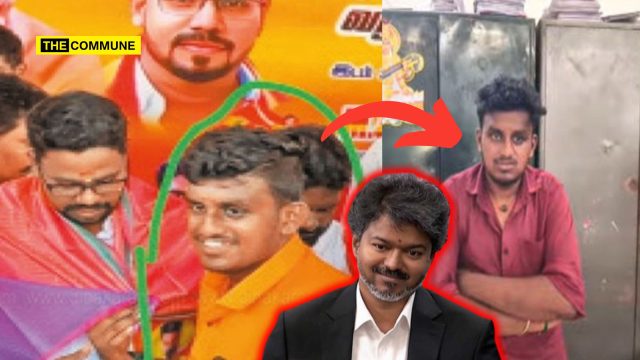
In a shocking exposé that mainstream outlets are already trying to downplay, Nashik police have uncovered a four-year nightmare at Tata Consultancy Services firm in the city where Hindu women employees (and at least one male colleague) were allegedly subjected to repeated sexual harassment, molestation, mental abuse, and blatant religious persecution.
The case, which surfaced through multiple FIRs in late March-early April 2026, reveals not just predatory behaviour by senior employees but also a disturbing pattern of coercion involving forced religious practices and ignored complaints – all while the company’s HR looked the other way.
According to detailed reporting, the abuses allegedly ran from July 2022 right up to April 1, 2026. Victims – mostly young Hindu women aged 18-25 – described lewd comments about their bodies and clothing, inappropriate touching in the office lobby and during meetings, stalking, obscene gestures, and even sexual exploitation under false promises of marriage. But the horror didn’t stop at sexual misconduct.
The accused reportedly mocked Hindu deities, pressured employees to participate in namaz, pushed non-vegetarian food (including beef), and attempted religious conversions. One male employee was also dragged into the religious insults and forced prayers. This wasn’t random harassment – it was coordinated, with some reports pointing to WhatsApp groups used to target vulnerable staff facing personal issues.
The Accused & The Arrests
Six team leaders/senior employees were named in the complaints and arrested early in the probe: Danish Sheikh, Tausif Attar, Raza Memon, Shahrukh Qureshi (also referred to as Shahrukh Sheikh), Shafi Sheikh, and Asif Ansari.
Another individual, Nida Khan, faces charges for hurting religious sentiments. In a major breakthrough, the firm’s HR official – identified as a woman assistant general manager based in Pune – was also arrested for abetting the crimes by repeatedly ignoring verbal complaints from victims. Police say her inaction allowed the predators to operate with impunity for years.
What makes this case stand out is the police’s proactive approach. A Special Investigation Team (SIT) was formed under ACP (Crime) Sandeep Mitke, and in a masterstroke, seven women police officers went undercover in disguise as regular employees. They directly witnessed the harassment and religious persecution, catching the accused red-handed.
According to a report by OpIndia, The SIT is now poring over 40 CCTV cameras and probing whether this was part of a larger organised racket. Seven people are already in judicial custody, and police have appealed for more victims to come forward.The company itself remains unnamed in most reports – described only as a “multinational IT firm’s unit in Nashik” – but the scandal has triggered outrage over corporate culture, with critics slamming HR departments as “paper-pushers” who exist only to protect management.
Timeline of the Nine Cases (Based on NDTV Report)A detailed report by NDTV outlines nine separate cases involving sexual harassment and religious persecution spanning from 2022 to 2026.
Here is the chronological breakdown:
July 2022 – February 2026: Danish Sheikh, Tausif Attar, and Nida Khan allegedly offended a female employee by making derogatory remarks about Hindu deities. Tausif Attar is accused of entering into a physical relationship with a victim under the false promise of marriage. Danish Sheikh allegedly outraged the modesty of the same victim by engaging in obscene behaviour with her in the office lobby.
May 2023 – March 19, 2026: Raza Memon and Shahrukh Qureshi allegedly subjected a female employee to inappropriate staring, unwelcome physical contact, and offensive remarks about her marital life. Although the victim lodged a complaint with a senior अधिकारी, no action was reportedly taken.
2022 – February 2026: Shafi Sheikh is accused of making sexually suggestive gestures and mocking the victim during official meetings. Tausif Attar allegedly humiliated the victim over her marital status and childlessness, while also attempting to initiate physical intimacy.
May 4, 2025 – December 2025: Tausif Attar allegedly asked intrusive and explicit questions about a victim’s personal life, made indecent gestures, and passed derogatory remarks about Hindu deities in the presence of Hindu women employees.
2022 – March 23, 2026: Tausif Attar, Danish Sheikh, Shahrukh Sheikh, and Raza Memon allegedly made derogatory comments about the victim’s religion, coerced her into offering Namaz, pressured her to convert, and forced her to consume non-vegetarian food. They are also accused of using abusive language against Hindu women employees.
September 6, 2024 – February 2026: Asif Ansari and Shafi Sheikh allegedly made sexually explicit remarks about a female employee’s body and engaged in deliberate inappropriate touching. Tausif Attar is also accused of making derogatory comments about Hindu deities.
2025 – March 2026: Asif Ansari, Shahrukh Qureshi, Raza Memon, Tausif Attar, and Shafi Sheikh allegedly stalked the victim, made obscene remarks, and engaged in inappropriate physical contact. They are accused of collectively creating a hostile environment by targeting her and insulting her religion.
January 2025 – Present: Raza Memon and Shafi Sheikh allegedly attempted to establish physical relations with the victim without her consent. Shafi reportedly proposed to her, while Raza made inappropriate comments about her body and tried to touch her.
January 2026 – April 1, 2026: Raza Memon and Shahrukh Qureshi allegedly engaged in explicit conversations and inappropriate conduct despite the victim’s objections. They continued to monitor her movements, intrude into her personal life, and subject her to sustained mental and physical harassment through lewd remarks.
The Deafening Silence From The Usual Suspects
Here’s where the hypocrisy hits hardest. As of April 11, 2026, prominent left-leaning outlets like The Wire, Newslaundry, and The News Minute have published zero articles on this case. No coverage of the sexual harassment, no mention of the religious persecution angle targeting Hindu employees, no discussion of the undercover police operation, and certainly no outrage over the HR cover-up.
A quick search of their sites throws up only unrelated old Nashik stories – nothing on this explosive scandal that ticks every box they usually scream about: workplace abuse, women’s safety, corporate accountability.
This selective blindness isn’t new. When the victims are Hindu women and the alleged perpetrators involve religious coercion with a clear communal tint, the “progressive” media ecosystem suddenly loses its voice
Maharashtra CM Devendra Fadnavis has reportedly taken note, ordering a thorough probe. As the SIT digs deeper, more skeletons could tumble out.
Subscribe to our channels on WhatsApp, Telegram,Instagram and YouTube to get the best stories of the day delivered to you personally.
A few months ago, we reported on how news portal The Federal published an interview with so-called ‘Indologist’ retired IAS Balakrishnan, where he claimed Sage Agastya never existed.
Carrying forth that narrative, Balakrishnan in a podcast with Avudaiappan on his YouTube channel Avudaiappan Talks, peddles the same lies over and over again.
In the half-hour podcast, Balakrishnan makes several claims. In this article, we will debunk all of his manufactured claims with evidence.
Claim 1: “Agastya is a Fictional Character”
Balakrishnan opens the podcast by stating that Agastya is “ஒரு புனை கதை” and that he was inserted in the 13th century. Balakrishnan says a fictional character and that despite having a BA and MA in Tamil literature, he has never once read anything written by Agastya. He infers from the absence of Agastya’s texts in his curriculum that the figure himself is mythological.
Truth:
This is a logical fallacy – the argument from personal ignorance. The absence of a text in one’s university syllabus does not prove the non-existence of the figure who authored it. By the same reasoning, one could argue that Valmiki or Vyasa are fictional because their original manuscripts are not available in modern classrooms.
Agastya’s grammar text Agattiyam (அகத்தியம்) is indeed non-extant as a complete work but this is well-documented and openly acknowledged in scholarship. Several of its sutras survive as quotations in medieval commentaries. According to Wikipedia’s entry on Agattiyam, it is “traditionally believed to have been compiled and taught in the First Sangam (circa 300 BCE) by Agattiyar (Agastya) to twelve students.” The fact that a text has been lost over two millennia is not evidence of its author’s non-existence, we have lost thousands of ancient texts across every civilisation.
The tradition of Agastya as a grammatical authority is also directly referenced by BHU’s scholarly paper published from Kashi Tamil Sangamam, which notes: “Professor K. Vellaivarananar explains with several pieces of evidence that Agastya’s work, Agathiyam, is regarded as the primary grammar text and that Tolkāppiyam is a structured text based on the foundational principles outlined by Agastya’s grammar.”
Copper Plate Inscriptions
Pandya-era copper-plate charters refer to Agasthya as the Kula Guru (royal preceptor) of certain Pandya kings – an epigraphic acknowledgment.
Counter-scholars argue that given this breadth of textual and inscriptional evidence, the claim that Agasthya appears “nowhere in Tamil literature” reflects poor scholarship or ideological posturing, not evidence-based research.
Additionally, Thalavaipura copper plate inscriptions also mention Sage Agastya. This was written 100 years before the birth of Raja Raja Chola.
The distinction the scholarly world draws is between Agastya as historical sage and Agastya as literary-traditional figure. Balakrishnan conflates these two to dismiss both.
Claim 2: “Tolkappiyar Never Mentions His Teacher Agastya – Therefore the Connection is Fabricated”
Balakrishnan argues that Tolkappiyar, despite listing many grammarians before him, never once mentions his supposed teacher Agastya. He uses this silence as proof that the Agastya-Tolkappiyar teacher-student link was invented later.
Truth:
This is the most cited argument in the anti-Agastya position and it sounds compelling, until you examine it carefully.
Tolkappiyam’s Purapporul preface, composed by Panamparanar (not Tolkappiyar himself), states: “vaḻiyeṉap paṭuva tataṉvaḻit tākum” – a phrase that BHU scholars read as establishing Agastya as “the foundational guide, or ‘the first source,’ for Tolkāppiyam.” The question of whether Tolkappiyar explicitly names Agastya is therefore more nuanced than Balakrishnan presents.
Furthermore, ancient texts routinely do not name their teachers directly. Silence in a text is not the same as denial. The Tolkappiyam itself does not name Tolkappiyar in the body of the text, that name comes from the preface. By Balakrishnan’s own logic, we could question Tolkappiyar’s existence too.
The teacher-student tradition linking Agastya and Tolkappiyar is attested by Nachinarkiniyar (13th–14th century), whom Balakrishnan dismisses, but also appears in references far older. The book Agastya in the Tamil Land (KN Sivarajapillai), ironically a work Balakrishnan himself mentions, traces the Agastya tradition through multiple textual layers.
Claim 3: “Agastya Enters Tamil Literature Only in the Bhakti Period – He Has No Sangam Presence”
Balakrishnan asserts that Agastya is completely absent from Sangam literature, and that he was “gradually introduced” into Tamil culture only after the Bhakti movement.
Truth:
This claim has been directly rebutted by scholars citing specific Sangam-era references. In our report, we rebut the same set of arguments by Balakrishnan, and others notes multiple textual references to Agastya that predate the Bhakti period:
Paripadal (a Sangam anthology): Contains a line referencing the star Agastya (Canopus), named after the sage associated with Podhigai – “பொதியில் முனிவன் புரை வரைக் கீறி மிதுனம் அடைய”
Thirumandiram (Thirumoolar): Records Shiva’s instruction to Agastya to travel south and restore balance
Thevaram hymns by Appar and Sambandar: Contain direct references to Agastya
From Sangam Literature
Paripadal contains a well-known line referencing the star Agastya, named after the sage associated with Podhigai:
“பொதியில் முனிவன் புரை வரைக் கீறி மிதுனம் அடைய” (The star Agastya – named after the sage residing in the Podhigai hills.)
Post-Sangam Epic Literature
In Manimegalai, Agasthya is said to have released the sacred Kaveri from his kamandala:
Manimegalai does not allude to Agasthiyar obliquely – it names him directly and explicitly. This above text is from the
Patikam (prologue) of Manimegalai (lines 10-12). The Central Institute of Classical Tamil, Chennai, which published a full scholarly study in 2025, identifies this as “the earliest Tamil literary work to explicitly mention Agasthya by name”. There is noambiguity – this is not commentary, not interpolation, not post-medieval addition. It is the original text of Manimegalai, composed around the 5th–6th century CE.
Furthermore, Manimegalai records that the Chola king
Sembiyan followed Agasthiyar’s counsel and conducted the grand
Indra Vizha festival for 28 days. The “sage of the high mountains” here is Agasthiyar – the sage of Podhigai, the high range of the Western Ghats.
Shaivite Canon
Thirumandiram records Shiva’s instruction to Agasthya to travel south and restore balance:
“நடுவுள அங்கி அகத்திய நீ போய் முடுகிய வையத்து முன்னிர்”
Thevaram hymns by Appar and Sambandar also contain references to Agasthya.
Medieval and Later Texts
Kamba Ramayanam describes him as:
“தென் தமிழ்நாட்டகன் பொதியில் திருமுனிவன்” (The sage who resides in Podhigai, in the southern Tamil land.)
This is the kind of ‘Tamil Scholarship’ we see these days.
“No literary or manuscript supports the existence of Agastya.”
Really?
Let’s begin with the Sangam classic Paripadal:
பொதியில் முனிவன் புரை வரைக் கீறி மிதுனம் அடைய
(The star Agastya — named after the sage who resides in… pic.twitter.com/jBLmUoBuy9
The classical Tamil epic Silappadikaram contains multiple references across different cantos. Here are two specific textual citations:
Both references to “the divine sage of the sacred mountain” and “thegreat sage of Podhigai” are understood through the classicalcommentary tradition, specifically Adiarkkunallar’s commentary as direct references to Agasthiyar
Balakrishnan himself acknowledges in the podcast that Agastya is mentioned in the context of Podhigai mountain in the Manimegalai – but then dismisses it as a late addition. This is circular reasoning: any text that mentions Agastya gets labelled “late,” and the label is then used to prove Agastya is a late invention.
Claim 4: “The Central Government Orchestrated the Agastya Revival as a Political-Cultural Agenda”
Balakrishnan claims that Indian embassies abroad, Union government research institutions, and Tamil diaspora associations were all coordinated to hold Agastya-themed events, with Google-searchable circulars as “proof.” He compares this to how Thiruvalluvar was “pushed” earlier.
Truth:
This is a conspiracy claim dressed as historiography. The logical problem is: even if a government organises conferences on Agastya, that cannot change the historical record of whether Agastya existed or not. This is a classic genetic fallacy – attacking the motivation behind a claim rather than the claim itself.
The Kashi Tamil Sangamam (organised by the central government in 2022–2023) included scholarly presentations on Agastya, but those presentations drew on centuries of existing Tamil literary tradition, not fabricated narratives. Government sponsorship of cultural conferences is not the same as fabricating history. Balakrishnan provides no evidence that the scholarship presented at those events was manufactured or falsified.
More importantly, Agastya’s place in Tamil tradition did not originate in 2022. Periyar’s Kudi Arasu press published a book on Agastya a hundred years ago, which Balakrishnan himself acknowledges – this predates the BJP government by nearly a century. If Periyar’s publication house found Agastya worthy of printing, the figure’s Tamil cultural relevance cannot be dismissed as a recent Hindutva invention.
Claim 5: “Nachinarkiniyar’s 14th Century Identification of ‘Tholmuthu Kadavul’ as Agastya is Baseless”
Balakrishnan challenges Nachinarkiniyar’s gloss that the Sangam phrase “tholmuthu kadavul” (தொல்முது கடவுள்) refers to Agastya, arguing it should more logically refer to Murugan or Shiva.
Truth:
This is actually the one point where Balakrishnan makes a legitimate scholarly argument – the identification of tholmuthu kadavul has been debated. The Federal’s report on the same controversy quotes scholars acknowledging that “relying on this misinterpretation, and that too from a commentary written in the 14th century, there is no justification for claiming that Agasthya authored Tamil grammar” based solely on that phrase.
However, the larger lesson from this debate cuts both ways. Balakrishnan uses one contestable gloss in one medieval commentary to dismiss the entire tradition of Agastya’s role in Tamil grammar – a tradition attested through multiple texts, multiple commentators, and multiple centuries. Using one disputed data point to invalidate a multi-textual tradition is not rigorous scholarship. It is motivated argumentation.
The correct scholarly position, which neither Balakrishnan nor his critics fully state, is that Agastya’s Agattiyam as a complete text cannot be verified today, but its existence as the foundational grammar preceding Tolkappiyam is a persistent, multiply attested Tamil tradition that should not be casually dismissed.
Claim 6: “Agastya’s Real Geographic Origin is Dehradun, Not Tamil Nadu”
The Claim: Balakrishnan asserts that all physical traces of Agastya, temples, ashrams, river origins are found in Dehradun, Nashik, and North India, and that Tamil Nadu’s connections to Agastya were established later.
Truth:
This argument cherry-picks geography to support a predetermined conclusion. Agastya is a figure who, by his very mythological role, is described as having migrated south. The presence of his associations in North India does not negate his Tamil connections – it is precisely the story of his southward journey that makes him a figure of civilisational bridge-building.
The Ramayana, the Mahabharata, and the Puranas all record Agastya’s journey from the north to the southern Deccan and Tamil regions. His ashram in Nashik (where he guided Rama southward) is itself part of the narrative of his southward movement. The Wikipedia entry on Agastya notes his worship extended from Indonesia to Java, where the Agastya-parva (an 11th-century Javanese text) attests to his civilisational importance across maritime Southeast Asia.
Balakrishnan himself acknowledges this in the podcast, Sage Agastya appears in stories about Indonesia, but he frames this as “someone else wrote those,” dismissing the consistency of the tradition across multiple Asian cultures.
Furthermore, Sage Agastya’s association with the Podhigai hills (Agastyamalai in the Western Ghats) and the rivers Tamraparni and Kaveri is deeply embedded in Tamil geography, temple tradition, and literature. These are not “late installations.” Tribal communities around the Western Ghats continue to venerate the sage – a point Avudaiappan raises in the podcast, which Balakrishnan brushes aside.
Claim 7: “Anyone Could Have Written Under Agastya’s Name – Like Avvaiyar”
Balakrishnan argues that just as “Avvaiyar” was a name used by multiple poets across centuries, “Agastya” was similarly a generic pen-name, meaning no single historical figure can be identified.
Truth:
The Avvaiyar analogy is academically well-known, scholars do acknowledge multiple poets used that name across different periods. But the analogy actually supports the existence of Agastya, not his dismissal. The Avvaiyar example proves that important Tamil names could carry enormous cultural weight and be adopted by later authors to claim legitimacy. This means Agastya’s name would have carried such weight only if a real foundational figure existed to begin with. Names of purely fictional characters do not develop weight sufficient to be adopted by real authors.
More critically, the argument that “multiple people wrote under one name” proves the name’s cultural significance, not its non-existence. You cannot appropriate the authority of someone who never existed.
Claim 8: The Mohenjo-daro Seal Shows Cockfighting, Proving Indus-Sangam Continuity
Balakrishnan claims he was the “first” to interpret a Mohenjo-daro seal as depicting cockfighting roosters, and that epigraphist Iravatham Mahadevan praised this interpretation, calling the site “Kukkuta-armana” (City of the Rooster). He uses this to claim an unbroken civilisational continuity from Harappa to Sangam-era Tamil culture.
Truth:
The claim about cockfighting seals from the Indus Valley is not new, and it was not Balakrishnan who first made it. Scholars have discussed the rooster/fowl imagery in Indus seals for decades. Iravatham Mahadevan’s work on the Indus script is extensive, but the script remains undeciphered, meaning any reading of an Indus seal, including “cockfighting,” is interpretive and speculative, not established.
More critically, the broader argument of Indus Valley-Tamil Sangam continuity, while popular, is a hypothesis, not a proven fact. The Indus script has not been deciphered; the language it encodes is unknown. Claims that 90% of Indus script-like graffiti in South Asia is found in Tamil Nadu need independent verification. What is accurate is that Black-and-Red Ware pottery with graffiti marks has been found at Keeladi and other Tamil Nadu sites, but this shows cultural presence in South India during the Iron Age, not a direct genetic or linguistic continuation from the Harappan civilisation. Many archaeologists are cautious about over-reading this evidence.
Balakrishnan’s logic, that because cockfighting appears in both Indus seals and Sangam literature, there is direct civilisational continuity, is a non-sequitur. Cockfighting is a widespread ancient practice found in Mesopotamia, the Mediterranean, Southeast Asia, and East Asia. Its presence in two different cultures centuries apart does not by itself prove a direct lineage between them.
Claim 9: David Frawley Says Agastya Brought River Kaveri
Balakrishnan claims an author named David Frawley wrote that Sage Agastya brought Tamiraparani, Kaveri rivers to the south.
Truth:
This was not claimed or written by David Frawley. Rather, this was stated by in Sangam-era literature, Manimegalai itself.
In the course of the podcast, he also claims Sage Agastya wrote the grammar for ‘Dravidian’ language Tamil, thus exposing his Dravidianist leanings. He also mentions some reference – turns out Balakrishnan had all along been referring to books written by Dravidar Kazhagam leader Veeramani’s ‘ Agasthiyar Oru Purattu’ (Agasthyar Is A Fabrication).
Scholarship or Selective Erasure?
What Balakrishnan is doing is not having an enriching conversation. It is the systematic erasure of a figure embedded in Tamil’s oldest texts, driven not by evidence but by the ideological need to sever Tamil civilisation from its own recorded past, just what the Dravidianists routinely do.
Subscribe to our channels on Telegram, WhatsApp, and Instagram and get the best stories of the day delivered to you personally.
A growing controversy has emerged over the disappearance of several mainstream media articles from the UPA era, with users reporting widespread “404 errors” while attempting to access archived reports.
The issue gained traction following renewed public interest triggered by the film Dhurandhar 2: The Revenge, which prompted social media users to revisit news coverage from the early 2010s. As older reports began circulating online, users claimed that multiple links from established publications were no longer accessible, raising concerns about the integrity of the public record.
What makes this controversy impossible to dismiss as a technical glitch is the nature of the content going dark. The inaccessible links do not belong to small blogs or defunct news portals — they trace back to established national media organisations including Hindustan Times and NDTV. These are platforms with dedicated IT infrastructure and institutional memory. Server errors do not selectively target UPA-era political reporting.
The pattern is too consistent to be coincidental. Article after article covering on-record statements by senior Congress leaders are now returning 404 errors. These are not niche footnotes. These are mainstream, widely read reports that shaped public discourse during the UPA’s decade in power.
The timing is the tell. This digital housecleaning has accelerated precisely when Dhurandhar: The Revenge reignited mass curiosity about Congress’s governance record. Netizens began connecting past statements to present accountability, the corresponding documentation began vanishing. That is not coincidence – that is damage control.
The unavoidable question is: who benefits? The BJP has every political incentive to keep this content alive and circulating. The Congress has every incentive to ensure it does not. When the party that stands to lose the most from historical documentation is also the one with the deepest connections to India’s English-language media establishment, the “speculation” about deliberate removal stops being speculation and starts being the only rational explanation.
Subscribe to our channels on WhatsApp, Telegram,Instagram and YouTube to get the best stories of the day delivered to you personally.
A few days ago, leftist ‘journalist’ whose propaganda pieces are published in portals such as Frontline, Article 14 shared a lengthy thread on X. Interestingly, it was reshared by none other than former Delhi CM, liquor scam accused Arvind Kejriwal.
In a lengthy post, Saurav Das made some ‘shocking’ allegations but one glance at the post tells us that he is framing his opinions as facts.
Saurav begins by raising a series of allegations and concerns about possible bias, conflict of interest, and institutional credibility in the handling of the Delhi liquor policy case, particularly focusing on Justice Swarana Kanta Sharma of the Delhi High Court. But essentially, he is building a case against Justice Swarana Kanta Sharma, with not with hard he constructs an argument from selective facts and biased interpretation.
He begins with the discharge of Arvind Kejriwal and others, the CBI’s challenge, and the fact that Justice Sharma is hearing the matter. He also cites court records, listing patterns, and past judgments. However, the moment he moves from describing these facts to assigning meaning to them, the argument becomes subjective.
For instance, he claims the judge showed “unusual speed” in this case compared to others. But speed, by itself, does not indicate bias – courts frequently fast-track politically sensitive or high-stakes matters. Without proving that such urgency violated procedure or was selectively applied with intent, the claim remains speculative.
He also argues that the judge’s previous orders in related cases show a pattern of alignment with the prosecution. This is again an interpretation. Judges often make prima facie observations at stages like bail or interim hearings, and strong language in such orders does not automatically establish prejudice. In fact, many such observations are routinely revisited or overturned at later stages — that is part of the judicial process, not evidence of bias.
Saurav further attempts to show inconsistency by comparing the judge’s approach in cases involving opposition leaders with another case involving a BJP leader. But this comparison ignores a basic legal reality: no two cases are identical. Differences in evidence, charges, and procedural posture can justify different outcomes. Presenting this as selective treatment is, again, an inference, not a fact.
The most serious insinuation relates to the empanelment of the judge’s children as government lawyers. Here, Saurav stops short of alleging wrongdoing but strongly suggests a conflict of interest. However, he provides no evidence of any direct link between these appointments and the judge’s decisions. Government panel appointments, while open to debate, are not illegal, and without proof of influence, this line of argument rests entirely on perception, not substance.
Ultimately, his central claim, that there is a “reasonable apprehension of bias”, is itself an opinion, not an established conclusion. It depends entirely on how one chooses to interpret the same set of facts. A different observer could look at the same material and see nothing unusual at all.
In essence, Saurav is presenting a prosecutorial-style narrative against the judge, stitching together disparate facts to suggest a pattern. But the leap from pattern to bias is not proven – it is argued. That distinction is crucial.
#ImportantNews: The controversy over the alleged Delhi liquor-scam case before Justice Swarana Kanta Sharma is no longer confined to courtroom conduct alone. Now more troubling questions of proximity, patronage, conflict-of-interest, and the appearance of bias have come to light.… pic.twitter.com/cQbYjqRxoS
In this lengthy post, he adds links to judgements, how own tirade, and what not – but they prove nothing – no link between this specific judge and such appointments, no wrongdoing by Swarana Kanta Sharma nor any connection between her decisions and her children’s positions. It is entirely how he wants to perceive the issue and how he wants the public to perceive the judge.
So, Saurav Das tries to build a case against the judge to create a favourable media narrative for his favourite Arvind Kejriwal and the post is also shared by the same Kejriwal – was it to win brownie points and prove his loyalty to the accused?
Let us take a look at the love Saurav Das has for Arvind Kejriwal and how it manifests.
Delhi’s pollution levels were spiking last year, thanks to stubble burning. And people are upset, rightly so. But are they calling out the true perpetrators? The stubble burners? A section of the public instigated by “influencers” went out to protest in Delhi without permission and have been detained.
Why did they protest? For clean air, yes clean air is every citizen’s right. No doubt about that. But are the people who are instigating them, pointing to the actual culprits?
No, they all blame the present BJP government. Among them is Saurav Das – a self-proclaimed ‘investigative journalist’ who has often been seen peddling propaganda laced in fine language.
Das, who recently amplified calls for urgent action on Delhi’s deteriorating air quality under the new BJP-led administration, has been accused by several social media users of remaining silent on the issue during AAP’s tenure in Delhi and Punjab.
While he routinely commented on national governance and investigative matters, he avoided public criticism of Delhi Chief Minister Arvind Kejriwal or the Punjab government over their handling of pollution and stubble burning.
This is just unacceptable. After 8 years, Delhi govt says there is no official data on what is causing pollution in Delhi. Was 8 years not enough to put a system in place, despite Delhi having all the top institutes/eminent persons? One excuse before AAP won Punjab was that the… https://t.co/lr6ImQPc8r
Saurav Das routinely writes for leftist publications like Article 14, Frontline, The Caravan magazine, Al Jazeera, The Wire, The Hindu etc.
While Das has not demanded or protested so vehemently about Delhi’s polluted air in the past, this time around since the BJP is in power, he wants clean air instantly. Nor did he protest the “unclean” Yamuna River at that time!
However, following the recent change of government at the Centre, he has begun sharing and supporting protests demanding immediate solutions to Delhi’s air crisis.
Das’s detractors argue that this shift amounts to “performative activism” and question why similar pressure was not applied to the AAP government during its tenure. They have also pointed out his continued social media criticism of Uttar Pradesh Chief Minister Yogi Adityanath’s advertising expenditure, contrasting it with his silence when the then-Delhi CM spent significant amounts on publicity campaigns rather than pollution control measures.
– A certified Kejriwal Paglu
– Was dick Riding Lavnasur for last 5 Years
– 0 Protests against Kejriwal on Yamuna and Air Pollution in the last 5 Years
– No word on Punjab Govt against Stubble Burning
– Questions Yogi on Ads but kept mum when Kejriwal… https://t.co/Dd2RE2y2vBpic.twitter.com/jcqLqg7OFx
Das has earlier faced scrutiny for funding links to foreign and non-governmental foundations. A 2023 exposé by The Pamphlet showed that he received support from the Thakur Family Foundation for public health reporting, though his published articles reportedly extended to political topics beyond health policy.
Image Source: The Pamphlet
The Thakur Family Foundation (TFF), which presents itself as an organisation promoting “public health and civil liberties,” has funded multiple Indian media outlets and journalists, including individuals associated with Alt News, The Wire, and Moneylife Foundation, under the banner of health-related reporting. These grants coincided with the publication of articles critical of India’s pharmaceutical industry, traditional medicine systems, and domestic COVID-19 response, while appearing to favour Western vaccine and corporate narratives.
TFF has also been linked to the US-based testing firm Valisure, which released reports questioning the quality of Indian-made drugs. The pattern of financial support, editorial influence, and timing of campaigns indicates an organised effort to erode confidence in Indian generics and Ayurveda. During the COVID-19 pandemic, TFF-funded content appeared in The Wire and Alt News, amplifying narratives that portrayed India’s pandemic management and indigenous pharmaceutical initiatives in a negative light.
Saurav Das who seems to write on “public health” only wrote articles that were critical of the government policies in this space and not otherwise.
Additionally, when India banned anti-Hindu website Hindutva Watch, Saurav Das published a propaganda piece in Article 14 about India’s ‘censorship rules’.
Subscribe to our channels on WhatsApp, Telegram,Instagram and YouTube to get the best stories of the day delivered to you personally.

In a dramatic sequence of events that has exposed deep fault lines within the Tamil Nadu Congress, M. Hazeena Syed, the outgoing President of the Tamil Nadu Pradesh Mahila Congress, has launched a scathing public attack on All India Mahila Congress (AIMC) President Alka Lamba, accusing her of harassment, financial misconduct, and abusing organisational power, after Lamba issued an expulsion notice against her for “anti-party activities.”
The Resignation That Came First
Hazeena Syed, a three-decade Congress loyalist who rose from the student wing through the Talent Hand programme of 2008, officially tendered her resignation on April 10, 2026 at a press conference at 1:00 PM. In letters addressed to Rahul Gandhi and Congress President Mallikarjun Kharge, she stated that despite the Congress’s own Central Election Committee (CEC) and Rahul Gandhi personally pushing for her to receive an assembly ticket in the 2026 Tamil Nadu elections, she was denied the opportunity to contest and was “humiliated in the process”. She resigned from the post of State President of Tamil Nadu Mahila Congress and from primary membership of the Congress party.
In her letter to Rahul Gandhi, she pointedly stated: “Despite the decision of CEC and your good self’s insistence on giving me a ticket for the recent Assembly Elections, I was denied the opportunity to contest, and was humiliated in the process. This has not only hurt me personally but also brought disrepute to the party.”
She named multiple functionaries as responsible for the injustice, including TNCC President Selvaperunthagai, former Tamil Nadu in-charge Srivella Prasad, AICC Secretary Pushpa Raj (associated with Sam Pitroda), and Tamil Nadu in-charge Girish Chodankar.
The Expulsion Notice That Triggered the Firestorm
Hours after her public resignation, Alka Lamba issued a formal order expelling Hazeena Syed from the post of Tamil Nadu Pradesh Mahila Congress President, citing her involvement in “anti-party activities” and stating that the action was taken “in the interest of maintaining organisational discipline and integrity.” The expulsion came after Hazeena’s supporters had staged a protest at the TNCC headquarters on March 1, with some reportedly carrying petrol canisters and threatening self-immolation if she was not given a seat.
Hazeena’s Counterattack: Harassment, Fraud, and a Sharp Personal Rebuke
The issuance of the expulsion letter, which arrived after Hazeena had already publicly resigned, triggered an explosive response.
In an email dated April 11, 2026, at 12:30 AM, sent to tamilnadu.congress@gmail.com and addressed to Alka Lamba, and in a parallel post on her X handle @SyedHazeena, Hazeena unleashed a point-by-point set of allegations against the AIMC President.
In the email she wrote, on the expulsion notice itself, she dismissed it as legally and morally redundant: “Do you have any common sense – I have already resigned yesterday, in the official press meet at 1:00 PM on 10th April 2026, I have declared the same.”
On financial misconduct, she raised the most serious allegation that Alka Lamba had been using membership funds for personal luxury, writing: “Your living on our membership money – does this party have the guts to audit the AIMC account, which you are spending on your luxury and is it accountable?” She further added: “You will have to take an FIR on you like your K.C. & Co., for illegitimate account transaction for membership fraudulence – for which I have legal proofs.”
On harassment, Hazeena was direct: “One of the main reasons for my resignation is your harassment – so mind your job and shut up.”
On Alka Lamba’s political background, she attacked Lamba’s credibility within Congress, writing: “You have jumped from Aam Aadmi Party to ruin Congress – mind you and stay quiet, else I will fix you.”
In a strongly worded post on X, Hazeena directly attacked Lamba, alleging systemic harassment under the guise of party processes. “what kind of a saddist you are, you dont help any of us in mahila congress but harass us in the name of membership and loot money and enjoy your life, do you have any common sense i have been humiliated i have resigned officially in front of media in a press meet at 1:00 p.m and who the heck are you to send me a expel letter, are you prince diana??”
@LambaAlka what kind of a saddist you are, you dont help any of us in mahila congress but harass us in the name of membership and loot money and enjoy your life, do you have any common sense i have been humiliated i have resigned officially in front of media in a press meet at… pic.twitter.com/BlxPovXNJ3
Alka Lamba’s political career has been marked by a string of controversies spanning over a decade. Perhaps the most damaging came in 2012, when she was serving on a National Commission for Women fact-finding team investigating the Guwahati molestation case – she held a press conference and publicly revealed the identity of the sexual assault victim, a move widely condemned and one that led to her removal from the NCW committee.
In August 2015, while serving as AAP MLA from Chandni Chowk, CCTV footage caught her leading a mob armed with lathis and cricket bats to vandalise a liquor shop in the Kashmere Gate area of Old Delhi, reportedly because the shopkeeper, a BJP supporter, had objected to her party’s posters on his windows. Her tenure with the Aam Aadmi Party itself ended in controversy in 2019, when she was disqualified from the Delhi Assembly by the Speaker for violating anti-defection rules after she quit AAP to rejoin Congress.
More recently, in July 2024 just months after being appointed AIMC President, a fresh controversy erupted at a Madhya Pradesh Mahila Congress meeting, where a party worker alleged that Lamba told aides to “shoe her out of the meeting” (“Jute maar ke bahar kar do”). It is this pattern of high-handedness toward her own party’s women workers that Hazeena Syed has now cited as central to her resignation, alleging that Lamba’s conduct at the national level has made life difficult for state-level Mahila Congress functionaries across the country.
Hazeena Syed’s exit marks the end of a 30-year association with the Congress that began with the student wing. Appointed as Tamil Nadu Mahila Congress President in 2024, she also served as a national secretary of the women’s wing. The confrontation, now playing out publicly across email and social media, is widely seen as symptomatic of deeper organisational dysfunction in the Tamil Nadu Congress ahead of a critical state assembly election.
Subscribe to our channels on WhatsApp, Telegram,Instagram and YouTube to get the best stories of the day delivered to you personally.
The Supreme Court of India on Friday, 10 April 2026, stayed criminal proceedings against a Christian priest who was booked by the Uttar Pradesh Police for allegedly stating that Christianity is the only true religion, as reported in Bar and Bench.
A Bench of Justices Vikram Nath and Sandeep Mehta issued notice to the Uttar Pradesh government on the priest’s plea challenging the criminal case registered against him.
The Court directed that during the pendency of the challenge, the trial proceedings against the priest will remain stayed.
The case pertains to allegations that the priest made statements during a prayer meeting asserting that Christianity is the only true religion, which allegedly outraged the religious sentiments of Hindus.
Earlier, the Allahabad High Court had refused to quash the proceedings against the priest. Justice Saurabh Srivastava had held that it was inappropriate for any individual to claim that their religion is the only true religion, observing that such assertions amount to disparagement of other faiths.
“By bare perusal of the narrations made in the FIR wherein it has been mentioned that in his prayer meet, applicant frequently states that there is only one religion which is Christian and also hurts the sentiments of a particular religion i.e. Hindu, whereas India is a land where people of all faiths and beliefs in secular state as defined by Constitution of India, live together, therefore, it is wrong for any religion to claim that it is the only true religion as it implies a disparagement of other faiths,” the High Court had said.
The High Court had further noted that Section 295A of the Indian Penal Code prohibits deliberate and malicious acts intended to outrage the religious feelings of any class of citizens, and held that the actions alleged against the priest fall within the ambit of Section 295-A IPC.
The priest has challenged both the chargesheet filed against him and the trial court order taking cognizance of the offence.
With the Supreme Court now issuing notice and staying the proceedings, the matter will be taken up for further consideration after responses are filed by the Uttar Pradesh government.
Subscribe to our channels on WhatsApp, Telegram,Instagram and YouTube to get the best stories of the day delivered to you personally.
The Supreme Court of India on Friday, 10 April 2026, declined to grant divorce to a 54-year-old man who has been paying ₹15,000 per month as maintenance to his estranged wife for the past 16 years, and instead asked him to come forward with a reasonable proposal for permanent alimony, as reported in Times of India.
A Bench comprising Justices Vikram Nath and Sandeep Mehta told the petitioner that his plea for divorce could only be considered if he indicated what he was willing to offer as permanent alimony.
During the hearing, the petitioner argued that even ₹15,000 was a significant burden on his monthly income of ₹65,000. Responding to this contention, the Bench remarked, “Rs 15,000 is hardly anything these days…If you came up with an offer for permanent alimony we could have still considered (granting divorce)…(Else) Shaanti se baitho, dete raho 15,000, khush raho”.
The Court was hearing the man’s challenge to an earlier order of a high court that had dismissed his plea for divorce.
The Bench also questioned why the couple could not resume cohabitation. “Keep your wife with you. What is the problem?” the Court asked during the proceedings.
Appearing for the petitioner, counsel submitted that the couple had been living separately for nearly 16 years and that multiple attempts at mediation had failed due to continuing differences between them. However, the Court noted that the only ground of cruelty cited by the petitioner was his wife’s insistence on accompanying him wherever he was posted.
Counsel for the wife informed the Court that she was not seeking permanent alimony and was willing to resume living with her husband.
The matter came up before the apex court following the petitioner’s appeal against the high court’s refusal to grant divorce, with the Bench indicating that any reconsideration of the plea would depend on a concrete proposal regarding permanent alimony.
Subscribe to our channels on WhatsApp, Telegram,Instagram and YouTube to get the best stories of the day delivered to you personally.