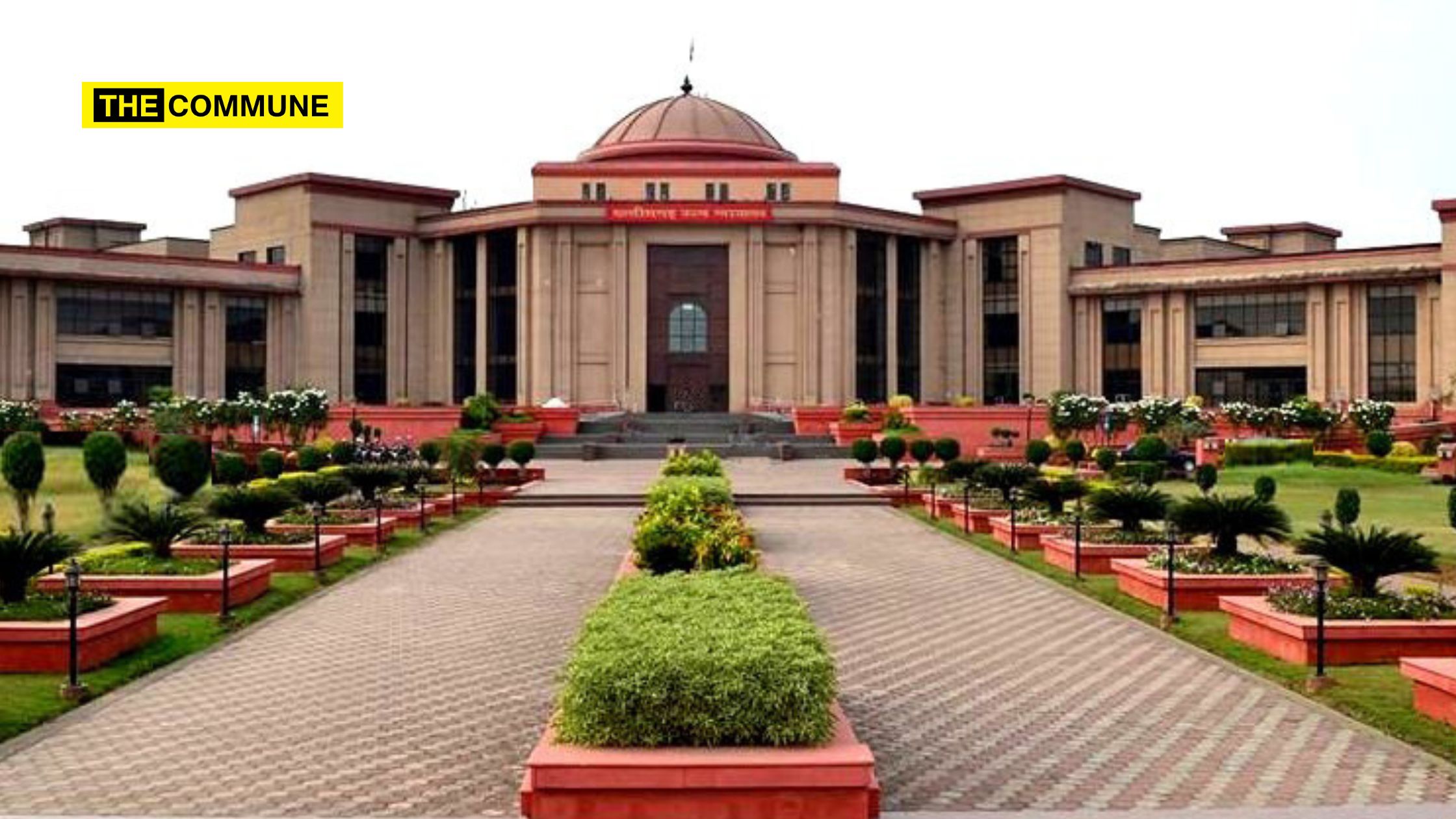
The District Magistrate (DM) of Leh has informed the Supreme Court that Ladakhi ‘climate activist’ Sonam Wangchuk was detained under the National Security Act (NSA), 1980, for allegedly engaging in activities “prejudicial to the security of the State, maintenance of public order, and services essential to the community.”
The statement was made in an affidavit filed before a Supreme Court bench comprising Justices Aravind Kumar and N. V. Anjaria. The affidavit was submitted in response to a petition filed by Wangchuk’s wife, Gitanjali Angmo, challenging his preventive detention under the NSA.
In the affidavit, the Leh DM stated, “The order of detention came to be passed by me after duly considering the material placed before me, as mandated under law, and after arriving at a subjective satisfaction on the circumstances that prevailed within the local limits of the jurisdiction.”
The affidavit further asserted that Wangchuk had been involved in actions deemed prejudicial to public order and state security. “Wangchuk had been indulging in activities prejudicial to the security of the State, maintenance of public order, and services essential to the community, as mentioned in the grounds of detention. I was satisfied and continue to be satisfied with the detention of the detainee,” the magistrate said.
The DM also informed the court that Sonam Wangchuk was detained on 26 September 2025 and “categorically informed both of the factum of his detention under the National Security Act, 1980, as well as the factum of his transfer to Central Jail, Jodhpur, Rajasthan.”
Addressing procedural compliance, the DM stated that the communication of the grounds of detention, as required under Section 8 of the NSA and Article 22 of the Constitution, was duly carried out. “Procedural safeguards under Article 22 as incorporated in Section 8 of the National Security Act, 1980, particularly and the National Security Act in general, have been faithfully and strictly adhered to,” the affidavit added.
The Supreme Court is hearing the petition challenging Wangchuk’s detention with activists and civil society groups demanding his release.
The Himachal Pradesh High Court has ruled that temple funds cannot be diverted, transmitted, or donated to government welfare schemes or activities unrelated to temples or religion, emphasizing that donations are made by devotees with the expectation that they will be used for deities, temple maintenance, and promotion of Sanatana Dharma.
A division bench comprising Justices Vivek Singh Thakur and Rakesh Kainthla delivered a detailed 38-page judgment on Friday (10 October 2025), which was made public on Tuesday (14 October 2025), while disposing of a civil writ petition seeking proper utilisation of temple funds under the Hindu Public Institutions and Charitable Endowments Act, 1984.
The court clarified that temple funds must be strictly used for the care and maintenance of deities, upkeep of temple spaces, and promotion of Sanatana Dharma. Observing the sanctity of devotees’ contributions, the bench stated: “The devotees offer donations to temples and through them to the divine with the clear belief that these would be used only for care of deities, maintaining temple spaces and promotion of Sanatana Dharma, and when the government appropriates these sacred offerings, it betrays that trust.”
The court stressed that every rupee of temple funds must be used exclusively for religious purposes or dharmic charity and cannot be treated like general state revenue. It listed specific instances where temple funds cannot be spent, including construction of roads, bridges, and public buildings intended for the state; government welfare schemes; investment in private businesses or industries for profit; purchase of vehicles for commissioners, temple officers, or others; and buying gifts or mementoes for VIP visitors, including chunni (scarf) and prasadam.
Temple officers and commissioners may claim reimbursement for legitimate temple-related expenses, but only at government rates for official vehicle use. To ensure transparency, the court directed all temples to publicly display monthly income and expenditure, projected funds from donations, and audit summaries on temple notice boards.
The bench clarified that temple trustees are custodians, with the deity recognized as a juristic person and the funds belonging to the deity, not the government. Any misuse of funds would constitute criminal breach of trust, and trustees found misutilising funds would be personally liable for recovery.
The petition was filed by Kashmir Chand Shadyal, seeking directions for strict compliance with statutory provisions regarding budget preparation, account maintenance, and expenditure under the 1984 Act. The court issued comprehensive instructions to prevent diversion of temple funds and safeguard the trust of devotees.
The Tamil Nadu DMK government is set to table a bill in the state assembly on 15 October 2025, seeking to ban the imposition of Hindi across the state, sources said. The legislation aims to prohibit Hindi hoardings, boards, movies, and songs, with officials emphasizing that the move will comply with the Constitution. An emergency meeting with legal experts was reportedly held last night to review the proposed legislation.
Senior DMK leader TKS Elangovan stated, “We won’t do anything against the Constitution. We will abide by it. We are against the imposition of Hindi.”
The bill has drawn criticism from opposition leaders. BJP’s Vinoj Selvam called the move “stupid and absurd,” adding that language should not be politicized. He further alleged that the DMK, facing controversies in recent court cases including Thiruparankundram, the Karur probe, and the Armstrong murder investigation, is using the language issue to divert public attention from the contentious Foxconn investment matter.
Earlier in March, the MK Stalin-led government had replaced the national rupee symbol (₹) with the Tamil letter ‘ரூ’ (ru) in the 2025–26 state budget logo. The decision attracted criticism from BJP leaders and Union Finance Minister Nirmala Sitharaman, though the DMK defended the change as a move to promote the Tamil language rather than reject the national symbol.
Saleh Al-Jafarawi, a 27-year-old Palestinian influencer and ‘Pallywood actor’ widely known online as “Mr FAFO”, was reportedly killed on Sunday, 12 October 2025, amid violent clashes between Hamas and rival Palestinian factions in Gaza City. Jafarawi, who amassed over 6 million Instagram followers, became infamous for his staged videos during the ongoing Israel-Hamas conflict, including posing as a doctor, a wounded patient, a fighter, and a journalist.
Jafarawi was reportedly accompanying Hamas’s “Saham” unit during clashes with the Doghmosh clan in Gaza City when he was killed by unknown assailants. The circumstances of his death remain unclear. Palestinian-American activist Ahmed Fouad Alkhatib suggested multiple possibilities, including Hamas targeting him to seize his digital assets, retaliation by the Doghmosh clan, or anti-Hamas fighters acting against a known propagandist. Reports indicate that his body showed signs of torture.
The father of Palestinian journalist and activist Saleh Al-Jafarawi bid a heartbreaking farewell to his son. In emotional footage, he kneels beside Saleh’s body, praying and speaking heartfelt words as he says his final goodbye pic.twitter.com/85o2oJAcNb
In contrast, Mohammed Zubair, the alleged fact-checker, expressed grief on social media, writing: “For the past two years, Saleh Al-Jafarawi reported on the genocide of people in Palestine. Israel killed him now during the ‘ceasefire’. RIP Saleh.”
Critics accused him of spreading Hamas propaganda and of embezzling an estimated $10 million in donations intended to rebuild the Al-Nasr Children’s Hospital, with suspicions that funds were funneled to Hamas. In March 2025, he was accused by the Palestinian Health Ministry in Ramallah of embezzling funds intended to rebuild Al-Nasr Children’s Hospital. Jafarawi launched a campaign claiming to raise $10 million, using the ministry’s logo and Kuwait Society for Relief branding. The ministry denied any involvement and warned against misuse of its name. The campaign, still active in March, drew outrage from Palestinians, with many accusing him of diverting funds to Hamas. Jafarawi was known for performing in staged propaganda videos, dubbed “Pallywood.”
Saleh Al Jafarawi, known online as “Mr. FAFO,” has been accused by the Palestinian Health Ministry of embezzling funds meant to rebuild Al-Nasr Children’s Hospital.
Many in Gaza suspect the money was funneled to Hamas.
Jafarawi’s notoriety stemmed from his performative videos, which many labeled “Pallywood”, staged content presenting dramatized conflict scenes. He “died” multiple times but came back alive over and over again. He played multiple roles – that of a reporter, a radiologist, a patient, MRI technician, singer, claimed his dad was on his death bed, blood donor,
“Known for documenting Gaza’s pain” 😂😂😂 he was a documented fckn pallywood clown!!! We have tons of receipts!
Se llama Saleh al-Jafarawi, le habréis visto como médico palestino, como pobre enfermo, como víctima de un bombardeo en Gaza, como reportero de guerra…
No os creáis nada de lo que veáis por ahí. Llevan décadas haciéndose las víctimas y saben hacerlo muy bien. Viven de ello. pic.twitter.com/ZcZnj1dPk7
Following his death, even Instagram removed Saleh Al-Jafarawi’s account which had 4.5 million followers, and archived snapshots on the Wayback Machine appear disabled.
Bharatiya Janata Party (BJP) leader Gourav Vallabh, who joined the party in 2024 after quitting the Congress, criticized Karnataka Minister Priyank Kharge over his recent remarks against the Rashtriya Swayamsevak Sangh (RSS). Vallabh described Kharge as a “living example of a ‘nepo kid’ in politics,” saying he owed his position entirely to family connections.
“Priyank Kharge is a living example of a ‘nepo kid’ in politics. He is in politics only because his father is the President of the Congress Party. Otherwise, what is his contribution to Karnataka? Has he made any contribution to Karnataka’s literature, culture, education, or development model? Nothing at all. His only ‘achievement’ is that he was born into the family of Mallikarjun Kharge, the Congress President,” Vallabh said.
Continuing his attack, he added, “He has no knowledge of India’s history, no understanding of the RSS’s contributions, nor of the Congress Party’s own history. He is the type of kid who goes ‘papa papa’. When such kids get upset or angry, they should be given a chocolate. They don’t have the right to question because they do not know that the RSS has worked in every corner of India to spread patriotic thoughts. They are unaware of what kind of work the RSS did for unity, because these are the ‘papa papa’ kids.”
VIDEO | Reacting to Karnataka Minister Priyank Kharge’s remark over RSS, BJP leader Gourav Vallabh says, “Priyank Kharge is a living example of a ‘nepo kid’ in politics. He is in politics only because his father is the President of the Congress Party. Otherwise, what is his… pic.twitter.com/0slBz6CaAX
Vallabh, a former Congress spokesperson and academic, joined the BJP at its headquarters in Delhi after resigning from the Congress in 2024. In his resignation letter to Congress president Mallikarjun Kharge, he cited “directionless” leadership and the party’s silence on remarks made against Sanatan Dharma by members of the INDIA bloc.
He said, “I was hurt by my party’s silence when some prominent leaders in the INDIA bloc made unsavoury remarks against Sanatan. I also publicly opposed our party’s stand on Ram Mandir (the ‘Pran Pratishtha’ of Lord Ram Lalla in Ayodhya). I am a Hindu by birth and a teacher by profession. This stance of the party has always irritated and troubled me. Many people associated with the party and (INDIA) alliance speak against Sanatan Dharma and the party’s silence on it is like giving it tacit approval.”
Vallabh, who contested the 2023 Rajasthan Assembly elections from Udaipur, had earlier made his electoral debut in 2019 from Jamshedpur East in Jharkhand. He said he could “neither raise anti-Sanatana slogans nor abuse the wealth creators of the country,” adding that he felt “suffocated” by the Congress’s economic positions.
Drug smuggling in Tamil Nadu continues to escalate, with cannabis remaining the most trafficked narcotic across the state, according to recent enforcement data. Large consignments are being brought in from Andhra Pradesh, Odisha, Manipur, Karnataka, and Goa, despite multiple crackdowns by law enforcement agencies.
Between 2021 and 2025, authorities registered 45,800 prosecutions and made 68,055 arrests, seizing more than 1.09 lakh kilograms of cannabis and 2,091 kilograms of other narcotics including synthetic drugs and psychotropic substances.
Officials note that the sustained rise in smuggling indicates the presence of organised interstate networks, particularly operating through coastal and border districts. Keezhakkarai in Ramanathapuram, due to its proximity to the Gulf of Mannar, has emerged as a vulnerable corridor for gold, ganja, and synthetic drug trafficking.
Former Minister M. Manikandan, speaking at an AIADMK event in Keezhakkarai, also raised alarm over the issue, alleging that “there is rampant smuggling of drugs, ganja, and gold through Keezhakkarai,” and that narcotic-laced products are being sold near schools, posing a serious threat to public safety.
Law enforcement agencies have intensified patrols in high-risk coastal areas and are expanding coordination with neighbouring states. However, the steady increase in both seizures and arrests suggests that Tamil Nadu remains a major hub in the regional narcotics supply chain.
The recent death of 24-year-old software engineer Anandu Aji from Ponkunnam, Kottayam, has been prematurely projected in the media as a suicide caused by sexual harassment allegedly experienced in an RSS training camp. However, a closer examination of the facts, using legal reasoning and scientific analysis, reveals several inconsistencies, procedural lapses, and political motivations that demand a thorough and unbiased investigation rather than hasty conclusions.
Anandu left home on the night of 10 October 2025 and was later found dead in a lodge room in Thampanoor, Thiruvananthapuram, a location geographically distant from his native place. The police did not find any ligature marks, injuries, or physical signs typically associated with suicide, which is why the case was registered as an “unnatural death under suspicious circumstances,” not as a confirmed suicide. Importantly, the post-mortem findings have not been publicly released, and the exact cause and method of death remain undisclosed. Despite this, various media houses and political entities, particularly aligned with the Congress party, immediately promoted a narrative blaming the RSS, even before the commencement of a formal forensic investigation. This indicates a pre-meditated narrative rather than evidence-based reporting.
The central basis of the allegation is a purported suicide note posted on his Instagram account as a “scheduled post.” The fact that it was not handwritten but typed and auto-published raises significant cyber forensic concerns. A scheduled post means the content was preset to be published at a future time. This leads to several critical questions: Did Anandu himself schedule the post, or did someone else have access to his account? Was the content altered or manipulated before publishing? What device and IP address were used? Until digital forensics verifies authorship, timestamp integrity, and device usage, the post cannot be treated as conclusive or legally admissible evidence. Furthermore, the content of the post itself lacks specific details, naming only an unidentified “NM” and vaguely referring to others, without providing full names, dates, or concrete incidents. In most genuine suicide cases, especially involving educated individuals who wish to ensure justice, the victim typically names the perpetrators explicitly. The vagueness of the post suggests either coaching, manipulation, or incomplete authorship, further making its credibility questionable.
Additionally, the deceased’s behavior prior to death contradicts typical suicidal patterns. The post reportedly contains systematic financial planning, including instructions to liquidate mutual funds, share market investments, and digital gold, and settle liabilities with the assistance of friends. Individuals experiencing acute suicidal intent rarely engage in rational, long-term financial planning, which suggests either emotional stability or external pressure. There is also no documented history of prior suicide attempts or psychiatric treatment, which further undermines the assumption of impulsive suicide. The most striking behavioral anomaly is the choice of location: Why would an individual travel over 150 km from his hometown to Thiruvananthapuram and book a lodge room to die? In many suspicious deaths in India, hotels and lodges are often used in cases involving third-party involvement or staged suicides. Therefore, CCTV footage, hotel visitor logs, room access data, and mobile call records must be examined to determine if another person was present before his death.
A crucial but largely ignored aspect is the family and social context. Anandu’s father was an RSS swayamsevak, and the family had long-standing ties with the organization. Though Anandu distanced himself from RSS approximately 7–8 years ago, there is no record of him raising any formal complaint or grievance against the organization. In contrast, his sister, Anjita Aji, married a Muslim man named Anjil Bashir, which the family initially opposed. However, Anandu strongly supported this inter-religious marriage and had similarly supported another relative in a similar situation. His Instagram post also references support for his sister’s marriage and clarifies that she or her husband should not be blamed for his death. This indicates that family or societal tensions around interfaith relationships may exist and could form an alternative motive or pressure point, which the media has completely ignored in favor of a politically convenient RSS-centered narrative.
Despite being targeted, the RSS has responded responsibly and transparently. The organization expressed condolences, confirmed its long-standing relationship with the family, and demanded a full, impartial investigation into both the death and the alleged suicide note. The Kottayam unit of RSS formally submitted a petition to the district police, seeking verification of the post through cyber forensic analysis and investigation into the suspicious circumstances of the death. It is uncommon for any accused organization to demand forensic scrutiny unless confident of its innocence, which further indicates that the allegations may be false, fabricated, or politically motivated.
In conclusion, neither the cause of death nor the authenticity of the alleged suicide note has been conclusively established. There is no forensic, medical, or legal evidence proving that Anandu died by suicide, nor is there any verified evidence implicating the RSS. On the contrary, there are multiple red flags indicating possible manipulation, third-party involvement, or alternative motives that demand scientific examination. Under the principles of natural justice, presumption of innocence, and due process, no individual or organization can be held liable based solely on unverified digital content or media speculation. A comprehensive forensic investigation, including autopsy transparency, cyber analysis, CCTV examination, and witness testimony, is essential to uncover the truth. Until then, politically driven narratives must be rejected in favor of facts, evidence, and the rule of law.
This article was originally published in AriseBharat and has been republished here with permission.
Subscribe to our channels on Telegram, WhatsApp, and Instagram and get the best stories of the day delivered to you personally.
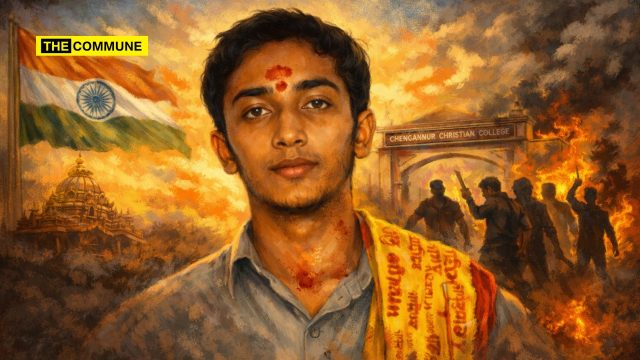
The Supreme Court on 14 October 2025 heard the Enforcement Directorate’s (ED) case regarding a massive, alleged liquor scam involving the Tamil Nadu State Marketing Corporation Limited (TASMAC), during which the central probe agency detailed the scale of “rampant corruption” and the discovery of incriminating evidence.
The hearing saw the ED, represented by Additional Solicitor General SV Raju, defend its investigation into what it claims are large-scale irregularities. The agency argued that despite the state government filing 47 police cases, the corruption continued, necessitating its probe into the money laundering aspect.
“There are 47 police cases… there are large-scale irregularities, large-scale corruption. We are only investigating the money laundering aspect. These are all predicate offences,” Raju told a bench led by Chief Justice BR Gavai.
The ED’s investigation, which included two sets of raids in March, allegedly uncovered evidence of a major scam. The agency has claimed it found unaccounted cash worth a staggering ₹1,000 crore. Furthermore, it stated it seized “incriminating” data related to corporate postings, and transport and bar licence tenders, as well as indent orders ‘favouring’ a few distilleries.
Crucially, the ED presented what it called “evidence” of fraudulent pricing, specifically surcharges of ₹10 to ₹30 per bottle sold by TASMAC outlets, imposed with the “involvement” of TASMAC officials. In a subsequent raid, the agency claimed to have found ‘manipulated data’ indicating cheating during the award of tenders.
The DMK-run state government and TASMAC had approached the Supreme Court to challenge the Madras High Court’s order that green-lit the ED’s action. Senior advocates Kapil Sibal and Mukul Rohatgi, arguing for the state, questioned the ED’s jurisdiction and its methods.
“We already filed FIRs… Why are they (the ED) coming in-between when we have already filed FIRs and we are investigating?” Sibal argued. Rohatgi raised concerns over privacy, asking, “What happens to the right to privacy of TASMAC staff… how could they detain mobiles of the staff? Women employees were held back…”
The bench itself raised pointed questions about the federal structure of the country. “What happens to the federal structure? Are you not taking away the state government’s right to investigate?” the Chief Justice asked, also referencing a section of the PMLA that requires the ED to share evidence of other crimes with the relevant state authority.
This is the second time in six months the top court has questioned the ED on this case. In a previous hearing in May 2025, Chief Justice Gavai had told the agency, “You may register cases against individuals… but corporations? Your ED is passing all limits!”
The case has significant political ramifications, erupting as Tamil Nadu’s political parties prepare for next year’s Assembly poll. While the ED insists it is investigating a major financial scam, the ruling DMK has consistently accused the agency of a “political vendetta” aimed at maligning the state government.
The Kerala Communist government has intervened in a dispute at St. Rita’s Public School in Palluruthy, Kochi, after a Muslim eighth-standard student was barred from wearing a hijab. General Education Minister V. Sivankutty on Tuesday directed the Christian-run private school to permit the student to continue her studies while wearing her religious headscarf and sought an explanation from the management for violating her rights.
The minister said the school’s actions caused mental distress to the student and her parents and constituted a “serious lapse” under the Right to Education Act. Citing an inquiry report by the Ernakulam Deputy Director of Education, Sivankutty stated that the incident amounted to a breach of constitutional rights guaranteeing freedom of religion.
He ordered the school principal and management to address the harm caused and submit a report by 11 AM on Wednesday. “No student should face such hardship in Kerala, which upholds secular values,” Sivankutty said, adding that no educational institution will be permitted to violate constitutional protections.
The report found that the student’s removal from class over her hijab was unlawful, prompting the minister to instruct that she be allowed to attend classes wearing it. However, the school has been given the authority to decide on the colour and design of the headscarf as part of the uniform.
The controversy began when the school declared a two-day holiday on Monday after tensions escalated between the management and the student’s parents. A letter by Principal Sister Heleena Alby, circulated on social media, cited “mental stress” among staff and students following pressure from the student, her parents, and outsiders.
Meanwhile, a PTA representative alleged that the girl’s parents were supported by the Social Democratic Party of India (SDPI) as reported in NDTV, whose members allegedly misbehaved with school authorities, most of whom are nuns. Earlier, Ernakulam MP Hibi Eden said the student’s father was ready to allow his daughter to continue her education in line with school norms.
In the wake of yet another tragic cough syrup scandal that claimed the lives of children in India, platforms like The News Minute and its “journalists” like Pooja Prasanna have positioned themselves as fearless crusaders against a failed system. Their narrative, however, is not one of impartial investigation but of a carefully curated, politically convenient hit job. While rightly slamming systemic failures, they perform all kinds of acrobatics to shield their political master – the Dravida Munnetra Kazhagam (DMK) government in Tamil Nadu from the very scrutiny they demand of others.
While she proudly claims that “the truth in the Madhya Pradesh case came out only after the Tamil Nadu Directorate of Drugs Control tested the samples and found them containing nearly 50% Diethylene Glycol (DEG),” she conveniently pushes the blame squarely on the Central and Madhya Pradesh government – lucky for her both are BJP! She said, “But the Madhya Pradesh FDA cleared Coldrif claiming it was free of contamination. The Union Health Ministry repeated the scheme without conducting its own tests.”
Well, the TN Directorate did the tests only after the children died because the origin of the cough syrup was a manufacturer in TN!
The manufacturer of the deadly ‘Coldrif’ syrup, Sresan Pharmaceuticals, operated out of Tamil Nadu. The license to manufacture drugs, a sacred trust to protect human life, was granted to this company by the Tamil Nadu drug regulatory authorities, which operate under the TN government’s Health Department – now the ruling government is the DMK.
Before a drug can kill children in Madhya Pradesh, it must first be produced unsafely in its home state. The primary, most fundamental layer of regulation rests with the state licensing authority.
Under India’s Drugs and Cosmetics Act, 1940, and its rules, the manufacturer (production unit) is legally required to test all raw materials, intermediates, and finished formulations.
Each batch must pass quality control (QC) before release.
The company’s in-house or approved lab conducts these tests for purity, potency, identity, and contamination.
Only after satisfactory results and batch release certificates can the product be marketed or transported to other states.
The Tamil Nadu drug control department, under the DMK government, catastrophically failed in its most basic duty: ensuring that a manufacturer within its jurisdiction was not producing poison. This is the ground-zero failure.
The “Political Donations” Angle: A Reckless And Unsubstantiated Allegation
Pooja Prasanna tries to establish that pharma companies donate to political parties and that some of these companies have violations. However, it does not provide a single piece of evidence that a specific donation led to a specific regulatory favor, such as a dropped investigation or a waived inspection. It implies a direct quid pro quo without proving it. This is the most contentious part from an Indian perspective, as it veers into unsubstantiated conspiracy theory.
The report presents the regulatory system as a monolithic failure. However, India’s drug regulation is a federal matter, primarily implemented by State Drug Control authorities.
The report heavily implies that political donations directly buy immunity from prosecution. However, it provides zero evidence linking a specific donation from a violating company to a specific regulatory favor. In India, where political funding is a complex and legal activity, this is a serious allegation made without concrete proof.
It states that 7 of the 35 donating companies were “under investigation.” Being under investigation is not a conviction. Due process is a cornerstone of any democracy, including India’s. To insinuate that all companies under investigation are guilty and are bribing their way out is a violation of the principle of “innocent until proven guilty.”
Prasanna lists down all the drug related deaths allegedly caused by India’s pharmaceuticals as if to portray India in a poor light. At a time when PM Modi speaks about Atmanirbharta in all sectors, when India is aiming to become the leader in the pharma industry, making drugs in India for the world, Pooja Prasanna and TNM’s attempt to push propaganda seems like an effort to please their western masters and add yet another blackmark to the country.
This narrative, aired without irrefutable proof, can be seized upon by international competitors to unfairly damage the reputation of the entire $50 billion Indian pharmaceutical industry, which is a critical source of affordable medicine for the Global South and a point of national pride.
What Pooja Prasanna does not tell you is that in 2023, the Central Drugs Standard Control Organization (CDSCO) made testing for contaminants like DEG and EG mandatory for all cough syrup exports before release.
The government has blacklisted and cancelled the licenses of several manufacturers involved, such as Marion Biotech and Digital Vision.
The draft New Drugs, Medical Devices and Cosmetics Bill, 2022 is explicitly mentioned but framed as an unfinished failure, without acknowledging it as a proactive (if delayed) step to modernize a colonial-era law.
Lack Of Context On The Scale Of The Industry
The report focuses on the failures but provides no context for the massive scale of the Indian pharmaceutical sector.
India is the world’s largest producer of generic drugs, supplying over 50% of global demand for various vaccines and 20-22% of generic medicine exports. To highlight a few criminal manufacturers without mentioning that thousands of Indian companies comply with global standards (supplying to the US, EU, etc.) creates a distorted image that all “Indian-made medicines” are suspect.
The report dismisses the economic pressures of producing ultra-low-cost medicines for a price-sensitive population like India’s and the developing world. While this never excuses adulteration, a holistic Indian perspective would recognize the challenge of maintaining quality at rock-bottom prices, a challenge Western regulators rarely face to the same degree.
Narrative Of A “Failed State” And Selective Comparison
The tone and framing paint a picture of a negligent state that does not care about its children.
The report praises the US FDA’s response to its 1937 tragedy but fails to mention that the US system itself has had major failures (e.g., the Opioid crisis). Furthermore, it doesn’t acknowledge that the US FDA is a century-old, centrally funded agency with a budget of over $6 billion, while India’s CDSCO and state authorities are severely understaffed and underfunded in comparison, managing a much larger and more diverse market.
The report criticizes the government’s advisories to doctors as “shifting the burden.” From an official Indian perspective, these advisories are a prudent and immediate public health measure to save lives while systemic reforms are implemented. It is a standard practice worldwide to issue such advisories during a health crisis.
There is no denying the tragedy or the need for robust regulation. However, journalism that focuses its fire exclusively on one particular party while ignoring the failures of those actually responsible loses all claim to impartiality. The News Minute, by omitting the Tamil Nadu regulator’s key role and twisting the narrative, scavenges engagement from the deaths of 23 children.
Subscribe to our channels on Telegram, WhatsApp, and Instagram and get the best stories of the day delivered to you personally.