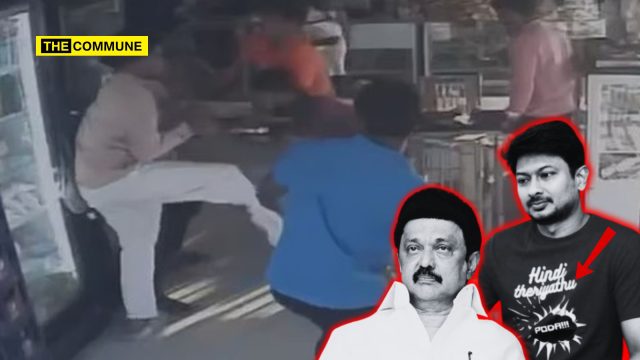
At a bakery in Karumathampatti near Coimbatore, a migrant worker from Uttar Pradesh who had gone to a bakery to have tea was stabbed with a knife for not speaking in Tamil. The incident took place on 15 December 2025 but came into public focus after CCTV footage of the assault began circulating on social media on Wednesday, 31 December 2025.
According to the police, the victim, Govind Kond (27), a native of Maharajganj district in Uttar Pradesh, is employed as a carpenter with a private firm. He has been staying at a private hall in Karumathampatti since 9 December 2025. On 15 December 2025, at around 5 PM, Govind and his co-worker Rakesh (19) visited a nearby bakery to have tea.
Police said two unidentified men approached Govind and questioned him in Tamil. When Govind responded in Hindi that he did not understand the language, the exchange reportedly escalated into an argument. During the confrontation, Rakesh was allegedly slapped. When Govind intervened, one of the men is said to have pulled out a knife concealed in his clothing and stabbed Govind on the chest, the left side of his waist, and his hands.
Bakery staff intervened, following which the attackers fled the spot. Govind was rushed to a private hospital with multiple injuries and is undergoing treatment. Based on his complaint, Karumathampatti Police registered a case and launched a search to trace the suspects.
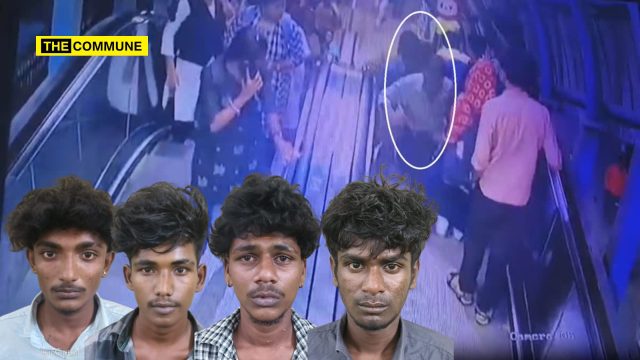
The incident has drawn attention in the backdrop of another violent attack involving a migrant youth reported from Chennai. In a separate case, Tiruttani Town Police apprehended four teenage school dropouts for attacking a 34-year-old migrant worker from Odisha near the Old Railway Quarters in Tiruttani.
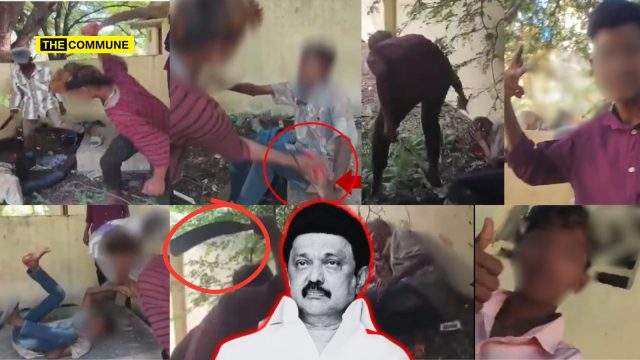
Police said the victim, identified as K Suraj, was assaulted with sickles following a drunken argument on a suburban train. The attack was allegedly filmed by one of the juveniles for an Instagram reel. Suraj sustained severe cut injuries and was admitted to hospital, where his condition was reported to be stable.
The four juveniles were subsequently produced before the Juvenile Justice Board and sent to the Observation Home in Purasaiwalkam.
Police are continuing investigations in both cases.
An artwork displayed at the Kochi-Muziris Biennale has triggered protests from Christian organisations in Kerala, leading the Kochi Biennale Foundation to temporarily shut down one of its exhibition venues, citing law-and-order concerns during the New Year period. The controversy centres on a painting by artist Tom Vattakuzhy, exhibited as part of the ‘Edam’ exhibition at the Garden Convention Centre, which Christian groups alleged misrepresented Leonardo da Vinci’s iconic depiction of the Last Supper and hurt religious sentiments.
Christian bodies, including the Kerala Latin Catholic Association and the KCBC Vigilance Commission, objected to the visual parallels drawn between the artwork and the Holy Mass, arguing that sacred Christian imagery had been distorted. Complaints were submitted to the Chief Minister and the Cultural Affairs Minister, seeking removal of the artwork and a probe into how it was cleared for display. Following protests and warnings of agitation, the Biennale Foundation closed the venue for a few days, stating that the police were unable to guarantee adequate security amid New Year celebrations.
However, the Biennale administration and curators firmly refused to remove the artwork. The Kochi Biennale Foundation maintained that taking down the work would amount to censorship and a violation of artistic freedom. Curators clarified that the artwork was inspired by a literary and theatrical tradition, depicting the historical figure (a German spy) Mata Hari in the moments before her execution, and was not intended as a commentary on Christian theology. The artist, who comes from a Christian background, also asserted that the work was rooted in humanist values shaped by his upbringing and not meant to offend any faith. Despite sustained objections, the Biennale stood by the decision to retain the artwork, opting instead for dialogue with protesting groups.
When Loyola College Exhibition Derogated Bharat Mata & Hindu Symbols
This incident reminds one of events that unfolded at the Loyola College in Chennai in 2019. During a cultural festival, an art exhibition featured paintings that were derogatory towards Hindu symbols and sentiments. One painting depicted ‘Bharat Mata’ (Mother India) in a manner associated with the #MeToo movement, while others portrayed Hindu icons like the ‘trishul’ associated with violence, and even depicted Prime Minister Narendra Modi in a controversial light.
The reaction from Hindu groups, including the BJP and RSS, was one of immediate and strong condemnation. They denounced the paintings as a malicious insult to Hindu traditions and national icons, lodging formal police complaints and announcing large-scale protests.
Only after sustained protests and political pressure did Loyola College step in to remove the offending artworks. The college issued an apology, stating that the paintings had been taken down once the objections were brought to the notice of the management. The organisers acknowledged that the exhibits had caused offence and sought to defuse the situation by withdrawing them, bringing the episode to a close.
When MF Hussain Derogated Goddess Saraswati
The episode has also revived a wider debate on selective outrage and artistic double standards in India’s cultural discourse. Remember how Hindu deities have repeatedly been depicted in obscene, demeaning, or provocative forms by artists such as MF Husain and others, with liberal and Left-leaning circles routinely defending such works in the name of artistic freedom. In contrast, in the present case involving Christian religious symbolism, organised church bodies were able to mobilise protests strong enough to force the temporary closure of the venue, placing pressure on organisers and compelling the artist to issue public explanations.
The present controversy has exposed real intolerance backed by institutional power. While Hindu sentiments are often dismissed as expendable, Christian groups were able to effectively shut down an exhibition and demand the removal of a work they found objectionable, raising questions about whether one rule applies to Christianity and another to Hindu beliefs in India’s art and cultural spaces.
Christians outrage over a painting in Kerala after an artist showed Mata Hari in place of Jesus Christ.
A church body shut down the exhibition, saying it will be allowed to reopen only after the painting is removed.
Police in Chennai have arrested four men in connection with the knife attack on a retired Army veteran and the theft of his mobile phone near the Tambaram bus stand.
The victim, Michael (55), a resident of Ranganathapuram 6th Street in West Tambaram, is a retired Army serviceman currently employed as a security guard at a State Bank of India branch in Guindy. On Monday (29 December 2025) evening, after completing his duty, he travelled to Tambaram and was walking home when he was intercepted near the Ambedkar statue at the Tambaram bus terminus.
According to police, a four-member gang that had been following him waylaid Michael, attacked him with a knife, and snatched his mobile phone before fleeing the scene. Michael sustained injuries in the assault and was admitted to a private hospital in Chromepet, where he received treatment.
Based on a complaint, Tambaram police registered a case and analysed CCTV footage from the area to identify the suspects. The four accused were later traced and detained near the MRM TASMAC outlet in Tambaram, after which they were brought to the Tambaram police station for questioning.
Police identified the accused as Ravi Bharathi alias Vandu (21) from Chennai Central, Kumaresan (25) from Guduvanchery, Hariharan (25) from Krishnagiri district, and Munusamy (25) from Sriperumbudur.
During interrogation, the accused reportedly confessed that they had been involved in mobile phone snatching for over three years in and around the Tambaram bus stand and other crowded areas, specifically targeting elderly persons. Police said the stolen phones were sold, and the proceeds were shared equally among the four.
Investigators also stated that the accused had intensified their thefts to raise money to celebrate the New Year 2026 at a star hotel. A knife and the stolen mobile phone were recovered from their possession. All four were produced before a magistrate and remanded to judicial custody.
This comes days after multiple attacks on people across Tamil Nadu – be they residents or migrant workers.
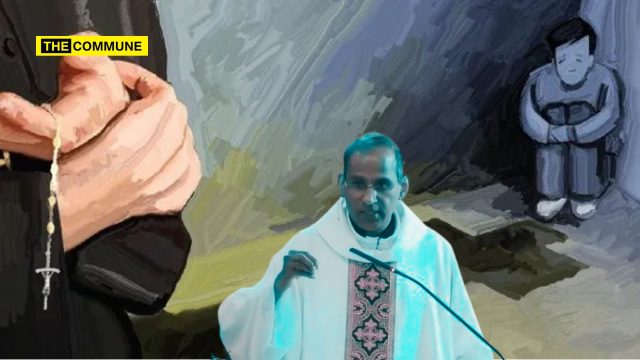
A 60-year-old Catholic priest from Kerala, India, has been arrested and charged in Canada with sexual offences involving children under the age of 16, prompting his immediate removal from pastoral duties.
Father James Cherickal, a priest of the Syro-Malabar Catholic Church hailing from Kozhikode, Kerala, was arrested by the Peel Regional Police on 18 December 2025. He faces one count of sexual assault and one count of sexual interference, which in Canadian law, refers to sexual crimes committed against children under 16 years of age.
According to a statement issued by the Archdiocese of Toronto on 20 December 2025, the arrest followed an allegation of misconduct against Cherickal, who was serving as the pastor of St. Jerome’s Catholic Church in Brampton at the time. The Archdiocese stated it learned of the allegation and subsequently cooperated with the police investigation.
“Following our protocols and procedures relating to allegations of misconduct, Fr Cherickal has been removed from pastoral ministry,” the Archdiocese’s statement read. It further emphasized the legal principle of presumed innocence, noting, “As with any accused in our Canadian legal system, he is considered innocent until proven guilty and entitled to due process.” The statement also affirmed that the Archdiocese views any such accusation “as an urgent matter that requires serious attention.”
In the wake of the arrest, St. Jerome’s Church announced the cancellation of Holy Mass services from 25 December 2025, through 3 January 2026.
Father Cherickal’s ecclesiastical background ties him to the Syro-Malabar diocese of Thamarassery in Kerala. The Syro-Malabar Church, headquartered in Kochi, is the largest Eastern Catholic church in India and is in full communion with Rome. He was deputed to Canada approximately three decades ago.
Records from the Archdiocese of Toronto indicate that Cherickal had been ministering in various parishes within the archdiocese since 1997. He had taken up his post at St. Jerome’s Church in Brampton just last year. During his time in Canada, he also served the Syro-Malabar mission established for the significant community of Catholic migrants from Kerala residing in the country.
Cherickal is part of a substantial cohort of priests from Kerala who have been sent abroad to address clerical shortages, particularly in nations with large Keralite diaspora communities such as Canada, the United Kingdom, and Australia. Prior to his assignment in Canada, he served in various roles within the Diocese of Thamarassery in Kerala.
The Peel Regional Police investigation is ongoing. The Archdiocese of Toronto has not released further details on the specific nature or timeline of the alleged crimes, citing the active legal proceedings.
The above incident is not uncommon especially among churches across the world.
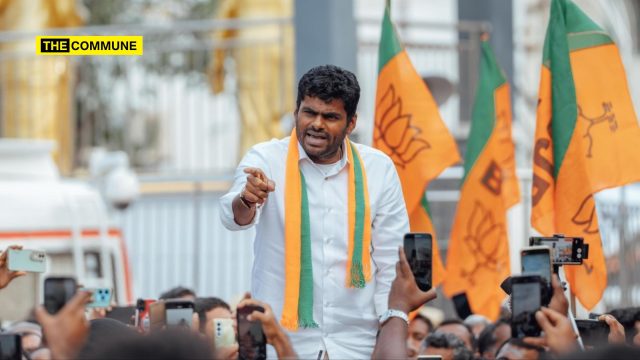
Speculations galore on the candidature of BJP leader Annamalai in the upcoming 2026 Assembly Polls. While there are many in social media who are keen on Annamalai contesting the 2026 Assembly elections, there are a few who are of the view that he must move to New Delhi and take up a central role. The authors of this article are of the view that Annamalai must contest the 2026 Assembly Elections in Tamil Nadu. We also further identify constituencies from where he can contest and the reasons behind the choice.
Why Annamalai Must Contest?
Signalling and intent matters a lot in politics. Ace Strategist Prashant Kishor did not contest the just concluded Bihar Assembly elections. This move proved suicidal for his party. Similarly, Vaiko committed the hara-kiri of backing out from contesting from Kovilpatti in 2016. This move rang the death knell for the much-famed PWF alliance then.
If a leader doesn’t contest, Indian electorate don’t take them seriously. Annamalai by far is the tallest leader in Tamil Nadu BJP now by leaps and bounds and probably the third largest leader in Tamil Nadu with a mass appeal after MK Stalin and Edappadi K. Palaniswami. His failure to stand in the upcoming elections will send a wrong signal to the electorate and leaders like TVK’s Vijay will fill his space. P Chidambaram who was once touted to be an upcoming and next big leader in 1980s fizzled out as he moved to New Delhi losing the tag of a serious contender. This 2026 election may be Stalin’s to lose or EPS to win but for Annamalai, it is an election to emerge as the third biggest mass leader and to do so, one must fight the election irrespective of the outcome.
Lessons From Stalwarts
If a leader has to emerge caste neutral and expand his base big time, he needs to come out of his comfort zone and contest in new battlegrounds. Jayalalitha in 1989 contested in Bodinayakkanur in South Tamil Nadu and in 1991 contested from Kangeyam in West Tamil Nadu and Bargur In North West Tamil Nadu. She established her caste neutral credentials and appealed to different sections and regions and won. Bodi is a Mukkulathor and Naidu dominated seat while Kangeyam was a Kongu Vellalar Gounder dominated seat while Bargur had a sizeable Telugu and Vanniyar population. She could have stood in Mylapore or T Nagar in 1989 and won but chose totally different seats with diverse demography and regions. She understood the importance of being caste neutral. She chose her seats to appeal to wider sections and won. The fact that Kongu still remains a strong ADMK bastion even now is because of her decision to contest from Kangeyam in 1991.
Similarly, Vijayakanth chose to contest from Virudhachalam in 2006 and won the election. He was conscious of not getting branded as a Telugu Naicker politician. He wanted to prove his appeal across communities and chose Virudhachalam then. It cemented him as a caste neutral politician and widened his appeal paving the way to become Leader of Opposition in 2011.
Annamalai contested 2021 election from Aravakurichi and 2024 Lok Sabha polls from Coimbatore. Both the constituencies are in Kongu region. If he decides to contest from Kongu region again, he stands to be labelled as a Kongu politician. He is only 40 years and has atleast 3 decades ahead of him in politics. He needs to widen his base and appeal. He should chose his constituency to fight accordingly.
Where Should Annamalai Contest From?
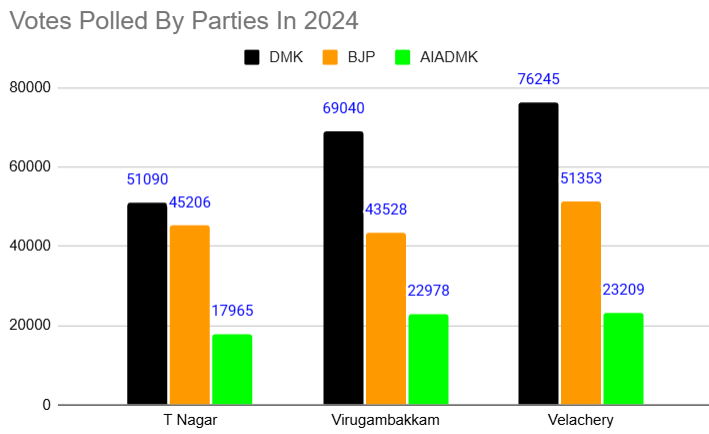
BJP finished second in South Chennai Lok Sabha seat in 2024 ahead of ADMK and polled impressive votes in several constituencies.
All these 3 constituencies are cosmopolitan and have nationalistic minded voters. BJP too performed well in many wards in Greater Chennai Corporation polls in these constituencies and even won a ward falling under T Nagar Assembly segment.
A candidate like Annamalai in T Nagar in 2026 can invigorate voters big time, win the seat and the ripple effect will be felt across Kanchipuram, Tiruvallur, Chennai, Chengalpattu (KTCC) seats numbering around 36 in 2026. KTCC region was the weakest link for NDA in 2021 when it won just one out of the 36 seats. Now there is a chance to tear into this DMK’s fort with Annamalai taking charge of the region and contesting from the seat. His appeal among middle class voters will swell further/ Standing outside Kongu in a cosmopolitan seat will bolster his caste neutral appeal as well. Just like Narendra Modi made Maninagar his fort and Ahmedabad a BJP bastion, Annamalai can make T Nagar his fort and Chennai a NDA bastion in the years to come.
A constituency like T Nagar, is small measuring about 10 sqkm, is a sure shot win for Annamalai. It will make his campaign easy and help him gain time to campaign across other KTCC seats and across the state. A bulk of his time was spent crisscrossing a bigger Aravakurichi (Assembly Election 2021) and Coimbatore (Lok Sabha Election 2024) leaving him with very little time to focus on other seats. A seat like T Nagar will help him optimize his efforts and time big as well.
Taking into account all these factors – creating a fort, laying foundation for a future bastion, testing waters in newer territory, boosting the caste neutral image and widening the appeal in newer regions, Annamalai must contest from T Nagar constituency in 2026.
Another constituency where he can try is Madurai South where the BJP polled 42073 votes and finished a narrow second to DMK ally CPI-M’s 45783 votes in 2024 Lok Sabha polls. Madurai South is also cosmopolitan with people from various communties like Saurashtra, Mukkulathors, Yadavas, Naickers and Devendra Kula Vellalar’s reside. This constituency is also close to Tiruparankundram, the abode of Lord Muruga. And the seat is in South Tamil Nadu – the place Sangam flourished and Tamil prospered. Contesting here too will have huge ripple effect in Pandya region which has 60 Assembly seats and NDA won only 19 in 2021. And Annamalai can broaden his appeal even more across a diverse demography.
Annamalai must contest 2026 polls. He must contest outside Kongu – either in T Nagar or Madurai South, rewrite the electoral history of these regions and create new bastions for NDA.
Subash R is a finance professional.
Kaushik S is a political writer.
Subscribe to our channels on Telegram, WhatsApp, and Instagram and get the best stories of the day delivered to you personally.
It took the spilled blood of an Odisha migrant worker in Tiruttani — hacked by a gang of drug addicts —for Pa Ranjith, a propaganda filmmaker who has monetised caste aesthetics, to come out of his cocoon and preach at length. He wrote of a “heart trembling” at the inhuman cruelty, blamed the state’s “negligence” on drug culture, invoked the holy trinity of the Constitution – Liberty, Equality, Fraternity – and condemned the “dangerous trend” of othering the “Vadakkan” (North Indian).
திருவள்ளுர் மாவட்டம், திருத்தணியில் நடந்த மனிதமற்ற கொடூர செயலை கண்டு நெஞ்சம் பதறுகிறது!
அண்மைக்காலமாகத் தமிழகத்தில் அதிகரித்துவரக்கூடிய போதைப் பொருள் கலாச்சாரத்தைத் தடுக்கத் தவறிய ஆட்சியாளர்களுடைய மெத்தனப் போக்கே இதுபோன்ற சம்பவங்களுக்கு முக்கிய காரணம். இத்தகைய குற்றச் செயல்கள்…
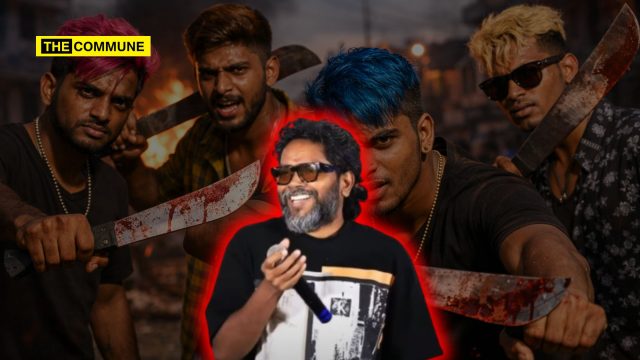
It was plain performative wokeness, a sanitized, state-approved version of anguish that carefully vacuumed out any trace of his own industry’s and his own artistic projects’ complicity in creating the very hellscape he now pretends to mourn. Pa. Ranjith can be considered one of the factors in driving the Pullingow culture.
What Is This Pullingo Culture?
The word Pullingo gained prominence after a Gaana song “Enga Pullingo Ellam Bayangaram” went viral a few years ago.
This has evolved into a distinct subculture with a massive online presence, sustained by countless social media profiles. Offline, this identity is often signalled through flashy hair colours, customised motorcycles particularly Dio scooters, and tight-fitting jeans.
Today, the term is commonly used to describe youths associated with rash driving, disruptive street conduct, and exaggerated social-media bravado—traits evident in the attackers of the Odisha migrant worker.
Pa. Ranjith, An Enabler
To lecture these drug-addled, morally vacant teenagers on “constitutional values” is like preaching to a pack of rabid dogs. The assumption that these youths possess a framework to understand fraternity or liberty is a fatal fantasy. They are products of a culture that has systematically dismantled all traditional frameworks of morality – family, religion, community restraint -and replaced them with a curated, cinematic rebellion that glorifies the very anarchy Ranjith now condemns. They don’t quote Ambedkar; they mimic the swagger of the gangsters in the films his cinematic universe has normalized.
And herein lies the rotten core of Ranjith’s contradiction. For years, he and his cultural ecosystem have weaponized “subaltern art” as a political cudgel. In the name of elevating the oppressed, they have aggressively mainstreamed a few Gaana artistes. Let’s drop the pretense: a significant portion of this musical genre’s popular lyrics are a cesspool glorifying rowdyism, drunken bravado, misogyny, women sexualization, substance abuse, and a violent, anti-establishment posture. Yes, there are sprinklings of social justice – a thin veneer of political correctness over a thick core of decadence. Ranjith’s films, while narratively advocating for the oppressed, are visually and auratically drenched in this very macho of the marginalised, often romanticizing the outlaw as the only true revolutionary.
You cannot spend a decade aestheticising ghetto rebellion, painting the “rowdy” as a tragic hero fighting a corrupt system, and then act shocked when boys in a real ghetto, devoid of your narrative’s political scaffolding, enact the style without the substance. You gave them the costume, the attitude, the soundtrack of violence, and then feign horror when they wear it. His cinema, and that of the ‘gangster-genre’ wave he indirectly legitimised, didn’t just reflect a culture; it actively designed its wardrobe.
His sermon’s most nauseating part is the sudden, convenient invocation of “Constitutional values.” This from a strand of activism that has made a sport of demonizing a particular way of life as “Brahminical.” Carnatic music? Oppressive. Bharatanatyam? Brahminical. Academic merit? A sly tool of caste exclusion. The relentless push isn’t to add, but to replace; not to elevate the subaltern to classical platforms, but to tear down the classical and declare the rubble as liberation. The goal seems less about empowerment and more about inverted majoritarianism, where whatever the perceived “oppressor” caste does must be vilified, and whatever the “oppressed” does must be celebrated, even when it is morally and socially degenerative.
The tragic result is what we see: a generation being severed from aspirational disciplines (arts, sciences, meritocracy) and fed a diet of corrosive “counter-culture.” This isn’t liberation; it’s a trap. It swaps one hierarchy for another – exchanging the possibility of excellence for the prison of perpetual, stylized grievance. It tells a young man that becoming a doctor is “their system,” but becoming a local tough with a slick reel is “authentic.” Social media has then turbocharged this, turning the gaana-gangster pose into a viral currency.
So, when Ranjith piously calls for “fraternity,” one must ask: Fraternity between whom? His entire political project is built on highlighting difference, historical grievance, and separateness. His films, for all their final-frame unity messages, are two-hour journeys through the anatomy of division. To now preach a sudden, generic “Indian fraternity” after the bloodshed is the height of directorial duplicity. It’s a post-credit scene that rings hollow after the main feature’s relentless focus on conflict.
Very diplomatically, without naming the government or the actual culprits, he says, “Issues like drug culture, weapons culture, and social division should not be approached as isolated factors. All of these are interconnected.”
This is a masterful dodge – a statement so broadly true it is meaningless, allowing him to nod sagely at societal collapse without ever specifying the links in the chain he himself has helped forge. For the crucial, unasked question remains: What is the cultural engine that interconnects them? Who provided the aesthetic that bonds the drug, the weapon, and the divisive identity into a single, seductive package of “cool”? Who filmed the slow-motion sequences where substance abuse looks like rebellious ecstasy and the gleam of a weapon signifies power? Who packaged the outlaw life, steeped in this toxic trifecta, as the only authentic form of resistance? The connection he hints at is not an abstract social phenomenon; it is a product. And its most influential mood boards have been the very films that he and his cinematic school have produced. The blood in Tiruttani has a hue that matches the colour palette of this gritty, grim, and glorified violence.
The final insult is his call for police to act against violent reels. This from a filmmaker whose heroes defy the police as a matter of principle, where the khaki uniform is often the villain. You cannot spend your career painting the state’s punitive arm as intrinsically oppressive and then, when your aesthetic spawns real monsters, call upon that same arm to clean up your mess.
The tragedy is doubled. A migrant worker is attacked in this case; more news is coming out that at various instances migrant workers ended up dead. And the Tamil boys, who should have been his brothers, are his assaulters, (and in the other case, their murderers) their minds poisoned by a cocktail of cheap drugs and cheaper cinema masquerading as political art. Pa Ranjith’s sermon is not a solution; it is a sequel – another performance, designed to absolve the performer. But the audience is no longer buying it. The screen has broken, and the real violence is now playing in our streets. The director, for once, doesn’t get to yell “cut.”
Subscribe to our channels on Telegram, WhatsApp, and Instagram and get the best stories of the day delivered to you personally.
A complaint has been submitted to the National Human Rights Commission (NHRC) alleging a brutal attempted murder of an Odisha migrant worker in Tamil Nadu and raising serious concerns over his whereabouts following the incident.
The complaint, dated 31 December 2025, addressed to NHRC Chairperson Priyank Kanoongo, pertains to the alleged assault on Suraj, a 34-year-old migrant worker from Odisha, who was attacked on or around 27 December 2025 in Tiruvallur district of Tamil Nadu.
According to the complaint, the incident occurred near the old railway quarters close to Tiruttani Railway Station. Suraj was allegedly assaulted by four minors, aged around 17, who were said to be under the influence of ganja. The assailants allegedly filmed the attack themselves and were seen celebrating the violence in the video footage cited in the complaint.
The complainant stated that the youths were initially creating a disturbance by filming Instagram reels near a Chennai–Tiruttani train. When Suraj objected to their actions, he was allegedly forced to a secluded spot near the railway quarters, where the assault took place.
It has been alleged that the attackers used sickles and machetes, inflicting severe injuries on Suraj’s head, face, and left arm. One of the assailants was allegedly seen flashing a “victory sign” while the assault was being recorded.
While initial police information reportedly indicated that Suraj was admitted to the Government Hospital in Tiruvallur for treatment, the complaint alleges that there has since been a complete loss of contact with him. The complainant has expressed apprehension that the victim may have been moved to an undisclosed location, placed under illegal confinement, or may have succumbed to his injuries, with facts allegedly being suppressed.
The complaint cites multiple provisions of the Bharatiya Nyaya Sanhita, 2023, including attempt to murder, voluntarily causing grievous hurt by dangerous weapons, wrongful confinement, unlawful assembly, rioting, criminal intimidation, and common intention.
Seeking urgent intervention, the complainant has requested the NHRC to direct authorities to provide immediate proof of life or verifiable confirmation of Suraj’s medical condition. The plea also seeks the constitution of an independent inquiry, including the possibility of a CBI probe, and the transfer of the investigation to a central agency if local bias is established. Protection and compensation for the victim and his family have also been sought.
This getting nasty, odisha govt is asking for proof of life for Suraaj.
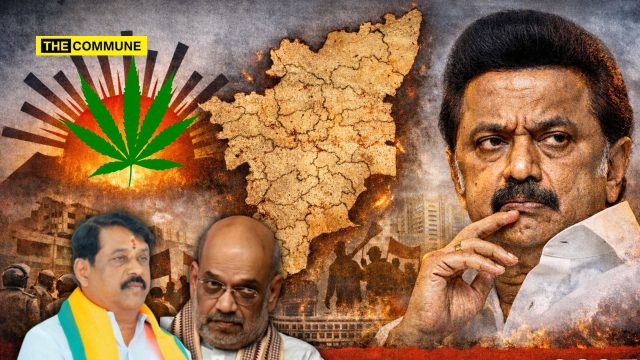
Bharatiya Janata Party’s Tamil Nadu unit president and MLA Nainar Nagenthran has written to Union Home Minister Amit Shah, seeking the Centre’s intervention over what he described as a deteriorating law and order situation in the State.
In a letter dated 31 December 2025, Nagendran stated that Tamil Nadu had witnessed a series of violent and heinous incidents in recent days, which had raised serious concerns about public safety. Referring to specific cases, he mentioned that on December 28, a 22-year-old migrant labourer from West Bengal, Suraj, employed at a hotel in Coimbatore, was assaulted by two individuals following a dispute involving an autorickshaw. He said the victim sustained grievous injuries and later succumbed while undergoing treatment on December 30.
Nagendran further pointed to another incident on 29 December 2025, in which a migrant worker was attacked by youths at Thiruttani Railway Station in Thiruvallur district. According to the letter, the attack took place after the worker objected to the youths shooting reels, and the assailants were reportedly under the influence of ganja. He also referred to a separate incident on 30 December 2025 at the same railway station, where two youths allegedly under the influence of alcohol attacked a passenger.
The BJP leader said these incidents reflected a disturbing pattern of increasing attacks on migrant workers in Tamil Nadu. He stated that the situation was being compounded by rising drug abuse among youngsters and a failure of the law enforcement machinery. He further alleged that since the Dravida Munnetra Kazhagam assumed power, racial and ethnic statements made by individuals holding positions of authority had contributed to hostility against migrant workers.
In his letter, Nagendran also referred to other security-related incidents, including the bomb blast at the Kottai Eswaran Temple in Coimbatore and the arrest of individuals allegedly linked to extremist activities operating under the guise of educational institutions. He stated that frequent reports of robberies, murders of elderly persons, daylight killings, and sexual offences against women and children underscored the seriousness of the situation.
Stating that the general public, particularly vulnerable sections such as women and children, were feeling increasingly unsafe, Nagendran requested the Union Home Minister to intervene and take appropriate action to restore public order and ensure the safety and security of residents in Tamil Nadu.
The people of Tamil Nadu are in grave distress due to the complete breakdown of the law and order situation in the state.
It has been 4.5 years since the ‘Dravidian Model’ DMK government came to power and what have the citizens of the state enjoyed? Did the so-called Dravidian Model do wonders to the state in any way? Let us take a look at 12 major failures that have defined the DMK government’s record for the year 2025.
#1 Sanitation Workers/Teachers/Nurses Protest
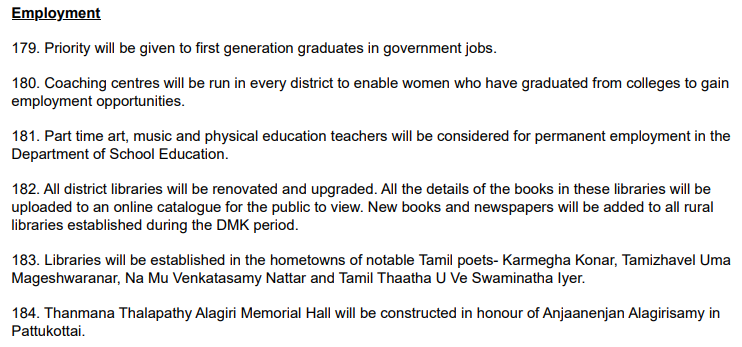
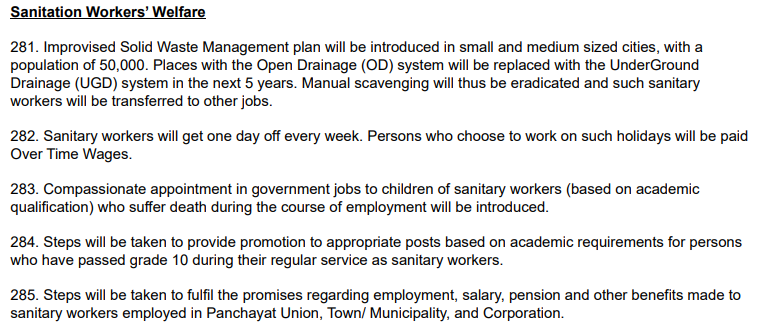
In its 2021 manifesto, the DMK promised to regularise sanitation workers and curb privatisation, restore the Old Pension Scheme for government staff and teachers, and give permanent appointments to contract nurses and other health workers. Protesters from all three groups now accuse the government of reneging on or only partially fulfilling these written commitments.
DMK 2021 Manifesto
However, till date nothing has been delivered. This has led to intense protests by the teachers, nurses and the sanitation workers.
In 2025, Chennai saw a series of intense labour agitations as nearly 2,000 mostly Dalit conservancy (sanitation) workers camped outside Ripon Building from August 1 protesting the decision to privatise solid‑waste management in Zones 5 and 6, fearing loss of wages, benefits and chances of regularisation after years on temporary NULM contracts; for 13 days they held a peaceful sit‑in while garbage accumulated in Royapuram and Thiru Vi Ka Nagar until, following a Madras High Court order, police cleared the site in a midnight operation by rounding up around 800–1,000 workers and detaining them in marriage halls, even as teachers across Tamil Nadu staged hunger strikes and strikes through March, November and December demanding scrapping of the contributory pension scheme and restoration of the old pension system for government staff, and more than 7,000 contract nurses launched a December hunger strike in Chennai seeking regularisation, reversal of terminations and pay parity, facing detentions during overnight sit‑ins before authorities announced that 1,000 of them would be made permanent and others absorbed in phases, prompting a temporary withdrawal of the week‑long agitation while thousands remained on contract and vowed to continue campaigning for secure jobs and full benefits.
#2 Thirupparankundram Karthigai Deepam Issue
In December 2025, the Madurai Bench of the Madras High Court directed that the traditional Karthigai Deepam lamp be lit at the Deepathoon pillar on Thiruparankundram hill and ordered the police to provide protection, but the state administration instead imposed curbs on access to the hill and did not facilitate the ritual as ordered, leading to contempt proceedings and sharp judicial criticism that the order had been wilfully ignored. During the same month, authorities allowed the Santhanakoodu flag‑hoisting connected to the Sikandar Badusha dargah festival on the same hill to go ahead under heavy police bandobast, deploying hundreds of personnel and escorting participants even as local residents who sought permission to climb the hill to light a lamp were detained and removed.
#3 KN Nehru Cash-For-Jobs Scam
The Enforcement Directorate (ED) in October 2025 alleged a large-scale cash-for-jobs scam in Tamil Nadu’s Municipal Administration and Water Supply (MAWS) Department, claiming bribes of ₹25–35 lakh were collected per post to manipulate recruitment. In a letter sent to the Tamil Nadu police chief under the PMLA, the ED urged a formal probe into appointments to 2,538 posts, including engineers and inspectors, for which over 1.12 lakh candidates had applied. The agency said the racket surfaced during searches linked to True Value Homes, connected to Minister KN Nehru’s brother. A 232-page dossier submitted by the ED details the alleged modus operandi, names of intermediaries, digital evidence, and around 150 beneficiaries.
#4 TN Becoming Ganja Hub
In 2025, ganja remained a major part of Tamil Nadu’s drug problem, even as police data and reportage showed a shift toward synthetic narcotic tablets among young users. Official figures noted that while ganja seizures had fallen from over 28,000 kg in 2022 to about 21,424 kg in 2024 and a few thousand kilos in early 2025, seizures of diverted pharmaceutical tablets exploded from around 62,750 in 2022 to about 1.4 lakh in 2024, with over 24,000 tablets seized in just January–February 2025, suggesting that tighter policing of ganja has pushed peddlers and consumers toward more potent pills. At the same time, major busts such as a 564‑kg haul in Ramanathapuram, a 320‑kg seizure near Chennai, and repeated arrests of students and youths across districts highlighted how Tamil Nadu still functions both as a consumption market and a transit route for cannabis.
#5 Law & Order
Right from the start of the year, one common instance that had been a sore point for the ruling DMK, was regarding the deterioration of law and order in the state. Attacks on migrant workers, gang-rapes of women, children, assault, youth-gang violence and knife attacks in urban and semi-urban areas, and multiple incidents of sexual violence and harassment, and voyeurism in hostels were frequently encountered in news media. Crimes against women have risen 50–65% in recent years, and politically connected offenders in drug and sexual‑crime cases assume they can act with impunity are said to have turned law and order, especially drugs and women’s safety, into one of the sharpest political fault lines of 2025.
#6 Collapse Of Education System & Infrastructure
Despite the DMK government projecting Kalviyil Sirantha Tamil Nadu as a flagship achievement, multiple national assessments paint a sharply different picture of learning outcomes in the State. Findings from ASER 2024, NAS 2021, and PARAKH 2024 consistently show Tamil Nadu performing below the national average in foundational literacy, numeracy, mathematics, science, and language across Grades 3, 6, 8, and 9. Large proportions of students struggle with basic reading, arithmetic, and conceptual understanding, with learning levels declining sharply by higher classes. Tamil language proficiency itself remains weak, undermining claims of linguistic and cultural strength. Several northern and central states, including Uttar Pradesh, Madhya Pradesh, Bihar, and Rajasthan, have outperformed Tamil Nadu in recent cycles. Critics note that repeated state schemes aimed at bridging learning gaps have not delivered measurable improvement, while resistance to NEP-aligned reforms has coincided with widening foundational deficits.
Beyond academics, government schools face persistent infrastructure and administrative failures. Repeated roof, wall, and ceiling collapses in newly built or renovated schools across districts, overcrowded classrooms, school closures due to zero enrolment, and severe shortages of teachers and headmasters have raised concerns over student safety and governance. Numerous incidents point to breakdowns in oversight: contaminated mid-day meals, students made to perform manual labour, neglect of sanitation, and prolonged delays in completing school buildings. Schools have also witnessed cases of caste-related clashes, substance abuse, and a disturbing rise in sexual harassment and assault complaints involving staff and outsiders, many registered under the POCSO Act. Instances of religious activities and alleged proselytisation in government or aided schools have further triggered controversy. Taken together, these developments indicate systemic stress across infrastructure, staffing, welfare schemes, and student protection mechanisms.
7. Junior Kupanna Vs Google MoUs
Recent MoU announcements have sharpened criticism of the DMK government’s economic priorities, particularly when contrasted with neighbouring Andhra Pradesh. While Andhra Pradesh signed a multi-billion-dollar MoU with Google to build a hyperscale AI-driven data centre and anchor a long-term technology ecosystem, Tamil Nadu has publicly showcased far smaller deals, including a ₹100-crore MoU with a regional restaurant chain promising around 300 jobs. Such announcements, dominated by food and beverage brands and modest service-sector investments, signal limited ambition at a time when frontier technologies, high-skill employment and digital infrastructure are driving future growth. For a state with a large pool of engineering and IT talent, the emphasis on low-scale, low-technology MoUs is seen as a missed opportunity to attract transformative, ecosystem-shaping investments.
#8 YouTubers/Netizens Targeted/Arrested
The Chennai City Police in Spetember 2025 registered cases against 25 social media accounts for allegedly spreading false information related to the Karur stampede that claimed 41 lives, warning that strict legal action would follow against content causing panic or public disorder. In a press release, police said baseless rumours were being circulated online despite the government taking steps to manage the aftermath of the tragedy. The move comes amid criticism that voices critical of the ruling government are being selectively targeted. In recent months, YouTubers Felix Gerald, Savukku Shankar, Maridhas and retired police officer Varadharajan have faced arrests or action. BJP leaders and activists were also detained in separate incidents in 2025 over speeches, social media posts, protests, and corruption allegations, raising concerns over curbs on dissent.
#9 Kidney Trafficking Scandal
2025 also was witness to the shocking kidney trafficking scandal. The scandal put DMK MLA-linked Dhanalakshmi Srinivasan Hospital, a major private healthcare chain in Tamil Nadu, under intense scrutiny over allegations of illegal organ transplants involving trafficked kidneys from poor women. It was reported that more than 90 women, largely daily wage earners from Namakkal district, were allegedly lured with payments of ₹5–10 lakh and subjected to transplants using forged Aadhaar cards and fabricated medical records. The racket is alleged to have been brokered by M. Anandan, a DMK party worker, who was absconding. The case drew political attention due to the hospital’s links to DMK MLA Kathiravan, son of the group’s founder, raising accusations of institutional protection and regulatory evasion. Authorities from the health, revenue and police departments are probing the network, while officials acknowledge that fear and stigma are preventing several victims from coming forward.
#10 Karur Tragedy
The Supreme Court’s intervention in the Karur stampede case amounted to a serious indictment of the DMK government’s handling of the tragedy. The court found that the Tamil Nadu administration had irreparably damaged public confidence by allowing senior police officials to publicly defend their subordinates even before investigations were complete, creating a reasonable apprehension of bias. It also noted political overtones in the grant of permissions for rallies and highlighted administrative failures in crowd management. Citing a breakdown of institutional credibility, the court suspended the state-appointed enquiry commission and police probe, transferred the investigation to the CBI, and placed it under independent supervision. The order reflected the court’s conclusion that the state machinery was incapable of delivering an impartial and credible investigation into the deaths of 41 people.
#11 Startups Leaving TN
2025 saw a growing number of companies shifting operations out of Tamil Nadu. This has drawn attention to structural weaknesses in the state’s startup ecosystem. The decision by Wells Fargo to close its Chennai Global Capability Centre and relocate operations to Bengaluru and Hyderabad follows earlier exits by startups such as Wheelocity and Arcana. Industry data shows venture capital funding in Tamil Nadu declined sharply in 2024, even as investment recovered nationally. Analysts attribute the trend to limited local seed capital, a relatively risk-averse entrepreneurial culture, and a shortage of high-growth consumer-sector role models. As a result, founders increasingly look to Bengaluru for access to capital, talent, and faster-scaling ecosystems, raising concerns about Tamil Nadu’s ability to retain startups and innovation.
#12 Attacks On Migrant Workers
A series of incidents reported through 2025 has highlighted growing safety concerns for migrant workers in Tamil Nadu across multiple districts. Migrant labourers from Odisha, Assam, Uttar Pradesh and West Bengal have been victims of armed assaults, sexual violence, fatal workplace accidents and mob unrest. In Sivaganga, two Odisha workers were brutally attacked with weapons by an intoxicated gang. In Tiruttani, minors assaulted a migrant with sickles and filmed the attack, while in Coimbatore a worker from Kolkata died after being beaten during a roadside dispute. In Tirunelveli, an Assam woman was gang-raped by a labour agent and minors after attempting to quit her job. Protests over unsafe work conditions in Chennai’s industrial belt have also turned violent, underscoring persistent vulnerabilities faced by migrant workers in the state.
Overall, the year 2025 was a year of failure of the Dravidian Model, a dark year for the people of Tamil Nadu and the citizens of the state were not witness to any form of ‘vidiyal’.
Subscribe to our channels on Telegram, WhatsApp, and Instagram and get the best stories of the day delivered to you personally.
In yet another incident triggering concern over the safety of migrant workers in Tamil Nadu, two labourers from Odisha were brutally attacked with weapons by an unidentified gang near Thirupuvanam in Sivaganga district on Tuesday (30 December 2025) night.
The victims have been identified as Moni Sharan and Sushanth, natives of Cuttack area in Odisha, who were employed at a private company in the region. According to preliminary information as reported in Thanthi TV, the two workers had gone to the Vaigai riverbank near Mannalur late in the evening to attend to nature’s call when they were allegedly attacked.
Police sources said an unidentified gang, reportedly under the influence of alcohol, arrived at the spot and suddenly assaulted the workers using weapons. Both men sustained severe injuries on multiple parts of their bodies.
Local residents rushed to their aid and immediately took them to the Government Hospital, where first aid was administered. Due to the seriousness of their injuries, the victims were later referred to the Madurai Government Rajaji Hospital, where they are currently undergoing intensive treatment.
Following information about the attack, personnel from the Thiruppuvanam police station rushed to the spot and began an investigation. Police are probing multiple angles, including whether the migrant workers were specifically targeted and the motive behind the assault.
A case has been registered in connection with the incident, and efforts are under way to identify and arrest those responsible. The attack has caused fear and unease among residents of Thiruppuvanam and surrounding areas, particularly amid growing concerns over repeated assaults on migrant workers in different parts of the State.
Police officials stated that the investigation is ongoing and assured that strict action would be taken once the perpetrators are identified.
Most Recent Instances
Tiruttani Town police on Sunday, 28 December 2025, detained four 17-year-old boys for attacking a 20-year-old youth from Odisha, identified as K Suraj, with sickles near the Old Railway Quarters. Police said the assault stemmed from a drunken argument on a Chennai–Tiruttani EMU local and was filmed by one juvenile to post as an Instagram reel. The minors allegedly carried sickles in their bags to record such videos. After following Suraj off the train at Tiruttani, they took him to an abandoned area, where three attacked him while the fourth recorded the act. Suraj, who suffered serious injuries, is stable. The juveniles were sent to an Observation Home.
On Monday, 29 December 2025, a youth from Kolkata was beaten to death in Coimbatore after questioning an auto driver over a minor collision, triggering fresh outrage over attacks on migrants. The victim, Suraj, was assaulted on Sunday night near Pullu Kaadu in the Ukkadam area by an auto driver, Mohammad Bajith Khan, and his associate Prakash. Police said the argument began after the auto hit Suraj, who worked at a fast-food outlet. During the altercation, the assailants allegedly questioned his identity, place of origin, and religion before attacking him. Suraj suffered severe head injuries and died on Monday at Coimbatore Government Medical College Hospital. Both accused have been arrested, and the case has been registered as murder.
Subscribe to our channels on Telegram, WhatsApp, and Instagram and get the best stories of the day delivered to you personally.