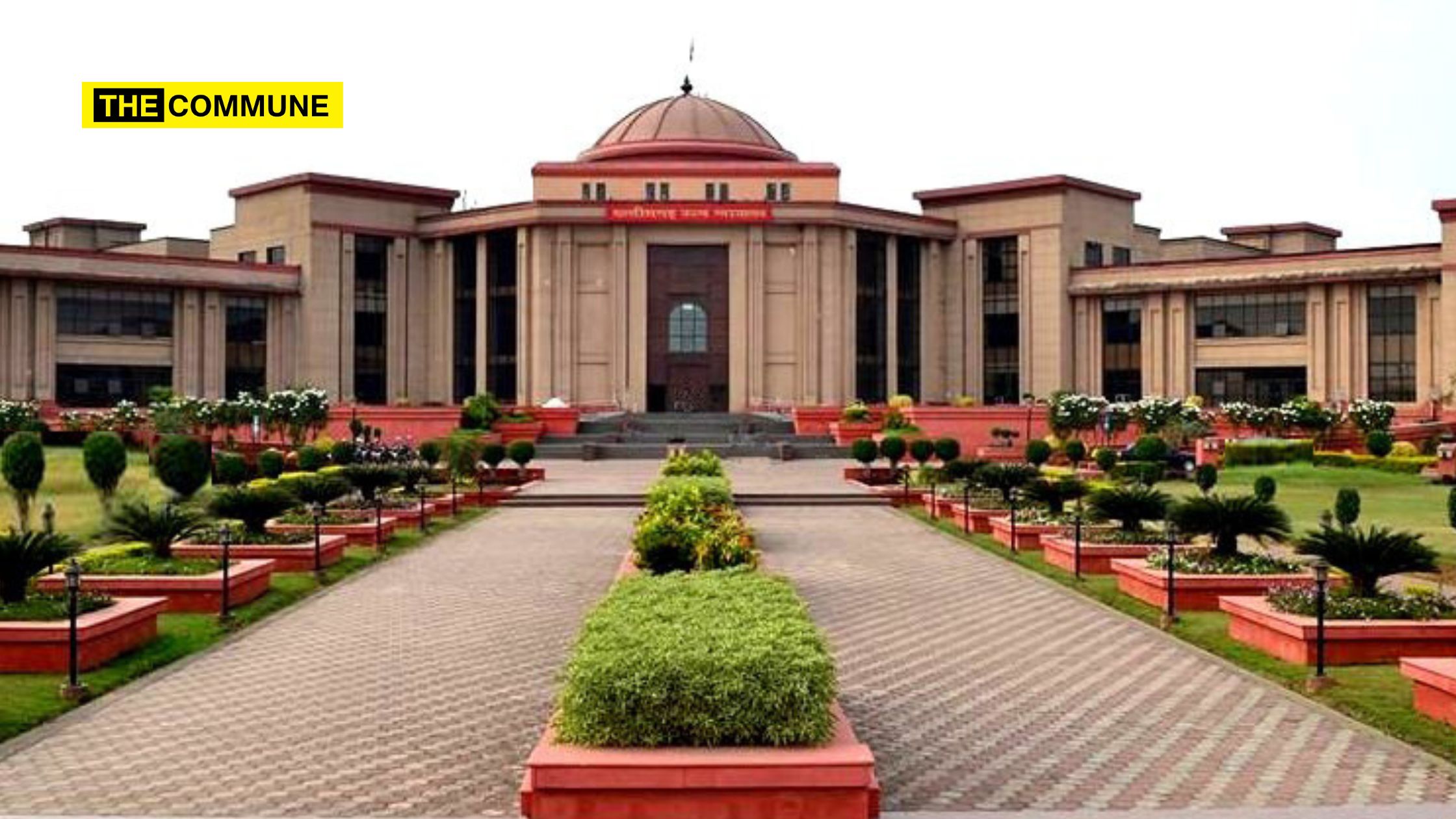
The Chhattisgarh High Court has refused to quash criminal proceedings against a group of social activists accused of making derogatory remarks about the Hindu religion during a public gathering in 2024, holding that issues relating to free speech, intent, and the legality of the statements can only be decided during trial after evidence is examined, as reported in LawBeat.
A Division Bench comprising Chief Justice Ramesh Sinha and Justice Ravindra Kumar Agrawal dismissed petitions seeking to invoke the High Court’s inherent powers under Section 528 of the Bharatiya Nagarik Suraksha Sanhita (BNSS), corresponding to Section 482 of the erstwhile Code of Criminal Procedure (CrPC).
The Court held that the allegations disclosed a prima facie case and that the questions raised by the petitioners require judicial examination during a full-fledged trial rather than at the preliminary stage.
FIR Filed Following Public Meeting
The case stems from a First Information Report (FIR) registered on 28 February 2024, at Kunkuri Police Station in Chhattisgarh’s Jashpur district based on a complaint lodged by a member of the Vishwa Hindu Parishad (VHP).
According to the prosecution, eleven activists participated in a public meeting organised by the Bharat Mukti Morcha and the Rashtriya Christian Morcha at Saliyatoli Mini Stadium on 27 February 2024.
The prosecution alleged that several speakers made inflammatory remarks during the event, including describing the word “Hindu” as referring to “thieves, dacoits, robbers and slaves” and asserting that “Hindu is not a religion but an abuse.”
The speakers were also accused of making derogatory remarks against religious preacher Dhirendra Shastri and the Chief Minister of Chhattisgarh. The prosecution further alleged that the gathering included calls urging people to break Electronic Voting Machines (EVMs) and oppose elections conducted using them.
Following investigation, police filed a chargesheet against the accused.
The trial court framed charges under Sections 153A (promoting enmity between groups), 153B (imputations prejudicial to national integration), 295A (deliberate and malicious acts intended to outrage religious feelings), 505(2) (statements promoting enmity), 294 (obscene acts and songs), and 34 (common intention) of the Indian Penal Code.
The Additional Sessions Judge, Kunkuri, later upheld the framing of charges, following which the accused approached the High Court seeking quashing of the criminal proceedings.
Petitioners Cite Free Speech
The petitioners contended that they were social activists working for marginalised communities and argued that their statements amounted to criticism of social and political issues protected under Article 19(1)(a) of the Constitution, which guarantees freedom of speech and expression.
They also relied on Article 51A(h), which encourages citizens to develop scientific temper, humanism and the spirit of inquiry and reform.
According to the petitioners, there was no deliberate or malicious intention to insult any religion, a necessary ingredient for offences under Section 295A and related provisions. They further argued that no communal violence or public disorder had occurred as a result of the speeches.
High Court Says Trial Necessary
Rejecting the plea, the High Court observed that its inherent jurisdiction under Section 528 BNSS is limited and cannot be exercised to assess disputed questions of fact at the threshold.
The Bench noted that determining whether the speeches amounted to legitimate criticism or crossed into criminal conduct would require examination of the context in which they were made, the audience present, and their likely impact.
The Court observed, “The material collected during investigation prima facie indicates that during a public gathering attended by a large number of persons, including members of different communities, certain statements were allegedly made concerning the Hindu religion, religious personalities and the electoral process.”
The Bench further held that the allegations were neither absurd nor inherently improbable and therefore did not warrant interference under the Court’s inherent powers.
It also noted that the prosecution had relied on documentary and electronic evidence, including pamphlets, videography of the event accompanied by a certificate under Section 65-B of the Indian Evidence Act, and witness statements.
According to the Court, these materials indicated that the prosecution case was not based on “mere conjectures or surmises.”
The Bench clarified that whether the accused possessed the requisite criminal intent (mens rea) and whether the prosecution ultimately succeeds are issues that can only be determined after evidence is led before the trial court.
Concluding that the allegations disclosed a prima facie case requiring judicial adjudication, the High Court dismissed the petitions while clarifying that its observations would not influence the merits of the trial.
Subscribe to our channels on WhatsApp, Telegram, Instagram and YouTube to get the best stories of the day delivered to you personally.