Home Blog Page 195

Tamil Janam Survey Indicates Deep Dissatisfaction With Ruling DMK; Voters Still Confused, Details Inside
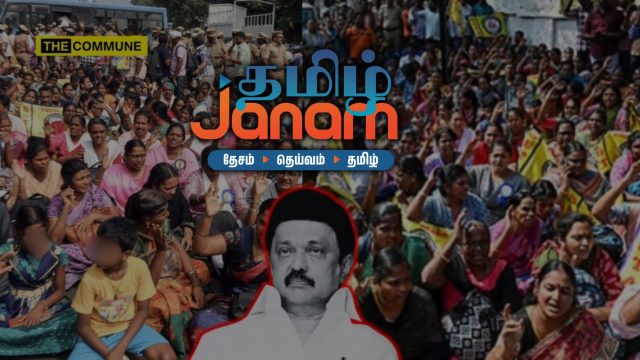
A comprehensive, large-scale opinion poll conducted across Tamil Nadu by news channel Tamil Janam and a few other organizations has revealed a landscape of significant dissatisfaction with the ruling Dravida Munnetra Kazhagam (DMK) government and considerable uncertainty among voters regarding alliance choices for the upcoming elections. The survey results point to a highly competitive and unpredictable electoral battle.

Key Findings: Sector-Wise Discontent With DMK Govt

The survey segmented voters by profession and community to gauge specific grievances:

Government Employees: A staggering 80% expressed a lack of trust in the DMK government, with only 20% supportive. This is attributed primarily to the handling of the old pension scheme (OPS) issue. Analysts noted that employees feel “insulted” and “deceived,” having been promised a restoration of OPS only to be offered a different scheme (TAPS) at the last minute. This segment, traditionally a vote bank for the DMK, is now seen as severely alienated.

Students: The government’s electoral promise of loan waivers for college students remains unfulfilled. Instead, the distribution of laptops – a scheme initiated by the previous AIADMK government but halted by the DMK has been restarted close to elections. This is perceived by many as a cynical electoral tactic, with students feeling used for votes. The survey indicates this has backfired, creating resentment. About 30% of them are supportive while 70% of the surveyed students said they did not trust the DMK government.

Unemployed Graduates: Among this group, there is reportedly 95% opposition to the DMK. The prevailing sentiment is that the ruling party is directly responsible for the lack of job opportunities, creating a “betrayed” mindset.

Auto Drivers & Housewives: These groups show a more split opinion, roughly around 50-55% opposition to the DMK. For housewives, issues like price rise and household expenses are major pain points. Auto drivers, being in daily contact with the public, absorb widespread political discontent.


View this post on Instagram


A post shared by Tamil Janam (@tamiljanam)

Alliance Dynamics: Coalition Partners Restless, Voters Confused

A major theme of the survey is the fluidity and dissatisfaction within existing alliances, particularly the DMK-led front.

Congress Workers: When asked about their preferred alliance, 61% of Congress supporters said they wanted their party to align with the TVK. Only 35% preferred continuing with the DMK. The primary reasons cited are a lack of respect from the DMK leadership, insufficient seat allocation, and a sense that the Congress is being stifled and not allowed to grow independently within the alliance. The “big brother” attitude of the DMK is a persistent grievance.

VCK (Viduthalai Chiruthaigal Katchi) Cadres: Surprisingly, 55% of VCK supporters expressed a desire for their party to join the DMK alliance. 41% wanted to join hands with the TVK, and only 2% preferred going alone. This indicates a sizeable internal shift, driven by perceived slights to leader Thol. Thirumavalavan and a search for greater political space and respect.

AMMK Cadres: In a clear verdict, 86% of AIADMK supporters want their party to ally with the BJP-led National Democratic Alliance (NDA). 14% preferred the TVK, and no one (0%) wanted an alliance with the DMK or to go solo. The analysts linked this to cadre acceptance of Edappadi K. Palaniswami’s (EPS) leadership and a strategic understanding that the NDA is the only viable vehicle to defeat the DMK.

PMK Cadre: The survey found 91% of PMK supporters back the leadership of Anbumani Ramadoss, with only 9% supporting the faction led by his uncle, Dr. Ramadoss. This solidifies Anbumani’s position. The discussion indicated that the PMK is almost certain to join the NDA, a move seen as consolidating the Vanniyar vote bank behind the opposition front.

DMDK Cadre:Among DMDK supporters, 69% reportedly favoured the NDA, 21% preferred the DMK, 9% supported TVK, and 1% wanted the party to contest alone. There seem to be concerns about DMDK’s credibility due to inconsistent alliance signalling.

Assessment Of Opposition Performance 

The survey also gauged public opinion on the effectiveness of opposition parties over the last five years.

On issues like the Thirupparankundram Karthigai Deepam dispute, 60% of respondents reportedly felt opposition parties had performed well, although it is noted that sustained protest activity was largely driven by the BJP and Hindu organisations rather than the AIADMK or DMK allies.

On Anna University-related protests, 83% of respondents felt the opposition had acted effectively. However, on sanitation worker and government employee protests, the opposition was widely perceived as absent.

It is observed that media coverage in Tamil Nadu has shifted in favour of the ruling party when contrasting the current environment with previous years when media outlets were more adversarial toward the government. The DMK’s long-standing engagement with media institutions has resulted in favourable framing and limited amplification of opposition narratives.

The Vijay Factor & Election Narratives

The rise of actor Vijay’s TVK is a dominant subtext:

According to survey-based observations, many women expressed openness to voting for Vijay’s party, even if they lacked detailed ideological alignment.

Analysts believe that while Vijay has significant personal popularity, especially among women and youth, he lacks a robust political infrastructure and grassroots organization. A mere “wave” based on star power is deemed insufficient to win elections, as historical examples like Vaiko’s MDMK in the 1990s show.

For a wave to materialize, his upcoming film “Jana Nayagan” would need to be a massive, content-driven hit like MGR’s films, which is uncertain.

His alliance choices (Congress at the national level? AIADMK/NDA at the state?) remain the biggest question mark and will significantly determine his impact.

However, it was also noted that DMK cadre continue to maintain household-level contact through welfare outreach and festival visits, which could influence last-minute voting decisions. It is possible that women voters may play a decisive role in the final days before polling.

A State In Confusion?

The survey paints a picture of a dissatisfied electorate, particularly with the incumbent DMK government on issues of governance, employment, and promises. However, this anti-incumbency has not decisively crystallized behind a single alternative due to:

Alliance Confusion: Major alliance partners like Congress and VCK have cadres openly preferring a switch to other alliance blocs, creating internal pressure and uncertainty.

Absence of a Clear Wave: While the AIADMK-NDA front appears consolidating, and the TVK is a disruptive new force, there is no overwhelming wave in favor of any one bloc.

Last-Minute Decisions: With key players like PMK, TVK, and the alleged presence of factions within Congress, yet to formally declare alliances, the voter remains in a “wait-and-watch” mode.

In toto, Tamil Nadu is witnessing personality-driven, rather than ideology-driven, voting behaviour. Manifestos and policy distinctions seem to matter less than leadership appeal, alliance arithmetic, caste considerations, and last-mile mobilisation.

While the DMK alliance is structurally strong, the survey suggested visible erosion among traditional support bases. At the same time, emerging players such as TVK were said to be benefiting from protest politics, celebrity appeal, and public fatigue with established parties.

The final outcome would depend heavily on alliance finalisation, last-minute voter shifts, and the ability of parties to convert public discontent into organised electoral mobilisation.

Overall, the stage is set for one of Tamil Nadu’s most unpredictable elections in recent times.

Subscribe to our channels on TelegramWhatsApp, and Instagram and get the best stories of the day delivered to you personally.
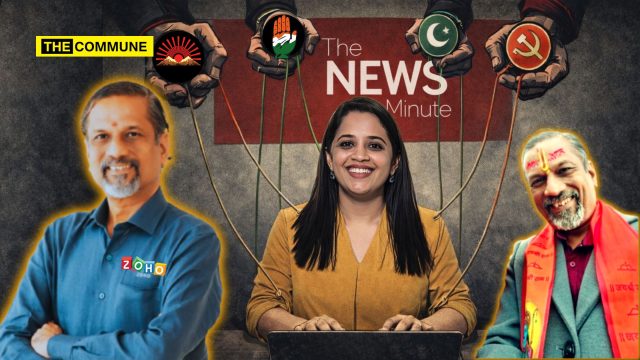
Cunning, Cowardly, And Paywalled: Dissecting The Naxal Minute’s Hit Job On Zoho Founder Sridhar Vembu

Imagine the most horrible, cunning person you’ve ever met. Someone for whom loyalty, ethics, and truth don’t matter. Someone who would do anything for their own benefit, even if it meant selling out their own mother for money. Someone who wouldn’t even think twice before bootlicking for personal gain. Set them beside The News Minute, and that person would still come across as principled.

After a voyeuristic, Nakkheeran-style hit job peeping into the personal life of Zoho founder Sridhar Vembu, the leftist rag – or more accurately, the DMK’s unofficial mouthpiece – The News Minute signaled that it would publish a full profile of Vembu.

On 9 January 2026, they published a 10,000-plus-word hit job on Sridhar Vembu, cunningly hiding it behind a paywall like cowards to force subscriptions to their trash.

In this no-punches-pulled article, we dissect the full hitjob and expose the venom with which The Naxal Minute functions.

The profile is a long-winded character assassination. It sets its intention right at the beginning – we hate Vembu because he is a Hindu, a Brahmin, a ‘Sanghi’ and so you must hate him too.

Paragraph after paragraph, it does the same thing: cherry‑pick facts, launder innuendo through anonymous quotes, and then hang everything on the one sin TNM can never forgive – that Vembu refuses to fit their ideological script.​ Let us take a deeper look.

Rigging The Frame From Paragraph 1 

The piece doesn’t begin with his achievements, his words, or his background. But with a quote from RSS’s mouthpiece Organiser. So, with this they have stained him saffron.

Indulekha Aravind uses it as the first filter through which the reader must see Vembu. He is guilty by association before his own words even appear.​

Then comes the lush travel‑writing: poor farm labourers, “verdant paddy fields”, Western Ghats, and at the end of the road, the billionaire Brahmin in a house villagers call an “agraharam”. The implication is clear – now identify him by his caste. Then they mention the village is also home to other castes.

The word “agraharam” is waved like a caste dog‑whistle, and readers are expected to fill in the rest.​ This is TNM’s method throughout. Facts are thin; atmosphere does the heavy lifting.

Just like that, without a single example of him discriminating against anyone, they’ve painted him as a casteist living apart from the villagers. They highlight he’s a Brahmin and now frame his guilt by identity, a cheap trick to make readers view his every action through a lens of prejudice they’ve provided.

Image-Building Turned Into Moral Crime

Next comes the “poster boy” construction: Padma Shri, veshti, cycling CEO, swadeshi talk, BJP proximity. You get descriptions like he is a “poster boy” for BJP and RSS, he takes photos in veshti in paddy fields, he says “I don’t care about net worth.”​ All of it is real. None of it is illegal or hidden. But instead of asking whether any of this is false, the article pivots to anonymous voices calling him a “great marketer” and someone who “makes a virtue out of necessity.”

That’s the accusation. No specific lie is identified. No statement is shown to be untrue. Image-building itself is treated as deception because the image is politically inconvenient.

They never point to a specific thing he said that was a lie. Did he fake Zoho’s revenue? Did he invent the Zoho Schools program? Did he Photoshop himself in the village? No. They just offer anonymous opinions that he’s good at telling his story, as if every successful person isn’t. It’s a hollow accusation designed to make you doubt his sincerity without having to prove a thing.

The usual tactic these hit jobs employ is the use of anonymous “ex-employees” they claim to have spoken to—no names, no accountability, just vague references. By that standard, The Commune could just as easily spin an imaginary story citing similar “sources” who have supposedly engaged with Dhanya Rajendran or anyone else in that Leftist-Dravidianist den.

The Divorce Case – Presenting Half-Truths

When the article reaches the California divorce proceedings, it drops all pretense of balance.

Interim court language is presented as though guilt has already been established. The fact that these are interim orders that appeals are ongoing, that family courts routinely use aggressive language to secure assets – all of that is either buried or mentioned much later, after the damage is done.

The ex-wife’s allegations are reproduced in detail. Vembu’s response is reduced to a line or two. No documents. No explanation. No real attempt to present both sides. It reads less like reporting and more like a prosecution brief.

Startup Stories Don’t Work The Way TNM Pretends They Do

On Zoho’s origins, the article does the same trick. Over the years, media profiles and talks have simplified the founding story – as almost every startup founder does. In courtroom filings, Vembu’s timeline is more precise: Tony Thomas set up Advent in 1995; he joined in 1997; his brothers ran Vembu Systems in Chennai.​
TNM presents this as if they’ve unearthed a conspiracy. “There have been variations,” they say ominously, and then… stop. No smoking gun, no forged cap table, nothing.

Just the insinuation that because informal interviews and a legal declaration don’t use identical wording twenty years apart, something must be dirty. It’s investigative theatre without the investigation.

Zoho’s Product Model And Hiring: Ethics By Selective Outrage

On the business itself, TNM cannot deny the scale:

  • Over 50 products.
  • FY24 standalone revenue ₹11,193 crore, profit ₹3,298 crore.
  • Around a million paying organisations in 80 countries.​

So it tries to degrade the achievement with sneers. Zoho is a “fast follower”, “no innovation”, just copying Salesforce for smaller clients. Who says so? A conveniently unnamed SaaS competitor. Given TNM’s nexus with DMK, one can guess that it could be the wannabe Steve Jobs who wears black turtle-neck shirt in sweltering sun and ‘kisses’. No product analysis, no technical breakdown, nothing beyond the jealous grumbling of a rival.

Conveniently, the same piece elsewhere quotes two former executives calling Vembu a “genius” and a “great mix of technologist and builder”. That contradiction is never resolved.​

On Zoho Schools, the framing borders on perverse. TNM admits that:

  • The programme takes kids straight out of school, mostly from disadvantaged backgrounds.
  • Trains them for two years on stipend.
  • Absorbs them into jobs they simply wouldn’t get otherwise.​

Then it hacks with the sickle like a typical Communist rag: since they don’t get a degree, they are “locked in” and “it’s exploitative”. Locked into what? A stable, long‑term job in a profitable global company whose employee turnover is 7% against an industry 12–15%.

The piece produces no data on how many Zoho School grads actually wanted to leave and were blocked, or whether other firms do or do not hire them. It’s a theoretical worry converted into a moral indictment.​

Meanwhile, pay and ESOPs are attacked using anecdote: one ex‑employee says “I was making peanuts” while my product earned millions. Perhaps he was underpaid. Perhaps not. TNM never shows an actual compensation benchmark across product companies at Zoho’s stage. The line is emotionally satisfying, and that is enough.​

If Dhanya Rajendran wants to have a real debate about labour, equity and ESOPs, she might want to start with how much “equity” her own reporters hold in TNM before lecturing a bootstrapped firm that doesn’t owe the VC‑style lottery to anyone.

Political Change Framed As Original Sin

A huge part of the article is obsessed with Vembu’s shift from a rationalist, liberal blogger to a supporter of Indian cultural conservatism and the current government. TNM frames this not as a personal evolution, but as a suspicious “makeover.”

In the 2000s, Vembu liked Buddhist philosophy, free markets, and wrote about “Maoism in Silicon Valley” when a Google engineer was fired over right-wing views. Later, Vembu is seen defending the RSS, attending a Swadeshi Jagran Manch event, and praising Modi.​ They also have a problem with S Gurumurthy being his mentor.

For TNM, anybody associated with the RSS or BJP is a crime. If you’re a Hindu-hating, Modi-bashing, Yogi-dissing communist or an Islamist, you’re a warrior.

Anti-Vaccine Stand – One Solid Hit Used To Smear Everything Else

Vembu is entitled to have his views about vaccines. He cites some research – which general medicine doctors do not accept. It is his view, just because one is an anti-vaxxer or does not believe that vaccines can help people, one cannot label them with any grand smear, just because you do not agree to them. His comments on vaccines are used to suggest he’s drifting into pseudoscience. And this, they use to bleed into every other domain – business, governance, philanthropy as though one bad belief proves a general collapse of reason.

Tenkasi: Philanthropy Recast As RSS Pipeline

The reporting from Govindaperi is revealing – not about Vembu, but about TNM. Villagers say:

  • He cleared a farmhand’s debt.
  • He funded multiple temple renovations.
  • His school feeds children, gives uniforms, bikes, runs a clinic and an ambulance.

A DMK sympathiser compares him to god: “He has done only good things for us since he moved here.”​ Any normal outlet would treat this as a complex figure: ideological right‑wing, maybe problematic on some issues, but tangibly improving one rural cluster’s life. TNM’s reflex is different: How do we spin this as sinister?

When a BJP leader says Vembu’s Swadeshi talk “will eventually help us when people start thinking of their roots, India, and religion,” TNM runs it as proof of a long game. When a DMK minister complains that Vembu is telling the global tech world DMK is “anti‑India and anti‑Hindu,” TNM prints it as “actual damage,” without producing the offending quotes. Also why is DMK being branded so? Can we talk about the venom spewed from the Dravidianist and DMK camps under the garb of rationalism? Can we talk about your own abusive writers like Bharathy Singaravel who has a Nazi mindset and spews casteist venom against Brahmins?

The villagers’ lived experience – debt relief, free education, health access – becomes less important than the party line out of Chennai. That’s TNM’s idea of speaking “truth to power”: repeat what one party says about a businessman, and ignore what hundreds of poor families say about him.

The Ultimate Sin: Doing Good For The “Wrong” Reasons

Here is the heart of TNM’s grievance. Vembu is doing things that are, on their face, good: building a free school, teaching traditional arts, funding temple renovations, creating jobs in a rural area.

But because he does these while also supporting the BJP and the RSS, TNM can’t accept that the goodness might be genuine. So, they politicize everything.

Kalaivani Kalvi Maiyam’s curriculum which includes bharatanatyam, yoga, silambam, parai, Tirumurai, savings, skills becomes “RSS ideology in the guise of cultural and social activities,” according to a DMK functionary.

TNM prints this partisan opinion as if it’s evidence. When villagers rave about the school and the clinic, their gratitude is immediately reframed. They’re not thankful beneficiaries; they’re unknowing participants in a “soft power” campaign.

His business success is treated the same way. Winning a government contract or his app getting downloads after a minister’s praise isn’t a commercial win; it’s painted as a suspicious reward for political loyalty. Questions about his app’s privacy features are presented not as tech issues, but as his moral failings.

A Conclusion Written Before The Reporting Began

This “in-depth profile” by Indulekha Aravind started with a conclusion: Sridhar Vembu is a problematic poster boy for an ideology they dislike. Then, they worked backwards, twisting facts, omitting context, and amplifying whispers to make everything in his remarkable life fit that story.

RSS, BJP are evil, so anyone associated with them in the remotest way are also evil. If you replaced RSS with say Communist, Congress or even the DMK in the same article, the very same ‘qualities’ of Vembu would have been applauded as ideological consistency, courage, or integrity.

It is obvious TNM is not neutral, we know where their loyalties lie, so they are taking so much effort to appease that audience alone. With their credibility hitting new lows after Dharmasthala, after a brief stint as TN Murasoli, The News Minute has transformed into the English version of a voyeuristic tabloid as The Nakkheeran Minute. Muzhusa Chandramukhi (Nakkheeran) ah maarina Gangava (The News Minute)ah paar.

Subscribe to our channels on TelegramWhatsApp, and Instagram and get the best stories of the day delivered to you personally.

“Hindi Demon”: Sudha Kongara’s Anti-Hindi, Pro-DMK Propaganda Film Parasakthi Distributed By Stalin Family Attacks Indira Gandhi And Congress, Creates Rift In DMK-Congress Alliance

Sudha Kongara finds herself in soup after her anti-Hindi, pro-DMK propaganda film ‘Parasakthi’ is getting bashed left, right and centre.

The film, a supposed historical drama on the 1965 anti-Hindi agitations, has been slammed as blatant DMK propaganda that shamelessly targets the Congress party and former Prime Minister Indira Gandhi, all while being bankrolled by Dawn Pictures (with deep DMK ecosystem ties) and distributed by Red Giant Movies, run by CM MK Stalin’s grandson Inban Udhayanidhi.

Apart from the pathetic filmmaking, Parasakthi is now a new subject of controversy with netizens pointing to a particularly venomous scene where Sivakarthikeyan stands beside an ugly-looking black saree-clad effigy labeled “Hindi Arakki” (Hindi Demon), widely interpreted as a direct, derogatory jab at Indira Gandhi. Despite the Central Board of Film Certification (CBFC) mandating 25 modifications—including changing “Hindi Arakki” to just “Arakki” (Demon) wherever it appeared screenshots and clips from the film clearly show the unaltered effigy scene with Sivakarthikeyan posing next to it.

There’s a scene in which Congress leader Bhaktavatsalam is shown saying, “These fellows don’t know Hindi, their brains are filled with mud.”

The scene is framed as a critique of North Indian linguistic and cultural arrogance, which many viewers have linked to historical Congress-era attitudes toward southern states.

Most notably, the film features strong political lines that directly invoke Congress by name.

In the same sequence, it is reported that one dialogue states that for the “betrayal committed against Tamils,” the Congress would never be able to rule Tamil Nadu.

With alliance negotiations and electoral calculations underway, the portrayal of Congress as a historical betrayer of Tamil interests has become politically consequential. This has led to Congress leaders bashing the film and taking hits at the DMK.

With Congress giving feelers to TVK through its support for Vijay’s alleged final film ‘Jana Nayagan’, the rift between Congress and DMK has widened.

Subscribe to our channels on TelegramWhatsApp, and Instagram and get the best stories of the day delivered to you personally.
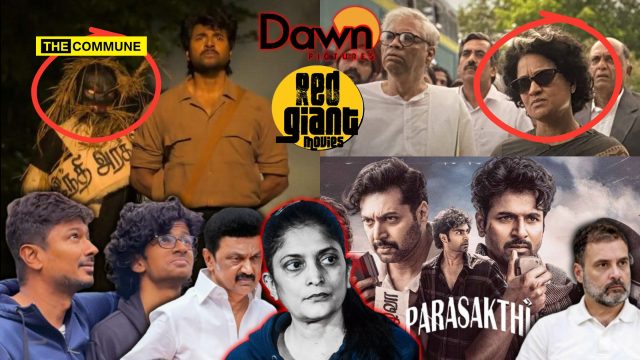
TN Single-Screen Theatres Who Signed Up For Vijay’s Jana Nayagan Allege Denial Of Parasakthi Screening, Accuse Distributor Of Punishing Them

A single-screen theatre in Pudukottai has alleged that it was denied screening rights for the Tamil film Parasakthi despite repeated requests, triggering accusations of selective distribution and retaliatory practices within the Tamil film exhibition sector.

RKP Cinemas, Pudukottai, said in a statement on social media that it had received numerous calls and messages from patrons enquiring about the opening of bookings and whether the theatre would screen Parasakthi. The theatre clarified that it had initially entered into an agreement to screen Jana Nayagan. However, after the release of Jana Nayagan was postponed, the theatre approached the distributor to screen Parasakthi instead.

According to RKP Cinemas, the distributor of Parasakthi was unwilling to provide the film print and continued to delay a decision, resulting in the theatre being unable to screen the film. The management stated that this was the sole reason for the non-availability of Parasakthi at the venue and apologised to patrons for the inconvenience caused.

The allegation quickly escalated on social media, with several users and cinema-related accounts accusing Red Giant Movies of retaliating against single-screen theatres that had previously signed agreements for Jana Nayagan. Posts claimed that theatres which had committed to screening Jana Nayagan were now being denied access to Parasakthi.

Some exhibitors argued that adding more single-screen and large theatres to Parasakthi’s release would have been mutually beneficial, particularly at a time when many single-screen theatres are reportedly operating at a loss.

Additionally, theatre representatives and exhibitors gathered at Shanthi Theatre on 10 January 2026, alleging unfair distribution practices. According to statements circulated from the venue, even theatres that had already signed agreements for Jana Nayagan were allegedly being denied Parasakthi prints. Speakers at the gathering claimed that such actions were pushing theatres deeper into financial distress.

The allegations were framed by protesters as politically motivated, with accusations that the ruling DMK party in Tamil Nadu was indirectly influencing film distribution through affiliated entities. These claims were circulated widely on social media platforms, with calls for greater public awareness of what protesters described as systemic misuse of power in the film distribution ecosystem.

At the time of publishing, Red Giant Movies and the distributors of Parasakthi had not issued any official response addressing the allegations. No confirmation has been provided regarding the criteria used for theatre allocation or the reasons for withholding prints from specific exhibitors.

Subscribe to our channels on TelegramWhatsApp, and Instagram and get the best stories of the day delivered to you personally.
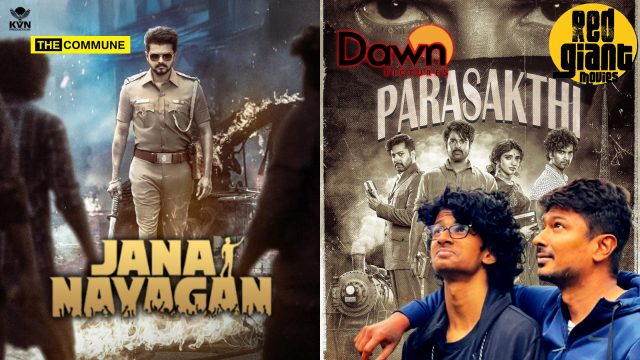
Hindu Professor Alleges Decades Of Religious Discrimination At Aligarh Muslim University, Says Harassment Led To Personal Tragedy

A senior professor at Aligarh Muslim University (AMU) has alleged that she was subjected to religious discrimination and prolonged mental harassment for nearly three decades, stating that the sustained pressure caused severe personal and professional distress, including a miscarriage.

Professor Rachana Kaushal of the Political Science Department has accused senior officials at the university of targeting her because of her religious identity. She has submitted a formal complaint to the Vice Chancellor, along with audio recordings and documentary evidence, and has stated that she intends to file a First Information Report (FIR) in the matter.

According to the complaint, the alleged harassment began soon after Professor Kaushal joined AMU as a lecturer in 1998. She stated that discrimination and mental pressure started early in her career and continued over the years, adding that she had not anticipated facing such treatment at a central university on religious grounds.

Professor Kaushal further alleged that the pressure intensified during critical phases of her personal life. She stated that in 2004, while she was pregnant with twins, she was subjected to excessive workload and mental stress, which she claims resulted in a miscarriage. She also stated that her husband, D.K. Pandey, a senior professor at JN Medical College, AMU, passed away in 2012.

In her complaint, Professor Kaushal has also accused the current Dean of the Faculty of Social Sciences, Mohammad Nafis Ahmad Ansari, of making repeated remarks referencing her religion. She alleged that the Dean told her that she was Hindu and should go to Banaras Hindu University and further accused him of making statements suggesting that Hindu teachers deliberately avoid teaching Muslim students and of questioning their conduct at academic conferences.

She stated that these remarks were personally insulting and undermined the secular character of the institution, adding that such comments contributed to a hostile work environment. Professor Kaushal has submitted audio recordings of the alleged remarks to Vice Chancellor Naima Khatun as part of her evidence.

Despite the alleged harassment, Professor Kaushal stated that she continued to teach at the university for years in the hope that the situation would improve. She said she now believes that legal action is necessary and has indicated that she intends to approach the police and make the matter public.

AMU authorities have confirmed receipt of the complaint and stated that an internal inquiry has been initiated. At the time of publishing, no official response had been issued by the university administration or by the accused faculty member regarding the allegations.

Source: News18

Subscribe to our channels on TelegramWhatsApp, and Instagram and get the best stories of the day delivered to you personally.
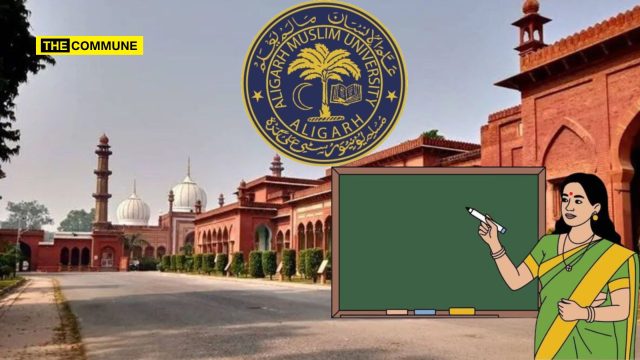
“You Can Never Come To Power In This Lifetime”: Sudha Kongara’s Anti-Hindi, Pro-DMK Propaganda Film Parasakthi Distributed By Stalin Family Directly Attacks Congress

The release of the Tamil film Parasakthi, produced by Dawn Pictures, distributed by Red Giant Movies and starring Sivakarthikeyan, has triggered political discussion after several of its dialogues were widely interpreted as a direct critique of the Congress party and its historical role in language policy.

Viewers and political observers have pointed out that the film is totally about anti-Hindi imposition during the 1960s and the subsequent protests in 1965.

One scene that has drawn attention depicts the lead character – Chezhiyan confronting Indira Gandhi on being forced to face an unfamiliar language for a day, prompting a reflection on how linguistic imposition feels when power is exercised without empathy.

In this scene, Sivakarthikeyan says, “Just for one day, when you experienced in your life what it is to face a language you do not understand, how did you feel when you were treated the way you usually treat others?”

The dialogue conveys the idea that experiencing an alien language, even briefly, reveals the humiliation and exclusion routinely faced by others.

In the same scene, one character is seen to refer to the lead as “Madrasi”. He says, “Hey Madrasi, get down first.”

Then the character who plays former TN CM Bhaktavatsalam says, “These fellows don’t know Hindi, their brains are filled with mud.”

The scene is framed as a critique of North Indian linguistic and cultural arrogance, which many viewers have linked to historical Congress-era attitudes toward southern states.

Most notably, the film features strong political lines that directly invoke Congress by name.

In the same sequence, it is reported that one dialogue states that for the “betrayal committed against Tamils,” the Congress would never be able to rule Tamil Nadu.


View this post on Instagram


A post shared by Chanakyaa (@chanakyaa_tv)

The dialogues have led to speculation in political circles about whether the film’s messaging signals a broader shift in political alignment. Observers have questioned whether the DMK ecosystem, through a film released by its closely associated production and distribution network, is deliberately distancing itself from its alliance with the Congress. Some analysts argue that the explicit nature of the criticism goes beyond historical commentary and appears calibrated to resonate with contemporary anti-Congress sentiment in Tamil Nadu.

The timing of the film’s release has also added to the debate. With alliance negotiations and electoral calculations underway, the portrayal of Congress as a historical betrayer of Tamil interests has been interpreted by critics as politically consequential rather than incidental.

However, the film’s dialogues have already gained traction on social media, where clips are being circulated with claims that Parasakthi openly revives the anti-Congress, anti-Hindi-imposition rhetoric that historically shaped Dravidian politics in Tamil Nadu.

Subscribe to our channels on TelegramWhatsApp, and Instagram and get the best stories of the day delivered to you personally.
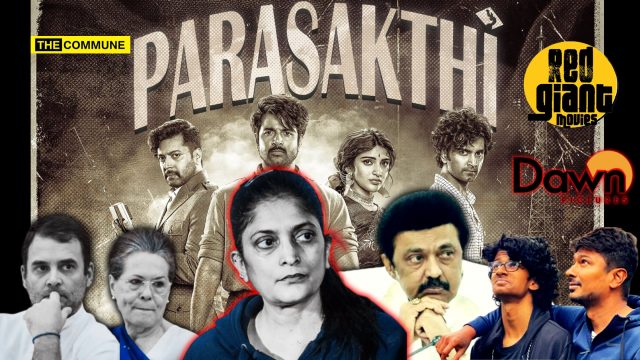
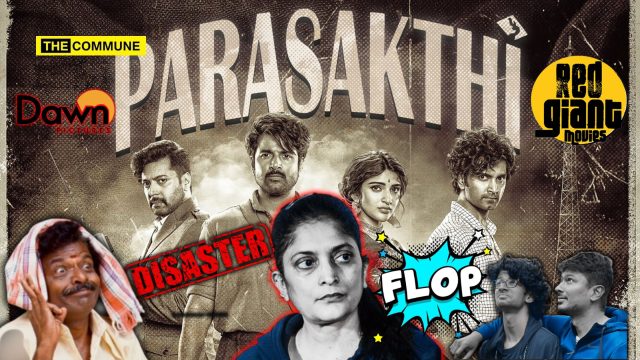
Parasakthi Disaster: Sudha Kongara’s Anti-Hindi, Pro-DMK Propaganda Film Is Just Regurgitated Dravidianist Vomit That Is Rightfully Getting Trashed By Audience

Parasakthi Disaster: A Complete Washout For Anti-Hindi DMK Propaganda Film On Day 3 Itself Despite Paid Reviews And PR

Dravidianist filmmaker Sudha Kongara’s bloated, agenda-soaked period drama promptly crashes like a big piece of donkey’s dump—splattering everywhere with the stench of failure that no one can ignore.

Let’s be honest—Parasakthi was never meant to be a film. It was engineered propaganda, assembled with all the subtlety of a party pamphlet.

From day one, the film was engineered as naked pro-DMK propaganda: timed for Pongal 2026 (conveniently ahead of assembly polls), produced by Dawn Pictures (tied to DMK ecosystem) and distributed by Red Giant Movies which is run by DMK scion Udhayanidhi Stalin’s son Inban Udhayanidhi.

And the subject? A carefully curated, sanctified retelling of the 1965 anti-Hindi agitations, scrubbed clean of complexity and rewritten as pure Dravidianist propaganda film which ends up showing Congress in bad light instead of BJP.

Though the film is based on “real-life events”, the fictional part is as cliche and boring it can get.

Sivakarthikeyan plays Chezhiyan “Che” (a blatant, heavy-handed homage to Che Guevara, because why not slap revolutionary iconography on a Tamil protagonist for extra virtue points?). He starts as an ordinary, peaceful guy (railway loco pilot or similar, minding his own business, even learning Hindi).

His younger brother Chinnadurai (Atharvaa, homage to Annadurai – because nothing says “subtle” like naming characters after political legends) is the fiery rebel diving headfirst into protests and social causes. Sivakarthikeyan initially dislikes the activism, wants no part of it. Enter the ruthless antagonist Thirunaadan (Ravi Mohan), a Delhi-sent intelligence officer/police brute who unleashes hell, leading to the brother’s tragic death in the agitation.

Cue the predictable transformation: the reluctant brother avenges the loss, stands up for the cause, becomes the hero of the movement, and delivers the triumphant message. It’s the classic reluctant-hero arc: peaceful man → family tragedy → righteous awakening → revenge/protest climax. We’ve seen this template in a dozen films – brother dies fighting injustice, sibling takes up the mantle, fights the system. Add the period setting, anti-imposition theme, forced romance (with Sreeleela as the token love interest/newsreader), and endless monologues, and you’ve got a paint-by-numbers propaganda piece masquerading as historical drama. No fresh twists, no depth – just recycled clichés dressed in 1960s costumes.

The love track is forced and cringy, zero chemistry, dragging like a bad college romance in a protest film. Period visuals look okay initially, but then it’s just repetitive slow scenes, lecture-heavy dialogues, and no grip.

Post-interval, the film is on a complete freefall. The plot stretches like stale chewing gum, and every supposed “emotional beat” is telegraphed from miles away. Atharvaa’s death? So predictable even a child could call it ten minutes earlier. The protest sequences are hollow – just loud speeches, raised fists, and thunderous background score trying desperately to manufacture emotion where none exists.

The only saving grace for the film is the acting of Sivakarthikeyan and Ravi Mohan.

If you are an agmark Oopi craving to simp for anti-Hindi rhetoric, save your money and listen to old Karunanidhi speeches on YouTube. At least that won’t cost you a ticket.

Sudha Kongara uses the same playbook as her earlier works: twist facts for ideological convenience, preach endlessly, and hope the message overrides the mess.

The film whitewashes the role of EV Ramasamy Naicker (hailed as ‘Periyar’ by his followers) who opposed the 1965 anti-Hindi agitations and insulted the protesting students as “hooligans”. Congress figures are converted into cartoon villains, while DMK icons are framed as flawless saviors.

This is Sudha Kongara’s trademark fraud. She has done it before. In Soorarai Pottru, she airbrushed Captain Gopinath’s Brahmin roots and magically reinvented him as a EVR-admiring crusader, who fights a north-Indian airline owner and the government system controlled by the powers at be in Delhi. Her separatist streak is visible in Parasakthi too, as Sudha Kongara plays to the DMK’s gallery of projecting ‘Tamil Nadu Vs Delhi’ politics.

This isn’t cinema—it’s regurgitated Dravidianist vomit prioritizing politics over originality or entertainment.

Theatres are already reporting empty screens, dull shows, and dead silence where applause was expected. Social media is flooded with viewers trashing the film, mocking its boredom, and openly abusing it – and frankly, it has earned every bit of that backlash.

While Telugu and Kannada industries are producing films like Kantara, Pushpa, and RRR—stories that travel globally on the strength of content – Dravidianwood remains stuck in in a cesspool crying Hindi imposition, oppression, suppression, depression.

Avoid this unoriginal flop. Sudha Kongara’s career low—lazy, clichéd, agenda-driver, cynical, preachy, boring mess.

The film’s hook line is “Thee Paravattum”.

But it is only Dravidianist stench that is spreading through this “P** padon”.

Vallavaraayan is a political writer. 

Subscribe to our channels on TelegramWhatsApp, and Instagram and get the best stories of the day delivered to you personally.
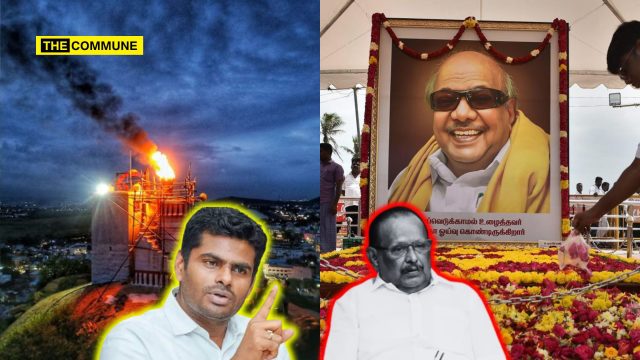
“You Should’ve Gone To Cremation Ground When Karunanidhi Died, Why Did You Go To Marina?”, BJP Leader Annamalai Hits Back At DMK Min Regupathy Who Likened Lighting Thiruparankundram Deepam To Funeral In Cremation Ground

“If Customs Shouldn't Be Changed, Why Did You Go To Marina After Fmr CM Karunanidhi Died?”, BJP Leader Annamalai Hits Back At DMK Min Regupathy Who Likened Lighting Thiruparankundram Deepam To Funeral In Cremation Ground

BJP leader K Annamalai launched a sharp attack on DMK ministers over their remarks following the Thirupparankundram verdict, questioning what he described as selective application of tradition and custom.

Referring to the long-standing nature of the Thirupparankundram dispute, Annamalai said the issue had existed since 1920 and had remained unresolved for over a century. He recalled that Poornachandran had sacrificed his life for the cause and said that people were paying their respects to him, describing him as a good person.

Taking aim at DMK minister Raghupathi, Annamalai criticised his remarks on funeral customs. He said the minister had stated that bodies must be cremated only in cremation grounds and that customs could not be altered. Annamalai questioned this position by pointing to the burial of former Chief Minister M Karunanidhi at Marina Beach.

Speaking at the event Annamalai said, “Look at what the Dravida Munnetra Kazhagam ministers are saying today. They are talking about the verdict in Thirupparankundram. All of us know this is an issue that has been there since 1920, a problem that has existed for 105 years. Poornachandran even sacrificed his life for this; today we are paying our respects to him, he was a good man. After the verdict, Regupathy says, “The body must be burnt only in the cremation ground; how can you change that custom?” Brother Regupathy, when Kalaignar Karunanidhi passed away, you should have gone only to the cremation ground; why did you go to Marina? Why did you change the custom for him, when you say the custom cannot be changed? That is what I am asking. After Kalaignar Karunanidhi passed away, I have respect for Karunanidhi Ayya. Even if there are differences at the level of ideology, we will give our Chief Minister the respect due to a Chief Minister. But if you insult the people to this extent in your speech today, how long do you think it will take before we start speaking back in the same tone? The same question will be asked by the people: after Kalaignar Karunanidhi’s death, you should have gone to a cremation ground only. Why insist that he must be buried on Marina beach? Why did you go to court for that? The very same questions will be asked by the people, by Hindu people, by the people of Tamil Nadu. Today Regupathy is a minister. If there is anyone in Tamil Nadu who is unfit to hold the post of a minister, it is Regupathy himself.”

Subscribe to our channels on TelegramWhatsApp, and Instagram and get the best stories of the day delivered to you personally.
Madras High Court Questions Flag Hoisting By Dargah On Thirupparankundram Temple Land, Calls It “Rank Criminal Trespass”

Madras High Court Questions Flag Hoisting By Dargah On Thirupparankundram Temple Land, Calls It “Rank Criminal Trespass”

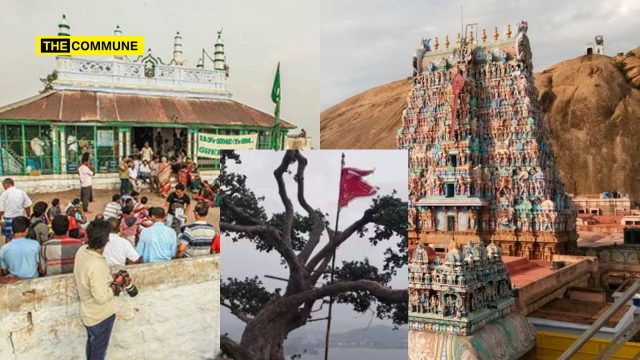
The Madras High Court on Friday, 9 January 2026, sharply questioned the Executive Officer of the Arulmigu Subramania Swamy Temple at Thirupparankundram over the hoisting of a dargah flag on land declared as temple property, observing that the act amounted to criminal trespass.

Justice GR Swaminathan, while hearing a contempt petition relating to non-compliance of an earlier court order, sought a clear explanation from temple authorities on how the dargah management was allowed to hoist a flag at the Deepathoon area for the Sandhanakoodu festival.

At the outset, the Court asked the Executive Officer whether the place where the flag was hoisted belonged to the dargah or the temple. In response, the EO admitted that the land belonged to the temple. When questioned on whether any complaint had been lodged against the dargah authorities, the EO stated that no complaint had been filed and cited illness and absence from duty as reasons.

The Court expressed strong displeasure over this explanation and directed the EO to immediately lodge a complaint and instructed the Police Commissioner to take action upon receipt of the complaint.

Referring to the recent order of the Division Bench, the Court reiterated that the Deepathoon area, located on the lower peak of the Thirupparankundram hill, had been categorically declared as temple land. The Court noted that despite this declaration, the dargah authorities had tied the Pallivasal flag on a tree located in the said area in connection with the Sandhanakoodu festival.

Recording the submission of the Executive Officer, the Court observed: “The Hon’ble Division Bench was pleased to declare that the Deepathoon area that is on the lower peak of the hill belongs to the temple. But in connection with the Sandhanakoodu festival, the Dargha authorities tied the flag of the Pallivasal in the tree in the Deepathoon area. Thiru. Yagna Narayanan, the Executive Officer states that the permission of the temple authorities was not obtained before doing so. He concedes that what was committed by the Dargha officials was a rank criminal trespass.”

The EO further undertook before the Court that a complaint for criminal trespass would be lodged immediately before the jurisdictional police and that all necessary formalities would be completed to initiate criminal prosecution against the dargah officials. This statement was made in the presence of counsel Chandrasekar.

Justice Swaminathan also questioned the apparent inconsistency in the administration’s conduct. The Court recalled that authorities had earlier claimed that even the entry of five persons into the area would lead to public disorder and statewide unrest, which was cited as justification for imposing prohibitory orders under Section 144 of the CrPC. However, no action was taken when the dargah flag was hoisted on temple land.

The Court remarked that the right to property applied equally to all and questioned why criminal trespass was permitted in this instance. It further observed that the authorities appeared to have acted in a one-sided and biased manner.

The judge was hearing a contempt petition arising from non-compliance with his order dated December 1, which directed temple authorities to light the Karthigai Deepam at the Deepathoon atop the Thirupparankundram hills. Earlier, senior police and revenue officials had been summoned after citing law and order concerns to justify non-implementation of the court’s direction.

The Court also noted that despite being granted four weeks to file affidavits explaining non-compliance, the officials had failed to do so and showed no remorse for their actions. Justice Swaminathan identified three distinct acts of contempt – disobedience of the original order, issuance of Section 144 to frustrate the court’s directive, and resistance to implementation even after the prohibitory order was quashed.

Taking on record the officers’ submissions that they acted on their own and not under political dictation, the Court said it would frame contempt charges against the officials and adjourned the matter to 2 February 2026.


View this post on Instagram


A post shared by Tamil Janam (@tamiljanam)

Source: LiveLaw

Subscribe to our channels on TelegramWhatsApp, and Instagram and get the best stories of the day delivered to you personally.
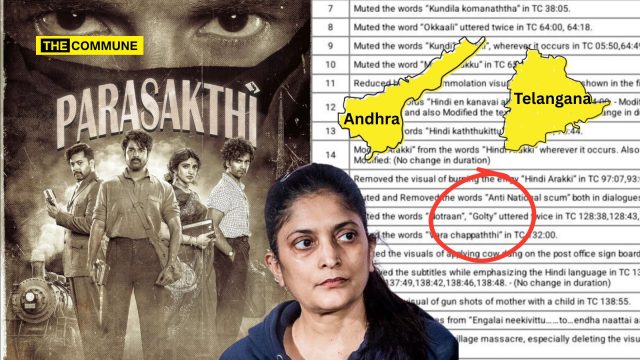
Censor Certificate Reveals Sudha Kongara’s Anti-Hindi Pro-DMK Propaganda Film Calls Telugu People As “Golti”, Andhra & Telangana Boycott Movie

A controversy has erupted around director Sudha Kongara’s upcoming film after details from the Central Board of Film Certification (CBFC) certificate revealed that the Tamil version of the movie contained derogatory references to Telugu people.

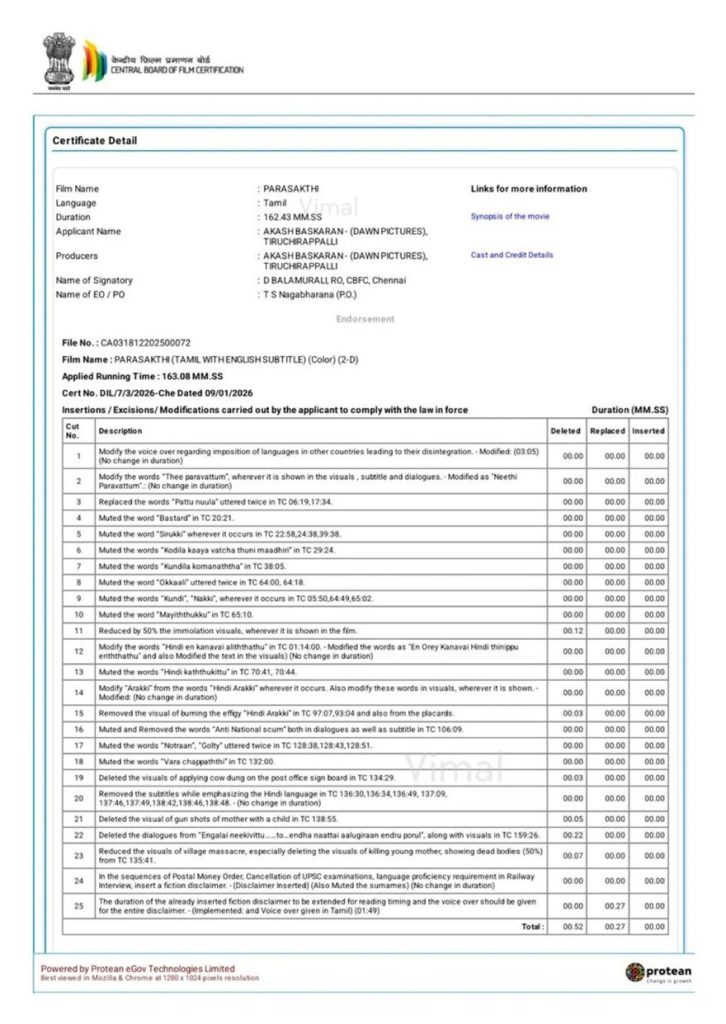
According to the censor certificate, the word “Golti”, widely regarded as a racial slur against Telugu-speaking communities — was used twice in the film and was subsequently muted following objections. The reference appears under Cut No. 17 of the CBFC modification list, which records that the words “Notraam” and “Golti” were muted at multiple time codes in the film.

The revelation has triggered strong backlash from Telugu audiences and social media users, who have accused the film’s makers of promoting linguistic hatred while simultaneously positioning the movie as a progressive, anti-imposition narrative. Critics pointed out the contradiction of condemning alleged language imposition while using offensive terminology against another linguistic community.

The outrage has particularly focused on director Sudha Kongara, a Telugu-speaking filmmaker, and actor Sivakarthikeyan, who has enjoyed consistent support and acceptance in Andhra Pradesh and Telangana. Critics argued that the use of such language amounted to a betrayal of Telugu audiences who have backed the actor’s films in the Telugu states.

Social media campaigns demanding an unconditional apology from the film’s team gained traction, with several users calling for a boycott of the movie in Andhra Pradesh and Telangana. Many alleged that the film was not merely a creative work, but part of a larger ideological project aligned with DMK’s political narrative, selectively targeting Hindi while normalising slurs against other Indian linguistic groups.

The CBFC document further lists multiple politically sensitive edits, including the muting of phrases critical of Hindi, removal of visuals depicting effigy burning labelled “Hindi Arakki,” and insertion of disclaimers in sequences involving national institutions. Critics have cited these edits as evidence that the film originally contained overt political messaging aimed at reinforcing anti-Hindi sentiment while shielding itself through post-certification modifications.

As calls for accountability grow louder, Telugu groups have stated that an unconditional public apology is the minimum acceptable response, warning that silence from the filmmakers will only deepen resentment and strengthen boycott calls across the Telugu-speaking states.

Subscribe to our channels on TelegramWhatsApp, and Instagram and get the best stories of the day delivered to you personally.